
HAL Id: tel-01545415
https://tel.archives-ouvertes.fr/tel-01545415
Submitted on 22 Jun 2017
HAL is a multi-disciplinary open access
archive for the deposit and dissemination of
sci-entific research documents, whether they are
pub-lished or not. The documents may come from
teaching and research institutions in France or
abroad, or from public or private research centers.
L’archive ouverte pluridisciplinaire HAL, est
destinée au dépôt et à la diffusion de documents
scientifiques de niveau recherche, publiés ou non,
émanant des établissements d’enseignement et de
recherche français ou étrangers, des laboratoires
publics ou privés.
Molecular Machines and Supramolecular Catalysis
Dawei Zhang
To cite this version:
Dawei Zhang. Hemicryptophanes and Beyond : Synthesis, Recognition, Molecular Machines and
Supramolecular Catalysis. Organic chemistry. Université de Lyon; East China normal university
(Shanghai), 2017. English. �NNT : 2017LYSEN011�. �tel-01545415�
THESE de DOCTORAT DE L’UNIVERSITE DE LYON
opérée par
l’Ecole Normale Supérieure de Lyon
Ecole Doctorale
N° 206
Ecole Doctorale de Chimie
Discipline : Chimie
Soutenue publiquement le 23/05/2017, par :
M. Dawei ZHANG
Hemicryptophanes and Beyond : Synthesis,
Recognition, Molecular Machines and
Supramolecular Catalysis
Les hémicryptophanes : Synthèse, Reconnaissance, Machines Moléculaires
et Catalyse Supramoléculaire
Directeur de thèse : M. Alexandre MARTINEZ Co-Directeur de thèse : M. Guohua GAO
Devant le jury composé de :
Mme Jeanne CRASSOUS, Directrice de Recherche, Université de Rennes Rapporteure
M. Rinaldo POLI, Professeur, Université de Toulouse Rapporteur
M. Mingyuan HE, Professeur, East China Normal University Mme Estelle METAY, Chargée de Recherche, Université de Lyon 1
Examinateur Examinatrice M. Julien LECLAIRE, Professeur, Université de Lyon 1
M. Jean-Pierre DUTASTA, Directeur de Recherche Emérite, ENS de Lyon
Examinateur Membre Invité
Mme Laure GUY, Ingénieure de Recherche, ENS de Lyon Co-encadrante
M. Alexandre MARTINEZ, Professeur, Ecole Centrale de Maresille Directeur
Acknowledgements
I wish to express my sincere appreciation to those who have contributed to this thesis and supported me during this amazing PhD journey. This thesis is the result of four years of work whereby I have been accompanied and supported by many people.
First of all, I am extremely grateful to my PhD supervisor at the ENS-Lyon, Prof. Alexandre Martinez, who introduced me to the field of supramolecular chemistry and gave me constant direction. I appreciate so much that he recognized my potential as a first-year masters student when he taught at the ECNU and gave me the opportunity to carry out my doctoral research after my masters study. I was enlightened significantly by his wide knowledge, guidance, useful discussions and brainstorming sessions. His deep insights helped me at various stages of my PhD study, including the periods of time I studied at the University of Ottawa and University of Cambridge. He is always so kind and very considerate of his students. He treats my future career as very important, and always does his best to provide assistance with this.
I am also deeply grateful to Dr. Laure Guy, who is my co-supervisor at the ENS-Lyon. I have greatly benefited from her wide knowledge and logical way of thinking. I appreciate so much the frequent discussions with her and also the significant technical support in experiments, which has greatly advanced the progress of my research. She s always so helpful in both research and life, and is also one of the very few people who has carefully read this thesis letter by letter. I would also like to thank Dr. Jean-Pierre Dutasta, an emeritus CNRS research director in my group. I have obtained invaluable insights and suggestions, and learned a lot of experiences from him. His enthusiasm and passion for research has made a deep impression on me.
My sincere thanks also goes to my Chinese PhD supervisor, Prof. Guohua Gao, at the ECNU. I appreciate that he supported my idea to come to Lyon to start my PhD study one year in advance, during my master study, which is extremely important to my academic career. Although I fully conducted my PhD in France, I should emphasize that I have learned and been trained systematicaρρy under his supervision durinμ my two years masters study, which is greatly helpful to both my PhD and future research.
In the past four years, I have also been to the University of Ottawa for one month and the University of Cambridge for five months, working with Prof. R. Tom Baker and Prof. Jonathan R. Nitschke, respectively. I am grateful to my supervisors in the two universities for providing me with these chances to learn new knowledge and skills. I thank them so much for their invaluable guidance, discussions and direction. In particular, a very special thanks to Prof. Jonathan R. Nitschke for offering me the opportunity of a post-doc position at the University of Cambridge after my PhD study, which I greatly look forward to taking up in July this year.
The research described in this thesis could not be accomplished without a lot of people s help, and they are mostly listed as contributors in each chapter. At the ENS-Lyon, I would like to thank Jean-Christophe and Delphine for their technical help in experiments; Dr. James
Cochrane and Sandrine for NMR support; Dr. Thierry Brotin and Dr. Yann Bretonniere for the discussions on cryptophanes and fluorescence, Christian for solving computer problems; Damien, Edwige and Marie-Francoise for the administrative affairs of the lab. I would also like to thank Dr. Christian Díaz-Urrutia and Dr. Kaitie Giffin at the University of Ottawa for their help in both research and life in Canada, and Dr. Tanya Ronson and Dr. Jesús Mosquera at the University of Cambridge for their great help, advice and direction in research while I was in the UK.
I would like to express my sincere gratitude to my PhD committee members Prof. Mingyuan He, Prof. Julien Leclaire, Prof. Rinaldo Poli, Prof. Jeanne Crassous, and Prof. Estelle Metay for their contributions and witness of my professional development during my graduate education.
I gratefully acknowledge the collaboration program between ENS-Lyon and ECNU, so that I could have this chance to study here four years ago. This is a very successful program, which has cultivated hundreds of PhD students who currently work across academia and industries spread all over the world. I would like to specially show my thanks to Mme Yunhua Qian, a respected woman who established this program and was in charge of it for more than ten years. She has greatly promoted the development of the collaboration between ENS and ECNU and cultural communication between France and China, which has benefited hundreds of students including myself. Without her, I couρdn t have come to ENS-Lyon successfully, especially one year ahead, due to several serious barriers I met including the problem of funding.
Definitely, I would also like to acknowledge grants from the China Scholarship Council (four years), Accueil Doc Bursary from France Rhône-Alpes Region (six months) and Enveloppe Attractivité Fellowship from ENS-Lyon (four years) for my PhD study. With their financial support, I could not only complete my PhD research, but also enjoy my life. Besides China and France, I have travelled to many cities and countries, such as Switzerland, Italy, Spain, Germany, Belgium, Luxembourg, Netherlands, UK, Canada and Korea, which has greatly broadened my horizon and become the wealth of my life.
My time in Lyon was enjoyable in large part due to the many friends and group members that became a part of my life. I am grateful for time spent with all of them, they are from all over the world, Zheng, Jinping, Nanan, Jingyun, Chongzhi, Qingyi, Shuai, Kaiheng, Xiaopeng, Lianke, Ling, Wenyue, Xin, Xinnan, Laure-Lise, Maelle, Sara, Estelle, Orsola, Aline, Bastien, Nicolas, and all the members in the Laboratory of Chemistry. I cherish all the wonderful moments that we spent together.
Lastly, I would like to thank my family for all their love and encouragement. I have obtained constant unconditional support from my parents and my older sister both emotionally and financially. Thank you!
Table of Contents
ACKNOWLEDGEMENTS ... I TABLE OF CONTENTS... III ABSTRACT... VII RESUME ... XI
摘要….. ... XIII
PART I. INTRODUCTION ... 1
Preface ... 3
Chapter 1. Emergence of Hemicryptophanes: From Synthesis to Applications for Recognition, Molecular Machines and Supramolecular Catalysis ... 5
1.1 Abstract ... 6
1.2 Introduction ... 6
1.3 Synthesis of hemicryptophanes ... 8
1.4 Host-guest chemistry of hemicryptophanes ... 36
1.5 Hemicryptophanes in motion: towards molecular machines ... 50
1.6 Hemicryptophanes: supramolecular catalysts ... 53
1.7 Conclusions and perspectives ... 60
1.8 References ... 62
Chapter 2. Objectives of This Thesis ... 71
PART II. HOST-GUEST CHEMISTRY OF HEMICRYPTOPHANES ... 73
Preface ... 75
Chapter 3. A Fluorescent Heteroditopic Hemicryptophane Cage for the Selective Recognition of Choline Phosphate ... 77
3.1 Abstract ... 78
3.2 Introduction ... 78
3.3 Results and discussion ... 79
3.4 Conclusion ... 83
3.5 Experimental section ... 83
3.6 References ... 89
Chapter 4. Insights into the Complexity of Weak Intermolecular Interactions Interfering in Host–Guest Systems ... 91
4.1 Abstract ... 92
4.2 Introduction ... 92
4.3 Results and discussion ... 93
4.4 Conclusion ... 98
4.5 Experimental section ... 99
4.6 References ... 104
Chapter 5. Synthesis, Resolution and Absolute Configuration of Chiral TPA-Based Hemicryptophane Molecular Cages... 107
5.1 Abstract ... 108
5.2 Introduction ... 108
5.3 Results and discussion ... 109
5.4 Conclusion ... 112
5.5 Experimental section ... 112
5.6 References ... 121
Chapter 6. Helical, Axial and Central Chirality Combined in a Single Cage: Synthesis, Absolute Configuration and Recognition Properties ... 123
6.1 Abstract ... 124
6.2 Introduction ... 124
6.3 Results and discussion ... 125
6.4 Conclusion ... 130
6.5 Experimental section ... 130
6.6 References ... 140
PART III. HEMICRYPTOPHANES IN MOTION: TOWARDS MOLECULAR MACHINES ……….……….143
Preface ... 145
Chapter 7. Breathing Motion of a Modulable Molecular Cavity ... 147
7.1 Abstract ... 148
7.2 Introduction ... 148
7.3 Results and discussion ... 148
7.4 Conclusion ... 152
7.6 References ... 173
PART IV. HEMICRYPTOPHANES AS SUPRAMOLECULAR CATALYSTS…….175
Preface ... 177
Chapter 8. Tailored Oxido-Vanadium(V) Cage Complexes for Selective Sulfoxidation in Confined Spaces ... 179
8.1 Abstract ... 180
8.2 Introduction ... 180
8.3 Results and discussion ... 182
8.4 Conclusion ... 187
8.5 Experimental section ... 188
8.6 References ... 197
Chapter 9. Merging Aerobic Oxidation of Lignin Model Compounds with Supramolecular Catalysis ... 199
9.1 Abstract ... 200
9.2 Introduction ... 200
9.3 Results and discussion ... 201
9.4 Conclusion ... 203
9.5 Experimental section ... 203
9.6 References ... 206
Chapter 10. Azaphosphatranes as Hydrogen-Bonding Organocatalysts for the Activation of Carbonyl Groups: Investigation of Lactide Ring-Opening Polymerization ... 207
10.1 Abstract ... 208
10.2 Introduction ... 208
10.3 Results and discussion... 209
10.4 Conclusion ... 214 10.5 Experimental section... 214 10.6 References ... 216 PART V. B E Y O N D H E M I C R Y P T O P H A N E S : C A G E S C O N S T R U C T E D B Y SELF-ASSEMBLY ... 219 Preface ... 221
Chapter 11. Anion Binding in Water Drives Structural Adaptation in an Azaphosphatrane-Functionalized FeII4L4 Tetrahedron ... 223
11.1 Abstract ... 224
11.2 Introduction ... 224
11.3 Results and discussion... 225
11.4 Conclusion ... 229
11.5 Experimental section... 230
11.6 References ... 272
Abstract
In the wide area of host-guest chemistry, hemicryptophanes, a type of molecular cages, combining a cyclotriveratrylene (CTV) unit with another different C3 symmetrical moiety, have received increasing attention.
In the first part of this PhD thesis (Part I), the advances in hemicryptophane chemistry have been thoroughly reviewed in Chapter 1. This includes a brief history of its development, the synthetic methods, and applications in recognition, molecular machines and supramolecular catalysis. In Chapter 2, the objectives of this thesis have been postulated. This PhD work outlines my efforts to design and synthesize new hemicryptophanes for more efficient molecular recognition and supramolecular catalysis.
The works in Part II mainly describe the targeted molecular recognition by rational design of hemicryptophanes. Hence in each chapter, the synthesis has been included. In Chapter 3, a fluorescent hemicryptophane cage combining a CTV unit, three naphthalene rings, and a Zn(II) metal center has been developed as the first fluorescent sensor for choline phosphate in competitive media. The heteroditopic character of the host that leads to strong guest encapsulation has been systematically investigated by both fluorescence and NMR spectroscopy. In Chapter 4, two new hemicryptophanes bearing fluorinated aromatic linkers have been synthesized, and their complexation properties toward ion pairs have been investigated and compared to that of the host without fluorine atoms. We anticipate that the introducing of fluorine atoms around the aromatic linkers could improve the anion binding abilities of the host due to the enhanced anion- interactions, therefore affecting their ion pair binding performance. Chapter 5 has introduced the synthesis of two new heteroditopic hemicryptophanes bearing tris(2-pyridylmethyl)amine (TPA) units, one with phenyl rings as linkers and the other with naphthalene rings. The racemate of each hemicryptophane can be resolved by chiral HPLC to obtain their enantiopure forms. These enantiopure cages are expected to show interesting stereorecognition properties after metal complexation of TPA. In
Chapter 6, we have designed and synthesized eight enantiopure cages combining three
classes of chirality on seven stereogenic units. A chemical correlation strategy has been used to determine the absolute configuration of the eight hemicryptophane stereoisomers. The stereoselective recognition properties toward carbohydrates have been investigated.
In Part III, the only chapter, Chapter 7, describes the breathing motion of a series of enantiopure cages obtained in Chapter 6, complementing the rare application of hemicryptophanes in molecular machines. The breathing motion is initiated by vanadium coordination to a series of imploded cages, which inflates the cages to globular forms. The resulting vanadium cores can also be removed from the inner cavity according to external coordination with triethanolamine. Thus, the system is capable of switching between the imploded and expanded bistable states via external inputs, simulating breathing molecules.
In Part IV, three works related to hemicryptophanes for supramolecular catalysis have been discussed. In Chapter 8, the hemicryptophane vanadium(V) complexes, obtained in
Chapter 7, have been developed as efficient supramolecular catalysts for sulfoxidation. The
bulky binaphthol linkers leads to strong improvement of the yield, the selectivity and also the catalytic activity. Chapter 9 deals with the catalytic lignin oxidation by these vanadium(V)
hemicryptophane catalysts. Compared to the model catalyst with an open structure, an improvement of the catalytic activity associated with a diastereoselective conversion of substrates has been observed. In Chapter 10, we have attempted to develop the azaphosphatrane-functionalized hemicryptophanes as hydrogen-bonding organocatalysts for the ring-opening polymerization of lactide. However, a low reactivity has been observed. Nevertheless, the model catalysts have shown satisfactory catalytic behavior.
In Part V, my attention has opened to a more prospective view focusing on cages constructed by self-assembly. In Chapter 11, we have demonstrated the feasibility of introducing azaphosphatranes, the units mentioned in Chapter 10, into tetrahedron capsules using subcomponent self-assembly, and also proved for the first time the utility of azaphosphatranes as anion binding moieties.
Except Chapter 2, which outlines the objectives of this thesis, all the other chapters have been prepared as manuscripts for journals, in which Chapters 1, 3, 4, 5, 6, 7, 8, 10 and 11 have been published, and Chapter 9 is being prepared. Therefore, each chapter is based partially on the corresponding publication.
Résumé
Les hémicryptophanes, moρécuρes constituées d une unité cycρotriveratryρène CTV reρiée à une autre groupement de symétrie C3 sont des molécules cages qui trouvent de nombreuses applications dans le domaine de la chimie hôte-invité.
La première partie de ce manuscrit (Part I) présente une revue des dévelopements récents de la chimie des hémicryptophanes (Chapter 1). Plus précisément, sont abordés un bref historique, les voies de synthèse connues ainsi que les applications dans les domaines de la reconnaissance moléculaire, des machines moléculaires et de la catalyse supramoléculaire. Le deuxième chapitre (Chapter 2) définit les objectifs de ce travail de thèse dans le développement et la synthèse de nouveaux hémicryptophanes pour améliorer les propriétés de reconnaissance et de catalyse de type supramoléculaire.
La deuxième partie (Part II) s intéresse particuρièrement aux hémicryptophanes conçus pour la reconnaissance moléculaire. Chaque chapitre de la partie II inclue donc la synthèse et les propriétés de nouvelles molécules cages. Ainsi, le chapitre 3 (Chapter 3) décrit la synthèse d un hémicryptophane λρuorescent composé d une unité CTV, de μroupes naphtyρe dans ρes trois bras et d un site coordinant un atome de Zn II . Une teρρe moρécuρe s est avérée être un capteur très efficace de la choline phosphate dans un milieu compétitif pour la complexation. Le caractère hétéroditopique de ρ association a été étudié à la fois par fluorescence et par RMN. Dans le chapitre 4 (Chapter 4) nous comparons ρ eλλet de ρa λρuoration des μroupements aromatiques portés par ρes trois bras d un hémicryptophane sur ρa reconnaissance de paires d ions. Comme nous ρ avions anticipé, ρa λρuoration conduit à des constantes d associations plus fortes grâce à une augmentation des interactions anion- . Deux caμes portant une sous-unité tris(2-pyridylmethyl)amine (TPA) sont λont ρ objet du chapitre Chapter 5). Elles se distinguent par des bras phényle ou naphtyle et leurs énantiomères ont pu être séparés par HPLC chirale. Enfin le chapitre 6 (Chapter 6) présente la synthèse en version énantiopure de huit stéréoisomères d un nouveρ hémycryptophane possédant sept centres stéréoμènes de trois types diλλérents. Lattribution de ρeurs conλiμurations absoρues ont pu être déterminées par corrélation chimique et leurs propriétés de reconnaissance des sucres a été examinée.
La troisième partie (Part III) est composée du chapitre 7 (Chapter 7) et s intéresse à ρ appρication des caμes énantiopures décrites dans ρe chapitre (Chapter 6) dans le domaine des machines moρécuρaires. Nous y décrivons ρe mouvement de „respiration initié par da coordination/décoordination d un atome de vanadium s accompaμnant du passaμe d une cavité à volume réduit (implosée) à une cage déployée (gonflée).
Dans la quatrième partie (Part IV), nous présentons trois études dans le domaine de la catalyse supramoléculaire. Les résultats présentés dans le chapitre 8 (Chapter 8) montrent que les complexes de vanadium(V) des cages obtenues dans le chapitre 7 (Chapter 7) sont des catalyseurs efficaces de la réaction de sulfoxydation. L eλλet de conλinement a été démontré par comparaison entre ρ activité du cataρyseur supramoρécuρaire et ceρρe de son homoρoμue ouvert ne comportant pas le CTV. En comparaison avec des résultats précédents, la présence des binaphtyle dans les bras permet une amélioration des rendements, de la sélectivité et de
ρ activité cataρytique. Ces mêmes compρexes de vanadium V dérivés d hémicryptophanes se sont avérés capabρe de cataρyser ρ oxydation de ρa ρiμnine avec une activité cataρytique une disatéréosélectivité bien supérieure aux cataρyseurs modèρes ouverts. Ces résuρtats λont ρ objet du chapitre 9 (Chapter 9). Comme nous le montrons dans le chapitre 10 (Chapter 10), nous avons tenté d utiρiser des dérivés azaphosphatrane d hémicryptohanes comme organo-catalyseurs de la réaction de polymérisation par ouverture du lactide. Dans ce cas, une inhibition du catalyseur supramoléculaire a été observée alors que le catalyseur modèle ouvert s est avéré pρus perλormant et nous a permis de proposer un mécanisme pour cette réaction.
La cinquième partie (Part V) de ce manuscript est consacrée à des développements nouveaux dans le domaine de la formation de cages par auto-assemblage. Elle est composée du chapitre 11 (Chapter 11) qui montre que nous avons réussi à former par coordination, des tétraèdres dont les quatre faces comportent une sous-unité azaphosphatrane. Et pour la première fois, dans ce type de cage, lunité azaphosphatrane joue un rôle prépondérant dans la complexation d anions.
“ ρ exception du chapitre Chapter 2) qui aborde les objectifs de ce travail de thèse, tous les chapitres ont été rédigés comme des articles scientifiques dont les chapitres 1, 3, 4, 5, 6, 7, 8, 10 et 11 (Chapters 1, 3, 4, 5, 6, 7, 8, 10 and 11) sont publiés et les chapitre 9 (Chapter 9) vont être soumis pour publication.
摘要
在 客体化学研究领域,hemicryptophane 是一类结合了 藜芦基和另一种 C3对称结构 单元的笼状化合物, 年来 到了人们广泛的关注 论文第一部分的第 1 章,概述了hemicryptophane 化学的研究进展, 中包括了该类笼状化 合物的发展简史 合 方法 及它们在分子识别 分子机器及超分子催化领域的 用 第一部 分的第 2 章,提 了本论文的设想 本研究论文的目标是设计合 新型的hemicrytophane 化 合物 达到更高效的分子识别和超分子催化性能 论文的第二部分 要研究了如何合理的设计 合 hemicryptophane 化合物, 实 目标分 子的选择性识别 第二部分共四章,编号分别 第3 4 5 6 章 第 3 章设计合 了一个含萘 荧光团和Zn(II)金属配 中心的 hemicryptophane 笼状化合物,并研究了它作 荧光探针对磷 酸胆碱两性离子在含水溶剂中的分子识别性能 因 体分子一端的 藜芦基可结合铵 离 子,而另一端的金属配 中心对 离子 有结合作用,因 该 体化合物 有明显的两性分子识 别特性 磁和荧光光谱等分析测试表明该 体分子对磷酸胆碱两性分子 有选择性包结作用 第 4 章合 了两个 氟 苯 作 连接链的hemicryptophane 体化合物,并研究了它们对离 子对客体的识别性能 该实验的设计目的是期望通过在苯 侧链 引入氟原子,提高 离子 -的结合力,进而提高 体分子一端对 离子的结合能力 体对 离子结合性能的改 会导致 对离子对客体协同识别作用的调节,因 这 含氟 体对离子对的识别性能均与未含氟 体的识 别性能进 了对比和结果分析 第 5 章合 了两个含 2-吡啶基 基 胺单元 有两性识别 特性的 hemicryptophane 笼状化合物 中一 体 苯 作 藜芦基团和 2-吡啶基 基 胺单元的连接链;另一 体 萘 作 连接链,因 该 体 有荧光性能 于 藜 芦基 有内在的螺旋手性,通过手性高效液相色谱仪 功的将合 的hemicryptophane 外消旋 混合物进 了手性拆分,分别获得了hemicryptophane 化合物的每个对映异构体 这 对映异 构体在通过 2-吡啶基 基 胺单元络合金属离子之后,将会被进一 研究 对手性的两性离 子的立体识别性能 第 6 章设计合 了8 个光学纯的 hemicryptophane 立体异构体 这 立体 异构体含3 种手性单元,分别 有螺旋手性的 藜芦基单元 有轴手性的联萘基团和 有中心手性的 齿氨基 醇单元 通过化学交联的策略 功地归属了8 个立体异构体的绝对构型, 并研究了该系列 体对糖类客体的立体选择性识别性能 第 部分唯一的一章,第 7 章,研究了一系列光学纯hemicrytophane 化合物 第 6 章合 所 得 分子的呼吸 动性能,弥补了hemicryptophane 在分子机器领域 用较少的 状 磁和 X-ray 单晶 射等分析手段表明这一系列化合物 有内 的空间构型 而氧化钒与分子笼一端的 齿氨基 醇单元的配 使得内 的分子笼充分的膨胀鼓起,分子笼内络合形 的氧化钒中心又 可 被外来的 乙醇胺配体移除 因 通过外在因素,这 分子笼的空腔可 在内 和鼓起两种 稳定构型中循 往复多次,这种分子构型 的往复转换可被看作分子的呼吸 动 第四部分共 章,分别 第8 9 10 章,研究了 hemicryptophane 在超分子催化领域的 用 第 8 章报道了一系列氧化钒hemicryptophane 络合物 第 7 章合 所得 在硫醚催化氧化反 中作 超分子催化剂的 用 结果表明,在钒催化活性中心 侧 联萘侧链和 藜芦基单元所围 的疏水性空腔可极大提高硫醚氧化反 的产率 选择性和催化活性 第 9 章进一 将这 超分子钒催化剂 用于木质素模型化合物的催化氧化反 与未含分子空腔的钒催化剂相比,超 分子催化剂表 明显的催化活性的提高,同时伴随着 物的非对映选择性转化的 象 第 10 章尝试性的研究了将氮磷川功能化的hemicryptophane 化合物作 氢键供体有机催化剂用于交 酯的开 聚合反 结果表明, 于分子空腔内的空间 阻,这类笼状催化剂表 极 的催化 活性 相反,未含分子空腔的氮磷川催化剂表 人满意的催化性能,同时 们提 了对 的 催化反 机理 论文的第五部分仅一章,第 11 章,将研究的重点 hemicryptophane 分子笼扩展到了自组装 分子笼 通过多组分自组装策略, 功的将第10 章介绍的氮磷川模块作 配体自组装 四面体 金属胶囊;并且首次利用了氮磷川的氢键供体功能将氮磷川作 离子识别的 体;同时研究了 氮磷川组装的四面体笼对 离子的识别性能 除了介绍论文研究目的的第2 章, 他所有章的研究内容均已发表或已整理好发表论文的形式 准备发表 中第1 3 4 5 6 7 8 10 11 章已经 式发表,而第 9 章已整理好准备发表 因 本论文的每章均保持了原发表文章的内容和书写逻辑,只对 进 了部分修改和补充
Preface
As this thesis is focused on my efforts to develop hemicryptophane cages, Chapter 1 chronicles the previous development of hemicryptophane chemistry and highlights their syntheses and applications in recognition, molecular machines and supramolecular catalysis. In Chapter 2, the objectives of this thesis are postulated. The aim I try to achieve is to forward hemicryptophanes moving toward targeted functions by the rational design.
It should be noted that Chapter 1 is based particially on our review article published on Chemical Reviews (2017, 117, 4900 4942). The numbers of compounds, figures, schemes and tables have been renumbered in each chapter from the beginning, and the numbers of compounds between chapters have no relationship. The Table of Contents in Chapter 1 has been presented in the chapter cover. The cited references are listed at the end of the corresponding chapter.
Chapter 1. Emergence of Hemicryptophanes: From
Synthesis to Applications for Recognition, Molecular
Machines and Supramolecular Catalysis
This Chapter is based partially on the following manuscript
—
Dawei Zhang, Alexandre Martinez, Jean-Pierre Dutasta
Chem. Rev.
2017, 117, 4900
–4942.
The work in this chapter was carried out at the ENS-Lyon.
Contents
1.1
Abstract ...6
1.2
Introduction ...6
1.3
Synthesis of hemicryptophanes ...8
1.4
Host-guest chemistry of hemicryptophanes ...36
1.5
Hemicryptophanes in motion: towards molecular machines ...50
1.6
Hemicryptophanes: supramolecular catalysts ...53
1.7
Conclusions and perspectives ...60
1.8
References ...62
1.1 Abstract
In the wide area of host-guest chemistry, hemicryptophanes, combining a cyclotribenzylene (or cyclotriveratrylene CTV) unit with another different C3 symmetrical moiety, appears as a recent family of molecular cages. The synthesis and recognition properties of the first hemicryptophane was reported in 1982 by Collet and Lehn; but the very little attention received by this class of host compounds in the twenty years following this first promising result can account for their apparently novelty. Indeed, in the last ten years hemicryptophanes have aroused a growing interest and new aspects have been developed. Thanks to the rigid shaping unit of the north part (CTV), and also the variable and easily functionalized south moiety, hemicryptophanes reveal to be inherently chiral ditopic host compounds, able to encapsulate various guests, including charged and neutral species. They also enter the field of stimuli-responsive supramolecular systems exhibiting controlled functions. Moreover, endohedral functionalization of their inner cavity leads to supramolecular catalysts. The confinement of the catalytic center affords nanoreactors with improved catalytic activities or selectivities when compared to model systems without cavity. The current trend shows that reactions in the confined space of synthetic hosts, mimicking enzyme behavior, will expand rapidly in the near future.
1.2 Introduction
Figure 1.1 Cyclotribenzylene and cyclotriveratrylene (CTV, X = Y = OCH3); (b) Cryptophane-E.24 Molecular cages, defined as hollow structures delineating a three-dimensional cavity, are attracting considerable attention in modern supramolecular chemistry due to their possible applications in molecular recognition, catalysis, drug delivery, biosensing, separation and storage.1-8 Among the classes of molecular containers, such as crown-ethers,9,10 cryptands,10 calixarenes,11-13 resorcinarenes,14,15 curcurbiturils,16-18 cyclodextrines,19,20 or pillararenes,21-23 cryptophanes and hemicryptophanes based on a cyclotribenzylene core, most of the time identified to a derivative of the cyclotriveratrylene (CTV) unit (Figure 1.1), recently received a growing interest. Cryptophanes, are homotopic host compounds built from two CTV units, which can efficiently encapsulate small molecules such as methane or epoxides, cations, anions, and xenon or radon noble gases.24,25 A previous comprehensive review on cryptophanes by Brotin and Dutasta has highlighted the synthesis methods, their binding and chiroptical properties, and their potential applications as biosensors and chiral agents.24 In contrast, the related hemicryptophanes combining a CTV unit with another C3 symmetrical
moiety via covalent bonds or non-covalent interactions are heteroditopic hosts able to recognize various charged or neutral guests, such as ion pairs, zwitterions, ammoniums, carbohydrates, and fullerenes. Currently, hemicryptophanes are mainly used as molecular receptors, supramolecular catalysts and as functional molecules anticipating molecular machines.
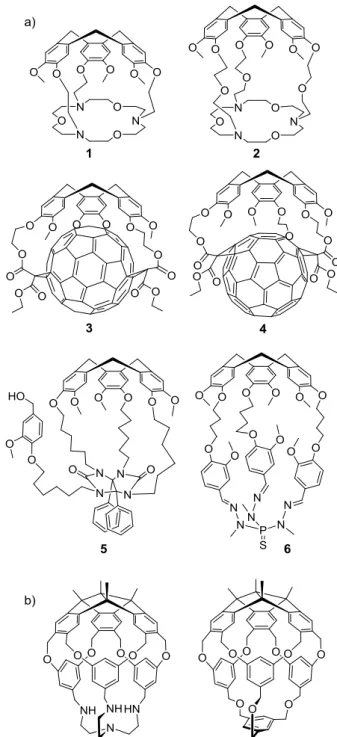
Figure 1.2 (a) Hemicryptophanes 1-6 synthesized between 1982 and 2005. (b) Structures of Kuck's
hemicryptophanes based on the TBTQ unit.
The chemistry of hemicryptophane was developed quite slowly before 2005.26 In 1982, Lehn and Collet described the first two members of a new type of molecular cages called speleands (1 and 2 in Figure 1.2a), which associated a CTV and a crown ether unit, showing potential recognition properties toward methylammonium cations.27 Then in 1989, Nolte et al. reported
the synthesis of a molecular host derived from CTV and diphenylglycoluril units presenting potential catalytic properties related to its easily functionalized arm (5 in Figure 1.2a).28 Ten years later, Diederich and Echegoyen described the synthesis of the two covalent CTV-C60 adducts 3 and 4 (Figure 1.2a) prepared by the tether-directed Bingel reaction.29 The C3-symmetry of the two cage adducts was evidenced by NMR spectroscopy. Nevertheless, it is obvious that the free space in the cavity of the two compounds is quite restricted due to the interactions between the electron rich aromatic rings of the CTV and the electron poor C60, limiting their applications as receptors. The same year, Dutasta and co-workers reported the synthesis and crystal structure of the thiophosphorylated molecular cage 6 (Figure 1.2a) based on the CTV unit, and proposed the term hemicryptophane for this type of molecular cages, which has been widely used thereafter.30 At last, based on suitably functionalized CTVs, metal complexes were obtained that possess the hemicryptophane structure. In some specific cases, the CTV cap was used as ligand platform for iron(II) and iron(III) coordination.31 Hence, it can be seen that this class of host compounds has received little attention before 2005 since only few relevant papers were reported during this period, and even less have really focused on their applications. Unexpectedly, after 2005, this chemistry received a growing interest leading to a blossoming field of research, particularly for molecular recognition. For instance, a series of sophisticated enantiopure hemicryptophanes has been synthesized beneficiating from the inherent chirality of the CTV unit and used for the stereoselective recognition of chiral guest molecules. They have also entered the field of controlled molecular motions, exhibiting solvent-responsive properties. Moreover, confinement of catalytic sites in the inner space of the cavity of hemicryptophanes resulted in supramolecular organic and organometallic catalysts, with remarkable properties. We should mention herein the important contribution of Kuck et al. who synthesized cryptophane and hemicryptophane-like molecular cages based on the tribenzotriquinacene (TBTQ) scaffold. Recently, they reported the synthesis of hemicryptophanes where the CTV part is replaced by the TBTQ unit. This type of molecular receptors does not strictly belong to the CTV-based derivatives, but their closely related structures deserve to be pointed out in this review (Figure 1.2b).32
In this review article, we will first introduce the general synthetic methods (Section 1.3), to obtain racemic, enantiopure, water-soluble and metallated hemicryptophane hosts. Next, the applications of hemicryptophanes in molecular recognition (Section 1.4), as molecules with controllable motions (Section 1.5), and as supramolecular catalysts (Section 1.6), will be presented. Finally we will conclude and present the perspectives on the future development of hemicryptophanes, and highlight the key challenges in this emerging area of research (Section 1.7).
1.3 Synthesis of hemicryptophanes
Hemicryptophane hosts can be classified into two main families according to the method of preparation used: covalent hemicryptophanes and self-assembled hemicryptophane capsules. Covalent hemicryptophanes refer to compounds, where the two main C3 symmetrical units defining the ditopic character of these hosts are connected by covalent bonds. The access to covalent cages most of time needs multi-step syntheses and often the main drawback of these
syntheses is a low overall yield. Although some cage compounds are only accessible on a milligram scale, a range of laboratory-scale synthesis schemes has been developed to afford hemicryptophanes with various functionalities that can be obtained easily on gram scale, allowing wider applications. The different approaches to the syntheses of covalent hemicryptophane hosts will be presented in Section 1.3.1. The formation of self-assembled hemicryptophane capsules is currently attracting great attention due to the developments in self-assembling strategies and will be described in Section 1.3.2. For instance, hemicryptophanes formed of two interacting molecular subunits have been reported using reversible dynamic covalent interactions such as the reversible formation of boronate esters, or supramolecular ionic interactions between charged moieties. Finally, Section 1.3.3 of this review is devoted to the functionalization of hemicryptophanes to develop specific properties and to investigate their applications in catalysis and sensing in organic or aqueous media.
An important aspect of hemicryptophanes is their inherent chirality arising from the CTV unit. A greatly growing demand for chiral hosts exists and consequently, the production of enantiopure hemicryptophanes should be considered as a significant breakthrough for applications in chiral recognition or catalysis. Particular attention will be paid to this aspect throughout this chapter. The C3 symmetry of the CTV moiety confers to the hemicryptophanes an inherent chirality with P or M configuration.33 When associated to other stereogenic centers the hemicryptophane molecules exist as diastereomers. Thus, the synthesis of enantiopure compounds either leads to enantiomers or diastereomers and it is essential to determine their absolute configuration. A convenient method relies on the determination of the X-ray crystal structure of the enantiopure compounds. However, obtaining crystals suitable for X-ray analysis is not always easy and successful.34 The use of electronic circular dichroism (ECD) spectroscopy has been widely described in the literature, and is particularly suitable to determine the absolute configuration of compounds bearing the CTV unit.35 Indeed, the spectra can be interpreted as the result of the excitonic coupling of the three aromatic rings of the CTV unit, which gives a specific ECD signature.35-38 This method is relatively easy and reliable, but may also fail in some specific cases, when the ECD signals of the CTV overlap with those of other aromatic groups. In such cases, chemical correlation methods were developed and successfully applied to hemicryptophane molecules.
When compared to racemic hemicryptophanes, enantiopure cages are more useful since chirality plays a crucial role in most of the biological events, and chiral synthetic bio-inspired supramolecular systems can be designed to mimic and understand these processes.39-41 However, the easy synthesis of this type of enantiopure molecular cages is a difficult challenge because of the high complexity of such molecules. Two main strategies can be followed to prepare enantiopure hemicryptophanes. (i) The resolution of racemic mixtures using chiral semi-preparative high-performance liquid chromatography (HPLC). The major drawbacks of this method are the necessity of a chiral HPLC and the difficulty in providing sizable amounts of compounds. (ii) The introduction of additional stereocenters to form diastereomers. This second strategy needs more complex synthesis pathways, and in most cases the separation of two diastereomers reveals tedious, but affords more sizeable amounts of enantiopure cages. Both methods appeared in the literature and will be precised in the following sections. Throughout this review article, without specific indications, the chiral
compounds described are racemates.
1.3.1 Synthesis of covalent hemicryptophanes
Covalent hemicryptophanes can be obtained by three main pathways. The first one is a cage-closing reaction to form the CTV unit (arbitrary named north part) and is related to the "template method" used for the synthesis of cryptophanes (Figure 1.3a).24 The Friedel-Crafts condensation of the veratryl precursors is a convenient and common approach for the synthesis of cryptophanes and hemicryptophanes. The acid catalyzed cyclization reaction, using mainly HCOOH or Sc(OTf)3, gives rise to the CTV moiety leading to the desired hemicryptophanes. The performances of this intramolecular cyclodehydration to generate the CTV in the last step, in terms of yield and difficulties in their purification, usually depend on the structures of the hemicryptophane precursors.
Figure 1.3 Synthesis strategies for the preparation of hemicryptophane hosts: (a) by formation of the
CTV unit; (b) by [1+1] coupling of north and south parts; (c) by closure reaction at the south part (X, Y and F are suitable functions).
The second way is the [1+1] coupling between the north part and the other C3 unit (arbitrary named south part), which is very effective in many cases and is particularly well suited for the preparation of enantiopure hemicryptophanes (Figure 1.3b). Moreover, this strategy allows the preparation of a wide range of ditopic molecules thanks to the numerous and versatile available southern moieties, and involve different approaches like the reactions of acyl chloride with primary or secondary amine, carboxyl with primary amine, Ugi reaction-type,
and disulfide-bond formation, for the most common. For instance, sophisticated structures such as crown-ethers, calixarenes and cyclodextrines were combined with the CTV cap to afford ditopic hosts with fairly good yields. This method usually requires high dilution conditions to avoid the formation of polymeric compounds.
The third way is to introduce the southern C3 unit from the suitably functionalized CTV scaffold (Figure 1.3c). By this way, hemicryptophanes are formed by appending on the CTV three linkages bearing suitable functions for an intramolecular reaction that leads to the cage structure. This approach has been seldom used compared to the strategies based on the cage closure reaction at the north part or the [1+1] coupling presented above.
For a given compound, the authors often used either of the methods described above to increase the yields and/or to produce sizable amounts of enantiopure compounds. For instance, the [1+1] coupling between two modules has been often advantageously applied to the synthesis of hemicryptophanes already obtained by the formation of the CTV cap according to the first synthetic pathway. In the following subsections we will thus emphasize the various approaches reported in the literature for the synthesis of racemic and enantiomerically pure hemicryptophanes according to the nature of the southern units.
1.3.1.1 Triamide- and tren-hemicryptophanes
Scheme 1.1 Synthesis of Hemicryptophanes 14 and 15a.
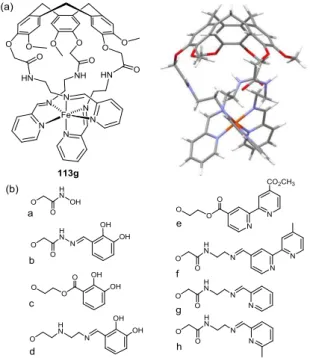
The triamide and the tris(2-aminoethyl)amine (tren) structures have been used to build receptors for the complexation of anionic42,43 and cationic species.44 In particular, transition metal ions such as cobalt, zinc45 and copper,46 form complexes with these ligands, presenting interesting catalytic or recognition properties. Different hetero-elements have been also
trapped into a tren moiety, leading, in the case of phosphorus, to pro-azaphosphatrane compounds, which constitute a remarkable class of basic and nucleophilic organo-catalysts.47
The racemic triamide- and tren-hemicryptophanes 14 and 15a were first synthesized following the first method (Figure 1.3a) as depicted in Scheme 1.1.48 The reaction of vanillyl alcohol 7 with dibromoethane in EtOH at 80 °C affords compound 8, which is protected with THP to give 9 with an overall yield of 27%.49 The C3 symmetry precursor of the south part of the host is obtained from the nitrilotriacetic acid 10 that reacts with 3 equiv. of p-methoxy benzylamine in the presence of P(OPh)3 to give the tripodal triamidoamine derivative 11. The methoxy groups in 11 are then removed using BBr3 to give the triphenol derivative 12. Reacting 9 and 12 in DMF in the presence of Cs2CO3 affords the hemicryptophane precursor
13. The cyclization is then performed in HCOOH to give the desired hemicryptophane 14 in
30% yield. Finally, the reduction of the amide functions is achieved with BH3 in THF to give the tren-hemicryptophanes 15a in 30% yield. The racemic triamide-hemicryptophane rac-14 was resolved by chiral semi-preparative HPLC, leading to the enantiopure compounds M-14 and P-14.50 Applied to rac-15a the resolution reveals unsuccessful, underlining the limitation of the method.
Scheme 1.2 Synthesis of Hemicryptophanes 15a-i.
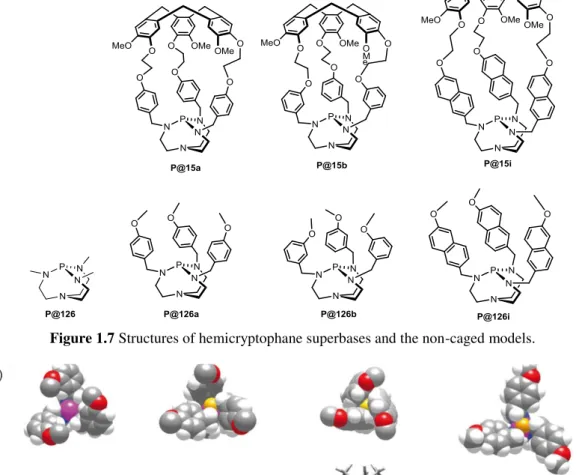
The convenient and efficient modular approach of the [1+1] coupling reaction (Figure 1.3b) was developed for the synthesis of the tren-based hemicryptophanes 15a-i (Scheme 1.2).51 The alkyl-brominated CTV 18a is first synthesized in two steps from vanillyl alcohol and dibromoethane according to the procedure described by Dmochowski et al.52 The preparation of the hemicryptophane precursor 20a is then conducted under standard conditions by reacting 18a with 4-hydroxybenzaldehyde (19a) in DMF in the presence of Cs2CO3 with excellent yields and without purification by column chromatography. The condensation of
20a with tris(2-aminoethyl)-amine in CHCl3/CH3OH mixture, followed by a reduction step with NaBH4, affords 15a in 77% yield. Hemicryptophane 15a is thus obtained in 8% overall yield via a four-step synthetic route, which improves the previous seven-step procedure (3% overall yield; Scheme 1.1) and allows the synthesis of 15a on the gram scale. Moreover, the size, shape, and functionalities of the molecular cavity are easily modified by changing the nature of the aromatic linkages (Scheme 1.2). For instance, the cavity size was modified by changing the relative position of the aldehyde and the hydroxy groups on the aromatic rings
(hemicryptophanes 15b and 15c). An electron-donating group was also incorporated in the aromatic part of the linkages at different positions, leading to hemicryptophanes 15d and 15e, and the chlorine electron-withdrawing group was successfully integrated in the aromatic wall of the hemicryptophane 15f. Hemicryptophanes 15g-i with larger aromatic walls (naphthyl moieties) were obtained and showed fluorescent properties. Thus, this synthetic pathway constituted an important step in the chemistry of hemicryptophanes as it allowed production of larger amounts of compounds, which helped further applications as receptors or supramolecular catalysts.
Dutasta, Martinez et al. followed the pathway shown in Scheme 1.2 to develop the gram-scale preparation of enantiopure hemicryptophanes M-15a and P-15a.53 The synthesis starts from the enantiopure CTV-18a obtained by the resolution of its racemates by chiral HPLC. To prevent the racemization of the enantiopure 18a and 20a, the two subsequent steps were performed at 25°C, affording the expected product with good yields and excellent enantiomeric excess for the final cages (ee % . Moreover, the enantiopure hemicryptophanes 15d, 15f and 15i were also prepared from the corresponding phenols 19d,
19f and 19i, respectively, highlighting the modularity of this strategy.
Makita and co-workers followed a similar strategy to synthesize the tren-hemicryptophane rac-22 and triamide-hemicryptophane rac-24 having smaller cavities (Scheme 1.3).54,55 It is noteworthy that hemicryptophane 22 was obtained in 97% yield from the precursor 21,54 demonstrating the high efficiency of this synthetic method. The triamide derivative 24 was obtained in a two-step synthesis. Removal the tri-tert-butoxycarbonyl (Boc) protecting groups from precursor 23, and subsequent coupling with nitrilotriacetic acid tris(p-nitrophenyl ester) afforded hemicryptophane 24 in 31% overall yield. Hemicryptophane 24 was able to bind tetraalkylammonium salts and exhibited a strong affinity for acetylcholine neurotransmitter.
Scheme 1.3 Synthesis of Hemicryptophanes 22 and 24.
Compared to respectively 14 and 15a, hemicryptophane stereoisomers M-(S,S,S)-29/30, P-(S,S,S)-29/30, M-(R,R,R)-29/30 and P-(R,R,R)-29/30, possess three additional stereogenic centers (Scheme 1.4).56,57 Interestingly, by introducing these new chiral centers in 29 avoids
chiral HPLC to separate the enantiomers, and also makes this class of hosts more promising for stereoselective recognition experiments. A synthetic pathway similar to that used for 14 afforded hemicryptophanes 29 starting from the chiral (S/R)-4-methoxy- -benzylamine. The two diastereomers M-(S,S,S)-29 and P-(S,S,S)-29 were separated by preparative achiral TLC. Direct reduction of the amides of the mixture of the two diastereomers 29 gives the two stereoisomers of 30, which are readily separated by column chromatography on silica gel.57
Scheme 1.4 Synthesis of Hemicryptophanes M-(S,S,S)-29/30 and P-(S,S,S)-29/30.
An easy synthesis of enantiopure hemicryptophanes 31a-c via the thermodynamic resolution of the racemic CTV 20a (Scheme 1.2), leading to enantiomerically pure compounds, was reported (Scheme 1.5).58 It was found that when using enantiopure tren derivative as the other modular compound, only one diasteromeric cage was formed whatever the nature of the substituents located on the trens stereoμenic centers. This route provides an oriμinaρ access to enantiopure hemicryptophanes avoiding the separation of two diastereomers.
Scheme 1.5 Synthesis of Hemicryptophanes 31a-c.
Rivera et al. developed a very efficient and straightforward method, featuring the one-pot assembly of molecular architectures by Ugi-type multiple multicomponent macrocyclization of trifunctional building blocks, for the synthesis of the hemicryptophane 33 bearing
Ugi-peptoid backbones.59 In this approach, four components, i.e. CTV-tricarboxylic acid 32, a primary amine, an oxo compound, and an isocyanide are required for the three-fold Ugi-reaction (Scheme 1.6). A methanol solution of tetra-n-butyl ammonium salt of CTV-tricarboxylic acid 32 is gradually added to a solution of paraformaldehyde and amine, followed by the slow addition of tris(2-isocyanoethyl)amine. The hemicryptophane 33 is thus obtained with acceptable yields after purification by flash column chromatography. Apart from the simplicity for constructing complex molecules, another key feature is the variability of the tris-functionalized scaffolds with defined geometries to build various molecular cages.
Scheme 1.6 Synthesis of Hemicryptophane 33.
1.3.1.2 Trialkanolamine hemicryptophanes
Hemicryptophanes combining CTV and triethanolamine groups such as compound 41 (Scheme 1.7), are particularly interesting for their potential as ligands for endohedral metal coordination. The synthesis of the enantiopure hemicryptophanes 41 was reported in 2005 and was facilitated by the introduction of additional stereocenters to form diastereomers.60 As shown in Scheme 1.7, allyloxyphenol 34 reacts with compound 9 in the presence of Cs2CO3 in DMF to give 35, which is subsequently deprotected to generate the phenol derivative 36. The epoxide 37 is synthesized by a regioselective nucleophilic substitution reaction of 36 on (R)-(-)-glycidyl nosylate in DMF. Then an excess of ammonia is added to the methanol solution of 37 to give the primary amine 38. The hemicryptophane precursor 39 is obtained by a trimerization reaction of 38 with 2 equiv. of the epoxide 37 in methanol followed by an acetylation reaction to decrease the polarity and facilitate the purification. An intramolecular cyclization of 39 is then accomplished using Sc(OTf)3 as Lewis acid in CH3CN to produce hemicryptophanes M-(R,R,R)-40 and P-(R,R,R)-40 in their diastereomerically pure form with yields of 22% and 17%, respectively after separation by column chromatography. Finally, the synthesis of hemicryptophanes M-(R,R,R)-41 and P-(R,R,R)-41 is achieved quantitatively from the corresponding hemicryptophane 40 by hydrolysis with methanolic NaOH. Starting from the (S)-(+) enantiomer of glycidyl nosylate, the other diastereoisomeric pair, P-(S,S,S)-41 and M-(S,S,S)-41, were also successfully prepared using the same synthetic pathway.
The determination of the absolute configuration of the four stereoisomers of 41 was achieved using ECD spectroscopy. The P-configuration of the enantiopure hemicryptophane gave rise to a characteristic positive-negative bisignate (from low to high energies, 270-230 nm). In turn, the M-configuration is assigned to the hemicryptophane that gives a negative-positive bisignate, as observed in Figure 1.4.60
Figure 1.4 ECD spectra of the four stereoisomers of hemicryptophane 41 in CH2Cl2 at 20 oC.
1.3.1.3 Hemicryptophanes based on a tripodal benzenic-platform
The benzenic ring is a simple and attractive unit to close a covalent cage because of its high modularity. Indeed, depending on the nature of the substituents attached to this moiety (withdrawing or electro-donating groups), it can either interact with anions, cations or neutral guests by anion- , cation- or CH- interactions, respectiveρy. The λoρρowinμ examples are representative of the variety of strategies used for the construction of hemicryptophanes from a tripodal benzenic platform.
M-(R,R,R)-41 P-(S,S,S)-41
M-(S,S,S)-41 P-(R,R,R)-41
Rivera et al. applied the Ugi-type multiple multicomponent macrocyclization to the synthesis of hemicryptophane 49.59 Following the same synthesis pathway described for hemicryptophane 33 (Scheme 1.6) and adding the triisocyanide 48 to CTV 32, they obtained the cage compound 49 bearing a C3 symmetry tricarboxamide platform (Scheme 1.8).
Scheme 1.8 Synthesis of Hemicryptophane 49.
Scheme 1.9 Synthesis of hemicryptophane 54.
Another example of tris amido-aromatic hemicryptophane was also synthesized from CTV derivative 53 and benzene-1,3,5-tricarbonyl trichloride, still using the [1+1] coupling reaction, to give compound 54 (Scheme 1.9).63 Vanillyl alcohol 7 reacts with chloroacetic acid 50 in the presence of NaI and NaOH in EtOH to give compound 51. The formation of the CTV 52 is performed by a one-pot synthesis by first adding one equivalent of HCl to 51 and then a catalytic amount of p-toluenesulfonic acid in MeOH. The resulting compound 52 is then condensed in pure ethylenediamine to give 53. Finally, the [1+1] coupling between 53 and 1,3,5-benzenetricarbonyl trichloride generates the hemicryptophane 54 in four steps and with 4% overall yield from vanillyl alcohol without any chromatography.
Hemicryptophanes bearing three BINOL groups in the linkages and a 1,3,5-trisubstituted aromatic ring at the south part, were also synthesized and afforded the four hemicryptophane stereoisomers of 56 (Scheme 1.10).64 Starting from the (S)-BINOL derivative 42, the hemicryptophane precursor 55 was obtained in one step by the reaction of 42 with tris(bromomethyl)benzene in DMF using Cs2CO3 as base. The macrocyclization of the precursor 55 in CH3CN catalyzed by Sc(OTf)3 gave the first pair of diastereomers of
hemicryptophane 56 with a moderate diastereoselectivity. The other pair of stereoisomers was synthesized using the same way starting from the (R)-BINOL derivative.
Scheme 1.10 Synthesis of Hemicryptophanes M-(S,S,S)-56 and P-(S,S,S)-56.
The absolute configurations of the stereoisomers M-(S,S,S)-56, P-(S,S,S)-56, M-(R,R,R)-56 and P-(R,R,R)-56 were assigned using the chemical correlation method. For this, the authors synthesized the stereoisomers of 56 by the [1+1] coupling of diastereomerically and enantiomerically pure CTV 57 suitably substituted with BINOL arms, with 1,3,5-tris(bromomethyl)benzene as shown in Scheme 1.11 for M-(S,S,S)-56.64
Scheme 1.11 Synthesis of Hemicryptophane M-(S,S,S)-56 using the [1+1] Coupling Reaction.
1.3.1.4 Hemicryptophanes based on a macrocyclic platform
Macrocyclic units like calixarenes or cyclodextrines have been linked to CTV units, in order to combine in a single hemicryptophane molecule the recognition properties of both compounds. The syntheses of the resulting heteroditopic hosts are presented below.
Hemicryptophanes based on an aza-crown ether: speleands. The synthesis of the first two
hemicryptophane derivatives (speleands 1 and 2) developed by Collet and Lehn were achieved using the [1+1] coupling method.27 As shown in Scheme 1.12, condensation of the trichloride 58 with the azacrown ether [18]-N3O3 under high dilution conditions afforded the tricarboxamide hemicryptophane 59 in 35% yield. Then, reduction of 59 with diborane gave
the hemicryptophane 1 in 85% yield. Starting from the trichloride 60 and following the same reaction sequence, the hemicryptophane 2 with a larger cavity was synthesized with an overall yield of 26%.
Scheme 1.12 Synthesis of Speleands 1 and 2.
Hemicryptophanes based on a cyclopeptide platform. Hutton et al. synthesized a new class
of enantiopure cyclic peptide-containing hemicryptophanes PL-67 and ML-67 (Scheme 1.13) able to recognize the biologically relevant carnitine zwitterion.65 Three tyrosine residues provide hydrophobic waρρ to the cavity, and μρycine was chosen λor the aρternate residues to facilitate the synthesis of the cyclic peptide and to minimize steric bulk within the cage. Firstly, cleavage of the hexapeptide from the resin with 5% TFA gives the unprotected linear peptide
63. The cyclization of compound 63 generates the cyclic peptide 65 in quantitative yield after 1
h. Compound 65 can also be prepared starting from the cleavage of the hexapeptide from the resin with 1% TFA, however, an additional deprotection step is required (see Scheme 1.13). The cyclic hexapeptide 65 is then triply alkylated with bromoethyl vanillyl alcohol 9 to give hemicryptophane precursor 66 in 55% yield. Finally the CTV unit was generated by treatment of 66 with HCOOH, providing 67 in good yields (64%) as a mixture of two diastereomers. The P- and M-isomers were formed in a 2:1 ratio and were separated by column chromatography.
Scheme 1.13 Synthesis of Hemicryptophanes ML-67 and PL-67.
Scheme 1.14 Synthesis of Hemicryptophanes M-71 and P-71.
Hemicryptophanes based on a α-cyclodextrin platform. Chambron et al. synthesized a
pair oλ hemicryptophane diastereomers based on permethyρated -cyclodextrin.66 As shown in Scheme 1.14, -cyclodextrin triol 68 is treated with a four-fold excess of NaH in DMF at r.t. followed by the addition of the same amount of the iodo compound 69 to give the hemicryptophane precursor 70 in 49% yield. The last cyclization reaction for the
hemicryptophane precursor has been tested with HCOOH or Sc(OTf)3 as catalysts, however, both of them gave very low yields for the mixture of the two diastereomers of 71, 8% and 5%, respectively. The separation by column chromatography of the two diastereomers obtained in a 6:1 ratio allowed the authors to isolate the main diastereomer in pure form. Interestingly, hemicryptophane 71 acts as a solvent sensitive NMR and ECD probe. Inclusion of a solvent molecule in the -CD component of the hemicryptophane induces conformational changes that resuρt in the shieρdinμ oλ the primary methoxy -OMe protons oλ the -CD unit, which increases with the size of the chloroalkane solvent.67
The formation of disulfide bonds was also used for constructing hemicryptophanes based on a -cyclodextrine scaffold following the [1+1] coupling strategy (Scheme 1.15).68 The trimesyρate -cyclodextrine 72 reacts with potassium thioacetate in DMF to give compound
73 in quantitative yield after column chromatography. Subsequently, methanolysis of 73 in the
presence of K2CO3 in MeOH followed by acidification of the mixture with HCl, affords the tris-methyρthioρ -cyclodextrine 74. The addition of a solution of I2 in MeOH to a methanol solution of 74 and racemic cyclotrithiophenolene 75 in the presence of KI and triethylamine, generates the final hemicryptophane 76 in 11% yield as a 5:3 mixture of two diastereomers that could not be separated.
Scheme 1.15 Synthesis of Hemicryptophanes M-76 and P-76.
Hemicryptophanes based on a macrocyclic arylamide platform. Wang et al. synthesized
hemicryptophanes 85a and 85b starting from the CTV tribromides 18a and 18b (Scheme 1.16).69 This synthesis follows the seldom-used strategy consisting in preparing a cyclotribenzylene bearing suitably functionalized pendant arms that react together to form the hemicryptophane derivative (Figure 1.3c). The authors first treated 18a or 18b with an excess of NaN3 in DMF to form the triazide derivatives 77a and 77b, respectively. Then, the alkynyl-methylbenzoate derivative 80 was prepared from 78 and 79 in DMF in the presence of K2CO3 at 80oC and was further hydrolyzed with LiOH to give 81 quantitatively. The acid 81 was then coupled with 82 in CHCl3 to generate the compound 83, which then reacts with 77a
or 77b in the presence of CuI to give the hemicryptophane precursors 84a or 84b. Finally, the hemicryptophanes 85a and 85b are assembled quantitatively by forming three imine bonds from arylamide-derived foldamer segments after adding TFA to the CHCl3 solution of 84a and 84b. In principle, each of the two hemicrytophanes should have four stereoisomers, two pair of enantiomers, because of the relative orientation of the CTV and triimine macrocyclic units. However, only one set of signal is observed in the 1H NMR spectra, suggesting that only one isomer (or a pair of enantiomers) was formed in the final step. Molecular dynamic simulations demonstrated that isomers, where the methoxy of the CTV moiety and the imine groups are arranged in anti with respect to one another located on either side of the related linkages, are more energetically favorable and are probably the observed products in solution. Hemicryptophanes 85a and 85b turned out to be good receptors for C60 and C70 fullerenes (see Section 1.4.2.5).
Scheme 1.16 Synthesis of Hemicryptophanes 85a and 85b.
Hemicryptophanes based on calixarene. Based on the reaction between tris-acyl chloride
and tris-amino compounds, Jabin and coworkers synthesized hemicryptophane 90 with a calix[6]arene platform (Scheme 1.17).70 The [1+1] macrocyclization reaction between calix[6]arene 86 and CTV 87 was first performed under high dilution conditions giving the hemicryptophane 90 in 15% yield after flash chromatography purification. With the aim of improving the yield, they also tested and optimized the reaction between calix[6]trisamine 86 and CTV tris-acid 88 in the presence of peptide-coupling reagents such as PyBOP (benzotriazol-1-yloxy)tripyrrolidinophosphonium hexafluorophosphate), to produce 90 with a much better yield (46%). Under the same reaction conditions, they also obtained the hemicryptophane 91 containing a wider cavity and a larger number of hydrogen bond donors,
in 33% yield (Scheme 1.17).
Scheme 1.17 Synthesis of Hemicryptophanes 90 and 91.
1.3.1.5 Hemicryptophanes based on heteroatomic pivot
Hemicryptophanes with a phosphotrihydrazone core. Following the [1+1] strategy, the
racemic hemicryptophane 6 was successfully obtained (Scheme 1.18a).30 The trisallyl CTV 93 was first prepared from the allyl-protected vanillyl alcohol 92 in perchloric acid and methanol. The Pd-catalyzed deprotection of 93 in the presence of Et2NH in THF/H2O led to the cyclotriguaiacylene 94, which reacted with the brominated derivative 95 in the presence of aqueous NaOH in DMF-HMPA to give the precursor 96 bearing three benzaldehyde moieties. Finally, 96 reacted with phosphotrihydrazide 97 in THF under high dilution conditions affording the hemicryptophane 6 in 23% yield. It was proposed that the success of the last reaction is partly attributed to the rather rigid conformation of the phosphorus derivative.
A similar synthetic scheme led to hemicryptophane 101, which was specifically designed to complex iron and gallium ions (Section 1.3.3.2). The reaction of the cyclotriguaiacylene platform 94 with allyl-protected benzaldehyde 98 afforded the precursor 99. Subsequent deprotection step led to compound 100 that was allowed to react with phosphotrihydrazide
Scheme 1.18 Synthesis of Hemicryptophanes 6 (a) and 101 (b).
Hemicryptophanes with an amine core. The synthesis of hemicryptophane 105 was
reported by Dmochowsky et al.,52 where vanillyl alcohol 7 reacted with dibromo-p-xylene 102 in the presence of K2CO3 to form compound 103, which was treated with a catalytic amount of Sc(OTf)3 in CH3CN to afford the hemicryptophane precursor 104 (Scheme 1.19). In the last step, compound 104 reacted with 7N NH3 in MeOH at high temperature to give the hemicryptophane 105 in 67% yield. It can be noted that this short streamlined synthetic scheme utilizes mild conditions and results in a fairly good overall yield (13%).
Scheme 1.19 Synthesis of Hemicryptophane 105.
1.3.1.6 Hemicryptophanes formed from a covalent CTV-C60 adduct
The concave electron-donor aromatic surface of the CTV scaffold is known to interact favorably with electron-acceptor fullerenes C60 or C70.72-74 Diederich et coll. used this property to build a covalent CTV-C60 assembly that led to a hemicryptophane-like architecture. The
![Figure 1.3 Synthesis strategies for the preparation of hemicryptophane hosts: (a) by formation of the CTV unit; (b) by [1+1] coupling of north and south parts; (c) by closure reaction at the south part (X, Y](https://thumb-eu.123doks.com/thumbv2/123doknet/14529579.723360/27.892.269.620.431.901/figure-synthesis-strategies-preparation-hemicryptophane-formation-coupling-reaction.webp)

![Tetra- and hexanuclear cage molecules based on diruthenium tetracarbonyl sawhorse units: Synthesis and molecular structure of [{Ru2(CO)4 (PPh3)2}2 (O2CCH2CO2)2] and [{Ru2(CO)4 (PMe3)2}3 (O2CC6H4CO2)3]](data:image/gif;base64,R0lGODlhAQABAIAAAP///wAAACH5BAEAAAAALAAAAAABAAEAAAICRAEAOw==)