Belief Propagation Analysis in Two-Player
Games for Peer-Influence Social Networks
by
Matthew E Bradwick
B.S. Operations Research United States Air Force Academy, 2010
SUBMITTED TO THE SLOAN SCHOOL OF MANAGEMENT IN PARTIAL FULFILLMENT OF THE REQUIREMENTS OF THE DEGREE OF
MASTER OF SCIENCE IN OPERATIONS RESEARCH at the
MASSACHUSETTS INSTITUTE OF TECHNOLOGY June 2012
©2012 Matthew E Bradwick. All rights reserved
The author hereby grants to MIT and Draper Laboratory permission to reproduce and to distribute publicly paper and electronic copies of this thesis document in whole or in part in any medium now known or hereafter created.
Signature of Author: ____________________________________________________________________ Sloan School of Management Interdepartmental Program in Operations Research May 18, 2012
Approved by: _________________________________________________________________________ Dr. Natasha Markuzon The Charles Stark Draper Laboratory, Inc. Technical Supervisor
Certified by: __________________________________________________________________________ Professor Marta C. González Gilbert Winslow Career Development Assistant Professor Civil & Environmental Engineering; Engineering Systems Division Thesis Advisor
Accepted by: _________________________________________________________________________ Professor Dimitris Bertsimas Boeing Professor of Operations Research Co-Director, Operations Research Center
2
3
Belief Propagation Analysis in Two-Player
Games for Peer-Influence Social Networks
by
Matthew E Bradwick
Submitted to the Sloan School of Management on May 18, 2012 in Partial Fulfillment of the Requirements for the Degree of Master of Science in Operations Research
ABSTRACT
This thesis considers approaches to influencing population opinions during counterinsurgency efforts in Afghanistan. A discrete time, agent-based threshold model is developed to analyze the propagation of beliefs in the social network, whereby each agent has a belief and a threshold value, which indicts the willingness to be influenced by the peers. Agents communicate in stochastic pairwise interactions with their neighbors. A dynamic, two player game is formulated whereby each player strategically controls the placement of one stubborn agent over time in order to maximally influence the network according to one of two different payoff functions. The stubborn agents have opposite, immutable beliefs and exert significant influence in the network. We demonstrate the characteristics of strategies chosen by the players to improve their payoffs through simulation. Determining strategies for the players in large, complex networks in which each stubborn agent has multiple connections is difficult due to exponential increases in the strategy space that is searched. We implement two heuristic methods which are shown to significantly reduce the run time needed to find strategies without significantly reducing the quality of the strategies. Lastly, we introduce population-focused actions, such as economic stimulus projects, which when used by the players result in long-lasting changes in the beliefs of the agents in the network.
Thesis Advisor: Professor Marta C. González
Gilbert Winslow Career Development Assistant Professor
Civil & Environmental Engineering; Engineering Systems Division
Technical Supervisor: Dr. Natasha Markuzon
Principal Member of the Technical Staff The Charles Stark Draper Laboratory, Inc.
4
5
Acknowledgments
I would like to thank Dr. Natasha Markuzon of Draper Laboratory for her guiding mentorship over these past two years. Her continued patience, broad expertise, and constant support proved invaluable in helping me develop this thesis.
I would like to thank Professor Marta González of MIT for accepting me as one of her students and offering constructive feedback to improve this work.
I would like to thank Dr. Stephan Kolitz of Draper Laboratory for his time and vast knowledge in the field of operations research which helped me further this research.
I would like to thank Draper Laboratory for the fellowship which funded my graduate degree as well as the United States Air Force Academy for allowing me to pursue a graduate degree these last two years at MIT.
I would like to thank some of my fellow students for all the help on the problem sets we completed during our time at MIT: Brian Crimmel, Jane Evans, Mike Giordano, and Andrew Lee. I learned a lot from each of you and greatly appreciate the time you spent helping me on our class work.
Finally, I would like to thank my family and girlfriend, Andrea, for their continuous support. You were the source of greatly needed encouragement, and your belief in my abilities
maintained my motivation and focus to keep pushing even when things looked grim.
The views expressed in this thesis are those of the author and do not reflect the official policy or position of the United States Air Force, Department of Defense, or the U.S. Government.
6
TABLE OF CONTENTS
List of Figures ... 8
List of Tables ... 10
1 Introduction ... 13
1.1 Motivation for Research ... 13
1.2 Thesis Organization ... 13
2 The Battle for Popular Support between Insurgencies and Counterinsurgencies ... 17
2.1 The Nature of Insurgencies ... 18
2.2 The Nature of Counterinsurgencies... 21
2.3 Nonlethal Targeting used to Win Popular Support ... 22
3 Modeling Approach and Formulation ... 27
3.1 Literature Review ... 27
3.1.1 Influential Leaders in Social Networks ... 27
3.1.2 Opinion Dynamics ... 28
3.1.3 The Need for a More Realistic Model ... 31
3.1.4 Cascade and Threshold Models ... 33
3.1.5 Transient Behavior of Belief Propagation in Social Networks ... 34
3.2 Proposed Threshold Network Model Formulation ... 35
3.2.1 Scope of the Model ... 35
3.2.2 Network Characteristics ... 36
3.2.3 Agents Characteristics ... 36
3.2.4 Pairwise Interactions ... 41
3.2.5 Formulation of the Threshold Model ... 44
3.3 Transient, Dynamic Two-Player Game Description ... 51
3.3.1 Assumptions ... 51
3.3.2 Dynamic Game Parameters... 52
3.3.3 Payoff Function ... 56
3.3.4 Finding Strategies to Improve Payoff ... 61
7
3.5 Modeling Formulation Summary ... 69
4 Experiments and Analysis ... 72
4.1 Results ... 74
4.1.1 Characteristics of Strategies ... 74
4.1.2 How Different Payoff Functions Influence Strategies ... 89
4.1.3 Sensitivity to Model Parameters ... 93
4.2 Analysis of ‘Selective Search’ and ‘Sequential Search’ Heuristics ... 102
4.2.1 Run Time Comparison: Exhaustive Enumeration vs. ‘Selective Search’ vs. ‘Sequential Search’ ... 102
4.2.2 Payoff Maximization: Exhaustive Enumeration vs. ‘Selective Search’ vs. ‘Sequential Search’ ... 104
4.3 Population-Focused Actions Which Affect Belief Propagation ... 110
4.3.1 U.S. Stimulus Projects ... 110
4.3.2 Assassinations ... 123
4.4 Summary of Experiments ... 129
5 Future Work Recommendations ... 133
5.1 Dynamic Networks ... 133
5.2 Imperfect Information Games ... 134
5.3 Tipping Points ... 134
5.4 Applying Iterated Reasoning to Predict Opponent Strategies ... 137
5.5 Additional Population-Focused Actions Which Affect Belief Propagation ... 138
6 Summary and Conclusions ... 140
Appendix A: Variable Notation and Definitions ... 145
Appendix B: Experimental Data and Results ... 147
8
List of Figures
Figure 2.1 – Spectrum of Popular Support [5] ... 23
Figure 3.1 – Agent Belief Spectrum ... 37
Figure 3.2 – Example Network Diagram and Symbol Notation ... 40
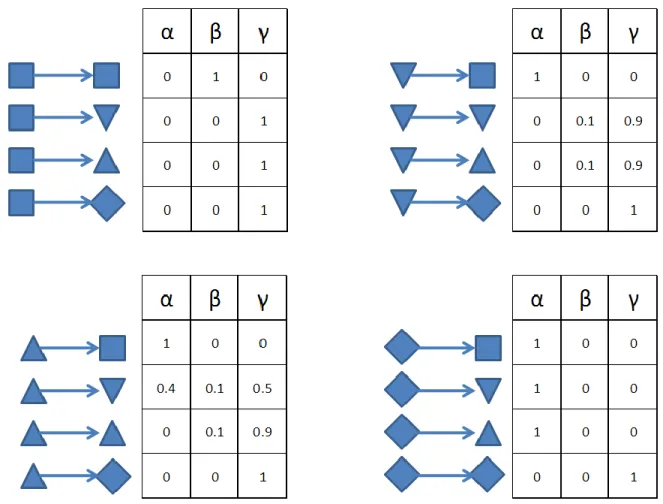
Figure 3.3 – Alpha, Beta, and Gamma Default Values ... 43
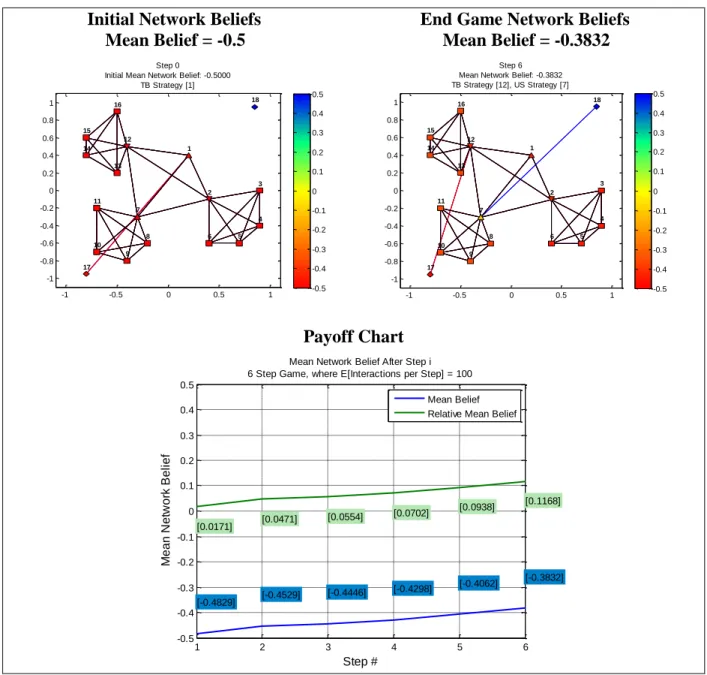
Figure 3.4 – Step 0 (Initial Strategy) and Step 1 (First Strategy) Example ... 54
Figure 3.5 – Non-penalized and Penalized α, β, and γ Matrices ... 55
Figure 3.6 – Absolute Payoff vs. Relative Payoff Example ... 59
Figure 3.7 – Line Graph Example with Regular Agent Chosen as Strategy ... 64
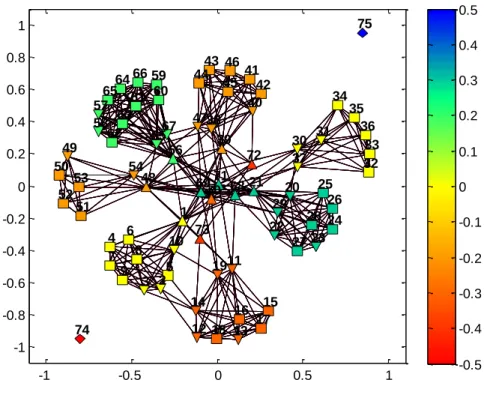
Figure 3.8 – Example 73 Agent Network ... 68
Figure 4.1 – Experimental Network Diagrams ... 76
Figure 4.2 – Experiment 5: First Chosen U.S. Strategy... 80
Figure 4.3 – Experiment 5: First Chosen Taliban Strategy ... 81
Figure 4.4 – Experiment 5: Before Second Chosen Taliban Strategy ... 82
Figure 4.5 – Experiment 5: After Second Chosen Taliban Strategy... 83
Figure 4.6 – Experiment 5: End Game Network Beliefs ... 84
Figure 4.7 – Ending Network Diagram: Mutable Thresholds = 0 Example ... 85
Figure 4.8 – Ending Network Diagram: Mutable Thresholds = 1 Example ... 86
Figure 4.9 – Payoff Function Comparison: Mean Belief and Number of Agents Won Payoff Plots ... 92
Figure 4.10 – Payoff Function Comparison: Payoff Plots for 20-Step Experiment 2 ... 92
Figure 4.11 – Different Society Types ( values): Mean Belief Payoff Plot ... 96
Figure 4.12 – Stimulus Project Default Belief Shocks ... 112
Figure 4.13 – Ending Network Diagram: Stimulus Project Belief Propagation Example ... 116
Figure 4.14 – Ending Network Diagram: No Stimulus Project Example ... 116
Figure 4.15 – Relative Payoff Comparison over Time: Stimulus vs. No Stimulus ... 117
Figure 4.16 – Strategic Planning with Limited Resources: Experiment Set 2 Payoff Plots ... 122
Figure 4.17 – Ending Network Diagram: Assassination Belief Propagation Example ... 126
Figure 4.18 – Ending Network Diagram: No Assassination Project Example ... 127
9
Figure 5.1 – Tipping Point: Network Diagram ... 135 Figure 5.2 – Tipping Point: Linear Relationship Plot ... 137
10
List of Tables
Table 3.1 – Variable Notation Used In Threshold Model Simulation ... 46
Table 3.2 – Number of Agents Won Point System ... 57
Table 3.3 – Example Strategy Profile and Payoff Table ... 60
Table 3.4 – Strategy Space Comparison: Exhaustive Enumeration vs. ‘Selective Search’ ... 65
Table 4.1 – Default Experimental Parameters ... 73
Table 4.2 – Characteristics of Strategies: Experiment Set Description ... 74
Table 4.3 – Characteristics of Strategies: Strategy Profile and Payoff Table Using Howard’s Model ... 77
Table 4.4 – Characteristics of Strategies: Experiments 5 and 6 Strategy Profile and Payoff Tables Using the Proposed Threshold Model... 78
Table 4.5 – Observation #4: Experiment 1 Strategy Profile and Payoff Table ... 87
Table 4.6 – Observation #4: Experiment 2 Strategy Profile and Payoff Table ... 88
Table 4.7 – Payoff Function Comparison: Experiment Descriptions ... 89
Table 4.8 – Payoff Function Comparison: Mean Belief Strategy Profile and Payoff Tables ... 90
Table 4.9 – Payoff Function Comparison: Number of Agents Won Point System ... 90
Table 4.10 – Payoff Function Comparison: Number of Agents Won Strategy Profile and Payoff Tables ... 91
Table 4.11 – Alpha, Beta, Gamma Values for Different Society Types ... 94
Table 4.12 – Different Society Types ( values): Experiment Set Description ... 95
Table 4.13 – Different Society Types ( values): Effect of Evolution of Beliefs ... 96
Table 4.14 – Sensitivity: Experiment Set Description ... 97
Table 4.15 – Sensitivity: Experiment Set Payoff Table ... 98
Table 4.16 – Initial (Step 0) Strategy for Stubborn Agent: Experiment Set Description ... 99
Table 4.17 – Initial (Step 0) Strategy for Stubborn Agent: Strategy Profile and Payoff Tables .. 99
Table 4.18 – Penalty for Identical Strategy ( ): Experiment Set Description ... 100
Table 4.19 – Penalty for Identical Strategy ( ): Experiments 1 and 2 Strategy Profile and Payoff Tables ... 101
Table 4.20 – Run Time Approximation Comparison Table ... 104
11
Table 4.22 – Payoff Maximization: Experiment 1 Exhaustive Enumeration and ‘Selective
Search’ Results... 105
Table 4.23 – Payoff Maximization: Experiment 1 ‘Sequential Search’ Results ... 105
Table 4.24 – Payoff Maximization: Experiment 2 Description ... 106
Table 4.25 – Payoff Maximization: Experiment 2 Exhaustive Enumeration and ‘Selective Search’ Results... 107
Table 4.26 – Payoff Maximization: Experiment 2 ‘Sequential Search’ Results ... 107
Table 4.27 – Payoff Maximization: Experiment 3 Description ... 108
Table 4.28 – Payoff Maximization: Experiment 3 Exhaustive Enumeration and ‘Selective Search’ Results... 108
Table 4.29 – Payoff Maximization: Experiment 3 ‘Sequential Search’ Results ... 108
Table 4.30 – Payoff Maximization: Run Times... 109
Table 4.31 – Phaseshift and Amplitude Sensitivity Experiment Description ... 113
Table 4.32 – Relative U.S. ‘Mean Belief’ Payoffs for Various Phaseshift and Amplitude Values ... 114
Table 4.33 – Stimulus Project Belief Propagation Experiment Description ... 115
Table 4.34 – Strategic Planning with Limited Resources: Experiment Set 1 Description ... 118
Table 4.35 – Strategic Planning with Limited Resources: Experiment Set 1 Case Description 119 Table 4.36 – Strategic Planning with Limited Resources: Experiment Set 1Payoff Table ... 119
Table 4.37 – Strategic Planning with Limited Resources: Experiment Set 2 Description ... 121
Table 4.38 – Strategic Planning with Limited Resources: Experiment Set 2 Case Description 121 Table 4.39 – Strategic Planning with Limited Resources: Experiment Set 2 Payoff Table ... 122
Table 4.40 – Assassination Belief Propagation Experiment Description ... 126
12
13
1
Introduction
During the 20th century, nations on all continents have experienced or intervened in insurgencies. While several counterinsurgency (COIN) operations have proven successful, many have failed miserably. However, the strategic victory over an insurgency does not instantly validate the operational and tactical methods used by the counterinsurgents, nor does it make them applicable for universal use in all COIN operations [1]. Since 2001 the United States has been consumed with ongoing counterinsurgency operations, most notably in Afghanistan and Iraq. Due to the nature of insurgencies, whereby the insurgents limit the effectiveness of conventional warfare by blending in with the civilian population in order to protect themselves, counterinsurgents must adapt their traditional military tactics in order to successfully defeat the insurgents. Thus, substantial emphasis has been placed on winning the support of the civilian population in order to deny the ability for insurgents to have refuge amongst the masses.
1.1 Motivation for Research
The motivation for this research stems from the focus that is placed on winning popular support during counterinsurgency operations. The U.S. military is confronted with the difficult task of gaining the popular support of the populace during its COIN operations in Afghanistan and Iraq. Because the United States has limited resources and personnel, crucial decisions must be made by military commanders on which key civilian leaders to engage in an effort to
optimally influence the entire civilian population. Therefore, this research analyzes the complex problem of choosing which key leaders to engage by implementing a dynamic two-player “chess” game on a social network, whereby the two players (US military and Taliban
insurgents), who have immutable (stubborn) beliefs try to influence the beliefs of the mutable agents in the network toward supporting their cause.
1.2 Thesis Organization
The rest of this thesis is divided into five additional chapters. In Chapter 2 we discuss the nature of insurgencies and counterinsurgencies, and specifically, the inherent struggle to win popular support during counterinsurgency operations. In Chapter 3 we first discuss previous
14
work which has been devoted to the field of belief propagation in social networks. We present enhancements to previous modeling approaches by introducing the formulation of a peer-pressure threshold model and dynamic two-player game. In the network model, mutable agents are assigned a scalar belief between -0.5 (heavily Taliban/anti-US) and +0.5 (heavily pro-US/anti-Taliban). The two stubborn agents (Taliban and US) have immutable beliefs of -0.5 and +0.5, respectively. All agents in the network are assigned different levels of influence depending upon their position in society. The stubborn agents exert the most influence in the network as they try to influence the mutable agents in the network to adopt their extreme beliefs. Stochastic pairwise interactions occur between neighboring agents in the network, whereby influence is spread through the network as agents change their beliefs according to interaction-type
probabilities and the characteristics (i.e. peer pressure effect) of the threshold model. Due to the presence of stubborn agents, which have immutable beliefs of different values, and the stochastic pairwise interactions, the beliefs of the mutable agents end up being random variables over the course of the discrete-time model.
During the two-player game, a US agent and a TB agent are concerned with finding connection strategies to mutable agents in the network in order to maximally influence the network toward support their cause. Both stubborn agents are given alternating opportunities during the game to reevaluate and update their strategy given the current strategy of their opponent and the beliefs of the mutable agents in the network. In Chapter 3 we also introduce two heuristic methods (‘Selective Search’ and ‘Sequential Search’) which drastically reduce the computational time needed to find solutions during the two-player game. We show that as the complexity of the problem increases (i.e. each player is allowed multiple strategy connections to agents in the network), the ‘Sequential Search’ method is necessary as exhaustive enumeration and ‘Selective Search’ do not scale well due to exponential increases in the potential strategy space.
In Chapter 4 we present key observations supported by empirical evidence about the characteristics of strategies chosen by the players to maximize their payoffs. Experiments also show the sensitivity of the solutions to various model parameters as well as different payoff functions used by the players. Moreover, we show that the use of ‘Sequential Search’ to find the best solutions for complex problems does not significantly sacrifice the quality of those obtained
15
solutions when comparing them to the solutions found by the exhaustive enumeration and ‘Selective Search’ methods. The last section of Chapter 4 is devoted to the introduction of population-focused actions available to the US and TB agents in order to influence the propagation of beliefs in the network. The US agent is allowed to conduct stimulus projects, such as building schools, roads, or wells, as well as giving money for economic projects, while the TB agent is allowed to use assassinations. Experimental evidence shows that the use of stimulus projects or assassinations can have long-lasting impacts on the network beliefs. These long-lasting impacts are due to the peer pressure effect which is built into the threshold model and makes agents highly unlikely to change their beliefs away from their neighbors’ beliefs. Finally, Chapter 5 is devoted to introducing interesting areas for future research while Chapter 6 summarizes the work presented in this thesis and offers some conclusions.
16
17
2
The Battle for Popular Support between Insurgencies and
Counterinsurgencies
The United States is known as having one of the most highly capable, conventional military forces in the world due to the presence of high-technology weapons and superior air, land, and sea forces. World War II and Operation Desert Storm showcase prime examples where the United States exerted conventional military tactics with much success. However, since the 1960s, the United States has been actively involved in supporting counterinsurgency efforts in countries all over the world, such as Vietnam, Somalia, Colombia, Peru, El Salvador, Guatemala, Nicaragua, and most recently, Afghanistan and Iraq. Due to the landscape of irregular warfare during counterinsurgency operations, whereby the use of military forces in a conventional sense is limited, the United States has been forced to alter and adapt the use of its military force in order to accomplish strategic, operational, and tactical goals against the insurgencies. Political power is the key issue which is sought by insurgents and counterinsurgents as both sides strive for popular support of the people. As such, the U.S. Army states that the “primary objective of any COIN operation is to foster development of effective governance by a legitimate
government,” which is obtained by winning the support of the general populace [2].
Lieutenant General William B. Caldwell, IV, who is a general in the U.S. Army tasked with writing doctrine for the Army, recently wrote:
The future is not one of major battles and engagements fought by armies on battlefields devoid of population; instead, the course of conflict will be decided by forces operating among the people of the world. Here, the margin of victory will be measured in far different terms than the wars of our past. The allegiance, trust, and confidence of populations will be the final arbiters of success [3].
As General Caldwell mentions, future wars will not be fought on open battlefields with large conventional military forces, but will rather be fought over gaining the allegiance and support of the population. Therefore, the success of the United States during its current (and future)
counterinsurgency efforts will undoubtedly hinge upon the ability for the United States to perfect its strategies for engaging the populace, while simultaneously thwarting the ability for insurgents to gain prominent footholds as legitimate authorities.
18
2.1 The Nature of Insurgencies
The United States military defines an insurgency as an “organized movement aimed at the overthrow of a constituted government through the use of subversion and armed conflict” [2]. Insurgents conduct organized politico-military operations in a protracted environment in order to weaken the control and legitimate power of the established government. Insurgents use all methods available to them in order to gain political power and support from the population as legitimate authorities. These tools include, but are not limited to, political, informational (such as appeals to ideological, ethnic, or religious beliefs), militaristic, and economic. The most common approaches to warfare used by insurgents are terrorist and guerrilla tactics. While insurgents would prefer quick and overwhelming victory rather than a long and protracted struggle, the latter often occurs due to the significant disadvantage insurgents face in terms of resources and technology to fight on the open battlefield [2].
Although each insurgency is unique in its specific motives, many similarities exist among them. In every case, insurgents strive to cause political change and the use of military force in order to achieve such change is secondary in nature and only used as a means to an end. Moreover, protracted conflicts only serve to favor insurgents as no other approach seems too make better use of such asymmetry than conducting a protracted popular war. Many historical insurgencies used the protracted warfare approach in order to eventually wear down the enemy and secure victory—examples include the Chinese Communists in conquering China after World War II, as well as the North Vietnamese and Algerians. Additionally, the United States has similarly been exposed to the protracted mindset of the insurgents they face as some Al Qaeda leaders have suggested such approaches in their propaganda writings [2].
Mao Tse-tung’s Theory of Protracted War
Mao Tse-tung is known as being the ‘father of modern insurgency’ due to his 1937 book
On Guerilla Warfare which outlined how the Chinese people should organize and conduct
unlimited guerilla warfare on the Japanese invaders of China during the Second Sino-Japanese War. His theory of protracted war outlines three strategic phases that should be used by
19
insurgents in order to eventually wear down and eventually defeat the enemy, namely (1) Strategic Defensive, (2) Strategic Stalemate, and (3) Strategic Counteroffensive [2, 4].
Phase I – Strategic Defensive
During Phase I, the insurgency is in a dormant state which is focused on survival and building support for its cause. Insurgents in this phase are much weaker than the government which has superior strength in forces. Thus, insurgent leaders establish base camps and gain support from the population through the use of propaganda, boycotts, sabotage, and
demonstrations. Major military combat with the enemy is avoided during this phase as the primary focus is establishing the insurgent movement among the populace by creating logistical support networks, finding recruits, and gaining intelligence on the enemy. Army Field Manual (FM) 3-24 highlights a list of key objectives which are accomplished by the leaders of the insurgency during this phase [2]:
Recruit, organize, and train cadre members
Infiltrate essential government organizations and civilian groups
Establish cellular intelligence, operations, and support networks
Solicit and obtain funds to support the movement
Develop sources for outside support
Lastly, during the later stages of Phase I, the insurgency may decide to establish a counterstate (or shadow government) which is in opposition to the established government authority and designed to replace the existing government [2].
Phase II – Strategic Stalemate
Phase II is characterized by the expansion of insurgent military forces and overt guerrilla warfare. The objective of the insurgency during this phase is to undermine the people’s support of the government while at the same time expanding their areas of control. The insurgents attempt to delegitimize the government by showing the people that the government is incapable of maintaining control of the country and protecting its people. They accomplish this by attacking government forces to show their ineffectiveness while simultaneously conducting
20
aggressive propaganda campaigns and information operations to influence the populace. Phase II is a combination of military actions by both sides against each other and a simultaneous fight for the support of the people. The military actions of the insurgents have two main purposes— (1) to decrease the fighting capability of the other side, and (2) to convince the people that the insurgents are stronger and more worthy of support. Due to the massive recruiting efforts during Phase I (and continuing throughout the insurgency), the insurgents have enough military force to enable them to concentrate their resources for short periods in order to locally overwhelm
government forces. However, the insurgents cannot concentrate their forces indefinitely in any one area and must be able to effectively hide their forces among the people in order to prevent their destruction by the government’s superior firepower [2].
In Phase II the insurgency gains popular support in many ways. First they conduct attacks against government targets (security forces, infrastructure, and individuals), which show the impotence and ineffectiveness of the government, while highlighting the strengths of the insurgents. Shadow governments established by the insurgents in areas they control provide services (mainly through conflict resolution, legal, and financial means, not infrastructure) and security for their supporters and work to supplant local government by showing the
incompetence of the government. Large information campaigns against the government further erode popular support. Throughout Phase II the insurgent is focused on simultaneously
strengthening himself and weakening the government through protracted conflict [2]. Phase III – Strategic Counteroffensive
Finally, Phase III is designated by the insurgency as a counteroffensive period whereby the insurgents sense weakness in the established government authority. The insurgents transition from guerilla warfare to conventional warfare during the counteroffensive movement as they aim to destroy the enemy’s military capability and will to fight. Success in Phase III is determined largely by armed conflict, and not propaganda or popular support. However, failure of the insurgent in Phase III does not mean its destruction. Success or failure is often decided quickly in Phase III as it is readily apparent that one side or the other is stronger and military success often rapidly follows [2].
21
If the counteroffensive movement is successful and the insurgents begin to gain control of portions of the country they become responsible for the population, resources, and territory under their control. Thus, as the balance of power shifts from the government to the insurgents, it is important for the insurgents to maintain the support of the people by:
Creating an efficient civil administration
Establishing an effective military organization
Providing balanced social and economic development
Mobilizing the population to support the insurgency
Protecting the population from hostile actions
A triumphant insurgency does not, however, depend on the sequential or successful application of all three stages. The overall objective of any insurgency is to achieve political power. Therefore, if the insurgency is unsuccessful in a later phase it can easily revert back to an earlier stage until a new opportunity presents itself for transition into the next stage. Moreover,
insurgents are not required to follow Mao Tse-tung’s exact formula for protracted war in order to be successful. Recent insurgencies, such as the Algerians, have been successful without the use of large-scale conventional warfare. Thus, counterinsurgents are faced with a significant challenge in defeating insurgents due to the nature of insurgencies which, although have similar end objectives of gaining political power, can be very different in their specific characteristics, strategies, and tactics used against the government [2].
2.2 The Nature of Counterinsurgencies
The United States Army Field Manual 3-24 defines a counterinsurgency as “military, paramilitary, political, economic, psychological, and civic actions taken by a government to defeat insurgency” [2]. Because political power is the central issue fought over by insurgencies and counterinsurgencies, counterinsurgents will use all available instruments of national power in order to maintain the established or fledgling government from losing its legitimacy. Thus, even though the main purpose of America’s military is to fight and win wars for the United States, while at the same time securing and defending the nation from potential adversaries, the
22
unique nature of counterinsurgency efforts requires the U.S. military to adapt to a different landscape of conflict.
Counterinsurgents must not only be ready to fight, but also to build and provide security for the population. COIN operations consist of a mix of offensive, defensive, and stability operations, whereby the exact proportion of effort devoted to each will change over time depending on the current situation. The protection, welfare, and support of the populace are crucial to the success of any counterinsurgency effort due to the intelligence gained from the local people in identifying and eventually rooting out the insurgents. Thus, counterinsurgencies should place significant focus on isolating the insurgents from their cause and support because it is “easier to separate an insurgency from its resources and let it die than to kill every insurgent” [2]. Although killing and capturing insurgents is necessary during COIN operations, attempting to eliminate every insurgent is impossible and can also be counterproductive in terms of
producing popular resentment and/or creating martyrs which increase the number of new recruits seeking revenge. Therefore, only after popular support has been won by the counterinsurgents will the insurgency be conquered as (1) the reliance on external support, (2) the need for secrecy in base camp operations, and (3) the capability of hiding amongst the populace are three key vulnerabilities facing insurgencies which can be thwarted by intelligence gained from the population supporting the cause of the counterinsurgency [2].
2.3 Nonlethal Targeting used to Win Popular Support
Any insurgent movement requires the support of the populace in order to survive, let alone to succeed in overthrowing the government. In order to grow and gain strength, an
insurgency requires a sufficiently sized population base which will actively support the growth. Thus, one of the most effective ways for counterinsurgents to defeat the insurgents is to
efficiently shrink the population base supporting the insurgency by causing the local populace to become hostile or at least apathetic towards the insurgents [5]. As previously discussed,
insurgents heavily rely on safe havens within the communities in order to remain hidden from government forces. These safe havens, however, only exist whenever sufficient numbers of the local population support the insurgents [2].
23
During the struggle between insurgents and counterinsurgents, there will be a minority of people who actively support each side and a majority of people who are either passive in their support or are indifferent toward either side. This concept is best illustrated below in Figure 2.1 from Army Field Manual 3-24.2 [5]. The three main components (active support, passive support, and indifferent) are described in further detail below.
Active Support: Active supporters view the side they support as the legitimate authority, and they personally or publically align themselves with this side. Besides joining the militia, active supporters of an insurgency may participate in a wide array of other activities in support of their side including: spreading propaganda, giving financial support, offering medical assistance or safe havens, providing intelligence or logistical support, and recruiting others to join the cause [2]. Meanwhile, active supporters of the existing government may join the military or police force, provide intelligence to the counterinsurgents, and spread propaganda denouncing the insurgents [6].
Passive Support: Passive supporters are those people who are sympathetic toward one side yet who remain inactive and non-hostile towards those you are not sympathetic toward their cause. Passive supporters of the insurgency are those who allow insurgents to conduct operations in their local proximity and remain silent (or give false
information) if asked by counterinsurgents about intelligence concerning insurgent activity [2]. Passive supports of the counterinsurgents obey the rule and laws of the government and may support COIN operations against the insurgents if there is minimal risk [6].
Indifferent: Indifferent individuals are those who represent a large portion of the population. They are unsure of which side to support and have a tendency to either (1) remain neutral until there is clearly a victor, or (2) cater to whoever has a stronger presence in their proximity [2].
24
While both the insurgents and counterinsurgents are vying for support of the populace, the proportion of popular support that is needed for each side to be victorious is very different. Because insurgents can easily create disorder and havoc, the counterinsurgents must usually obtain much greater than 50 percent of the popular support. Meanwhile, a largely passive
populace may be all that is necessary for an insurgency to be successful and seize political power [2]. Thus, in order to effectively eliminate an insurgency, counterinsurgents must focus their efforts on achieving a great majority of the popular support through nonlethal targeting methods, such as personal communications, negotiations, and meetings with the population, especially with those individuals who are passive or indifferent.
Although lethal targeting may be necessary, the success of any counterinsurgency ultimately hinges on the ability to win the ‘hearts and minds’ of the populace through nonlethal targeting strategies. ‘Hearts’ refers to the ability to persuade the people that their best interests are served by counterinsurgency success, whereas ‘minds’ means convincing the population that the government force can protect them and that resisting the COIN effort is pointless [2]. However, because the U.S. military has limited resources and personnel, critical decisions must be made by ground forces on whom to selectively target with the end goal of winning the ‘hearts and minds’ of the most people. Although the U.S. Army’s two primary field manuals on
counterinsurgency (FM-3-24 [2] and FM 3-24.2 [5]) combine for more than 500 pages of COIN doctrine, of which roughly 50 pages discuss targeting, the advice given for how an Army unit should specifically determine which individuals to target and how to engage them is quite vague. Together, these two manuals state the following:
Identify leaders who influence the people at the local, regional, and national levels.
Win over passive or neutral people.
Nonlethal targets include people like community leaders and insurgents who should be engaged through outreach, negotiation, meetings, and other interactions.
Meetings conducted by leaders with key communicators, civilian leaders, or others whose perceptions, decisions, and actions will affect mission accomplishment can be critical to mission success.
Start easy…Don’t try to crack the hardest nut first—don’t go straight for the main insurgent stronghold, try to provoke a decisive showdown, or focus efforts on villages
25
that support the insurgents. Instead, start from secure areas and work gradually outwards. Do this by extending your influence through the locals’ own networks.
The task of determining which people to target at any given time is difficult. Successful nonlethal targeting tactics used in one COIN effort may not produce the same results when used in another COIN operation, which is why it is impossible for a manual to give deterministic formulas for nonlethal targeting strategies. Thus, the Army manuals only provide general, experienced-based guidelines and approaches for how Army commanders should determine which local leaders to target.
This thesis focuses on arguably the most important aspect of any counterinsurgency effort—the extremely difficult task of determining which individuals to engage through
nonlethal means in order to gain the most support of the populace. The objective of this thesis is to formulate a realistic, peer-influence social network to model the population of a rural
Afghanistan district, and subsequently develop decision tools to help military commanders decide which individuals to engage through nonlethal targeting techniques. The proposed methods seek to determine the impact of different targeting strategies on the population’s
attitudes over time with the goal of maximizing the beliefs of the populace in support of the U.S. counterinsurgency cause.
26
27
3
Modeling Approach and Formulation
We begin Chapter 3 by with a literature review of belief propagation in social networks. More specifically, we discuss the foundational modeling approach proposed by Acemoglu et al. [7] and Hung [8] as well as shortcomings of the model which have inspired the development of our model. Lastly, we discuss the formulation of a dynamic, two player “chess game” approach whereby U.S. forces and Taliban insurgents attempt to maximally influence the beliefs of the people in the network in a transient environment.
3.1 Literature Review
Below we discuss the major work done in the field of modeling societal networks and the diffusion of information in such networks. This literature serves as the foundation of our
modeling approach.
3.1.1 Influential Leaders in Social Networks
The key to understanding the problem of belief propagation in social networks is first to understand the characteristics of the network and how information flows from one person to the next. Katz and Lazarsfeld [9] led the way in the field of social science and public opinion
formation through the creation of their ‘two-step flow’ model of communication. They theorized that individuals in society may in fact be influenced more by the exposure to one another than by their exposure to the mass media. Thus, they argued that a small minority of influential ‘opinion leaders’ act as liaisons between the media and the rest of society—hence, the ‘two-step’ process. It is these influential leaders who have the greatest access to media as well as a better
understanding of the content. In turn, each opinion leader shapes and molds the media’s content and diffuses the information to the people they wield influence over—as the followers of opinion leaders tend to share the same interests, demographics, personalities, and/or socio-economic factors. As such, the idea of focusing political campaigns on influencing the attitudes of influential leaders, and not the attitudes of the critical masses, stemmed from the work done by Katz and Lazarsfeld as it is the influential leaders who are responsible for spreading information and shaping the beliefs of the masses.
28
Since the foundational work of Katz and Lazarsfeld, many have offered both criticisms and follow-on support for the two-step communication model. Watts and Dodds [10] question how precisely influential leaders exert their influence over their followers in society. They seek to determine “exactly how, or even if, the influentials of the two-step flow are responsible for diffusion processes…or other processes of social change.” Watts and Dodds do not entirely discount Katz and Lazarsfeld’s two-step model, since their research finds examples supporting the idea that opinion leaders are responsible for generating significant ‘cascades’ of influence. However, they believe this is the exception and not the general rule, as they find that influential leaders are “only modestly more important than average individuals.” As such, they claim that the main factor which drives belief propagation in social networks is not the opinion leaders, but rather by easily influenced individuals in turn persuading other easily influenced individuals. This notion directly relates to the ideas behind the cascade and linear threshold models, which will be discussed shortly.
3.1.2 Opinion Dynamics
While several researchers have developed methods for understanding the social aspect of belief propagation and the roles of opinion leaders, others have developed mathematical models to simulate and analyze how information spreads through a social network. In 1964, Abelson [11] created a network model such that pairwise interactions occur between agents in the network which are adjacent to one another (i.e. interactions are only able to occur between agents who know each other, and such adjacency connections resemble those relationships and enable a way for information to be shared or obtained). As two agents interact with each other, the resulting outcome is a function of the two agents’ original beliefs as well as their
persuasiveness. While Abelson’s work was an initial step towards a field of much uncertainty, he does mention the limitations of his model since all agents eventually reach a consensus agreement on their opinions which is not necessarily realistic in society.
Later, in 1974, DeGroot [12] used Markov chain theory to model opinion dynamics in society. Each agent predetermines weights for each of his neighbors (adjacency connections) from which he/she obtains information. For instance, if agent believes agent is a
29
( ) for his connection between agent . For all agents and their edges, these weights are obtained and comprise what is known as a one-step transition probability matrix of a Markov chain. What makes the transition probability matrix interesting is that the matrix is stochastic since all rows must sum to one. Because of this, DeGroot notes that “if all recurrent states of the Markov chain communicate with each other and are aperiodic, then a consensus is reached.” This consensus opinion is calculated as the sum product of the steady-state probabilities (which can be determined because all recurrent states of the chain communicate and are aperiodic) and the initial opinions. Even though DeGroot mentions how a consensus is not reached should the recurrent and aperiodic condition not be met, his consensus-driven approach to the attitudes of agents in a network is not necessarily appropriate in a realistic setting as people have diverse opinions on all matters and do not always reach a consensus.
Moving forward, Acemoglu et al. [7] developed the spread of (mis)information model which is a stochastic, agent-based network model with two types of agents—regular and forceful. As such, forceful agents in the network are those agents which have a positive
probability of forcefully imparting their belief on other agents, while regular agents do not have such a capability. Pairwise interactions between adjacent agents occur according to two
probabilistic features—(1) the frequency of their interactions and (2) the type of interaction which occurs, whether it be averaging (both agents average their beliefs), forceful (one agent influences another), or identity (no change in belief). The authors mention the importance of the assumption that “no man is an island” which essentially states that no agent is completely
unaffected by the beliefs of those around him. Because of this assumption, in which even forceful agents (with possibly vastly different starting opinions) are capable of being affected by the beliefs of the rest of society, the network beliefs arrive at a consensus among all agents; however, such a consensus is a random variable as the beliefs converge to a convex combination of the initial scalar beliefs.
More recently, Hung [8] added to the existing model developed by Acemoglu et al. [7] by creating a ‘very forceful’ agent class (who are even more influential than the ‘forceful’ agents) as well as a set of ‘stubborn’ agents with beliefs that are static and never change. Thus, the
‘stubborn’ agents are the most forceful (influential) agents in the network and effectively diffuse their beliefs throughout the network. Because of the presence of ‘stubborn’ agents, the beliefs of
30
the agents in the network never converge to a single value. However, Hung was able to characterize a well-defined first moment for the random variables of each agent’s belief. Over time, the expectation converges to an equilibrium value, which means that the belief of each agent converges in expectation to a fixed value in a sufficient amount of time. Lastly, although it is mentioned that the beliefs of the agents do not converge to fixed values in simulation (once again, due to the presence of ‘stubborn’ agents), Hung does show that the beliefs converge to a type of stochastic equilibrium such that the average of all agent beliefs in the network oscillate around the expected mean belief of the network.
Hung also made two other important contributions—(1) he created a network generator tool and (2) he developed a non-linear, non-convex, mixed integer mathematical formulation to solve the complex problem of finding stubborn agent placements in order to maximally influence the network. The network generator tool was created in a collaborative effort between Hung and the MIT Political Science Department. The tool is designed to create realistic social interaction networks among Pashtun local leaders in a rural Afghanistan district. We will extensively use this network generator tool for the experiments and analyses conducted in Chapter 4. The inputs to the generator include information and intelligence that would hopefully be accurately gathered by counterinsurgents during interactions with the local population. These inputs would include: (1) determining who the local leaders are and their specific roles in society, (2) an estimation of the attitudes of the local population (the specific context to be discussed later), and (3) how many Taliban agents there are and with whom do they interact with and influence. The network
generator tool takes these inputs and creates homophily connections between agents who are likely to interact with each other based on socio-demographic features. The resulting network created contains a list of agents and their connections in an undirected graph denoted as . Next, based on the network which is created (including the locations and connections of the Taliban ‘stubborn’ agents), Hung’s mathematical program would determine the optimization-based placement for U.S. ‘stubborn’ agents in order for the U.S. agents to maximally influence the network based on the long-term expected attitudes of the agents.
Howard [13] subsequently determined that Hung’s placement solutions for U.S. stubborn agents were local optimums based on his results analyzing the same problem with a new
31
for Nash equilibrium solutions (whereby neither stubborn agent can improve his payoff by unilaterally deviating from the current strategy). His algorithm employed ‘best response
dynamics’ in a back-and-forth updating game until Nash equilibria were either found to exist or not exist. Although Howard mentions the limitations of simulated annealing (no guarantee of finding global optimum solutions and problems dealing with cases that contain multiple equilibria), he does point out that not only were his solutions better than Hung’s, but that his simulated annealing heuristic was much faster, too.
Both Hung and Howard contributed greatly to the problem of modeling rural Pashtun villages in Afghanistan and formulating programs to determine optimization-based placements of stubborn agents in order to maximally influence the network. However, in this thesis we take a new approach to this problem, and we present reasons for improving their models in the
following section as we attempt to reach a more realistic setting in terms of the modeling approach and the two player game.
3.1.3 The Need for a More Realistic Model
There are several areas of improvement concerning the previous models presented by Hung and Howard which we address here. First, one of the characteristics of the previous models was that the long-term expected beliefs are independent of the initial beliefs of the mutable agents in the network. Hung and Howard both found that the long-term expected attitudes only depend on the underlying influence parameters and topology of the network (particularly the placement of stubborn agents). From a real world point of view, this finding seems unrealistic, especially if we view two extreme cases of the same network with different initial conditions—(1) every agent’s initial belief is -0.5 (pro-Taliban), except for the U.S. stubborn agent which has an immutable belief of +0.5, and (2) every agent’s initial belief is +0.5 (pro-United States), except for the Taliban agent which has an immutable belief of -0.5. In the previous implementations, both extreme cases would yield the same expected long-term beliefs through both the analytical expression and simulation, assuming enough interactions are allowed to occur for the network beliefs to converge to a quasi-equilibrium state. Reasonably, one would anticipate entirely different long-term beliefs for these two extreme cases as other factors, such as peer pressure, will affect the degree to which an agent is willing to change his or her belief.
32
Thus, if a network is highly concentrated with like-minded agents, we expect the agents in the network to remain close to these initial beliefs despite outside influence from a stubborn agent of an opposing belief. This leads us to propose incorporating peer pressure into the model which will affect belief propagation during pairwise interactions.
An important aspect which was not included in the previous models was the effect peer pressure can play in how influence propagates through the network. For example, one may be more likely to change their current opinion about an issue given 90% of their friends now hold a new opinion versus the same scenario whereby only 10% of their friends hold the new opinion. We believe peer pressure plays an integral part in affecting attitude dynamics and should thusly be included in the social influence model.
Next, Howard’s two-player game approach was concerned with finding Nash equilibria. In this situation, opposing stubborn agents would play a back-and-forth game connecting to agents until (hopefully) a pure Nash equilibrium strategy was found whereby both agents would settle on the same targeted agent and exert equal, polar-opposite influence on the particular agent. The opposing stubborn agents (Taliban and United States) would not be inclined to unilaterally deviate from the Nash equilibrium strategy as doing so would be unbeneficial
towards their respective payoffs. The problem with this implementation is two-fold. First, it is a very strong and possibly unrealistic assumption that Taliban insurgents and U.S. ground forces would be content on ‘talking’ to the same local/district leader in order to influence them (and the rest of the Pashtun village(s)) toward supporting their cause. Second, even if the U.S. and Taliban agents were to settle on the same agent to influence, one would not expect equal
influence to be exerted by both stubborn agents on the targeted agent as an inherent bias toward supporting one side would most likely occur rather than indifference toward both sides. We therefore will consider enhancements that will put pressure on stubborn agents to select different strategies during the course of the two-player game.
Finally, both Howard and Hung concentrated on modeling and understanding the long-term expected attitudes of the network as the network beliefs reach an asymptotic equilibrium state. In a constantly-changing, dynamic world, analyzing the long-run equilibrium state of the network seems unrealistic. We should instead be concerned with the transient state of the
33
network to enable quick strategy changes given short-term information on the state of the network. Therefore, we seek to implement a two player game centered on the transient
environment in a back and forth ‘chess game’ whereby the opposing stubborn agents consistently reevaluate and update their strategies as necessary.
Based on the proposed areas of enhancement for the model, we seek guidance from literature on different social influence models which may be better suited for creating more realistic models of society. Furthermore, we also seek literature which focuses on the transient behavior of belief propagation in social networks rather than the long-term asymptotic equilibria.
3.1.4 Cascade and Threshold Models
Schelling [14, 15] discusses how discriminatory individual behavior can lead to
segregation, separation, or sorting in society. Such discriminatory behavior can be a conscious or an unconscious awareness to age, religion, sex, color, etc. that influences the decisions people make about where to live, where to sit, what job to get, and with whom to talk to and associate with. Schelling creates models in which members of two distinct ‘color’ groups make
discriminatory choices about their locations based on the identities of their neighbors. Thus, an individual will move if he is not satisfied with the ‘color’ mixture of his neighborhood.
Schelling mentions some individuals may be more tolerant than others, and thus, it takes a higher percentage of their neighbors to be of a different ‘color’ group before they become unsatisfied and change their location. Because of the inherent preference for people to be surrounded by others who are similar to themselves, Schelling shows how people can promote segregation through their individual discriminatory choices of everyday life. Lastly, Schelling touches on a topic called neighborhood ‘tipping’ which occurs when a new minority enters a particular neighborhood in sufficient enough numbers to cause the previous majority group to begin evacuating and relocating as the ‘tipping point’ is reached and they eventually become the minority.
In 1978, Granovetter [16] expanded on the initial segregation models created by
Schelling and proposed the threshold model as an approach for modeling societal networks. He argued that an individual’s behavior depends on the number of people who are already engaging in such behavior, which thus gives notion to the way peer pressure influences behavior and
34
opinions. Therefore, every person has their own ‘behavioral threshold’ which is the proportion of friends which must participate in some action before he or she will be convinced or persuaded to participate in the same action. Thus, an individual with a ‘threshold’ of 0% would be
classified as an ‘instigator’ since 0% of that person’s friends would need to previously be partaking in the desired behavior before he or she decides to as well. Meanwhile, people who are more conservative in nature will have higher thresholds—e.g. 80% to 90%. Since people are assumed to act rationally in order to maximize their utility, their individual ‘threshold’ values should be the point at which the perceived benefits of holding some opinion or doing some action outweigh the cost of not doing so.
Recently, Kempe et al. [17] discussed the problem of maximizing the expected spread of an idea or behavior within a societal network due to the presence of ‘word-of-mouth’ referrals. He introduced two stochastic influence models – the independent cascade (IC) model and the
linear threshold (LT) model. In the IC model, Kempe et al. assigned each edge an activation
probability and influence is spread in the network by activated nodes independently activating their inactive neighbors based on the activation probabilities. Meanwhile, the LT model assigns weights to each edge as well as threshold values to each node. In this process, a node will become activated if the weighted sum of its active neighbors exceeds its individual threshold value. Kempe et al. proved that the influence maximization problem in both the IC and LT models are NP-hard. They also developed a greedy algorithm for the models which successively selects the node with the maximum marginal belief propagation. Lastly, they showed that their greedy algorithm approximates the optimal solution within a ratio of , or 63%. This approximation ratio stems from the nice properties (monotonocity and submodularity) of the belief propagation function used by the models.
3.1.5 Transient Behavior of Belief Propagation in Social Networks
Ozdaglar and Yildiz [18] studied the optimal placement of stubborn agents in order to maximize the spread of opinions in the transient setting. They assumed an undirected network G, with a set of stubborn agents of belief zero, , with known locations, and well as the initial beliefs of the remaining nodes in the network (either type 0 or type 1). Their goal was to choose
35
maximized after l steps, where . Ozdaglar and Yildiz produced several conclusions for the influence maximization problem for the transient case—(1) it is always optimal to target nodes with type 0 beliefs rather than type 1 beliefs, (2) optimal target nodes ideally have a large number of neighbors with small neighborhoods, and (3) the neighborhoods are dominated by nodes with belief type 0. They noted that their results are valid when
maximizing the expected belief of the network for one step into the future.
3.2 Proposed Threshold Network Model Formulation
In the previous section, we mentioned areas of enhancement to be explored from the preceding models developed by Hung and Howard. Thus, the intent of the current modeling formulation is to address those areas with the following measures—(1) the long-term beliefs of the mutable agents in the network should be dependent on the initial beliefs of those mutable agents, despite the presence of stubborn agents, (2) peer pressure should affect the outcome of belief exchanges during pairwise interactions, (3) the appeal of identical strategies among opposing stubborn agents (U.S. and Taliban) should be diminished during the two player game, and most importantly (4) we concentrate our focus on studying the transient behavior of the two-player game whereby continual readjustments can be made by both opposing stubborn agents as the game progresses. The proposed formulation adds additional insights into the field of social influence models and how belief propagation is affected due to various modeling parameters.
3.2.1 Scope of the Model
Hung’s large, 73 node (excluding stubborn agents) network model, which is created through the use of his network generator tool, is designed to accurately represent an Afghanistan district composed of several villages. Districts in Afghanistan are typically comprised of 10-20 villages, each of which contains approximately 100 households or more. We limit ourselves to modeling one Pashtun district in Afghanistan throughout this thesis for three reasons. First, U.S. Army company commanders deal with the problem concerning this thesis—how to maximally influence a rural Pashtun district—and thus, we attempt to mimic the role of an Army company commander by focusing our analysis on only one district. Second, a much larger network spanning many districts in Afghanistan can make the optimization aspect of the problem very
36
tedious and time consuming. Finally, Afghanistan districts tend to follow historical tribal and social boundaries of which it is believed that the opinions of villagers in one district are greatly independent of the opinions of villagers in another district [13]. Thus, networks containing multiple districts might be deemed unnecessary as sequential analyses of individual districts may be just as accurate.
3.2.2 Network Characteristics
We assume we are given an undirected network, , where represents the set of agents (i.e. individuals, nodes, or vertices) and is the set of connections (i.e. edges or arcs) between those agents. Throughout our analysis we assume the topology of the network is static such that no agents are added to or removed from the network over the time horizon we are concerned with in the experiments. Because we are focusing our analysis on the transient (short-term) behavior of the network, rather than the long-term behavior (as Hung and Howard had previously analyzed), the assumption of a static network structure is more believable. We do make two exceptions to the notion of creating a static network structure. First, stubborn agents are allowed to change their connections (arcs) to different mutable agents over the course of the two player dynamic game in an attempt to maximally influence the network beliefs toward supporting their cause. Second, special cases involving the Taliban stubborn agent whereby they ‘assassinate’ an agent in the network will temporarily decrease the forcefulness (influence) level of that agent. Both of these exceptions will be discussed later.
3.2.3 Agents Characteristics
3.2.3.1 Belief Spectrum
We assign each agent in the network a scalar belief on the continuous spectrum from -0.5 to +0.5 (see Figure 3.1 below). This belief indicates how favorable or unfavorable an agent is toward the United States (US) or Taliban (TB). For example, an agent who has a belief of -0.5 strongly favors the Taliban (and is heavily opposed to the US), while an agent with a belief of +0.5 is strongly supportive of the US (and is heavily opposed to the TB). Meanwhile, an agent with a belief of 0 (neutral) is indifferent toward both sides.
37
Figure 3.1 – Agent Belief Spectrum
3.2.3.2 Forcefulness (Influence) Level
Moreover, each agent is assigned a particular forcefulness or influence level depending on the type of person they are in society, which directly relates to their job or role in society. We describe the four types of influence levels below:
Regular
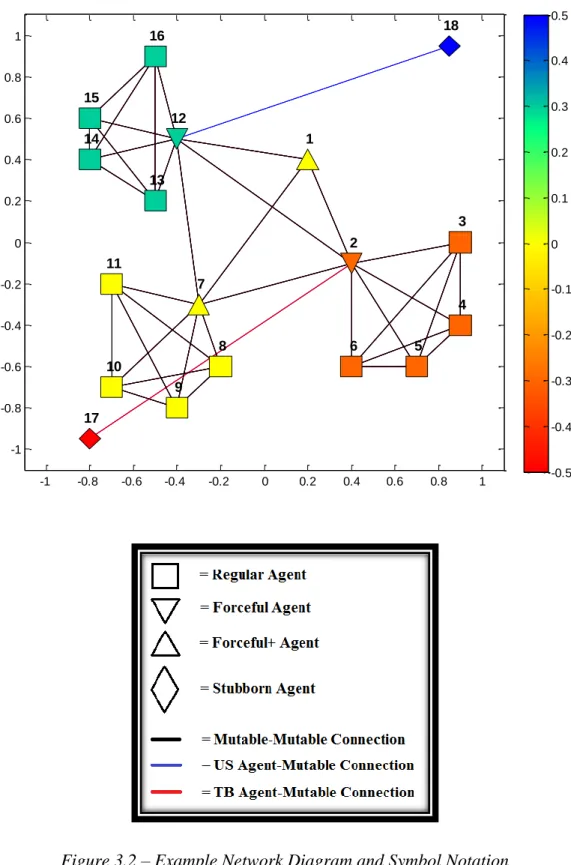
A regular agent is an agent who is a head of household in a rural Pashtun village. Typically, the head of household is the eldest male within a family and is the only voice of the house that matters during important tribal meetings. In Pashtun society, it is not uncommon for more than one generation to live under the same roof, which can amount to up to 40 people living in the same house [19]. While there may be minor disputes between individuals of the same household, we assume that the belief of the eldest male (head of household) accurately represents the belief of everyone living in the house, especially due to the fact that the society is highly patriarchal. As such, regular agents have the lowest level of influence of all agents in the network, but they realistically represent all of the family members who reside under one roof. Regular agents are represented as squares in the network diagrams.
Forceful
Forceful agents are village leaders which hold more influence than the ‘regular’ head of household agents within a village. Although forceful agents are also most likely to be the head of a household, their role in society gives them further influence than regular agents. Some examples of forceful agents include local (village) religious figures, members of the Shura
38
(advisory council in rural Pashtun society), or wealthy merchants. Forceful agents are depicted as upside-down triangles in the network diagrams.
Forceful+
Forceful+ agents are even more influential than forceful agents. They represent more central and powerful individuals in Pashtun society, such as district government officials, district religious figures, or the district police chief. Because forceful+ agents are often more centrally located within the network, they wield influence beyond just the village setting. Forceful+ agents are represented as triangles in the network diagrams.
Stubborn
Stubborn agents are the most influential agents in the network. Also, stubborn agents are the only agents in the network with immutable (unchangeable) beliefs. There are two stubborn agents in the network (one US agent representing military ground forces with belief +0.5 and one Taliban agent representing insurgents with belief -0.5). We assume that the US and TB have immutable beliefs of +0.5 and -0.5 because it is unlikely that either opposing stubborn agent can effectively influence and change the belief of the other stubborn agent. The goal of each
stubborn agent is to maximally influence the beliefs of the mutable agents (regular, forceful, and forceful+) in the network toward supporting their cause. Stubborn agents are depicted as
39
Lastly, we represent all agents in the network through the following set notation found below. Agents belong to specific sets based on their forcefulness level.
In Figure 3.2, we represent a general network diagram to illustrate the various concepts discussed thus far. Note that the current belief of each agent is represented by the color of their respective node symbols, which is based on the color spectrum shown in Figure 3.1.
For the convenience of the reader, Appendix A contains a list of all variable notation and their definitions introduced in this chapter.
40
Figure 3.2 – Example Network Diagram and Symbol Notation -1 -0.8 -0.6 -0.4 -0.2 0 0.2 0.4 0.6 0.8 1 -1 -0.8 -0.6 -0.4 -0.2 0 0.2 0.4 0.6 0.8 1 1 2 3 4 5 6 7 8 9 10 11 12 13 14 15 16 17 18 -0.5 -0.4 -0.3 -0.2 -0.1 0 0.1 0.2 0.3 0.4 0.5
41
3.2.4 Pairwise Interactions
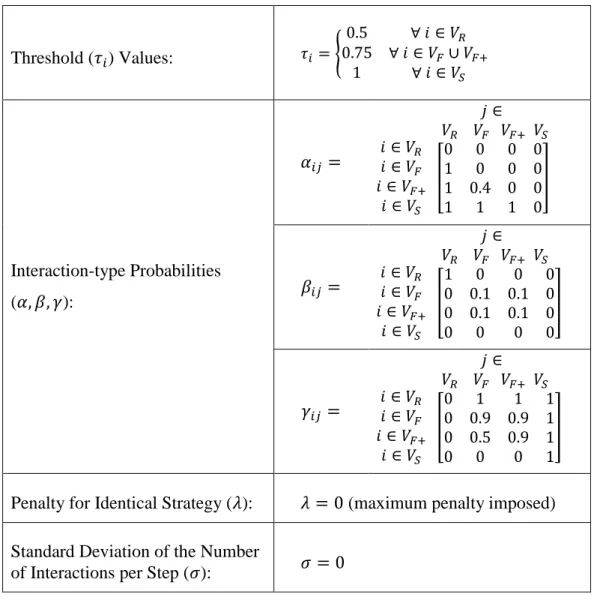
We assume all agents have an identical Poisson process with rate 1. Thus, conditioned on the fact that an arrival has occurred in the network, it has an equal probability of having arrived in any agent’s Poisson process.
When an arrival occurs in a particular agent’s Poisson process, it becomes the active agent in the network and will subsequently search for one of their neighbors to interact with. We assume that all neighbors of the active agent have an equal probability of being selected for a pairwise interaction with the active agent.
Although some agents may be more inclined to interact with a particular neighbor(s) due to prior good relationships and/or proximity to one another, we do not allow a non-uniform distribution for the selection of neighbors for the active agent to choose from. We rely on the use of a uniform distribution in order to simplify the model. Also, due to a lack of sufficient information and data in order to revise this neighbor selection distribution, we feel a uniform distribution is the best alternative.