1
CHANGING GENDER NARRATIVES USING INCLUSIVE DESIGN by
SARANYA RUKMANGADHAN
Masters in Industrial Design, National Institute of Design, 2011 B.S. Industrial Engineering, Anna University, 2008
Submitted to the Integrated Design and Management Program in partial fulfillment of the requirements for the degree in
MASTER OF SCIENCE IN ENGINEERING AND MANAGEMENT
at the
MASSACHUSETTS INSTITUTE OF TECHNOLOGY
June 2019
© 2019 Saranya Rukmangadhan. All rights reserved.
The author hereby grants to MIT permission to reproduce and to distribute publicly paper and electronic copies of this thesis document in whole or in part in any medium
now or known hereafter created.
Signature of Author: ____________________________________________________________________ Integrated Design & Management Program May 24, 2019 Certified by: _________________________________________________________________________
Maria Yang Professor, Department of Mechanical Engineering Accepted by: _________________________________________________________________________ Matthew S. Kressy Executive Director, Integrated Design & Management Program
3
Changing Gender Narratives Using Inclusive Design
by
Saranya Rukmangadhan
Submitted to the Integrated Design and Management Program, on May 24, 2019, in partial fulfillment of the
requirements for the degree of
Master of Science in Engineering and Management
Abstract
With the shifting landscape of gender and the blurring gender identities, we are living in the time of a gender revolution. This thesis explores the interrelations of gender and the design of solutions – two of the most fundamental components of the cultural framework which holds together our sense of social identity.
Studies show that human brains use correspondence bias – the purported basis of gender stereotypes – to group people and thereby assume behavioral traits based on their activities. This thesis aims to understand whether gender-inclusive design would allow users from all genders to participate in the task at equal capacity. The implication is that equal participation would reduce the gender stereotypes associated with the task. The thesis uses “cooking at home,” which is traditionally been associated as a woman’s activity, as the case to understand this issue and further extends the analysis to understand whether the design of “meal kit services” is gender-inclusive and how that affects the participation among genders.
The research showed that though more men are entering the kitchen, cooking still remained a woman’s domain. The inherent needs of men and women were different across different stages of the process of preparing a meal and their perception of cooking also varied. An interplay of existing social constructs related to gender behavior was reflected in these needs and perceptions. Findings from this thesis show that the chosen meal kit service did not cater to the needs of either gender fully, and the service did not alter the levels of cooking participation between the genders.
Thesis Supervisor: Maria Yang
5 Acknowledgments
A big thank you to my family for letting me explore and supporting me through all my insane decisions.
Thank you, Matt Kressy for being a mentor, friend, and a sounding board when my spirits were low.
Thank you, Maria Yang. The enthusiasm you showed every time we discussed the subject made me believe in my direction more. When I was lost in never-ending research with no apparent focus, your words ‘You don’t have to write a book, but only one chapter in it.’, put a lot of things in perspective for me. It helped me pick a small subset to focus on and I ran along with it. I am very grateful for your support.
Thank you to the IDM family for always being there through these two whirlwind years, especially my dear friend Alan Yan for being my biggest strength and adding new perspectives to my life.
6
7
The idea of this thesis was born out of the gender stereotypes I experienced in the society I grew up in, which implicitly shaped my expression. I have always been interested in working on this issue and this is only the first step in that direction. I hope to continue on this journey.
“Gender matters everywhere in the world. And I would like today to ask that we begin to dream about and plan for a different world. A fairer world. A world of happier men and happier women who are truer to themselves. And this is how to start: We must raise our daughters differently. We must also raise our sons differently.”
8 List of Figures
Fig 1. Tala Kitchenware ad,1948………..19
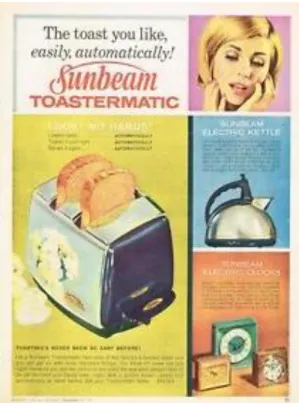
Fig 2. Sunbeam Toaster ad, 1960……….19
Fig 3. Hardee’s sexist print ad………. 20
Fig 4. Print ad Kenwood Chef………...20
Fig 5. Ketchup ad 1950s………20
Fig 6. Barbie and diversity………23
Fig 7. and 8. Gender neutral fashion……….23
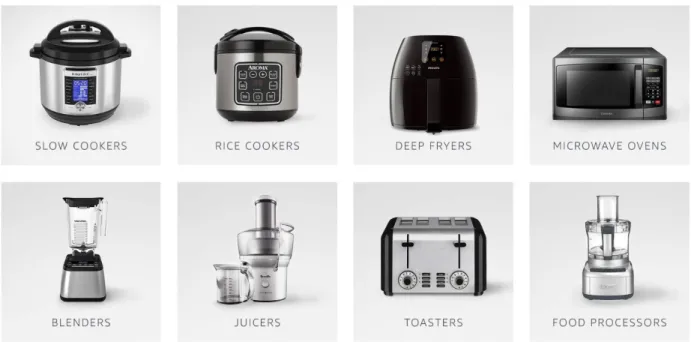
Fig 9. Kitchen appliances on Amazon.com………..24
Fig 10. Time spent by men and women on household activities………..25
Fig 11. Percentage of men and women engaging in household activities………26
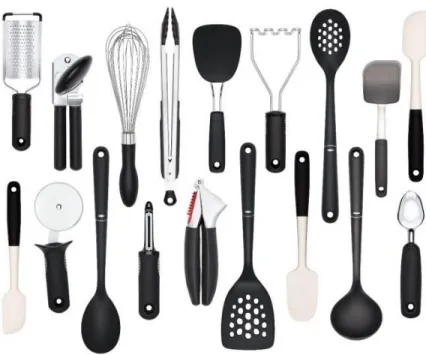
Fig 12. OXO Good Grips range of products……….27
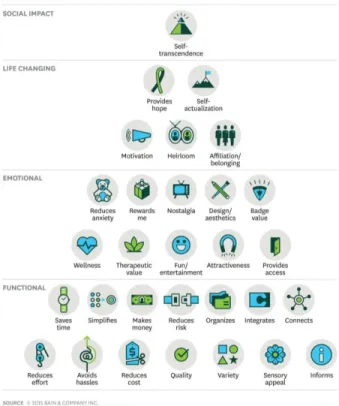
Fig 13. Elements of value perceptions………..31
Fig 14,15,16. Food storage spaces of some respondents………...38
Fig 17. The kitchen of one of the respondents………...40
Fig 18. ‘Blue Apron’ meal kit subscription service………..52
Fig 19. ‘Blue Apron’ target customers………..59
Fig 20. ‘Blue Apron’ screenshots of user navigation………61
Fig 21. ‘Blue Apron’ web communication 1……….63
9 List of Tables
Table 1. Task split in the kitchen by gender……….43 Table 2. Functional, emotional and identity needs by gender………..43 Table 3. Interaction needs, aesthetic needs, communication needs by gender……….49 Table 4. Meal kit service analysis: functional, emotional and identity needs of men…………..56 Table 5. Meal kit service analysis: functional, emotional and identity needs of women……….57 Table 6. Meal kit service analysis: interaction, aesthetic and communication needs of men...64 Table 7. Meal kit service analysis: interaction, aesthetic and communication needs of women.64 Table 8. Phase 2 research findings………...65
10
Table of Contents
Abstract...3 Acknowledgments...5 List of Figures...8 List of Tables...9 1. Introduction...13 1.1. Motivation...131.2. Why do Gender Stereotypes Matter?...14
1.3. Nature of the Thesis...15
1.4. Research Scope...15
1.5. Research Objective...16
2. Background research...17
2.1. Gender Stereotypes...17
2.2. Kitchen, Cooking and Gender Roles...19
2.3. Evolving Gender Roles Among Millennials...22
2.3.1. Millennials in America...22
2.3.2. Attitudes Towards Gender...22
2.3.3. Who is Cooking: Changes in the Kitchen Culture...25
2.4. Inclusive Design: Case Study...27
2.5. Using Inclusive Design to Fight Gender Stereotypes...29
3. Research Methods...30
3.1. Gender Analysis Framework for Product Design...30
3.2. Research Methodology: Phase 1...34
11
4. Phase 1 Primary Research Results...37
4.1. Gender and Cooking Habits...37
4.2. Grouping and mapping needs...44
5. Phase 1 Secondary Research Results...45
5.1. Gender and Human-Computer Interaction...45
5.1.1. Interaction design...46
5.1.2. Website aesthetics...48
5.1.3. Communication and language...49
5.1.4. Grouping and mapping needs...50
5.2. Findings: Phase 1 Research...,50
6. Phase 2 Research Results...51
6.1. Meal Kit Services: An Overview...51
6.2. Meal Kit Service Experience...52
6.3. Analysis: Functional, Emotional and Identity Needs...57
6.4. Meal Kit Website Experience...58
6.5. Analysis: Interaction, Aesthetics and Communication Needs...65
6.6. Findings: Phase 2 Research...66
7. Conclusion...68 7.1. Summary of Findings...68 7.2. Limitations...69 7.3. Future Directions...70 7.4. Concluding Remarks...71 Appendix...72 References...87
13
Chapter 1: Introduction
“We constantly drift between the object and its demystification, powerless to render its wholeness. For if we penetrate the object, we liberate it but we destroy it; and if we acknowledge its full weight, we respect it, but we restore it to a state which is still mystified.”
Roland Barthes’ closing remarks in the book Mythologies (1957) has a powerful resonance with discovering the social meaning of things. In an age of an expanding virtual world of technology, this thesis attempts to understand the ways in which our social and material worlds interact, with a focus on gender.
1.1. Motivation
Gender is one of the most important constructs in human life because it shapes the way we interact with and navigate the world around us to a great extent. Having always been intrigued about gender stereotypes in its many forms and this thesis explores this issue at the intersection of design and sociology; where lies my deepest passion. Gender is not a factor that is often explicitly considered in the design of solutions. When gender is considered, products are often designed with idealized
14
models of gendered "users"–designed for men, designed for women, designed for boys, designed for girls, or designed for the "average user" who could be male or female. Many products, e.g., bicycles, and wrist watches had been designed for men first, later their exterior design was changed to suit an often stereotypical “female” taste – a process often referred to as ‘pinking’ in the industry (Schroeder, 2010). More recently, gender bias in artificial intelligence software systems used in job search platforms was proven to have a ripple effect in the form of fewer women applying for higher paid positions — perpetuating the gender pay gap (Gender Bias in AI, Research Report, 2019).
This thesis explores the effects of particular notions of femininity and masculinity on the design and use of solutions. I found particular interest in the way this was manifested in the design of cooking solutions with a focus on the design of meal kit services which is a growing trend among urban youth. “Home cooking” space was interesting to me because even in the modern society, studies show that American women spent twice as much time on household activities and more women were involved in performing household activities compared to men. This highlights the fact that this realm may still be a woman’s domain and gender role-based stereotypes may still exist. Hence, I started my journey with the intention to understand how the design of objects could play a role in reducing the stereotypes and support the gender revolution by including - rather than constricting or excluding – the participation of people.
1.2. Why do Gender Stereotypes Matter?
Studies show that gender roles based stereotypes are rooted in a given society’s division of labor (Eagly & Wood, 2012). Rigid gender stereotyping promotes inequity between the sexes and can
15
set young people up to expect and accept power imbalances within relationships later in life. Moreover, stereotypical beliefs about gender when endorsed by the society forces people to conform to them; else face disapproval. Also, these stereotypes form our mental representations of the world using which we decide the information sought, processed and remembered, thus influencing our social behavior.
1.3. Nature of the Thesis
This thesis is an exploratory study to understand whether inclusive design i.e. designing systems to suit the needs of all the genders - would allow users from all genders to participate in the task at equal capacity. The implication is that equal participation would reduce the gender stereotypes associated with the task. I have chosen ‘inclusive design’ as a paradigm to address this because it is about designing and developing solutions with respect to the needs of different types of users.
1.4. Research Scope
I have limited my focus to inclusiveness with respect to gender, i.e. gender inclusivity. Also, for brevity instead of looking at gender as a spectrum, I have limited myself to a gender binary perspective i.e., I have studied a universe of people who identify themselves as male or female. As stated above, I would be studying ‘home cooking’ generally without a particular focus on any kitchenware or appliance and later use ‘meal kit services’ for the purpose of my analysis.
16
1.5. Research Objective
The objective of the research is two-fold and has been conducted in two phases, using a combination of primary and secondary research methods.
Phase 1: Illustrate that the needs of men and women are different with respect to cooking at home and website user experience preferences because the meal kit service has an important online component.
Phase 2: Analyze the inclusivity of a meal kit service design with respect to the needs identified in phase 1 and establish its relationship with the increase or decrease in participation of both the genders in the task of cooking.
17
Chapter 2: Background Research
2.1. Gender Stereotypes
“A gender stereotype consists of beliefs about the psychological traits and characteristics of, as well as the activities appropriate to, men and women. These beliefs often have something to do with the behaviors typical performed by women and men in a particular culture, but gender stereotypes are more generalized beliefs and attitudes about masculinity and femininity.” (Brannon, 2008)
Common narrow gender stereotypes can include: that it is not ok for men to cry, or that men must be confident, aggressive and tough or that females should be submissive, unselfish, emotionally expressive or ‘pick up the pieces. Studies show that such stereotypes are rooted in a given society’s division of labor. Because it is still often the case that men and women engage in different work, play, and roles in the home, we develop beliefs about their respective attributes—particularly their personality traits (Eagly & Wood, 2012). These stereotypes are based on socially constructed norms and rituals that build up over time, forming schemas in our brain and act as reference data when we are sizing up and judging others (Chaplin, 2015).
18
“Gender roles are rooted in a given society’s division of labor….This process of inferring traits from people’s activities is known as correspondence bias—in other words, the idea that people are what they do. If a woman is weaving baskets, the thinking might go, she must be patient and docile. Then, after observing just one member of a group, it’s very easy to generalize the traits of an entire group of people. When we perceive one woman as patient and docile, we have no trouble assuming other women possess the same traits. Correspondence bias also leads us to link traits back to functions: for instance, women are patient and docile, thus only suited for weaving baskets. The end result is that we assume, and expect, men and women to exhibit particular characteristics and behaviors, which further distinguish their gender roles. Because women continue to do more work in the home and men are often seen primarily as wage earners, we have plenty of opportunities to observe women and men engaging in behaviors that are distinct from one another. Even when women work, often they are engaged in occupations, such as teaching or nursing, that emphasize communal characteristics. Conversely, we often see men in family roles of provider and head of household, as well as in occupations that emphasize assertive, task-oriented behaviors. Given repeated observations of men and women engaging in different types of behaviors, gender roles effortlessly emerge and are solidified.” (Godsil et al., 2016)
Like gender identity, the development of gender stereotype knowledge starts early. Almost all children become aware of gender stereotypes, which are well formed by the time they finish preschool. The following illustrates some common ways in which children form their mental schemas about gender stereotypes at home, (Chaplin, 2015)
19
• How roles and tasks are shared both within and outside the home (i.e. cooking, cleaning, child-rearing, mowing the lawn, managing household finances, taking kids to the park and going to work).
• Themes and colors of clothes, toys, and presents given to children.
• Interactions between family members, for example, how decisions are made within the home.
• Expectations placed on different family members based on gender. For example, it is the responsibility of women and girls to care for others such as remembering birthdays or that the male family members should take on the ‘comedian’ role. • The language used based on gender, such as commenting on the appearance of
girls and commenting on the actions and abilities of boys.
• How parents reward or discipline behavior that adheres to accepted notions of gender. For example, through statements such as ‘boys don’t cry’, or ‘boys will be boys’ to excuse inappropriate behavior.
If a home is the first and the most important place where we form our gender stereotypes, I wanted to explore an integral part of home namely, kitchens and the activities associated with kitchens as a gateway to further understand this issue.
2.2. Kitchen, Cooking and Gender Roles
In studying the implications of design, gender, and cooking, it is necessary to locate them historically as it is a part of the cultural process of making meanings with and through design.
20
Patriarchy has flourished unchecked over history; while professional cooking was a male domain, home cooking was always considered predominantly female. And as the institution of marriage became gendered; the roles of wife and husband became clearly defined with respect to housework, professions, education, child-care and decision-making (Silva, 2003). Based on stereotyping due to correspondence bias as mentioned earlier, cooking is mostly associated with women and feminine domesticity; and hence associating cooking with caring and nurturing behaviors often expressed by women. Figures 1 to 5 show print ads of kitchenware/appliances between the 1940s – 1970s highlighting the way women were targeted for these products.
Fig 1. Tala Kitchenware ad,1948 Fig 2. Sunbeam Toaster ad, 1960 Picture sources:
Fig 1 (“Tala Kitchenware | Pinterest”), Fig 2 (“SUNBEAM TOASTER AD APPLIANCES ADVERTISING Original 1960s Vintage Print Ad*Retro | eBay,”), Fig 3 (“Artist Gives Vintage Ads A Feminist Makeover By Swapping Gender Roles | HuffPost” 2018), Fig 4 and 5 (“13 Stunningly Sexist Ads from the Fifties | Purple Clover” 2015)
21
Fig 3. Hardee’s sexist print ad Fig 4. Print ad Kenwood Chef
22
2.3. Evolving Gender Roles Among Millennials
2.3.1. Millennials in America
Millennials are the generation born between 1980 and 2000. There are over 75 million millennials in America and make up nearly a quarter of the total population, 30 percent of the voting age population, and almost two-fifths of the working age population. A very important characteristic of the millennials is their ethnic and racial diversity – this is believed to have a huge impact on the culture of the present-day society (Frey, 2018). Millennials are history’s first “always connected” generation because they grew up with the rise of the internet, cell phones, social media, and laptops. They are the most digitally and technologically savvy generation (MILLENNIALS, 2010).
2.3.2. Attitudes Towards Gender
The society is in the midst of a cultural shift and traditional portrayals of gender in terms of femininity and masculinity is becoming blurred. A new term called “gender fluidity” is making its way into common vocabulary – which takes the notion of gender as a spectrum a step ahead and allows a person to not identify themselves as having a fixed gender. Millennials are leading this trend by embracing new gender roles and looking for ways to break existing stereotypes.
A 2015 Fusion Millennial poll of adults ages 18-34 in the USA found that the majority see gender as a spectrum, rather than a man/woman binary.
Research by J. Walter Thompson Intelligence found that 56% of those aged 13-20 know someone who uses gender-neutral pronouns, such as they/them (“Understanding Gender | Gender Spectrum,” 2019).
23
The market place is responding to this emerging trend by rethinking their strategies and product offerings. In 2016, fast-fashion leader Zara launched a genderless line targeting teenagers, refer to figures 7 and 8. Coca-Cola launched a ‘Dude or Diva’ campaign for teenagers to pick specially designed cans and encouraging them to share their masculine and feminine sides. Even millennial parents are making socially conscious purchase decisions which are reflecting on the apparel and toy industry product offerings. Apparel brand Banana Republic launched a unisex baby clothing line smashing the pink and blue stereotypes. Barbie, a 58-year-old brand, went beyond gender and offered diversity in their product range, refer figure 6.
Not just gender, millennials are more inclined towards making socially conscious purchase decisions in general. “According to Nielson’s 2015 Global Corporate Sustainability Report, 73 percent of millennials are willing to spend more on brands that value sustainability and 81 percent of them expect their companies to make their corporate citizenships public (Global sustainability report, 2015)”. The key takeaway from this trend is that millennials are seeking brands to focus on lifestyle and personalities of the target user and not define them by their gender, race, age or any traditional and rigid classifications.
24
Fig 6. Barbie and diversity
Source (“Inside Barbie’s Fight To Stay Relevant,” 2017)
Fig 7. and 8. Gender neutral fashion
Source: (“In Fashion, Gender Lines Are Blurring - The New York Times,” 2015) (“Zara alludes to going gender-neutral, with men and women modeling same clothes | The Independent,” 2017)
25
2.3.3. Who is Cooking: Changes in the Kitchen Culture
According to a study published by the Nutrition Journal in 2018, the percent of college-educated men cooking increased from 37.9% in 2003 to 51.9% in 2016 and college-educated women who cook increased from 64.7% in 2003 to 68.7% in 2016 (Taillie, 2018).
In other words, the new American man is more likely to cook than ever before and there are many journalistic articles talking about the increasing interest of men in cooking and how “the kitchen becoming the new man cave”. This is apparent in the design of the kitchens and kitchenware – which has rather shifted to suit the stark, clean, matte black and neutral masculine aesthetic. Refer to figure 9 below from Amazon’s kitchenware section.
Fig 9. Kitchen appliances on Amazon.com
Source (“Amazon.com: Small Appliances: Home & Kitchen: Specialty Appliances, Coffee, Tea & Espresso Appliances & More,” n.d.)
26
While more men are entering the kitchen, studies also show that it is still the women who are handling the majority of the cooking. A survey conducted by Bureau of Labor Statistics on American time use in 2015, showed that women on an average spent 37 minutes per day in food preparation while men spent 17 minutes, and on the whole women spent twice as much time on household activities (refer figure 10) and more women were involved in performing household activities compared to men (refer figure 11).
This confounding trend shows that though more men are entering the kitchen, household activities continues to be a woman’s domain to a large extent. This also makes me question if the design changes we see in the products as shown in figure 9 are limited to just aesthetics and further made me want to explore how can the design of products break this trend.
Fig 10. Time spent by men and women on household activities
27
Fig 11. Percentage of men and women engaging in household activities
Source (“Percent of the population engaging in selected household activities, averages per day by sex,” 2017)
2.4. Inclusive Design: Case Study
The British Standards Institute (2005) defines inclusive design as: ‘The design of mainstream products and/or services that are accessible to, and usable by, as many people as reasonably possible ... without the need for special adaptation or specialized design.’
Every design decision has the potential to include or exclude customers and inclusive design
emphasizes the need to understand user diversity while making important design decisions by including as many people as possible and by studying diversity in user’s capabilities, needs, and
28
aspirations. The OXO Good Grips (refer figure 12) is a good example to explain how inclusive design was used to widen the user base. It is a range of kitchen utensils that began with the goal to produce a vegetable peeler that was easy to hold and use, regardless of the strength or manual dexterity of the user. After researching existing designs of a variety of handled products, the OXO creators tried to incorporate every type of hand and hand problem into this user-testing design phase and tested their design solutions at various stages with members of the public. So, people from different age groups, with different hand sizes, different manual strength and dexterity abilities all took part. The outcome of this approach has been the creation of an internationally recognized brand with annual growth in sales of over 35% per year from 1991 to 2002 (Clarkson, Coleman, Hosking, & Waller, 2007). They further extended the same principle to other kitchen products and found success in all.
Fig 12. OXO Good Grips range of products
29
2.5. Using Inclusive Design to Fight Gender Stereotypes
In this thesis, I have explored the principle of inclusive design with respect to gender differences because a lot of sociological literature show that the values and needs vary by gender (Baron-Cohen, 2005; Su, Rounds, & Armstrong, 2009), details of which is provided in the form of gender theories in the appendix. This triggered me to further understand how they varied with respect to cooking and their implications.
Also, a study that tested the exposure to counter-stereotypical pictures as a method to overcoming spontaneous gender stereotypes (Radvansky et al., 2015), showed positive results i.e., exposure to counter-stereotypical images reduced gender stereotypes. Based on this, I am assuming that if people get exposed to counter-stereotypical views about kitchen/cooking (as in our case) by seeing men and women participate in equal capacity, the stereotypes associated with women and cooking would reduce. And, if the values and needs vary by gender, making the cooking experience inclusive for their needs may make it equally usable and useful for both the genders.
30
Chapter 3: Research Methods
3.1. Gender Analysis Framework for Product Design
I started off with identifying a framework using which I could structure my research. There is a lot of research in sociology to understand how gender appears in the process of making and using objects and one of the frameworks used by them in their research are Actor-Network theory (Larvor, 2016; Silva, 2003). This framework examines the agency of the users and the objects, where the object is in itself seen as a social agent, and studies the constantly shifting networks of relationships between the two in the society (Bruno Latour, 2005). Gender historian Joan Scott (1988) suggests a four-level analysis framework to study the construction of gender relationships regarding technologies based on how gender appears historically.
1. Culturally available symbols that evoke multiple representations. 2. Normative concepts that fix dominant meanings to such symbols. 3. Institutional complexes in which these are articulated.
4. Ways in which the relevant symbols, norms, and institutions are implicated in the construction of subjective gender identities.
31
Another theory proposed by sociologist Madeline Akrich (1992) is that every object has a script embedded that specifies actions based on specific tastes, motives, aspirations, morals, and socio-economic levels and their relationships across time and that users of the object will have their own interpretation of the script, which may differ from the original. From my understanding, these theories/frameworks mainly use semiotics, the study of signs and symbols, and how that influences the mental models, use, interpretation and perceptions of an object over time. Since this thesis explores if gender-inclusive design i.e. designing a product to suit the needs of different genders, I have limited myself to frameworks that exclusively explore needs across multiple dimensions and something that could be used to analyze both digital and physical products. In my opinion, the frameworks suggested by sociologists as listed above may be useful to study why the needs vary across genders, but that remains outside the scope of this thesis. Hence, I have created an adapted framework for this thesis based on the following studies-
1. Gender dimensions in product design
A 2.5-year research project named “Female Interaction” was conducted to explore the gender dimensions in product design to enable the design of women-friendly tech-products. The project was sponsored by the Danish government and published in the year 2010. The premise was that the features and the interaction design of many technology products, scarcely reflect female values, preferences, and lifestyle (Schroeder, 2010). The gender dimensions used in their analysis were-
Value dimension
Functions/benefit dimension Interaction dimension Aesthetic dimension Communication dimension
32 2. Elements of value pyramid
Researchers have identified 30 “elements of value” shown in figure 13— as an extension of Maslow’s hierarchy of needs. “These elements fall into four categories: functional, emotional, life-changing, and social impact. For example, when someone says her bank is “convenient,” its value derives from some combination of the functional elements saves time, avoids the
hassle, simplifies, and reduces effort. And when the owner of a $10,000 Leica talks about the
quality of the product and the pictures it takes, an underlying life-changing element is
self-actualization, arising from the pride of owning a camera that famous photographers have used for
a century” (“The 30 Elements of Consumer Value: A Hierarchy,” 2016).
33
The adapted gender analysis framework used in this thesis, Functional needs Emotional needs Identity needs Interaction needs Aesthetic needs Communication needs
Firstly, I have further elaborated on the values dimension mentioned in the first framework using the elements of the value pyramid.
Functional needs: Tangible or measurable outcome from a solution like save time, better quality, etc.
Emotional needs: Intangible feelings induced by a solution that influences one’s experience like feel good, feel competent, etc.
Identity needs: Social group or ideology to which the user of the solution wants to belong like a caring father, independent woman, etc.
Then, I have retained the following as is because I would be analyzing a meal kit service which has both digital (website) and physical element (meal kits), I think it is important to include these dimensions in the analysis.
Interaction needs: The navigational scheme used to help or hinder users as they access different sections of the site and process information.
34
Aesthetic needs: Elements that deal with the balance and uniformity of the overall website’s graphical look. This includes colors, photographs, shapes, font types and animations.
Communication needs: User’s preference for language and expression to demonstrate value proposition and benefits.
3.2. Research Methodology: Phase 1
I have combined qualitative in-depth user interviews with secondary research insights from existing literature depending on the research objective.
Secondary research:
o For determining the aesthetic, interaction and communication needs by gender, I have used the results of many studies done on gender and human-computer interaction, and online purchase behavior patterns by gender.
Primary research:
o Primary research objective: Uncover and understand the functional, emotional and identity needs of men and women when it comes to cooking across different phases of preparing a meal.
o Research sample: Millennial couples (married and not married) – different ethnicities - 25 to 40 years of age – where both the male and female partners had an equally busy lifestyle.
o Demographics: Greater Boston, middle to higher socio-economic status
35
o Type of research: Semi-structured interviews and observations.
o Conducted the research at the respondent’s homes (6/10) or over a video call (4/10) depending on their convenience. Each interview lasted for about an hour.
o The type of questions was open-ended and was intended to understand their cooking habits, task split, needs, and perceptions.
Primary Research Questionnaire
A day in their life
Cooking process
What does cooking mean to them?
What are your eating habits?
How often do they cook vs eating out? Why?
What are the reasons for participating in cooking? Prompts -
o Products
o Space
o Mental/emotional
o Financial
o Others
How and when do you learn to cook?
Who cooked at home while growing up?
How do you like to cook? Why?
How are the cooking activities split between you two?
How is the time spent cooking split between you two?
36
What is your least favorite part of cooking?
What would you say is the biggest difference in the way you cook vs your partner?
Challenges faced.
3.3. Research Methodology: Phase 2
For understanding the experience of a meal kit subscription service,
Subscribed and used a popular meal kit for two weeks to get a first-hand experience.
Conducted semi-structured interviews with two couples who used the service at least six months.
The type of questions was open-ended and was intended to understand their experience and task split before and while using meal kits.
Primary research questionnaire
Why did you opt for a meal kit service?
Tell me about your regular cooking habits - How did it change your eating habits? How did it change your cooking habits?
o Task split
o Perception/confidence o Others
Tell me more about your experience
o What did you like vs not like? Why? Why did you cancel your subscription?
37
Chapter 4: Phase 1 Primary Research Results
4.1. Gender and cooking habits
What did he say?
What did she say?
“Cooking is therapeutic for me. Its a very intuitive process. You smell and taste to know if things are ok. I don’t like following recipes.”
“He takes more time to cook. And really love to cook for him. It’s very fulfilling to me.”
“I don’t enjoy cooking but like to help my partner out with whatever I can. It’s a good way to spend time together.”
“I don’t consider myself an expert and I rely heavily on recipes and online recipes are built for someone who knows to cook. I don’t understand the terminologies used. What does a pinch of salt or a cup of water mean?” “I like to be in control when I am cooking. I like my dish to taste good. I feel bad when it doesn’t turn out good after putting so much effort and time. People’s reaction is important to me.”
38 Step 1: Deciding what to cook
The first step of the cooking process and often the least enjoyable part of the cooking process is choosing what to cook. A survey conducted by Google showed that 31% of the respondents chose this step as their least favorite and many people go to the internet to make this decision with broad search terms like healthy recipes, best recipes, easy recipes, etc. (ThinkwithGoogle, 2015)
Primary research insights:
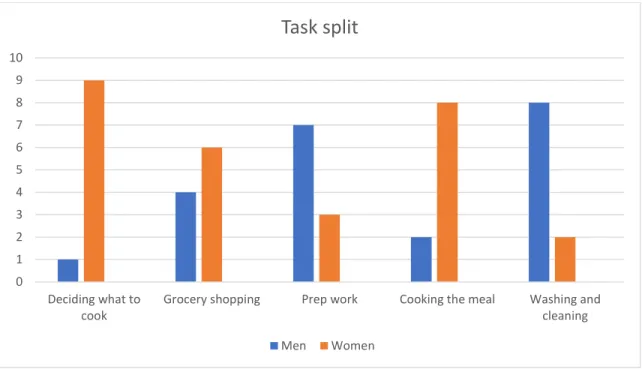
9 out of 10 respondents said this was the woman’s task and that this was their least favorite part of cooking because it requires a lot of thinking and planning.
6 out of 10 men seemed less particular about what they ate on an everyday basis and preferred to choose to eat the same thing every day or every week.
This decision was made usually while browsing the aisles at the supermarket or on the way to the market. The decision to make a special or a new dish was made at the last minute most of the time.
7 out of 10 respondents said that the preference of the partner and the time at hand are the major considerations while making the decision. Other influences cited were - a dish they tried at a restaurant, a picture they saw on social media or recommendations from friends or families.
New dishes were tried mostly only during weekends and the average frequency was 2 or 3 times a month. So, the majority of the meal decisions was chosen from dishes that were known of the main cook among the partners.
“Planning what to eat is so annoying and it’s usually my responsibility. If I left it to him, we would mostly eat the same thing every day” – Female respondent
39 Step 2: Grocery shopping
A survey conducted in 2017, showed that 96.9% of Americans still prefer to purchase groceries in stores (“Consumer grocery shopping methods U.S. 2017 | Statistic,” 2017).
Primary research insights:
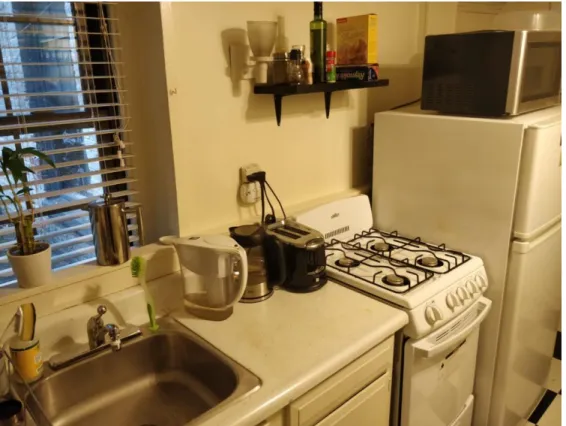
All of the respondents shopped in store because either they shopped last minute in smaller quantities or liked the in-store shopping experience. Figure 14,15 and 16 shows some grocery storage spaces at home.
7 out of 10 men said they make their cooking decisions last minute and hence preferred to buy based on what they were cooking.
6 out of 10 women saw it like a weekly activity where they took time to buy other stuff other than food as well from the market.
Both men and women preferred to buy meat just before cooking it because they believed it was fresher that way.
40 Step 3: Preparing the meal
Once the menu is decided, the “how do I make this recipe” phase sets in and data shows that 59% of millennials cooked with either their smartphones or tablets handy. “How to cook that” is one of the ten most popular how-to searches on YouTube, with an increasing number of food channel subscriptions to food channels. Getting the phone soiled is one of the main concerns while cooking and 23% respondents said they used voice searches while cooking (ThinkwithGoogle, 2015).
Primary research insights:
Almost all respondents split this task into two – first being the prep work, which included washing and chopping the vegetables/meat and the second being the actual process of making something.
7 out of 10 respondents said that the prep work was usually carried out by the men or both the prep work and preparation was done by women because they considered themselves faster and better at this process.
While cooking new dishes, both men and women used recipes from websites or apps to guide them. But 8 out 10 women said they were more likely to deviate from the recipe and felt more confident about it, while men preferred following the recipe accurately. Men were more concerned about how a dish would turn out.
4 out of 10 men cited that online recipes were difficult to follow and was designed for seasoned cooks. This follows another insight that more men considered themselves an amateur when it comes to cooking, and the trend was opposite with women – they were more confident with their cooking abilities.
41
8 out of 10 men made simple dishes most of the time, except when they were cooking some special meals during special occasions.
Men used basic pots and pans and the microwave oven very frequently. They also claimed to use fewer utensils while cooking than women do.
It was the women who made the kitchen equipment purchase decisions. Step 4: Cleaning
Primary research insights:
Dishwashers were available in almost all the respondent’s homes and it was usually the men’s task to clean.
Many men even said they enjoyed doing the cleaning tasks because it was easy and did not require any thinking.
42 Synthesizing other primary research insights:
Perception of cooking:
o There was a stark difference between the way men and women viewed cooking - More women cited cooking as a relaxing and creative endeavor and more men were reluctant cooks, in which cooking was either a means to sustenance or a means to make their partner happy.
o There was a correlation between the way men perceived cooking and their confidence in cooking with their exposure to cooking in their childhood by their parents. Men who were encouraged to cook while growing up or saw their fathers cook more often, perceived cooking as a creative endeavor. They were also more likely to try new recipes and freestyle while cooking.
Perceived confidence:
o The actual act of cooking was still mostly done by the women on a daily basis because they felt more adept at it.
o Even in situations where the men expressed their willingness to cook more often, women preferred to take care of the cooking part because they felt they did it better and faster.
o More men considered themselves amateur cooks. The difference in cooking styles:
o More women did freestyle cooking, while men felt more comfortable following elaborate recipes and found it difficult to follow online recipes because they were not standardized for all kitchens and all levels of cooking expertise.
43
o More men saw cooking as a process that needed to be optimized. They frequently multitasked while cooking liked to use timers and searched online for things like the faster way to cut an onion, etc.
o Many men said they used lesser utensils than their partners and preferred to do the cleaning overcooking because it requires less thinking.
o Women showed more interest in healthy eating. Reasons for cooking:
o More women liked to cook because it was a relaxing activity, healthier choice and it allowed them to care for themselves and their partner.
o More men cooked it was a cheaper option and they liked to take part the cooking process along with their partner.
Differences in dishes made:
o Women mostly took care of everyday cooking and were more health conscious. So, it was usually simple dishes like salads and grills.
o More men cooked on special occasions (anniversaries, weekends, the partner is busy, etc.) and preferred to make elaborate dishes.
Least favorite task:
o Both men and women said planning what to eat and ensuring they have some variety of dishes was their least favorite part of the entire cooking process. Task split:
o Men and women were involved in the cooking process but at different capacities and the tasks were not equally split.
44
Table 1. Task split in the kitchen by gender
4.2. Grouping and Mapping Needs
Men Women
Functional needs Time-saving and optimal. Elaborate and simplified
instructions.
Allow her space to experiment. Make it relaxing.
Emotional needs
Should make him feel he can impress his partner by making tasty dishes even though he is not
very good at it.
Wants to get a feeling that she is taking care of herself and her family to the best of her abilities.
Identity needs Someone who cares about helping his partner.
Creative, well balanced, health-conscious person.
Table 2. Functional, emotional and identity needs by gender 0 1 2 3 4 5 6 7 8 9 10 Deciding what to cook
Grocery shopping Prep work Cooking the meal Washing and cleaning
Task split
45
Chapter 5: Phase 1 Secondary Research Results
5.1. Gender and Human-Computer Interaction
Gender human-computer interaction refers to research on the differences between how male and female users interact with various digital or web-based services. Studies in psychology and neuroscience, strongly suggest that there are differences in the way men and women perceive, remember, process information and solve problems. The research done in Gender HCI shows that web interfaces can be given a “gender” based on the use of different design elements and further, there is a correlation between this and the gender of the designer or the developer of these interfaces (Cyr & Bonanni, 2006).
Consumer purchase behavior is a process by which a consumer makes a purchase decision and gender of the consumer is proven to play a significant role in affecting this (Ascarya, Yumanita, & Diana, 2006). This process includes the following steps – realizing a need, searching for information, evaluating options, purchasing and customer service after the purchase. Since I am going to analyze the purchase behavior of meal kit services where the decisions are made on an online portal – their website – I am going to particularly dig into differences in online consumer behavior by gender.
46
The motivation for online purchasing is defined as the process of identifying a need or desire to buy something and it can be divided into two main categories - utilitarian and hedonic motivations (Perea Y Monsuwé, Dellaert, & De Ruyter, 2004). Utilitarian motivation tends to have a rational approach and is also considered as a traditional buying decision process. It seeks rational incentives like time-saving, detailed information of product, price comparison, greater option, and cheaper price. Hedonic motivation tends to have an emotional and subjective approach to shopping like the customer experience, browsing experience, brand story, etc. Research shows that more men tend to be driven by utilitarian motivations while more women are driven by hedonistic motivations in online purchasing (Seock & Chen-Yu, 2007) and website design was a significant influencer of consumers buying decision process (Cyr & Bonanni, 2006; Sebastianelli, Tamimi, & Rajan, 2008). Website quality includes many dimensions such as ease of use, navigation, website design, information, security, responsiveness, supportive customer service, and assurance.
In this section, I would like to illustrate the insights from research studies that have performed a gender-based analysis of web interfaces.
5.1.1. Interaction Design
A study was done by social psychologist, Liraz Margalit (2014) to understand male and female behaviors on a recipe’s website using heat maps (showing the parts of the pages viewed most) showed the following results,
Men tended to look for simpler recipes that took less time to read and prepare. They read the comments by other users to judge if the recipe was easy to make and they visited a maximum of three pages, thus demonstrating a very focused search.
47
The mouse clicks heatmaps indicated that men were very focused on the ingredients of a recipe and how to prepare it, as indicated by the most read areas in the upper middle section of the page.
On the other hand, women tended to look for more elaborate recipes. They did not read the comments posted and, on average, they visited six recipe pages or more before deciding.
The mouse clicks heatmaps indicated that a higher percentage of women browsed up and down the page. Plus, more women tended to browse through the different categories of food recipes at the top of the screen. They were less focused on the instructions.
In another study, the aim was to understand how male and female users debugged a formula on standard spreadsheet software. This study showed that within a certain period of time men were more experimental by performing more actions and trying more features to solve the problem than women did, and this was directly correlated to their confidence in problem-solving capabilities(Beckwith, Burnett, & Grigoreanu, 2006). So, the confidence about being able to perform the task at hand also influences how users interacted with the solution. I would like to follow this up with extensive research that shows that women are generally more confident about their cooking and nurturing abilities and this may affect how they interact with solutions in that realm (Mishaal Baksh, 2014).
A study on the differences in shopping behavior by the gender titled “Men buy, women shop” showed that women are more focused on the overall experience of shopping, while men are just focused on the mission – purchasing an item. This reflected on their online purchase behaviors as well where women reportedly enjoyed the browsing process, while men were more task-oriented and focused on how well they were able to accomplish a task and find what they were looking for
48
(Haiyan Hu, n.d.). On the characteristics concerned with navigation issues, studies also show that websites targeted at women statistically contain links to more sites/pages compared to men’s websites(Moss, Gunn, & Kubacki, 2007).
5.1.2. Website Aesthetics
Aesthetic values of a website influence the way the user perceives its attractiveness and thus its usefulness and experience. According to the interactionist paradigm of aesthetics, this judgment is made based on the characteristics of the stimuli and how the user perceives these characteristics using their mental models. Research shows that men and women exhibit differences in what they perceived as attractive because they process the signals received from the stimuli differently (Horvath, Moss, Gunn, & Vass, 2007). Also, the respondents gave higher ratings to the websites that were designed by someone of their own sex.
The choice of design aesthetics also suggested a willingness among women to put aesthetic above practical considerations and form above function. Men chose standard shapes on white backgrounds while women were more adventurous, often choosing unconventional shapes and more colors. The study showed that men preferred more “flat” grayscale colors, which seemed to correlate with an image of professionalism and authority, while females used more colors overall, specifically white, pink, yellow, and mauve (Gloria Moss, 2008).
Other studies also show that the use of overtly feminine colors and visuals aesthetics could also backfire and that more females are seeking gender-neutral aesthetics (Saltarelli, 2019). Color is an important paradigm to study under aesthetics because it has a lot of cultural and social significance especially with respect to gender – because some colors have some strong gender
49
associations. “An interesting study measured the effect of the color red on web-based tests and cognitive abilities. The study found that overall performance for men dropped with the increasing use of red, while females seemed unaffected. This suggests that some colors affect the genders independently of one another.” (Gnambs, Appel, & Kaspar, 2015)
A study conducted by Fidelity Investment Usability Labs showed that men and women even look for different stimuli in a website in the form of content. When participants were asked to choose from 105 individual content pieces to build their ideal website, more women chose images of people to be included in their websites (Chadwick-Dias, Tedesco, & Tullis, 2004). In terms of pictures, I couldn’t find any relevant research except one study that showed that gender-inclusive photos and statements in an online advertisement for a STEM course increased the click-through rate and enrollment among women by 26% and 18% respectively, but did not show any difference in male participation (Saltarelli, 2019).
5.1.3. Communication and Language
In the seminal linguistics studies by Deborah Tannen (2015), she distinguished the manner in which men and women prefer to express and communicate. Her study showed that men preferred more formal and professional forms of speech, and used larger words and that did not reveal personal or emotional aspects of the subject. Women, on the other hand, opted for an informal and conversational form of speech and provided more insight on themselves and the subject of choice. This is further supported by another research that men choose a competitive and aggressive style of speech (emphasizing their status and expertise) and women choose a less overtly competitive style.
50
“The study revealed statistically significant differences on four of the five language elements, with females showing a statistically greater tendency than the males to employ abbreviations, self-denigration, non-expert and informal language.” (Gloria Moss, 2008)
5.2. Grouping and Mapping Needs
Men Women
Interaction needs
Directed search – task driven, seeks fewer options to make searching quick and save time.
Provide options – exploration driven, allow browsing and short selection before having to decide. Aesthetic needs
Standard colors and shapes. Colorful and rounded shapes. Communication
needs
Aggressive and to the point, demonstrate value, formal
language.
Dialogue like, demonstrate story, informal language.
Table 3. Interaction needs, aesthetic needs, communication needs by gender
5.3. Findings: Phase 1 Research
Primary and secondary research conducted in phase 1 showed that the needs of men and women differed across the different levels and apart from this, there was a difference in the way they perceived cooking and the way tasks were split between them.
51
Chapter 6: Phase 2 Research Results
6.1. Meal Kit Services: An Overview
A meal kit is a subscription service that sends customers pre-portioned food ingredients and recipes for them to prepare home-cooked meals. This subscription model is an example of personalization in the food and beverage industry that is becoming more popular and wide-spread. It has a growing
market in the US with close to 1 in 5 consumers (17%) receiving meal kit delivery services (“5 Stats About Meal Kit Services - Marketing Charts,” 2017). The cost of the meal is at roughly $10 per person per meal and they target young middle-class working people with busy lives, who want to eat good quality food but don’t have the time or want to go through the hassle of grocery shopping and meal planning. Meal kit delivery services fall under the category of subscription boxes called curation services that give users new and exciting items or experience with each
delivery – other services in this category cater to beauty products, apparel, and games. According
to a survey, 27 percent of internet users purchased meal kit boxes in the year 2016 and they cost
approximately 30 percent lesser than eating out. This market is starting to get cluttered with
52
kit subscription box companies in the U.S (“New Year’s Deep Dive: Meal Kit Subscription
Services — The Shelf,” 2018).
The subscription-based model enables the meal kit service brands to have accurate demand forecasting, for on-time delivery, effective inventory management among the suppliers and farmers in their network, thus minimizing waste of food while keeping costs lower than a traditional retail grocer. The business model supports a strong, effective supply chain and overall, efficient operations.
The biggest challenge faced by this service is the high cancellation rate among their customers and this trend is brand agnostic. According to a survey, 60 to 70 percent subscribers cancel within the first six months and more than half of subscribers cited lack of value for money as their reason for cancellation (“Trends and opportunities in the subscription e-commerce market | McKinsey,” 2018).
6.2. Meal Kit Service Experience
To understand and evaluate the experience of a meal kit, I subscribed to a service and used it for 2 weeks and also interviewed two customers who used a meal kit subscription for at least six months.
My experience
I chose a popular meal kit service and signed up on their website. Almost every service allows a trial week at a discounted price, you choose the number of meals and servings you want for the
53
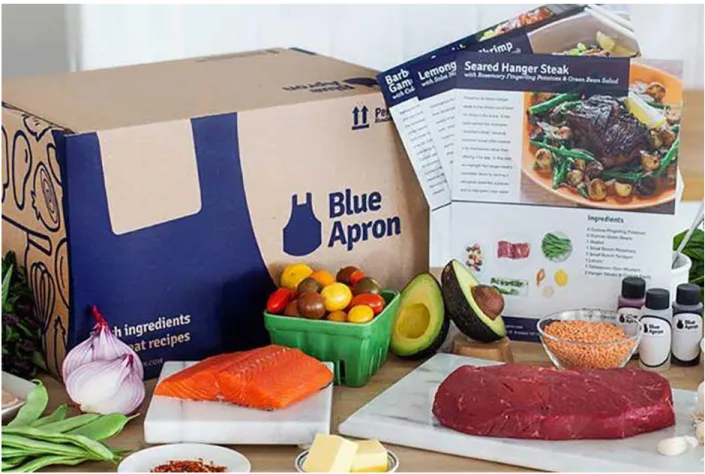
week and the day of the week you want it delivered, you are then led to the payment gateway. The dishes were mostly exotic from different countries and have a combination of vegetables, grains, and protein. Figure 18 below shows the contents of a popular meal kit service ‘Blue Apron’.
Fig 18. ‘Blue Apron’ meal kit subscription service
Source (“Blue Apron: Fresh Ingredients, Original Recipes, Delivered to You,” 2019)
The meal kits come to your doorstep in a large cardboard box; when you open it and remove the bubble wrapped flap, you will uncover the food. You get recipes for each meal with fresh ingredients individually packaged and carefully measured for each recipe. The meat is put in between bags of ice cubes to keep it fresh.
54
I had ordered two meals and each dish had about seven to ten ingredients —and finding places to store all the perishables was quite an ordeal with an already overfilled refrigerator I share with roommates. The two meals I ordered were Grilled Salmon with lime zest and Spring Chicken Fettuccine. I chose them because I had never made them and was curious to try. It was an easy way and low-risk way to try something new without having to find specific ingredients and having to buy them in large quantities for a dish you are just trying to experiment —and in this regard, I truly felt as though it was a good way to expand my cooking repertoire.
As the meal is always portioned for at least two, I invited one of my male friends to join me in cooking and eating the meal. This was the first time he was trying a meal kit service as well and he is generally a reluctant cook who prefers to eat at home and makes simple and quick meals. When I showed him the recipe card he was overwhelmed and he offered to just help me with the prep work. The recipe card said it would 40 to 50 minutes to make the meal, which even I felt was very long for my usual weekday meal. My friend chopped the vegetables and helped me preheat the oven.
Me being someone who doesn’t like to follow recipes, found it very stifling to use the recipe cards. Meal kit service removes the work of choosing a meal and there is certainly some comfort in that— but you are still doing all the cooking. And because it was a new recipe, it took it more than the stipulated time (40 to 50 minutes). We spent almost 90 minutes making the dish and the end product was ok.
Overall, I liked the idea that everything was proportioned and provided at my doorstep, but the proportions also did not allow me to make extras to have leftovers for the week, which I usually prefer. I usually have time to cook only two or three days a week and eat the leftovers during the
55
rest of the week. The meal kit service also means that I would have to schedule more time to cook my meals because most of their dishes are exotic and time-consuming. I certainly see the appeal of trying a new meal, something you would otherwise never cook yourself.
Meal kits make it easier to believe that you can make dishes that you mostly only order at a restaurant and not cook by yourself. It is like a stepping stone for people who want to get out of their comfort zone and become more adventurous in the meals they cook and consume.
Insights from a couple
My earlier research on cooking habits by gender showed that more men are reluctant cooks who perceive cooking as a way to sustain or a way to please their partners and seek detailed recipes. More users also cited that they hate planning what to make. I wondered if the meal kit appeals to men in a different way and might encourage them to cook more often. So, I spoke to a couple that used meal kit services for six months to understand how it shaped their cooking experience.
Reason for subscription: The female partner was the one choosing what to cook and mostly even shopping for the ingredients – she found it very cumbersome to do on a daily basis. On a friend’s recommendation, they decided to try a meal kit service – mainly to reduce the hassle of planning what to cook and have more variety of dishes.
Regular cooking pattern: The couple would normally try new recipes once or twice a month on an average usually on the weekends.
56
Change in cooking pattern with the meal kit: With the meal kits, they got ingredients and recipes for new dishes thrice a week (their subscribed number of services) which took more time than their usual scheduled cooking time. The ingredients according to them perish within a day or two and cannot be stored in the refrigerator for long – forcing them to cook even when they did not have enough time.
Task split: The male partner’s involvement in the cooking process did not change, he was still helping with just the prep and cleaning work. The female was still in charge of choosing the recipes and making the dish.
Female partner’s experience: Although the hassle of planning and shopping was removed, she felt more burdened because of the complexity of the recipes. She was also someone who enjoys freestyle cooking and the need to follow recipes because it was a new dish almost every time was not enjoyable for her.
Male partner’s experience: He used to cook special recipes on occasion and he used to take a lot of pride in finding out what the partner wants and planning or doing everything from scratch for her. The meal kits made him feel like an essential part of the cooking experience was lost and it did not make him feel like he did something special. He liked the idea of recipe cards but did not see the difference between them and online recipes, in terms of content and ease of understanding.
“She really likes to eat Mexican food and I had mastered a few dishes over time. I know that she likes perfectly ripened avocados and I used to ensure I got that perfect one from the market. She likes more fat in the meat and I would choose a loaf especially for her.”
57
Reason for cancellation: This couple did not continue their subscription after the six-month period. They have saved a few recipe cards of dishes they enjoyed and buy ingredients themselves and cook when they felt like eating it. According to them, meal kits are for the sole purpose of convenience, as it does not require going grocery shopping – but kills the creativity and doesn’t provide them a lot of flexibility in terms of accommodating their schedules or moods.
6.3. Analysis: Functional, Emotional and Identity Needs
Men Does meal kit service satisfy this need? Why?
Functional needs Time-saving and optimal. Elaborate and simplified
instructions.
Yes. It removes the hassle of planning and shopping, thus making cooking more convenient. Men also like more hand-holding,
and the recipe cards may be helpful for them. Emotional needs Should make him feel he can
impress his partner by making tasty dishes even though he is not
very good at it.
No. Though it makes the process of making exotic dishes easy of
him, he doesn’t want to make elaborate dishes on an everyday basis. So, he feels overwhelmed and guilty about not being able to
take part. Identity needs Someone who cares about
helping his partner.
No. Since all the difficult parts of cooking is taken care of, he doesn’t feel like he is doing anything very special for his
partner.
58
Women Does meal kit service satisfy
this need? Why?
Functional needs Allow her space to experiment. Make it relaxing.
No. By giving her elaborate and new dishes to make every time, she is forced to use the recipe
cards and doesn’t have the freedom to experiment. Also, she is the one who is still choosing the dishes and cooking. Emotional needs Wants to get a feeling that she is
taking care of herself and her family to the best of her abilities.
No. The meal kits reduce her flexibility as to when and what she wants to cook, depending on her day. Since the dishes have to be planned a week in advance, she lacks the ability to foresee her
schedule or mood. Identity needs Creative, well balanced,
health-conscious person.
Yes. By giving her dish options and making the process of
planning and acquiring ingredients easier, it does help her be a health-conscious and creative
cook, in terms of cooking a variety of dishes.
Table 5. Meal kit service analysis: functional, emotional and identity needs of women
6.4. Website Experience
For this exercise I chose the most popular meal kit subscription service – Blue Apron – and analyzed her UX/UI design, restricting myself to the meal choice and check out part. All the information and pictures about the service were taken from their official website as of April 2019 (“Blue Apron: Fresh Ingredients, Original Recipes, Delivered to You,” 2019).
59 Brand Story:
“Blue Apron delivers original, step-by-step recipes and fresh ingredients to customers nationwide. Our menus change every week, so with each delivery, you learn to cook inventive new dishes with seasonal ingredients. By letting us source these hard-to-find ingredients for you, you'll get food that is fresher and cheaper than you can get at your local supermarket, and there's no waste because we only send you what you need for each recipe.
We named our company “Blue Apron” because chefs around the world wear blue aprons when they're learning to cook, and it has become a symbol of lifelong learning in cooking. We believe you're never done learning in the kitchen, so we design our menus to ensure you're always learning new cooking techniques, trying new cuisines, and using unique ingredients.
Blue Apron is a weekly subscription service with no commitment - you can skip a week or cancel at any time with a week's notice. We can't wait to cook with you!”
Website Aesthetic
Once you enter the website, you see a video in a loop showing different people using the service. I have used this video to ascertain their target customers though they don’t clearly mention it anywhere – figure 19 shows screenshots of this video.