Any correspondence concerning this service should be sent to the repository administrator: [email protected]
O
pen
A
rchive
T
oulouse
A
rchive
O
uverte (
OATAO
)
OATAO is an open access repository that collects the work of Toulouse researchers and makes it freely available over the web where possible.
This is an author -deposited version published in: http://oatao.univ-toulouse.fr/
Eprints ID: 3679
To link to this article: DOI:10.1016/j.foodchem.2009.09.026
URL:
http://dx.doi.org/10.1016/j.foodchem.2009.09.026
Roche, Jane and Alignan, Marion and Bouniols, Andrée and Cerny, Muriel and Mouloungui, Zephirin and Merah, Othmane ( 2010) Sterol concentration and distribution in sunflower seeds (Helianthus annuus L.) during seed development. Food Chemistry, vol. 119 (n°4). pp. 1451-1456. ISSN 0308-8146
Sterol concentration and distribution in sunflower seeds (Helianthus annuus L.) during seed development
Suggestion for an abbreviated running title: Sterol concentration and distribution in sunflower seeds
Jane Roche1,2, Marion Alignan1,2, Andrée Bouniols1,2, Muriel Cerny1,2, Zephirin Mouloungui1,2, Othmane Merah1,2*
1Université de Toulouse; INP; LCA (Laboratoire de Chimie AgroIndustrielle); ENSIACET,
118 route de Narbonne, F-31077 Toulouse cedex 4 France
2INRA ; LCA (Laboratoire de Chimie AgroIndustrielle) ; F-31029
In memory of Andrée Bouniols who left us in 2008
* Corresponding author: Dr. Othmane Merah Phone: +33 5 62 88 56 94
Fax: +33 5 62 88 57 30
Abstract
Sunflower seeds are currently used for edible oil production. Among oil minor compounds, phytosterols are of special interest due to their cholesterol reducing properties. This paper reports studies on their accumulation and distribution in the embryo and hull, and the effects of temperature on phytosterol contents in sunflower seed produced under both conventional and organic field conditions. An optimized method of sterol determination, adapted to studies on small samples of seed, is presented. Seventy-two % of phytosterols were found in the embryo, 28 % in the hull. The periods of phytosterols concentration varied according to sterol category and seed part. Application of these results to improve production of natural sterols for functional food use is discussed.
Key-words: Helianthus annuus L., seeds, phytosterols, dynamic concentration, temperature effect, seed parts distribution
Introduction
Phytosterols are minor constituents of vegetable oils and cereals seeds, nuts, fruits and vegetables, concentrations varying according to plant species (Mouloungui, Roche & Bouniols, 2006). Apart from being essential membrane constituents, regulating their fluidity and permeability, phytosterols also regulate membrane-bound enzyme activities and signal transduction events (Hartmann, 1998). As plant hormone-precursors they play a crucial role in plant growth and developmental processes such as cell division, polarity and morphogenesis (Lindsey, Pullen & Topping, 2003). Phytosterols are products of the isoprenoid biosynthetic pathway occurring only in the cytoplasm and consists of more than 25 enzyme-catalyzed reactions (Benveniste, 2002).
With concentrations ranging from 0.5 to 1% of crude oil, sunflower seeds are among the important natural sources of phytosterols (Piironen, Lindsay, Miettinen, Toivo & Lampi, 2000), providing an useful additional value for the sunflower crop. Phytosterols have been known for more than half a century for their Low Density Lipoprotein (LDL) cholesterol lowering properties (Ostlund, 2007). They are 3 to 10 times less absorbed than cholesterol, such as, in their presence, absorption of dietary and endogenous cholesterol is reduced by about 50% (Law, 2000). These natural properties are used to maintain good heart condition and limit cardiovascular risks (Ellegard, Andersson, Normen & Andersson, 2007). Phytosterols can be used directly in nutrition as functional food, for example enriched margarine, milk and yoghurt (Moreau, Whitaker & Hicks, 2002). However, attention must be paid to an excessive consumption of sterol glucosides which could be neurotoxic (Kim et al., 2008; Tabata et al., 2008). Phytosterols, chemically modified, can also be used as raw materials in the production of pharmaceuticals or as a source of steroids in cosmetics (Folmer, 2003).
Most commercialized phytosterols are by-products of industrial processing and refining of vegetable oils and/or fats such as deodoriser distillates, methylesters sub-products or tall-oil (Daguet, 1999) raising the problem of traceability since processed seed is generally a mixture of several different origins. In addition, in the industrial processing of vegetable oil, phytosterols extraction may require hazardous methods using chemicals toxic for humans and the environment. The new REACH directives, adopted in 2007, require that reduction of toxic chemical products become a major industrial objective. The combination of organic crop conditions, with low chemical and water inputs and sunflower varieties with improved phytosterol contents, would provide a natural source of these compounds to replace by-products generated from industrial oil processing procedures. Environmental factors have already been shown to have considerable effects on oil quality in sunflower seeds. In a previous study, we demonstrated that crop management can be used to orientate seed composition. In particular, we showed that fatty acids and total sterol contents at harvest were increased under water stress and high growth crop temperature managed by delaying sowing dates (Roche, Bouniols, Mouloungui, Barranco & Cerny, 2006). In other species, sterol accumulation can vary also considering endogenous parameters. Indeed, Harrabi et al. (2008) reported that sterol accumulation varied between different parts of maize seed (endosperm, pericarp and germ) and Sakouhi et al. (2009) reported changes during crop growth of olive fruit.
Although sterol composition has been studied in mature sunflower seeds, no information is available on sterol accumulation and distribution during seed filling. Determining the stage at which sunflower seed have a maximal phytosterol content would help to improve yield of these compounds. The aims of this study were therefore to measure phytosterol accumulation in different parts of the seed. Measurements were made during seed development stage and, using an improved method to measure seed phytosterol contents, we determined the
distribution of the three groups of sterols in sunflower embryo and hull under field conditions at different growth stages.
Materials and methods
Sunflower genotype
Concentration of phytosterols during seed development was studied with the sunflower hybrid variety Santiago II (NK-Syngenta seed), widely grown in South-West France in the period 2000-2006.
Field trials
Field trials were conducted in south-western France at INRA, Toulouse (31) in 2005 and at the Regional Centre of Experimentation in Organic Agriculture at Auch (32) in 2006. Sterols concentration in the whole seed was analyzed in 2005 and 2006. Sterol analysis on embryos and hulls separately were performed only in 2005.
Sunflower plants were sown at 7.1x10⁴ plants/ha on April 15th in 2005 and on April, 26th in 2006 corresponding to a conventional sowing date. In 2005, sunflower crop was managed under conventional field conditions with low inputs, and under organic and rainfed conditions without any chemical supply in 2006. Crushed feathers were brought as an organic fertilizer at rate of 60 units Ha-1 at sowing. Weeds were mechanically eliminated. The soil was a
clay-loam (organic matter content 3.2%, pH 8.1) with a depth of about 1.2 m.
Seed samplings were performed each five days between phenological stages R5.1 (beginning of flowering) and R9 (physiological maturity), according to Schneiter & Miller scale (Schneiter & Miller, 1981). Seed Water Content (SWC in % of the Seed Dry Matter) was
measured on each sample as an indicator of stage of physiological maturity to make possible comparison between years.
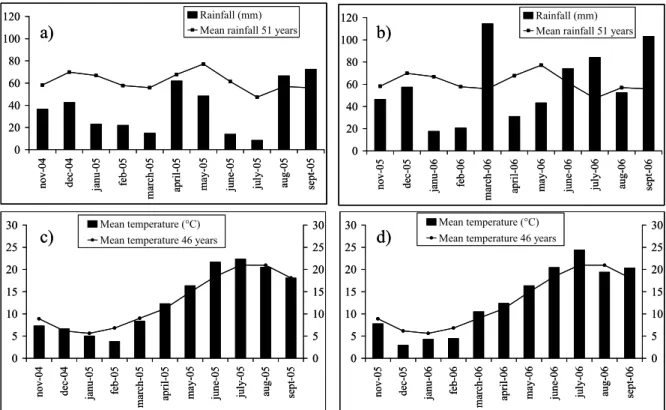
Local climate data (mean temperatures and rainfall) were measured by the meteorological station at INRA Toulouse in 2005 and by Météo-France in Auch in 2006. Rainfall and mean temperature are compared to the weather data of the last 50 years in figure 1 (a and b).
In comparison with the last 51 years, 2006 had a high rainfall, particularly in March, June and July corresponding to the pre-sowing and flowering periods whereas the ripening period (August) was slightly drier than the mean. In 2005, rainfall was generally lowest compared with the last 51 years, particularly during flowering period (June and July). Mean temperatures in 2005 and 2006 were generally higher than normal during the whole crop cycle except for August in comparison with the last 46 years.
Sterol extraction
Based on the current literature (Toivo, Lampi, Aalto & Piironen, 2000; Bruni et al., 2002) and on experience gained in the laboratory, a procedure using a direct sterol extraction from a small sample of ground sunflower seeds was optimized.
One hundred µg of cholestanol (Dihydrocholesterol, ALDRICH CHEM. CO.) from a stock solution of 5 mg diluted in 2.5 ml of chloroform was accurately weighed into a 10 ml Pyrex glass tube with a Teflon screw cap. Ten grams of sunflower seeds were ground as a powder. After chloroform evaporation, 250 mg of sunflower seed powder were saponified with 3 ml of KOH (1 M) (TITRINORM, PROLABO) during 60 minutes at 75 °C and mixed every 30 minutes. The tube was cooled at room temperature for 20 minutes and 1ml of distilled water was added. The non-saponifiable fraction was extracted from saponified lipids with 6 ml of iso-hexane (MERK). Tubes were shaken for 1 minute using a vortex-mixer. Forty µl of silylation reagent (a mix of 1 ml of N-methyl-N-trimethylsilyl-heptafluorobutyramide
(MSHFBA, MACHEREY-NAGEL) and 50 l of 1-methyl imidazole (SIGMA)) was added to 160 µl of sterol extracted phase and heated 3 minutes at 103°C.
Sterol content determination
One l of sterol trimethylsilyl ether derivatives were injected in a Perkin-Elmer GC equipped with a CPSIL 8CB 30 m column (D: 0.25 mm, film thickness: 0.25 µm) and FID detector. The thermal regime was the following : 160 °C (0.5 min), 10 °C/min until 260 °C, 2.5 °C/min until 300 °C, 25 °C/min until 350 °C, and 350 °C (1.5 min) for the oven temperatures, 55 °C (0.5 min), 200 °C/min until 320 °C, 30 °C/min until 350 °C, and 350 °C (2.5 min) for the injector temperatures and 365 °C for the detector temperature. Total phytosterols detected included desmethylsterols (β-sitosterol, campesterol, stigmasterol, Δ7-stigmastenol, Δ5-avenasterol, Δ7-avenasterol), methylsterols (24-ethylidene lophenol also called citrostadienol, 24-methylen lophenol also called gramisterol) and dimethylsterols (cycloartenol and methylencycloartanol).
Statistical data analysis
Analyses of variance were performed using the statistical package Sigmastat (version 2.0, USA) to validate the non effect of the two cropping seasons on sterol concentrations in sunflower seed. Three analytical samples for each of the 3 field replications (9 replications per sample) in 2005 and in 2006 were carried out at the different seed ages. Mean comparisons were based on Student-Newman & Keuls tests.
Results
Although the trials in 2005 and 2006 were carried out in two different locations and under two field crop conditions (conventional and organic), there was no significant difference in sterol
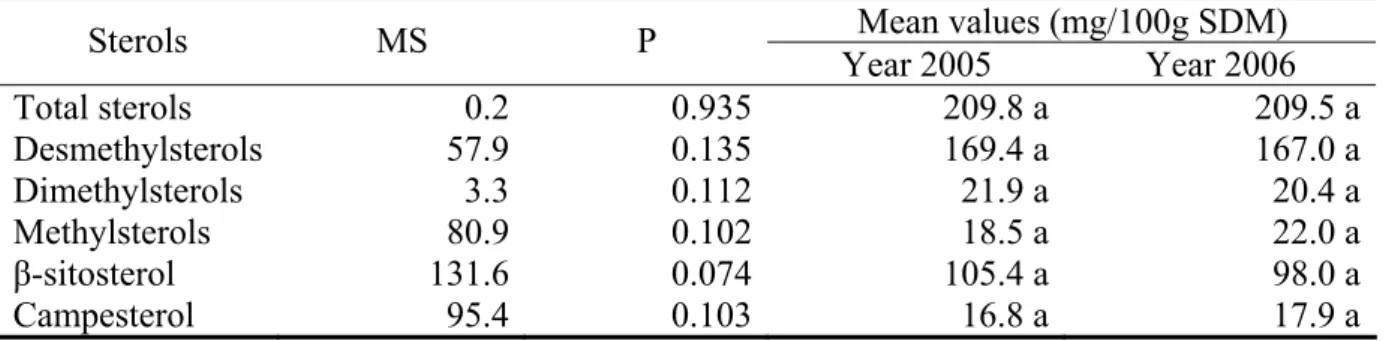
concentrations and distribution. As an example for the maturity stage, Table 1 presents the results obtained for the two years of our study.
Sunflower whole seeds contain almost 220 mg/100 g of Seed Dry Matter (SDM) of total sterols at maturity. Eighty-five % of them are desmethylsterols represented mainly by β-sitosterol and campesterol at a level of 140 mg/100 g SDM (figure 2a). Almost 28 % of total phytosterols are contained in the hull at harvest (table 2). This repartition came mainly from desmethylsterol part with 30% in the hull whereas dimethyl- and methylsterol proportions are lower compared to desmethylsterols (22.5 and 11.5 % respectively).
Phytosterol concentration during formation and ripening of sunflower seeds followed the progressive increase of seed dry matter up to 60 % of seed dry matter (40% of seed water content) when total sterol content reached a maximum in the whole seed. Sterol concentration varied according to sterol category. Desmethylsterol concentration was the highest at 40-45 days after flowering (DAF), around 40 % of water seed content (middle of ripening period) as for total phytosterols whereas the maximum of dimethyl- and methylsterol content occurred later (50-55 DAF) (figures 2a and b). From 55 DAF, the content of all category of sterol decreased slightly. Methylencycloartanol and cycloartenol (dimethylsterol category) were accumulated globally at the same rate until 50-55 DAF (figure 2c). In the methylsterol category, citrostadienol content increased also until 50-55 DAF whereas gramisterol content reached a peak at 35-40 DAF and then decreased until harvest (figure 2d).
Total sterol content in the embryo and in the hull analyzed separately showed that the content of total phytosterols and of desmethylsterols in the embryo became stable from 30 DAF, whereas their contents decreased in the hull at this time (figure 3). This is mainly due to β-sitosterol and campesterol contents which were stable but decreased in the hull from 30 DAF (figure 4a). The other components remained stable in the embryo at a same level with a
decrease in the hull for stigmasterol or a slight decrease for Δ7-stigmastenol, Δ7- and Δ5-avenasterol (figures 4b and c).
Compared to desmethylsterols, dimethyl- and methylsterols increased slightly at a same rate in hull and embryo to reach a threshold of 40 mg/100 g of SDM. However, the contents of the dimethylsterols present a different dynamic of concentration depending on seed parts (figure 4d). Both cycloartenol and methylencycloartanol contents in the embryo present a peak between 50 and 55 DAF. But in the hull compartment, cycloartenol content reached a maximum between 35 and 40 DAF whereas the methylencycloartanol one remained stable. No significant variation was noticed for the methylsterols.
Discussion
With the exception of gramisterol, dimethyl- and methylsterol contents reached a maximum in the whole seed later than desmethylsterols (50-55 DAF and 40-45 DAF respectively) (figure 2). This result indicates that desmethylsterols biosynthesis is greatly reduced from 40 DAF whereas their precursors (dimethyl- and methylsterols) continue to accumulate in the seed until 55 DAF. The maximum of desmethylsterol concentration at 40-45 DAF in the whole seed coincided with the end of the embryo growth and seed dry matter accumulation (Connor & Hall, 1997), whereas the hull part is formed earlier around 15 DAF. Considering the concentration profiles of hull and embryo compartments, it appears that from the first point of kinetic (20 DAF) to 30 DAF, desmethylsterol content increased in both compartments, but after 30 DAF, their content decreased in the hull and continued to increase in the embryo (figure 3). This diminution observed only in the hull could explain the slight decrease noticed in the whole seed from 40-45 DAF until harvest and suggests late modifications occurring during seed desiccation (figure 2a). Thus, it seems that the major part of the definitive form of total sterols, corresponding to the desmethylsterols, contained in the
hull, may be transferred to the embryo or to the testa, leading to a slight decrease of the accumulation in the whole seed. This result may be explained by hull desiccation or by their involvement in embryogenesis through brassinosteroid pathway (Clouse, 2000).
The slight and final increase of desmethylsterol content in the embryo occurring after 30 DAF could be also explained by the late cycloartenol and methylencycloartenol concentrations until 50-55 DAF in the embryo (figure 4d). However, it should be noticed that the decrease of total and desmethylsterols observed in the hull occurring after 40-45 DAF in favor to the embryo was mainly due to the decline of β-sitosterol (figure 4a), which represents almost 60 % of total sterols in oilseeds. β-sitosterol was reported to be the main sterol in seeds parts of wheat (Alignan et al., 2009), and maize (Harrabi et al., 2008). Yoshida and Niki (2003) reported that β-sitosterol, campesterol and stigmasterol exerted antioxidant effects on the oxidation of methyl linoleate oil solution. These observations suggested that this sterol may be an essential component of membrane of cells in different parts of seed. The presence of high proportion of β-sitosterol in plant membranes may be related to its efficiency in developing interactions with plant phospholipids to reinforce the bilayer architecture (Schuler et al., 1991). It suggests a major role of β-sitosterol in protecting the embryo during seed desiccation.
The same decrease in the hull was observed concerning campesterol in favor to the embryo (figure 4a). This sterol belongs to the minor proportion of sterol compounds which serve as precursors to steroid derivatives, recently recognized as a new class of plant growth regulators called brassinosteroids (Yokota, 1997). The ratio of campesterol/β-sitosterol must be correctly balanced to fit the sterol needs of the plant cell according to growth requirements of the embryo and could explain the decrease observed in the hull in favor of the embryo. According to literature, sterols are mainly contained in lipid droplets. Here, we showed that at maturity sterols may be also contained in shielding tissues surrounding the embryo (testa and hull) at a
non negligible rate of 28 %. This part is mainly represented by the desmethylsterol category (30%) (table 2). This result endorses the hypothesis that sterols may be involved in protection of the sunflower embryo.
Conversely to desmethylsterols, dimethyl- and methylsterol contents increased slightly in sunflower seed during the whole crop cycle except for gramisterol concentration that reached a maximum at 40 DAF followed by a decrease. Gramisterol is the central precursor of campesterol and β-sitosterol synthesis in the sterol metabolic pathway because of its role as a substrate of the sterol methyltransferase 2 (Benveniste, 2002). This result suggests that sterol concentration is maximal in sunflower seeds at 40 DAF and stops thereafter probably due to a reduction of sterol methyl transferases activities. This hypothesis confirms that the slight late increase of campesterol and β-sitosterol in the embryo until 55 DAF may be provided by the part of dimethyl- and methylsterol accumulated before 40 DAF and by movement from hull compartment (10 and 20 mg/100 g SDM for campesterol and β-sitosterol respectively of loss in the hull corresponding to a benefit for the embryo). These results also suggest that desmethylsterols and their precursors are probably differently regulated.
Conclusion
The data provided in this paper gives some ways to improve phytosterol production using natural crop management and soft extraction methods with reduced polluting compounds in the respect of REACH recommendations. First, our results reveal the presence of more than 25 % of sunflower phytosterols in the hull at harvest which is more than in other seeds, such as corn with a maximum of 1.2 % (Harrabi et al., 2008). Considering the increasing diversity of sterol applications, this surprising result could offer new outputs for hulls generated by industries as low-cost sources of high added value compounds.
Second, the rapid analytical method presented here, shows a simple, complete and direct extraction of phytosterols using only ground seeds as matrix and without excessive consumption of reagents. It could help to check rapidly the level of phytosterols of large size samples, such as for industries of oil transformation or for seed companies in breeding programmes.
Acknowledgment
We would like to thank the European Union for financially supporting this work (FEDER 7440 and 12688). We thank our colleague F. Vear for critical reading and English corrections. The participation of Dr. O. Merah was supported by IUT Paul Sabatier, Toulouse (University of Toulouse III), France.
References
Alignan, M., Roche, J., Bouniols A., Cerny, M., Mouloungui, Z., & Merah O. (2009). Effects of genotype and sowing date on phytostanol–phytosterol content and agronomic traits in wheat under organic agriculture. Food Chemistry, 117(2), 219-225.
Benveniste, P. (2002). Sterol metabolism. In E.M. Meyerowitz, & C. Somerville, The Arabidopsis book, (pp. 1-31). American Society of Plant Biologists.
Bruni, R., Medici, A., Scalia, S., Poli, F., Ramagnoli, C., Muzzoli, M., & Sacchetti, G. (2002). Tocopherol, fatty acids and sterol distributions in wild Ecuadorian Theobroma subincanum (Sterculiaceae) seeds. Food Chemistry, 77(3), 337-341.
Connor, D. J., & Hall, A. J. (1997). Sunflower physiology. In A. A. Schneiter, & A. A.Seiler, Sunflower Technology and production, Agronomy Monograph, (pp.113-182) American Society of Agronomy.
Clouse, S. D. (2000). Plant development: A role for sterols in embryogenesis. Current Biology, 10(16), R601-R604.
Daguet, J., & Coïc, J.-P. (1999). Phytosterols extraction: state of the art. Oléagineux, Corps gras, Lipides, 6(1), 25-28.
Ellegard, L. H., Andersson, S. W., Normen, A. L., & Andersson, H. A. (2007). Dietary plant sterols and cholesterol metabolism. Nutrition Reviews, 65(1), 39-45.
Folmer, B. M. (2003). Sterol surfactants: from synthesis to applications. Advances in Colloid and Interface Science, 103(2), 99-109.
Harrabi, S., St-Amand, A., Sakouhi, F., Sebei, K., Kallel, H., Mayer, P. M., & Boukhchina, S. (2008). Phytostanols and phytosterols distributions in corn kernel. Food Chemistry, 111(1), 115-120.
Hartmann, M.-A. (1998). Plant sterols and the membrane environment. Trends in Plant Science, 3(5), 170-175.
Kim, H.-J., Fan, X., Gabbi, C., Yakimchuk, K., Parini, P., Warner M., & Gustafsson J.-A. (2008). Liver X receptor (LXR): a link between -sitosterol and amyotrophic lateral sclerosis-Parkinson's dementia. Procedings of the National Academy of Sciences 105(6), 2094-2099.
Law, M. (2000). Plant sterol and stanol margarines and health. British Medical Journal, 320(7238), 861-864.
Lindsey, K., Pullen, M. L., & Topping, J. F (2003). Importance of plant sterols in pattern formation and hormone signalling. Trends in Plant Science, 8(11), 521-525.
Moreau, R. A., Whitaker, B. D., & Hicks, K. B. (2002). Phytosterols, phytostanols, and their conjugates in foods: structural diversity, quantitative analysis, and health-promoting uses. Progress in Lipid Research, 41(6), 457-500.
Mouloungui, Z., Roche, J., & Bouniols, A. (2006). Limitations extractives des ingrédients fonctionnels natifs : lipides bioactifs par modifications chimiques. Oléagineux, Corps gras, Lipides, 13(1), 16-22.
Ostlund, R.E Jr. (2007). Phytosterols, cholesterol absorption and healthy diets. Lipids, 42(1), 41-4.
Piironen, V., Lindsay, D. G., Miettinen, T. A., Toivo, J., & Lampi, A. M. (2000). Plant sterols: biosynthesis, biological function and their importance to human nutrition. Journal of the Science of Food and Agriculture, 80(7), 939-966.
Roche, J., Bouniols, A., Mouloungui, Z., Barranco, T., & Cerny, M. (2006). Management of environmental crop conditions to produce useful sunflower oil components. European Journal of Lipid Science and Technology, 108(4), 287–297.
Sakouhi, F., Absalon, C., Harrabi, A., Vitry, C., Sebei, K., Boukhchina, S., Fouquet, E., & Kallel, H. (2009). Dynamic accumulation of 4-desmethylsterols and phytostanols during ripening of Tunisian Meski olives (Olea europea L.). Food Chemistry, 112(4), 897-902.
Schneiter, A. A., & Miller, J. F. (1981). Description of sunflower growth stages. Crop Science, 21(6), 901-903.
Schuler, I., Milon, A., Nakatani, Y., Ourisson, G., Albrecht, A. M., Benveniste, P., & Hartmann M. A. (1991). Differential effects of plant sterols on water permeability and on acyl chain ordering of soybean phosphatidylcholine bilayers. Proceedings of the National Academy of Science, 88(16), 6926-6930.
Tabata, R.C., Wilson, J.M.B., Ly, P., Zwiegers, P., Kwok, D., Van Kampen, J.M., Cashman N., & Shaw C.A. (2008). Chronic exposure to dietary sterol glucosides is neurotoxic to motor neurons and induces and ALS-PDC phenotype. Neuromolecular Medicine 10(1), 24-39. Toivo, J., Lampi, A. M., Aalto, S., & Piironen, V. (2000). Factors affecting sample preparation in the gas chromatographic determination of plant sterols in whole wheat flour. Food Chemistry, 68(2), 239-245.
Yokota, T. (1997). The structure, biosynthesis and function of brassinosteroids. Trends in Plant Science, 2(4), 137-143.
Yoshida, Y., & Niki, E. (2003). Antioxidant effects of phytosterol and its components. Journal of Nutritional Science and Vitaminology, 49, 277–280.
Figure captions
Figure 1. Rainfall (a and b) and mean temperature (c and d) during 2005 (a and c) and 2006 (b and d) crop cycle compared to the last 50 years
SMT1: SterolMethyl Transferase 1, SMT2: SterolMethyl Transferase 2, C16:0: palmitic acid, C18:0: stearic acid, C18:1: oleic acid, C18:2: linoleic acid
Figure 2. a) Concentration of total phytosterols (black signs) and desmethylsterols (grey signs), b) dimethyl- and methylsterols regrouped, c) dimethylsterols (methylencycloartanol and cycloartenol) and d) methylsterols (citrostadienol and gramisterol) in whole sunflower seed in two years (2005 and 2006) according to the day after flowering (DAF)
Figure 3. Concentration of total phytosterols, desmethylsterols, dimethyl- and methylsterols in embryo and hull of sunflower seed
Figure 4. a) Concentration of β-sitosterol and campesterol, b) stigmasterol and Δ7-stigmastenol, c) Δ5-avenasterol and Δ7-avenasterol, d) cycloartenol and methylencycloartanol in embryo and hull of sunflower seed
Table 1. Effect of the cropping season on sterol concentration at maturity Mean values (mg/100g SDM) Sterols MS P Year 2005 Year 2006 Total sterols 0.2 0.935 209.8 a 209.5 a Desmethylsterols 57.9 0.135 169.4 a 167.0 a Dimethylsterols 3.3 0.112 21.9 a 20.4 a Methylsterols 80.9 0.102 18.5 a 22.0 a β-sitosterol 131.6 0.074 105.4 a 98.0 a Campesterol 95.4 0.103 16.8 a 17.9 a
Table 2. Distribution of total sterol, desmethylsterols, methylsterols, dimethylsterols, β-sitosterol and campesterol contents in embryo and hull of the genotype Santiago II in 2005 at maturity. Tissues Embryo Hull Sterols % of total sterols Concentrations of sterols (mg/100g SDM) % of total
sterols Concentrations of sterols Total sterols 72.3 ± 1.8 151.9 ± 3.2 27.7 ± 2.1 58.2 ± 1.6 Desmethylsterols 70.0 ± 1.7 117.7 ± 2.1 30.0 ± 1.9 50.5 ± 1.8 Dimethylsterols 77.5 ± 3.2 16.4 ± 1.9 22.5 ± 1.1 4.8 ± 1.2 Methylsterols 88.5 ± 3.4 16.4 ± 1.0 11.5 ± 1.7 2.1 ± 1.4 β-sitosterol 69.5 ± 1.6 69.6 ± 1.9 30.5 ± 1.4 30.6 ± 0.9 Campesterol 69.2 ± 1.2 12.5 ± 0.4 30.8 ± 1.3 5.5 ± 0.7
0 20 40 60 80 100 120 nov -0 4 dec-04 janu -0 5 fe b-05 ma rc h-05 ap ril-05 may-05 june -0 5 ju ly -0 5 au g-05 sept-05 Rainfall (mm) Mean rainfall 51 years
0 20 40 60 80 100 120 nov -0 5 dec-05 janu -0 6 feb -0 6 ma rc h-06 ap ril-06 may-06 june -0 6 ju ly -0 6 au g-06 sept-06 Rainfall (mm) Mean rainfall 51 years
a) b) 0 5 10 15 20 25 30 nov -0 4 dec-04 janu -0 5 fe b-05 ma rc h-05 ap ril-05 may-05 june -0 5 ju ly -0 5 au g-05 sept-05 0 5 10 15 20 25 30 Mean temperature (°C)
Mean temperature 46 years
c) 0 5 10 15 20 25 30 nov -0 5 dec-05 janu -0 6 fe b-06 ma rc h-06 ap ril-06 may-06 june -0 6 ju ly -0 6 au g-06 sept-06 0 5 10 15 20 25 30 Mean temperature (°C)
Mean temperature 46 years
d) 0 20 40 60 80 100 120 nov -0 4 dec-04 janu -0 5 fe b-05 ma rc h-05 ap ril-05 may-05 june -0 5 ju ly -0 5 au g-05 sept-05 Rainfall (mm) Mean rainfall 51 years
0 20 40 60 80 100 120 nov -0 5 dec-05 janu -0 6 fe b-06 ma rc h-06 ap ril-06 may-06 june -0 6 ju ly -0 6 au g-06 sept-06 Rainfall (mm) Mean rainfall 51 years
a) b) 0 5 10 15 20 25 30 nov -0 4 dec-04 janu -0 5 fe b-05 ma rc h-05 ap ril-05 may-05 june -0 5 ju ly -0 5 au g-05 sept-05 0 5 10 15 20 25 30 Mean temperature (°C)
Mean temperature 46 years
c) 0 5 10 15 20 25 30 nov -0 5 dec-05 janu -0 6 fe b-06 ma rc h-06 ap ril-06 may-06 june -0 6 ju ly -0 6 au g-06 sept-06 0 5 10 15 20 25 30 Mean temperature (°C)
Mean temperature 46 years
d)
Figure 1. Rainfall (a and b) and mean temperature (c and d) during 2005 (a and c) and 2006 (b and d) crop cycle compared to the last 50 years
0 20 40 60 80 100 120 140 160 180 200 220 240 260 280 0 5 10 15 20 25 30 35 40 45 50 55 60 65 70 DAF 0 10 20 30 40 50 60 70 80 90 Total sterols Desmethylsterols Water content (%/SDM)
mg/100g of SD M Wat er content (%/SD M ) 0 10 20 30 40 50 60 0 5 10 15 20 25 30 35 40 45 50 55 60 65 70 DAF 0 10 20 30 40 50 60 70 80 90 Dimethyl- and methylsterols Water content (%/SDM)
mg/100g of SD M Wate r content (%/SD M ) 0 2 4 6 8 10 12 14 16 18 20 0 5 10 15 20 25 30 35 40 45 50 55 60 65 70 DAF Methylencycloartanol Cycloartenol mg/100g of SD M 0 2 4 6 8 10 12 14 16 18 20 22 24 26 0 5 10 15 20 25 30 35 40 45 50 55 60 65 70 DAF 0 2 4 6 8 10 12 14 Citrostadienol Gramisterol mg/10 0g o f S D M Ci tro sta di en ol m g/ 100g of SDM Gra m is te ro l a) b) c) d) 0 20 40 60 80 100 120 140 160 180 200 220 240 260 280 0 5 10 15 20 25 30 35 40 45 50 55 60 65 70 DAF 0 10 20 30 40 50 60 70 80 90 Total sterols Desmethylsterols Water content (%/SDM)
mg/100g of SD M Wat er content (%/SD M ) 0 10 20 30 40 50 60 0 5 10 15 20 25 30 35 40 45 50 55 60 65 70 DAF 0 10 20 30 40 50 60 70 80 90 Dimethyl- and methylsterols Water content (%/SDM)
mg/100g of SD M Wate r content (%/SD M ) 0 2 4 6 8 10 12 14 16 18 20 0 5 10 15 20 25 30 35 40 45 50 55 60 65 70 DAF Methylencycloartanol Cycloartenol mg/100g of SD M 0 2 4 6 8 10 12 14 16 18 20 22 24 26 0 5 10 15 20 25 30 35 40 45 50 55 60 65 70 DAF 0 2 4 6 8 10 12 14 Citrostadienol Gramisterol mg/10 0g o f S D M Ci tro sta di en ol m g/ 100g of SDM Gra m is te ro l a) b) c) d)
Figure 2. a) Concentration of total phytosterols (black signs) and desmethylsterols (grey signs), b) dimethyl- and methylsterols regrouped, c) dimethylsterols (methylencycloartanol and cycloartenol) and d) methylsterols (citrostadienol and gramisterol) in whole sunflower seed according to the day after flowering (DAF) as an average of the two years (2005 and 2006)
0 20 40 60 80 100 120 140 160 180 200 0 5 10 15 20 25 30 35 40 45 50 55 60 65 70 DAF
Embryo total phytosterols Hull total phytosterols
Embryo desmethylsterols Hull desmethylsterols
Embryo dimethyl- and methylsterols Hulll dimethyl- and methylsterols
m
g/1
00g SDM
Figure 3. Concentration of total phytosterols, desmethylsterols, dimethyl- and methylsterols in embryo and hull of sunflower seed in 2005
0 10 20 30 40 50 60 70 80 90 100 0 5 10 15 20 25 30 35 40 45 50 55 60 65 70 DAF 0 2 4 6 8 10 12 14 16 Embryo β-sitosterol Hull β-sitosterol
Embryo campesterol Hull campesterol
β-sitosterol mg/100g SD M C am pe sterol mg/100 g S D M 0 2 4 6 8 10 12 14 16 18 20 0 5 10 15 20 25 30 35 40 45 50 55 60 65 70 DAF Embryo stigmasterol Hull stigmasterol
Embryo Δ7-stigmastenol Hull Δ7-stigmatenol
mg/100 g S D M 0 1 2 3 4 5 6 7 8 0 5 10 15 20 25 30 35 40 45 50 55 60 65 70 DAF Embryo Δ5-avenasterol Hull Δ5-avenasterol
Embryo Δ7-avenasterol Hull Δ7-avenasterol
mg/100g S D M 0 1 2 3 4 5 6 7 8 9 10 11 12 0 5 10 15 20 25 30 35 40 45 50 55 60 65 70 DAF Embryo cycloartenol Hull cycloartenol
Embryo methylencycloartanol Hull methylencycloartanol
mg/100g S D M a) b) c) d) 0 10 20 30 40 50 60 70 80 90 100 0 5 10 15 20 25 30 35 40 45 50 55 60 65 70 DAF 0 2 4 6 8 10 12 14 16 Embryo β-sitosterol Hull β-sitosterol
Embryo campesterol Hull campesterol
β-sitosterol mg/100g SD M C am pe sterol mg/100 g S D M 0 2 4 6 8 10 12 14 16 18 20 0 5 10 15 20 25 30 35 40 45 50 55 60 65 70 DAF Embryo stigmasterol Hull stigmasterol
Embryo Δ7-stigmastenol Hull Δ7-stigmatenol
mg/100 g S D M 0 1 2 3 4 5 6 7 8 0 5 10 15 20 25 30 35 40 45 50 55 60 65 70 DAF Embryo Δ5-avenasterol Hull Δ5-avenasterol
Embryo Δ7-avenasterol Hull Δ7-avenasterol
mg/100g S D M 0 1 2 3 4 5 6 7 8 9 10 11 12 0 5 10 15 20 25 30 35 40 45 50 55 60 65 70 DAF Embryo cycloartenol Hull cycloartenol
Embryo methylencycloartanol Hull methylencycloartanol
mg/100g S
D
M
a) b)
c) d)
Figure 4. a) Concentration of β-sitosterol and campesterol, b) stigmasterol and Δ7-stigmastenol, c) Δ5-avenasterol and Δ7-avenasterol, d) cycloartenol and methylencycloartanol in embryo and hull of sunflower seed in 2005