Summary
The present work was carried out to establish rapid in vitro propagation of the indigenous oilseed Citrullus lanatus. Efficiency of 3 protocols for seed decontamination was investigated. High level of seed sterilization was obtained after removing seed coat and soaking the seeds in 1.6% sodium hypochlorite with a drop of Tween 20. Shoot tips, single node and cotyledon explants of 3 morphotypes have been screened for adventitious shoot formation in tissue culture. Best response in terms of multiple shoot induction was obtained from cotyledon proximal part with hypocotyl segment on Murashige and Skoog medium supplemented with 1 mg/l 6-Benzylaminopurine, 30 g/l sucrose and 8 g/l agar. After 3 weeks of culture, 90% of cotyledon proximal parts induced shoot. An average of 12.6 shoots per explant and a mean shoot length of 8 mm were obtained after multiplication stage. Shoot induction appeared to be strongly influenced by genotype and explant type. The percentage of shoot induction from cotyledon proximal parts ranged from 23.3% to 64.0% according to the genotype. Efficient rooting was achieved on half-solid MS medium containing 0.1 mg/l 1-Naphthaleneactic acid or without growth regulator. Acclimatised plantlets were transferred to greenhouse where they grew and flowered like seeded plantlets.
Determination of a Suitable Protocol for Indigenous Oilseed
Cucurbits Plant Regeneration
Yah Gwladys Gnamien1,2, I.A. Zoro Bi1, Djè Y.1, A. Toussaint 2 & J.-P. Baudoin2*
Keywords: Citrullus lanatus- Cotyledon- Edible seeds- Germplasm conservation- Organogenesis- Shoot regeneration- Ivory Coast
1Université d’Abobo-Adjamé, UFR des Sciences de la Nature, Laboratoire de Biologie et Amélioration des Productions Végétales, 02 BP 801, Abidjan, Côte
d’Ivoire.
2University of Liège, Gembloux Agro-Bio Tech (GxABT), Tropical Crop Husbandry and Horticulture, 2, Passage des Déportés, B-5030 Gembloux, Belgium. *Corresponding author: Email: [email protected];
Fax: 32(0)81 61 45 44; Tel.: 32(0)81 62 21 12
Received on 28.06.10 and accepted for publication on 11.10.10.
Résumé
Détermination d’un protocole adéquat pour la régénération de la cucurbite oléagineuse indigène
Le présent travail est mené pour mettre au point un protocole efficace de régénération in vitro pour la cucurbite oléagineuse indigène Citrullus lanatus. L’efficacité de 3 protocoles pour la désinfection des graines est étudiée. L’élimination des contaminants est obtenue lorsque les graines décortiquées sont trempées dans 1,6% d’hypochlorite de sodium additionné d’une goutte de Tween-20 durant 25 mn. Les bourgeons apicaux, les nœuds et les cotylédons de trois morphotypes sont utilisés pour l’induction de pousses adventives. La meilleure réponse pour l’induction de pousses est obtenue avec les parties proximales de cotylédons sur le milieu de Murashige et Shoog complétés avec 1 mg/l 6-Benzylaminopurine, 30 g/l de saccharose et 8 g/l d’agar. Après trois semaines de culture, 90% des parties proximales de cotylédon ont induit des pousses. Une moyenne de 12,6 pousses par explant avec une longueur moyenne de 8 mm est obtenue après le stade de multiplication. L’induction de pousses, fortement influencée par le génotype et le type d’explant, varie de 23,3% à 64,0% selon le génotype. Les plantules ont pu s’enraciner sur le milieu MS semi-solide contenant 0,1 mg/l d’acide 1-Naphthaleneactique ou sans hormone. Les plantules acclimatées sont transférées en serre où elles se sont développées et ont fleuri normalement.
Introduction
Cucurbitaceae is an important family of vegetables grown worldwide. According to their mode of consumption, two major groups are distinguished: the type consumed fresh or in salads (watermelon, melon, squash, etc.), and the type grown for their seeds (bitter cucumber, African melon, etc.) (43). In contrast to the first group that is well documented (9, 23, 34), little is known about the second (24, 35, 42). The indigenous edible-seeded cucurbits are classified into minor crops. Species cultivated in Ivory Coast are Cucumis melo var. agrestis (Naudin), Citrullus lanatus (Thunb.) Maktum and Nakai, Cucumeropsis mannii
(Naudin) and Lagenaria siceraria (Molina) Standl (42). They are widely used in western and eastern Africa for their numerous agronomic, medicinal and economic values (14). Their dried seeds designated “pistachio” in Ivory Coast (32), and “egusi” in Nigeria, Benin, Cameroon and Congo (20, 35), are slightly toasted, ground and used as soup thickener (43). Edible oil can also be extracted from the seeds (4, 39). It should be noted that “egusi” is a generic name referring to all the Cucurbitaceae with edible seeds (1).
Species C. lanatus was subdivided in three sub-species by Fursa (17): ssp. vulgaris (Schrad.) Fursa;
ssp. lanatus (Thunb) Matsum. and Nakai; ssp. mucosospermus (Fursa). Indigenous oilseed C. lanatus is classified in ssp. mucosospermus contrary to watermelon (C. lanatus) classified in ssp. lanatus (17). Studies are in progress to identify the botanical name of indigenous oilseed C. lanatus. Meanwhile we will designate indigenous oilseed as C. lanatus. Considering the great morphological variability of indigenous oilseed C. lanatus cultivated in Ivory Coast, Zoro Bi et al. (43) described two different cultigroups. The term cultigroup was first used by Westphal (40) with a view to adapt the plant nomenclature to the classification of the cultivated plants. The first cultigroup, containing three cultivars defined on the basis of averaged seed size, has smooth seeds that are tapered to the point of attachment. The second cultigroup represented by one cultivar has ovoid and flattened seeds, with a thick and rough margin. Only the first cultigroup was used in the present study. Multiplication of the indigenous oilseed cucurbits can be achieved through botanical seeds but the maintenance of appropriate cultivar is a major problem due to their cross-pollinating breeding system. In addition, seeds loose quickly their germinating capacity that cannot be preserved more than one year depending upon storage conditions (14). Yet, to satisfy the future needs in genetic resources, it is imperative to collect and conserve representative stocks of plant genetic diversity (19). Traditional production systems of indigenous oilseed cucurbits should be improved with the aim of developing new economic resources for local communities. Such an approach would thus contribute effectively to poverty and rural exodus reduction. In this context, an effective protocol for indigenous oilseed cucurbits micropropagation should be developed to meet several purposes: germplasm conservation, multiplication of elite improved cultivars and distribution of plant material. There have been reports on micropropagation in species of Cucurbitaceae cultivated for their fruits such as winter squash (Cucurbita maxima Duch.) (27), summer squash (Cucurbita pepo L.) (3), cucumber (Cucumis sativus L.) (34), melon (Cucumis melo L.) (23), dessert watermelon (Citrullus lanatus) (9) and bottle gourd (Lagenaria siceraria) (21). However, such investigations were not carried out with indigenous edible-seeded cucurbits. The genotypes have been shown to greatly influence plant regeneration (2). Genotype-specific responses have been documented in Cucurbitaceae family (28) as in others family: Ericaceae, Fabaceae, Rosaceae, etc. (5, 13, 16). This specific response necessitates the determination of a suitable protocol to stimulate plant regeneration in genotypes of interest. Several types of explants (shoot tips, single nodes, cotyledons, hypocotyl and root) were used for cucurbits micropropagation (6, 10, 26, 27). All reports of Cucurbitaceae shoot organogenesis (6, 9, 15, 36) involved the use of media formulated
with the basic macro and micro salts plus vitamins as outlined by Murashige and Skoog (30). Optimum shoot regeneration has been achieved generally by using 6-Benzylaminopurine (BAP) as the only plant growth regulator (6, 7, 9, 36). However, combination of Indole-3-butyric acid (IBA), kinetin and Gibberellic acid (GA3) has been successfully tested for direct shoots induction by Compton et al. (10). Shoot elongation was improved by using kinetin or without growth regulator (7, 15). Rooting was achieved with IBA, 1-Naphthaleneactic acid (NAA) and Indole-3-acetic acid (IAA) or without growth regulator (6, 10, 26, 27).
This study is aimed to determine an efficient protocol for in vitro regeneration of edible-seeded cucurbits. It is a prerequisite to develop programmes for the conservation and large-scale in vitro propagation of desired genotypes of indigenous edible-seeded cucurbits. Particularly, the objectives of the present work are to: (i) identify an effective seed disinfection protocol; (ii) identify optima media, explant type, seedling age for indigenous edible-seeded cucurbits micropropagation and (iii) investigate the influence of genotype on shoot induction.
Material and methods
Plant material
Mature seeds of three genotypes of indigenous oilseed Citrullus lanatus were used as explant source. The three genotypes were designated as follows: CL for genotype with large seeds (average of 120 mm2), CM for genotype with medium seeds (average of 59 mm2), and CS for genotype with small seeds (average of 42 mm2). All these genotypes were selected from a germplasm collection at the University of Abobo-Adjamé (UAA) Abidjan, Ivory Coast. The genotypes CL, CM, and CS were collected respectively in three different ecological regions of the country: the southern zone (tropical rain forest), the central zone (woodland savannah with some herbaceous areas) and the eastern zone (transitional woodland savannah with blocks of semi-deciduous forests).
Sterilization
To establish a performing technique of deconta-mination, we tested only the genotype CM. Three protocols of decontamination described by Jaskani et al. (22), Nasr et al. (31) and Tang et al. (38) have been compared. After the preliminary tests (data not show), the three protocols were improved by an increase of the concentration of sodium hypochlorite from 1% and 1.3% to 1.6%. In the first and second protocol seeds with coat were treated respectively with 70% alcohol for 30 s and with 20% hydrochloric acid (HCl) for 20 min. Then, the seeds from the two treatments were surface-sterilized in a 1.6% sodium hypochlorite solution containing 15 g/l of active chlorine, with one
drop of Tween 20 for 15 min and 20 min for the first and the second protocol, respectively. In the third protocol, seed coats were removed manually, and the embryos surface-sterilized 25 min in a 1.6% sodium hypochlorite with one drop of Tween 20. The treated seeds from the three protocols of decontamination were rinsed six times with sterile distilled water. Decontaminated seeds from each protocol were sown in petri-dishes containing 20 ml MS basal medium (30) without growth regulators. The pH of media was adjusted to 5.7 before autoclaving at 121 °C for 20 min. Each petri-dish with 5 seeds constituted one replicate and there were five replicates per treatment. For the seed germination and seedling growth, the following climatic conditions were applied: 28 ± 2 °C with a 12h/12h light/dark cycle; light was provided by cool white fluorescent lamps with an intensity of 50 mol/ m2/s. Germination and contamination was recorded daily during a week. Radicle emergency served as an indication of germination.
Preparation of the different explants
Eight explant types were used for micropropagation: proximal parts of the cotyledons with hypocotyl segment, distal parts of the cotyledons, shoot tips and single nodes from ten-, fifteen- and twenty-day-old seedlings. Preparation of those explants was carried out as follows.
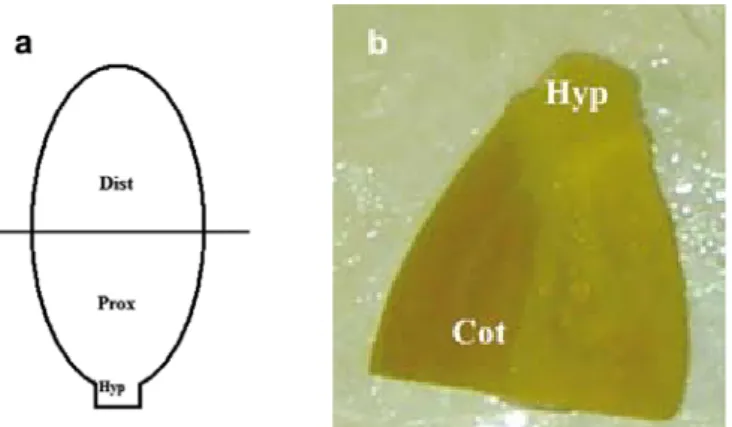
Seeds of the three genotypes CL, CM and CS were sterilized with the best decontamination protocol. In order to reach full development of the seedlings, seeds were germinated in jars containing MS basal medium without growth regulators, during 10, 15 and 20 days in climatic conditions described above. However, with the 5-day-old seedlings, seeds were germinated in darkness. This condition for 5-day-old seedlings was chosen on the basis of investigations carried out by Compton (6). Germinating embryos in darkness improved shoot organogenesis from cotyledons. Cotyledonary explants were removed from 5-day-old seedlings as follows. The hypocotyl was first cut off close to the cotyledons, and then the cotyledons were cut in half resulting in the proximal and distal parts (Figure 1a). Subsequently each part (distal parts and proximal parts of the cotyledons with hypocotyl segment) was separated with a scalpel blade. The apical bud of the seedling on the proximal part was removed with care. This resulted in cotyledon distal and proximal parts with hypocotyl segment explants (Figure 1b).
In addition, shoot tips and single nodes were dissected from ten-, fifteen- and twenty-day-old seedlings and were also used as explants.
The shoot has been removed. ‘Hyp’ marks the part of the hypocotyl remaining after explant preparation. The cotyledon remnant is labeled ‘Cot’.
Culture establishment
To determine the organogenetic responsiveness of
different explant types at various ages, two sets of comparisons were made. The effect of seedling age on shoot induction was tested using several explant types of the genotype CM. Each explant type was cultured on induction media, i.e. MS medium containing four combinations of growth regulators and agar (Table 1). The media combination was selected on the basis of investigations carried out on Cucurbitaceae cultivated for their pulp (6, 10, 26, 27). Once identified the best performing factors (medium combination, the best cotyledon explants and the best day-old seedlings for shoot tips and single node dissection) for shoot induction, the genotypic influence was investigated. This experiment was performed with the three genotypes CL, CM and CS.
After 3 weeks the shoots were subcultured on the same medium except for the medium Mm2 where IBA, GA3 and Kinetin were substituted for 1 mg/l BAP. In each medium, shoot multiplication was scored after 3 weeks. A shoot consisted of a shoot apex, an elongating stem (≥ 4.0 mm long) and expanding leaves with petioles.
Shoots harvested from multiplication stage were transferred to shoot elongation media (Table 1) during 2 weeks. All media tested contain the growth regulator BAP at different concentrations or no growth regulators. Shoots were then placed in 150 mm × 20 mm culture tubes containing 15 ml of rooting media, i.e. MS medium containing various auxins or without growth regulators (Table 1). The hormone-free media differ in their agar amount.
Explants were cultured in 55 mm × 70 mm glass flasks, each containing 25 ml of medium. Each medium combination consisted of twelve replicates, one replicate being one flask with five explants. After induction and multiplication stage, explants were scored for shoot induction, number of shoots and
Figure 1: Adventitious shoots induction from de-budded cotyledon proximal part with hypocotyl segment explants.
a Preparation of explant from indigenous oilseed Citrullus lanatus cotyledons. The distal part (Dist) and proximal
part (Prox) were cut from the cotyledons as indicated by the line. b Initial explant from the cotyledon proximal
part of a 5-day-old indigenous oilseed Citrullus lanatus seedling.
shoot length. For elongation stage shoot length was evaluated and for rooting stage the number of shoots with roots was recorded.
Acclimatization
After two weeks on the rooting medium, the plantlets were transplanted into plastic pots filled with autoclaved soil [80% of Klasmann® 4 Special No 26, 15% peat, 5% of the Rhine sand and organic fertilizer (0.6 g/l mixture)], covered with a glass or a plastic lid and grown in a growth-room with the following parameters: 24° C/20° C day and night temperature, relative humidity ranging from 50 to 60%, 12h/12h light/dark cycle, and a light intensity of 170 µmol/m2/s. The lid was gradually removed once a majority of the plantlets exhibited new growth (about two weeks); seedlings were then moved to the greenhouse. The acclimatization phase was considered successful when plantlets were adapted to ex vitro conditions and developed new leaves. The number of plantlets that survived acclimatization was recorded three weeks after transfer to the greenhouse.
Statistical analysis
The effect of different media was quantified and data was analyzed using standard analysis of variance (ANOVA). When the null hypothesis of an ANOVA was rejected, means were compared using Tukey’s multiple range test at 5 % level of significance. Data were processed using the software Minitab ® for Windows, version 14.00. Data of single node explants from fifteen- and twenty-day-old seedlings were transformed using logarithmic transformation prior to analysis by standard analysis of variance (ANOVA) procedures (12).
Results
Sterilization
With the first and the second decontamination protocol, all the seeds were contaminated and no germination was recorded. The third decontamination protocol, for which seed coats were removed, resulted
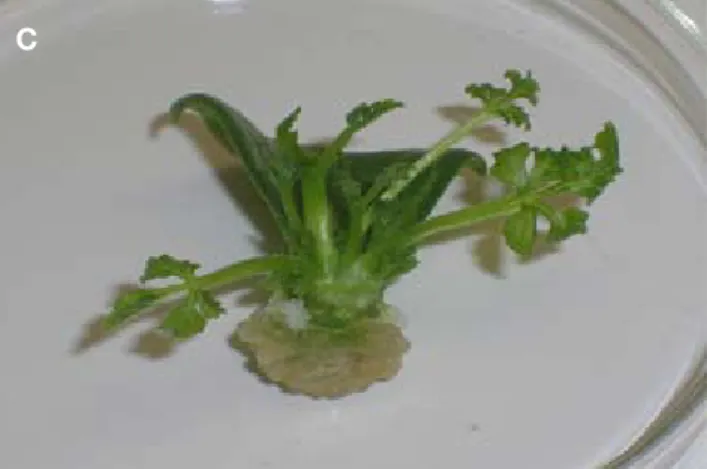
Figure 1: Adventitious shoots induction from de-budded cotyledon proximal part with hypocotyl segment explants. c Explant
after 3 weeks in culture onto MS medium supplemented with 1 mg/l BAP, 30 g/l sucrose and 8 g/l agar. Multiple shoots cover the area between the hypocotyl ‘Hyp’ and the cotyledon ‘Cot’.
in the complete elimination of contaminants without affecting seed germination. After 7 days 100% of the seeds treated with the third decontamination protocol germinated. The third decontamination protocol (seed without coats were surface-sterilized 25 min in a 1.6% sodium hypochlorite with one drop of Tween 20) was therefore used in all subsequent procedures.
Shoots regeneration
Shoots differentiated directly after 3 weeks of culture for all explant types with no intermediate callus stage. Figure 1c shows an example of shoots induced on cotyledon proximal part with hypocotyl segment. Most of explant types cultured on media Mi1, Mi3 and Mi4 which all contained BAP reacted more favourably to shoot induction than those placed on Mi2 which did not contain BAP (Figure 2a). However, whatever the media, no shoots were observed with the explants made from the distal part of cotyledon and with shoot tips from 10-day-old seedlings. It was found that the best shoot induction response occurred in medium Mi3 supplemented with 1 mg/l BAP when considering the percentage of shoots induction and the number of
C
Table 1
Media tested for indigenous oilseed Citrullus lanatus shoots induction, shoots elongation and roots induction. All media tested were formulated with the basic macro and micro salts plus vitamins as outlined by Murashige and Skoog (MS) (1962) and
supplemented with 30 g/l sucrose
Induction Elongation Rooting
Compounds Mi1 Mi2 Mi3 Mi4 Me1 Me2 Me3 Me4 Mr1 Mr2 Mr3 Mr4 Basal medium MS MS MS MS MS MS MS MS MS MS MS MS BAP (mg/l) 0.5 1 2 0.1 2 IBA (mg/l) 0.35 0.1 GA3 (mg/l) 0.1 Kinetin (mg/l) 0.1 NAA (mg/l) 0.1 Agar (g/l) 7 5 8 8 7 5 8 8 7 5 4 8
shoots per explant (Figure 2b).
The explant type used for shoot induction also significantly influenced the number of shoots produced (Figure 2b). Indeed, with respect to explant type response to the media tested, highly significant difference in the number of induced shoots was noted between media for cotyledon proximal part with hypocotyl segment (F= 32.13; P< 0.001). The number of shoots per explant produced on medium Mi2 was significantly lower than those obtained on the three other media. Similarly, for single nodes from 20-day-old seedlings, highly significant difference was noted in the number of shoots induced between different
Figure 2: Influence of four media and explant types on shoots induction in indigenous oilseed Citrullus lanatus. a Percentage of shoots
induction. b Number of shoots per explant. Media tested included Mi1 (1 mg/l BAP + 7 g/l agar), Mi2 (0.35 mg/l IBA + 0.1 mg/l GA3 + 0.1 mg/l Kinetin + 5 g/l agar), Mi3 (1 mg/l BAP + 8 g/l agar) and Mi4 (2 mg/l BAP + 8 g/l agar). Each point represents mean ± SE.
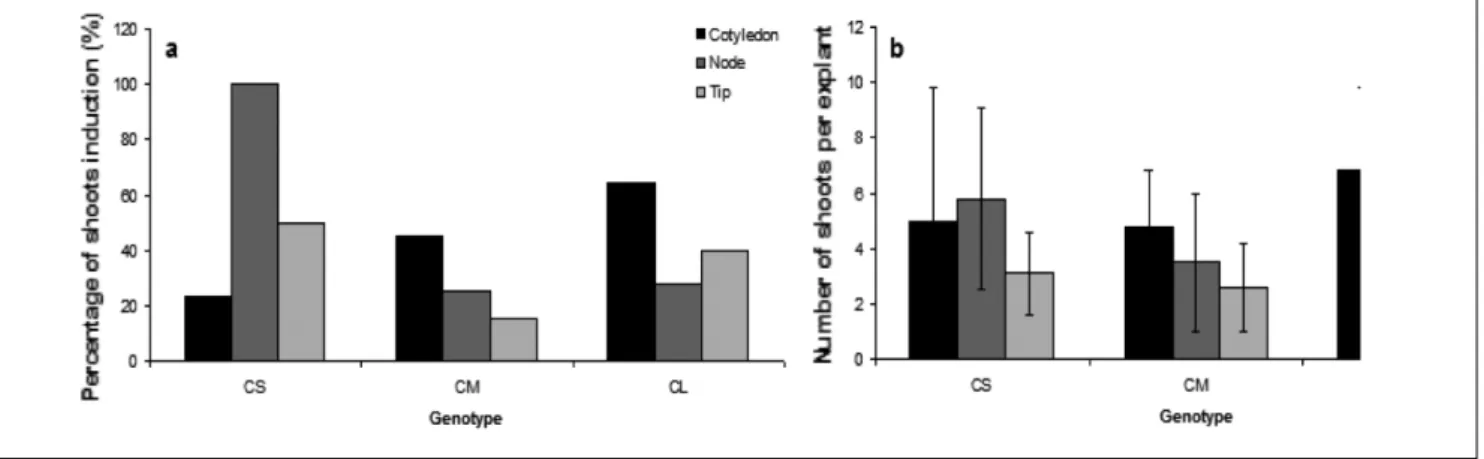
Figure 3: Effect of genotype and explant types on shoots induction in indigenous oilseed Citrullus lanatus. a Percentage of shoots induction. b Number of shoots per explant. Cotyledon proximal part with hypocotyl segment from 5-day-old seedlings, shoot tips and single
node explants from 20-day-old seedlings were cultured onto MS medium supplemented with 1 mg/l BAP and 8 g/l agar. Each point represents mean ± SE.
Table 2
Effect of genotype and explant type on induced shoot growth of indigenous oilseed Citrullus lanatus genotypes. Cotyledon proximal part with hypocotyl segment from 5-day-old seedlings, shoot tips and single node explants from 20-day-old seedlings
were cultured onto MS medium supplemented with 1 mg l-1 BAP and 8 g l-1 agar. Data represented as mean ± SE
Cultivar/Explant Cotyledon Single nodes Shoot tip
CS 14.0 ± 8.4a 8.9 ± 2.3a 5.5 ± 1.0a
CM 14.2 ± 5.1a 7.4 ± 2.3b 5.8 ± 1.3a
CL 10.2 ± 5.5a 9.2 ± 3.0a 7.9 ± 1.9b
Probability (P) 0.139 0.005 < 0.001
Means in a column followed by a common letter are not significantly different at the 5% level (Tukey’s multiple range test).
media (F= 14.70; P< 0.001). For the other explant types no difference was noted in the number of induced shoots between different media.
The percentage of shoot induction and the number of shoots produced per explant were influenced by the genotype according to explant type used (Figure 3). The percentage of shoot induction was higher for the genotypes CM and CL when cotyledon proximal part with hypocotyl segment was used as explant. For genotype CL the percentage of shoot induction was higher when single nodes were used as explant (Figure 3a). There was however no significant difference in the
Table 3
Influence of medium composition during multiplication stage on the number of shoots per explant and shoot length. All
media tested at this stage contained only BAP as growth regulator at different concentrations. Five shoots were
cultured per vessel. Data represented as mean ± SE
Medium Number of shoots per explant Shoot length (mm)
Mm1 6.8 ± 4.7b 7.5 ± 1.3b
Mm2 8.6 ± 2.5a 9.4 ± 1.6a
Mm3 12.6 ± 5.3a 8.0 ± 1.4b
Mm4 6.4 ± 4.1b 6.8 ± 1.5c
Probability (P) < 0.001 < 0.001
Means in a column followed by a common letter are not significantly different at the 5% level (Tukey’s multiple range test).
number of shoots per explant and the shoot length between the tested genotypes for cotyledon proximal parts and for shoot tips (Figure 3b). Difference between the tested genotypes was only observed for single nodes (F= 3.40; P= 0.037 and F= 5.49; P= 0.005 respectively for number and length of shoots). Nevertheless, with all genotypes, the cotyledon proximal part with hypocotyl segment was the best explant type to produce the longest shoots (Table 2). All media tested for multiplication stimulated shoot proliferation (Table 3). The average number of shoots per explant at this stage was superior to that obtained during shoot induction. For multiplication medium Mm2, the average number of shoots per explant was sevenfold higher than the number of shoots observed at the induction stage. Highly significant differences in the number of shoots per explant were noted between multiplication media (F= 13.17; P< 0.001). The number of shoots per explant produced on medium Mm3 was significantly higher than those obtained on media Mm1 andMm4, but did not differ from Mm2.
An increase in shoot length was noted in all elongation media (Me1: 8.1 ± 4.7 mm,Me2: 19.9 ± 13.2 mm, Me3: 9.7 ± 3.4 mm,Me4: 7.7 ± 2.7 mm), particularly on medium Me2 for which the average shoot length was about two-fold superior to the values observed at the multiplication stage.
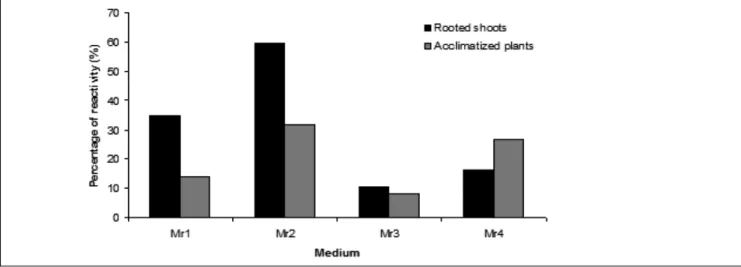
The regenerated shoots were transferred to rooting media for root induction. It was found that the best rooting response occurred in medium Mr2 supplemented with 0.1 mg/l NAA after 2 weeks of culture (Figure 4).
Addition of NAA to the rooting medium Mr2 improved shoot rooting. Indeed, the percentage of shoots that produced roots increased in medium Mr2 compared to medium Mr4 containing IBA or Mr1 and Mr3 without growth regulators. Plantlets obtained from shoots rooted in medium Mr2 (Figure 5a) showed the highest percentage of acclimatization (31.6%). Those rooted in medium Mr3 showed on the contrary the lowest acclimatization percentage (7.7%). Regenerated indigenous oilseed Citrullus lanatus plantlets were acclimatized (Figure 5b) and grew into normal plants in the greenhouse (Figure 5c).
Discussion
The first and the second decontamination protocols were not effective with the seeds of indigenous oilseed Citrullus lanatus. Yet, the same protocols have been used successfully on oil seed Brassica spp. L. and watermelon Citrullus vulgaris Schrad seeds (31, 38). Our results could be explained by the difficulty to eliminate microorganisms from the rough seed coats (not removed in the two first protocols). This hypothesis is plausible because the third decontamination protocol, for which seed coats were removed, resulted in the complete elimination of contaminants without affecting seed germination.
Combination of growth regulators has been reported to
Figure 4: Influence of four media on the percentage of indigenous oilseed Citrullus lanatus shoots producing roots and on acclimatization percentage. Media tested included Mr1 and Mr3 without growth regulators but Mr3 + 4 g/l agar, Mr2 (0.1 mg/l ANA + 5 g/l agar) and
Mr4 (0.1 mg/l IBA + 8 g/l agar). Plantlets from each rooting medium were acclimatized. Percentage of reactivity is percentage
determine the course of morphogenesis such as shoot organogenesis in cucurbits (10, 41). In our experiments, BAP was a crucial factor for the adventitious shoot induction and this was also reported by Srivastava et al. (36) and Dong and Jia (15) in Citrullus vulgaris and by Ntui et al. (33) in Colocynthis citrullus L. Indeed, induction medium Mi2 without BAP but with IBA, GA3 and Kinetin did not improve shoot induction. This could be due to the presence of GA3 in the induction medium, since the addition of gibberellins to shoot induction media often reduces morphogenesis, according to George (18). However, shoot induction in micropropagation of Cucumis hystrix Chakr. has succeeded despite the addition of GA3 to culture medium with IBA and Kinetin (10).
Previous studies have shown that seedling age from which explants are sampled can influence the regenerative response in Citrullus lanatus (8, 25), in Momordica charantea L. (37) and in Lagenaria siceraria (21). In the present study, shoot tips and single node from 20-day-old seedling showed higher percentage of regeneration than those from 10- and 15-day-old seedlings. This suggested that for indigenous oilseed Citrullus lanatus, an old seedling is required for shoot tips and single node samples. In contrast to our results, shoot tips and single node from 6 to 8-day-old seedlings of Momordica charantea reacted more favourably to shoot induction (37). Among explants derived from seedlings at the same age, single node showed generally a higher percentage of regeneration when compared with the shoot tip. Theses results were in accordance with the study of Sultana and Bari
Figure 5: Plantlet regeneration in indigenous oilseed Citrullus lanatus. a Rooted plantlets on Mr2 (0.1 mg/l ANA + 5 g/l agar);
b Acclimatized plants in the greenhouse.
c Flowered acclimatized plant after 4 weeks of acclimatization.
(37), indicating that the single node of Momordica charantea is more responsive than shoot tips. Only the cotyledon proximal part with hypocotyl segment produced shoots, while the cotyledon distal part did not produce any. Similar results were obtained by Ananthakrishnan et al. (3), Compton and Gray (7) and Curukc et al. (11).
The results indicated that adventitious shoot regeneration ability was strongly influenced by the genotype in indigenous oilseed cucurbits. Similar genotypic differences in responses for regeneration were observed in Cucumis sativus (28) and Cucumis melo (29).
The results obtained with the multiplication medium Mm2, compared with the induction medium Mi2 (without BAP) confirm once again that BAP is a crucial factor for the adventitious shoot regeneration of Cucurbitaceae family. Indeed the lowest number of shoots per explant among the induction media was observed on Mi2, without BAP. Among the multiplication media, Mm2 (differing from Mi2 by the presence of BAP and absence of IBA, GA3 and Kinetin) increased the number of shoots per explant, with 8.6 ± 2.5 shoots (Table 2). This value was similar to the number of shoots obtained on the best multiplication medium, i.e. Mm3. Compton et al. (9) obtained the same results. Their work revealed that the presence of 1 mg/l BAP in the culture medium facilitated shoot multiplication. The results obtained with the rooting medium Mr2 were similar to those obtained with watermelon (Citrullus lanatus) by Compton et al. (9) who noted that shoots of at least 15 mm length, rooted easily. The plantlets
from medium Mr2 with a length higher than 15 mm acclimatized easily and showed highest percentage of acclimatization. Theses results were in accordance with the study of Compton et al. (9, 10), indicating a correlation between plantlet length and acclimatization survival.
Conclusion
The study showed that indigenous oilseed Citrullus lanatus can be efficiently propagated via organogenesis using cotyledon proximal part with hypocotyl segment explants excised from 5-day-old seedlings and single node explants from 20-day-old seedlings. That opens a way to cucurbit genetic improvement for increasing the yield potential of this crop and contributing significantly to food security and poverty alleviation. However, the protocol needs to be improved in order
Literature
to increase the number of shoots induced per explant and to reduce the time necessary to produce seedlings ready to be acclimatized. To address this problem, parameters such as the amount of mineral elements, growth regulators, organic compounds and amount of agar will have to be optimized. Moreover, the plants obtained in vitro should be evaluated morphologically in greenhouse or in the fields to assess the genetic integrity of the regenerated plants.
Acknowledgements
This research was financed by the Direction General de la Cooperation au Développement (DGCD, Brussels, Belgium) and supervised by the Comité Universitaire pour le Développement (CUD, Brussels, Belgium).
1. Achigan D.G.E., Fanou N., Kouke A., Avohou H., Vodouhe R.S. & Ahanchédé A., 2006, Évaluation agronomique de trois espèces de Egusi (Cucurbitaceae) utilisées dans l’alimentation au Bénin et élaboration d’un modèle de prédiction du rendement. Biotechnol. Agron. Soc. Environ.
10, 2, 121-129.
2. Al-Khayri J.M., Huang E.H., Morelock T.E., Busharar T.A. & Gbur E.E., 1991, Genotype-dependent response of spinach cultivars to in vitro callus induction and plant regeneration. Plant Sci. 78, 121-127. 3. Ananthakrishnan G., Xia X., Elman C., Singer S., Paris H.S., Gal-On A. &
Gaba V., 2003, Shoot production in squash (Cucurbita pepo) by in vitro organogenesis. Plant Cell Rep. 21, 739-746.
4. Badifu G.I.O., 2001, Effect of processing on proximate composition, antinutritional and toxic contents of kernels from Cucurbitaceae species grown in Nigeria. J. Food Comp. Anal. 14, 153-161.
5. Brar M.S., Al-Khayri J.M., Morelock T.E. & Anderson E.J., 1999, Genotypic response of cowpea Vigna unguiculata (L.) to in vitro regeneration from cotyledon explants. In Vitro Cell Dev Biol Plant. 35, 8-1.
6. Compton M.E., 1999, Dark pretreatment improves adventitious shoot organogenesis from cotyledons of diploid watermelon. Plant Cell Tiss. Org. Cult. 58, 185-188.
7. Compton M.E. & Gray D.J., 1993, Shoot organogenesis and plant regeneration from cotyledons of diploid, triploid, and tetraploid watermelon. HortScience, 118, 151-157.
8. Compton M.E. & Gray D.J., 1994, Adventitious shoot organogenesis and plant regeneration from cotyledons of tetraploid watermelon. HortScience, 29, 211-213.
9. Compton M.E., Gray D.J. & Gaba V.P., 2004, Use of tissue culture and biotechnology for the genetic improvement of watermelon. Plant Cell Tiss. Org. Cult. 7, 231-243.
10. Compton M.E., Pierson B.L. & Staub J.E., 2001, Micropropagation for recovery of Cucumis hystrix. Plant Cell Tiss. Org. Cult. 64, 63-67. 11. Curukc S., Elman C., Schlarman E., Sagee O., Shomer S., Cetiner S.,
Gray D.J. & Gaba V., 2002, A novel pathway for rapid shoot regeneration from the proximal zone of the hypocotyl of melon (Cucumis melo). In Vitro Cell Dev Biol Plant, 38, 260-267.
12. Dagnelie P., 1998, Statistique théorique et appliquée. Tome 2: inférence statistique à une et deux dimensions. De Boeck & Larcier (Paris et Bruxelles).
13. Debnath S.C., 2005, A two-step procedure for adventitious shoot regeneration from in vitro derived lingonberry leaves: shoot induction with TDZ and shoot elongation using zeatin. HortScience, 40, 189-192. 14. Djè Y., Kouonon L.C., Zoro Bi I.A., Gnamien Y.G. & Baudoin J.P.,
2006, Étude des caractéristiques botaniques, agronomiques et de la biologie florale du melon africain (Cucumis melo L. var. agrestis Naudin, Cucurbitaceae). Biotechnol. Agron. Soc. Environ. 10, 2, 109-119.
15. Dong J.Z. & Jia S.R., 1991, High efficiency plant regeneration from cotyledons of watermelon (Citrullus vulgaris Schrad.). Plant Cell Rep. 9,
559-562.
16. El Hamdouni E.M., Lamarti A. & Badoc A., 2000, Micropropagation des cultivars ‘Chandler’ et ‘Tudla’ de fraisier (Fragaria x Ananassa Duch). I- Culture d’apex. Bull. Soc. Pharm. Bordeaux, 139, 71-90.
17. Fursa T.B., 1981, Intraspecific classification of watermelon under cultivation. Kulturpflanze, 29, 297-300.
18. George E.F., 1993, Plant propagation by tissue culture. Part 1: The technology, Exegetics, Edington (UK).
19. Given D.R., 1987, What the conservationist requires of ex situ collections. In: Branwell D., Hamann O., Heywood V. & Synge H. (Eds.), Botanic gardens and the world conservation strategy. Academic Press, London, pp. 103-116.
20. Gusmini G., Wehner T.C. & Jarret R.L., 2004, Inheritance of egusi seed type in watermelon. J. Hered. 95, 3, 268-270.
21. Han J.S., Oh D.G., Mok I.G., Park H.G. & Kim C.K., 2004, Efficient plant regeneration from cotyledon explants of bottle gourd (Lagenaria siceraria Standl.). Plant Cell Rep. 23, 291-296.
22. Jaskani M.J., Raza H., Khan M.M. & Kwon S.W., 2004, Effect of antimitotic agent colchicine on in vitro regeneration of watermelon. J. Plant Biotech. 6, 4, 247-252.
23. Kintzios S., Stavropoulou E.R. & Skamneli S., 2004, Accumulation of selected macronutrients and carbohydrates in melon tissue cultures: association with pathways of in vitro dedifferentiation and differentiation (organogenesis, somatic embryogenesis). Plant Sci. 167, 655-664. 24. Koffi K.K., Gbotto A.A., Malice M., Djè Y., Bertin P., Baudoin J.P. &
Zoro Bi I.A., 2008, Morphological and allozyme variation in a collection of Cucumeropsis mannii Naudin (Cucurbitaceae) from Ivory Coast. Biochem. Sys. Ecol. 36, 777-789.
25. Krug M.G.Z., Stipp L.C.L., Rodriguez A.P.M. & Mendes B.M.J., 2005, In vitro organogenesis in watermelon cotyledons. Pesq. Agropec. Bras. 40,
9, 861-865.
26. Kumar S., Singh M., Singh A.K., Srivastava K. & Banerjee M.K., 2003, In vitro propagation of pointed gourd (Trichosanthes dioica Roxb.). Cucurbit Genet. Coop. 26, 74-75.
27. Lee Y.K., Chung W.I. & Ezura H., 2003, Efficient plant regeneration via organogenesis in winter squash (Cucurbita maxima Duch.). Plant Sci. 164, 413-418.
28. Mohiuddin A.K.M., Chowdhury M.K.U., Abdullah Z.C. & Napis S., 1997, Influence of silver nitrate (ethylene inhibitor) on cucumber in vitro shoot regeneration. Plant Cell Tiss. Org. Cult. 51, 75-78.
29. Molina R.V. & Nuez F., 1997, Sexual transmission of the in vitro regeneration capacity via caulogenesis of Cucumis melo L. in a medium with a high auxin/cytokinine ratio. Sci. Hortic. 70, 237-241.
30. Murashige T. & Skoog F., 1962, A revised medium for rapid growth and bioassays with tobacco tissue cultures. Physiol Plant. 15, 473-497. 31. Nasr M.I., Ibrahim IA., Habib H.M. & Kapiel T.Y., 2004, Rapid
Yah Gwladys Gnamien, Ivoirienne, Diplôme d’Etude Approfondie en Sciences Agronomiques et Ingénierie Biologique de la Faculté des Sciences Agronomiques de Gembloux, Doctorante, Université d’Abobo-Adjamé.
I.A. Zoro Bi, Ivoirien, Doctorat en Sciences Agronomiques et Ingénierie Biologique de la Faculté des Sciences Agronomiques de Gembloux. Enseignant chercheur, Université d’Abobo-Adjamé.
Y. Dje, Ivoirien, Doctorat en Génétique et Biologie Moléculaire de l’Université Libre de Bruxelles. Enseignant chercheur et Doyen de l’UFR des Sciences de la Nature, Université d’Abobo-Adjamé.
A. Toussaint, Belge, Ir agronome, orientation Horticulture et Dr en Sciences agronomiques de la Faculté des Sciences Agronomiques de Gembloux. Professeur à temps partiel à l’Université de Liège Gembloux Agro-Bio Tech, Unité de Phytotechnie tropicale et Horticulture.
J.-P. Baudoin, Belge, Ir agronome, orientation Agronomie tropicale et subtropicale et Dr en Sciences agronomiques de la Faculté des Sciences Agronomiques de Gembloux. Professeur Ordinaire à l’Université de Liège Gembloux Agro-Bio Tech, Unité de Phytotechnie tropicale et Horticulture.
micropropagation of diploid and tetraploid watermelon (Citrullus lanatus) cultivars. Kitchen Culture Kits, Inc.
http://www.kitchenculturekit.com/watermelon.htm. Accessed 08 Feb 2008.
32. Ndabalishye I., 1995, Agriculture vivrière ouest-africaine à travers le cas de la Côte d’Ivoire. IDESSA, Bouaké, Côte d’Ivoire.
33. Ntui V.O., Thirukkumaran G., Lioka S. & Mii M., 2009, Efficient plant regeneration via organogenesis in “Egusi” melon (Colocynthis citrullus L.). Sci. Hortic. 119, 4, 397-402.
34. Rajagopalan P.A. & Perl-Treves R., 2005, Improved protocol for Cucumber (Cucumis sativus L.) transformation by modified explant dissection and selection. HortSci. 40, 431-435.
35. Schippers R., 1997, Egusi. In: IPGRI (ed) African indigenous vegetables, IPGRI workshop proceeding. Limbe, Cameroon: IPGRI/NRI.
36. Srivastava D.R., Andrianov V.M. & Piruzian E.S., 1989, Tissue culture and plant regeneration of watermelon (Citrullus vulgaris Schrad. cv. Melitopolski). Plant Cell Rep. 8, 300-302.
37. Sultana R.S. & Bari M., 2003, In vitro propagation of karalla (Momordica charantea Linn.) from nodal segment and shoot tip. J. Biol. Sci. 3, 12,
1134-1139.
38. Tang G.X., Zhou W.J., Li H.Z., Mao B.Z., He Z.H. & Yoneyama K., 2003, Medium, explant and genotype factors influencing shoot regeneration in oilseed Brassica spp. J. Agron. Crop Sci. 189, 351-358.
39. Van Epenhuijsen C.W., 1974, Growing native vegetables in Nigeria. Rome: FAO, Rome, Italy.
40. Westphal E., 1974, Pulses in Ethiopia: their taxonomy and agricultural significance. Agric. Res. Rep. 819, 99-101.
41. Wu J.H., Miller S.A., Hall H.K. & Mooney P.A., 2009, Factors affecting the efficiency of micropropagation from lateral buds and shoot tips of Rubus. Plant Cell Tiss Organ Cult. 99, 17-25.
42. Zoro Bi I.A., Koffi K.K. & Djè Y., 2003, Caractérisation botanique et agronomique de trois espèces de cucurbites consommées en sauce en Afrique de l’Ouest: Citrullus sp. Cucumeropsis mannii Naudin et Lagenaria siceraria (Molina) Standl. Biotechnol. Agron. Soc. Environ. 7,
3-4, 189-199.
43. Zoro Bi I.A., Koffi K.K., Djè Y., Malice M. & Baudoin J.P., 2006, Indigenous cucurbits of Ivory Coast. Review of their genetic resources. Sci. Nat. 3, 1,