HAL Id: hal-00691687
https://hal-iogs.archives-ouvertes.fr/hal-00691687
Submitted on 26 Apr 2012
HAL is a multi-disciplinary open access
archive for the deposit and dissemination of
sci-entific research documents, whether they are
pub-lished or not. The documents may come from
teaching and research institutions in France or
abroad, or from public or private research centers.
L’archive ouverte pluridisciplinaire HAL, est
destinée au dépôt et à la diffusion de documents
scientifiques de niveau recherche, publiés ou non,
émanant des établissements d’enseignement et de
recherche français ou étrangers, des laboratoires
publics ou privés.
Nonlinear optical properties of interconnected gold
nanoparticles on silicon
Antoine Lesuffleur, Philippe Gogol, Pierre Beauvillain, B. Guizal, Daniel van
Labeke, Patrick Georges
To cite this version:
Antoine Lesuffleur, Philippe Gogol, Pierre Beauvillain, B. Guizal, Daniel van Labeke, et al..
Non-linear optical properties of interconnected gold nanoparticles on silicon. Journal of Applied Physics,
American Institute of Physics, 2008, 104, pp.124310. �10.1063/1.3050309�. �hal-00691687�
Nonlinear optical properties of interconnected gold nanoparticles
on silicon
Antoine Lesuffleur,1,a兲 Philippe Gogol,1Pierre Beauvillain,1B. Guizal,2D. Van Labeke,2 and P. Georges3
1
Institut d’Electronique Fondamentale, UMR CNRS 8622, Université Paris-Sud Orsay, 91405 Orsay Cedex, France
2
Insitut FEMTO-ST, UMR CNRS 6174, Université de Franche-Comte, Route de Gray, 25030 Besancon Cedex, France
3
Institut d’Optique, UMR CNRS 8501, Campus Polytechnique, RD128, 91127 Palaiseau, France
共Received 15 September 2008; accepted 5 November 2008; published online 19 December 2008兲
We report second harmonic generation 共SHG兲 measurements in reflectivity from chains of gold nanoparticles interconnected with metallic bridges. We measured more than 30 times a SHG enhancement when a surface plasmon resonance was excited in the chains of nanoparticles, which was influenced by coupling due to the electrical connectivity of the bridges. This enhancement was confirmed by rigorous coupled wave method calculations and came from high localization of the electric field at the bridge. The introduction of 10% random defects into the chains of nanoparticles dropped the SHG by a factor of 2 and was shown to be very sensitive to the fundamental wavelength. © 2008 American Institute of Physics.关DOI:10.1063/1.3050309兴
I. INTRODUCTION
Plasmonics is a rapidly emerging field in nanoscience as a subdiscipline of nanophotonics. One of its main features is to spatially confine high electric field at the nanoscale. Sur-face plasmons 共SPs兲 are collective oscillations of free elec-trons in metals such as gold and silver. These oscillations can behave as waves at metal/dielectric interfaces and can be localized in metallic nanostructures such as nanoparticles.
Arrays of ordered gold nanoparticles have been investi-gated intensively during the past years. Coupling between the nanoparticles due to SP excitations has been studied theo-retically and experimentally mostly by linear far-field spectroscopy1–4 and by near-field microscopy.5,6 In those studies, it has been shown that a strong coupling between the particles can promote certain resonance orders compared to noncoupled particles. Significant spectral shifts were ob-served on linear far-field spectra depending on the spacing between the nanoparticles. Propagation of the SP excitation within nanoparticle chains due to near-field coupling has been demonstrated for nanoparticles spaced by a gap of a few tens of nanometers.7In the simplest case, a single sub-wavelength nanoparticle, the SP resonance consists of a di-polar di-polarization of the particle.8In regular arrays the near-field coupling between the nanoparticles induces a redshift of the dipolar resonance and the appearance of higher order resonances 共quadrupolar, etc.兲.2 Pairs of interconnected nanoparticles present stronger quadrupolar resonances and a larger redshift of the dipole resonance induced by the metal-lic connection between the particles compared to uncon-nected nanoparticles.3,4All these studies have demonstrated that the SP excited in a particle is strongly dependent on the surrounding environment such as neighboring particles or the substrate.
For exploring the enhancement in the electric field at the surface of metallic nanoparticles, second harmonic genera-tion 共SHG兲 is a useful technique since its efficiency is pro-portional to the square of the local field intensity. Although SHG is not possible in centrosymmetric media such as bulk gold, it may be observed at the surface where the symmetry is broken. It has been shown experimentally and theoretically that SHG can be highly enhanced by the SPs on rough me-tallic surface,9,10 single or randomly ordered metallic nanoparticles,10–12 and arrays of noncoupled metallic nanoparticles.13Also, nanoapertures in a metallic film have been studied by SHG and a strong enhancement factor has been measured due to the high confinement of the electric field at the nanoscale.14,15 However, SHG from intercon-nected chains of nanoparticles has not been investigated yet. In this work, we present SHG measurements from arrays of gold nanoparticle chains on a silicon substrate. The nano-particles were interconnected by gold nanobridges in one direction. The chains were spaced by a 200 nm gap separa-tion to avoid near-field coupling in the orthogonal direcsepara-tion. An enhancement was measured when SP resonances were excited at the SHG wavelength. Furthermore, a similar array with 10% of defects 共missing nanoparticles兲 was fabricated, and a decrease in SHG was observed showing the significant role of the interaction between the resonant nanoparticles.
II. EXPERIMENTAL TECHNIQUES
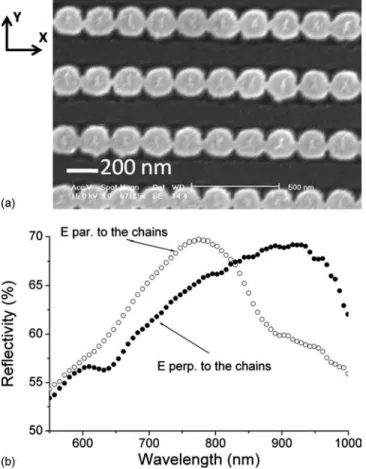
Figure 1共a兲 shows a scanning electron microscope
共SEM兲 image of an array of interconnected gold nanoparticle
chains on a silicon substrate. The nanoparticles were fabri-cated by e-beam lithography combined with ion beam etch-ing on a 50 nm thick gold layer deposited directly on the silicon substrate. Nanoparticle dimensions are 140
⫻165 nm2with a height of 50 nm. The separation between neighboring chains is 200 nm and the gaps forming the
a兲Electronic mail: [email protected]. Present address: University of
Min-nesota, ECE Department, 200 Union Street SE, MN 55455, USA.
chains of nanoparticles are made with a 10-nm-long thin gold bridge. The size of the entire array of nanoparticle chains is 35⫻60 m2. Two arrays 共with and without de-fects兲 were made on the Si substrate using the same process. Linear optic measurements were performed using a homemade reflectometer, a tungsten halogen source, and an ocean optics USB2000 spectrometer with a 45° incidence angle. Spectral measurements are reported using a direct ex-perimental comparison of the reflectivity of the arrays and the reflectivity of the silicon substrate for which the absolute reflectivity is well characterized.
SHG measurements were performed in reflectivity with a 45° incidence angle. The light source was a Ti:sapphire Coherent Mira femtosecond laser delivering pulses at the fre-quency of 85 MHz for spectral range between 780 and 850 nm. The time width of the pulse was 100 fs. The laser beam was slightly focused on the sample with a spot size of 100 m. A set of red RG 715 filters was located just before the sample to drastically reduce the SHG from the optics. A set of three blue BG 40 filters was positioned just after the sample to reduce the fundamental beam共around 800 nm兲 by a factor of 3.7⫻1016and transmit the SH beam共around 400 nm兲 with a 61% efficiency. In both the linear and nonlinear experimental setups, the polarization was fixed transverse electric共S-polarization兲. Two orientations of the sample were studied: incidence plane parallel or perpendicular to the chain of nanoparticles to get the electric field parallel 共the x-direction兲 or perpendicular to the chains 共the y-direction兲.
The surface symmetry of silicon was measured by rotating the sample to ensure a good alignment and that only SHG was measured.16
III. RESULTS AND DISCUSSION
Figure 1共b兲 shows the spectra in linear reflectivity. For each orientation of the electric field, a maximum is observed but at different spectral positions共at 790 and 930 nm for X-and Y-polarizations, respectively兲. The study on this shift on linear reflectivity is not the purpose of this paper, but we just report that due to the large spacing between the nanoparticles in the Y-direction and their interconnection along the X-direction; a stronger coupling between the resonant nano-particles was expected for the electric field along the X-direction. This is in agreement with studies that demon-strated that interconnected nanoparticles behave differently than closely spaced nanoparticles. When the distance be-tween the nanoparticles decreases共but the nanoparticles are still kept spaced兲, only a redshift of the dipolar resonance is observed.3,4 As soon as they become connected, there is a “blueshiftlike” behavior due to the quadrupolar resonance at shorter wavelengths.4 Moreover, near-field microscopy in-vestigations reported that the local electric field is enhanced within the gap between spaced nanoparticles when the gap is small enough to allow a strong near-field coupling.17 In the case of interconnected nanoparticles, a similar enhancement in the electric field at the nanobridge is expected and sup-ported by our rigorous coupled wave method共RCWM兲 cal-culations.
Figure2presents the SHG signal at 400 nm 共fundamen-tal beam at 800 nm兲 from the array for the two different orientations 共with a 45° incidence angle and TE polariza-tion兲. Figures 2共a兲 and 2共b兲 represent an XY-scan with a 50 m step on which we can resolve spatially the SHG signal of the two arrays共without and with defects兲. Initially, we will comment the results on the array without defects. After subtracting the SHG background from the substrate
关about 100 counts from Figs.2共a兲and2共b兲兴, a SHG
enhance-ment of 34 times is measured when the incident beam is polarized in the X-direction compared to the Y-direction
共2924 and 86 counts, respectively, after subtracting the
back-ground兲. This is directly due to the spectral position of the maxima presented in Fig. 1共b兲. For comparison, in linear reflectivity, the signal was a factor of 0.85 lower for the Y-polarization compared to the X-polarization. This means that the enhancement in the SHG signal does not only come from higher reflectivity due to the spectral position but also from the enhancement in the localized electric field at the surface of the nanoparticles at the resonance.
Figure 3 shows the RCWM calculations of the electric field magnitude at the surface 共gold-air interface on top of the nanoparticles兲 for these two orientations at 800 nm. Nu-merical simulations were performed usingMATLAB® 6 code taking into account 35 harmonics. The nanoparticle shape was approximated by a rectangle with the same dimension as measured from the SEM images 共50 nm thick, 145
⫻160 nm2兲. The nanobridge is 15 nm long and 60 nm large. The distance between the chains in the Y-direction is 200
FIG. 1.共a兲 SEM image of the chains of gold nanoparticles. 共b兲 Spectra in reflectivity of the chains of gold nanoparticles for two orientations of the incidence plane in TE polarization.
nm. The electric field is strongly localized at the interconnec-tion between the particles and is enhanced 20 times for X-polarization 关Fig. 3共a兲兴 compared to the Y-polarization
关Fig. 3共b兲兴, which should result in a SHG enhancement of
400 times. However, the SHG signal and the calculated elec-tric fields should not be directly compared because SHG does not depend only on the electric field enhancement but also on the broken inverted symmetry and light at two dif-ferent wavelengths 共fundamental and second harmonics兲. Furthermore, the field enhancement is localized at the nano-scale while our measurements average the entire array. Nev-ertheless, these calculations confirm that the electrical con-nectivity supported by the gold nanobridge induces a strong coupling between adjacent nanoparticles. The RCWM calcu-lations and their comparison with the SHG measurements suggest qualitatively that the strong localization of the elec-tric field at the nanobridge plays an important role in the SH signal enhancement. This demonstrates that SHG is directly dependent on the localized electric field intensity rather than on the linear reflected light intensity.
To study the range of the coupling evidenced by SHG, a second array with 10% random defects 共missing nanopar-ticles兲 was also investigated. As shown in Figs.2共a兲and2共b兲, it is remarkable to note that the signal in the two arrays共with or without defect兲 is at the same level for the Y-polarization, whereas there is a strong decrease for the X-polarization. This last configuration is interesting because we did not ob-serve the same variation between the two arrays in the linear signal as well. Figure 4 shows the spectral variation in the ratio between the optical signal from the arrays with and without defects for both the SHG and the linear measure-ments with the polarization of the electric field along the chains. While the linear signal varies slightly around a factor of 100%, there is an enhancement in this ratio for the SHG signal. This SHG ratio reaches a maximum value of 190% for the fundamental beam at 830 nm to be compared with the sample with defects. Also, this ratio depends on the funda-mental wavelength, suggesting that it is related to a specific resonance of the chain. Indeed, the ratio is equal to 120% at 790 nm, increases up to 190% at 830 nm, and decreases to 140% at 855 nm. While the ratio of 120% at 790 nm corre-sponds to the square of the lack of electric field supported by the 10% missing nanoparticles, the ratio of 190% at 830 nm hints at a more collective effect broken by the lack of nano-particles in the chains. This enhancement shows that spectro-scopic SHG reflectivity enhances an effect barely detectable by linear optical methods. The decrease in SHG with 10% defects also suggests that a rather long range propagating specific mode is strongly affected by these defects.
Addi-FIG. 2.共Color online兲 SHG signal from the arrays of gold nanoparticles. 共a兲 With the electric field along the chains of nanoparticles and共b兲 with the electric field perpendicular to the chains of nanoparticles.
FIG. 3. 共Color online兲 RCWM calculations showing the electric field map for one period with共a兲 the electric field along the chains of nanoparticles and共b兲 the electric field perpendicular to the chains of nanoparticles.
tional experimental investigations with different lengths of coupled nanoparticles are beyond the scope of this paper and will be addressed in the future.
IV. CONCLUSION
In summary, we have demonstrated that SHG is a pow-erful tool to investigate the localization of SP fields at the
nanoscale. SHG is not only proportional to the linear signal, but it is also directly influenced by the intensity of the local electric field at the interfaces. Furthermore, while linear spectroscopy cannot really bring significant information about the influence of defects in the array and on the local electric field intensity, in some cases, SHG can bring complementary information. This latter point could be fur-ther investigated in the light of the recent theoretical work provided by Markel and Sarychev18about the impact of dis-order on the SP properties within a linear chain of nanopar-ticles.
1
S. A. Maier, M. L. Brongersma, P. G. Kik, and H. A. Atwater,Phys. Rev. B65, 193408共2002兲.
2
N. Felidj, J. Aubard, G. Levi, J. R. Krenn, G. Schider, A. Leitner, and F. R. Aussenegg,Phys. Rev. B66, 245407共2002兲.
3
L. Gunnarsson, T. Rindzevicius, J. Prikulis, B. Kasemo, M. Käll, S. Zou, and G. C. Schatz,J. Phys. Chem. B109, 1079共2005兲.
4
T. Atay, J.-H. Song, and A. V. Nurmikko,Nano Lett.4, 1627共2004兲.
5
J. R. Krenn, J. C. Weeber, A. Dereux, E. Bourillot, J. P. Goudonnet, B. Schider, A. Leitner, F. R. Aussenegg, and C. Girard,Phys. Rev. B60,
5029共1999兲. 6
M. Salerno, J. R. Krenn, A. Hohenau, H. Ditlbacher, G. Schider, A. Leit-ner, and F. R. Aussenegg,Opt. Commun.248, 543共2005兲.
7
S. A. Maier, M. L. Brongersma, P. G. Kik, S. Meltzer, A. A. G. Requicha, and H. A. Atwater,Adv. Mater.共Weinheim, Ger.兲13, 1501共2001兲.
8
U. Kreibig and M. Vollmer, Optical Properties of Metal Clusters
共Springer, Heidelberg, 1995兲.
9
G. Tessier and P. Beauvillain,Appl. Surf. Sci.164, 175共2000兲.
10
K. H. Bennemann, Nonlinear Optics in Metals共Clarendon, Oxford, 1998兲. 11
S. I. Bozhevolnyi, J. Beerman, and V. Coello,Phys. Rev. Lett.90, 197403 共2003兲.
12
X. M. Hua and J. I. Gerstan,Phys. Rev. B33, 3756共1986兲.
13
C. Hubert, L. Billot, P.-M. Adam, R. Bachelot, P. Royer, J. Grand, D. Gindre, K. D. Dorkenoo, and A. Fort,Appl. Phys. Lett.90, 181105共2007兲.
14
M. Airola, Y. Liu, and S. Blair,J. Opt. A, Pure Appl. Opt.7, S118共2005兲.
15
A. Lesuffleur, L. K. S. Kumar, and R. Gordon, Appl. Phys. Lett.88,
261104共2006兲. 16
W. Cheikh-Rouhou, L. C. Sampaio, B. Bartenlian, P. Beauvillain, A. Brun, J. Ferre, P. Georges, J.-P. Jamet, V. Mathet, and A. Stupakewicz,J. Magn. Magn. Mater.240, 532共2002兲.
17
J. R. Krenn, A. Dereux, J. C. Weeber, E. Bourillot, Y. Lacroute, J. P. Goudonnet, G. Schider, W. Gotschy, A. Leitner, F. R. Aussenegg, and C. Girard,Phys. Rev. Lett.82, 2590共1999兲.
18
V. A. Markel and A. K. Sarychev,Phys. Rev. B75, 085426共2007兲.
FIG. 4. 共Color online兲 共a兲 SEM image of the array with 10% random de-fects.共b兲 Ratio of the SHG and linear optical reflectivity between the array without and with defects.