i Université du Québec
Institut National de la Recherche Scientifique Centre Institut Armand-Frappier
CHARACTERIZATION OF PHENOTYPIC CHANGES INVOLVED IN THE UPTAKE OF WEAKLY SOLUBLE HYDROCARBONS
BY PSEUDOMONAS AERUGINOSA
by
Thanh-Thuy Nguyen
Thesis submitted to obtain the Degree of Doctor of Philosophy (PhD)
in Biology
Jury of evaluation
President of jury and Prof. Dr. Charles Dozois
internal examiner INRS-Institut Armand Frappier External examiner Prof. Dr. George Szatmari
Département de microbiologie, infectiologie et immunologie, Pavillon Roger-Gaudry,
Université de Montréal External examiner Prof. Dr. Pascale Beauregard
Département de Biologie, Université de Sherbrooke Director of research Prof. Dr. Richard Villemur
INRS-Institut Armand Frappier
iii
Dedicated to my parents
Nguyen, Trong-Thanh, MDPham, Ngoc-Dung, Eng
And my family
Do, Quang-Binh, PhDDo, Thi-Minh-Ngoc
v
vii
ACKNOWLEDGEMENTS
All this work would not have been possibly done without the support of my wonderful Academic Professor who guided me during this project: Dr. Richard Villemur, INRS-Institut Armand-Frappier (IAF) Laval, QC.
First and foremost, my thanks send to Dr. Villemur, for giving me an opportunity to visit and study at the INRS-IAF. I thank him for his valuable guidance, his patience and great support throughout my studies from starting days I came to Canada until the end of my PhD. The knowledge I gained from him, in both academic and non-academic matters, has been invaluable and will definitely be beneficial to my future career.
I wish to give thanks to Dr. Eric Déziel who accepted to be my supervisor. I thank him for encouraging my questions, inspiring discussion in my writings, worthy suggestions and supporting my ideas. I learned from him how to analyze a phenomenon and how to find the answer.
I am pleased to thank Prof. Franҫois Lépine who taught me the HPLC-MS course, for me with his patience, meticulous analysis and enthusiasm. I would like to thank Sylvain Milot, MSc. not only for helping me in setting up and resolving problems with the HPLC-MS system but also for candies at the end of afternoons and his being there each time I needed his help. I thank Anastasia Nikolakakis, MSc. for her excellent service in Mass Spectrometry and her listening to my aboard study story.
I thank Marie-Christine Groleau, for her helping me in preparing strain stocks, setting up the first experiments and sharing her experience with me. I would like to thank Karla Vazquez for her help in ordering materials in time, for her laughing stories so that I had nice moments in the mornings. I am thankful to Gianluca Nicastro (Instituto de Química, Universidade de São Paulo) for kindly providing plasmids to me; thanks to Mariane Imbeau for always encouraging me to practice my French from the beginning, thanks to Julie Auclair for introducing me to how to use the KC4 system and sharing
viii
Canadian cultural stories. I send my thanks to Julianne Ouellette, Sébastiene Bigras, Silvia Dos Santos, Marc Auffrett, Christine Martineau and other members of RV lab and all members of the Research Group in Environmental Microbiology (GRME) for daily help and such a nice working atmosphere.
I would also like to show appreciation to librarians Michel Courcelle and Diane Sauvé who provided me with documents and books I needed as fast as they could and thanks for courses about Endnote and PubMed. The library system here is wonderful. How desirable it is! I thank Micheline Letarte for her service in transmission electronic microscopy with very nice photos. I would like to thank Anne Philippon, Educational Executive Secretary and all Administration staff of IAF and INRS who provided detailed instructions for foreign students like me.
I am grateful to the Fondation Armand-Frappier, the organization who funded my study and the Fonds Québécois de la Recherche sur la Nature et les Technologies and the Natural Sciences and Engineering Research Council of Canada grant funding for the project of Dr. Villemur, without these financial supports, I would have no chance to complete my study.
To those at IAF, I would like to thank you with all my heart for making my study in the INRS - Institut Armand-Frappier so memorable and pleasurable.
I thank Dr. Truong Nam Hai (Director of Institute of Biotechnology, Vietnam Academy of Science and Technology (VAST), Hanoi, Vietnam), Dr. Dang Thi Cam Ha (former Head of Environmental Microbiology Laboratory) and Dr. Nghiem Ngoc Minh (Head of Environmental Microbiology Laboratory) who provided administrative favorable condition for me to follow doctoral program and kept an open position at their labs for me. I thank Prof. Nguyen Quoc Khang (Hanoi University of Science, Hanoi, Vietnam) and Prof. Nguyen Van Hung (Vice Director of Institute of Marine Biochemistry, VAST) for their advising and encouragement before I went to Canada.
ix
It is my pleasure to thank Dr. Sinh Le-Quoc, former Scientific Director and General Director of INRS for introducing INRS-IAF and sharing his successful stories in Quebec to me. I send my warmest thanks to all of my friends for their help and their incentives to help me to strive towards my goal and thanks to Pham Thi Hanh for her friendship and availability at any time I needed help.
Lastly, I would like to express my deepest gratitude to my parents, though my mother had never chance to read these lines, my sisters-in-law, my sister, my brother for their unconditional support and patience with my decisions all the time. I send my love for my little daughter, Minh-Ngoc, thank her for being reconciled to fewer holidays and making many boxes of tips for me and thank her for always giving me cuddles and hugs and making sure I know that she loves me. A special thanks to my beloved husband, Quang-Binh, a biologist, who spent sleepless nights with and was always my support in the moments when there was no one to answer my queries, I thank him for treasured advices, for helpful discussions during my PhD, for sharing the good and the bad times in my life with his love and sacrifice.
Montreal, QC Nov. 2015
xi
ABSTRACT
Petroleum products like linear alkanes (e.g. hexadecane, octadecane, etc.) and polycyclic aromatic hydrocarbons (e.g. naphthalene, phenanthrene, etc.) are very important pollutants in the environment because of their abundance, toxicity, weak solubility, and persistence due to their poor bioavailability, the limitation of biodegradation pathways and a high tendency to the sorption to other hydrophobic organic matters. There are different types of treatments applied in the polluted environments, including chemical, physical and biological methods. The chemical and physical treatments can cause a secondary pollution, and are expensive. In contrast, the continuous exposure to the contaminants has led to the evolution of microorganisms that are able to grow on hydrocarbons, degrade and utilize the polluted hydrocarbons as their carbon sources, and this inspired the development of biological treatment methods. Thus, the ability of microbial-degrading hydrocarbons is a potential key element in the clean-up strategy of polluted sites. Many different microorganisms, including algae, fungi and bacteria, have been reported to possess the capability of degrading a wide variety of the polluted persistent organic compounds. Among these bacteria, different members of the Pseudomonas genus, which also possess the capacity to degrade weakly soluble hydrocarbons such as linear alkanes, polycyclic aromatic compounds (PAHs), etc., have already been isolated for studying mechanisms involving the effective biodegradation of polluted hydrocarbons by these microorganisms.
Pseudomonas aeruginosa bacteria are found in a wide variety of environments,
such as soil, water or in association with plants and animals as well as inside of the human body. These bacteria can also grow on hydrophobic carbon substrates such as long-chain linear alkanes and PAHs. The ability to grow in various unfavorable conditions of these bacteria, such as on the petroleum-related products in the polluted environments, relies on their high adaptabilities. In response to the environmental stimuli, bacteria can use different second messengers to regulate various cellular processes for their survival and adaptive development.
xii
At the time this project was started, it was known that the second messenger bis-(3'-5')-cyclic dimeric guanosine monophosphate (cyclic di-GMP or c-di-GMP) plays a key role in the bacterial biofilm development, including the P. aeruginosa species. c-di-GMP was shown to be overproduced in various P. aeruginosa rough small colony variants (SCVs) derived from different clinical isolates. This cell type possesses high abilities to grow and form biofilms in unfavorable conditions. The formation of rough SCVs of P.
aeruginosa strain 57RP on dextrose in biofilm or in static liquid cultures was also observed
in previous experiments in the laboratory of Prof. Richard Villemur. Strain 57RP and several other P. aeruginosa strains were also able to grow and form biofilm on hexadecane, other n-alkanes and PAHs used as a whole carbon source. We hypothesized that the 57RP rough SCVs, which shared some common phenotypic behaviors with the clinical rough SCVs, also overproduce c-di-GMP. However, to which extent this second messenger would influence the appearance of SCVs and the capacity of degrading linear alkanes and/or PAHs was still unclear. Several studies carried out on the growth of certain oil-degrading bacteria growing on different substrates revealed that hexadecane induced a large change in gene expression of biofilm cells compared to the cells growing on pyruvate {Sabirova, 2006 #10585}{Sabirova, 2011 #10578} or to the planktonic cells growing on acetate {Vaysse, 2009 #10584}. Many up-regulated proteins were found in different cell compartments such as the outer membrane, periplasm, inner membrane and cytoplasm. Question to which extent of different modulation of gene expression would be seen between the 57RP cells growing on hexadecane and the 57RP cells growing on other substrates, such as glucose, requires some proteomic studies to be carried out for a better understanding of the physiological adaptation of 57RP cells to the hydrophobic substrate.
The principal aim of this project was to characterize the phenotypic changes of a P.
aeruginosa strain 57RP, previously isolated from a hydrocarbon-polluted site in Canada by
our laboratory, and capable of using several weakly soluble hydrocarbons, such as hexadecane, as the sole carbon source for its growth. The present study was carried out to further investigate the previously suggested important role of c-di-GMP in the phenotypic switching of the bacterial cell states and characterize initially the components of the cell envelope of 57RP SCV grown on hexadecane.
xiii
The four main objectives of the present study were as follows:
1. Isolate small colony variants (SCVs) of P. aeruginosa strain 57RP in the cultures with n-alkanes used as sole carbon sources.
2. Characterize the phenotypic changes of SCVs grown on hexadecane and octadecane.
3. Investigate the putative role of c-di-GMP in the phenotypic SCV formation and in the reversion to the wild-type phenotype.
4. Characterize the proteome profiles of SCV cells grown on hexadecane.
The results obtained from the present study are summarized as follows.
Objective 1. 57RP, a slow growth strain with low cell hydrophobicities, also forms
SCVs on octadecane.
We confirmed that SCVs were formed by the P. aeruginosa strain 57RP during its growth on the weakly soluble liquid hexadecane (C16). Besides that, this strain also formed
SCVs on solid octadecane (C18), indicating that 57RP was able to form SCVs on different
n-alkanes used as sole carbon sources. SCVs were identified as the main growing cell type in these cultures. The SCVs reverted to the wild-type (WT) phenotype as the parent WT cells on a rich (TSA) agar medium.
In the case of 57RV, a rapid growth strain with high cell hydrophobicities, SCVs were also formed on hexadecane (MSM with 1% hexadecane shaking at 25oC). This newly
observed phenomenon was a manifestation of the natural potential for SCV formation of 57RV strain. This indicated that both strains 57RP and 57RV, with low and high cell hydrophobicities, respectively, were naturally capable of generating the phenotypic variants highly adaptive to selective stress conditions by phase variation mechanisms.
xiv
Objective 2. Rhamnolipids are not an important factor for the growth ability of
57RP SCVs on hexadecane.
We confirmed that SCV cells had a number of phenotypic traits that were different from those of their parent WT cells. The SCV cells were hyperpiliated with reduced motility compared to the WT cells. SCVs were able to grow without any initial long lag phase on n-alkanes as seen with the WT. The cell surface of SCVs was highly hydrophobic, allowing the SCV cells to adhere effectively to the hydrocarbons. The SCV cells were able to form biofilms at a much higher level compared to the parent WT cells. The observed phenotypic behaviors of SCV cells grown on hexadecane may represent a group of phenotypic characters typical for the small rough colony phenotype since they were also observed earlier with rough SCVs developing on dextrose when the same strain was cultivated as a biofilm or in static liquid cultures.
Besides the above mentioned confirmative data, we also demonstrated clearly that rhamnolipids are not an important factor for the growth ability of 57RP SCV on hexadecane (MSM with 1% hexadecane shaking at 25oC) as this phenotypic variant produced extremely low amount of the extracellular biosurfactant on this hydrophobic hydrocarbon source.
Objective 3. c-di-GMP is involved in the phenotypic switching.
The main interest of Objective 3 was to investigate the relations between c-di-GMP production, a universal bacterial second messenger, and the formation of SCVs on hexadecane as well as the reversion of SCV to wild-type phenotype on a rich (TSA) medium. We found a positive correlation between the two coincidentally occurring events. First, high c-di-GMP levels were associated with SCV formation. Second, low c-di-GMP levels occurred with the SCV reversion to the wild-type phenotype. To further study the involvement of c-di-GMP in SCV formation, we have generated two integrant clones from 57RP WT cells. The first integrant, RP401, possessed an extra inducible gene encoding phosphodiesterase (PDE) for the hydrolysis of c-di-GMP. The second integrant, RP402,
xv
possessed an extra inducible gene encoding diguanylate cyclase (DGC) for the synthesis of c-di-GMP. Expression of these two extra genes was under the control of an arabinose-inducible promoter. Results showed that the expression of the arabinose-inducible extra DGC led obviously to an expected increase in the c-di-GMP production in the extra DGC-integrated cells, especially in the extra DGC-integrated SCVs. In contrast, the expression of the extra PDE in RP401 seriously affected the time of appearance and the number of the adaptive SVCs of 57RP401 grown on hexadecane.
The 57RP401 SCVs, occurred at the end of tested culture periods, and were morphologically similar to the common 57RP SCVs grown on hexadecane (MSM with 1% hexadecane shaking at 25oC). A representative 401 SCV, randomly selected for further analyses, was also a c-di-GMP-dependent SCV and reverted to wild-type phenotype on TSA medium. This supported a previous suggestion of putative roles of c-di-GMP in phenotypic switching of bacterial cells. Also, for the first time, the important role of c-di-GMP in phenotypic switching, related to the formation and reversion to the wild-type phenotype of phenotypic SCVs, was initially characterized in a non-clinical P. aeruginosa strain grown on hexadecane. This is an original contribution of the present study to the current knowledge of the putative role of c-di-GMP in the general phenotypic switching of bacterial cells, including those of various P. aeruginosa strains.
Our results support that c-di-GMP plays an important role in the phenotypic ON/OFF switching (the SCV formation and reversion to wild-type phenotype) of the P.
aeruginosa cells, respectively.
Objective 4. 57RP SCV cells grown on hexadecane synthesize unknown proteins
and unusual LipA isoforms.
In the comparative analysis of proteome profiles of SCV vs. WT cells, both grown in the same culture condition (MSM with 1% glucose shaking at 25oC), we found noticable differences in the protein expression patterns between the two cell types. This observation suggests that gene expression was regulated (up/down) differently between these two cell
xvi
types. The proteome profiles of the cell membrane-binding and periplasmic proteins of the 57RP SCV grown on hexadecane (MSM with 1% hexadecane shaking at 25oC) were
further characterized. The characteristic cell components of 57R SCV grown on hexadecane include the presence of various proteins involved in the transport, antioxidant, nitrogen regulatory activities, etc.
In the further analyses of proteome profiles of SCV grown on hexadecane, we identified the unexpected presence of an unknown protein and three isoforms of secreted LipA. One of these three LipA isoforms was in the form of a lipase mature polypeptide and the other two were in the lipase premature form.
Presently, the underlying mechanisms for the appearance of these three LipA isoforms and the unknown protein, as well as their physiological role(s) in the adaptive abilities of the 57RP SCVs grown on hexadecane, remain to be determined.
Results obtained from the present study form the basis for the further, deeper investigations in the future to better understand the adaptive responses of P. aeruginosa cells to certain environmental stress conditions. These certainly include the investigations of the role of c-di-GMP, a bacterial general second messenger, in the phenotypic switching of bacterial cells to generate the environmental stress adapted variants. These also include, certainly, the further investigations of the not-yet-known underlying mechanisms for the phase variation-based, environment specific stimuli-induced generation of unusual protein isoforms, such as the three LipA isoforms formed in the 57RP SCVs that were adapted to grow well on hexadecane observed in the present study. The physiological role, if any, of the observed uncharacterized protein and the unusual LipA isoforms in the adaptive growth of the 57RP SCVs on hexadecane should also be an interesting topic for future investigations.
Key words: Pseudomonas aeruginosa, small colony variant (SCV), biofilm, c-di-GMP, lipase
xvii
RÉSUMÉ
Les produits pétroliers comme les hydrocarbures linéaires (par exemple de l'hexadécane, octadécane) et les hydrocarbures aromatiques polycycliques (par exemple le naphtalène, le phénanthrène) sont des polluants très importants dans l'environnement en raison de leur abondance, de leur toxicité, de leur faible solubilité, de leur persistance en raison de leur faible biodisponibilité, de la limitation des voies de biodégradation, et de la forte tendance à leur absorption à d'autres matières organiques. Il existe différents types de traitements appliqués dans les environnements pollués, y compris les méthodes biologiques, physiques et chimiques. Les traitements chimiques et physiques peuvent causer une pollution secondaire, et sont coûteux. L'exposition continue aux contaminants a conduit à l'évolution des micro-organismes qui sont capables de croître sur de tels hydrocarbures, comme sources de carbone, ce qui a inspiré le développement de procédés de traitement biologique. Ainsi, la capacité de dégradation microbienne des hydrocarbures est un élément clé dans la stratégie de nettoyage de sites pollués. De nombreux micro-organismes, y compris les algues, les champignons et les bactéries, ont été rapportés être capables de dégrader une grande variété de polluants organiques persistants. Différents membres du genre Pseudomonas possèdent la capacité de dégrader les hydrocarbures faiblement solubles tels que les alcanes linéaires et des HAPs.
Des souches appartenant à l'espèce P. aeruginosa ont été trouvées dans une grande variété d'environnements, tels que le sol, l'eau ou associés avec des plantes, des animaux ainsi que l'intérieur du corps humain. Ces bactéries peuvent également se développer sur des substrats carbonés hydrophobes tels que les alcanes linéaires à longue chaîne et les HAPs. L'adaptabilité de ces souches à dégrader ces produits récalcitrants résiderait dans la réponse aux stimuli de l'environnement. En effet, les bactéries peuvent utiliser différents seconds messagers pour réguler divers processus cellulaires pour leur survie et leur développement adaptatif.
Au moment où ce projet a été lancé, il était connu que le second bis-messager (3'-5')-guanosine cyclique dimère monophosphate (cyclique di-GMP ou c-di-GMP) joue un
xviii
rôle clé dans le développement de biofilm bactérien, y compris P. aeruginosa. Le c-di-GMP a été montré pour être surproduit dans diverses variantes de petites colonies rugueux de P. aeruginosa (SCVs) dérivées de différents isolats cliniques. Ce type de variantes bactériennes possède une forte capacité à croître et former un biofilm dans des conditions défavorables. La formation de SCVs rugueux chez de la souche 57RP de P. aeruginosa sur le dextrose dans le biofilm ou dans des cultures liquides statiques a également été observée dans des expériences antérieures dans le laboratoire du Pr. Richard Villemur. La souche 57RP et plusieurs autres souches de P. aeruginosa ont également été capables de se développer et de former un biofilm sur l'hexadécane, d'autres n-alcanes et des HAPs utilisés comme une source de carbone entière. Nous avons émis l'hypothèse que les SCVs rugueux 57RP, qui partageaient des comportements phénotypiques communs avec les SCVs rugueux cliniques, surproduisent aussi c-di-GMP. Cependant, dans quelle mesure ce second messager pourrait influencer l'apparition de SCV n'a pas été démontré. Plusieurs études réalisées sur la croissance de certaines bactéries dégradant l'huile sur différents substrats ont révélé que l'hexadécane induit un grand changement dans l'expression des gènes des cellules de biofilms par rapport aux cellules planctoniques qui poussent sur le pyruvate ou l'acétate. De nombreuses protéines, qui ont été exprimées à des niveaux plus élevés dans les SCV par rapport aux cellules WT, ont été trouvées dans différents compartiments cellulaires tels que la membrane externe, le périplasme, la membrane interne et le cytoplasme. La question de savoir quelle étendue de la modulation différente de l'expression des gènes serait observée entre les cellules 57RP croissantes sur l'hexadécane et les cellules 57RP cultivées sur d'autres substrats, comme le glucose, nécessitent des études protéomiques pour une meilleure compréhension de l'adaptation physiologique de 57RP au substrat hydrophobe.
L'objectif principal de ce projet était de caractériser les changements phénotypiques d'une souche P. aeruginosa (57RP), auparavant isolées d'un site pollué par des hydrocarbures au Canada par notre laboratoire. Cette souche est capable d'utiliser plusieurs hydrocarbures faiblement solubles tels que l'hexadécane comme seule source de carbone pour sa croissance. La présente étude a été réalisée pour étudier davantage l'importance de l'apparition des SCVs et de leur rôle dans la dégradation de ces hydrocarbures. Egalement,
xix
nous avons voulu mettre en lumière l'implication du c-di-GMP dans le changement phénotypique et caractériser initialement les composants de l'enveloppe cellulaire de 57RP SCVs cultivées sur hexadécane.
Les quatre principaux objectifs de la présente étude sont les suivants:
1. Former les variantes petites colonies (SCVs) de P. aeruginosa souche 57RP dans les cultures avec n-alcanes utilisés comme seule source de carbone.
2. Caractériser les changements phénotypiques de SCV cultivés sur l’hexadécane et l’octadecane.
3. Examiner le rôle putatif de c-di-GMP dans la formation de SCV phénotypique et la réversion à phénotype sauvage.
4. Caractériser les profils protéomiques de cellules SCV cultivées sur hexadécane.
Les résultats obtenus à partir de la présente étude sont résumés comme suit.
Objectif 1. 57RP, une souche de croissance lente avec hydrophobie cellulaires
faibles, forme aussi des SCVs sur octadécane.
Nous avons confirmé que les SCVs ont été formées par la souche 57RP de P.
aeruginosa au cours de sa croissance sur le hexadécane liquide faiblement soluble (C16).
En outre, cette souche formait également SCV sur octadécane solide (C18),
indiquant que 57RP pourrait former des SCVs sur les différents n-alcanes utilisés comme seule source de carbone. Les SCVs ont été identifiés comme le principal type de cellule en croissance dans ces cultures. Le phénotype SCV est revenu au phénotype de type sauvage (WT) lors de cultures sur un milieu riche (TSA) d’agar.
Dans le cas de 57RV, une souche de croissance rapide avec hydrophobie cellulaire élevée, des SCVs a été formée également sur hexadécane (MSM avec 1% de hexadécane sous agitation à 25°C). Ce phénomène nouvellement observé était une manifestation du
xx
potentiel naturel pour la formation de SCV de la souche 57RV. Ceci indique que les deux souches 57RP et 57RV, avec hydrophobies cellulaires basses et hautes, respectivement, étaient naturellement capable de générer des phénotypiques variantes hautement adaptatives aux sélectives conditions de stress par des mécanismes de variation de phase.
Objectif 2. Rhamnolipides ne sont pas un facteur important pour la capacité de
croissance de 57RP SCV sur l'hexadécane.
Nous confirmé que les SCVs avaient un nombre de caractères phénotypiques différents de la souche sauvage. Les cellules des SCVs étaient hyperpiliées avec des activités mobiles réduites par rapport aux cellules de type sauvage. Les SCVs étaient capable de se développer rapidement sans phase de latence sur les n-alcanes. La surface des cellules de SCV était hautement hydrophobe, ce qui permet aux cellules d'adhérer efficacement aux hydrocarbures. Les comportements phénotypiques observés des cellules SCV cultivées sur hexadécane peuvent représenter un groupe de caractères phénotypiques typiques pour le petit phénotype de colonie rugueuse car ils ont également été observés plus tôt avec des SCVs rugueuses développées sur dextrose lorsque la même souche bactérienne a été cultivée sous forme de biofilm ou dans des cultures liquides statiques.
Outre les données confirmatifs mentionnées ci-dessus, nous avons aussi démontré clairement que rhamnolipides ne sont pas un facteur important pour la capacité de croissance de 57RP SCV sur l’hexadécane (MSM avec 1% de hexadécane sous agitation à 25°C) car cette variante phénotypique n'a presque pas produire le biosurfactant extracellulaire sur cette source d'hydrocarbure hydrophobe.
Objectif 3. c-di-GMP implique dans la commutation phénotypique.
L'intérêt principal de l'Objectif 3 était d'étudier les relations entre la production de c-di-GMP, un second messager bactérien universel, et la formation de SCV sur hexadécane
xxi
ainsi que la réversion de SCV à phénotype sauvage sur un milieu riche (TSA). Nous avons trouvé une corrélation positive entre les niveaux élevés de c-di-GMP et la formation de SCVs. Également, les niveaux bas de c-di-GMP ont corrélés avec la réversion de SCV au phénotype de type sauvage. Pour étudier davantage la participation de c-di-GMP dans la formation de SCV, nous avons généré deux clones de cellules intégrantes chez la souche sauvage. Le premier, RP401, possédait un gène inductible, codant pour la phosphodiestérase (PDE) impliqué dans l'hydrolyse du c-di-GMP. Le second, RP402, possédait un gène inductible, codant la cyclase diguanylate (DGC) pour la synthèse de c-di-GMP. Les résultats ont montré que l'expression de la DGC l'inductible supplémentaire conduit évidemment à l'augmentation attendue de la production c-di-GMP dans les cellules DGC intégrées supplémentaires, en particulier dans le DGC supplémentaire intégré SCVs. En revanche, l'expression de la PDE supplémentaire dans RP401 sérieusement affectait le temps d'apparition et le nombre des SCVs adaptatifs de 57RP401 cultivées sur hexadécane.
Les SCVs de 57RP401, sont apparu à la fin des périodes de culture testées, étaient morphologiquement similaires aux SCVs de 57RP communs cultivés sur hexadécane (MSM avec 1% de hexadécane sous agitation à 25°C). Le représentant 401 SCV, choisis au hasard pour d'autres analyses, était aussi un SCV c-di-GMP-dépendant et il révertait au phénotype de type sauvage sur le milieu TSA. Cette prise en charge d'une suggestion précédente des rôles putatifs de c-di-GMP dans la commutation phénotypique des cellules bactériennes. Aussi, pour la première fois, le rôle important de c-di-GMP dans la commutation phénotypique, liés à la formation et la réversion au phénotype de type sauvage des SCVs phénotypiques, a été initialement caractérisée dans une souche P.
aeruginosa non-clinique cultivée sur hexadécane. Ceci est une contribution originale de la
présente étude à la connaissance actuelle du rôle putatif de c-di-GMP dans la commutation phénotypique générale des cellules bactériennes, y compris celles de diverses souches de
P. aeruginosa.
Nos résultats soutient que c-di-GMP joue un rôle important dans la commutation phénotypique de ON/OFF (comme la formation SCV et la réversion au type sauvage phénotypique) des cellules de P. aeruginosa, respectivement.
xxii
Objectif 4. Cellules 57RP SCV cultivées sur hexadécane synthétisent également
des protéines inconnues et isoformes de LipA inhabituelles.
Dans l'analyse comparative des profils protéomiques de SCV contre les cellules de type sauvage (WT), cultivées dans les mêmes conditions de culture (MSM avec 1% de glucose sous agitation à 25°C), nous avons constaté des différences noticeables dans les profils d'expression des protéines entre les deux types de cellules. Cette observation signifie que l'expression des gènes a été réglementée (haut/bas) différemment entre ces deux types de cellules. Les profils protéomiques des protéines, comme les protéines membrane-liées et protéines périplasmiques de 57RP SCV cultivées sur hexadécane (MSM avec 1% de hexadécane sous agitation à 25°C), ont en outre été caractérisés. Les composants cellulaires caractéristiques de 57R SCV cultivées sur hexadécane incluent la présence de diverses protéines impliquées dans les activités de transportation, anti-oxydation, régulation de l'azote, etc.
Fait intéressant, même dans ces autres analyses des profils protéomiques du 57RP SCVs cultivées sur hexadécane, nous avons trouvé une présence vraiment inattendue de trois isoformes de LipA sécrétée et une protéine inconnue. L'un de ces trois isoformes de LipA était sous la forme de lipase polypeptide mature et les deux autres dans la lipase de forme prémature.
Actuellement, les mécanismes sous-jacents de l'apparition de ces trois isoformes de LipA identifiés et la protéine inconnue, ainsi que leur(s) rôle(s) physiologique(s) dans les capacités d'adaptation des SCVs de 57RP cultivées sur hexadécane, restent en grande partie à déterminer.
Les résultats obtenus à partir de la présente étude constituent la base pour des investigations plus profondes dans l'avenir pour mieux comprendre les réponses adaptatives des cellules de P. aeruginosa à certains stress spécifiques liés à l’environnement. Principalement, les réponses phénotypiques liées aux mécanismes, que
xxiii
ne sont pas encore claires, sous-jacentes de la participation de c-di-GMP, un second messager bactérienne générale, dans le phénotypique de commutation ON/OFF de cellules bactériennes (telles que la formation des SCVs et le retour à naturel phénotype); et, les mécanismes sous-jacents, aussi ne sont pas encore connus, pour les stimulé environnement-spécifiques induites générations, à base de la variation de phase, d'isoformes de protéines inhabituelles dans certains environnements stressants-adaptatives variantes phénotypiques de la P. aeruginosa espèce (comme les trois isoformes de LipA synthétisées dans les SCVs de 57RP cultivées sur hexadécane qui ont été observées dans la étude présente. Le rôle physiologique, le cas échéant, de la protéine observée, mais ne sont pas encore connus et les isoformes de LipA inhabituels dans la croissance adaptative des SCVs de 57RP sur hexadécane devrait également être un sujet non moins intéressant pour les futures enquêtes.
Mots clés : Pseudomonas aeruginosa, variante petite colonie (SCV), biofilm, c-di-GMP, lipase
xxv
TABLE OF CONTENTS
1 INTRODUCTION ... 1 CONTEXT AND RESEARCH QUESTION ... 1 1.1
HYPOTHESIS ... 2 1.2
OBJECTIVES OF THE THESIS ... 3 1.3
2 REVIEW OF THE LITERATURE ... 5 HYDROCARBONS AND BIOREMEDIATION ... 5 2.1
2.1.1 n-Alkanes, Polycyclic Aromatic Hydrocarbons and bioavailability ... 5 2.1.2 Bioremediation ... 8 2.1.3 Alkane degradation by alkane hydroxylase ... 9 PSEUDOMONAS AERUGINOSA ... 12 2.2 2.2.1 General characterization ... 12 2.2.2 Motility ... 13 2.2.2.1 Swarming ... 13 2.2.2.2 Twitching ... 13 2.2.2.3 Swimming ... 13
2.2.3 Role of type IV pili in surface adherence and twitching motility ... 14 BIOFILMS ... 15 2.3
2.3.1 Surface attached microbial communities ... 15 2.3.2 Biofilm formation ... 17 2.3.3 Biofilm matrix of P. aeruginosa ... 17 2.3.4 Environmental factors ... 18 RHAMNOLIPIDS ... 20 2.4 2.4.1 Biosurfactants ... 20 2.4.2 Rhamnolipid biosynthesis ... 21 2.4.2.1 Quorum sensing ... 21 2.4.2.2 Rhamnolipid biosynthesis ... 21 2.4.3 Roles of rhamnolipids ... 25
2.4.3.1 Role of rhamnolipids in the dispersion of hydrophobic substrates ... 25 2.4.3.2 Role of rhamnolipids in cell surface hydrophobicity ... 25 2.4.3.3 Role of rhamnolipids in biofilm development ... 27 2.4.3.4 Role of rhamnolipid on motility ... 28
SMALL COLONY VARIANTS ... 29 2.5
xxvi
2.5.2 Common characteristics of P. aeruginosa SCVs ... 29 PHASE VARIATION ... 30 2.6
2.6.1 Phase variation definition ... 31 2.6.2 Mechanism of phase variation ... 31 2.6.3 Roles of IS elements in generation of bacterial adaptive variants facing nutrient-stress
conditions ... 33 SECOND MESSENGERS ... 34 2.7
2.7.1 Diverse second messengers are found in bacteria ... 34
2.7.1.1 cAMP and cGMP ... 34 2.7.1.2 (p)ppGpp ... 35 2.7.1.3 c-di-AMP ... 37
2.7.2 c-di-GMP ... 38
2.7.2.1 c-di-GMP synthesis ... 38 2.7.2.2 Regulatory roles of c-di-GMP ... 41 2.7.2.3 Role of c-di-GMP in SCV formation ... 42
INVOLVEMENT OF C-DI-GMP AND QS IN BIOFILM FORMATION ... 49 2.8
PHYSIOLOGICAL ADAPTATION OF OIL-DEGRADING BACTERIA GROWING ON HEXADECANE ... 52 2.9
BACKGROUND OF THIS WORK ... 52 2.10
3 MATERIALS AND METHODS ... 55 BACTERIAL STRAINS AND GROWTH CONDITIONS ... 55 3.1
DETERMINATION OF BACTERIAL GROWTH BY PROTEIN QUANTIFICATION ... 56 3.2 MOTILITY ASSAYS ... 57 3.3 3.3.1 Swimming ... 57 3.3.2 Swarming ... 57 3.3.3 Twitching ... 58 HYDROPHOBICITY ASSAYS ... 58 3.4
3.4.1 Microbial adhesion to hydrocarbon (MATH) test ... 58 3.4.2 Microbial adhesion to silica (MATS) test ... 59 BIOFILM QUANTIFICATION ... 59 3.5
TRANSMISSION ELECTRON MICROSCOPY ANALYSIS ... 59 3.6
RHAMNOLIPID ANALYSIS ... 60 3.7
DETERMINATION OF C-DI-GMP CONCENTRATION ... 61 3.8
INTEGRATION OF INDUCIBLE GENES IN STRAIN 57RP ... 62 3.9
3.9.1 Chromosomal integration of the two inducible pvrR and PA14-72420 into the P. aeruginosa 57RP genome by conjugation ... 62 3.9.2 DNA extraction ... 65 3.9.3 PCR amplification ... 65
xxvii
3.9.4 Integrant cultivation ... 66 3.9.5 Viable cell counting on agar plates ... 66 PROTEOME PROFILE ANALYSIS BY TWO DIMENSIONAL GEL ELECTROPHORESIS ... 66 3.10
3.10.1 Protein extraction ... 66 3.10.2 Two-dimensional gel electrophoresis ... 68 4 RESULTS ... 69 FORMATION OF SMALL COLONY VARIANTS ... 69 4.1
4.1.1 Growth of P. aeruginosa on hexadecane and octadecane ... 69 4.1.2 SCVs generated on liquid and solid alkanes ... 71 PHYSIOLOGICAL CHARACTERISTICS OF STRAIN 57RP SCVS ... 72 4.2
4.2.1 Motilities ... 72 4.2.2 Biofilm formation ... 76 4.2.3 Surface hydrophobicity and cell adherence assays ... 79 4.2.4 High density of pili on cell surface of SCV ... 81 4.2.5 Rhamnolipid production in SCV ... 83 4.2.6 Analysis of c-di-GMP production ... 85 INVOLVEMENT OF C-DI-GMP IN SCVS ... 88 4.3
4.3.1 Analysis of c-di-GMP in the RP401 and RP402 integrants ... 88 4.3.2 Small colony variants derived from the RP401 integrant ... 93 PROTEOME ANALYSIS OF SCV2H BY 2-D GEL ELECTROPHORESIS ... 96 4.4
4.4.1 Total proteins ... 96 4.4.2 Outer membrane and periplasmic proteins ... 100 5 DISCUSSION ... 107 P. AERUGINOSA 57RP: THE SELECTED RESEARCH MODEL STRAIN ... 107 5.1
5.1.1 Growth modes on different alkanes ... 107 5.1.2 Common physiological characteristics ... 108 5.1.3 P. aeruginosa 57RP generating SCVs ... 110 COMMON CHARACTERISTICS OF SCVS ... 111 5.2
5.2.1 Motility ... 112 5.2.2 Biofilm formation of SCVs ... 115 5.2.3 High hydrophobicity and adherence of cell surface in SCV ... 116 5.2.4 Pili are formed at high density on the cell surface of SCV ... 118 5.2.5 Rhamnolipid production by SCVs ... 119 5.2.6 c-di-GMP production ... 120 PHYSIOLOGICAL CHARACTERS OF DGC AND PDE INTEGRANTS ... 123 5.3
xxviii
5.3.2 Growth of integrants ... 123 5.3.3 SCV formation of integrants ... 125 5.3.4 c-di-GMP production of integrants ... 128 5.3.5 High capacity for biofilm formation of integrant SCVs ... 134 5.3.6 Rapid growth of integrant SCVs on hexadecane ... 136 5.3.7 High capacity for c-di-GMP production of integrant SCVs ... 136 COMPARISON OF PROTEOME PROFILES OF P. AERUGINOSA 57RP AND THE SCV DERIVATIVE ... 138 5.4
5.4.1 Differences in protein synthesis between 57RP SCV and 57RP WT ... 138 5.4.2 Characteristic membrane and periplasmic proteins of 57RP SCV grown on hexadecane ... 140 5.4.3 Unusual proteins synthesized by 57RP SCV grown on hexadecane ... 141 5.4.4 Not-yet-known mechanisms ... 146 6 CONCLUSION AND PERSPECTIVE ... 151 CONCLUSION ... 151 6.1
PROPOSAL ... 156 6.2
RESEARCH SCHEME AND PERSPECTIVE ... 157 6.3 6.3.1 Research scheme ... 157 6.3.2 Perspective ... 158 7 REFERENCES ... 161 8 APPENDIX ... 187 SCIENTIFIC COMMUNICATIONS ... 187 8.1
MANUSCRIPTS ARE IN PREPARATION ... 187 8.2
SELECTIVE CHROMATOGRAPHS OF SOME STUDY STRAINS ... 188 8.3
PROTEIN ANALYSIS ... 195 8.4
xxix
LIST OF TABLES
TABLE 3.1 LIST OF P. AERUGINOSA STRAINS USED IN THIS STUDY. ... 55 TABLE 3.2 STRAINS, PLASMIDS AND PRIMERS USED FOR THE CONSTRUCTION OF THE INTEGRANTS ... 64 TABLE 4.1 THE FORMATION OF SCVS DURING THE CULTURE PERIOD ON HEXADECANE WITH AND WITHOUT
ARABINOSE OBSERVED AFTER PLATING ON TSA MEDIUM ... 90 TABLE 4.2 IDENTIFICATION OF DIFFERENTIALLY EXPRESSED PROTEINS BETWEEN 57RP WT AND SCV2H.
THE CHOSEN PROTEIN SPOTS ARE ILLUSTRATED IN FIGURE 4.20 AND IDENTIFICATION WAS PERFORMED BY Q-TRAP MASS SPECTRA ON A HYBRID LINEAR ION TRAP-TRIPLE QUADRUPLE MASS SPECTROMETER, PEPTIDE MASS MAPPING WITH P. AERUGINOSA PROTEIN BANKS. ... 98 TABLE 4.3 IDENTIFICATION OF REPRESENTATIVE PROTEINS ISOLATED FROM 2D-GELS OF SCV2H GROWN ON
HEXADECANE. THE CHOSEN PROTEIN SPOTS ARE ILLUSTRATED IN FIGURES 4.22-4.24 AND
IDENTIFICATION WAS PERFORMED BY Q-TRAP MASS SPECTRA ON A HYBRID LINEAR ION TRAP-TRIPLE QUADRUPLE MASS SPECTROMETER, PEPTIDE MASS MAPPING WITH P. AERUGINOSA PROTEIN BANKS. .... 105
xxxi
LIST OF FIGURES
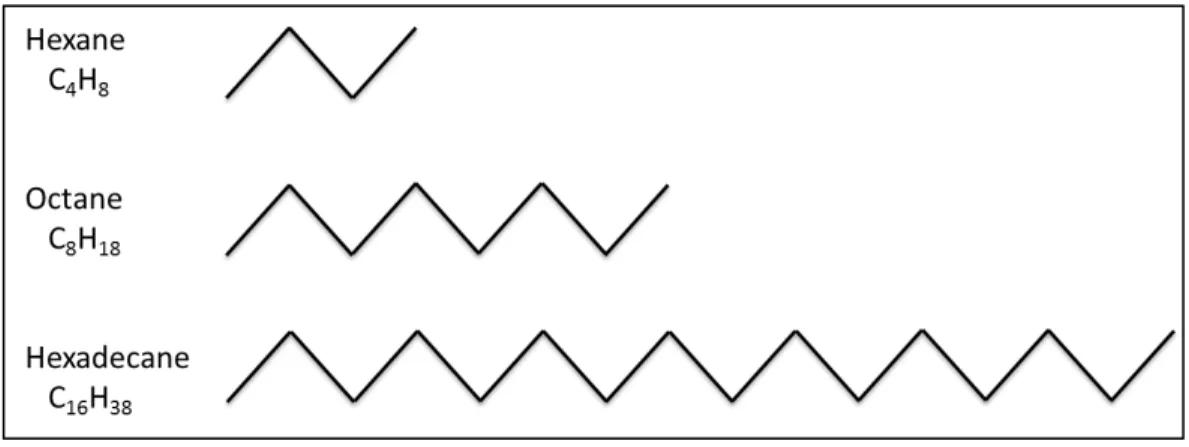
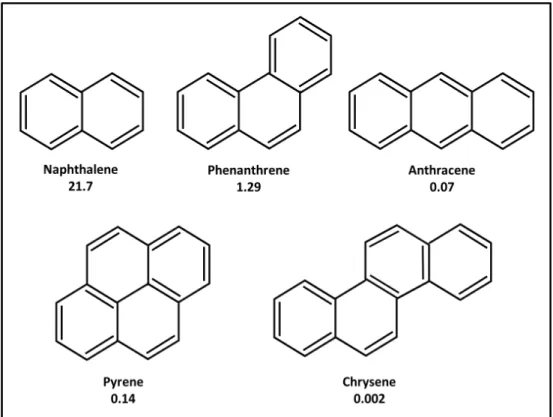
FIGURE 2.1 CHEMICAL STRUCTURE OF SELECTED N-ALKANES ... 5 FIGURE 2.2 CHEMICAL STRUCTURE AND WATER SOLUBILITY (MG/L) OF SELECTED PAHS ... 7
FIGURE 2.3 PATHWAYS OF ALKANE DEGRADATION. (1)-N-ALKANE MONOOXYGENASE, (2)-ALCOHOL
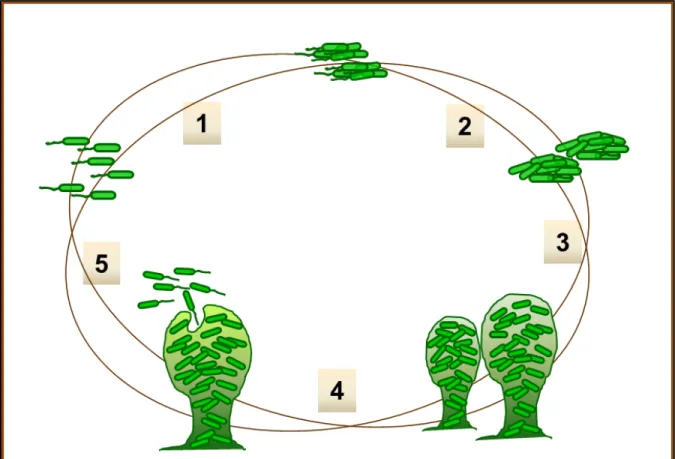
DEHYDROGENASE, (3)-ALDEHYDE DEHYDROGENASE. ... 11 FIGURE 2.4 FIVE STAGES OF BIOFILM DEVELOPMENT: 1- INITIAL ATTACHMENT, 2- FORMATION OF
MICROCOLONIES REQUIRING TWITCHING MOTILITY, 3- FORMATION OF MUSHROOM-TYPE STRUCTURE BY QUORUM SENSING, 4- MATURATION, 5- DISPERSAL ... 16
FIGURE 2.5 CHEMICAL STRUCTURE OF 3-(3-HYDROXYALKANOYLOXY) ALKANOIC ACID (HAAS),
RHAMNOSY3-HYDROXYDECANOY3-HYDROXYDECANOATE (MONO-RHAMNOLIPID) AND
L-RHAMNOSYL-L-RHAMNOSYL-3-HYDROXYDECANOYL-3-HYDROXYDECANOATE (DI-RHAMNOLIPID) ... 23 FIGURE 2.6 SCHEMATIC DIAGRAM OF RHAMNOLIPID BIOSYNTHESIS IN P. AERUGINOSA CONTROLLED BY QS
SYSTEM. N-(3-OXODODECANOYL)-L-HOMOSERINE LACTONE (3-OXO-12-HSL) AND N-BUTYRYL-L-HOMOSERINE LACTONE (C4-HSL) ... 24 FIGURE 2.7 STRUCTURE OF C-DI-GMP. ... 40 FIGURE 2.8 SCHEMATIC DIAGRAM OF C-DI-GMP SYNTHESIS AND ITS MAIN ROLE ... 40 FIGURE 2.9 SUMMARY OF SIGNALING PATHWAYS FOR P. AERUGINOSA IN ADAPTING TO ENVIRONMENTAL
CUES TO PRODUCE SPECIFIC PHENOTYPES ... 51 FIGURE 3.1 CONSTRUCT OF ARABINOSE-INDUCIBLE (ARAC-PBAD) PVRR AND PA14-72420 GENES ... 63
FIGURE 4.1 GROWTH OF DIFFERENT P. AERUGINOSA STRAINS ON MSM SUPPLEMENTED WITH 1%
HEXADECANE (V/V) OR OCTADECANE IN A ROTATOR AT 30OC FOR 14-19 DAYS. (A) GROWTH OF 57RP,
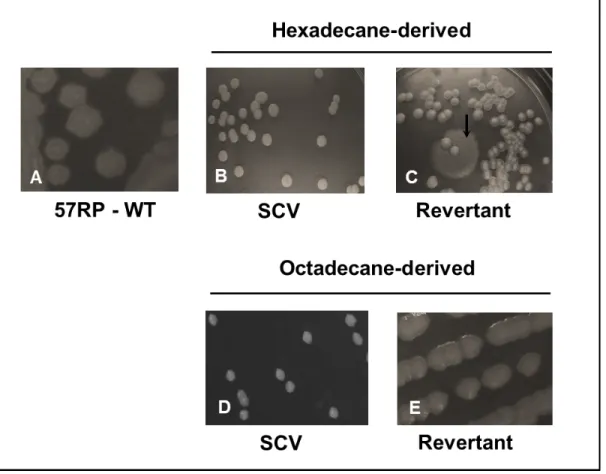
57RV AND PA14 STRAINS ON HEXADECANE, (B) GROWTH OF STRAIN 57RP ON LIQUID AND SOLID ALKANES, (C) GROWTH OF STRAIN 57RP ON OCTADECANE IN STATIC AND ROTATING CONDITIONS. ERROR BARS REPRESENT THE STANDARD DEVIATION FROM TRIPLICATE SAMPLES. ... 70 FIGURE 4.2 MORPHOLOGICAL PHENOTYPES OF STRAIN 57RP ON SOLID AGAR MEDIUM. A. WILD TYPE; B, C.
SMALL COLONY VARIANTS AND REVERTANT (ARROW) DERIVED FROM HEXADECANE AND D, E. SMALL COLONY VARIANTS AND REVERTANTS DERIVED FROM OCTADECANE. ... 71 FIGURE 4.3 A. MOTILITIES OF P. AERUGINOSA 57RV AND 57RP STRAINS ON SWIMMING PLATES (0.3% AGAR) FOR 18 HRS; SWARMING PLATES (0.5% AGAR) FOR 18 HRS; AND TWITCHING PLATES (1% AGAR) FOR 18H WITHOUT REMOVING AGAR AND STAINING WITH CRYSTAL VIOLET, AND ATTACHMENT OF CELLS TO THE POLYSTYRENE PETRI DISH AFTER STAINING WITH CRYSTAL VIOLET IN TWITCHING MOTILITY FOR 38 HRS. B. TURBID ZONE OF SWIMMING AND TWITCHING MOTILITY AFTER 18 HRS. ... 73 FIGURE 4.4 A. MOTILITIES OF DIFFERENT STRAINS DERIVED FROM HEXADECANE: SWIMMING PLATES (0.3%
AGAR) FOR 18 HRS; SWARMING PLATES (0.5% AGAR) FOR 18 HRS; TWITCHING PLATES (1% AGAR) FOR 18H WITHOUT REMOVING AGAR AND STAINING WITH CRYSTAL VIOLET, AND ATTACHMENT OF CELLS TO POLYSTYRENE PETRI DISH AFTER STAINING WITH CRYSTAL VIOLET IN TWITCHING MOTILITY FOR 38 HRS;
xxxii
B. DIAMETER OF TURBID ZONE IN SWIMMING MOTILITY AFTER 18 HRS. C. DIAMETERS OF TURBID ZONE IN TWITCHING MOTILITY AFTER 18 HRS. ... 74 FIGURE 4.5 A. MOTILITIES OF DIFFERENT STRAINS DERIVED FROM OCTADECANE: SWIM PLATES (0.3% AGAR)
FOR 18 HRS; SWARM PLATES (0.5% AGAR) FOR 18 HRS; TWITCH PLATES (1% AGAR) FOR 18H WITHOUT REMOVING AGAR AND STAINING WITH CRYSTAL VIOLET, AND ATTACHMENT OF CELLS TO POLYSTYRENE PETRI DISH AFTER STAINING WITH CRYSTAL VIOLET IN TWITCHING MOTILITY FOR 38 HRS; B. DIAMETER OF TURBID ZONE IN SWIMMING MOTILITY AFTER 18 HRS OF SCVS AND REVERTANT DERIVED FROM OCTADECANE CULTURE. C. DIAMETERS OF TURBID ZONE IN TWITCHING MOTILITY AFTER 18 HRS OF SCVS AND REVERTANT DERIVED FROM OCTADECANE CULTURE. ... 75 FIGURE 4.6 KINETICS OF BIOFILM FORMATION OF P. AERUGINOSA 57RP AND 57RV IN STATIC CONDITIONS ON
BUSHNELL-HAASS MEDIUM SUPPLEMENTED WITH 0.2% DEXTROSE AND 0.5% TRYPTONE AT 25OC
DURING 10 HRS. ... 76 FIGURE 4.7 KINETICS OF BIOFILM FORMATION OF DIFFERENT HEXADECANE-DERIVED PHENOTYPES IN STATIC
CONDITION ON BUSHNELL-HAASS MEDIUM SUPPLEMENTED WITH 0.2% DEXTROSE AND 0.5% TRYPTONE AT 25OC DURING 10 HRS. SCVS WERE GENERATED FROM CULTURES PERFORMED ON HEXADECANE. .... 77
FIGURE 4.8 KINETICS OF BIOFILM FORMATION OF DIFFERENT PHENOTYPES IN STATIC CONDITIONS ON
BUSHNELL-HAASS MEDIUM SUPPLEMENTED WITH 0.2% DEXTROSE AND 0.5% TRYPTONE AT 25O
C DURING 10 HRS. SCVS WERE GENERATED FROM CULTURES PERFORMED ON OCTADECANE. ... 78 FIGURE 4.9 MATH (PANELS A & C) AND MATS (PANELS B & D) ASSAYS ON THE 57RP WT, SCV AND REV
STRAINS, AND STRAIN 57RV. A & B: THE SCV AND ITS REVERTANT WERE DERIVED FROM HEXADECANE CULTURES. C & D: THE SCV AND ITS REVERTANT WERE DERIVED FROM OCTADECANE CULTURES. EXPERIMENTS WERE REPEATED TWO TIMES IN TRIPLICATE TUBES. ... 80 FIGURE 4.10 TRANSMISSION ELECTRON MICROSCOPY IMAGES OF A TYPICAL CELL OF 57RP-WT (A), SCV2H
(B) AND REV21H (C) (PRINT MAGNIFICATION 124 000X, BAR ~ 100 NM). ... 82
FIGURE 4.11 THE GROWTH OF DIFFERENT P. AERUGINOSA STRAINS: 57RV, 57RP, SCV2H AND REV21H (A), AND RHAMNOLIPID PRODUCTION (B) ON MSM SUPPLEMENTED WITH 1% HEXADECANE (V/V) AT 25 OC
UNDER SHAKING CONDITIONS. ... 84
FIGURE 4.12 CHROMATOGRAPH FROM HPLC-MS ANALYSIS. (1) PEAK AREA OF C-DI-GMP STANDARD OF
0.86 PPM, (2) PEAK AREA OF C-DI-GMP STANDARD OF 0.027 PPM AND (3) SCANNING PEAKS IN MULTIPLE REACTION MONITORING (MRM) MODE OF INTERNAL STANDARD CXMP AND C-DI-GMP STANDARD. .... 85 FIGURE 4.13 (A) C-DI-GMP PRODUCTION BY DIFFERENT P. AERUGINOSA STRAINS: 57RP WT, SCV2H,
REVERTANT REV21H AND 57RV AND (B) CORRELATION BETWEEN C-DI-GMP LEVEL AND TOTAL PROTEIN OF THESE STRAINS, WHICH WERE GROWN ON MSM SUPPLEMENTED WITH 1% HEXADECANE AT 25OC IN SHAKING CONDITIONS. ... 87
FIGURE 4.14 POSITIVE STRAINS FOR THE INTEGRATION OF THE PVRR AND PA14-72420 GENES INTO THE 57RP WT CHROMOSOME. ONE REPRESENTATIVE COLONY FROM EACH INTEGRANT WAS SCREENED WITH
xxxiii
SPECIFIC PCR PRIMERS FOR THE PVRR AND THE PA14-72420 GENES. (A) PCR PRODUCTS OF RP401 (~1637 BP) AND ITS SCV (RP401S). (B) PCR PRODUCT OF RP402 (~2565 BP) AND ITS SCV (RP402S). 88 FIGURE 4.15 MORPHOLOGICAL PHENOTYPE OF RP401S AND RP402S ON SOLID AGAR MEDIUM (TSA), ... 89
FIGURE 4.16 57RP WT, RP401 AND RP402 GROWN IN MSM SUPPLEMENTED WITH 1% HEXADECANE IN THE
ABSENCE OR PRESENCE OF 0.2% ARABINOSE AT 25OC IN SHAKING CONDITIONS. (A). GROWTH EXPRESSED
AS TOTAL PROTEIN CONCENTRATIONS, (B). THE C-DI-GMP PRODUCTION LEVELS IN THE PRESENCE AND ABSENCE OF ARABINOSE. (C). CORRELATION BETWEEN C-DI-GMP LEVELS AND TOTAL PROTEINS IN THE RP401 AND RP402 INTEGRANTS COMPARED TO 57RP WT. ... 91 FIGURE 4.17 BIOFILM FORMATION BY RP401 AND RP402 INTEGRANTS. RP401 AND RP402, 57RP WT WERE
CULTURED ON BUSHNELL-HASS MEDIUM SUPPLEMENTED WITH 0.2% DEXTROSE AND 0.5% TRYPTONE AT 25OC FOR 10 HRS IN POLYSTYRENE TUBES IN THE ABSENCE OR PRESENCE OF 0.2% ARABINOSE. ... 92
FIGURE 4.18 GROWTH AND C-DI-GMP PRODUCTION OF SCV2H AND RP401S, WHICH WERE CULTIVATED IN
MSM SUPPLEMENTED WITH 1% HEXADECANE IN THE ABSENCE OR PRESENCE OF 0.2% ARABINOSE. (A) THE GROWTH OF SCV DERIVED FROM WT STRAIN 57RP (SCV2H) AND THE SCV DERIVED FROM THE INTEGRANT OVEREXPRESSING THE C-DI-GMP DEGRADATION GENE (RP401S). (B) C-DI-GMP
PRODUCTION. (C). CORRELATION OF C-DI-GMP PRODUCTION AND BIOMASS PRODUCTION.. ... 94 FIGURE 4.19 BIOFILM FORMATION BY RP401S, A SMALL COLONY VARIANT GENERATED FROM ITS
INTEGRANT CONTAINING THE GENE ENCODING FOR EAL DOMAIN PROTEIN IN COMPARISON WITH 57RP WILD TYPE AND SCV GENERATED FROM 57RP WT, WHICH WERE CULTURED IN BUSHNELL-HASS MEDIUM SUPPLEMENTED WITH 0.2% DEXTROSE AND 0.5% TRYPTONE AT 25OC FOR 10 HRS IN
POLYSTYRENE TUBES IN THE ABSENCE OR PRESENCE OF 0.2% ARABINOSE. ... 95 FIGURE 4.20 2-D GEL ELECTROPHORESIS OF TOTAL SOLUBLE PROTEINS OF 57RP-WT AND SCV2H. THE
BACTERIAL STRAINS WERE GROWN ON MSM SUPPLEMENTED WITH 1% GLUCOSE AT 25OC FOR 18 HRS. 97
FIGURE 4.21 GROWTH OF 57RP WT ON MSM SUPPLEMENTED WITH 1% GLUCOSE AT 25°C. ... 101 FIGURE 4.22 2-D GEL ELECTROPHORESIS OF THE CYTOSOLIC PROTEINS OF 57RP-WT AND SCV2H. THE
57RP-WT WAS GROWN IN MSM SUPPLEMENTED WITH 1% GLUCOSE FOR 11 HRS, AND SCV2H IN MSM + 1% HEXADECANE FOR 9 DAYS AT 25OC. ... 102
FIGURE 4.23 2-D GEL ELECTROPHORESIS OF THE OUTER MEMBRANE PROTEINS OF 57RP-WT AND SCV2H. THE 57RP-WT WAS GROWN IN MSM SUPPLEMENTED WITH 1% GLUCOSE FOR 11 HRS, AND SCV2H IN MSM + 1% HEXADECANE FOR 9 DAYS AT 25OC. ... 103
FIGURE 4.24 2-D GEL ELECTROPHORESIS OF THE PERIPLASMIC PROTEINS OF 57RP-WT AND SCV2H. THE 57RP-WT WAS GROWN IN MSM SUPPLEMENTED WITH 1% GLUCOSE FOR 11 HRS, AND SCV2H IN MSM + 1% HEXADECANE FOR 9 DAYS AT 25O
C. ... 104 FIGURE 6.1 SCHEMATIC SUMMARY OF PRESENT RESEARCH ... 157 FIGURE 6.2 PROPOSAL FOR FUTURE WORK ... 159
xxxv
LIST OF ABREVIATIONS
Abbreviations Meaning
2-DE Two-dimensional gel electrophoresis
BH Bushnell-Haas Medium
c-di-GMP 3’-5’-cyclic diguanylic acid
cAMP Cyclic adenosine 3’,5’-monophosphate
CF Cystic Fibrosis
CFU Colony Forming Units
cGMP Cyclic guanosine 3’,5’-monophosphate (cGMP)
CUP Chaperone Usher Pathway
DGCs Diguanylate cyclases
DNA Deoxyribonucleic Acid
EAL Glutamic acid - Alanine - Leucine EDTA Ethylenediamine Tetra-acetic Acid EPS Extracellular Polymeric Substances
GGDEF Glycine - Glycine - Aspartic acid - Glutamic acid - Phenylalanine
GMP Guanosine monophosphate
xxxvi
HPLC High Pressure Liquid Chromatography
LB Lysis Broth Medium
LPS Lipopolysaccharide
MATH Microbial Adhesion To Hydrocarbons
MATS Microbial Adhesion To Silica
MS Mass Spectrometry
MSM Mineral salt medium
OD Optical Density
PAHs Polycyclic Aromatic Hydrocarbons
PBS Phosphate-Buffered Saline
PCR Polymerase Chain Reaction
PDEs Phosphodiesterases pGpG 5′-phosphoguanylyl-(3'-5')-guanosine ppGpp Guanosine tetraphosphate pppGpp or (p)ppGpp Guanosine pentaphosphate PPi Pyrophosphate QS Quorum Sensing
rpm rotations per minute
xxxvii
SCVs Small Colony Variants
SDS Sodium dodecyl sulfate
SW Siegmund-Wagner Medium
TFP Type IV pili
TSA Tryptic soy agar
TSB Tryptic soy broth
TSE Tris - Sucrose - EDTA
UV Ultra Violet
1
1 INTRODUCTION
Context and research question
1.1
Petroleum products like linear hydrocarbons (e.g. octadecane, hexadecane, etc.) and polycyclic aromatic hydrocarbons (e.g. naphthalene, phenanthrene, etc.) are very important pollutants in the environment because of their toxicity, insolubility and persistence. Furthermore, the cost for cleaning up the complex hydrocarbons-polluted regions following spills is considerable; for example, $US22.14/gallon in Canada and $US87.13/gallon in USA based on calculations from 1999 (Etkin, 2001). For example one tragic recent accident was the Deepwater Horizon oil spill in the Gulf of Mexico, Louisiana, USA on April 2010. The owner BP Group announced that approximately 4.9 million barrels (795 million liters) of oil had leaked into the gulf (https://www.toxicology.org/pm/Deepwater_oil_spill.pdf), with serious environmental and financial consequences, as BP has approximately $28 billion of damage claims and cleanup costs. These latter costs depend on; inter alia, the type of oil, the amount of oil, the sea conditions and the effectiveness of clean-up site etc. (White & Molloy, 2003). Therefore, finding an efficient and cost-effective pollution treatment technology is an important goal.
There are different types of treatments in polluted environments including chemical, physical and biological approaches. The chemical and physical treatments can cause secondary pollution, and are expensive while bioremediation is in many cases a cost-effective and environment friendly solution (reviewed in Dibble and Bartha (1979)). A long-term exposure of microbial communities to hydrocarbons leads to the selective enrichment of higher adaptive hydrocarbon-utilizing microorganisms as well as the hydrocarbon-catabolizing gene pool (Brooijmans et al., 2009, Harayama et al., 1999, Kostka et al., 2011, Leahy & Colwell, 1990). Indeed, microbial degradation is a key module in polluted site clean-up strategy. Many different microorganisms including algae, fungi and bacteria harbor the capability of degrading a wide variety of persistent organic compounds. Among bacteria, members of the Pseudomonas genus possess the capacity to degrade weakly soluble hydrocarbons, such as linear alkanes and polycyclic aromatic compounds (PAHs). Pseudomonas aeruginosa is also a well-studied bacterium involved in
2
the formation of biofilm, and the production of biosurfactants, which are among the factors that would be involved in the solubilization of hydrocarbons, and the adherence of bacteria to hydrocarbons. In previous studies by Prof. Villemur and Prof. Déziel at the INRS-Institut Armand-Frappier, several strains of P. aeruginosa that could use aromatic and aliphatic hydrocarbons as sole carbon and energy sources were isolated (Déziel, 2001). Evidence was obtained that P. aeruginosa has to change its specific physiological characteristics to grow on these hydrophobic substrates. These characteristics include cell surface hydrophobicity, the ability to adhere to hydrocarbons, the production of biosurfactants, the capacity to generate phenotypic small colony variants (SCVs), and the development of a biofilm at the surface of the hydrocarbons. It was also observed that these strains have different degradation dynamics towards linear alkanes, whether in the liquid or solid phases. The spontaneous appearance of SCVs when certain strains of P.
aeruginosa were cultivated on hydrocarbons as sole substrate indicated an important role
of this colony type for growth on these substrates (Déziel, 2001).
At the time this thesis was initiated, it was known that the second messenger bis-(3'-5')-cyclic dimeric guanosine monophosphate (cyclic di-GMP or c-di-GMP) played a key role in bacterial biofilm development, including in P. aeruginosa (reviewed in Hengge (2009), Römling et al. (2013)). However, how this second messenger and the appearance of SCVs involved in the degradation of linear alkanes and/or PAHs was still unknown.
Hypothesis
1.2
Our hypothesis was that P. aeruginosa, isolated from a hydrocarbon-contaminated soil, as some other known clinical isolates of the same bacterial species, should use the same second messenger signaling system (c-di-GMP signaling) to initiate phenotypic switch to form environment-adaptive phase SCVs with typical phenotypic behaviors able to grow on n-hexadecane (C16), a hydrophobic, poorly bioavailable substrate used as a sole
3
The principal aim of the project was to characterize the phenotypic changes of some strains of P. aeruginosa during growth on weakly soluble hydrocarbons through the study of mechanisms involving adhesion, SCV formation and second messenger signaling. Better understanding how microorganisms can adapt to particular environments should allow for the development or optimization of existing condition for biological treatments at contaminated sites.
Objectives of the thesis
1.3
The present study had the following objectives:
(1) Isolate small colony variants (SCVs) of P. aeruginosa strain 57RP during culture with n-alkanes used as sole carbon sources.
(2) Characterize the phenotypic changes of SCVs grown on hexadecane and octadecane
(3) Investigate the putative role of c-di-GMP in the phenotypic SCV formation and in the reversion to wild-type phenotype.
5
2 REVIEW OF THE LITERATURE
Hydrocarbons and bioremediation
2.1
2.1.1 n-Alkanes, Polycyclic Aromatic Hydrocarbons and bioavailability
Alkanes are saturated hydrocarbons that have the general formula CnH2n+2 and
possess a linear (Figure 2.1), a branched or a cyclic carbon chain. Many alkanes such as methane, and n-hexane are classified as dangerous agents for the environment and human health (Karakaya et al., 1996). n-Alkanes, one of the main components in crude oil, with various carbon change lengths (C8-C40) are found frequently in the weathered oil petroleum
contaminated sites (Kostka et al., 2011). Their solubility in water decreases with the increase of carbon number in alkanes. For example, the water solubility of C9 alkane is
0.22 mg/L, C10 is 0.052 mg/L (McAuliffe, 1969) and C16 is 0.009 mg/L, C18 is 0.0021
mg/L (Sutton & Calder, 1974).
6
In addition to n-alkanes, other of components of crude oil includes Polycyclic Aromatic Hydrocarbons (PAHs). These are chemical compounds that contain more than one fused aromatic ring. PAHs are found widely in natural environments. Beside of their presence in petroleum fuels and coal products, their anthropogenic activities also cause PAH accumulation in the environment. The structural formula of selected PAHs is shown in figure 2.2. Research on PAHs attracts much attention, such as benzo [a] pyrene, because some of them cause toxic and carcinogenic effects on various organisms, including humans (Baird et al., 2005). PAHs also have the ability to accumulate in fatty regions of animal bodies. They are considered as carcinogens because they can induce mouse skin tumors. PAHs can be modified in the liver, which generates reactive molecules that, when intercalates in DNA strands and can induce mutations (Baird et al., 2005). PAHs are divided into two categories: the low molecular weight (LMW) PAHs with 2-3 aromatic rings (e.g. naphthalene and phenanthrene), and the high molecular weight (HMW) PAHs with 4 or more aromatic rings (e.g. pyrene) (Figure 2.2) (Samanta et al., 2002, H Zhang et
al., 2004). Water solubility decreases with increasing molecular weight (Figure 2.2)
7
Figure 2.2 Chemical structure and water solubility (mg/L) of selected PAHs (Juhasz & Naidu, 2000, Sutton & Calder, 1974).
8
The hydrophobicity of long chain alkanes and PAHs render these compounds less available for microbial uptake and degradation, because bacteria acquire generally nutrients that are soluble in water. Furthermore, these molecules (especially PAHs) tend to absorb strongly to the environmental matrix such as soil particles. Despite of this limited bioavailability, there are microorganisms (e.g. P. aeruginosa) that have been isolated from polluted soils or sediments for their capacity to degrade these weakly soluble hydrocarbons (Déziel et al., 2001, Déziel et al., 1999, Déziel et al., 1996, Harayama et al., 1999). The precise mechanisms of uptake of such water insoluble molecules for their degradation are not well understood. Among these mechanisms are the attachment of microorganisms to the hydrocarbons, and the production of biosurfactants for their solubilization (De Kievit et
al., 2001, Johnsen & Karlson, 2004). Biosurfactants, produce by microorganisms, are
surface active substances and have amphiphilic structure containing both hydrophilic and hydrophobic groups (reviewed in Pacwa-Płociniczak et al. (2011)). The water bioavailability of hydrophobic substances is increased by biosurfactants because of their ability to emulsify, form foam and disperse (JD. Desai & Banat, 1997). Classification of biosurfactants is based on physical and chemical characterization such as glycolipids; fatty acid, phospholipids and neutral lipids; lipopeptides and polymeric biosurfactant (reviewed in Pacwa-Płociniczak et al. (2011)). Among biosurfactants, rhamnolipids are glycolipids produced by P. aeruginosa (Déziel et al., 1996, Ron & Rosenberg, 2002) (see section 2.4).
2.1.2 Bioremediation
Bioremediation processes use living organisms like microorganisms or both microorganisms and plants to degrade/remove toxic chemicals in contaminated water, air and soil. This approach is used to remove pollutants from contaminated environments, and/or to convert or transform these pollutants into less harmful compounds. Among pollutants, alkanes and PAHs are persistent compounds and are difficult to be degraded by the natural biota because of their poor bioavailability (Déziel, 2001, Johnsen et al., 2005, Lafortune et al., 2009). Bioremediation can be applied to treat soils, sediments, sludge and water (Ron & Rosenberg, 2002, Samanta et al., 2002) contaminated with such
9
hydrocarbons. Furthermore, various environmental factors such as nutrients, pH, electron acceptor availability, etc. play a role in the process (reviewed in Choi et al. (2011).
Bioremediation is often the choice for treatment of different hydrocarbon-polluted sites due to its low cost and environment friendliness (reviewed in Choi et al. (2011). However, in addition to environmental conditions, the rate of bioremediation depends on the abundance and the type of microorganisms. Microorganisms such as fungi,
Actinomycetes and other specific bacteria can be isolated from contaminated water, sludge
or soils. For instance, after the oil spill breakup in Gulf of Mexico, Kostka and co-workers isolated many kinds of different hydrocarbon-degrading bacteria from beach sands, which were related to the genera Alcanivorax, Marinobacter, Pseudomonas, and Acinetobacter (Kostka et al., 2011). To apply bioremediating activities in different polluted sites, the bacterial potential to degrade toxic chemicals were analyzed. For example, n-alkanes with chain length of C10-C40 were used as sole carbon source by Acinetobacter sp. strain DMS
17874 (Throne-Holst et al., 2007). In another study, Rhodococcus rhodochrous can use C12-C20 (reviewed in Wentzel et al. (2007)) while P. aeruginosa strain RR1 can utilize
long chain n-alkanes of C12-C34 (reviewed in Wentzel et al. (2007)).
2.1.3 Alkane degradation by alkane hydroxylase
Alkane hydroxylase is a membrane bound enzyme involved in the initial step of the catabolism of linear hydrocarbons. This enzyme is an integral-membrane non-haem di-iron monooxygenase. It plays a role in hydroxylation of alkanes at the terminal position (Rojo, 2009). n-Alkanes are oxidized at the terminal methyl group to alcohol, aldehyde and to fatty acid at final step (Figure 2.3) (Harayama et al., 1999). Acording to Beilen et al. (2007), alkanes are divided into three groups: short (C1 – C4), medium (C5 – C15) and long
chain alkanes (≥ C16). Alkane hydroxylases are divided into two groups. Type 1 is found
widely in the genus Pseudomonas, and they can oxidize short and medium chain alkanes. Type 2 can oxidize long chain alkanes (Beilen & Funhoff, 2007). Among them, AlkB has been the most studied. AlkB is present in a wide variety of Gram negative as well as Gram-positive bacteria (Smits et al., 2002, Whyte et al., 2002).
10
The AlkB-type alkane hydroxylases were recognized as the enzymes that degrade alkanes with chain length of C10-C20 in Gram-negative Acinetobacter strains (Throne-Holst
et al., 2007). Multiple alkane hydroxylase genes have been found in many bacteria. For
instance, in Rhodococcus sp., Whyte et al. (2002) discovered 4 alkane monooxygenase genes in two different strains of Rhodococcus sp. (strain Q15 and NRRL B-16531) including alkB1, alkB2, alkB3 and alkB4. Van Beilen et al. (2003) showed alkB homologs encoding functional enzymes sharing only 40% sequence identity with other AlkB. Normally, AlkB oxidized n-alkanes ranging from C5-C16, but more recent reports
demonstrated that some alkane hydroxylases to oxidize longer alkanes (> C16) (Amouric et
al., 2010, Quatrini et al., 2008). While AlkB2 could oxidize alkanes shorter than C16,
AlkB1, AlkB3 and AlkB4 could oxidize longer chain alkanes up to C32 to C36 (Whyte et
al., 2002). AlkBa in Rhodococcus ruber SP2 oxidized of alkanes longer than C12 (Amouric
et al., 2009).
In P. aeruginosa, there are two known alkane hydroxylase genes (alkB1 and alkB2) (Marín et al., 2003, Winsor et al., 2011). The alkB1 gene was induced at late exponential phase by C10-C24 alkanes, while AlkB2 activity peaked at early exponential phase (Marín
et al., 2003). The presence of alkane is necessary for expression of alkB1 and alkB2,
AlkB1 and AlkB2 were not detected when cultured on rich LB medium (Marín et al., 2003).
11
Figure 2.3 Pathways of alkane degradation. (1)-n-alkane monooxygenase, (2)-alcohol dehydrogenase, (3)-aldehyde dehydrogenase (Harayama et al., 1999) .