HAL Id: dumas-02959137
https://dumas.ccsd.cnrs.fr/dumas-02959137
Submitted on 15 Oct 2020HAL is a multi-disciplinary open access archive for the deposit and dissemination of sci-entific research documents, whether they are pub-lished or not. The documents may come from teaching and research institutions in France or abroad, or from public or private research centers.
L’archive ouverte pluridisciplinaire HAL, est destinée au dépôt et à la diffusion de documents scientifiques de niveau recherche, publiés ou non, émanant des établissements d’enseignement et de recherche français ou étrangers, des laboratoires publics ou privés.
Symptomatic biliary lithiasis after bariatric surgery:
results of supra-selective management
Adrian Mancini
To cite this version:
Adrian Mancini. Symptomatic biliary lithiasis after bariatric surgery: results of supra-selective man-agement. Human health and pathology. 2020. �dumas-02959137�
AVERTISSEMENT
Ce document est le fruit d'un long travail approuvé par le
jury de soutenance.
La propriété intellectuelle du document reste entièrement
celle du ou des auteurs. Les utilisateurs doivent respecter le
droit d’auteur selon la législation en vigueur, et sont soumis
aux règles habituelles du bon usage, comme pour les
publications sur papier : respect des travaux originaux,
citation, interdiction du pillage intellectuel, etc.
Il est mis à disposition de toute personne intéressée par
l’intermédiaire de
l’archive ouverte DUMAS
(Dépôt
Universitaire de Mémoires Après Soutenance).
Si vous désirez contacter son ou ses auteurs, nous vous
invitons à consulter la page de DUMAS présentant le
document. Si l’auteur l’a autorisé, son adresse mail
apparaîtra lorsque vous cliquerez sur le bouton « Détails »
(à droite du nom).
Dans le cas contraire, vous pouvez consulter en ligne les
annuaires de l’ordre des médecins, des pharmaciens et des
sages-femmes.
Contact à la Bibliothèque universitaire de Médecine
Pharmacie de Grenoble :
UNIVERSITÉ GRENOBLE ALPES
UFR DE MÉDECINE DE GRENOBLE
Année: 2020
SYMPTOMATIC BILIARY LITHIASIS AFTER BARIATRIC SURGERY: RESULTS OF
SUPRA-SELECTIVE MANAGEMENT
THÈSE
PRÉSENTÉE POUR L’OBTENTION DU TITRE DE DOCTEUR EN MÉDECINE DIPLÔME D’ÉTAT
Adrian MANCINI
THÈSE SOUTENUE PUBLIQUEMENT À LA FACULTÉ DE MÉDECINE DE GRENOBLE Le : 25/09/2020
DEVANT LE JURY COMPOSÉ DE Président du jury :
Mme le Pr Anne-Laure BOREL - PUPH Membres :
Mme le Pr Maud ROBERT - PUPH
M le Pr Associé Fabian RECHE (Directeur de thèse) Mme le Pr Catherine ARVIEUX - PUPH
M le Dr Julio ABBA
L’UFR de Médecine de Grenoble n’entend donner aucune approbation ni improbation aux opinions émises dans les thèses ; ces opinions sont considérées comme propres à leurs auteurs.
6
Remerciements
Bien paradoxalement, les remerciements apparaissent pour le futur docteur comme la partie la plus difficile à rédiger de sa thèse. Point de recueil de données, de p-value, d’analyse critique de la littérature, mais il sait que c’est, au fil des années, la seule partie qui sera lue avec intérêt et par le plus grand nombre, en particulier lors du grand soir, chacun cherchant avec excitation son nom, le rédacteur espérant – lui - n’avoir oublié personne, au risque de déclencher au mieux un moment de gêne, au pire un quasi incident diplomatique. Elle donne cependant l’impression d’écrire ses mémoires, ses souvenirs. Il s’agit en effet de restituer des moments de vie, de remercier les gens que nous avons rencontré et qui tous les jours ont eu à cœur de nous transmettre leur savoir, très souvent avec passion, et patience. Trouvez ici chacun mes sincères remerciements pour avoir fait partie de ce qui est, à ce jour, la plus grande aventure de ma vie.
Aux membres du jury
Mme le Pr Anne-Laure BOREL.
Merci d’avoir accepté de présider cette thèse. Travailler et échanger avec vous au sein du GEROM est un réel plaisir. Soyez assurée de mon souhait de m’y investir pleinement.
Mme Le Pr Maud ROBERT
Merci de me faire l’honneur de venir jusqu’à Grenoble pour juger ce travail. Votre expertise en chirurgie bariatrique est unanimement reconnue. Vos qualités de pédagogue sont elles aussi saluées par tous les internes ayant bénéficié de votre enseignement, et je regrette de ne pas en avoir fait partie.
Mme le Pr Catherine ARVIEUX
Merci d’avoir accepté de juger ce travail. Merci pour l’ensemble des travaux que vous m’avez confiés depuis le début de mon internat, je vous dois beaucoup. Merci pour votre enseignement au quotidien et pour la bienveillance dont vous faites preuve chaque jour envers nous tous.
M le Pr Fabian RECHE
Je vous remercie d’avoir fait naitre et entretenu ma passion pour la chirurgie bariatrique et je suis ravi d’avoir pu travailler et publier à vos côtés. Merci pour tous les conseils relatifs à ce travail et pour votre enseignement de la chirurgie certes, mais aussi du reste. J’espère pouvoir encore apprendre beaucoup à vos côtés. Soyez assuré de ma plus grande reconnaissance.
M le Dr Julio ABBA
Je n’oublie pas que c’est grâce à toi que j’ai voulu faire ce métier de chirurgien digestif alors que je n’étais qu’un simple étudiant en 3eme année. Ton engagement pour les patients est un modèle pour moi et pour nous tous. Trouve ici l’expression de mon plus grand respect et de mes remerciements.
7
Aux personnes formidables que j’ai rencontré pendant ces 6 années, Au Dr Olivier RISSE
Merci pour votre enseignement de la chirurgie viscérale et de la pratique de la lecture de l’EMC. Merci aussi pour toutes ces discussions sur la politique, la cuisine et bien d’autres choses. Vous êtes un modèle de réussite professionnelle et familiale que j’espère atteindre.
Au Pr Christian LETOUBLON
J’ai vu pour la 1ere fois une DPC avec vous alors que je n’étais qu’en 2eme année de médecine. J’ose espérer y comprendre plus aujourd’hui qu’à cette époque. Merci pour votre enseignement de la chirurgie hépato-biliaire.
Au Pr Mircea CHIRICA
Ton arrivée dans le service a bouleversé bien des choses. Merci de l’attachement et de l’énergie dont tu fais preuve pour nous enseigner la chirurgie et l’EBM. Je te promets d’y faire honneur.
Au Pr Jean-Luc FAUCHERON
Merci pour votre enseignement de la chirurgie colorectale. Votre expertise en la matière est reconnue sur le plan national et bien plus. C’est une grande chance de grandir dans votre service.
A tous les assistants du service (et PHU, et PH !) : Dr Pierre-Yves SAGE, Dr Bertrand TRILLING, Dr Edouard GIRARD, Dr Sandrine BARBOIS, Dr Mathieu JOLIVET. C’est un plaisir de travailler et d’échanger au quotidien avec vous. Nous avons finalement grandi ensemble, chacun à notre niveau. Merci pour la pédagogie dont vous faites preuve envers les plus jeunes. Merci pour tous ces bons moments, au bloc à 3H du matin, ou dans le petit salon de l’internat à refaire le monde, et aussi pour les soirées moins studieuses.
Aux ‘’ anciens ‘’ du CHU
Au Dr Antoine GUILLAUD, au Dr Nicolas MOUGIN, Dr Meriem KHALFALLAH, Dr Ghalia DOUMANE. Au Dr Nicolas TATON, tu as été mon 1er co-interne quand j’étais FFI. C’est un plaisir d’avoir travaillé et
échangé avec toi. Au Dr Sébastien GUIGARD, pour ton apprentissage de la chirurgie vasculaire et thoracique et ton implication pour les patients. Au Dr Vincent VENCHOUPICHOU. Au Dr Nicolas GALLET, de mon moniteur d’anatomie en PACES à mon assistant en tant qu’interne, la boucle est bouclée. Au Dr Marion TAVERNIER, Au Dr Fabien STENARD. Au Dr Romain RIBOUD. Au Dr David VOIRIN. Au Dr Damien CARNICELLI.
A l’équipe de chirurgie digestive du CH de Chambéry
Dr Irchid AL-NAASAN, Dr Mattia STELLA, Dr Pierre-Alexandre WAROQUET, pour ta gentillesse et ta bienveillance à notre égard. Au Dr Jean-Rémy LEGROS. Au Dr Sofiane DEMMANE. A toute l’équipe pour votre accueil lors de mon 1er semestre. Je ne garde que de bons souvenirs.
A l’équipe de chirurgie thoracique du CHU de Grenoble
Au Pr Pierre-Yves BRICHON, pour votre répartie légendaire. Au Dr Gilles FREY. Au Dr Augustin PIRVU, nous en avons opéré des choses ensembles, des aortes, des thoraco de sauvetages, des poumons… Te rencontrer a été un véritable plaisir, tu es un modèle chirurgical…et surtout… champagne !
8 A l’équipe de chirurgie cardiaque du CHU de Grenoble,
Au Pr Olivier CHAVANON, au Dr Paolo PORCU, au Dr Eric ARNAUD-CROZAT, au Dr Cécile MARTIN, au Dr Jean-Pierre FLEURY et au Dr Rachid HACINI (Mon 1er pas dans un bloc opératoire, c’était il y a 10
ans avec vous). Merci de m’avoir fait découvrir votre si belle spécialité. A Romuald. A l’équipe de chirurgie pédiatrique du CHU de Grenoble
Au Pr Christian PIOLAT, vous êtes un modèle. Au Dr Youssef TEKLALI, au Dr Samir SIBAI. Au Dr Soizic ANTOINE, pour nos grandes discussions sur la chirurgie et sur la vie, même si celles-ci tournaient essentiellement autour de nos chats. Au Dr Ahmad EID, au Dr Yohann Robert, et au Dr Pierre-Yves RABATTU.
A l’équipe de chirurgie vasculaire du CHU de Grenoble
Au Pr MAGNE, pour votre calme. Au Dr GULINO, pour votre gentillesse, votre bonne humeur, la pédagogie dont vous faites preuve, pour les thrombectomies, les carotides... C’est toujours un plaisir d’opérer à vos côtés. Au Dr SPEAR, pour l’ensemble de ton enseignement.
A l’équipe de chirurgie bariatrique du CHU de Lille
Au Pr PATTOU, au Pr CAIAZZO, merci pour votre enseignement quotidien de la chirurgie bariatrique, votre rigueur et votre disponibilité. Au Dr Grégory BAUD, la volonté d’être pédagogue à chaque instant t’anime, notamment au bloc. C’est un réel plaisir de travailler avec toi, le ‘’ Batman de l’anastomose gastro-jéjunale dans le pus ‘’. Au Pr CARNAILLE, merci pour votre gentillesse, votre accessibilité. Les consultations du jeudi après-midi avec vous sont d’authentiques moments d’enseignement de la médecine et de la clinique.
A tous les assistants, Dr Camille MARCINIAK, Dr Vincent VANGELDER, Dr Aminah…Aminah… … El BOUYOUSFI, la plus Lilloise des Lyonnaises, pour ton humour à couper au couteau. Au Dr Gaia LONGO. Merci pour votre accueil si chaleureux et pour votre enseignement, pour les franches rigolades. Pour m’avoir fait découvrir cette belle ville de Lille. Je suis triste de vous quitter.
A mes maîtres d’anatomie
Au Pr Jean-Guy PASSAGIA. Monsieur, vous m’avez donné le gout de l’anatomie en P1, et j’ai eu la chance quelques années plus tard de venir passer d’innombrables (et interminables !) soirées à faire de la musique dans votre véranda. Votre culture est un modèle pour moi.
Au Pr Philippe CHAFFANJON. Merci de m’avoir accepté dans votre salle alors que je n’étais qu’en 2eme année de médecine. Vous nous rappelez à tous chaque jour que l’anatomie précède la chirurgie, et qu’un bon anatomiste peut se sortir de tous les pétrins.
Aux I(BO)DEs
Emilie B, tu as guidé mes premiers pas alors que je n’étais qu’externe, et c’est un plaisir d’opérer avec toi. Susan, Julie, Lucie Lulu, Béatrice, Ianthé, Marine Monsieur Croquettes, Flavie, Lola, Noémie, Hassina, Antoine, Mégane, Marie, et les autres… Et puis à Monique, pour tout.
A mes amis,
Remi et Lucile, Gabriel, Paul., depuis quasiment 10 ans.. BB et Susan, pour toutes les bêtises que l’on a faites. Fahd et Estelle, j’attends toujours la soirée Last Action Hero. Lieutenant Dan et JB. Guillaume, Véra et Louise. Clément et Caro, Léo, Tim et Morgane. Mat et Marie, Mathis et Claire. Thib et Jeanne, Jessica et Martin. Amandine. Tifenn, Arthur. Et tous ceux que j’ai oublié…
9
A Charlotte, à part, je te remercie pour tout ce que tu as fait pour moi.
A Aline, bien plus qu’une collègue, tant d’années à se supporter quotidiennement, et ce n’est pas fini.. Aux derniers co-internes de ma vie. Olivier Muller, ‘’ Dr Muller ‘’, j’ai dû attendre mon dernier semestre pour rencontrer un co-interne qui écoute la même musique que moi. Tu es le bienvenu à Grenoble ou à Paris. J’espère venir découvrir Tours aussi. Agathe, la plus ORL des internes de viscérale. Tu es la plus brillante d’entre nous et j’admire ton parcours. C’est un plaisir de t’avoir rencontré.
Aux co-internes. Adrien, Ulysse, Antoine, Guti, Marouf (on va maroufler !), Maureen (Et Clément mon grand lion), Maximus, Facundo, Juan Blas Dias, Martinez et son flamant rose, Manu Devant et tous les autres…
A ma famille,
Charlotte, félicitations pour ton parcours, c’est une grande fierté d’avoir une petite sœur brillante avocate en droit pénal international. A Vincent, j’ai hâte d’aller faire du surf avec toi !
A mon frère Bruno
A mes parents. Merci d’avoir toujours cru en mon parcours, pour votre aide quotidienne. J’espère vous rendre fiers chaque jour.
A Daddy. Pour m’avoir soutenu à chaque instant depuis tant d’années et pour avoir été là quand j’ai eu besoin de toi. J’espère que tu es fière toi aussi. Rien n’aurait été possible sans toi.
A Hélène
Merci pour l’amour que tu m’apportes au quotidien. Tu es la rencontre la plus importante de ma vie. Ta présence, ton soutien, ton intelligence, tes conseils et la bêtise dont tu sais aussi faire preuve me sont extrêmement précieux et indispensable. Merci pour nos échanges permanents sur à peu près tous les sujets. La vie est beaucoup trop douce à tes côtés.
We can be heroes, just for one day David Bowie.
10
Introduction : Les patients bénéficiant d’une chirurgie bariatrique sont à haut risque de
présence préopératoire de lithiase biliaire et de développement postopératoire. La réalisation d’une cholécystectomie dans le même temps opératoire reste controversée. Le but de ce travail est d’analyser le résultat de l’approche supra-sélective de la vésicule biliaire, c’est-à-dire la cholécystectomie concomitante uniquement chez les patients porteurs d’une lithiase vésiculaire symptomatique.
Matériels et Méthodes : Il s’agit d’une étude monocentrique rétrospective de tous les patients
ayant bénéficié d’une chirurgie bariatrique coelioscopique ou robotique entre 2010 et 2018.
Résultats : 520 patients ont été inclus avec un suivi médian de 37.5 mois. La procédure était
un bypass gastrique chez 328 patients (63.1%) et une sleeve gastrectomie dans 192 cas (36.9%). Soixante et un patients étaient déjà cholécystectomisés (13.6%). Soixante-quatre patients avaient une lithiase vésiculaire préopératoire (14.2%). Quatre patients ont bénéficié d’une cholécystectomie concomitante. Quatorze patients (2.7%) ont nécessité une intervention pour prise en charge d’une lithiase biliaire symptomatique : 12/445 patients (2.7%) ont nécessité une cholécystectomie secondaire, parmi lesquelles 11/12 (91.7%) ont été réalisées par coelioscopie et 9/12 (75%) en chirurgie ambulatoire, et sans aucun complication. Deux patients (0.4%) ont nécessité un abord de la voie biliaire principale après bypass gastrique par voie trans hépatique avec 100% de succès et sans complication.
Conclusion : Les taux de lithiase symptomatique après chirurgie bariatrique et de
cholécystectomie secondaire dans le cadre de l’approche supra sélective sont faibles, chacun de 2.7%. Après chirurgie bariatrique, tous les patients avec vésicule biliaire en place doivent recevoir de l’acide Ursodésoxycholique pendant 6 mois.
11
Introduction: Patients undergoing bariatric surgery are at high risk for both the prevalence of
preoperative cholelithiasis as well as their postoperative development. The question of whether cholecystectomy should be performed during bariatric surgery remains controversial. The aim of this work is to study the results of the supra-selective approach for gallbladder management, involving concomitant cholecystectomy only in patients with gallstones-related symptoms.
Material & Methods: This is a retrospective review of a prospective database of all patients
who underwent laparoscopic or robotic bariatric surgery between 2010 and 2018 in a single institution.
Results: Five hundred twenty patients were included with a median follow-up of 37.5 months.
The procedure was Gastric Bypass in 328 patients (63.1%) and sleeve gastrectomy in 192 (36.9%). Seventy-one patients had a history of cholecystectomy (13.6%). Sixty-four patients had preoperative lithiasis (14.2%). Four patients underwent concomitant cholecystectomy. Fourteen (2.7%) patients required an intervention for symptomatic lithiasis: 12/445 (2.7%) patients required subsequent cholecystectomies and 11/12 (91.7%) were performed through a laparoscopic approach as outpatient surgery in 9/12 (75%) without complication. Two patients (0.4%) required access to the biliary tree for the treatment of choledocolithiasis after RYGBP and were managed through percutaneous transhepatic approach with a success rate of 100% and no complication.
Conclusion The rate of symptomatic lithiasis after bariatric surgery is low. The need for a
subsequent cholecystectomy in the setting of the supra-selective approach is rare, 2.7%. This second procedure is safe and easy. All patients with gallbladder left in-situ should receive Ursodeoxycholic acid prophylaxis for 6 months.
12
1. Introduction
A. Epidemiology of obesity
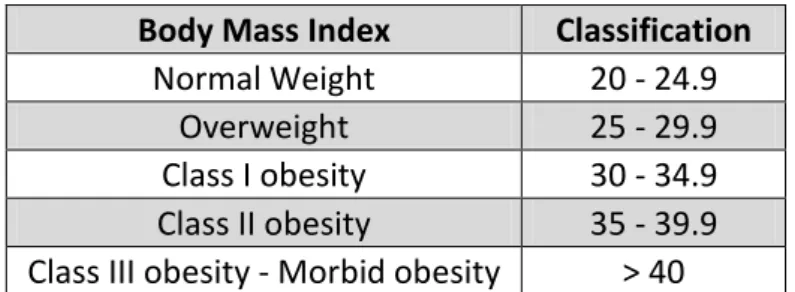
The World Health Organization defines obesity as a condition of excessive fat accumulation in the body adversely affecting health and well-being [1]. The most used parameter to define this condition is the Body Mass Index (BMI), which is determined by weight and height in square meters. Thus, obesity is defined as BMI > 30kg/m², and it can further be subdivided by subclasses of BMI based on Garrow’s classification, as demonstrated in Table 1 [2].
The prevalence of obesity is currently increasing worldwide: in 2016, 650 million people were obese [3]; consequently, obesity is now considered an epidemic. Forecasts suggest a dramatic increase in the years ahead: by 2030, an estimated 51% of the worldwide population will suffer from obesity [4]. In France, the prevalence of obesity was 8.5% in 1997 and reached 15% in 2012 [5]. Children and teenagers are also concerned: in 2016, 20.6% of teenagers and 13.9% of children between 2 and 5 years old were obese in the United States [6]. While comparisons in France are lower, with 4% obesity in children ages 6 to 17 years, the numbers continue to increase more quickly each year [5].
B. Associated diseases and disabilities
In addition to excess body weight, obesity is associated with several chronic diseases and disabilities. One of the most frequently related diseases is Type II diabetes mellitus because of low quantities of insulin production from pancreatic β-cells as well as peripheral insulin resistance [7]. Obstructive Sleep Apnea Syndrome (OSAS) is also commonly associated with obesity. The prevalence of OSAS within the general population is 2 to 7% [8] but reaches 22 to 77% in the population of patients undergoing bariatric surgery [9,10]. This disease is responsible for augmented cardiovascular risk and metabolic syndrome [11]. Liver diseases
13
are also associated with obesity, regrouped as Non-Alcoholic Fatty Liver Disease (NAFLD), which encompasses a wide spectrum of stages of severity, from Non-Alcoholic Steatohepatitis (NASH) to dysmetabolic cirrhosis and even end-stage liver disease [12–14]. Additionally, lipid disorders are commonly associated with obesity, including increased fasting plasma triglycerides, high LDL cholesterol, and low HDL cholesterol [15]. Obesity and associated diseases are responsible for a dramatic diminution of life expectancy, with life loss ranging from 5 to 20 years, especially among younger white men ages 20 to 30 years with severe levels of obesity (BMI > 45) [16].
Beyond a medical viewpoint, obesity is also associated with negative social considerations in both children and adults. For example, the literature demonstrates that obesity in children and teenagers is negatively associated with academic performance [17–19]. Moreover, in adults, empirical evidence demonstrates that obesity discrimination is openly reported by both employers and employees in workplace and recruitment scenarios, especially among women [20–22].
C. Surgical management of obesity
Bariatric surgery has proven to be an effective intervention for the treatment of obesity and obesity-related diseases, resulting in improved weight loss outcomes and associated comorbidities as compared to non‐surgical interventions [23]. Bariatric surgery can also address social issues and unemployment [24]. In 2016, more than 680,000 bariatric procedures were performed worldwide, mainly comprised of two types of intervention [25]. The first intervention is the Sleeve Gastrectomy (SG). As a purely restrictive procedure, SG reduces caloric oral intake and causes satiety through limited gastric volume by surgically resizing the stomach. It consists in the transection of the greater gastric curvature, resulting
14
in a sleeve. The second most performed procedure is the Roux-en-Y Gastric Bypass (RYGBP). As a mixed procedure, it first involves the creation of a gastric pouch with a volume of 30 mL, which is responsible for a restrictive component. Next, the creation of a 150 cm Roux-en-Y gastrojejunostomy is responsible for a malabsorptive component [26]. The final configuration after these two procedures is shown in Figure 2.
D. General considerations about biliary lithiasis
Biliary lithiasis, or gallstone disease, occurs when solid calculi are formed by precipitation of supersaturated bile composed of cholesterol monohydrate crystals or by “black pigment” of polymerized calcium bilirubinate [27]. The prevalence of cholelithiasis ranges from 6 to 22% in the general population of developed countries [28,29]. Generally, gallstones remain clinically insignificant, and only 10 to 20% of patients with known lithiasis develop symptomatic diseases requiring cholecystectomies, such as biliary colic, acute biliary pancreatitis, cholecystitis, and choledocolithiasis [30–32].
E. Link between gallstones, obesity, and bariatric surgery
Obesity is a well-known risk factor in the formation of cholesterol gallstones, and it exposes patients to a 5- to 7-fold increased risk of gallstone-related complications that require cholecystectomies than in the general population [33–35]. Moreover, rapid weight loss after bariatric surgery has also been proven to be a risk factor for gallstone formation due to cholesterol hyper-saturation of bile and crystallization, decreased secretion of biliary acids, increased mucin production (enhancing crystallization), and gallbladder hypomotility secondary to decreased cholecystokinin [36]. Moreover, in the case of RYGBP, additional mechanisms could produce potential intraoperative injuries to the hepatic branches of the vagus nerves during the dissection of the lesser omentum, which is responsible for
15
hypomotility of the gallbladder [37,38]. In the existing literature, the estimated median time for the development of gallstones ranges from 6 to 16 months after bariatric surgery [39–45]. The question of whether cholecystectomy should be performed during bariatric surgery represents one of the oldest controversies in the field of bariatric surgery. Indeed, patients undergoing bariatric surgery are at high risk for both the prevalence of preoperative cholelithiasis as well as their postoperative development after rapid weight loss. Thus, Concomitant Cholecystectomy (CC) at the time of bariatric surgery could decrease the need for a potentially challenging secondary cholecystectomy, avoiding the difficult management of common bile duct stones and access to the biliary tree in patients with duodenal exclusion after RYGBP. However, CC has been associated with increased operative time, length of stay, rate of complications, mortality, and potential bile duct injury [40,44,46–51]. Based on these associations, different strategies to manage the gallbladder in patients undergoing obesity surgery are currently described in the literature, especially in the case of RYGBP.
The first strategy is the prophylactic approach, involving systematic CC for all patients undergoing RYGBP with or without preoperative cholelithiasis [52–54]. The second strategy is the selective approach, involving CC for patients with pre- or intra-operative Ultra-Sound (US) proof of cholelithiasis [38,55–63]. With the third approach, CC is performed only if the patient experiences symptomatic cholelithiasis (biliary colic, cholecystitis, or acute biliary pancreatitis), regardless of the findings of the US [41,44,48,64–70]. In the existing literature, this strategy is described as “elective‘’ [71], “expectant‘’ [69], ‘’conservative‘’ [72], and even wrongly, as the ‘’selective‘’ approach: it results in confusion among comprehension and comparison of the different approaches [65,66]. To resolve this issue, we purpose to describe
16
it as the ‘’supra-selective approach ‘’ by analogy with the selective one, involving CC only in the case of symptomatic cholelithiasis.
The aim of this work is to study the incidence of symptomatic biliary lithiasis and the results of the supra-selective approach for gallbladder management in all patients undergoing laparoscopic bariatric surgery, including SG and Gastric Bypass, and to discuss its effectiveness and relevance in comparison to others strategies presented in the existing literature.
2. Material & Methods
Design of the study
We performed a retrospective review of all patients who underwent laparoscopic bariatric surgery between 2010 and 2018 at Grenoble University Hospital, France (prospective database from the Severe Obesity Outcome Network SOON, clinical trial NCT02264431). Criteria for inclusion were the following: all patients undergoing laparoscopic or robotic bariatric surgery, including primary Gastric Bypass (GBP), which includes RYGBP or Omega-Loop Gastric Bypass (OLGB), and SG. Revisional procedures were also studied but only in the case of weight loss failure, including RYGBP and SG after Laparoscopic Adjustable Gastric Band or Mason’s Vertical Banded Gastroplasty. Patients undergoing two procedures during the follow-up were analyzed after the revisional one.
Preoperative baseline characteristics of all patients were collected as follows: age, sex, weight, BMI, associated diseases, previous cholecystectomy or bariatric surgery, and the result of preoperative abdominal US. Postoperative data were collected through medical records as follows: measure of individual follow-up time, symptomatic cholelithiasis requiring cholecystectomy (including biliary colic, cholecystitis, and acute biliary pancreatitis), delay, surgical approach (open or laparoscopy), day-case surgery or conventional hospitalization and
17
associated complications, or choledocolithiasis requiring an interventional procedure in order to access the biliary tree after GBP, approach, associated complication, and success.
Current management of gallbladder
All patients are routinely screened for cholelithiasis by preoperative abdominal US and are asked for a history of symptomatic biliary disease (abdominal pain suggesting biliary colic, acute biliary pancreatitis). According to the supra-selective approach, only patients with a history of symptomatic biliary disease undergo CC during laparoscopic bariatric surgery. All other patients, regardless of the findings of the preoperative US or the procedure (including GBP and SG) with in situ gallbladder, receive ursodeoxycholic acid (UDCA), 500 mg/day for 6 months.
Endpoints
The main endpoint was the rate of patients who required surgical or interventional procedures for symptomatic biliary lithiasis, including biliary colic, biliary pancreatitis, acute cholecystitis, or choledocolithiasis during the follow-up. Secondary endpoints were the following: rate of patients who required a subsequent cholecystectomy within a follow-up of at least 12 months, indication, open or laparoscopic approach, rate of day-case surgery, and outcomes. Approach for the management of choledocolithiasis after GBP and associated complications were analyzed. Comparisons between patients with and without preoperative cholelithiasis were performed and subgroup analysis according to the type of surgery.
Statistical analysis
Quantitative data are presented as the mean and standard deviation for normally distributed data or the median and interquartile range for non-normal distributed data after assessment
18
of the normal distribution of the data using the Shapiro-Wilk Test. Comparison between subgroups of patients was performed using chi-square test for independent samples or Fisher’s exact test if assumptions of chi-square were not met. The statistical analysis was performed using the software XLSTAT (Addinsoft, Paris, France). A p value < .05 was considered statistically significant.
Compliance with ethical standards
According to the law in our country, all patients included in this study signed a written consent to be included in the prospective database from the Severe Obesity Outcome Network SOON, clinical trial NCT02264431.
3. Results
Population
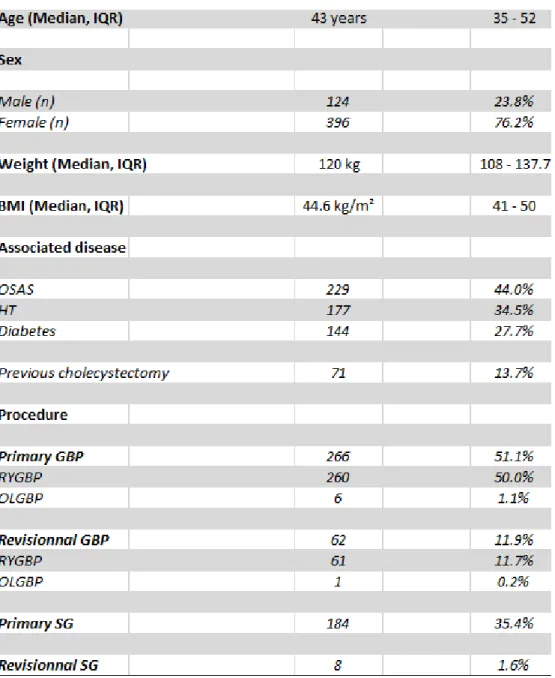
Five hundred and twenty patients were included and analyzed with a median follow-up of 37.5 months (IQR 23 - 60.25). The median age was 43 years. There were 396 females (76.2%) and 124 males (23.8%). The median BMI was 44.6 kg/m ². The main associated diseases were OSAS in 229 patients (44%), hypertension in 177 patients (34%), and diabetes in 144 patients (27.7%). The bariatric procedure was Gastric Bypass in 328 patients (63.1%) and sleeve gastrectomy in 192 (36.9%). Seventy-one patients had a history of a previous cholecystectomy (13.6%). Sixty-four patients had preoperative lithiasis (14.2%). Three patients underwent CC because of preoperative symptomatic biliary disease and one because of gallbladder injury during liver biopsy. After the procedure, 445 patients (85.6%) had in situ gallbladder and 61 had lithiasis among these patients (13.7%). The preoperative characteristics of the population and details of the procedures are outlined in Table 1.
19
Endpoints
During the follow-up, 14/520 patients (2.7%) required a surgical or interventional procedure for symptomatic biliary lithiasis. Among them, 12 patients required subsequent cholecystectomies and 2 patients required access to the biliary tree for the treatment of choledocolithiasis after RYGBP (Table 2).
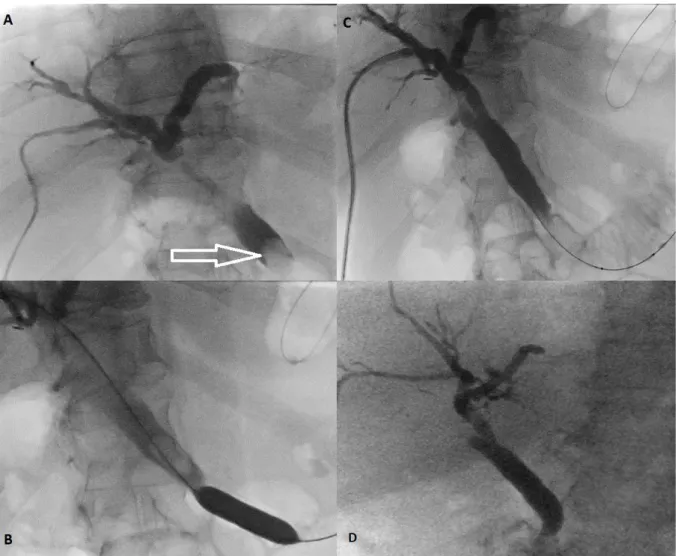
Concerning access to the biliary tree, 2/520 patients (0.4%) required this procedure for choledocolithiasis, 20 to 35 months after RYGBP. Both patients had previous cholecystectomies before bariatric surgery. Percutaneous transhepatic cholangiography under local anesthesia associated with balloon dilation of the sphincter of Oddi were performed for these two patients. Then, a balloon was used to push the gallstone through the papilla. Success rate was 100%, and no complications were associated (Figure 3).
Concerning subsequent cholecystectomies, 12/445 patients (2.7%) required such a procedure at a median time of 25 months (IQR 16.5 – 44.2), including 9/278 patients (3.2%) in the GBP subgroup (RYGBP and OLGB) and 3/167 in the SG subgroup (1.8%) without statistical difference (p = 0.54). There was no difference between patients with and without preoperative lithiasis, as 3/61 (4.9%) and 9/384 (2.3%) respectively required subsequent cholecystectomies (p = 0.21). Indication for subsequent cholecystectomy was biliary colic in 9 patients, cholecystitis in 2, and acute biliary pancreatitis in 1. Most were performed through a laparoscopic approach (n = 11/12, 91.7%) in the setting of outpatient surgery (n = 9/12, 75%). Two patients were excluded from an outpatient surgery program because of social contraindications and were hospitalized only 1 night. The median length of stay (LOS) after the subsequent cholecystectomy was 1 day (IQR 1 – 1.25), and there were no related surgical complications.
20
4. Discussion
Main endpoint
In our study, the global rate of surgical or interventional procedures for symptomatic biliary lithiasis after bariatric surgery was 2.7%. Among these, 12 required a subsequent cholecystectomy, and 2 required access to the biliary tree for treatment of choledocolithiasis after RYGBP. This does not compare to current literature as most published studies excluded patients with previous cholecystectomies. This issue seems to be important as in our study, 2 patients with previous histories of cholecystectomies required access to the biliary tree.
Subsequent cholecystectomies in the supra-selective and selective approaches
In our study, the global rate of subsequent cholecystectomies after all procedures (including GBP and SG) in the setting of the supra-selective approach is 2.7% at a median time of 25 months, with a median follow-up of 37.5 months. This rate is low in comparison to the current literature, which ranges from 6.2% to 8.4% with a median follow-up ranging from 8 to 49 months [41,64,66,70,73].
Concerning analysis by procedure subgroup, we found a rate of 3.2% in the GBP subgroup, contrasting with most rates reported in the literature, from 8 to 14.5% [41,66,68–71,74]. Only one study reported a similar low rate of 3.3% within 12 months [65]. Concerning the SG subgroup, the rate of subsequent cholecystectomy was 1.8% in our study, in accordance with the 1.6% found by Brockmeyer et al. [41], but the rate was higher in 4 others studies, ranging from 3.5 to 7.5% [44,66,67,70]. Compared with the selective approach, CC for patients with US-proven cholelithiasis regardless of symptoms shows a global high rate of subsequent cholecystectomies ranging from 6 to 17% after RYGBP [38,56,57,60,63] and 6.1% after SG [60]. Only one study reported a low rate of 2.3% after RYGBP [55]. Surprisingly, the rate of
21
subsequent cholecystectomies in the setting of the supra-selective approach in our study is one of the lowest in the literature compared to studies describing the same approach and is similar to the lowest rate in a study describing selective approach at approximatively 3% [54]. The first possible explanation of this result could be postoperative prophylaxis with UDCA: all our patients routinely receive this medication for 6 months regardless of the presence of cholelithiasis or the type of procedure, unlike most other studies finding a higher rate of subsequent cholecystectomies where patients do not receive UDCA after the selective [38,56,57,60] or supra-selective approach [44,64,67,69]. Two studies have reported a higher rate of subsequent cholecystectomies despite the use of UDCA, but the compliance was low, approximately 25 to 48% [71,74]. There is current evidence in the literature, including Randomized Controlled Trials, systematic review, and meta-analysis, for the protective role of UDCA, not only for the formation of US cholelithiasis [75–78] but also and mainly for the decrease of symptomatic ones requiring subsequent cholecystectomies in patients with or without preoperative cholelithiasis [42,79–83]. Moreover, few authors and societies recommend this prophylactic therapy, including the European Association for the Surgery of Liver (EASL), the American College of Surgeons (ACS), the International Federation of Surgery for Obesity (IFSO), the Obesity Society, and the American Society for Metabolic and Bariatric Surgery (ASMBS) [79,84–86].
The second explanation is the current contradicting rate of patients with preoperative cholelithiasis requiring subsequent cholecystectomies. In our study, only 4.9% of patients with preoperative cholelithiasis required a subsequent cholecystectomy, and there is no difference in comparison to patients without cholelithiasis. This finding correlates with most of the literature as the rate of subsequent cholecystectomies in patients with known
22
cholelithiasis ranges from 1.5 to 9% [64,68,72,87,88]; however, it contradicts 2 studies which reported a higher rate up to 17% where as a nuance, UDCA was not used [63,89]. Moreover, Morais et al. reported that none of their patients with known cholelithiasis developed postoperative symptoms requiring a cholecystectomy [65]. Therefore, the presence of preoperative cholelithiasis does not seem to be a predictive factor of the need for a second procedure. These findings argue that CC based on US preoperative proof of cholelithiasis should be avoided.
Concerning the delay of subsequent cholecystectomies, the estimated median time for the development of postoperative gallstones ranges from 6 to 16 months [39–45]. In our study, the median time was longer, approximately 25 months (IQR 16.5 – 44.2). We argue that this difference is probably due to the small size of our population, resulting in a statistical bias.
Safety of CC and subsequent cholecystectomies
Current literature notes a controversy concerning the difficulty and safety of performing a CC or subsequent cholecystectomy in a patient with previous bariatric surgery. CC was historically recommended at the time of open gastric bypasses, but the trend toward laparoscopic surgery has change the rules, especially concerning the risk of biliary duct injury, which has increased in comparison to open surgery, approximately 0.5% [90–92]. In our study, we found that a subsequent cholecystectomy is easy and safe, as 91.7% were performed through a laparoscopic approach and 75% through outpatient surgery. Available literature reported a similar rate of successful laparoscopic approaches, from 95 to 97.5% [41,64,73]. We are convinced that it is easier to perform a cholecystectomy as a stand-alone procedure in a patient after weight loss and a lesser BMI. Concerning association of RYGBP and CC, a number of studies demonstrated that this association is responsible for an increased operative time of
23
approximatively 20 to 60 minutes [55,58,61,74,89], increased LOS [49,50,55], complications including major adverse events [45,49–51,55], reoperation, and even in-hospital mortality [49]. Concerning SG, CC is associated with a significant increased risk of postoperative bleeding [44]. As a nuance, Tustumi et al. reported in a meta-analysis that the risk for postoperative complications and reoperation was lower in CC than in subsequent cholecystectomies [45], and Wanjura et al. showed a higher risk for 30-day postoperative complications when a cholecystectomy was performed after RYGB, compared with before [51]. This is a normal finding because indications are not the same before or during bariatric surgery (uncomplicated gallstones), while after bariatric surgery, up to 40% of indications were acute cholecystitis or involved common bile duct exploration in the study of Tustumi et al., which are known to be more difficult procedures [45].
One cost-effectiveness analysis has been reported in the literature by Benarroch et al., concluding the main factor that determines the most cost-effective strategy is the incidence of gallbladder-related symptoms after RYGB. When the incidence of gallbladder-related symptoms is low (<4.6%), the most cost-effective approach is to perform RYGB alone without preoperative ultrasonography, but for higher incidence (>6.9%), performing a CC at the time of the RYGB is superior to other strategies. Selective cholecystectomies based on preoperative ultrasonography remain the least cost-effective approach [93].
Prophylactic approach and CC
The prophylactic approach, consisting of a systematic CC for all patients undergoing RYGBP, was initially described in the setting of open-RYGBP [54,57,89,94] based on two major arguments. The first argument was the high rate of abnormalities found during the pathology exam of the gallbladder, ranging from 42 to 99.3% [53,55,94,95]. Most of these abnormalities,
24
however, had no clinical relevance, such as chronic cholecystitis found in up to 65% of patients [53,94] or uncomplicated gallstones found in up to 51% of patients [53]. Moreover, Fobi et al. found that 33% of resected gallbladders had no abnormalities according to pathology exams [94].
The second argument is the issue of access to the biliary tree after RYGBP. In our study, 2 patients with choledocolithiasis after RYGBP were successful treated by the percutaneous transhepatic approach without any complications. Although not widely published after RYGBP, this approach is described after the failure of an endoscopic approach or in patients with duodenal exclusion. The percutaneous transhepatic approach appears to be a less invasive procedure to manage choledocolithiasis in such patients and is associated with a high rate of success in the current literature, up to 100% [96–98] with a low rate of complication of 6.8% in the largest study [99]. Other approaches have been more widely studied after RYGBP, such as the Laparoscopic Trans-Gastric ERCP (LTG-ERCP) that involves endoscopic access through a laparoscopic gastrostomy performed in the gastric remnant [100,101]. Despite being technically demanding, this procedure is considered to be successful in the literature, up to 80 – 100% safe and reliable when performed by a trained team [41,102–108]. As a nuance, some specific and major complications can occur, such as gastrostomy leak or a gastric or duodenal perforation. In the current literature, the rate of complication ranges from 16% in the study of Grimes et al. related to the access site [105] to 36% in the study of Frederiksen et al., including 14% of major complications (classified as Clavien-Dindo > IIIb), which mainly include bleeding, hematoma, and intra-abdominal abscesses [109]. Finally, in a systematic review of the literature involving 509, Banerjee et al. found a rate of success of 98.5%, associated with 14% of adverse events, mainly wound infections [110].
25
Arguments for the supra-selective approach
To summarize the discussion, we are convinced that the prophylactic approach should not be recommended regarding associated morbidity, mortality, and increased LOS. Moreover, most of the abnormalities found during pathology exams have no clinical relevance. Finally, different approaches for access to the biliary tree after RYGBP are described and considered as safe and successful.
The selective approach appears to be unreliable because most patients who require subsequent cholecystectomies have no cholelithiasis on preoperative US. The best argument against reliability is that the rate of subsequent cholecystectomies remains the same as in the supra-selective approach. Consequently, the supra-selective approach appears to be the most reasonable way to manage gallbladders in patients undergoing bariatric surgery.
Limitations of this study
Limitations of our study include a retrospective analysis. Additionally, our study population was small in comparison to larger studies published in the literature. However, the median follow-up time was acceptable, 37.5 months (IQR 23 - 60.25). Moreover, we sought to avoid potential bias by including all patients who underwent bariatric procedures, including SG and revisional procedures, which are less widely studied in the literature than RYGBP.
5. Conclusion
The rate of symptomatic lithiasis after bariatric surgery is low and concerns patients with or without previous cholecystectomies. The need for a subsequent cholecystectomy after a Gastric Bypass or Sleeve Gastrectomy in the setting of the supra-selective approach is rare, respectively 3.2% and 1.8%. This second procedure is safe and easy, as most are performed
26
through a laparoscopic approach in a day-case surgery setting. Regarding the present study and the most recent literature, there are no arguments for a cholecystectomy at the time of bariatric surgery except in patients with cholelithiasis-related symptoms. All other patients with gallbladder left in-situ, and regardless of the procedure, they should receive UDCA prophylaxis for 6 months.
1. Nguyen NT, Blackstone RP, Morton JM, Ponce J, Rosenthal RJ, editors. The ASMBS Textbook of Bariatric Surgery [Internet]. New York, NY: Springer New York; 2015 [cited 2020 Jan 8]. Available from: http://link.springer.com/10.1007/978-1-4939-1206-3
2. Nuttall FQ. Body Mass Index: Obesity, BMI, and Health. Nutrition Today. 2015;50:117–28. 3. Obesity and overweight [homepage on the Internet]. Geneva: World Health Organization; c2018 [updated 16 Feb 2018; cited 2018 Feb 19]. Available from: http:// www.who.int/ mediacentre/ factsheets/ fs311/en.
4. Finkelstein EA, Khavjou OA, Thompson H, Trogdon JG, Pan L, Sherry B, et al. Obesity and Severe Obesity Forecasts Through 2030. American Journal of Preventive Medicine. 2012;42:563–70. 5. Matta J, Carette C, Rives Lange C, Czernichow S. Épidémiologie de l’obésité en France et dans le monde. La Presse Médicale. 2018;47:434–8.
6. Hales CM, Carroll MD, Fryar CD, Ogden CL. Prevalence of obesity among adults and youth: United States, 2015-2016. US Department of Health and Human Services, Centers for Disease Control and Prevention, National Center for Health Statistics; 2017.
7. Algoblan A, Alalfi M, Khan M. Mechanism linking diabetes mellitus and obesity. DMSO. 2014;587. 8. Obstructive Sleep Apnea in Adults: Epidemiology, Clinical Presentation, and Treatment Options. Advances in Cardiology [Internet]. Basel: KARGER; 2011 [cited 2020 Feb 20]. p. 1–42. Available from: https://www.karger.com/Article/FullText/327660
9. Jehan S, Zizi F, Pandi-Perumal SR, Wall S, Auguste E, Myers AK, et al. Obstructive Sleep Apnea and Obesity: Implications for Public Health. Sleep Med Disord. 2017;1.
10. Welbourn R, Pournaras DJ, Dixon J, Higa K, Kinsman R, Ottosson J, et al. Bariatric Surgery
Worldwide: Baseline Demographic Description and One-Year Outcomes from the Second IFSO Global Registry Report 2013–2015. OBES SURG. 2018;28:313–22.
11. Drager LF, Togeiro SM, Polotsky VY, Lorenzi-Filho G. Obstructive Sleep Apnea. Journal of the American College of Cardiology. 2013;62:569–76.
27
12. Barbois S, Arvieux C, Leroy V, Reche F, Stürm N, Borel A-L. Benefit–risk of intraoperative liver biopsy during bariatric surgery: review and perspectives. Surgery for Obesity and Related Diseases. 2017;13:1780–6.
13. Sarwar R, Pierce N, Koppe S. Obesity and nonalcoholic fatty liver disease: current perspectives. DMSO. 2018;Volume 11:533–42.
14. Rosselli M, Lotersztajn S, Vizzutti F, Arena U, Pinzani M, Marra F. The Metabolic Syndrome and Chronic Liver Disease. CPD. 2014;20:5010–24.
15. Klop B, Elte J, Cabezas M. Dyslipidemia in Obesity: Mechanisms and Potential Targets. Nutrients. 2013;5:1218–40.
16. Fontaine KR. Years of Life Lost Due to Obesity. JAMA. 2003;289:187.
17. Kim J-H, So W-Y. Association between overweight/obesity and academic performance in South Korean adolescents. Cent Eur J Public Health. 2013;21:179–83.
18. Anderson AS, Good DJ. Increased body weight affects academic performance in university students. Preventive Medicine Reports. 2017;5:220–3.
19. Booth JN, Tomporowski PD, Boyle JME, Ness AR, Joinson C, Leary SD, et al. Obesity impairs academic attainment in adolescence: findings from ALSPAC, a UK cohort. Int J Obes. 2014;38:1335– 42.
20. Flint SW, Snook J. Disability Discrimination and Obesity: The Big Questions? Curr Obes Rep. 2015;4:504–9.
21. Hansson LM, Näslund E, Rasmussen F. Perceived discrimination among men and women with normal weight and obesity. A population-based study from Sweden. Scand J Public Health. 2010;38:587–96.
22. Rothblum ED, Brand PA, Miller CT, Oetjen HA. The relationship between obesity, employment discrimination, and employment-related victimization. Journal of Vocational Behavior. 1990;37:251– 66.
23. Colquitt JL, Pickett K, Loveman E, Frampton GK. Surgery for weight loss in adults. Cochrane Metabolic and Endocrine Disorders Group, editor. Cochrane Database of Systematic Reviews [Internet]. 2014 [cited 2020 Feb 20]; Available from:
http://doi.wiley.com/10.1002/14651858.CD003641.pub4
24. Mancini A, Borel A-L, Coumes S, Wion N, Arvieux C, Reche F. Bariatric surgery improves the employment rate in people with obesity: 2-year analysis. Surgery for Obesity and Related Diseases. 2018;14:1700–4.
25. Angrisani L, Santonicola A, Iovino P, Vitiello A, Higa K, Himpens J, et al. IFSO Worldwide Survey 2016: Primary, Endoluminal, and Revisional Procedures. OBES SURG. 2018;28:3783–94.
26. and the Bariatric Metabolic Surgery Standardization (BMSS) Working Group:, Bhandari M, Fobi MAL, Buchwald JN. Standardization of Bariatric Metabolic Procedures: World Consensus Meeting Statement. OBES SURG. 2019;29:309–45.
28
27. Wittenburg H. Hereditary liver disease: Gallstones. Best Practice & Research Clinical Gastroenterology. 2010;24:747–56.
28. Aerts R, Penninckx F. The burden of gallstone disease in Europe. Aliment Pharmacol Ther. 2003;18:49–53.
29. Stinton LM, Myers RP, Shaffer EA. Epidemiology of Gallstones. Gastroenterology Clinics of North America. 2010;39:157–69.
30. Ransohoff DF. Prophylactic Cholecystectomy or Expectant Management for Silent Gallstones: A Decision Analysis to Assess Survival. Ann Intern Med. 1983;99:199.
31. Stinton LM, Shaffer EA. Epidemiology of Gallbladder Disease: Cholelithiasis and Cancer. Gut Liver. 2012;6:172–87.
32. Abraham S, Rivero HG, Erlikh IV, Griffith LF, Kondamudi VK. Surgical and nonsurgical management of gallstones. Am Fam Physician. 2014;89:795–802.
33. Stender S, Nordestgaard BG, Tybjaerg-Hansen A. Elevated body mass index as a causal risk factor for symptomatic gallstone disease: A Mendelian randomization study. Hepatology. 2013;58:2133–41. 34. Erlinger S. Gallstones in obesity and weight loss: European Journal of Gastroenterology &
Hepatology. 2000;12:1347–52.
35. Jonas E, Marsk R, Rasmussen F, Freedman J. Incidence of postoperative gallstone disease after antiobesity surgery: population-based study from Sweden. Surgery for Obesity and Related Diseases. 2010;6:54–8.
36. Desbeaux A, Hec F, Andrieux S, Fayard A, Bresson R, Pruvot M-H, et al. Risk of biliary complications in bariatric surgery. Journal of Visceral Surgery. 2010;147:e217–20.
37. Yi S-Q. Surgical anatomy of innervation of the gallbladder in humans and Suncus murinus with special reference to morphological understanding of gallstone formation after gastrectomy. WJG. 2007;13:2066.
38. Villegas L, Schneider B, Provost D, Chang C, Scott D, Sims T, et al. Is routine cholecystectomy required during laparoscopic gastric bypass? Obesity surgery. 2004;14:206–211.
39. Iglézias Brandão de Oliveira C, Adami Chaim E, Borges da Silva B. Impact of Rapid Weight Reduction on Risk of Cholelithiasis after Bariatric Surgery. obes surg. 2003;13:625–8.
40. Wanjura V, Sandblom G, Österberg J, Enochsson L, Ottosson J, Szabo E. Cholecystectomy after gastric bypass—incidence and complications. Surgery for Obesity and Related Diseases.
2017;13:979–87.
41. Brockmeyer JR, Grover BT, Kallies KJ, Kothari SN. Management of biliary symptoms after bariatric surgery. The American Journal of Surgery. 2015;210:1010–7.
42. Miller K, Hell E, Lang B, Lengauer E. Gallstone Formation Prophylaxis After Gastric Restrictive Procedures for Weight Loss: A Randomized Double-Blind Placebo-Controlled Trial. Annals of Surgery. 2003;238:697–702.
29
43. Amaral JF, Thompson WR. Gallbladder disease in the morbidly obese. The American Journal of Surgery. 1985;149:551–7.
44. Dakour Aridi H, Sultanem S, Abtar H, Safadi BY, Fawal H, Alami RS. Management of gallbladder disease after sleeve gastrectomy in a selected Lebanese population. Surgery for Obesity and Related Diseases. 2016;12:1300–4.
45. Tustumi F, Bernardo WM, Santo MA, Cecconello I. Cholecystectomy in Patients Submitted to Bariatric Procedure: A Systematic Review and Meta-analysis. OBES SURG. 2018;28:3312–20. 46. Sheka AC, Wirth KM, Ikramuddin S. Biliary Tract Disease in the Bariatric Surgery Patient. In: Nguyen NT, Brethauer SA, Morton JM, Ponce J, Rosenthal RJ, editors. The ASMBS Textbook of Bariatric Surgery [Internet]. Cham: Springer International Publishing; 2020 [cited 2020 Feb 22]. p. 505–14. Available from: http://link.springer.com/10.1007/978-3-030-27021-6_44
47. Altieri MS, Yang J, Nie L, Docimo S, Talamini M, Pryor AD. Incidence of cholecystectomy after bariatric surgery. Surgery for Obesity and Related Diseases. 2018;14:992–6.
48. Papasavas PK, Gagné DJ, Ceppa FA, Caushaj PF. Routine gallbladder screening not necessary in patients undergoing laparoscopic Roux-en-Y gastric bypass. Surgery for Obesity and Related Diseases. 2006;2:41–6.
49. Worni M, Guller U, Shah A, Gandhi M, Shah J, Rajgor D, et al. Cholecystectomy Concomitant with Laparoscopic Gastric Bypass: A Trend Analysis of the Nationwide Inpatient Sample from 2001 to 2008. OBES SURG. 2012;22:220–9.
50. Dorman RB, Zhong W, Abraham AA, Ikramuddin S, Al-Refaie WB, Leslie DB, et al. Does Concomitant Cholecystectomy at Time of Roux-en-Y Gastric Bypass Impact Adverse Operative Outcomes? OBES SURG. 2013;23:1718–26.
51. Wanjura V, Szabo E, Österberg J, Ottosson J, Enochsson L, Sandblom G. Morbidity of cholecystectomy and gastric bypass in a national database. Br J Surg. 2018;105:121–7. 52. Tarantino I, Warschkow R, Steffen T, Bisang P, Schultes B, Thurnheer M. Is routine
cholecystectomy justified in severely obese patients undergoing a laparoscopic Roux-en-Y gastric bypass procedure? A comparative cohort study. Obesity surgery. 2011;21:1870–1878.
53. Nougou A, Suter M. Almost Routine Prophylactic Cholecystectomy During Laparoscopic Gastric Bypass is Safe. Obesity Surgery. 2008;18:535–9.
54. Guadalajara H, Sanz Baro R, Pascual I, Blesa I, Rotundo G, López J, et al. Is Prophylactic
Cholecystectomy Useful in Obese Patients Undergoing Gastric Bypass? obes surg. 2006;16:883–5. 55. Hamad GG, Ikramuddin S, Gourash WF, Schauer PR. Elective cholecystectomy during laparoscopic Roux-en-Y gastric bypass: is it worth the wait? Obesity surgery. 2003;13:76–81.
56. Amstutz S, Michel J-M, Kopp S, Egger B. Potential Benefits of Prophylactic Cholecystectomy in Patients Undergoing Bariatric Bypass Surgery. OBES SURG. 2015;25:2054–60.
57. Caruana JA, McCabe MN, Smith AD, Camara DS, Mercer MA, Gillespie JA. Incidence of
symptomatic gallstones after gastric bypass: is prophylactic treatment really necessary? Surgery for Obesity and Related Diseases. 2005;1:564–7.
30
58. Escalona A, Boza C, Muñoz R, Pérez G, Rayo S, Crovari F, et al. Routine Preoperative
Ultrasonography and Selective Cholecystectomy in Laparoscopic Roux-en-Y Gastric Bypass. Why Not? OBES SURG. 2008;18:47–51.
59. Guzmán HM, Sepúlveda M, Rosso N, San Martin A, Guzmán F, Guzmán HC. Incidence and Risk Factors for Cholelithiasis After Bariatric Surgery. OBES SURG. 2019;29:2110–4.
60. Moon RC, Teixeira AF, DuCoin C, Varnadore S, Jawad MA. Comparison of cholecystectomy cases after Roux-en-Y gastric bypass, sleeve gastrectomy, and gastric banding. Surgery for Obesity and Related Diseases. 2014;10:64–8.
61. Tucker ON, Fajnwaks P, Szomstein S, Rosenthal RJ. Is concomitant cholecystectomy necessary in obese patients undergoing laparoscopic gastric bypass surgery? Surg Endosc. 2008;22:2450–4. 62. Kim J-J, Schirmer B. Safety and efficacy of simultaneous cholecystectomy at Roux-en-Y gastric bypass. Surgery for Obesity and Related Diseases. 2009;5:48–53.
63. Taylor J, Leitman I, Horowitz M. Is Routine Cholecystectomy Necessary at the Time of Roux-en-Y Gastric Bypass? obes surg. 2006;16:759–61.
64. Ellner SJ, Myers TT, Piorkowski JR, Mavanur AA, Barba CA. Routine cholecystectomy is not
mandatory during morbid obesity surgery. Surgery for Obesity and Related Diseases. 2007;3:456–60. 65. Morais M, Faria G, Preto J, Costa-Maia J. Gallstones and bariatric surgery: to treat or not to treat? World journal of surgery. 2016;40:2904–2910.
66. Sneineh MA, Harel L, Elnasasra A, Razin H, Rotmensh A, Moscovici S, et al. Increased Incidence of Symptomatic Cholelithiasis After Bariatric Roux-En-Y Gastric Bypass and Previous Bariatric Surgery: a Single Center Experience. OBES SURG. 2020;30:846–50.
67. Sioka E, Zacharoulis D, Zachari E, Papamargaritis D, Pinaka O, Katsogridaki G, et al. Complicated Gallstones after Laparoscopic Sleeve Gastrectomy. Journal of Obesity. 2014;2014:1–5.
68. Fuller W, Rasmussen JJ, Ghosh J, Ali MR. Is routine cholecystectomy indicated for asymptomatic cholelithiasis in patients undergoing gastric bypass? Obesity surgery. 2007;17:747–751.
69. Portenier DD, Grant JP, Blackwood HS, Pryor A, McMahon RL, DeMaria E. Expectant management of the asymptomatic gallbladder at Roux-en-Y gastric bypass. Surgery for Obesity and Related
Diseases. 2007;3:476–479.
70. Tsirline VB, Keilani ZM, El Djouzi S, Phillips RC, Kuwada TS, Gersin K, et al. How frequently and when do patients undergo cholecystectomy after bariatric surgery? Surgery for Obesity and Related Diseases. 2014;10:313–321.
71. Swartz DE, Felix EL. Elective cholecystectomy after Roux-en-Y gastric bypass: why should
asymptomatic gallstones be treated differently in morbidly obese patients? Surgery for Obesity and Related Diseases. 2005;1:555–560.
72. D’Hondt M, Sergeant G, Deylgat B, Devriendt D, Van Rooy F, Vansteenkiste F. Prophylactic Cholecystectomy, a Mandatory Step in Morbidly Obese Patients Undergoing Laparoscopic Roux-en-Y Gastric Bypass? Journal of Gastrointestinal Surgery. 2011;15:1532–6.
31
73. Warschkow R, Tarantino I, Ukegjini K, Beutner U, Güller U, Schmied BM, et al. Concomitant Cholecystectomy During Laparoscopic Roux-en-Y Gastric Bypass in Obese Patients Is Not Justified: A Meta-Analysis. OBES SURG. 2013;23:397–407.
74. Papasavas PK, Gagné DJ, Ceppa FA, Caushaj PF. Routine gallbladder screening not necessary in patients undergoing laparoscopic Roux-en-Y gastric bypass. Surgery for Obesity and Related Diseases. 2006;2:41–6.
75. Talha A, Abdelbaki T, Farouk A, Hasouna E, Azzam E, Shehata G. Cholelithiasis after bariatric surgery, incidence, and prophylaxis: randomized controlled trial. Surg Endosc [Internet]. 2019 [cited 2020 Mar 8]; Available from: http://link.springer.com/10.1007/s00464-019-07323-7
76. Abdallah E, Emile SH, Elfeki H, Fikry M, Abdelshafy M, Elshobaky A, et al. Role of ursodeoxycholic acid in the prevention of gallstone formation after laparoscopic sleeve gastrectomy. Surg Today. 2017;47:844–50.
77. Adams LB, Chang C, Pope J, Kim Y, Liu P, Yates A. Randomized, Prospective Comparison of Ursodeoxycholic Acid for the Prevention of Gallstones after Sleeve Gastrectomy. OBES SURG. 2016;26:990–4.
78. Uy MC, Talingdan-Te MC, Espinosa WZ, Daez MaLO, Ong JP. Ursodeoxycholic Acid in the Prevention of Gallstone Formation after Bariatric Surgery: A Meta-analysis. OBES SURG. 2008;18:1532–8.
79. Leyva-Alvizo A, Arredondo-Saldaña G, Leal-Isla-Flores V, Romanelli J, Sudan R, Gibbs KE, et al. Systematic review of management of gallbladder disease in patients undergoing minimally invasive bariatric surgery. Surgery for Obesity and Related Diseases. 2019;S1550728919310706.
80. Coupaye M, Calabrese D, Sami O, Msika S, Ledoux S. Evaluation of incidence of cholelithiasis after bariatric surgery in subjects treated or not treated with ursodeoxycholic acid. Surgery for Obesity and Related Diseases. 2017;13:681–5.
81. Della Penna A, Lange J, Hilbert J, Archid R, Königsrainer A, Quante M. Ursodeoxycholic Acid for 6 Months After Bariatric Surgery Is Impacting Gallstone Associated Morbidity in Patients with
Preoperative Asymptomatic Gallstones. OBES SURG. 2019;29:1216–21.
82. Sugerman HJ, Brewer WH, Shiffman ML, Brolin RE, Fobi MAL, Linner JH, et al. A multicenter, placebo-controlled, randomized, double-blind, prospective trial of prophylactic ursodiol for the prevention of gallstone formation following gastric-bypass-induced rapid weight loss. The American Journal of Surgery. 1995;169:91–7.
83. Magouliotis DE, Tasiopoulou VS, Svokos AA, Svokos KA, Chatedaki C, Sioka E, et al.
Ursodeoxycholic Acid in the Prevention of Gallstone Formation After Bariatric Surgery: an Updated Systematic Review and Meta-analysis. OBES SURG. 2017;27:3021–30.
84. EASL Clinical Practice Guidelines on the prevention, diagnosis and treatment of gallstones. Journal of Hepatology. 2016;65:146–81.
85. Mechanick JI, Youdim A, Jones DB, Garvey WT, Hurley DL, McMahon MM, et al. Clinical practice guidelines for the perioperative nutritional, metabolic, and nonsurgical support of the bariatric surgery patient-2013 update: Cosponsored by american association of clinical endocrinologists, The obesity society, and american society fo. Obesity. 2013;21:S1–27.
32
86. Magouliotis DE, Christodoulidis G, Zacharoulis D. The Necessity for Routine Administration of Ursodeoxycholic Acid After Bariatric Surgery. OBES SURG [Internet]. 2020 [cited 2020 Mar 16]; Available from: http://link.springer.com/10.1007/s11695-020-04535-y
87. Sakorafas GH, Milingos D, Peros G. Asymptomatic Cholelithiasis: Is Cholecystectomy Really Needed? A Critical Reappraisal 15 Years After the Introduction of Laparoscopic Cholecystectomy. Dig Dis Sci. 2007;52:1313–25.
88. Patel JA, Patel NA, Piper GL, Smith DE, Malhotra G, Colella JJ. Perioperative management of cholelithiasis in patients presenting for laparoscopic Roux-en-Y gastric bypass: have we reached a consensus? Am Surg. 2009;75:470–6; discussion 476.
89. Kim J-J, Schirmer B. Safety and efficacy of simultaneous cholecystectomy at Roux-en-Y gastric bypass. Surgery for Obesity and Related Diseases. 2009;5:48–53.
90. Nuzzo G. Bile Duct Injury During Laparoscopic Cholecystectomy: Results of an Italian National Survey on 56 591 Cholecystectomies. Arch Surg. 2005;140:986.
91. Deziel DJ, Millikan KW, Economou SG, Doolas A, Ko S-T, Airan MC. Complications of laparoscopic cholecystectomy: A national survey of 4,292 hospitals and an analysis of 77,604 cases. The American Journal of Surgery. 1993;165:9–14.
92. Archer SB, Brown DW, Smith CD, Branum GD, Hunter JG. Bile Duct Injury During Laparoscopic Cholecystectomy: Results of a National Survey. Annals of Surgery. 2001;234:549–59.
93. Benarroch-Gampel J, Lairson DR, Boyd CA, Sheffield KM, Ho V, Riall TS. Cost-effectiveness analysis of cholecystectomy during Roux-en-Y gastric bypass for morbid obesity. Surgery. 2012;152:363–75. 94. Fobi M, Lee H, Igwe D, Felahy B, James E, Stanczyk M, et al. Prophylactic Cholecystectomy with Gastric Bypass Operation: Incidence of Gallbladder Disease. obes surg. 2002;12:350–3.
95. Schmidt JH, Hocking MP, Rout WR, Woodward ER. The case for prophylactic cholecystectomy concomitant with gastric restriction for morbid obesity. Am Surg. 1988;54:269–72.
96. Ahmed AR, Husain S, Saad N, Patel NC, Waldman DL, O’Malley W. Accessing the common bile duct after Roux-en-Y gastric bypass. Surgery for Obesity and Related Diseases. 2007;3:640–3. 97. Rodriguez N, Rivera F, Doukides T, Rodriguez A. Percutaneous Therapy of Choledocholithiasis After Roux-en-Y Gastric Bypass and Past Excision of Gastric Remnant. Surgery for Obesity and Related Diseases. 2018;14:S171–2.
98. Milella M, Alfa-Wali M, Leuratti L, McCall J, Bonanomi G. Percutaneous transhepatic
cholangiography for choledocholithiasis after laparoscopic gastric bypass surgery. International Journal of Surgery Case Reports. 2014;5:249–52.
99. Ozcan N, Kahriman G, Mavili E. Percutaneous Transhepatic Removal of Bile Duct Stones: Results of 261 Patients. Cardiovasc Intervent Radiol. 2012;35:621–7.
100. Borel F, Branche J, Baud G, Gérard R, Pattou F, Caiazzo R. Management of Acute Gallstone Cholangitis after Roux-en-Y Gastric Bypass with Laparoscopic Transgastric Endoscopic Retrograde Cholangiopancreatography. OBES SURG. 2019;29:747–8.
33
101. Facchiano E, Quartararo G, Pavoni V, Liscia G, Naspetti R, Sturiale A, et al. Laparoscopy-Assisted Transgastric Endoscopic Retrograde Cholangiopancreatography (ERCP) After Roux-en-Y Gastric Bypass: Technical Features. OBES SURG. 2015;25:373–6.
102. Richardson JF, Lee JG, Smith BR, Nguyen B, Pham KP, Nguyen NT. Laparoscopic transgastric endoscopy after Roux-en-Y gastric bypass: case series and review of the literature. Am Surg. 2012;78:1182–6.
103. Patel JA, Patel NA, Shinde T, Uchal M, Dhawan MK, Kulkarni A, et al. Endoscopic retrograde cholangiopancreatography after laparoscopic Roux-en-Y gastric bypass: a case series and review of the literature. Am Surg. 2008;74:689–93; discussion 693-694.
104. Somasekar K, Chan DSY, Sreekumar NS, Anwer S. Choledocholithiasis after Bariatric Surgery— More than a Stone’s Throw to Reach? J Gastrointest Surg. 2018;22:529–37.
105. Grimes KL, Maciel VH, Mata W, Arevalo G, Singh K, Arregui ME. Complications of laparoscopic transgastric ERCP in patients with Roux-en-Y gastric bypass. Surg Endosc. 2015;29:1753–9.
106. Habenicht Yancey K, McCormack LK, McNatt SS, Powell MS, Fernandez AZ, Westcott CJ. Laparoscopic-Assisted Transgastric ERCP: A Single-Institution Experience. Journal of Obesity. 2018;2018:1–4.
107. Snauwaert C, Laukens P, Dillemans B, Himpens J, De Looze D, Deprez P, et al. Laparoscopy-assisted transgastric endoscopic retrograde cholangiopancreatography in bariatric Roux-en-Y gastric bypass patients. Endosc Int Open. 2015;03:E458–63.
108. Mohammad B, Richard MN, Pandit A, Zuccala K, Brandwein S. Outcomes of
laparoscopic-assisted ERCP in gastric bypass patients at a community hospital center. Surg Endosc [Internet]. 2019 [cited 2020 Mar 18]; Available from: http://link.springer.com/10.1007/s00464-019-07310-y
109. Frederiksen NA, Tveskov L, Helgstrand F, Naver L, Floyd A. Treatment of Common Bile Duct Stones in Gastric Bypass Patients with Laparoscopic Transgastric Endoscopic Retrograde
Cholangiopancreatography. OBES SURG. 2017;27:1409–13.
110. Banerjee N, Parepally M, Byrne TK, Pullatt RC, Coté GA, Elmunzer BJ. Systematic review of transgastric ERCP in Roux-en-Y gastric bypass patients. Surgery for Obesity and Related Diseases. 2017;13:1236–42.
34
Figures and tables
Figure 1. Classification of obesity following Garrow.
Figure 2. Sleeve Gastrectomy (Left) and RYGBP (Right). (ASMBS website).
Body Mass Index Classification
Normal Weight 20 - 24.9
Overweight 25 - 29.9
Class I obesity 30 - 34.9
Class II obesity 35 - 39.9
35
Figure 3. Percutaneous transhepatic cholangiography procedure. A = Cholangiography showing common bile duct stone (white arrow). B = Trans hepatic dilatation of the sphincter of Oddi. C = Final cholangiography showing clearance of the common bile duct. D = Transhepatic cholangiography 24 hours after the procedure showing no abnormalities.
36
Table 1. Preoperative baseline characteristics of the population (n=520)
OSAS: Obstructive Sleep Apnea Syndrom. HT: Hypertension. GBP: Gastric By Pass. RYGBP: Roux-en-Y Gastric By Pass. OLGBP: Omega-Loop Gastric By Pass
37
Table 2. Result for main endpoint
Table 3. Results for subsequent cholecystectomy
38
Adrian MANCINI
SYMPTOMATIC BILIARY LITHIASIS AFTER LAPAROSCOPIC BARIATRIC
SURGERY: RESULTS OF SUPRA-SELECTIVE MANAGEMENT
Abstract (247 words)
Introduction: Patients undergoing bariatric surgery are at high risk for both the prevalence of
preoperative cholelithiasis as well as their postoperative development. The question of whether cholecystectomy should be performed during bariatric surgery remains controversial. The aim of this work is to study the results of the supra-selective approach for gallbladder management, involving concomitant cholecystectomy only in patients with gallstones-related symptoms.
Material & Methods: This is a retrospective review of a prospective database of all patients
who underwent laparoscopic or robotic bariatric surgery between 2010 and 2018 in a single institution.
Results: Five hundred twenty patients were included with a median follow-up of 37.5 months.
The procedure was Gastric Bypass in 328 patients (63.1%) and sleeve gastrectomy in 192 (36.9%). Seventy-one patients had a history of cholecystectomy (13.6%). Sixty-four patients had preoperative lithiasis (14.2%). Four patients underwent concomitant cholecystectomy. Fourteen (2.7%) patients required an intervention for symptomatic lithiasis: 12/445 (2.7%) patients required subsequent cholecystectomies and 11/12 (91.7%) were performed through a laparoscopic approach as outpatient surgery in 9/12 (75%) without complication. Two patients (0.4%) required access to the biliary tree for the treatment of choledocolithiasis after RYGBP and were managed through percutaneous transhepatic approach with a success rate of 100% and no complication.
Conclusion The rate of symptomatic lithiasis after bariatric surgery is low. The need for a
subsequent cholecystectomy in the setting of the supra-selective approach is rare, 2.7%. This second procedure is safe and easy. All patients with gallbladder left in-situ, they should receive Ursodeoxycholic acid prophylaxis for 6 months.
39
KEYWORDS: Bariatric surgery; Gastric bypass; Sleeve gastrectomy; cholecystectomy; cholelithiasis