HAL Id: pastel-00811413
https://pastel.archives-ouvertes.fr/pastel-00811413
Submitted on 10 Apr 2013HAL is a multi-disciplinary open access
archive for the deposit and dissemination of sci-entific research documents, whether they are pub-lished or not. The documents may come from teaching and research institutions in France or abroad, or from public or private research centers.
L’archive ouverte pluridisciplinaire HAL, est destinée au dépôt et à la diffusion de documents scientifiques de niveau recherche, publiés ou non, émanant des établissements d’enseignement et de recherche français ou étrangers, des laboratoires publics ou privés.
:
Muhammad Iqbal
To cite this version:
Muhammad Iqbal. :. Agricultural sciences. AgroParisTech, 2012. English. �NNT : 2012AGPT0020�. �pastel-00811413�
N°: 2009 ENAM XXXX
Doctorat ParisTech
T H È S E
pour obtenir le grade de docteur délivré par
L’Institut des Sciences et Industries
du Vivant et de l’Environnement
Spécialité :
Science de l’environnement
présentée et soutenue publiquement parMuhammad IQBAL
le 16 mars 2012
(AgroParisTech)
Impact de l’occupation des sols agricoles contaminés sur la disponibilité des
éléments trace : Mise en évidence du rôle des matières organiques dans le
cas de cultures annuelles et cultures pérennes à vocation énergétique
Jury :
M. Alain BERMOND Professeur, AgroParisTech, Paris Président
Mme Laurence DENAIX Directeur de Recherche INRA, Bordeaux Rapporteur
M. Francis DOUAY Enseignant Chercheur, Groupe ISA, Lille Rapporteur
M. Jean MARTINS Chargé de Recherche, CNRS, Grenoble Examinateur
M. Christophe SCHWARTZ Professeur, Université de Lorraine, Nancy Examinateur
Mme Isabelle LAMY Directeur de Recherche INRA, Versailles Directeur de Thèse
Acknowledgements
This dissertation would not have been possible without the guidance and the help of several individuals who in one way or another contributed and extended their valuable assistance in the preparation and completion of this study.
The grant for my research work and my stay in France were financed by the Higher Education Commission (HEC), Government of Pakistan. I would like to extend my thanks to HEC in this regard.
Above all, I am deeply grateful to my supervisor Mme Isabelle LAMY for providing me an opportunity to work with her. I find it hard to imagine that anyone could be a more sincere, kind and better research advisor than what she has been. Isabelle, your thorough analysis of my work and rigorous critique not only improved my overall understanding of the subject but also the quality of this dissertation. Your enthusiasm towards science and your pursuit to do “good science” helped to shape my own scientific value. Thank you for listening me with patience and providing me with valuable suggestions whenever I came to your office with my problems. I will never forget the moments we passed togther during different journeys which we had together during these three years from Place de Comédie of Montpellier to River Danube of Vienna and from fields of Pierrelaye to the site of Metaleurop. I am really proud of being your student.
I would like to extend my sincere thanks to Mme Laurence DENAIX, Directeur de Recherche INRA, Mr. Francis DOUAY, Enseignant Chercheur Groupe ISA , Mr. Jean MARTINS, Chargé de Rercherche CNRS, Mr. Christophe SCHWARTZ, Professeur ENSAIA, and Mr. Alain BERMOND, Professeur AgroParisTech for accepting to evaluate my thesis work.
I would like to record my gratitude for Mr. Alain BERMOND who as my corresponding Professor at AgroParisTech has always been kind, and given constructive advices to complete my thesis project successfully. Thanks Alain for your nice suggestions and help from my Master till the completion of this thesis.
I fervently extend my zealous thanks to the members of my thesis committee, Mr. Guillaume MORIN, IMPMC!UPMC, Mme Annette DE VAUFLEURY, Université de Franche!Comté and Mme Christelle PRUVOT, ISA de Lille for their constructive comments, scientific remarks and scholastic guidance which helped me to construct and run this thesis work with good quality. In these years I have also benefited a lot from the extensive knowledge and managerial experience of our head of the PESSAC Unit, Dr. Christian Mougin. He has always been so welcoming and smiling always. Thank you so much Christan for your help and guidance in
solving my managerial problems during these years and for giving me access to all facilities at the Unit.
I must acknowledge and appreciate the suggestions I had from all the scientific staff of PESSAC especially from Fok van Oort and Mikaël Hedde during all the lab meetings or around the working tables of the laboratories of groundfloor as well as basment of PESSAC.
This work would have never been accomplished without the technical help of all the technical staff of Unit PESSAC. They all have been so nice and helping all the times. I specially acknowledge the persons of office 106. Thanks Jean!Pierre for helping me right from my masters to the end of PhD. I will remember the joy which we had together while dining at Pakistani and Japanese restaurants of Paris....Thanks for always explaining me French lifestyle and traditions and giving the details of flash news which we had at radio while working around the table in the grand Laboratory. Amélie without your help I would never had the results from atomic absorption spectrophotometer to transform them into words for this thesis. You was always so cooperative and smiling even if I came to you ten times a day with the problems with this apparatus. I always liked your remarks when I used to work in lab or in office and you always came to me while passing by corridors. Thanks for your throughout help. With the help of Sebastien I have been able to complete my sample preparation and soil physical fractionation work. Thanks a lot Sebastien for always being helpful and supporting in my long experiments.
Special thanks to plateau de bio, Nathalie and Christelle, for their help in my work during my bio experiments and giving me access to the installations of the basement labs of PESSAC. Thanks Nathalie for your co!operation, you have always been available to help even if you are always busy in experiments. I always liked the much nice cakes and dishes you made during the parties of the unit.
I am thankful to Anne Jaulin for her help regarding atomic absorption spectrophotometer and her comments during lab meetings, Jeanne! Chantal for her guidance regarding stats, Nicole and Mehdi for solving my problems related to computer and software, and Anita and Céline for always helping me in administrative works with smiling faces.
I am impressed and will never forget the friendly environment and working relationships of the whole PESSAC team. They all have been so curious not only to ask me about my studies but also about situation of my family back in Pakistan. Because of this friendly environment I never felt that I am away from my family and these four years passed just like it was a short moment. I am really thankful to all of them.
I am really greateful to the non!permanent members of PESSAC team with whom I shared either my office or working place of the laboratories. Thanks to my present office fellows
Benjamin, Léa, Sylvain and Kevin. They all have been so nice and always supported me especially in this difficult time of thesis writing. Thanks to Malika, Jeremie, Cindy, Olivier, Ashref, Shaharm, Stéphanie, Flavie, Fatima, Souad and all other students with whome I worked during this time of Thesis.
True great friends are hard to find, difficult to leave and impossible to forget. I am lucky to have friends whose care and cooperation is very precious for me. Pierre, I will always remember your nice company, care and guidance in every personal, work or french language matter. I enjoyed a lot the Parisian cultural life with you and Nadler. Cordail thanks to you both for helping me especilally in my master studies. Pierre, I will especially not forget my stay in Alsace with your family in the cold chilling weather of December and their much nice hospitality. I wish I could host you all once in Pakistan.
A special thanks to my friends Khalid, Ulfat, Rizwan, Umar Farooq, Ahmad, Tahir, Sarfraz, Moeez, Imran and all other friends in France for all the memorable moments that we had shared together and made my stay in France unforgettable.
Motto I really lack the words to say you what I want…..Without your help, support, encouragement and friendship I would never had completed this work….and never be at place where I am now. I see you behind each word of this thesis….Shukria…….
No acknowledgements could ever adequately express my feelings for my affectionate and adoring family. They allowed me to continue my study abroad and given me the strength and courage to face the problems of life. I will especially acknowledge my sweet gandi sister mano who always remain praying for me. Yeh alag baat ha k shadi k baad thori bemukh ho gai ha...But I am the one for whom she prays the most and takes care of……
In the end I heartily acknowledge and extend thanks to those whose names are not mentionned here but they contributed to complete this work...
Abstract
The changes in land use of agricultural soils are susceptible to modify quality and quantity of soil organic matter. Soil organic matter is known to have a role of trophic resource for soil organisms as well as the role of ligand for trace metals in contaminated soils. Changes in the organic matter quality and quantity in soils can lead towards modification of trace metal speciation in soils. But the role of soil organic matter in the determinism of trace metal availabilities in contaminated soils is not well documented. The objective of the thesis work was to assess the role of soil organic matter in determinism of trace metal availabilities in contaminated agricultural soils under annual crop and under perennial energy crop miscanthus. A strategy of studying Cu, Pb, Zn and Cd availabilities of two sites differing in the soil texture and origin of pollution was adopted i.e. the site of Metaleurop (North of France) with silt loam soils contaminated by atmospheric metal fallout and the site of Pierrelaye (Paris Region) with sandy soils contaminated through long term untreated waste water input from city of Paris. Role of organic matter in trace metal availability was assessed through studying; 1) the soils under with two different land uses i.e. under annual crop and under perennial energy crop miscanthus, 2) the soil samples before and after soil organic mineralization through in vitro soil incubations, 3) the soil samples with and without the particulate organic matter (POM) fractions i.e. the most labile organic matter fractions in order to highlight the specific role of this organic matter fraction. A combined approach of metal availability assessment through chemical metal extractions and of studying metal localization in different soil size fractions was used. The results of the trace metal availabilities of the soil under miscanthus compared to annual crop soil showed that the influence of changes in organic matter through land use was different at both sites. For the Metaleurop site, the availability of Cu and Pb which are the metals known to be preferentially bound to organic matter was decreased with an increase in their localization in soil finer fractions. No change in the availability and localization of Zn and Cd was observed for this site. Contrarily, in the Pierrelaye site with organic matter rich sandy soils the availability of metals which are known to be bound to soil mineral phases i.e. Zn and Cd was changed without a change in their localization while no change was observed for Cu and Pb. The results of soil incubation study revealed that the effect of soil organic mineralization on trace metal availability was site dependent for Pb and Cd while effect on Cu and Zn was similar in all soils whatever the site. Our work on the metal enriched particulate organic matter fractions showed that POM being a free organic matter fraction participated in the metal availability and that the POM associated copper was bioavailable for an organism in our conditions. These results concerning the trace metal availabilities in the soils with varying nature and quantity of organic matter are discussed.
Key words: Trace metals, Cu, Pb, Zn, Cd, availability, contaminated agricultural soils, organic
Table of contents
INTRODUCTION...13
Aims of the thesis research ... 15
Chapter 1: Literature review ...18
1.1.Trace metals and agricultural soils... 18
1.2.Factors affecting fate of trace metals in the soils... 19
1.3.Soil organic matter as a labile soil constituent... 23
1.4.Bioavailability of trace metals!concepts and definitions... 35
1.5.Methods of trace metal availability assessment... 40
1.6.Potential of Trametes versicolor as a biomarker of trace metal availability assessment 48
Chapter 2: Material and methods ...50
2.1 Choice of sites and situations... 50
2.3 Choice of methods... 54
Chapter 3: Impact of land use on trace metal availabilities in contaminated
agricultural soils ...67
3.1.Introduction... 67
3.2.Results:... 68
3.2.1. Influence of land use on trace metal availabilities... 68
3.2.1.a. EDTA extractable metal contents at equilibrium... 68
3.2.1.b. DTPA extractable metal contents at equilibrium... 69
3.2.1.c. NH NO extractable metal contents at equilibrium4 3 ... 71
3.2.1.d. ... 71
Kinetically defined labile and slowly labile metal fractions and their associated extraction rate constants 3.2.2. Influence of land uses on trace metal localization in physical size fractions:... 75
3.2.2.a. Mass distribution of the soils in the physical size fractions... 75
3.2.2.b. ... 76
Distribution of organic carbon and trace metal contents in the physical size fractions of the soils 3.2.3. Relations between soil metal availabilities and soil metal localization... 79
3.3.Discussion:... 83
3.3.1. ... 83
Study of soil trace metal availabilities by the metal extraction at equilibrium and kinetic metal extractions 3.3.2. ... 85
Effect of land use on trace metal availabilities and metal localization in physical fractions 3.3.3. Relations between trace metal availabilities and metal localization... 87
Chapter 4: Soil organic matter as a main parameter involved in changes in
trace metal availabilities of contaminated agricultural soils ...91
4.1.Introduction... 91 4.2.Results and discussion:... 92 4.2.1.
... 92 Effect of soil incubation on soil organic matter and selected soil chemical properties
4.2.1.a. Mineralization of soil organic matter during incubation... 92 4.2.1.b. Effect of soil incubation on soil properties... 94 4.2.1.c. Effect of soil incubation on Water soluble organic carbon contents... 94 4.2.1.d. Effect of soil incubation on specific UV absorbance at 420nm (SUVA 420)... 95 4.2.2. Influence of soil incubation on availability of the trace metals... 96 4.2.2.a. EDTA extractable metal contents... 96 4.2.2.b.
... 98 DTPA extractable and NH NO extractable (exchangeable) metal contents in the soils
4 3
4.2.2.c. Labile and slowly labile metal pools and their extraction rates constants.. 100 4.2.3.
... 106 Changes in mass, organic carbon and trace metal localization in different size fractions during incubation
4.2.3.a. Mass distribution in different size fractions of the soils... 106 4.2.3.b. Trace metals distribution in different size fractions of the soils... 108 4.2.3.c.
... 113 Distribution of total organic carbon contents into different physical size fractions of the soils
4.2.4.
... 117 Relationships among trace metal availability, metal localization and organic carbon distribution in physical size fractions
Metaleurop... 117 Pierrelaye... 120 4.3.Conclusion... 125
Chapter 5: Role of particulate organic matter (POM) fractions in the trace
metal availability in soils ...126
5.1.Introduction... 126 5.2.Results and Discussion... 127 5.2.1.
... 127 Effect of soil incubation on particulate organic matter fractions of the contaminated soil samples
5.2.1.a. Quantity of particulate organic matter (POM) fractions in the soils... 127 5.2.1.b.
... 128 Effect of soil incubation on metal enrichment factors of particulate organic matter fractions
5.2.2.
... 130 Comparison of trace metal availability of the annual crop soils with POM fractions and without POM fractions
5.2.2.b. EDTA extractable contents at equilibrium:... 131
5.2.2.c. Labile and slowly labile metal pools and their extraction rates constants.. 132
5.2.3. ... 136
Bioavailability of copper to the filamentous fungi Trametes versicolor in a liquid medium: Comparison of Cu added in the form of solution and copper linked to soil particulate organic matter 5.2.3.a. Evolution of the fungal biomass development... 136
5.2.3.b. Evolution of pH in the liquid mediums... 137
5.2.3.c. Evolution of the copper contents of liquid culture mediums... 139
5.2.3.d. Evolution of the laccase activities in the liquid mediums:... 142
5.3.Conclusion... 145
GENERAL CONCLUSION ...146
List of Figures
Figure 1.1: Major input fluxes of trace metals into agricultural soils. ... 18
Figure 1.2: Estimation of annual input of trace metals into agricultural soils of France with their principle sources. (Values taken from Sorgreah!Ademe, 2007) ... 19
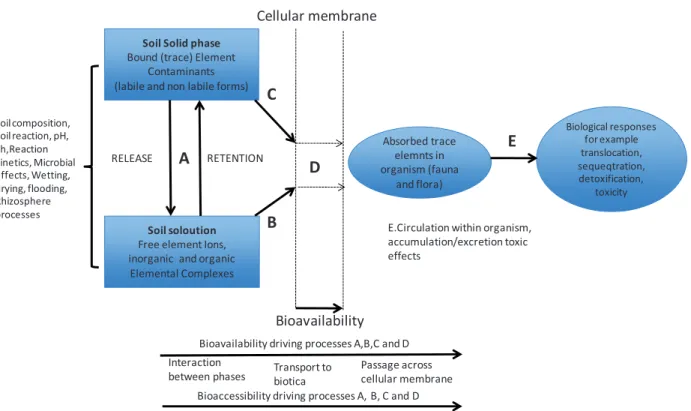
Figure 1.3: Bioavailability processes of soil trace metal partitioning between soil solid and solution phases including speciation in soil solution an how they can be influenced by soil properties and environmental conditions. (Reproduced from Hooda, 2011)... 37
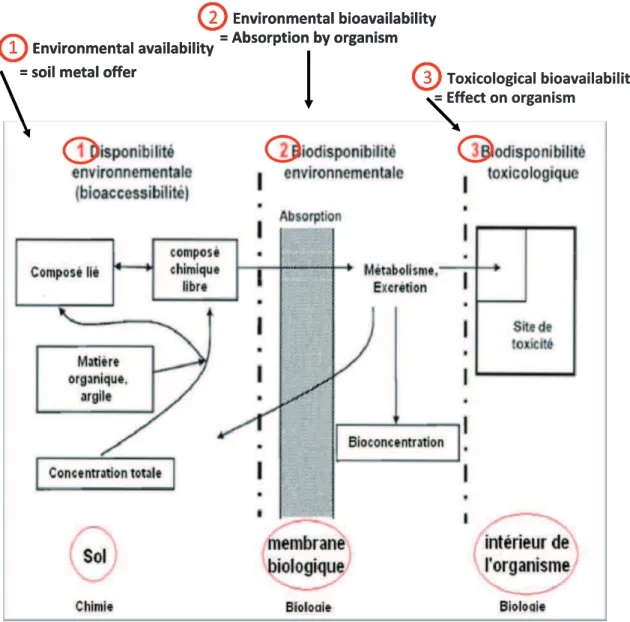
Figure 1.4: Trace metal bioavailability in the soils as described by norme ISO 17402 (ISO , 2008)... 39
Figure 1.5: Time metal extraction experimental curve (Right) and a curve obtained by data modeling (left) by two first order reaction model... 47
Figure 2.1: Map of experimental site Metaleurop ... 50
Figure 2.2: Map of experimental site Pierrelaye ... 51
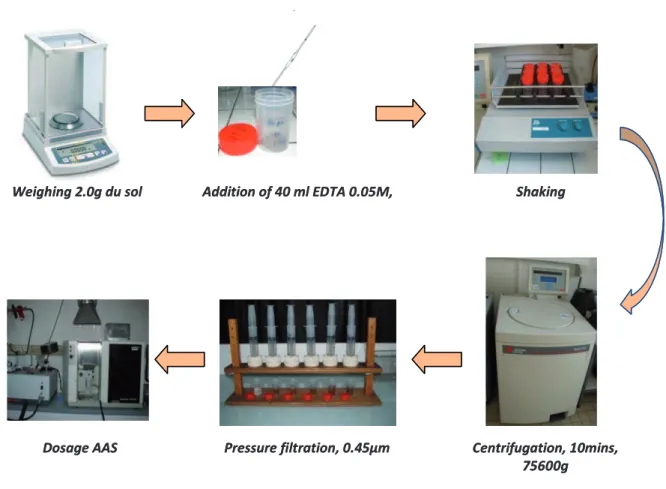
Figure 2.3: Schematic diagram of various steps of trace metal extraction ... 55
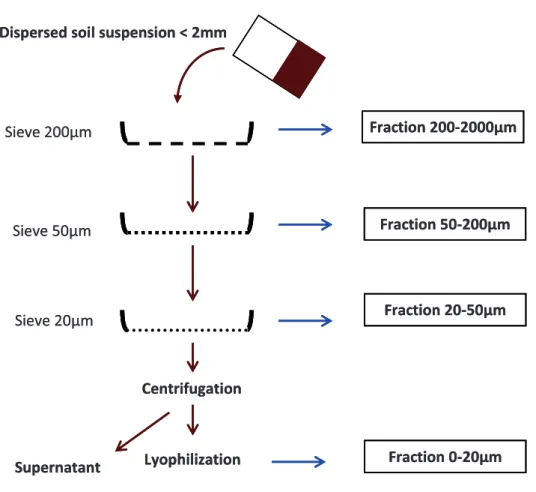
Figure 2.4: Schematic diagram of various steps of physical fractionation of soils ... 57
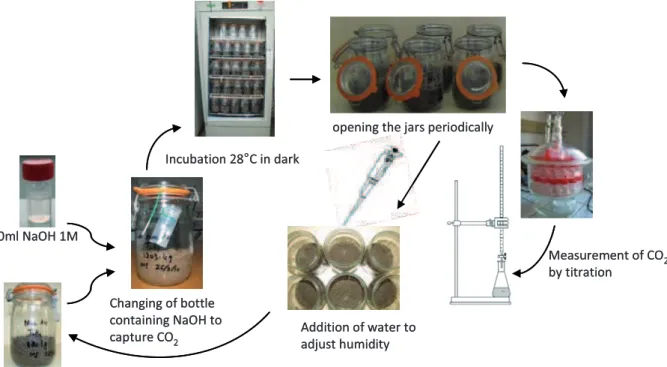
Figure 2.5: Schematic diagram of various steps of CO2 measurement during soil incubation and maintenance of soil microcosms ... 58
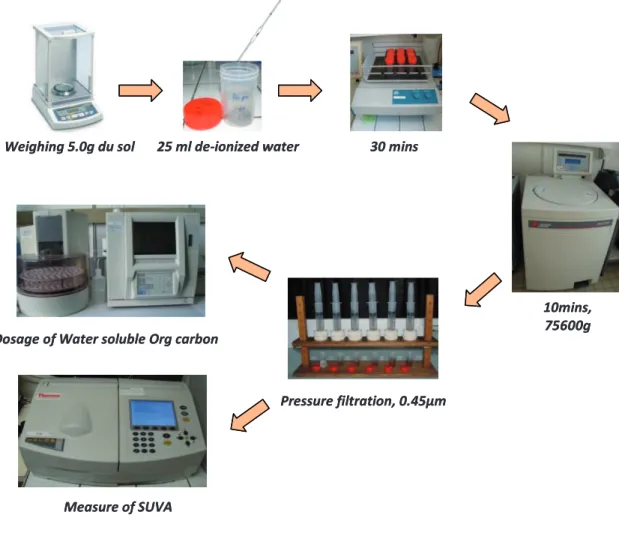
Figure 2.6: Schematic diagram of various steps of soluble organic carbon extraction ... 60
Figure 2.7a: Schematic diagram of various steps followed to prepare soil samples with particulate organic matter ... 61
Figure 2.7b: Schematic diagram of various steps followed to prepare soil samples without particulate organic matter ... 61
Figure 2.8: Schematic diagram of the biotest for studying trace metal availability by using fungal cultures... 63
Figure 3.1: NH NO extractable metal contents of the soils before and after soil incubation. Bar graphs represent mean values of 3 replicates while the error bars represent standard deviation among these replicates. Different letters indicate statistically significant difference (Tukey’s test, p < 0.01) of metal extractability between annual crop and miscanthus soil for each site. 4 3 ... 70 Figure 3.2: Percentages of labile metal fraction (Q ), slowly labile metal fraction (Q ) of the
soil samples of Pierrelaye. Bar graphs represent mean values of 5 replicates while the
error bars represent standard deviation among these replicates. Different letters indicate statistically significant difference (Tukey’s test, p < 0.01) between annual crop and miscanthus soil for each fraction. ... 73
Figure 3.3: Distribution of the soil mass into different physical size fractions of the soils of
Metaleurop (a) and Pierrelaye (b). Bar graphs represent mean values of 3 replicates while the error bars represent standard deviation among these replicates. Statistically significant difference (Tukey’s test, p < 0.05) between annual crop and miscanthus soil for a given fraction is showed by different letters while “ns” represent non significant differences. ... 75
Figure 3.4: Distribution of the soil trace metal and organic carbon contents into different size
fractions of the soils of Metaleurop site. Curves represent the organic carbon distribution in different fractions. Bar graphs represent mean values of 3 replicates for metal distribution while the error bars represent standard deviation among these replicates. Statistically significant difference (Tukey’s test, p < 0.05) of metal distribution between annual crop and miscanthus soil for a given fraction is showed by different letters while “ns” represent non significant differences. For organic carbon distribution the statistically significant difference is shown by the sign (*)... 77
Figure 3.5: Distribution of the soil trace metal and organic carbon contents into different size
fractions of the soils of Pierrelaye site. Bar graphs represent mean values of 3 replicates for metal distribution while curves present the organic carbon distribution these fractions. The error bars represent standard deviation among these replicates. Statistically significant difference (Tukey’s test, p < 0.05) between annual crop and miscanthus soil for a given fraction is showed different letters while “ns” represent non significant differences. ... 78
Figure 4.1: Evolution in the mineralization of organic matter of the soils with the time of
incubation (expressed as percentage of initial soil organic carbon contents). Curves represent mean values of three replicates while error bars represent standard deviations. ... 93
Figure 4.2: Water soluble organic carbon contents (a) and SUVA (b) of the soil samples before and after soil incubation. Data is presented on soil dry weight basis. The statistically significant difference (Tukey’s test, p < 0.01) for water soluble organic carbon contents and SUVA of each soil before and after incubation is presented by different letters.
420
420
... 94 Figure 4.3: EDTA extractable metal contents (at equilibrium) of the soils before and after
incubation. Bar graphs represent mean values of 5 replicates while the error bars represent standard deviation among these replicates. Statistically significant difference
(Tukey’s test, p < 0.01) for the metal contents for each soil before and after incubation is represented by different letters while “ns” represent non significant differences. ... 97
Figure 4.4: DTPA extractable metal contents of the soils before and after soil incubation. Bar
graphs represent mean values of 3 replicates while the error bars represent standard deviation among these replicates. Statistically significant difference (Tukey’s test, p < 0.01) for extractable metal contents for each soil before and after incubation is represented by different letters while “ns” represent non significant differences. ... 99
Figure 4.5: NH NO extractable metal contents of the soils before and after soil incubation.
Bar graphs represent mean values of 3 replicates while the error bars represent standard deviation among these replicates. Statistically significant difference (Tukey’s test, p < 0.01) for extractable metal contents for each soil before and after incubation is represented by different letters while “ns” represent non significant differences.
4 3
... 100 Figure 4.6: Labile metal fraction (Q ) and slowly labile metal fraction (Q ) of the soil samples
before and after incubation. Bar graphs represent mean values of 5 replicates while the error bars represent standard deviation among these replicates. Statistically significant difference (Tukey’s test, p < 0.01) for the metal contents for each soil before and after incubation is represented by different letters while “ns” represent non significant differences.
1 2
... 102 Figure 4.7: Distribution of the soil mass into different physical size fractions of the soils of
Metaleurop site before and after incubation. Bar graphs represent mean values of 3 replicates while the error bars represent standard deviation among these replicates. Statistically significant difference (Tukey’s test, p < 0.05) for the mass of a given fraction before and after incubation of the soils is showed by different letters while “ns” represent non significant differences. ... 107
Figure 4.8: Distribution of the soil mass into different physical size fractions of the soils of
Pierrelaye site before and after incubation. Bar graphs represent mean values of 3 replicates while the error bars represent standard deviation among these replicates. Statistically significant difference (Tukey’s test, p < 0.05) for the mass of a given fraction before and after incubation of the soils is showed by different letters while “ns” represent non significant differences. ... 107
Figure 4.9: Distribution of trace metals in the different physical size fractions of the soils of
Metaleurop before and after incubation. Bar graphs represent mean values of 3 replicates while the error bars represent standard deviation among these replicates. Statistical difference (Tukey’s test, p < 0.05) for the metal percentage in the fractions before and after incubation of the soils is showed by different letters while “ns” represent non significant differences. ... 110
Figure 4.10: Distribution of trace metals in the different physical size fractions of the soils of
Pierrelaye before and after incubation. Bar graphs represent mean values of 3 replicates while the error bars represent standard deviation among these replicates. Statistical difference (Tukey’s test, p < 0.05) for the metal percentage in the fractions before and after incubation of the soils is showed by different letters while “ns” represent non significant differences. ... 112
Figure 4.11: Distribution of organic carbon in the different physical size fractions. Bar graphs
represent mean values of 3 replicates while the error bars represent standard deviation among these replicates. Statistical difference (Tukey’s test, p < 0.05) for organic carbon percentage in the fractions before and after incubation of the soils is showed by different letters while “ns” represent non significant differences. ... 114
Figure 5.1: Mass of fine and coarse particulate organic matter fractions of the soils before
and after incubation. Bar graphs represent mean values of 3 replicates while the error bars represent standard deviation among these replicates. Statistically significant difference (Tukey’s test, p < 0.05) for the mass of a given fraction before and after incubation of the soils is showed by different letters while “ns” represent non significant differences. ... 127
Figure 5.2: Trace metal contents of the particulate organic matter fractions of the annual
crop soils as percentage of total soil metal contents... 130
Figure 5.3 : EDTA extractable metal contents of the annual crop soil of both sites at
equilibrium. Bar graphs represent mean values of 3 replicates while the error bars represent standard deviation among these replicates. Different letters indicate statistically significant difference (Tukey’s test, p < 0.01) in the extractable metal contents of the soils with and without particulate organic matter (POM)... 131
Figure 5.4: Percentages of labile metal fraction (Q ), slowly labile metal fraction (Q ) of the
annual crop soils for the two sites with and without particulate soil organic matter (POM). Bar graphs represent mean values of 5 replicates while the error bars represent standard deviation among these replicates. Statistically significant difference (Tukey’s test, p < 0.01) for each metal fraction of the soils with and without POM is indicated by different letters while “ns” represent non significant differences.
1 2
... 132 Figure 5.5: Evolution in the biomass of Trametes versicolor exposed to different source of
copper during laboratory incubations in liquid medium... 137
Figure 5.6: Evolution in the pH of liquid medium because of the activity of Trametes versicolor
exposed to different source of copper during laboratory incubations in the liquid medium... 138
Figure 5.7: Percentage of Cu accumulation in fungi during laboratory incubation in liquid
mediums with Cu contamination added as CuS0 (100µg/L) and as Cu linked to POM fractions (50!200µm).
4
... 140 Figure 5.8: Laccase activities of Trametes versicolor in liquid medium exposed to different
List of tables
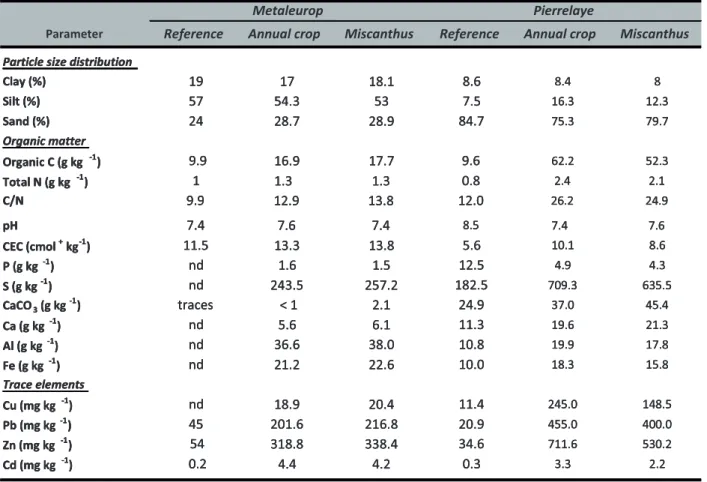
Table 1.1: Metal enrichment factors of the particulate organic fractions of some soils. ... 28 Table 2.1: Selected physico!chemical characteristics of the soil samples. Data presented is
expressed on soil dry weight basis. ... 53
Table 2.2: Composition of the liquid culture medium used for the biotest... 64 Table 3.1: EDTA extractable metal contents (at equilibrium) of the soil samples. Mean values
of 3 replicates with standard deviation among these replicates. Different letters indicate statistically significant difference (Tukey’s test, p < 0.01) between annual crop and miscanthus soil of each site... 68
Table 3.2: DTPA extractable metal contents of the soils before and after soil incubation.
Mean values of 3 replicates with standard deviation among these replicates. Different letters indicate statistically significant difference (Tukey’s test, p < 0.01) of metal extractability between annual crop and miscanthus soil for each site... 69
Table 3.3: Percentages of labile metal fraction (Q1), slowly labile metal fraction (Q2) of the
soil samples and the corresponding extraction rate constants of these fractions K1 and K2 respectively for the soils of Metaleurop. Mean values of 5 replicates ± standard deviation. Different letters within each column indicate statistically significant difference (Tukey’s test, p < 0.01) between annual crop and miscanthus soil for the metal fractions (Q1and Q2) and the extraction rate constants these metal fractions (K1 and K2) for each metal. ... 72
Table 3.4: Extraction rate constants of labile metal fraction (K ) and of slowly labile metal
fraction (K ) of the soil samples of Pierrelaye. Mean values ± Standard Deviation (n=5). Different letters in the columns indicate statistically significant difference (Tukey’s test, p < 0.01) between annual crop and miscanthus soil for the rate constant of each fraction for each metal.
1 2
... 74 Table 3.5: Correlation matrix (Pearson correlation coefficients) among metal availability
parameters i.e. total EDTA extractable contents (Ex!EDTA), kinetically defined labile metal fraction (Q1), slowly labile fractions (Q2), DTPA and NH4NO3 extractable metal contents and the metal and organic carbon distribution among different physical size fractions of the soils of Metaleurop site (n=6; Values in bold are different from 0 with a significance level p< 0.05... 80
Table 3.6: Correlation matrix (Pearson correlation coefficients) among metal availability
parameters i.e. total EDTA extractable contents (Ex!EDTA), kinetically defined labile metal fraction (Q ), slowly labile fractions (Q ), DTPA and NH NO extractable metal contents and the metal and organic carbon distribution among different physical size
fractions of the soils of Pierrelaye site (n=6; Values in bold are different from 0 with a significance level p< 0.05... 82
Table 3.7: Summary of the results of comparison of trace metal availabilities between annual
crop and miscanthus soils studied by using different methods and extractants. The signs after metal symbols present the trend of change in metal availabilities in the soils under miscanthus compared to annual crop soils (increase ", decrease #, no change $) ... 84
Table 3.8: Summary of the correlations between trace metal availabilities and their
distribution in physical size fractions. The signs associated with chemically extracted metal fractions give the type of correlations (Positive correlation +, negative correlation !) while the fractions under line are the soil physical size fractions with which the metal availabilities are correlated... 88
Table 4.1: Selected chemical characteristics of the soil samples before and after soil
incubation. Data is presented on soil dry weight basis. Where present the different letters in superscript show the statistically significant difference (Tukey’s test, p < 0.01) of different characteristics for each soil before and after incubation. ... 93
Table 4.2: Extraction rate constants of labile metal fraction (K ) and of slowly labile metal
fraction (K ) of the soil samples before and after incubation. Mean values ± Standard Deviation (n=5). Different letters in the columns indicate pair!wise statistically significant difference (Tukey’s test, p < 0.01) for the rate constants of the metals for each soil before and after incubation.
1 2
... 103 Table 4.3: Summary of the results of changes in trace metal availabilities after soil incubation
studied by using metal extraction at equilibrium and kinetic metal extractions. Where for extractions at equilibrium Ext 1= EDTA, Ext 2= DTPA, Ext 3= NH NO and for kinetic extractions Q =labile pool, Q = slowly labile pool, K = Extraction rate of labile pool and K = Extraction rate of slowly labile pool. The signs in front of metals present the trend of change in metal availabilities in the soils after incubation compared to the soil before incubation (increase ", decrease #, no change $)
4 3
1 2 1
2
... 104 Table 4.4: Percentage of mass recovery after physical fractionation of the soils before and
after soil incubation... 108
Table 4.5: Percentage of metal recovery after physical fractionation of the soils before and
incubation... 114
Table 4.6: Summary of the results of changes in trace metal and organic carbon distribution
in physical size fractions of the soils after incubation. Where F =0!20µm, F =20!50µm, F =50!200µm, and F =200!2000µm fraction. The signs in front of fractions show the trend of change in distribution in the soils after incubation compared to the soil before incubation (increase ", decrease #, no change $)
1 2
3 4
Table 4.7: Correlation matrix (Pearson correlation coefficients) among Cu availability
parameters i.e. total EDTA extractable contents (Ex!EDTA), labile metal fraction (Q ), slowly labile fractions (Q ), NH NO , DTPA extractable and the Cu and organic carbon distribution among different physical size fractions of the soils of Metaleurop site (n=6; bold numbers are for p < 0.05).
1
2 4 3
... 118 Table 4.8: Correlation matrix (Pearson correlation coefficients) among Pb availability
parameters i.e. total EDTA extractable contents (Ex!EDTA), labile metal fraction (Q ), slowly labile fractions (Q ), NH NO , DTPA extractable and the Pb and organic carbon distribution among different physical size fractions of the soils of Metaleurop site (n=6; bold numbers are for p < 0.05).
1
2 4 3
... 118 Table 4.9: Correlation matrix (Pearson correlation coefficients) among Zn availability
parameters i.e. total EDTA extractable contents (Ex!EDTA), labile metal fraction (Q ), slowly labile fractions (Q ), NH NO , DTPA extractable and the Zn and organic carbon distribution among different physical size fractions of the soils of Metaleurop site (n=6; bold numbers are for p < 0.05).
1
2 4 3
... 119 Table 4.10: Correlation matrix (Pearson correlation coefficients) among Cd availability
parameters i.e. total EDTA extractable contents (Ex!EDTA), labile metal fraction (Q ), slowly labile fractions (Q ), NH NO , DTPA extractable and the Cd and organic carbon distribution among different physical size fractions of the soils of Metaleurop site (n=6; bold numbers are for p < 0.05).
1
2 4 3
... 120 Table 4.11: Correlation matrix (Pearson correlation coefficients) among Cu availability
parameters i.e. total EDTA extractable contents (Ex!EDTA), labile metal fraction (Q ), slowly labile fractions (Q ), NH NO , DTPA extractable and the Cu and organic carbon distribution among different physical size fractions of the soils of Pierrelaye site (n=6; bold numbers are for p < 0.05).
1
2 4 3
... 121 Table 4.12: Correlation matrix (Pearson correlation coefficients) among Pb availability
parameters i.e. total EDTA extractable contents (Ex!EDTA), labile metal fraction (Q ), slowly labile fractions (Q ), NH NO , DTPA extractable and the Pb and organic carbon distribution among different physical size fractions of the soils of Pierrelaye site (n=6; bold numbers are for p < 0.05).
1
2 4 3
... 122 Table 4.13 : Correlation matrix (Pearson correlation coefficients) among Zn availability
parameters i.e. total EDTA extractable contents (Ex!EDTA), labile metal fraction (Q ), slowly labile fractions (Q ), NH NO , DTPA extractable and the Zn and organic carbon distribution among different physical size fractions of the soils of Pierrelaye site (n=6; bold numbers are for p < 0.05).
1
2 4 3
... 123 Table 4.14: Correlation matrix (Pearson correlation coefficients) among Cd availability
slowly labile fractions (Q ), NH NO , DTPA extractable and the Cd and organic carbon distribution among different physical size fractions of the soils of Pierrelaye site (n=6; bold numbers are for p < 0.05).
2 4 3
... 123 Table 5.1: Metal enrichment factors of the fine and coarse particulate organic matter
fractions of the soils. Mean values ± standard deviation of 3 replicates. Different letters indicate the statistically significant difference (Tukey’s test, p < 0.05) for the metal enrichment factors in the POM fractions before and after soil incubation. ... 129
Table 5.2: Extraction rate constants of labile metal fraction (K ) and of slowly labile metal
fraction (K ) of the soil samples with and without POM. Mean values ± Standard Deviation (n=5). Different letters in the columns indicate pair!wise statistically significant difference (Tukey’s test, p < 0.01) for rate constant of labile and slowly labile fractions of the metals for each soil with and without POM.
1 2
... 133 Table 5.3: Evolution of the copper concentrations in the liquid mediums during the exposure
of Trametes versicolor to different source of copper contamination in laboratory incubations. ... 139
INTRODUCTION
Context of the studyAs we enter the 21st century with more than 6.5 billion world population, the world’s soils need to be sustainably managed to meet increasing demands including: increased food production, biomass production, restoration of degraded lands, C sequestration, increased resource use efficiency in agriculture, and preservation of biodiversity (Lal, 2009). But at the same time increased industrialization and urbanization to meet the basic necessities of human being have created a challenge through strong anthropogenic perturbations of soil and environment. One type of these perturbations is the elevated levels of trace metals in the soils. Trace metals are defined as metals in natural materials at a concentration lower than 1000 mg kg!1
(Kabata!Pendias and Pendias, 2001). Some of the trace metals are essential for biological life but can be toxic at elevated levels; others are non!essential and can also be toxic. The major challenge in case of soil trace metal contamination is that the trace metals are non!degradable and persist in soils. Elevated levels of trace metals not only cause toxicity to the soil organisms but can also cause serious human health hazards by entering the food chain via plant uptake in agricultural soils (Ramade, 2007).
Despite advancements in science and technologies, removal of metal pollution from soils is neither effective nor easy, particularly for agricultural soils where metal pollution levels are lower than in former industrial sites (Dickinson, 2000). Sustainable use of contaminated agricultural soils should thus require management in a way that the potential risks of trace metals are minimized in particular through plant uptake if alimentary crops are to be maintained, or in general through soil functioning. Assessment of total soil metal contents is the initial step towards risk assessment but main concern is the determination of metal fractions which are available to interact with soil ecological receptors (Harmsen, 2007). These metal fractions concern the “soil metal supply” or the “trace metal availability” as named in the recent norm ISO 17402 aiming to define the bioavailability concept (ISO, 2008). It is well known that metal availability in soils is related to soil metal speciation which depends on many factors like the type of soil or the soil physico!chemical conditions (Bermond et al., 1998). Soil being a complex medium the assessment of metal speciation is difficult and measurement of trace metal availability as well as knowledge of its determinism
is still a challenge. Different chemical methods are used to assess metal availability in soils but there is still no one generally accepted method allowing comparisons between studies.
Among the different soil constituents soil organic matter is a labile constituent and remains under continuous change due to different turnover of its fractions varying from plant debris to dissolved organic molecules. In case of non!contaminated soil conditions the role of soil organic matter on different soil properties and on soil functioning has been an important focus of soil researchers. It is thus well established the way the soil organic matter affects soil physico!chemical and biological characteristics (Ekwue, 1990; Hussain et al., 1999; Lal, 2009). In case of contaminated soils the soil organic matter still has a role as a trophic resource for organisms but furthermore acts as a ligand for metals. So the nature and quantity of soil organic matter can play an important role in the determinism of trace metal availability in contaminated agricultural soils. The reactivity and affinity for trace metals of different individual soil organic matter fractions has been reported in literature (Sauvé et al., 2000; Kalis et al., 2006; Sebastia et al., 2008). But the existence of a large number of varieties of organic materials in the soils and the inability to completely characterize soil organic matter make difficult to assess its role in trace metal availability. Such a role has been often described in the case of new exogenous organic matter introduced into contaminated soils as amendments like sewage sludge or composts, then assessing the impact on trace metal availability (Udom et al., 2004; Torri and Lavado, 2008; Smith, 2009; Ingelmo et al., 2011). But rarer are studies concerning changes in indigenous soil organic matter status, due to a change in land use or management practices rather than addition of exogenous organic matter, on trace matter availabilities. Such studies will be useful, however, in the next future to bring elements of answer to the changes of cultural practices, particularly in the case of metal contaminated agricultural soils the vocation of which to produce food cultures is questioned.
More generally, effects of changes in land use or management practices on main soil properties like pH, soil organic matter quality and quantity, or cation exchange capacity are well reported in the literature (Ross et al., 1999; Six et al., 2000; Dilly et al., 2003). In contaminated agricultural soils such modifications in soil physico!chemical conditions are expected to induce changes in metal speciation, but the way these changes will occur are not already known. The consequent effects on the soil trace metal availabilities are then
difficult to predict. This will be particularly true in the case of changes from annual alimentary crops to perennial non!alimentary crops like bioenergy crops as suggested for marginal lands (Campbell, 2008; Gopalakrishnan et al., 2009), where the effects due to non! tillage will add.
In this work the need to assess the impact of the adopted practices for the sustainable management of contaminated agricultural soils on the soil organic matter and the resulting effect on trace metal dynamics in soils had been applied to the knowledge of the changes in trace metal availabilities.
The work presented here took benefits from two scientific programs developed in the Pessac research unit: an ANR CES research project (Agence National de la Recherche “Contaminants, Environnement et Santé” named “RESACOR” (REconversion des Sols Agricoles Contaminés : impact des cultures à vocation énergétiques sur la biodisponibilité des éléments traces et la relation avec la réponse des ORganismes du sol) and an INSU EC2CO (Institut National des Sciences de l’Univers, ) research project named “MOBIPO!Cu” (Rôle de la matière organique et de la biocénose dans le devenir d’une pollution chronique et diffuse au cuivre dans un sol viticole). In these projects concerning metal contaminated soils, the objectives were to assess the impacts on soil properties of changes from annual alimentary crops to perennial miscanthus non!alimentary crop, and the specific role of some soil organic fractions in trace metal bioavailability. In the present work focus was made on the availability part of the bioavailability, i.e. the characterization and the knowledge of the determinism of the trace metal soil supply, as well as the role of a specific fraction of the soil organic matter: the particulate organic matters, applied in the cases chosen in accordance with these different projects.
Aims of the thesis research
In this context the main objective of the work presented in this thesis was to assess the effects of metal contaminated land uses on the soil trace metals availability using in situ contaminated soil samples and a combination of laboratory experiments. We chose to compare two land uses in the specific case of soils cultivated either under annual alimentary crops or under perennial miscanthus crop. We also chose to compare two sites which mainly differ in their soil texture but also in the origin of metal pollution. But for a given
contaminated site we made comparison inside the same cultivated parcel where the changes in land use occurred (annual versus miscanthus crops). The main hypothesis we made concern the role of both the soil texture and origin of the pollution (mainly when sites are compared) and of the soil organic matter (for a given site, between soil under annual or perennial crops, but also in our case when sites are compared). Thus the experimental design of soil sampling was used in order to assess both the determinism of trace metal availabilities and to highlight the specific effect of soil organic matter when coupled with laboratory experiments.
The thesis work thus focuses on three parts:
1) In a first part (chapter 3) we aimed at assessing in situ for a given type of soil the effect to cultivate a contaminated parcel in two different ways (annual vs perennial miscanthus crop) on trace metal availabilities. We hypothesized i) that changes in soil organic matter status due to changes in soil use as well as the absence or presence of tillage will affect the trace metal availabilities, and ii) that this impact will depend on the soil texture.
2) In a second part (chapter 4) we made complementary laboratory investigations to assess the potential role of organic matter apart of the effect of presence of absence of tillage. For that, we hypothesized that an evolution in the soil organic matter status between soil samples (under annual vs miscanthus perennial crop and between soils of different textures) will affect differently their trace metal availabilities. For that we enhanced the mineralization of the soil organic matter of each soil sample through in vitro soil incubations and assessed the resulting effect on soil trace metal availabilities
3) In a third part (chapter 5) we focused on the most labile soil organic matter fraction, the particulate organic matters, in order to assess their potential role in the trace metal availabilities. We aimed to assess i) whether particulate organic matter plays a role of source or sink of trace metals in soils, linked to the trace metal availabilities and ii) to what extent the metals associated with this organic matter fraction are bioavailable, as can be seen using a biotest.
Finally, this thesis study is articulated into five chapters. The first chapter presents a review of our present knowledge on the fate of trace metals in the soils, the soil organic matter and its affinity towards trace metals and the various concepts of trace metal availability and the ways of its assessment. In the second chapter we present all the material and methods used in this work. The three following chapters are based on the results obtained during the thesis work corresponding to the three specific aims of the study.
Chapter 1
Literature Review
1.1. Trace metals and agricultural soils
Trace metals (TMs) are naturally present in soils, the so!called pedo!geochemical background levels reflecting the occurrence of trace metals in the soil parent material. With the increased industrialization and urbanization, a tremendous amount of these metals is added to soils and water environment annually from different sources (Figure 1.1). In France e.g. according to an assessment published in 2007 a total of 4869 tons year !1
of Cu, 696 tons year !1
of Pb, 15190 tons year !1 of Zn and 54 tons year !1 of Cd (Figure 1.2) are added to the soils from different anthropogenic sources (Sorgreah!Ademe, 2007). Because of their non biodegradation and persistence in the soils, the trace metals are considered to be potential environmental contaminants for the biological life. The pollutant activities lead to an irreversible and diffusive contamination (contamination from a remote e.g vehicles exhausts, heating plants, waste water irrigation etc) in the long term, being likely to compromise the fertility and the quality of the agricultural soils (Chassin et al., 1996; Ramade, 2007). In addition to these diffusive contaminations, local industrial and urban exploitations can also cause soil contamination (e.g. case of Metaleurop in the north of France which has contaminated the nearby agricultural soils).
Agricultural practices
Mineral fertilizers Pesticides
Organic amendments
SOIL = Accumulater INITIAL STOCK = geochemical
background level
Parent material
Mining and metallurgy Industrial and urban activities
Atmospheric fallout Agricultural practices Mineral fertilizers Pesticides Organic amendments Agricultural practices Mineral fertilizers Pesticides Organic amendments SOIL = Accumulater INITIAL STOCK = geochemical
background level
Parent material
Mining and metallurgy Industrial and urban activities
Atmospheric fallout
Atmospheric Fallout Sludge and Compost
Calcic and Magnesium Amendments Animal Waste
Mineral Fertilizers Plant protective products
0 10 20 30 40 50 60 70 80 90 100 34 3 0 0 2 4 1 54 53 74 44 25 1 1 2 2 5 7 20 5 5 11 33 14 P e rc e n ta g e Cu Zn Pb Cd 4869 tons
year!1 15190 tons year!1 696 tonsyear!1 54 tonsyear!1
Atmospheric Fallout Sludge and Compost
Calcic and Magnesium Amendments Animal Waste
Mineral Fertilizers Plant protective products Atmospheric Fallout Sludge and Compost
Calcic and Magnesium Amendments Animal Waste
Mineral Fertilizers Plant protective products
0 10 20 30 40 50 60 70 80 90 100 34 3 0 0 2 4 1 54 53 74 44 25 1 1 2 2 5 7 20 5 5 11 33 14 P e rc e n ta g e Cu Zn Pb Cd 4869 tons
year!1 15190 tons year!1 696 tonsyear!1 54 tonsyear!1
0 10 20 30 40 50 60 70 80 90 100 34 3 0 0 2 4 1 54 53 74 44 25 1 1 2 2 5 7 20 5 5 11 33 14 P e rc e n ta g e Cu Zn Pb Cd 4869 tons
year!1 15190 tons year!1 696 tonsyear!1 54 tonsyear!1
Figure 1.2: Estimation of annual input of trace metals into agricultural soils of France with their principle sources. (Values taken from Sorgreah!Ademe, 2007)
In this thesis work, we will be interested more particularly in Cu, Zn, Pb and Cd, which are the major trace metals found in the agricultural soils (Ramade, 2007; Zheljazkov et al., 2008). Cu and Zn are essential trace elements and are necessary for the enzymatic reactions of the biological functions of the living organisms (Tyler, 1981). Contrary, they become toxic for soil organisms at excessive concentrations. Agricultural and urban wastes and plant protective products are the major sources of soil contamination by these essential elements. In France Cu has been used in the products applied to vineyards since several decades to fight against the parasites or the “mildew”. Thus the vineyards soils, nearly a million hectare in France, have high Cu percentages (beyond 500 mg/kg of soil), limiting in certain cases the microbial activity and then decreasing the fertility of the soil for any other crops.
Pb and Cd do not have a known biological role (Maestri et al., 2010). Considered as harmful, they cause noxious biological effects even at weak concentrations (Tyler, 1981). Pb contamination of the soils is mainly caused by atmospheric fallout due to combustions. The mineral fertilizers, especially phosphorus fertilizers, contain considerable contents of metals. Besides these are major inputs for Cd (Nziguheba and Smolders, 2008).
1.2. Factors affecting fate of trace metals in the soils
It should be stressed that the dynamics of the trace metals in the environment depend on their speciation (their chemical form in the soil) and on the intrinsic physico! chemical characteristics of the soils. The soil organic matter is known for its reactivity with
hydroxides in the soils (Tyler, 1981; Labanowski et al., 2008). Due to the retention of metals in the surface horizons of soils the quantities of metals transferred vertically towards underground water are low in the majority of soils (Chassin et al., 1996).
The speciation of trace metal, their mobility and bioavailability are the characteristics linked to each other and are defined by the interaction of trace metals with their environment i.e. the soil, climate and biotope etc.
Various physicochemical parameters of the soil influence the mobility and the bioavailability of the trace metals in soils. Among which are pH, redox potential, nature of the components of soil, cation exchange capacity, porosity of the soil matrix, available phosphate contents, soil organic matter contents and soil biological activities (Juste, 1988; Alloway, 1995). The availability of soil trace metals depends as a whole on these parameters and not only on a single mechanism. The age and the nature of the contamination, the soil moisture or the interactions between different major elements in the soils and trace metals can also influence the trace metal mobility and bioavailability.
1.2.a. pH and redox potential
Soil pH and redox potential directly influence all chemical processes and consequently also determine the behavior of metals in soils. Many authors underline the major influence of pH on the dynamics of trace metals in soils (Alloway, 1995; Rieuwerts et al., 2006). Increase in pH increases the number of sorption sites of clays, of hydroxides or of organic matter (Ure and Davidson, 2002). This can increase the quantity of trace metal adsorbed to the soil components, provided that these components have an important affinity for a given metal and that quantity of sorption sites is sufficient (Ure and Davidson, 2002). Opposite to this, it was shown that the solubility of metal cations increases with the reduction in pH (Pueyo et al., 2004), while anions become less soluble (Hesterberg, 1998).
The redox potential (Eh) makes it possible to characterize the exchanges of electrons between the chemical species. Thus low values of Eh support the dissolution of hydroxides and involve an increase in the concentration of metals associated with soil components (Chaignon, 2001). Moreover, modification of the oxidation state of the ligands or elements with which the metals are bound in soil influences the solubility of trace metals indirectly. For example, in reducing conditions, sulphates are reduced to sulphides which readily trap
the metal elements such as Pb, Cd, Zn (Deneux!Mustin et al., 2003). The influence of oxydoreduction conditions of the soil seems very important for the mobility of the metal elements, but it is secondary compared to the soil pH. For a given soil, the variation in Eh is opposite to the change in pH, it increases when the pH decreases (Deneux!Mustin et al., 2003).
1.2.b. Inorganic soil constituents
Inorganic soil constituents like clay minerals, oxy (hydroxides), carbonates and phosphates, because of their chemical properties, play an important role in the behavior of trace metals in the soils.
Li and Li, (2000) showed that trace metals can be adsorbed and immobilized by clay minerals or also be complexed to soil organic matter by forming organometallic complex. Metals can adsorb between the layers or on the surface of the clay (permanent charge), on the edges of the hydroxyl groups (variable charge) and on the bridges formed because of the irregularity of the matrix structure (Carrillo!González et al., 2006; Sajidu et al., 2008). The sorption force of cations on clay minerals varies with the type of clay (Carrillo!González et al., 2006). Thus, clays made up of two tetrahedral layers and one octahedral layer (e.g the montmorillonite) have a higher cation exchange capacity, and thus a better capacity of fixing cations, than the clays made up of one tetrahedral layer and one octahedral layer (McBride, 1994; Dube et al., 2001; Brigatti et al., 2005).
The presence of different types of oxides and oxy!hydroxides in the soils can alter the trace metal availability in the soils because of the degree affinity of the metals to them. Fe oxides (hematite, maghemite, magnetite) and oxy!hydroxides (goethite, ferrihydrite, feroxyhite, akaganeite, lepidocrocite), AI oxides (corundum), hydroxides (gibbsite) and oxy! hydroxides (boehmite), as well as Mn oxides (birnessite) are common and naturally present in soils (Sparks, 2003). These oxides are very reactive for the trace metals and are able to fix them to differing degree. Trivedi and Axe (2001) classified oxides according to their capacity of adsorption: Mn oxides > Fe oxides > AI oxides. The co!precipitation of trace metals with oxides reduces their solubility and their availability. This capacity was used in the works of remediation of strongly contaminated soils, in particular by the addition of shots of Fe (Boisson et al., 1998; Mench et al., 2000). This product, composed mainly of Fe (97% FeO),
oxidizes naturally in soil and generates oxides of Fe and Mn reacting with Cd and As present in the soil solution (Mench et al., 2003).
The precipitation or the co!precipitation of certain trace metals with the carbonates and sulphates is also responsible for their retention in the soils (Bataillard et al., 2003; Miretzky and Fernandez!Cirelli, 2008). Zachara et al., (1991) showed that the sorption of divalent metal ions was dependent on the aqueous concentration of Ca2+ ions and the following selectivity sequence was observed: Cd > Zn " Mn > Co > Ni > Ba = Sr. The influence of phosphates on the mobility of trace metals in the soils was especially studied for the use of these products in remediation, because of their strong affinity for trace metals and in particular for Pb. The effectiveness of phosphates to immobilize Pb in soils (Chen et al., 2007; Miretzky and Fernandez!Cirelli, 2008) depends on the formation of pyromorphite and chloropyromorphite, the latter being the most insoluble mineral phase of Pb in soils (Davies, 1992). It should be noted that Pb immobilization by the hydroxyapatite can be restricted by the presence of other elements (like Al, Cu, Fe, Cd, Zn, Ni), because of competitions for exchange sites. The influence of these elements on Pb immobilization decreases according to the following order: Al > Cu > Fe (II) > Cd > Zn > Ni when Pb concentration is high and Cu > Fe (L) > Cd > Zn > Al > Ni when Pb concentrations are lower (Ma et al., 1994).
1.2.c. Biological activities
Biological activities of the soils also affect the trace metal availability. The activities of soil living organisms can induce different processes in the soils modifying the mobility and availability of the trace metals directly or indirectly. Among micro!organisms bacteria and fungi are the main groups whose metabolic activities influence the mobility of trace metals. However, much of these mechanisms are also common to the plants. Fungi and plant roots excrete acids to facilitate nutrient absorption from soils, or simply as metabolic wastes (Foy et al., 1978; Chaignon, 2001; Deneux!Mustin et al., 2003). This acidification supports also the mobility of other elements which are not essential for the metabolism of soil organisms. In addition several other organic molecules, able to complex specifically main essential elements in soluble forms, can be also released in case of nutritive deficiency.
Among these complexing/chelating agents, siderophores as organic molecule of lower molecular weight are produced by bacteria and fungi and also by plants. These
molecules support metal mobility in soils and a diffusive transfer occurs towards plants in which they accumulate (Chaignon, 2001). Although the external detoxification of trace metals by root exudates was never assessed (Baker and Walker, 1990), organic acids of low molecular weight, like oxalic, citric or fumaric acids which are involved in the intracellular complexation of nutritive elements can be secreted in the external medium by plants. These organic acids would thus limit the element transfers towards plants by mechanisms of complexation. Volatilization of elements like mercury, arsenic and selenium is another process induced by certain microbial activities, thereby changing their availability in the soils.
1.3. Soil organic matter as a labile soil constituent
Soil organic matter (SOM) is a soil constituent which is under constant renewal especially in case of agricultural soils. Once added to the soil the plant and animal wastes continuously undergo a series of biological, chemical and physical changes and therefore remain changing from one form to another. The term “Soil organic matter” (SOM) has been used in different ways to describe the organic constituents of soil. For the present, the word soil organic matter will be used as defined by Baldock and Skjemstad (1999) as “all organic materials found in soils irrespective of their origin or state of decomposition”. Since SOM consists of C, H, O, N, P and S, it is difficult to actually measure the SOM content and the widely accepted analytical method is to determine the soil organic carbon (SOC) content and estimate SOM through a conversion factor.
1.3.a. Fractions of soil organic matter and their affinity to trace metals in the soils
Soil organic matter can mainly be divided into two categories, living and non living soil organic matter. Living organic matter is reported to represent about 15% of SOM and it includes micro!organisms (bacteria, fungi, algae and actinomycetes), soil fauna (protozoa, mites, earthworms, nematodes and insects) and plant roots (Oláh et al., 1978). The non living soil organic matter can further be divided into three fractions on the basis of their properties and turnover i.e. dissolved organic matter, particulate organic matter and humic substances.