HAL Id: hal-00869236
https://hal.inria.fr/hal-00869236
Submitted on 2 Oct 2013
HAL is a multi-disciplinary open access
archive for the deposit and dissemination of
sci-entific research documents, whether they are
pub-lished or not. The documents may come from
teaching and research institutions in France or
abroad, or from public or private research centers.
L’archive ouverte pluridisciplinaire HAL, est
destinée au dépôt et à la diffusion de documents
scientifiques de niveau recherche, publiés ou non,
émanant des établissements d’enseignement et de
recherche français ou étrangers, des laboratoires
publics ou privés.
Extracting Business Rules from COBOL: A
Model-Based Tool
Valerio Cosentino, Jordi Cabot, Patrick Albert, Philippe Bauquel, Jacques
Perronnet
To cite this version:
Valerio Cosentino, Jordi Cabot, Patrick Albert, Philippe Bauquel, Jacques Perronnet. Extracting
Business Rules from COBOL: A Model-Based Tool. Working Conference on Reverse Engineering, Oct
2013, Koblenz, Germany. �hal-00869236�
Extracting Business Rules from COBOL:
A Model-Based Tool
Valerio Cosentino
AtlanMod, INRIA, EMN, Nantes, France and IBM France
Jordi Cabot
AtlanMod, INRIA, EMN, Nantes, France [email protected]
Patrick Albert
Philippe Bauquel
Jacques Perronnet
IBM France albertpa, bauquel.p jacques [email protected]Abstract—This paper presents a Business Rule Extraction tool for COBOL systems. Starting from a COBOL program, we derive a model-based representation of the source code and we provide a set of model transformations to identify and visualize the embedded business rules. In particular, the tool facilitates the definition of an application vocabulary and the identification of relevant business variables. In addition, such variables are used as starting point to slice the code in order to identify business rules, that are finally represented by means of textual and graphical artifacts. The tool has been developed as an Eclipse plug-in in collaboration with IBM France.
I. INTRODUCTION
Organizations rely on the logic embedded in their Informa-tion Systems for their daily operaInforma-tions. This logic implements the business rules[1] in place in the organization, which must be continuously adapted in response to market changes.
Unfortunately, this evolution implies understanding and evolving also the underlying software components enforcing those rules. This is challenging because of two main reasons. Firstly, the business logic is usually scattered throughout the code and intertwined with technical and auxiliary code. Secondly, documentation (textual descriptions, models of the software,...) is generally not available or outdated. This is specially true in the case of legacy systems where the original developers may have left the organization. One particular important type of legacy systems are COBOL systems which still play a critical role in the business world. They are the focus of this work.
In order to facilitate the comprehension and the evolution of COBOL-based systems, we present a Business Rule Extraction (BREX) tool1, that aims at extracting the (business) logic
hard-coded in a system as a set of business rules. These business rules can then be validated (or updated/reimplemented) by the company’s stakeholders.
The BREX tool is based Model Driven Engineering (MDE) technologies, that offer a higher abstraction level and an homogeneous (model-based) representation of the system. In addition, it benefits from the plethora of available MDE tools for model manipulation, visualization and transformation (Xtext[2], Portolan[3], ATL[4]).
1A demonstration of the tool is available at
http://docatlanmod.emn.fr/BrexCobolExample/intro.html
The tool has been developed at IBM France in response to (and in cooperation with) the needs of IBM Rational Software Group to improve the reverse engineering services and tools they offer to their customers. It is integrated within IBM Rational Programming Patterns2 (RPP).
This paper is structured as follows: Section 2 describes the BREX process embedded in the tool, Section 3 presents the implementation details and Section 4 concludes the paper.
II. BREX PROCESS
The BREX process performed by the tool is presented in [5]. It consists of 4 phases: an initial Model Discovery phase plus the three main steps of a standard BREX process[6], Variable Identification, Business Rule Identification, and Business Rule Representation.
The Model Discovery step is needed to go from the ”pro-gramming” (or grammar-ware) technical space to the ware space. Given a COBOL program, it creates a model-based representation of the source COBOL code. This initial model has a one-to-one correspondence with the code so there is no information loss at this point. This model will be then manipulated in the next steps to extract the business rules. In particular, Variable Identification identifies in the code the variables representing business concepts. Business Rule Identification locates business rules using code slicing techniques[7] on the variables found in the previous step. Finally, the Business Rule Representation step visualizes the extracted rules.
III. IMPLEMENTATIONDETAILS
Three Eclipse wizards allow the user to interact with the tool. In the following, we describe the process to create a new BREX project. It is composed by 5 pages.
Create BREX Project. In the first page, the user defines a name for the new project and indicates the location of the COBOL source code and optionally the COBOL model path. According to the information entered, the tool creates the corresponding BREX project in the workspace and generates a copy of both COBOL program and model in its folder PROGRAM. In case the COBOL model path has not been
inserted, the model is generated using the model discovery provided by the COBOL Application Model of IBM Rational Developer3 (RDZ). In addition, the tool creates in the folder BRI (i.e., Business Rule Identification) a model representing the Control Flow Graph (CFG) of the input program.
Define/Import Application Vocabulary. In the second page, the user can either define or import an application vocabulary. The former consists of providing a description for any of the variables in the program, while the latter allows to import a vocabulary from an IBM RPP application. In particular, since RPP allows to attach to any data structure (programs, variables, . . . ) a label containing a short explanation, we provide a way to collect automatically those labels as part of the reverse engineering process and associate them to the corresponding entity. If provided, such vocabulary improves the visualization of the extracted rules. The vocabulary is copied to the folder BRI.
Rule Discovery.In the third page, the user can select one or more variables to analyse and add them to the BREX process. The variables can be selected either manually or in an assisted way. In particular, the tool classifies the variables in the pro-gram according to their types (e.g., condition, source, target, etc.) and the statements where they appear (e.g., conditional, computational, etc.). Such discovered variables are stored in the folder VI (i.e., Variable Identification) of the BREX project. Finally, the tool runs a Rule discovery operation for the selected variables. Such operation relies on program slicing techniques to recover the business rules associated to one or more variables. A rule represents a possible execution path in the program related to the selected variables and it includes one or more statements modifying/accessing such variable(s).
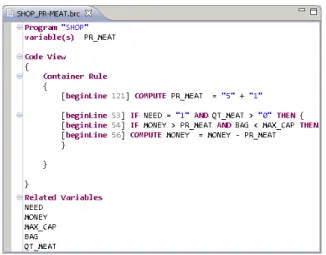
Fig. 1. DSL instance for code-based representation
The output of the Rule Discovery is added to the CFG (i.e., folder BRI) and exported to the BRR (i.e., Business Rule Representation) folder as textual artifacts. These artifacts provide code-based and vocabulary-based representations of the extracted rules. They conform to a couple of Domain Specific Languages (DSL) (e.g., Fig.1) defined using Xtext.
3http://publib.boulder.ibm.com/infocenter/ieduasst/rtnv1r0/index.jsp
Context Discovery.In the fourth page, the user can option-ally ask the tool to discover the remaining conditions (i.e., Context Discovery) that trigger the rule/s discovered so far. In addition, the user can either select or import code interval(s) where to look for the remaining conditions. In the first case, the user enters manually the line numbers that correspond to the intervals. In the second case, the user can import the information from a RPP application. The output of the Context Discovery phase is added to the CFG in the BRI folder and exported in the BRR folder as textual artifacts.
Graph Generation.In the fifth page, the user can generate graph-based artifacts in order to visualize the relationship between the identified rules in the program. These graph representations (e.g., Fig.2) are added to the BRR folder and visualized with Portolan[3], a model-based cartography tool.
Fig. 2. Graph representation
IV. CONCLUSION
In this paper, we have presented a tool implementation for extracting and visualizing business rules embedded in COBOL applications. The code is analyzed and sliced to extract the relevant statements for one or more business concepts. Vi-sualization techniques provide a comprehensive output that facilitates the understanding of the business rules enforced in the COBOL application. The tool has been developed within IBM France, that has provided expertise, tools support and a use case.
REFERENCES
[1] D. Hay, K. A. Healy, and J. Hall, “Defining Business Rules – What Are They Really?” 2000, http://www.businessrulesgroup.org/first paper/br01c1.htm.
[2] M. Eysholdt and H. Behrens, “Xtext: implement your language faster than the quick and dirty way,” in SPLASH, 2010, pp. 307–309. [3] V. Mahe, S. Martinez Perez, G. Doux, H. Bruneli`ere, and J. Cabot,
“PORTOLAN: a Model-Driven Cartography Framework,” INRIA, Tech. Rep. RR-7542, 2011.
[4] F. Jouault, F. Allilaire, J. B´ezivin, and I. Kurtev, “ATL: A model transformation tool,” Sci. Comput. Program., vol. 72, no. 1-2, pp. 31– 39, 2008.
[5] V. Cosentino, J. Cabot, P. Albert, P. Bauquel, and J. Perronnet, “Extracting Business Rules from COBOL: A Model-Based Framework,” in WCRE, 2013, to appear.
[6] H. M. Sneed and K. Erd¨os, “Extracting Business Rules from Source Code,” in WPC, 1996, pp. 240–247.
[7] M. Weiser, “Program slicing,” Software Engineering, IEEE Transactions on, no. 4, pp. 352–357, 1984.