HAL Id: dumas-01313485
https://dumas.ccsd.cnrs.fr/dumas-01313485
Submitted on 10 May 2016HAL is a multi-disciplinary open access archive for the deposit and dissemination of sci-entific research documents, whether they are pub-lished or not. The documents may come from teaching and research institutions in France or
L’archive ouverte pluridisciplinaire HAL, est destinée au dépôt et à la diffusion de documents scientifiques de niveau recherche, publiés ou non, émanant des établissements d’enseignement et de recherche français ou étrangers, des laboratoires
The provincial administration and the democratisation
of development process in Kenya
Joseph Obosi Okeyo
To cite this version:
Joseph Obosi Okeyo. The provincial administration and the democratisation of development process in Kenya. Business administration. 2003. �dumas-01313485�
The
Provincial Administration
&
the
Democraiisation
of
Hevepment
Process
in Kenya
THE PROVINCIAL ADMINISTRATION AND THE
DEMOCRATISATION OF DEVELOPMENT PROCESS
IN KENYA
BY
OKEYO JOSEPH OBOSI
A THESIS SUBMITTED IN PARTIAL FULFILLMENT OF THE
REQUIREMENT FOR THE DEGREE OF MASTER OF ARTS IN
POLiTICAL SCIENCE AND PUBLIC ADMINISTRATION.
IFRA
MINIMUM
1FRA002887V)4QS
loi.
3OO13
DEPARTMENT OF POLITICAL SCIENCE AND PUBLIC
ADMINISTRATION, FACULTY OF ARTS, UNiVERSITY OF NAIROBI,
2003
CHAPTER ONE
1.0 INTRODUCTION
Development, generally regarded as a positive change aimed at improving the lives of the majority of the population overtime, is a goal that each country aims at attaining. Developed countries have, compared to underdeveloped/developing countries; high literacy levels, better health care, better physical infrastructure, high income per capita, high economic growth, high
Gross Domestic Product (GDP) and Gross National Product (GNP), and greater respect for human rights. The developed countries continue pursuing its higher levels while the so-called under developed ones are pre-occupied with the search for policies that can enable them attain improved basic development levels.
The pursuit of development, therefore, of necessity involves making rational public choices at all phases of the projects to be undertaken, i.e., in terms of both initiation and execution. However, the most basic strategic problem encountered by most governments is whether to rely on political or administrative structures. Alternatively, what "mix" of structures would best promote development?
The post independence government of Kenya has all a long used the Provincial Administration in the maintenance of order and stability; legitimatising and consolidating the presence of the central authority throughout the nation; and executing national development plans at grassroots levels. Immediately after independence, the argument was that, a new state like Kenya needed to use the administrative arm of the government as a primary instrument for initiating and guiding the process of development. To the contrary, Hyden (1970), expressing doubt about the
governments' ability to guide development, observed that much of what might be labelled "development" occurs quite apart from government initiatives.
As a matter of fact, with the increased demand for services from the state by the citizens, the government began to tolerate the entry of other government institutions and other non-state actors into the development space, hence the democratisation of the development process. These non-state actors include Non-Governmental Organizations (NG0s), People's Organization (POs), commonly known as Community Based Organizations (CB0s) that include: various forms of co-operative and self-help groups. The CBOs and NGOs emerged as the providers of the last resort. All these non-state actors can collectively be referred to as the civil society.
It is therefore apparent that the "democratisation" of development process in Kenya has opened up avenues for the proliferation of other interested actors in development thus prompting the regime to seek appropriate pattern of accommodating various actors in the development process. These actors, amongst themselves, are bound to condition the performance of and/or participation by others. Under such circumstances, the government, of necessity, has to formulate proper organizational structure, administrative behaviour and institutional norms to make public organizations more productive and innovative.
1.1 STATEMENT OF THE PROBLEM
Kenya has since independence used the Provincial Administration to spearhead development. This means that the Provincial Administration has championed the local planning, co-ordination, interpretation and implementation of development projects and programmes. In other words, directly, or indirectly, the Provincial Administration remained a key player working with
technical ministries in the provision of services/facilities to serve the following needs: education, health, agriculture, water, and above all, security - covered under the maintenance of law and order.
However, since the late 1980s the involvement of others especially Civil Society actors, including NG0s, both local and foreign, CBOS such as "harambee" self-help projects and co-operative SACCOs groupings in the development process has increased, not only in numbers, but also in coverage. Their activities range from provision of education, agriculture, health, to clean water, and poverty alleviation. For instance, in the health sector. NGOs and the private sector provided about 40% of the country's health services (Republic of Kenya. 1994:231); one NGO operating in two divisions with a population of 240,000 provided over 80% of the total health and education, services within an eight - year period (Kanyinga 1995). "Harambee" funding of development projects has been between 3% and 11% of total public funding (Republic of Kenya, 1989:258-9). In terms of maintenance of law and order, the churches, village vigilante youths, community, and political party youths, too have had a significant contribution (Anangwe, 1995). There has generally been a marked shift in the development thinking and practices amongst policy makers and practitioners. More attention is consequently being given to NGOs and CBOs as alternatives, and at times considered better, compared to state actors.
The re-emergence of competitive multi-party politics in 1990s had negative consequences on the powers of the Provincial Administration In fact, in opposition areas, members of the Provincial Administration were regarded with a lot of suspicion until 1998 when some form of political co-operation between the ruling political party, KANU, on the one hand and opposition political
opposition parties' strongholds tended to soften but only to a limited extent. The suspicion made it extremely difficult for members of PA to mobilize the public to participate in hardly any project. This was because they (PA) were easily identified as agents or conduits of the ruling political party, KANU. In 1997, a further blow was dealt on the powers of the Provincial Administration following Inter-Parties Parliamentary Group (IPPG) consultative meetings, when it was decided that it would no longer be mandatory to seek PA's authority to hold a gathering, including "harambee" self-help meetings.
The purpose of this study is to investigate the emergence of the new actors and the impact on the developmental role of the Provincial Administration in Kenya. Put differently, has the Provincial Administration lost its dominance of the development process or has its role changed. The basic concern is to what extent has this taken place and what is the emerging form?
1.2 OBJECTIVES OF THE STUDY
GENERAL OBJECTIVE
The broad objective of the study is to assess the developmental role of the Provincial Administration during the new era of political pluralism in Kenya.
SPECIFIC OBJECTIVES
The study's specific objectives are as below:
1.2.1 To investigate the nature of relationship between people's popular participation in development activities and the Provincial Administration.
1.2.2 To assess the current development tasks of the Provincial Administration.
1.2.3 To examine the impact of the democratisation of the development process on the Provincial Administration in a given locality.
1.2.4 To investigate the impact of the emergence of the new actors, NGOs and POs, in the
development space on popular participation
1.3 JUSTIFICATION OF THE STUDY
This study may be justified on both academic grounds and good policy practice. On academic grounds, the study represents a modest attempt to understand the role of Provincial Administration in the development process in Kenya in the current multi-party setting. Scholars have written a lot on the administration of development in Kenya. For instance, Oyugi (1986) addressed the administration of development from the perspective of attempted decentralization He had earlier discussed the administration of development from the perspective of popular participation in planning for rural development, in Leonard (1974). Other scholars include: Gertzel, (1970), with a focus on the inherited institutional role of Provincial Administration, Anangwe (1994) from the perspective of civil service, Barkan (1984 and 1994) from the public policy versus politics perspective, and Uma Lele (1979) from the perspective of nationally planned rural development strategies. However, these scholars have not addressed the role of Provincial Administration in the development process in the new context that has emerged recently and also a growing trend of similar roles being performed by other actors. The tendency in the earlier analysis has been to view the Provincial Administration as a necessary institution through which development should be channelled. It is precisely this position, which constitutes a point of departure for this study. The analysis would take a different line of investigation from the previous studies by treating Provincial Administration as a competitor/partner in the development process whose role can be re-defined, more so, during the era of pluralism that has given rise to several other actors in the local development arena.
Policy wise, the study is justified in the sense that beginning early 1980s, the role of state in the
delivery of development faced many criticisms from a number of scholars. Specifically, these
scholars focused their attention on the state's limitation in delivering development. Chazan
(1988), attributing
most of African countries' retarded economic growth to state woes, advocated
for the revitalisation of non-state institutions as a condition for the resuscitation of both the
political sphere and the economy. Kanyinga (1995) also argues against the predatory tendencies
of the state at the micro-or local levels, thereby causing the spontaneous rise of popular
initiatives either in resistance, to undermine or countermand these tendencies. Other scholars
still have argued that the state should "roll back" from all development activities and instead
confine itself to what it can do best, i.e. provision of "enabling" conditions for other non-state
development actors. This is the view that has been taken by both bi-lateral and multi-lateral
donors from Europe and USA, the World Bank and the International Monetary Fund (IMF)
reflected in their conditionality for the provision of financial support to further the objectives of
structural adjustment programmes.
In an apparent response to the need for structural changes, the state has from 1990s been
increasingly focussing its efforts in the regulatory domains rather than actual provision of goods
and services. There has also been a significant effort towards decentralisation and privatisation
of the activities of the state. This could in part be attributed also to the growing demands for
services and shortage of resources to meet the health, welfare, and educational programmes for
the entire citizenry. These coupled with greater life expectancy, high levels of unemployment,
changing family structures, increasing cost of service delivery and newer problems such as aids,
and drugs related crimes, have all raised expectations about development benefits channelled
through NGOs and CBOs
(The Daily Nation,February 24 1999).
The major suggestion is that the focus on statism in the development process is no longer fashionable particularly among the donors, and it is therefore necessary to formulate policy preferences differently to address development agenda. Such a policy formulation should no doubt also take into account the fact that the recent emergence of political pluralism from early
1990s meant that the state became vulnerable to pressure and competition in the development process as the clamour for greater transparency and accountability increased among the general public as well and not just the donors. (Kanyinga 1995:70).
1.4 LITERATURE REVIEW
The literature review is intended to first provide some information on:
The historical involvement of Provincial Administration in the development process in Kenya,
The historical perspective on participation in the development process by non-state actors,
How development is administered in sub-Sahara Africa.
Secondly, the review is to help identify some gaps in the information regarding the inter-play between the state and non-state actors in the development process.
1.4.1 ORIGINS OF PA AND THE EMERGENCE OF NON STATE ACTORS
In Kenya, the Provincial Administration comprises a bureaucratic hierarchy of Provincial Commissioners, Distiict Officers, Chiefs and Assistant Chiefs. It originated from the colonial period when the British imperial power used it as a control mechanism of anti-colonial movements and parties, and also in the administration of development, especially, in the exercise
after independence, Provincial Administration continued performing both the law and order
maintenance function, and a development role that largely meant co-ordinating the work of
various field agencies of the centre (ministries) (Wallis 1994). In brief, the co-ordination of the
field agencies, Provincial Administration has been used by the Government of Kenya (GOK) to
perform various roles in the development process comprising maintenance of law and order;
project aggregation, articulation, and mobilization of demand for public goods and services
(Anangwe 1994).
The intriguing issue of interest is not the participation of the Provincial Administration in the
development process per se, but rather, its involvement vis a vis other actors for this is no doubt,
one of the major determinants of the pace of development. The involvement of PA in Kenya's
development process has earlier on sparked off controversy among some scholars. For instance,
Hyden (1970) wondered whether development by public administration in Kenya would be
more likely to result from state institutions (political vs. administrative) that are balanced, or
from a situation of administrative dominance. He observed that most governments of
developing countries exist in what are essentially heterogeneous entities, a situation which
inhibits their capacity to simply direct society as if the latter were some passive homogeneous
entity. In such circumstances, it is not strange to find certain development activities, not being
precisely in conformity with the will or actions of governments and its administrative arm. In
Kenya, the "Harambee" movement, NGOs activities including the churches and other voluntary
organizations such as group savings and the co-operative movements, are good pointers to this.
In performing the "developmental functions", the Provincial Administration has over the years
not been receptive to popular participation, a very crucial factor in any democratisation process.
These state officials, according to Anangwe (1994) characteristically engage in missionary like
proselytising through "barazos" (public meetings) in order to get the rural people to accept certain development policies or programmes, failure of which coercion is adopted i.e. forced "harambee" (self-help) contributions to put up public utilities. Oyugi (1973) points out that in these "barazas" the rural folk are informed "of what is going to be done and not allowed to discuss what should be done". The Chiefs who head these "barons" have their "good boys" as well as "bad boys" with the latter not "expected" to make any good contribution. How then can the "common man" (rural folk) participate in deciding or identifying his needs? hi most cases the people who have felt excluded from the development process by the state actors notably the Provincial Administration, have found alternative forums in the Non-Governmental Organizations. These NGOs have therefore been increasingly gaining popularity as better alternatives to state actors in the development process. This could in part explain the ever-increasing number of non-state actors in the development process.
The opening up of the development space has not been confined to non-state institutions only, but has applied also to the state. institutions as well. For instance, Anangvve (1994), while agreeing with Bienen's (1974) assertion that transmission of demands in Kenya has been performed by the Provincial Administration during Kenyatta's era, points out that during Moi's era, the mechanisms diversified to include the ruling party KANU, the wider civil service, the military and the related patron-client nexus. hi this respect, his argument that in East Africa, development efforts comprise of many actors such as farmers, indigenous entrepreneurs, multinational "donor" agencies and Non Governmental Organizations (NG0s) that have played various roles jointly or separately, is valid.
In his study of the "Changing Development Space in Kenya", Kanyinga (1995) found out that in all the five districts he studied (Kiambu, Nakuru, Siaya, Elgeyo - Marakwet and Taita Taveta),
followed, by co-operatives, self-help groups, formalized NGOs and the churches. The most frequently encountered self-help groups were women groups, which were basically a collectivity of women in a village or workplace. The groups share a common identity, and can be organized in form of pooled labour or participating in "Merry go round", but can also engage themselves in off-farm income generating activities. The proceeds are commonly aimed at enabling members purchase items for home improvements i.e. corrugated iron sheets, water tanks, loans etc, on a rotating basis. In 1991, Siaya and Kiambu districts had 11,434 and 1,147 of such groups respectively (Kanyinga, 1995). It should be noted that even though these women groups are required to register with the Ministry of Culture and Social Services not all are registered. Neither are all the registered ones operational. Likewise, it has been reported that of Kenya's
10,000 NG0s, only a paltry 1,000 are registered. The rest, although wallowing in millions of shillings of tax-exempt funds, operate without valid documentation (The Sunday Nation, 14 February, 1999).
The self-help "harambee" project groups have also been significant For instance in Taita Taveta, a total of 50 "harambees" were recorded out of which 38% went to school bursaries/construction, 16% to women groups, 30% to churches and 4% to health centres (Kanyinga 1995:97).
Non Governmental Organizations (NG0s) have really expanded their operations in the country. In Nakuru District alone, the number of registered NGOs shot up from 16 in 1988 to 38 in 1993. Kanyinga (1995) attributes this dramatic increase, which no doubt applies to other areas in the country, to increase in appreciation of the NGOs' methods of work and displeasure with the government's limited initiatives and administration of development projects. The rapid increase in numbers and activities of NGOs no doubt challenged the role of the government This
prompted the latter to institute a centralized NGO information and co-ordination unit, with which all NGOs are now required to register, (Ndegwa 1993). Several NGOs including church organisation had been branded "subversive" for their stand against the 1988 queue - voting method for the ruling party and the general elections whose repeal they campaigned for upon its introduction. The government therefore hoped to strictly monitor, co-ordinate, and control NGOs development activities and of their funds to "ensure their activities were compatible with national interests" (Ndegwa 1993).
Although for a long time (until late 1980s) the relations between the state and the NGOs especially in development could be termed as cordial, this could not be said of the period beginning 1990. The relations could at best, be termed as that reflecting competition for legitimacy. To prove its suspicions and mistrust for NG0s, the government placed NGOs co-ordination portfolio under the department of Provincial Administration and internal security, in the Office of the President.
Whatever the position taken against NGOs by the government at different times, it is not possible to dismiss their developmental roles especially in the case of some international non-profit organizations such as Action-Aid which supports primary and vocational education, and the Undugu Society in Kenya which runs health clinics in Nairobi slums and a primary school for children (Fowler 1995). Despite the NGOs contributions in development, some of them have been engaged in dubious activities "... of 1000 NGOs valid agencies, the National Council of NGOs the statutory body regulating operations of NGO sector, hardly knows what 50% of them do ... at the moment, 40 disciplinary cases are pending at the Council. The accusations range from corruption to sexual harassment". (The Sunday Nation, February 14, 1999).
The churches have also paid a considerable attention to development in Kenya. The mainstream churches such as The Catholic, African Inland Church (AIC), The Church of the Province of Kenya (CPK) and the Salvation Army each has various development departments, and have actively been involved in various ways in social welfare organizations covering youth rehabilitation, relief and women's development In Siaya, for instance, CPK, which is the most active church in the district, identifies with women groups and self-help "harambee" projects. It has had to "compete" in this area with donor organizations, i.e. Canadian state agency, ODA, which provide about 600 women's groups in Boro Division with revolving loan funds, while WAD provides funding for fertilizers and seeds to farmers' groups. The Ministry of Agriculture does the in-puts' distribution. (Kanyinga, 1995). Kanyinga further observed that, there existed cordial relations between CPK and opposition politicians, because of the former's general oppositional stance, particularly towards the Provincial Administration.
1.4.2 DISTRICT FOCUS POLICY
In apparent effort towards acknowledging the need to involve the masses in the development process, the government of Kenya in 1983, instituted a new strategy for rural development, the District Focus for Rural Development, DFRD, whose activities were to be co-ordinated by the District Development Committee, DDC, chaired by the District Commissioner, DC. This was the body responsible for implementation of the development. Adopted by the government as a decentralization strategy, the DFRD established local development institutions/committees at all levels from the district to the sub-location as channels of popular participation with Provincial Administration officers assuming very prominent roles in their running. The officers (Provincial Administration) were charged with chairing committee meetings at all levels, and District Executive Committee (DEC), comprising departmental heads, became the main decision making body.
By 1989, the DFRD had become so important in local development that the government bestowed upon it the portfolio of not only co-ordinating NGOs activities in the district but also screening them. In fact in the 1989/93 Development plan, the government was very explicit over this arguing that "...since NGOs have become increasingly involved in development activities, their efforts will be strengthened by DFRD, through which NGOs in collaboration with DDCs, community groups and local authorities will enhance the process of local participation in the development projects" (Republic of Kenya, 1989:260).
The DFRD, almost around the same time also inco-operated the "harambee" movement as one of the official local institutions. Kanyinga (1995) however argues that because DDCs lacked legal authority to enforce compliance from NG0s, the extent to which the NGOs could be integrated into DFRD remains debatable.
The institutionalisation of the "harambee' self-help projects, though commonly agreed among most scholars to have helped in making local communities supplement resources to match those provided by the state institutions, the mainstream churches, and private sector institutions, other scholars have had different interpretation of its benefits and effects. It has been argued that the
"harambee" movement has been used by the state to tax peasants (Ngethe 1979). Other scholars have also argued that the movement created an avenue for sustenance of popular accountability (Barkan and Holmquist 1989). Oyugi (1995) sees the movement as a reflection of the state's reluctance to tax the rich, especially their non-salary incomes sufficiently to generate extra funds for the state provision of services. "More importantly, "harambee" has served to divert accountability or blame for lack of development from the state to the people themselves" (Oyugi 1995:133). Still, Barkan and Chege (1989), argue that whereas, the "harambee" has
significance, especially under Moi rule was to "transform it into an instrument of personal rule
whereby local and regional leaders are expected to attend these expanded functions and to give
generously as are cabinet ministers who come from other parts of the country" (Barkan and
Chege 1989:437). In essence, Chege and Barkan contend that the "harambee" is no less than a
tithe or quota whose donors intend to retain positions near the president's inner circle. They
further see the introduction of DFRD strategy as a means of decentralizing Provincial
Administration, a strategy which they, like Kanyinga (1995) argue was used by Moi to not only
create his own networks and inner circles under patronage politics, but also to destroy the
remnants of Kenyattes networks. By the same token, Oyugi's (1986:14) comment on problems
bedevilling the Provincial/District Development Committees would suffice, " ... although the
PCs and DCs are generally assumed to be responsible for co-ordinating the activities of
government departments in their administrative areas, there is very little a PC or DC could do to
activate the heads of technical departments who are reluctant to make use of these committees....
A further problem was the lack of effective functional leadership for the committees... these
committees depend on their existence on the initiative and good will of the Provincial
Administration".
It should be pointed out that the growing importance of the voluntary sector in service provision
does not necessarily reflect a collapse of state provided services. Rather, the state continues to
play an important role. The NGOs and POs only supplement state provided services thus
forming a relationship that can be described as complex and conflictual - co-operation and
competition i.e. between the state, the voluntary sector and donors. (Ole Therkildsen & Semboja
1995:45).
Despite the shortcomings of Provincial Administration, some people still maintain that it is the only panacea to development. Moi (1986) argues that as long as Provincial Administration is regarded as the effective operational link between the central government and the people, and as the effective representation of the functional authority of the government in every locality in the nation, its alternative is unlikely to emerge in the foreseeable future.
The above literature review is silent on the extent/degree of actual involvement of Provincial Administration either as supporters or opponents in the development process in relation to the activities of NGOs and CBOs in development. Secondly, and most important, the literature is not giving indications regarding the shape/form the co-ordination role of Provincial administration should take in the event of the emergence of many stakeholders (read actors) in the development process. Finally, the literature is silent on the co-ordination of development in areas that do not enjoy the services of DDC. For instance, Nairobi city, which has a myriad of NGOs and informal development actors, does not have a DDC. It equally lacks the bureaucratic link between the PC and the D.O. as there are no DCs.
1.5 THEORETICAL FRAMEWORK
The study intends to adopt two mutually re-enforcing frameworks, viz, statism and public/political choice frameworks.
The study is essentially situated within state-society relation's theory, which dates back to 1950s and 1960s and became more refined in late 1980s. In 1950s and 1960s, when modernization theory reigned, the state was seen as the motor-force with which the new independent African states could develop hence becoming modem, albeit with assistance from the developed west.
As argued by Gabriel Almond, state was seen as performing the tasks of "social integration" and
adaptation. Other modernization theorists like James Coleman, Lucien Pye, Samuel Huntington,
also saw the role of the state as basically of pattern maintenance. Precisely, the state was seen as
the main agent of socio-economic change. Specifically, state actors saw their role as necessarily
one of stepping in to promote socio-economic development by deliberately pushing the
processes of social change.
Modernization theory came under strong criticisms emerging from strains of Third World
nationalism combined with neo-Marxist thought, thus giving rise to the dependency perspective.
The dependency theorists, be they structuralists like Colin Leys, Steve Langdon, Samir Amin,
John Saul, or neo-Marxists like Walter Rodney, Immanuel Wallerstein, all tend to have
converged on an argument that although the state was still the motor force behind development
in the Third World, depending on various factors, especially international politics and
economics; its actions or inactions lead to various ramifications in the development sphere.
Modernization theorists saw the inter-state relations between the west and the periphery as
resulting into development of the latter. Dependency theorists, saw the relationship as negative,
i.e., responsible for under-development of the Third World.
It is the weakness exhibited by the two theories to recognize the impact of intra-state factors as
opposed to essentially international economic factors, on differential dynamics of development
being moulded by the Third World states - some effective and others not, that led to the
springing up of a new theoretical perspective, statism, basically aimed at reviewing the role of
the state in development It gained more prominence from mid 1980s. Statism, is therefore,
seen as capable of recognizing the process of mutually conditioning interactions that take place
between the state and society.
Statism as propounded by Joel S. Migdal, Frances Hagopian, Vivienne Shue, Catherine Boone and Atulli among others, address mainly three interrelated state-society themes: the capacities of states in low income societies to legitimise their domination and to pursue their socio-economic agendas; the roles of various social forces such as social classes and class factions, formal and informal civil associations, in the politics of these low-income settings; and the circumstances that may facilitate or prevent mutual empowerment of state and society.
The exponents of statism provided explanations to the political and economic deterioration of the early 1980s. They held that the state leaders were responsible for the mess, given that the state is viewed as a primary motor force through its structures notably PA behind socio-economic occurrences within it. Much attention was therefore concentrated on the state apparatus, its expansion, its uses and abuses of power, and its relations with both domestic groups and international economy. The state is therefore seen as an actor with interests, capacities, achievements, and frailties.
Statism theory acknowledges that the socio-economic consequences on the development of a locality are the result of political decisions of political/state leaders or their cronies. The political decisions are due to pressures from and interests of powerful actors, i.e. political allies. The pressures and interests in turn constitute demands on the state to be addressed by state authorities, depending on the choices at their disposal. The resultant action would more often than not be state choices in as much as they would be political choices. Put differently, those who control state power are in a position to take decisions of far-reaching socio-economic consequences, which though may at times reflect the interests and pressures of other powerful
In essence, the patterns of a regime's/state's action or inaction, as well as the mode in which political demands are made, and their intensity, are thus likely to be as much a product of the political past as present socio-economic conditions.
This framework suits best our study. Kenya, like other African states, right from the immediate post-independence era, embarked on a series of "modemisationVdevelopment programmes.
By the turn of the 1980s decade, it was neither fashionable nor logical for the state to dominate the development. The civil society emerged too strong an actor, and the state concomitantly became relatively feeble. The only way out was seen in the state "rolling back" from the development process and also opening up for the entry of the civil society in a competitive manner. The interactions between the state and the civil society became a key area of interest for study, especially with regard to the society/public being presented with many alternatives/options to choose from i.e. PA, NG0s, POs, individuals. This therefore posed a severe limitation for the statism theoretical framework hence the entry of public/political choice framework.
The political/public choice framework is indeed a continuation of statism. In fact some scholars treat it as a variant of statism. As advanced by Naomi Chazan et al (1988), political choice framework is developed from the economic theory of public/rational choice of public goods as advanced by Mueller, D.C. (1979). Public choice theory examines the provision of public goods. A public good is anything that is at least partly rival and/or non-excludable in the sense that addition of new beneficiaries neither increases nor reduces the value of the good to the
original beneficiaries. For instance, development, e.g. construction of a public road, is a public good in the sense that it would benefit everyone including those who were either opposed to it as
a priority or were not even aware of its construction Before the decision to construct the road in
question, for instance, there were, certainly other options or choices, which might have been
sidelined rationally.
In a state, public choices are indeed political choices for each is considered politically. For
instance, the decision to construct a road in area A instead of area B or vice versa is influenced
by the expected political output, i.e., support that the action could draw from the given area. The
framework therefore underscores the state - society relationships in determining not only the
pace but also the type of development. Essentially, governments are constrained by a variety of
demographic, technological, ideological, global, historical, and social factors. Changing
conditions define available options at any historical moment. It is within this range that
decisions are made, not only by political leaders and state officials, but also by external actors
and domestic social organisations. By looking at the interactions of social forces, economic
activities, formal institutions, and prevalent values, we may better grasp the meaning and
direction of the diverse patterns that have evolved in a given state's development space.
In our study, the political/public choice framework focuses on identifying the multiple factors at
work in the development space. The main assumption is that the development space, like
politics, is far broader than the formal state domain and the international system. As in statism,
official institutions are, indeed, significant actors, but so, too are: individuals, social groups,
traditional authority structures, trading networks, and multinational corporations. The study of
interests, organizations, and capacities of these entities affords a better view of the processes by
which they interrelate. Political processes encompass struggles over material and non -material
resources, over identity and interests, over institutions and symbols.
The political choice theory is useful in explaining the development process in terms of state- society relations. It looks at the conditions and patterns of interaction that have emerged • between state authorities, PA, on the one hand, and civil associations, such as NG0s, on the other hand. As Bratton (1994), argues, the state-society relations in Africa has gone through a process of mutual engagements and disengagements. At independence, the state empowered some institutional structures like co-operatives and PA, more to extend their authority and control in the countryside than as vehicles for improving livelihoods in the rural population which later chose to "disengage" themselves from the state agencies, plans and visions in favour of their own initiated private networks, CB0s. The state, faced with fiscal crisis, became unwilling to carry the costs of the failing rural projects, and consequently opting to disengage and virtually leave the rural population to fend for themselves. On realization of the reasons for the past failures, the state and the local population may open a dialogue and re-engage in a few other areas.
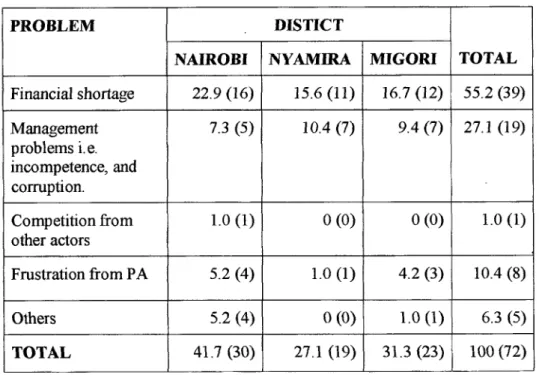
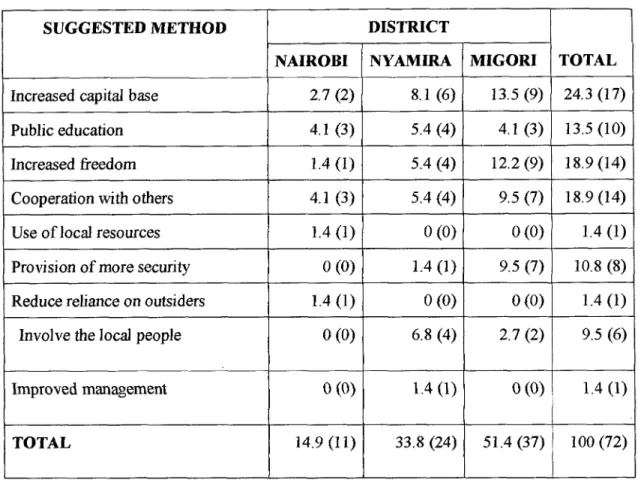
In our study, Bratton's argument sounds valid. In Kenya, from late 1980s, the government-sponsored projects stalled, with most people preferring to engage in CBOs and NG0s. The government then began to undertake public divestiture that has continued to date. It is also an illustration of how local communities and NGOs have funded some projects through cost-sharing. The argument is that there are open options in the development space for the state and the public to choose from, i.e., engagement, disengagement and even partial re-engagement, between state agencies and the existing plus social organizations. Any of these choices has to be made rationally on the basis of the prevailing circumstances. Chapters four and five have demonstrated how local population on each occasion and in various areas exhibit their respective choices in so far as development partners as well as delivery and recipient of goods and services are concerned in Migori, Nyamira, and Nairobi Districts of Kenya.
1.6 HYPOTHESES
The following four related hypotheses were formulated for the investigation and analysis.
1.6.1 The democratisation of the development process has significantly reduced the necessity of provincial administration in development activities.
1.6.2 The cooperation of the Provincial Administration directly influences effectiveness of civil society in its development agenda
1.6.3 The level of involvement of the civil society in development activities is directly proportional to the level of popular participation in the development process.
1.7 OPERATIONALIZATION OF CONCEPTS
The following concepts will be used frequently in the text: Provincial Administration; Democratisation, Development Actors, Development, Civil Society; Local Authorities, Non Governmental Organisation (NG0s), People's Organisations (POs), and Democratisation of the Development Process.
1.7.1 Provincial Administration
The Provincial Administration in the study is identified as the agency of the state/government in charge of executing government policies at the various units from the province downwards in the administrative hierarchy, i.e. Provinces, Districts, Divisions, Locations and Sub-locations. It comprises the Provincial Commissioners (PCs), District Commissioners (DCs), District Officers (D0s), Chiefs and Assistant Chiefs as heads of the respective units.
1.7.2 Democratisation
In this study, democratisation means higher levels of actual involvement of masses in the process of decision-making, planning and implementation to determine their needs in their localities.
1.7.3 Development
Development refers to the socio-economic and political changes, which most scholars (and perhaps the leaders too) would deem as desirable and which contribute to the well being of the bulk of population either nationally or locally over a long time (Anangwe 1994). These include improved standard of living/quality of life, provision of good housing, health facilities, reduction of income inequalities, alleviation of poverty, provision of employment and improvements of physical and social infrastructure.
1.7.4 Actors In Development
These are individuals, groups or parties that are involved in the transmission of development. It can be used interchangeably with agencies like Provincial Administration, Local Authorities, and Civil society including Non Governmental Organizations (NG0s), CB0s, and Co-operatives.
1.7.5 Civil Society
Civil society refers to the assemblage of People's Organization (PO's), sometimes called Community Based Organizations (CB0s), and Non Governmental Organizations (NG0s)
authority structures, social forms and collective activities operating outside the formal state framework and usually articulating interests vis-à-vis the state.
1.7.6 Local Authority
This refers to a sub-national body set up by statute to discharge certain duties and to exercise certain powers, including the power to tax. Such bodies in Kenya include County Councils for rural areas, Urban, Town, and Municipal Councils for the urban centres and the City Council.
1.7.7 Democratisation Of The Development Process
Democratisation of the development process means enhanced participation by the people in their government by opening up of the development space for the entry of other state institutions, local authorities and the civil society, including NGOs and POs.
1.7.8 Non Governmental Organisations (NG0s).
These refer to organisations formed on voluntary basis but operating with paid staff, either for the benefit of members, or to provide services to or on behalf of others. They can be international, national or religious nature (Semboja & Ole Therlcildsen, 1995).
1.7.9 People's Organisations (POs)
These refer to groups formed on the basis of locality, kinship, gender, workplace, religion etc. Being small, they have no conventional bureaucracy. They engage in activities aimed at improving the livelihoods of members who control them. (Semboja & Ole Therkildsen, 1995). It can be used interchangeably with CB0s.
1.8 METHODOLOGY
1.8.1 Scope And Limit Of Study
This is a comparative study of the role of the Provincial Administration in the development process in both the rural setting, represented by Nyanza Province and the generally metropolitan, urban setting represented by Nairobi Province. The study intends to also assess the participation of Provincial Administration in the development process in opposition dominated areas represented by Nyatike and Muhuru Divisions of Migori District and Kibera Division of Nairobi Province, and the ruling political party, KANU dominated areas, herein represented by Nyamira and Ekerenyo Divisions of Nyamira District and Westlands Division of Nairobi Province.
The study also wishes to compare the participation of PA in a socio-economically heterogeneous urban setting i.e. those staying in posh areas like Karen and Kileleshwa localities and slum areas like Kibera, and the near socio-economically homogeneous rural setting i.e. Migori and Nyamira Districts.
Finally, the study investigates the co-ordination of development activities in the absence of a DDC and DCs in PA bureaucracy as in Nairobi compared to the rural setting with both institutions. The role of PA in development is analysed on the basis of similar activities undertaken by NG0s, and CB0s/P0s.
1.8.2 Sampling
To arrive at a sample frame of six Divisions, a Multi-Stage Area sampling was employed. In the case of Nairobi, all the seven (7) constituencies were categorized into two: viz, opposition strongholds i.e. Langata, Embakasi, Starehe, Makadara, Dagoretti and Kasarani, and the ruling
party, 1CANU strongholds, herein represented by Westlands constituency. From the opposition strongholds, Langata (also known in administrative circles as Kibera) was randomly selected while Westlands was the obvious entrant for the other category, being the only one. The political classification was based on the 1997 general (parliamentary) election results.
In Nyanza Province, the 12 Districts were categorized into two: The Luo Districts comprising Siaya, Kisumu, Migori, Homa-Bay, Rachuonyo, Bondo, Nyando and Suba; and the non-Luo Districts comprising Kuria, Kisii Central, Kisii South and Nyamira. Suba is uniquely clustered as a "Luo District" due to the fact that its population basically behave socio-culturally and politically in a similar pattern like its Luo counter-parts. From each of the two categories of districts, Migori and Nyamira were respectively selected.
Nyamira District has four administrative divisions, namely; Ekerenyo, Manga, Nyamira and Borabu from which Nyamira and Ekerenyo were randomly selected at the next stage of sampling. Migori on the other hand has seven divisions including Nyatike, Muhuru, Kaningu, Rongo, Uriri, Suba West and Suba East from which the first two were selected.
In the final analysis, a total of six administrative divisions were sampled for study. These included; Nyamira, Muhuru, Ekerenyo, Nyatike, Westlands and Kibera. A final multi-stage area sampling was then employed to select any two locations from each of the six divisions, thus giving a total of twelve locations. Each location was a basic sampling unit.
The stakeholders in the development process, i.e., NG0s, CB0s/P0s, PA officials and the general public, in each location, were to be interviewed. The study covered in each location,
from each organization, save for PA, whereby either a sub-chief and/or a chief was interviewed from each location giving a total of 12(2 + 2 + 1 + 1) = 72 respondents. The study as a whole covered; Bonyamatuta Chache, Bosamaro, Bogichora, and Keera locations of Nyamira Division; South Kadem, Central Kadem, and West Kadem of Nyatike division; Kibera, Mugomoini, of Kibera Division; Parklands and Kangemi locations of Westlands Division; and East and South East locations in Muhuru Division.
1.83 Administration Of The Questionnaires And Interviews
Due to the diversity of the sample, high population density, and expanse of the areas of study, I engaged the services of 2 Research Assistants, one, a graduate and the other a High School teacher, each for Nairobi and Nyamira districts respectively. In Nairobi, I conducted all the oral non-structured interviews and also administered six (6) questionnaires. The Research assistant did the rest after I had trained him on the job on what I expected of him. The exercise took about two weeks. The interviews of key informants took longer, about six months due to the problem of obtaining appointments and busy schedules of most interviewees and my own official work commitments. I conducted all the interviews in Migori district. In Nyamira district, I conducted 80% of the oral non-structured interviews while the rest were done by my Research Assistant. I also administered 30% of the questionnaires while the remaining 70% were done by my Research Assistant 80% of which, in my presence and the rest him alone. The major problem here was the language barrier especially with the illiterate groups. The Research Assistant came in handy.
I conducted all the interviews, both oral and the questionnaires guided, in Migori District. I did not engage the services of a research assistant, partly due to the fact that I was familiar with the area and partly due to the sensitivity of handling the survey instruments. For instance, local
people become anxious when they see a fellow with a questionnaire to be answered more so
from a local person. That was why I conducted most of the interviews informally, thus obtaining
information from the respondents without them suspicious of my intentions.
1.8.4 Measurements
1.8.4.1 The democratisation of the development process
This refers to the opening up of the development space for other development actors. In the
survey the following three indicators were used to measure this factor. First, the existence of
POs (CB0s) such as self-help projects, women groups, and NGOs in the areas concerned.
The activities of these non-state actors and their relations with the PA were also considered.
Secondly, the public attendance of the development forums organized by non-state actors.
Thirdly, whether those who attended the non-state actors' development discussions forums
also attended the chief s/sub-Chief s "barazas".
1.8.4.2 Involvement of Provincial Administration in development.
Involvement of Provincial Administration in development refers to the actual participation,
either negatively or positively, in development activities by the PA officials. Such
participation comprises, control of public gatherings, mobilisation of the public, provisions of
security, co-ordination of actors' activities, among others. For this study, the indicator used to
measure this was the attendance of the Chief s/Sub-Chief s "baraza" by the stakeholders.
The argument is that the PA's "barazas" are the most common local forum for addressing
development by way of sensitising, mobilizing or communicating the government policies to
the public. When many people attend public barazas, it implies that the PA has a relatively large forum to discuss development and vice versa.
1.8.4.3 The level of popular participation.
This was determined in terms of how frequent an individual attended a Chief s/Sub-Chief s "baraza" and the problems associated with it. The second indicator was the type of development forums ever attended by the respondents, both the beneficiaries and stakeholders, from the areas concerned. There was finally the issue of whether there is a relationship between attendance of the Chief s/Sub-Chief s "barazas" and attendance of other developments forums.
1.8.5 Data Sources And Analysis
Both primary and secondary sources of data were used in the study. The secondary data was obtained from books, articles and research papers available at the University of Nairobi, CREDU, and the National Assembly Libraries. Other sources of valuable information were journals, magazines and newspapers; and government publications i.e. sessional papers,
development plans and statistical abstracts. The primary data was collected through oral interviews and responses from the questionnaires administered to the sampled respondents. The data collected was coded and analysed using both qualitative and quantitative (statistical tables and cross tabulations) techniques. The tools I used widely in both data presentation and
CHAPTER TWO
2.0 HISTORY AND EVOLUTION OF PROVINCIAL
ADMINISTRATION IN KENYA
2.1 THE COMPOSITION OF PROVINCIAL ADMINISTRATION
Provincial Administration in Kenya can generally be described as a system through which the
central government ensures that its authority and services reach, and are accepted by the people
in rural areas'. Provincial Administration is structured in such a manner that it provides a
representative of government's authority from the village level leading through a hierarchy of
Sub-Chiefs, Chiefs, District Officers (D0s), Provincial Commissioners (PCs), and to the
President himself In this context, each of the officers is the president's personal representative
within his/her area of jurisdiction. Each officer is responsible to his/her immediate in command
in the administrative hierarchy. The Provincial Administration (PA), is therefore, in theoretical
terms, the personalized form of the government whose greatest justification, according to
Gertzel (1970), is to be found in its supposed obligation to be easily accessible, understanding
and authoritative.
Presently, Provincial Administration is placed under the Office of the President with a Minister
of State and a Permanent Secretary in charge. The docket for the two (Minister and Permanent
Secretary) also covers internal security.
'Although Provincial Administration was initially meant for rural areas only, currently, it
covers even urban centres.
The bureaucratic arrangement, notwithstanding, the PC and the DC, more often than not have
direct contact with the President.
2.2 THE ORIGINS AND GROWTH OF PROVINCIAL
ADMINISTRATION
The origins of Provincial Administration in Kenya can be traced from 1895 when Kenya was
declared a British East Africa Protectorate. Since then the PA has undergone several
developments, which involved changes in both responsibilities and size. This development,
which may be described as circumstantial rather than fundamentally systematic can be
categorised into three phases, viz: The pre-independence (colonial period) which covers up to
1963; post independence beginning 1964 up to 1990, covering mostly the period of one party
system (both de-jure and defacto); and post 1990 which basically encapsulates the competitive
multi-party era
2.2.1 Pre
-Independence
-Colonial Period
Before the constitution and consolidation of the territory that later came to be known as Kenya,
no central government authority existed. Rather, each and every African society had its own
system of government. It is therefore from this period that we can trace the origins and
development of Provincial Administration through 1919 when the territory was declared a
Kenya Colony and Protectorate through to the time of independence.
A commissioner headed the British East Africa Protectorate's administration until 1906 when the first Governor, Sir Charles Elliot, was appointed. Under the Commissioner, there were sub-commissioners and District Commissioners who established posts among the major concentration of population North and South of the advancing Uganda railway line, as it was known before 1919. The changes of the Head of Administrators title to Governor was prompted by the transfer of responsibility of running the protectorate from the London Foreign Office to Colonial Office in 1905.
With the increasing need to make the investment in the railway economically viable, the Governor, from 1906, invited white settlers into the Kenya Highlands, commonly referred to as the "White highlands" to practise plantation agriculture for export. The positive response, which the Governor received, led to the establishment of white settlement.
The District Commissioners acting through Tribal Police and Chiefs, Sub-chiefs and headmen, were responsible not only for law and order in the African areas and the collection of taxes but also to assist the settlers to recruit labour for their farms (Ndegvva 1971). The Chiefs and Sub-chiefs had an added role of conscripting able-bodied men from their localities for Her Majesty's army during the First World War.
Until after the Second World War, the government did not participate directly in the recruitment of the Chiefs and Sub-chiefs. It used the traditional authority arrangements it found in place though gradually, but steadily eroding its basic tenets, especially when and where they conflicted with the Europeans'/Governments' policies. This could be attributed to the fact that, the governments main concern during the period was to enhance agricultural production in the
white highlands for both food and export so as to sustain the war and not the governance of the
territory per se.
The Provincial Administration grew in size and authority following the creation of four
provinces and three extra provincial districts between 1926-39. The changes meant that PA
units down the ladder from the provinces were also increased with concurrent increase in PA
officials. During the administration of Governor Sir Evelyn Baring, coinciding the Emergency
period, the Provincial Administration was deliberately expanded thus giving its personnel a
dominant position over other government agencies as his agents in the field. Even the police
were made subordinate to PA in matters concerning maintenance of law and order. This was
made clearer by the following Governor's policy statement.
"Government recognizes that the final responsibility for good government and preservation of
order clearly lies with the Provincial and District Commissioners who represent the Governor in
their areas. These officers are entitled to give general directions concerning the preservation of
peace and order. In all such matters, the police force is subordinate to government" (GOK
1954).
In response to the emergency situation, the policy of closer administration was introduced. It
was assumed that security would be more effective if officers were in closer touch with the
people. District Officers (D0s) were posted to Divisions instead of touring from District
Headquarters, and Divisional Headquarters were set up in order to be more in close touch with
the people and to communicate with them better (Gertzel 1970). The number of officers at all
levels was increased: Chiefs, Sub-chiefs, Headmen, Tribal Police and in 1956, District
Assistants (DAs). There was a remarkable increase in both number of posts and expenditure.
For instance, in 1951, there were 184 administrative posts with an expenditure of 152,000
Pounds as compared to 370 posts costing 443,400 Pounds in 1962-63 (Gertzel 1970).
Besides maintenance of law and order, PA became closely involved in the development process
as well. Emphasis was put on the role of PA in agricultural and overall economic development
as the prime means of combating the Mau Mau threat. According to Gertzel (1970), the
government believed that closer administration could facilitate development. Administrative
officers were responsible for stimulating local initiative and for ensuring the co-ordination of
development at the local level. The co-ordination of departmental activities also lay with it.
In mid-1950s the Ministry of African Affairs, in-charge of Provincial Administration, acquired
additional functions including responsibility for African Courts, collection of Graduated
Personal Taxes (GPT), and the conduct of elections. All these were vested on PA. In a
nutt-shell, it can be argued that the pre-independence PA had, three major functions, namely:
control, co-ordination and mobilization of the public for development. Generally, Kenya's
Provincial Administration had besides power, authority and influence, been as Gertzel (1970),
argues, a powerful, sophisticated and centralised machine through which the Governor
administered by direct rule (Gertzel 1970).
2.2.2 Post
-Independence Era (1963
-1990)
The year 1990 is considered in this study as a major turning point in the politics of Kenya,
marking the re-emergence of competitive multi-party politics, and also the development of
Provincial Administration Developments before 1990 are analysed in three -stages: Kenya
under the Majimbo constitution, Kenya as a de facto one party- state (1964-66) and (1969-82) and Kenya as a de-jure one party state (1982-90).
When Kenya attained independence under the Majimbo constitution, the previous colonial constitution was greatly changed particularly with regard to the operations of the PA. First, the Public Service Commission (PSC) continued appointing provincial administration officers though their responsibilities were decentralised to the regional levels. Secondly, the PC, was designated Civil Secretary and became the head of the civil service within the region, responsible to the Regional Authority for the co-ordination of regional policies, and also for central government decisions as they were conveyed to him through the Regional Authority. The central government therefore had no direct authority over the regional administrative officers, although the constitution provided for the establishment of co-ordinating machinery as it became necessary for the implementation of national policies within a region The Regional structure was therefore cumbersome, and full of practical problems as it had a lot of constitutional conflicts.
Although the regionalism type of government provided by the constitution restricted central government activities in the regions, the central government still retained a substantial degree of control through manipulation of the PA. The then parent Ministry, Home Affairs, continued to have a much more direct communication link with Civil Secretaries of the regions and, on occasions with regional government agents, i.e, DCs and DAs. This followed the then Minister's (Oginga Odinga) directive in July 1964 that Civil Secretaries should maintain close liaison with his ministry so that the central government could effectively discharge its responsibilities" (Gertzel 1966). A second circular directed that all civil servants down to the
level of District Assistants would continue to be held against the ministry's establishment and
would be seconded to the regions (Gertzel 1966).
In essence, the Civil Secretary performed dual roles. He became regarded as not only an agent
of the central government in the field but also direct link with the regional authority. The dual
role, in as much as it was against the constitutional provisions, enabled the central government
throughout 1964 to frustrate attempts of complete decentralisation of the PA to the new
Regional Authorities, thereby maintaining sufficient overall central government control of the
administrative machine.
The independence constitution, dealt a heavy blow on both the power and the responsibility of
PA, especially at regional levels. The DCs executive powers at Local Authorities were
abolished. They only remained as nominated members to the councils. The collection of
Graduated Personal Tax (GPT) was returned to the councils. In matters relating to security
within a region, the police became a parallel force to PA. The final decision lay with the
Regional Commissioner of Police who in turn was directly responsible to the Inspector- General
of Police in Nairobi, without any reference to the Civil Secretary.
At the time Kenya proclaimed a Republic status on 12 th December 1964, it was already a
de-facto, one party state. KADU voluntarily disbanded and joined KANU in November 1964.
Influenced by KADU's dissolution, the government insisted that the party and the state remain
separate; and that the civil service must remain independent of partisan politics. It was further
decided that the PA, its structure remaining very much as it had been during the colonial period,
should be the major agent of the state (Gertzel 1966).
The administrative machine at the time of the establishment of the republic was still much as it had been before May 1963. The immediate step taken by the Government was to transfer the control of Provincial Administration portfolio to the Office of the President (OP). The PA officers became the representatives of the President. Their extended role of being President's personal representatives was now symbolised by the new emphasis upon official dress, and on uniformed service, and by such small things as the pennant with the lion rampant flying on the Provincial Commissioners cars2.
Later in 1965, the responsibilities of PA officials were further enhanced by the key role assigned to the PA in the development machinery proposed by the Ministry of Economic Planning and Development. It was therefore the PA personnel rather than the party official who became the major link between the Executive and the people.
According to Gertzel (1966), the decision by the government at the end of 1964 to use PA rather than the party machine as its major link was prompted by three reasons: First, the constitutional basis of one-party state which made the role of PA in both party and the state, very fluid. Second, the nature of the central government's relationship with PA during the short-lived episode of regionalism (May 1963 - December 1964); and finally, the organizational problems within KANU compared to the united and strong PA.
At the beginning of 1965, due to heavy work load of the Permanent Secretary (PS) in the OP, the post of Deputy Secretary was created; a Minister of State was also appointed to assist with certain of the presidential functions; PCs meetings were regularized to be held on a quarterly basis, always ending with a meeting with the President himself Communications between PCs
and ministries, always a controversial matter, was sorted out on the basis of the former Chief Native Commissioners' circular of 1960, which provided for direct communication between them3 .
In the field, the PC responsible directly for the good government of his province was restored to the position of the head of administration of his province and recognised as the overall co-ordinator of governmental activities at that level. The DC also exercised similar responsibilities at the district level. At both levels, the apparatus and structure of administration was restored to its pre-1963 position. The Tribal Police (TP) were restored officially to their former role, a subordinate force under the direct authority of the PA, and in October 1965, T'Ps were renamed "Administration Police" (AP). The system of Location and Sub-location Chiefs was also retained, the Chiefs essentially performing the same role as they did in the past, responsible for law and order and the collection of taxes at the location level.
At the same time, a new method of appointing Chiefs was introduced. The applications for the positions were considered by a processing committee consisting of the DC, County Councillor for the location, KANU District Chairman, the Senator of the district and the constituency member of the House of Representatives. The best three candidates were then required to attend a public interview and the public vote for the person they prefer by lining up behind him. The DC then forwarded the winning candidate's name to the Office of the President for formal appointment.
Following the re-organization of the judicial system over the preceding two years, which saw the appointment of full-time magistrates by the Judicial department, PA officers ceased to act as magistrate in Magistrate's Courts like their predecessors.
The PC, by virtue of his responsibility for peace and good governance in the province, became once more, the Chairman of the Provincial Security and intelligence Committee (DCs at their levels as well), thus restoring the position of 1960. In the performance of their responsibility, the police were responsible to the executive, and therefore, within the province or the district, they were responsible to the agent of the executive, the Administration. In the event of any disagreement, the view of the PA prevails, although both may refer the disagreement to the supervisors in the capital.
2.2.2.1 Provincial Administration And Politics
The first year of Kenya as a de-facto one party state under the Republican constitution was spent largely on the re-organization of PA, which left it as strong as, if not stronger than during the colonial period. Politicians did not take the overarching strength of PA kindly, hence frequent clashes especially over representation of the people, something that was rather obscure during regionalism. In the debate (National Assembly) 1965, the MPs expressed their alleged maltreatment at the hands of PA, and the feeling that they were not being accorded the respect or attention due to them as true representatives of the people, PA officials themselves having been colonial employees4. In response to politicians' attack on PA, the Head of the Civil Service issued a major policy statement in June 1965 outlining the task of the civil servant. " The functions of a civil servant... .is to implement policies and programmes decided upon by the politicians, they are the agents of the Executive to implement, not to make policies. Nor was the