Laboratory characterization of bitumen treated
full depth reclamation materials
by
Apparao GANDI
MANUSCRIPT-BASED THESIS PRESENTED TO ÉCOLE DE
TECHNOLOGIE SUPÉRIEURE IN PARTIAL FULFILLMENT OF THE
DEGREE OF DOCTOR OF PHILOSOPHY
Ph.D.
MONTREAL, JUNE 4, 2018
ÉCOLE DE TECHNOLOGIE SUPERIEURE
UNIVERSITE DU QUEBEC
This Creative Commons license allows readers to download this work and share it with others as long as the author is credited. The content of this work can’t be modified in any way or used commercially.
BOARD OF EXAMINERS
THIS THESIS HAS BEEN EVALUATED BY THE FOLLOWING BOARD OF EXAMINERS
Mr. Alan Carter, Thesis Supervisor
Department of Construction Engineering at École de technologie supérieure
Mr. Dharamveer Singh, Thesis Co-supervisor
Department of Civil Engineering at Indian Institute of Technology - Bombay
Mr. Vincent Demers, President of the Board of Examiners
Department of Mechanical Engineering at École de technologie supérieure
Mr. Michel Vaillancourt, Member of the jury
Department of Construction Engineering at École de technologie supérieure
Mr. Kamal Hossain, External Evaluator
Department of Civil Engineering, Memorial University
THIS THESIS WAS PRENSENTED AND DEFENDED
IN THE PRESENCE OF A BOARD OF EXAMINERS AND PUBLIC MAY 1, 2018
ACKNOWLEDGMENT
I would like to thank my PhD advisors, Dr. Alan Carter and Dr. Dharamveer Singh, for supporting me during these past four years. Prof. Carter is someone you will instantly love and never forget once you meet him. The door to Prof. Carter office was always open whenever I ran into a trouble spot or had a question about my research or writing. I hope that I could be as lively, enthusiastic, and energetic as Prof. Carter and to someday be able to command an audience as well as he can. Prof. Singh has been supportive and has given me the freedom to pursue various projects without objection. Without his initiation, this would not have been possible. He has also provided insightful discussions about the research. I am also very grateful to Prof. Daniel Perraton and Prof. Michel Vaillancourt for their scientific advice and knowledge and many insightful discussions and suggestions. I also have to thank the members of my PhD committee, Prof. Vincent Demers and Dr. Kamal, for their review.
I would like to extend my thanks to École de Technologie Supérieure (ETS), Canada, Indian Institute of Technology (IIT) – Bombay (India), Mitacs Canada and Rogitex Inc. (Canada) for their support to conduct my research. I am indebted to Francis Bilodeau and Sylvain Bibeau for their untiring explanations and help during my experimental work in LCMB. I am grateful to all of those with whom I have had the pleasure to work during this research and other related projects at LCMB, especially Sofiane Benyoucef, Amel Ferjani, Arbia Garfa, Saeed Saliani, Saeed Badeli, Eric Lachance Tremblay, Sahar, Fahd Bensalem, Simone Raschia, Dr. Sebastien Lamothe, Dr. Sara Bressi and Dr. Nicolas Bueche.
Sincere thanks to my teachers and mentors Dr.T.L. Ryntathiang (IITG), Dr. C. Mallikarjuna (IITG), Dr. K. S. Reddy (IITKGP), Dr.S.Amarendra Kumar (RGUKT), Dr. Rajan Choudhary (IITG) and Dr. S.S.S.V. Gopala Raju (RGUKT), who motivated me to advance further in research and pursue my Ph.D. I would especially like to thank my mentor, friend and family Mr. Ramesh V. and Shravan Kumar Kotha; they have taught me more than I could ever give them credit for here. They have shown me, by their examples, what a good friend (and person) should be.
Finally, I would like to thank my parents, whose love and guidance are with me in whatever I pursue. They are the ultimate role models. Most importantly, I wish to thank my loving and supportive wife, Lavanya, who provide endless inspiration.
LABORATORY CHARACTERIZATION OF BITUMEN TREATED FULL DEPTH RECLAMATION MATERIALS
Apparao GANDI RÉSUMÉ
À la suite du vieillissement du réseau d'infrastructures routières, les interventions visant à rétablir l'état de la chaussée, à accroître le confort de conduite de l'utilisateur et / ou à améliorer la sécurité routière sont très courantes au Canada. Depuis les années 1970, les traitements de réadaptation, par opposition aux nouvelles constructions, gagnent du terrain. En raison de la crise économique, l'augmentation du coût des matériaux comme les granulats vierges, les liants, etc., et le désir de préserver un réseau routier efficace et durable ont ravivé le recyclage du revêtement existant comme une des options principales. En particulier, le recyclage à froid en place de l’enrobé seulement (CIR) et de l’enrobé et d’une partie de la couche granulaire (FDR) des chaussées sont des alternatives prometteuses pour la réhabilitation des routes.
Bien que des matériaux d'enrobés recyclés à froid avec des matériaux stabilisés au bitume aient été appliqués avec succès, il subsiste certains problèmes critiques dans cette technologie. L'un des domaines où un travail important est nécessaire est la compréhension et la modélisation du comportement de ces matériaux à jeune âge. Ces deux matériaux, la plupart du temps lorsqu'ils sont traités avec une émulsion de bitume, ont des caractéristiques évolutives dans le temps, qui sont principalement liées à leur teneur en eau. La conception du mélange pour les matériaux CIR et FDR a été principalement basée sur la procédure de conception de mélange Marshall qui est empirique et qui rend difficile son utilisation dans d'autres applications.
L'objectif principal de ce projet de recherche est d'améliorer les performances à court terme et à long terme des matériaux d'enrobés recyclés à froid traités avec une émulsion de bitume ou avec de la mousse de bitume. Pour ce faire, la température de cure a été variée, et il a été démontré que les basses températures ont un impact négatif sur le comportement mécanique des enrobés recyclés à froid (CRM). Les performances ont été évaluées de différentes manières, dont le module complexe qui a permis l’évaluation du comportement viscoélastique de ces matériaux. Les essais de module complexe ont entre autre été effectué avec une pression de confinement ce qui a permis de voir que le comportement des CRM se situe entre un granulat et un matériau bitumineux à jeune âge. Finalement, il a été possible de définir la combinaison optimale d’émulsion et de mousse de bitume en les faisant varier afin d’améliorer la performance mécanique des CRM.
Les résultats de la recherche contribueront à une meilleure compréhension de la méthode de conception du mélange basée sur la presse à cisaillement giratoire et des propriétés
rhéologiques des matériaux d'asphalte recyclés à froid avec de l’émulsion de bitume ou de la mousse de bitume.
Keywords: Matériaux bitumineux recyclés à froid, conception du mélange, cure, émulsion et mousse de bitume, et module dynamique.
LABORATORY CHARACTERIZATION OF BITUMEN TREATED FULL DEPTH RECLAMATION MATERIALS
Apparao GANDI ABSTRACT
Because of an aging road infrastructure network, interventions to restore the pavement condition, increase the user’s riding comfort, and/or improve the road safety are very common in Canada. Since the 1970s, rehabilitation treatments as opposed to new constructions have been gaining momentum. Because of the economic crisis, increased cost of materials like virgin aggregate, binder, etc., and a strong desire to preserve effective and sustainable roadway system have fueled the popularity of recycling existing pavement as a primary option. Particularly, Cold In-place Recycling (CIR) and Full-Depth Reclamation (FDR) of asphalt pavements are promising alternatives for road rehabilitation.
Although Cold Recycled bituminous Materials with bitumen-stabilized materials have been successfully applied, there are still some critical problems existing in this technology. One of the areas where much work is needed is in the understanding and the modeling of the behavior of those materials at younger age. Those two materials, mostly when treated with asphalt emulsion, have evolutive characteristics with time, which is mostly linked to their water content. The mix design for CIR and FDR materials has been mostly based on Marshall mix design procedure which is empirical that makes it difficult to use in further application.
The main objective of this research project is to enhance the short term and long-term performance of Cold Recycled bituminous Materials (CRM) treated with asphalt emulsion and/or with foamed asphalt. To that end, the curing temperature of CRM was varied, and it showed that cold temperature do have a negative impact on their mechanical performances. Those performances were evaluated with different tests, including complex modulus measurement that enabled us to describe their viscoelastic behavior. Complex modulus tests were also performed at young age with different confining pressure, which showed that that the behavior is between bituminous and granular material. Finally, it was possible to define the optimum binder combination by testing different double coating combinations of emulsion and/or foam in order to increase the CRM’s performances.
The results from the research will contribute to a better understanding of the mix design method based on the Superpave gyratory compactor, and rheological properties of the Cold Recycled bituminous Materials with foamed asphalt and emulsified asphalt.
Keywords: Cold Recycled bituminous Materials, Mix design, Curing, foamed asphalt, emulsified asphalt and Complex modulus.
TABLE OF CONTENTS
INTRODUCTION ...1
CHAPTER 1 RESEARCH PROBLEM AND OBJECTIVES ...7
1.1 Research Problem ...7
1.2 Objectives ...9
1.3 Outline of the Thesis ...10
CHAPTER 2 LITERATURE REVIEW ...11
2.1 Introduction ...11
2.2 Reclaimed Asphalt Pavement (RAP) ...11
2.2.1 RAP Content in Bituminous Mixtures ... 12
2.2.2 Performance of RAP in Bituminous Mixtures ... 14
2.2.3 Uses of RAP in bituminous mixtures... 15
2.3 Mix Design for Cold Recycling Mixtures – A Review ...15
2.3.1 Role of Bitumen Stabilized Materials in CRM ... 15
2.3.2 Emerging Mix Design for CRM ... 18
2.4 Curing Mechanism of CRM...21
2.4.1 Overview on Curing Procedures of CRM ... 23
2.4.2 Recent Developments in Curing Procedure of CRM with Emulsion ... 27
2.4.3 Need for accelerated curing ... 29
CHAPTER 3 RHEOLOGICAL BEHAVIOR OF COLD RECYCLED ASPHALT MATERIALS WITH DIFFERENT CONTENTS OF RECYCLED ASPHALT PAVEMENTS ...31
3.1 Abstract ...31
3.2 Introduction ...32
3.3 Complex Modulus (E*)...35
3.4 Pavement design in Quebec ...37
3.5 Objectives ...37
3.6 Scope ...37
3.7 Test Plan...38
3.8 Complex Modulus Testing ...38
3.9 Results and Analysis ...41
3.9.1 Master curve of the tested asphalt mixtures ... 41
3.10 The Cole-Cole plane and Black Space diagram with 2S2P1D model ...42
3.11 Pavement design ...45
3.12 Conclusions ...47
CHAPTER 4 STUDY OF THE USE OF CONFINING PRESSURE WHEN MEASURING THE COMPLEX MODULUS OF FULL-DEPTH
RECLAMATION MATERIALS ...51
4.1 Abstract ...51
4.2 Introduction ...52
4.3 Background ...53
4.3.1 Mechanical behavior of FDR materials ... 53
4.3.2 Effect of confinement on FDR mixes stiffness ... 55
4.4 FDR mixes stiffness evaluation test ...56
4.4.1 Complex Modulus E* ... 56 4.4.2 Resilient modulus (MR)... 57 4.5 Objectives ...58 4.6 Methodology ...59 4.6.1 Methodology ... 59 4.6.2 Specimen Preparation ... 61 4.7 Experimental Method...63
4.7.1 Indirect Tensile Strength test ... 63
4.7.2 Complex modulus test... 64
4.8 Results and discussions ...66
4.8.1 Indirect tensile strength ... 66
4.9 Complex modulus ...66
4.10 Conclusions ...73
4.11 References ...73
CHAPTER 5 STUDY OF THE IMPACT OF THE COMPACTION AND CURING TEMPERATURE ON THE BEHAVIOR OF COLD BITUMINOUS RECYLED MATERIALS ...77 5.1 Abstract ...77 5.2 Introduction ...78 5.3 CRM compaction ...79 5.4 Curing Process of CRM ...79 5.5 Objective ...81
5.6 Materials and Methods ...82
5.7 Results ...86
5.7.1 Effect of an increase in the curing temperature ... 91
5.8 Conclusion ...92
5.9 Reference ...93
CHAPTER 6 EFFECT OF BINDER TYPE ON FULL DEPTH RECLAMATION MATERIAL BEHAVIOUR ...97
6.1 Abstract ...97
6.2 Introduction ...97
6.3 Background ...99
6.3.2 State of the art on Full Depth Reclamation material mechanical properties ... 100 6.4 Objectives ...103 6.5 Experimental Plan ...103 6.5.1 Materials ... 103 6.5.2 Mix design ... 104 6.5.3 Sample Preparation ... 107 6.6 Testing...108
6.6.1 Marshall Stability Test ... 108
6.6.2 Indirect Tensile Strength Test ... 109
6.6.3 Complex Modulus Test ... 110
6.7 Results and discussion ...114
6.7.1 Marshall Stability ... 114
6.7.2 Indirect Tensile Strength ... 116
6.7.3 Complex Modulus ... 117 6.8 Conclusions ...122 6.9 References ...124 CONCLUSION ...129 RECOMMENDATIONS ...133 APPENDIX I ...135 APPENDIX II ...141 REFERENCES ...149
LIST OF TABLES
Page
Table 2.1 High RAP field projects ...14
Table 2.2 Emulsified recycling agents of the Pacific Coast User-Producer Group (According to AASHTO method T-59) ...17
Table 2.3 Amended Curing Procedures for Cold Mixes from 1999 to 2004 ...26
Table 3.1 Mix Gradation and mix properties ...40
Table 3.2 Parameters of the 2S2P1D model for the corresponding mixtures (Tref = 5⁰C) ...44
Table 3.3 Initial Pavement Design used for Residual Life Assessment ...46
Table 4.1 Curing Procedures for FDR Mixes ...55
Table 4.2 Typical models for pavement materials ...58
Table 4.3 Curing Procedures for Full Depth Reclamation (FDR) Mixtures ...62
Table 4.4 Complex Modulus (E*) Results for Testing Frequency of 0.03 Hz ...68
Table 4.5 Complex Modulus (E*) Results for Testing Frequency of 1 Hz ...69
Table 4.6 Pavement Design with Full Depth Reclamation with default values for modulus ...72
Table 5.1 Mix Design of CRM with Foamed Asphalt or Bituminous Emulsion ...82
Table 5.2 Testing Methodology ...83
Table 6.1 Full Depth Reclamation mixture gradation and its properties ...105
Table 6.2 Percentage of air voids of FDR Mixtures ...107
LIST OF FIGURES
Page
Figure 0.1-1 Pavement condition and type of In-place recycling ...2
Figure 0.1-2 Cold recycled bituminous materials process (a) Cold in-place recycling process (CIR), (b) Full-depth reclamation process (FDR) (c) Surface treatment with hot mix asphalt for CIR and FDR process ...3
Figure 2-1 key steps in the asphalt mix design ...19
Figure 2-2 Cold in-place recycling pavements in the field ...22
Figure 3-1 Classification of recycled asphalt materials in Quebec ...33
Figure 3-2 Complex modulus test setup ...39
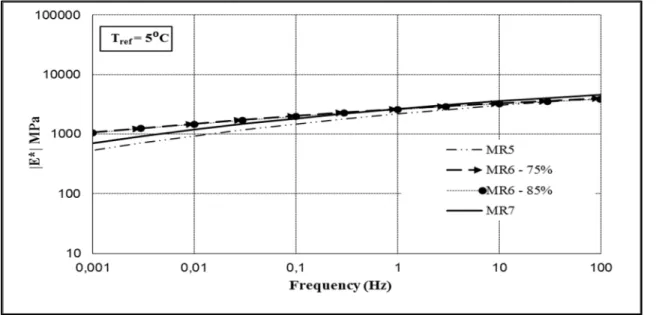
Figure 3-3 |E*| Master curves of the tested asphalt mixtures at Tref = 5⁰C ...42
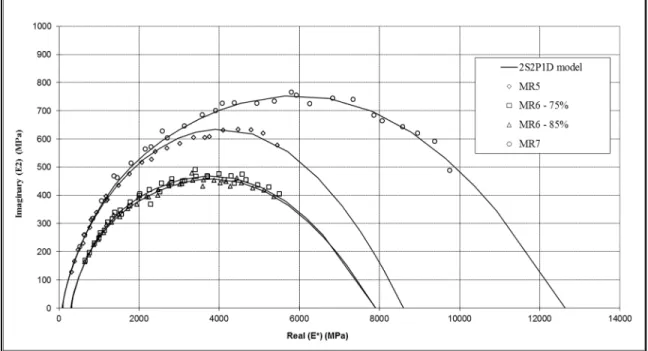
Figure 3-4 Complex module tested asphalt mixtures represented in the Cole-Cole diagram ...43
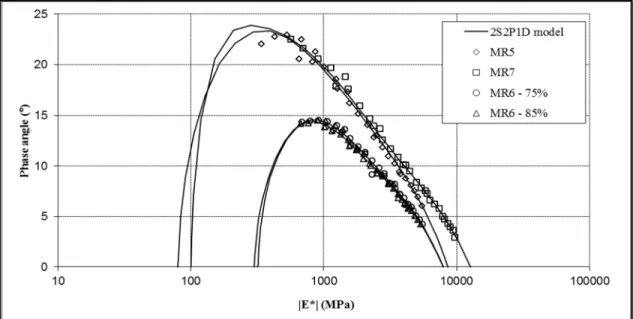
Figure 3-5 |E*| tested asphalt mixtures represented Black space diagram with 2S2P1D model ...45
Figure 3-6 AASHTO pavement design with the four different CRM ...47
Figure 4-1 Theoretical Resilient Modulus Values of a Full Depth Reclamation Layer ...59
Figure 4-2 Particle size distribution of the Reclaimed Asphalt Pavement (RAP), virgin aggregate (MG-20), and the Full Depth Reclamation (MR-5) mix 60 Figure 4-3 Original Gyratory Specimen (a) and Cored Specimen of 140 mm x 80 mm (b) ...62
Figure 4-4 Indirect Tensile Test Loading ...64
Figure 4-5 Complex Modulus Test with Confinement Pressure Cell...65
Figure 4-6 Horizontal stress distribution based on Boussinesq’s theory ...66
Figure 4-7 Influence of Curing Protocol on Indirect Tensile Strength (ITS) ...67
Figure 4-9 Influence of Confinement on the Dynamic Modulus at 23°C ± 1°C ...69
Figure 4-10 Influence of confinement on the E* components and the phase angle ...71
Figure 4-11 Comparison of dynamic modulus of pavement materials at 23°C ± 1°C ..72
Figure 5-1 Development of Stiffness modulus with curing temperature and time ...81
Figure 5-2 Average Monthly air Temperature in Montreal and Vancouver ...84
Figure 5-3 Indirect Tensile Strength (ITS) and Marshall Stability Test Apparatus ....85
Figure 5-4 Average results of dry Marshall Stability after different curing time and temperature for all CRM mixes ...87
Figure 5-5 Average dry ITS results of after different curing time and temperature for all CRM mixes (a. Emulsion mixes, and b. foam mixes)...88
Figure 5-6 Average dry ITS results of after different curing time and temperature for all CRM mixes Vs water loss (a. Emulsion mixes, and b. foam mixes) ...89
Figure 5-7 Air Voids according to the mixing and compaction temperature ...89
Figure 5-8 Average dry ITS results of after different curing time and temperature for all CRM mixes with an additional 14 days at 23°C cure (a. Emulsion mixes, and b. foam mixes) ...92
Figure 6-1 Complex modulus of Cole–Cole diagram with 2S2P1D model ...102
Figure 6-2 Writgen laboratory foaming Plant ...106
Figure 6-3 Compacted Marshall Specimens and Marshall Testing setup ...108
Figure 6-4 I ndirect Tensile Strength Test loading ...109
Figure 6-5 The graphical representation of the 2S2P1D model ...111
Figure 6-6 Complex Modulus Test setup and MTS Machine ...114
Figure 6-7 Marshall Stability of FDR materials ...115
Figure 6-8 Loss of stability of FDR Materials ...115
Figure 6-9 Indirect Tensile strength test results of FDR Materials ...116
Figure 6-11 Complex modulus master curve in Cole & Cole axes ...119 Figure 6-12 Complex modulus master curve in Black space diagram ...119 Figure 6-13 Master curves of the norm of complex modulus ...121 Figure 6-14 Master Curves and Shift factors of complex modulus norm at
LIST OF ABREVIATIONS
AASHTO American Association of State Highway and Transportation Officials
AC Asphalt Content
ASTM American Society for Testing and Materials BSM Bitumen stabilized materials
CSS1P Cationic Slow Setting 1 with Polymer
CSS1S Cationic Slow-Setting with soft bitumen emulsion CIR Cold In-Place Recycling
CRM Cold Recycled asphalt/bituminous Materials
EA Emulsified asphalt
ESAL Equivalent Single Axle Load
FA Foamed asphalt
FCM Federation of Canadian Municipalities FHWA Federal Highway Administration
FDR Full depth reclamation
HMA Hot mix asphalt
ITS Indirect tensile strength ITSM Indirect Tensile Stiffness Modulus MTQ Ministry of transportation Quebec
OPSS Ontario Provincial Standard Specifications
PCC Portland cement Content
PG Penetration grade
RAP Recycled asphalt pavement
SGC Superpave gyratory compactor
TTSP Time Temperature Superposition Principle TSR Tensile Strength Ratio
INTRODUCTION
Because of an aging road infrastructure network, interventions to restore the pavement condition, enhance the user’s riding comfort, and/or improve the road safety are very common in Canada. Since the 1970s, rehabilitation treatments as opposed to new constructions have been gaining momentum. Because of the economic crisis, increased cost of materials like virgin aggregate, binder, etc., and a strong desire to preserve effective and sustainable roadway system have fueled a reviving of recycling existing pavement as a primary option.
In other words, when the roadway network was rapidly expanding, the initial construction cost was the most important issue, with little or no attention being paid to the ongoing maintenance costs. Since funding for preventive maintenance, preservation, rehabilitation, and reconstruction of roadways will have to compete with other demands on the public purse, innovation is required in order to do more with less. Asphalt recycling is one way of increasing the effectiveness of existing budgets in order to maintain, preserve, rehabilitate and reconstruct more miles (kilometers) of roadway for each dollar spent (ARRA, 2001).
There are several methods to recycle asphalt pavements. All over the world, the experience and the choice of technology for In-place recycling varies broadly. Particularly, different methods of recycling and reclamations are applicable to different types, levels, and severity of distresses, and hence different periods in the pavement life as shown in Figure 0.1. Typically, Hot In-place Recycling (HIR) is used when the majority of the pavement distresses are minimal and limited to the upper few inches of the surface of the roadway with no evidence of structural problems (i.e., longitudinal cracking in wheel path, alligator cracking, and edge cracking). Cold In-place Recycling (CIR) is used when there is a higher number, type, and severity of non-load-related distresses that may extend farther down from the surface. CIR with an overlay can be used to address some load-related distresses. Full Depth Reclamation (FDR) is an in-place rehabilitation process that can be used for reconstruction, lane widening, minor profile improvements, and increased structural capacity
by addressing the full range of pavement distresses. The anticipated depths of the distresses, combined with the overall existing asphalt pavement thickness, are used to identify the type of in-place recycling process (es); that can be expected to extend the life of the pavement most economically. Mainly CIR and FDR with the addition of Bitumen Stabilized Materials (BSM) like foamed or emulsified asphalt.
Figure 0.1-1 Pavement condition and type of In-place recycling Taken from the Stroup-Gardiner (2011)
CIR is a Cold In-Place Recycling method, in which only the existing bituminous materials are recycled which is considered as 100% RAP. In this method bitumen is added, as an emulsion or foam, and makes a good base material that needs to be covered with a layer of Hot Mix Asphalt (HMA) or a surface treatment. CIR can be accomplished as full depth reclamation or partial depth recycling. In partial depth recycling a portion of asphalt (Base) layer in the pavement, normally it is performed at the depth of 50mm to 100mm (2 to 4in), and it is more frequently used to create a base course, in most cases low-to-medium traffic volume highways (ARRA, 2001; Kandhal & Mallick, 1998). On the other hand, in FDR, both asphalt layer and part of the granular base are recycled (50% RAP and 50% virgin aggregate) at the same time and reconstructed with or without the addition of bitumen. FDR materials also need to be covered with a layer of HMA or surface treatment. It is usually done for depth between 100 mm to 300 mm (4 to 12 in.) (ARRA, 2001; Epps & Allen, 1990).
A typical view of CIR and FDR construction process as illustrated in Figure 0.2. CIR and FDR together hereafter referred to as Cold Recycled bituminous Materials (CRM) in this thesis.
Figure 0.1-2 Cold recycled bituminous materials process
(a) Cold in-place recycling process (CIR), (b) Full-depth reclamation process (FDR) (c) Surface treatment with hot mix asphalt for CIR and FDR process
Taken from Bitume Quebec (2018)
The behavior of Bitumen-Stabilized Materials (BSMs) is uniquely different from all other materials used to construct road pavements. Unlike asphalt, where the bitumen as a continuum binds all the aggregate particles together, the bitumen in a BSM is dispersed selectively amongst only the finer particles, regardless of whether bitumen emulsion or foamed bitumen is used as the stabilizing agent (Jenkins, 2012). Firstly, Bitumen Emulsion can be defined as, it is comprises bitumen emulsified in water. The bitumen is dispersed in the water in the form of an oil-in-water type bitumen emulsion. An emulsifying agent holds the bitumen in suspension. The emulsifying agent determines the charge of the bitumen emulsion. Cationic bitumen emulsions have a positive charge and anionic bitumen emulsion
have a negative charge. Secondly, foamed bitumen is produced by injecting water into hot bitumen, resulting in spontaneous foaming. The physical properties of the bitumen are temporarily altered when the injected water, on contact with the hot bitumen, is turned into vapor, which is trapped in thousands of tiny bitumen bubbles. Particularly, CIR and FDR of asphalt pavements are famous design alternatives for road rehabilitation. These techniques has shown huge potential saving money and material, and allowing a convenient way of fixing proper grade and cross slope to highway. However, even if many successful projects were completed with these techniques, there are still some problems are not addressed by the researchers on the subject.
The mix designs are performed to determine the desirable amount of the different materials used in the composition of the Cold Recycled bituminous Materials (CRM) and to ensure that these materials meet the desired quality requirements. As far as, the method of Cold recycled asphalt mixture design based on the Hveem stabilometer, Marshall stability test results, air voids, resilient modulus test, most of the times based on experiences, sometimes field trials, and visual condition of samples to establish the optimum binder content. A standard national method is not available. However, A review of practice in the North America, Epps et al. (1990) showed that the Marshall mix procedure was used in over 60% of the agencies that used mix design procedures. Other agencies used the Hveem resilient modulus and indirect tensile test. However, 25% of the agencies did not use a formal design procedure at all, rather relying on field workability and experience for determining the binder content. There is also research underway to adopt Superpave technology to CIR mixtures (Emery, 1993; Tia, Castedo, Wood, & Iida, 1983). Furthermore, in 2014, as reported by task group (TG6) of RILEM TC-237 SIB (Tebaldi et al., 2014) ˝Currently a universally accepted specimen preparation procedure for cold-recycled mixtures is not available, therefore universities, research centres and road administration agencies are developing specific methods based on their laboratory tests and field experiences˝. The CIR pavement design process involves testing of representative specimens of foamed and emulsified treated materials as means to evaluate pavement performance over time. To adequately acquire representative specimens, it is necessary to condition the materials in a process called Curing (K. J. Jenkins & Moloto,
2008). Although curing procedures have been adopted in many countries, the curing protocols are varied and an accepted procedure is currently not available. The lack of representation is due to complex process of curing simulation, like type and content for composition materials, climatic conditions, mechanical properties of the materials, etc. (K. J. Jenkins & Moloto, 2008). Finally, all the various mix design methods provide an approach for selecting the type and the percentage of asphalt binder; however, the methods of compaction, curing and testing differ.
At early stages, the behavior of FDR materials is similar to a granular material, but after the curing phase ends, the behavior is close to a HMA. Therefore, it has been suggested that the FDR materials treated with asphalt binder like emulsion or foam, have a time dependent behavior (Pérez, Medina, & del Val, 2013). Hence, they can be considered, at some point, to be in between a purely granular material and a HMA. Due to time dependent behavior inherent to CRM’s, Carter et al. (2013) acknowledged the challenge related to measuring the stiffness of CRM, given the variation that occurs depending on the considered curing protocol. Stiffness values of FDR mixes can be determined through a resilient (MR) or a
dynamic modulus test. Santagata et al. (Santagata, Chiappinelli, Riviera, & Baglieri, 2010b) investigated the short term stiffness of FDR mixes by using a triaxle cell. A very limited amount of research has been done on the influence of confining pressure on CRM’s with dynamic modulus. Due to a lack of research results in CRM’s, the current mechanistic-empirical pavement design guide (M-E PDG) and design method treat CIR mixtures the same as HMA base course. However, they significantly vary in terms of stress-strain behavior where that of CIR materials is influenced by stabilizing agents and the quality of RAP materials. Todd and Richard (Thomas & May, 2007) reported that the dynamic modulus of Full-Depth Reclamation with emulsified asphalt (FDR-emulsion) was influenced by the mix composition, quantity of RAP, and binder type.
However, a review of research studies on cold recycled bituminous materials reveals that, this may be attributed the fact that the mix design procedure for CIR and FDR materials has been mostly based on Marshall mix design procedure which is empirical, which makes it
difficult to use in further application. It should be noted that, much research has been undertaken to better understanding the emulsion and foaming technologies on cold recycled bituminous materials separately. Furthermore, based on previous research on cold recycled materials, the early stage strength development, the impact of the mixing, compaction and curing temperature on the mechanical properties, double coating of cold recycled bituminous materials and modeling of these materials has not been completely studied. This manuscript based PhD thesis aims to address those problems.
CHAPTER 1
RESEARCH PROBLEM AND OBJECTIVES
1.1 Research Problem
In Québec, over the past twenty years, Cold In-place Recycling (CIR) and Full-Depth Reclamation (FDR) have been reliable rehabilitation techniques; restoring pavement condition at affordable cost with a lower footprint on the environment. Lot of research is being undertaken on many aspects of pavement maintenance and rehabilitation in order to increase their lifespan. However, limited amount of research exists in the literature even though many successful projects were completed with CIR and FDR. This may be attributed to the fact that the mix design procedure for CIR and FDR has been mostly experience based which makes it difficult to use these materials. In addition, to decrease the environmental impact, a major advantage of Cold Recycled bituminous Materials (CRM) over hot recycling asphalt techniques is the possibility to reuse higher percentages of Recycled Asphalt Pavement (RAP). In hot in-plant recycling of asphalt mixtures, a maximum of 40% RAP is generally accepted in the base layers, and this amount is reduced to 15% or even prohibited in the surface layers. In CRM, the usage of RAP can be as high as 100%, but this generally results in a loss of mechanical properties and durability (Stimilli, Ferrotti, Graziani, & Canestrari, 2013). Therefore, it is necessary to study and determine the correct mixture proportion for CRM through a mix design procedure, which consider RAP percentage is the most important parameter.
CIR is a cold recycling method in which only the existing bituminous materials are recycled. In this method, bitumen is added in the form of an emulsified asphalt or foamed asphalt to serve as a good base material that is covered with a layer of Hot Mix Asphalt (HMA) or a surface treatment. On the other hand, in FDR, both asphalt layer and part of the granular base are recycled at the same time and reconstructed with or without the addition of bitumen. As with CIR, FDR materials need to be covered. It should be noted that CIR and FDR
characteristics change over time. For instance, the stability of these materials is low at younger age and it increases with time. Different knowledge gaps exist, and one of the areas where much work is needed is in understanding and modeling the behavior of these materials at young age. These materials, when treated with asphalt emulsion, have evolving characteristics with time, which is linked, partially, to their water content. Considering the time dependency of the behavior of CRM, it is important to study the impact of curing conditions on CRM.
In addition to time, in most countries, there is a low-temperature limit to lay down HMA because if it is too cold, it becomes impossible to get proper compaction. All over the world, various studies have been done to understand the compaction behavior of hot mix asphalt materials. However, limited research is available on low-temperature compaction of CRM. The compaction of CRM with emulsified asphalt or foamed asphalt is a very important factor to get good mechanical characteristics. It helps to position the particles of the material and redistribute the binder from separate globules to continuous films (Needham, 1996). The compaction quality has an impact on air voids of the CRM (Kassem, 2008; Lauter, 1998; Pellinen & Witczak, 1998). Not only the quantity, but the level of uniformity of the air voids distribution considerably affects the behavior of the mixture (Xu, Chang, Gallivan, & Horan, 2012 Castillo and Caro 2013). However, too much compaction can also be detrimental. Quick and Guthrie (2011) stated that the severity level of compaction impacts strength development in emulsified asphalt mixture. Compaction can contribute to the initial damage of the emulsified asphalt, but also worsen the curing period within these mixtures. Subsequently, it is needed to understand the influence of curing temperature and compaction on the mechanical properties of FDR materials treated with emulsified asphalt and foamed asphalt respectively.
Furthermore, FDR with emulsified asphalt (EA) and FDR with foamed asphalt (FA) technologies are now fully consolidated in practice and witness of numerous studies (Y. Kim & Lee, 2006), and developments over the years. Very little information is available in the literature and in practice on the combined usage of these two techniques. It is believed that with emulsified asphalt, most particles are well coated, which is not the case with foamed
asphalt. However, foamed asphalt does work as a binding agent in CRM. As of now, there have been no precise mix design specifications to understand the double coating (combined) technology. Consequently, this can achieved through using the proper approach to develop the mix design and validate the possibility of using both emulsified asphalt and/or foamed asphalt on FDR materials to have better mechanical characteristics. Another aspect of these materials that needs to be studied is their rheological behavior (complex modulus).
1.2 Objectives
The main objective of this research project is to enhance the short term and long-term performance of the Cold Recycled bituminous Materials with asphalt emulsion and/or with foamed asphalt.
The specific objectives of the study are listed below:
• to evaluate the impact of the addition of four different percentages of RAP (50%, 75%, 85%, and 100%), on the rheological behavior of the cold recycled emulsified asphalt materials;
• to establish a performance testing protocol for Cold Recycled bituminous Materials based on the age of the mixture (at the early age of the mix);
• to determine the influence of confinement pressure on the complex modulus of FDR mixtures;
• to evaluate the effect of compaction and curing temperature and duration, on the degree of compaction and on the Marshall stability and indirect tensile strength (ITS) of CRM; • to compare the behavior of Cold Recycled bituminous Materials treated with foamed
asphalt (CRM-foam) and Cold Recycled bituminous Materials treated with emulsified asphalt (CRM-emulsion);
• to determine the mix design procedure for double coating full depth reclamation materials with the addition of four different combinations of the binders (foam and emulsion);
• to evaluate the complex modulus of the double coated full depth reclamation materials with the addition of four different combinations of the binders (foam and emulsion).
1.3 Outline of the Thesis
This Ph.D. thesis is manuscript based, which means that most chapters are published or submitted papers. The outline of this dissertation is as follow:
chapter 1 - Introduction of research problem and objectives; chapter 2 - Literature Review;
chapter 3 - presents the first published article of this Ph.D. program. The article is titled: Rheological behavior of cold recycled asphalt materials with different contents of recycled asphalt pavements;
chapter 4 - presents the second paper that covers the study of the use of confining pressure when measuring the complex modulus of full-depth reclamation materials;
chapter 5 - presents the third article of this Ph.D. program. The article is titled: study of the impact of the compaction and curing temperature on the behavior of cold bituminous recycled materials;
chapter 6 - presents the fourth paper of this Ph.D. program. The article is titled: effect of binder type on full depth reclamation material behaviour;
CHAPTER 2
LITERATURE REVIEW
2.1 Introduction
The literature review comprised of many areas of Cold In-place Recycling (CIR) rehabilitation technique, starting from the Reclaimed Asphalt Pavement (RAP) i.e., basic material handling in recycling. This chapter also explains the viscoelastic behavior of bitumen, current practices for cement based treated materials with cold asphalt mixtures, influences of curing time and moisture content on rheological properties of the cold mixtures and mix design procedures for cold mixes using bitumen stabilized materials based on gyratory compacter, and impacts of air voids on characteristics of asphalt mixtures. It includes mechanical behavior and performance evaluation of CIR and FDR mixtures using bitumen stabilized materials.
2.2 Reclaimed Asphalt Pavement (RAP)
Asphalt recycling is not a new concept. The technique was initially developed in 1915, but it started gaining popularity since 1975 because it offers reduced costs; geometric preservation; and conservation of aggregates, binders, and energy (Epps & Allen, 1990).
Sullivan (1996) provided an executive summary of the state of the practice of recycled HMA in 1996. The report reveals that about 45 million tons of recycled asphalt pavement (RAP) are generated each year and 80% of the RAP is reused in highway applications. This makes RAP the most recycled product in the United States, both in tonnage (73 million tons) and in percentage of product recycled (80% of RAP is recycled) (Beyond Roads, 2014). Asphalt rehabilitation projects produce about 100 million tons of RAP per year from millings, presenting a major solid waste concern (Alam, Abdelrahman, & Schram, 2010).
There are two common sources of reclaimed asphalt: reclaimed asphalt concrete (RAP) and recycled asphalt shingles (RAS). RAP comes in the form of lumps and millings. RAS can be obtained as construction waste or manufactured ends. Any of these materials can be crushed and blended, with or without the addition of virgin aggregate, to create blends. Reclaimed asphalt is used as a source of two materials: aggregate and bitumen (Widger. A., 2012). Old asphalt materials can be recycled using cold, warm or hot production methods, and the addition of new binder, asphalt mixture, water or mineral aggregate in the old asphalt can be performed either in the plant or on site. Recycled asphalt can be used for wearing courses, base courses or road bases. Cold and warm methods are mainly intended for roads with low or medium traffic volumes, while hot recycling is also suitable for roads with high traffic volumes (Jacobson, 2002).
From the sustainability point of view, recycling reuses the existing aggregates and RAP binder, thus reducing the need for new materials and the energy it takes to produce them. In addition, recycling can reduce transportation costs and expenses associated with landfilling or storage of the milled material. There are additional environmental and societal benefits of reusing existing resources that are difficult to quantify (McDaniel, Kowalski, & Shah, 2012).
2.2.1 RAP Content in Bituminous Mixtures
Under the current economy, there is an increased interest in using higher amounts of RAP in more applications. As a result, some states are considering expanding and revising their specifications regarding RAP usage. Recently, for example, the Indiana DOT began to allow the use of RAP in surface mixes. The initial allowance for RAP in surface courses permitted the use of 15% RAP in surface courses on roadways with a design traffic level of less than 3,000,000 equivalent standard axle loads (ESALs). In 2010, the specifications were expanded to allow up to 15% by weight of the total mixture for higher traffic categories (over 3,000,000 ESALs). Finally, in the 2012 specifications, the allowable RAP content is expressed in terms of binder replacement (percent of recycled binder as a percentage of total binder in the mix); up to 40% of the total binder can now come from recycled materials
(RAP and shingles) for traffic volumes below 3,000,000 ESALs and 15% for traffic volumes greater than 3,000,000 (McDaniel et al., 2012).
Federal Highway Administration (FHWA) was conducted the survey in 2011; the majority of State highway agencies (more than 40) allow more than 30 percent RAP in the typical hot mix asphalt (HMA) mixture. Considering the cost of pavement materials, it was found that the incorporation of RAP into HMA pavement provides a saving ranging from 14 to 34 percent when the RAP content varied between 20 to 50 percent (Kandhal & Mallick, 1998).
According to Federation of Canadian Municipalities (FCM), (2005), the maximum amount of RAP permitted in hot mix asphalt (HMA) varies somewhat from province to province in Canada. All provinces except Nova Scotia and Prince Edward Island permit RAP to be use in HMA, provided that testing is completed to ensure the quality (penetration/viscosity, or performance grading for Superpave mixture or the asphalt cement) and uniformity of the RAP source and that the reclaimed hot mix (RHM) meets all specification requirement for asphalt concrete. Ontario (Ontario Provincial Standards Specifications (OPSS) 1150) limits the amount of RAP in surface course HMA to 15 percent maximum with 30 percent in conventional binder course mixes and up to 50 percent in certain situations subject to confirmatory testing. Newfoundland allows 10 percent RAP in leveling course only, whereas Québec accepts up to 15 percent RAP in RHM. Alberta and New Brunswick permit higher RAP addition levels (30 percent and 40 percent (±5 percent), respectively). British Columbia, Saskatchewan and Manitoba do not limit the amount of RAP that can be added to HMA.
According to the FHWA RAP Expert Task Group (n.d.) the following table 2.1 provides a list of the locations of high RAP field projects in HMA, the percent RAP used in each project and the dates of construction held in United States of America (USA). In cold and warm recycling, the proportion of recycled asphalt may be up to 100%, while in heated plant recycling the proportion may be 10-40% (Jacobson, 2002).
Table 2.1 High RAP field projects
Location % RAP Date of Construction
North Carolina 40% September 20017
South Carolina 30 and 50% October 2007
Wisconsin 25% November 2007 Florida 45% December 2007 Kansas 30 to 40% May 2008 Delaware 35% Summer 2008 Minnesota (MnROAD) 30% 2008 Illinois 10 to 50% allowed 2008
2.2.2 Performance of RAP in Bituminous Mixtures
Many studies are available on performance evaluation with conventional asphalt mixes (mix without RAP). Some studies indicates the performance of pavements with properly prepared recycled asphalt in terms of fatigue, rutting, thermal resistance and durability proved to be satisfactory (Imad L., Elseifi. Mostafa, 2007). Some researchers found that recycled mixes have good resistance to moisture damage at low RAP percentages whereas there is no significant increase in resistance to moisture damage with increase in RAP percentage in mix (Huang, Shu, & Vukosavljevic, 2011) and some studies state that resistance to moisture damage significantly decreases with presence of RAP (Huang et al., 2011). Some researchers found that presence of RAP increases the stiffness of the mix (Aravind & Das, 2007) and decreases in some studies(Huang et al., 2011). Similarly fatigue life increases (Aravind & Das, 2007) and decreases (Rebbechi & Green, 2005) and vary according to the temperature (Puttagunta, Oloo, & Bergan, 1997) Tensile strength increases (Puttagunta et al. 1997 & Watson et al. 2008) or similar to virgin mixes (Huang et al., 2011). Some researcher’s state that based on the laboratory testing work carried out on virgin mixes and mixes with 20 % RAP, it was found that addition of RAP improves all the properties of the bituminous mixes.
This indicates that mixes with 20% RAP would perform better than the virgin mixes under similar conditions (Pradyumna, Mittal, & Jain, 2013).
2.2.3 Uses of RAP in bituminous mixtures
From an environmental perspective, it is essential that construction materials, such as RAP, be recycled where possible. The use of RAP will serve as a supplement to natural aggregates in order to conserve natural resources and keep asphaltic concrete out of landfills (Kandhal & Mallick, 1998). To accomplish this, almost all agencies allow the use of reclaimed pavement materials in some form.
2.3 Mix Design for Cold Recycling Mixtures – A Review
All over the world increase in use of Bitumen Stabilized Material(s) (BSM) mixtures in road construction and rehabilitation has created a need for sound guidelines to be established for the laboratory mix design procedures for Cold Recycled bituminous Mixtures (CRM).
2.3.1 Role of Bitumen Stabilized Materials in CRM
From the early 1960s, Bowering (1970); Martin (1976); Acott (1979); Lee (1981); Ruckel et al. (1983) studied the expanded (foamed) asphalt mixtures using virgin materials. Since then, foamed asphalt has begun to be implemented in the FDR process of old asphalt pavement. Other researchers, Hicks (1988); Wood (1982); Al (1983); T. & Wood (1983); v W. & Wood (1983); and Al (1985) have been researched the design procedure and the performance of FDR foam. Maccarrone et al. (1994) introduced a FDR-foam process called FOAMSTAB with advantages such as a cost effective, good fatigue property and rapid curing. In 2002, foamed asphalt was used as a stabilizing agent in full depth reclamation of Route 8 in Belgrade (Marquis, Bradbury, & Colson, 2003). However, there have been limited CIR projects were constructed using foamed asphalt as a stabilizing agent.
In the 1990s, due to the advancement of CIR methods and equipment, the CIR technique has been implemented more frequently using a foamed asphalt process. However, there is currently no nationally accepted method for CIR-emulsion mix design process (ARRA, 2001)and CIR-foam projects (Y. Kim & Lee, 2012). AIPCR and PIARC (2002) published a draft report on CIR of pavements with emulsion (CIR emulsion) or foamed bitumen (CIR foam). However, this report was not intended as a specification; it rather provided information on the applications in different countries. The western United States uses emulsified recycling agents proposed by the Pacific Coast User-Producer Group, among other types of binders according to AASHTO method T-59 as shown in Table 2.2 (Pacific Coast User-Producer Conference, 1989). Cutbacks and soft asphalt cements are used by some agencies (L. E. Wood, White, & Nelson, 1988). The type and amount of diluent should be known by the engineer before any of these liquid asphalts is used (Epps & Allen, 1990).
The amount of BSM places a major role in mix design for CRM, generally the percent of binder for CIR ranges from 0.5% to 3.0% emulsion, with 0.5% to 1.8% suggested by Oregon (Allen, 1988; Allen, Nelson, Thirston, Wilson, & Boyle, 1986) and 1.2 to 1.5 percent in Pennsylvania (Jester, 1987) as starting points for mixture design. Similarly, quantities in the range from 0.5 to 1.5 percent are used for the partial-depth operations, whereas qualities in the range from 1.5 to 3 percent are used for the full-depth operations (Epps & Allen, 1990). Another researcher states that, the typical emulsion content for standard CIR ranges from 1.5 to 2.2 percent (Croteau & Lee, 1997), 0.5 to 2.5 percent (Murphy & Emery, 1996), and 1.0 to 3.0 percent for CIR-foam (Kim, Lee, & Heitzman, 2007).
The addition of virgin aggregate recycled pavement appears to be a widespread standard practice. The reasons cited by different agencies (Epps & Allen, 1990) for adding virgin aggregate include providing additional thickness, correcting gradation (The Asphalt Institute, 1983), and providing for acceptance of additional binder or increase the stability of the recycled mix (Recycling Manual, 1982), sometimes may be to modify RAP characteristics (Widger. A., 2012). The amount of new aggregate ranges from 15 to 50 percent ( Jester, R., 1987, Wood et al. 1988) and 27 to 28 percent for CRM (Yao, Li, Xie, Dan, & Yang, 2011). It
has been shown that, for CIR processes, the addition of 20 to 25 percent virgin aggregate decreases porosity and improves stability (Murphy & Emery, 1996). Scholz et al. (1990) states that new aggregate typically not used on Oregon projects and not directly considered in the Oregon method of mixture design. The addition of new aggregates may not be necessary in some projects(Jahren & Chen, 2007) in other hand, based on the screening results of the RAP, new aggregates need to be added to CRM (Yao et al., 2011).
Table 2.2 Emulsified recycling agents of the Pacific Coast User-Producer Group (According to AASHTO method T-59)
Test ID Test ERA 5 ERA 25 ERA 75 CMS-2RA HFE-200
T-59 Viscosity at 77⁰F 15-100 15-100 15-100 - - T-59 Viscosity at 77⁰F - - - 50-450 50 min T-59 Sieve 0.1 max
0.1 max 0.1 max 0.1 max 0.1 max
T-59 One-day storage
stability (%)
1 max 1 max 1 max 1 max 1 max
T-59 Residue at
500⁰F (%) 60 min 60 min 60 min 60 min 60 min T-59 Oil Distillate
(%)
- - - 5-15 0-7
T-59 Charge + Pass + Pass + Pass + Pass - Pass
Residue Tests T-202 Viscosity at 60⁰C 200-800 1,000-4,000 1,000-4,000 - - T-49 Pen - - - 100-250 200-350 ASTM D4124
Saturate (%) 30 max 30 max 30 max - -
T-50 Float Sec 140⁰F - - - - 1200 min T-44 Solubility (%) 97.5 min 97.5 min 97.5 min 97.5 min 97.5 min T-240 RFTO Ratio 2.5 max 2.5 max 2.5 max - -
2.3.2 Emerging Mix Design for CRM
The method of mixture design based on the Hveem stabilometer, Marshall stability test results, air voids, resilient modulus test, most of the times based on experiences, sometimes field trials, and visual condition of samples to establish the optimum binder content. A standard national method is not available; however, certain basic steps are normally included in the mix design process. These include (Epps & Allen, 1990):
Various steps involved in Mix design:
• Obtaining representative field samples from the pavement or from stockpiles of reclaimed materials;
• Processing of field samples for use in mix design;
• Evaluation of RAP: Asphalt content, Asphalt physical properties (Penetration, viscosity), Aggregate gradation;
• Selection of amount and gradation of new aggregate; • Estimate the asphalt demand;
• Selection of type and amount of recycling agent;
• Mixture, compaction, and testing of trail mixture, Initial cure properties, Final cure properties, Water sensitivity;
• Establishment job mix formula; • Adjustment in filed.
Similarly, Figure 2.1 shows the key steps in the mix design of an asphalt mixture (Mallick & Tahar, 2013). Recently, many mix design methods have emerged in an effort to improve the CIR process as a viable method for pavement rehabilitation.
Methods proposed by different agencies and groups that appear to have the most developed mix design procedures for CIR (Epps & Allen, 1990):
• Chevron USA, INC. Mix Design Method; • Corps of Engineers;
• Nevada;
• Oregon Mix Design; • New Mexico;
• Pennsylvania Mix Design Method.
Figure 2-1 key steps in the asphalt mix design Taken from (Mallick & Tahar, 2013)
• Purdue; • Texas;
• Indiana (Tia et al., 1983);
• The United Kingdom (Stock, A. F., 1987); • Ontario (Emery, 1993);
• Israel (Cohen, Sidess, & Zoltan, 1989).
Appendix I summaries the mix design procedures, and the sampling and testing techniques used by some of these organizations (Oqueli, 1997). The methods are generally very similar. All but one uses the Marshall and Hveem tests. Some use kneading or gyratory compaction, while others use the Marshall method. The main differences are in the addition of new aggregate, and in curing time and temperatures.
The Asphalt Institute has recommended the modified Marshall Mix Design procedure for the design of CIR mixes (ASTM D - 1559). Such a design initially involves obtaining samples of the candidate pavement to determine the gradation of the aggregate, the asphalt content, and the penetration and viscosity of the asphalt binder (Kearney & Huffman, 1999). American Association of State Highway and Transportation Officials/the Associated General Contractors of America/American Road and Transportation Builders Association (AASHTO-AGC-ARTBA) Joint Committee Task Force 38 Report (AASHTO Task Force No.38, 1998) contain modified mix design procedures for both Marshall (ASTM D- 1559 or AASHTO T-245) and Hveem (ASTM D-1560 and D-1561 or AASHTO T-246 and T-247) test methods. There is also research underway to adopt Superpave technology to CIR mixtures (ARRA, 2001).
CIR mix design serves as an initial job mix formula, the same as in hot mix asphalt (HMA) construction. Adjustments are generally required for workability, coating, and stability (ARRA, 2001). Most mix design methods for CIR mixes involve the application of asphalt emulsions, emulsified recycling agents or cutbacks as the recycling additive although foamed
asphalt and chemical recycling additives have also been used (Acott, 1979b; Mallick & Tahar, 2013).
Three basic theories have been proposed for designing CIR mixes with these recycling additives (AASHTO Task Force No.38, 1998). The first theory assumes that the RAP will act as a black aggregate and the mix design consists of determining a recycling additive content to coat the aggregate. The second theory evaluates the physical and chemical characteristics of the recovered asphalt binder and adds a recycling agent to restore the asphalt binder to its original consistency. The assumption is that complete softening of the old asphalt binder occurs. The third and most prevalent theory is a combination of the first two, where some softening of the old asphalt binder occurs. This theory is referred to as the effective asphalt theory, where the recycling additive and the softened aged asphalt binder form an effective asphalt layer. The degree of softening is related to the properties of the old asphalt binder, recycling additive, and environmental conditions. Because the degree of softening is difficult to quantify, it is recommended that mechanical tests on the CIR mix be a part of all mix designs (Engelbrecht, Roberts, & Kennedy, 1985; Y. Kim, Lee, & Heitzman, 2008).
2.4 Curing Mechanism of CRM
This section is explores some of the few critical findings relative to the curing as published by various researchers around the globe. Due to the vast amount of challenges on curing of bitumen stabilized material (BSM)‘s, focus has been applied to aspects that are widely accepted as important parameters to investigate when addressing curing.
The Cold In-place Recycling (CIR) pavement design process involves testing of representative specimens of foamed and emulsified treated materials as means to evaluate pavement performance over time. To adequately acquire representative specimens, it is necessary to condition the materials in a process called Curing (K. J. Jenkins & Moloto, 2008). The Asphalt Institute (1997) reported that inadequate curing can produce high retained moisture contents that would increase the possibility of asphalt stripping and slow
the rate of strength development after an HMA overlay is placed. The curing process can be fairly rapid in favorable weather conditions, but high humidity, low temperature, or rainfall soon after CIR placement can increase the curing period significantly.
The Association Mondiale de la Route (AIPCR) and World Road Association (PIARC) (2002) recommend that the application of the HMA overlay should be delayed until the residual water has largely evaporated. This duration should not only depend on the climatic conditions following CIR construction, but also on the traffic level that the CIR layer could support after the completion of pavement construction. Figure 2.2 represent the moisture
condition of CIR pavement after surfacing.
Figure 2-2 Cold in-place recycling pavements in the field Taken from Kim et al (2011)
Although curing procedures have been adopted in many countries, the curing protocols are varied and an accepted procedure is currently not available.
The lack of representation is due to complex process of curing simulation, as emphasized by the following challenges (K. J. Jenkins & Moloto, 2008):
The complex composition and types of cold mixes to be conditioned in terms of: • binder type and content;
• aggregate grading and type (porosity, parent rock, petrography); • binder dispersion within the mix;
• moisture content after compaction;
• voids in the mix and particle orientation (linked to compaction method);
• climate in the area of application (temperature, evaporation and relative humidity conditions);
• mechanical properties;
• time duration since construction that is being simulated;
• service environment: Traffic effects and position of cold mix layer in the pavement structure.
2.4.1 Overview on Curing Procedures of CRM
Following recent research, a certain time period is necessary to allow the recycled mixture to cure and build up some internal cohesion before being covered with a wearing course (AASHTO Task Force No.38, 1998; ARRA, 2001; Bergeson & Barnes, 1998). As a result, curing is a process whereby bitumen stabilized materials gain strength over time accompanied by a reduction in the moisture content. Current practices for accelerated laboratory curing are extremely vast and tend to vary significantly between diverse institutions.
In the aim to address the problem, Marais & Tait (1989) recognized that the material properties of emulsion mixes changed seasonally with significant variation in the first 6 months to 2 years. Another researcher Leech (1994) conducted different studies by Chevron Research Company in California concluded that full curing of cold bituminous mixtures on site may occur between 2 and 24 months depending on the weather conditions.Similarly, a time period of 14 days is typically specified by Croteau & Lee (1997); Committee & No. (1998); Kandhal & Mallick (1998).
The most significant contributions relative to accelerated curing were made by Lee (1981) when he highlighted the following key points:
a) A recommendation that due to the effect of curing on the strength development of foamed mixes, mix design of foamed mixes should be locally based, using information obtained from trial sections;
b) Both curing temperature and the presence or absence of a mould during curing have a direct impact on moisture content of the specimen, which invariable affects mix behavior, particularly the Marshall Stability values.
Lee highlighted the importance of moisture considerations when selecting a curing procedure. Most researchers and mix designers in the period up to the year 2000 had ignored the importance of moisture content of cold mix during curing simulations. Residual moisture contents of less than 0.5% after oven curing at 60ºC were common. Lee’s findings mainly highlighted the need to link laboratory curing procedure with a mix property. Consequently, the effects of curing are material property dependent.
The 1999 to 2004 era marked an improvement towards curing procedures. The noticeable curing improvements were mainly driven by CIPR projects including the South African Bitumen Association (Sabita), Germany, USA and Europe. Following Lee’s findings, an improvement towards curing temperatures of cold recycled mixes followed, with temperatures of 60ºC being considered too high. The 60ºC curing temperature is above the softening point temperature of the base binder and may cause visual redistribution and dispersion of the bitumen.
Subsequently, the most noticeable improvement followed when a target moisture content equivalent to field equilibrium moisture content (EMC) of the cold mix after curing for a specified period was established (KJ Jenkins, 2000). A summary of the revised curing protocols is presented in Table 2.3.
The influence of active fillers was incorporated in the (SABITA, 1999) guideline where stipulations were made for non-elevated temperature curing. In the case of using cement for emulsion mixes, a 7 day cure at ambient temperature was proposed whilst for no cement mixes a 28 day ambient temperature cure was suggested. In Europe, both Brown & Needham (2000) particularly investigated the influence of cement in emulsion mixes. Findings from their research concluded that, although cement dramatically increases mix stiffness, it does not necessarily repel moisture from the mix.
In 2003, Thanaya (2003) conducted laboratory curing of the cold mix was carried out in an oven set at 40°C. Full curing conditions were achieved when the specimens, following repeated weighing, maintained a constant mass at 40°C. Typically, full curing conditions were achieved within 18–21 days for samples with air void values in the range 8–9%.
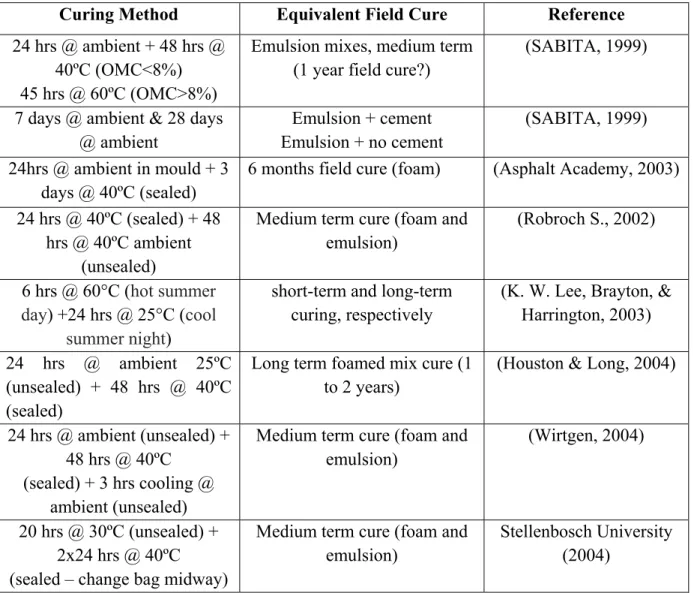
Table 2.3 Amended Curing Procedures for Cold Mixes from 1999 to 2004 Curing Method Equivalent Field Cure Reference 24 hrs @ ambient + 48 hrs @
40ºC (OMC<8%) 45 hrs @ 60ºC (OMC>8%)
Emulsion mixes, medium term (1 year field cure?)
(SABITA, 1999)
7 days @ ambient & 28 days @ ambient Emulsion + cement Emulsion + no cement (SABITA, 1999) 24hrs @ ambient in mould + 3 days @ 40ºC (sealed)
6 months field cure (foam) (Asphalt Academy, 2003) 24 hrs @ 40ºC (sealed) + 48
hrs @ 40ºC ambient (unsealed)
Medium term cure (foam and emulsion)
(Robroch S., 2002)
6 hrs @ 60°C (hot summer day) +24 hrs @ 25°C (cool
summer night)
short-term and long-term curing, respectively
(K. W. Lee, Brayton, & Harrington, 2003) 24 hrs @ ambient 25ºC
(unsealed) + 48 hrs @ 40ºC (sealed)
Long term foamed mix cure (1 to 2 years)
(Houston & Long, 2004)
24 hrs @ ambient (unsealed) + 48 hrs @ 40ºC
(sealed) + 3 hrs cooling @ ambient (unsealed)
Medium term cure (foam and emulsion)
(Wirtgen, 2004)
20 hrs @ 30ºC (unsealed) + 2x24 hrs @ 40ºC (sealed – change bag midway)
Medium term cure (foam and emulsion)
Stellenbosch University (2004)
As observed in Table 2.3, almost curing temperatures of 40ºC were commonly used as means to retain field moisture conditions at the end of curing. Low moisture content may be a criterion to evaluate the curing of the mixture. However, such a criterion may be misleading because the moisture content is increased by rain. The material may have built up adequate internal cohesion, but rainfalls may have maintained the moisture content at a high level, incorrectly suggesting that the mixture has not sufficiently cured. As a rule of thumb, whenever a complete core can be extracted from the mat relatively easily, the material has built up enough internal cohesion to be covered (AASHTO Task Force No.38, 1998; ARRA,
2001; Kandhal & Mallick, 1998). Kim et al. (2008) prepared the same CIR-foam specimens for simple performance test and cured in the oven at 40°C for three days. The cured specimens were allowed to cool to a room temperature for 24 hours before testing. According to the test method LC 26-002, an acceptable mix, by Transport Quebec’s standards, has a dry Marshall stability of at least 8,000N and a retained stability of at least 60 percent. In this study, all mixes meet those requirements after 2 days of curing except the CIR without cement. The CIR mix without cement was still not acceptable after 5 days. However, the FDR mixes with foamed asphalt failed to meet the requirements at five days, except for the mix with cement (Lachance, Carter, & Tate, 2012).
2.4.2 Recent Developments in Curing Procedure of CRM with Emulsion
Following recent trends in various curing procedures, the need for unified curing procedure method became increasingly apparent. Sebaaly et al. (2004) recommended that the design process should evaluate the early stability of the designed CIR-emulsion mixture by using Hveem stability and resilient modulus.
They evaluated the CIR-emulsion mixtures at three different curing stages: (1) initial curing; (2) final curing; and (3) long-term curing as follows:
• initial curing: Specimens are cured in the mold at 25°C for 15 h;
• final curing: Specimens are extruded out of the mold and are cured in an oven at 60°C for three days;
• long-term curing: Specimens are extruded out of the mold and cured in an oven at 60°C for 30 days.
There exists some variation in the curing temperature and curing time adopted for CIR-emulsion mix design processes in the laboratory (K. W. Lee, Brayton, & Huston, 2002). Cross (2003) adopted two stages of curing for CIR-emulsion mixtures: (1) an initial curing stage; and (2) a final curing stage. Initially, samples were cured for 0 h, 0.5 h, 1 h, and 2 h after mixing. After the initial curing time, they were compacted by using a Superpave
gyratory compactor. The compacted specimens were then extracted from the mold and cured in a 60°C oven for 48 h. As mentioned in Table 2.4.,Lee et al. (2003) recommended curing periods of 6 and 24 h to simulate short-term and long-term curing, respectively. Curing temperatures of 60°C and 25°C were adopted to represent typical pavement temperatures during a hot summer day and a cool summer night, respectively. Because only the surface of CIR pavement is directly exposed to air in the field, Batista & Antunes (2003) covered all but the tops of some CIR-emulsion specimens with a plastic film to allow water to evaporate through the top surface only. They reported that water content evolution in the field would be between laboratory specimens with and without plastic films. They obtained cores from the site after one year of traffic loading and tested them for resilient modulus. The resilient modulus of CIR-emulsion specimens cured at room temperature for four months (two months with a lateral filmstrip and two months without it) exhibited resilient modulus between 2,000 MPa and 2,500 MPa, which were similar to those of the cores. The specimens cured in the oven at 60°C for three days, however, had lower resilient modulus than the cores. On the basis of the limited laboratory test results, Carter et al. (2007) concluded that accelerated curing at 60°C in an oven for 24 hours seems to be sufficient to achieve a consistent Marshall stability. CIR materials show good rutting and thermal cracking resistance when cured in the oven at 60°C for 48 hours. They reported that overall performance of suggested accelerated curing procedure showed increase in mechanical properties of about 10 to 15 percent. Carter et al. (2008) recognized that for less than 6 hours of air cure for CIR-emulsion samples with cement, the ruts are too deep. If those results were representative of field results, this would mean that a minimum of 6 hours curing period would be needed before opening it to traffic. Feisthauer et al. (2013) reported that the all specimens were oven cured at 38°C for 24 hours. They did this way in order to lose water and thus achieve the early-life field like conditions after the curing and hardening process subsequent to placement and compaction.
Finally, the curing process can be fairly rapid in favorable weather conditions, but high humidity, low temperature, or rainfall soon after CIR placement can increase the curing period significantly(Y. Kim, Im, & Lee, 2011). As mentioned earlier the curing duration should not only depend on the climatic conditions following CIR construction, but also on
the traffic level that the CIR layer could support after the completion of pavement construction.
2.4.3 Need for accelerated curing
According to Serfass et al. (2004), in the field, the cold mixes reach their mature level of properties only after a period of time. In temperate climate and under medium traffic, at least one complete cycle of seasons is necessary for the mix to attain such stable condition. The curing time may be longer if the climate is cooler or more humid, the traffic lighter - and conversely. Evaluating cured cold mixes in the laboratory is clearly necessary, but reproducing exactly field curing conditions is too complicated and, above all, time-consuming. An accelerated curing method is necessary.
The requirements are:
• The curing procedure(s) should be as short as possible;
• It must produce materials in a state as close as possible to their in-place mature state; • It must not cause any significant ageing of the bituminous binder;
• The laboratory equipment should not be too sophisticated.
Mechanisms of curing relate to well defined factors governing curing of bitumen stabilized materials(K. J. Jenkins & Moloto, 2008). As noted in this portion of literature review, most factors driving curing are usually material specific and environmentally linked.