Université de Montréal
Verbing and Nouning in French: Toward an ecologically
valid approach to sentence processing
by Lauren Fromont
École d’orthophonie et d’audiologie, Faculté de médecine
Thesis presented in partial fulfillment of the requirements of the degree of
Doctor of Philosophy in Biomedical sciences option Speech language Pathology
Was evaluated by the following committee members:
Karine Marcotte, PhD (UdeM, president) Phaedra Royle, PhD (UdeM, supervisor)
Karsten Steinhauer, PhD (McGill University, co-supervisor) Boutheina Jemel, PhD (UdeM, internal member)
Colin Phillips, PhD (University of Maryland, external member)
Montreal, May 2019
Résumé
La présente thèse utilise la technique des potentiels évoqués afin d’étudier les méchanismes neurocognitifs qui sous-tendent la compréhension de la phrase. Plus
particulièrement, cette recherche vise à clarifier l’interaction entre les processus syntaxiques et sémantiques chez les locuteurs natifs et les apprenants d’une deuxième langue (L2). Le
modèle “syntaxe en premier” (Friederici, 2002, 2011) prédit que les catégories syntaxiques sont analysées de façon précoce: ce stade est reflété par la composante ELAN (Early anterior
negativity, Négativité antérieure gauche), qui est induite par les erreurs de catégorie
syntaxique. De plus, ces erreurs semblent empêcher l’apparition de la composante N400 qui reflète les processus lexico-sémantiques. Ce phénomène est défini comme le bloquage sémantique (Friederici et al., 1999). Cependant, la plupart des études qui observent la ELAN utilisent des protocoles expérimentaux problématiques dans lesquels les différences entre les contextes qui précèdent la cible pourraient être à l’origine de résultats fallacieux expliquant à la fois l’apparente “ELAN” et l’absence de N400 (Steinhauer & Drury, 2012).
La première étude rééevalue l’approche de la “syntaxe en premier” en adoptant un paradigme expériemental novateur en français qui introduit des erreurs de catégorie
syntaxique et les anomalies de sémantique lexicale. Ce dessin expérimental équilibré contrôle à la fois le mot-cible (nom vs. verbe) et le contexte qui le précède. Les résultats récoltés auprès de locuteurs natifs du français québécois ont révélé un complexe N400-P600 en réponse à toutes les anomalies, en contradiction avec les prédictions du modèle de Friederici. Les effets additifs des manipulations syntaxique et sémantique sur la N400 suggèrent la détection d’une incohérence entre la racine du mot qui avait été prédite et la cible, d’une part, et l’activation
ii
lexico-sémantique, d’autre part. Les réponses individuelles se sont pas caractérisées par une dominance vers la N400 ou la P600: au contraire, une onde biphasique est présente chez la majorité des participants. Cette activation peut donc être considérée comme un index fiable des mécanismes qui sous-tendent le traitement des structures syntagmatiques.
La deuxième étude se concentre sur les même processus chez les apprenants tardifs du français L2. L’hypothèse de la convergence (Green, 2003 ; Steinhauer, 2014) prédit que les apprenants d’une L2, s’ils atteignent un niveau avancé, mettent en place des processus de traitement en ligne similaires aux locuteurs natifs. Cependant, il est difficile de considérer en même temps un grand nombre de facteurs qui se rapportent à leurs compétences linguistiques, à l’exposition à la L2 et à l’âge d’acquisition. Cette étude continue d’explorer les différences inter-individuelles en modélisant les données de potentiels-évoqués avec les Forêts aléatoires, qui ont révélé que le pourcentage d’explosition au français ansi que le niveau de langue sont les prédicteurs les plus fiables pour expliquer les réponses électrophysiologiques des
participants. Plus ceux-ci sont élevés, plus l’amplitude des composantes N400 et P600 augmente, ce qui confirme en partie les prédictions faites par l’hypothèse de la convergence.
En conclusion, le modèle de la “syntaxe en premier” n’est pas viable et doit être remplacé. Nous suggérons un nouveau paradigme basé sur une approche prédictive, où les informations sémantiques et syntaxiques sont activées en parallèle dans un premier temps, puis intégrées via un recrutement de mécanismes contrôlés. Ces derniers sont modérés par les capacités inter-individuelles reflétées par l’exposition et la performance.
Mots-clés : Traitement de la phrase, Potentiels évoqués cognitifs, Catégories syntaxiques, Sémantique lexicale, Acquisition d’une langue seconde, Forêts aléatoires, ELAN, N400, P600
Abstract
The present thesis uses event-related potentials (ERPs) to investigate neurocognitve mechanisms underlying sentence comprehension. In particular, these two experiments seek to clarify the interplay between syntactic and semantic processes in native speakers and second language learners. Friederici’s (2002, 2011) “syntax-first” model predicts that syntactic categories are analyzed at the earliest stages of speech perception reflected by the ELAN (Early left anterior negativity), reported for syntactic category violations. Further, syntactic category violations seem to prevent the appearance of N400s (linked to lexical-semantic processing), a phenomenon known as “semantic blocking” (Friederici et al., 1999). However, a review article by Steinhauer and Drury (2012) argued that most ELAN studies used flawed designs, where pre-target context differences may have caused ELAN-like artifacts as well as the absence of N400s.
The first study reevaluates syntax-first approaches to sentence processing by implementing a novel paradigm in French that included correct sentences, pure syntactic category violations, lexical-semantic anomalies, and combined anomalies. This balanced design systematically controlled for target word (noun vs. verb) and the context immediately preceding it. Group results from native speakers of Quebec French revealed an N400-P600 complex in response to all anomalous conditions, providing strong evidence against the syntax-first and semantic blocking hypotheses. Additive effects of syntactic category and lexical-semantic anomalies on the N400 may reflect a mismatch detection between a predicted word-stem and the actual target, in parallel with lexical-semantic retrieval. An interactive rather than additive effect on the P600 reveals that the same neurocognitive resources are
iv
recruited for syntactic and semantic integration. Analyses of individual data showed that participants did not rely on one single cognitive mechanism reflected by either the N400 or the P600 effect but on both, suggesting that the biphasic N400-P600 ERP wave can indeed be considered to be an index of phrase-structure violation processing in most individuals.
The second study investigates the underlying mechanisms of phrase-structure building in late second language learners of French. The convergence hypothesis (Green, 2003;
Steinhauer, 2014) predicts that second language learners can achieve native-like online-processing with sufficient proficiency. However, considering together different factors that relate to proficiency, exposure, and age of acquisition has proven challenging. This study further explores individual data modeling using a Random Forests approach. It revealed that daily usage and proficiency are the most reliable predictors in explaining the ERP responses, with N400 and P600 effects getting larger as these variables increased, partly confirming and extending the convergence hypothesis.
This thesis demonstrates that the “syntax-first” model is not viable and should be replaced. A new account is suggested, based on predictive approaches, where semantic and syntactic information are first used in parallel to facilitate retrieval, and then controlled mechanisms are recruited to analyze sentences at the interface of syntax and semantics. Those mechanisms are mediated by inter-individual abilities reflected by language exposure and performance.
Keywords: Sentence processing, Event-related potentials, Syntactic categories, Lexical-semantics, Second language acquisition, Random forests, ELAN, N400, P600
Table of contents
Résumé ... i
Abstract ... iii
Table of contents ... v
List of tables ... viii
List of figures ... ix
List of abbreviations ... x
Acknowledgements ... xii
Funding acknowledgements... xiii
Author Contributions ... xiv
General introduction ... 1
1. Language electrified: relevant ERP components ... 3
1.1. N400 ... 3
1.2. ELAN ... 5
1.3. (L)AN ... 8
1.4. P600 ... 9
1.5. P3a/Frontal P600 ... 11
2. Approaches to sentence processing in neurolinguistics ... 12
2.1. A serial approach: Friederici’s “syntax-first” model ... 12
2.2. The parallel approach ... 15
2.3. The predictive approach ... 18
3. Variability affects syntactic category identification ... 21
3.1. Cross-linguistic variability I: evidence from Mandarin Chinese ... 21
3.2. Cross-linguistic variability II: evidence from French ... 22
3.3. Inter-individual variability: the “tradeoff” hypothesis ... 25
4. Sentence processing in the context of L2 learning ... 26
4.1. L1ers vs. late L2ers: AoA and markers of nativelikeness ... 27
4.2. L2 speakers converging on L1 speakers ... 28
4.3. Moving away from “ultimate L1 attainment”: back to individuals ... 29
5. The present studies ... 31
5.1. Objectives and research questions ... 31
5.2. Study 1 ... 32
5.3. Study 2 ... 33
Chapter 1. Methodological considerations ... 34
1. Participants ... 34
1.1. Language-background measures ... 35
1.2. Language proficiency and working memory measures ... 36
1.3. Speakers of French in Montreal ... 37
2. Presentation of the experimental design ... 39
3. Creation and evaluation of stimuli sentences ... 42
3.1. Matching sentence pairs ... 42
3.2. Acceptability judgements... 46
3.3. Context effects ... 46
vi
4.1. Experimental procedure ... 48
4.2. EEG recording and preprocessing ... 49
5. Statistical analyses of individual differences ... 50
5.1. On selecting an appropriate technique ... 50
5.2. Random forests ... 51
6. Conclusion ... 52
Chapter 2. ERP evidence against “syntax-first” approaches to sentence processing ... 53
Abstract ... 54
1. Introduction ... 56
1.1. The current study ... 66
2. Methods... 70
2.1. Participants ... 70
2.2. Stimuli ... 71
2.3. Experimental procedure ... 73
2.4. EEG recording and data processing ... 73
2.5. Statistical analyses ... 74
2.5.1. Behavioral data analysis using cumulative link mixed effects models... 74
2.5.2. ERP data analysis using mixed effects models ... 75
3. Results ... 76
3.1. Behavioral data ... 76
3.2. ERP data... 77
3.2.1. Absence of ELAN: 100-300 ms ... 82
3.2.2. Main effects of Syntax and Semantics on the N400: 350-500 ms ... 82
3.2.3. Syntactic category violation effects on the Early Positivity: 550-650 ms .... 85
3.2.4. Late P600: 800-1200 ms ... 85
3.3. Exploratory analyses of individual data ... 87
3.3.1. Correlations between N400 and P600 effects within each condition ... 87
3.3.2. Correlations for N400 and P600 effect magnitudes across conditions ... 90
4. Discussion ... 92
4.1. Consequences for “syntax-first” approaches to sentence processing ... 92
4.2. A revised time-course for the processing of local structures ... 95
4.3. Individual strategies and specific responses to experimental manipulations ... 99
4.4. Conclusions and future directions ... 101
Addendum to Chapter 2. On breaking up a balanced design ... 103
1. Inspection of the sub-conditions ... 103
1.1. Introduction ... 103
1.2. ERP data visualisation of the sub-conditions... 104
1.3. Summary ... 106
2. Retrieval and surprisal effects in the verb sub-condition ... 106
2.1. Introduction ... 106
2.2. ERP effects... 107
2.3. Summary ... 109
Transition. Expanding the experimental design to explore individual differences ... 111
Chapter 3. Growing Random Forests reveals that exposure and proficiency best account for individual variability in L2 (and L1) brain potentials for syntax and semantics ... 112
1. Introduction ... 114
1.1. The current study ... 121
2. Methods... 122
2.1. Participants ... 122
2.2. Materials ... 125
2.3. Experimental procedure ... 127
2.4. EEG recording and data processing ... 127
2.5. Statistical analyses ... 128
3. Results ... 130
3.1. Online performance ... 130
3.2. ERP effects: Group comparisons between L1 and L2 ... 131
3.3. Exploring inter-individual differences in ERP responses ... 137
3.3.1. Selecting a dependent variable... 137
3.3.2. Random forest methodology ... 138
3.3.3. Predictor variable importance ... 140
3.3.4. Illustration of the effects using decision trees... 143
4. Discussion ... 146
4.1. Group effects ... 147
4.2. Individual differences ... 151
5. Conclusion ... 155
General Discussion ... 156
1. A critical evaluation of existing models in light of the present results ... 156
1.1. Friederici’s “syntax-first” model ... 156
1.2. Parallel approaches ... 157
1.3. Predictive approaches ... 159
2. Inter-individual variability and underlying cognitive processes ... 163
3. A preliminary account of sentence processing in L1 and L2 ... 165
4. Implications for ERP research ... 168
5. Limitations and future directions ... 170
Conclusion ... 172
References ... 174
Public repository ... i
Appendix 1 – Demographics and language background questionnaires ... ii
Appendix 2 – LexTALE_FR: instructions and items ... ii
Appendix 3 – List of sentences ... iv
Appendix 4. Priming relations between main verbs and target words ... xxv
viii
List of tables
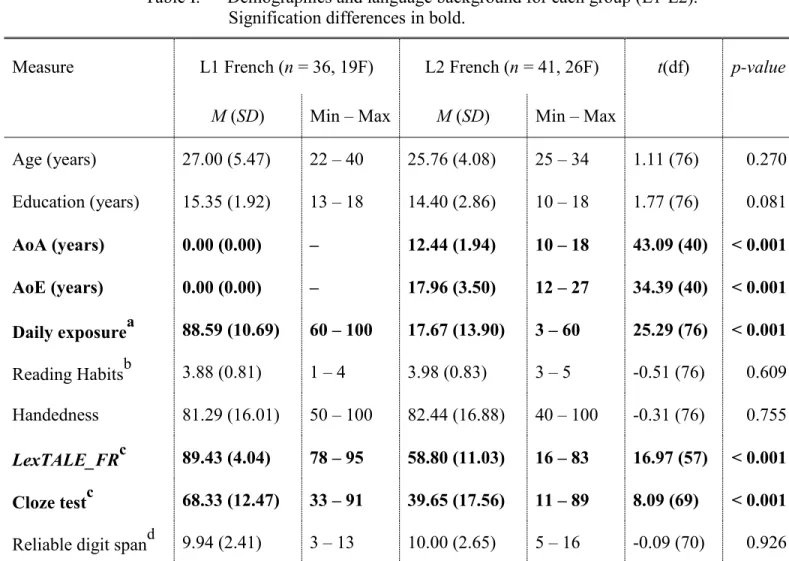
Table I. Demographics and language background for each group (L1-L2). ... 39
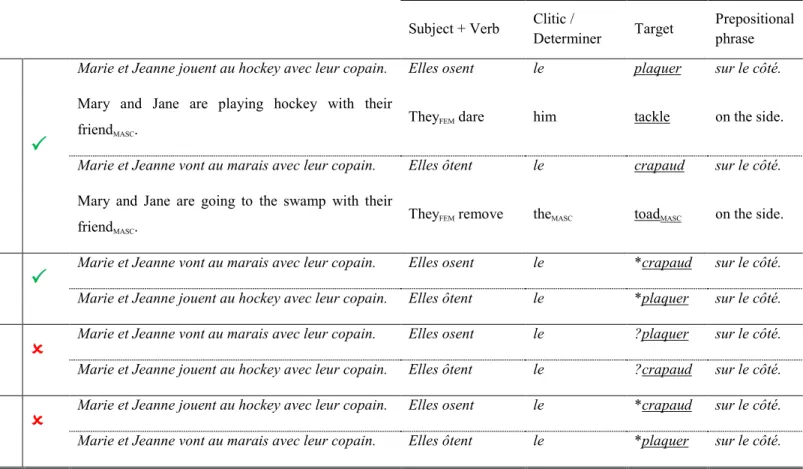
Table II. Sample stimuli for the four experimental conditions. ... 41
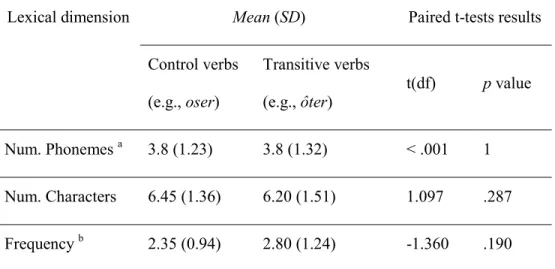
Table III. Paired t-test results comparing control verbs and transitive verbs. ... 43
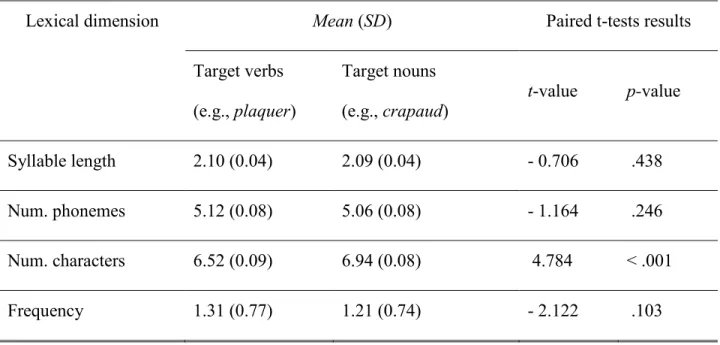
Table IV. Paired t-test results comparing target verbs and nouns. ... 45
Table V. Sample stimuli for the eight experimental sub-conditions. ... 68
Table VI. Effects of syntactic category and semantic anomalies on responses. ... 77
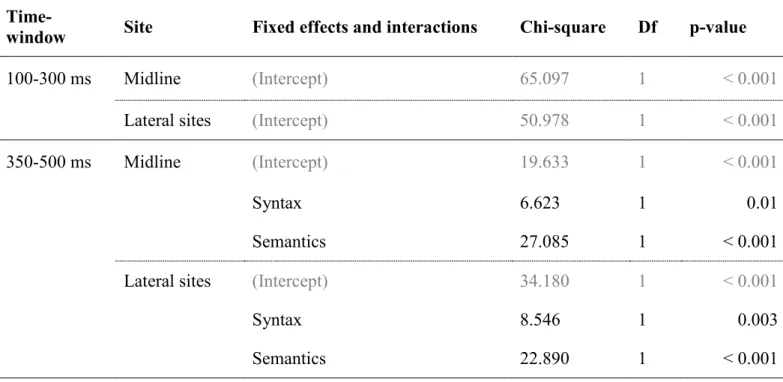
Table VII. Analysis of deviance table (Type III Wald chi-square tests). ... 80
Table VIII. Sample stimuli with Condition and Target as factors ... 104
Table IX. Analysis of deviance table (Type III Wald chi-square tests). ... 109
Table X. Descriptives for participants demographics and individual measures. ... 124
Table XI. Sample stimuli for the eight experimental sub-conditions. ... 126
List of figures
Figure 1. Calvin and Hobbes © Bill Watterson (January 25, 1993). ... 1
Figure 2. The “syntax-first” model of sentence comprehension. ... 13
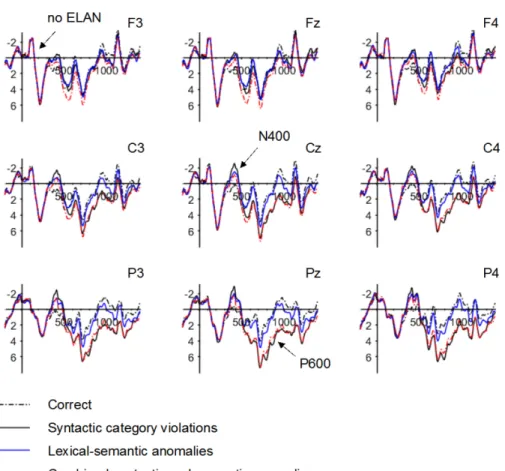
Figure 3. Grand average waveforms for the four experimental conditions. ... 79
Figure 4. Voltage maps illustrating the effect of each of the three anomalous conditions. . 80
Figure 5. Grand average waveforms illustrating the main effects of A- Syntax and Semantics. ... 84
Figure 6. Scatterplots showing the relationship between N400 and P600 effects across individuals in the three anomalous conditions. ... 89
Figure 7. Scatterplot showing the relationship of N400 and P600 effects across individuals between conditions. ... 91
Figure 8. Difference waves between each of the anomalous conditions minus the correct condition. ... 92
Figure 9. Average ERPs elicited at three representative electrodes (F3, Cz, Pz) in response to correct and syntactic category violation sub-conditions. ... 106
Figure 10. ERP effects of the correct control verb vs. the correct transitive verbs. ... 108
Figure 11. Correlations between the individual difference measures. ... 123
Figure 12. Grand average waveforms illustrating main effects in the 2x2 design in nine representative electrodes, and differences waves atPz. ... 134
Figure 13. Predictor importance for N400 and P600 effects in all conditions. ... 142
Figure 14. Maps illustrating inference tree outputs ... 145
x
List of abbreviations
AoA: age of acquisition AoE: age of exposure DC: direct current
EEG: electroencephalogram
ELAN: early left anterior negativity ERP: event-related potential
IIR: infinite impulse response (L)AN: (left) anterior negativity
MUC: memory — unification — control RDI: response dominance index
ROI: region of interest
S&D2012: Steinhauer & Drury (2012) UdeM: Université de Montréal
xii
Acknowledgements
I would like to thank the wonderful individuals who have made this project possible and, perhaps more importantly, who have shared with me their knowledge, skills, and time. Every single moment I spent discussing, teaching, being taught, or simply sharing thoughts contributed to making me a better researcher.
My supervisors, Dr Phaedra Royle et Dr Karsten Steinhauer, have given me the opportunity to work on this project while I was still a bit of an outsider with no strong connections to the field. I owe them the very basis upon which I will continue building my knowledge and reflections. They provided me with invaluable training and, just as
importantly, gave me the space I needed to learn novel techniques on my own as well. They trusted my decisions and challenged me when I needed to be. Thank you.
I would like to thank the research assistants and students who participated in this project: Audrey Borgus, Megan Honigman, Lisa Martignetti, Irina Perlitch, Mélanie Weiss, Alice Xue. This project would have not been possible at all without you. Thank you to Dr Royle’s current and former lab members: Emilie Courteau, Dr Elena Kulinich, Dr Alexandra Marquis, Dr Marie Pourquié, Ariane Saint-Denis. Thank you to Dr Steinhauer’s former lab members: Fayden Bokhari, Dr Kristina Kasparian, Dr Stefanie Nickels, Dr Efrat Pauker. It has been a pleasure to work alongside you.
I am extremely grateful to Dr Steinhauer’s current students: Alexandre Herbay, Anastasia Glushko, and Max Wolpert—I have been so lucky to be your labmate. I truly look up to you three, and consider you among the smartest, kindest, and funniest individuals I have ever met. I am proud to have worked with you, I am thankful for every bit of support you have given me, and I hope I can do the same for you. You are my colleagues, my teachers, my inspirations, and above all, my friends.
Thank you to all the other wonderful persons that entered my life (both in and outside of Academia) and turned Montreal into a home I would not want to leave: Alberto, Baptiste, Gaston, Marcel, Marie, and Océane, as well as all the castellers of Montreal. A special thank you to Joel: I do not think many understand me as well as you do, and I am very grateful that you came into my life.
Thanks to all of you who, like me, advocate and fight for social justice in Academia: the Gender in Academia committee members at UdeM, Science and Policy exchange at McGill, the Gender committee at the Canadian Linguistic Association, and the Feminist Journal Club at UPF. I will take our discussions with me wherever I go, and hope for many more to come.
Finally, I want to thank my parents, to whom I dedicate this work. Merci de m’avoir soutenue toujours, de m’avoir fait confiance. Merci d’être les personnes merveilleuses que vous êtes. Vous n’avez pas idée à quel point je vous admire.
Funding acknowledgements
The research presented in this thesis received financial support from Social Sciences and Humanities Research Council (SSHRC grant # 435-2013-2052 - PI: Karsten Steinhauer, Phaedra Royle et al., Project on “Re-evaluating the temporal dynamics of syntactic online processing: Towards an ecologically valid model”). It was additionally supported by Canada Research Chair (CRC) program/CIHR (Project # 950-209843), Canada Foundation for
Innovation (CFI/CRC project # 201876), Natural Sciences and Engineering Research Council (NSERC, grant # RGPIN 402678-11) (to PI: Karsten Steinhauer), SSHRC grant # 435-2015-1280 (PI : Phaedra Royle, Karsten Steinhauer et al), and FQRSC team grant # 2016-SE-188196 (PI: Lydia White, co-PI: Karsten Steinhauer, Phaedra Royle et al.).
Lauren Fromont was further supported by FQRSC’s excellence scholarship program for foreign students (Programme de bourses d'excellence pour étudiants étrangers - Fonds de
recherche du Québec – Société et culture), two graduate student stipends from the Centre for
research on brain, language and music (CRBLM, Montréal), two excellence scholarships from the biomedical sciences program at the University of Montreal, and numerous travel awards from the CRBLM and the University of Montreal.
xiv
Author Contributions
Both manuscripts presented in this thesis contribute significantly and incrementally to the body of knowledge in neurolinguistics. Manuscript 1 presents a balanced design that allows for an evaluation of the syntax-first model, and brings an original cross-linguistic contribution to ERP language studies by focusing on Quebec French. Manuscript 2 provides evidence that further specifies the convergence hypothesis for second language learning (Steinhauer, 2014) and, to our knowledge, is the very first work that uses random forests to analyse ERP data. The manuscripts in this thesis were co-authored by Lauren Fromont (PhD candidate and first author), Phaedra Royle (supervisor and senior author on Manuscript 1), and Karsten Steinhauer (co-supervisor and senior author on Manuscript 2).
In the following, I provide a description of the contributions of the co-authors. Please note that while certain tasks were primarily carried out by a given author, every step resulted from a close collaboration between the three co-authors. The three authors equally contributed to data interpretation, and both co-authors gave their final approval on the manuscript versions included in this thesis and submitted to peer-review journals.
Lauren Fromont (PhD candidate): This author extended the experimental design, created and evaluated the stimuli materials, programmed the experiments, organized the recruitement of participants, scheduled participants and carried out the testing sessions with the help of research assistants (who are duely acknowledged in the manuscript submissions), trained research asssistants and supervised summer bursary students, pre-processed the data, carried out the statistical analyses (mixed-effects models and random forests), interpreted the results, and wrote the manuscripts.
Phaedra Royle (supervisor): This author provided the orginal idea of the experimental design, created stimuli sentences, provided the funds necessary to hire research assistants, provided the behavioral testing facilities for stimuli evaluation, gave extensive input and feedback during every step of the EEG experiment elaboration, analysis and interpretation, and edited the manuscripts.
Karsten Steinhauer (co-supervisor): This author provided the original hypothesis for reevaluating the syntax-first model (Steinhauer & Drury, 2012), pseudo-randomized the materials, provided the funds necessary to hire research assistants and recruit participants, provided the EEG testing facilities, gave extensive input and feedback during every step of the EEG experiment elaboration, analysis and interpetation, and edited the manuscripts.
General introduction
Figure 1. Calvin and Hobbes © Bill Watterson (January 25, 1993). Retrieved from: Homicidal Psycho Jungle Cat #9, reprinted with permission of Andrews McMeel Syndication. All rights reserved. Why does verbing weird language? Syntactic categories (SCs), also called word categories, are functional information about words (e.g., noun, verb) that are used to build larger structures (for example, a determiner combines with a noun to form a determiner phrase, or DP). While it is possible in English to apply morphological derivation to words to change their syntactic category (e.g., “verb-ing”, “weird-s”), unexpected categories tend to create processing difficulties. Writers rely on this to introduce comic (Figure 1), or poetic effects:
“He childed as I fathered”
(William Shakespeare, King Lear, Act III Scene 6)
In our everyday life, unexpected SCs are very productive and often memorable: Twitter expression “Don’t @ me” is now so widely used that it even appears on T-shirts (retrieved from: https://www.teepublic.com/t-shirt/1645945-dont-at-me) and hip-hop music:
“I'm the hottest young'un, don't @ me” (Jay Critch, Don’t @ me, 2019. All rights reserved)
2
Under the assumption that SC information is instrumental in building hierachical structures, the processing of SCs during comprehension raises many important questions: How rapidly is this information used in order to build phrases? Are SCs special – is their processing distinct from lexical-semantics? And how do second language learners process this
information?
In order to answer these questions, neurolinguistics online methods such as event-related brain potentials (ERPs) offer two major advantages that other techniques cannot. First, their excellent temporal resolution makes them a perfect tool to study the specific cognitive mechanisms that underlie different aspects of online sentence processing. Second, ERPs are a fined-grained multi-dimensional measure that allows researchers to draw qualitative
differences (or similarities) about the underlying cognitive mechanisms of sentence processing in different populations, even when their behavior is indistinguishable (Steinhauer, 2014).
In past decades, ERP research has significantly contributed to the development of dynamic sentence processing models. Event-related potential components are characterized by their polarity (positive or negative), latency (in ms), and topographical distribution on the scalp. Twenty years ago, researchers seemed to have reached a clear picture about the
underlying cognitive function of several language-related ERP components: lexical-semantic anomalies would elicit a larger N400 (Kutas & Hillyard, 1980), morphological agreement errors a (left) anterior negativity (L)AN) (Kutas & Hillyard, 1983), and ungrammatical sentences a P600 effect (Osterhout & Mobley, 1995). However, it has become evident that these components are not tied to specific linguistic processes (e.g., a P600 can be observed in response to semantic anomalies, Meerendonk, Kolk, Vissers, & Chwilla, 2008) and that most or all of them may not even be language-specific at all (e.g., Steinhauer, 2014). Further, it has
been suggested that certain well-established language-related components may, at least in part, be artefacts resulting from flawed experimental manipulations (Steinhauer & Drury, 2012), problematic approaches to ERP analysis, and the process of averaging across overlapping components (Tanner, 2015). Moreover, individual ERP responses show that specific
components such as the N400 and the P600 are not consistently observed across participants within the same experiment, thus prompting us to reevaluate their functional interpretation and to consider distinct psycholinguistic processing approaches even among native speakers. Neurolinguists therefore need to explicitely consider the interrelations between theoretical sentence-comprehension frameworks and methodological considerations linked to the ERP technique that they are using to evaluate those models.
This chapter will first present ERP components observed in language studies, and their functional interpretation. Next, three sentence processing models that propose distinct
hypotheses on the dynamic processes underlying sentence processing will be discussed. Possible causes for apparent inconsistencies and variability across studies will be explored, with a particular focus on the interplay between SC identification and lexical-semantic anomalies. Finally, these issues will be discussed in the context of second language learning.
1. Language electrified: relevant ERP components
1.1. N400
The N400 is a centrally (sometimes broadly) distributed negative deflection that occurs between 300 and 500 ms after word presentation. N400 effects were famously discovered in a study comparing target words that were either congruent or incongruent with the sentence context (“He spread the warm bread with butter/?socks”, Kutas & Hillyard, 1980). Since then,
4
it has been observed in response to many experimental manipulations on lexical-semantic processing, with effects ranging from word frequency to the integration of world knowledge information (Dutch trains are yellow/?white and very crowded, Hagoort, Hald, Bastiaansen, & Petersson, 2004; see Kutas & Federmeier, 2011, for a review). There are two interpretations of the N400 effect: an “integration” and a “retrieval” view (Lau, Phillips, & Poeppel, 2008). The integration view states that the N400 reflects combinatorial processes (i.e. integration with the preceding context, e.g., Friederici, 2002; Baggio & Hagoort, 2011). Recently, however, most accounts have shifted towards a retrieval perspective of the N400 (e.g., Brouwer & Hoeks, 2013; Kuperberg, Caplan, Sitnikova, Eddy, & Holcomb, 2006; Lau et al., 2008). According to this view, the N400 effect is observed not because semantic anomalies induce a larger effect, but because a lower N400 amplitude is associated with easier lexical retrieval. In other words, the N400 is always present and reflects activation of lexical representation in the long-term memory (Lau et al., 2008). Several factors may occur simultaneously to facilitate lexical retrieval, and therefore modulate the N400: these range from “pure” priming leading to automatic-spreading activation (Kiefer, 2002), or context effects leading to contextual prediction (Kim, Oines, & Sikos, 2016; Van Petten & Luka, 2006). Despite great variability, most functional imaging studies and lesion studies seem to point to the posterior temporal cortex as a good candidate for storage and access of lexical information (Lau et al., 2008). Note that while most evidence seems to be consistent with a “retrieval” account, there is still some discussion as to whether later portions of the N400 component could be reflecting post-lexical integration (Steinhauer, Royle, Drury, & Fromont, 2017). The N400 effect is not limited to purely lexical-semantic features: it has also been observed in response to agreement errors (Molinaro, Barber, & Carreiras, 2011; The clerk at the clothing boutique was/*were
severely underpaid, Tanner & Van Hell, 2014). Thus, based on more recent findings, the N400
may reflect more general predictive mechanisms operating on both word roots and inflectional (and derivational) morphemes, including syntax-driven dependencies.
The association of the N400 component with morpho-syntactic (as opposed to semantic) processing is a relatively new step; by contrast, the ERP components that will be presented next have been associated with syntactic processing since their discovery.
1.2. ELAN
The early left anterior negativity (ELAN) has been claimed to be a specific marker of syntactic category (SC) identification (Friederici, 2002). As it is elicited particularly early – between 100-300 ms after word presentation or onset (and sometimes earlier) – the ELAN is taken to reflect rapid and automatic processes independent of task and experimental context (Hahne & Friederici, 1999, 2002). The experimental paradigm in seminal ERP studies
(Friederici, Pfeifer, & Hahne, 1993; Friederici, Steinhauer, & Frisch, 1999) and its adaptation to other languages (Hinojosa, Martin-Loeches, Casado, Muñoz, & Rubia, 2003; Isel, Hahne, Maess, & Friederici, 2007; Rossi, Gugler, Friederici, & Hahne, 2006) relies on context manipulation. As illustrated in example sentences (1-2), this type of design keeps the target constant; the SC violation is created by inserting the preposition – determiner contraction am – ‘on-the’, which selects for a noun, before the verb target:
(1) Die Bluse wurde gebügelt. ‘The blouse was ironed.’ (Correct)
(2) Die Bluse wurde am ∗gebügelt. ‘The blouse was on-the1 ironed.’ (SC violation)
1 The hyphen in “on-the” emphasizes the contraction between the preposition and the determiner in the German
6
The ELAN effect appears very early because it is putatively triggered by the prefix ge- (that indexes most German past participles and is claimed by Friederici and colleagues to be a reliable verb marker). In a comprehensive review of experimental ELAN studies, Steinhauer and Drury (2012, henceforth S&D2012) develop two main arguments concerning this context manipulation paradigm: (i) it does not create outright syntactic violations at verb onset (prefix
ge-), and (ii) it leads to context effects that have consistently been misinterpreted as ELANs.
Regarding (i), S&D2012 point out that in German, like in English, most past participles can be used as pre-nominal adjectival modifiers such as in the perfectly grammatical sentence (3):
(3) Die Bluse wurde am gebügelten Jackett mit Nadeln befestigt. The blouse was to-the ironed jacket with pins attached. ‘The blouse was attached to the ironed jacket with pins’
Thus, the occurrence of an ELAN in this type of sentence cannot be associated with a failure in phrase-structure building due to a SC violation, because there is no violation when the prefix ge- is heard. Moreover, since many nouns and adjectives in German start with ge-, S&D2012 argue that the syntactic category identification cannot be derived through a strictly bottom-up process based on phonetic information at word onset. They rather argue that the early activation reflected by an ELAN could be explained by phonotactic strategies developed by participants due to a limited experimental design: that is, participants learn during the experimental session that prepositions followed by a word starting in ge- will always result in a syntax error (see also Hagoort, 2003b for a similar interpretation).
There are two types of context effects (ii) that may affectthe ERP components and be misinterpreted as early ELANs. First, the spillover effect is a transient effect observed when ERP differences (e.g., P600 effects) triggered by a context word preceding the target only
occur (or continue to gain amplitude) after target word onset. In this scenario, a pre-target baseline correction would not compensate for the delayed context effect, and the resulting ERP difference is likely to be misinterpreted as an ERP effect triggered by the target word. Second, the DC offset effect describes sustained waves created by an artifactual vertical shift of an entire waveform (towards more positive or more negative values) due to baseline correction. This can happen when the words preceding the target in the control and violation conditions elicit different effects that show up within the pre-target baseline interval. For example, a content word (e.g., a verb) typically elicits a larger N400 than a function word (e.g., a preposition) (Frank, Otten, Galli, & Vigliocco, 2015). Yet, in many studies the
standard N400 interval (300-500 ms post word onset) coincides with the 200 ms pre-stimulus interval for the next word that serves as its standard baseline interval. As baseline corrections attempt to compensate (i.e., remove) pre-stimulus differences between conditions by forcing their waveforms together, the waveform with the larger (pre-target) content word-N400 would be moved towards more positive amplitudes, and the other condition (with a pre-target
function word) towards more negative amplitudes, resulting in measurable early negativity right after target word onset. Regrettably, this scenario is typical for many SC violation studies where – importantly – the function word (e.g., a preposition) appeared in the SC violation condition (and a content word in the control), thereby creating early sustained negativities after target word onsets that have been mistaken for ELAN components elicited by the target word (see S&D2012 for details). Given that a large number of ELAN findings may be subject to methodological issues, it remains unclear to what extent ELANs are the result of flawed designs or reflexes of genuine neurocognitive processes linked to SC violations.
8
While ELANs have been taken to reflect SC identification processes, the LAN component, similarly distributed but elicited at later latencies, has been interpreted as a more general marker of morpho-syntactic processing.
1.3. (L)AN
The (left) anterior negativity, or (L)AN, is observed around 300–500 ms, usually at left anterior sites even though its topography varies: it can be largest at left temporal sites (e.g., T5, Newman, Ullman, Pancheva, Waligura, & Neville, 2007; Steinhauer et al., 2010) in the visual modality, or have an anterior – but not so lateralized – distribution in the auditory modality (e.g., Silva-Pereyra, Rivera-Gaxiola, & Kuhl, 2005). LAN effects are mostly – but not consistently (Molinaro et al., 2011) –elicited in response to agreement violations.
Common cases of agreement errors that elicit a (L)AN include: subject-verb agreement (e.g.,
The officials *hopes to succeed, Osterhout & Mobley, 1995), number agreement on the noun
(e.g., All turtles have four *legØ and a tail, Kutas & Hillyard, 1983), and gender agreement (e.g., determiner-noun and adjective-noun in Spanish, Barber & Carreiras, 2005).
LAN effects have also been observed for SC violations (e.g., Tengo que corer muchas
millas / *muchas millas correr2 Bowden, Steinhauer, Sanz, & Ullman, 2013; Neville, Nicol,
Barss, Forster, & Garrett, 1991; Steinhauer, White, & Drury, 2009). Since S&D2012 cast serious doubt on the validity of the ELAN as a real ERP component, syntactic category identification has tended to be associated with E/LANs, without further discussion about theoretical implications of latency differences between the two components. For example, in a study of SC violations in French, Brusini et al. (2017) define LAN latencies as “typically
appear[ing] between 100 and 400 ms”. While this seems to imply that both ELAN and LAN effects reflect the same cognitive processes with different latencies, serial approaches to sentence processing (and in particular, Friederici, 2002, 2011, 2012) clearly define these two components as functionally dissociable.
As mentioned in §1.1. of this introduction, N400 effects have also been observed in response to some agreement errors, leading to continuing discussions about the functional relationship between LANs and N400s. On the one hand, LANs and N400s are interpreted as two extremes on one continuum: agreement errors that rely more strongly on morphological inflexion (e.g., The elected officials *hopes to succeed, Osterhout & Mobley, 1995) would elicit a LAN while word-stem mismatches (e.g., The clerk at the clothing boutique was/*were
severely underpaid, Tanner & Van Hell, 2014) would trigger an N400 (Molinaro, Barber,
Caffarra, & Carreiras, 2015). On the other hand, it has been suggested that the LAN is an N400 “in disguise”. It only appears to be anterior and left lateralized because it overlaps with the P600 effect: since the latter is more posterior and right lateralized, it cancels the N400 out, except at left-anterior electrodes (Tanner, 2015). However, the presence of a LAN in the absence of a P600 effect (e.g., Mancini, Molinaro, Rizzi, & Carreiras, 2011) suggests that at least some left anterior negativities are genuine.
The next section focuses on the P600 component, which has been observed in response to (morpho-)syntactic violations, sometimes in conjunction with a LAN effect, and other times on its own.
1.4. P600
The P600 effect is a long-lasting (up to 1000 ms) and posterior positivity that starts around 500 ms, and has been observed in response to a range of syntactic manipulations.
10
These include local dependencies: SC violations (Friederici, Gunter, Hahne, & Mauth, 2004a; Friederici et al., 1993, 1999), agreement errors (Molinaro et al., 2011; Osterhout & Mobley, 1995), syntactic ambiguities (Carreiras, Salillas, & Barber, 2004), garden-path sentences (The
lawyer charged the defendant was lying, Osterhout, Holcomb, & Swinney, 1994), and
long-distance dependencies (Phillips, Kazanina, & Abada, 2005). It has also been observed in response to thematic role reversals – effect known as the “Semantic P600” (For breakfast the
eggs would eat toast, Kuperberg et al., 2006), and lexical-semantic anomalies (Meerendonk et
al., 2008). To account for all of these phenomena, interpretations of the P600 are manifold. It is often suggested that it reflects integration (as opposed to retrieval, Brouwer & Hoeks, 2013), or (somewhat underspecified) combinatorial processes (Osterhout, Mclaughlin, Pitk, Frenck-Mestre, & Molinaro, 2006; Tanner & Van Hell, 2014). Friederici (2002) suggests that the P600 effect reflects controlled revision and repair processes. Hagoort (2003a) interprets it as an index of unification and selection among competing structural analyses. The monitoring theory (Meerendonk et al., 2008; Vissers, Kolk, van de Meerendonk, & Chwilla, 2008) suggests that the P600 is elicited when a strong conflict between what is expected and what is observed triggers reanalysis. This range of P600 accounts may be best understood as
suggesting that “it is not a monolithic component” (Friederici, Mecklinger, Spencer, Steinhauer, & Donchin, 2001).
Importantly, the P600 is task-dependent (Hahne & Friederici, 2002; Hasting & Kotz, 2008; Royle, Drury, & Steinhauer, 2013) and has been found to be larger when a sentence is classified as unacceptable within specific experimental contexts, e.g., where many sentences are grammatical. In this respect, it bears similarities with the P3b component, which has been observed in attended oddball paradigms where the deviant elicits a large parietal P300 that
increases in amplitude the rarer and the more task-relevant the deviant is. The “P600 as P300 hypothesis” (Coulson, King, & Kutas, 1998; Sassenhagen, Schlesewsky, &
Bornkessel-Schlesewsky, 2014) therefore interprets the P600 as a reflection of working memory updating. This view has been independently supported by findings that verbal working memory abilities correlate with the P600 effect (Kim, Oines, & Miyake, 2018; Vos, Gunter, Kolk, & Mulder, 2001).
The P3b sometimes appears with another ERP component also related to task processing and attention: the P3a.
1.5. P3a/Frontal P600
The P3a is a positive wave that appears at frontal electrodes, generally around 300–500 ms after stimulus onset (although its latency range varies). It is a domain-general component that reflects surprisal and re-allocation of attention in response to an oddball (Squires, Squires, & Hillyard, 1975; see Polich, 2007, for a review). However, P3a-like effects have also been observed in language studies and are sometimes referred to as “early P600s” (Molinaro et al., 2011), or “frontal P600s” (Kaan & Swaab, 2003). They are normally visible right after the LAN or N400 effect — around 500 ms. Such frontal positivities have often been described as being language- (and even syntax-) specific. They have been attributed to multiple processes including (i) difficulties in integrating a constituent with a previous context related or to non-preferred sentence continuations (as opposed to ungrammatical ones, Hagoort, Brown, & Osterhout, 1999), (ii) ambiguous structures (Kaan & Swaab, 2003), or (iii) agreement error processing (Barber & Carreiras, 2005; Molinaro, Vespignani, Zamparelli, & Job, 2011)and (iv) number incongruency processing with grammatical input (Courteau, Martignetti, Steinhauer, & Royle, 2019). However, none of these interpretations really accounts for the
12
many instances in which frontal positivities are observed; in fact, these are not restricted to syntactic processing as they have been observed in response to logical semantic anomalies (Bokhari, 2015). Alternatively, Kasparian, Vespignani, and Steinhauer (2017) suggest that the early positivity could be interpreted as a P3a in experiments where anomalies are less
predictable: for example, when they occur early in the sentence without much context, or when they occur sporadically in the experiment.
Sentence processing models adopt different views on how ERP components in language studies are interrelated, and on their functional interpretation. We present three models that are relevant to the present study in the next section.
2. Approaches to sentence processing in neurolinguistics
Theories of language comprehension aim to clarify the mechanisms that are at play from the moment a word is presented in a sentence context until the overall message of this sentence is integrated. Specifically, we seek to understand whether these mechanisms subserve distinct linguistic functions (e.g., syntax vs. semantics) or general ones that can either be language-specific (e.g. retrieval in verbal memory), or not (e.g. prediction error). In addition to characterizing the nature of these mechanisms, we want to specify their temporal organization: whether they take place serially or in parallel, and whether they are encapsulated or interact with one another.
2.1. A serial approach: Friederici’s “syntax-first” model
Serial, “syntax-first” approaches adopt the general principle of a modular organisation of the syntactic and semantic processes that underlie sentence comprehension. Further, they posit that syntactic analysis of local relationships between constituents prevails over
lexical-semantic integration: while multiple candidates may be activated during lexical access, the parser rapidly commits to one syntactic analysis of the constituent structure (and revises it if necessary). According to Frazier’s Minimal attachment theory (1987), the rapid analysis of local relationships between constituents is governed by the relative simplicity of syntactic structures: the listener chooses the simplest one, independent of frequency of use and lexical-semantic characteristics.
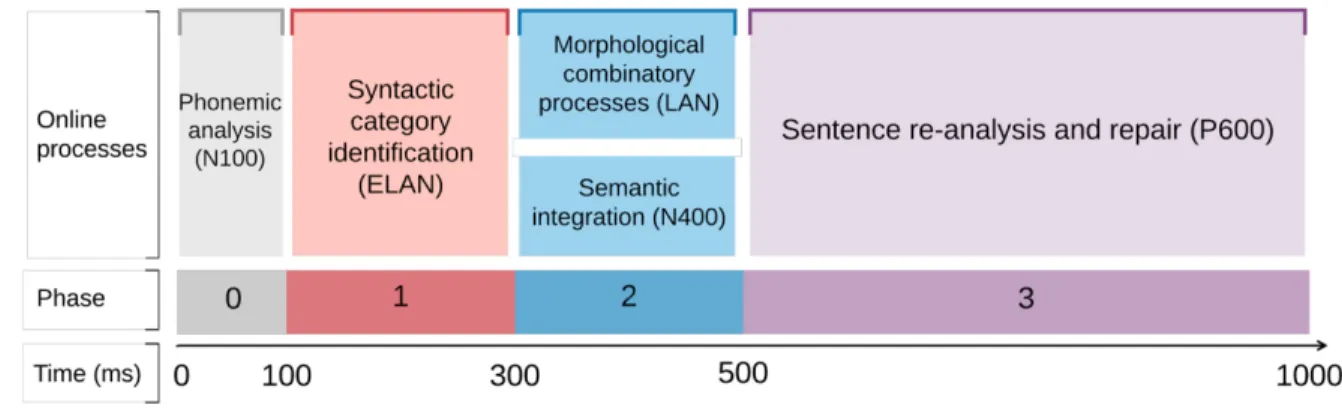
The “syntax-first” model by Friederici (2002, 2011, 2012) is most inspired by Frazier (1987). This serial and modular model posits an encapsulated “syntax module” in the brain. Sentence processing mechanisms are divided into three phases, which are illustrated in Figure 2, along with the ERP components that reflect them.
Figure 2. The “syntax-first” model of sentence comprehension. Adapted from Friederici (2002, 2011).
For each incoming word, SC information is retrieved first (Phase 1): the parser is “blind” to any other types of information (e.g., word meaning or agreement features). If SC identification leads to a felicitous phrase-structure representation, lexical-semantic information
14
integrated in parallel during Phase 2. Finally, in Phase 3, structural repair processes take place in response to syntactic violations or difficulties.
In the presence of an SC violation, the lack of a grammatical phrase-structure
representation prevents morpho-syntactic feature checking: agreement can only occur within intact phrase markers. That is, participants presented with an anomalous sentence that
combines an SC error and an agreement error (e.g., The boy in-the ø *sing a song3, Rossi et al 2005) elicit an ELAN but no LAN. Likewise, semantic-thematic interpretation of the target word (Frisch et al, 2004) and lexical-semantic integration are blocked – thus suppressing the N400 effect (Friederici et al, 1999: “Semantic blocking” is more thoroughly discussed in Chapters 2 and 3).
These findings are important because they provide evidence that phrase-structure building is not only fast and automatic, but also encapsulated, and conditions later stages of sentence processing – note that semantic integration and agreement processing occur in
parallel, independently from each other (Gunter, Friederici, & Schriefers, 2000). Taken at face value, these data suggest that rapid SC identification cannot simply reflect the early
availability of the SC information relative to other cues, but rather the speed at which this
information is being used. Indeed, in the Rossi et al’s (2005) experiment, SC information and agreement marking are made available at the same time, yet the parser focuses on the SC cues first. One yet more compelling piece of evidence is that the “semantic blocking” effect can be replicated even when lexical-semantic information is presented first (i.e., the word stem
preceding the suffix in the auditory domain): the parser waits until the SC information is made
available in the word suffix (e.g., The bush was replanted (…)’ / ‘The bush was despite
*replanted (…)4, Friederici, Hahne, Gunter & Mauth, 2004). While one can hypothesise that,
in these experiments in German, SC information can be rapidly retrieved by stripping affixes, it remains unclear how the parser does this in languages where there is no clear affixation. Nevertheless, similar evidence has been provided in French (Isel et al., 2007), showing that combined SC and lexical-semantic anomalies elicit an ELAN but no N400 in words where no morphosyntactic cue can serve as an SC marker (e.g., dort ‘sleep’). That is, the very nature of lexical access during sentence comprehension is underspecified. The influential extended Argument Dependency Model (Bornkessel & Schlesewsky, 2006), also adopted the idea that ELANs exclusively reflect early identification of SCs, but do specify that this process is morphologically driven.
By contrast, parallel, interactive accounts of sentence processing generally consider that structural representations are encoded in the lexicon, and that, therefore, lexical and syntactic information are processed in parallel and characterized by somewhat similar mechanisms that have the ability to influence one another.
2.2. The parallel approach
According to Hagoort’s Memory — Unification — Control model (MUC, Hagoort, 2005, 2016,inspired by Vosse & Kempen, 2000), phonological, syntactic, and semantic information are processed in parallel though highly interactive streams. We will describe the semantic and syntactic processes that take place when a word like “reader” is encountered in example sentence (4).
16 (4) This sentence annoyed the reader.
The lexical representation of “reader” is activated from Memory: it contains all its possible meanings (that will be used for semantic Unification) and all its possible syntactic frames (that will serve for syntactic Unification). Syntactic frames are hierarchical structural environments associated with a given lexical item (Jackendoff, 2002): for “reader” it may include its projection as an NP (the root node), its function as a head (the functional node), and its category per se as a noun (the foot node). Once this representation is activated from
Memory, Unification consists in a selection mechanism that “chooses” the right frame for it: for example, after Unification of “the + reader”, the root node of the NP “reader” is the foot node and complement of “the” (DP—head—Determiner; similar to Head-driven phrase structure grammar, Pollard & Sag, 1994).
Semantic Unification is a constructive process that results in a discourse model. Although, in the present work, integration and unification are used interchangeably (as opposed to retrieval), note that Hagoort, Baggio, and Willems (2009) make a distinction between integration (different sources converge on a common memory representation) and Unification (a new representation is constructed that is not already available in Memory).
Semantic Unification (reflected by the N400 effect) and syntactic Unification (reflected by a LAN-P600 complex) are distinct processes in this model. However, they should be able to interact at any time: hypothetically, an SC error could elicit an N400 instead of a LAN if the SC resulted mostly in a violation of lexical-semantic expectations for this specific target. On the other hand, a LAN and no N400 could be observed in cases where the syntactic category violation is implemented via morphological affixes, and both correct and incorrect target
words are either equally unlikely or equally likely to occur (i.e. if they have the same cloze probability: The lumberjack dodged the vain propeller / *propelled on Tuesday5.Hagoort, 2003b). In the case where a target in anomalous because of a conflict between syntactic and semantic information (e.g., in argument-structure violations ‘The hearty meal was
devouring….’, (Kim & Osterhout, 2005), this conflict is resolved by obeying a “loser takes all” principle (Hagoort et al., 2009). In the aforementioned example, semantic associations are more (i) strongly constrained, because of the association between ‘meal’ and ‘devour’ and (ii) are taken into account earlier than syntactic ones. Since syntactic constraints are presumably weaker, the anomaly is perceived as a morphosyntactic violation (e.g., devouring instead of
devoured), so the effect appears on the P600 (thus the weaker constraints “lose” and take on
the ERP effect). We will return to this interpretation in the general discussion of the present thesis.
This model accommodates cases where one type of information is taken into account earlier than the other. From this perspective, ELANs are interpreted as LANs that appear early when a prefix unambiguously points to the wrong syntactic category (Hagoort, 2003b). When the information is provided by the suffix of the word, a LAN is observed, and lexical-semantic processing is not blocked (Van den Brink & Hagoort, 2004).
Serial and parallel approaches to sentence processing adopt very different hypotheses on how syntactic and semantic information is processed. Nevertheless, both paradigms rely on a strong distinction between mechanisms underlying the processing of these two types of
18
linguistic cues. More recently, sentence processing accounts have blurred the distinction between syntax and semantics.
2.3. The predictive approach
We have explained that one limitation with Friederici’s model is that it does not specify how SC information can be activated without consulting the lexicon in the absence of affixation. Further, it does not specify whether this early effect reflects hard-wired syntactic preferences that make the analysis rapid and straightforward (Frazier, 1987; Goucha, Zaccarella, & Friederici, 2017), or at least partly reflects predictive processes that may be driven by contextual restrictions (Gibson, 1998; see also Kimball, 1975, for an early integration of predictive analyzers into syntax-first models), or the relative frequency of certain syntactic structures (see MacDonald, Pearlmutter, & Seidenberg, 1994, for a
discussion). The idea that prediction guides parsing is therefore present in most serial models of sentence processing, except Frazier’s, which excludes semantic – but not syntactic –
prediction, and, seemingly, Friederici’s – although her data can be interpreted using prediction (Lau, Stroud, Plesch & Phillips, 2006).
The predictive approach has gained increasing popularity over the past decade (one of six ERP presentations at the CUNY 2018 human sentence processing conference focusing on ERPs was explicitly about prediction). There are several ways this approach can be defined, but the present thesis (mostly) relies on work by Ellen Lau and collaborators (2006, 2008; but see also (Chow, Momma, Smith, Lau, & Phillips, 2016), and to some extent, on discussions between Darren Tanner and Nicola Molinaro (Molinaro et al., 2015; Tanner, 2015). Although this approach seeks to explain effects of predictive processes during sentence comprehension, relatively few studies have investigated —or observed— the effects of prediction when it
happens (Molinaro, Giannelli, Caffarra, & Martin, 2017; Molinaro, Monsalve, & Lizarazu, 2016). Rather, researchers measure the ease of retrieval (quantified by the amplitude of the N400 effect) on the target word after it has already been predicted (or pre-activated). Two notable studies show that early activation of a target word may due to predictive processes that impact speed of retrieval. DeLong, Urbach, and Kutas (2005) manipulated the cloze
probability of target nouns that, importantly, had different determiners (in sentence [5], high cloze probability “a kite” vs. low cloze probability “an airplane”). An N400 effect was observed on determiners that preceded low cloze nouns, suggesting target pre-activation through predictive processes. Note, however, that a large-scale study failed to replicate their results (Nieuwland et al., 2018).
(5) The day was breezy, so the boy went outside to fly a kite / an airplane
Furthermore, in the context of SC identification, Lau, Stroud, Plesch, & Phillips (2006) suggested that ELANs appeared in highly predictive contexts where the analysis precedes the input. They evaluated sensitivity of the ELAN to predictability by comparing ungrammatical sentences in a low constrained context (6) or a very predictive context (7). Indeed, the sentence in (6) does not necessarily predict an overt noun at the end of the possessor (the sentence: “Although Erica kissed Mary’s mother, she did not kiss Dana’s” is perfectly grammatical), while (7) strongly predicts a noun after Dana’s. The authors hypothesized that an SC occurring in a less predictive context would reduce the ELAN effect.
(6) Although Erica kissed Mary’s mother, she did not kiss Dana’s *of the bride. (7) Although the bridesmaid kissed Mary, she did not kiss Dana’s *of the bride.
20
The most predictive context (7) elicited a larger ELAN than (6) at the target of, suggesting a possible alternative interpretation of the ELAN: it is observed in specific situations where predictions strongly constrain the set of possible candidates. However, this study is not exempt of possible methodological issues. First, the authors used an average reference, but still included anteriority and hemisphere as factors. Using an average reference promotes interactions between ERP effects and anteriority or hemisphere, since this type of averaging forces some parts of the scalp potentials to be negative and others to be positive, in order for the overall scalp average to be zero. Second, technically, this is a context
manipulation design, because the possessive “Dana’s” in (6) may activate the covert noun “mother”. Analyzing the ERPs at the preposition onset, with a 100 ms pre-stimulus baseline, like the authors did, might lead to similar artefacts as the ones described by S&D2012. Kaan and collaborators (2016) used the same materials as Lau et al. (2006) but measured the ERPs at the onset of the possessive (e.g., “Dana’s”) and applied an averaged mastoids reference, a more standard approach for this type of stimulus. They did not replicate Lau et al.’s ELAN. Therefore, the ELAN may not be a very good candidate to investigate the effects of prediction. However, the N400 has shown much more consistent results. Within the predictive framework, the N400 reflects the activation of a neighborhood of concepts and words through bottom-up (i.e., contextual) input. In a highly predictive context, if a speaker has been building sentence structure and meaning incrementally, then irrelevant competitors are rapidly
suppressed. Manipulating structural predictability while keeping lexical-semantic priming constant has shown that some processes are rapid and incremental (e.g., negation relations, Nieuwland & Kuperberg, 2008) and others are slower (e.g., argument-structure relations, W. Y. Chow, Lau, Wang, & Phillips, 2018).
In order to make predictions, speakers need to make use of various linguistic cues delivered by the input. In particular, SCs may be identified using three types of criteria, which vary across languages (Basciano, 2017): (i) syntactic criteria that are based on the distribution of words and their compatibility with other SCs, (ii) morphological criteria that concern derivation, and (iii) lexical-semantic information criteria. As SC violations appear to result in distinct patterns across experiments in different languages, cross-linguistic differences have been proposed as an explanation for these apparent discrepancies.
3. Variability affects syntactic category identification
3.1. Cross-linguistic variability I: evidence from Mandarin Chinese
An explicit cross-linguistic approach was adopted in three ERP studies of SC processing in Mandarin Chinese. The following studies investigated whether the lack of morpho-syntactic markers to identify SCs would affect the time-course of phrase-structure building in Mandarin. In all three studies, an N400 effect was observed in response to SC violations that were either combined with lexical-semantic anomalies or not (seeChapter 2 §1). In particular, Yang, Wu, and Zhou, (2015) offer an interesting cross-linguistic perspective, since they use the Mandarin BEI structure (8) that closely parallels the passive used in the German studies from Friederici’s lab:
(8) That piece of glass BEI is carefully wiped / *dishcloth […]. (English translation)
Yang and collaborators conclude that the presence of an N400 instead of an ELAN indicates that lexical-semantic processing has “primacy” in Chinese. However, this
interpretation may not be quite reflective of the actual linguistic characteristics of Mandarin Chinese: as in most languages, it is not possible to rely solely on lexical-semantic information
22
to identify SCs, so speakers have to rely on the distribution of words in specific contexts in order to do so (Tuijl, 2017).
The conflicting results between the German and the Mandarin Chinese studies may not be attributable to cross-linguistic differences alone. Indeed, one major methodological
difference between the ERP paradigms used in Mandarin and in German (although not mentioned by the authors) is that the BEI paradigm exemplified in (8) relies on a target manipulation approach. It therefore avoids any kind of context-related artefacts that may explain ELANs and the absence of N400s (S&D2012). In the Mandarin studies, contexts are kept constant, but nouns are always associated with the SC violation. This is most probably due to the fact that SCs in Mandarin Chinese are generally described as embedded within one another: all verbs can be used as nouns, but not all nouns can be verbed. This puts a constraint on the experimental design, as one cannot create an SC violation on a verb. Unfortunately, such a target manipulation design makes it difficult to tease apart SC violation effects from target-specific lexical effects.
In the next section, we turn to studies that focus on French SCs, as this language will be the focus of our experiments.
3.2. Cross-linguistic variability II: evidence from French
In French, syntactic categories are much more encapsulated than in Mandarin Chinese and may be identified by derivational morphology. For example, verbs are categorized in three groups depending on their suffix in the infinitive form: -er, -ir, or -re. However, inflections are sometimes opaque or irregular (e.g., je bois “I drink” and elle boit “she drinks” are both
pronounced [bwa]). Word-stems in French are also reliable SC markers, even though homonyms exist, as in most languages (e.g., du bois [bwa] is a noun that means “wood”).
The first studies focusing on French SCs used a context manipulation approach similar to Friederici’s paradigm (Isel, 2007; Isel et al., 2007) in the auditory modality. Syntactic category errors (9-10) were created by removing the noun “house” from correct sentences so the verb “is sleeping” would directly follow the determiner of the prepositional phrase: (9) L’enfant qui est dans la maison dort. ‘The child who is in the house is sleeping.’ (10) Le chauffeur qui est dans la *dort. ‘The driver6 who is in the *is sleeping.’
As SC information was not provided by a prefix (and never is in French), the “ELAN” observed by Isel and colleagues at 150 ms is even less believable in that it actually appears in the ERP before the SC violation is present in the speech signal (i.e. within the stem or at word’s end). In addition, although a central, N400-like, negativity is visible in the ERP plots for syntactic and semantic anomalies alike, the authors do not even consider the possibility of an N400 effect (that would contradict the semantic blocking hypothesis), and instead interpret the whole negative waveform as an ELAN effect. Finally, they state that similar results were obtained regardless of the baseline (i.e. pre- or post-stimulus onset) without providing the data supporting this claim.
A set of three auditory ERP studies of French (Bernal, Dehaene-Lambertz, Millotte, & Christophe, 2010; Brusini, Dehaene-Lambertz, Dutat, Goffinet, & Christophe, 2016; Brusini et al., 2017) investigated whether toddlers (18 and 24 months old) compute syntactic structure
6 Subjects are different because the same participant heard both sentences, which means that target words were
24
online, or rely on local relationships to comprehend sentences. They created a design in the auditory modality where a French function word immediately preceding the target word (noun or verb) is ambiguous (i.e. la ‘theFEM/itFEM/her’). La can be either an object clitic pronoun such
as “it/her” that precedes a verb phrase, or a definite determiner – “the”, which precedes a noun phrase. The target word could be either correct (11) or a SC violation in the sentence context (12). All sentences were embedded in short stories (approximately five sentences each), which contained both correct and incorrect target words.
(11) Elle donne la fraise. ‘She gives the strawberry’
(12) Alors elle la *fraise sans y penser. ‘Then she *strawberries it7 without thinking’
Adult-based controls showed negativities starting around 250 ms after target onset, followed by a P600 at around 550 ms. Infants elicited varying results across studies,
sometimes eliciting an ELAN (Brusini et al., 2017), sometimes not (Brusini et al., 2016). If genuine, the early negativities can be attributed to the small set of target words (N = 4) used in the experiment: participants could rapidly guess by the first syllable what the target word would be. However, it is difficult to determine whether these effects are genuine or artefacts due to design flaws. First, the target fraise can also be a transitive verb in French: elle la fraise is therefore grammatical and means “she mills it”. It is not very frequent, but adult speakers would certainly know this word: the authors created a lexical-semantic incongruency at best. Second, and more generally, there was little control over prosodic factors, the stimuli were presented in unbalanced contexts, and no control over phonemic (e.g., syllable structure) or lexical characteristics (e.g., frequency) was undertaken.
In sum, there is quite some confusion around what processes actually subserve SC identification in the literature: many results are inconsistent, even in cases when the focus is on similar languages and structures (e.g., in French). It appears that at least some of these inconsistencies may be attributable to inter-individual variability.
3.3. Inter-individual variability: the “tradeoff” hypothesis
Apart from the “syntax-first” model, where the ELAN is the only component reflecting early processes, sentence processing models generally distinguish between “earlier processes” that are indexed in ERPs by negativities, and “later processes” reflected by the P600. While the presence or absence of either of these ERPs may vary as a function of the language or the experimental design, qualitative differences have also been observed across individuals for the same stimuli and in the same experiment. Specifically, some participants show a larger N400 and others a larger P600 effect in response to difficult words in garden-path sentences
(Bornkessel, Fiebach, & Friederici, 2004), agreement errors (Tanner & Van Hell, 2014), lexical-semantic incongruencies (Kos, van den Brink, & Hagoort, 2012), and argument-structure (Kim et al., 2018). In fact, there seems to be a negative correlation between the respective magnitudes of the N400 and the P600 (Osterhout, McLaughlin, Kim, Greenwald, & Inoue, 2004; Tanner & Van Hell, 2014; see Chapters 2 and 3 for discussion). Further, the tradeoff between N400 and P600 effects seems to be consistent across experimental manipulations (Kos et al., 2012; Nickels, 2016; Tanner, 2019). For example, an individual with an N400-dominant profile may tend to maintain this dominant response to both lexical-semantic and agreement errors. In sum, the same stimuli can elicit different responses across individuals, but a given individual can elicit similar ERP responses across different types of linguistic anomalies. An investigation of what individual factors contribute to ERP response