Recent developments in anionic polymerization
Jérôme Robert and Tong JiangdongCenter for Education and Research on Macromolecules (CERM), University of Liège, Sart-Tilman, B6, 4000 Liège, Belgium
Abstract
The past year witnessed very significant advances in the living anionic polymerization of
(meth)acrylate monomers, particularly in hydrocarbons at or below 0°C. Block polymerization of alkyl methacrylates with primary alkyl acrylates, although somewhat improved, remains a challenge. Anionic polymerization of styrene, diene and its derivatives was carried out with the aim of synthesizing functional polymers and block copolymers of various architectures. There has been a trend towards combining different living techniques in order to design polymers of unique architectures and properties.
Abbreviations
DBTMGLi di-tert-butyl 2-lithio-2,4,4'-trimethylglutarate
EiBLi ethyl α-lithioisobutyrate
LAP ligated anionic polymerization
LiOEEM lithium 2-(2-methoxy)ethoxy ethoxide LiOEM lithium 2-methoxyethoxide
MMA methylmethacrylate
MNDO modified neglect of differential overlap MW molecular weight
MWD molecular weight distribution PIB poly(isobutylene)
PMMA poly(methylmethacrylate) PtBMA poly(tert-butylmethacrylate) THF tetrahydrofuran
Introduction
The discovery of 'living' anionic polymerization by M Szwarc in the fifties was the detonator for a very broad area of action in this field [1*]. An exceptional research effort was indeed undertaken, being motivated by obvious mechanistic challenges and by the prospect of tailoring new polymeric materials, and thus of achieving what was a dream until then: the molecular engineering of polymers.
At a time when the recently discovered controlled radical polymerization [2*] is viewed as a much less demanding process, anionic polymerization still remains an important method, well-suited to kinetic studies [3*], the synthesis of polymers of predictable molecular weight (MW) with a narrow molecular weight distribution (MWD), tailoring of block copolymers [4,5*,6-9], design of nonlinear molecular architectures [10**, 11] and telechelic polymers [12-17], and stereoregular polymerization [18,19]. Major progress in mechanistic studies and macromolecular engineering reported in the past year(s) is to be found in the very challenging field of the anionic polymerization of (meth)acrylic monomers.
Anionic polymerization of (meth)acrylic esters.
These esters are one of the most attractive and versatile family among the presently available
monomers. Their polymers encompass plastics, adhesives, elastomers, and their block copolymers have potential as thermoplastic elastomers, impact modifiers, or emulsifiers with excellent resistance to weathering. Imparting control or living characteristics to the anionic polymerization of (meth)acrylate implies, however, the need to minimize or to suppress a number of noxious secondary nucleophilic reactions.
Contribution of ligated anionic polymerization (LAP)
Among the possible approaches to prepare well-defined (meth)acrylate homo- or copolymers, LAP has been exploited for high efficiency. LAP is indeed the only method able to simultaneously control living homo- and copolymerization of a number of monomers to high MW, low MWD, monomer conversion close to 100%, with varying regio- and stereoselectivity. The basic concept is to use suitable ligands, that coordinatively interact with the active initiating or propagating ion-pairs and fulfill three major functions: firstly, the promotion of a new complexa-tion equilibrium with ion-pairs and/or aggregates, hopefully leading to a single stable active species; secondly, modulation of the electron density at the metal-enolate pair (i.e. stability and reactivity); and most importantly thirdly, protection of the ion-pair by an extended steric barrier, so that back-biting of the growing anion onto the antepenultimate chain unit is minimized [20]. Two groups of efficient ligated systems have been studied quite recently:
firstly, μ-type ligands such as aluminum alkyls [21,22] and some inorganic lithium salts [23]; and secondly, μ/σ-type dual ligands, such as lithium 2-methoxyethoxide (LiOEM) [24*], lithium
2-(2-methoxy)ethoxy ethoxide (LiOEEM) [25,26], and lithium aminoalkoxide [27]. When the anionic species (Li counterion) responsible for the polymerization of methylmethacrylate (MMA) in toluene are ligated by alkylaluminum compounds, living characteristics are observed, and predominantly polymethylmethacrylate) (PMMA) is formed with, however, a fairly broad MWD. This undesired feature has been accounted for by a network of coordinative interactions between lithium counterions at living chain ends and in-chain ester car-bonyl groups [28]. This network is destroyed by the addition of an ester like Lewis base as the co-solvent, for example, methyl pivalate and diisooctyl phthalate [21]. Yet, even at 0°C, a syndiotactic PMMA of narrow MWD is formed. As polymerization is slow (half life of several hours), this method is restricted to the synthesis of low MWpolymethacrylartes, however, it is poorly efficient in the case ofalkylacrylates [22]. Because of a much better solubility in hydrocarbons, LiClO4 has been substituted for LiCl as the μ-ligand in the polymerization of (meth)acrylates.
Well-defined poly-(meth)acrylates have been accordingly synthesized in a toluene/THF (9/1, v/v) mixture at -40°C [23]. Compared to μ-type ligands, μ/σ-type ligands are much more efficient, particularly for the successful block polymerization of MMA and primary acry-lates [24*,26]. It must be pointed out that PMMA-b poly(n-butyl acrylate) diblocks have been synthesized in toluene at -20°C by the 'flow-tube technique' [29], which allows monomer and initiator solutions to be mixed efficiently within less than 1 ms in a mixing jet, and polymerization to occur in a capillary tube (5 ms < time < 5 s) [24*]. 'This observation is encouraging for the scaling-up of production of engineered (meth)acrylate based materials.
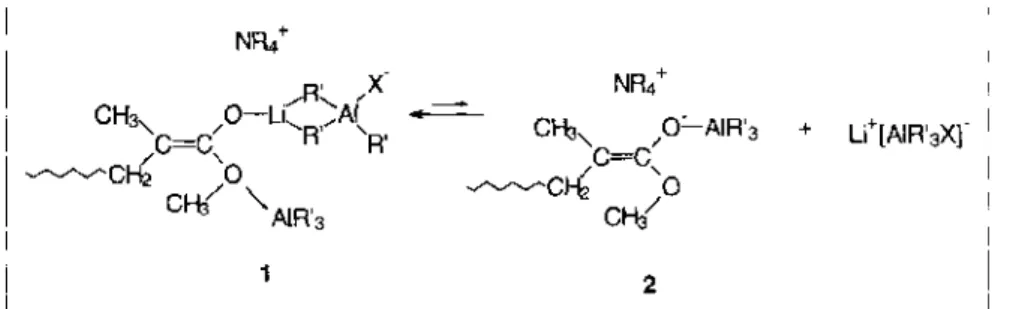
Figure 1Postulated equilibrium between two active species with different reactivities in anionic complexation with NR4+X/AIR'3.
Analysis of the active site structure
Models for the lithiated species active in the anionic polymerization of MMA, such as α-lithioesters,
were studied, some years ago, by multinuclear NMR spectroscopy [30], The interest of these models is, however, limited by their reactivity which does not match the reactivity of the propagating species. This reactivity changes rapidly while going from monomerie to dimeric and trimeric active species. Moreover, models for MMA species are only stable at very low temperatures, which is an experimental drawback. For these reasons, living poly(tert-butyl-methacrylate) (PtBMA), stable at 0°C, and its dimeric model, di-tert-butyl 2-lithio-2,4,4'-trimethylglutarate (DBTMGLi), have been recently studied [31,32]. The last monomer units of PtBMA have also been selectively labeled by13C atoms (13C NMR analysis). A parallel NMR study (6,7Li,1H,l3C) of both the dimeric model and the growing chains has
been conducted in the absence and presence of μ- and μ/σ-type ligands [33,34], the main conclusions of
which are as follows:
1. Both DBTMGLi and living oligomers are engaged in an equilibrium between a dimeric and unimeric form in THF from -70°C to 10°C [31], the aggregation being favored at higher temperature and concentration.
2. Addition of LiCl completely perturbs the aggregation equilibrium. When the LiCl : DBTMGLi molar ratio is greater than one, a 1 : 1 complex is formed with a fast exchange rate.13C Relaxation times also indicate a dimeric aggregation for this complex, in full agreement with an MNDO (modified neglect of differential overlap) calculation. Living PtBMA oligomers also form a 1 : 1 complex with LiCl. Although no intramolecular complexation of Li+ with the antepenultimate ester group is observed, self-termination of these oligomers still occurs at 0°C.
3. A more complex situation results from the addition of LiOEEM, which shows a strong tendency to self-aggregate into dimeric, trimeric, and tetrameric aggregates. Self-aggregation of LiOEEM competes with mixed complexa-tion with DBTMGLi (1 : 1, 3 : 1 and probably 2 : 1 mixed aggregates) and living PtBMA oligomers. However, parts of the DBTMGLi and PtBMA oligomers remain uncom-plexed even when LiOEEM is used in excess, which suggests that at least two kinds of active species may contribute to the anionic polymerization of tor-butyl methacrylate and account for the bimodality of the final polymer.
Last generations of ligands
In their study of the anionic polymerization of (meth)acry-lates in the presence of aluminum alkyls [21,22], Müller and co-workers [33**] have studied the effect of tetraalky-lammonium halides. The
living anionic polymerization of MMA, initiated by ethyl α-lithioisobutyrate (EiBLi) in toluene at or
below 0°C, is very fast, because the half-reaction time is a few minutes compared to a few hours in the absence of ammonium salts. A polymer with MW up to 250,000 g/mol-1 can be synthesized, which is mainly syn-diotactic (75%) and of narrow MWD (< 1.2). It is worth noting that the the metal-free anionic polymerization of MMA initiated by tetrabutylammonium malonate in THF is poorly
controlled (MWD > 2.0; [36]). The beneficial effect of tetraalkylammonium halide is thought to result from the partial dissociation of the Li enolate complexed by NR4X/AlR'3 into the considerably more reactive ester enol aluminate 2 as shown in Figure 1. Interestingly enough, the anionic polymerization of primary acrylates, such as n-butyl acrylate and 2-ethylhexyl acrylate, is controlled at -78°C.
A simple and economic method has been recently devised for the one-pot synthesis of an α-lithio ester
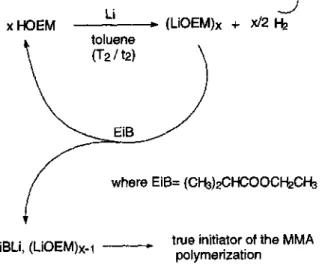
Figure 2 One pot strategy for the anionic polymerization of MMA by EiBLi in the presence of LiOEM as the ligand.
2-Methoxy-ethanol is first metallated in toluene by an excess of Li, with the formation of the expected LiOEM ligand. This Li-alkoxide is able to metallate ethylisobutyrate, thus forming the initiator (EiBLi) with the release of 2-methoxyethanol, which is reconverted into LiOEM by excess Li. This reaction pathway, which is illustrated in Figure 2, makes the ligated LiOEM/EiBLi initiator more attractive for the large scale polymerization of MMA in toluene at 0°C.
Finally, a new σ-type ligand has been discovered that allows highly isotactic PMMA to be synthesized
in toluene at 0°C [37**]. According to a 'process-friendly' method, sec-butyllithium is reacted with hexa(octa)-methyl cyclotri-(tetra)siloxane (D3 or D4) leading to sec.C4H9-Si(CH3)2OLi, which is the actual ligand for unreacted sec.BuLi and, later on, for the propagating species of the MMA type. Figure 3 illustrates this cascade-type of reaction, which, under optimized experimental conditions (particularly the initial sec.BuLi: D3 [or D4] molar ratio) leads to a single mixed complex, as confirmed by
multinuclear NMR spectroscopy [38]. This active mixed complex promotes the quantitative living polymerization of MMA in toluene within 1 h at 0°C, such that PMMA up to 100,000 g/mol-1 can be synthesized with a narrow MWD (~ 1.1). The stereoregularity of PMMA is amazingly high, that is, 95% isotactic. The reason for this unusually high isotacticity is not yet clear. The attack of the meso-prochiral face might, however, be preferential as result of the unusual bulkiness of the lig-ands around the active center in the mixed complexes.
Polymerization of methacrylates in the presence of the tetraphenylphosphonium ion has also been discussed in terms of phosphorylide-mediated polymerization [39].
Climbing back up the nucleophilic reactivity scale
One of the oldest constraints in anionic polymerization is the fact that an active growing site cannot attack another type of monomer if it does not have the proper (higher) relative nucleophilicity. This requirement explains why a well-defined sequence of monomers, that is, dienes, styrenes >
vinylpyridines > (meth)acrylates > oxiranes, siloxanes, has to be followed for the successful synthesis of block copolymers. However, the results described hereafter demonstrate that such a classical rule can be circumvented in some cases [40**].
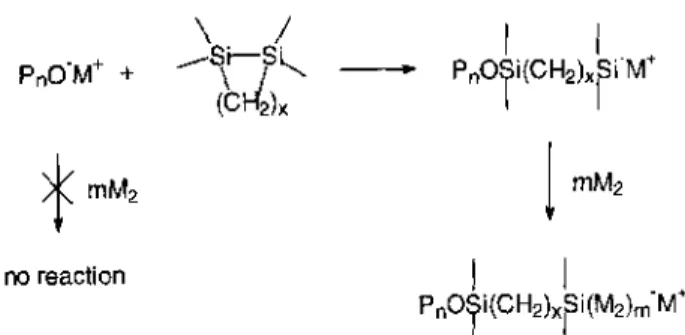
The selected general strategy is illustrated in Figure 4 which basically consists of the nucleophilic attack (by an initiator or a living growing chain) of a substituted disila-cyclopentane in a polar mixed solvent, with the formation of a new silyl anion, nucleophilic enough to attack the other usual monomers. The driving force of this process comes from the energy gain by the formation of more stable bonds around the Si atom, and probably also from the release of ring strain, particularly if a disila-cyclopentane is used. Although this strategy has to be optimized, very encouraging preliminary results have been reported. Indeed, for the first time, potassium trimethylsilanolate, and living
potassium poly(ethylene oxide), both of which are unable to initiate styrene and MMA polymerization, have been converted from oxyanionic active ends to silyl anionic ones by reaction with cyclic disila
derivatives, thus allowing homoρoly-merization and sequential (co)polymerization of styrene or MMA
to proceed in a controlled way. These results pave the way to the direct synthesis of A-B-A triblock
copolymers from α,ω-difunctional living chains, in a sequence unaccessible to classical anionic
initiators.
Figure 4 Use of cyclosila derivatives as reactivity amplifiers for the macromolecular engineering of new copolymers: reaction scheme. PnO-M+ is a living polymer with an oxyanionic chain end and metal counterion; m is the number of monomer 2 (M2).
Recent achievements in the anionicpolymerization of styrene (derivatives) anddienes Difunctional initiating system
Undoubtedly, the most successful industrial application of anionic polymerization is the production of the styrene-diene based thermoplastic elastomers (TPEs). In order to improve the upper service temperature, which is around 70°C, the synthesis of methacrylate-diene based triblocks has been considered. In contrast to styrene and butadiene, which are of quite a comparable reactivity. MMA is much more reactive than butadiene, such that it is mandatory to polymerize butadiene first, which
requires the availability of a hydrocarbon soluble α,ω-difunctional initiator. Our laboratory has recently
reported on the efficiency of the diadduct of tert-butyllithium to 1,3-diisopropenyl benzene (DIB) in the presence of ether ligands, which prevent the dianionic species from aggregating while preserving a predominantly 1,4-microstructure for polybutadiene [41-45]. Substitution of MMA for styrene enabled new TPEs to be synthesized with the same ultimate tensile properties as the traditional SBS, but with an upper service temperature improved by ~50°C.
Functional polymers
The anionic polymerization of traditional monomers, such as styrene and dienes, usually fails when they are substituted by functional groups because of the sensitivity of these groups to nueleophiles.
Nakahama and coworkers [46-48,49*] have contributed remarkable progress to this field by the deliberate introduction of an appropriate electron-withdrawing group on (α-methyl) styrene (para-position), such as cyano [46,47], methyl sulfide [48] and N-arylimino [49*]. Polymers of strictly controlled molecular structures have been synthesized as result of the appropriately changed reactivity of both the monomer (enhanced electrophilicity) and the carbanion produced (reduced nucleophilicity). Conditions for the successful anionic polymerization of styrene para-substituted by a silylvinyl group have also been reported [50].
New industrial development
The anionic terpolymerization of styrene, isoprene and butadiene was reported by AF Halasa from The Goodyear Tire & Rubber Co., they achieved control of composition, microstructure and sequence distribution in a unique family of elastomeric materials [51*]. These new elastomers can be tailor-made with diverse viscoelastic responses in order to suit specific tire applications, in particular, those
required for high performance tires.
Combination of anionic with other living polymerizations
Living polymerizations (i.e. anionic, cationic, radical) provide the most versatile synthetic routes for the preparation of a wide variety of well-defined polymer structures. As each living mechanism is only applicable to a limited number of monomers, it is highly desirable to combine at least two living polymerization techniques in order to prepare novel polymeric materials. Recent publications have dealt with the combination of living anionic polymerization with cationic [52**,53*.54,55,56*,57], controlled radical [58], and group transfer [59] polymerizations.
In a very inventive series of papers [52**,53*,54], Ruckenstein and Zhang reported on new methacrylate monomers, such as 2-(vinyloxy)ethyl methacrylate (VEMMA) and l-(isobutoxy)ethyl methacrylate (BOEMA), that can be anionically polymerized in a living way. These methacrylates are substituted by groups that can either polymerize cationically (vinyloxy group in VEMMA) or initiate the cationic polymerization of vinyl ethers in presence of ZnCl2 (1-isobutyoxyethyl ester). These difunctional monomers can be used advantageously to prepare copolymers with complex molecular architectures, for example, comb-like, block-graft, and star-shaped structures.
In another series of papers, Müller and co-workers [55,56*] proposed the combination of living anionic and cationic polymerization, in order to prepare poly(isobuty-lene) (PIB)-based linear and star-shaped block copolymers. The strategy consists of the end-capping of living PIB chains by 1,1-diphenyl ethylene, followed by quantitative metallation with a K-Na alloy. The resulting stable macrocarbanion can initiate the living anionic polymerization of tBMA and, after exchange of Li+ for K+, the MMA polymerization.
Conclusions
Fundamental and practical developments in anionic polymerization have been reviewed for the past year. New concepts, initiating systems, reaction processes and materials have been discovered and put into practice. This is very encouraging for an area which is somewhat considered as 'dormant'. On the other hand, envisioning further development in efforts in anionic polymerization might sound unrealistic, at a time when so-called 'living' or controlled radical polymerization is viewed as a more easily implemented process. Nevertheless, the performances of a controlled radical polymerization are limited by a number of serious drawbacks, including the requirement for an oxygen-free system, the difficulty to reach quantitative conversion, the poor or nonreactivity of some important monomers (dienes, oxiranes, cyclosiloxanes, etc.), the too high metal residue in ATRP (atom transfer radical polymerization), and so on. In brief, living anionic polymerization is still an important method to be preferentially chosen in the years to come for precise tailoring of complex materials.
Acknowledgements
R Jerome is deeply indebted to all his co-workers mentioned in the publication listed below. He is also grateful to the 'Services des Affaires Scientifiques, Techniques et Culturelles' for general support in the frame of the 'Poles d'Artraction [nteruniversitaires: PAI4/11'.
References and recommended reading
Papers of particular interest, published within the annual period of review, have been highlighted as:
• of special interest •• of outstanding interest
[1]. Szwarc M: Living polymers: their discovery, characterization, and
• properties. J Polym Sci Part A 1998, 36:ix-xv.
This review highlights Szwarc's pioneering work in anionic polymerization. [2]. Matyjaszewski K, Muller AHE: Naming of controlled, living and
• 'living' polymerizations. Polym Prepr (Am Chem Soc Div Polym Chem) 1997, 38:6-9.
Terms such as 'living' and 'controlled' polymerization should be carefully distinguished. It is recommended that 'controlled' be used rather than 'living' for polymerization systems which provide well-defined polymers but are not completely free of termination or transfer, like radical
polymerizations.
[3]. Litvinenko G, Muller AHE: General kinetic analysis and comparison
• of molecular weight distribution for various mechanisms of activity exchange in living
polymerizations. Macromolecules 1997, 30:1253-1266.
A general treatment and unified view of various mechanisms of exchange between various species, and comparison of the MWD averages obtained in these mechanisms and their dependences on monomer conversion and initial concentrations of reagents.
[4]. Creutz S, Teyssie Ph, Jérôme R: Anionic block copolymerization of 4-vinylpyridine and tert-butyl methacrylate at "elevated" temperatures: influence of various additives on the molecular parameters. Macromolecules 1997, 30:5596-5601.
[5]. Hild G, Lamps JP: Diblock copolymers, triblock copolymers and
• model networks synthesized by sequential anionic polymerization of styrene and 2,3-epoxypropyl
methacrylate. Polymer 1998, 39:2637-2649.
Detailed analysis of the anionic polymerization of glycidyl methacrylate.
[6]. Creutz S, Teyssié Ph, Jérôme R: Living anionic homo- and block copolymerization of 2-(tert-butylamino) ethyl methacrylate.
J Polym Sci Part A 1997, 35:2035-2040.
[7]. Se K, Yamazaki H, Shibamoto T, Takano A, Fujimoto T: Model block-graft copolymer via anionic living polymerization: preparation and characterization of
[poly((4-vinylphenyl)dirnethylvinylsilane)-graft-polyisoprenel-block-polystyrene. Macromolecules 1997, 30:1570-1576.
[8]. Quirk RP, Lizarraga G, Lu LM, Hasegawa H, Zhuo QZ: Anionic polymerization chemistry of epoxides. Functionalization, block polymerization and branching. Macromol Symp 1997, 118:89-97. [9]. Demoustier-Champagne S, Canivet I, Devaux J, Jérôme R: Coupling reaction of α,ω-dichloropoly-(methylphenylsilane) and living poly(styryllithium). Study of the coupling reaction. J Polym Sci Part A 1997,35:1939-1948.
[10]. Pitsikalis M, Pispas S, Mays JW, Hadjichristidis N: Nonlinear block •• copolymer
achitectures. Adv Polym Sci 1997,135:1 -137.
Review of the synthesis and bulk and solution properties of block copolymers having nonlinear architectures.
[11]. Avgeropoulos A, Hadjichristidis N: Synthesis of model nonlinear block copolymers of A(BA)2, A(BA)3, and (AB)3A(BA)3 type. J Polym Sci Part A 1997, 35:813-816.
[12]. Cernohous JJ, Macosko CW, Hoye TR: Anionic synthesis of polymer functionalized with a terminal anhydride group. Macromolecules 1997,30:5213-5219.
[13]. Summers GJ, Quirk RP: Anionic synthesis of aromatic amide and carboxyl functionalized polymers. Chainend functionalization of poly(styryl)lithium with N, Ndiisopropyl4(1 -phenylethenyl) benzamide. J Polym Sci Part A 1998, 36:1233-1241.
[14] Satoh T, Miura T, Hatakeyama T, Yokota K, Kakuchi T: Synthesis of end-functionalized (1— >6)-2,5-anhydro-D-glucitols via anionic cyclopolymerization of 1,2:5,6-dianhydro-3,4-di-0-methyl-D-mannitol for preparing graft copolymers. Macromol Rapid Commun 1997, 18:1041-1048.
[15]. Quirk RP, Zhuo QZ: Anionic synthesis of epoxide-functionalized marcromonomers by reaction of epichlorohydrin with polymeric organolithium compounds. Macromolecules 1997, 30:1531-1539. [16]. Hirao A, Tohoyama M, Nakahama S: Synthesis of end-functionalized polymers by means of
living anionic polymerization. 8. Reactions of living anionic polymers with α,ω-dihaloalkanes.
Macromolecules 1997, 30:3484-3489.
[17]. Hayashi M, Loykulnant S, Hirao A, Nakahama S: Synthesis of end-functionalized polymers by means of living anionic polymerization. 9. Synthesis of well-defined end-functionalized polymers with one, two, three, or four monosaccharide residues. Macromolecules 1997, 31:2057-2063.
[18]. Habaue D, Uno T, Baraki H, Okamoto Y: Stereospecific anionic polymerization of α-(N,N-dialkylaminoethyl)acrylates. Polym J 1997, 29:983-986.
[19]. Onimura K, Tsutsumi H, Oishi T: Asymmetric polymerization of N-substituted maleimides with organolithium-bisoxazolines complex. Polym Bull 1997, 39:437-444.
[20]. Wang JS, Jérôme R, Teyssié Ph: Mechanistic aspects of "ligated" anionic living polymerization (LAP): the case of (meth)acrylic ester monomers. J Phys Organ Chem 1995, 8:208-221.
[21]. Schlaad H, Schmitt B, Muller AHE: Mechanism of anionic polymerization of (meth)acrylates in the presence of aluminum alkyls. 5. Effect of Lewis bases on kinetics and molecular weight
distributions. Macromolecules 1998, 31:573-577
[22]. Schmitt B, Schlaad H, Muller AHE: Mechanism of anionic polymerization of (meth)acrylates in the presence of aluminum alkyls. 6. Polymerization of primary and tertiary acrylates. Macromolecules 1998, 31:1705-1709.
[23]. Baskaran D, Sivaram S: Specific salt effect of lithium perchlorate in living anionic
polymerization of methyl methacrylate and tert-butyl acrylate. Macromolecules 1997, 30:1550-1555.
[24]. Maurer A, Marcarian X, Muller AHE: Kinetics and mechanism of • anionic polymerization
of (meth)acrylates in the presence of lithium-2-methoxyethoxide. Polym Prepr (Am Chem Soc Div Polym Chem) 1997, 38:467-468. Living anionic polymerization and block copolymerization of (meth)acrylates were conducted in a flow-tube reactor.
[25]. Antoun S, Teyssie Ph, Jeome R: Anionic polymerization of methacrylate monomers initiated by lithium dialkylamide. J Polym Sci Part A 1997, 35:3637-3644.
[26]. Nugay N, Nugay T, Jerome R, Teyssie Ph: Ligated anionic block copolymerization of methyl methacrylate with n-butyl acrylate and n-nonyl acrylate as promoted by lithium 2-(2-methoxyethoxy) ethoxide/diphenylmethyllithium. J Polym Sci Part A 1997, 35:1543-1548.
[27]. Marchal J, Gnanou Y, Fontanille M: Control of anionic polymerization of methyl methacrylate via lithium aminoalkoxides. Polym Prepr (Am Chem Soc Div Polym Chem) 1997, 38:473-474. [28]. Shlaad H, Muller AHE: Mechanism of anionic polymerization of (meth)acrylates in the presence of aluminum alkyls IV. Formation of a co-ordinative polymer network via the living aluminate end group. Polym J 1996, 28:954-959.
[29]. Vuillemin B, Navarro Ch: Ligated polymerization: a new tool for scaling up anionic
polymerization of (meth)acrylates. Polym Prepr (Am Chem Soc Div Polym Chem) 1996, 37:628-629. [30]. Wang JS, Jerome R, Warin R, Teyssie Ph: Anionic polymerization of acrylic monomers. 10. 13C and 7Li NMR studies on the monomeric model of living poly(methyl methacrylate).
Macromolecules 1993, 26:1402-1406.
polymerization of (meth)acrylic monomers. 5. Nuclear magnetic resonance study of the model dimer in tetrahydrofuran. Macromol Chem Phys 1995, 196:3005-3014.
[32]. Kriz J, Dybal J, Janata M, Lochmann L, Vlcek P: Study of the propagation centre in the anionic polymerization of (meth)acrylic monomers. 7. Study of the interaction of the living dimer with lithium tert-butoxide in tetrahydrofuran. Macromol Chem Phys 1996, 197:1889-1907
[33]. Zune C, Dubois Ph, Jerome R, Kriz J, Dybal J, Lochmann L, Janata M, Vlcek p Werkhoven TM, Lugtenburg J: Study of the propagation center in the anionic polymerization of (meth)acrylic monomers: NMR and MO LCAO study of the interaction of di-tert-butyl
2-lithio-2,4,4-trimethylglutarate and the living poly(tert-butyl methacrylate) oligomers with lithium 2-(2-methoxyethoxy) ethoxide in tetrahydrofuran. Macromolecules 1998, 31:2731-2743.
[34]. Zune C, Dubois Ph, Jerome R, Kriz J, Dybal J, Lochmann L, Janata M, Vlcek P, Werkhoven TM, Lugtenburg J: Study of the propagation center in the anionic polymerization of (meth)acrylic monomers: NMR and MNDO study of the complexes of di-tert-butyl 2-lithio-2,4,4-trimethylglutarate and the living poly(tert-butyl methacrylate) oligomers with lithium chloride. Macromolecules 1998, 31:2744-2755.
[35]. Schlaad H, Schmitt B, Muller AHE: Living and controlled anionic
•• polymerization of methacrylates and acrylates in the presence of tetraalkylammonium
halide-alkylaluminum complexes in toluene.
Angew Chem lnt Ed Engl 1998, 37:1389-1391. Tetraalkylammonium halides form hydrocarbon-soluble complexes with alky-laluminum compounds that support living and controlled polymerization of (meth)acrylates.
[36]. Broska D, Fieberg A, Heibel C, Bandermann F: Metal-free anionic polymerization of methyl methacrylate. Polym Prepr (Am Chem Soc Div Polym Chem) 1997, 38:471-472.
[37]. Zundel T, Teyssie Ph, Jerome R: New ligands for the living isotactic •• anionic
polymerization of methyl methacrylate in toluene at 0°C.
1. Ligation of butyllithium by lithium silanolates. Macromolecules 1998,31:2433-2439. Under appropriate conditions, MMA polymerization is fast and quantitative without self-termination in toluene at 0°C, leading to a high MW polymer of narrow MWD and high isotacticity.
[38]. Zundel T, Zune C, Teyssie Ph, Jerome R: New ligands for the living isotactic anionic polymerization of methyl methacrylate in toluene at 0°C. 2. 7Li NMR analysis of sec-butyllithium ligated by lithium silanolates. Macromolecules 1998, 31:4089-4092.
[39]. Baskaran D, Muller AHE, Kolshorn H, Zagala AP, Hogen-Esch TE: Polymerization of methacrylates in the presence of tetraphenyl-phosphonium cation. 2. Evidence for phosphorylide-mediated polymerization. Macromolecules 1997, 30:6695-6697,
[40]. Zundel T, Baran J, Mazurek M, Wang JS, Jerome R, Teyssie Ph: •• Climbing back up the nucleophilic reactivity scale. Use of cyclosila derivatives as reactivity boosters in anionic
polymerization. Macromolecules 1998, 31:2724-2730. This paper shows that the classic rule according to which the relative nucle-ophilic reactivity of the initiating species must be equal to or larger than the one of the (co)monomer can be circumvented in some cases.
[41]. Yu YS, Dubois Ph, Teyssie Ph, Jerome R: Difunctional anionic initiator based on 1,3-diisopropenylbenzene. 5. Effect of polar additives and initiator seeding on the synthesis of poly(styrene-b-butadiene-b-styrene) copolymers. Macromolecules 1997, 30:7356-7362. [42]. Yu YS, Dubois Ph, Teyssie Ph, Jerome R: Difunctional anionic initiator based on
1,3diisopropenylbenzene. Synthesis of methyl methacrylate-butadiene-methyl methacrylate triblock copolymers. Macromolecules 1997, 30:4254-4261.
[43]. Yu JM, Dubois Ph, Jerome R: Polytmethyl methacrylate (M)-b-styrene (S)-b-butadiene (B)-b-S-b-M] pentablock copolymers: synthesis, morphology, and properties. Macromolecules 1997, 30:4984-4994.
[44]. Yu JM, Dubois Ph, Jerome R: Poly[poly(isobornyl methacrylate-co-methyl methacrylate) (poly(IBMA-coMMA))-.b-polybutadiene-b-poly(IBMA-co-MMA)] copolymers: synthesis, morphology, and properties. Macromolecules 1997, 30:6536-6543.
[45]. Yu JM, Dubois Ph, Jerome R: Polytglycidyl methacrylate (GMA)/ methyl methacrylate (MMA)-b-butadiene (B)-6-GMA/MMA] reactive thermoplastic elastomers: synthesis and characterization. J Polym Sci Part A 1997, 35:3507-3515.
[46]. Ishizone T, Okazawa Y, Ohnuma K, Hirao A, Nakahama S: Anionic polymerization of
monomers containing functional groups. 8. Anionic living polymerization of 4-cyano-α-methylstyrene. Macromolecules 1997, 30:757-763.
[47]. Ishizone T, Ohnuma K, Okazawa Y, Hirao A, Nakahama S: Anionic polymerization of monomers containing functional groups. 12. Anionic equilibrium polymerization of 4-cyano-α-methylstyrene. Macromolecules 1998, 31:2797-2803.
[48]. Hirao A, Shinoe H, Ishizone T, Nakahama S: Anionic polymerization of monomers containing functional groups. 9. Anionic polymerization of 4-vinylphenyl methyl sulfide, 4-vinylbenzyl methyl sulfide, and 2-(4'-vinylphenyl)ethyl methyl sulfide. Macromolecules 1997, 30:3728-3731.
[49]. Ishizone T, Utaka T, Ishino Y, Hirao A, Nakahama S: Anionic
• polymerization of monomers containing functional groups. 10. Anionic living polymerization of
N-acryl-N-(4-vinyl-benzylidene)amines. Macromolecules 1997, 30:6458-6466.
The anionic polymerization of styrene para-substituted with W-arylimino groups is controlled in THF at -78°C provided that the W-aryl moiety is substituted by two bulky alkyl groups in ortho positions. The W-arylimino sub-stituent is quantitatively hydrolyzed into aldehyde.
[50]. Se K, Matsumura K, Kazama T, Fujimoto T: Preparation and characterization of poly[(4-vinylphenyl) dimethylvinylsilane] via anionic living polymerization. Polym J 1997, 29:434-441. [51]. Halasa AF: Preparation and characterization of solution SIBR via
• anionic polymerization. Rubber Chem Technol 1998, 70:295-308. An industrial example of how
to use anionic polymerization to tailor-make the desired materials, in this case elastomers based on styrene, isoprene and butadiene terpolymers.
[52]. Ruckenstein E, Zhang HM: Monomer [1-(isobutoxy)ethyl
•• methacrylate] that can undergo anionic polymerization and can also be an initiator for the cationic
polymerization of vinyl ethers. Preparation of comblike polymers. Macromolecules 1997, 30:6852-6855. This Afunctional monomer can be used both as an initiator for the cationic polymerization of vinyl ethers and as a monomer that can undergo anionic polymerization. Graft copolymers consisting of a polymethacrylate backbone and poly(alkyl vinyl ether) side chains have been accordingly synthesized.
[53]. Zhang HM, Ruckenstein E: Graft copolymers by combined anionic
• and cationic polymerizations based on the homopolymerization of a Afunctional monomer.
Macromolecules 1998, 31:746-752.
2-Vinyloxyethyl methacrylate is a Afunctional monomer that can be polymerized both anionically and cationically to generate two kinds of functional polymers that are potential precursors of graft
copolymers.
[54]. Ruckenstein E, Zhang HM: Block-graft and star-shaped copolymers by continuous transformation from anionic to cationic polymerization. Macromolecules 1998, 31:2977-2982. [55]. Feldthusen J, Ivan B, Muller AHE: Stable carbanions by quantitative metalation of cationically obtained diphenylvinyl and diphenylmethoxy compounds: new initiators for living anionic
polymerizations. Macromolecules 1997, 30:6989-6993.
[56]. Feldthusen J, Ivan B, Muller AHE: Synthesis of linear and star
• shaped block copolymers of isobutylene and methacrylates by combination of living cationic and
anionic polymerizations.
Macromolecules 1998, 31:578-585. A new synthetic route for the preparation of polyisobutylene-based block copolymers was developed that has potential for the synthesis of new thermoplastic elastomers. [57]. Labeau MP, Cramail H, Deffieux A: Amphiphilic block copolymers of controlled dimensions with hydrophilic glycosidic vinyl ether moieties. Macromol Chem Phys 1998,199:335-342.
[58]. Kobatake S, Harwood HJ, Quirk RP, Priddy DB: Block copolymers synthesized by styrene polymerization initiated with nitroxy-functionalized polybutadiene. Macromolecules 1998, 31:3735-3739.
[59]. Zou YS, Lin DH, Dai LZ, Zhang JH: Synthesis of graft copolymer by coupling reaction of living poly(methyl methacrylate) with bromomethylated polystyrene. Polymer 1998, 39:2665-2668.