HAL Id: hal-02979134
https://hal.archives-ouvertes.fr/hal-02979134
Submitted on 27 Oct 2020
HAL is a multi-disciplinary open access
archive for the deposit and dissemination of
sci-entific research documents, whether they are
pub-lished or not. The documents may come from
teaching and research institutions in France or
abroad, or from public or private research centers.
L’archive ouverte pluridisciplinaire HAL, est
destinée au dépôt et à la diffusion de documents
scientifiques de niveau recherche, publiés ou non,
émanant des établissements d’enseignement et de
recherche français ou étrangers, des laboratoires
publics ou privés.
Aerial Platforms with Reconfigurable Smart Surfaces for
5G and Beyond
Safwan Alfattani, Wael Jaafar, Yassine Hmamouche, Halim Yanikomeroglu,
Abbas Yongaçoglu, Dũng Ðào, Peiying Zhu
To cite this version:
Safwan Alfattani, Wael Jaafar, Yassine Hmamouche, Halim Yanikomeroglu, Abbas Yongaçoglu, et
al.. Aerial Platforms with Reconfigurable Smart Surfaces for 5G and Beyond. IEEE Communications
Magazine, Institute of Electrical and Electronics Engineers, 2021, �10.1109/MCOM.001.2000350�.
�hal-02979134�
1
Aerial Platforms with Reconfigurable Smart
Surfaces for 5G and Beyond
Safwan Alfattani, Wael Jaafar, Yassine Hmamouche, Halim Yanikomeroglu, Abbas Yongaçoglu, Ngo.c D˜ung Ðào,
and Peiying Zhu
Abstract—Aerial platforms are expected to deliver enhanced and seamless connectivity in the fifth generation (5G) wireless networks and beyond (B5G). This is generally achievable by supporting advanced onboard communication features embedded in heavy and energy-intensive equipment. Alternatively, reconfig-urable smart surfaces (RSS), which smartly exploit/recycle signal reflections in the environment, are increasingly being recognized as a new wireless communication paradigm to improve com-munication links. In fact, their reduced cost, low power use, light weight, and flexible deployment make them an attractive candidate for integration with 5G/B5G technologies. In this article, we discuss comprehensive approaches to the integration of RSS in aerial platforms. First, we present a review of RSS technology, its operations and types of communication. Next, we describe how RSS can be used in aerial platforms, and we propose a control architecture workflow. Then, several potential use cases are presented and discussed. Finally, associated research challenges are identified.
INTRODUCTION
As the world steps into the deployment of 5G, researchers continue addressing the challenges of ubiquitous connectiv-ity. The role of aerial platforms for wireless networks is an increasingly important one for meeting the communica-tion requirements of 5G/B5G. Indeed, the Third Generacommunica-tion Partnership Project (3GPP) has considered aerial platforms to be a new radio access for 5G (TR 38.811, TR 22.829, and TS 22.125), and several projects have been initiated to provide ubiquitous Internet services, such as Google Loon and Thales Stratobus. Due to their 3D-mobility, flexibility, and adaptable altitude, aerial platforms can efficiently support the connectivity of terrestrial and aerial users by enhancing their capacity and coverage, or even providing backhaul links. Based on their operation altitudes, we distinguish two main types of aerial platforms, Unmanned Aerial Vehicles (UAVs) and High Altitude Platform Stations (HAPS). UAVs operate at low altitudes of few hundred meters and act as flexible and agile relays or base stations (UxNB) (TR 22.829). Their use is generally time-limited, ranging from a few minutes to a few hours due to limited onboard energy. Alternatively, tethered UAVs can fly for much longer owing to the continuous supply of power from the tether. By contrast, HAPS operate at higher altitudes of 8 to 50 km above ground (TR 38.811), with current HAPS projects focusing on the 20 km altitude. They allow wider coverage areas and longer flight times compared to UAVs (e.g., Google Loon’s flight record is 223 days). To further reduce costs and make aerial platforms more attractive for 5G/B5G networks, researchers are constantly searching for new horizons of improvements, including fuselage materials,
battery, fuel, and solar-cell technologies, as well as enhanc-ing trade-offs in energy efficiency (EE) and communication performance.
From the communication perspective, passive reconfig-urable smart surface (RSS)1has emerged as a potential substi-tute for active communication components [1]. RSS is a thin and flexible metasurface equipped with programmable passive circuits to “reflect” received signals in a controlled way. An RSS can then positively exploit the propagation environment to enhance the quality of a communication link between a transmitter and a receiver, known as RSS-assisted commu-nication, or to transmit signals more effectively, identified as RSS-initiated communication. Efforts have been made to evaluate and explore the benefits of RSS. For instance, NTT DOCOMO collaborated with Metawave and demonstrated an increase in data rate of approximately ten times using RSS at 28 GHz. Other notable initiatives include the VisoSurf consortium for RSS prototyping, and Greenerwave, which is already marketing RSS that operate at frequencies up to 100 GHz.
Considering the opportunities presented by RSS technology, we discuss in this paper a novel paradigm where RSS is deployed in aerial platforms, and propose a control archi-tecture workflow for communication, mobility, and sensing. We then describe potential use cases where RSS-equipped HAPS and UAVs aim to achieve communication objectives, such as coverage extension and low-cost network densification. Finally, related challenges are presented. To the best of our knowledge, this is the first work that presents an in-depth discussion of the use of RSS-equipped aerial platforms, their control architecture, as well as their potential applications and challenges.
OVERVIEW OFRSSINCOMMUNICATIONS
Background
Researchers have traditionally focused on improvements in hardware and transmission techniques to enhance link quality between a transmitter and a receiver. This research stream has sought ways of mitigating the impact of environmental objects on the quality of wireless signals. However, a different approach has emerged whereby the environment between transmitters and receivers can be managedto initiate or sup-port wireless communications. For initiated communications,
1The term “Smart" is selected in accordance with previous 3GPP standards
various ambient energy sources, (RF, solar, etc.), can power ultralow-power electronics to enable sensing functions and backscatter communications through different environmental objects (see [2] and references therein). For assisted commu-nications, the idea of controlling surfaces and objects in wire-less propagation environments was proposed earlier, around two decades ago. The objective was to mitigate undesired interference and improve the desired signal through the use of frequency selective surfaces (FSS). These FSS resemble bandpass or bandstop filters, and they can be integrated into indoor walls. Also, they can be equipped with sensors and diode switches for flexibly controlled response.
While FSS’s key function has been to filter signals and alle-viate interference, another vision of utilizing the propagation environment is to combine the scatters of the desired signals and direct them to the targeted users. In this context, passive reflectors (a.k.a., mirrors) consisting of metallic sheets or high conductivity materials have been designed for indoor and outdoor environments, aiming to enhance thereceived power.
For outdoor environments, authors in [3] suggested using passive reflectors on top of buildings to focus reflected signals from ground base station (gBSs) toward users. Compared to conventional coverage enhancement approaches, such as re-layingand gBSs densification, passive reflectors made of low-cost elements offer flexible deployment, easy maintenance, and improved EE. Nevertheless, passive reflectors are constrained by Snell’s law of reflection, and once designed, they have a fixed response. Hence, they are inherently unable to accommo-date the dynamics of wireless environments. Alternatively, to capture the wireless environment dynamicity, “active” surface technologies were proposed in [4], where the walls consist of a massive number of electromagnetically radiating and sensing elements working as large smart antennas, and regarded as an extension to the massive multiple-input multiple-output (MIMO) concept. While passive reflectors utilize material properties to direct electromagnetic waves, active surfaces require integrating electronics, antennas and communication circuits in walls to work as full transceivers. Although they might have better performances, the circuit complexity, mate-rial costs, and energy consumption are higher than for passive surfaces.
Inspired by recent advances in the physics of metasur-faces and meta-materials, passive RSS technology has been presented as an interesting add-on to various applications in wireless communications [1]. Metasurfaces are distinct man-made 2D meta-materials, consisting of thin layers of metal-lic/dielectric inclusions. Metasurface units can be arranged in arrays and designed to have peculiar electromagnetic (EM) features with customizable interactions with the EM waves. In-deed, these units can realize abrupt phase shifts and anomalous reflections and refractions, where the phase of the wavefronts can be altered, a process known as phase discontinuity [5]. Moreover, the reflected and refracted EM waves can have an arbitrary direction beyond Snell’s law, subject to “the generalized laws of reflection and refraction” [5]. To bypass the fixed response of metasurfaces, digital meta-materials were proposed in [6], where the manipulations of the EM waves were reconfigurable by digitally controlling the metasurface
units,i.e., switching between different meta-material responses using biased diodes. Subsequently, an advanced layout is pro-posed in [1], wherein a programmable metasurface layer was integrated with an Internet-of-Things gateway and a control layer to form a thin film, called “HyperSurface tile”, coating surfaces and environmental objects. Hence, the interaction of the surfaces with the EM waves can be programmed and controlled remotely via software.
Types of Communications with RSS
Given the capabilities demonstrated in physics for con-trolling and reconfiguring EM waves with meta-materials, wireless communication researchers have started investigating the use of RSS in different ways, particularly for RSS-assisted communicationsand RSS-initiated communications.
RSS-Assisted Communications
Aiming for efficient delivery of transmitted signals, most research has focused on using RSS as a relay to enhance the received signal at end-users. Different objectives have been considered, such as maximizing data rates or spectral efficiency, extending the coverage area, mitigating interfer-ence, and minimizing consumed energy. For instance, the authors of [7] showed that by optimizing the RSS phase shifts, quadratic increase in the signal-to-noise ratio (SNR) is realized, and better spectral efficiency than relays can be achieved. To practically substantiate the advantages of RSS-assisted communications, an experimental testbed was implemented in [8] demonstrating that RSS can solve the coverage-hole problem caused by obstacles in millimeter-wave (mmWave) networks. Additionally, motivated by the EE potential of RSS, researchers have focused on supporting energy-constrained communications. For instance, authors in [9] demonstrated that, even with low-resolution phase shifters in RSS-assisted communications, EE can be improved by 40% compared to conventional relaying systems.
RSS-Initiated Communications
In contrast to previous works, RSS is being tested as an energy-efficient and low-complex transmitter. The idea is to connect the RSS with a nearby RF source and, through phase shifting, data can be encoded and transmitted. While the reliability of RSS-initiated communications were analyzed in [10], authors of [11] validated through experiments the design of a high order modulation RSS-based transmitter, where a digital video file was modulated and transmitted through the RSS without requiring filters, mixers, or power amplifiers.
AERIALPLATFORMS WITHRSS: INTEGRATION AND
CONTROLARCHITECTURE
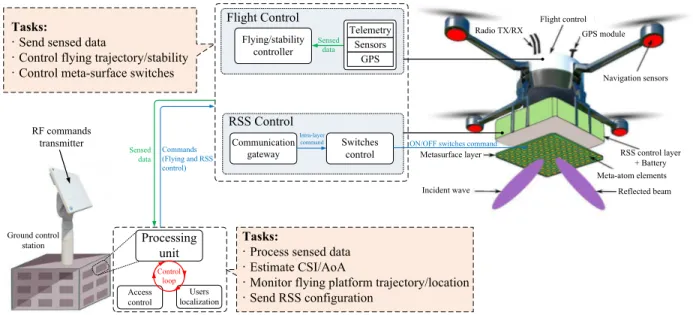
The current research works on RSS are focused on its use in terrestrial environments, e.g., RSS equipping buildings facades. However, motivated by the numerous aforementioned RSS capabilities, and the advanced features of aerial platforms, we envision that the usage of RSS in aerial platforms will offer great flexibility and support for wireless networks. Integrating RSS on aerial platforms can be done in several ways depending on the platform’s shape. For instance, the RSS can coat the outer surface of a balloon or an aircraft, or it can be installed as a separate horizontal surface at the bottom of a UAV, as shown
Flight Control Flying/stability controller Sensed data Telemetry Sensors GPS Switches control Communication gateway Intra-layer command RSS Control
ON/OFF switches command
Tasks:
· Send sensed data
· Control flying trajectory/stability · Control meta-surface switches
RF commands transmitter Processing unit Access control Users localization Control loop Tasks:
· Process sensed data · Estimate CSI/AoA
· Monitor flying platform trajectory/location · Send RSS configuration Sensed data Commands (Flying and RSS control) Incident wave Metasurface layer Radio TX/RX Flight control GPS module Navigation sensors RSS control layer + Battery Meta-atom elements Reflected beam Ground control station
Figure 1. Control architecture of RSS-equipped aerial platforms.
in Fig. 1. The reconfiguration of such surfaces can be realized through lumped elements embedded in the reflector units or via the distributed control of some material properties. Examples of lumped elements include PIN diodes, varactor diodes, and radio frequency micro-electro-mechanical systems. By tuning the lumped elements, the resonant frequency of the reflectors can be changed, hence achieving the desired wave manip-ulation and phase shift. To manage high frequency signals, e.g., mmWave and free-space optical (FSO) communication, tunable materials such as liquid crystal and graphene are used to design the metasurface reflector units.
In order for the RSS-equipped aerial platforms to perform communication functions properly, the channel information needs to be acquired and the RSS should be accurately configured. The control can be managed at two levels: Ground control station and aerial platform, as illustrated in Fig. 1. Ground Control Station
This controller consists mainly of a processing unit that an-alyzesthesensed data from the aerial platform,and theaccess control and users localization conditions, acquired through information exchange with gBSs and/or gateways. Given a set of global policies (e.g., flying regulations, power, etc.) and objectives (e.g., coverage, SNR, EE, etc.), the processing unit ensures the joint management of the aerial platform’s flying and communication functions. Moreover, it estimates the channel state information (CSI) and angle of arrival (AoA) between users and the aerial platform to determine the best RSS configuration setup.
Onboard Aerial Platform Control
The onboard aerial platform’s controller consists of two units, namely the flight control unit, and the RSS control unit. The former receives motion commands from the ground station, and ensures the platform’s stabilization. By contrast, the RSS control unitreceives the optimized RSS configuration, translates it into a switch control ON/OFF activation map, and
applies it to the metasurface layer for directing incident signals to targeted directions.
AERIALPLATFORMS WITHRSS: POTENTIALUSECASES
To demonstrate the potential benefits of integrating RSS in aerial platforms, we detail here several novel integration use cases.
HAPS with RSS to Support Remote Areas
Connecting sparse users in remote areas via terrestrial networks is deemed to be expensive and unprofitable to operators due to the high costs of typical gBSs and wired backhauling infrastructure. Satellites have been proposed to serve remote areas; however, due to high deployment costs, large communication delays, and excessive path-loss, satellites are considered as a last resort solution. Alternatively, HAPS have been introduced as a cost-effective solution for connect-ing remote users [12]. HAPS are quasi-stationary platforms located in the stratosphere at a fixed point relative to the earth. Since the wind’s speed in this region is weak, low power is required to stabilize the platform. Moreover, the coverage area of a HAPS is greater than that of a gBS. For instance, the International Telecommunication Union (ITU) suggested that the HAPS’ coverage radius be up to 500 km (ITU-R F.1500); however, current HAPS projects have less than 100 km coverage radius to achieve high area throughputs.
HAPS are mostly powered by solar/fuel energy, and their flight duration may vary from several hours to a few years. The energy consumed by a HAPS is mainly for propulsion, stabi-lization, and communication operations. Typically, a HAPS is used in communications either as a BS (HAPS-BS) or as a relay station (HAPS-RS). Although a HAPS-BS has more capabilities than a HAPS-RS, it involves a higher cost, a heavier payload, and an increased energy consumption. When solar cells are used, the harvested energy may not be sufficient for operations. For this reason, other power sources are added to complement the solar energy. Nevertheless, the EE of HAPS
HAPS-RSS HAPS-RSS Gateway Flying BS Inci dent /Refl ecte d Reflected/Incident wir eles sba ckha ul wireless backhaul Core network
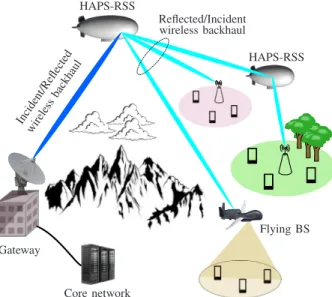
Figure 2. Backhauling support of isolated users in remote rural areas using HAPS-RSS.
is still an open problem, which directly impacts the flight duration.
In designing a HAPS deployment, low energy consumption, light payload, and reliable communication need to be achieved. To this end, motivated by the benefits of RSS, we propose using a HAPS equipped with RSS (HAPS-RSS) for wireless traffic backhauling from remote area BSs. The envisioned scenario is depicted in Fig. 2, where BSs handle the traffic of a few clustered users and transmit the traffic to the HAPS. Through the HAPS’ RSS, the received signals are smartly “reflected” toward a gateway station, which is connected to the core network. If a gateway station is not within the HAPS coverage range, the RSS can be configured to “reflect” the signals toward another HAPS and thereby reach the gateway station in a dual or multi-hop fashion.
Using HAPS-RSS has several advantages. First, it reduces the used power for communication functions, since directing signals can be realized in a nearly-passive way, without RF source or power amplifiers, and only minimum amount of power is required for the RSS control unit. Second, since RSS is made of thin and lightweight materials, the HAPS payload is lighter even if a large number of reflectors is deployed. Third, given the reduced communication components and payload, the required stabilization energy is minimized. The simplification in communication circuits and minimization of consumed energy yield to extended flight duration and reduced HAPS deployment costs.
The performance of RSS-assisted communications strongly depends on the number of reflectors. The dimensions of a metasurface reflector unit (a.k.a., meta-atom) are proportional to the wavelength [1]. Typically, a HAPS is a giant aircraft with a length between 30 and 200 m, which has the potential to accommodate a large number of reflectors, especially in high frequencies. The large number of reflectors would have a significant impact on the directivity gain, hence better SNR performance than HAPS-RS can be achieved [7]. In terms of energy consumption, the switches on the metasurface layer
Table I
COMPARISON BETWEENHAPS-RSANDHAPS-RSSFOR COMMUNICATION
Aspect HAPS-RS HAPS-RSS
Energy Consumption
Medium (Process, amplify, and forward signals)
Very low (RSS control) Payload Heavy (Complex circuits: converters, mixers, amplifiers, and antennas) Light (RSS designed as a thin sheet film coating HAPS outer surface) No. of
Commun. Units
Limited by frequency and energy constraints, and by allocated space
for circuits.
Limited by HAPS size and frequency band. Performance
(directivity gain)
Good performance, low EE
High EE, performance depends on RSS size and reconfiguration capability Spectral efficiency Good in full-duplex, but limited by noise and self-interference.
High, always full-duplex and no noise or interference. Cost
High (Several active components, short flight
duration)
Low (Low-cost RSS, extended flight duration)
consume very low power. A recent experiment showed that each meta-atom consumes 0.33 mW when its switch diode is set to ON [13]. Thus, for a HAPS with 10,000 meta-atoms, the maximal power consumed by the metasurface layer when all switches are activated would be about 3.3 W, which constitutes a very promising result. Hence, HAPS-RSS is expected to achieve a better EE than HAPS-RS [9]. Finally, it is worth noting that RSS supports full-duplex communication [7]. Indeed, unlike relays experiencing high noise and residual loop-back self-interference, which are issued from active RF components, RSS bypasses these constraints by only exploit-ing the intrinsic properties of the reflectexploit-ing material. Thus, HAPS-RSS would be more spectrally efficient than HAPS-RS. Table I summarizes the main differences between HAPS-RS and HAPS-RSS communications.
UAVs with RSS to Support Terrestrial Networks
RSS can be combined with UAVs and their attendant benefits, namely, agility, flexibility, and rapid deployment, to assist terrestrial cellular networks in a cost-effective manner. Typically, RSS can be carefully mounted on a swarm of UAVs (UxNB-RSS) to create an intermediate reflection layer between gBSs and isolated users, as illustrated in Fig. 3. In this way, the UxNB-RSS allows a smooth mechanical movement of the RSS layer, while the RSS enables digitally-tuned reflections of incident signals to improve service for isolated users. Hence, besides its low manufacturing cost, UxNB-RSS can be rapidly deployed to increase operators’ revenue per user by filling coverage holes and meeting users’ high-speed broadband needs.
Coverage holes or blind spots can occur for various reasons, such as disruption of some gBSs due to maintenance, failures, or natural disasters. Also, future communication networks are exploring the use of higher frequencies with wider spectrum bandwidths, such as mmWave and FSO, to tackle the increas-ing throughput demands and the spectrum scarcity problem.
BBB
A swarm of UxNB-RSS
Isolated user
Impenetrable blockages gBS with directional antennas
toward UxNB-RSS
gBS with advanced 3D beamforming Ground control
station
Figure 3. Communication support of terrestrial networks with blockages using UxNB-RSS.
A major challenge hindering their widespread use is their vulnerability to blockages in the propagation environment, which requires perfect line-of-sight (LoS) links but may create coverage holes in regions with impenetrable blockages. In such a context, UxNB-RSS, which has a panoramic view of the environment, can provide full-angle 360◦ reflection and thus can reduce the number of reflections compared to terrestrial RSS [14]. This approach can also be adopted to deliver new signals to users served by a heavily loaded gBS, and thus help in balancing the traffic of congested cells.
In the absence of channel knowledge, UxNB-RSS can be used for spatial diversity to combat channel impairments (e.g., fading and path-loss). A typical user can actually receive several copies of the desired signal over different transmis-sion paths generated by reflections through the swarm of UxNB-RSS, which enhances the reliability of the reception. Alternatively, fading can be seen as a source to increase the degrees of freedom. A high-rate data stream can be divided into many lower-rate streams and transmitted over different transmission paths using the swarm of UxNB-RSS. Thus, the user can retrieve independent streams of information with sufficiently different spatial signatures, resulting in improved data throughput. It is also worth noting that RSS can absorb a certain amount of the impinging signals and leverage them to recharge the UxNB-RSS.
Tethered Balloons with RSS to Support Terrestrial/Aerial Users UxNB has been viewed as a candidate solution for several wireless challenges, such as coverage and capacity extension. Although they have promising advantages, such as flexible placement and LoS communication links, there are also several limitations that militate against using UxNB. First, the limited onboard energy makes UxNB exclusively suitable for short-term deployments. Second, backhauling from a UxNB is typi-cally through a wireless link, which has limited reliability and capacity compared to wired backhauling links. To bypass these limitations, a tethered UxNBhas been recently introduced.The tether provides the UxNB with both data and power. Thus, longer flight times and reliable backhaul links are achieved. However, a tethered UxNB consumes a considerable amount of energy for flying, hovering and transmitting signals, which yield to increased deployment and operational costs. A more
Tether RSS controller Gateway Core network UAV-UE TBAL-RSS
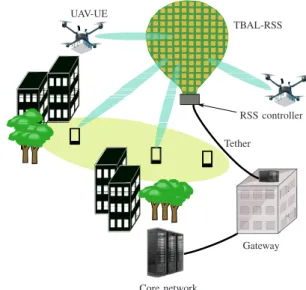
Figure 4. Communications support of terrestrial and aerial users using TBAL-RSS.
cost-effective alternative that we propose here is using a tethered balloon equipped with RSS (TBAL-RSS), as depicted in Fig. 4.
Inspired by recent works and prototypes that use RSS as transmitters [10], [11], we point out that TBAL-RSS can be used as a low-cost wireless access point to connect or enhance the capacity of urban users. By illuminating the outer surface of the TBAL-RSS with an RF feeder, the information provided by the tether data link can be encoded and transmitted. Thus, the RSS controller adjusts the phases of the reflected signals to generate different beam directions that can serve multiple users. Compared to a tethered UxNB, TBAL-RSS has several advantages. Unlike a small tethered UxNB, a TBAL is large and can accommodate a higher number of reflectors. Also, compared to typical gBSs, network densification with TBAL-RSS in urban environments is more feasible and cost-effective. Since TBAL-RSS provides near-field communications with strong LoS links to users, it is expected to provide better spectral efficiency than MIMO gBSs, considered as a far-field communication system with many NLoS links, high interference, and pilot contamination. Furthermore, unlike down-tilted antennas in gBSs, the TBAL-RSS can sustain reliable connectivity toUAV users (UAV-UEs)such as delivery drones. Thus, both terrestrial and aerial users can be served simultaneously.
Moreover, a TBAL does not continuously drain power for lifting and hovering, as it uses lifting gases. Although the altitude of a TBAL is limited by the tether’s length, some flexibility in its position is available by controlling the tether’s direction to offer better coverage in certain spots. Besides, a backhaul fiber optic link along the tether can be installed to guarantee the TBAL’s connectivity to the core network. A processing unit is also placed at the TBAL’s launching point to control its movement, determine the targeted users, and send the optimum RSS configuration.
CASESTUDY
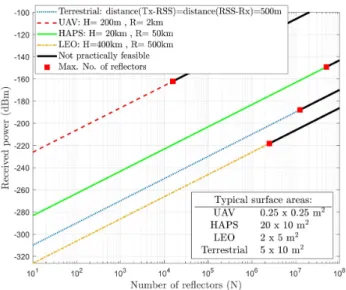
Figure 5. Received power vs. number of reflectors (different platforms).
aerial platforms, we present a case study where the communi-cation between a terrestrial transmitter and a terrestrial receiver is assisted by an RSS-equipped aerial platform, namely, a UAV, a HAPS, or a low earth orbit (LEO) satellite. Each platform has a typical coverage footprint and deployment altitude, where typically higher altitude platforms have wider footprints, i.e., larger coverage radius (𝑅). For instance, a UAV may have 𝑅 = 2 km, while a HAPS has 𝑅 ∈ [50, 100] km. For the sake of simplicity, we assume that the aerial platform is located at the middle distance between the transmitter and receiver, which are located at opposite edges of the coverage footprint. Moreover, platforms have different sizes that delimit the practical RSS mounting areas on them. Given the RSS area and operating frequency, the maximum number of reflectors on the RSS can be bounded.
Following the scattering paradigm-based link budget anal-ysis conducted in [15], where perfect RSS phase shifting and no reflection losses are assumed, we compare in Fig. 5 the received powers when the communication is assisted by RSS in aerial platforms or in terrestrial environments. The characteristics of each platform are shown in the legend boxes. We set the transmit power and the frequency to 40 dBm and 30 GHz, respectively. Also, we assumed unit antenna gains at both transmitter and receiver, and a path-loss exponent equal to 4 for the terrestrial environment. We notice that at a fixed number of reflectors, the UAV achieves the best performance. This is expected due to strong LoS links compared to the terrestrial RSS (where blockages degrade the communication links), and the other aerial platforms (where longer distances are traveled by the transmitted signal). However, since the UAVs’ RSS area are limited and some platforms can host a larger number of RSS reflectors (red squares), HAPS become better than UAVs. Ultimately, the HAPS is preferred due to its achieved performance and sustainability.
RELATEDRESEARCHCHALLENGES
As the research of RSS in wireless communications is still in its infancy, several challenges and open problems remain to be addressed. In the following, we discuss some key issues. Accurate RSS and Aerial Channel Models
Most of the existing research works consider RSS with perfect manipulation of the EM wave and ideal phase shifts. However, there is a paramount need for practical RSS models that consider the configuration capabilities and the reliability with different communication frequencies and diverse numbers and sizes of RSS units.
Furthermore, although several air-to-ground channel models have been developed, integrating RSS in aerial platforms is a new direction that requires the investigation of new aerial models that consider RSS capabilities with aerial platforms properties. Some important factors that could affect path-loss models need to be analyzed, such as reflection loss, correlation between RSS units, and atmospheric attenuation. Moreover, the mobility of aerial platforms may cause fluctuations and beam misalignments which have to be considered, especially for HAPS and high frequency communications.
RSS Deployment on Aerial Platforms’ Surfaces
Aerial platforms have different surface shapes and types. They might be flat, like the bottom of a UAV, or curved, like the outer surface of an aircraft or balloon. How such an RSS deployment may affect metasurface configuration and performance has not been investigated yet.
Channel Estimation and RSS Control Update
One of the fundamental assumptions in most current RSS research is the availability of CSI, which is essential for performing perfect reflection. However, gaining such knowl-edge within the channel’s coherence time in typical dynamic wireless environments with mobile platforms is still an open problem. One solution to this is by incorporating low-cost sensors in metasurfaces [2], which frequently sense the environment and send measurements to the controller. The latter computes and sends back the updated optimal RSS configuration. Alternatively,the reciprocity of the channel can be exploited to estimate the CSI for pre-determined phase shifting configurations, or machine learning techniques, such as supervised learning and reinforcement learning, can be leveraged to find the optimal RSS configuration. However, such techniques require large amounts of data and/or long training times. Hence, the delay impact due to distance and CSI estimation process merits further investigation.
CONCLUSION
In this article, we discussed the potential integration of the recent RSS technology into aerial platforms as a novel 5G/B5G paradigm. First, we provided an overview of RSS technology, its operations, and types of communication. Then, we proposed a control architecture workflow for the integration of RSS in aerial platforms. Potential use cases were discussed where different types of aerial platforms, namely HAPS, UAVs and TBALs, were exploited. Integrating RSS in aerial plat-forms provides several advantages, including energy efficiency,
lighter payload, and lower system complexity, which results in extended flight durations and more cost-effective deployment to support wireless networks. However, several issues need to be tackled for the smooth integration of this novel paradigm.
REFERENCES
[1] C. Liaskos et al., “A New Wireless Communication Paradigm through Software-Controlled Metasurfaces,” IEEE Commun. Mag., vol. 56, no. 9, Sep. 2018, pp. 162–169.
[2] Kimionis, John, et al., “Zero-Power Sensors for Smart Objects: Novel Zero-Power Additively Manufactured Wireless Sensor Modules for IoT Applications," IEEE Microw. Mag., vol. 19, no. 6, Sep. 2018, pp. 32–47. [3] Z. Peng et al., “An Effective Coverage Scheme With Passive-Reflectors for Urban Millimeter-Wave Communication,” IEEE Antennas and Wire-less Propag. Lett., vol. 15, Jun. 2016, pp. 398-401.
[4] S. Hu, F. Rusek, and O. Edfors, “Beyond Massive MIMO: The Potential of Data Transmission with Large Intelligent Surfaces,” IEEE Trans. Signal Process., vol. 66, no. 10, May 2018, pp. 2746–2758.
[5] N. Yu et al., “Light Propagation with Phase Discontinuities: Generalized Laws of Reflection and Refraction,” Science, vol. 334, no. 6054, Oct. 2011, pp. 333–337.
[6] T. J. Cui et al., “Coding Metamaterials, Digital Metamaterials and Programmable Metamaterials,” Light Sci. Appl., vol. 3, Oct. 2014, p. 218.
[7] Q. Wu and R. Zhang, “Intelligent Reflecting Surface Enhanced Wireless Network via Joint Active and Passive Beamforming,” IEEE Trans. Wireless Commun., vol. 18, no. 11, Nov. 2019, pp. 5394–5409. [8] X. Tan et al., “Enabling Indoor Mobile Millimeter-wave Networks Based
on Smart Reflect-arrays,” Proc. IEEE INFOCOM, Apr. 2018, pp. 270-278.
[9] C. Huang et al., “Energy Efficient Multi-user MISO Communication Using Low Resolution Large Intelligent Surfaces,” Proc. IEEE GLOBE-COM (GC Wkshps), Dec. 2018, pp. 1–6.
[10] E. Basar et al., “Wireless Communications Through Reconfigurable Intelligent Surfaces,” IEEE Access, vol. 7, Sep. 2019, pp. 116753-116773.
[11] J. Y. Dai et al., “Wireless Communications through a Simplified Ar-chitecture Based on Time-Domain Digital Coding Metasurface,” Adv. Mater. Technol., vol. 4, no. 7, Jul. 2019, p. 1970037.
[12] M. Alzenad et al, “FSO-Based Vertical Backhaul/Fronthaul Framework for 5G+ Wireless Networks,” IEEE Commun. Mag., vol. 56, no. 1, Jan. 2018, pp. 218-224.
[13] W. Tang et al., “Wireless Communications with Reconfigurable Intel-ligent Surface: Path Loss Modeling and Experimental Measurement,” IEEE Trans. Wireless Commun., Sep. 2020, pp. 1–19.
[14] H. Lu et al, “Enabling Panoramic Full-angle Reflection via Aerial Intelligent Reflecting Surface," Proc. IEEE ICC (ICC Wkshps), Jun. 2020, pp. 1–6.
[15] S. Alfattani et al, “Link Budget Analysis for Reconfigurable Smart Surfaces in Aerial Platforms,” arXiv preprint, arXiv:2008.12334, Aug. 2020.
BIOGRAPHIES
Safwan Alfattani [S] ([email protected]) received his B.S. degree from King AbdulAziz University, Saudi Arabia. He received his M.Sc. degree from University of Ottawa, where he is currently working toward his Ph.D. His research interest include aerial net-works, reconfigurable smart surfaces, and IoT networks.
Wael Jaafar [SM] ([email protected]) is an NSERC Post-doctoral Fellow at Carleton University. His research interests include wireless communications, edge caching/computing, and machine learning. He is the recipient of prestigious grants such as NSERC Alexandre Graham-Bell (BESC) and FRQNT internship scholarship. Yassine Hmamouche [S] ([email protected]) received the Ph.D. degree in telecommunications from IMT Atlantique, Brest, France, in 2020. Prior to joining academia, he had extensively worked for eight years in the Telecom industry as a Radio Network Planning Engineer, and then as a Project Manager for several projects spanning over different technologies.
Halim Yanikomeroglu [F] ([email protected]) is a professor at Carleton University, Canada. His research interests cover many aspects of 5G/5G+ wireless networks. His collaborative research with industry has resulted in 37 granted patents. He is a Fellow of IEEE, the Engineering Institute of Canada (EIC), and the Canadian Academy of Engineering (CAE), and he is a Distinguished Speaker for IEEE Communications Society and IEEE VT Society.
Abbas Yongaçoglu [LM] ([email protected]) is an Emeritus Pro-fessor at the University of Ottawa. His area of research is wireless communications and signal processing. He is a Life Member of IEEE. Ngo.c D˜ung Ðào ([email protected]) is a principle engineer of Huawei Technologies Canada. His research interest covers 5G/5G+ mobile networks. He is a series editor of IEEE Communications Magazine.
Peiying Zhu [F] ([email protected]) is a Huawei Fellow. She is currently leading 5G wireless system research in Huawei Technologies Canada. The focus of her research is advanced wireless access technologies with more than 150 granted patents.