DOCTORAT DE L'UNIVERSITÉ DE TOULOUSE
Délivré par :
Institut National Polytechnique de Toulouse (INP Toulouse)
Discipline ou spécialité :
Génie des Procédés et de l'Environnement
Présentée et soutenue par :
Mme CHANTAL GHANEM le mardi 4 avril 2017
Titre :
Unité de recherche : Ecole doctorale :
Study of the impact of oenological processes on the phenolic composition
and biological activities of Lebanese wines
Mécanique, Energétique, Génie civil, Procédés (MEGeP)
Laboratoire de Génie Chimique (L.G.C.)
Directeur(s) de Thèse : MME PATRICIA TAILLANDIER
M. YOUSSEF EL RAYESS Rapporteurs :
M. CEDRIC SAUCIER, UNIVERSITE DE MONTPELLIER Mme MARTINE MIETTON-PEUCHOT, UNIVERSITE DE BORDEAUX
Membre(s) du jury :
M. MICHEL AFRAM, INST DE RECHERCHE AGRONOMIQUE DU LIBAN, Président M. CEDRIC SAUCIER, UNIVERSITE DE MONTPELLIER, Membre
Mme PATRICIA TAILLANDIER, INP TOULOUSE, Membre
M. RITA YAACOUB NEHME, UNIVERSITE LIBANAISE BEYROUTH, Membre M. ROGER LTEIF, UNIVERSITE ST JOSEPH DE BEYROUTH, Membre M. YOUSSEF EL RAYESS, UNIVERSITE SAINT-ESPRIT DE KASLIK, Membre
Our goals can only be reached through a vehicle of a plan,
in which we must fervently believe, and upon which we must vigorously act There is no other route to success (Pablo Picasso)
ACKNOWLEDGMENTS
This work is the result of a joint collaboration between the Holy Spirit University (Kaslik), the National Polytechnic Institute of Toulouse and the Chemical Engineering Laboratory.
I express my respect and aknowledgement to Pr. Michel Aphram, the General Director of Lebanese Agriculture Research Institute (LARI). With his support, i realized my PhD and he gave me the opportunity to establish the first wine public laboratory in Lebanon.
I also gratefully acknowledge Pr. Martine Mietton-Peuchot and Pr. Cédric Saucier for being external reviewers of this thesis, and Pr. Roger Lteif and Dr. Rita Yaacoub Nehmé for their acceptance to participate in the evaluation committee Thank you in advance for your questions, suggestions and comments on my thesis. I express my sincere gratitude to my director Pr. Patricia Taillandier for giving me the opportunity to carry out my doctoral research and to be my supervisor throughout the development of this work. Her scientific advice and knowledge and many insightful discussions and suggestions helped me all the time during my experiments and thesis writing. I will always be grateful for everything that you have done for me.
I express my sincere gratitude to my main supervisor Dr. Youssef El Rayess, for his advices, ongoing support, patience, motivation, enormous knowledge and all the useful discussions and brainstorming sessions, especially during the difficult conceptual development stage. I could not have imagined having a better advisor and mentor for my PhD study.
I sincerely thank Pr. Jean Pierre Souchard who has agreed to supervise this thesis. His availability, attention, guidance and encouragement have been valuable for me. I would like to express for him all my gratitude and friendship. He’s the funniest advisor I knew.
I would like to thank Dr. Lara Hanna-Wakim, Dean of the Faculty of Agricultural and Food Sciences of USEK, and the staff of the faculty for their support and encouragement along my study.
My sincere thanks also go to Dr. Jalloul Bouajila who gave me access to the laboratories in the Faculty of Pharmacy of Paul Sabatier University and research facilities. Without their precious support it would not be possible to conduct this research.
I would like also to thank Dr. Nancy Nehmé for her valuable scientific advices. With you, Ziad and Youssef we will be a successful oenology research team.
I would also like to thank the owner of chateau Saint Thomas Mr. Joe Touma for his great generosity, his cooperation and the quality of the wine he produces. These wines made from Lebanon an internationally recognized country by the number of medals which they win every year. Joe! I wish you the best!
Ziad Rizk what can I say ... a sincere friendship which started from a very young age. Your help and support along my research project facilitated my task. With you, we can do a lot for our laboratory.
and friendship: Sylvie, Pierre -Luc, Salma, Mariam, Amin and Imen. Thank you for your advice in different techniques, you were always there when I needed help in the laboratory.
I will never forget the good times spent with my colleagues at LARI laboratory. A special thought to Abdo, Fadia, Zinette, Dani, Carine, Elvis, Wassim, Jeanne and Rima. You made my years convivial
My gratitude to my students: Samer, Jamila, Zaher, Rania, Myriam and Nour. You have helped me a lot in my experiences; I wish you all the success in your future work
I cannot forget my friend Bilal Larnaout from Tunisia; you were always present when I needed help in France. Thank you for your friendship.
I send a very special thanks to my husband Michel for his support and consistent encouragement. I thank him for always found the right words in difficult times and bringing me the comfort I needed
Finally, to my father Nicolas, my mother Eugeuny and my brother Bernard, for all your love, and your support. They are no words to express the strength of my feelings and gratitude I have for you.
Abstract
The aim of this study was to determine the influence of different winemaking techniques on phenolic composition and biological activities of musts and wines from grapes of Syrah and Cabernet sauvignon from two distinct Lebanese regions (Bekaa valley and Chouf district) and two consecutive vintages (2014 and 2015). Among these processes the impacts of pre-fermentative cold and heating maceration, enzymatic treatment, two different commercial yeast strains and fining agents were discussed in our study. Spectrophotometric and HPLC analysis of phenolic compounds showed that the pre-fermentative heating maceration leads to a better extraction of phenolic compounds than the pre-fermentative cold maceration. Tannins and total polyphenols extraction are favored by the temperature and the prolongation of maceration. Extraction of anthocyanins is also favored by the temperature with short duration since the extension of the maceration leads to a degradation of these compounds. Maceration enzymes addition at early stage of maceration, promoted higher concentration of total polyphenol and antioxidant activity compared to those macerated without added enzymes. Alcoholic fermentation results in a decrease of total polyphenols content which revealed differences between wines derived from X and Y strains. After alcoholic fermentation, almost all of the wine samples presented an increase of their percentage of inhibition with the occurrence of new types of biological activities which doesn‟t existed at must level. At the end, the results showed the importance of selecting a fining agent according to the type of wine and to minimize the dose of fining applied in order to conserve the content of phenolic compounds in wine.
Résumé
Le but de cette étude était de déterminer l'influence des différentes techniques de vinification sur la composition phénolique et les activités biologiques des moûts et des vins issus de raisins de Syrah et de Cabernet sauvignon appartenant à deux régions libanaises distinctes (vallée de la Bekaa et la région de Chouf) et à deux millésimes consécutifs (2014 and 2015). Parmi ces procédés, les effets de la macération pré-fermentaire à froid et à chaud, du traitement enzymatique, de deux souches de levures commerciales et les agents de collage ont été discutés dans notre étude. L'analyse des composés phénoliques par spectrophotométrie et HPLC a montré que la macération pré-fermentaire à chaud entraine une meilleure extraction des composés phénoliques que la macération pré-fermentaire à froid. L‟extraction des tanins et des polyphénols totaux sont favorisés par la température et le prolongement de la macération. L‟extraction des anthocyanes est aussi favorisée par la température mais à courte durée puisque le prolongement de la macération entraine une dégradation de ces composés. Les moûts et les vins issus de l‟addition d‟enzymes pectolytiques au début de la phase de macération montrent des activités antioxydantes et des concentrations en polyphenols totaux plus élevées comparés à celles réalisées sans ajout d‟enzymes. La fermentation alcoolique provoque une diminution de la concentration des polyphénols totaux ce qui révèle des différences significatives entre les vins fermentés par les deux souches de levures X et Y. Après fermentation alcoolique, la quasi-totalité des échantillons de vin ont présenté une augmentation de leur pourcentage d'inhibition avec l'apparition de nouveaux types d'activités biologiques qui n'existait pas au niveau des moûts. A la fin, les résultats montrent l‟importance de bien choisir le type de colle selon le type de vin ainsi que de minimiser la dose de collage appliquée afin de conserver la teneur en composés phénoliques du vin.
ABBREVIATIONS ... I LIST OF FIGURES ... V LIST OF TABLES ... IX
INTRODUCTION... 1
CHAPTER I. STATE OF THE ART ... 6
I.1. GRAPES ... 7
I.2. PHENOLIC COMPOUNDS ... 8
I.2.1.NON-FLAVONOID PHENOLICS ... 9
I.2.1.1. Phenolic Acids ... 9
I.2.1.2. Stilbenes ... 10
I.2.2.FLAVONOIDS COMPOUNDS ... 11
I.2.2.1. Anthocyanins ... 11
I.2.2.2. Flavanols ... 13
I.2.2.3. Flavonols ... 15
I.2.2.4. Flavanones ... 16
I.3. WINE PHENOLIC COMPOSITIONS ... 16
I.3.1.ANTHOCYANINS ... 16
I.3.1.1. Reactions and interactions of anthocyanins ... 17
I.3.1.1.1 Nucleophilic addition reaction ... 18
I.3.1.1.2. Condensation reactions ... 18
I.3.1.1.3. Self-association of anthocyanins ... 18
I.3.1.1.4. Copigmentation reactions ... 19
I.3.1.1.5. Cycloaddition reactions ... 19
I.3.2.FLAVANOLS ... 21
I.3.4.1. Hydroxybenzoic Acids. ... 27
I.3.4.2. Hydroxycinnamic Acids ... 28
I.3.5.STILBENES... 28
I.4. PHENOLIC COMPOSITION OF WINES AGING IN BARRELS ... 28
I.5. POLYPHENOLS BIOLOGICAL PROPERTIES ... 30
I.5.1.ANTHOCYANINS: ... 33
I.5.2.FLAVANOLS ... 34
I.5.3.PHENOLIC ACIDS ... 35
I.5.4.FLAVONOLS: ... 35
I.5.5.RESVERATROL: ... 36
I.6. IMPACT OF WINEMAKING TECHNIQUES ON WINE POLYPHENOLS ... 37
I.6.1.INTRODUCTION... 37
I.6.2.IMPACT OF EXTRACTION PROCESSES AND PROCEDURES ... 39
I.6.3.PRE-FERMENTATION HEATING MACERATION ... 41
I.6.4.CARBONIC MACERATION ... 45
I.6.5.POST-FERMENTATION RE-HEATING ... 46
I.6.6.MACERATION ENZYMES ... 46
I.6.7.EFFECT OF YEASTS AND BACTERIA ... 47
I.6.8.REACTION BETWEEN ANTHOCYANINS AND TANNINS:IMPACT OF MICRO-OXYGENATION . 49 I.6.9.BARREL AGING ... 52
I.6.10.AGING ON LEES ... 54
I.6.11.FILTRATION AND MEMBRANE TECHNIQUES ... 56
I.6.12.FINING AGENTS ... 58
I.7. CONCLUSION ... 62
REFERENCES ... 63
CHAPTER II. MACERATION STEPS ... 84
II.1.2. MATERIALS AND METHODS ... 86
II.1.2.1.CHEMICALS AND STANDARDS ... 86
II.1.2.2.SAMPLES ... 86
II.1.2.3.STRAINS AND STORAGE CONDITIONS ... 87
II.1.2.4.MACERATION AND FERMENTATION PROCEDURES AND SAMPLING ... 88
II.1.2.5.SPECTROPHOTOMETRIC DETERMINATIONS ... 88
II.1.2.6.HPLC ANALYSIS OF PHENOLIC COMPOUNDS ... 89
II.1.2.7.DETERMINATION OF BIOLOGICAL ACTIVITIES ... 89
II.1.2.7.1. Preparation of samples ... 89
II.1.2.7.2. DPPH-radical scavenging assay ... 90
II.1.2.7.3. ABTS radical-scavenging assay ... 90
II.1.2.7.4. LOX inhibition assay... 91
II.1.2.7.5. Anti-XOD inhibition assay ... 91
II.1.2.7.6. Anti-ChE inhibition assay ... 92
II.1.2.7.7. α- Glucosidase inhibitory assay ... 92
II.1.2.7.8. Cytotoxicity assay ... 92
II.1.2.8.STATISTICAL DATA TREATMENT ... 93
II.1.3. RESULTS AND DISCUSSION ... 93
II.1.3.1.IMPACT OF MACERATION‟S TIME AND TEMPERATURE ON POLYPHENOL COMPOSITION OF MUSTS ... 93
II.1.3.1.1. Total anthocyanins and tannins ... 93
II.1.3.1.2. Total polyphenol, total polyphenol index and color intensity ... 98
II.1.3.1.3. Anthocyanins profile ... 102
II.1.3.1.4. Flavan-3-ols and non-flavonoids profile ... 107
II.1.3.2.IMPACT OF MACERATION TIME AND TEMPERATURE ON BIOLOGICAL ACTIVITIES ... 111
II.1.4. EFFECT OF TERROIR ... 113
II.1.5. CONCLUSION ... 119
II.2.1. INTRODUCTION ... 127
II.2.2. MATERIALS AND METHODS ... 128
II.2.2.1.CHEMICALS AND STANDARDS ... 128
II.2.2.2.SAMPLES ... 128
II.2.2.3.STRAINS AND STORAGE CONDITIONS ... 129
II.2.2.4.MACERATION AND FERMENTATION PROCEDURES AND SAMPLING ... 129
II.2.2.5.SPECTROPHOTOMETRIC DETERMINATIONS ... 130
II.2.2.6.HPLC ANALYSIS OF PHENOLIC COMPOUNDS ... 130
II.2.2.7.DETERMINATION OF BIOLOGICAL ACTIVITIES ... 130
II.2.2.8.STATISTICAL DATA TREATMENT ... 130
II.2.3. RESULTS AND DISCUSSION ... 130
II.2.3.1.IMPACT OF MACERATION‟S TIME AND TEMPERATURE ON POLYPHENOL COMPOSITION OF MUSTS ... 130
II.2.3.1.1. Total anthocyanins and tannins ... 130
II.2.3.1.2. Total polyphenol, total polyphenol index and color intensity ... 133
II.2.3.1.3. Anthocyanins profile ... 136
II.2.3.1.4. Flavan-3-ols and non-flavonoids profile ... 139
II.2.3.2.IMPACT OF MACERATING ENZYMES ON POLYPHENOL COMPOSITION OF MUSTS FROM 2015 VINTAGE ... 143
II.2.3.3.IMPACT OF MACERATION TIME AND TEMPERATURE ON BIOLOGICAL ACTIVITIES ... 148
II.2.4. VINTAGE EFFECT ON PHENOLIC COMPOSITION OF SYRAH AND CABERNET SAUVIGNON MUSTS: COMPARISON BETWEEN 2014 AND 2015 VINTAGE AND CORRELATION WITH CLIMATIC INDEXES ... 150
II.2.5. CONCLUSION ... 154
REFERENCES ... 155
CHAPTER III. EFFECT OF ALCOHOLIC FERMENTATION ... 159
III.2.1.CHEMICALS, CULTURE MEDIA AND STANDARDS ... 161
III.2.2.STRAINS AND STORAGE CONDITIONS ... 161
III.2.3.VINIFICATIONS ... 162
III.2.4.ANALYTICAL METHOD ... 164
III.2.5.SPECTROPHOTOMETRIC DETERMINATIONS ... 164
III.2.6.HPLC ANALYSES OF PHENOLIC COMPOUNDS ... 164
III.2.7.DETERMINATION OF BIOLOGICAL ACTIVITIES ... 164
III.3. RESULTS AND DISCUSSION ... 164
III.3.1.GRAPE VARIETIES ... 164
III.3.1.1 Spectrophotometric analyses of polyphenols ... 164
III.3.1.2. HPLC analyses of polyphenols ... 168
III.3.1.2.1 Anthocyanins ... 168
III.4. EFFECT OF GRAPE VARIETIES ... 178
III.5. PHENOLIC COMPOSITION OF CS FROM THE TWO DIFFERENT TERROIR... 182
III.6. TERROIR EFFECTS ... 191
III.7. EFFECT OF MACERATION ENZYMES ON POLYPHENOL COMPOSITION OF WINES AFTER ALCOHOLIC FERMENTATION ... 193
III.7.1.ANTHOCYANIN PROFILE ... 197
III.7.2.FLAVAN-3-OLS AND NON-FLAVONOIDS PROFILE ... 200
III.8. BIOLOGICAL ACTIVITIES ... 204
III.9. CONCLUSION ... 209
REFERENCES ... 210
CHAPTER IV- IMPACT OF FINING AGENTS... 214
IV.1. INTRODUCTION ... 215
IV.2. MATERIALS AND METHODS ... 217
IV.2.3.SPECTROPHOTOMETRIC ANALYSIS OF POLYPHENOLS ... 218
IV.2.4.HPLC ANALYSIS OF PHENOLIC COMPOUNDS ... 218
IV.2.5.STATISTICAL DATA TREATMENT ... 218
IV.3. RESULTS AND DISCUSSION ... 218
IV.3.1.SPECTROSCOPIC ANALYSES ... 218
IV.3.1.1. Chromatic parameters and Antioxidant activity ... 218
IV.3.1.2. Total polyphenols, and total anthocyanins and total tannins ... 221
IV.3.2.DETERMINATION OF POLYPHENOL CLASSES BY RP-HPLC ... 224
IV.3.3.EFFECT OF TREATMENT CONCENTRATIONS ON THE PHENOLIC COMPOSITION OF WINES 228 IV.4. CONCLUSION... 229
REFERENCES ... 230
CONCLUSIONS AND PERSPECTIVES ... 234
ANNEXES ... 239
i
Abbreviations
A431: Human Epithelial Carcinoma Cell line A: Absorbance
ABA: Abscisic Acid
ABTS: 2, 2′-azinobis-3-ethylbenzothiazoline-6-sulfonic acid Aβ: Amyloid-β Peptide
ACHE: Acetylcholinesterase Acthi: Acetylthiocholine iodide AF: Alcoholic fermentation α-gluc: alpha glucosidase
AMPK: Adenosine Monophosphate-Activated Protein kinase ANOVA: Analysis of Variance
ARE/Nrf2: Antioxidant Responsive Element/ Nuclear erythroid 2-related factor 2
B: Bentonite BC: Before Christ
CA: Caffeic Acid Cat: Catechin C: Control
CD: Color Density
CHD: Coronary Heart Disease
ChE: Cholinesterase CI: Color Intensity CO2: Carbon Dioxide
COX: Cyclooxygenase
CS-F: Cabernet Sauvignon Florentine CS-ST: Cabernet Sauvignon Saint Thomas
Cy: Cyanidin
ii
DNS: Dinitrosalicylic acid Dp: Delphinidin
DPPH: 2, 2-Diphenyl-1-Picrylhydrazyl DTNB: 5, 5'-dithiobis-(2-nitrobenzoic acid)
EA: Egg Albumin
EEC: European Union Regulation eNOS: endothelial Nitric Oxide Synthase Epi: Epicatechin
Epig: Epicatechin gallate EpiG, EGC: Epigallocatechin FA: Ferulic acid
FR: Flash Release
FRAP: Ferric Reducing Ability of Plasma GaHBr: Galanthamine Hydrobromide
GAE: Gallic Acid Equivalent
GA: Gallic Acid
(%G): Galloylation rate
G: Gelatin
glc: glycosylated
GLUT4: Glucose Transporter Type 4
GSPE: Grape Seed Proanthocyanidin Extract h: hours
HCT116: Human Colon Cancer HDL: High Density Lipoproteins HDC: Histidine Decarboxylase
HFL-1: Human Foetal Lung Fibroblast
HPLC: High-Performance Liquid Chromatography HSD: Honestly Significant Difference
iii 2 2 8
LDL: Low Density Lipoproteins LOX: Lipoxygenase
Mv: Malvidin
M: Mannoproteins
MCF7: Human Breast Cancer
MCP-1: Monocyte Chemoattractant Protein-1 mDP: Mean Degree of Polymerisation
MMP-9: Matrix Metallopeptidase 9 MOX: Micro-Oxygenation
mRNA: messenger Ribonucleic Acid
MTT: 3-(4, 5-dimethylthiazol-2-yl)-2, 5-diphenyltetrazolium bromide MW: Molecular Weight
NaHSO3: Sodium Metabisulphite
NDGA: Nordihydroguaiaretic Acid NF-KB: Nuclear Factor-KappaB NO: Nitric Oxide
O2: Oxygen
OD: Optical Density
OIV: International Organistaion of Vine and Wine PCA: Principle Component Analysis
PC1: First Principal Component PC2: Second Principle Component PES: Polyethersulfone
pH: Potential of Hydrogen
PI3K: Phosphatidylinositol-4, 5-bisphosphate 3-Kinase Pn: Peonidin
pNPG: 4-Nitrophenyl β-D-Glucuronide
Pro B1: Procyanidin B1 Pro B2: Procyanidin B2
iv
Res: Resveratrol
ROS: Radical Oxygen Species
RP-HPLC: Reversed Phase High-Performance Liquid Chromatography SB: Saccharomyces bayanus
SC: Saccharomyces cerevisiae SD: Standard Deviation SO2: Sulfur Dioxide
Ʃ= Sum
SIRTI: Skinny Gene
Sy-F: Syrah-Florentine Sy-ST: Syrah Saint Thomas T: Tannins
TA: Total Anthocyanin
T/A: Tannins-Anthocyanins ratio TP: Total Polyphenols
TPI: Total Polyphenol Index UV-Vis: Ultraviolet-Visible
VEGF: Vascular Endothelial Growth Factor
VP: Vegetable Proteins
WHO: World Health Organization
XOD: Xanthine oxidase
v
List of figures
Figure I.1: The trends of grapes production per country from 2000 till 2015 (OIV, 2016) ... 7
Figure I.2: Schematic structure of a ripe grape berry and pattern phenolics biosynthesis distribution between several organs and tissues (indicated by arrows). aAnthocyanins are synthetized also in the inner flesh of the teinturier varieties (Conde et al., 2007) ... 8
Figure I.3: Main non-flavonoid compounds found in Vitis vinifera grape varieties ... 10
Figure I.4: Main flavonoid compounds found in Vitis Vinifera grape varieties ... 13
Figure I.5: Chemical Structure of Flavanols dimers and polymers ... 14
Figure I.6: Anthocyanins chemical forms depending on wine pH (adapted from Brouillard and Dubois, 1977) ... 17
Figure I.7: Structure of pyranomalvidin-3-O-glucoside detected in wine or model solution: R = H, pyranomalvidin-3-O-glucoside; R= COOH, carboxy-pyranomalvidin-3-O-glucoside; R= phénol, 4, hydroxyphenyl-pyranomalvidin-3-O-glucoside; R= monomer or dimer of flavanol, flavanyl-pyranomalvidin-3-O-glucoside ... 20
Figure I.8: cycloaddition reaction of free anthocyanins in red wines ... 21
Figure I.9: Schematic representation of the main reactive position of anthocyanin structures .... 22
Figure I.10: Direct A-T type condensation of anthocyanins and tannins (Galvin, 1993) ... 23
Figure I.11: Direct T-A type condensation of procyanidins and anthocyanins (Galvin, 1993) .... 24
Figure I.12: Mechanism of formation of flavanol-ethyl-flavanol and flavanol-ethyl-anthocyanin adducts by condensation reaction mediated by acetaldehyde ... 26 Figure I.13: Chemical structures of flavonol and flavone. R1 and R2 could be H, OH or OCH3 . 27
vi
the grandinin (3) and roburin A_E (4_8) isolated from Castanea (chestnut) and Quercus (oak) species (Michel et al., 2011) ... 29 Figure I.15: Polyphenol/quinone redox couples and protonation equilibria (Danilewicz, 2012) . 30 Figure I.16: The winemaking process of red and white wines ... 39 Figure II.1.1: Kinetics of tannins and anthocyanins extraction during the maceration of Cabernet Sauvignon grapes in terms of time and temperature ... 96 Figure II.1.2: Kinetics of tannins and anthocyanins extraction during the maceration of Syrah grapes in terms of time and temperature ... 97 Figure II.1.3-a: Biological activities (ABTS and DPPH (antioxidant), Anti-LOX (antiinflammatory), Anti-α gluc (antidiabetic), Anti-ChE (antialzheimer), HCT116 and MCF7 (anticancer)) of Sy-ST (Syrah Saint Thomas) and Sy-F (Syrah Florentine) grape musts macerated at different temperatures (10°C, 60°C, 70°C, 80°C) after 48 hours and for the control (Sy-ST-25°C) after alcoholic fermentation. ... 112 Figure II.1.3-b: Biological activities (ABTS and DPPH (antioxidant), Anti-LOX (antiinflammatory), Anti-α gluc (antidiabetic), Anti-ChE (antialzheimer), HCT116 and MCF7 (anticancer)) of CS-ST (Cabernet Sauvignon Saint Thomas) and CS-F (Cabernet Sauvignon Florentine) musts macerated at different temperatures (10°C, 60°C, 70°C, 80°C) after 48 hours and for the control (CS-ST-25°C) after alcoholic fermentation. ... 113 Figure II.1.4: Biplot of the two first principal components obtained from the colour and phenolic composition of Sy-ST (Syrah Saint Thomas) and CS-ST (Cabernet Sauvignon Saint Thomas) musts ... 115 Figure II.1.5-a: Biplot of the two first principal components obtained from the colour and phenolic composition of Sy-F (Syrah Florentine) and Sy-ST (Syrah Saint Thomas) musts compared to Syrah Saint Thomas control (Sy-control) ... 116
vii
phenolic composition of the CS-F (Cabernet Sauvignon Florentine) and CS-ST (Cabernet Sauvignon Saint Thomas) red musts compared to Cabernet Sauvignon Saint Thomas wines control (CS-control) ... 117 Figure II.2.1: Kinetics of tannins and anthocyanins extraction during the maceration of Syrah and Cabernet Sauvignon Saint Thomas grapes from the two consecutive vintages (2014 and 2015) in terms of time and temperature ... 132 Figure II.2.2-a: Biological activities (ABTS and DPPH (antioxidant), Anti-LOX (antiinflammatory), Anti-α glucosidase (antidiabetic), Anti-ChE (antialzheimer) and HCT116 (anticancer)) of Sy-014 (Syrah 2014 vintage) and Sy-015 (Syrah 2015 vintage) grape musts macerated at different temperatures (60°C and 70°C) after 48 and 24 hours respectively for Syrah 2014 and 2015 vintage and for the control (Sy-015-25°C) after alcoholic fermentation . 149 Figure II.2.2-b: Biological activities (ABTS and DPPH (antioxidant), Anti-LOX (antiinflammatory), Anti-α glucosidase (antidiabetic), Anti-ChE (antialzheimer) and HCT116 (anticancer)) of CS-014 (Cabernet Sauvignon 2014 vintage) and CS-015 (Cabernet Sauvignon 2015 vintage) grape musts macerated at different temperatures (60°C and 70°C) after 48 and 24 hours respectively for Cabernet Sauvignon 2014 and 2015 vintage and for the control (CS-015-25°C). ... 150 Figure II.2.3-a: Biplot of the two first principal components obtained from the colour and phenolic composition of 2014 and 2015 syrah vintages ... 152 Figure II.2.3-b: Biplot of the two first principal components obtained from the colour and phenolic composition of 2014 and 2015 Cabernet Sauvignon vintages ... 153 Figure III.1: Distribution of the Thomas wines in the coordinate system defined by the discriminant function to differentiate among wines fermented with two different yeast strains 179 Figure III.2: Distribution of the Florentine wines in the coordinate system defined by the discriminant function to differentiate among wines fermented with two different yeast strains 181
viii
function to differentiate among wines fermented with two different yeast strains ... 191 Figure III.4: Biological activities (ABTS and DPPH (antioxidant), Anti-LOX (antiinflammatory), Anti-α glucosidase (antidiabetic) and Anti-ChE (antialzheimer)) of Sy (Syrah) grape musts and wines premacerated at different temperatures for 24 hours (60°C and 70°C) compared to the control musts and wines with and without added enzymes (classic vinification, 25°C and 25°C+ enzymes) and fermented by two yeast strains (X and Y) ... 205 Figure III.5: Biological activities (ABTS and DPPH (antioxidant), Anti-LOX (antiinflammatory), Anti-XOD (anti-hyperuricemic) and Anti-α glucosidase (antidiabetic)) of CS (Cabernet Sauvignon) grape musts and wines premacerated at different temperatures for 24 hours (60°C and 70°C), compared to the control musts and wines with and without added enzymes (classic vinification, 25°C and 25°C + enzymes) and fermented by two yeast strains (X and Y) ... 206 Figure III.6: comparison of Anti-α-glucosidase activity for Sy (Syrah) and CS (Cabernet Sauvignon) control wines (at the end of alcoholic fermentation) with or without enzymes (25°C/25°C + enzymes) and for CS wine premacerated at 70°C and fermented by the two yeast strains (Y and X) at final concentration of 100 mg/l of wine extract in microplate wells ... 207 Figure III.7: Biplot of the two first principal components obtained from the antioxidant activities (ABTS) and phenolic composition of Syrah (Sy) and cabernet Sauvignon (CS) musts and wines (at the beginning, T0 and the end, TF of alcoholic fermentation) from the 2015 vintage ... 208 Figure IV.1: The variation of total polyphenol (A), total anthocyanins (B) and total tannins (C) after treatment of wines with fining agents ... 223 Figure IV.2. PCA Biplot of the two first principal components of analysed parameters: Anthocyanins (mg/l), total polyphenols (mg/l GAE), ABTS (mg/l GAE) and Tannins (mg/l) in samples treated with different fining agent ... 229
ix
List of tables
Table I.1: Effect of Flash Release on the Wine Polyphenol and Proanthocyanidin Composition (mg/l) (Morel-Salmi et al., 2006) ... 44 Table I.2: Common fining agents used in winemaking ... 59 Table II.1.1: Wine producer, regional climate condition and soil type from the two different wine-growing regions. ... 87 Table II.1.2-a: Total polyphenol, Total Polyphenol Index and Color Intensity of Syrah musts and Syrah Saint Thomas control in terms of time and temperature ... 100 Table II.1.2-b: Total polyphenol, Total Polyphenol Index and Color Intensity of Cabernet Sauvignon musts and Cabernet Sauvignon Saint Thomas control in terms of time and temperature ... 101 Table II.1.3-a: Anthocyanins profile (mg/l) of Syrah musts and Syrah Saint Thomas control in terms of time and temperature ... 105 Table II.1.3-b: Anthocyanins profile (mg/l) of Cabernet Sauvignon musts and Cabernet Sauvignon Saint Thomas control in terms of time and temperature ... 106 Table II.1.4-a: Flavan-3-ols and non-flavonoids profile (mg/l) of Syrah musts and Syrah Saint Thomas control in terms of time and temperature ... 109 Table II.1.4-b: Flavan-3-ols and non-flavonoids profile (mg/l) of Cabernet Sauvignon musts and Cabernet Sauvignon Saint Thomas control in terms of time and temperature ... 110 Table II.2.1: Parameters of the two grape Cultivars from the two vintages ... 129 Table II.2.2-a: Total polyphenol, total polyphenol index and color intensity of Syrah musts from the two consecutive vintages and the 2015 vintage of Syrah Saint Thomas control (25°C) in terms of time and temperature ... 133
x
Sauvignon musts from the two consecutive vintages and the 2015 vintage of Cabernet Sauvignon Saint Thomas control (25°C) in terms of time and temperature ... 134 Table II.2.3-a: Anthocyanins profile (mg/l) of Syrah musts from the two consecutive vintages and the 2015 vintage of Syrah control (25°C) in terms of time and temperature ... 137 Table II.2.3-b: Anthocyanins profile (mg/l) of Cabernet Sauvignon musts from the two consecutive vintages and the 2015 vintage of Cabernet Sauvignon control (25°C) in terms of time and temperature... 138 Table II.2.4-a: Flavan-3-ols and non-flavonoids profile (mg/l) of Syrah musts from the two consecutive vintages and the 2015 vintage of Syrah control (25°C) in terms of time and temperature ... 141 Table II.2.4-b: Flavan-3-ols and non-flavonoids profile (mg/l) of Cabernet Sauvignon musts from the two consecutive vintages and the 2015 vintage of Cabernet Sauvignon control (25°C) in terms of time and temperature ... 142 Table II.2.5-a: Chromatic parameters and phenolic composition of Syrah musts and Syrah control (25°C) from the 2015 vintage with and without added enzymes in terms of time and temperature ... 145 Table II.2.5-b: Chromatic parameters and phenolic composition of Cabernet Sauvignon musts and Cabernet Sauvignon control (25°C) from the 2015 vintage with and without added enzymes in terms of time and temperature ... 146 Table III.1: Characteristics of Y and X fermented wines (end of fermentation ) from Vitis
vinifera L. cv. Syrah and Cabernet Sauvignon Saint Thomas from 2014 vintage premacerated at
different temperatures (10°C, 60°C,70°C and 80°C) ... 163 Table III.2: Characteristics of Y and X fermented wines (end of fermentation) from Vitis vinifera L. cv. Syrah and Cabernet Sauvignon Florentine from 2014 vintage premacerated at different temperatures (10°C, 60°C, 70°C and 80°C) ... 163
xi
L. cv. Syrah and Cabernet Sauvignon Saint Thomas from 2015 vintage premaceraated at different temperatures with or without added enzymes (60°C, 70°C and 70°C + enzymes, end of maceration) compared to control wines (25°C and 25°C + enzymes, end of maceration) ... 164 Table III.4: Total anthocyanin, phenolic profile, and antioxidant activity in wines from Vitis
vinifera L. cv. Syrah and Cabernet Sauvignon Saint Thomas of 2014 vintage, resulting from the
alcoholic fermentation of the must premacerated at different temperatures (10°C, 60°C, 70°C and 80°C) with two different yeast strains ... 166 Table III.5: Total anthocyanin, phenolic profile, and antioxidant activity in wines from Vitis
vinifera L. cv. Syrah and Cabernet Sauvignon Florentine of 2014 vintage, resulting from the
alcoholic fermentation of the must premacerated at different temperatures (10°C, 60°C and 70°C) with two different yeast strains ... 167 Table III.6: Anthocyanin monomers concentrations (mg/l) in wines from Vitis vinifera L. cv. Syrah and Cabernet Sauvignon Saint Thomas of 2014 vintage resulting from the alcoholic fermentation of the must macerated at different temperatures (10°C, 60°C, 70°C and 80°C) with two different yeast strains ... 170 Table III.7: Anthocyanin monomers concentrations (mg/l) in wines from Vitis vinifera L. cv. Syrah and Cabernet Sauvignon Florentine of 2014 vintage resulting from the alcoholic fermentation of the must macerated at different temperatures (10°C, 60°C, 70°C and 80°C) with two different yeast strains. ... 171 Table III.8: Individual non-anthocyanin phenolic compounds (mg/l) in wines from Vitis vinifera cv. Syrah and Cabernet Sauvignon Saint Thomas of 2014 vintage resulting from the alcoholic fermentation of the must premacerated at different temperatures (10°C, 60°C, 70°C and 80°C) with two different yeast strains ... 174 Table III.9: Individual non-anthocyanin phenolic compounds (mg/l) in wines from Vitis vinifera cv. Syrah and Cabernet Sauvignon Florentine of 2014 vintage resulting from the alcoholic
xii
with two different yeast strains ... 176 Table III.10: Standardized coefficients for the three discriminant functions ... 180 Table III.11: Standardized coefficients for the three discriminant functions ... 182 Table III.12: Total anthocyanin, phenolic profile, and antioxidant activity in wines from Vitis
vinifera L. cv. Cabernet Sauvignon Saint Thomas and Florentine of 2014 vintage, resulting from
the alcoholic fermentation of the must premacerated at different temperatures (10°C, 60°C, 70°C and 80°C) with two different yeast strains. ... 184 Table III.13: Individual anthocyanin concentration (mg/l) in wines from Vitis vinifera L. cv. Cabernet Sauvignon Saint Thomas and Florentine of 2014 vintage resulting from the alcoholic fermentation of the must premacerated at different temperatures (10°C, 60°C, 70°C and 80°C) with two different yeast strains ... 186 Table III.14: Individual non-anthocyanin phenolic compounds (mg/l) in wines from Vitis vinifera cv. Cabernet Sauvignon Saint Thomas and Florentine of 2014 vintage resulting from the alcoholic fermentation of the must premacerated at different temperatures (10°C, 60°C, 70°C and 80°C) with two different yeast strains ... 189 Table III.15: Standardized coefficients for the three discriminant functions ... 192 Table III.16: Total anthocyanin, Phenolic profiles and antioxidant activity in wines from Vitis
vinifera L. cv. Syrah Saint Thomas of 2015 vintage, at the beginning (T0), middle (T1/2) and
final stages of fermentation (TF) of the must macerated at different temperatures with or without added enzymes (70°C, 70°C + enzyme, 25°C and 25°C + enzymes) and fermented with two different yeast strains (X and Y) ... 195 Table III.17: Total anthocyanin, Phenolic profiles and antioxidant activity in wines from Vitis
vinifera L. cv. Cabernet Sauvignon Saint Thomas of 2015 vintage, at the beginning (T0), middle
xiii
with two different yeast strains (X and Y) ... 196 Table III.18: Individual anthocyanin concentrations (mg/l) in wines from Vitis vinifera L. cv. Syrah Saint Thomas from the 2015 vintage, at the beginning (T0), middle (T1/2) and final stages of fermentation (TF) of the must macerated at different temperatures with or without added enzymes (70°C, 70°C + enzyme, 25°C and 25°C + enzymes) and fermented with two different yeast strains (X and Y) ... 198 Table III.19: Individual anthocyanin concentrations (mg/l) in wines from Vitis vinifera L. cv. Cabernet Sauvignon Saint Thomas from the 2015 vintage, at the beginning (T0), middle (T1/2) and final stages of fermentation (TF) of the must macerated at different temperatures with or without added enzymes (70°C, 70°C + enzymes, 25°C and 25°C + enzymes) and fermented with two different yeast strains (X and Y) ... 199 Table III.20: Individual non-anthocyanin phenolic compounds (mg/l) in wines from Vitis vinifera cv. Syrah Saint Thomas from the 2015 vintage at the beginning (T0), middle (T1/2) and final stages of fermentation (TF) of the must macerated at different temperatures with or without added enzymes (70°C, 70°C + enzymes, 25°C and 25°C + enzymes) and fermented with two different yeast strains (X and Y) ... 202 Table III.21: Individual non-anthocyanin phenolic compounds (mg/l) in wines from Vitis vinifera cv. Cabernet Sauvignon Saint Thomas from the 2015 vintage at the beginning (T0), middle (T1/2) and final stages of fermentation (TF) of the must macerated at different temperatures with or without added enzymes (70°C, 70°C + enzymes, 25°C and 25°C + enzymes) and fermented with two different yeast strains (X and Y) ... 203 Table IV.1: The concentration of enological agents employed in this study ... 218 Table IV.2: The total polyphenol index, chromatic parameters (CI and Hue), and antioxidant activity of control and treated wines. ... 220 Table IV.3: Monomeric anthocyanins of control and treated wines ... 225
xiv
1
2
The attribution of beneficial health effects to the consumption of wine goes back to the highest antiquity. However, wine has its detractors because of the harmful effects related to the presence of alcohol. Thus Hippocrates recommended wine to his patients, while Pythagores condemned it. This duality has persisted over time. In the late 1980s, the World Health Organization (WHO) highlighted the French Paradox, verifying the hypothesis that consumption of red wine at a reasonable dose (one or two glasses per day) has relatively lower incidence of coronary heart disease (CHD). Hence, the rate of cardiovascular mortality for the French people is lower than for their European neighbors. The anti-inflammatory, anticancer, antibacterial, antifungal, antiviral, neuroprotective, antiproliferative and antiangiogenic activities (Guilford and Pezzuto, 2011) of red wines are already known. These observations are not demonstrated for Lebanese red wines which have been little studied to date. Indeed, papers on the Lebanese wines, their phenolic composition and biological activities are rarely found in the literature.
Lebanese wine history begins with the Phoenicians and dates back more than five millennia. Later, in Roman times in the middle of the second century BC, a temple was dedicated to Bacchus, the god of wine, in the Baalbeck area. It was in the Bekaa valley that viticulture developed first. Modern history begins in 1857, when the Jesuit monks brought from Algeria Cinsault grapes. The Domaine des Tourelles was founded in 1868, followed by Nakad in 1923 and Musar in 1930. At the end of the 1975-1990 war, Ksara, Kefraya and Musar were the only known wines. Between 1997 and 1998 emerging areas such Wardy, Chateau St. Thomas, Heritage and Masaya were known.
Transformation of grape juice into wine is a complex process. The quality of wine obtained depends on such diverse factors as: raw material, oenological techniques employed, yeast strains… The quality of red wines is largely determined by the phenolic compounds, especially anthocyanins (responsible for the red color) and tannins (responsible for the sensation of astringency). The extraction of these compounds from the grape takes place mainly during the maceration phase. The conduct of the maceration depends mainly on the winemaker choices and should be regulated to favor the dissolution of the phenolic compounds to the maximum. However, the grape skin cell walls are limiting barrier that prevent the release of polyphenols
3
into the must during fermentation, for that reason 20 to 30% of the phenolic potential of the grape is found in wine. In order to improve the extractability of phenolic compounds, numerous technologies have been adopted such as pre-fermentation cold and hot macerations, pectolytic enzyme addition, flash release, thermovinification and carbonic maceration (Berger and Cottereau, 2000; Busse-Valverde et al., 2010). Besides, the chemical nature and the concentrations of phenolic compounds in wines are modulated by the raw material (grape variety, maturity ...) but also by the vinification conditions used (type and time of maceration, maceration enzymes added, yeast strains, fining agents, alcoholic and malolactic fermentation, filtration, ...).
This thesis is part of collaboration between the Chemical Engineering laboratory (LGC) and INPT (French partnerships) and the Lebanese Agricultural Research Institute (LARI) and Holy Spirit University of Kaslik (Lebanese partnerships). This work has been financially supported by LARI; most of the work has been done in Lebanon (LARI laboratory) except for the biological activities of wine analysis which has been done in the LGC laboratory. Grapes varieties were delivered by two Lebanese wineries: Clos St. Thomas and Chateau Florentine which are in constant search to improve quality. A thorough knowledge of their wines and the potentiality of their vineyards is today an indispensable approach.
The research work developed during this thesis is organized around three main objectives:
- Determination of the phenolic composition of musts obtained from the world-renowned grape varieties like Syrah and Cabernet Sauvignon. The purpose of this study was to determine the Lebanese terroir and vintage effects on the phenolic composition of wines respectively from two distinct regions (Chouf and west Bekaa) and two consecutive vintages (2014 and 2015).
- Determination of the impact of winemaking parameters on the phenolic composition and Biological activities of Lebanese wines. Among the parameters to be studied: i) the nature of maceration (pre-fermentation /cold, hot, with or without added enzymes) and the maceration time in order to determine kinetics of extraction of these phenolic
4
compounds and to define technical and optimum extraction time; ii) Impact of fermentation steps (alcoholic and malolactic fermentation) as well as the yeast strains used; iii) impact of some clarification techniques (fining agents).
The interest of this study was to introduce in the wine industry, the scientific knowledge allowing quality and safety improvement of the products as well as the productivity of the sector. This project is part of the developments in the Lebanese wine booming sector that might be both competitive and profitable by laying down quality and public health requirements. This project will also present practical knowledge to enologists regarding the winemaking processes in helping them to understand the interest and non-interest of certain techniques. After all, this knowledge will allow better management and profitability of the cellar by optimizing certain techniques such as maceration.
The manuscript is organized into five chapters
The first chapter includes a detailed literature on the different phenolic composition of grapes and wines, their impacts on human health and a review on the impact of winemaking processes on phenolic composition and content of wine.
The “Results and Discussion” section include chapters II, III and IV. Each chapter include an addition to the results and discussion a small introduction as well as material and methods detailing the progress of maceration, fermentation, clarification and the analysis of wines.
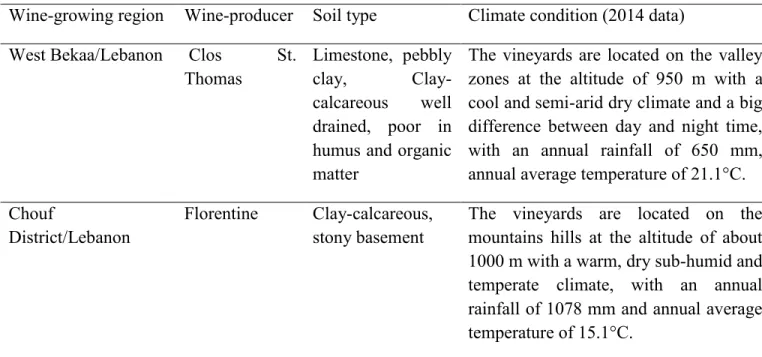
Chapter II entitled maceration steps is divided in two parts. The first study of part 1 sets out the effect of maceration time and temperature on the chromatic characteristics, flavonoids and non-flavonoids profile and biological activities of Syrah and Cabernet Sauvignon musts elaborated in two distinct Lebanese wine growing regions (Bekaa and Chouf district) using pre-fermentation cold (10°C) and heat maceration (60°C, 70°C and 80°C) compared to traditional winemaking (control, 25°C). The second study of this part show by means of statistical multivariate analyses (PCA) the terroir effects and define the best couple time/temperature of maceration for each
5
grape must giving more information for a correct planning and management of the winemaking operations in the Lebanese terroir. Part 2 exhibited firstly the influence of pectolytic enzyme addition and prefermentative heat maceration at different temperatures (60°C and 70°C and 70°C + enzymes) on the phenolic content and biological activities of Syrah and Cabernet Sauvignons red musts from two consecutive vintages (2014 and 2015) grown at Lebanese wine region (Bekaa valley, Saint Thomas) and secondly elucidate by means of statistical multivariate analyses (PCA) the vintage effects.
Chapter III presents the effect of two different commercial yeast strains (X and Y) on wine color, phenolic compounds and biological activities from two grape varieties musts (Syrah and Cabernet Sauvignon) from two distinct regions (Saint Thomas and Florentine) macerated at different temperatures (10°C, 60°C, 70°C and 80°C) from the 2014 vintage. As well as the effect of maceration enzymes on polyphenol composition of wines after alcoholic fermentation of Syrah and Cabernet Sauvignon Saint Thomas from the 2015 vintage premacerated at different temperatures with and without added enzymes (70°C, 70°C + enzymes) compared to the control (25°C) fermented by X and Y strains with and without enzymes.
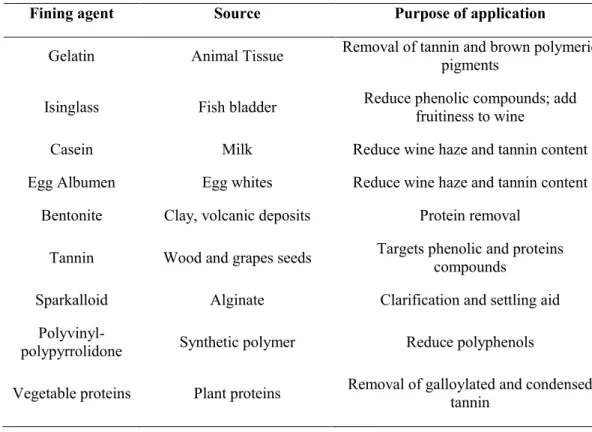
Chapter IV exposes the effect of five different oenological fining agents (egg albumin, PVPP + casein, bentonite, gelatin and vegetable proteins) and two oenological additives (tannins and mannoproteins); as well as the study show the effect of different fining concentrations on the chromatic characteristics, phenolic composition, and antioxidant activity of Cabernet Sauvignon red wine from the 2014 vintage provided from Clos Saint Thomas.
Finally, the general Conclusions and the Perspectives will bring together the main findings as well as will explore future consideration in a subsequent study.
7 I.1. Grapes
The grape is the fruit of the cultivated vine (Vitis vinifera and labrusca). This is the second most cultivated fruit in the world. According to a report by the International Organization of Vine and Wine (OIV) about the world grape production (OIV, 2016), grapes production in 2015 is equivalent to nearly 76 million tons per annum. Figure I.1 shows the evolution of grapes production by country from 2000 till 2015. Growth in grapes production is particularly significant in China, USA, Chile and India. A decrease in production is noticed for Italy, France, Spain and Iran.
Figure I.1: The trends of grapes production per country from 2000 till 2015 (OIV, 2016)
Like many plants, there is not a single vine variety, but thousands. More than 5000 varieties are listed, and today about 250 of these are cultivated commercially. The varieties are distinguished by their different shapes of leaf, berries and colors and have different aroma and taste profiles. The two most cultivated grape species are: Vitis vinifera (From Europe, and from which are derived all major varieties for wine and table grapes); Vitis labrusca (From North America, used mainly as table grapes, and relatively few for wines). The ripening of grape is accompanied by loss of fruit firmness, accumulation of sugars, reduced acidity, color change and the synthesis of
8
aromatic compounds. The skin of grapes has a complex structure of polysaccharides, proteins, lipids, aromatic and phenolic compounds. The grape is a major source of polyphenols, which are a family of organic molecules characterized, as its name indicates by the presence of several phenol groups. Figure I.2 shows the distribution of different classes of polyphenols in the grape berry.
Figure I.2: Schematic structure of a ripe grape berry and pattern phenolics biosynthesis
distribution between several organs and tissues (indicated by arrows). aAnthocyanins are
synthetized also in the inner flesh of the teinturier varieties (Conde et al., 2007)
I.2. Phenolic compounds
Phenolic compounds play a major role in enology. These compounds are the products of plant secondary metabolites responsible for all the differences between red and white wines, especially the color and flavor of red wines. They have interesting, healthful properties, responsible for the „French paradox‟ which is relatively low rate of coronary heart disease (CHD) in France despite a high dietary intake of cholesterol and saturated fat (Renaud and de Lorgeril 1992). In fact, the role of natural antioxidants attracting more and more interest in the prevention and treatment of cancer, cardiovascular, inflammatory and neurodegenerative diseases (to be discussed in detail in
9
the second part of this chapter). From chemical point of view, the phenolic compounds are characterized by the presence of at least one phenol groups. Two classes are distinguished: Non-flavonoid and Non-flavonoid compounds (Ribéreau-Gayon et al., 2006)
I.2.1.NON-FLAVONOID PHENOLICS
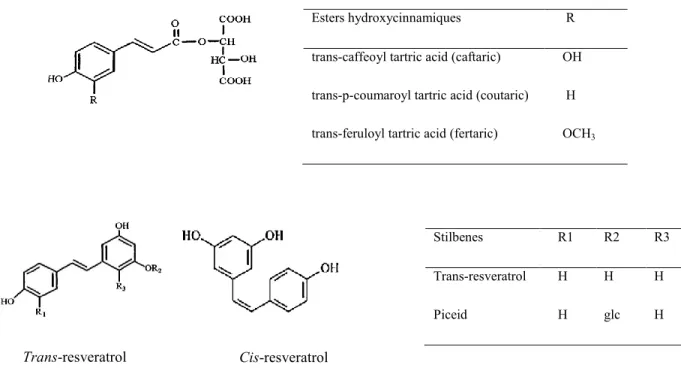
Non-flavonoids cover C3 hydroxycinnamates acids, C1 hydroxybenzoic acids and C6-C3-C6 stilbenes, trans-resveratrol, cis-resvertarol, and trans-resveratrol glucoside (piceid) (Figure I.3)
I.2.1.1. Phenolic Acids
In grapes, phenolic acids are frequently divided in two main groups: hydroxycinnamic and hydroxybenzoic acids. Hydroxycinnamic acids characterized by a C6-C3 skeleton are mainly found as tartaric esters of caffeic, coumaric and ferulic acid in the grape skin and pulp cells (Ribéreau-Gayon, 1965). They are responsible for the phenomenon of browning of wines caused by oxidation. The three basic tartaric structures are: caftaric, coutaric and fertaric esters that differ by the substituents on the aromatic ring (Figure I.3). Caftaric acid is predominant in grapes with an average of 170 mg/kg, 20 mg/kg for coutaric acid and 5 mg/kg for fertaric acid (Singleton et al., 1986). These relative proportions are maintained in the wine. They are mainly present in trans isomers, but also exist in cis forms (Chira et al., 2008). Hydroxybenzoic acids are characterized by a C6-C1 skeleton, consisting of a benzene ring connected to an aliphatic carbon chain. The most common derivates are vanillic, syringic, gentisic and gallic acid. Grapes mainly contain gallic acid in the pulp (Figure I.3), found in their free and glycoside form. The values range between 100 and 230 mg/kg (Chira et al., 2008).
Hydroxybenzoic acids R2 R3 R4 R5
Vanillic acid H OCH3 OH H
Syingic acid H OCH3 OH OCH3
Gentisic acid OH H H OH
10
Figure I.3: Main non-flavonoid compounds found in Vitis vinifera grape varieties
I.2.1.2. Stilbenes
Stilbenes are another minor class of phenolic compounds which have a C6-C2-C6 structure; two benzene rings are linked by a methylene bridge, forming a conjugated system. The principal stilbene in grapes, resveratrol, is produced by vines in response to Botrytis infection and other fungal attacks. The actual anti-fungal compounds are the oligomers of resveratrol called the viniferins. Several forms of resveratrol exist including the cis and trans isomers as well as the glucosides of both isomers. All are found in wine, but in grapes cis-resveratrol is absent. The most abundant in grapes are trans-resveratrol and its glycosylated derivative: the piceid (Jeandet et al., 1991; Waterhouse and Lamuela-Raventos, 1994) (Figure I.3). Light causes the cis/trans isomerization. Resveratrol derivatives are found only in the skin of the grape, so much more is found in red wine. So for example, botrytis berries contain higher level of resveratrol (Borie et al., 2004). The total levels of all forms average about 7 mg/l for red, 2 mg/l for rosés and 0.5 mg/l for white wines (Andrew, 2002). The interest in the health effects of resveratrol has generated more than 3300 research papers on resveratrol (Scopus, 2016).
Esters hydroxycinnamiques R
trans-caffeoyl tartric acid (caftaric) trans-p-coumaroyl tartric acid (coutaric) trans-feruloyl tartric acid (fertaric)
OH H OCH3 Stilbenes R1 R2 R3 Trans-resveratrol Piceid H H H glc H H Trans-resveratrol Cis-resveratrol
11 I.2.2. FLAVONOIDS COMPOUNDS
Flavonoids are characterized by a basic structure of 15 carbon atoms including 2 aromatic rings bound through a 3 carbon chain (Figure I.4). These are the most abundant of all the phenolic compounds. They are plant secondary metabolites which are involved in the process of defense against UV, pigmentation and certain disease resistance (Chira et al., 2008). Differences in the oxidation state and substitution on ring C define the different classes of flavonoids. The major classes of grape flavonoids are the anthocyanins, flavanols, flavonols and flavanones.
I.2.2.1. Anthocyanins
Anthocyanins provide the red and blue colors found in the skins of red or black grapes (Amrani Joutei, 1993). A number of physical conditions also affect anthocyanin stability, such as temperature, light, oxygen, metals, etc. Anthocyanins are located mainly in the skin and, more unusually, in the flesh of „teinturier‟ grape varieties. They are also present in large quantities in the leaves, mainly at the end of the growing season. They are characterized by a core glycosylated flavylium in position C-3 that combines two benzene rings A and B (Figure I.4). The variation of degree of methoxylation and hydroxylation of the B ring leads to the five aglycones found in Vitis vinifera varieties: Delphinidin, Petunidin, Malvidin, Cyanidin and Peonidin (Figure I.4). Unlike other hybrids (Vitis riparia and Vitis rupestris), which occur as 3, 5-diglucosides, Vitis vinifera contains only traces and is characterized by the predominant presence of malvidin 3-O-glucosides whose content varies between 90% (Grenache) and 50% (Sangiovese) (Chira et al., 2008). Anthocyanins can be divided into subclasses depending on the pattern of substitutions of the glucose C ring. The glucose may be acylated at the 6 position by acetic acid, para-coumaric acid or caffeic acid. Anthocyanins are also capable of forming conjugates with the hydroxycinnamic acids and organic acids (malic acid and acetic acid). For the majority of grape varieties, the most abundant individual anthocyanins are malvidin-3-O-glucoside while cyanidin-3-O-malvidin-3-O-glucoside is the lowest abundant form (Nicoletti et al., 2008). The content and composition of anthocyanins in grapes varies with species and variety (Mazza and Miniati, 1993).
12 Anthocyanidins R=H R1 R2 Delphinidin Cyanidin Petunidin Peonidin Malvidin OH OH OCH3 OCH3 OCH3 OH H OH H OCH3 Flavanols monomers R1 R2 R3 Catechin Epicatechin Epigallocatechin Epicatechin gallate H H OH H H OH OH OG OH H H OG Flavanols dimers (C6-C8) R1 R2 R3 R4 Procyanidin B1 Procyanidin B2 Procyanidin B3 Procyanidin B4 OH OH H H H H OH OH H OH H OH OH H OH H Flavonols R1 R2 Kaempferol Quercetin Myricetin Isorhamnetin H OH OH OCH3 H H OH H
Syringetin OCH3 OCH3
13
I.2.2.2. Flavanols
Flavanols are the most abundant class of phenolics in the grape berry; they play an important role on the organoleptic properties of wines, in particular, astringency. They include monomers and condensed tannins (proanthocyanidins), common name for oligomers and polymers of flavan-3-ols (Figure I.4). The monomers are (+)-catechin, epicatechin, (+)-gallocatechin, (-)-epigallocatechin and epicatechin-3-O-gallate (Escribano-Bailón et al., 1995; Souquet et al., 1996). There are also dimeric, trimeric, oligomeric, and condensed procyanidins (Figure I.5). Dimeric procyanidins are dimers resulting from the condensation of two units of flavan-3-ols linked by a C4-C8 (B1 to B4) or C4-C6 (B5 to B6) bond. Trimeric procyanidins are trimers with two interflavan bonds while oligomeric procyanidins are polymers from three to ten flavanol units linked by C4-C8 or C4-C6 bonds. Condensed procyanidins have more than ten flavan units (Ribéreau-Gayon et al., 2006). Flavanones R Engeletin Astilbin H OH
14
Figure I.5: Chemical Structure of Flavanols dimers and polymers
Skins, seeds and stems are the area of concentration of flavanols especially proanthocyanidins (Spranger et al., 1998; Sun et al., 1999), which are oligomers and polymers of flavan-3-ols that have the property of releasing anthocyanidins in hot and acidic medium, by cleavage of the inter-monomeric bonds from the higher units (Bate-Smith, 1954). There are two types of proanthocyanidins found in grapes according to the nature of the anthocyanidins released: procyanidins (polymers of catechin and epicatechin), which release cyanidin and prodelphinidins (polymers of gallocatechin and epigallocatechin) which release delphinidin.
In the grape berries, tannins are located in the external and internal envelopes of seeds and in the skin cells (Souquet et al., 1996; Mane et al., 2007). The distribution of the flavanols in grape berries is not the same in all varieties, and in fact has a wide range of differences comparing seed and skin tannins. The trihydroxylated forms monomeric forms of flavans-3-ols (gallocatechins) have been identified in grapes under their polymeric forms in both the skin and pulp (Souquet et al., 1996; Mane et al., 2007). Grape seed tannins consist of procyanidins partially galloyles, while skins and stems contain procyanidins and prodelphinidins units (Souquet et al., 1996; Souquet et al., 2000). Procyanidin B1 has been reported to be the main oligomer in skins (Escribano-Bailón et al., 1995; Jordão et al., 2001a), while procyanidin B2 is the most abundant in seeds (Bourzeix at al., 1986; Ricardo-da-Silva et al., 1991).
Besides the nature of the constituent units, the tannins are differentiated by the number of units, called degree of polymerization, as well as the type and position of inter-monomeric bond. The
15
B-type proanthocyanidins are characterized by an inter-monomeric bond between carbon 4 (C4) of the upper unit and carbon 6 (C6) or the carbon eight (C8) of the lower unit, trans configuration with respect to the hydroxyl of carbon 3 (C3). The A-type Proanthocyanidins contained additional ether linkage between the C2 carbon of the upper unit, and carbons 5 or 7 of the terminal unit (Vivas and Glories, 1996). It should be noted that the existence of A-type proanthocyanidins is not confirmed in grapes but only assumed from chromatographic characteristics (Glories et al., 1996; Salagoity Augustus and Bertrand, 1984). Seed tannins consist of procyanidins partially galloyles. Their mean degree of polymerization (mDP) of seed tannins (mDP = 10) is much lower than those of skins; which also contain prodelphinidins, and whose mean degree of polymerization (mPD) is around 30 units (Prieur et al., 1994; Souquet et al., 1996). In seeds and skins, the polymeric tannin fractions are present in a greater proportion than the monomeric or dimeric tannins (Cheynier et al., 1997) depending on the grape variety. In addition, polymeric tannins represent 77-85% of total flavanols in seeds and 91-99% of total flavanols in skins (Cosme et al., 2009). Recently, the presence of tannins of higher degree of polymerization whose characteristics are similar to those of skin tannin was demonstrated within the pulp (Souquet et al., 2006).
I.2.2.3. Flavonols
Flavonols are yellow pigments found in grape skin of both red and white grapes (price et al., 1995). They are characterized by the existence of a double bond between C2 and C3, and a hydroxyl group in C3. This class of compounds is found in a glycoside form but there also significant amounts of glucuronides. Four glycosylated flavonols derivatives from four aglycones (kaempferol, quercetin, myricetin and isorhamnetin, Figure I.4) are mainly present in grapes. Derivates of syringetin and laricitrin have recently been in evidence in red varieties (Mattivi et al., 2006). The average levels of flavonols in grapes are near 50 mg/kg but may vary between 10 and 285 mg/kg (Ritchey and Waterhouse, 1999). Kaempferol and quercetin flavonols are present in both red and white grapes, whereas, myricetin and isorhamnetin occur merely in red grapes (Mattivi et al., 2006; Castillo-Muñoz et al., 2007). A study on Pinot noir has shown that sunlight on the berry skin strongly enhances the levels of the flavonols. Since flavonols absorb UV light strongly at 360nm, and they appear mostly in the outermost layer of cells in the berry, it appears that the plant produces these compounds as a natural sunscreen (Andrew, 2002).
16
I.2.2.4. Flavanones
This family of compounds was identified in the skins of white grapes, characterized by the presence of a chiral center on the carbon 2. Astilbin and engeletin (3-rhamnosides of dihydroquercetin and dihydrokampférol) are the representative of this family (Figure I.4). These molecules have also been observed in stems (Souquet et al., 1998). In grapes flavanones are present at concentrations of a few mg/kg (Chira et al., 2008).
I.3. Wine phenolic compositions
The comparison of the phenolic composition of grapes and wine shows that alongside of molecules that comes directly from the berries, other polyphenols appear in the wine. During vinification and aging, polyphenolic compounds are involved in various types of reactions, giving rise to a multiplicity of new structures.
I.3.1. ANTHOCYANINS
The anthocyanidins (aglycons form, Figure I.4) are the basic structure of the anthocyanins. When the anthocyanidins are found in their glucoside form (bonded to a sugar moiety) they are known as anthocyanins. The anthocyanins identified in wines from Vitis vinifera are the 3-O-monoglucosides and the 3-O-acylated 3-O-monoglucosides of five important anthocyanidins – cyanidin, delphinidin, petunidin and malvidin that are differenciated by the number and position of hydroxyl and methoxyl groups located in the B-ring of the molecule. Acylation occurs at the C-6 position of the glucose molecule by esterification with acetic, lactic, p-coumaric and caffeic acids (Mazza and Miniati, 1993; Bakowska-Barczak, A., 2005).
The wine anthocyanin composition depends on the original grape profile but also on the extraction and winemaking techniques employed. Anthocyanin concentrations are in the order of 20-500 mg/l in red wine (Flanzy, 1998). Their concentration reaches a maximum in a few days of fermentation and then decreases as a consequence of their adsorption on yeast cell walls, precipitation in the form of colloidal material together with tartaric salts, elimination during filtration and fining (Castillo-Sánchez et al., 2006; Moreno Arribas et al., 2008), as well as, their involvement in many chemical reactions (Ribéreau-Gayon 1982; Somers 1971; Cheynier et al., 1997a; Mayen et al., 1995; Romero-Cascales et al., 2005). These are unstable pigments but their reactivity leads to many pigments which contribute to the color stability of red wines.
17
Anthocyanins can be found in different chemical forms which depend on the pH of the solution (Figure I.6). At pH 1, the flavylium cation (red colour) is the predominant species of which it is subjected to deprotonation and hydratatation reactions when pH increases (Brouillard et al., 1977). At pH values between 3 and 4, the hemiketal (AOH) species are predominant. At pH values between 5 and 6 only two colourless species can be observed, which are a carbinol pseudobase and a chalcone, respectively. At pH values higher than 7, the anthocyanins are degraded depending on their substituent groups. At wine pH, four structural forms of the anthocyanins coexist: flavylium cation, anhydrous quinoidal base, colourless carbinol base and the pale yellow chalcone. Anthocyanins are frequently represented as their red flavylium cation, but in aqueous media this form suffers rapid proton transfer reactions, leading to blue quinonoidal bases. By the other hand, the hydration generates colorless hemiketals in equilibrium with chalcone structures.
Figure I.6: Anthocyanins chemical forms depending on wine pH (adapted from Brouillard and Dubois, 1977)
I.3.1.1. Reactions and interactions of anthocyanins
The anthocyanins are structurally dependent on the conditions and composition of the media where they are dissolved. In wine, anthocyanins can undergo interactions among them and with other compounds that influence their structural equilibria and modify their color.
18
I.3.1.1.1 Nucleophilic addition reaction
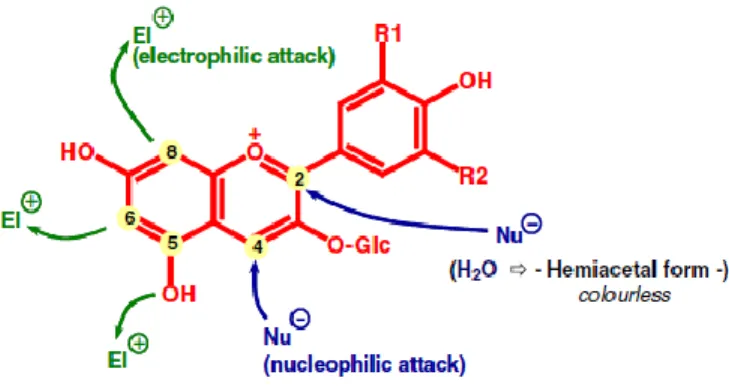
The A-ring of anthocyanin is nucleophilic whereas the C-ring has a cationic charge and reacts as an electrophile. The addition of bisulfite to the anthocyanin illustrates the best example of a nucleophilic addition reaction onto the flavylium cation. This addition is known as anthocyanin bleaching because the addition of sodium metabisulfite on the carbon 4 of anthocyanins results into the decolorization of anthocyanins (Timberlake and Bridle, 1967; Berke et al., 1998). This reaction is reversible (because of the high value of the oxygenation of the core which is characterized by dissociation constant) and the red flavylium form may be regenerated by acidification or addition of acetaldehyde which combines bisulfite.
I.3.1.1.2. Condensation reactions
In this part, the nucleophilic form of anthocyanins is involved into condensation reactions. Anthocyanins in its hemiketal form can undergo condensation reaction with electrophilic o-quinones (species generated by enzymatic oxidation of caftaric and cutaric acid) resulting into colorless adducts. It is suggested that the anthocyanin is linked to the quinone by its C6 or C8
position.
I.3.1.1.3. Self-association of anthocyanins
At high concentrations, the colored form of anthocyanins is associated together to form the non-covalent dimers vertical stack. The self-association is promoted by the hydrophilic interactions between glucose components and by the hydrophobic repulsion between the aromatic ring and water. This phenomenon leads to an intensification of color and a deviation of Beer-Lambert law (Asen, 1972; Goto et al., 1991; Hoshino, 1991). Covalent dimers like A-A+ can also be formed (Salas, 2005).
The self-association can be recognized as a special form of a copigmentation. It can also influence the apparent hydration constant of the anthocyanins and subsequently modify the color of red wines (He et al., 2012). The presence of ethanol in wines limits the self-association since it can weaken the hydrophobic interactions.
19
I.3.1.1.4. Copigmentation reactions
The phenomenon of copigmentation is defined as a solution phenomenon in which pigments (anthocyanins in the case of wine) and other non-colored organic components form molecular associations or complexes (Boulton, 2001). It can divided into 2 classes: the intramolecular copigmentation and the intermolecular copigmentation.
The intramolecular copigmentation corresponds to two parts of the same molecule, on which one plays the role of copigment and the other being the chromophore (Brouillard et al., 1993; Dangles et al., 1993; Figueiredo et al., 1996; Goto et al., 1991). For example, in coumaroylated and caffeoylated anthocyanins, the aromatic ring of the acylated part of glucose substitute may cause a stabilization of anthocyanin portion in the form of flavylium.
The intermolecular copigmentation is the result of the vertical stacking between the planar portion of copigment rich in π- electrons and the colored forms of anthocyanins (Brouillard et al., 1989; Cai et al., 1990; Dangles and Brouillard, 1992a; Dangles and Brouillard, 1992b). The colored forms (A+, AO) have planar structures with a strong delocalization of π-electrons,
allowing π – π stacking with the copigment. The formation of the π – π complex which causes changes in the spectral properties of the molecules in the flavylium ion, increasing the absorption intensity (hyperchromic effect) and its wavelength (bathochromic shift); and the stabilisation of the flavylium form by the π complex displaces the equilibrium in such way that the red colour increases. The co-pigmentation effect is evident under weakly acid conditions (pH 4–6) where anthocyanins exist in its colourless forms. Recently, it has been proposed that this phenomenon induces the reactions between anthocyanins and tannins in wines (Rein and Heinonen, 2004). Both form of copigmentation cause the pigments to exhibit far greater color than would be expected from their concentration.
I.3.1.1.5. Cycloaddition reactions
Free anthocyanins can undergo cycloaddition reactions or direct reaction with some constituents of the wine; including metabolites of various yeasts (e.g. pyruvic acids, acetaldehyde and vinylephenol) giving rise to pyranoanthocyanin pigments (Figure I.7). Pyranoanthocyanins are cycloaddition products which have an additional pyran ring between the C4 position in the C ring and the hydroxyl group on the C5 position in the A ring of the anthocyanin molecule. The