MIGRATION AND DEVELOPMENT
IN BELGIUM
A COMMON
HOME
COMMON
HOME
Researched and written by Jean-Michel Lafleur and Abdeslam Marfouk with the contribution of Tom Devriendt, Elise Kervyn, Laure Leclipteur, Pieter Van Roeyen and Elisabeth Verniers (Caritas International Belgium).
Contributions and edits by Olga Kadysheva, Patrick Taran and Piyasiri Wickramasekara (Global Migration Policy Associates – GMPA), Davide Gnes and Shannon Pfohman (Caritas Europa).
This publication is part of MIND (Migration. Interconnectedness. Development), a 3-year project financed by the European Commission (DG DEVCO). The aim is to raise public awareness regarding the relation between sustainable development and migration and the European Union’s role in development cooperation.
Led by Caritas Austria, the partners of the MIND project are: Caritas Bavaria (Germany), Caritas International Belgium, Caritas Bulgaria, Caritas Czech Republic, Caritas Europa, Caritas Italy, Cordaid (Caritas Netherlands), Caritas Portugal, Caritas Slovakia, Caritas Slovenia and Caritas Sweden.
For more information about MIND follow the campaign:
This publication was proofread by Mauricio Ruiz, Richard Tuffs and Michael Ward.
Graphic design by Vanden Broele Group with the support of Leticia Lozano (Caritas Europa). Layout by Anne Van Hootegem.
Cover illustration by Jean Bernard Boulnois.
Published by Caritas International, Rue de la Charité 43, 1210 Brussels - Belgium, May 2019.
This publication was produced in the framework of the MIND project, which has received financial support from the DEAR Programme of the European Union. The information contained in this publication does not necessarily reflect the position or opinion of the European Union.
Caritas reserves the right to not be held responsible for the accuracy and completeness of the information provided in this publication. Liability claims regarding damage caused by the use of any information provided, including any information which is incomplete or incorrect, will therefore be rejected.
CHAPTER 3. OBSTACLES HINDERING MIGRANTS’
CONTRIBUTION 37
Lack of safe and legal pathways 37
Access to basic rights 39
Access to the labour market 41
Public opinion and political discourse 45
Access to the nationality 46
Specific obstacles to the contribution to the
country of origin 47
CHAPTER 4. NATIONAL AND PRACTICES FACILITATING
MIGRANTS’ CONTRIBUTION 49
A better contribution to Belgium 50
A better contribution to the country of origin 53
CHAPTER 5. CONCLUSION 57 CHAPTER 6. RECOMMENDATIONS 59 REFERENCES 63 INTERVIEWS 69 D FOREWORD 7 EXECUTIVE SUMMARY 9 GLOSSARY 12 VISION AND VALUES OF CARITAS: MIGRATION, DEVELOPMENT
AND HUMAN RIGHTS 13
Migration 14 Development 14
Migration and development 15
INTRODUCTION 17 CHAPTER 1. THE MIGRATORY CONTEXT OF BELGIUM 19
Migration and development in Belgian history 19
Migration in Belgium today 21
Legal access to the territory and lawful residence 23
International protection 24
CHAPTER 2. REALITY ON THE GROUND: THE CONTRIBUTION OF
MIGRANTS TO DEVELOPMENT 29
Migrants’ contributions to Belgium 29 Migrants’ contributions to the country
of origin 33
FOREWORD
Our expertise in these areas supports our work of advocacy with the ambition of reaching a greater public, citizens as well as policy makers. Through this report, we hope to show what we see as crucial questions and to offer solutions to make our society a warm and welcoming place for all.
This report was written with the financial support of the European Commission for the MIND project. The implementation of the MIND project so far has been a particularly rich and educational experience. Not only has it allowed us to reflect on the pressing challenges within our organisation and in our society, but it has also opened doors to collaborate closely with excellent researchers—two of whom are the main authors of this report and whom I would like to name and thank explicitly Jean-Michel Lafleur and Abdeslam Marfouk.
François Cornet, National Director, Caritas International Belgium May, 2019
I
t has been a little over a year since Caritas Internationalstarted to reflect on what binds two of its core preoccupations: migration and development.
Migration comes in many shapes and often brings along many challenges for the newcomers as well as for our society. Our organisation has been welcoming migrants and refugees in Belgium for many decades. We have been accompanying them, and defending their right to access social and legal services, both here and in their country of origin. This makes us no strangers to the challenges of migration. Sometimes these challenges take the form of injustices. We consider it out mission to denounce the unjust situations and obstacles with which many migrants are confronted with, often on a daily basis. us.
This brings us to search and advocate for structural solutions. Migration does not only come with its challenges, it also offers opportunities that we daily witness, if it is handled correctly and with solidarity—opportunities such as mutual learning, as well as social, cultural and economic development. These benefits apply to all of us, here and elsewhere, because the many paths that lead from migration to development not only converge in Belgium. They are also visible in the regions where Caritas International supports its partners in securing and implementing food, nutrition, health and sanitation programmes.
B
ased on an in-depth analysis of current events, policies, and debates related to migration and development in Belgium, this report develops knowledge, evidence and analysis to answer the following guiding question: How, and in what circumstances, can migrants contribute to their own integral human development, as well as that of their societies of origin and residence?The first part of this report gives a brief overview of migration in Belgium. Migration has been a central feature of Belgium’s society and economy since its founding in 1830. Originally a country of emigration, Belgian migrants went to work in France, the United States and Canada during the 19th Century, and sought refuge during the two World Wars. During the interbellum period, Belgium became one of the main destinations for foreign workers as heavy industries developed and required labour. However, the economic decline and rising unemployment of the late 1960s required a new response. The government returned to a strict application of existing immigration laws and adopted new laws on the matter. Despite these restrictions, the number of immigrants arriving annually in Belgium continued to grow until 2011. Migrant flows then fluctuated, with decreases that were mainly a result of restrictive immigration policies towards non-EU nationals, and increases such as those seen in 2015. The history of Belgium shows how migrants have played an important role in creating Belgium as we know it today. This includes the contributions of early waves of Italian, Moroccan, and Turkish migrants to post-war reconstruction and to the development of the welfare state. Today, migration continues to contribute to the development of contemporary Belgium in various ways.
Immigrants (people who are born abroad) constitute 16.4% of the Belgian population. The proportion of international migrants within a given population varies significantly depending on the region. 45% of those living in Brussels are immigrants, compared to 15% in Wallonia and 12% in Flanders. Most immigrants in Belgium are European (54% of the migrant population), followed by immigrants from Africa (25.8%), Asia (15.6%), America (4.2%) and Oceania (0.1%). With more
than 215,000 immigrants originating from Morocco, or 11.5% of the Belgium’s total immigrant population, Morocco is the top country of origin for immigrants to Belgium. Morocco is followed by France (10.1%), the Netherlands (7.1%), Italy (6.5%) and Turkey (5.6%).
In 2016, free movement from EU countries made up the most significant channel for permanent migration to Belgium (54.6% of the migrant population). Family reunification was the second most significant (27%), followed by migration for humanitarian reasons (about 16%) and for employment (2.6%). Today, family reunification remains one of the few viable options for non-EU nationals to travel to Belgium legally, as migrating to Belgium for employment, studies or international protection has become more difficult for third country nationals.
All foreigners arriving in Belgium have the right to apply for international protection. In 2017, 15,373 people applied for international protection in Belgium for the first time. That same year, the CGRS granted international protection to 13,933 people. The main legal channel for seeking international protection in Belgium is the UN-led refugee resettlement program. In 2017, the number of resettled refugees accounted for 8.5% of the population of those who had been granted international protection in Belgium. Belgian law does not provide explicit rules for issuing visas on humanitarian grounds. They are instead issued at the discretion of the Secretary of State for Asylum and Migration or his representative.
The second part of this report provides an in-depth analysis of the effect that contemporary migration has on development. It focuses specifically on the various contributions that migrants make to the economic, political, and social aspects of Belgian society, and of their countries of origin. A positive net outcome of migration is the increase in the variety of goods available to consumers in the migrants’ new country of residence. By leveraging connections with their country of origin, migrants can develop cross-country economic activity and favour bilateral trade between their countries of origin and their place of residence. Migrants are also an important supply of labour, especially in certain sectors such as construction, healthcare, and wholesale
and retail trade. They stimulate the local market through their own consumption and entrepreneurship (a migrant is more likely to be an entrepreneur than a native). Finally, migrants contribute positively to public finances—an estimation of about 0.8% of the GDP.
Immigration is also a critical feature of Belgium’s political development. The number of elected officials who are the children of first-generation immigrants is proof of the lasting impact of the wave of migration that took place following World War II. Similarly, various artists from different backgrounds have made a lasting influence on the country’s cultural scene, reaffirming the capacity of migrants and their children to shape the country’s social and cultural identity.
Diaspora associations play a key role in migrants’ economic, political and cultural contributions, as they facilitate their economic inclusion, their education, their learning of the language and the promotion of the culture of the country of origin. Several studies have shown that migration also has a positive impact on the economy of the country of origin. Remittances are one significant example. In 2017, some €4.16 billion in personal remittances were sent out by migrants from Belgium. Countries of origin also benefit from the investments of migrants, from their co-development projects (especially through diaspora associations) as well as from the transfer of technologies, norms, ideas and practices. The latter also includes the impact of migrants on the civic and political spheres of their country of origin when they participate in the elections or remain active in the politics of their country of origin from abroad.
The third part of this report identifies the main obstacles that prevent migrants from fully contributing to the development of their host country and of their country of origin. It is worth noting that the same obstacle usually affects the migrant’s personal fulfilment, their contributions to their host country and their contributions to their country of origin.
One such obstacle is the lack of safe and legal pathways to enter the country of destination, which hinders migration and also leads some migrants to undertake dangerous routes. We observe slow progress regarding labour migration and restrictions in terms of family reunification. Obstacles hindering the recruitment of foreign workers are especially concerning because Belgium has a structural labour shortage in some sectors which continues to increase due to the aging of the population. Family reunification also faces various obstacles, such as high fees and the length of the procedure. In addition, pathways to enter Belgium legally for those seeking international protection are also extremely limited. The visa system is a real obstacle to their arrival. Resettlement quotas and the number of humanitarian visas granted are low.
This means that most applicants for international protection have no choice but to brave dangerous routes to apply for protection. These are routes that have become much more dangerous as the EU externalizes its borders through agreements with third countries (Turkey, Libya, etc.) in order to prevent migrants, including those seeking international protection, from arriving on European soil. At the same time, the Dublin Regulation prevents applicants for international protection whose fingerprints have been taken in another European country to request protection in Belgium. However, international protection systems of first-entry countries such as Greece or Italy are therefore overwhelmed by requests. These circumstances lead to serious human rights violations that have a drastic effect on the migrants’ mental and physical state.
A second set of obstacles to migrant contributions is the fulfillment of their basic needs. Those struggling every day to satisfy their basic needs cannot put their knowledge and skills to work in service of their community.
We discuss the question of respect for social rights—notably the right to work and the right to social welfare—and access to housing. Due to discrimination in the housing market, finding a suitable home at an affordable price is a sizable challenge for migrants. This results in geographic segregation based on income, ethnicity and/or legal status, which explains the significant differences in workload across Public Centres for Social Welfare among communes. It also gives reasoning for the difference in quality of social services, which increases inequalities between municipalities.
We will also touch on the question of employment. Overall, migrants’ employment rates and job quality remain low. The proportion of overqualified migrant workers is significantly higher than that of native workers. This explains the differences among local and native populations in terms of qualifications, professional and social networks, and linguistic competency, and also provides reasoning for the administrative requirements asked of the migrant population and the structural difficulties they confront in the labour market. The Belgian market has a high threshold for skills and qualifications. This is the reason for which language knowledge and recognition of academic degrees are so important to the inclusion of migrants in the market. The Belgian labour market is also segmented into two categories of employment. The first is marked by stable jobs and high salaries, while the second is marked by temporary jobs, lower salaries, more job insecurity. There is little mobility between these two sectors. Finally, migrants face several forms of discrimination within the labour market. This has been confirmed by numerous studies, one of which found that, on average, applicants with Turkish names must submit on average 44% more applications than applicants with Flemish names to receive the same number
At the local level, some Belgian cities can be seen as successful examples of integration and inclusion. The practice and experience of the city of Mechelen, featured in this report, illustrates that it has been active in promoting diversity and providing support in housing inclusion, language courses, employment, and psychosocial and administrative support for migrants and refugees.
Various initiatives and pilot programmes have been established in Belgium in recent years to encourage immigrant participation in the labour market. Among the notable pilot programmes, the labour-INT project strives to offer applicants for protection and refugees a path to integration and continuous support consisting of a skills assessment, assistance in obtaining training and seeking employment, and support during their integration into the workplace.
In general, all local projects that are focused on the specific needs of diaspora associations—namely in terms of training, project management assistance and access to funds—can be considered as positive practices. Indeed, many diaspora associations operating in Belgium are striving for the improved development of their host country or country of origin. For the purposes of this report, we highlight two successful examples of projects that have included diaspora associations. Through the Migration for Development in Africa project, health professionals have put their skills to use by organising medical missions during which they see patients and train colleagues in their countries of origin within the Great Lakes region. Likewise, Solidarco is an insurance scheme by which Congolese migrants residing in Belgium can purchase health insurance for up to seven relatives living in Kinshasa by paying a premium of €30 per month. This report highlights Belgium’s need for and dependence on migration to sustain its own development and well-being. In order to benefit from the contributions that migrants can make to the development of our society and that of their countries of origin, we believe it is essential to guarantee migrants decent and stable living conditions, social security and to access the job market. This does not just satisfy a moral directive. Those who must struggle every day to satisfy their basic needs can hardly make the additional effort to develop their knowledge and skills and put them to effective use in service of our society. Our findings emphasize the urgent need to address the major obstacles to migration so that migrants can contribute fully to the integral human development of Belgium and to that of their countries of origin. The recommendations at the end of this report address key concerns that, if not resolved, could pose serious problems to Belgium’s social cohesion as well as its capacity to build a just, unified and sustainable society. of acceptances. These forms of discrimination are fueled by
negative views of migration. A substantial proportion of the Belgian public believes that migrants cause problems and are a threat to the economy, national security, and cultural identity of the country. Nevertheless, attitudes towards immigrants have become more favourable since the 2015 solidarity crisis and the resulting citizen aid movement.
With respect to the specific obstacles to migrants’ contributions to the development of their country of origin, the high costs of transferring remittances discourage migrants from sending them and limit the benefits that the country of origin can receive. A few obstacles specifically hinder diaspora associations’ work, and their potential to assist in co-development, notably the fact that they often lack the resources, time and experience. The situation in the country of origin can be both a catalyst for migrants’ involvement in development and a hindrance to their ability to engage transnationally.
The final part of this report provides examples of practices that foster migrants’ contributions to their own personal fulfilment, as well as to the development of their host communities and countries of origin. Policies that facilitate migrants’ contributions to their country of residence are often grouped under the category of integration policies. Today, all three regions—Flanders, Wallonia and Brussels—have adopted a similar approach, which includes an orientation, socioeconomic assessment, language courses, and an introduction to citizenship, the country’s norms, and values. Though these actions are positive, they suffer several shortcomings, among which the fact that sessions offer a one-size-fits-all approach, while the needs of migrants differ, for example, across geographical regions of origin and level of education.
The
history
of
Belgium shows how
migrants
have
been an important
contributor
to what
Belgium
Glossary
Actiris Actiris is the Public Employment and Vocational Training Service of the Brussels Capital region, responsible for bring-ing together supply and demand on the labour market and guidbring-ing job-seekers in the Brussels Capital region to work.
Applicant for
international protection A third-country national or a stateless person who has made an application for international protection for which a final decision has not yet been taken (former terminology: asylum seeker).
Application for
international protection A request made by a third-country national or a stateless person for protection from an EU Member State, who can be understood to seek refugee status or subsidiary protection status.
CGRS The Office of the Commissioner General for Refugees and Stateless Persons is an independent body, the key-player in processing applications for international protection, and it grants or denies refugee status or subsidiary protection status.
Co-development Co-development concerns national, regional, or local policies and mechanisms that encourage migrants to contribute to the development of their countries of origin through associative platforms and co-financed projects. Migrants are asked to collaborate with States, regions, provinces, municipalities or other bodies.
Dublin Regulation Regulation which lays down the criteria and mechanisms for determining the EU Member State responsible for exam-ining an application for international protection—normally the State where the applicant first entered the EU (Dublin III Regulation – Regulation EU No 604/2013).
Fedasil The Federal Agency for the Reception of Asylum Seekers is in charge of the reception of applicants for international protection and certain other categories of foreign nationals. It falls under the supervision of the State Secretary for Asylum Policy and Migration.
Forem The Walloon Public Office for Vocational Training and Employment is responsible for bringing together supply and demand on the labour market and guiding job-seekers in the Walloon region to work.
Immigration Act This is the central law regarding migration and asylum issues in Belgium (law of 15 December 1980 on the entry to the territory, residence, settlement and removal of foreign nationals).
Immigration Office The Immigration Office is the public service responsible for the entry, residence, settlement and removal of foreign nationals. The Immigration Office is also in charge of applying the Dublin III Regulation and of managing applicants’ residence requirements throughout the international protection procedure.
Integration and insertion In the EU, integration is defined as a dynamic, two-way process of mutual accommodation between all immigrants and residents of EU Member States. In public discourse, however, integration often continues to refer to the dated conception of assimilation, or the requiring of immigrants to conform to the norms and values of the dominant major-ity in order to be accepted. Therefore, we prefer to use the term inclusion when possible to reflect a more positive and reciprocal approach.
Myria The Federal Migration Centre, an independent public institution, analysing migration, defending the rights of foreign-ers and combating human trafficking and human smuggling.
PCSW The Public Centre for Social Welfare ensures a number of social services and thus ensures the well-being of every citi-zen. Every municipality or city in Belgium has its own PCSW, offering a wide range of services.
Refugee A person who, “owing to a well-founded fear of persecution for reasons of race, religion, nationality, membership of a particular social group or political opinions, is outside the country of his nationality and is unable or, owing to such fear, is unwilling to avail himself of the protection of that country” (Art. 1(A)(2), Convention relating to the Status of Refugees, Art. 1A(2), 1951 as modified by the 1967 Protocol).
Remittances Financial transfers from a migrant to a beneficiary/beneficiaries in the migrant’s country of origin.
Resettlement The selection and transfer of refugees from a State in which they have sought protection to a third state which has agreed to admit them as refugees with permanent residence status.
Subsidiary protection The protection given to a third-country national or a stateless person who does not qualify as a refugee but in respect of whom substantial grounds have been shown for believing that the person concerned, if returned to their country of origin, or in the case of a stateless person to their country of former habitual residence, would face a real risk of suffer-ing serious harm as defined in Art.15 of Directive 2011/95/EU (Recast Qualification Directive).
Third-country migration Migration from a country that is not a member of the EU as well as a country or territory whose citizens do not enjoy the EU right to free movement.
Third-country national Any person who is not a citizen of the EU and who does not enjoy the EU right to freedom of movement.
Unia The Interfederal Centre for Equal Opportunities. Unia is an independent public institution that fights discrimination and promotes equal opportunities. They are internationally recognized as a national human rights institution.
VDAB The Flemish Public Employment and Vocational Training Service is responsible for bringing together supply and demand on the labour market and guiding job-seekers in the Flemish region to work.
of Refugees and its 1967 Protocol; and the International Labour Standards defining principles and rights for decent work. The United Nations 2030 Agenda for Sustainable Development and the New Urban Agenda are especially relevant global policy frameworks. Catholic Social Teaching (CST), the doctrine developed by the Catholic Church on matters of social and economic justice, and fundamental Christian values are the foundations for Caritas’s views and actions.
In Laudato Si’, Pope Francis (2015) has argued that, “the urgent challenge to protect our common home includes a concern to bring the whole human family together to seek a sustainable and integral development.” Moreover, he has called for a dialogue including everyone about, “how we are shaping the future of our planet”, questioning the current model of development and the present condition of global society where injustices are numerous, and more and more people are deprived of fundamental human rights. This demands “prioritising the weakest members of society as a way of measuring progress” (CAFOD et al. 2018). Human rights can be defined as protections for individuals and groups, guaranteed under international law, against interferences with fundamental freedoms and human dignity. Human rights are inalienable and cannot be denied to or relinquished by any human being, regardless of any reason including legal or immigration status. They are universal in that they apply to everyone, everywhere. Human rights encompass civil, cultural, economic, political and social rights, and are indivisible, meaning that the different sets of rights are all equally important for the full development of human beings and their well-being.2 Human rights instruments and customary international law generate three overarching obligations for States, namely: to respect, to protect, and to fulfil those rights.
VISION AND VALUES
OF CARITAS
: MIGRATION,
DEVELOPMENT AND HUMAN RIGHTS
I
n 2015, in his encyclical Laudato Si’ – On care for our common home, Pope Francis stated that the Earth is “our common home”, and that we need to address economic, social, political and environmental challenges together in an integrated manner (CAFOD et al. 2018). Exclusion and poverty, warfare, global inequalities, climate change, unsustainable consumption and growth—as well as forced displacement and migration—demand our utmost attention and engagement. The encyclical quickly became a reference document for Catholic social service as well as development agencies worldwide, drawing attention both in and outside the Catholic Church.With the national and European “Common Home” publications, Caritas draws on this message to explore the complex interconnectedness between migration and development with its faith-based ethical framework, which is respectful of human rights and dignity.
For Caritas, a human-centred, ethical and rights-based approach is fundamental to law, to every policy, and to all practice. Thus, an ethical interpretation of the relation between migration, development and the human person is essential to frame the vision and the objectives of the “Common Home” publication. Caritas’s vision, actions and views are rooted in legal and political instruments and sources, fundamentally in Christian and Roman Catholic Church values and teachings. These values and teachings have in common with international legal instruments and policy frameworks an affirmation of human dignity, equality, and inalienability of human rights as key moral principles to ensure the peaceful coexistence and basic well-being of all persons and peoples on this planet. These include: the Universal Declaration of Human Rights (UDHR) and eight fundamental United Nations human rights covenants and conventions1; the 1951 Refugee Convention on the Status
1 The International Convention on the Elimination of all Form of Racial Discrimination (1965), the International Covenant on Civil and Political Rights (1966), International Covenant on
Economic, Social and Cultural Rights (1966), the Convention on the Elimination of all Forms of Discrimination against Women (1979), the Convention against Torture and Other Cruel, Inhuman or Degrading Treatment or Punishment (1984), the Convention on the Rights of the Child (1989), the International Convention on the Protection of the Rights of All Migrant Workers and Members of their Families (1990), the Convention on the Rights of Persons with Disabilities (2006).
workers who have not changed their place of residence. For an accurate analysis of the interconnectedness of migration and development, Caritas uses a broad understanding of migration, which includes all persons born abroad and officially residing in Belgium.
Development
The pledge to leave no one behind and to ensure human rights for all is a cornerstone of the Resolution by the UN General Assembly 70/1 “Transforming our world: 2030 Agenda for Sustainable Development” that contains the Declaration and the 17 Sustainable Development Goals (SDGs) with 169 sustainable development Targets, adopted on the 25th of September 2015. This document endorsed by all 193 UN Member States expresses, under paragraph 8, their shared vision of and commitment to: a world of universal respect for human rights and human dignity, the rule of law, justice, equality and non-discrimination; of respect for race, ethnicity and cultural diversity; and of equal opportunity permitting the full realization of human potential and contributing to shared prosperity. A world which invests in its children and in which every child grows up free from violence and exploitation. A world in which every woman and girl enjoys full gender equality and all legal, social and economic barriers to their empowerment have been removed. A just, equitable, tolerant, open and socially inclusive world in which the needs of the most vulnerable are met.
The 2030 Agenda has led to paradigm shifts in the perception of development. Development and sustainable development concerns all countries on the planet; protecting the environment and tackling inequality are considered key development goals; peace and social justice are seen as integral components of the universal development agenda; and the need for the commitment and participation of all groups within all societies and states is emphasised in order to achieve development for all. The new worldwide consensus on development is grounded on the Universal Declaration of Human Rights and all human rights treaties; therefore, if states do not make progress on the actual realization of human rights for all, the SDGs cannot be reached. The term development encapsulates the elaboration of productive means, forces, capacities, organisation and output of goods, services, technology and knowledge to meet human needs for sustenance and well-being. It comprises building the means for: extraction and transformation of resources; production of goods, services and knowledge; infrastructure for production, transportation and distribution; growth of capital as well as skills and labour; and human welfare/well-being in terms of housing, nutrition, healthcare, education, social protection and culture in its broad sense (Taran 2012).
Migration
Migration is a major feature of today’s globalised world. In broad terms, migration is the movement of people from one place of residence to another. While the term migration covers population movement internal to a country—rural to urban or from one locality to another in a different jurisdiction, the MIND project addresses international migration. International migration is a distinct legal, political and social category, as people move from a nation-state in which they are citizens with the rights and protections that citizenship normally confers, to other countries where rights and protections of nationality, of access to social protection, and of common identity often do not apply and where social and cultural paradigms may be different. While there is no international normative definition for migration, international conventions provide agreed upon definitions for refugees and for migrant workers and members of their families; the latter applicable to nearly all international migrants. The definition of a refugee in the 1951 Convention and 1967 Protocol on the Status of Refugees is: “Someone who is unable or unwilling to return to their country of origin owing to a well-founded fear of being persecuted for reasons of race, religion, nationality, membership of a particular social group, or political opinion.” All EU member States have ratified both the 1951 Refugee Convention and its 1967 Protocol.
The International Convention on the Protection of the Rights of All Migrant Workers and Members of their Families (ICRMW) states that: “The term ‘migrant worker’ refers to a person who is to be engaged, is engaged or has been engaged in a remunerated activity in a State of which he or she is not a national.” The Convention recognises frontier worker, seasonal worker, seafarer, offshore worker, itinerant worker, and other specific categories of migrant workers as covered under its provisions. The ICRMW reiterates that all basic human rights cover family members present with and dependent on migrant workers. Data from the International Labour Organisation (ILO) shows that nearly all international migrants, whatever their reasons for migration or admission, end up economically active—employed, self-employed or otherwise engaged in remunerative activity. A specific definition and the statistical standards needed to obtain reliable and comparable data on international migrants have been agreed under UN auspices and are used by most governments. For statistical purposes, an international migrant is defined as ‘a person who has resided in a country other than that of birth or citizenship for one year or more, irrespective of the causes or motivations for movement and of legal status in the new country of residence.’
There are an estimated 260 million foreign-born people residing today in countries other than where they were born (UNDESA 2017). This figure does not include persons visiting a country for short periods such as tourists, nor commercial or transportation
Migration became a fundamental pillar of development across several regions under regional integration and development projects, namely the European Economic Community succeeded by the European Union. Since the 1970s, migration has been essential to development through regional free movement systems in Central, East and West Africa. From the 1920s, large population movements—some forced—in the (former) Soviet Union underpinned industrial and agricultural development across the twelve USSR republics.
Spurred by geopolitical events that greatly affected human mobility on a global scale, the relationship between migration and development has become central in contemporary political and economic and social policy debates. The first global development framework to recognize the role of migration and its immense contribution to sustainable development worldwide was the Declaration and Programme of Action of the International Conference on Population and Development at Cairo in 1994.3 The overarching contemporary framework is the above-mentioned 2030 Agenda for Sustainable Development with its SDGs. While explicit reference to migration and development was laid out in SDG Target 10.7 on safe, regular and responsible migration and mobility, more than 44 SDG Targets across 16 of the 17 SDGs apply to migrants, refugees, migration and/or migration-compelling situations (Taran et al. 2016). The New Urban Agenda adopted in Quito in October 2015 provides even more explicit attention to migrants, refugees and internally displaced persons in its global development and governance framework for cities—where most migrants and refugees reside.
In 2016, in the wake of severe and protracted conflicts in the Middle East and South Asia and the collapse of effective protection for refugees in neighbouring countries, UN Member States adopted the New York Declaration for Refugees and Migrants (UN Resolution 71/1), calling for improved global governance of migration, and for the recognition of international migration as a driver for development in both, the country of origin and of destination. The Global Compact for Safe, Orderly and Regular Migration (GCM), adopted at an inter-governmental conference in Marrakesh, Morocco in November 2018, and the Global Compact on Refugees (GCR) elaborated on those principles and proposed ways for implementing them through political dialogue and non-binding commitments. Both Compacts were adopted by the UN General Assembly in December 2018. Caritas recognises that a growing number of people are forced to leave their countries of origin not only because of conflicts and persecution but also because of other existential threats. These include poverty, hunger, unemployment and lack of Caritas uses the concept of integral human development, which
places the human person at the centre of the development process. It may be defined as an all-embracing approach that takes into consideration the well-being of the person and of all people in seven different dimensions. First, the social dimension, which focuses on quality of life in terms of nutrition, health, education, employment, social protection and social participation as well as equality of treatment and non-discrimination on any grounds. Second, the work and economic activity dimension as the means of self-sustenance and those of kin, of socio-economic engagement and of direct contribution to development for most adults in all populations. Third, the ecological dimension, which refers to the respect for the goods of creation and to ensure the quality of life for future generations without ignoring this generation’s cry for justice. Fourth, the political dimension, which includes issues such as: existence of the rule of law; respect for civil, political, economic, social and cultural human rights; democracy, in particular as a representative and, above all, participatory tool. Fifth, the economic dimension, which relates to the level of Gross Domestic Product (GDP) and distribution of income and wealth, sustainability of economic growth, structure of the economy and employment, degree of industrialisation, level of high-tech ICT, and the state’s capacity to obtain revenue for human services and social protection, among other considerations. Sixth, the cultural dimension, which addresses identity and cultural expression of communities and peoples, as well as the capacity for intercultural dialogue and respectful engagement among cultures and identities. Seventh, the spiritual dimension. Taken together, those dimensions underpin an integral approach to development (Caritas Europa 2010). According to the Catholic Social Teaching, social inequalities demand coordinated action of all the people / the whole of society and the whole of government in all countries for the sake of humanity based on two grounds: 1) social questions are global, and 2) socio-economic inequalities are a danger for peace and social cohesion. In this sense, development of our own country and that of others must be the concern of us all—the human community.
Migration and development
The link between migration and development is a centuries-old juridical, political and practical question. Since the end of World War II, migration and development has been the subject of intense discussion among policy-makers, academics, civil society and the public. Pope Pius XII dedicated an encyclical on “migrants, aliens and refugees of whatever kind who, whether compelled by fear of persecution or by want, are forced to leave their native land” (Exsul Familia 1952), reaffirming that migrants and refugees have a right to a life with dignity, and therefore a right to migrate.
3 The ICPD was the biggest conference ever held on population, migration and development with 11,000 delegates from 179 countries and some 4,000 participants in the parallel NGO Forum. Two
of the ten chapters of the Programme of Action were entirely about migration and development. Adopted by all 179 participating States/governments, the ICPD Declaration and 20-year Programme of Action (extended in 2010) continue to serve as a comprehensive guide to people-centred development progress.
decent work or good governance, absence of access to education and healthcare, as well as those linked to the consequences of climate change. Forced migration for Caritas encompasses all migratory movements where an element of coercion exists. People fleeing conflicts and persecution have a natural right to international protection.
Caritas also recognizes that the overwhelming proportion of migration into Europe reflects most EU member countries’ need for foreign labour to sustain its own development. This demand results from rapidly evolving technologies, changes in the organisation of work, its location, and the decline of the activity of the local workforce reflecting the local population’s ageing and declining fertility.
For Caritas’s, those who migrate and those who remain—whether in country of origin or in country of residence—both have the right to find, wherever they call home, the economic, political, environmental and social conditions to live with dignity and achieve a full life. Regardless of the legal status in a country, all migrants and refugees possess inherent human dignity and human rights that must be respected, protected and fulfilled by all States at all times. Caritas calls for a human response of
solidarity and cooperation to assume responsibility for integral human development worldwide and for the protection and participation of people who have moved from one country to another—migrants and refugees. Migration contributes to the integral human development of migrants and of their countries of residence. Such a vision implies the recognition that migration, regardless of its drivers, is an opportunity for our societies to build a more prosperous, global Common Home, where everyone can make a contribution to and live with dignity.
“CHRISTIAN
VALUES ARE THE
FOUNDATIONS FOR
CARITAS’S VIEWS
AND ACTIONS”
It however seems important to first emphasise one point. Caritas International acknowledges that the level of contribution of a migrant is by no means a condition for solidarity. While this report gives examples of famous migrants who contributed, for example, to the cultural, political or sports life in Belgium, we acknowledge that most people, migrants or not, lead lives that do not receive such level of public and media attention. We believe that everyone, whether they be high- or low-skilled, can contribute to our society and/or to our world, if society gives them the chance and the means to do so.
B
ased on an in-depth analysis of the current situation, policies and debates in Belgium related to migration and development, the following report develops knowledge, evidence and analysis to answer the following guiding question: How, and under what conditions, can migrants contribute to their own integral human development, as well as that of their countries of origin and residence?The main objective of this report is thus to identify the key factors that influence the capacity of migrants and refugees to contribute to the development of Belgium and their country of origin. The analysis is based both on research and the extensive practical experience of Caritas International with migrants and refugees. The findings of this report are supported by available academic literature, statistic data, policy documents, and articles from different media sources. 17 interviews with administrative staff members, partners and Caritas International staff, as well as experts on migration and development, civil society representatives, migrant and diaspora organisations were conducted.
This publication will first review the complex national migratory context in Belgium. It will then discuss the development-based framing for migration before underlining the key contributions of migrants and immigration to the economy, society, and culture. It will then identify key obstacles that impede migrants’ full contribution to their own development and that of their countries of origin and destination, as well as helpful policies and practices that can foster such contributions. This study concludes with some policy recommendations that may guide Caritas International and other relevant stakeholders in their future advocacy work to better protect migrants’ rights and to better promote their integration and active participation in societal development, both here, and abroad.
INTRODUCTION
We believe that
everyone
,
whether they be
high- or low-skilled,
can
contribute
to our
society
,
if society gives them the
chance
CHAPTER 1
-THE MIGRATORY CONTEXT
OF BELGIUM
resources and wealth extracted from its colonies. Its colonial control, its politics of forced displacement and exploitation, its abuses, and the death of millions among African populations significantly hindered in contrast the development of those countries.
Immigration (people born abroad) to Belgium began prior to World War I. Immigrants arrived mostly from neighbouring countries, Eastern Europe and Italy in search of work. It then increased significantly during the interbellum period, as the Belgian government organised recruitment campaigns to attract foreign workers for its rising coal industry (Myria 2015). In 1930, the Belgian mining industry employed approximately 30,000 foreign workers (17% of the total amount of miners) (Caestecker and Morelli 2010).
During World War II, the coal mines were mainly occupied by prisoners of war. Their liberation caused an acute shortage of labour, particularly problematic for coal and steel industries, whose situation was all the more difficult since native Belgians were not satisfied with their salaries and their working conditions. Belgium thus decided to turn to foreign workers who would accept such conditions, instead of working to improve them (Myria 2016).
The 1946 agreement with Italy provided for the recruitment of 50,000 workers in exchange for the commitment from Belgium to sell to Italy 200 kg of coal per day of labour for each migrant worker (Lafleur, Martiniello, and Rea 2015). Over less than ten years, more than 111,000 Italian workers arrived in the country (Myria 2016). After the mine disaster of Marcinelle in 1956, immigration of Italian workers slowed down, as Belgium refused Italy’s demand to ensure better working conditions for its nationals. Belgium turned then to Greece and Spain (1956) as well as Morocco and Turkey (1964), Tunisia (1969), Algeria (1970), and Yugoslavia (1970). Several bilateral recruitment agreements were signed (Martiniello and Rea 2003). A distinctive feature of Belgium is that, despite its colonial past, it never actively sought to recruit citizens of its colonies. As a result, their presence in Belgium has always
Migration and development
in Belgian history
While migration has become a major source of political preoccupation in the 21st century, it is not a new phenomenon to Belgium (Lafleur and Marfouk 2017). Belgium’s migration history has gone through different stages which produced different outcomes in terms of social, cultural, economic and political development.
Between its independence in 1830 and World War I, Belgium was primarily a country of emigration. A large share of its population had migrated to France, the United States or Canada for a range of reasons that are similar to today: the absence of decent work, land displacement, and economic opportunities abroad (Morelli 1998). In 1891, the Belgian population was estimated at over 450,000 people in France. Belgians even represented a majority of the population in northern French cities, such as Roubaix (Petillon 2006).
Historically, the Belgian emigration has played an important role in the economic development of other parts of the world (Morelli 1998). The development of the textile industry in Northern France and that of the agricultural sector of the State of Wisconsin in the United States are just two such examples. Belgian emigrants’ migratory reasons have not always been similar. Whereas emigration represented a crucial economic decision for hundreds of thousands of Belgians in the 19th century, it is mostly armed conflicts that drove between one and two million individuals to seek refuge outside of Belgium during both World Wars. It is interesting to note that while public opinion in the Netherlands, France or the United Kingdom initially showed compassion for Belgian refugees, tensions later arose when they arrived in larger numbers. Such controversies echo the current negative reactions of the public opinion towards newcomers. Belgian history of migration also has a darker past. This mainly includes its colonial history in Africa between the 1880s up to the Independence of today’s Democratic Republic of the Congo, Burundi and Rwanda. Belgium benefited enormously from
a significant risk of losing their residence permit (Van Mol and de Valk 2016). As a result, many migrants started to bring along their families despite attempts by the Belgian government to limit family reunification (Hansen 2003; Castles et al. 2014). Besides, new migrants started to come for other reasons than work, such as refugees fleeing conflict (for example in Rwanda, the Balkans, Iraq or Syria), foreign students as well as migrants from new countries of the—enlarged—European Union (Lafleur and Marfouk 2017).
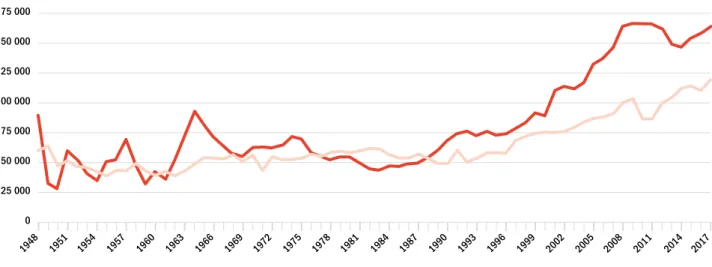
As a result, migration flows kept increasing until 2011 as shown in Figure 1. Migrant flows then decreased due to the adoption of a restrictive immigration policy towards non-EU nationals. Between 2011 and 2015, flows from the African continent decreased by 33% and the number of European citizens originating from non-EU countries—such as Switzerland or Ukrainians—dropped by 18% (ibid.). Yet, migration flows increased once again in 2015, mainly as a result of the arrival of asylum seekers from the Middle East.
Current discourses often portray the 2015 influx of migrants as a ‘migration crisis’ or ‘refugee crisis’. We refute this terminology. The term ‘solidarity crisis’ better describes this period. Indeed, the number of arrivals roughly amounted to 0.2% of the European population, which is far behind the situation of other countries such as Lebanon, Jordan or Turkey. This influx however revealed the lack of solidarity of the European Union towards third countries and among its member states.
been limited, except after Congolese independence and during the Rwandan genocide.
During this period, the Belgian government encouraged workers to bring along their families for two reasons. First, it hoped to bring up the birth rate (Myria 2015). Second, it wanted to encourage workers to remain in the country and benefit from the investment of their salaries in the economy (ibid.). In the early 1960s, the Ministry of Justice even stopped strictly applying the immigration legislation: a work permit was no longer considered a prerequisite for a residence permit. In this sense, the market and public policy de facto encouraged immigration. Many immigrant workers arrived in Belgium as tourists, looking for a job. Only later did they formalise their residence in the country. This arrangement was implicitly accepted by employers and tolerated by immigration authorities.
The worsening economic situation and rising unemployment in the late 1960s, however, demanded a new response. In 1967, the government returned to a strict application of immigration legislation. New laws were passed to control the granting of work permits; the goal was to regulate immigration more so that flows of immigrants into the country would drop (Martiniello and Rea 2003). In the early 1970s, the impact of the oil crisis on the economy and the unemployment rate (Boyle, Halfacree and Robinson 1998) led the Belgian government to adopt more policies to restrict immigrations.
Yet, these policies did not stop migration but rather transformed it. It changed migration systems from circular to chain migration. Migrants from non-European countries who had come under labour recruitment schemes increasingly settled permanently, as returning to their home country for long periods now entailed
1948 1951 1954 1957 1960 1963 1966 1969 1972 1975 1978 1981 1984 1987 1990 1993 1996 1999 2002 2005 2008 2011 2014 2017 0 25 000 50 000 75 000 100 000 125 000 150 000 175 000 Immigrations Emigrations
Figure 1. Migration Balance in Belgium: 1948-2017
Source: Statbel (Direction générale Statistique - Statistics Belgium). Number of immigrations is the sum of entries from abroad (including Belgians and foreigners), registry changes and re-registrations of those automatically delisted. This means applicants for international protection appear as new entrants on the territory only once their residence permit has been granted. When excluding Belgians and applicants for international protection, 113,214 new migrants of foreign nationality arrived in Belgium in 2017. Number of emigrations is the sum of departures (including Belgians and foreigners) and re-registrations of those automatically delisted (Lafleur and Marfouk 2017).
Immigration and regional particularities
Disaggregated data show that the share of international migrants in the total population varies significantly across Belgian regions. In 2017, migrants constituted 45% of the total population in Brussels, compared to 15% in Wallonia and 12% in Flanders. 42% of the migrant population itself chose to live in the Flemish region in 2017, 29% in Wallonia and 29% in Brussels. The combination of these results shows that a migrant is more likely to live in the Flemish region, while the percentage of migrants living in Flanders remains small compared to that of the other regions.
Jayet et al. (2016) studied the determinants of migrants’ choices concerning their place of residence. They underlined that the spatial repartition of immigrants in Belgium was determined by both network effects and local characteristics. The latter include housing and labour market conditions as well as the presence of public amenities. The relative importance of these determinants varies by nationality, but for all nationalities, local factors matter more than networks effects.
Migration in Belgium today
Emigration and immigration
In 2017, the United Nations listed 562,626 Belgian emigrants, most of them (76%) living in another EU country—especially France (28%), the Netherlands (10.5%), Italy (8.4%), Spain (7.9%) and the United Kingdom (6.5%) (UNDESA 2017). The most common reasons for expatriation are work, education, the acquisition of linguistic knowledge, family reasons, and discrimination (Lafleur and Marfouk 2017). Some youth of foreign origins have left Belgium—typically for countries in the Maghreb or the United Kingdom—because of barriers on the labour market resulting from discrimination based on their ethnicity and religion (Fadil 2019).
In 2017, there were 1.9 million immigrants in Belgium, with immigrants defined as foreign born individuals.This share of migrants amounted to 16.4% of the total population (Statbel). This represents an increase of about 5 percentage points compared to 2005, which can be explained by the fact that the number of international migrants in Belgium has grown much faster (an average increase of 3.6% per year) than that of the total population (an average increase of 0.7% per year).
“IMMIGRANTS IN
BELGIUM CONSTITUTE
16.4% OF THE TOTAL
POPULATION.
MORE THAN HALF OF
THEM ARE EUROPEAN”
a substantial decrease in the concentration of international immigration in terms of origin.
In order to understand the recent evolution of migration in Belgium, it is necessary to consider migration flows rather than stocks. In 2017, 64% of new migrants were from the European Union, 15% from Asia, 11% from Africa, 6% from America and 3% from non-EU European States. Profound changes can be observed since 2001, notably the 11 percentage points rise of the share of EU citizens, partly due to the enlargement of the European Union, and the 3 percentage points rise of the proportion of Asian migrants in the total annual migration flows. By contrast, the share of African and American citizens respectively declined by 9 and 3 percentages points.
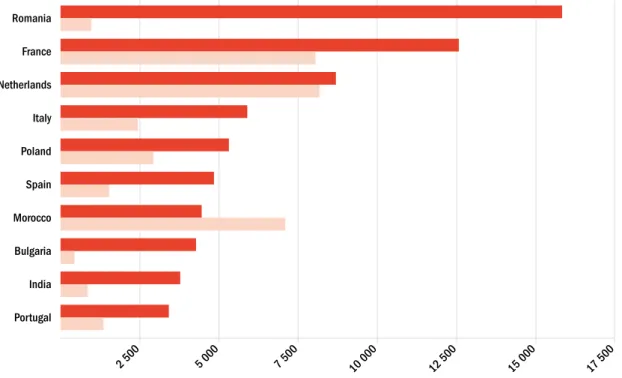
As shown in the graph on the next page, in 2017, European countries dominated the top-10 group of countries of origin in terms of flows. Yet, Romanians were the largest group of immigrants (14% of all new migrants). Romania was then followed by France (11%), the Netherlands (7%), Italy (5%), Poland (5%) and Spain (4%).
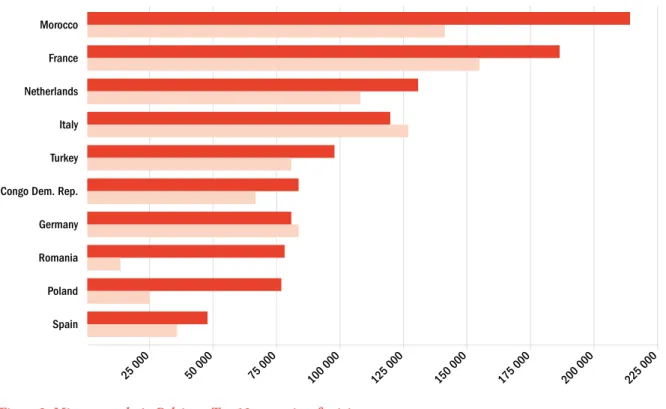
Figure 2. Migrant stocks in Belgium: Top 10 countries of origin
Source: Statbel (Direction générale Statistique - Statistics Belgium) and authors’ calculations.
Definition: The immigrant population denotes the total number of immigrants living in Belgium at a given time. They are different from
flows, which measure the number of people who arrive in Belgium from abroad during a given period (typically a year).
Origin of migrants
Most migrants in Belgium are European. They represent 54% of the migrant population in Belgium (Statbel). They are followed by migrants from Africa (25.8% of migrant population in Belgium), Asia (15.6%), America (4.2%) and Oceania (0.1%). Most migrants in Belgium come from middle-income countries (50.5%), followed by migrants from high-income countries (about 45%) and far behind by migrants from low-income countries (about 5%).4 This can be partly explained by the fact that the poorest usually do not have the means to finance international travels.
The graph below provides details about the top-10 group of countries of origin. In 2017, seven of them were European Union member states. Yet, Morocco was the first country of origin, with about 215,000 migrants, representing 11.5% of the total immigration population in Belgium. It was followed by France (185,000 people or 10.1%), the Netherlands (130,000 or 7.1%), Italy (120,000 or 6.5%) and Turkey (98,000 or 5.6%). In 2017, 60% of migrants in Belgium were coming from these 10 countries, 10 percentage points lower than in 2005. This shows
50 000 100 000 150 000 200 000 Morocco 25 000 75 000 125 000 175 000 225 000 France Netherlands Italy Turkey Congo Dem. Rep. Germany Romania Poland Spain
2017 2005
4 Income groups are based on the 2017 World Bank classification. Low-income economies are those with a Gross National Income (GNI) per capita of $995 or less; middle-income economies are those
with a GNI per capita between $996 and $12,055; high-income economies are those with a GNI per capita of $12,056 or more. For more information see: https://datahelpdesk.worldbank.org/ knowledgebase/articles/906519. Our analysis distinguishes 32 low-income countries, 58 middle-income countries, and 59 high-income countries.
Figure 3. Migrant flows of foreigners in Belgium: Top 10 countries of origin
Source: Statbel (Direction générale Statistique - Statistics Belgium) and authors’ calculations.
5 000 10 000 15 000 Romania 2 500 7 500 12 500 17 500 France Netherlands Italy Poland Spain Morocco Bulgaria India Portugal 2017 2001
Access to Belgium and
Establishing Residency
Citizens of most countries outside the European Economic Area need a visa to enter Belgium. The visa can either be short-term (C visa) or long-term (D Visa).
Free movement within the EU constituted in 2016 the most important entry channel of migration to Belgium (54.6% of the migrant population). Family migration was the second most important channel (27%), followed by the arrival for humanitarian reasons (about 16%) and for work (2.6%) (OECD/ EU 2018).
The number of third-country nationals entering Belgium through family reunification is a controversial topic in Belgium. Some say it is a sign that migration is ‘unproductive’ and likely to be motivated by a desire to stay on welfare. Yet, as noted by Lafleur and Marfouk (2017), one should interpret the data on the motives of visa delivery with great care. As migrating to Belgium for employment, studies or seeking protection has become increasingly difficult for third-country nationals, family reunification has remained one of the few viable options to reach Belgium legally since the end of labour recruitment programmes in 1974. Accordingly, it cannot be deduced that family reunification is a type of migration unrelated to seeking employment in Belgium.
Migrants who wish to stay for more than three months need a residence permit. In 2017, 56,246 first-residence permits were delivered (Eurostat 2018a). Belgium is welcoming less third-country nationals than its European counterparts since its number of permits issued per thousand inhabitants is lower (4.9 in 2017) than the EU average (6.1 in 2017) (ibid.). The reasons that explain the issuing of residence permits to nationals of third countries are shown in graph 4.
Figure 4. Reasons for the issuing of first residence permits to third-country nationals in Belgium in 2017
Source: Eurostat (statistical office of the European Union). 51% Family
14% Refugee status and subsidiary protection 12% Education
11% Remunerated activities
IRREGULAR MIGRATION
International protection
Procedure for international protection
All foreigners arriving in Belgium are entitled to apply for international protection. They can do so at the premises of the Immigration Office, as well as with the Federal Police at the border and in penitentiary institutions. The vast majority of applicants for international protection in Belgium do not enter the territory through the official Schengen borders, such as the airports. Their first arrival is therefore not always detected (EMN 2018). Moreno-Lax (2018) estimated that up to 90% of subsequently recognised refugees and beneficiaries of subsidiary protection in the European Union arrived on its territory irregularly and, often, through life-threatening ways.
Applicants for international protection are entitled to reception during the entire period that their application is being examined (cfr. infra). At the end of this procedure, the CGRS looks at whether the foreigner meets the criteria for international protection—either the status of refugee or subsidiary protection. The refugee status entitles to a temporary stay for 5 years (extendable to a stay of unlimited duration), whereas the subsidiary protection status entitles to a temporary stay for 1 year (extendable to a stay of unlimited duration after 2 extensions of 2 years) (AGII 2019).
In 2017, 15,373 people applied for international protection in Belgium for the first time (19,038 in 2018; see CGRS 2017 and 2018). Most of them came from Syria (25%), Afghanistan (6.5%), Palestine (5.3%), Guinee (5%) and Iraq (4%). This number is slightly higher than that of 2016 (14,670 people) but lower than the peak of 2015 (39,064 people).
In 2017, the CGRS granted international protection to 13,933 people. In 2018, this number dropped to 10,483 (CGRS 2018). In both cases, these numbers constituted about 50% of all applications filed.
Legal pathways for protection
The main legal channel to seek protection in Belgium is the UN-led resettlement program. Refugees selected for resettlement to Belgium need a visa as well, but immigration and customs formalities are facilitated by the Belgian authorities (Fedasil 2019a).
Belgium has a structural resettlement programme since 2013. Its yearly quota has been increased from 100 refugees in 2013 to 1,309 in 2017 (and 880 in 2018) (ibid.). This number of resettled refugees constituted 8.5% of the population of recognised refugees and subsidiary protected in Belgium (8.4% in 2018). By definition, the number of undocumented migrants is
difficult to estimate. Keeping in mind that the available data on this unobservable phenomenon should be interpreted with caution, the OECD has estimated—based on data of 2008—that undocumented migrants would represent on average between 6.6% and 13.9% of the total foreign resident population. It is in fact more likely that these estimates represent a lower limit than the actual numbers of undocumented migrants.
Eurostat’s annual data on detections and apprehensions show a rise in the number of third-country nationals who were found undocumented and were apprehended in Belgium (from 13,800 in 2008 to 18,285 in 2017). Again, caution is needed as some people may have been counted more than once across different years. Furthermore, the recent increase may result from stronger border enforcement policy following the European ‘solidarity crisis’.
At this moment, a population of about 600 people, called migrants-in-transit, are residing in Belgium without filing an application for international protection (Ciré 2018; Caritas International 2019) and can therefore be considered as undocumented. Most of them do not file an application for international protection either because 1) they are not informed about this possibility and their rights, 2) their identity has been registered in another Schengen country and do not want to be sent back there, or 3) they wish to continue their migration journey to another country such as the UK. Several political parties refuse to set up solutions or temporary housing for these migrants-in-transit. They are even subject to intensive investigation from the police, especially in major transit hubs and highway parking lots. This also leads to an ongoing tension between the Citizens’ Platform - citizen initiative welcoming migrants including through housing with residents - and the government, which accuses them of encouraging undocumented migration.
Reception of applicants for
international protection
In Belgium, applicants for international protection are entitled to material aid during the entire procedure. This right to material assistance applies once the international protection application has been registered and expires at the end of the procedure. This material aid (so-called Bed-Bath-Bread) includes: shelter, food, clothing, medical, social and psychological aid, legal assistance and access to specific services such as the use of interpreters or trainings. In addition, applicants for international protection residing in a collective shelter receive a daily allowance (€7.40 per week) (Fedasil 2019b).
Applicants for international protection are not obliged to stay in the reception structure allocated to them, although the majority of them do so. These open reception facilities are managed by Fedasil or one of its partners. After four months, applicants for international protection are allowed to work.
The topic of services offered to applicants for international protection has been extremely politicised in Belgium for two reasons. First, because of the assumption that offering decent services to applicants for international protection will lead to increased migration, the so-called ‘welfare magnet hypothesis’ (see box).
The Belgian legislation does not provide explicit rules for the delivery of visas for humanitarian reasons. They are issued on a discretionary basis by the State Secretary for Asylum and Migration or his delegate (the competent service of the Immigration Office). They therefore have a wide margin of appreciation for granting such visas as there are no eligibility criteria. In other words, the granting of a humanitarian visa is a favour and not a right (Myria 2019).
Between 2015 and 2017, an estimated number of 1,600 Syrians (mainly Christians) received a humanitarian visa in the context of the so-called ‘rescue operations’. This happened under the discretionary power of the former State Secretary for Asylum and Migration (ibid.). Those operations happened almost completely under the radar (except for the ‘humanitarian corridors’, cf. infra). The issue came to the attention of the public in early 2019, after one of the middlemen submitting candidates was accused of human trafficking.
In November 2017, an agreement was made between the official religious services and the State Secretary for Asylum and Migration to transfer, within one year, 150 Syrian refugees from Turkey and Lebanon to Belgium with humanitarian visas. This private-public partnership—also known as ‘humanitarian corridors’—identified potential candidates to make a safe and legal journey to Belgium and apply for international protection upon arrival. Their housing as well as their material and social support was taken care of by the religious communities and not the government. Once recognised, these refugees had access to social benefits like all other refugees in Belgium. The project was a pilot project and it is not yet clear if it will be pursued. Besides these specific rescue operations, former State Secretary Francken has explicitly positioned himself against issuing humanitarian visas for requesting asylum in Belgium. This was illustrated by the case of two Syrian families from Aleppo based in Lebanon, who filed a request for a short stay visa at the Belgian embassy in Beirut with the idea of claiming asylum in Belgium, once they would reach the territory. The State Secretary refused to issue them a visa, even after the court obliged him to do so. In Belgium, there is therefore no well-established practice regarding humanitarian visa applications for the purpose of international protection (ibid.).
Family reunification is thus often the only way for the beneficiaries of international protection to safely bring their family. More favourable conditions apply to their family members, if their visa application is submitted within one year after their status. We will come back to this in chapter 3.