2018-2019
University Mentouri Bros. Constantine 01 Faculty of Letters and Languages
Department of Letters and the English Language
113/D3C/2018
18/Ang/2018
The Role of Explicit Teaching in Developing Grammatical and
Lexical Cohesion in Second Year Students’ Essays,
University of Constantine 1
Dissertation submitted in the fulfillment of the requirement for the degree of Doctorate 3éme cycle in Linguistics and Applied Studies
Board of Examiner 15/11/2018
President: Prof. Hacène Saadi Prof. University of Constantine 1 Supervisor: Prof. Nacif Labed Prof. University of Constantine 1 Member: Prof. Youcef Beghoul Prof. University of Constantine 1
Member: Prof. Riad Belouahem Prof. University of Constantine 1 Member: Dr. Nadhir Kaouli MC University of Batna
Member: Dr. Saliha Chelli MC University of Biskra Submitted by
Mrs Meriem Abid
Supervised by Prof. Nacif Labed
i
Dedication
This work is dedicated to:My precious parents: My caring father and loving mother My husband and my little Younes
My sweetheart sister: Soumia
My dear brothers: Mohammed, Yasser, and Yahia My parents’ in- law: Az- Adine and Zahia
My little sister in-law: Fatima Zahra My gentle uncles and my adorable aunts
My best friends Karima and Loubna My family without exception
ii
Acknowledgement
Foremost, I would like to express my gratitude to Professor Nacif Labed, my supervisor, for his constructive supervision, advice, motivation, enthusiasm and immense knowledge. His insightful comments and guidance gave me extraordinary experiences throughout the time of research and writing of this thesis. He also provided me with unflinching encouragement and support in every possible way. Without him, this thesis would never have been completed. My sincere thanks go to the board of examiners for the time they will spend and efforts they will make while reading this work.
Many thanks go to Mrs. Houda Achili and Mrs. Fatiha Sahli for their help, guidance, and understanding during my work.
I gratefully acknowledge my parents care, love, support, help, and understanding. Thanks a lot my beloved!
My greatest gratitude goes to my husband for his understanding and support till this work is completed. Thanks a million!
iii
Abstract
The present study was conducted at the Department of English at the University of Constantine 1 to enhance cohesive devices use in second year students’ writings. It aims at answering questions about the efficiency of the explicit teaching method using: 1. Explanations and presentations of cohesion and the way it is achieved, 2. Cohesion guided practice using different tasks, 3. Independent practice accompanied with feedback, 4. The application of those devices in essays for boosting students’ comprehension of different cohesive ties. To probe into the subject, two hypotheses were set: 1) If the teaching of cohesive ties were based on an explicit teaching method, their use would be enhanced in second year students writing, 2) If students used cohesive ties appropriately, their writing would improve. To check these hypotheses, a teachers’ questionnaire, a students’ pre- questionnaire and a post- questionnaire, as well as a pre-test and a post-test were used to gather data. The data offered a picture on students’ prerequisite knowledge and use of cohesive devices in their writing. The findings of the study have allowed seeing the influence of the students’ use of cohesion on the overall quality of writing. Accordingly, the first hypothesis is confirmed; while the second one is infirmed. Despite such results, it remains that the explicit teaching method proposed in this study in enhancing the students’ use of cohesive ties at the Department of English at the University of Constantine 01 is a prerequisite, although a lot more ought to be done with students.
iv
List of Abbreviations
BA: Bachelor of Arts
CBE: Competency Based Education
CLT: Communicative Language Teaching
Ctrl. Grp.: Control Group
EFL: English as a Foreign Language
Exp. Grp.: Experimental Group
FLL: Foreign Language Learners
ICT: Technology Information and Communication
k: Cohen Kappa Test
L1: First Language L2: Second Language L3: Third Language N: Number nd: No Date PhD: Doctor of Philosophy
PPP: Presentation Practice Production
Q: Question
r : Correlation Coefficient Test
t : t-test
TRP: Total Physical Response
v
List of Tables
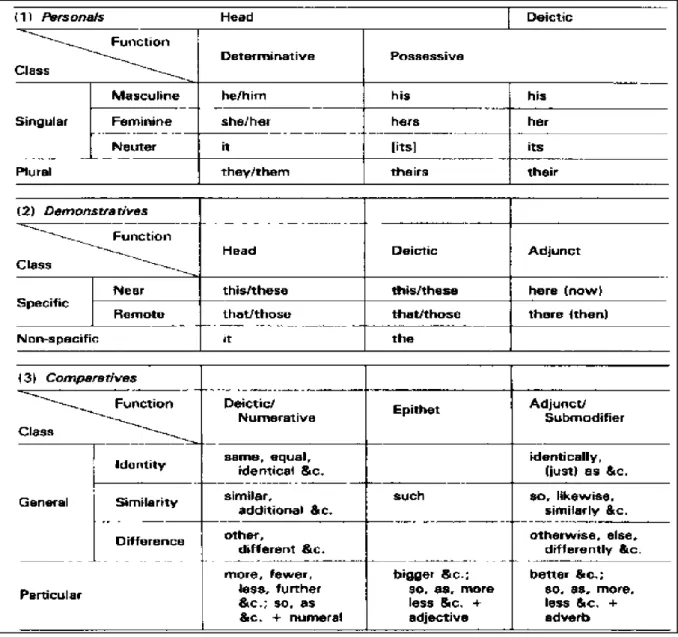
Table 01: Reference Categories in English……….………23
Table 02: Chart of Transition Signals………..…....27
Table 03: Six Teaching Functions………..…….51
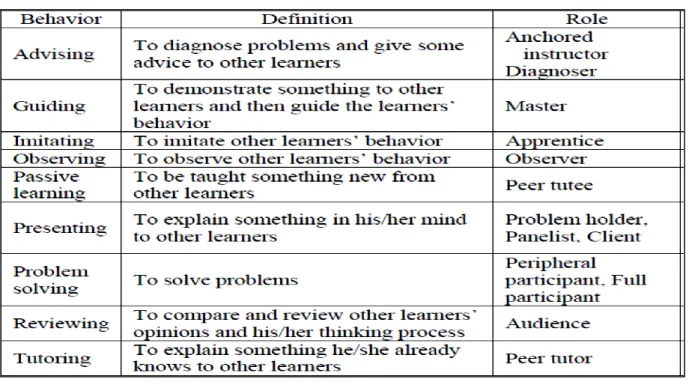
Table04: Behavior and Roles of Learners………..…….57
Table 05: Teacher’s Pilot Questionnaire Results……….84
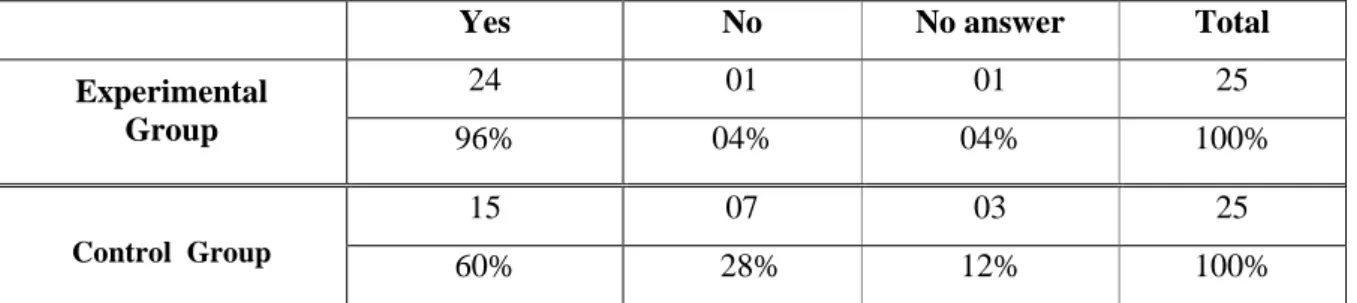
Table 06: Students Pilot Pre-questionnaire of the Experimental Group………..…...85
Table 07: Students’ Pilot Pre-questionnaire of Control Group ………..86
Table 08: Students’ Pilot Post-questionnaire Results……..……….………..87
Table 09: Degrees Held……….…..98
Table 10: Years of Teaching Witten Expression……….99
Table 11: Students’ Level in Writing………99
Table 12: Most Important Criteria of Writing………....100
Table 13: Aspects That Students Have a Problem with………100
Table 14: Cohesion and the Writing Quality………100
Table 15: On Knowledge of Cohesion………..….101
Table 16: Cohesion Difficulties……….101
Table 17: Roots of Cohesion Problems……….……….…102
Table 18: Explicit Teaching and Grammatical and Lexical Features’ Awareness…….….103
Table 19: Explicit Teaching, Texts and Course Books Understanding…………..….…....103
Table 20: Explicit Teaching Role in Avoiding Cohesion’s Problem………..…104
Table 21: Role of Text-prompts in Understanding Certain Features of a Text…………..105
Table 22: Role of Reading- prompts in Dealing with Cohesive Ties in Context………...105
vi
Table 24: Purpose of Reading………....106
Table 25: Role of Feedback in Understanding Cohesion Weaknesses ……….…..….106
Table 26: Clarification of the Teachers’ Feedback………...107
Table 27: Selective Correction of Cohesion………..107
Table 28: Checklist for Assessing Cohesion……….108
Table 29: Cohesion’s Scoring Scale……….….108
Table 30: Students’ Selection for English as Branch for Study………..…..110
Table 31: Areas of Difficulty in Students’ Writing……….…..110
Table 32: Familiarity with Cohesion and Coherence………...111
Table 33: Ways for Achieving Cohesion………..112
Table 34: Expressing Reference………112
Table 35: On Knowledge of Substitution and Ellipsis………..113
Table 36: Problems with Words Combination………..113
Table 37: Roots of Collocations Weakness………..113
Table 38: On Knowledge of Reiteration………114
Table 39: On Idioms and Phrasal Verbs ………...114
Table 40: On Knowledge of Parallelism ………..115
Table 41: Students’ Opinion about Teaching all the Aspects of Cohesion………...115
Table 42: Role of Explicit Teaching in Writing More Cohesive Essays………..115
Table 43: Role of Explicit Teaching in Improving Writing………..116
Table 44: Implementation of Text-prompts in Writing………...117
Table 45: Reading Passages and Cohesive Ties………....117
Table 46: Rates of Reading Times………118
Table 47: Role of Reading……….118
vii
Table 49: The Attention Given to Teacher’s Feedback……….119
Table 50: On Understanding of the Symbols Used to Correct the Paper………..119
Table 51: On the Clarity of the Symbols Used to Correct Papers……….120
Table 52: Role of the Scale Used to Score the Papers in Improving Cohesion……...120
Table 53: Benefits of the Checklist in Assessing Cohesion……….……….121
Table 54: Students’ Progress in Writing………..122
Table 55: Areas of Progress………...123
Table 56: Cohesion and Coherence Knowledge……….…...123
Table 57: Different Parts of Cohesion………..….125
Table 58: Grammatical Categories Given by Students……….125
Table 59: Expressing Reference………...126
Table 60: Difference between Substitution and Ellipsis………...126
Table61: Components of Lexical Cohesion………..127
Table 62: Role of Explicit Teaching in Raising Cohesion’s Awareness……….…128
Table 63: Role of Explicit Teaching in Writing Cohesive Essays………..129
Table 64: Role of Explicit Teaching in Developing Writing………..…129
Table 65: Role of Text-prompts……….130
Table 66: Role of Feedback in Enhancing Cohesion………....131
Table 67: Types of Feedback……….132
Table 68: Role of the Checklist in Avoiding Cohesion’s Problems………132
Table 69: Role of the Scale used to Score the Papers in Avoiding Cohesion’s Problems……….133
Table 70: Students’ Understanding of Cohesion………..133
viii
Table 72: Numerical Rating of the Cohesive Ties Under Study………...144
Table 73: Pre-test Scores of the Experimental and Control Groups………...145 Table 74: Frequency Distribution of the Different Scores of the Pre-test Experimental and Control Groups…..………..146 Table 75: Pre-test Frequency, Percentage and the Mean for Different Cohesive Ties for Experimental and Control Groups………....148 Table 76: Descriptive Information about Reference of the Experimental and Control Groups ………..150
Table 77: Descriptive Information about Substitution of the Experimental and Control Groups ………152
Table 78: Descriptive Information about Ellipses of the Experimental and Control Groups ………....153
Table 79: Descriptive Information of Conjunctions ofthe Experimental and Control Groups.154 Table 80: Descriptive Information about Verb/Tense Agreement of the Experimental and Control
Groups………..………156
Table 81: Descriptive Information about Parallelism ofthe Experimental and Control Groups …..157 Table 82: Descriptive Information about Reiteration ofthe Experimental and Control Groups …..158 Table 84: Descriptive Information about Collocation of the Experimental and Control Groups ….160 Table 84: Cohesion and Writing Scores of the Pre-test of the Experimental and Control Groups…161 Table 85: Post-test Scores of the ofthe Experimental and Control Groups ……….…161 Table 86: Distribution of the Scores in the Post-test of the Experimental and Control
Group………...162
Table 87: Post-test Frequency, Percentage and the Mean for Different Cohesive Ties of the Experimental and Control Groups ………..163 Table 88: Descriptive Information about Reference ofthe Experimental and Control Groups ….164
ix
Table 89: Descriptive Information about Substitution of the Experimental and Control
Groups………..165
Table 90: Descriptive Information about Ellipsis ofthe Experimental and Control Groups.…165 Table 91: Descriptive Information about Conjunctionsofthe Experimental and Control Groups. ..166
Table 92: Descriptive Information about Verb/Tense Agreement of the Experimental and Control Groups……….…166
Table 93: Descriptive Information about Parallelism of the Experimental and Control Groups………..…166
Table 94: Descriptive Information about Reiteration ofthe Experimental and Control Groups.167 Table 95: Descriptive Information about Collocation of the Experimental and Control Groups……….167
Table 96: Cohesion and Writing Scores of the Post-test of the Experimental and Control Groups……….….168
Table 97: Descriptive Information about Improvement Means per Aspect………..169
Table 98: Descriptive Information about Improvement in Reference………...169
Table 99: Descriptive Information about Improvement in Substitution……….170
Table 100: Descriptive Information about Improvement in Ellipsis………...170
Table 101: Descriptive Information about Improvement in Conjunctions………170
Table 102: Descriptive Information about Improvement in Verb/Tense agreement………..171
Table 103: Descriptive Information about Improvement in Parallelism……….171
Table 104: Descriptive Information about Improvement in Reiteration………172
Table 105: Descriptive Information about Improvement in Collocation……….172
Table 106: Pre- and Post-tests Scores ofthe Experimental and Control Groups ………….………173
Table 107: Improvement Scores ofthe Experimental and Control Groups ……….174
Table 108: Cohesion and Writing Scores ofthe Experimental and Control Groups During the Pre and Post-tests………...176
x
Table 109: Measures of Central Tendency of the Improvement Scores………...177 Table 110: Improvement Scores, Their Squares and Their Sums………..178 Table 111: Computation of Pearson Product-moment Correlation Coefficient “r” between Cohesion and Writing Scores ofthe Experimental Group in the Pre-test………...181 Table 112: Computation of Pearson Product-moment Correlation Coefficient “r” between Cohesion and Writing Scores for the ofthe Experimental Group in the Post-test………...182 Table 113: Computation of Pearson Product-moment Correlation Coefficient “r” between Cohesion and Writing Scores of the Control Group in the Pre-test……….184 Table 114: Computation of Pearson Product-Moment Correlation Coefficient “r” between Cohesion and Writing Scores of the Control Group in the Post-test………....185
Table 115: Pre-test Findings for Both Raters……….189
xi
List of figures
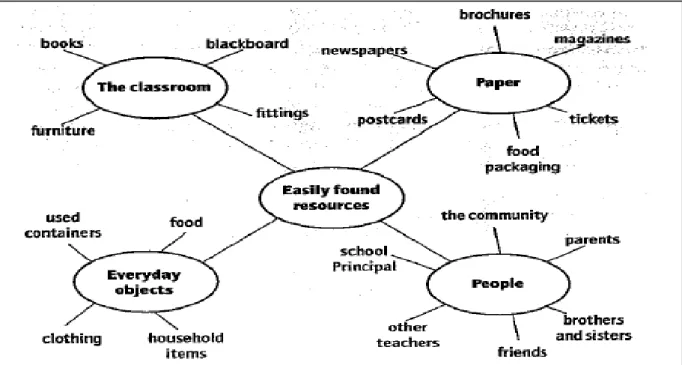
Figure 01: Finding and Making Resources…………..………60
Figure02: Frequency of the Experimental Group Scores in the Pre-test………...147
Figure 03: Frequency of the Control Group Scores in the Pre-test……….147
Figure 04: Experimental Group Frequency Histogram of Scores Difference……...…...175
Figure 05: Control Group Frequency Histogram of Scores Difference……….175
Figure 06: Correlation between Cohesion and Writing Scores ………..183
xii
Table of Content
Dedication………i Acknowledgements…...………..ii Abstract…………..………iii List of Abbreviations……….………iv List of Tables………..v List of Figures………xi Introduction……….………..01Chapter One
Some Aspects of Cohesion in English
Introduction………..….061.1. Defining Discourse………...….07
1.1.1. Context ………...08
1.1.2. Text……….…...10
1.2. Notion of Discourse Competence……….13
1.3. Cohesion and Coherence………..…14
1.4. The Nature of Cohesion………...…19
1.5. Taxonomies of Cohesive Ties………..…21
1.5.1. Grammatical Cohesive Ties……….…..21
1.5.1.1. Reference………..………...……21 1.5.1.2. Substitution………..24 1.5.1.3. Ellipsis………..…...24 1.5.1.4. Conjunctions……….…………...26 1.5.1.5. Verb/Tense Agreement………..…………..28 1.5.1.6. Parallelism………...28 1.5.2. Lexical Cohesion……….29 1.5.2.1. Reiteration……….…29 1.5.2.1.1. Repetition………...……..30 1.5.2.1.2. Synonymy………..………..30 1.5.2.1.3. Superordinate………..……….34
xiii
1.5.2.1.4. General Words………..…………...……34
1.5.2.2. Collocation……….………..35
1.6. Cohesion and Genre……….37
Conclusion………..40
Chapter Two
The Explicit Teaching of Cohesion
Introduction………...…422.1. Productive Teaching……….…42
2.2. Teaching Approaches/ Methods………...……….44
2.3. Explicit Teaching……... ………....50
2.3.1. Teacher’s Explanation and Presentation of Cohesion………...…52
2.3.1.1. Teacher’s Role……….53
2.3.1.2. Students’ Role………...56
2.3.1.3. Students’ Needs………...….59
2.3.1.4. Materials Used in the Classroom……….60
2.3.2. Cohesion’s Guided Practice Using Different Tasks……….………...……64
2.3.2.1. A Task Framework………....…………64
2.3.2.2. Teaching Cohesion Using Different Tasks………....……...…….66
2.3.2.2.1. Teaching Reference………...…....…..……..66
2.3.2.2.2. Teaching Substitution and Ellipsis………....…….…….67
2.3.2.2.3. Teaching Conjunctions………...………68
2.3.2.2.4. Teaching Verb/ Tense Agreement………...…….68
2.3.2.2.5. Teaching Parallelism………...…...…….69
2.3.2.2.6. Teaching Reiteration………....……….….…...….69
2.3.2.2.7. Teaching Collocation………...…….……….70
2.3.3. Independent Practice Accompanied with Feedback………..……...….71
2.3.4. The Application of Cohesion in Essays………..……….……74
2.4. Cohesion in Writing………..………..…..…74
2.4.1. Nature of Writing……….………..…..…..………74
2.4.2. Writing-cohesion Relationship………...……….…..75
2.4.3 Assessing Writing………...………76
xiv
Conclusion ………..……….…79
Chapter Three
Framework of the Research and Questionnaires Analysis
Introduction……….823.1. The Pilot Study………...………….82
3.1.1. Population ……….………...82
3.1.2. Data Gathering Tools….………...83
3.1.2.1. Teachers’ Pilot Questionnaire………..…………..……....83
3.1.2.1.1. Description of the Teachers’ Pilot Questionnaire……….…...83
3.1.2.1.2. Administration of the Teachers’ Pilot Questionnaire……….……....83
3.1.2.1.3. Analysis of the Teachers’ Pilot Questionnaire………83
3.1.2.2. Students’ Pilot Questionnaire………..…………..84
3.1.2.2.1. Students’ Pilot Pre-questionnaire………...……….……....84
3.1.2.2.1.1. Description of the Students’ Pilot Pre-questionnaire…..….…...84
3.1.2.2.1.2. Administration of the Students’ Pilot Pre-questionnaire……….85
3.1.2.2.1.3. Analysis of the Students’ Pilot Pre-questionnaire……...…...85
3.1.2.2.1.3.1. The Experimental Group…………...…...…….85
3.1.2.2.1.3.2. The Control Group ………...……86
3.1.2.2.2. Students Pilot Post-questionnaire………...86
3.1.2.2.2.1. Description of the Students’ Pilot Post-questionnaire……….86
3.1.2.2.2.2. Administration of the Students’ Pilot Post-questionnaire…………....87
3.1.2.2.2.3. Analysis of the Students’ Pilot Post-questionnaire…….…….……....87
3.1.3. Discussion of the Pilot Results……….87
3.2. The Main Study……….…..89
3.2.1. Research Methodology……….……89
3.2.2. Population and Sampling………..90
3.2.3. The Experiment………....91
3.2.3.1. Objectives of the Experiment………...91
3.2.3.2. Description of the Experiment………91
3.2.3.2.1. Explanations……….….………….91
3.2.3.2.2. Activities and Tasks…...……….…….………..91
3.2.3.2.3. Text Prompts………..………92
3.2.3.2.4. Reading Stages Tasks………...…………..94
3.2.3.2.4.1. Pre-reading Tasks………..….…………..94
xv
3.2.3.2.4.3. After Reading Tasks……….………95
3.2.3.3. Sequence of the Experiment………95
3.2.4. Research Instruments………...97
3.2.4.1. The Questionnaires………...97
3.2.4.1.1. Teachers’ Questionnaire……...……….………...……….97
3.2.4.1.1.1. Description of the Teachers’ Questionnaire………..……….97
3.2.4.1.1.2. Administration of the Teachers’ Questionnaire……….………….98
3.2.4.1.1.3. Analysis of the Teachers’ Questionnaire………….………..98
3.2.4.1.2. Students’ Questionnaires……….………...…....109
3.2.4.1.2.1. Description of the Students’ Pre-questionnaire…………...….….………...109
3.2.4.1.2.2. Administration of the Students’ Pre-questionnaire…………...…….……...110
3.2.4.1.2.3. Analysis of the Students’ Pre-questionnaire………110
3.2.4.1.2.4. Description of the Students’ Post-questionnaire………...…..121
3.2.4.1.2.5. Administration of the Students’Post-questionnaire………...…….………121
3.2.4.1.2.6. Analysis of the Students’ Post-questionnaire………...122
3.2.4.2. Tests...………..…...135
3.2.4.2.1. Description of the Pre-test………...………....…135
3.2.4.2.2. Administration of the Pre-test………...…….……...136
3.2.4.2.3. Description of the Post-test………...……….………136
3.2.4.2.4. Administration of the Post-test………...………136
3.3. Discussion of the Results………...136
Conclusion ………...140
Chapter Four
Fieldwork: Tests Analysis
Introduction……….1434.1. Procedures for Data Analysis……….……….143
4.2. Tests’ Results …………...………...………..145
4.2.1. Results of the Pre-test………145
4.2.1.1. Distribution of the Scores in the Pre-test …………..……..……….146
4.2.1.2. Detailed Results……….. ……….147
4.2.1.2.1. Reference………..…...150
4.2.1.2.2. Substitution ………..………..…….152
xvi 4.2.1.2.4. Conjunctions……….…..………..154 4.2.1.2.5. Verb/Tense Agreement……….…..………..156 4.2.1.2.6. Parallelism……….…..……….157 4.2.1.2.7. Reiteration………...……….158 4.2.1.2.8. Collocation……….………...…………...159
4.2.2. Results of the Post-test………..…....….…………..161
4.2.2.1. Distribution of the Scores in the Post-test……….…………..……...162
4.2.2.2. Detailed Results……….….………..…………162 4.2.2.2.1. Reference……….………..164 4.2.2.2.2. Substitution ……….……….….165 4.2.2.2.3. Ellipsis……….……….….165 4.2.2.2.4. Conjunctions………..……166 4.2.2.2.5. Verb/Tense Agreement……….……….166 4.2.2.2.6. Parallelism……….……..……..166 4.2.2.2.7. Reiteration……….…..……..167 4.2.2.2.8. Collocation………..……….…….167
4.3. Analysis of the Improvement in Cohesion Achievement………..………168
4.3.1. Reference……….…...169
4.3.2. Substitution ………170
4.3.3. Ellipsis………170
4.3.4. Conjunctions………...…170
4.3.5. Verb/ Tense Agreement……….……...171
4.3.6. Parallelism……….….….171
4.3.7. Reiteration ………..172
4.3.8. Collocation……….……….172
4.4.Results of Cohesion and Writing’s Scores………..172
4.5. Checking the Hypotheses……….……..177
4.5.1. t-test for Checking Cohesion and Explicit Teaching……….…….177
4.5.2. Pearson’s Moment-product Correlation Coefficient for Cohesion and Writing.180 4.5.2.1. The Experimental Group………...………181
4.5.2.1.1. The Pre-test……….….……….181
4.5.2.1.2. The Post-test………..………...182
4.5.2.2. The Control Group………..……….….184
xvii
4.5.2.2.2. Post-test………..………….………185
4.6. Reliability and Validity in Scoring the Essays………..186
4.6.1. Cohen’s Kappa for Measuring Inter-rater Reliability………...188
4.6.1.1. Cohen’s Kappa for Measuring Inter-rater Reliability in the Pre-test….189 4.6.1.2. Cohen’s Kappa for Measuring Inter-rater Reliability in the Post-test…189 4.7. Discussion of the Results……….………..190
Conclusion ……….…192
General Conclusion and Recommendations………..……….193
Bibliography………..………196
1
General Introduction
1. Statement of the Problem
Cohesion is defined as the use of grammatical and lexical ties to stick a piece of discourse together. These ties pose a problem to second year students as their writings have many cohesion mistakes which make those writings rather poor. In other words, even though students studied cohesion during their first year, they do notseem to know neither cohesion nor the way it is achieved. Actually, learners have difficulties using reference while shifting from one reference to another pointing to the same person or thing. At times, they misuse some references, overuse others, or make their use ambiguous wordy and redundant. Substitution and ellipsis are also challenging to second year students as they have also problems using them appropriately. Furthermore, students have problems in cohesion with tenses, mainly the 's' of the third person singular, and shifting from one tense to another. Parallelism is not used appropriately because many learners do not know what it is, or how it is maintained. Such troubles have to do with grammatical cohesion but lexical cohesion is no exception because learners face problems with both reiteration and collocation. Although reiteration is somehow difficult for application, students’ writings are characterized with repetition compared with synonymy, hyponymy, and general words. A final problem is collocation which concerns words combination. There is a gap between competence and performance because students either rush to write without having the necessary knowledge, or they know but they fail to put it into practice.
2. Aims of the Study
The aims of this study are three folds.
2
2.To raise the students’ awareness of cohesion by teaching its different ties explicitly using: Explanations, discourse-based tasks and text-based prompts, intensive writing and selective feedback as reinforcement means for teaching cohesion explicitly, and hence, contribute in enhancing cohesive ties use in writing.
3. To check whether there is a correlation between grammatical and lexical cohesion and writing proficiency.
3. Research Questions and Hypotheses
The research work is motivated by the following questions. 1. Do students know what cohesion is?
2. Do they know how it is achieved?
3. Do students know what grammatical and lexical ties are? If yes, are they able to use them effectively?
4. Does teacher’s explicit teaching using tasks, text-prompts, and selective feedback enhance cohesive ties use in students’ writing?
5. Does the improvement of cohesive devices use lead to writing progress? In the light of these research questions, it can be hypothesized that
1. If the teaching of cohesive ties were based on an explicit teaching method, their use would be enhanced in second year students discourse.
2. If students used cohesive ties appropriately, their writing would improve.
4. Tools of Research
An experimental design is opted for and two instruments of investigation are used for data collection. The first tool is a questionnaire addressed to 17 teachers of Written Expression at the University of Constantine 01. The aim of the questionnaire is to provide insights into the teachers’ experiences, attitudes, and opinions about the use of cohesive devices. Another questionnaire was given to 50 second year students at the University of Constantine 01. The
3
questionnaire is meant to test their knowledge of cohesion and the way it is achieved. Besides, it is to check whether they know different cohesive ties, and to specify their needs.
The second tool is the test. A pre-test and a post-test were used. Between the two tests, students of the Experimental Group received the experiment treatment, i.e. a training in cohesion using an explicit teaching method. The latter is made of four phases as it has been already stated. The aim behind the test is to check the students’ use of cohesive devices before and after the treatment.
6. Structure of the Dissertation
The dissertation is presented in four chapters. The first two chapters are for the theoretical aspects underlying the topic of investigation. The last two chapters present the research methodology, the design and implementation of the experiment, and the quantitative and qualitative evaluation of the results followed by pedagogical implications.
Chapter One tries to shed some light on what is meant by both a discourse and a text, and on the relationship between the two. The attempt is also to clarify the role of context in writing and in maintaining successful communication. The chapter also deals with the criteria underlining a good discourse in the notion of discourse competence; with cohesion and coherence, and the relationship that exists between them. Finally, it deals with the taxonomies of cohesive ties both grammatical and lexical, and finishes with cohesion in genre.
Chapter Two explores the different teaching methods, with a special focus on explicit teaching, of concern in this study. The chapter tries also to cast some light on the teacher and the learners’ roles, the students’ needs, and the materials used in the classroom. The chapter tries to give an answer to what writing is in an attempt to specify the relationship between cohesion and writing. Finally, it highlights the way both writing and cohesion are assessed.
Chapter Three is for the research design and the methodology followed in this study to meet the research aims and requirements. The description and the results of the pilot study are presented in this chapter. It deals with the implementation of the main experiment providing
4
explanation for the participants, the objectives, and the description of the experiment; each of which is discussed and explained. The presentation of the results of the teachers and the students’ questionnaires are also done in this chapter. The discussion of the results helps in understanding the teachers and students’ attitudes towards the role of explicit teaching in developing cohesive devices use.
Chapter Four sheds some light on the improvements in the experimental group use of cohesive ties are due to the efficiency of the treatment. The chapter shows a progress in the students’ use of grammatical and lexical ties in their writings while it shows a weak correlative relationship between cohesion mastery and writing proficiency through the statistical analysis of findings. The chapter is also for testing the degree of agreement between two raters in correcting the students’ papers. The chapter ends with recommendations for further research.
5
Chapter One
Some Aspects of Cohesion in English
Introduction………..….06 1.1. Defining Discourse………...….07 1.1.1. Context ………...08 1.1.2. Text……….…...10 1.2. Notion of Discourse Competence………..13 1.3. Cohesion and Coherence………..…14 1.4. Nature of Cohesion………...……..19 1.5. Taxonomies of Cohesive Ties………..…21
1.5.1. Grammatical Cohesive Ties……….…..21 1.5.1.1. Reference………..………...……21 1.5.1.2. Substitution………..24 1.5.1.3. Ellipsis………..…...24 1.5.1.4. Conjunctions……….…………...26 1.5.1.5. Verb/Tense Agreement………..…………..28 1.5.1.6. Parallelism………...28 1.5.2. Lexical Cohesion……….29 1.5.2.1. Reiteration……….…29 1.5.2.1.1. Repetition………...……..30 1.5.2.1.2. Synonymy………..………..30 1.5.2.1.3. Superordinate………..……….34 1.5.2.1.4. General Words………..…………...……34 1.5.2.2. Collocation……….………..35
1.6. Cohesion and Genre……….37 Conclusion………..40
6
Chapter One
Some Aspects of Cohesion in English
Introduction
Research in cohesion and coherence has been a subject of much interest recently as a result of the many problems in writing which should be discussed at the discourse level rather than the sentence level. Simply because a text is not just a stretch of sentences, those sentences should be linked to each other using cohesion and coherence. The latter gives the text the quality to be meaningful; whereas the former has to do with the explicit linguistic ties used to link different texts together. Those ties should be well considered in the Written Expression syllabus because grammatical and lexical features are significant aspects of any language. Though it is true that grammar is taught as a separate module, students are exhausted dealing with rules only. In other words, there is a huge gap between competence and performance in the sense that the grammar sessions are devoted to provide students with rules and their applications, but when it comes to real situations where those rules should be applied, students either forget or misuse them. Teaching the different aspects of cohesion both grammatical and lexical, on the other hand, may bridge the gap between competence (knowledge concerning different cohesive ties) and performance (the application), and enable students to improve cohesion in their writing.
But before discussing how cohesion should be taught, it sounds appropriate to shed some light on what is meant by both a discourse and a text, and on the relationship between the two. The attempt is also to clarify the role of context in writing and in maintaining successful communication. The chapter also deals with the criteria underlining a good discourse in the notion of discourse competence; with cohesion and coherence and the relationship that exists
7
between them. Finally, it deals with the taxonomies of cohesive ties both grammatical and lexical, and finishes with cohesion in genre.
1.1. Defining Discourse
Discourse studies language above the sentence level in a specific context of use. In other words, language is not about the appropriate way grammar and vocabulary are used as much as it is about the way written texts are structured to form a discourse in a specific situation of use. Cook (1989) clarifies that discourse can vary from a single or more sentences to a short or a long prose and what matters is not the rules but that those stretches of meanings should be interpreted correctly by the reader in specific context. For him, there is some subjectivity in identifying stretches of language as discourse because what is meaningful for one person is not for another, but this definition is agreed upon by groups rather than individuals.
Moreover, Murcia and Olshtain (2000) state that two terms are given to discourse. A formal term considers discourse as a coherent unit with more than one sentence, and a functional views it as the study of language in use. However, to them, those definitions are insufficient since a piece of discourse may consist of one or two words such as “Go” or “Be careful” to a long prose such as a novel, for instance. Therefore, they clarify that the appropriate definition is the one that combines both notions, stating that
A piece of discourse is an instance of (…) written language that has describable internal relationships of form and meaning (e.g., words, structures, cohesion) that relate coherently to
an external communicative function or purpose and a given audience/interlocutor. Furthermore, the external function or purpose can only be properly determined if one takes into account the context and participants (i.e., all the relevant situational, social, and cultural factors) in which a piece of discourse occurs (p.4).
Widdowson (2007) asserts that discourse refers to “what a text producer meant by a text and what a text means to the receiver” (p. 07). To Wilcock (2009) discourse deals with the
8
way people and things are introduced as topics. Likewise, Hyland and Paltridge (2011) clarify that discourse concerns the way that language works in our engagements with the world and our interactions with each other; it creates and shapes the social, political, and cultural formations of our societies; therefore, to study discourse is to study language in action. Hyland and Paltridge (2011) proceed further in clarifying that discourse is an overloaded term
that covers a range of meanings, but it can mainly spread between the context and supra-sentential level which are the main concern of discourse. This means that language is
more than just grammar and vocabulary; it includes also the way people participate in conversation and structure a written text. Doing this requires the context of language use and the way units are structured. However, discourse can also refer, in a more restricted sense, to particular knowledge and the language used by particular social group (set of ideas and the way they are articulated) such as the discourse of environmentalism, discourse of neoliberalism or discourse of feminism. This is what Schiffrin, Tannen and Hamilton (2001) call discourses referring to “broad conglomeration of linguistic and nonlinguistic social
practices and ideological assumptions that together construct power or racism” (p.1). Gee (1999), on his part, uses “Discourses” with a capital “D” referring to “the ways of using
language, of thinking, valuing, acting, and interacting, in the right places and at the right times
with the right objects; it is language in addition to other stuff” (p.17), while he keeps the term “discourse” to mean language in use either in the spoken or written form.
The terms ‘discourse’ and ‘discourse analysis’ have different meanings to scholars Schiffrin (1987), Gee (1999), Widdowson (2007) in different fields, but all fall in three main categories: (1) Discourse is anything beyond the sentence level, (2) language in use, and (3) broader range of social behavior. For better understanding of what discourse really means, some light will be shed in what follows on context, text and their relationship to discourse.
1.1.1. Context
Van Dijk (1977) defines context as “a course of events” because it is “dynamic” and it is not one world-state but a variety of world-states. He explains that “context is defined by the
9
period of time and place where the common activities of speaker and hearer are realized, and
which satisfy the property of ‘here’ and ‘now’ logically, physically, and cognitively” (pp.191-192). Similarly, Brown and Yule (1983) clarify that context does not
mean the situation where a specific event takes place only, but it is incorporated by other elements called deictic forms. In this vein, they state that some of the most obvious linguistic elements which require contextual information for their interpretation
are the deictic forms such as here, now, I, you, this and that. In order to interpret these elements in a piece of discourse, it is necessary to know (at least) who the speaker and hearer are, and the time and place of the production of the discourse (p.27).
To Olshtain and Murcia (2000), “the term context in discourse analysis refers to all the factors and elements that are nonlinguistic and nontextual but which affect (…) written
communicative interaction” (p.11). They go further in explaining that discourse analysis of context entails the linguistic and cognitive choices made relevant to the situation at hand. In contrast and that
pragmatic analysis of context and contextual description are related to the participants taking part in the interaction, the sociocultural background that is relevant, and any physical- situational elements that may have some bearing on the exchange (p.11).
Furthermore, Haliday and Hasan (1989) clarify that context is made up of three features: field, tenor and model. The field has to do with what is happening, to the nature of
the social action that is taking place; tenor refers to the participants, their nature, status and roles; the mode has to do with what the participants are expecting the language to do for them. To Paltridge (2006), context is made of physical, social and mental words as well as people involved in the interaction. Hence, it is crucial for understanding the relationship between what is said and meant in a specific written discourse.
10
In addition, Cutting (2002) explains that there are three kinds of contexts. (i) Situational or physical context refers to the place where the interaction is taking place and what can people see around them. He gives the example of written stories with pictures which add visible situational context. (ii) Background knowledge or social context either cultural, interpersonal or epistemic context refers to what people know about the world, what they know about each other, and what they know about different areas of life. (iii) Co-textual or linguistic context refers to the linguistic items accompanying the utterance.
1.1.2. Text
For Halliday and Hasan (1976) a text may be spoken or written, prose or verse, and they consider a text as
a SEMANTIC unit; a unit not of form but of meaning. Thus it is related to a clause or sentence not by size but by realization, the coding of one symbolic system in another. A text does not CONSIST of sentences; it is REALIZED BY, or coded in, sentences (pp.1-2).
Halliday and Hasan (1976) also state that a text is made up of meanings, coded in words and structures for the sake of communication. Thus, a text is a semantic unit just bigger than a sentence. A text can also be considered as a product and a process simultaneously. A product in the sense that it is considered as an output which is recorded and studied; a process since it is a continuous process of semantic choice. Therefore, it can be considered as an interactive event, i.e., a social exchange of meanings. In this vein, Halliday and Hasan (1989) posit that a text is language that is functional does “some job in some context, as opposed to isolated words or sentences. So any instance of living language that is playing some part in a context of situation, we shall call it a text” (pp.8-9). Similarly, Widdowson (2007) defines a text as the actual use of language in relation to its actual and cultural context to fulfill a communicative purpose.
11
He says that
When we come across notices and labels, then, we make sense of them by relating the language to the immediate perceptual context where they are located, and to the conceptual context of our knowledge of how such texts are designed to function. We cannot make sense out of them simply by focusing on the language itself (p.07).
However, other linguists such as Van Dijik (1977) explains that a text has been used to
refer to the theoretical construct that underlies discourse. Likewise, Cook (1989) asserts that “a text is a stretch of language interpreted formally, without a context” (p.158). Van
Dijik (1977) and Cook (1989) limit the scoop of the text to the formal and structural properties without considering the context of use.
Starting from these definitions, it seems that the two terms “discourse” and “text” are used interchangeably. As a matter of fact, Slakie (1995) sees that a “text, or a discourse, is a stretch of language that may be longer than one sentence. Thus, text and discourse analysis is about how sentences combine to form texts” (p.ix). However, Widdowson (2004) differentiates between them, clarifying that “discourse (…) is the pragmatic process of meaning negotiation. A text is its product” (p.08). Widdowson (2007), also states that texts are uses of language to
achieve communicative purposes, or discourse, then readers should get the meaning to make it a “communicative reality”. To him, texts “do not contain meaning, but are used to mediate it
cross discourses” (p.06). In another consideration, Tanskanen (2006) sees that discourse is unseen but it is represented in texts. He explains that a text is used to refer to spoken or written language which refers to a dynamic communicative event including linguistics, cognitive and social factors, whereas discourse is the umbrella term for interconnected sets of texts.
12
Thus, there is an overlap between discourse, text and context: They are the main components of discourse analysis. The term discourse analysis was coined by Harris (1952) who argues that language should be analyzed beyond the sentence level with special reference to the social context of texts. Similarly, Gee (2011) clarifies that discourse analysis is the study of language at use in the world not for saying things only but for doing things like marriage, reputations, institutions, lie, harm people, etc. On their part, Gee and Handford (2012) assert that discourse analysis is about the meanings given to language and actions carried when language is used in a specific context. It also concerns the ways sentences are joined to create meaning, coherence, and achieve purposes. To them discourse analysis is an amalgamation of pragmatics which studies language use in relation to the context and texts that investigate the way sentences formed together to form meaning across multiple sentences.
The aim of discourse analysis for Alba-Juez (2009) is to describe language where it is originally found. Discourse analysis studies language in the context of human interaction and the major concern is not language only but other media such as: Gesture, dance, song, photography, clothing, etc. In the same vein, Cook (1989) points out that nowadays discourse analysis has grown into a large field of study which concerns the analysis of language above the level of sentence regarding the cultural context of language use. Discourse analysis plays an important role in Applied Linguistics and research in foreign language teaching and learning. This science provides different means to put the language knowledge (i.e.) grammar, vocabulary and pronunciation in practice for achieving successful communication. Earlier on Paltridge (2006) defines discourse analysis as
the ways that the use of language presents different views of the world and different understandings(…) how the use of language is influenced by relationships between participants as well as the effects the use of language has upon social identities and relations [and] how views of the world and identities, are constructed through the use of discourse(p. 2).
13
As it is stated before, people write texts or discourses for the sake of communication in specific context; thus, there should be some rules persons generally adhere to. Researchers such as Hymes (1972), Canale and Swain (1980) and Murcia, Dronyei and Thrull (1995) introduce modals for communicative competence mainly discourse competence that may help people communicate effectively.
1.2. Notion of Discourse Competence
Bruce (2008) clarifies that discourse competence refers to the ability to use linguistic knowledge, pragmatic knowledge and conventionalized forms of communication to create appropriate and accurate verse or prose. He insists on the fact that discourse competence is an essential component of variety of modals used to describe the communicative competence. The latter was firstly introduced by Hymes (1972) who clarifies that there are rules of use without which the rule of grammar will be useless, and he defines communicative competence as the study of the “variety of genres, narration, dance, drama, song, instrumental music, visual art, that interrelates with speech in the communicative life of society” (p.284). It concerns the grammaticality with respect to competence and acceptability in relation to performance. To him, communicative competence is divided into linguistic knowledge as phonology, orthography, grammar, vocabulary and discourse, and pragmatic knowledge as functions, variations, interactional skills and cultural frameworks.
Bachman (1990) introduces textual competence as one aspect of communicative competence that includes two components: Cohesion and rhetorical organization.
Cohesion comprises ways of explicitly marking semantic relationships such as: reference, substitution, ellipsis, conjunction and lexical cohesion as well as other conventions such as those governing the ordering of old and new information in discourse (p.88).
14
Rhetorical organization pertains to the overall conceptual structure of a text, and is
related to the effect of the text on language users. Moreover, Murcia, Dornyei and Thurell (1995) include discourse competence as one of the five core components of
communicative competence. They argue that there are many sub-areas that contribute to discourse competence: Cohesion, deixis, coherence, generic structure and conversational structure inherent to the turn taken system in conversation because it concerns the selection,
sequencing, and arrangement of words, structures, and sentences to achieve a unified text. To Beaugrande and Dressler (1981; cited in Tanskanen 2006) a text derives its communicative functions from seven criteria: Cohesion referring to the surface components of grammatical forms and conventions, coherence referring to the conceptual properties in the textual world, intentionality referring to the producer’s aim, acceptability referring to listener/reader interpretation, informality referring to the information presented, situationality referring to the factors that make a text fit a specific situation. Similarly, McCarty and Carter (1994) clarify that
cohesion has become one of the elements deemed to be central to the discoursal components (…) How pronouns and articles refer within and without the text, how ellipsis and substitution carry understood information over from previous utterances and single shared knowledge, how conjunctions create coherent relations between segments of the text, how lexical items relate to one another across textual boundaries (pp.89-90).
In the proposed models, both cohesion and coherence are introduced as a basic component of discourse competence. Thus, they should be given a major part in the writing syllabus for helping learners understand the two concepts and use them correctly in their subsequent writings. This chapter tries to see into what cohesion and coherence are; whether a relationship between them and how they can be achieved in a piece of discourse.
15
For a long time there was an ongoing debate on what do cohesion and coherence really mean. The two terms were sometimes used interchangeably because there was no clear cut between the linguistic devices used to bond texts together and the overall interpretation of a text as a piece of discourse. Recently however, the two concepts started to be considered separate from each other. Cohesion is the use of the grammatical and lexical devices to link different parts of the texts together, but, some difficulties occur when it comes to coherence. To Halliday and Hasan (1976) coherence refers to coherence of text in relation to context; whereas cohesion has to do with coherence with the text itself. To Halliday and Hasan, coherence is wide in scoop since it requires the context of the situation for its understanding.
Moreover, researchers believe that cohesion is a component of coherence. It is through the appropriate use of cohesive devices, though it is not the only one, that coherence is achieved. The inappropriate use of reference in students’ writings, for example, leads to incoherent texts. This is what Halliday and Hasan (1976) claim when they consider cohesion as one component for text coherence, referring to it as texture. On their position, they see that “the
texture involves more than the presence of the semantic relations we refer to as cohesion" (p.23). Likewise, Oshima and Hogue (1999) state that coherence refers to the
ability to read and understand paragraphs easily, and this is due to two things: 1. The logical order of sentences and 2. the appropriate use of cohesive devices. When coherence is achieved, the reader can read easily and sees that ideas stick together. For Hinkel (2004), cohesion refers to the connection between sentences and paragraphs: It refers to the organization of discourse with all the appropriate elements that fit together logically. Carter-Thomas (2009) argues that coherence is achieved through cohesion. To him, both concepts refer to the way words, sentences, and ideas are linked in a text. Cohesion, on one hand, deals with the explicit linguistic means used to combine sequences both within and across sentence boundaries, whereas coherence concerns the organization and interpretation of propositional
16
content in a specific context. Flowerdrew (2013), on his part, clarifies that
within cohesion researchers are concerned with the formal (but at the same time semantic) links between clauses, how an item –a pronoun, a noun or a conjunction – in one clause may refer backwards or forwards to another clause. Coherence(…)is concerned with the overall interpretation of a text as a unified piece of discourse, not just the formal links (p.33).
Hence, these explanations confirm the fact that cohesion is implemented within coherence. On continuation of the same idea on coherence, Van Dijk (1977) states that coherence is a semantic property of discourse where the interpretation of one sentence depends on the interpretation of other sentences. He introduced two kinds of coherence: Linear or sequential
coherence deals with relationship between individual propositions, and global coherence
refers to relationships between a set of propositions. In fact, sequential coherence leads to global coherence because the latter is determined by the linear coherence of sequences. On this, Tapiero (2007) advances that when stating that local coherence refers to structures and processes that organize elements, constituents, and referents of adjacent clauses or short sequences of clauses, global coherence is established when local pieces of information are organized and interrelated into higher order elements. He proceeds further in stating that relations of local coherence (referential, clausal, and temporal) create microstructure while macrostructure is built by recognizing the microstructure into a coherent global structure. In Van Dijk's (1977) point of view, sentences may form a coherent whole though it is not connected to one another because links do exist but without being explicitly expressed, this is what he calls missing links. Still, to Lee (1998) coherence is traditionally defined as relationships used to link ideas for creating meaningful text. For her, coherence is made of
17
many components (1) cohesion, (2) information distribution, (3) propositional development and modification, (4) macrostructure, (5) metadiscourse as a major pedagogical focus, as well as purpose, audience and context. Lee (1998) insists that before to start writing, writers should know the purpose of writing expressed through ideas accessible to the reader. Cohesion is the reason for connectedness between sentences and clauses. Information distribution is another area that concerns the order of information in discourse. Propositional development is a feature for creating coherent texts, dealing with the ways information can be made more explicit by means of elaboration, illustration, exemplification, etc. A final area is metadiscourse which concerns the linguistic materials used to help readers organize, interpret and evaluate any given information such as: Markers, topicalizers, announcements, attitude markers, that make writing easily accessible to the reader. It is believed that when students
understand the way those elements work in a text they may understand first the importance of coherence, and second how to develop coherence in their writings.
On his part, Widdowson (1978) clarifies that “cohesion is the overt, linguistically- signaled relationships between propositional development and coherence [is] the relationship between illocutionary acts” (pp.31-32). He argues that meaning is not ready made, but there are some linguistic clues and illocutionary acts that enable readers to make sense of sentences. Hence, discourse understanding is based on the interpretation of the way sentences are used for propositional and illocutionary development and the ways the two aspects inter-relate and reinforce each other. To Widdowson (1978), communicationis successful only if the writers select sentences based on what the reader knows. That knowledge enables the writer to produce the propositions needed for a particular illocutionary act. Similarly, Schiffrin (1978) clarifies that the meaning conveyed is based on the reader/writer inference about propositional connections underlying what is said. Yule (1996) argues that the normal experience of things enables readers to make sense of what is written: When this happens, coherence occurs. To Yule (1996), familiarity and knowledge whether background or cultural knowledge is the key factor to understand coherence. The background knowledge has to do with the pre-existing
18
knowledge and structures found in the memory used to interpret new experiences; this is schema. The reader uses that knowledge to create an interpretation of what is not stated in the text; something communicated more than it is said as the example of an apartment for renting will illustrate. Reading the ad about this apartment, the reader would infer that the apartment has a kitchen, a bathroom and a bedroom as components. The schemata, to Widdownson (1990), people have about “an apartment” is that it has the necessary rooms. In fact, the cultural knowledge means that the background knowledge people possess will be culturally identified, but it could be that what is understood by one person in one specific context may be vague for understanding to another one. Yule (1996) gives the statement; “You have five days off, what are you going to do (p.87)”, addressed to both an Australian and Vietnam workers by an Australian factory supervisor who assumes that Easter is coming and workers would have a holiday. This is what was understood by the Australian worker, whereas the Vietnam worker interprets it as a laid off. It is due to the background knowledge that there are some texts which are meaningful, whereas others uninterpretable. It seems clear that cohesion and coherence are viewed from a pragmatic perspective where there should be cooperation between both the writer and the reader because there is always something communicated more than it is said, and such an interaction between the writer/reader and text/discourse in a specific context is what discourse is all about.
In addition, researchers such as Van Dijk (1977), Yule (1983), Widdowson (1987), Schiffin (1987) deduce that cohesion is necessary but not enough for establishing texts; that is why a text may be coherent and cohesive, or it may be coherent only. The following example (Widdowson, 1987) illustrates this point.
1. A: What are the police doing?
B: They are arranging the demonstrators. 2. A: What are the police doing?
B: The fascists are arresting the demonstrators. 3. A: What are the police doing?
19
In 1 the anaphoric reference, “they” clearly signals a propositional link with the police. In 2, still the definite noun phase signals a reference to something already mentioned. In (1& 2), there are linguistic signals that ensure a propositional link, there are no such links
in 3 because the writer assumes that the receiver would infer the propositional links between
sentences. In other words, 1 and 2 are both cohesive and coherent, whereas 3 is coherent only. Hence, discourse markers are insufficient for creating a discourse, a matter that Schiffrin (1987) discusses saying that discourse markers are not necessary for the
organization of arguments simply because clearness of meaning enables readers to figure out
the intended meaning without the presence of discourse markers. To her, cohesive devices are clues used to locate meaning. Brown and Yule (1983) state that we certainly rely on the
syntactic structure and lexical items used in linguistic messages to arrive at an interpretation,
but it is a mistake to think that we operate only with this literal input to our understanding (p.223).
Brown and Yule (1983) go further clarifying that coherence deals with the interpretation of linguistic messages where readers interpret different combinations of sentences even if there is no explicit linguistic ties which are, may be not always explicit linguistic ties but reading between the lines ensures that there is something implicit links different parts together.
So, regardless of the differences that distinguish cohesion and coherence from each other, there still remain some similarities between them. Cohesive devices in a text facilitate the understanding of coherence. Thus, a successful communication depends on the presence of both aspects that are different but alike.
1.4. Nature of Cohesion
Having pointed out the importance of cohesion as one of the essential seven standards that any text should consist of. The most comprehensive work of cohesion is the one developed by Halliday and Hasan (1976) which has become the corner stone for subsequent studies on cohesion, including the present research. To them, cohesion refers to the semantic relations
20
within the text. It occurs when some elements of discourse depend on other previous elements for their interpretation–presupposition-because it enables the reader to grasp the meaning by examining the surrounding elements. For better understanding of how cohesion is achieved,
Halliday and Hasan’s (1976) example illustrates it: “Wash and core six cooking apples. Put them into fireproof” (p. 2). “Them” in the second sentence presupposes something and refers to “six cooking apples”, and the reader cannot understand what “them” means without
referring to “six cooking apples” mentioned in the first sentence. To Halliday and Hasan (1976) cohesion indicates whether sentences are connected; it concerns structure but
not “what a text means; it concerns how a text is constructed as a semantic edifice” (p.26). They consider that well-structured sentences are obviously coherent. Halliday and Hasan (1976) also contend that “all grammatical units –sentences, clauses, groups, words– are internally ‘cohesive’ simply because they are structured” (p.7).
Widdowson (1978) further clarifies that in a communicative discourse, sentences should not stay in isolation, they should be associated with other propositions in appropriate value for constituting cohesive discourse. To him, cohesion refers “to the way sentences and parts of sentences combine as to ensure that there is a propositional development” (p.26). Such a combination is achieved through the use of cohesive devices which facilitate the reader/listener understanding of meaning.
Widdowson (2007) cohesion is the use of different pro-forms to link different parts of a text. He defines pro-form as “a linguistic form that stands for another expression in a text by coping some of its semantic features” (p.131). Thus, in the example the taxi has been ordered.
It will be here in a minute, the pronoun it copies the features of singular/inanimate from the
noun taxi.
All the above explanations state that cohesion is the glue that holds pieces of discourse
together. It is generally achieved through the use of clear, explicit and verifiable linguistic–grammatical and lexical devices which, according to Halliday and Hasan (1976),
21
conjunctions and lexical cohesion. However, these techniques are further elaborated in Halliday’s (1994) work into four categories with ellipsis as a subcategory of substitution. Other researchers as Zamel (1983), MacCharthy (1991), Hinkel (2004) and Harmer (2004) add verb tense and parallelism as further aspects of cohesion which are also highlighted in the present study.
1.5. Taxonomies of Cohesive Ties
A text displays cohesion when its parts are joined through grammatical and lexical cohesive ties to give unity; those ties are generally classified into two major classes grammatical and lexical. Each of which is further categorized into sub-classes.
1
.5.1. Grammatical Cohesive Ties
McCarthy (1991) clarifies that grammatical cohesion refers to “surface marking of
semantic links or grammatical connection between clauses and sentences in written discourse” (p.34). In the same vein, Cruse (2000) posits that using isolated sentences while
communicating is limited in English; the combination of words should be governed by grammatical rules. To him, the role of grammar is dual: 1. Rules of combination determine the global meaning and 2. grammatical elements identify the grammatical structures. Grammar is achieved through several kinds of grammatical processes including: Reference, substitution, ellipsis, conjunctions, verb/tense agreement and parallelism; each of the aforementioned will be sketched out presently.
1.5.1.1
.Reference
Slakie (1995) clarifies that reference words do not have full meaning because they are used to point to a person or an object we want to talk about. Bloor and Bloor (1995) argue that reference can be cohesive when two or more expressions refer to the same person, thing, or idea; second and subsequent mentioned are identified by means of pronouns, demonstratives, or comparatives. Furthermore, reference can be used to mean an act of referring to entities