September 2017
• Ensuring migrants have access to appropriate and secure legal status can help achieve Sustainable Development Goal (SDG) 16 on peaceful and inclusive societies.
• If granted, permanent residency and/or citizenship can help foster integration. If access is denied, it can lead to tensions between migrants and host communities, further marginalise migrants, and hinder progress towards SDG 16.7.
• Numerous barriers prevent long-term migrants from accessing permanent residency and/or citizenship, including political feasibility, racial, religious and gender bars, stringent language tests, and high costs. These barriers should be removed, or made more flexible.
• Second-generation migrants are particularly affected because they are often excluded from full membership of the communities they have lived in all their lives. States should explore granting full citizenship at birth, or soon after.
Key
messages
Briefing
odi.org
Citizenship, migration
and the 2030 Agenda for
Sustainable Development
Katy Long, Elisa Mosler Vidal, Amelia Kuch and Jessica Hagen-Zanker
1 Introduction
Sustainable Development Goal (SDG) 16 calls on states to ‘promote peaceful and inclusive societies for sustainable development, provide access to justice for all, and build effective, accountable and inclusive institutions at all levels’. This briefing considers how ensuring migrants have fair access to appropriate and secure legal status, through permanent residency and/or citizenship, can help achieve this Goal.
Granting permanent residency and/or citizenship to migrants can help foster integration and promote ‘peaceful and inclusive societies’. If such integration is not fostered, it can lead to tensions between migrant and host communities. We argue that the links between migration and specific Targets should be considered; specifically, 16.3 on the rule of law and access to justice, 16.4 on organised crime, 16.5 on corruption and bribery, 16.7 on responsive, inclusive, participatory and representative decision-making, and 16.9 on legal identity. Ignoring these linkages will jeopardise the achievement of these Targets.
This briefing begins by defining key concepts. Section 3 outlines the evidence linking citizenship and integration. Section 4 shows common requirements for, and barriers to, accessing citizenship. Section 5 considers the implications of not giving migrants access to permanent residency and/ or citizenship – the potential for tensions and conflict. Section 6 draws out implications for the 2030 Agenda for Sustainable Development (2030 Agenda), specifically the specific Targets included in Goal 16. The final section concludes and draws out specific policy recommendations.
2 Defining key concepts
Citizenship is broadly defined as membership of a
self-governing political community, bringing with it rights and obligations for both the citizen and their community (Stanford, 2017). Citizenship, permanent residency and other forms of legal status are usually considered to encompass a formal legal relationship with a state. Yet
1. The idea of mutual consent may also be used to justify the deprivation of citizenship by the state. Although the 1961 Convention on the Reduction of Statelessness prohibits deprivation of nationality if it would lead to statelessness, in recent years countries including the United Kingdom (UK) have enacted and used provisions which allow them to denationalise dual nationals (mostly in terror cases) (United Nations General Assembly (UNGA), 1961: Article 8; Travis, 2017).
citizenship also connects to wider ideas about belonging to, and participating in, more local forms of community (see Holston and Appadurai, 1996). Importantly, although citizenship status is primarily acquired through birth, nearly all states also recognise the idea that citizenship rests on consent, so that it is possible for newcomers to become citizens in their host community by mutual agreement.1
Citizenship is not the only form of secure legal status available to migrants. In many countries, migrants are able to apply for permanent residency (sometimes called ‘indefinite leave to remain’) without having to take on all the obligations – or be granted all the rights – associated with citizenship (for example, permanent residents may not be required to complete military service, and are usually not permitted to vote). This is often required as an interim stage before full citizenship, marking an incremental expansion of migrants’ rights over time.
Broader than formal citizenship or other forms of legal status is the concept of integration. In this paper, integration is understood as a two-way, long-term incremental process that goes beyond fostering simple tolerance and absence of conflict (between different groups of people in social, economic and political spheres). It involves the active mixing of people who hold different identities, helping to foster shared collective values and practices of ‘belonging’ (Ager and Strang, 2008). Some analysts prefer to use the term ‘inclusion’ to underline that this idea of belonging does not rest upon ‘one-way assimilation’ (Rudiger and Spencer, 2003). In this paper, the terms integration and inclusion will be used interchangeably.
Host states do not expect all migrants to integrate (see Ruhs, 2013). Similarly, migrants’ interests in and need to ‘belong’ to the host community vary substantially depending on the purpose of their migration, which itself may change over time. At one end of the spectrum, seasonal workers are generally expected to stay in a fixed location and have minimal engagement with local community. At the other extreme, migrants who arrive through family channels are normally presumed to be settling permanently in their country of arrival.
Migration and the 2030 Agenda for Sustainable Development: a briefing series
Migration is one of the defining features of the 21st century and significantly contributes to economic and social development everywhere. As such, migration will be key to achieving the Sustainable Development Goals (SDGs).In a series of eight briefings, ODI, with the support of the Swiss Agency for Development and Cooperation (SDC), explains the relationship between migration and critical development issues that are central to the SDGs. The briefings provide a set of recommendations for governments and policy-makers tasked with delivering the 2030 Agenda.
Most labour and student migrants can be considered a middle group. On the one hand, very few are admitted with permanent rights to stay in a country of destination, and many are only allowed to stay temporarily while they complete a course of study or work for a particular company. On the other hand, many workers and students may find themselves settling in a destination country indefinitely, either by initial design, or because their plans change.
Finally, there are second-generation migrants, who are born in a host country to immigrant parents (or arrive as small children), and may never have lived in their ‘home’ state. While a few states (the United States (US), Canada) still offer unconditional jus soli/ birthright citizenship to those born on their territory, most countries restrict access to citizenship based on the parent’s legal status or length of residency.
3 Links between citizenship and integration
Many argue that citizenship should not be viewed as an end in itself but as a crucial means to secure full inclusion and integration in a community (Massey and Bartley, 2005; Portes et al., 2009). Citizenship is often presented as the end-point of this process, as a reward for successful integration and confirmation of the host community’s willingness to accept a new member. Those without such status may be prevented from accessing education and health services, jobs and welfare benefits (Spencer, 2006). These are widely recognised as critical factors for migrants’ inclusion (UK Home Office, 2004).
Evidence shows the positive effect naturalisation has on the labour market, with migrants’ gaining greater employability and higher wages after naturalisation (Peters and Vink, 2016; Bauböck et al., 2013). This is partly because the new status removes restrictions on public-sector and other jobs, and partly because a naturalised migrant is perceived as less risky to hire. In Germany, a study found that immigrant women experienced higher wages and improved labour-market outcomes after naturalisation, mainly because they were able to switch to jobs with permanent contracts and in larger firms (Gathmann and Keller, 2014). These effects are important for integration prospects; labour-market integration enables greater economic and social inclusion, through improved access to decent accommodation and healthcare (Organisation for Economic Cooperation and Development (OECD)/European Union (EU), 2015).
While labour-market outcomes are important markers of migrants’ integration, they are only one aspect of it.
2. Citizenship by registration can be claimed if a migrant meets criteria that tend to be linked to pre-existing connections between a state and the applicant. It is particularly relevant when dealing with diaspora (re)migration, and migration as a result of marriage.
3. Only a very few states, including Myanmar and Lebanon, have a total or near-total bar on naturalisation. However, in practice many countries make naturalisation difficult for long-term migrants, through a combination of stringent criteria, high fees and arbitrary administrative procedures.
There is also evidence of a positive relationship between naturalisation and political integration. For example, a study across 19 European countries showed that citizenship acquisition increased political participation, especially for migrants who grew up in non-democratic settings (Just and Anderson, 2012). In Switzerland,
naturalisation improved political integration as immigrants attained higher levels of political knowledge (Hainmueller et al., 2015).
4 Citizenship requirements and barriers
A migrant may be able to acquire citizenship through registration,2 naturalisation3 or investment. There is a
general consensus that it is reasonable a migrant should demonstrate a genuine connection with the community they hope to join when applying for permanent residency and/or citizenship. Most states require applicants to demonstrate a period of residency, basic linguistic and cultural knowledge, and that they are of good character. Many states also charge fees.
Some states run ‘citizenship by investment’ programmes, which allow for citizenship (or, more often, permanent residency) to be fast-tracked or acquired outright in exchange for a financial investment. Such programmes – especially in less-developed countries like Antigua, the Comoros or the Dominican Republic – are often claimed to have an explicit ‘development’ objective, bringing income into the state. Yet pursuing development though the sale of citizenship raises difficult questions about the nature of sustainable development, inclusion and belonging.
Traditionally, citizenship was viewed as a unitary status, so that acquiring a new citizenship required the relinquishing of a previous one. However, as the number of international migrants and their descendants has increased, so too have the number of dual nationals, or people formally recognised as holding two or more citizenships. Some states, such as the Netherlands and India, do not recognise dual nationality, and require migrants who naturalise to give up the citizenship of their country of origin. Others have introduced new provisions to allow diaspora members to keep or reclaim citizenship. These policies are explicitly intended to encourage greater economic, cultural and social links between diaspora communities and origin countries by facilitating easier mobility and a sense of continued belonging (Faist and Kivisto, 2007).
The rest of this section discusses barriers to permanent residency and/or citizenship faced by migrants in host communities, and potential policy solutions.
4.1 Political feasibility
Human-rights advocates argue that long-term migrants, once admitted legally, should not be denied the right to secure legal status and citizenship over time. However, in many states, granting citizenship to migrants is politically contentious. This is especially true if there are large numbers of migrants who are eligible to naturalise, as this may stoke fears that social identity and cohesion could be lost. ‘Demographic bomb’ narratives are the core of a number of political debates, including fears expressed about Palestinian Israelis, Roma in Slovakia and Latinos in the US.
In some cases, such concerns arise because migrants were not originally expected to remain permanently in the host country when they were admitted. It took several decades for Germany, for instance, to recognise that Turkish guest workers and their German-born children were not likely to return home. In the United Kingdom (UK), British citizenship and rights of residency were increasingly restricted after large numbers of migrants from the former British Empire arrived between the 1950s and the 1970s (Weil, 2001).
This problem is compounded where a state understands membership in explicitly ethnic or indigenous terms. In these situations, such as in many Gulf States, collective national identity requires citizenship to be strictly restricted. Some states have taken involved measures to protect this ‘national’ ideal. For instance, in 2014 Kuwait attempted to buy Comoros passports for stateless Bedouin groups in its territory, in order to avoid having to recognise them as Kuwaiti citizens (Abrahamian, 2015; Mansour-Ille 2016).
Granting citizenship to migrants may also prove politically complex in cases where a migrant group is associated with historic oppression. Latvians’ reluctance to recognise Russian-speakers as citizens, for instance, stems from the Soviet Union’s long occupation of the country (Weil, 2001). In other cases, granting citizenship to a particular group of migrants may be feared because of divisions within multinational states and concerns that new citizens may shift political power or encourage separatism. Kenyan reluctance to offer Somali migrants and refugees citizenship can be explained in part by the state’s difficult relationship with the Kenyan Somali community (Manby, 2016).
In the case of mass influx of refugees, the politics of granting citizenship is still more complex. Host states did not choose to admit these arrivals, and do so as a humanitarian duty. Offering hundreds of thousands of refugees citizenship en masse is usually politically fraught, especially in states like Lebanon where inter-community politics are already extremely fragile and demographic shifts could incite serious violence.
4.2 Legal status
The ability to apply for permanent residency or citizenship is universally premised on having arrived as a legal migrant and remained in the country as such. For millions of migrants who do not hold, or cannot prove, legal status, this can create an insurmountable obstacle.
While this group includes irregular migrants, it is not limited to them. Migrants who have travelled to live and work in countries where there are reciprocal rights of free movement, for instance, may not always have the paperwork to prove their right to residency or citizenship. This has recently become an issue for EU citizens in the UK in the wake of Brexit (Box 3), but has also caused difficulties in the past for citizens moving in the Economic Community of West African States (ECOWAS) region (Box 1).
4.3 Racial, religious and gender bars
In some cases, constitutional bars prevent migrants who do not belong to a specified racial or religious group from becoming citizens of the country in which they have settled. The Liberian constitution, for instance, specifies that all applicants for citizenship must be ‘negro or of negro descent’, effectively barring non-black residents from acquiring citizenship. This excludes Liberia’s Lebanese
Box 1: Reciprocal rights in ECOWAS
Many regional trade blocs offer citizens of member countries reciprocal rights to live, work and study across a region. Although regional or supranational citizenship is a relatively new concept (most fully developed in the setting of the EU) a number of emerging regional citizenship groups are emerging (Long, 2015).
ECOWAS was founded in 1975. In 1979 the Community adopted a Free Movement Protocol giving all citizens of member states the right to enter, reside and work across the community.
The ECOWAS Free Movement Protocol still faces many challenges. Immigration officials in member states are sometimes unaware (or unwilling to recognise) that ECOWAS nationals holding valid documents can enter their country freely. And ECOWAS rights are not equivalent to national membership. For example, in 2002 questions regarding national citizenship (and the refusal to offer this to the descendent of migrants from other West African states) played a role in precipitating civil war in the Cote d’Ivoire.
Nevertheless, ECOWAS offers a possible model for balancing the needs of migrants for reciprocal rights to foster peaceful and inclusive societies, with concerns about protecting national identities (see Manby, 2015).
population, who have been settled in the state since the 1960s.
In 2003, Israel passed a Citizenship and Entry law that restricted access to citizenship (and residency) for all Palestinians with a West Bank or Gaza identity card, including those with an Israeli spouse. In 2007 the provisions were expanded to apply to non-Jewish citizens of Iran, Iraq, Lebanon and Syria marrying Israeli Jews (Amnesty International, 2017). Similarly many Gulf countries make it difficult for non-Muslims to acquire citizenship, and by law Saudi Arabia requires all citizens to be Muslim (US State Department, 2005).
Gender discrimination can intersect with migration to create barriers to citizenship, particularly for the children of mixed citizen-migrant marriages. In 2014, the United Nations High Commission for Refugees (UNHCR) launched the #IBelong campaign, advocating for the removal of gender discrimination in in 27 states where nationality laws currently prevent women married to foreigners from passing on their citizenship to their children. In 2017, Madagascar became the first country on the list to amend its nationality law (UNHCR, 2017).
4.4 Excessive residency requirements
Some states require migrants to prove extremely long-term residency in order to qualify for citizenship. In the Central African Republic, for instance, applicants may be required to show as many as 35 years (Manby, 2016). Bureaucratic delays and quotas can also hamper applications in
developed states, sometimes exacerbating ethnic and racial disparities in access.
Laws may explicitly seek to prevent migrants who arrived as refugees from naturalising, particularly in cases of mass influx of refugees. In Uganda, for instance, the government has repeatedly resisted attempts by long-term refugees to naturalise. A 2015 High Court decision determined that refugees could not be barred from applying for naturalisation, but refugee advocate groups complain that in practice, administrators refuse to provide refugees with the necessary forms (International Refugee Rights Initiative (IRRI), 2016). Tanzania, on the other hand, is an example of a country that has given citizenship for long-term refugees on a large scale (Box 2).
4.5 Stringent language and citizenship tests
Many locals feel permanent residents and new citizens should speak some form of lingua franca. However, some states insist that migrants applying for citizenship must pass complex language exams that go beyond the skills needed for everyday communication. For instance, Botswana requires knowledge of Setswana or another language spoken by a ‘tribal’ community (Manby, 2016).
A number of countries – mostly developed states – also require applicants to pass a citizenship exam. Some of
these exams have been deliberately designed to be difficult for immigrants to pass, with questions on trivia that are irrelevant to migrants’ everyday inclusion. The Danish citizenship test, for instance, was revised in 2016, as part of a raft of measures intended to cut immigration after a surge of support for anti-immigrant political parties (Delman, 2016). It includes questions such as ‘Which Danish restaurant gained a third Michelin star in February 2016?’.
4.6 High costs
The monetary cost of applying for citizenship varies considerably. In Japan, although cultural requirements are strictly enforced, the naturalisation process is free. However, Kenya levies a fee of KSHS500,000 (US$4,800), 3.5 times Kenya’s per-capita gross domestic product (GDP). The UK has also been criticised for disproportionately high citizenship fees (Economist 2017). One consequence of such high costs is that permanent residency and citizenship become unaffordable ‘luxuries’ for less wealthy migrants; the high cost of US naturalisation (US$680), for example, is one reason a number of migrants chose not to apply for citizenship even when they can meet other criteria (Gonzales-Barera et al., 2013). Unable to afford naturalisation, poorer migrants remain on temporary visas, without protection against deportation (Taylor et al., 2012).
Box 2: Tanzanian citizenship for Burundian refugees
In 1972, Tanzania received tens of thousands of refugees from Burundi and settled them in three rural settlements. Over the years, refugees integrated with the host communities and began to contribute significantly to the local economy. Today, over 85% of the inhabitants in these settlements were born in Tanzania. Nonetheless, the second and third generation of Burundian refugees continue to live with refugee status and no prospects for naturalisation.
In 2007, the government of Tanzania, in partnership with the government of Burundi and UNHCR, designed the Tanzania Comprehensive Solutions Strategy. This comprised three key elements: voluntary repatriation, application for naturalisation, and final local integration in Tanzania. To date, 151,019 certificates have been distributed to individuals who opted for naturalisation, and over 53,000 refugees have returned to Burundi (UNHCR, 2014).
5 Tensions arising from lack of citizenship
When immigration policy changes, prior acquisition of permanent residency or citizenship (and even migrant parents’ and grandparents’ citizenship) can become an essential protection against deportation and discrimination. The surge in EU nationals applying for UK citizenship post-2015 (see Box 3) and in naturalisation rates in the US among eligible Green Card holders since the 2016 Presidential election, reflect these concerns (Tolan, 2017).
The inability of long-term migrants, including second-generation ‘migrants’ born in their host country, to acquire citizenship in their host community can result in exclusion and deprive migrants of fundamental rights, as well as contribute to inter-community tensions and conflict. The case of Turkish migrants and their descendants in Germany, who until the 1990s were unable to become citizens under German law and who as a result struggled to integrate into German communities, is one well-known example of barriers to citizenship preventing full inclusion.4
In the most extreme cases, violence follows government decisions to strip citizenship from the descendants of migrants. In 2013, for example, the Dominican Republic’s Constitutional Court revoked citizenship for children born to foreign parents as far back as 1929, as part of a long-running ‘anti-Haitianismo’ political movement in the country inspired by racial, linguistic and socio-economic prejudice (Hindin and Ariza, 2016). This affected a large proportion of the 240,000 Dominicans of Haitian descent in the country5 who were left without the right to work,
services and more. It provoked huge social and political disquiet, with large-scale protests in Haiti, the Dominican Republic and across the US (Constable, 2015; Semple, 2013).
5.1 Political exclusion
Many migrants have limited political rights in their host country: the ability to vote (especially at the national level) and to run for office is usually limited to citizens alone. One consequence is that migrants – including long-term migrants with permanent residency and their families – have no right of political participation and very little direct political power to influence community decision-making. Policies excluding migrants may prove popular with a non-migrant electorate or avoid close scrutiny, because non-migrants must rely upon proxy representation (for instance, family who do hold citizenship) in order to influence the outcome of political debate. The relatively progressive nature of
4. This is not to suggest that citizenship is the only factor in fostering integration and inclusion. As a counter-example, despite French citizenship being relative easy for immigrants to acquire, and French identity being understood in non-ethnic terms, France has struggled with the marginalisation and segregation of migrant and second-generation citizens.
5. Their situation was further complicated as they could not resettle in Haiti; foreign-born individuals are only eligible for Haitian citizenship if one parent is a natural-born Haitian citizen.
the US debate on immigration regularisation – where a majority of those surveyed continue to favour a pathway to citizenship for irregular migrants who meet certain criteria – can be partly attributed to the irregular migrants who have close friends and family with citizenship, and who are an increasingly important political bloc (Branton, 2007).
More serious tensions can arise when governments deny political rights to individuals who have a long-standing claim to that country and/or previously enjoyed these rights. This is the case for the long-established Nepali community in Bhutan (Box 4), and for approximately 300,000 ethnic Russians in Latvia, who, despite having been born or lived in the country for decades, remain non-citizens without political rights. Debate over their status is heated. In 2012, 75% of the electorate rejected a proposal to recognise Russian as a national language in the constitution, even though a third of Latvia’s population speak it as their mother tongue (Cianetti, 2014; Schmid, 2008).
Box 3: EU citizens in the UK after Brexit
In June 2016 the UK decided to leave the EU, resulting in uncertainty for millions of EU citizens living in the UK. Key issues at stake include their continued right to work, families potentially being split up, and access to pensions and healthcare (House of Commons, 2017). There are also 1.2 million UK citizens living in EU countries with similar concerns (ibid).
After Brexit, EU citizens rushed to secure their status in the UK; over 90,000 applied for a ‘permanent residence’ card in 2016 (Ryan, 2017) and capacity to handle these was low. It was estimated it would take 140 years to process applications (Migration Observatory, 2016). At the end of 2016, 29% of claims were rejected (Elgot, 2017). The process was eventually declared ‘not fit for purpose’ by a parliamentary committee (House of Commons, 2017).
For many EU citizens who have established their lives – legally studying, working, paying taxes and starting families – the continued uncertainty is disruptive. Many have voiced anger at being used for political bargaining in Brexit negotiations, while others have reported anxiety and feeling unwelcome in the UK (House of Commons, 2017; O’Carroll, 2016).
5.2 Access to justice
Non-citizens can struggle to secure access to justice. Although citizens are normally guaranteed legal counsel if they are arrested, this right often does not extend to non-citizens, particularly those whose status is irregular. Australia, for instance, does not guarantee legal counsel for anyone detained under the Migration Act (Congress, 2017).
Tensions around legal access and due process for non-citizens are amplified for low-skilled workers. Given that many migrants are in low-skilled employment, it makes this group particularly vulnerable. This double bar has affected low-skilled migrants in some Middle Eastern and Asian countries, where alleged violations have led to local and national tensions.
Migrants have also protested against seasonal and temporary workers’ programmes that offer no opportunity to accumulate a more permanent residency status and that can leave workers open to abuse. In 2010, hundreds of
6. For more information on migration and access to services, see the other briefings in this series: education (Nicolai et al., 2017); health (Tulloch et al., 2016); and social protection (Hagen-Zanker et al., 2017a).
Guatemalans gathered to protest against abusive working conditions of Canada’s Temporary Foreign Worker system (Market Wire, 2010).
5.3 Access to education, healthcare and other
services
6Decisions by states to limit entitlements to permanent residents and citizens are, in the first instance, relatively uncontroversial. However, second-generation migrants unable to claim citizenship can be particularly affected by limited access to subsidised education or healthcare programmes. This issue has been especially prominent in the US, where 20 states now allow undocumented immigrant students who have graduated from high school to benefit from in-state tuition rates (National Conference of State Legislatures (NCSL), 2015).
Another group whose exclusion from services can be problematic are refugees, and those who arrived
involuntarily in a state. In developed regions, recognised
refugees (though not asylum-seekers) are usually provided with immediate access to most state services. In contrast, in many developing regions states have pursued deliberately hostile policies aimed at the long-term exclusion of refugees. For instance, Syrians in Lebanon and Jordan face a number of prohibitions that contribute to economic isolation, including no or limited access to the formal labour market (Domat, 2016). Support to refugees in these contexts is mostly provided through humanitarian agencies. Covering vulnerable citizens and non-citizens in parallel systems diminishes any social-cohesion effects to be gained from joint access (Hagen-Zanker et al., 2017b).
5.4 Lack of integration prospects
A lack of permanent status and/or citizenship can lead to general unrest in local communities, and the further marginalisation of migrants. In these cases, lack of
citizenship is rarely an explicit cause of unrest, but rather a contributor to migrant-local tensions and failed inclusion. Such protests can be migrant-led, such as the violent riots in Paris in 2005 (Schneider, 2008). Most common, however, are anti-migrant and/or anti-multiculturalist protests that are in part motivated by a sense that migrants are living separately from local citizens, such as the xenophobic riots and attacks in South Africa in 2008 (and again in 2015 and 2017) (Mosselson, 2010).
It is ironic that in some cases the expansion of migrants’ rights and/or of host-country citizenship could help address local anger at migrants’ perceived segregation. Partly in response to such concerns, some local authorities have developed local forms of citizenship based on residency (see Box 5).
Box 4: Discriminatory citizenship laws in Bhutan
The experience of ethnic Nepalis in Bhutan shows how regressive and discriminatory citizenship laws can be used as a pretext to deny human rights, and to marginalise and impoverish ethnic minorities, decades after any initial migration.
In 1985, the Bhutanese Citizenship Act created an extremely narrow definition of citizenship that was deliberately used to exclude ethnic Nepalis (some 43% of the population). Authorities went even further than the Act stipulated, requiring Nepalis to prove residency in 1958 to qualify, even when they were already in possession of a citizenship card. Any Nepalis who could not do this were reclassified as ‘illegal immigrants’ and non-nationals.
These revisions led to growing unrest in southern Bhutan. By the mid-1990s, at least 106,000 refugees had fled to camps in Nepal, where they would spend the next 15 years. The ethnic Nepalis who remained in Bhutan were subject to frequent harassment, discrimination and marginalisation (Hutt, 2003).
In 2007, the US government announced its willingness to resettle Bhutanese refugees, with eight other resettlement countries joining them. By late 2015, 100,000 had been resettled (Van Selm, 2013; Shrestha, 2015). There are still 10,000-12,000 refugees in Nepal’s camps hoping for repatriation. While mass resettlement has helped the exiled Bhutanese, it has done so arguably at the expense of their claims to Bhutanese citizenship.
6
Relevance to the 2030 Agenda
SDG 16 promotes ‘peaceful and inclusive societies for sustainable development’. Migration has played a role in making societies more diverse and inclusive, by creating opportunities for new social and cultural exchanges (Moran, 2011). This in turn can help increase innovation and fuel economic growth (Bove and Elia, 2017). However, a lack of permanent residency and/or citizenship can prevent migrants from becoming full members of society, for instance by limiting access to justice and services, and can create tension and conflict between migrant groups and host communities. Thus, if migration is not framed by inclusive citizenship policies, progress towards ‘peaceful and inclusive societies’ can be hindered.
In direct contradiction to SDG 16.3, which calls for equal access to justice for all, non-citizens may struggle to be accorded equal treatment within the justice system, or may be unable to access legal aid to assist with representation. Similarly, long-term and/or second-generation migrants can be barred from political participation, which means decision-making is not fully representative at all levels, directly affecting the implementation of SDG 16.7 on responsive, inclusive, participatory and representative decision-making. Again, this can lead to disillusionment, frustration and tension amongst migrants, with implications for Goal 16 more generally.
Permanent residency and naturalisation processes are often opaque, bureaucratic and inefficient, making it harder for migrants to apply. This gives officials, who hold considerable administrative power to approve or deny applications, the opportunity to engage in corrupt behaviour. It can lead to frustration and disillusionment amongst applicants and potential tensions. As such, it affects the implementation of SDG 16.5 on reducing corruption and bribery, and that of SDG 16.6 on developing effective, accountable and transparent institutions, as well as the broader goal of ‘peaceful societies’.
Ensuring universal coverage of birth registration and legal identity in origin and host countries (SDG 16.9) is a vital first step in enabling migrants to access services and apply for citizenship or residency. Yet, globally only two-thirds of births are registered (Mikkelsen et al., 2015). When migrants lack documentation or are unable to access citizenship, residency or legal status more
generally (e.g. a work permit), they may resort to obtaining documents from informal markets (Vasta, 2011). This can jeopardise efforts to tackle organised crime, as set out in SDG 16.4. In fact, when pathways for legal migration become more restrictive, it can deflect migrants towards irregularity (Czaika and Hobolth, 2014), which hinders their integration into the host country, impeding progress towards SDG 16 more generally. Ensuring all migrants have access to legal identity documents issued by origin or host countries is key to combating trafficking by reducing migrants’ vulnerability (SDG 16.2). More broadly, when migrants, including second-generation migrants, cannot obtain citizenship or residency status, they are more vulnerable to exploitation by traffickers.
Citizenship and residency issues affect the implementation of a number of other SDG Targets.
Eligibility to basic services (including health and education) and social protection is often tied to citizenship/residency, with undocumented migrants rarely eligible. This is often an issue for second-generation migrants who, despite being born in the country, are unable to gain citizenship or a more secure status. This means that progress towards the Goals on health, education and social protection (Targets 4.1, 4.3, 3.8, 1.3) is hampered. Furthermore, when migrants are excluded from accessing fundamental services such as health and education, they are prevented from becoming full members of society, hindering their integration.
Box 5: Local citizenship initiatives
While most migration policies are set at the national level, it is increasingly common for cities at the frontline of migration to develop their own approaches to integrating people, including through processes that draw on the idea of citizenship as jus
domicil, or ‘citizenship by residency’. In the US, for
instance, both San Francisco and New York offer identity cards to all residents, regardless of legal status. Such inclusive practices are closely linked to the ‘sanctuary cities’ movement, in which local authorities limit their cooperation with federal immigration orders (Lee et al., 2017).
In Europe, since 1997 the city of Barcelona has been explicit about its ambition to grant equal citizenship to all persons based on ‘the acquisition of rights instead of the concept of nationality’ (Ajuntament de Barcelona, 1997), granting ‘the same citizen rights and duties to all persons living in Barcelona’ (Ajuntament de Barcelona, 2012).
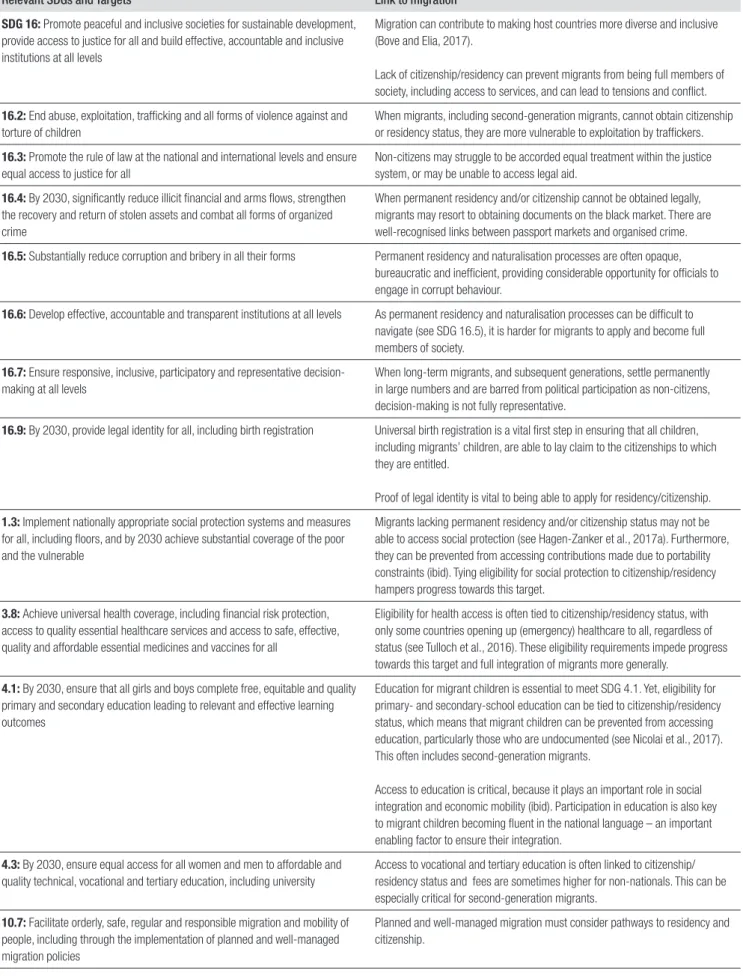
Table 1: Citizenship, migration and the 2030 Agenda for Sustainable Development
Relevant SDGs and Targets Link to migration
SDG 16: Promote peaceful and inclusive societies for sustainable development,
provide access to justice for all and build effective, accountable and inclusive institutions at all levels
Migration can contribute to making host countries more diverse and inclusive (Bove and Elia, 2017).
Lack of citizenship/residency can prevent migrants from being full members of society, including access to services, and can lead to tensions and conflict.
16.2: End abuse, exploitation, trafficking and all forms of violence against and
torture of children
When migrants, including second-generation migrants, cannot obtain citizenship or residency status, they are more vulnerable to exploitation by traffickers.
16.3: Promote the rule of law at the national and international levels and ensure
equal access to justice for all
Non-citizens may struggle to be accorded equal treatment within the justice system, or may be unable to access legal aid.
16.4: By 2030, significantly reduce illicit financial and arms flows, strengthen
the recovery and return of stolen assets and combat all forms of organized crime
When permanent residency and/or citizenship cannot be obtained legally, migrants may resort to obtaining documents on the black market. There are well-recognised links between passport markets and organised crime.
16.5: Substantially reduce corruption and bribery in all their forms Permanent residency and naturalisation processes are often opaque, bureaucratic and inefficient, providing considerable opportunity for officials to engage in corrupt behaviour.
16.6: Develop effective, accountable and transparent institutions at all levels As permanent residency and naturalisation processes can be difficult to navigate (see SDG 16.5), it is harder for migrants to apply and become full members of society.
16.7: Ensure responsive, inclusive, participatory and representative
decision-making at all levels
When long-term migrants, and subsequent generations, settle permanently in large numbers and are barred from political participation as non-citizens, decision-making is not fully representative.
16.9: By 2030, provide legal identity for all, including birth registration Universal birth registration is a vital first step in ensuring that all children, including migrants’ children, are able to lay claim to the citizenships to which they are entitled.
Proof of legal identity is vital to being able to apply for residency/citizenship.
1.3: Implement nationally appropriate social protection systems and measures
for all, including floors, and by 2030 achieve substantial coverage of the poor and the vulnerable
Migrants lacking permanent residency and/or citizenship status may not be able to access social protection (see Hagen-Zanker et al., 2017a). Furthermore, they can be prevented from accessing contributions made due to portability constraints (ibid). Tying eligibility for social protection to citizenship/residency hampers progress towards this target.
3.8: Achieve universal health coverage, including financial risk protection,
access to quality essential healthcare services and access to safe, effective, quality and affordable essential medicines and vaccines for all
Eligibility for health access is often tied to citizenship/residency status, with only some countries opening up (emergency) healthcare to all, regardless of status (see Tulloch et al., 2016). These eligibility requirements impede progress towards this target and full integration of migrants more generally.
4.1: By 2030, ensure that all girls and boys complete free, equitable and quality
primary and secondary education leading to relevant and effective learning outcomes
Education for migrant children is essential to meet SDG 4.1. Yet, eligibility for primary- and secondary-school education can be tied to citizenship/residency status, which means that migrant children can be prevented from accessing education, particularly those who are undocumented (see Nicolai et al., 2017). This often includes second-generation migrants.
Access to education is critical, because it plays an important role in social integration and economic mobility (ibid). Participation in education is also key to migrant children becoming fluent in the national language – an important enabling factor to ensure their integration.
4.3: By 2030, ensure equal access for all women and men to affordable and
quality technical, vocational and tertiary education, including university
Access to vocational and tertiary education is often linked to citizenship/ residency status and fees are sometimes higher for non-nationals. This can be especially critical for second-generation migrants.
10.7: Facilitate orderly, safe, regular and responsible migration and mobility of
people, including through the implementation of planned and well-managed migration policies
Planned and well-managed migration must consider pathways to residency and citizenship.
7 Conclusions and policy recommendations
This briefing illustrates the numerous ways in which migrants’ access to permanent residency and/or citizenship can play a vital role in fostering peaceful and inclusive societies, as called for in SDG 16. Migrants who lack secure permanent legal status may suffer a deprivation of other essential rights including access to justice, basic services and work. Opaque and arbitrary naturalisation processes – sometimes deliberately intended to exclude migrants – may contribute to official corruption and bribery. Migrants’ lack of access to permanent residency and/or citizenship status can cement their political exclusion, resulting in their marginalisation. In the long term, discriminatory policies can foster civil unrest and even contribute to the outbreak of violent conflict, especially when they exclude second and subsequent generations of settled migrants.
In light of these findings, this briefing makes the following recommendations for national and local governments in host and origin countries, international institutions and civil-society organisations in order to make progress towards SDG 16.
Conclusion 1a: Giving migrants access to permanent
residency and/or citizenship can foster peacefulness,
inclusion and cohesion in host societies.
Conclusion 1b: Numerous barriers prevent long-term
and second-generation migrants from accessing
permanent residency and/or citizenship.
Recommendation: Make pathways to permanent residency available to all long-term migrants.
• Grant, presumptively, permanent residency status to
all applicants who meet basic criteria (e.g. length of residency, proof of good conduct) so that long-term migrants are not required to keep renewing short-term visas.
• This should not be contingent on meeting any ethnic,
religious or other ascripitive criteria.
• The international community should help countries
with the highest ratios of migrants to locals – especially forced migrants and refugees – to find solutions that help address the particular burden these influxes can pose to social cohesion.
Recommendation: Make pathways to citizenship accessible to all long-term migrants who meet certain conditions.
• Host governments, particularly those that require an
excessively long period, should reduce the number of years’ residency required before an application for citizenship can be lodged.
• Remove all categorical bars on citizenship acquisition,
as these can foster tensions and conflict. Furthermore, make language requirements more flexible, particularly for older migrants. Remove citizenship tests for migrants with limited education, or offer them alternative, non-written, means of demonstrating membership (e.g. community engagement).
• Acquiring citizenship should not be contingent on the
ability to pay. Host governments should lower fees for citizenship or introduce fee waivers for poor migrants. The US, for instance, extended a fee-waiver programme for naturalisation in 2016 (United States Citizen and Immigration Service (USCIS), 2017).
• Where the costs of processing citizenship applications
present a significant burden for a host state (for example, mass refugee integration in a developing country), multilateral funding should be made available, to ensure timely and fair processing.
• Naturalisation policies should include education
and development components that also target local populations, to lessen prospective tensions.
Recommendation: State and non-state actors should collaborate in creating programmes to provide migrants with the skills necessary to qualify both for formal citizenship and everyday practice of membership.
• Such measures can include holding information sessions
on adjusting to life in the host country, language lessons, facilitating entry to professional networks, setting up cultural mentorship programmes, and expanding access to microfinance programmes (Vieru, 2017). Portugal’s National Plan for the Integration of Migrants, for example, includes a holistic set of measures to help integration across language, employment, vocational training and housing (Juzwiak et al., 2014).
Conclusion 2: Second-generation migrants are
particularly affected by citizenship policies, which
may exclude them from full membership of the
communities in which they have lived all their lives.
Recommendation: Second and subsequent
generations of migrants should have automatic access to citizenship in their host communities.
• Second-generation migrants should have an opportunity
to register as permanent residents and/or citizens at birth.
• When it is not politically feasible to grant full citizenship
at birth, states should provide second-generation migrants with opportunities to register for citizenship at an early date (e.g. as they enter school).
• States should not ask second-generation migrants
to complete a naturalisation process, which is often bureaucratic and prohibitively costly.
Recommendation: Host and origin country governments should remove any gender bars on citizenship that prevent women from passing on their citizenship to their children, and allow and facilitate the holding of multiple citizenships.
• Remove barriers that prevent emigrant citizens –
particularly women married to non-citizens – from passing on their citizenship to their children.
• Lift legal and policy bars on holding multiple
citizenships. This can help integration, as it means migrants do not have to choose one citizenship over others, and can foster business development and trade networks with origin countries.
Recommendation: Host and origin country
governments should not deprive naturalised citizens or their descendants of their status arbitrarily, especially in cases where it would render them stateless.
• Host and origin country governments that are not
already signatories to the 1961 Convention on the Reduction of Statelessness (and the 1954 Convention Relating to the Status of Stateless Persons) should accede to these conventions.
Relevant SDG Targets
1.3: Implement nationally appropriate social protection
systems and measures for all, including floors, and by 2030 achieve substantial coverage of the poor and the vulnerable.
3.8: Achieve universal health coverage, including financial
risk protection, access to quality essential health-care services and access to safe, effective, quality and affordable essential medicines and vaccines for all.
16.3: Promote the rule of law at the national and
international levels and ensure equal access to justice for all.
16.4: By 2030, significantly reduce illicit financial and arms
flows, strengthen the recovery and return of stolen assets and combat all forms of organized crime.
16.5: Substantially reduce corruption and bribery in all their
forms.
16.6: Develop effective, accountable and transparent
institutions at all levels,
Relevant SDG Targets
4.1: By 2030, ensure that all girls and boys complete free,
equitable and quality primary and secondary education leading to relevant and effective learning outcomes.
4.3: By 2030, ensure equal access for all women and men
to affordable and quality technical, vocational and tertiary education, including university.
16.2: End abuse, exploitation, trafficking and all forms of
violence against and torture of children.
16.9: By 2030, provide legal identity for all, including birth
Conclusion 3: A lack of access to citizenship/
residency can limit representative
decision-making, both increasing migrant communities’
marginalisation and hindering progress towards SDG
16.7.
Recommendation: Support local and regional identities and statuses as alternative and interim means of framing inclusion and providing important legal rights.
• Governments, local authorities and private
organisations should consider extending some rights normally reserved for citizens, in order to foster
inclusion. With the consent of the local community, such measures could include voting in local or community elections. In particular, migrant parents of children who are permanent residents and/or citizens should be able to participate fully in decisions relating to education.
• Work together to build reciprocal citizenship rights
that allow migrants to travel, work and live long-term across broad regional blocs as regional citizens. The international community should seek to support these processes of inclusion and regional integration.
• Cities should work on building local forms of
membership (e.g. by providing citywide identity cards) that help strengthen everyday inclusion in communities and provide access to important services (e.g. access to banking facilities) for all residents, without reference to national legal status.
Many thanks to Pietro Mona (SDC), Nando Sigona (University of Birmingham), Alina Rocha Menocal and Helen Dempster (ODI) for helpful comments on an earlier draft. Special thanks to Sophy Kershaw for editing.
Relevant SDG Targets
16.7: Ensure responsive, inclusive, participatory and
representative decision-making at all levels.
11.3: By 2030, enhance inclusive and sustainable
urbanization and capacity for participatory, integrated and sustainable human settlement planning and management in all countries.
References
Abrahamian, A. A. (2015) The Cosmopolites: the coming of the global citizen. Columbia Global Reports.
Ager, A. and Strang, A. (2008) ‘Understanding integration: a conceptual framework’, Journal of Refugee Studies 21(2): 166-191.
Ajuntament de Barcelona (1997) Pla Intercultural [Intercultural Plan]. Barcelona: Ajuntament de Barcelona.
Ajuntament de Barcelona (2012) BCN Pla d’Immigració [BCN Immigration Plan]. Barcelona: Ajuntament de Barcelona. Amnesty International (19 February 2017) Israel/OPT: Israel must repeal the discriminatory Citizenship and Entry into
Israel Law, MDE 15/5737/2017. Accessed 19 July 2017 at: https://www.amnesty.org/en/documents/mde15/5737/2017/
en/
Bauböck, R., Honohan, I., Huddleston, T., Hutcheson, D., Shaw, J. and Vink, M. P. (2013) Access to citizenship and its
impact on integration: European summary and standards. European University Institute.
Bove, V. and Elia, L. (2017) ‘Migration, diversity, and economic growth’, World Development 89: 227-239.
Branton, R. (2007) ‘Latino attitudes toward various areas of public policy: the importance of acculturation’, Political
Research Quarterly 60(2): 293-303.
Cianetti, L. (2014) ‘Granting local voting rights to non-citizens in Estonia and Latvia: the conundrum of minority representation in two divided democracies’, Journal on Ethnopolitics and Minority Issues in Europe 13(1): 86-112. Congress, Law Library (2017) Rights to counsel for detained migrants in selected jurisdictions. Accessed 19 July 2017 at:
https://www.loc.gov/law/help/right-to-counsel/right-to-counsel-detained-migrants.pdf
Constable, P. (23 June 2015) ‘Plight of Dominican Haitians ignites outrage among diverse immigrants’, The Washington Post. Accessed 19 July 2017 at:
https://www.washingtonpost.com/local/social-issues/plight-of-dominican-haitians-ignites-outrage-among-diverse-immigrants/2015/06/23/7d1c85b4-19b8-11e5-bd7f-4611a60dd8e5_story. html?utm_term=.8a6d7e248a64
Czaika, M. and Hobolth, M. (2014) Deflection into irregularity? The (un)intended effects of restrictive asylum and visa
policies. International Migration Institute (IMI) Working Paper 84. Oxford: IMI.
Delman, E. (27 January 2016) ‘How not to welcome refugees’, The Atlantic. Accessed 31 August 2017 at: https://www. theatlantic.com/international/archive/2016/01/denmark-refugees-immigration-law/431520/
Domat, C. (19 December 2016) ‘Show me the money! No bank accounts for many Syrians in Lebanon’, Middle East Eye. Accessed 19 July 2017 at: http://www.middleeasteye.net/in-depth/features/
show-me-money-no-bank-accounts-syrians-lebanon-refugees-784158579
The Economist (2015 April 18). ‘Payriotism’, The Economist. Accessed 19 July at: https://www.economist.com/news/ britain/21648699-becoming-british-costly-business-paytriotism
Elgot, J. (27 February 2017) ‘Rejection of EU citizens seeking UK residency hits 28%’, The Guardian. Accessed 19 July 2017 at: https://www.theguardian.com/uk-news/2017/feb/27/rejections-eu-citizens-seeking-uk-residency
Faist, T. and Kivisto, P. (eds.) (2007) Dual citizenship in global perspective: from unitary to multiple citizenship. Palgrave Macmillan.
Gonzalez-Barrera, A., Lopez M, H., Passel, J., S. and Taylor, P. (2013) The path not taken. Pew Hispanic Center. Accessed 21 August 2017 at: http://www.pewhispanic.org/2013/02/04/the-path-not-taken/
Hagen-Zanker, J., Mosler Vidal, E. and Sturge, G. (2017a) Social protection, migration and the 2030 Agenda for
Sustainable Development. London: ODI.
Hagen-Zanker, J., Ulrichs, M., Holmes, R. and Nimeh, Z. (2017b) Cash transfers for refugees: the economic and social
effects of a programme in Jordan. London: ODI.
Hainmueller, J., Hangartner, D. and Pietrantuono, G. (2015) ‘Naturalization fosters the long-term political integration of immigrants’, Proceedings of the National Academy of Sciences of the United States of America (PNAS) 112(41): 12651-12656.
Hindin, Z. and Ariza, M. (23 May 2016) ‘When nativism becomes normal’, The Atlantic. Accessed 21 August 2017 at: https://www.theatlantic.com/international/archive/2016/05/dominican-republic-la-sentencia/483998/
Holston, J. and Appadurai, A. (1996) Cities and citizenship. Duke University Press.
House of Commons (2017) The government’s negotiating objectives: the rights of UK and EU citizens: Second Report of
Session 2016–17. House of Commons Exiting the European Union Committee.
Hutt, M. (2003) Unbecoming citizens: culture, nationhood, and the flight of refugees from Bhutan. Oxford University Press.
IRRI (2016) The eligibility for refugees to acquire Ugandan citizenship. IRRI.
Just, A. and Anderson, J., C. (2012) ‘Immigrants, citizenship and political action in Europe’, British Journal of Political
Juzwiak, T., McGregor, E. and Siegel, M. (2014) Migrant and refugee integration in global cities: the role of cities and
businesses. The Hague Process on Refugees and Migration. Maastricht Graduate School of Governance.
Lee, J., Omri, R. and Preston, J. (6 February 2017) ‘What are sanctuary cities’, New York Times. Accessed 29 August 2017 at: https://www.nytimes.com/interactive/2016/09/02/us/sanctuary-cities.html
Long, K. (2015) From refugee to migrant? Labor mobility’s protection potential. Washington DC: Migration Policy Institute.
Manby, B. (2015) Nationality, migration and statelessness in West Africa: a study for UNHCR and IOM. Dakar: UNHCR and International Organization for Migration (IOM).
Manby, B. (2016) Citizenship law in Africa: a comparative study. New York: Open Society Foundations. Mansour-Ille, D., ‘Cast for citizenship: rich Arab countries may pay poor islands to take ‘stateless’
Bidoons’. Overseas Development Institution. Accessed 5 Septmber 2017 at: https://www.odi.org/ comment/10461-cash-citizenship-rich-arab-countries-may-pay-poor-islands-take-stateless-bidoons
Market Wire (2010) Migrant workers protest at Canada’s embassy in Guatemala. Accessed 19 July 2017 at: http://www. marketwired.com/press-release/migrant-workers-protest-at-canadas-embassy-in-guatemala-1312972.htm
Massey, D.S. and Bartley, K. (2005) ‘The changing legal status distribution of immigrants: a caution’, International
Migration Review 39(2): 469-484.
The Migration Observatory (2016) Here today, gone tomorrow? The status of EU citizens already living in the UK. Centre on Migration, Policy and Society (COMPAS). University of Oxford
Mikkelsen, L., Phillips, D. E., AbouZahr, C., Setel, P. W., De Savigny, D., Lozano, R. and Lopez, A. D. (2015) ‘A global assessment of civil registration and vital statistics systems: monitoring data quality and progress’, The Lancet 386(10001): 1395-1406.
Moran, A. (2011) ‘Multiculturalism as nation-building in Australia: inclusive national identity and the embrace of diversity’, Ethnic and Racial Studies 34(12): 2153-2172.
Mosselson, A. (2010) ‘ “There is no difference between citizens and non-citizens anymore”: violent xenophobia, citizenship and the politics of belonging in post-apartheid South Africa’, Journal of Southern African Studies 36(3): 641-655.
NCSL (2015) Tuition benefits for immigrants. Accessed 19 July 2017 at: http://www.ncsl.org/research/immigration/ tuition-benefits-for-immigrants.aspx
Nicolai, S., Wales, J. and Aiazzi, E. (2017) Education, migration and the 2030 Agenda for Sustainable Development. London: ODI.
O’Carroll, L. (1 December 2016) ‘EU citizens in Britain post Brexit vote: “I feel betrayed, not at home, sad” ’, The Guardian. Accessed 19 July 2017 at: https://www.theguardian.com/uk-news/2016/dec/01/ eu-citizens-in-britain-post-brexit-vote-feel-betrayed-not-at-home-sad
OECD/EU (2015) Indicators of immigrant integration 2015: settling in. Paris: OECD Publishing.
Peters, F. and Vink, M. (2016) ‘Naturalization and the socio-economic integration of immigrants: a life course perspective’, in Freeman G.P. and Mirilovic N. (eds), Handbook on migration and social policy. Edward Elgar Publishing.
Portes, A., Fernández-Kelly, P. and Haller, W. (2009) ‘The adaptation of the immigrant second generation in America: a theoretical overview and recent evidence’, Journal of Ethnic and Migration Studies 35(7): 1077-1104.
Rudiger, A. and Spencer, S. (2003) Social integration of migrants and ethnic minorities: policies to combat discrimination. ‘The economic and social aspects of migration’, EC and OECD Conference, 21-22 January 2003, Brussels.
Ruhs, M. (2013) The price of rights: regulating international labor migration. Princeton University Press.
Ryan, L. (2017) EU citizens in the UK: after the shock comes the strategy to secure status. London: London School of Economics (LSE).
Schmid, C. (2008) ‘Ethnicity and language tensions in Latvia’, Language Policy 7(3): 3-19.
Schneider, L. (2008) ‘Police power and race riots in Paris Cathy’, Politics & Society 36(1): 133-159.
Semple, K. (17 October 2013) ‘Dominican court’s ruling on citizenship stirs emotions in New York’, The New York Times. Accessed 19 July 2017 at: http://www.nytimes.com/2013/10/18/nyregion/dominican-courts-ruling-on-citizenship-stirs-emotions-in-new-york.html?mcubz=1
Shrestha, D. (19 November 2015) ‘Resettlement of Bhutanese refugees surpasses 100,000 mark’, UNHCR. Accessed 19 July 2017 at: http://www.unhcr.org/en-us/news/latest/2015/11/564dded46/resettlement-bhutanese-refugees-surpasses-100000-mark.html
Spencer, S. (2006) Refugees and other new migrants: a review of the evidence on successful approaches to integration. Oxford: COMPAS.
Stanford. (2017) ‘Citizenship’, Stanford Encyclopedia of Philosophy, July 2017. Accessed 21 August 2017 at: https://plato. stanford.edu/entries/citizenship/
Taylor, P., Gonzalez-Barrera, A., Passel, J. and Lopez, M. H. (14 November 2012) ‘Reasons for not naturalizing, an awakened giant: Hispanic electorate likely to double by 2030’, Pew Research Centre. Accessed 19 July 2017 at: http:// www.pewhispanic.org/2012/11/14/iv-reasons-for-not-naturalizing/
Tolan, C. (5 May 2017) ‘Inspired by Trump, more immigrants rush to become U.S. Citizens’, The Mercury News. Accessed 29 August 2017 at: http://www.mercurynews.com/2017/05/05/ trump-naturalization-citizenship-ceremony-oakland/
Travis, A. (9 March 2017) ‘UK can strip terror suspects of citizenship, European judges rule’, The Guardian. Accessed 29 August 2017 at: https://www.theguardian.com/uk-news/2017/mar/09/ terror-suspects-british-citizenship-european-ruling
Tulloch, O., Machingura, F. and Melamed, C. (2016) Health, migration and the 2030 Agenda For Sustainable
Development. London: ODI.
UK Home Office (2004) Indicators of integration: final report. Accessed 19 July 2017 at: http://www.coe.int/t/dg3/ migration/archives/documentation/Series_Community_Relations/Measurement_indicators_integration_en.pdf UN General Assembly (1961) Convention on the reduction of statelessness. UN Treaty Series, vol. 989, p.175. Accessed
29 August 2017 at: http://www.refworld.org/docid/3ae6b39620.html
UNHCR (2014) Field evaluation of local integration of former refugees in Tanzania. Accessed 23 August 2017 at: https:// www.state.gov/documents/organization/235056.pdf
UNHCR (3 February 2017) ‘Madagascar: UNHCR welcomes new law giving men and women equal rights to transfer nationality to children’. Accessed 19 July 2017 at: http://citizenshiprightsafrica.org/
madagascar-unhcr-welcomes-new-law-giving-men-and-women-equal-rights-to-transfer-nationality-to-children/ USCIS (2017) ‘Additional information on filing a fee waiver’. Accessed 19 July 2017 at: https://www.uscis.gov/feewaiver US State Department, Bureau of Democracy, Human Rights and Labor (2005) ‘International Religious Freedom Report
2005: Saudi Arabia’. Accessed 19 July 2017 at: https://www.state.gov/j/drl/rls/irf/2005/51609.htm
Van Selm, J. (2013) ‘Great expectations: a review of the strategic use of resettlement’, Policy Development and Evaluation
Service, PDES/2013/13. Geneva: UNHCR.
Vasta, E. (2011) ‘Immigrants and the paper market: borrowing, renting and buying identities’, Ethnic and Racial Studies 34(2): 187-206.
Vieru, M. (2017) Integration in host societies and development: adapting policy approaches to the new mobility. KNOMAD Policy Brief 7 2017. Washington DC: World Bank.
Weil, P. (2001) ‘Access to citizenship: a comparison of twenty-five nationality laws’, Citizenship today: global perspectives
ODI is the UK’s leading independent think tank on international development and humanitarian issues. Readers are encouraged to reproduce material for their own publications, as long as they are not being sold commercially. As copyright holder, ODI requests due acknowledgement and a copy of the publication. For online use, we ask readers to link to the original resource on the ODI website. This material has been commissioned and funded by the Swiss Agency for Development and Cooperation, however the views expressed do not necessarily reflect the Swiss Agency for Development and Cooperation’s official policies. © Overseas Development Institute 2017 This work is licensed under a Creative Commons Attribution-NonCommercial Licence (CC BY-NC 4.0). ISSN: 2052-7209+
Overseas Development Institute 203 Blackfriars Road London SE1 8NJ Tel +44 (0)20 7922 0300 Fax +44 (0)20 7922 0399 www.odi.org [email protected]