HAL Id: hal-01763174
https://hal.laas.fr/hal-01763174
Submitted on 10 Apr 2018
HAL is a multi-disciplinary open access
archive for the deposit and dissemination of
sci-entific research documents, whether they are
pub-lished or not. The documents may come from
teaching and research institutions in France or
abroad, or from public or private research centers.
L’archive ouverte pluridisciplinaire HAL, est
destinée au dépôt et à la diffusion de documents
scientifiques de niveau recherche, publiés ou non,
émanant des établissements d’enseignement et de
recherche français ou étrangers, des laboratoires
publics ou privés.
Collaboration and spatialization for an efficient
multi-person tracking via sparse representations
Loïc Fagot-Bouquet, Romaric Audigier, Yoann Dhome, Frédéric Lerasle
To cite this version:
Loïc Fagot-Bouquet, Romaric Audigier, Yoann Dhome, Frédéric Lerasle. Collaboration and
spa-tialization for an efficient multi-person tracking via sparse representations. Advanced Video- and
Signal-based Surveillance, 2015, Karlsruhe, Germany. �hal-01763174�
Collaboration and spatialization for an efficient multi-person tracking via sparse
representations
Lo¨ıc Fagot-Bouquet
1, Romaric Audigier
1, Yoann Dhome
1, Fr´ed´eric Lerasle
2,31
CEA, LIST, Vision and Content Engineering Laboratory,
Point Courrier 173, F-91191 Gif-sur-Yvette, France
2
CNRS, LAAS, 7, Avenue du Colonel Roche, F-31400 Toulouse, France
3Univ. de Toulouse, UPS, LAAS, F-31400 Toulouse, France
Abstract
Multi-person tracking is a very difficult problem in Com-puter Vision as a tracking algorithm is facing several issues, such as appearance changes, targets’ occlusions and simi-lar appearances between people. In an online tracking-by-detection algorithm, robust and discriminative specific ap-pearance models help handling these difficulties. As done in single object tracking, we use sparse representations to extract local features of the targets and study how these rep-resentations can be specifically employed for multi-person tracking. Experiments on several datasets show that consid-ering spatial information is crucial in order to improve the tracking performances with local descriptions compared to holistic features. Using large collaborative representations also improve the tracking results by naturally discarding ir-relevant local patches.
1. Introduction
Multi-person tracking is a challenging topic, and partic-ularly in video surveillance applications, affected by several issues that make this problem difficult. An efficient tracker has to deal with appearance variations, partial and severe targets’ occlusions, and entrance-exit of people in the field of view of the camera.
This problem is either addressed offline [9, 13], us-ing past and future frames, or online where only the past frames are considered to estimate the tracks of people [2, 10, 11, 16]. Recent online and offline trackers often rely on the tracking-by-detection scheme, using a classifier to detect pedestrian’s locations in each frame.
Offline algorithms estimate the trajectories over a tempo-ral window and can better handle the initialization and ter-mination of the tracks compared to online methods. How-ever, these methods can hardly include specific appearance
and motion models of the targets, making difficult to differ-entiate people with similar appearances, and do not fulfill real-time applications.
In online approaches, detections are linked together frame to frame to reconstruct trajectories across time. Most of the time, specific appearance and motion mod-els are learned online in order to find the best trajectories-detections assignment in a given frame. Therefore, employ-ing robust and discriminative specific appearance models can significantly improve the tracking results of such meth-ods [1, 11, 15].
Robust appearance models have been proposed for sin-gle object tracking in order to better cope with appearance changes and occlusions of the target. Sparse representations are largely employed in this field and used to describe the target with holistic or local features [5, 7, 8, 17]. A descrip-tion based on local patches is argued to be more robust to occlusions, see Liu et al. in [7]. Jia et al. in [5] propose to include some spatial information within the sparse repre-sentations. This method appears to better localize the target location and naturally filter out irrelevant patches which can represent, for example, some occluded parts of the target.
We propose an online multi-person tracking-by-detection algorithm based on sparse representations of the targets described by local patches. We also use some spatial considerations, at the person or patch level, com-bined with collaborative representations among people or patches. Using collaborative representations with some spatial constraints, either at the person level or patch level, improves the tracking results and naturally determines relevant elements in the representations making them more discriminative. The best results on several public datasets are achieved when the most collaborative representations are employed with spatial considerations. In this setting, local descriptions yield better results than those obtained from holistic features of people.
This work is organized as follows. In Section 2, we present some related works and the tracking algorithm used in Section 3. We show the performances of the different choices of representations in Section 4 and the last section concludes this work.
2. Related work
While online multi-person approaches based on the tracking-by-detection paradigm were gaining popularity, some works began to consider more complex specific ap-pearance models. Some employed local descriptions of the targets, like in [11] where part-based models inspired by DPM are used, or [15] where the motions of local patches on a regular grid are estimated in order to determine the most stable parts of the targets. In some methods, specific discriminative models are learned online to differentiate the related target from the surrounding ones [1, 11]. Existing approaches use these appearance models to estimate at each frame the affinity values for any track-detection pair. An Hungarian algorithm (or a greedy one) is then employed to find the best assignment between tracks and detections at a global level.
The description of the target appearance and the related model are a key element of single object tracking where a generic appearance of the target is unknown (as described in [12]). Sparse representations have been very popular in this field, and the related trackers employ a dictionary, com-posed by some views of the target, and assume that the tar-get can be well approximated by a weighted linear combina-tion of a few elements of this diccombina-tionary [8]. The diccombina-tionary can also include some elements from the background or the surroundings of the object in order to make the representa-tions more discriminative [17]. Even though the majority of these approaches employ holistic descriptions of the target [6, 8, 17], some use a more local information by considering local patches [5, 7]. Particularly, the approach described in [5] uses local patches on a regular grid and includes some spatial considerations in order to penalize patches which are reconstructed with elements that do not share the same lo-cation on the grid. This naturally leads to select relevant patches that are reconstructed by elements from the same location and tends to discard patches from occluded parts.
Recently, a multi-person tracker was proposed in [10] using appearance models based on sparse representations. However, these appearance models are specific to each tar-get and each of them is similar to a model used in a sin-gle object tracking approach. We consider that, in the con-text of a tracking-by-detection algorithm, appearance mod-els should take in consideration the people jointly in order to be able to discriminate them efficiently. In fact, com-puting the affinity values between a given detection and all the possible tracks can be seen as a classification problem. Sparse representation can handle it, as it was proposed for
face recognition, using a dictionary which combines some training examples of each class. The element to be classified is then represented in a collaborative way among all classes, and its class is estimated as the one that minimizes a resid-ual reconstruction error [14]. In this paper, we propose to compute the affinity values for all the track-detection pairs using this kind of classifier with a local description of the targets, building on the work done in [4] which considers only holistic descriptions.
3. Proposed approach
We present in this section how sparse representations can be employed in a multi-person tracking system, using collaborative representations over local descriptions of the people and taking into account some spatial information be-tween these descriptions.
3.1. System overview
Our system relies on the tracking-by-detection paradigm which means that a set of detections D is given at each frame by a pedestrian detector. These detections are asso-ciated with existing tracks, estimating an affinity value Aij
between the ithtrack and the jthdetection in D with
spe-cific appearance and motion models. This association pro-cess consists in finding the best assignment between tracks and detections which is formulated as a maximum matching problem in a bipartite graph. This problem can be solved exactly with the Hungarian algorithm or with a greedy one for an approximated solution.
The trajectory handling is inspired from [16]. Tracks with a high association rate are declared confident, those with a low association rate are declared lost for a few frames before being definitively terminated.
The affinity values are estimated using sparse represen-tations, but different choices are possible considering either the representations at the person level, as detailed in section 3.3, or at the patch level as detailed in section 3.4.
3.2. Dictionaries and sparse representations
The set of existing tracks at time t is denoted by T = {T1, ..., Tm}, and D = {d1, ..., dl} stands for the detectionsnewly found. Each detection di is described by a set of p
local features {y1 di, ..., y
p
di} related to patches selected on a regular grid or keypoints. For each track Ti, we combine
the most recent features of the related target into a specific dictionary DTi. For any set of tracks S = {Ti1, .., Til}, DS = DTi1∪ .. ∪ DTilis called the joint dictionary of the
tracks Ti1, ..., Til.
Given a feature vector y (related to some detection) and a dictionary D, a sparse code αDy can be defined by
αDy = argmin α 1 2||y − Dα|| 2 2+ λ||α||1 (1)
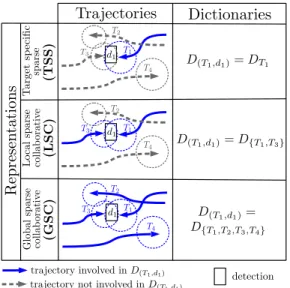
Figure 1. Sparse representations and related dictionaries.
where λ determines a trade-off between the reconstruction error 12||y − Dα||2
2and the sparsity constraint ||α||1.
r(D, y, α) stands for the reconstruction error of y with respect to the dictionary D and the code α, r(D, y, α) =
1
2||y − Dα|| 2 2.
For any integer set I, the notation δI(α) stands for the
vector derived from α by setting to zero all the dimensions that are not in I. r(D, y, δI(α)) is called the residual
recon-struction error for the set I.
3.3. Considerations at the person level
At each frame, we discard some associations between a track Ti and a detection dj based on some spatial
consid-erations. Specifically, we denote by L the set of all track-detection pairs (Ti, dj) that can be linked together by
con-sidering two criteria, one based on the distance between dj
and the estimated location of Ti in the current frame, and
the second one based on their shapes. L is defined as L = {(Ti, dj), distTi,dj < Ri and
|hi− hj|
hi
< Si}
where distTi,dj is the Euclidean distance between Ti and dj, and hj (resp. hi) is the height related to dj(resp. Ti).
The values Ri and Si are estimated for each track and are
increasing when one is lost in order to allow a wider search area.
The affinity value Aijbetween the track Tiand detection
djis defined by Aij= − p X k=1 r(D(Ti,dj), y k dj, δITi(α D(Ti,dj ) yk dj ))
if (Ti, dj) ∈ L, and Aij = −∞ otherwise. Each local
fea-ture yk
dj from the detection dj is represented with elements
of a dictionary D(Ti,dj)through its representation α
D(Ti,dj ) yk
dj . δITi sets to zero the coefficients in α
D(Ti,dj ) yk
dj
not related to the track Ti and the affinity value Aij is therefore derived
from the residual errors of the local features yk
djfor the track Ti.
We have several option for choosing the dictionary D(Ti,dj), as proposed in [4], in order to take into account the spatial situation of the targets in the scene:
• A first possibility is to consider, for any track-detection pair (Ti, dj),
D(Ti,dj)= DTi
This means that we consider the reconstruction error of each local feature of djover the specific dictionary related
to the track Ti. This setting is called TSS (target specific
sparse representations) as the sparse representation involved for estimating Aij depends only on the specific dictionary
DTiof Ti.
• The second possibility is to consider D(Ti,dj)= D{T1,...,Tm}
D(Ti,dj) includes all the specific dictionaries, and the involved representations in this setting are collaborative among all the tracks. This setting is therefore called GSC (global sparse collaborative representation).
• The last option is
D(Ti,dj)= D{T /(T,dj)∈L}
This time the representations involved are still collab-orative but only among the tracks that are close to the considered detection. This setting is called LSC (local sparse collaborative representations).
These different possibilities are illustrated in Figure 1 where the trajectories involved in D(Ti,dj)are specified.
3.4. Considerations at the patch level
In the previous section, the affinity values do not take into account any spatial information of the appearance of the target. By directly including all the local features into the dictionary we have lost all pertinent spatial information. However, we can use some spatial information by consid-ering a dictionary Dk
(Ti,dj) and a function δ
k
ITi specific to
each local feature yk
dj. The affinity value between any track Tiand detection djwith (Ti, dj) ∈ L is now defined by
Aij= − p X k=1 r(Dk(T i,dj), y k dj, δITik (α Dk (Ti,dj ) yk dj ))
We have three alternatives for designing the dictionaries Dk(T
i,dj)and functions δ
k ITi:
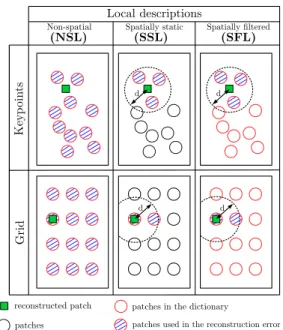
Figure 2. Local descriptions with some spatial information.
• The first one is to consider Dk
(Ti,dj) = D(Ti,dj)and δkI
Ti = δITi as done in the last section. We will refer to this choice as NSL (non-spatial local description).
• A second possibility is directly inspired by [5]. In sin-gle object tracking, the method proposed in [5] shows that such an information can be easily used within the sparse representations and significantly improve the robustness of the tracking. In this paper, the target is described by lo-cal patches on a regular grid, and each patch is then recon-structed with a collaborative sparse representation among all the patches of the dictionary. However, the coefficients in the sparse code that are related to patches at a different location on the grid are set to zero. Therefore a patch has to be reconstructed mainly by patches from the same loca-tion in order to achieve a low reconstrucloca-tion error. A patch which is occluded tends to be represented by patches at all possible locations and get a higher reconstruction error.
We adopt such strategy at the patch level, by choosing Dk(T
i,dj) = D(Ti,dj)and considering for δ
k
ITi to set to zero
all the coefficients that are related to local patches too dis-tant from the location of ykdjor not related to the track Ti. In
practice we consider a fixed threshold d and set to zero the coefficients associated to patches whose Euclidian distance to yk
dj is above d. This strategy is called SFL (spatially fil-tered local description) in the experiments.
• A last possibility is to restrict the representations to use only patches that share the same location with the reconstructed one, using in Dk
(Ti,dj) only the elements of D(Ti,dj)that are related to local patches near the location of yk
dj and considering δ
k
ITi = δITi. Contrary to the previous
approach, the representations are no more collaborative
between patches that do not share the same location. This strategy is called SSL (spatially static local description).
These possibilities are illustrated in Figure 2 where the patches used in D(Tk
i,dj)and those considered in the recon-struction error (not set to zero by δk
ITi) are specified.
4. Experimental evaluations
4.1. Implementation details
The proposed approach is implemented in C++ and is evaluated on single core at 2.7 GHz. As described in Fig-ure 2, local patches are selected on a regular grid or interest points. We consider a grid of 3x4 patches or use an Har-ris corner detector to select 10 keypoints inside each detec-tion bounding box (using non-maxima suppression), which means that p = 10 when using keypoints and p = 12 when using a regular grid. Each detection bounding box is resized to 64x128 pixels for finding local patches of size 32x32 pix-els. We directly use the RGB intensity values of each local patch, resized to 16x16 pixels in order to reduce the dimen-sionality of the features.
We solve the assignment of the detections to tracks using a greedy algorithm, and use Kalman filters to predict the targets’ locations in the next frame. For each variant we keep the same set of parameters for all datasets. Specific dictionaries are composed by the features from the 30 most recent views of the target, and the parameter λ in Eq. (1) is fixed to 0.1 (we got similar or slightly worse results with some other values).
Combining the different possibilities at the person level (TSS, LSC or GSC) with those at the patch level (NSL, SSL or SFL) and the two ways of selecting patches (us-ing a grid or keypoints), 18 approaches are evaluated. We also compare our approaches using holistic features with the three settings described in section 3.3 and using the inten-sity values of the detections resized to 32x32 pixels.
4.2. Experimental setting
As not all state-of-the-art trackers provide results on the same datasets and because the related sets of detections are not always available, we use the following datasets to fairly compare our methods: PETS S2L1, PETS S2L2, TownCen-ter and ParkingLot. The same detections as [16] were used, which uses two sets of detections for the PETS and Town-Center datasets. The performances of other state-of-the-art online trackers [2, 10, 11, 16] are also indicated for these datasets and the same detections (when available, we use the trajectories from the authors’ website or report them from the papers otherwise). These performances are evalu-ated with the CLEARMOT metrics [3] (composed of met-rics like MOTA and MOTP) computed using the implemen-tation from [16] with a standard overlap threshold of 0.5.
Description TSS LSC GSC Holistic 61.5 62.2 62.7 NSL 58.8 61.3 62.6 Keypoints SSL 60.0 61.8 63.1 SFL 62.4 62.4 63.4 NSL 58.1 60.9 62.2 Grid SSL 59.7 61.6 62.9 SFL 62.7 62.3 62.7
Table 1. Average MOTA values. Best value in bold and red, best values for each description underlined in blue.
Description TSS LSC GSC Holistic 129.0 127.5125.7 NSL 157.5 118.1 107.2 Keypoints SSL 135.2 122.8 104.7 SFL 116.4 107.4101.8 NSL 172.7 137.1 114.8 Grid SSL 147.2 127.0 108.2 SFL 119.8 110.8107.5
Table 2. Average number of ID-Switches. Best value in bold and red, best values for each description underlined in blue.
4.3. Results analysis
The average MOTA scores for the different variants are shown in Table 1, and the average number of ID-Switches in Table 2. First of all, we can see that, despite their higher complexity, the methods with non-spatial local descrip-tions (NSL) do not produce better results than the holis-tic ones. However, imposing some spatial constraints (SSL and SFL) improves the tracking performances. Using local features with spatially filtered descriptions (SFL) improves the scores both in terms of MOTA and ID-Switches (still compared to holistic features). Using patches sampled on a regular grid produces lower results compared to patches around keypoints, and one can argue that using keypoints gives more stable and discriminant patches.
The most collaborative representations at the person level (GSC) yield better results (compared to TSS and LSC). At the patch level, the approach with spatial con-straint and collaborative representations among patches (SFL) also yields superior results. The variant achieving the best results is the one which combines the most collabo-rative representations with spatial constraints (GSC-SFL).
As argued in [5], using collaborative representations among patches with spatial constraints naturally discards ir-relevant patches since the related representations are more easily spread among all patches and not only among patches sharing the same location in the detection. When using col-laborative representations among all tracks (GSC), we can assume that new people or false detections are associated to representations that are also more easily spread among all
Data Det. Method MOTA IDS MOTP FP MS
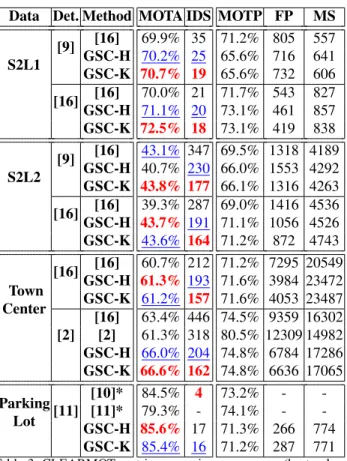
S2L1 [9] [16] 69.9% 35 71.2% 805 557 GSC-H 70.2% 25 65.6% 716 641 GSC-K 70.7% 19 65.6% 732 606 [16] [16] 70.0% 21 71.7% 543 827 GSC-H 71.1% 20 73.1% 461 857 GSC-K 72.5% 18 73.1% 419 838 S2L2 [9] [16] 43.1% 347 69.5% 1318 4189 GSC-H 40.7% 230 66.0% 1553 4292 GSC-K 43.8% 177 66.1% 1316 4263 [16] [16] 39.3% 287 69.0% 1416 4536 GSC-H 43.7% 191 71.1% 1056 4526 GSC-K 43.6% 164 71.2% 872 4743 Town Center [16] [16] 60.7% 212 71.2% 7295 20549 GSC-H 61.3% 193 71.6% 3984 23472 GSC-K 61.2% 157 71.6% 4053 23487 [2] [16] 63.4% 446 74.5% 9359 16302 [2] 61.3% 318 80.5% 12309 14982 GSC-H 66.0% 204 74.8% 6784 17286 GSC-K 66.6% 162 74.8% 6636 17065 Parking Lot [11] [10]* 84.5% 4 73.2% - -[11]* 79.3% - 74.1% - -GSC-H 85.6% 17 71.3% 266 774 GSC-K 85.4% 16 71.2% 287 771
Table 3. CLEARMOT metrics on various sequences (best values in bold and red for MOTA and ID-Switches (IDS), second best underlined in blue). The symbol * means the associated scores have been directly reported from the related papers. Det. specifies the set of detections used to feed the different trackers.
the tracks. Therefore the residual errors for the tracks which are close to irrelevant detections should be higher than those using local representations, avoiding some mismatches.
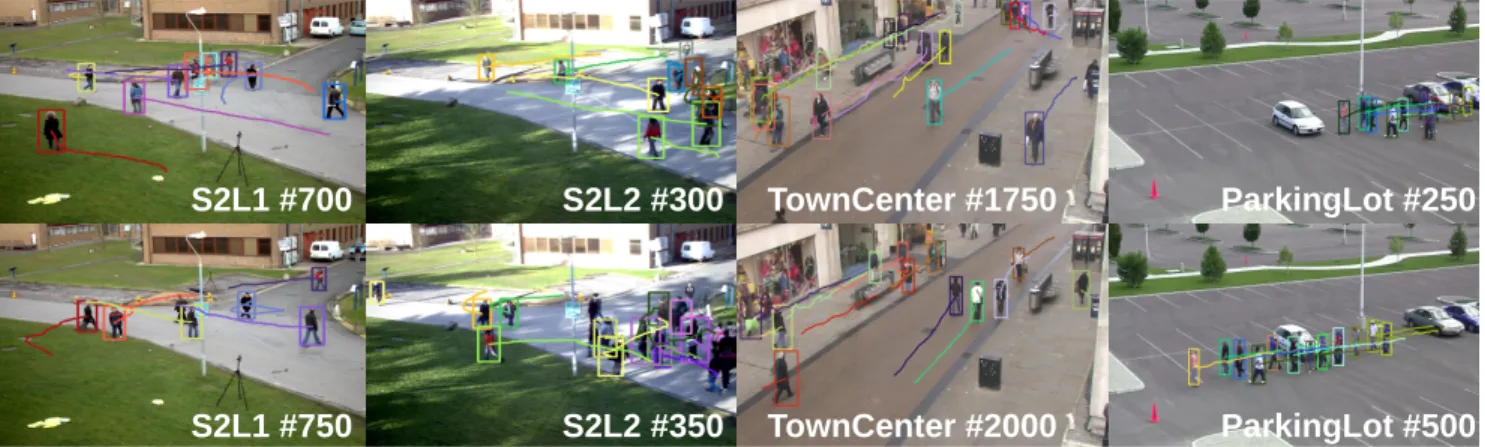
The CLEARMOT metrics for the most collaborative rep-resentations (GSC strategy), using either holistic features (GSC-H) or local patches with keypoints and spatially fil-tered descriptions (GSC-K) are shown in Table 3 and com-pared with other state-of-the-art online trackers. Our ap-proaches yield better results in term of MOTA and ID-Switches on all the datasets except for ParkingLot where our methods still produce more ID-Switches. Using a lo-cal description (GSC-K) instead of a holistic one (GSC-H) gives better or very similar MOTA scores, and reduces sig-nificantly the number of ID-Switches. Some tracking re-sults for the GSC-K approach are shown in Figure 3.
The main issue of the local descriptions is that the size of the involved dictionaries is larger (ten times larger with our parameters) than with holistic features. For this reason, the computational time becomes prohibitive. Optimizations based on active sets, as proposed in [4], allow the GSC-H approach to be real-time but are still insufficient in the case of the GSC-K approach.
Figure 3. Illustrations of some of our tracking results for the GSC-K approach.
5. Conclusion
In this work, we have investigated how sparse and col-laborative representations of the targets could be used in a multi-person tracking application. We have shown that local descriptions improve the tracking results when some spatial constraint is combined with collaborative represen-tations among local patches. An evaluation of our approach on several datasets shows the consistency of these observa-tions and confirms that our approach is competitive when compared to other online tracking systems.
In future work, we could study how approximating sparse representations on large dictionaries in order to make the GSC-K approach real-time.
References
[1] S. Bae and K. Yoon. Robust online multi-object tracking based on tracklet confidence and online discriminative ap-pearance learning. In Conference on Computer Vision and Pattern Recognition, pages 1218–1225. IEEE, 2014. [2] B. Benfold and I. Reid. Stable multi-target tracking in
real-time surveillance video. In Conference on Computer Vision and Pattern Recognition, pages 3457–3464. IEEE, 2011. [3] K. Bernardin and R. Stiefelhagen. Evaluating multiple object
tracking performance: The clear mot metrics. In EURASIP J. Image and Video Processing, volume 2008, 2008. [4] L. Fagot-Bouquet, Y. Dhome, R. Audigier, and F. Lerasle.
Online multi-person tracking based on global sparse collabo-rative representations. In International Conference on Image Processing. IEEE, 2015.
[5] X. Jia, H. Lu, and M. Yang. Visual tracking via adaptive structural local sparse appearance model. In Conference on Computer Vision and Pattern Recognition. IEEE, 2012. [6] H. Li, C. Shen, and Q. Shi. Real-time visual tracking using
compressive sensing. In Conference on Computer Vision and Pattern Recognition. IEEE, 2011.
[7] B. Liu, J. Huang, L. Yang, and C. Kulikowsk. Robust track-ing ustrack-ing local sparse appearance model and k-selection. In Conference on Computer Vision and Pattern Recognition, pages 1313–1320. IEEE, 2011.
[8] X. Mei and H. Ling. Robust visual tracking and vehicle clas-sification via sparse representation. In Transactions on Pat-tern Analysis and Machine Intelligence, volume 33, pages 2259–2272. IEEE, 2011.
[9] A. Milan, S. Roth, and K. Schindler. Continuous energy min-imization for multitarget tracking. In Transactions on Pattern Analysis and Machine Intelligence, volume 36, pages 58–72. IEEE, 2014.
[10] M. A. Naiel, M. O. Ahmad, M. Swamy, Y. Wu, and M. Yang. Online multi-person tracking via robust collaborative model. In International Conference on Image Processing. IEEE, 2014.
[11] G. Shu, A. Dehghan, O. Oreifej, E. Hand, and M. Shah. Part-based multiple-person tracking with partial occlusion han-dling. In Conference on Computer Vision and Pattern Recog-nition, pages 1815–1821. IEEE, 2012.
[12] A. W. M. Smeulders, D. M. Chu, R. Cucchiara, S. Calderara, A. Dehghan, and M. Shah. Visual tracking: An experimental survey. In Transactions on Pattern Analysis and Machine Intelligence, volume 36, pages 1442–1468. IEEE, 2014. [13] X. Wang, E. Turetken, F. Fleuret, and P. Fua. Tracking
in-teracting objects optimally using integer programming. In European Conference on Computer Vision (ECCV), pages 17–32. IEEE, 2014.
[14] J. Wright, A. Yang, A. Ganesh, S. Sastry, and Y. Ma. Robust face recognition via sparse representation. In Transactions on Pattern Analysis and Machine Intelligence, volume 31, pages 210–227. IEEE, 2009.
[15] Z. Wu, J. Zhang, and M. Betke. Online motion agreement tracking. In British Machine Vision Conference. BMVA Press, 2013.
[16] J. Zhang, L. L. Presti, and S. Sclaroff. Online multi-person tracking by tracker hierarchy. In Advanced Video and Signal-Based Surveillance, pages 379–385. IEEE, 2012.
[17] W. Zhong, H. Lu, and M. Yang. Robust object tracking via sparsity-based collaborative model. In Conference on Com-puter Vision and Pattern Recognition. IEEE, 2012.