1
Photosynthetic activity and productivity of intertidal macroalgae: in situ measurements, from thallus to community scale
Aline Migné1,2,*, Gaspard Delebecq3,4,ᵻ, Dominique Davoult1,2, Nicolas Spilmont3,4,5, Dominique Menu4, François Gévaert3,4
1- Sorbonne Universités, UPMC Univ Paris 06, Station Biologique, F-29680 Roscoff, France 2- CNRS, UMR 7144 AD2M, F-29680 Roscoff, France
3- Université Lille1, Univ Lille Nord de France, Station Marine, F-62930 Wimereux, France 4- CNRS, UMR 8187 LOG, F-62930 Wimereux, France
5- Environmental Futures Centre, Griffith University, Gold Coast Campus, QLD 4222, Australia
* corresponding author: [email protected], 33 (0)2 98 29 25 31
ᵻ present adress: Université de Bretagne Occidentale, Institut Universitaire Européen de la Mer, F-29280 Plouzané CNRS, UMR 6539 LEMAR, F-F-29280, Plouzané
GD: [email protected] DD: [email protected]
NS: [email protected] DM: [email protected] FG: [email protected]
Individual contribution of authors
AM, GD, DD, NS, FG: Conceived study, performed research, analysed data, wrote paper DM: Conceived benthic chamber, performed research
2 Abstract
The photosynthetic activity and productivity of four dominant canopy intertidal macroalgae were measured under emersion and immersion, at saturating light levels (PAR > 300 mol photons m-2 s-1), and compared at two sites (eastern and western English Channel) in spring and summer. The
photosynthetic activity of thalli was measured by the electron transport rate (ETR) using pulse-amplitude modulated (PAM) fluorescence and the productivity of individuals and of communities was measured by carbon fluxes in closed chambers. Under emersion, when thalli were still hydrated, the uppermost species Pelvetia canaliculata had higher photosynthetic activity (mean ETR between 327 and 460 μmol e- m-2 s-1) and individual gross productivity (between 60 and 212 μmol C gDW-1 h-1) than the lowermost species Laminaria digitata (mean ETR between 24 and 53 μmol e- m-2 s-1 and gross productivity between 2 and 38 μmol C gDW-1 h-1), whatever the site and season. P. canaliculata had higher ETR in air than underwater (averaged 146 μmol e- m-2 s-1) and L. digitata had lower ETR in air than underwater (averaged 112 μmol e- m-2 s-1), while they exhibited respectively 3 and 5 times higher gross productivity underwater. At the community scale, the low mid-shore zone of Fucus
serratus had the highest mean gross productivity under emersion (47 mmol C m-2 h-1) while rates were higher for the uppermost than lowermost zone at the eastern site (average 20 and 6 mmol C m -2
h-1 respectively) and of the same order of magnitude for both zones at the western site (about 30 mmol C m-2 h-1). Finally, the variability of under emersion primary productivity among sites and seasons was reduced when the measurements were performed on entire communities compared to isolated individuals of the dominant species.
Key words
Primary production, Rocky shores, Fucoids, Kelps
Running page head
3 Abbreviations
A absorption coefficient DIC dissolved inorganic carbon DW dry weight
Em emersion
ETR electron transport rate Fm’ maximal fluorescence level Fse Fucus serratus
Fsp Fucus spiralis
Ft fluorescence steady-state level FW fresh weight
GCP gross community productivity GP gross productivity
Im immersion Ld Laminaria digitata
NCP net community productivity NP net productivity
PAM pulse-amplitude modulated
PAR photosynthetically available radiation Pc Pelvetia canaliculata R respiration Ro Roscoff Sp spring Su summer TA total alkalinity Wx Wimereux
4 1. Introduction
Rocky shores are frequently dominated by dense populations of macroalgae that exhibit distinct patterns of vertical zonation. On northern hemisphere temperate coasts, this pattern typically consists of the succession of fucoid algae from the high to the low mid shore and of laminarians (or kelps) in the lower shore. The productivity of such seaweed populations has long been shown to be important, ranging from 1 to several kg C m-2 y-1 (Mann, 1973). However, these estimations were rather raw and still need to be specified. In particular, the ecological performance of macroalgae has to be measured in situ and at the multi-species community scale to take into account not only the dominating species but all the species as well as their interactions in relevant conditions. Intertidal macroalgae experience two very different environments for photosynthesis, aerial and aquatic. The capacity of species from different shore levels to maintain photosynthesis during emersion periods has long been investigated based on measurements performed on isolated thalli under controlled laboratory conditions (e.g. Johnson et al., 1974; Quadir et al., 1979; Dring and Brown, 1982). Since then, differences between some shallow-water macroalgae species have been shown to be smaller at the communities scale than experiments on single thallus pieces suggested (Binzer and Middelboe, 2005) and an increasing productivity of fucoid assemblages down a shore-height gradient has been shown (Tait and Schiel, 2011). These community-scale measurements were limited, however, to immerged conditions and trends might be different under peculiar conditions of the emersion periods. The present study compares the photosynthetic activity and productivity of thalli of the dominant canopy macroalgae (i.e. the zone-forming species typical of the northern hemisphere temperate shores) and the productivity of the communities, based on in situ measurements performed either during emersion or immersion periods. First, the photosynthetic activity of adult thalli was examined using pulse-amplitude modulated (PAM) fluorescence. This technique, which relies on the variable fluorescence of chlorophyll a, is not a direct measurement of photosynthesis but allows an examination of the dynamic properties of photosynthesis in response to environmental changes (Enriquez and Borowitzka, 2010) during the whole tidal cycle (emersion and immersion).
5
Second, the productivity of single individual, or several individuals of a single species, was assessed using a closed chamber system. This monospecific approach aimed at understanding the productivity dynamic of each species in response to the environment variation (aerial versus aquatic). Third, the productivity of multi-species communities was assessed using closed chamber systems under emersion. This assemblage-based approach integrated the resource partitioning among canopy-forming macroalgae and their sub-canopy assemblages. The aim of the study was to test two
hypotheses: (1) the in air versus under water ratio of photosynthetic performance decreases down a shore-height gradient; (2) the variation in photosynthetic performance among dominant canopy species of the shore is reduced when the measurements are scaled up from thallus to community.
2. Materials and Methods
2.1. Target species and study sites
The target species were the three fucoids Pelvetia canaliculata (the uppermost zone-forming species), Fucus spiralis (the immediately contiguous zone-forming species) and Fucus serratus (the lowermost zone-forming fucoid) and the kelp Laminaria digitata (the lowermost zone-forming species). Two seasons (spring and summer) and two sites, differing for the timing of the tide and for turbidity, were investigated. Measurements were performed at the rocky shore of Wimereux (50°44’48” N – 1°35’54” E, eastern English Channel, France) during spring tides in September 2009 (summer) on the four seaweed communities (P. canaliculata, F. spiralis, F. serratus and L. digitata) and in April 2010 (spring) on three seaweed communities (P. canaliculata, F. spiralis and L. digitata) and at the rocky shore of Roscoff (48°43’53” N – 3°59’16” W, western English Channel, France) during spring tides in August 2010 (summer) and in May 2011 (spring) on the uppermost and the lowermost seaweed communities (P. canaliculata and L. digitata). At Wimereux, water turbidity is high and low tides of spring tide occur in the early morning (low tides occurred between 7:30am and 10:00am, UT+2h, for summer measurements and between 7:00am and 8:30am, UT+2h, for spring measurements). At Roscoff, water turbidity is low and low tides of spring tide occur in the early
6
afternoon (low tides occurred between 2:00pm and 3:30pm, UT + 2h, for summer measurements and between 1:30pm and 2:30pm, UT + 2h, for spring measurements).
2.2. Light and temperature
Photosynthetically available radiation (PAR in μmol photons m−2 s−1) was measured in air and underwater and recorded every minute using a WinCQ flat sensor (Alec Electronics). Temperature was measured in air and underwater and recorded every minute using a MDS MkV-T sensor (Alec Electronics). Average temperature during the periods of selected measurements was 18°C underwater and 20°C in the air in summer and 11°C underwater and 14°C in the air in spring, at Wimereux. It was 17°C underwater and 27°C in the air in summer and 14°C underwater and 22°C in the air in spring, at Roscoff.
2.3. Fluorescence
In vivo chlorophyll fluorescence properties were measured in situ using a submersible PAM
fluorometer (Diving PAM, Walz). The fluorescence signal was always taken from the middle of the frond in the same place for three haphazardly-selected and marked individuals of the target species. The effective quantum yield of photosystem II (ΦPSII) was measured under ambient light at different stages of the tidal cycle. The fiber optic was mounted in a home-made transparent Plexiglas holder applied to one side of the thallus in such a way that the distance between the fiber optic and the algal tissue was constant and standard. The fiber optic forms a 60° angle with the sample, avoiding shading or darkening. ΦPSII was calculated as (Fm’–Ft) /Fm’(Genty et al., 1989), where Fm’ is the maximal fluorescence level measured during a single saturating light pulse (0.8 s) for light-adapted samples, and Ft is the fluorescence steady-state level immediately prior to the flash. Then, the electron transport rate (ETR in mol electrons m-2 s-1, here after referred to as μmol e- m-2 s-1) was estimated using the following equation:
ETR = ΦPSII × PAR × 0.5 x A (1)
where PAR is the photosynthetically available radiation (in μmol photons m−2 s−1) , 0.5 is a correction factor based on the assumption that the incident photons are absorbed equally by the pigments of
7
the two photosystems and A is the absorption coefficient determined in the laboratory using an integrating sphere (ISR-240A, Shimadzu). The absorption coefficient varied between 0.93 and 0.97 according to the species and season.
2.4. Carbon fluxes
Productivity of single or several individuals (depending on the size of the species) was measured using a benthic chamber placed on the shore at the target species level. The system was made of a transparent closed Perspex dome tightly sealed on the polyvinylchloride (PVC) base of the chamber and enclosed a volume of 35.3 L. During immersion periods, an electronic management system controlled three external pumps; two pumps ensured the rapid and constant homogenization of the media while the third one ensured the renewal of the media by flushing ambient seawater between two consecutive incubations (Gévaert et al., 2011). pH was measured with a WTW sentix 41 probe (Multi 350i, WTW) and monitored every minute during 10 min incubations. Seawater was collected from inside the benthic chamber using a 100 ml syringe, then passed through cellulose acetate membrane filters (0.8 μm) and spiked with HgCl2 pending potentiometric laboratory determination of total alkalinity (Millero et al., 1993) on 3 subsamples of 20 ml. The dissolved inorganic carbon (DIC) concentration of seawater was calculated from the pH, total alkalinity (TA), temperature and salinity according to Strickland & Parsons (1972) and using the formula given in Oviatt et al. (1986). DIC flux (µmol h-1) was calculated as the difference between the final and the initial concentrations after the linearity of the pH (corrected from temperature) change has been checked. During emersion, inorganic carbon fluxes were measured in the benthic chamber using closed air circuit for CO2 analysis (Migné et al., 2002). Changes in air CO2 concentration (ppm) were measured in the chamber with a CO2 infrared gas analyser (LiCor Li-6251) and recorded with a data logger (LiCor Li-1400) at 15 s intervals during incubations of about 10 minutes duration. CO2 fluxes (μmol h−1) were calculated from the slope of CO2 concentration against time assuming a molar volume of 22.4 L at standard temperature and pressure. The benthic chamber was opened between two consecutive incubations
8
to renew the ambient air, and algae were weighted to assess their water loss during the emersion period. At the end of the series of measurements, algae were rehydrated to assess their fresh weight (FW) and then dried for 48 h at 60°C to assess their dry weight (DW). Fluxes were expressed as μmol C gDW-1 h−1. The relative tissue water content at time t was calculated as the percent of total water content: [(Wt-DW)/(FW-DW)] x 100 (where Wt represents the weight measured at time t). Productivity was assessed at the community scale during emersion using benthic chambers as described in Crowe et al. (2013). Three chambers were haphazardly-positioned (approximately 2 m apart) to account for spatial variability in each zone. Each chamber (of a total volume of 18.9 L) was made of a transparent Perspex dome with a 0.3 x 0.3 m transparent Perspex base air-tightly sealed with neutral silicon to the substratum. Changes in CO2 mol fraction in the air were measured by an infrared CO2 gas analyser (LiCor Li-800). CO2 fluxes were estimated following the same procedure as described for single species measurements. The benthic chambers were opened between two consecutive incubations to renew the ambient air. In the Fucoid zones, algae were collected at the end of the series of measurements, and the zone-forming algae were dried for 48 h at 60°C and weighted. In the Laminaria digitata zone, there was no individual of the zone forming species inside the chambers. Incubations were performed either in ambient light conditions to assess the net productivity (NP) or in dark (after the chamber has been covered with an opaque tarp) in order to assess the respiration (R) rate. The gross productivity (GP) was then calculated by correcting NP by R.
2.5. Data analyses
To compare the photosynthetic activity and the productivity of the different species measured at the different scales at the two seasons and sites, the highest electron transport rates (ETR) and the highest carbon fluxes obtained at each occasion under emersion or immersion either in ambient light (mean PAR values given in Table 1) or in darkness were selected. Care was taken to use
measurements performed in ambient light at saturating irradiance levels. A threshold of 300 mol photons m-2 s-1 was chosen based on the average value of 291 mol photons m-2 s-1 given for the onset of light saturation of coastal macroalgal communities by Middelboe et al. (2006). For under
9
emersion measurements, care was also taken to use measures obtained during the early stages of emersion on still hydrated algae (relative tissue water content between 72 and 97 % for individual scale measurements). Some measurements could not be achieved under immersion due to the difficulty of working while diving in the backwash of the intertidal zone and some data are thus missing. The effect of site and season on the results obtained for each target species was tested when no data were missing using the Scheirer-Ray-Hare H-test (non-parametric 2-way ANOVA).
3. Results
3.1. Photosynthetic activity and productivity under emersion
Mean ETR was greatly higher for P. canaliculata than for L. digitata at each site and season (between 9 and 16 times higher, Fig 1.A). There was no significant difference according to the season or site for
P. canaliculata (Table 2). For L. digitata, mean ETR was significantly higher in spring than summer but
there was no significant difference according to the site (Table 2).
The gross productivity rate was also higher for P. canaliculata than for L. digitata at each site and season (more than 2 times higher, Fig 2.C). For L. digitata, respiration rates were sometimes higher than gross productivity leading to positive carbon fluxes in the benthic chamber under light at Wimereux in summer and in both seasons at Roscoff (Fig 2.A).
The mean gross productivity rate measured at the community scale was higher for the P. canaliculata zone than the L. digitata zone at Wimereux at the two seasons (between 3 and 4 times higher) while the order of magnitude was the same for the two zones at Roscoff at the two seasons (Fig 3.C). At this scale, carbon fluxes in the benthic chambers under light were always negative, i.e. gross
productivity rates were higher than respiration rates. Mean gross productivity rates measured on the
L. digitata zone were significantly higher at Roscoff than at Wimereux but there were no significant
differences according to the season (Table 2). There were no significant differences according to the season or site for P. canaliculata (Table 2). The mean biomass of P. canaliculata (Table 3) was
10
significantly lower at Wimereux than Roscoff but there were no significant differences between seasons (Table 2).
3.2. Photosynthetic activity and productivity under immersion
The mean ETR measured during immersion was greater for L. digitata than for P. canaliculata at Roscoff in summer, the single occasion when ETR was measured under water for both species (Fig 1.B).
At the individual scale, measurements under dark could be achieved only in three experiments (Fig 2. E), leading to only three available values of gross productivity (the highest being for P. canaliculata and the lowest for L. digitata, Fig 2.F). More experiments could be achieved under light, allowing the comparison of the net productivity rates. They were of the same order of magnitude for P.
canaliculata than L. digitata at Roscoff in summer, the single occasion when NP was measured under
water for both species (Fig 2.D).
3.3. Under emersion versus under immersion photosynthetic activity and productivity
The electron transport rate was higher in air than underwater for P. canaliculata and F. spiralis (the ratio reaching 3.72) but lower for F. serratus and L. digitata (the ratio reaching 0.14). For P.
canaliculata, the higher ETR in the air was explained by the greater photon flux density in the air than
underwater at Wimereux in spring (Table 1, while the effective quantum yield of photosystem II was 0.5 and 0.7 in air and water respectively), but was also due to a greater ΦPSII in the air at Roscoff in summer (0.6 versus 0.4). For F. spiralis, it was mainly due to a greater ΦPSII in the air (0.5 versus 0.2). Particularly low values of ΦPSII (< 0.1) were measured for L. digitata under emersion at Roscoff while they were between 0.2 and 0.7 in the other cases. The ratio of individual scale net productivity in air versus water was lower than 1 at each occasion (the maximum was 0.95 for F. spiralis) and was even negative for L. digitata at Roscoff (due to respiration rates higher than gross productivity under emersion). The ratio of gross productivity in air versus water was also lower than 1 in the only three occasions it could be calculated.
11 4. Discussion
The present study of the photosynthetic performance of intertidal macroalgae based on in situ measurements emphasizes on a major result: the trends observed under emersion according to the position of the algae along the shore vary with the scale of measurements. The uppermost species
Pelvetia canaliculata had higher photosynthetic activity and productivity under emersion than the
lowermost species Laminaria digitata, while the few available data showed no trend between the zone-forming species under immersion. Futhermore, the photosynthetic activity measured at the thallus scale was higher in air than underwater for the uppermost species and lower in air than underwater for the lowermost species. Differences between zone-forming species were, however, greatly reduced when measurements were scaled up from the electron transport rate of thallus to the gross productivity of individuals and communities.
4.1. Photosynthetic performance according to the shore-level of the algae
In the present study, carbon flux measured at the individual scale, both under immersion and emersion, in ambient light conditions (with PAR > 300 mol photons m-2 s-1) suggested that photosynthetic performance was higher underwater whatever the species was, for both sites and seasons and even if the emerged individuals were not significantly dehydrated (relative tissue water content > 72%). Furthermore, a net negative productivity (respiration higher than gross productivity) was observed for L. digitata under emersion. However, the difference between underwater and aerial performance was lower for upper species, with a NPem/NPim ratio as high as 0.95 for Fucus
spiralis. At the thallus scale, the electron transport rate also measured both under immersion and
emersion in ambient light conditions was higher in air for P. canaliculata and F. spiralis but higher underwater for Fucus serratus and L. digitata. Moreover, at that scale of measurement, the upper species on the shore had by far the highest photosynthetic activity under emersion and the lower species had the lowest. This obvious trend was observed independently of the season or site and could not be only explained by better light conditions during measurements for upper species.
12
Some previous laboratory researches, made under controlled light conditions and based on either oxygen and carbon flux (Johnson et al., 1974; Kawamitsu and Boyer, 1999) or fluorescence (Skene, 2004) measurements on thalli, also suggested that the ability of intertidal algae for sustained photosynthesis in air is enhanced for upper shore species. Johnson et al. (1974) even obtained a NPem/NPim ratio of 6.6 for the high-shore species Fucus distichus. This trend might be explained by the significant ecophysiological distinctions that had been made between algae living essentially completely submersed and those spending a part of tidal cycles in the emersed state. The upper shore algae had been shown to have the potential for rapid photosynthesis in air during the short time without desiccation (Surif and Raven, 1990). Thus, the less time is available for photosynthesis, as limited by desiccation, the greater is the photosynthetic rate during the time available. The “CO2 concentrating mechanism”, characteristic of photosynthesis in the eulittoral Fucaceae (Surif and Raven, 1989), may be important in increasing the efficiency of emersed photosynthesis with limited capital of water available.
Some contrasting results have, however, been obtained in laboratory studies. For example, the carbon intake in the air was higher for the lower shore Saccharina latissima than the uppershore
Pelvetia canaliculata (Ni Longphuirt et al., 2013), the photosynthesis rates of intertidal Fucoids were
always higher in water than in air (Williams and Dethier, 2005) or either higher in water or in air according to the temperature (Madsen and Maberly, 1990) and the effective PSII quantum efficiency of Laminaria digitata increased after 3h of emersion (Nitschke et al., 2011). Furthermore, the effect of short-term emersion on chl a fluorescence responses to irradiance has been shown to be
dependent on the protocol used for the acclimation of the algae to the different light levels (Nitschke et al., 2012) and the variation of the effective PSII quantum efficiency measured in situ has been shown to be dependent on the meteorological conditions (Lamote et al., 2012). Different sampling, keeping and/or measuring conditions could then have influenced both laboratory and field results, leading to various conclusions among studies.
13
4.2. Variation in the trends of photosynthetic performance according to the scale of measurements
The trend of photosynthetic activity under emersion according to the shore-level of the algae was obvious in the present study when photosynthetic activity was measured at the thallus scale as electron transport rate. When photosynthetic activity was measured as gross productivity at the individual scale, it was also typically higher for the uppermost than the lowermost species but the trend along the shore was less obvious (even if the lack of replication prevents clear comparisons to be performed). Finally, when photosynthetic activity was measured as gross productivity at the community scale, which is a more relevant ecological unit, the highest rates were measured on the intermediate mid-shore zones and, at one of the two sites, rates were higher for the lowermost zone than for the uppermost zone. Furthermore, considering the whole set of data the coefficient of variation of net productivity under emersion was 1.15 at the individual scale and 0.55 at the community scale.
The contrasting results using either fluorescence or carbon flux measurements can suggest that thalli are not relevant ecological units but also that the photosystem II activity measured as ETR is not always a relevant measure of the rate of photosynthesis. There is a general assumption that a linear relationship between ETR and gross photosynthesis exists, as long as environmental stresses do not impose restrictions on photosynthetic carbon fixation. The linearity between ETR and photosynthesis of macroalgae has been, however, only confirmed at low light intensities (Enriquez and Borowitzka, 2010). ETR calculation is based on the assumption that light absorption is only due to photosynthetic pigments. There are, however, alternative electron sinks (e.g. the Mehler reaction, the
photorespiration) which explain the deviation from linearity in the relationship between ETR and gross productivity (measured either as O2 production or C uptake) observed at high irradiances in various primary producers (Beardall et al., 2009). This occurred as critical low values of ΦPSII were reached and the irradiance at which these values were reached depended on the previous light histories undergone by the algae (Beer and Axelsson, 2004). It is the irradiance relative to the algal
14
growth conditions rather than the irradiance during the measurement that determines the threshold. Beer and Axelsson (2004) measured critical values of ΦPSII (< 0.1) at lower irradiance for Laminaria
saccharina than for Fucus serratus (250 versus 2000 mol photons m-2 s-1) while both species were acclimated to 400 mol photons m-2 s-1 for two weeks. In the present study, critical low values of ΦPSII were measured for Laminaria digitata under emersion at Roscoff. Such critical values were
previously measured in situ underwater at ebb tide around midday on the Roscoff kelps L. saccharina and L. digitata. The response of ΦPSII to high irradiances was associated to an increase in the non-photochemical quenching and was explained as a down-regulation of the photosystem II (Gévaert et al., 2003; Delebecq et al., 2011).
The contrasting results measuring carbon fluxes either at the individual or at the community scale do reflect the difference in use of resources by either isolated or grouped individuals of only one species and by mixed communities allowing species to interact and supplement each other. Although
individual photosynthesis must influence the community response, individual metabolism was not expected to be closely related to community metabolism, because this represents a complex integrated response of many different species exposed to a wide range of local light conditions within the canopies (Middelboe and Binzer, 2004; Binzer and Middelboe, 2005; Middelboe et al., 2006). Tait and Schiel (2011) showed that layering within macroalgal assemblages plays a major role in maintaining net photosynthesis throughout the natural range of irradiance and even enhances photosynthesis at high irradiance. Tait and Schiel (2010) measured the underwater productivity of three fucoid assemblages. The rates, on a per area basis, showed a down shore-height gradient explained by the greater biomass and number of algal species of the lower-shore assemblage. In the present study, a down shore-height gradient was also shown when measurements were performed on the three fucoid assemblages (i.e. at Wimereux in summer). The highest rates at the community scale were measured on the Fucus serratus zone where the biomass of the dominant canopy species and the number of species were the highest (9 species were identified inside the chambers while it was 7 for the Pelvetia canaliculata and 8 for the Fucus spiralis zones). The zone of Laminaria digitata
15
had also a great algal biomass (it was measured only once, at Roscoff in summer, and was 80.51 ± 26.62 gDW/0.09 m2) and had a great species richness (9 and 22 species identified inside the chambers at Wimereux and Roscoff respectively) but lower community scale productivity under emersion, particularly at Wimereux. This certainly reflects the low efficiency in air of algae living essentially submersed. Further measurements should be performed at the community scale during immersion periods to test if the down shore-height gradient highlighted with fucoids is maintained when both fucoids and kelps are considered.
Acknowledgements
This work was funded by the French program EC2CO/INSU. Thierry Cariou from the Station Biologique de Roscoff provided surface PAR data that was useful for intercalibration between our various measures. Thanks are due to Marie-Andrée Janquin, Renaud Michel and Lucie Camañez for assistance in the field. We would like also to thank the Service Mer & Observation from the Station Biologique de Roscoff for valuable support and particularly François Le Ven who managed to bring the wayfarer chamber back from the “Bigorneau langoureux” in the Batz Island. Finally, we acknowledge the improvements originated by the comments made by the editor and reviewers of this paper.
Literature cited
Beardall, J., Ihnken, S., Quigg, A., 2009. Gross and net primary production: closing the gap between concepts and measurements. Aquat. Microb. Ecol. 56, 113-122.
Beer, S., Axelsson, L., 2004. Limitations in the use of PAM fluorometry for measuring photosynthetic rates of macroalgae at high irradiances. Eur. J. Phycol. 39, 1-7.
Binzer, T., Middelboe, A.L., 2005. From thallus to communities: scale effects and photosynthetic performance in macroalgae communities. Mar. Ecol. Prog. Ser. 287, 65-75.
16
Crowe, T.P., Cusson, M., Bulleri, F., Davoult, D., Arenas, F., Aspden, R., Benedetti-Cecchi, L., Bevilacqua, S., Davidson, I., Defew, E., Fraschetti, S., Golléty, C., Griffin, J.N., Herkuel, K., Kotta, J., Migné, A., Molis, M., Nicol, S.K., Noël, L.M.L.J., Pinto, I.S., Valdivia, N., Vaselli, S., Jenkins, S.R., 2013. Large-scale variation in combined impacts of canopy loss and disturbance on community structure and ecosystem functioning. PloS one 8, e66238.
Delebecq, G., Davoult, D., Menu, D., Janquin, M.-A., Migné, A., Dauvin, J.-C., Gévaert, F., 2011. In situ photosynthetic performance of Laminaria digitata (Phaeophyceae) during spring tides in Northern Brittany. Cah. Biol. Mar. 52, 405-414.
Dring, M.J., Brown, F.A., 1982. Photosynthesis of intertidal brown algae during and after periods of emersion: a renewed search for physiological causes of zonation. Mar. Ecol. Prog. Ser. 8, 301-308. Enriquez, S., Borowitzka, M.A., 2010, The use of the fluorescence signal in studies of seagrasses and macroalgae. In: Suggett, D.J., Prasil, O., Borowitzka, M.A. (Eds.), Chlorophyll a fluorescence in aquatic sciences: methods and applications. Springer, pp. 187-208.
Genty, B., Briantais, J.-M., Baker, N.R., 1989. The relationship between the quantum yield of
photosynthetic electron transport and quenching of chlorophyll fluorescence. Biochim. Biophys. Acta 990, 87-92.
Gévaert, F., Créach, A., Davoult, D., Migné, A., Levavasseur, G., Arzel, P., Holl, A.-C., Lemoine, Y., 2003. Laminaria saccharina photosynthesis measured in situ: photoinhibition and xanthophyll cycle during a tidal cycle. Mar. Ecol. Prog. Ser. 247, 43-50.
Gévaert, F., Delebecq, G., Menu, D., Brutier, L., 2011. A fully automated system for measurements of photosynthetic oxygen exchange under immersed conditions: an example of its use in Laminaria
digitata (Heterokontophyta: Phaeophyceae). Limnol. Oceanogr. Meth. 9, 361-379.
Johnson, W.S., Gigon, A., Gulmon, S.L., Mooney, H.A., 1974. Comparative photosynthetic capacities of intertidal algae under exposed and submerged conditions. Ecology 55, 450-453.
Kawamitsu, Y., Boyer, J.S., 1999. Photosynthesis and carbon storage between tides in a brown alga,
17
Lamote, M., Johnson, L.E., Lemoine, Y., 2012. Photosynthetic responses of an intertidal alga to emersion: the interplay of intertidal height and meteorological conditions. J. Exp. Mar. Biol. Ecol. 428, 16-23.
Madsen, T.V., Maberly, S.C., 1990. A comparison of air and water as environments for photosynthesis by the intertidal alga Fucus spiralis (Phaeophyta). J. Phycol. 26, 24-30.
Mann, K.H., 1973. Seaweeds: their productivity and strategy for growth. Science 182, 975-981. Middelboe, A.L., Binzer, T., 2004. Importance of canopy structure on photosynthesis in single- and multi-species assemblages of marine macroalgae. Oikos 107, 422-432.
Middelboe, A.L., Sand-Jensen, K., Binzer, T., 2006. Highly predictable photosynthetic production in natural macroalgal communities from incoming and absorbed light. Oecologia 150, 464-476. Migné, A., Davoult, D., Spilmont, N., Menu, D., Boucher, G., Gattuso, J.-P., Rybarczyk, H., 2002. A closed-chamber CO2-flux method for estimating intertidal primary production and respiration under emersed conditions. Mar. Biol. 140, 865-869.
Millero, F.J., Zhang, J.-Z., Lee, K., Campbell, D.M., 1993. Titration alkalinity of seawater. Mar. Chem. 44, 153-165.
Ni Longphuirt, S., Eschmann, C., Russell, C., Stengel, D., 2013. Seasonal and species-specific response of five brown macroalgae to high atmospheric CO2. Mar. Ecol. Prog. Ser. 493, 91-102.
Nitschke, U., Connan, S., Stengel, D.B., 2012. Chlorophyll a fluorescence responses of temperate Phaeophyceae under submersion and emersion regimes: a comparison of rapid and steady-state light curves. Photosyn. Res. 114, 29-42.
Nitschke, U., Ruth, A.A., Dixneuf, S., Stengel, D.B., 2011. Molecular iodine emission rates and photosynthetic performance of different thallus parts of Laminaria digitata (Phaeophyceae) during emersion. Planta 233, 737-748.
Oviatt, C.A., Rudnick, D.T., Keller, A.A., Sampou, P.A., Almquist, G.T., 1986. A comparison of system (O2 and CO2) and C-14 measurements of metabolism in estuarine mesocosms. Mar. Ecol. Prog. Ser. 28, 57-67.
18
Quadir, A., Harrison, P.J., Dewreede, R.E., 1979. Effects of emergence and submergence on the photosynthesis and respiration of marine macrophytes. Phycologia 18, 83-88.
Skene, K.R., 2004. Key differences in photosynthetic characteristics of nine species of intertidal macroalgae are related to their position on the shore. Can. J. Bot. 82, 177-184.
Strickland, J.D.H., Parsons, T.R., 1972. A practical handbook of seawater analysis. Bull. Fish. Res. Bd Can. 167, 1-311.
Surif, M.B., Raven, J.A., 1989. Exogenous inorganic carbon sources for photosynthesis in seawater by members of the Fucales and the Laminariales (Phaeophyta): ecological and taxonomic implications. Oecologia 78, 97-105.
Surif, M.B., Raven, J.A., 1990. Photosynthetic gas exchange under emersed conditions in eulittoral and normally submersed members of the Fucales and the Laminariales: interpretation in relation to C isotope ratio and N and water use efficiency. Oecologia 82, 68-80.
Tait, L.W., Schiel, D.R., 2010. Primary productivity of intertidal macroalgal assemblages: comparison of laboratory and in situ photorespirometry. Mar. Ecol. Prog. Ser. 416, 115-125.
Tait, L.W., Schiel, D.R., 2011. Dynamics of productivity in naturally structured macroalgal
assemblages: importance of canopy structure on light-use efficiency. Mar. Ecol. Prog. Ser. 421, 97-107.
Williams, S.L., Dethier, M.N., 2005. High and dry: variation in net photosynthesis of the intertidal seaweed Fucus gardneri. Ecology 86, 2373-2379.
19
Figure 1: Highest electron transport rate (ETR in mol e- m-2 s-1, mean ± sd, n = 3) measured in ambient light (PAR values given in table 1) on thalli of the different zone-forming species (Pc: Pelvetia
canaliculata, Fsp: Fucus spiralis, Fse: Fucus serratus, Ld: Laminaria digitata) at the two sites (Wx:
Wimereux, Ro: Roscoff) and seasons (Su: summer, Sp: spring) under emersion (Em, A) and immersion (Im, B). Ld Fse Fsp Pc Wx Su Wx Sp Ro Su Ro Sp a- Em 0 100 200 300 400 500 600 Ld Fse Fsp Pc ETR (μmol e- m-2 s-1) b- Im
20
Figure 2: Highest carbon fluxes measured in the benthic chamber at the individual scale (in mol C gDW-1 h-1) in ambient light (A and D, PAR values given in table 1) or in dark (B and E) on the different zone-forming species (Pc: Pelvetia canaliculata, Fsp: Fucus spiralis, Fse: Fucus serratus, Ld: Laminaria
digitata) at the two sites (Wx: Wimereux, Ro: Roscoff) and seasons (Su: summer, Sp: spring) and
corresponding gross productivity (GP, C and F) under emersion (Em, A, B and C) and immersion (Im, D, E and F).
21
Figure 3: Highest carbon fluxes measured under emersion in the benthic chambers at the community scale (in mmol C m-2 h-1, mean ± sd, n = 3) in ambient light (a, PAR values given in table 1) or in dark (b) for the different zone-forming species (Pc: Pelvetia canaliculata, Fsp: Fucus spiralis, Fse: Fucus
serratus, Ld: Laminaria digitata) at the two sites (Wx: Wimereux, Ro: Roscoff) and seasons (Su:
summer, Sp: spring) and corresponding gross productivity (GP, c).
22
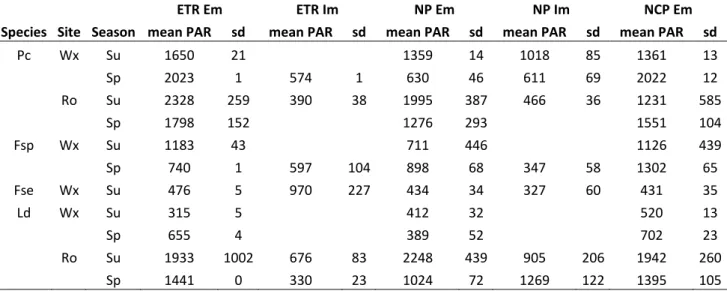
Table 1: Light condition (mean PAR and standard deviation in mol photons m-2 s-1) during
measurements of the highest electron transport rates (ETR) and net productivities (as carbon fluxes) at individual scale (NP) and community scale (NCP) on the different zone forming species (Pc: Pelvetia
canaliculata, Fsp: Fucus spiralis, Fse: Fucus serratus, Ld: Laminaria digitata) at the two sites (Wx:
Wimereux, Ro: Roscoff ) and seasons (Su: summer, Sp: spring) under emersion (Em) and immersion (Im).
ETR Em ETR Im NP Em NP Im NCP Em Species Site Season mean PAR sd mean PAR sd mean PAR sd mean PAR sd mean PAR sd
Pc Wx Su 1650 21 1359 14 1018 85 1361 13 Sp 2023 1 574 1 630 46 611 69 2022 12 Ro Su 2328 259 390 38 1995 387 466 36 1231 585 Sp 1798 152 1276 293 1551 104 Fsp Wx Su 1183 43 711 446 1126 439 Sp 740 1 597 104 898 68 347 58 1302 65 Fse Wx Su 476 5 970 227 434 34 327 60 431 35 Ld Wx Su 315 5 412 32 520 13 Sp 655 4 389 52 702 23 Ro Su 1933 1002 676 83 2248 439 905 206 1942 260 Sp 1441 0 330 23 1024 72 1269 122 1395 105
23
Table 2: Significance of the effect of season and site on electron transport rates (ETR) and gross community productivity (GCP) measured under emersion and on dry weight inside benthic chambers (DW) of the zone-forming species (Pc: Pelvetia canaliculata, Ld: Laminaria digitata) as tested by Scheirer-Ray-Hare H-test.
Variable Zone-forming species Factor H p-value
ETR Pc Season 1.256 0.262 Site 0.026 0.872 Interaction 0.641 0.423 Ld Season 8.308 0.004 Site 1.256 0.262 Interaction 0.103 0.748 GCP Pc Season 0.410 0.522 Site 2.564 0.109 Interaction 1.256 0.262 Ld Season 0.026 0.872 Site 8.308 0.004 Interaction 0.103 0.748 DW Pc Season 0.923 0.337 Site 7.410 0.006 Interaction 0.103 0.748
24
Table 3: Mean dry weight (DW) and standard deviation (sd, n = 3) of the zone-forming species (Pc:
Pelvetia canaliculata, Fsp: Fucus spiralis, Fse: Fucus serratus) inside the benthic chambers used for
the community scale fluxes measurements (surface area = 0.09 m2) performed at the two sites (Wx: Wimereux, Ro: Roscoff) and seasons (Su: summer, Sp: spring). There was no Laminaria digitata inside the benthic chambers during measurements performed in the L. digitata zones.
zone-forming species site season mean DW (g) sd
Pc Wx Su 21.01 12.36 Sp 14.86 4.03 Ro Su 65.25 14.56 Sp 44.63 17.27 Fsp Wx Su 50.32 12.98 Sp 42.78 16.34 Fse Wx Su 87.21 9.01