HAL Id: hal-00298230
https://hal.archives-ouvertes.fr/hal-00298230
Submitted on 4 Jan 2007
HAL is a multi-disciplinary open access
archive for the deposit and dissemination of
sci-entific research documents, whether they are
pub-lished or not. The documents may come from
teaching and research institutions in France or
abroad, or from public or private research centers.
L’archive ouverte pluridisciplinaire HAL, est
destinée au dépôt et à la diffusion de documents
scientifiques de niveau recherche, publiés ou non,
émanant des établissements d’enseignement et de
recherche français ou étrangers, des laboratoires
publics ou privés.
Fall-experiments on Merapi basaltic andesite and
constraints on the generation of pyroclastic surges
L. M. Schwarzkopf, O. Spieler, B. Scheu, D. B. Dingwell
To cite this version:
L. M. Schwarzkopf, O. Spieler, B. Scheu, D. B. Dingwell. Fall-experiments on Merapi basaltic andesite
and constraints on the generation of pyroclastic surges. eEarth, 2007, 2 (1), pp.1-5. �hal-00298230�
www.electronic-earth.net/2/1/2007/ © Author(s) 2007. This work is licensed under a Creative Commons License.
eEarth
Fall-experiments on Merapi basaltic andesite and constraints on the
generation of pyroclastic surges
L. M. Schwarzkopf1,2, O. Spieler1, B. Scheu1, and D. B. Dingwell1
1Earth & Environmental Sciences, Ludwig-Maximilians-Universit¨at M¨unchen, Theresienstr. 41/III, 80333 M¨unchen,
Germany
2GeoDocCon, Unterpferdt 8, 95176 Konradsreuth, Germany
Received: 23 May 2006 – Published in eEarth Discuss.: 14 July 2006
Revised: 14 November 2006 – Accepted: 29 November 2006 – Published: 4 January 2007
Abstract. We have performed fall-experiments with basaltic
andesite rock samples from Merapi volcano, using an appa-ratus designed to analyze samples heated up to 850◦C.
Rel-ative pressure changes during impact and fragmentation of the samples were measured by a pressure transducer. From 200◦C, dynamic pressure waves were formed on impact and
fragmentation. Peak and duration of the pressure signal, and degree of fragmentation were found to strongly increase with increasing temperature of rock samples. The pressure waves are most likely generated by sudden heating of air forcing it to expand. We propose that the observed pressure changes are analogues to pyroclastic surges that may be generated on impact and fragmentation of large blocks during passage of a pyroclastic flow over a steep cliff. We infer that rock tem-peratures of ca. 400◦C are sufficient for this process to
oc-cur, a temperature common in pyroclastic flows even in distal reaches.
1 Introduction
Pyroclastic surges, hot and gas-rich high-speed particle flows, are probably the largest hazards during volcanic erup-tions. In general, surges are generated as either 1) source-related lateral blast-surges, by flank (e.g. Kieffer, 1981) or lava dome collapses (e.g. Fink and Kieffer, 1993), or 2) as surges directly associated with a pyroclastic flow. In the latter case, surges are generated from the flow itself, by either en-trainment of ambient air at the flow front (e.g. Sparks, 1978) or interaction between the flow surface and the air (Den-linger, 1987).
Flow-related surges can also be formed at breaks in slope, e.g. by detachment of the ash-cloud component (Bourdier and Abdurachman, 2001). Hoblitt (1986) and Calder et
Correspondence to: L. M. Schwarzkopf
(lothar [email protected])
al. (1997) discuss ash cloud generation at breaks in slope for Mount St. Helens, and Yamamoto et al. (1993) describe an expanding eruption cloud from a block-and-ash flow cascad-ing down a 70 m high waterfall at Unzen. Expandcascad-ing ash clouds at sudden breaks in slopes indicate intensified pro-duction of fines and thus fragmentation, and Schwarzkopf et al. (1998) postulate surge generation triggered by sudden and strongly intensified fragmentation at cliffs in the flow path of block-and-ash flows at Merapi. Schwarzkopf (2001) and Schwarzkopf et al. (2006)1show that this fragmentation event was accompanied by degassing of matrix ashes and a discharge of fines that propagated downstream in front of the parental flow and deposited ground surge-like layers. Al-though degassing was evidenced by volatile contents of ash samples, it is unlikely to be the sole factor in the generation of cliff-triggered surges, since the Merapi dome lavas are al-ready largely outgased and the closed porosity of the Merapi andesites is commonly less than 1% (Spieler, 2001). This leaves unclear the processes by which a surge could be gener-ated on impact and disintegration of large blocks transported in pyroclastic flows.
In recent years, significant experimental work has been performed on the fragmentation of highly viscous volcanic rocks by rapid decompression (e.g. Alidibirov and Dingwell, 1996; Spieler et al., 2003). In contrast, impact fragmenta-tion has been neglected in the volcanological literature so far. This is despite the fact that formation of fine particles by abrasion and fragmentation of hot pyroclasts by colli-sions is a poorly constrained process yet that may exert a significant control on the generation and emplacement of gas/particle mixtures in general. Experiments on impact pro-cesses were performed in the planetary sciences (e.g.
Pier-1Schwarzkopf, L. M., Schmincke, H.-U., and Troll, V. R.:
Cliff-triggered surge generation: evidence from the 1994 block-and-ash flows of Merapi volcano, Central Java, Indonesia, Bulletin of Vol-canology, submitted, 2007.
2 L. M. Schwarzkopf et al.: Fall-experiments and pyroclastic surges
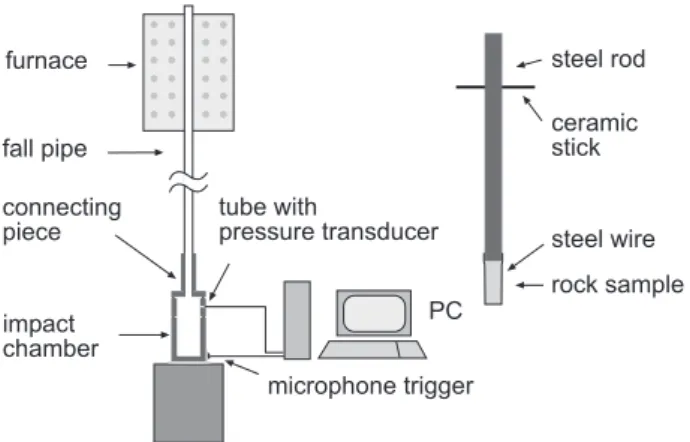
Fig. 1. Sketch of the experimental apparatus and measuring
equip-ment, details of sample/fall weight given on the right side.
azzo and Melosh, 2000), wear research (e.g. Clark and Wong, 1995) and industrial granular matter research (e.g. Salman et al., 2002). Many of theses studies used high particle veloci-ties (e.g. Durda and Flynn, 1999: 5 km s−1)or materials like
ice (e.g. Kato et al., 1995) that are not relevant for pyroclas-tic flows, but some present results that may be transferable. Salman et al. (2002), for instance, shot non-heated spheri-cal aluminium oxide particles with velocities between 5 and 28 ms−1 against a target. They showed that decreasing the
impact velocity, impact angle and particle size decreased the fragmentation rate.
Due to the lack of low-velocity single particle impact ex-periments with heated samples that are applicable to pyro-clastic flows that rush over a sudden break in slope, we de-signed a simple low-cost experimental set-up. We performed fall-experiments with natural Merapi rock samples and an-alyzed the pressure signals during the experiments and the grain-sizes of the resulting fragments, to better constrain the processes occurring during the impact of hot volcanic mate-rial. This paper reports the experimental set-up, results and their implications.
2 Methods
2.1 Experimental set-up and procedure
The experimental apparatus consists of a fall-acceleration section and an impact section (Fig. 1). The acceleration part is a vertical steel pipe (length = 300 cm, internal diameter = 26 mm). The steel pipe is adapted to the impact section by a steel connecting piece. The impact chamber consists of a steel connection tube with an uptake for a pressure trans-ducer (length = 5 cm, internal diameter = 62 mm) and a basal steel tank (length = 15.5 cm, internal diameter = 62 mm). The volume of the impact section is ∼592 cm3. Samples were at-tached below a steel rod to add weight (length = 342 mm, di-ameter = 24 mm, weight = 1211.5 g; Fig. 1, right side). The
additional fall weight is taken to simulate higher fall heights, to increase fragmentation, and to minimize effects of not precisely perpendicular impacts. We used simple steel wire (0.2 mm thick, thinner copper wires did not stand the high temperatures) to attach the samples to a drill-hole in the rod, since high-temperature cement was not suitable without us-ing a sample holder, which was rejected to allow fragmenta-tion of the total sample and to avoid potential shear fractures. Sample and rod are located inside the top part of the acceler-ation pipe using a ceramic stick that was inserted through a drill-hole in the upper part of the rod. The ceramic stick lies on the pipe walls, providing a constant fall-height for all ex-periments. Experiments were started by pulling the ceramic stick out by hand; sample and rod are accelerated by grav-ity only. The steel pipe is rigidly connected to a steel frame aside and the impact chamber is coupled to a massive steel cylinder using a thin layer of Silly Putty. The single parts of the impact section are fixed together by screws, with rub-ber sealings between the parts. A series of tests showed that internal and external vibrations disturbing the pressure mea-surements are successfully avoided by these simple means. The total fall height of the apparatus sums up to 3.2 m, pro-viding impact speeds of ∼7.6 m s−1, as measured using an
optical sensor. Samples can be heated up to maximum 850◦C
by an external high-temperature furnace installed at the top of the acceleration pipe. Samples were heated for 15 min., which was sufficient to provide the desired temperature as measured at the top of the sample below the steel rod. The relative pressure changes were measured by a piezoresistive pressure transducer (Kistler K 6421, Germany) at a sampling rate of 30 kHz, located in a drill-hole in the upper part of the basal steel tank. Data retrieval is controlled by a microphone trigger at the impact chamber that is released by the impact of the sample.
After each experiment the fragments were sampled from the impact chamber. Samples were wet-sieved by hand to avoid mechanical damage, in 1 φ intervals from – 2 φ to 4 φ (>4 mm to <63 micron; φ=–log2d where
d = diameter in mm), providing an error <5% for our grain-size analyses. Median diameter (Mdφ=φ50),
mean diameter (Mφ=(φ16+φ84)/2) and sorting coefficient
(σφ=(φ84−φ16)/2) were determined from cumulative curves.
To obtain the φ16percentile, the cumulative curves were
ex-trapolated.
2.2 Experimental materials
We use cylindrical samples (length = 60 mm, diameter = 22 mm) of the 1998 Merapi block-and-ash flow deposits. Samples were of the most common rock type at recent Mer-api deposits, a porphyritic, incipiently to poorly vesicular basaltic andesite (Gertisser, 2001; Schwarzkopf, 2001). The closed porosity of Merapi andesites is commonly less than 1% (Spieler, 2001), the open porosity of the main rock type between 5 and 40 vol.% (Schwarzkopf, 2001). Merapi
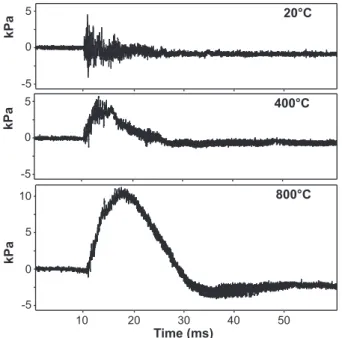
Fig. 2. Pressure data (kPa) from a pressure transducer located at the
top of the impact section versus time (ms). Graphs show the pres-sure data from reprentative experiments at 20◦, 400◦and 800◦C. Note sharply rising dynamic pressure waves occuring at higher tem-peratures.
andesites are generally highly porphyritic with phenocryst contents up to 60 vol.%. Details of the petrology of re-cent Merapi rocks are e.g. given by Andreastuti (1999), Ca-mus et al. (2000), Gertisser (2001) and Gertisser and Keller (2003). Densities of the samples were ∼2.75 kg m−3
(mea-sured using an AccuPyc 1330 from Micromeritics, USA), and weights were ∼53 g. In this study, we used only poorly vesicular samples with porosities between 5 and 15 vol.%.
3 Results
We performed our experiments in 200◦C steps, starting at
room temperature up to 800◦C. Each set consisted typically
of 3 to 5 runs. Additional experiments for video observations were performed up to maximum 850◦C.
3.1 Pressure changes
The data were originally measured in V and then calculated in kPa (1 V=8×10⁻²MPa in our set-up). The diagrams in
Fig. 2 show representative pressure measurements during our impact experiments. At 20◦C, the signal is a fast decaying
wave that is similar in quality and peak to the signals from test runs using only the steel rod without sample. Starting at 200◦C, the pressure signal becomes pulse-like, and at 400◦C,
the signal clearly forms a dynamic pressure wave with a sharp rise. With higher temperatures, the pressure waves
be-Fig. 3. Grain-size distributions of the fragments resulting from
rep-resentative runs. Note significant decrease of the coarse and in-crease of the fine fractions strongly depending on sample tempera-tures.
Table 1. Grain-size characteristics of some representative
experi-mental fragments.
Exp.-No. IMS-27 IMS-30 IMS-36 Temperature 20◦C 400◦C 800◦C Mean –2.24 –1.88 –1.8 Mφ=(φ16+φ84)/2 Median –3.13 –3.08 –3 Mdφ=φ50 Sorting coefficient 1.15 1.49 1.54 σφ=(φ84−φ18)/2
come more and more distinct, and stronger, as deduced from the peak height, and the durations of the signals increase.
The signal peaks range from 3.2 to 4.8 kPa at 20◦C, from
6.4 to 9.6 kPa at 400◦C, and from 11.2 to 12.0 kPa at 800◦C,
with an absolute maximum of 24.0 kPa in one 800◦C run.
The rise times are in the order of several milliseconds (3 to 8 ms), the total durations of the waves in the order of tens of ms.
3.2 Grain-size of the fragments
The experimental fragments show wide grain-size distribu-tions. Grain-size distributions are unimodal, with a promi-nent peak of particles larger than 4 mm in size (Fig. 3). The mean diameter Mφranges from –2.24 to –1.8 φ, the median
diameter Mdφfrom –3.13 to –3.00 φ, and the sorting
coeffi-cient σφfrom 1,15 to 1.54 φ (Table 1).
These characteristics vary in clear dependence on the sam-ple temperature, increasing temperature decreases the result-ing grasizes and reduces the quality of sortresult-ing. For in-stance, the content of particles larger than 4 mm in size de-creases from ca. 70 to 50 wt.% with increasing temperatures that of the particles between 1 and 2 mm increases from 7.1 to 12.4 wt.%, and the content of 125 to 250 micron particles increases from 2.4 to 3.5 wt.%. The contents of particles
4 L. M. Schwarzkopf et al.: Fall-experiments and pyroclastic surges
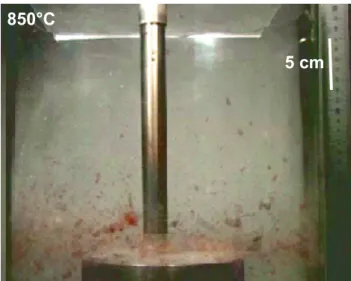
Fig. 4. Picture from a video of one 850◦C impact experiment, show-ing total fragmentation of the rock sample. Note strongly horizontal directed movement of fine fragments (http://www.electronic-earth. net/2/1/2007/ee-2-1-2007-supplement.zip).
smaller than 125 micron do not vary significantly, possibly due to a loss of fines during the experiments.
3.3 Video observations
We also performed a series of experiments in which we used a massive steel cylinder as impact target that was sur-rounded by a simple Plexiglas tube. Videos of these ex-periments were taken with an ordinary digital video cam-era at 30 frames per second (Fig. 4), and a high-speed camera with a resolution of 256×256 pixels at a frame rate of 0.82 ms (http://www.electronic-earth.net/2/1/2007/ ee-2-1-2007-supplement.zip). We observed increasing frag-mentation with higher temperatures and a plastering of very fine fragments at the Plexiglas tube, leaving a horizontal ring-like deposit. This deposit thickens with higher temperatures. From the plastering and the video observations we infer that the horizontally moving particle current generated on impact is more intense at higher temperatures. Due to the strong loss of material in the open system, we did not analyze the samples, and observations are only to be taken qualitatively.
4 Discussion
Our impact experiments with cold and heated natural rock samples show 1) dynamic pressure waves are generated on impact and fragmentation, and 2) strength of pressure waves and fragmentation of the samples significantly increase with higher temperatures.
The pressure waves are not formed by simple displace or compression of air in the impact chamber. Data of the whole experiment durations show a slight and constant increase in the pressure signal. This signal is totally different in rising
time and form, clearly associated with compression of the air inside the impact chamber below the falling steel rod and sample, and thus not caused by the impact and fragmentation processes. The compression signal is more or less constant in all experiments. From our video observations of open system experiments we infer that the used impact chamber geome-try has no significant influence on the generation of pressure waves. The pressure waves are most likely generated by the sudden heating of air forcing it to expand. The effective-ness of this process depends on the sample temperature that controls the absolute rise in temperature, and on the degree of fragmentation that controls the time in which the air is heated. This explains the rather drastic dependence of the strength of the observed pressure waves on the rock sample temperatures.
Dynamic pressures of particle-free atmospheric winds are 0.1 kPa at speeds of 33 km/h and 1.0 kPa at 105 km/h (Valen-tine and Wohletz, 1989). For reasonable particle concentra-tions and velocities, dynamic pressures of pyroclastic density currents range from 0.1 to 104kPa (Valentine, 1998). Sparks et al. (2002) calculated 9×10⁴to 1.08×10⁵Pa and 9×10⁴to 4×10⁴Pa for pyroclastic density currents at Soufri`ere Hills volcano, for inclusion or non-inclusion of fallout from the current respectively. Nunziante et al. (2003) calculate 1 to 5 kPa for pyroclastic density currents of the A.D. 79 Vesu-vius eruption. Dynamic pressures of the currents strongly vary during transport (Valentine and Wohletz, 1989; Sparks et al., 2002).
The pressure wave peaks in our experiments range from ca. 3 to 12.0 kPa (absolute maximum of 24.0 kPa in one 800◦C run). Considering the small sample size, the total
weight of ca. 1.26 kg of sample and steel rod and the fall height of only ∼3 m, it seems plausible to infer the genera-tion of severe pressure waves on impact and fragmentagenera-tion of numerous m-sized blocks as in the case of a pyroclastic flow rushing down a cliff several 10 s of m high. Degassing is not the main factor for generation of dynamic pressure waves on impact and fragmentation, but may be a substan-tial aid, especially involving rocks richer in volatiles than al-ready largely outgased Merapi dome andesites. Rock tem-peratures of ca. 400◦C are sufficient to generate dynamic
pressure waves. Such rock temperatures are common in py-roclastic flows, even far away from the flow sources. As-suming that pyroclastic surges can be generated by these pro-cesses, areas around active volcanoes that appeared to be safe so far may be endangered by pyroclastic surges in a manner not yet incorporated in risk analyses.
Acknowledgements. This study was supported by the Deutsche Forschungsgemeinschaft (Di 431/8-4). We thank U. K¨uppers and S. M¨uller for sample preparation assistance, and W. Poppe for technical assistance in building the experimental advice. L. M. Schwarzkopf thanks the Direktorat Vulkanologi, Yogyakarta, for logistic assistance, and V. Troll for help during sample collection in the field.
Edited by: B. Wuming
References
Alidibirov, M. and Dingwell, D. B.: Magma fragmentation by rapid decompression, Nature, 380, 46–148, 1996.
Andreastuti, S. D.: Stratigraphy and geochemistry of Merapi Vol-cano, Central Java, Indonesia: implication for assessment of vol-canic hazards, PhD thesis, Univ. Auckland, New Zealand, 1999. Bourdier, J.-L. and Abdurachman, E. K.: Decoupling of small-volume pyroclastic flows and related hazards at Merapi volcano, Indonesia, Bull. Volcanol., 63, 309–325, 2001.
Calder, E. S., Sparks, R. S. J., and Woods, A. W.: Dynamics of co-ignimbrite plumes generated from pyroclastic flows of Mount St. Helens (7 August 1980), Bull. Volcanol., 58, 432–440, 1997. Camus, G., Gourgaud, A., Mossand-Berthommier, P.-C., and
Vin-cent, P. M.: Merapi (Central Java, Indonesia): an outline of the structural and magmatological evolution, with a special empha-sis to the major pyroclastic events, J. Volcanol. Geotherm. Res., 100, 139–163, 2000.
Clark, H. McI. and Wong, K. K.: Impact angle, particle energy and mass loss in erosion by dilute slurries, Wear, 186–187, 454–464, 1995.
Denlinger, R. P.: A model for the generation of ash clouds by pyro-clastic flows, with application to the 1980 eruptions at Mount St. Helens, Washington, J. Geophys. Res., 92, 10 284–10 298, 1987. Durda, D. D. and Flynn, G. J.: Experimental study of the impact disruption of a porous, inhomogenous target, Icarus, 142, 46–55, 1999.
Fink, J. H. and Kieffer, S. W.: Estimate of pyroclastic flow veloc-ities from explosive decompression of lava domes, Nature, 363, 612–615, 1993.
Gertisser, R.: Gunung Merapi (Java, Indonesien): Eruption-sgeschichte und magmatische Evolution eines Hochrisiko-Vulkans, PhD thesis, 382 pp., Univ. Freiburg, Germany, 2001. Gertisser, R. and Keller, J.: Temporal variations in magma
com-position at Merapi Volcano (Central Java, Indonesia): magmatic cycles during the past 2000 years of explosive activity, J. Vol-canol. Geotherm. Res., 123, 1–23, 2003.
Hoblitt, R. P.: Observations of the eruptions of July 22 and August 7, 1980, at Mount St. Helens, Washington, 44 pp., U.S.G.S. Prof. Paper 1335, Univ. of Washington Press, Washington, 1986. Kato, M., Iijima, Y., Arakawa, M., Okimura, Y., Fujimura, A.,
Maeno, N., and Mizutani, H.: Ice-on-ice impact experiments, Icarus, 113, 423–441, 1995.
Kieffer, S. W.: Fluid dynamics of the May 18 blast at Mount St. He-lens, in: The 1980 eruptions of Mount St. HeHe-lens, Washington, edited by: Lipman, P. W. and Mullineaux, D. R., pp. 545–570, U.S.G.S. Prof. Paper 1250, Univ. of Washington Press, Washing-ton, 1981.
Nunziante, L., Fraldi, M., Lirer, L., Petrosino, P., Scotellaro, S., and Cicirelli, C.: Risk assessment of the impact of pyroclastic cur-rents on the towns located around Vesuvio: a non-linear struc-tural inverse analysis, Bull. Volcanol., 65, 547–561, 2003. Pierazzo, E. and Melosh, H. J.: Understanding oblique impacts
from experiments, observations, and modelling, Ann. Rev. Earth Planet. Sci., 28, 141–167, 2000.
Salman, A. D., Biggs, V., Fu, J., Angyal, I., Szab´o, M., and Houn-slow, M. J.: An experimental investigation of particle fragmen-tation using single particle impact studies, Powder Technology, 128, 36–46, 2002.
Schwarzkopf, L. M.: The 1994 and 1998 block-and-ash flow de-posits at Merapi Volcano, Central Java, Indonesia: implications for emplacement mechanisms and hazard mitigation, PhD thesis, 94 pp., Christian-Albrechts-Univ. Kiel, Germany, 2001. Schwarzkopf, L., Schmincke, H.-U., and Freundt, A.: Eruptive
mechanisms of Merapi volcano during the 20th century with em-phasis on structure and transport of the block-and-ash flow of 1994, DGG-Mitteilungen, Sd. III/1998, p. 21–24, 1998. Sparks, R. S. J.: Gas release rates from pyroclastic flows: an
assess-ment of the role of fluidisation in their emplaceassess-ment, Bulletin of Volcanology, 41, 1–9, 1978.
Sparks, R. S. J., Barclay, J., E. Calder, S., Herd, R. A., Komorowski, J.-C., Luckett, R., Norton, G. E., Ritchie, L. J., Voight, B., and Woods, A. W.: Generation of a debris avalanche and vio-lent pyroclastic density current on 26 December (Boxing Day) 1997 at Soufri`ere Hills Volcano, Montserrat, in: The eruption of Soufri`ere Hills Volcano, Montserrat, from 1995 to 1999, edited by: Druitt, T. H. and Kokelaar, B. P., pp. 231–262, Geol. Soc. Mem. 21, London, 2002.
Spieler, O.: Die Fragmentierung hochviskoser Magmen: Experi-menteller Aufbau und Analysetechniken, PhD thesis, 135 pp., Ludwig-Maximilians-Univ. M¨unchen, Germany, 2001.
Spieler, O., Alidibirov, A., and Dingwell, D. B.: Grain-size char-acteristics of experimental pyroclasts of 1980 Mount St. Helens cryptodome dacite: effects of pressure drop and temperature, Bull. Volcanol., 65, 90–104, 2003.
Valentine, G. A.: Damage to structures by pyroclastic flows and surges, inferred from nuclear weapons effects, J. Volcanol. Geotherm. Res., 87, 117–140, 1998.
Valentine, G. A. and Wohletz, K. H.: Environmental hazards of pyroclastic flows determined by numerical models, Geology, 17, 641–644, 1989.
Yamamoto, T., Takarada, S., and Suto, S.: Pyroclastic flows from the 1991 eruption of Unzen volcano, Japan, Bull. Volcanol., 55, 166–175, 1993.