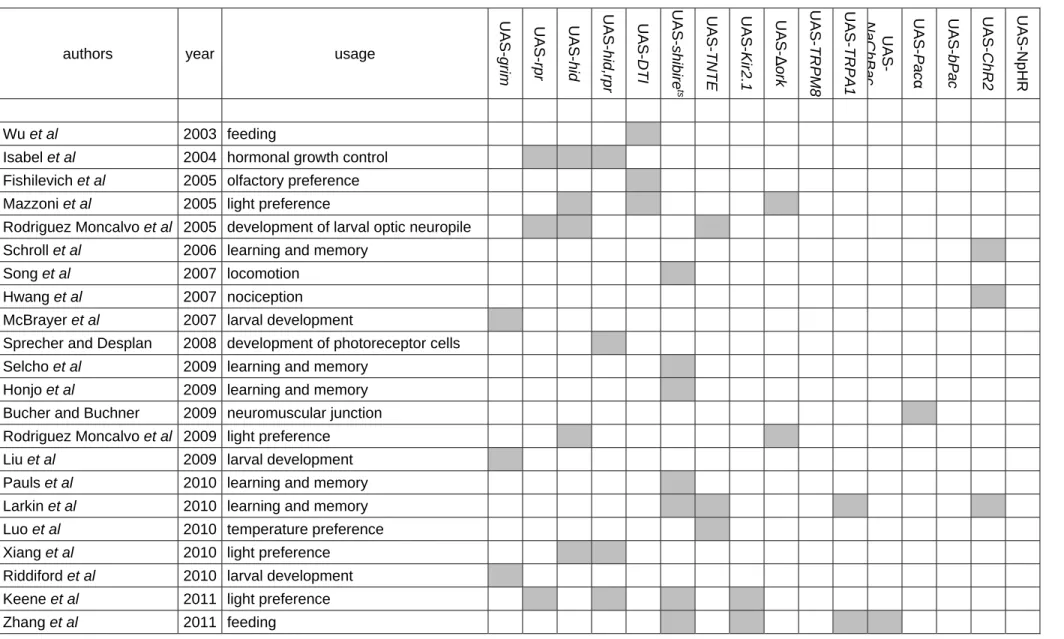
Table S1 List of publications using different effector gene combinations to manipulate different types of neurons and behaviors in the Drosophila larva to the best of our knowledge
authors year usage
UAS-gr im UAS-rpr UAS-hid UAS-hid, rpr UAS-DTI UAS-shibir e ts UAS-TN T E UAS-Kir2.1 UAS-∆ ork UAS-TR PM 8 UAS-TRPA1 UAS-Na ChBa c UAS-Pac α UAS-bPa c UAS-ChR2 U AS-NpHR Wu et al 2003 feeding
Isabel et al 2004 hormonal growth control
Fishilevich et al 2005 olfactory preference
Mazzoni et al 2005 light preference
Rodriguez Moncalvo et al 2005 development of larval optic neuropile
Schroll et al 2006 learning and memory
Song et al 2007 locomotion
Hwang et al 2007 nociception
McBrayer et al 2007 larval development
Sprecher and Desplan 2008 development of photoreceptor cells
Selcho et al 2009 learning and memory
Honjo et al 2009 learning and memory
Bucher and Buchner 2009 neuromuscular junction
Rodriguez Moncalvo et al 2009 light preference
Liu et al 2009 larval development
Pauls et al 2010 learning and memory
Larkin et al 2010 learning and memory
Luo et al 2010 temperature preference
Xiang et al 2010 light preference
Riddiford et al 2010 larval development
Keene et al 2011 light preference
D. Pauls et al. 5 SI
Koon et al 2011 locomotion
Ryuda et al 2011 feeding
Sweeney et al 2011 targeting of olfactory sensory neurons
Klarsfeld et al 2011 light preference
Tapadia et al 2011 larval development
Huser et al 2012 learning and memory
Selcho et al 2012 locomotion
Berni et al 2012 locomotion
Zhao et al 2012 feeding
Zhou et al 2012 locomotion
Kane et al 2013 light preference
Wang et al 2013 feeding
Johnson and Carder 2013 nociception
Yamanaka et al 2013 light preference
Xu et al 2013 nociception
Collins et al 2013 light preference
Ohyama et al 2013 nociception/locomotion
Robertson et al 2013 nociception
Selcho et al 2014 learning and memory
Apostolopoulou et al 2014 gustatory preference
Schoofs et al 2014 feeding/locomotion
Vogelstein et al 2014 motor behavior
Apostolopoulou, A. A., L. Mazija, A. Wust and A. S. Thum, 2014 The neuronal and molecular basis of quinine-dependent bitter taste signaling in
Drosophila larvae. Front Behav Neurosci 8: 6.
Berni, J., S. R. Pulver, L. C. Griffith and M. Bate, 2012 Autonomous circuitry for substrate exploration in freely moving Drosophila larvae. Curr Biol 22: 1861-1870.
Bucher, D., and E. Buchner, 2009 Stimulating PACalpha increases miniature excitatory junction potential frequency at the Drosophila
Collins, B., E. A. Kane, D. C. Reeves, M. H. Akabas and J. Blau, 2012 Balance of activity between LN(v)s and glutamatergic dorsal clock neurons
promotes robust circadian rhythms in Drosophila. Neuron 74: 706-718.
Fishilevich, E., A. I. Domingos, K. Asahina, F. Naef, L. B. Vosshall et al., 2005 Chemotaxis behavior mediated by single larval olfactory neurons in
Drosophila. Curr Biol 15: 2086-2096.
Honjo, K., and K. Furukubo-Tokunaga, 2009 Distinctive neuronal networks and biochemical pathways for appetitive and aversive memory in
Drosophila larvae. J Neurosci 29: 852-862.
Huser, A., A. Rohwedder, A. A. Apostolopoulou, A. Widmann, J. E. Pfitzenmaier et al., 2012 The serotonergic central nervous system of the Drosophila larva: anatomy and behavioral function. PLoS One 7: e47518.
Hwang, R. Y., L. Zhong, Y. Xu, T. Johnson, F. Zhang et al., 2007 Nociceptive neurons protect Drosophila larvae from parasitoid wasps. Curr Biol 17: 2105-2116.
Isabel, G., J. R. Martin, S. Chidami, J. A. Veenstra and P. Rosay, 2005 AKH-producing neuroendocrine cell ablation decreases trehalose and induces behavioral changes in Drosophila. Am J Physiol Regul Integr Comp Physiol 288: R531-538.
Johnson, W. A., and J. W. Carder, 2012 Drosophila nociceptors mediate larval aversion to dry surface environments utilizing both the painless
TRP channel and the DEG/ENaC subunit, PPK1. PLoS One 7: e32878.
Kane, E. A., M. Gershow, B. Afonso, I. Larderet, M. Klein et al., 2013 Sensorimotor structure of Drosophila larva phototaxis. Proc Natl Acad Sci U
S A 110: E3868-3877.
Keene, A. C., E. O. Mazzoni, J. Zhen, M. A. Younger, S. Yamaguchi et al., 2011 Distinct visual pathways mediate Drosophila larval light avoidance
and circadian clock entrainment. J Neurosci 31: 6527-6534.
Klarsfeld, A., M. Picot, C. Vias, E. Chelot and F. Rouyer, 2011 Identifying specific light inputs for each subgroup of brain clock neurons in
Drosophila larvae. J Neurosci 31: 17406-17415.
Koon, A. C., J. Ashley, R. Barria, S. DasGupta, R. Brain et al., 2011 Autoregulatory and paracrine control of synaptic and behavioral plasticity by
octopaminergic signaling. Nat Neurosci 14: 190-199.
Larkin, A., S. Karak, R. Priya, A. Das, C. Ayyub et al., 2010 Central synaptic mechanisms underlie short-term olfactory habituation in Drosophila
larvae. Learn Mem 17: 645-653.
Liu, Y., Z. Sheng, H. Liu, D. Wen, Q. He et al., 2009 Juvenile hormone counteracts the bHLH-PAS transcription factors MET and GCE to prevent caspase-dependent programmed cell death in Drosophila. Development 136: 2015-2025.
Luo, L., M. Gershow, M. Rosenzweig, K. Kang, C. Fang-Yen et al., 2010 Navigational decision making in Drosophila thermotaxis. J Neurosci 30: 4261-4272.
Mazzoni, E. O., C. Desplan and J. Blau, 2005 Circadian pacemaker neurons transmit and modulate visual information to control a rapid behavioral
response. Neuron 45: 293-300.
McBrayer, Z., H. Ono, M. Shimell, J. P. Parvy, R. B. Beckstead et al., 2007 Prothoracicotropic hormone regulates developmental timing and body
size in Drosophila. Dev Cell 13: 857-871.
Ohyama, T., T. Jovanic, G. Denisov, T. C. Dang, D. Hoffmann et al., 2013 High-throughput analysis of stimulus-evoked behaviors in Drosophila larva reveals multiple modality-specific escape strategies. PLoS One 8: e71706.
D. Pauls et al. 7 SI
Pauls, D., M. Selcho, N. Gendre, R. F. Stocker and A. S. Thum, 2010 Drosophila larvae establish appetitive olfactory memories via mushroom
body neurons of embryonic origin. J Neurosci 30: 10655-10666.
Riddiford, L. M., J. W. Truman, C. K. Mirth and Y. C. Shen, 2010 A role for juvenile hormone in the prepupal development of Drosophila
melanogaster. Development 137: 1117-1126.
Robertson, J. L., A. Tsubouchi and W. D. Tracey, 2013 Larval defense against attack from parasitoid wasps requires nociceptive neurons. PLoS One 8: e78704.
Rodriguez Moncalvo, V. G., and A. R. Campos, 2005 Genetic dissection of trophic interactions in the larval optic neuropil of Drosophila melanogaster. Dev Biol 286: 549-558.
Rodriguez Moncalvo, V. G., and A. R. Campos, 2009 Role of serotonergic neurons in the Drosophila larval response to light. BMC Neurosci 10: 66.
Ryuda, M., S. Tsuzuki, H. Matsumoto, Y. Oda, T. Tanimura et al., 2011 Identification of a novel gene, anorexia, regulating feeding activity via insulin signaling in Drosophila melanogaster. J Biol Chem 286: 38417-38426.
Schoofs, A., S. Huckesfeld, P. Schlegel, A. Miroschnikow, M. Peters et al., 2014 Selection of motor programs for suppressing food intake and
inducing locomotion in the Drosophila brain. PLoS Biol 12: e1001893.
Selcho, M., D. Pauls, B. El Jundi, R. F. Stocker and A. S. Thum, 2012 The role of octopamine and tyramine in Drosophila larval locomotion. J
Comp Neurol 520: 3764-3785.
Selcho, M., D. Pauls, K. A. Han, R. F. Stocker and A. S. Thum, 2009 The role of dopamine in Drosophila larval classical olfactory conditioning.
PLoS One 4: e5897.
Selcho, M., D. Pauls, A. Huser, R. F. Stocker and A. S. Thum, 2014 Characterization of the octopaminergic and tyraminergic neurons in the central
brain of Drosophila larvae. J Comp Neurol 522: 3485-3500.
Shim, J., T. Mukherjee and U. Banerjee, 2012 Direct sensing of systemic and nutritional signals by haematopoietic progenitors in Drosophila. Nat
Cell Biol 14: 394-400.
Song, W., M. Onishi, L. Y. Jan and Y. N. Jan, 2007 Peripheral multidendritic sensory neurons are necessary for rhythmic locomotion behavior in
Drosophila larvae. Proc Natl Acad Sci U S A 104: 5199-5204.
Sprecher, S. G., and C. Desplan, 2008 Switch of rhodopsin expression in terminally differentiated Drosophila sensory neurons. Nature 454: 533-537.
Tapadia, M. G., and N. K. Gautam, 2011 Non-apoptotic function of apoptotic proteins in the development of Malpighian tubules of Drosophila
melanogaster. J Biosci 36: 531-544.
Vogelstein, J. T., Y. Park, T. Ohyama, R. A. Kerr, J. W. Truman et al., 2014 Discovery of brainwide neural-behavioral maps via multiscale
unsupervised structure learning. Science 344: 386-392.
Wang, Y., Y. Pu and P. Shen, 2013 Neuropeptide-gated perception of appetitive olfactory inputs in Drosophila larvae. Cell Rep 3: 820-830. Wen, T., C. A. Parrish, D. Xu, Q. Wu and P. Shen, 2005 Drosophila neuropeptide F and its receptor, NPFR1, define a signaling pathway that acutely modulates alcohol sensitivity. Proc Natl Acad Sci U S A 102: 2141-2146.
Wu, Q., T. Wen, G. Lee, J. H. Park, H. N. Cai et al., 2003 Developmental control of foraging and social behavior by the Drosophila neuropeptide
Xiang, Y., Q. Yuan, N. Vogt, L. L. Looger, L. Y. Jan et al., 2010 Light-avoidance-mediating photoreceptors tile the Drosophila larval body wall.
Nature 468: 921-926.
Xu, X., J. L. Brechbiel and E. R. Gavis, 2013 Dynein-dependent transport of nanos RNA in Drosophila sensory neurons requires Rumpelstiltskin
and the germ plasm organizer Oskar. J Neurosci 33: 14791-14800.
Yamanaka, N., N. M. Romero, F. A. Martin, K. F. Rewitz, M. Sun et al., 2013 Neuroendocrine control of Drosophila larval light preference. Science
341: 1113-1116.
Zhang, T., A. Branch and P. Shen, 2013 Octopamine-mediated circuit mechanism underlying controlled appetite for palatable food in Drosophila.
Proc Natl Acad Sci U S A 110: 15431-15436.
Zhao, X. L., and A. R. Campos, 2012 Insulin signalling in mushroom body neurons regulates feeding behaviour in Drosophila larvae. J Exp Biol 215: 2696-2702.
Zhou, Y., S. Cameron, W. T. Chang and Y. Rao, 2012 Control of directional change after mechanical stimulation in Drosophila. Mol Brain 5: 39.
4 SI D. Pauls et al.
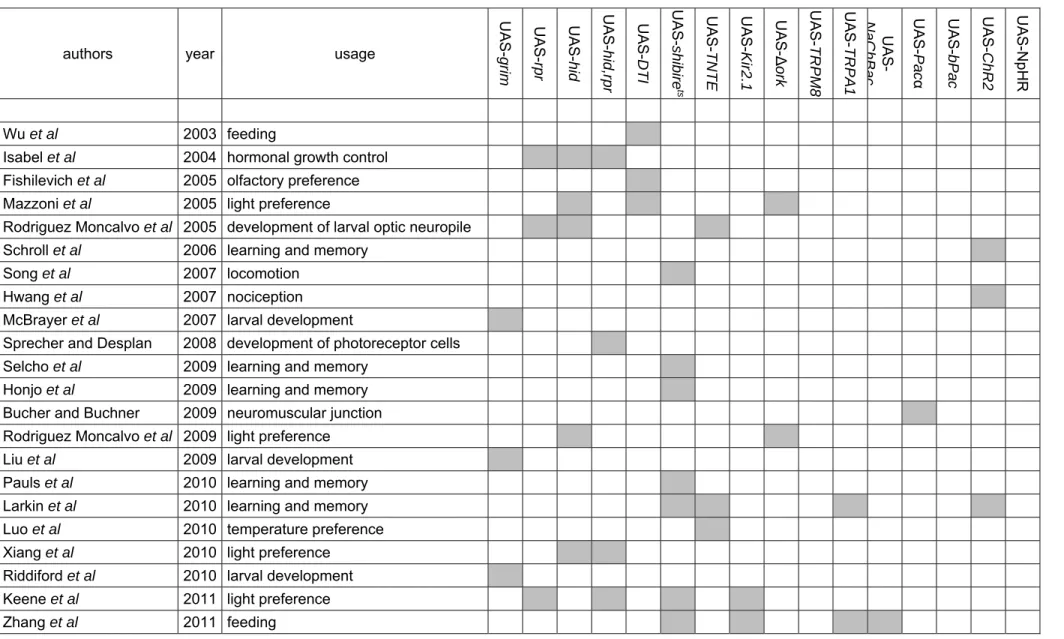
Table S1 List of publications using different effector gene combinations to manipulate different types of neurons and behaviors in the Drosophila larva to the best of our knowledge
authors year usage
UAS-gr im UAS-rpr UAS-hid UAS-hid, rpr UAS-DTI UAS-shibir e ts UAS-TN T E UAS-Kir2.1 UAS-∆ ork UAS-TR PM 8 UAS-TRPA1 UAS-Na ChBa c UAS-Pac α UAS-bPa c UAS-ChR2 U AS-NpHR Wu et al 2003 feeding
Isabel et al 2004 hormonal growth control
Fishilevich et al 2005 olfactory preference
Mazzoni et al 2005 light preference
Rodriguez Moncalvo et al 2005 development of larval optic neuropile
Schroll et al 2006 learning and memory
Song et al 2007 locomotion
Hwang et al 2007 nociception
McBrayer et al 2007 larval development
Sprecher and Desplan 2008 development of photoreceptor cells
Selcho et al 2009 learning and memory
Honjo et al 2009 learning and memory
Bucher and Buchner 2009 neuromuscular junction
Rodriguez Moncalvo et al 2009 light preference
Liu et al 2009 larval development
Pauls et al 2010 learning and memory
Larkin et al 2010 learning and memory
Luo et al 2010 temperature preference
Xiang et al 2010 light preference
Riddiford et al 2010 larval development
Keene et al 2011 light preference
Koon et al 2011 locomotion
Ryuda et al 2011 feeding
Sweeney et al 2011 targeting of olfactory sensory neurons
Klarsfeld et al 2011 light preference
Tapadia et al 2011 larval development
Huser et al 2012 learning and memory
Selcho et al 2012 locomotion
Berni et al 2012 locomotion
Zhao et al 2012 feeding
Zhou et al 2012 locomotion
Kane et al 2013 light preference
Wang et al 2013 feeding
Johnson and Carder 2013 nociception
Yamanaka et al 2013 light preference
Xu et al 2013 nociception
Collins et al 2013 light preference
Ohyama et al 2013 nociception/locomotion
Robertson et al 2013 nociception
Selcho et al 2014 learning and memory
Apostolopoulou et al 2014 gustatory preference
Schoofs et al 2014 feeding/locomotion
Vogelstein et al 2014 motor behavior
Apostolopoulou, A. A., L. Mazija, A. Wust and A. S. Thum, 2014 The neuronal and molecular basis of quinine-dependent bitter taste signaling in
Drosophila larvae. Front Behav Neurosci 8: 6.
Berni, J., S. R. Pulver, L. C. Griffith and M. Bate, 2012 Autonomous circuitry for substrate exploration in freely moving Drosophila larvae. Curr Biol 22: 1861-1870.
Bucher, D., and E. Buchner, 2009 Stimulating PACalpha increases miniature excitatory junction potential frequency at the Drosophila
6 SI D. Pauls et al.
Collins, B., E. A. Kane, D. C. Reeves, M. H. Akabas and J. Blau, 2012 Balance of activity between LN(v)s and glutamatergic dorsal clock neurons
promotes robust circadian rhythms in Drosophila. Neuron 74: 706-718.
Fishilevich, E., A. I. Domingos, K. Asahina, F. Naef, L. B. Vosshall et al., 2005 Chemotaxis behavior mediated by single larval olfactory neurons in
Drosophila. Curr Biol 15: 2086-2096.
Honjo, K., and K. Furukubo-Tokunaga, 2009 Distinctive neuronal networks and biochemical pathways for appetitive and aversive memory in
Drosophila larvae. J Neurosci 29: 852-862.
Huser, A., A. Rohwedder, A. A. Apostolopoulou, A. Widmann, J. E. Pfitzenmaier et al., 2012 The serotonergic central nervous system of the Drosophila larva: anatomy and behavioral function. PLoS One 7: e47518.
Hwang, R. Y., L. Zhong, Y. Xu, T. Johnson, F. Zhang et al., 2007 Nociceptive neurons protect Drosophila larvae from parasitoid wasps. Curr Biol 17: 2105-2116.
Isabel, G., J. R. Martin, S. Chidami, J. A. Veenstra and P. Rosay, 2005 AKH-producing neuroendocrine cell ablation decreases trehalose and induces behavioral changes in Drosophila. Am J Physiol Regul Integr Comp Physiol 288: R531-538.
Johnson, W. A., and J. W. Carder, 2012 Drosophila nociceptors mediate larval aversion to dry surface environments utilizing both the painless
TRP channel and the DEG/ENaC subunit, PPK1. PLoS One 7: e32878.
Kane, E. A., M. Gershow, B. Afonso, I. Larderet, M. Klein et al., 2013 Sensorimotor structure of Drosophila larva phototaxis. Proc Natl Acad Sci U
S A 110: E3868-3877.
Keene, A. C., E. O. Mazzoni, J. Zhen, M. A. Younger, S. Yamaguchi et al., 2011 Distinct visual pathways mediate Drosophila larval light avoidance
and circadian clock entrainment. J Neurosci 31: 6527-6534.
Klarsfeld, A., M. Picot, C. Vias, E. Chelot and F. Rouyer, 2011 Identifying specific light inputs for each subgroup of brain clock neurons in
Drosophila larvae. J Neurosci 31: 17406-17415.
Koon, A. C., J. Ashley, R. Barria, S. DasGupta, R. Brain et al., 2011 Autoregulatory and paracrine control of synaptic and behavioral plasticity by
octopaminergic signaling. Nat Neurosci 14: 190-199.
Larkin, A., S. Karak, R. Priya, A. Das, C. Ayyub et al., 2010 Central synaptic mechanisms underlie short-term olfactory habituation in Drosophila
larvae. Learn Mem 17: 645-653.
Liu, Y., Z. Sheng, H. Liu, D. Wen, Q. He et al., 2009 Juvenile hormone counteracts the bHLH-PAS transcription factors MET and GCE to prevent caspase-dependent programmed cell death in Drosophila. Development 136: 2015-2025.
Luo, L., M. Gershow, M. Rosenzweig, K. Kang, C. Fang-Yen et al., 2010 Navigational decision making in Drosophila thermotaxis. J Neurosci 30: 4261-4272.
Mazzoni, E. O., C. Desplan and J. Blau, 2005 Circadian pacemaker neurons transmit and modulate visual information to control a rapid behavioral
response. Neuron 45: 293-300.
McBrayer, Z., H. Ono, M. Shimell, J. P. Parvy, R. B. Beckstead et al., 2007 Prothoracicotropic hormone regulates developmental timing and body
size in Drosophila. Dev Cell 13: 857-871.
Ohyama, T., T. Jovanic, G. Denisov, T. C. Dang, D. Hoffmann et al., 2013 High-throughput analysis of stimulus-evoked behaviors in Drosophila larva reveals multiple modality-specific escape strategies. PLoS One 8: e71706.
Pauls, D., M. Selcho, N. Gendre, R. F. Stocker and A. S. Thum, 2010 Drosophila larvae establish appetitive olfactory memories via mushroom
body neurons of embryonic origin. J Neurosci 30: 10655-10666.
Riddiford, L. M., J. W. Truman, C. K. Mirth and Y. C. Shen, 2010 A role for juvenile hormone in the prepupal development of Drosophila
melanogaster. Development 137: 1117-1126.
Robertson, J. L., A. Tsubouchi and W. D. Tracey, 2013 Larval defense against attack from parasitoid wasps requires nociceptive neurons. PLoS One 8: e78704.
Rodriguez Moncalvo, V. G., and A. R. Campos, 2005 Genetic dissection of trophic interactions in the larval optic neuropil of Drosophila melanogaster. Dev Biol 286: 549-558.
Rodriguez Moncalvo, V. G., and A. R. Campos, 2009 Role of serotonergic neurons in the Drosophila larval response to light. BMC Neurosci 10: 66.
Ryuda, M., S. Tsuzuki, H. Matsumoto, Y. Oda, T. Tanimura et al., 2011 Identification of a novel gene, anorexia, regulating feeding activity via insulin signaling in Drosophila melanogaster. J Biol Chem 286: 38417-38426.
Schoofs, A., S. Huckesfeld, P. Schlegel, A. Miroschnikow, M. Peters et al., 2014 Selection of motor programs for suppressing food intake and
inducing locomotion in the Drosophila brain. PLoS Biol 12: e1001893.
Selcho, M., D. Pauls, B. El Jundi, R. F. Stocker and A. S. Thum, 2012 The role of octopamine and tyramine in Drosophila larval locomotion. J
Comp Neurol 520: 3764-3785.
Selcho, M., D. Pauls, K. A. Han, R. F. Stocker and A. S. Thum, 2009 The role of dopamine in Drosophila larval classical olfactory conditioning.
PLoS One 4: e5897.
Selcho, M., D. Pauls, A. Huser, R. F. Stocker and A. S. Thum, 2014 Characterization of the octopaminergic and tyraminergic neurons in the central
brain of Drosophila larvae. J Comp Neurol 522: 3485-3500.
Shim, J., T. Mukherjee and U. Banerjee, 2012 Direct sensing of systemic and nutritional signals by haematopoietic progenitors in Drosophila. Nat
Cell Biol 14: 394-400.
Song, W., M. Onishi, L. Y. Jan and Y. N. Jan, 2007 Peripheral multidendritic sensory neurons are necessary for rhythmic locomotion behavior in
Drosophila larvae. Proc Natl Acad Sci U S A 104: 5199-5204.
Sprecher, S. G., and C. Desplan, 2008 Switch of rhodopsin expression in terminally differentiated Drosophila sensory neurons. Nature 454: 533-537.
Tapadia, M. G., and N. K. Gautam, 2011 Non-apoptotic function of apoptotic proteins in the development of Malpighian tubules of Drosophila
melanogaster. J Biosci 36: 531-544.
Vogelstein, J. T., Y. Park, T. Ohyama, R. A. Kerr, J. W. Truman et al., 2014 Discovery of brainwide neural-behavioral maps via multiscale
unsupervised structure learning. Science 344: 386-392.
Wang, Y., Y. Pu and P. Shen, 2013 Neuropeptide-gated perception of appetitive olfactory inputs in Drosophila larvae. Cell Rep 3: 820-830. Wen, T., C. A. Parrish, D. Xu, Q. Wu and P. Shen, 2005 Drosophila neuropeptide F and its receptor, NPFR1, define a signaling pathway that acutely modulates alcohol sensitivity. Proc Natl Acad Sci U S A 102: 2141-2146.
Wu, Q., T. Wen, G. Lee, J. H. Park, H. N. Cai et al., 2003 Developmental control of foraging and social behavior by the Drosophila neuropeptide
8 SI D. Pauls et al.
Xiang, Y., Q. Yuan, N. Vogt, L. L. Looger, L. Y. Jan et al., 2010 Light-avoidance-mediating photoreceptors tile the Drosophila larval body wall.
Nature 468: 921-926.
Xu, X., J. L. Brechbiel and E. R. Gavis, 2013 Dynein-dependent transport of nanos RNA in Drosophila sensory neurons requires Rumpelstiltskin
and the germ plasm organizer Oskar. J Neurosci 33: 14791-14800.
Yamanaka, N., N. M. Romero, F. A. Martin, K. F. Rewitz, M. Sun et al., 2013 Neuroendocrine control of Drosophila larval light preference. Science
341: 1113-1116.
Zhang, T., A. Branch and P. Shen, 2013 Octopamine-mediated circuit mechanism underlying controlled appetite for palatable food in Drosophila.
Proc Natl Acad Sci U S A 110: 15431-15436.
Zhao, X. L., and A. R. Campos, 2012 Insulin signalling in mushroom body neurons regulates feeding behaviour in Drosophila larvae. J Exp Biol 215: 2696-2702.
Zhou, Y., S. Cameron, W. T. Chang and Y. Rao, 2012 Control of directional change after mechanical stimulation in Drosophila. Mol Brain 5: 39.