INVITED COMMENTARY
Current Challenges in Travelers
’ Malaria
Patricia Schlagenhauf&Eskild Petersen
Published online: 10 July 2013
# Springer Science+Business Media New York 2013
Abstract Travel health providers are often confronted with complex scenarios when advising travelers on malaria pre-vention. Current challenges in prevention include malaria risk assessment, where a detailed itinerary and knowledge of ma-laria epidemiology are needed. Up-to-date information on the correct use, limitations, and drug interactions of current prior-ity chemoprophylaxis agents (atovaquone/proguanil, meflo-quine, doxycycline) is key. Another challenge is to identify and reach travelers who are most at risk of malaria, such as the traveler visiting friends and relatives. Posttravel, delays in presentation, diagnosis, and inappropriate treatment of malaria are key risk factors leading to death. Treatment of malaria is an emergency requiring expert in-patient management and refer-ral to a center with adequate expertise. Artemisinin combina-tion therapies are the drugs of choice for uncomplicated ma-laria. Complicated malaria is treated preferably with intrave-nous artesunate, and the supply and quality of this life-saving antimalarial in some settings can pose one of the most urgent challenges in travelers’ malaria.
Keywords Malaria . Traveler . Chemoprophylaxis . Atovaquone/proguanil . Mefloquine . Doxycycline . ACT . Artesunate . Treatment . Interactions
Introduction
The prevention and treatment of malaria in travelers pose important challenges in travel medicine. World Tourism Organisation data suggest that there are approximately 180
million arrivals in malaria-endemic areas each year and that the numbers are increasing with particular growth (+7 %) in travel to sub-Saharan Africa, an area highly endemic for
malaria [41].
Malaria remains the most important, acute, and potentially life-threatening tropical disease encountered by Western trav-elers, as shown in a recent GeoSentinel multicenter study where 76.9 % of returning travelers who presented with a potentially fatal, travel-acquired illness were diagnosed with
Plasmodium falciparum malaria [1]. Travel health providers
are often confronted with complex scenarios when advising travelers on malaria prevention. This article highlights the most important current challenges.
Risk Rating
A major issue for travel health practitioners is malaria risk assessment. Even the global risk of malaria in endemic areas is hard to quantify, but recent data suggest that there are 250
million clinical cases per year, with about 800,000 deaths [42].
Areas at highest risk are in Africa and Southeast Asia, but even within high-risk countries, many typical tourist
destina-tions are malaria free (Fig.1, Malaria Map), so simply labeling
a country as“malaria endemic” will not provide enough detail
for risk assessment. For example, a traveler to Thailand, officially a malaria-endemic country with some high-risk areas, may visit only malaria-free areas such as Bangkok, Phuket, or Ko Samui, and this individual will not need malaria prevention measures. Several facets need to be included in this risk analysis. The key question is, where is your traveler going? A detailed itinerary and knowledge of malaria epide-miology are needed. The intensity of malaria transmission at the destination is probably the most important variable in the risk analysis. Sub-Saharan Africa is considered a high-risk region, whereas Southeast Asia and Central America have less transmission (with some exceptions). To put this is in a nu-merical context based on imported malaria cases per 100,000 travelers, malaria risk will vary from very high risk in Central P. Schlagenhauf (*)
Epidemiology of Communicable Diseases, University of Zürich Centre for Travel Medicine, Hirschengraben 84,
8001, Zürich, Switzerland e-mail: [email protected] E. Petersen
Department of Infectious Diseases,
Africa (estimated 357 cases per 100,000 travelers) to signifi-cantly lower risk in Central America (estimated 1.3 cases per
100,000 travelers) [2,3].
The species of malaria at the destination is also important, and there is flux in malaria epidemiology. Most infections imported to Europe and North America are Plasmodium falciparum infections, and this species remains the biggest
threat (in terms of mortality) [4], but it is increasingly
recog-nized that the more widely distributed Plasmodium vivax is not benign and also causes significant morbidity and,
some-times, fatal disease in travelers [4, 5•, 6]. A recent paper
examined the current failure of conventional malaria chemo-suppression in preventing P. vivax malaria and called for a new look at primaquine causal prophylaxis to prevent both
falciparum and vivax malaria [5•]. This is based on the
knowl-edge that primaquine taken daily during exposure to malaria infection eliminates early developmental stages of the parasite
in the liver cycle (Fig.2). Primaquine should be prescribed
only for G6PD-normal persons.
The“one health” concept is also important in travelers’
malaria. The entry of a new malaria species, Plasmodium knowlesi, into the human population demonstrates a parasite
crossing to man from nonhuman hosts, monkeys [6]. Globally
speaking, the number of human infections with knowlesi is
small, but certain foci are important sources of this malaria, and it is emerging as a risk for travelers to forested areas of Southeast Asia and should be taken into account in the risk assessment.
Traveler characteristics are also of vital importance in the
risk assessment. Travelers’ malaria has many faces and
mul-tiple facets, but those at highest risk of acquiring malaria are travelers of African heritage who visit friends and relatives
(VFR) [3]. This poses a major challenge for travel health
providers, since VFR travelers are less likely to seek advice prior to travel and may not be in a position to afford expensive antimalarials. New approaches, perhaps with an emphasis on primary health-care providers giving travel health advice, are urgently needed to target the VFR traveler.
In contrast to the high risk of acquiring malaria in the VFR group, the risk of dying from travelers’ malaria is highest in business travelers and tourists, particularly the elderly, and in returned travelers who present to clinics or practitioners who have little or no experience in dealing with
malaria [1,3]. Men are more likely to acquire malaria and
have more serious disease than women [7•]. Travelers to
high-risk areas really need to be convinced of the need for effective malaria chemoprophylaxis medication and mos-quito bite prevention.
Malaria map for travellers
(adapted from WHO)
Cities / areas without malaria risk
Areas with very limited risk
Areas where malaria transmission occurs
Recife Brasilia Rio de Janeiro São Paulo Bogota Quito Lima La Paz Iguassu Mexico City Caracas Harare Nairobi (center) Addis Ababa Aden Colombo Jakarta Kuala Lumpur Penang Singapore Chiangmai Bangkok Pattaya Phuket Hong Kong Macao Shanghai Manila Belem Khao Sok NP Bali (resorts) Beijing Dubai
Chemoprophylaxis Conundrums
The next challenge is to prescribe an appropriate
chemopro-phylaxis. Factors such as drug efficacy, tolerability [7•],
price, and traveler characteristics will impact the choice. The current priority antimalaria chemoprophylctic regimens are
atovaquone/proguanil, mefloquine, and doxycycline (Fig.3).
Current guidelines, such as the CDC malaria recommendations, should be consulted for correct use and dosages of antimalarial
medication [43]. All the priority medication options are very
effective against malaria, except in some foci of multidrug-resistant malaria in Thai border areas. Antimalarials are,
how-ever, associated with a high incidence of adverse events [7•,8]
and it is worthwhile to discuss fears, myths, and facts regarding these adverse events, since perception will impact traveler behavior and adherence to the chemoprophylaxis. Matching the traveler to the appropriate chemoprophylaxis can be
complex, especially for small children [8], travelers with
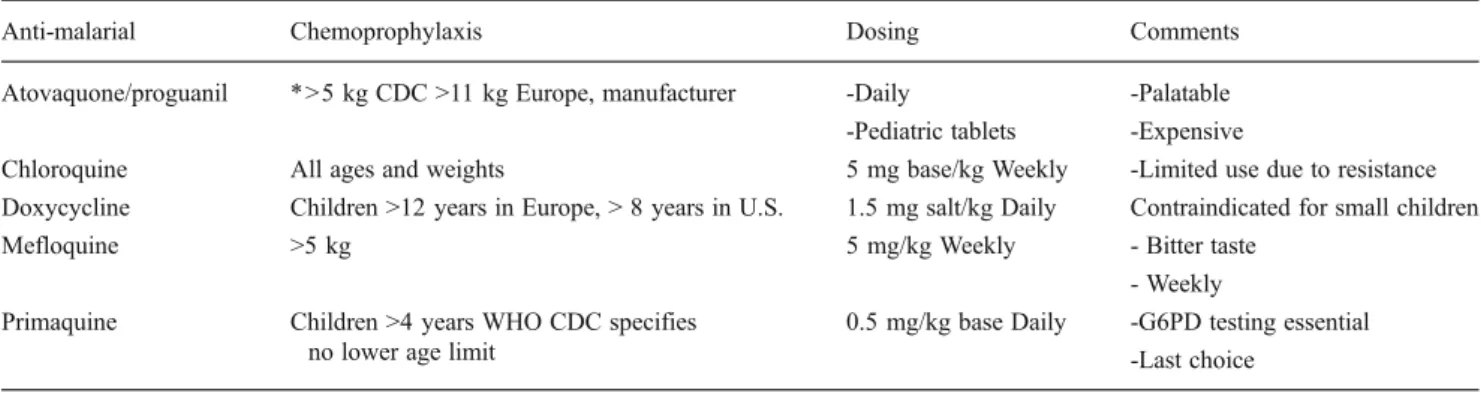
comorbidities, and the pregnant traveler. Atovaquone/ proguanil paediatric tablets are a good choice for children (>11 kg in Europe, >5 kg in the U.S.) on short trips, or longer term if the budget allows. Mefloquine is a practical,
cost-effective option for children (>5 kg) [8,9•] who stay for longer
periods in malaria-endemic areas, but parents need to disguise
the bitter taste with chocolate or yoghurt. Doxycycline is less
frequently used for children (>12 years) (Table1).
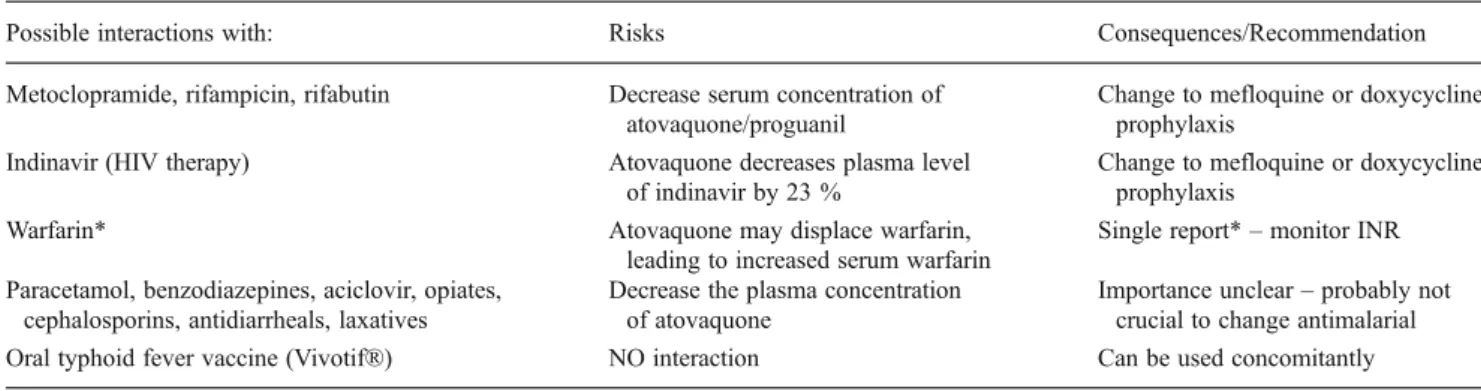
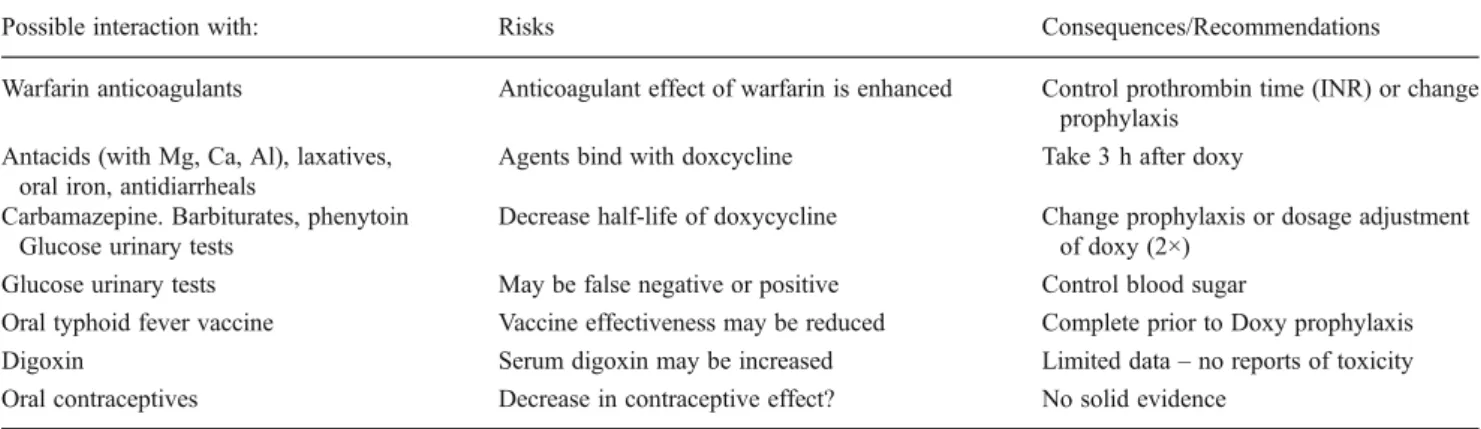
Older travelers are widening their travel expectations, often despite comorbidities, and many questions arise when recommending chemoprophylaxis where the traveler is already taking several medications for routine conditions. A recent U.S. study of adults 57–85 years of age showed that 81 % are taking at least one prescription drug, 42 % are taking at least one OTC drug, and 49 % are using dietary supplements. The results of this study would suggest that 1 in 25 individuals are at risk for a major drug–drug interaction. A thorough check of traveler comorbidities and comedication is key. Some ex-amples of important drug interactions are the following: Travelers on warfarin may need INR checks or a change of prophylaxis if using doxycycline or atovaquone/proguanil; mefloquine should not be started until after the traveler has
completed taking his live oral typhoid fever vaccine. Tables2,
3, and4show possible interactions that may occur with malaria
chemoprophylaxis.
The pregnant traveler poses a special challenge in malaria chemoprophylaxis. Malaria during pregnancy poses a signif-icant risk to the mother and foetus. Atovaquone/proguanil and doxycycline are currently not recommended in pregnancy, but mefloquine is an option, and a recent analysis has shown that Fig. 2 Efficacy of anti-malarial drugs at various sites in the life cycle. (With permission from Schlagenhauf P, Funk M, PDQ Travelers' Malaria, BC Decker 2005)
the birth prevalence of malformations (4.4 %) in
mefloquine-exposed mothers is comparable to background levels [10••].
Personal Protection Problems
Travelers need concise information on antimosquito mea-sures, and this preventive area is a real challenge. Surveys have shown that adherence to personal protection measures can be dismal. Remind the traveler of the simple fact: no bite, no malaria. The female malaria mosquito, Anopheles, bites at night. A combination of insect skin repellents (such
as DEET, IR3535, Icaridin) (Table 5), (pyrethroid)
insecticide-impregnated clothing, and bed nets/air condi-tioning is effective in malaria prevention, but adherence to these measures is poor, and time spent convincing the trav-eler is well invested. It is also worthwhile to explode the
myths about measures that are ineffective, such as the use of garlic, perfume, vitamin B complex, and ultrasound devices.
Diagnostic Dilemmas
Diagnostic tests for malaria should be performed in any ill patient who has a history of exposure—that is, patients with a history of travel to malaria-endemic areas, whether or not they
are febrile at presentation [12]. Health care facilities may not
have the expertise to do a microscopic examination of thick and thin Giemsa stained blood films. If patients with a history of travel to malaria endemic areas and with fever can not have a reliable microscopy or RDT for malaria, they should be re-ferred to the nearest center, where these facilities and skills are available. Microscopic examination of Giemsa-stained thin and thick blood films remains the gold standard because it is rapid,
Chemoprophylaxis Choices 2013
NON OPTION – Homeopathy
*
The combination of chloroquine with proguanil is not available in N. America and is rarely used in Europe, but is still used in the UK.Chloroquine 300mg base weekly
+proguanil 200mg daily* Primaquine (30mg base) daily
Priority Antimalarial
for chloroquine resistant Pf (CRPF)Mefloquine
250mg WEEKLYAtovaquone/proguanil
250mg/100mg dailyDoxycycline
100mg dailyFig. 3 Chemoprophylaxis choices (2013)
Table 1 Antimalarial chemoprophylaxis for infants and small children
Anti-malarial Chemoprophylaxis Dosing Comments
Atovaquone/proguanil *>5 kg CDC >11 kg Europe, manufacturer -Daily -Palatable -Pediatric tablets -Expensive
Chloroquine All ages and weights 5 mg base/kg Weekly -Limited use due to resistance Doxycycline Children >12 years in Europe, > 8 years in U.S. 1.5 mg salt/kg Daily Contraindicated for small children
Mefloquine >5 kg 5 mg/kg Weekly - Bitter taste
- Weekly Primaquine Children >4 years WHO CDC specifies
no lower age limit
0.5 mg/kg base Daily -G6PD testing essential -Last choice
easy to perform, and sensitive [13], with a sensitivity down to five parasites per microliter in expert hands. Thick blood films have higher sensitivity compared to thin blood films because a higher volume of blood is examined because the red blood cells are lysed. The thin blood film are used to assist species diag-nosis. It is important to diagnose malaria early, when it is uncomplicated and only centers able to perform microscopy should manage patients with malaria. After treatment has been initiated a reduction in parasitemia may not be seen for another 24 hours. Rapid diagnostic tests including a pan-plasmodia antigen can detect parasitmia as low as 200 parasites per
microliter [11]. PCR is not used in routine diagnosis as it is
not always available. However PCR is useful for confirmation of the species diagnosis and for cases with low parasitemia where microscopy may be doubtful and the rapid diagnostic tests negative.
RDTs are increasingly used in medical centers with lim-ited access to experienced microscopists; but, a rapid test cannot determine the parasite density. False negative RDTs in patients with very high parasite densities have been
described, probably due to the so-called “pro-zone”
phe-nomenon [12,13]. This problem seems to be limited to tests
based on detection of circulating histidine-rich protein 2
(HRP2) [11]. Mutations in the HRP2 gene may result in
false negative tests [14,15]. Assays are available that detect
all species—that is, P. falciparum, P. vivax, P. ovale, P. malariae, and P. knowlesi—on the basis of the detection of
the panmalarial antigens aldolase and LDH [16].
Plasmodium knowlesi infections will be detected by rapid tests, which include the pan-plasmodial aldolase or LDH
antigens [9•,17].
The latest results of the World Health Organization (WHO) multicenter evaluation of different rapid diagnostic tests show that the best performance was found with tests based on a combination of the HRP2 and pan-plasmodial
proteins [9•].
Clinicians using rapid tests need to be aware that no RDT test so far is 100 % reliable and that blood film examinations should be done in parallel. Because microscopy may be negative especially in non-immunes with a very low parasitemia, it is recommended that three blood films are examined with approximately 24 hours interval to make sure that patients presenting with low level parasitemia are not missed. If the suspicion of malaria remains after three negative samples, expert advice should be obtained from a tropical or infectious disease specialist. After diagnosis, daily blood films should be examined until they are negative for asexual parasites (i.e., rings, trophozoites, schizonts). Gametocytes do not multiply or cause clinical illness and may remain after clearance of the asexual parasitaemia.
Tricky Treatments
In the U.K., between 1987 and 2006, 25,054 patients
noti-fied with Plasmodium falciparum, of whom 184 died [2].
Table 2 Possible interactions with mefloquine prophylaxis
Possible interaction with: Risks Consequence/Recomendation
Chloroquine ECG alterations. Convulsions Don‘t combine. Change to Doxy or At/P Anticonvulsive drugs
(e.g., carbamazepine, phenytoin etc.)
Reduced plasma concentration of anti-convulsant Change prophylaxis to Doxy or At/P Oral typhoid fever vaccine (Vivotif®) Inactivation of vaccine due to mefloquine Cannot be used concomitantly Antihyperglycemics Blood sugar levels may be affected Control blood sugar levels
Cimetidine May increase MQ plasma levels Caution regarding increased risk of adverse events
Table 3 Possible interactions with atovaquone/proguanil prophylaxis
Possible interactions with: Risks Consequences/Recommendation Metoclopramide, rifampicin, rifabutin Decrease serum concentration of
atovaquone/proguanil
Change to mefloquine or doxycycline prophylaxis
Indinavir (HIV therapy) Atovaquone decreases plasma level of indinavir by 23 %
Change to mefloquine or doxycycline prophylaxis
Warfarin* Atovaquone may displace warfarin, leading to increased serum warfarin
Single report*– monitor INR Paracetamol, benzodiazepines, aciclovir, opiates,
cephalosporins, antidiarrheals, laxatives
Decrease the plasma concentration of atovaquone
Importance unclear– probably not crucial to change antimalarial Oral typhoid fever vaccine (Vivotif®) NO interaction Can be used concomitantly *Hidalgo et al. Ann Paharmacother 2011;45:e3 ** Faucher JF CID 200
Delays in presentation, diagnosis, and appropriate treatment of malaria were key risk factors, leading to death. Treatment of malaria is an emergency and requires expert in-patient management and treatment with fast acting antimalarials. A recent position paper on the management of imported ma-laria in Europe discussed mama-laria diagnostics and treatment
options and dilemmas [12,31••].
Treatment should provide a rapid clinical and parasitologi-cal cure within 3 days. Oral artemisinin combination treatment (ACT) is the medication of choice for uncomplicated malaria,
as recommended by the WHO (Table6) [18,19]. Artemether/
lumefantrine (Riamet) and dihydroartemisinin/piperaquine (Euartesim) are the two ACT formulations licensed for use in Europe. Dihydroartemisinin/piperaquine is the first antimalar-ial drug to be registered by the European Medicines Agency. Artemether/lumefantrine is registered in the U.S. and is the most widely used ACT globally. This combination is well tolerated and highly efficacious in all endemic regions, except for P. falciparum infections acquired in Cambodia and the border regions of Thailand with Myanmar, where multidrug-resistant P. falciparum strains are highly prevalent.
Artemether/lumefantrine should be administered with fatty
food to obtain optimal plasma drug concentrations [20].
Dihydroartemisinin/piperaquine, in contrast, should be taken fasting.
Atovaquone/proguanil (Malarone) can be used as a first-line treatment for uncomplicated malaria and needs to be
administered with fatty food to increase bioavailability. Atovaquone/proguanil is relatively slow acting, with consid-erably longer parasite clearance times, as compared with ACT. Atovaquone/proguanil is the preferred treatment option for
uncomplicated falciparum malaria from regions with
artemisinin resistance (Cambodia, Thailand border regions). Treatment of severe, complicated falciparum malaria: A parasite density of 2 % or more in nonimmune and 5 % or more in malaria-immune subjects is defined as severe. Severe malaria may also be caused by species other than P. falciparum, especially P. knowlesi. Plasmodium vivax can also
be severe in nonimmunes [21]. Severe imported P. falciparum
malaria is an emergency that may rapidly become fatal
[22].Intravenous artesunate (IVA) has been shown to be
supe-rior to intravenous quinine (IVQ) in overall survival and is
safer and simpler to administer [18, 23, 24]. A recent
Cochrane review concluded that treatment with artesunate significantly reduced the risk of death in both adults (RR 0.61, 95 % confidence interval [CI] 0.50–0.75; 1,664
partic-ipants, five trials) and children (RR 0.76, 95 % CI 0.65–0.90;
5,765 participants, four trials) [25]. Intravenous artesunate
must be started immediately after the confirmation of the diagnosis, and the patients should be transferred to the ICU for management.
A recent study reported haemolytic anaemia in 6 out of 25 patients treated with IVA for severe imported malaria
diag-nosed 14–31 days after the first dose of IVA [26]. A larger
Table 5 Repellents: Pros and cons
Repellent Advantages Disadvantages
DEET Widely used and tested, effective 20 % DEET protects for >5 h* May damage fabrics and plastics Bayrepel® Picaridin KBR 3023 19.2 % preparation similar protection to DEET best against
An gambiae** Less irritating than DEET
Interindividual variation EBAAP IR3535 Mean protection 23 min* Good cosmetic properties Variation in efficacy PMD Eucalyptus citriodora 96%protection for up to 4 h Plant-based repellent Well tolerated Interindividual variation with
lemon eucalyptus
Natural Oils “Bio” – high acceptance (Very) short protection duration Table 4 Possible interactions with doxycycline
Possible interaction with: Risks Consequences/Recommendations Warfarin anticoagulants Anticoagulant effect of warfarin is enhanced Control prothrombin time (INR) or change
prophylaxis Antacids (with Mg, Ca, Al), laxatives,
oral iron, antidiarrheals
Agents bind with doxcycline Take 3 h after doxy Carbamazepine. Barbiturates, phenytoin
Glucose urinary tests
Decrease half-life of doxycycline Change prophylaxis or dosage adjustment of doxy (2×)
Glucose urinary tests May be false negative or positive Control blood sugar
Oral typhoid fever vaccine Vaccine effectiveness may be reduced Complete prior to Doxy prophylaxis Digoxin Serum digoxin may be increased Limited data– no reports of toxicity Oral contraceptives Decrease in contraceptive effect? No solid evidence
study including 55 patients with severe malaria reported late onset haemolytic anaemia in 6 patients (9 %) between 7 and
31 days after start of IVA [27], and three more cases have been
reported [28]. In a large French study of about 400 severe
malaria patients treated with IVQ in the ICU, 28.5 % of them
required red blood cell transfusion for marked anaemia [29].
Patients should be monitored for 4 weeks following IVA for haemolysis and leukopenia. It is unclear whether this condition can occur after treatment with artemether/lumefantrine, but a
single case has been reported in the literature [30]. IVA should
be completed with a full course of ACT, atovaquone/proguanil, or mefloquine.
The management and treatment of complicated malaria should be centralized, and the patient should be transferred to a center where intravenous artesunate, skills in microscopy. Detailed recommendations can be found in a recent position
paper on management of imported malaria in Europe [31••].
Tricky Treatment ofP. vivax, P. ovale, P. malariae,
andP. knowlesi
Plasmodium ovale and P. malariae generally remain sensitive to chloroquine in all endemic areas, despite reports of delayed
parasite clearance time [32]. Plasmodium vivax sensitivity to
chloroquine has declined steadily in Indonesia, Peru, and
Oceania [19], and a paradigm shift is imminent, with opinion
leaders beginning to call for a switch to ACT as the drug of choice in Indonesia, Peru, and Oceania. The use of artemether/lumefantrine has been suggested as a pragmatic
choice in areas with chloroquine-resistant P. vivax [33].
Mefloquine (15 mg/kg body weight as a single dose) has been found to be highly effective against P. vivax, with a
treatment success of 100 % [34]. Monotherapy with
doxy-cycline (100 mg twice a day for 7 days) results in poor cure
rates against P. vivax [35], but quinine is also effective
against chloroquine-resistant P. vivax, but it is not an ideal treatment because of low tolerability and the possibility of
early relapses [34]. The first-line treatment for P. vivax is
chloroquine, with ACT as second line if the response to chloroquine is poor.
Plasmodium vivax and P. ovale infections, but not P. malariae, require treatment with primaquine for 14 days to
eradicate liver hypnozoites (Fig.2). Primaquine is
contrain-dicated in patients with deficiency of the enzyme
glucose-6-phosphate dehydrogenase (G6PD) [36]. Plasmodium vivax
strains with reduced susceptibility to primaquine are found in southern regions of Oceania and Southeast Asia and require a higher dose of primaquine (up to 0.75 mg/kg/day,
max 30 mg per day) for 14 days to prevent relapses [37].
Primaquine 30 mg per day in adults tested negative for G6PD deficiency should be standard treatment for adult
patients with P. vivax and P. ovale after G6PD testing [38].
T able 6 T reatment of uncomplicated falciparum malaria in adults. (Adapted from reference [ 31 •• ]) Adult Patients Drug Dosage Comment First line Artemether/Lumefantrine (Riamet ™ ) T wice daily for 3 days >35 kg: 4 tablets each 20 mg/120 mg for 6 doses (0 –8 –24 –36 –48 –60 h) T ake with fatty food, reduced ef ficacy in Cambodia and border regions of Thailand Dihydroartemisinin/Piperaquine (Eurartesim ™ )° Once daily for 3 days 36 bis <75 kg: 3 tablets each 320 mg/40 mg 75 –100 kg: 4 tablets each 320 mg/40 mg Administration without food, at least 3 h from any meal Atovaquone/Proguanil (Malarone ™ ) Once daily for 3 days >40 kg: 4 tablets à 250/100 mg Administration with fatty food Second line Quinine*/Doxycycline Thrice daily 10 mg/kg quinine plus daily 200 mg doxycycline for 7 days Loose drug combination, of f-label use Quinine*/Clindamycin Thrice daily 10 mg/kg quinine plus twice daily 10 mg/kg clindamycin for 7 days Loose drug combination, of f-label use Mefloquine (Lariam ™ )** Split total dose in 2– 3 doses 6– 8 h apart 45 –60 kg: 5 tablets (3 + 2 tablets) >60 kg: 6 tablets (3 + 2 + 1 tablets) Administration after food intake monotherapy , which is not suitable for regions with multidrug-resistant falciparum malaria (SE Asia) Note . Artemether/lumefantrine has to be administered with fatty food to obtain optimal plasma drug concentrations. Dihydroartemisinin/piperaquine should be taken fasting. *Quinine dose provided as quinine sulphate **Mefloquine is rarely used for treatment due to increased incidence of adverse events at treatment dosage
Primaquine should be administered concomitantly with a partner blood schizonticide.
Treatment of P. knowlesi is not standardized. A patient suspected of P. knowlesi infection should be referred for expert diagnosis and treatment. Uncomplicated P. knowlesi cases can be treated with ACT, chloroquine, quinine, or
atovaquone/proguanil [39]. A recent study showed that ACT
cleared parasites faster than did comparator antimalarials. In severe P. knowlesi cases, the use of IVA was associated with a lower case-fatality rate (17 % vs. 31 %) and lower median
parasite clearance time (2 days vs. 4 days) than was IVQ [40].
Thus, uncomplicated P. knowlesi should be treated with chloroquine or an ACT drug, and complicated P. knowlesi with IVA.
Conclusions
The prevention and treatment of travelers malaria is highly challenging. The pretravel risk assessment is key to defining the type and intensity of malaria transmission at the desti-nation and to prescribing appropriate antimalarials that are individually tailored. Special attention to individual charac-teristics is essential. Risk groups, such as pregnant women, expatriate travelers, small children, the elderly, and those on polymedication, need special attention.
The most important challenge for travel health advisers
and, indeed, for returned travelers is simply to“think
ma-laria” when there is a suggestive travel history and to act promptly in case of fever. Treatment of malaria is an emer-gency and requires expert in-patient management and treat-ment with fast-acting antimalarials. Delays in presentation and diagnosis and inappropriate treatment of malaria are key risk factors leading to death.
Compliance with Ethics Guidelines
Conflict of Interest Patricia Schlagenhauf and Eskild Peteresen declare that they have no conflict of interest.
Human and Animal Rights and Informed Consent This article does not contain any studies with human or animal subjects performed by any of the authors.
References
Papers of particular interest, published recently, have been highlighted as:
• Of importance •• Of major importance
1. Jensenius M, Han P, Schlagenhauf P, et al. Acute and Potentially Life-Threatening tropical diseases in Western Travelers – A
GeoSentinel Multicenter Study. 1996-2011. AmJTrop Med Hyg. 2013;88:397–404.
2. Checkley AM et al. Risk factors for mortality from imported falciparum malaria in the United Kingdom over 20 years: an observational study. BMJ. 2012;344:e2116.
3. Askling HH et al. Malaria risk in travellers. Emerg Infect Dis. 2005;11:436–41.
4. Baird JK. Evidence and implications of mortality associated with acute Plasmodium vivax malaria. Clin Rev Microbiol. 2013;26:36–57. 5.• Baird JK. Suppressive chemoprophylaxis invites avoidable risk
of serious illness caused by Plasmodium vivax malaria. Travel Med Infect Dis. 2013. doi:10.1016/j.tmaid.2013.01.002.
6. Antinori S, Galimberti L, Milazzo L, Corbellino M. Plasmodium knowlesi: The emerging zoonotic malaria parasite Acta Tropica 2013:191–201
7.• Schlagenhauf P, Tschopp A, Johnson R et al. Tolerability of malaria chemoprophylaxis in non-immune travellers to sub-Saharan Africa: multicentre, randomised, double blind, four arm study. BMJ. 2003;327:e1078.
8. Schlagenhauf P, Adamcova M, Schaerer MT, et al. Use of meflo-quine in children, a review of dosage, pharmacokinetics and toler-ability. Malaria J. 2011;10:292.
9.• Chen LH, Wilson ME, Schlagenhauf P. Controversies and mis-conceptions in malaria chemoprophylaxis for travelers. JAMA. 2007;297:2251–63.
10.•• Schlagenhauf P, Suter P, Regep L et al. Pregnancy and fetal outcomes after exposure to mefloquine in the pre- and periconception period and during pregnancy. Clin Infect Dis. 2012;54:e124–31.
11. Mahajan B, Zheng H, Pham PT, Sedegah MY, Majam VF, Akolkar N, et al. Polymerase chain reaction-based tests for pan-species and species-specific detection of human Plasmodium parasites. Transfusion. 2012.
doi:10.1111/j.1537-2995.2011.03541.x[Epub ahead of print].
12. Luchavez J, Baker J, Alcantara S, Belizario Jr V, Cheng Q, McCarthy JS, et al. Laboratory demonstration of a prozone-like effect in HRP2-detecting malaria rapid diagnostic tests: implica-tions for clinical management. Malar J. 2011;10:286.
13. Gillet P, Scheirlinck A, Stokx J, De Weggheleire A, Chaúque HS, Canhanga OD, et al. Prozone in malaria rapid diagnostics tests: how many cases are missed? Malar J. 2011;10:166.
14. Koita OA, Doumbo OK, Ouattara A, Tall LK, Konaré A, Diakité M, et al. False-negative rapid diagnostic tests for malaria and deletion of the histidine-rich repeat region of the hrp2 gene. AmJTrop Med Hyg. 2012;86:194–8.
15. Baker J, Gatton ML, Peters J, Ho MF, McCarthy JS, Cheng Q. Transcription and expression of Plasmodium falciparum histidine-rich proteins in different stages and strains: implications for rapid diagnostic tests. PLoS One. 2011;6:e22593.
16. Chiodini PL, Bowers K, Jorgensen P, Barnwell JW, Grady KK, Luchavez J, et al. The heat stability of Plasmodium lactate dehydrogenase-based and histidine-rich protein 2-based malaria rapid diagnostic tests. Trans R Soc Trop Med Hyg. 2007;101:331–7.
17. van Hellemond JJ, Rutten M, Koelewijn R, Zeeman AM, Verweij JJ, Wismans PJ, et al. Human Plasmodium knowlesi infection detected by rapid diagnostic tests for malaria. Emerg Infect Dis. 2009;15:1478–80.
18. World Health Organization. Severe falciparum malaria. Trans R Soc Trop Med Hyg. 2000;94 Suppl 1:S1–S90.
19. World Health Organization. Guidelines for the treatment of malar-ia. WHO, Geneva, 2011 (http://www.who.int/malaria/world_
malaria_report_2010/en/index.html)
20. Wernsdorfer WH. Coartemether (artemether and lumefantrine): an oral antimalarial drug. Expert Rev Anti Infect Ther. 2004;2:181–96. 21. Franklin BS, Vitorino BL, Coelho HC, Menezes-Neto A, Santos ML, Campos FM, et al. Plasma circulating nucleic acids levels
increase according to the morbidity of Plasmodium vivax malaria. PLoS One. 2011;6:e19842.
22. Bruneel F, Tubach F, Corne P, Megarbane B, Mira JP, Peytel E, et al. Severe Imported Malaria in Adults (SIMA) Study Group: Severe imported falciparum malaria: a cohort study in 400 criti-cally ill adults. PLoS One. 2010;5:e13236.
23. Dondorp A, Nosten F, Stepniewska K, Day N, White N. Artesunate versus quinine for treatment of severe falciparum ma-laria: a randomised trial. Lancet. 2005;366:717–25.
24. Dondorp AM, Fanello CI, Hendriksen IC, Gomes E, Seni A, Chhaganlal KD, et al. AQUAMAT group. Artesunate versus qui-nine in the treatment of severe falciparum malaria in African children (AQUAMAT): an open-label, randomised trial. Lancet. 2010;376:1647–57.
25. Sinclair D, Donegan S, Isba R, Lalloo DG. Artesunate versus quinine for treating severe malaria. The Cochrane Library 2012.
DOI:10.1002/14651858.CD005967.pub4.
26. Zoller T, Junghanss T, Kapaun A, Gjorup I, Richter J, Hugo-Persson M, et al. Intravenous artesunate for severe malaria in travelers. Eur Emerg Infect Dis. 2011;17:771–7.
27. Kreeftmeijer-Vegter AR, van Genderen PJ, Visser LG, Bierman WF, Clerinx J, van Veldhuizen CK, et al. Treatment outcome of intravenous artesunate in patients with severe malaria in the Netherlands and Belgium. Malar J. 2012;11:102.
28. Rolling T, Schmiedel S, Wichmann D, Wittkopf D, Burchard GD, Cramer JP. Post-treatment haemolysis in severe imported malaria after intravenous artesunate: case report of three patients with hyperparasitaemia. Malar J. 2012;11:169.
29. Société de Pathologie Infectieuse de Langue Française; Collège des Universitaires de Maladies Infectieuses et Tropicales; Société Française de Médecine des Armées; Société Française de Parasitologie; Société Française de Pédiatrie; Société de Médecine des Voyages; Société de Pathologie Exotique; Société de Réanimation de Langue Française: Recommendations for clin-ical practice. Management and prevention of imported Plasmodium falciparum malaria. Med Mal Infect. 2008;38:54–67. 30. Aloni NM, Nsangu M, Kunuanunua T, Kadima TB, Muanda TF. Haemolytic crisis of blackwater fever following artemether-lumefantrine intake. Bull Soc Pathol Exot. 2010;103:296–8. 31.•• Askling HH, Bruneel F, Buchard G, Castelli F, Chiodini PL,
Grobusch MP, et al. Management of imported malaria in Europe. Malar J. 2012;11:328.
32. Siswantoro H, Russell B, Ratcliff A, Prasetyorini B, Chalfein F, Marfurt J, et al. In vivo and in vitro efficacy of chloroquine against Plasmodium malariae and P. ovale in Papua, Indonesia. Antimicrob Agent Chemother. 2011;55:197–202.
33. Bassat Q. The use of artemether-lumefantrine for the treatment of uncomplicated Plasmodium vivax malaria. PLoS Negl Trop Dis. 2011;5:e1325.
34. Pukrittayakamee S, Chantra A, Simpson JA, Vanijanonta S, Clemens R, Looareesuwan S, et al. Therapeutic responses to different antimalarial drugs in vivax malaria. Antimicrob Agent Chemother. 2000;44:1680–5.
35. Taylor WR, Widjaja H, Richie TL, Basri H, Ohrt C, Tjitra, et al. Chloroquine/doxycycline combination versus chloroquine alone and doxycycline alone for the treatment of Plasmodium falciparum and Plasmodium vivax malaria in north-eastern Irian Jaya, Indonesia. AmJTrop Med Hyg. 2001;64:223–8.
36. Baird JK, Hoffman SL. Primaquine therapy for malaria. Clin Infect Dis. 2004;39:1336–45.
37. Fernando D, Rodrigo C, Rajapakse S. Primaquine in vivax malar-ia: an update and review on management issues. Malar J. 2011;10:351.
38. Centers for Disease Control and Prevention: Guidelines for Treatment of Malaria in the United States.http://www.cdc.gov/ma
laria/resources/pdf/treatmenttable.pdf(Accessed 15th March 2013)
39. Singh B, Daneshvar C. Plasmodium knowlesi Malaria in Malaysia. Med J Malaysia. 2010;65:224–30.
40. William T, Menon J, Rajaram G, Chan L, Ma G, Donaldsnon S, et al. Severe P. knowlesi malaria in a tertiary care hospital, Sabah, Malaysis. Emerg Infect Dis. 2011;17:1248–55.
Web References
41. World Tourism Organisation UNWTO Tourism Highlights 2012 Edition, http://mkt.unwto.org/en/publication/unwto-tourism-high
lights-2012-editionAccessed January 8th, 2013).
42. WHO. World Malaria Report 2010www.who.int/malaria/publica tions/atoz/9789241564106/en/index.html
43. **CDC malaria prevention guidelines 2014, The Yellow Book www.cdc.org