People’s Democratic Republic of Algeria
Ministry of Higher Education and Scientific Research
University of Djillali Liabes, Sidi Bel Abbes
Faculty of Letters, Languages, and Arts
The Department of English
-
Thesis Submitted to the Department of English in Candidacy for the Degree of Doctorate in Didactics of English as a Foreign Language
Submitted by Supervised by
Miss. Naima SAHLI Prof. Fawzia BOUHASS BENAISSI
Board of Examiners
Prof. Noureddine GUERROUDJ President University of Djillali Liabes Sidi Bel Abbes Prof. Fawzia BOUHASS BENAISSI Supervisor University of Djillali Liabes Sidi Bel Abbes Dr. Nadjouia HALLOUCH Examiner University of Djillali Liabes Sidi Bel Abbes Dr. Yasmina DJAFRI Examiner University of Ibn Badis Mostaganem
Dr. Wassila BOUKELIKHA GRAIA Examiner University of Abou Bakr Belkaid Tlemcen Dr. Ammar BENABED Examiner University of Ibn Khaldoun Tiaret
Academic Year 2019/2020
Implementing Formative Assessment in Teaching
Writing
An action research study of first year LMD students at Ibn Khaldoun
University- Tiaret
Dedication
To my family,
“...the compass that guides me. It is the inspiration to reach great heights, and my comfort when I occasionally falter.” Brad Henry To my teachers,
“...who inspire my mind, ignite my imagination, and instill a love of learning in me.” Brad Henry To my dearest friends,
“But if the while I think on thee, dear friend, all losses are restored and sorrows end.” William Shakespeare
Acknowledgements
Words cannot express the gratitude that I owe to many people who supported me throughout the realisation of this thesis.
I offer my deep and sincere thanks to my supervisor Professor. Fawzia Bouhass Benaissi, for her seriousness, inspiration, infinite guidance and patience. I will be forever inspired by her professional endeavour, endless moral support and academic standards. Heartfelt thanks to the jury members for keenly reading and evaluating my dissertation namely Prof. Noureddine Guerroudj, Dr. Nadjouia Hallouch, Dr. Yasmina Djafri, Dr. Wassila Boukleikha Graia, and Dr. Ammar Benabed.
My students also deserve my gratitude for taking an active part in this research study throughout the course of this research study.
Special thanks go to my dearest friend and research journey colleague, Louiza Belaid. I am grateful for her words of encouragement and assistance in the quantitative part of my research.
I am immensely grateful to Professor. Abdelkadeur Zerrouki and Dr. Kheira Arab for their endless support and reassurance.
Abstract
The implementation of formative and self-assessment in the writing classroom has been a constant challenge for teachers since assessment for learning is a demanding process in daily practice. Yet, investigating the impact of assessment on students’ achievement and teacher practice has resulted in positive outcomes. This research study aims at the implementation of formative and self-assessment in the writing classroom. To this end, an action research plan was undertaken with a first year class of 50 undergraduate students majoring in English language throughout twelve weeks. Four data collection methods were used in this study; an attitudinal questionnaire was utilised in the pre-study phase in order to identify the participants’ attitudes and experiences towards writing and self-assessment. Then the participants assessed their writing during three phases of the writing process using binary checklists. The practitioner researcher also used a reflective diary as a means to reflect on the students’ action during the self-assessment phase and to inform her teaching practice. In addition, a Likert Scale Survey was used in the post-study phase. Findings indicated that when the students were engaged in self-assessment, they could achieve the task learning goals and apply the task criteria effectively. The results showed that the students could assess the quality of their work accurately. Moreover, the students developed positive attitudes towards writing in English and classroom assessment. Themes from the reflective diary informed the practitioner researcher’s classroom decision-making and showed patterns of shift towards learner-centred classroom. Hence, the findings suggested that formative and self-assessment had the potentials to empower the students to take an active part in their learning. Besides, when the students were trained in self-assessment, accurate criteria guided them towards achieving learning aims in their writing. Reflecting on students’ self-assessment procedures
also informed the teacher about the students’ needs, thus she designed her lessons to cater for their needs.
Keywords: criteria, formative assessment, reflection-on-action, student self-assessment, writing process.
List of Tables
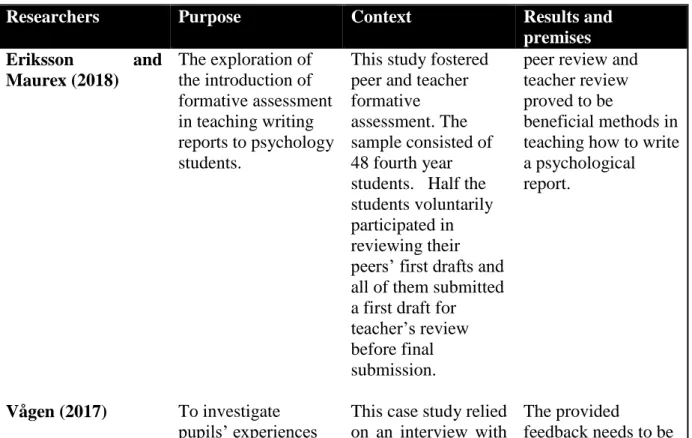
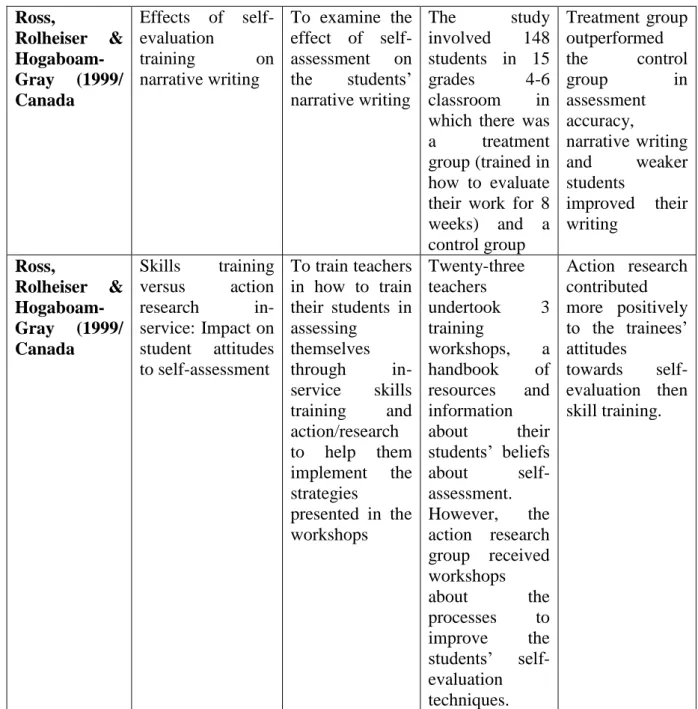
Table 2.1 Selected empirical studies about formative assessment in the writing
classroom...60
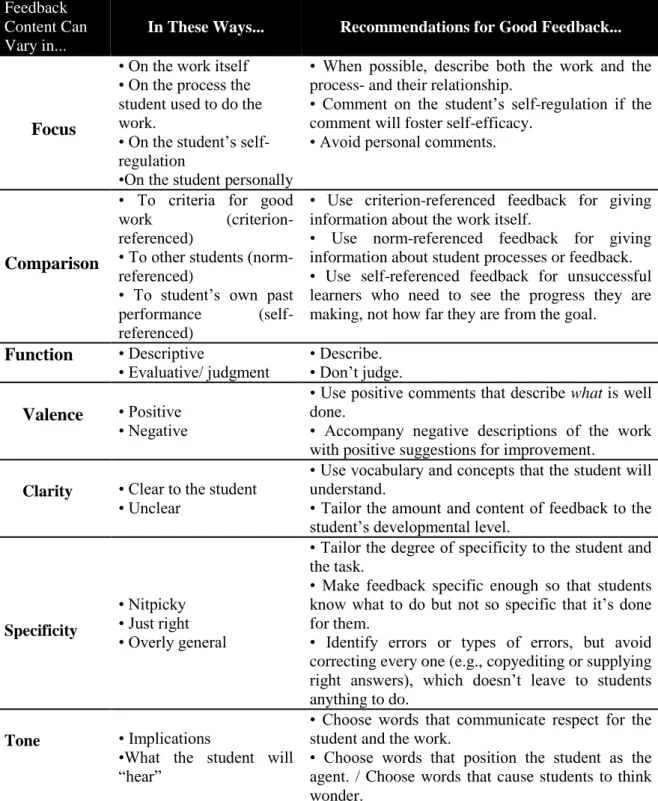
Table 2.2 Feedback content (Brookhart, 2008, pp.6-7)...73
Table 2.3 Research synthesis about self-assessment and writing...86
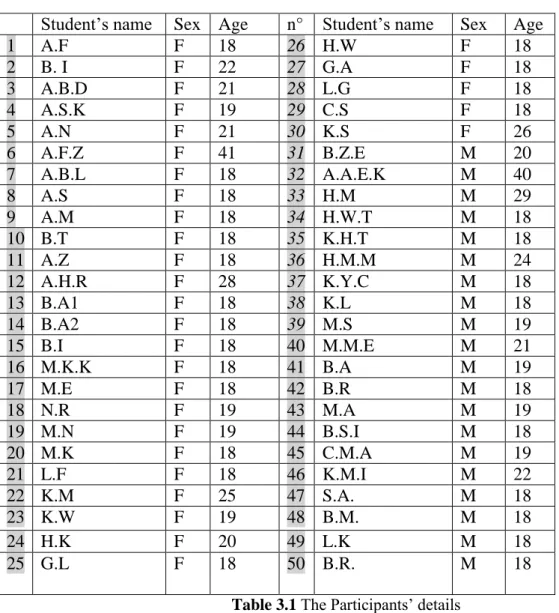
Table 3.1 The participants’ details...103
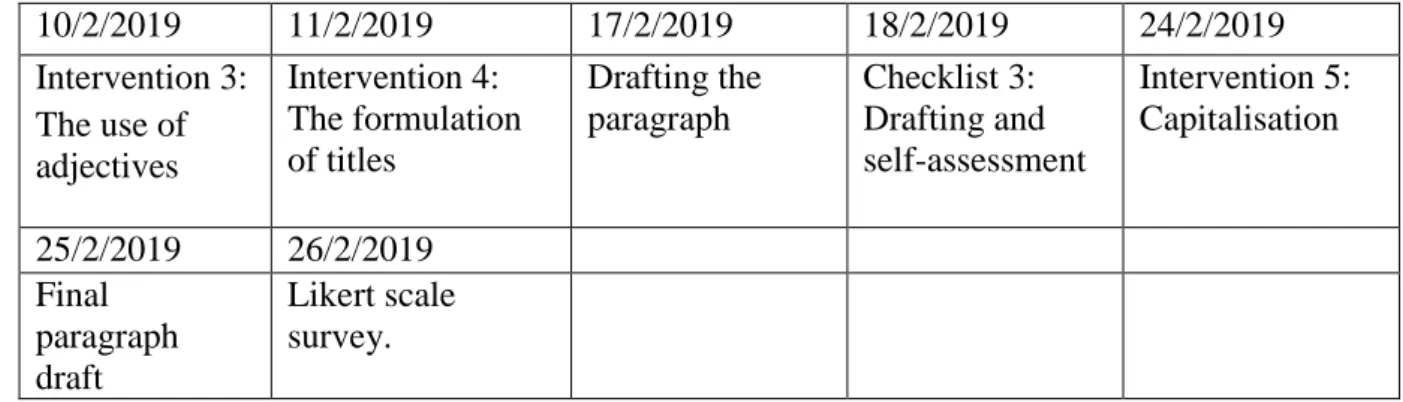
Table 3.2 Data collection timeline...110
Table 4.1 Participants’ justification for writing enjoyment or not...127
Table 4.2 Correlation between students’ self-assessment and teacher-assessment at the clustering stage...140
Table 4.3 Correlation between students’ self-assessment and teacher-assessment (Paragraph outline)...141
Table 4.4 Correlation between students’ self-assessment and teacher-assessment (Editing Stage)...143
Table 4.5 The Likert scale results about students’ attitudes towards self-assessment...150
Table 5.1 Free applications and softwares for the writing classroom...178
List of Figures
Figure 1.1 The mastery learning instructional process (Guskey, 2005,
04)...20
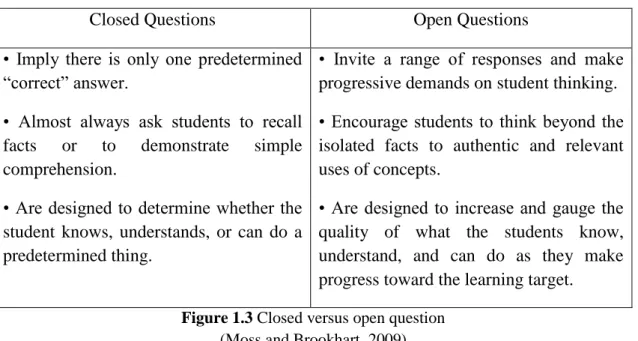
Figure 1.2 Quality questioning: Research-based practice to engage every learner (Walsh and Sattes, 2005, p.vi)...35
Figure 1.3 Closed versus open question (Moss and Brookhart, 2009)...36
Figure 1.4 Quality questioning: Research-based practice to engage every learner (Walsh and Sattes, 2005, p. 89)...38
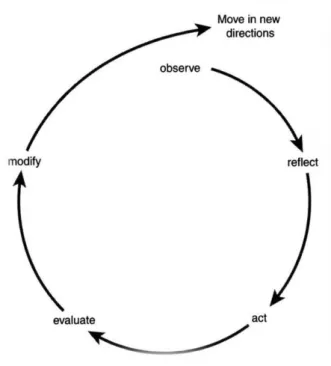
Figure 3.1 The cycle of action research (McNiff and Whitehead, 2006)...106
Figure 3.2Reflection in and on action to improve teaching and learning (Scales, 2008, p. 12)...122
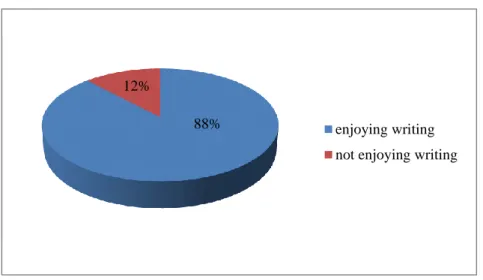
Figure 4.1 Students’ attitudes towards writing...127
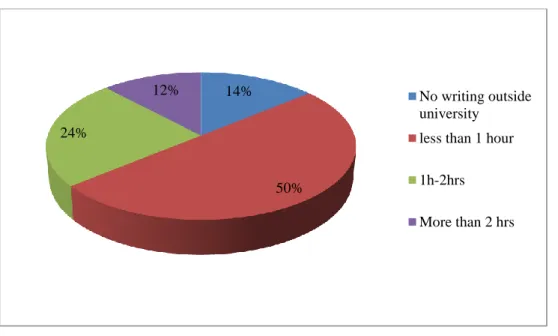
Figure 4.2 Time devoted for writing outside university...128
Figure 4.3 Students’ resources dependence in writing...129
Figure 4.4 Students’ reading habits...129
Figure 4.5 The students’ writing challenges...130
Figure 4.6 The participants’ awareness of writing criteria...132
Figure 4.7 The participants’ self-assessment experiences...133
Figure 4.8 Students’ self-assessment versus teacher assessment (Clustering phase)...141
Figure 4.9 The correlation between students’ self-assessment and teacher assessment (paragraph outline)...142
Figure 4.10 The correlation between students’ self-assessment and teacher assessment (Editing phase)...144
Figure 4.11 Students’ attitudes towards self-assessment...155
Figure 5.2 A Self-assessment checklist about description...192 Figure 5.3 An analytic rubric about description...193
Table of Contents Dedication...I Acknowledgements...II Abstract...III List of Tables...V List of Figures...VI Table of Contents...IX General Introduction...01
Chapter One: The Correlation between Formative Assessment and Active Learning Introduction...10
1.1 The Shift from Summative to Formative Assessment...11
1.2 Definition of Formative Assessment...15
1.3 The Milestones of Formative Assessment...17
1.4 Synthesis of Evidence about the Effectiveness of Formative and Self-assessment...29
1.5 Tools of Formative Assessment...32
1.5.1. Analytic rubrics: Definition, Components and Usefulness...32
1.5.2. Questioning...34
1.5.3. Exit cards...38
1.5.3.1. Differentiation...39
1.5.3.2. Data driven instruction...40
1.5.3.3. Progress monitoring...40
1.5.3.4. Increasing communication between teachers and learners...40
Conclusion...40 Chapter Two: The History of Assessing Writing
Introduction...44
2.1 Definition of Assessing Writing...44
2.2 Origins of Assessing Writing...45
2.3 Laying the Foundation of the Discipline of Assessing Writing...48
2.3.1 Objective tests (Around the 1950’s- 1970)...49
2.3.2 The holistically-scored essay (1970-1986)...51
2.3.3 Portfolio assessment (1986)...56
2.4 Assessment for Learning in the Writing Classrooms...58
2.5 Synthesis of Empirical Studies about Formative Assessment and Writing...61
2.6 Responding to Writing...65
2.7 Definition of Self-assessment: Multifarious Definitions...82
2.8 Research on Self-assessment...85
2.9 Student self-assessment of writing...85
Conclusion...91
Chapter Three: The Design and Execution of the Action Plan in the Writing Class Introduction...93
3.1 Research Questions...93
3.2 Reflection as an agent of change...98
3.2.1 Reflection-before-action...99
3.2.2 Reflection in action...100
3.2.3 Reflection on action...100
3.3 Research Site...102
3.4 Population and Sampling Method...102
3.4.1 Class profile...103
3.5 Data Collection Procedures...106
3.6 Data Collection and Management Procedures...109
3.6.1 Student self-assessment...111
3.6.1.1 Checklists...111
3.6.1.2 Preparing the students for self-assessment...113
3.6.1.3 The selection of the task...115
3.6.2 Questionnaires...116
3.6.3 The researcher diary...118
Conclusion...122
Chapter Four: Findings and Discussion Introduction...124
4.1 Data Analysis...125
4.2 Questionnaire Results...126
4.2.1 Results of the participants’ attitudes towards writing...126
4.3 The Correlation between the Practitioner Researcher’s assessment and the Students’ self-assessment...139
4.3.1 Results of the Correlation...139
4.3.2 Discussion and Interpretation of the Correlation Results...144
4.4 The Analysis of the Practitioner Researcher’s reflective Journal Entries...146
4.4.1 A demanding experience of research, failure and ongoing trials...146
4.4.2 Informing teaching and students’ needs...147
4.4.3 New visions leading to new roles in the writing classroom...148
4.4.4 Developing the practitioner researcher’s self-awareness...149
4.5 The Analysis of Likert Scale Survey...149
Chapter Five: Recommendations for the Implementation of Assessment for Learning
Introduction...159
5.1 Pre-service Teachers and Assessment...159
5.2 Teacher Professional Development and Assessment...161
5.3 Characteristics of Effective Professional Development Programmes...165
5.3.1 Intensive and ongoing...165
5.3.2 Content-focused...166
5.3.3 Embedded in practice...166
5.3.4 Peer-collaborative...166
5.3.5 Active...166
5.4 Teachers as Researchers in their Classrooms...167
5.4.1 The Significance of Teacher Research...168
5.4.2 Conditions for Teacher Research...168
5.4.2.1 Awareness...173
5.4.2.2 Motivation...173
5.4.2.3 Recognition...173
5.4.2.4 Knowledge and skill...173
5.4.2.5 Choice...173
5.4.2.6 Community...173
5.4.2.7 Dissemination...174
5.4.2.8 Mentoring...174
5.4.2.9Time...174
5.5. Building Students’ vocabulary Repertoire through Reading Circles...175
5.6. Fostering Technology in the Writing Classroom...176
5.8. Responding to Sudents’ needs through Writing Workshops...180
5.8.1. Underpinning principles of writing workshops...181
5.8.1.1. Time...181
5.8.1.2. Choice...182
5.8.1.3. Responding to students’ writing...182
5.8.1.4. Explicit instruction...182
5.8.1.5. Clear goals...182
5.9 Teaching Students Strategic Writing...184
5.10 Lesson Plan...187
Conclusion...194
General Conclusion...197
List of References...200
Appendices...227
Appendix A: Informed Consent to Conduct my Research...228
Appendix B: Pre-test Questionnaire about Writing and Self-assessment………...229
Appendix C : Training Students in Self-assessment……….…….231
Appendix D : Writing Process 1 : Clustering…...232
Appendix E : Student Self-assessment Clustering Checklist…...233
Appendix F: Kinds of assigned topics………...….234
Appendix G: Context of Writing : Purpose and Audience……….…236
Appendix H: Writing Process 2 : The Outline of the Paragraph………239
Appendix I: Student Self-assessment Outlining Checklist……….240
Appendix J: Writing a Paragraph Title………..241
Appendix L: The Measurements of the Students’ self-assessment and teacher assessment………..………..247
Appendix M: Post-study Likert Scale Survey about Student Self-assessment…………248 Appendix N: Students’ assessment sheets...249
General Introduction
This research study revolves around a special interest in the implementation of formative assessment in the writing classroom at university. The major concerns stem from questioning the limitations of narrowly focusing on summative assessment and testing only. Despite the fact that assessment of learning can transcend the function of measuring the students’ performance at the end of instructional units, it is merely used for managerial purposes (grading and ranking students). Therefore, a significant part of the information that summative assessment provides about the students’ learning is overlooked. Furthermore, opportunities to analyse and reflect on the information to address the students’ learning needs and skills to face the requirements of the 21st century are not well-invested.
It is an essential pre-requisite for today’s university students to be equipped with a range of flexible skills and competencies to prepare them to successfully cope with this age. Education is no longer about the impartment of knowledge to passive students. However, it calls for the empowerment of the students to take active parts in the journey of deep learning. Teachers, on the other hand, are supposed to assume different roles such as mentors, coaches, and facilitators for the sake of advancing quality learning and helping their students become autonomous learners who can pursue their own learning journeys in the short and long terms. Assessment, in this respect, should directly respond to the students’ current needs. The assumption is that assessment in this context should improve the process of learning. Assessment is about providing the teacher and his/ her students with descriptive feedback that monitors progress and allows for immediate changes in instruction. Assessment enhances the process of reflection in order to attain learning goals in a supportive environment. For these reasons, formative assessment stands as a solid option that reflects the substantial role of assessment in advancing quality learning and teaching in the writing classroom.
Formative assessment is used interchangeably with the term assessment for learning throughout this dissertation. Moreover, student self-assessment is the dominant pattern of investigation; the term formative assessment is used frequently to incorporate other aspects of formative assessment that have a link to the role of the teacher in the whole system of assessment. The practitioner researcher’s roles includes assigning descriptive feedback, monitoring the students’ self-assessment process, analysing the obtained information to address students’ needs and adjusting instruction.
This action research study challenges the view that formative assessment is only paid a lip service (Dassa, Vazquez-Abad and Ajar, 1993). That means that policy makers and teachers have positive attitudes and beliefs towards formative assessment. They do recognise the value of formative assessment in raising the standards of quality teaching and learning in the classroom. The chief problem is that policy makers do not prescribe the appropriate guidelines for teachers to implement the practices of formative assessment in daily teaching to guarantee effective learning. Accordingly, the focus has always been on assessment that favours accountability and achievement, rather than kinds of assessment that are consistent with current changes and the promotion of active learning. Moreover, teachers are not well-equipped with the appropriate assets to administer formative assessment due to the fact that the implementation of formative assessment is a demanding journey.
Entrenching formative assessment as a daily routine in the writing classroom requires devotion, perseverance, commitment and skills to make assessment and instruction work harmonically, in addition to taking other administrative routines such as syllabus coverage and official exams into account. The practice of formative assessment depends on an ongoing rigorous process of observing and monitoring students’ performance to adjust teaching and learning. To improve classroom learning, teachers should be well-informed about the
Formative assessment is, therefore, about seeking change on a daily basis and keeps reflecting on reinforcing learning gains and addressing students’ learning weaknesses. Additionally, the implementation of assessment for learning calls for the ability of the practitioner to design tools such as exit cards, rubrics, reflective journal and checklists. These tools would assist the teacher and his/ her students throughout the journey of learning and the realisation of given objectives. The question is whether teachers are willing to give up attitudes that support teacher-centered classrooms at the expense of regarding their students as partners in the teaching-learning process by relying on formative assessment as the main drive inside their classrooms or not.
Although formative assessment may seem unrealistic in its endeavour and practice as well for some practitioners, teachers who aspire for renewal may undertake difficult, yet rewarding experiences throughout the ways of discovering their potentials and their students’ active engagement in learning. Assessment for learning is considered unrealistic or ideal to conduct due to multiple factors. Teachers are not in a position to make substantial decisions in isolation from external authorities and policy makers. Teachers are required to follow guidelines to respond effectively to accountability purposes. This means that teachers should prepare their students for end-of-term or end-of-year exams, which puts pressure on them to cover the syllabus. Hence, teachers may find themselves shaping an instructive rather than a constructive approach in their teaching.
In this respect, it is crucial to raise the question of whether teachers may enhance their attention beyond summative assessment and use the obtained information about their students’ performance in order to improve or/ and promote learning. The core of formative assessment, in this case, has to do with making a radical change in questionning actual attitudes, teaching habits and rethinking the roles of teachers and their students inside the classroom setting. Furthermore, formative assessment may constitute a challenge for some
teachers since positioning formative assessment at the heart of the instructional process requires motivation to enhance one’s knowledge and skills in this domain. Initiating a change in one’s practice calls for devotion and commitment to self-development. Besides classroom-related teaching, teachers should develop their repertoire about what formative assessment is and what it is not. In addition to that, intensive reading about previous case studies and teacher-led research on assessment for learning is essential to pinpoint the suitable practices and tools that advance formative assessment. Eventually, it is essential to know if teachers are ready to embrace approaches that support students’ independence, namely peer- and student self-assessment.
The practice of formative assessment is not overlooked in classrooms, however; it may be invisible or poorly implemented. The key to consolidate formative practices that promote students’ learning lies in teacher research, particularly action research. The classroom setting is a hub for discovering the potentials of practitioners and their students. The classroom environment also fits day-to-day research and experimentation with new methods of teaching and learning. In this prospect, contextual factors are of a great value to make a change since formative assessment is a central element in the teaching and learning process. In addition, formative assessment and action research provide teachers with opportunities to develop responsive actions to their teaching and to their students’ engagement in their own learning. Action research entails reflective teaching and seeking change is the main drive of reflective teaching and formative assessment. Daily routine represents recurrent opportunities for practitioner researchers to collect data about their students (learning preferences, aptitudes, needs and styles), and themselves as well. This can be effectively achieved through the implementation of student self-assessment in the writing classroom. Unfortunately, there is no research on the implementation of self-assessment that is two-folds. This means that research about self-assessment in the writing class targeted one dimension only; either students
assessing their own writing or comparing student self-assessment against teacher assessment. The lack of research on this matter, mainly in EFL contexts points to the need to use action research in order to create an environment in which both, the practitioner researcher and the students are empowered to be partners in the whole process of self-assessment. Therefore, this action research study attempts to investigate the following research questions:
1. What are the appropriate tools and strategies that can help implement formative and self-assessment in daily instruction and practice of writing?
2. How might self-assessment engage students in active learning of the writing process? 3. Does the implementation of self-assessment bring a change to students’ attitudes about
improving their writing?
4. Does the implementation of formative assessment bring new insights into the practitioner researcher daily practice of teaching writing?
The primary purpose of this investigation is to address the positioning of formative assessment in its natural setting; it considers formative assessment as an indispensable element of the writing classroom. In this context, the implementation of formative assessment in daily routine is based on the practice of the writing process. The phases of the writing process (clustering, outlining, writing the paragraph, and editing) are recurrent in writing skill and essential for the quality of the final product. Hence, it is crucial to train the students in self-assessment by taking into account the criteria of a good performance. In addition to that, student self-assessment provides the practitioner researcher with information about the students’ strengths and needs. The aim is to accurately describe how the process of self-assessment empowers the practitioner researcher to develop a responsive attitude. Once this objective is achieved, lesson planning is based on students’ needs and adjusted accordingly. The hypotheses call for a system that highly regards the practitioner researcher and students
as partners in the whole process of formative and self-assessment. Thus, the following hypotheses are formulated to be tested in the writing classroom:
1. Teacher’s reflective diary and student’s writing checklists would contribute to the implementation of formative and self-assessment in the writing classroom.
2. Informing the students about criteria and breaking a writing task into manageable steps would support students’ learning in the writing classroom.
3. The implementation of self-assessment would contribute to students’ positive perception about improving their writing.
4. Implementing formative assessment in the writing classroom would boost the teacher’s engagement and productivity.
To test the hypotheses, this action research study employs four data collection methods and procedures. Before venturing into the field study, the participants are invited to fill an attitudinal questionnaire about their previous experience in writing and assessment. The objective of this pre-study questionnaire is to identify the participants’ needs and the design of the intervention during the course of the study. The intervention plan consists of training the students in self-assessment and then enabling them to assess their own writing using yes/ no checklists with a description of quality criteria. Throughout the study, the practitioner researcher reflects on the students’ performance using a diary in order to respond to their needs. In the post-intervention phase, the participants fill a Likert scale survey about their attitudes and experience during the self-assessment process.
This action research study contributes to literature and research about formative and assessment in several significant ways. First, this study extends research about self-assessment in the writing classroom since there is a dearth of studies in this field in the Algerian context (Eg., Kadri, 2018 ; Kadri and Amziane, n.d). For another, most studies (Eg., Black et al, 2004) about the implementation of formative and self-assessment in the writing
classroom are conducted by researchers, and not teachers. Teachers are either observed or they are mentored by researchers or teacher trainers. However, this action research study is conducted by a practitioner researcher. It provides insight on how teachers can conduct research about assessment in their own classrooms to make change to their teaching and to their students’ learning. Moreover, many studies focus on showing how self-assessment can improve the quality of the students’ writing without pinpointing how self-assessment becomes an indispensable element of daily teaching. Hence, this study positions self-assessment within the teaching and learning process so that decisions about lesson planning are based on information from the self-assessment process. Finally, this study entitles the students to take an active part in assessing the quality of their written performance and to assume responsibility since teachers are not the only source of assessment.
This study consists of five chapters. The first chapter provides a thorough account of the concept of formative assessment. Precisely, it sheds light on the significance of formative assessment in relation to effective teaching and learning. It also traces the development of the concept of formative assessment and pinpoints the effectiveness of formative assessment in several studies. It ends with listing some of the important tools that are used formatively.
The second chapter scrutinises the development of assessment of the writing skill. It is, therefore, devoted to examining the different stages that contribute to the discipline of assessing writing. It encompasses four stages namely the objective tests, the holistically-scored essay, portfolio assessment and assessment for learning in the writing classroom. This chapter points to empirical studies about formative assessment in EFL writing classrooms. Then it examines the process of evaluating the students’ writing via feedback. This chapter also emphasises the role of self-assessment in general and its significance in the writing classroom by providing a detailed account of empirical studies about self-assessment in EFL higher education institutions.
The third chapter describes the research motivation for selecting action research and offers theoretical justifications for using this approach in implementing self-assessment in the writing classroom. Accordingly, the chapter provides information about the participants and the profile of the practitioner researcher. It justifies the use of four data collection methods that regard the participants and the practitioner researcher as partners in the self-assessment process. The tools of investigation are the pre-test attitudinal questionnaire, the yes/ no self-assessment checklist, the practitioner researcher diary and the Likert scale survey at the end of the self-assessment process.
The fourth chapter tackles the analysis of the obtained data from the four data collection methods. First, it displays the analytical approach for every data collection method and engages in analysing and interpreting the obtained data. The data is also displayed in pie charts and bar graphs. The chapter discusses the findings in details in relation to the research questions and the hypotheses.
The last chapter is the researcher’s attempt to take the appropriate measures to implement formative assessment in the writing classroom. It pinpoints the role of policy makers and teacher research in making a change via assessment for learning. In addition, it sheds light on the empowerment of the students to have their role in assessment and improving their writing skill through writing strategies. Eventually, it suggests a lesson plan that incorporates formative and self-assessment in the writing classroom.
Chapter One
The Correlation between Formative
Assessment and Active Learning
Introduction
The effective development of any foreign language skills in higher education depend a great deal on a set of well-conducted practices such as assessment. The significance of assessment mainly lies in its solid relationship to both, teaching and learning. Different types of assessment serve various purposes such as grading, accountability, placing the students in appropriate classes and informing teaching and learning. Furthermore, types of assessment can co-exist to provide evidence that can be used for other purposes. However, some kinds of assessment such as formative assessment are overlooked in favour of other important ones, yet traditional assessment practices such as summative assessment.
Researchers in the field of assessment have emphasised the necessity of altering the threatening nature of assessing students’ performances into a rigorous assisting tool in promoting their learning within classrooms and outside them. This form of assessment is embodied in assessment for learning, or known by the term formative assessment. Opponents of assessment of learning admitted that it can help the students improve their skills such as writing.
At the university, students are required to develop an academic writing style to be able to respond to the requirements of university studies. However, demonstrating an acceptable level in writing has always constituted a serious challenge at diverse levels within university. Fortunately, there have been voices calling for granting all forms of assessment a balance in incorporating them and recognising the prominent role of formative assessment in teaching and learning the writing skill. Overcoming this deficiency is needed because of the imperative function of writing. This skill serves as a key factor for the students’ achievement during their studies and an indispensable tool for the majority of their summative exam papers and graduation dissertations. Scholars like Black and Wiliam (1998; 2003) assume that the integration of formative assessment can have a reflective impact on the teaching process and
this fact would result in promoting a good quality of students’ written performances for the sake of paving the way for their autonomy.
This chapter will examine the concept of formative assessment and investigate the reasons for the call to focus on integrating formative assessment in daily instruction by highlighting the drawbacks of over-emphasising assessment of learning, or summative assessment. Furthermore, it identifies the chronological order of coining the term formative assessment and the theoretical and empirical research related to its effective application from the angle of teaching and learning. Moreover, it provides the arguments and the main body of research that support the implementation of formative assessment in various disciplines across the world. Then it identifies the tools and strategies that contribute to the improvement of learning and quality teaching in different levels of education, ranging from kindergarten to higher education. Ultimately, the chapter ends with a review of research in the area of teaching the writing skill formatively and highlighting the gaps that this research study will address in the next sections.
1.1.The Shift from Summative to Formative Assessment
The ultimate aim of education is to infuse in students the passion for learning, out of which builds their self-confidence, autonomy and lifelong learning (Butt, 2010, p.121). Therefore; the students should be placed at the centre of the trichotomous elements: teaching, learning and assessment. In this context, the element of assessment has had a powerful impact on the learning process, more than its impact on the subject contents or the methods of teaching (Harlen, 2008) due to the fact that assessment is a decisive factor through its profound influence on the students’ willingness to engage in active learning, their success in their educational career, and on their opportunities after graduation (Butt, 2010, p.121).
According to Gibbs and Simpsons (2003), “assessment is seen to exert a profound influence on student learning: on what students focus their attention on, on how much they study, on
their quality of engagement with learning tasks.”
However, assessment as a comprehensive balanced system is in need for re-conceptualisation because assessment of learning (summative assessment) is the only one, which is largely entrenched in education (Mussawy, 2009, p. 11), in addition to the fact that traditional forms of assessment like standardised tests, teacher-made tests and multiple choice tests overlooked other forms of assessment (Herrera, Murry and Carbal, 2007).
Though summative assessment is well-placed within the educational context (Stiggins, 2002, p. 1) as it aims mainly at making scores, measurements, and judgments (Harlen, 2006, p.103), the emphasis on assessment for learning has led to many shortcomings and negative effects on learning and teaching (Biggs, 1996; Firestone and Mayrowtez, 2000).
Concerns about summative assessment, or high stakes assessment (Butt, 2010, p. 13) result from its emphasis on examinations, grading and marks (Falchikov, as cited in Irons, 2008, p.14; Black and Wiliam, 1998, p.84), which contribute to a set of issues related to the effectiveness of learning, teaching, motivation and the delivery of criteria-referenced feedback.
Assessment has been affected by frequent standardised tests (Crooks, 1988; Black and Wiliam, 1988, 2004) and the change, particularly in higher education, into modularised or unitised structure. The focus, in this context, shifted towards the accumulation of credits so that the students can flexibly move between programmes and universities (Irons, 2008, p.15). However, these two practices affected effective learning, which became to a large extent superficial and rote, particularly because teachers are not well-trained on how to design tests that test high level thinking skills and therefore jeopardise the quality of the instruction
content (Black and Wiliam, 1998, p. 83; Pelligrino, 2001, p.26, as cited in Irons, 2008, p.14; Stiggins, 2002, p.1; Herrera et al, 2007). As a result, “schooling becomes more about gaining the right qualifications than about the learning that these are meant to represent. So learning
becomes instrumental and teaching becomes a soulless preparation for the test” (Stobbart,
2008, p.114)
Moreover, when testing for marks given the ultimate priority, formative assessment becomes overlooked (Irons, 2008, p. 15). Thus, there are few opportunities to remedy their mistakes (Entwhistle and Entwhistle, 2003). Testing, in this case, could have harmful effects on learning (Biggs, 1996), especially the students’ self-perception due to the fact that they judge themselves as learners from an early age and these judgments find their way through assessment and get reinforced with time (Butt, 2010, p. 121-122). In addition to that, the burden of summative assessment on the students demotivated and discouraged them, mainly low-attaining ones because this kind of assessment is normative referenced assessment, which is characterised by the tendency of ranking the students and compare their achievement with other students so as to distinguish between high and low achievers (Greenstein, 2010, p. 152; Huit, 1996). Besides, Natriello and Dornbusch (1984, as cited in Crooks, 1988, p. 449) found out that there is a close link between setting higher learning standards and the willingness of the students to attend classes and making greater efforts in the course. They also concluded that if the students did not regard the evaluation of their work as a significant indicator of improvement, they would not do much effort (Black, Harrison, Lee, Marshall, and Wiliam, 2003).
The third issue with standardised tests is the lack of coordination among teachers because, who even within the same school or university, do not tend to share these tests samples with other colleagues, consequently; these questions or tests are not critically reviewed. This fact is a clear indication of a narrow vision about the importance of a
well-administered summative assessment tests. At the same time, there is a negative impact, which is the managerial role of assessment in which the teachers hold the same stern vision about their students after setting their tests. Teachers tend to know the scores of their students on official exams because these tutors imitate their design, and they are much more interested in the social and managerial role of these marks at the expense of analysing the information that summative assessment yields, the needs of their students to improve or being seriously committed with reviewing the previous learning records of their students (Black and Wiliam, 1998, p. 83). In the same line of thought, it has been acknowledged that teachers are not well-trained in devising assessment tasks. Hence, it is challenging for them to create a balance between the different kinds of assessment in their classrooms (Stiggins, 2002, p. 02). Though they regard evaluative activities crucial to their own teaching and students’ learning, a significant number of teachers lack a proper command of evaluative measurements due to the absence of training, and even those who went through such training could not see the relevance of this training in relation to their classroom practice (Gullickson, 1984; Stiggins and Bridgeford, 1985, as cited in Crooks, 1988, p. 440). In this view, some researchers also ascertained that the mindset of teachers played a decisive role in perceiving the value and the purpose of tests as well as all the efforts it takes to design them appropriately so that they can meet the standard of validity. Accordingly, teachers tended to devise tests that target lower cognitive levels that do not match the teachers’ stated objectives claiming that it is easy for them to mark the questions that aim at recalling and recognition in comparison with activities that require higher level thinking skills (Elton, 1982, pp. 115-116; Natriello, 1987, p.58).
Some teachers presumed that their students would not be able to perform well on higher level thinking questions and any attempt to do so would only result in anxiety and confusion (Doyle, 1983, 1986, as cited in Crooks, 1988, p. 442), which in turn adds to the responsibility of teachers because the students are still dependent on their teachers to assess
their performances, to provide them with feedback about their strengths and weaknesses, and to guide their learning (Weeden et al, 2002).
The last drawback, which is attributed to summative assessment, is that it is generally administered at the end of the programme or the academic year, which makes it too late to take any action in the process of improving learning (Brown, 1999, p.06; Herrera et al, 2007; NCTE, 2013, p.02; Torrance and Pryor, 2002, p.08). The concerns regarding this fact consist of its ability to provide records of the students’ achievements to policy makers, but these data are of a lost value because they are not used in favour of advancing active learning, and the instructors do not use them to adapt their teaching (Irons, 2008, p. 16).
To make quality teaching and effective learning happen, summative assessment can also play a vital role. In this prospect, policy makers and educators should think about ways to balance the use of all kinds of assessment to benefit one another and at the same time practitioners and teachers should be empowered with the necessary strategies and tools to perform assessment successfully. Hence, there has to be a shift towards a new vision in assessment, which is formative assessment. Stiggins (2002, p. 02) asserts that,
We know how to build healthy assessment environments that can meet the information needs of all instructional decision makers, help students want to learn and feel able to learn, and thus support unprecedented increase in student achievement. But to achieve the goal, we must put in place the mechanisms that will make healthy assessment possible. Therefore, creating a system that puts assessment results in favour of teaching and promotes the students’ learning requires proper implementation of assessment tools.
1.2. Definition of Formative Assessment
It is important to note that there is no commonly established definition of the concept of formative assessment among researchers (Black and Wiliam, 2010, p. 82). Several authors refer to it as classroom evaluation (Crooks, 1988; Bloom, Hastings, and Madaus, 1971),
instructionally relevant assessment (Shepard, 2000, p. 13), classroom assessment (Fulcher
and Davidson, 2007, p. 27; Stiggins, 2002; McMillan, 2001), internal assessment, instructional assessment, student assessment (Black and Wiliam, 2010), assessment for
learning (James, 1992), formative evaluation (Oosterhof, 2003), classroom-based assessment
(Gipps, 1999), learning-oriented assessment (Keppel, Au, Ma and Chan, 2006; Carless, 2007, p. 57), assessment as learning (McKean and Aiken, 2016). However, some authors have distinguished between formative assessment and assessment for learning (Moeed, 2015, p.181). For instance, supporters of the view of process prefer the latter and regard it as a purpose (Wiliam, 2011).
Broadfoot et al (1999) affirm that formative assessment is only carried out and planned along with teaching. In addition, other authors labelled assessment for learning and formative assessment differently. Black, Harrison, Marshall and Wiliam (2004, p.10) provide the following definition:
Assessment for learning is any assessment for which the first priority in its design and practice is to serve the purpose of promoting students’ learning. [...] An assessment activity can help learning if it provides information that teachers and their students can use as feedback in assessing themselves and one another and in modifying the teaching and learning activities in which they are engaged. Such assessment becomes ‘formative assessment’ when the evidence is actually used to adapt the teaching work to meet learning needs.
According to Wiliam (2010), the major difference between assessment for learning and formative assessment is at the level of function and not the assessment or the way the information about students’ leaning is gathered. Therefore, Black and Wiliam (2009, p. 06) put forward an extended definition of the concept of formative assessment:
...to the extent that evidence about student achievement is elicited, interpreted, and used by teachers, learners, or their peers, to make decisions about the next steps in instruction that are likely to be better, or better founded than the decision they would have taken in the absence of the evidence that was elicited.
Thus, the above definitions revolve around a central concept, which is using evidence to inform teaching and learning. Then they highlight how other components are related to it. First of all, identifying the evidence is the major drive towards the aim of such assessment, which is making adaptations at the level of teaching and learning by making positive change towards effective teaching and learning. The second focal point is that any agent would be able to seek the evidence. Thus, the teachers and their students are regarded as partners in this ongoing process. Furthermore, the students are assigned an active role in the process of self as well as peer-assessment. Moreover, the act of assessing the students’ learning is purposefully done through a conscious action towards the identification of the strengths and the weaknesses of students, and a reflection upon them by making interpretations that lead to make further planning decisions to enhance the quality of teaching and meeting the students’ needs.
In this research study, formative assessment is defined as the intentional collection of evidence of learning by teachers and students to be used for the sake of adapting teaching, advancing effective learning and lifetime learning skills.
1.3.The Milestones of Formative Assessment
The term formative assessment has its roots in the work of the Australian philosopher Scriven. In a monograph of the American Educational Research Association (AERA), Scriven (1967) coined the concept of formative evaluation in which the primal scope of inquiry was the effectiveness of school programmes and curricula (Cizek, 2010, p. 05).
In conducting the processes of curricula evaluation, Scriven made a distinction between the function of formative and summative evaluation. He stated that a school district or a curriculum designer may intervene and take action to bring about a mid-programmatic change if the intended programme is not yielding positive outcomes. He also contrasted it with
summative evaluation, which may take a place once the evaluation and the programmatic change were completed (Drost, 2012, p.20). Though Scriven contributed to the understanding of the significance of evaluating materials such as curricula and textbooks, and making changes within the progress of teaching and the learning process, his work has less to do with the scope of the study in hand.
Still within the American context, Benjamin. S. Bloom extended the concept of formative evaluation to the educational settings by introducing the instructional practice of Mastery Learning along with the concept of variation in learning and teaching (Bloom, 1968, [para, 04]).
Bloom and his students pointed at the fact that some students failed in their studies, not because the reasons of failure lie within the individual student, but within the instructional system that does not recognise differences within students (Wiliam, 2011, p. 03). By researching the work of Dollard and Miller (1950) to highlight the activities of high achieving students in comparison with low-attaining ones, he concluded that assessment as a system should be given a central role in the classroom setting. Hence, he developed the system of Mastery Learning (Guskey, 2005, p. 03).
According to Ford (n.d, p.04), the implementation of Bloom’s Mastery Learning flows from two basic components. The first principle is that students with different levels and aptitudes are able to learn and master academic contents. The second one is that policy makers and teachers are responsible in assisting the students in achieving learning objectives and gains.
In his article Learning for Mastery, Bloom (1968) explained the rationale behind Mastery learning and outlined the process that ought to be incorporated to ensure an effective implementation of its principles, particularly the achievement of each instructional unit’s
learning goals. Bloom claimed that the system of Mastery Learning is firmly based on a crucial operating procedure, which is formative evaluation.
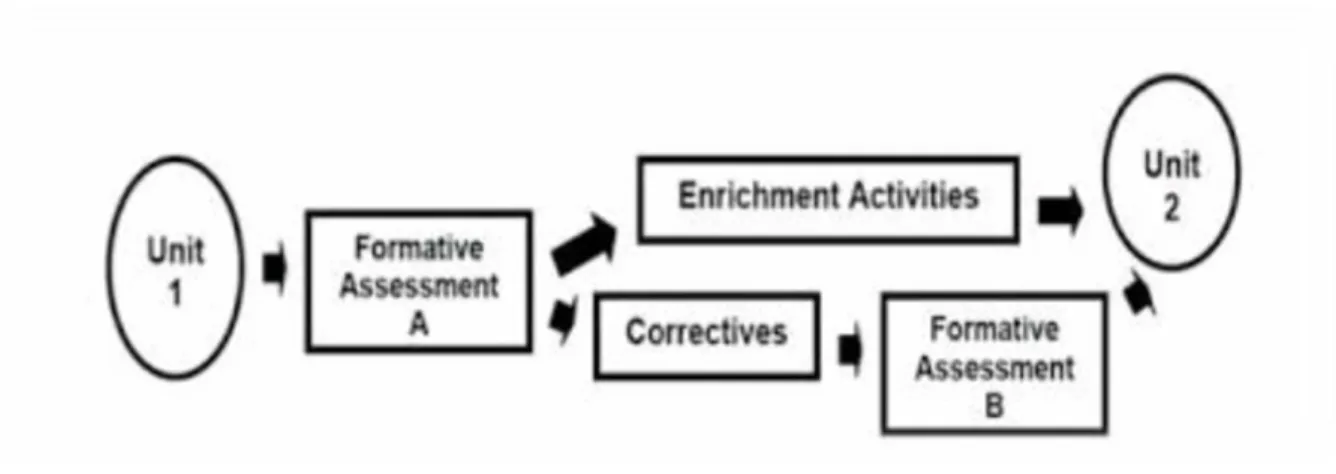
The strategy of Mastery Learning places a considerable emphasis on the ability of the teacher to design his instructional units that are parts of a whole course. These units are designed in a hierarchal way to make learning proceed from specific facts or concepts into more complex and abstracts ones (Gagné, 1959, as cited in Bloom, 1968), and the amount of time devoted to each unit may range from a week to two. Once the unit is finished, the teacher administered a brief diagnostic-progress test to determine whether the learners master the unit, or they need further assistance to master it. The purpose of these tests is to give feedback about the strengths and weaknesses at this level and to motivate the learners to make efforts to learn better (Bloom, 1968). In addition, within each formative test, there is a set of ‘individualised corrective’ activities that match the learning difficulties. These resources may be additional or alternative learning sources that the teacher would recommend to his students. For Bloom, these corrective interventions help the teacher address his/her students’ learning difficulties immediately and they can be used to inform the teacher’s lesson planning and instructional methods. Therefore, this procedure is multifaceted as it takes into account the students’ needs and the teacher’s performance (Bloom, Madaus, and Hastings, 1981, as cited in Guskey, 2005, p. 4).
Once the students made the appropriate correctives, the teacher would administer the second formative assessment test that deals with the same concepts of the first test, but it is slightly different in questions. This procedure takes place in order to find out whether the correctives have a positive effect on the process of learning or not. The second objective is to reinforce motivation by giving low achieving students a second chance to succeed. As for the high achieving learners, it is recommended that they also need to continue their learning
through "enrichment" or "extension" activities (Guskey, 2005.p, 04). Figure 1.1 clearly illustrates the concept being discussed in the previous sections.
Figure 1.1The Mastery Learning Instructional Process (Guskey, 2005, 4)
Though Mastery Learning is ideal and perfectly practical on paper; as it is ambitious in showing the steps that can enable every teacher to assist his students in making effective learning take place, it received criticism from specialised scholars in the domain of supervision and curriculum development. In a report entitled Mastery Learning: Sounds in Theory, but..., Horton (1979, p. 154-155) claimed that Mastery Learning could not be widely
implemented within the American school system because of curriculum and teacher-related issues.
The first component of concern within the applicability of mastery learning is the curriculum design of mastery learning. The idea of constructing a curriculum over the concept of mastery was vague, especially when the nature of what had to be mastered is under scrutiny. Furthermore, the issue of the ability of learners to transcend the mastery level prescribed in the curriculum was not tackled and whether there was a possibility for the majority of the learners to deal with the enrichment activities once they mastered a given level within the learning unit or not.
As for teacher-related issues, Horton questioned the teachers’ readiness to embrace this method. In addition, he wondered whether they were trained on practising its principles such as administering diagnostic assessments to identify learners’ academic problems and difficulties. Also, he tackled the issue of interpreting evidence to prescribe the appropriate remedial activities to reach the mastery level of the learning unit. In addition, teachers are trained to teach basic skills and could provide the kind of corrective feedback to learners, but this activity is not an easy task when a teacher is in a situation to teach his learners how to think creatively and independently, or to solve matters that require decision making.
In addition to the lack of training in implementing this method, the issue of time and teacher-energy are firmly addressed. In this regard, it is clear that time is a fixed factor. Furthermore, the contents of any curriculum need to be covered within an amount of time; however, mastery learning suggests the flexibility of the curriculum through the engagement of teachers and learners in achieving mastery over an undefined period of time. But, this idea is uncommon and needs further consideration. Moreover, designing a whole system of identifying objectives and preparing materials for students are time-consuming.
Though Mastery of Learning was criticised, it is considered as a basis for the creation of the concept and the system of formative assessment within the United States of America and abroad.
The end of the next decade witnessed the publication of two reviews of literature by Natriello (1987) and Crooks (1988). Their main focuses were on the impact of classroom assessment and evaluation process on the students’ motivation, achievement and self-perception.
Natriello (1987) designed his review of literature around a model of evaluation with all its phases in the context of higher education. It covers the establishment of the purpose of
evaluation and the phase of monitoring outcomes in less differentiated or non differentiated classrooms. The major aim of this review was to identify the effects of each phase on the students. Findings indicated that the students have conceptions of normative comparisons in relation to other classmates. Besides, students who had clear evaluation criteria enjoyed high self-efficacy experience and that setting higher standards would lead students to make greater efforts to achieve better (Brookhart, 2003, p. 37).
Crooks (1988) took another path in reviewing 14 researches about the impact of motivation on students’ classroom assessment, largely summative assessment. He investigated the impact of motivational achievement theories on students’ motivation and classroom achievement. These theories include self-efficacy (Bandura, 1982, 1986), student’s conception of ability (Nicolls, 1984), goal-orientation (Ames, 1984), and self-determination (Ryan, Connell, and Deci, 1985). Findings suggested that classroom evaluation is perceived from one angle only, which is the function of assigning grades and marks to students (Crooks, 1988, p. 467). This fact has undermined learning and has led to the intensive use of forms of standardised testing environment. Thus, channelling classroom evaluation as grading only resulted in reduction of intrinsic motivation, weakening self-efficacy within low-achieving students, and reducing the effectiveness of feedback. In addition to that, he pointed at the usefulness of getting advantages of effective feedback that focuses on students’ progress by being timely and giving the opportunity to the students to work on it without getting penalised in case of failure (Ibid, 1988). Furthermore, he suggested that tests should provoke some anxiety that leads to positive careful work or in current terminology "moderate level of challenge" (Brookhart, 2003, p. 36).
Within the late 1980’s, the conceptualisation of a fruitful practice of formative assessment took a new focal direction with the publication of the theoretical work of Sadler (1989) under the title of Formative Assessment and the Design of Instructional Systems.
Sadler’s (1989) investigation was founded on two concerns namely, the lack of data and practical knowledge on how to provide feedback and how to conduct formative assessment in complex situations. He chiefly tackled the theme of providing qualitative judgments in disciplines like the English language, foreign languages, humanities, arts and social sciences. Complexities in these realms are characterised by the fact that students are assigned with tasks in which they synthesise and integrate ideas, concepts, and skills. In such assessment contexts, qualitative judgements are of a paramount importance. The second issue is about the inability of the students to show any improvement though they were provided with descriptive feedback. Hence, the main synthesis from these situations is what if there are deficiencies within the instructional system associated with formative assessment (Sadler, 1989, p. 119).
Sadler clarifies that formative assessment is concerned with how judgments about the quality of students’ responses and performances are made and utilised to shape and improve learning. To guarantee effective achievement, he proposed the concept of self-regulation in which three conditions need to be met; descriptive feedback, the student’s possession of the concept of a work of quality, and self-monitoring. Feedback is provided by an external source (the teacher/ peers). It relies on factors like a supportive environment in which the teacher is competent enough to identify how skills can be learnt, in addition to highlighting the nature of the standards of good performances and to indicating possible ways and alternatives to meet the learning target.
If the teacher is able to showcase the concept of quality, the students can internalise his feedback and bridge the gap towards self-monitoring. This process can be accomplished when the student is working on a task and can make the right decision by considering the following three elements:
2. Making a comparison between the current level of performance and the learning target.
3. The student’s ability to engage in appropriate action to close the gap.
However, it is sometimes challenging to convey to students the meaning of standards and quality due to the fact that the notion of quality for teachers is represented in tacit or guild knowledge, which is the accumulation of teachers’ experience throughout their teaching career and the difficulty of interpreting this knowledge into explicit guidelines or knowledge (Glogowski, 2012, p.1).
Sadler (1989, p. 127) points at the negative impact of guild knowledge on learners since teachers’ experience in grading is not the only dimension in assessment. In addition, regarding the teacher as the only available source of assessment and qualitative judgment is another issue that hinders students’ engagement in assessing the quality of their performance.
Though Sadler’s theory of self-regulation contributed to the understanding of an effective mechanism that can foster the students’ achievement, Nicol and McFarlane-Dick (2006, pp. 06-14) reported a concern in their review about the fact that Sadler’s model of self-regulation lacked a wider vision and it needed the repositioning of formative assessment and feedback through the incorporation of other elements. They asserted that the students can have control to a certain extent, but not full control on aspects such as academic tasks assigned by teachers, or the grading and the marking procedures.
Building on the previous positive research literature on self-regulation that boosts learning in an encouraging environment that makes the learning process explicit through the provision of opportunities to exercise self-regulation (Zimmerman and Schunk, 1994, as cited in Nicol and McFarlane-Dick, 2006), they suggest a list of good feedback practices that self-regulate motivation, behaviour and cognition in order to reinforce the students’ ability to
accelerate self-regulation. Also, they provide rationale for every principle and some skills for teachers on how to apply them with their students. Hence, good feedback practice should: (Ibid, 07).
1. Clearly describe the criteria, standards, goals, aims of a good performance. 2. Assist students’ in developing their self-assessment skills and reflection. 3. Provide students’ with high-quality information about their learning. 4. Promote teacher and peer communication about learning.
5. Advance values of motivational beliefs and self-esteem.
6. Allow students to engage in learning tasks that help them close the gap between their current learning and the desired goal.
7. Provide teachers with data to make decisions to adjust their teaching.
According to Andrade (2013, pp. 21-21), the empowerment of students to self-regulate their current as well as lifelong learning exclusively depends on the teacher’s willingness to do so. For Andrade, the model of Nicol and Macfarlane-Dick (2006) requires further adaptations by adding other key aspects that are not generated by students.
1. External feedback can be provided by teachers, peers, technologies, and others. 2. The incorporation of the process of interpreting feedback by teachers and students. This view encourages the active role that the students can play in monitoring their progress towards the desired performance by activating their motivation, employing their knowledge of the specialty and the appropriate skills. Students can also benefit from external feedback to improve subsequent achievement.
Relating to 30 years of research on assessment, Hattie (1999) concluded that many teachers and researchers failed to discuss the fundamental principles that contribute to positive impacts on their students’ learning. Hence, he proposed a model of basic postulates to
highlight a formative assessment system that boosts the understanding and the use of feedback as a powerful tool inside the classroom and across schools. These postulates are the improvement of achievement when teachers share the responsibility of setting and communicating goals with their students, achievement is enhanced as a function of feedback, and the advancement of students’ learning also lies in the reconceptualisation of information.
Hattie (1999, p. 09) ranked feedback among the five most influential elements that have an impact on students’ learning, how the students understand or misunderstand information about their performance, and what action they take in order to improve.
In their article entitled the Power of Feedback, Hattie and Timperley (2007, pp. 82-91) highlighted the fact that previous research dealt with feedback in teaching and learning frameworks, and neglected two facts: the meaning of feedback in classrooms and the necessity to tackle feedback in a learning context to have a positive effect on achievement. Thus, they proposed a three- component cycle that an effective formative assessment system would answer:
1. Feed-up (Where Am I Going?): one aspect about feedback is about informing students about the level of the accomplishment of learning goals on any assigned task. Thus, any learning goal should meet clear success criteria that show them the expectations of their teachers and inform them about the components that they will be assessed against. Secondly, feedback should be closely related to the achievement goal. Furthermore, teachers should train and nurture a sense of commitment towards the attainment of the desired performance.
2. Feedback (How Am I Going?): is about the provision of data about a performance or a task against a standard or a criterion. Students can get benefit of feedback when it offers data about a performance or gives directions and advice on how to proceed
better on an activity because students often seek answers on how they are doing on a task.
3. Feed-forward (Where to Next?): teaching and learning are progressive. With the accomplishment of any task, new learning opportunities can be provided such as raising the level of challenging tasks, assigning students with tasks that reinforce the process of self-regulation and deepening understanding in given areas.
Another milestone conclusion was made by Black, Wiliam and the Assessment Reform Group (1998). It indicates that raising achievement is accomplished by placing formative assessment at the centre of teaching and learning.
In their seminal work Inside the Black Box, Black and Wiliam (2010, p. 140) addressed worldwide issues about educational policies and current realities in schools and classrooms. Governments and educational policy makers have always been interested in raising standards of learning through the introduction of various reformations and initiatives, mainly by the enhancement of external testing of students’ performance, ameliorating school planning and management, and frequent inspection. However, no change has been brought through these reformations.
Governments and policy makers introduce reformations and regulations into classrooms. For them, positive outcomes would proceed such as good test results, competent students and satisfied teachers. However, most of the time, teachers are left alone –without any kind of guidance or support- to work and manage the toil of raising the standards of achievement due to the fact that these regulations do not address ways to assist teachers in applying the prescribed reformations or to support them inwhat they do in their classrooms.
To address the above concerns, the Assessment Reform Group extensively investigated many books and publications that exceeded 160 journals. This body of research contributed to the classification of 580 articles or chapters to be scrutinised throughout nine years
(1988-1989). Eventually, they could generate a lengthy review of literature that is based on 250 of the previous sources. The final review article was published in the journal of Assessment in Education, under the title of Assessment and Classroom Learning (Black and Wiliam, 1998).
This review was driven by three core questions about their argument of the inevitability of focusing on formative assessment as the most essential drive for effective teaching.
1. Is there proof that achievement can be met by improving formative assessment? 2. Is there proof that there are possibilities to seek and implement such improvement? 3. Is there proof about ways and methods of improving formative assessment?
By reviewing the previous literature and undertaking the King’s Medway Oxfordshire Formative Assessment Project (KMOFAP) in 1999, Wiliam, C. Lee, Harrison, and Black (2004, p. 49) admitted that the answers of the questions are all yes. However, bringing about positive change and higher quality teaching are challenging to implement due to some factors,
We also acknowledge widespread evidence that fundamental change in education can be achieved only slowly-....The issues involved are too complex and too closely linked to both the difficulties of classroom practice and the beliefs that drive public policy.
(Black and Wiliam, 2010, p. 82) These issues can be classified into attitudes about the managerial roles of summative and formative assessment, teachers’ beliefs about students’ learning and their practice, and students’ self-concept towards progress and effective learning.
Based on educational and studies reports, the main findings indicate that many teachers are not well aware of the fact that kinds of assessment can work in harmony, particularly summative and formative assessment. Summative assessment is executed properly, but records of mark are given priority at the expense of using information for formative purposes. Priority is given to the collection of marks rather than their analysis in giving them account of the state of their students’ learning and needs to take the appropriate actions to bring learning forward. In addition, teachers were not interested in comparing their students’ level of