The McGill Journal of Education promotes an international, multidisciplinary discussion of issues in the field of educational research, theory, and practice. We are committed to high quality scholarship in both English and French. As an open-access publication, freely available on the web (http://mje.mcgill.ca), the Journal reaches an international audience and encourages scholars and practitioners from around the world to submit manuscripts on relevant educational issues.
La Revue des sciences de l’éducation de McGill favorise les échanges internationaux et plu-ridisciplinaires sur les sujets relevant de la recherche, de la théorie et de la pratique de l’éducation. Nous demeurons engagés envers un savoir de haute qualité en français et en anglais. Publication libre, accessible sur le Web (à http://mje.mcgill.ca), la Revue joint un lectorat international et invite les chercheurs et les praticiens du monde entier à lui faire parvenir leurs manuscrits traitant d’un sujet relié à l’éducation.
International Standard Serial No./Numéro de série international: online ISSN 1916-0666
The McGill Journal of Education acknowledges the financial support of The Social Sciences and Humanities Research Council of Canada. La Revue des sciences de l’éducation de McGill remercie le Conseil de recherches en Sciences humaines du Canada de son soutien financier.
M E
McGill Journal of Education / Revue des sciences de l’éducation de McGill 4700 rue McTavish Street • Montréal (QC) • Canada H3G 1C6
•T: 514 398 4246 • F: 514 398 4529 • http://mje.mcgill.ca Republication Rights / dRoits de RepRoduction All rights reserved. No part of this publication may be republished in any form or by any means without permission in writing from Copibec.
Tous droits réservés. Aucune partie de la présente publication ne peut
être reproduite sous quelque forme et par quelque moyen que ce soit sans l’autorisation écrite de Copibec.
Copibec (reproduction papier) • 514 288 1664 • 1 800 717 2022 • • [email protected]
© Faculty of Education, McGill Universisty
J
REVUE DES SCIENCES
DE L’ÉDUCATION DE M
CGILL
EDITORIAL TEAM / ÉQUIPE ÉDITORIALE : Anila Asghar (McGill University), Aziz Choudry (McGill University), Marc-André Ethier (Université de Montréal) & Teresa Strong-Wilson (McGill University)
MANAGING EDITOR / DIRECTEUR DE RÉDACTION: Stephen Peters
BOOK REVIEW EDITORS / RÉDACTEURS DES CRITIQUES DES LIVRES: Rima Athar & Mariusz Galczynski
EDITORIAL ASSISTANT / ASSISTANT DE RÉDACTION: Mariam Najih
MJE INTERNS / STAGIAIRES RSÉM: Alison Crump & Amarou Yoder
INTERNATIONAL EDITORIAL ADVISORY BOARD /
COMITÉ DE RÉDACTION CONSULTATIF INTERNATIONAL: David Austin, Ann Beam-ish, Dave Bleakney, Saouma BouJaoude, Katie L. Bryant, Patrick Charland, Stéphane Cyr, Budd Hall, Ingrid Johnston, Dip Kapoor, Colin Lankshear, Claudia Mitchell, Rebecca New, Cynthia Nicol, Bonny Norton, Anthony Paré, Manuela Pasinato, Wally Penetito, Kathleen Pithouse-Morgan, Saleem Razack, Jessica Ruglis, Verna St Denis, Lisa Starr, Lynn Thomas, Salim Vally, Geeta Verma, Angelina Weenie & John Willinsky
PUBLICATION DESIGN / MAQUETTE: McGill ICC
COVER DESIGN / CONCEPTION DE LA COUVERTURE: Deborah Metchette
McGill Journal of Education is a partner member of Érudit. La revue des sciences de l’éducation de McGill est une revue partenaire de Érudit. www.erudit.org
The views expressed by contributors to the MJE do not necessarily reflect those of the Editor, the Editorial and Review Boards, or McGill University. Authors are responsible for following normal standards of scholarship and for ensuring that whenever the research involves human subjects, the appropriate consents are obtained from such subjects and all approvals are obtained from the appropriate ethics review board.
Les opinions exprimées par les collaborateurs de la Revue des sciences de l’éducation de McGill ne reflètent pas forcément celles de la rédactrice en chef, des conseils de rédaction et de révision ou de l’Université McGill. Les auteurs sont tenus d’observer les règles normales de la recherche universitaire et, s’ils mènent des travaux sur des sujets humains, d’obtenir le consentement en bonne et due forme de chaque sujet ainsi que l’approbation du comité éthique compétent. 7597 C
M
CGILL JOURNAL OF EDUCATION
REVUE DES SCIENCES
DE L’ÉDUCATION DE M
CGILL
EDITORIAL TEAM / ÉQUIPE ÉDITORIALE : Anila Asghar (McGill University), Aziz Choudry (McGill University), Marc-André Ethier (Université de Montréal) & Teresa Strong-Wilson (McGill University)
MANAGING EDITOR / DIRECTEUR DE RÉDACTION: Stephen Peters
BOOK REVIEW EDITORS / RÉDACTEURS DES CRITIQUES DES LIVRES: Rima Athar & Mariusz Galczynski
EDITORIAL ASSISTANT / ASSISTANT DE RÉDACTION: Mariam Najih
MJE INTERNS / STAGIAIRES RSÉM: Alison Crump & Amarou Yoder
INTERNATIONAL EDITORIAL ADVISORY BOARD /
COMITÉ DE RÉDACTION CONSULTATIF INTERNATIONAL: David Austin, Ann Beam-ish, Dave Bleakney, Saouma BouJaoude, Katie L. Bryant, Patrick Charland, Stéphane Cyr, Budd Hall, Ingrid Johnston, Dip Kapoor, Colin Lankshear, Claudia Mitchell, Rebecca New, Cynthia Nicol, Bonny Norton, Anthony Paré, Manuela Pasinato, Wally Penetito, Kathleen Pithouse-Morgan, Saleem Razack, Jessica Ruglis, Verna St Denis, Lisa Starr, Lynn Thomas, Salim Vally, Geeta Verma, Angelina Weenie & John Willinsky
PUBLICATION DESIGN / MAQUETTE: McGill ICC
COVER DESIGN / CONCEPTION DE LA COUVERTURE: Deborah Metchette
McGill Journal of Education is a partner member of Érudit. La revue des sciences de l’éducation de McGill est une revue partenaire de Érudit. www.erudit.org
TABLE OF CONTENTS / SOMMAIRE
SPRING 2013 VOL. 48 NO 2 / PRINTEMPS 2013 VOL. 48 NO 2
461 Editorial: Worker Education / Labour Learning: Tensions and lessons
Éditorial: Formations des travailleurs / apprentissage au travail : tensions et leçons
• AZIZ CHOUDRY & DAVID BLEAKNEY
469 Worker Education in South Africa: Lessons and contradictions Formation des travailleurs en afrique du sud : leçons et contradictions
• SALIM VALLY, MPHUTLANE WA BOFELO & JOHN TREAT 491 Intervening in Informal Learning: Activity theory as teaching
tool
Intervenir au cœur des apprentissages informels : la théorie de l’activité comme outil de formation
• SUSAN L. CARTER
511 Recognition of Prior Learning as “Radical Pedagogy”: A case study of the Workers’ College in South Africa
La reconnaissance des acquis comme pédagogie radicale : étude du cas des Worker’s College d’Afrique du Sud
• MPHUTLANE BOFELO, ANITHA SHAH, KESSIE MOODLEY, LINDA COOPER & BARBARA JONES
531 Power in Practice: Trade union education in Sierra Leone
Le pouvoir mis en pratique : la formation syndicale en Sierra Leone • JOHN STIRLING
551 Labour Studies, the Liberal Arts, and the Sociological Imagination
Étude du travail, sciences humaines et imagination sociologique • RICHARD WELLS
THE MJE FORUM / LE FORUM RSÉ
569 Education and Knowledge Production in Workers’ Struggles: Learning to resist, learning from resistance
Les conflits ouvriers, source d’apprentissage et de création de connaissances : apprendre à résister, apprendre de la résistance • DAVID BLEAKNEY & AZIZ CHOUDRY
Travailleurs-euses, étudiant-es : même combat!
• ASSOCIATION OF GRADUATE STUDENTS EMPLOYED AT MCGILL (AGSEM), 2012-2013 TEACHING ASSISTANTS’ UNIT EXECUTIVE
597 Workers’ Education in Palestine
La formation des travailleurs en Palestine • WAJIH ELAYASSA
605 Doing it Old School: Peer-led occupational safety training in the U.S. construction industry
Comme dans l’ancien temps : la formation en sécurité au travail offerte par les pairs dans l’industrie de la construction aux États-Unis
• CLAYTON SINYAI, PETE STAFFORD & CHRIS TRAHAN 613 Why Union Activists Write Good Stories
Pourquoi les activistes syndicaux écrivent de bonnes histoires • HELENA H. WORTHEN
BOOK REVIEWS / CRITIQUES DE LIVRES
619 Carina Henriksson. Living Away From Blessings: School Failure
as Lived Experience. London, ON: The Althouse Press. (2008). 155 pp. $29.95 (paperback). (ISBN 978-00920354-67-4).
EDITORIAL
WORKER EDUCATION / LABOUR LEARNING: TENSIONS AND LESSONS
T
his special issue of the McGill Journal of Education attends to labour education and learning in workers’ struggles. Non-formal labour education has a long, rich history in many parts of the world, including Canada (Taylor 2001) and yet is often overlooked in scholarly adult education literature. The informal, often incidental learning which takes place in the course of labour organizing, strikes, and campaigns is also under-theorized (Novelli, 2004). Labour educa-tors, organizers and other practitioners in a range of worker education milieus often lack the time to document or articulate their practice. Labour education and learning is also contested terrain. Some unions have extensive education programs and utilize approaches which draw from Freire and other traditions of popular adult education. Yet other programs may obscure or deny conflict and risk among participants, two essential components of deeper learning and understanding (Bleakney & Morrill 2010; Wilmot 2012). The articles in this issue explore and critically theorize approaches to and perspectives on learning and education in trade unions and workers’ struggles while calling attention to the educational significance, possibilities, tensions and challenges of such work. This includes discussion of the relationship between education in formal institutions such as universities and learning in trade union settings and the broader labour movement.In this issue, Salim Vally, Mphutlane wa Bofelo, and John Treat review key moments and dynamics in the trajectory of South African worker education. They contend that the legacy of worker education in South Africa is a rich and proud one from which much can be learned. The authors assert that worker education played a crucial role in the development of the trade union move-ment in South Africa and in the broader struggle for social transformation, but has suffered a decline in the post-apartheid years. Yet they write that there remains a significant legacy and influence of the traditions of worker educa-tion and militant trade unionism in South Africa, which can be drawn upon in reclaiming and re-energizing the rich tradition of South African workers’ class-conscious struggle for a better world. The article aims to deepen the his-torical understanding of these developments in order to strengthen the ability to reach better-informed conclusions and draw salient lessons.
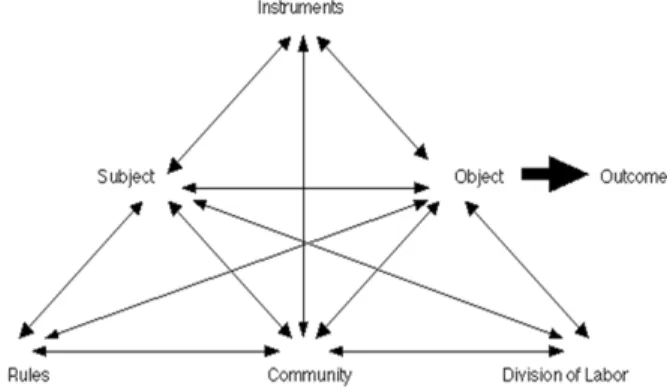
Susan Carter insists that viewing the everyday practices of unions through the lens of learning can both make visible, and more meaningfully intervene in, the everyday individual and collective learning of unions, activists, and workers. Drawing from Canadian union experience and using cultural historical activity theory (CHAT), Carter discusses the grievance procedure as a routine (and central) union practice and a key site of informal learning. While acknowledg-ing that the grievance process is bureaucratic, heavily mediated by rules and division of labour with limited available tools, Carter suggests that it is the primary place where workers bring their experiences of injustice, seeking and expecting resolution / compensation. In concluding, she argues that CHAT also presents a powerful pedagogical tool for educators, leaders and activists. Linda Cooper, Barbara Jones, Mphutlane Bofelo, Anitha Shah and Kessie Moodley argue that the model of Recognition of Prior Learning (RPL) in use at the Workers’ College in South Africa may be seen as a form of “radical pedagogy.” Drawing on documentary sources, focus group interviews and observations, the article describes an educational philosophy which aims to build the competencies of activists in labour and community organizations, facilitate their self-affirmation and dignity, and provide an access route to post-school education. It attempts to theorize how this philosophy is enacted in classroom pedagogy, and explores tensions and contradictions encountered. For the authors, education must be seen in the broad context of bringing about change in intellectual understanding, contributing and developing new knowledge and responding creatively to the conditions and realities of society. The article concludes by acknowledging the unique contribution of these educational practices to an understanding of what RPL as ‘radical pedagogy’ might look like.
John Stirling analyzes the development of a union education program in Sierra Leone. This article discusses the limits and potentialities of a radical pedagogy when trade unions are constrained to engage with existing power structures that use English as the dominant language. He discusses how ex-pectations of trade unions as agents of radical change are tempered by their need to be representatives of workers in the day-to-day reality of their lives and working relationships. Trade union education programs reflect such tensions and are pulled in different directions both in terms of content and delivery. These tensions are pushed into particularly stark relief in Sierra Leone with the legacy of British colonialism, the struggles of development and a severely under-resourced trade union movement.
In the final peer-reviewed article in this issue, Richard Wells argues that at a time when neo-liberal reformers push for a more instrumentalist form of higher education, older traditions of worker education, and more recent university-based labour studies programs, offer a compelling counter-narrative concern-ing the social and political purpose of US higher education. Buildconcern-ing from
C.W. Mills’ notion of the sociological imagination, Wells argues that labour studies has the potential not only to re-energize the transformational mission of popular worker education, but reclaim the idea of higher education as a public good. Teaching students, most of whom come to the program through building trades unions in a public university-based labour studies program in New York, he contends that thinking and talking sociologically can lead not only to critical knowledge of how and why the world works the way it does. It can help workers translate problems faced as individuals or as members of a particular union into public issues, around which they, along with others both inside and beyond their union, might mobilize politically.
Four notes from the field, and a contribution to the new MJE Forum feature round off this issue. Members of the Association of Graduate Students Em-ployed at McGill (AGSEM) discuss learning in struggles for workers’ rights and student-worker organizing and solidarity at McGill University; Wajih Elayassa writes on workers’ education programs in Palestine; Helena Worthen writes on a union members’ creative writing class in the US; and Clayton Sinyai, Pete Stafford, and Chris Trahan discuss building trades union-driven, peer-led occupational safety training in the US construction industry. Our co-authored Forum contribution on learning, education and knowledge production in workers’ struggles is adapted from a presentation at the United Association of Labor Education Conference in Toronto in April 2013. The MJE Forum aims to open conversations and exchanges about topics related to education: here, specifically we invite responses from readers who may wish to share their ac-counts of learning and knowledge production in labour education / organizing settings, and/or to engage with the critiques we put forward. Heartfelt thanks to all the contributors and reviewers who worked on this issue.
AZIZ CHOUDRY McGill University DAVID BLEAKNEY Canadian Union of Postal Workers REFERENCES
Bleakney, D., & Morrill, M. (2010). Worker education and social movement knowledge produc-tion: Practical tensions and lessons. In A. Choudry and D. Kapoor (Eds.), Learning from the ground up: Global perspectives on social movements and knowledge production (pp. 139-155). New York, NY: Palgrave Macmillan.
Novelli, M. (2004). Globalisations, social movement unionism and new internationalisms: The role of strategic learning in the transformation of the Municipal Workers Union of EMCALI. Globalisa-tion, Societies and EducaGlobalisa-tion, 2(2),161 - 190.
Taylor, J. (2001) Union learning: Canadian labour education in the twentieth century. Toronto, ON: Thompson Educational.
Wilmot, S. (2012). Exploring the social relations of class struggle in the Ontario Minimum Wage Campaign. In S. Carpenter, & S. Mojab (Eds.), Educating from Marx: Race, gender and learning (pp. 113 - 137). New York, NY: Palgrave MacMillan.
ÉDITORIAL
FORMATION DES TRAVAILLEURS / APPRENTISSAGE AU TRAVAIL : TENSIONS ET LEÇONS
C
ette édition spéciale de la Revue des sciences de l’éducation s’intéresse à la formation et aux apprentissages des travailleurs en contexte de luttes ouvrières. Dans plusieurs parties du monde, incluant le Canada, l’éducation non formelle des ouvriers possède un long et riche historique (Taylor 2001). Pourtant, ce type de formation est encore souvent ignoré dans les travaux de recherche portant sur l’éducation aux adultes. Les apprentissages informels et fréquem-ment fortuits ayant lieu au sein d’organisations de travailleurs, de grèves et de campagnes syndicales sont aussi sous-étudiés (Novelli 2004). Les formateurs et organisateurs syndicaux œuvrant dans une variété de milieux de formation des travailleurs manquent régulièrement de temps pour documenter ou exposer leurs pratiques. La formation et l’apprentissage des travailleurs est également un domaine contesté. Certains syndicats possèdent des programmes éducatifs poussés et utilisent des approches inspirées de Freire et des traditions populaires d’éducation aux adultes. Certains autres programmes cependant camouflent ou nient les conflits et les risques entre les participants, soit deux composantes fondamentales à un apprentissage et une compréhension approfondis (Bleakney et Morrill 2010; Wilmot 2012). Les articles de cette édition explorent et théo-risent de manière critique les approches relatives et les perspectives propres à l’apprentissage et à l’éducation dans le cadre des associations syndicales et des luttes ouvrières tout en attirant l’attention des lecteurs sur l’intérêt, les possibilités, les tensions et les défis éducationnels de ce travail. Ceci implique une discussion des relations entre l’éducation au sein d’institutions officielles, telles que les universités, et l’apprentissage dans le cadre de syndicats ou de mouvements ouvriers plus larges.Dans cette édition, Salim Vally, Mphutlane wa Bofelo et John Treat s’attar-dent aux moments-clés et à la dynamique de l’évolution de la formation des travailleurs en Afrique du Sud. Ils soutiennent que l’héritage sud-africain de l’éducation des travailleurs est un riche et fier legs duquel il est possible d’ap-prendre énormément. Les auteurs avancent que la formation des travailleurs a joué un rôle crucial dans le développement des mouvements syndicaux en Afrique du Sud et dans les luttes plus vastes pour la transformation sociale, mais a connu un déclin au cours des années postapartheid. Or, ils soulignent
qu’il subsiste un héritage significatif et une influence des traditions d’éducation des travailleurs et du militantisme syndical en Afrique du Sud, desquels il est possible de s’inspirer pour se réapproprier et insuffler une énergie nouvelle à la riche tradition de travailleurs conscients des luttes de classes à mener pour un monde meilleur. Cet article vise à approfondir la compréhension historique de ces développements afin d’améliorer la capacité à formuler des conclusions éclairées et tirer des leçons utiles.
Susan Carter affirme qu’aborder les pratiques syndicales quotidiennes sous l’angle des apprentissages peut donner davantage de visibilité et permettre d’intervenir de manière plus significative au niveau des apprentissages effectués quotidiennement par les associations syndicales, les activistes et les travailleurs, de façon individuelle et collective. En se basant sur les expériences syndicales canadiennes, et en s’inspirant de l’influence culturelle et historique telle qu’expliquée par la théorie de l’activité (TA), Carter présente la procédure de règlement des griefs comme une pratique routinière (et centrale) ainsi qu’un terreau propice aux apprentissages informels. Tout en reconnaissant le carac-tère bureaucratique de la procédure, lourdement encadrée par des règles, une division du travail et un nombre limité d’outils disponibles, Carter souligne que c’est l’endroit de prédilection des travailleurs lorsqu’il s’agit d’exprimer les injustices vécues et de chercher / espérer une résolution / compensation. En conclusion, l’auteure insiste sur le fait que la TA possède également un fort potentiel comme outil pédagogique pour les formateurs, les leaders et les activistes.
Linda Cooper, Barbara Jones, Mphutlane Bofelo, Anitha Shah et Kessie Moo-dley soutiennent que le modèle de reconnaissance des acquis (RPL) utilisé dans un Workers’ College sud-africain peut être considéré comme une forme de «pédagogie radicale». S’inspirant de sources documentaires, de groupes de discussion et d’observations, le texte décrit une philosophie éducationnelle cherchant à développer les compétences des activistes militant au sein d’orga-nisations ouvrières et communautaires, à favoriser leur sens de l’affirmation et leur dignité ainsi qu’à offrir une voie d’accès à l’éducation postscolaire. Dans cet article, les auteurs tentent d’élaborer une théorie sur la manière dont cette philosophie est appliquée lors de l’enseignement en classe et explorent certaines des tensions et contradictions rencontrées. Pour ceux-ci, l’éducation peut être perçue, dans un sens large, comme ayant pour buts de provoquer un change-ment dans la compréhension intellectuelle, de contribuer au développechange-ment de nouvelles connaissances et de réagir de manière créative aux conditions et réalités sociales. L’article se termine en reconnaissant la contribution unique de ces pratiques éducationnelles à une meilleure compréhension de ce que peut être la RPL comme « pédagogie radicale ».
John Stirling analyse le développement d’un programme de formation syn-dicale en Sierra Leone. Dans son article, celui-ci aborde les limites et les
perspectives d’une pédagogie radicale lorsque les associations syndicales sont contraintes de collaborer avec des structures décisionnelles dont l’anglais est la langue dominante. Il explique la manière par laquelle les espoirs des asso-ciations syndicales comme agents de changement sont limités par le besoin de représenter le vécu et les relations de travail des travailleurs au quotidien. Les programmes de formation au sein des syndicats reflètent ces tensions et offrent des contenus et des modes de livraison épars, allant dans toutes les directions. Ces tensions sont particulièrement évidentes en Sierra Leone, un pays aux prises avec l’héritage du colonialisme britannique, les difficultés de développement et un mouvement syndical qui souffre d’un manque important de ressources.
Dans le dernier article révisé par les pairs, Richard Wells avance qu’à une épo-que où les réformateurs néolibéraux militent pour une forme plus productive d’éducation supérieure, de vieilles traditions de formation des travailleurs et de récents programmes universitaires d’études du travail proposent une contre-proposition intéressante en ce qui a trait aux objectifs sociaux et politiques de l’éducation supérieure aux États-Unis. S’inspirant de la notion d’imagi-nation sociologique de C.W. Mills, Wells soutient que les études du travail ont le potentiel non seulement d’insuffler une énergie nouvelle à la mission transformatrice de la formation populaire des travailleurs, mais affirme que l’éducation supérieure doit être un bien public. Wells enseigne à New York au sein d’un programme d’études du travail offert dans une université publi-que et dans lepubli-quel la majorité des étudiants appartiennent à une association syndicale du domaine de la construction. L’auteur soutient que réfléchir et prendre la parole sur un plan sociologique peut mener non seulement à com-prendre de manière critique comment et pourquoi le monde fonctionne ainsi. Selon Wells, ceci peut également aider les travailleurs à traduire les problèmes rencontrés sur une base individuelle ou en tant que membres d’un syndicat spécialisé en problématiques publiques, pour lesquelles les travailleurs avec la collaboration d’autres membres de leur syndicat ou d’autres organisations, peuvent se mobiliser au plan politique.
Quatre notes provenant du terrain et une contribution du nouveau forum de la Revue mettent la touche finale à cette édition. Les membres de l’Association des étudiants et étudiantes diplômés (ées) employés (ées) de McGill (AÉÉDEM) abordent la notion d’apprentissages au sein des combats menés pour les droits des travailleurs ainsi qu’au cœur des organisations de travailleurs-étudiants et de manifestations de solidarité à l’Université McGill. Alors que Wajih Elayassa écrit sur les programmes de formation des travailleurs en Palestine, Helena Worthen témoigne d’un cours de création littéraire mis sur pied par des membres d’un syndicat. Quant à Clayton Sinyai, Pete Stafford, and Chris Trahan ils s’intéressent aux syndicats du domaine de la construction et à la formation en matière de sécurité pilotée par les pairs dans cette industrie aux États-Unis. Cette contribution multi-auteurs de notre forum, portant sur
l’apprentissage, la formation et la production du savoir au sein des conflits ouvriers, est adaptée d’une présentation faite à la United Association of Labor
Education Conference à Toronto en avril 2013. Le Forum de la RSÉM vise à
inviter des conversations et des échanges sur des sujets en lien avec l’éducation. Ici, nous invitons précisément les réponses des lecteurs(es) qui souhaitent par-tager leurs expériences d’apprentissage et de développement de connaissances dans l’éducation syndicale/des contextes organisationnels, et/ou de s’engager avec des critiques que nous pouvons mettre de l’avant. Nous offrons nos remerciements les plus sincères à tous les collaborateurs et réviseurs ayant travaillé sur ce numéro.
AZIZ CHOUDRY Université McGill DAVID BLEAKNEY Syndicat canadien des travailleurs et travailleuses des postes RÉFÉRENCES
Bleakney, D., & Morrill, M. (2010). Worker education and social movement knowledge produc-tion: Practical tensions and lessons. In A. Choudry and D. Kapoor (Eds.), Learning from the ground up: Global perspectives on social movements and knowledge production (pp. 139-155). New York, NY: Palgrave Macmillan.
Novelli, M. (2004). Globalisations, social movement unionism and new internationalisms: The role of strategic learning in the transformation of the Municipal Workers Union of EMCALI. Globalisa-tion, Societies and EducaGlobalisa-tion, 2(2),161 - 190.
Taylor, J. (2001) Union learning: Canadian labour education in the twentieth century. Toronto, ON: Thompson Educational.
Wilmot, S. (2012). Exploring the social relations of class struggle in the Ontario Minimum Wage Campaign. In S. Carpenter, & S. Mojab (Eds.), Educating from Marx: Race, gender and learning (pp. 113 - 137). New York, NY: Palgrave MacMillan.
WOrker educAtiOn in SOuth AFricA:
LeSSOnS And cOntrAdictiOnS
SALIM VALLY University of Johannesburg
MPhutLAne WA BOFeLO Workers’ College, KwaZulu-Natal JOhn treAt University of Johannesburg
ABStrAct. Worker education played a crucial role in the development of the trade union movement in South Africa and in the broader struggle for social transformation. This article reviews key moments and dynamics in the trajectory of worker education in South Africa. We argue that international developments, the rise of neoliberalism, and the negotiated compromise between the African National Congress (ANC) and the apartheid state, as well as corporatism resulted in changes to worker education. While the latter as it existed in the past has weakened, the centre of gravity has shifted to community organizations where various forms of learning and creativity continue. Despite the challenges and setbacks of recent years, there remains a significant legacy and influence of the traditions of worker education and militant trade unionism in South Africa, which can and should be drawn upon.
FORMATION DES TRAVAILLEURS EN AFRIqUE DU SUD : LEçONS ET cOntrAdictiOnS
rÉSuMÉ. La formation des travailleurs a joué un rôle déterminant dans le déve-loppement du mouvement syndicaliste en Afrique du Sud et dans l’ensemble des luttes pour la transformation sociale. Cet article survole les moments-clés et les dynamiques de l’évolution de la formation des travailleurs en Afrique du Sud. Nous soutenons que les développements sur le plan international, la montée du néolibéralisme et les compromis négociés entre le Congrès national africain (ANC) et le gouvernement d’apartheid, ainsi que le corporatisme, ont provoqué des changements dans la formation des travailleurs. Alors que la forme sous laquelle elle existait dans le passé s’est affaiblie, le cœur de ses activités réside désormais au sein d’organisations communautaires, où des formes diverses d’ap-prentissages et de créativité se poursuivent. Malgré les défis et les échecs au cours des dernières années, il reste encore un héritage important et une influence des traditions de la formation des travailleurs et du mouvement militant syndicaliste en Afrique du Sud, desquels il est possible et essentiel de s’inspirer.
W
orker education played a crucial role in the development of the trade union movement in South Africa and in the broader struggle for social trans-formation — especially in the two decades since the re-emergence of worker militancy in the early 1970s. Despite that rich tradition, worker education has suffered a serious decline in the post-apartheid years. In order to understand this decline and draw the appropriate lessons, it is vital to view South Africa’s experience with worker education against the backdrop of the socio-economic and political shifts that accompanied the end of apartheid, and to grasp the economic and ideological agendas that inform worker education discourses and practices. It is also useful to review both the richness of the worker edu-cation tradition that played this vital role, as well as some of the key points in its trajectory.Worker education was simultaneously a consequence, a platform, a site, and a weapon of struggle for the oppressed people of South Africa generally and the black working class in particular. With its humble origins in the adult night schools education movement throughout the first half of the twentieth century, the tradition of South African workers and their allies to provide emancipatory, politically meaningful learning for themselves and others would eventually achieve their fullest expression in the dynamic 1980s, with its dramatic upsurge in literacy programs, workers’ cultural manifestations, and educational efforts to support trade union organizing and industrial action. These activities both arose out of and catalysed the vibrancy in the union organizing of those years, which would ultimately play a crucial role in putting an end to white minority rule.
The strike wave of 1972-73 and the Soweto uprising in 1976 led to the legaliza-tion of black union structures (albeit within tight constraints) by the apartheid state in a failed attempt to control workers and tame their militancy. The dramatic upsurge in union membership and activity that followed changed the conditions for, and the nature of, worker education in the ensuing years. These activities took a wide variety of structured and unstructured forms, and were often marked by remarkable ingenuity and creativity — particularly considered against the backdrop of decades of ferocious repression, and the apartheid state’s “Bantu” education system. The latter inspired Steve Biko’s aphorism, “The most powerful weapon in the hands of the oppressor is the mind of the oppressed” (cited in Arnold, 1979, p. xx).
Formal worker education efforts took the form of highly structured seminars, workshops, and training programs. Informal efforts varied from treating mass transportation of workers as “rolling classrooms”1 to a dizzying range of
cul-tural and mass-media forms, including the writing and production of plays, poetry readings, songs and musical choirs, and dozens of community-based and trade union newsletters. These efforts aimed to provide everything from general literacy and technical work-related skills to running democratic and
accountable union structures, organizing, political consciousness and social mobilization.
Trade unions in this period were referred to both as “schools of labour” and “laboratories for democracy” where workers could test out new ideas, arrive at new understanding, and develop and enrich collective practices (Vally, 1994). In the context of an apartheid system, where basic democratic processes were denied to the majority, unions played a crucial role in introducing concepts such as accountability, representation, participation, report backs, and the principle of recall. Through their informal learning experience as well as the intensive education carried out in shop-steward councils and workshops, worker representatives gained confidence to engage with their unions’ officials on contested organizational and political issues (Vally, 1994). It was a period in which “[w]orkers searched memory, each other, history, the world, politi-cal texts, for ideas and knowledge, bringing everything into their intellectual embrace” (Cooper, Andrews, Grossman & Vally, 2002, pp. 119-120). Education was grounded in the structures of the unions (where education committees linked to shop-steward councils featured prominently in some of the more militant unions; see Vally, 1994), and played a key role in linking the struggles of workers who were geographically dispersed and located in different industries. Union education also encouraged the development of a large leadership layer of workers who, despite limited formal education, went on to play a crucial role in the strengthening of the broader anti-apartheid movement. During this period, as Cooper et al. (2002) wrote:
The production and sharing of knowledge was consciously linked to cultural work such as the production of songs, plays, and poetry and mass media was used to inform workers and build the basis for campaigns. Even more significant were the schools of labour where workers developed important new insights and understandings through a wide range of experiences: everyday struggles on the shop-floor, experiences of meeting, organising, and taking part in collective decision-making, and the experience of mass action such as strikes or stay-aways. (p. 112)
While worker education played a vital role in the genesis and rise of the trade union movement in South Africa — and thus in the eventual overthrow of the explicit policy of apartheid — macro-economic and educational policy decisions in the years following the 1992-1994 transition decisively reshaped the policy, political and material environment in which such efforts were pursued. Those changes seriously undermined the robust and self-consciously political tradition of worker education in South Africa.
THE RISE OF THE INDEPENDENT TRADE UNION MOVEMENT AND
rAdicAL WOrker educAtiOn FOrMAtiOnS2
While systematic and widespread worker education in South Africa only emerged in the wake of the 1973 strikes in Durban, the country’s tradition of worker education can be traced back to the formation of the first union for black workers in 1919. That year, the first black trade union was formed by dock workers in Cape Town: the Industrial and Commercial Workers Union (ICU). Shortly after its establishment the ICU formed branches in all of South Africa’s provinces and claimed a membership of 100,000 (Lacom, 1989, p. 69).
However, the ICU was prohibited from organizing at the mines or the railways — key points in South Africa’s production processes — and so was effectively limited to rural areas and townships. Internally, the organization had no clear structures ensuring worker control, and suffered from serious ideological differences as well as widespread corruption. This combination of external constraints and internal divisions led to its decline in the late 1920s. The expulsion of Communist Party members robbed the ICU of a number of people centrally involved in worker education activities.
Worker organizing and education efforts were severely impaired over the next several decades, not least due to the election in June 1948 of the National Party government and imposition of the party’s racial policy of apartheid. Black trade unions remained illegal and all but non-existent until the Commission of Inquiry into Labour Legislation also known as the Wiehahn Commission (Republic of South Africa [RSA], 1979) finally called in 1979 for the legaliza-tion of trade unions. The Commission was established following the Durban strikes of 1973 and the Soweto uprising of 1976, and its report called for sweeping reforms, including most crucially the granting of legal recognition to black trade unions (albeit with tight restrictions).
The 1970s were decisive in the emergence of intensive worker education pro-grams in South Africa. Rising worker militancy encouraged the formation of a range of organizations committed to worker education. This rising militancy was the result of several factors. Repression and division of black workers through the 1960s combined with increased monopolization of key industries brought dramatic increases in economic growth, even as the majority suffered increasing poverty. Inspired by liberation struggles in neighbouring countries, conscientized by the Black Consciousness Movement, and outraged by the glaring inequality produced by the system they served, workers felt increasingly compelled and emboldened to challenge the state and capital.
The first sign of the emboldened workers movement was a series of strikes in 1972 and 1973. Over the course of 1972, roughly 20,000 Namibian contract workers brought the mining industry to a halt (Lacom, 1989, p. 161). The strike — a direct attack on the migrant contract labour system — was broken by force, with mass arrests and killings.
The peak of strike activity in the period was reached in 1973 when an estimated 100,000 workers participated in a series of short but widespread industrial strikes mainly in the then Natal province, mobilized around the slogan
“Ufi-lumuneti, Ufe Usadikiza!” (“The person is dead, but his spirit is alive!”). In the
first three months, 61,000 workers were involved in 160 strikes (Lacom, 1989, p. 163). The scale of this strike wave was likely due in large part to the fact that Durban’s industrial working class was concentrated in large factories located in close proximity to each other, facilitating the rapid spread of action from one factory to another. As a result of this strike wave, workers’ wages increased 15%-18% throughout South Africa (Lacom, 1989, p. 167).
The success of this wave instilled a new sense of confidence and consciousness among black workers, leading to a marked resurgence of radical trade unionism. This resurgence in trade union militancy in turn quickly renewed interest in worker education programs. In response, a range of new educational projects were initiated throughout the country, and existing initiatives saw rapid expan-sion. The Urban Training Project (UTP), which had been formed in 1971 in Johannesburg, soon had branches in several additional cities (Durban, Port Elizabeth, Vereeniging, Pretoria and Klerksdorp). Activists with the South African Students’ Organisation (SASO) and the Black People’s Convention (BPC), many of whom had been deeply influenced by the writings of Paulo Freire, were keenly involved in non-formal education, setting up the Black Workers Project in 1972. The following year saw the formation of the Institute for Industrial Education (IIE) in Durban and the Industrial Aid Society (IAS) in Johannesburg.
Countervailing initiatives set up by capital, such as the Institute for Industrial Relations (IIR) (formed by Bobby Godsell and Alex Boraine of the mining multinational Anglo-American in 1976), sought to counter this burgeoning militancy and political consciousness and shape worker attitudes in favour of employers (Seftel, 1983).
UTP and IIE were instrumental or closely involved in the formation of the Council of Unions of South Africa (CUSA) and the Federation of South Af-rican Trade Unions (FOSATU) respectively, the forerunners of the National Council of Trade Unions (NACTU) and the Congress of South African Trade Unions (COSATU). UTP is particularly important as it served the educational needs of CUSA, of unaffiliated unions such as the Commercial, Catering and Allied Workers Union of South Africa (CCAWUSA) and the Food and Canning Workers Union (FCWU), as well as some FOSATU affiliates; UTP also served NACTU until 1990.
UTP arose after the Trade Union Council of South Africa (TUCSA), a union of several dozen mainly white and mixed unions, had changed its constitu-tion in 1969, effectively excluding black trade unions from membership (after having allowed them membership a mere seven years earlier). By 1973, UTP
had initiated the formation of eleven different trade unions, which together formed the “Consultative Committee of Black Trade Unions” (CCOBTU) (Vally, 1994, p. 26).
From its earliest days, UTP foresaw a close relationship between education and organization; its aims were “to educate workers on how their lives and needs as people can be met, for example, through establishing sound workers organizations and independent trade unions with leaders elected by the mem-bers” (UTP, 1977). This ambitious, worker-centred vision found fertile ground amongst the rapidly radicalizing black working class. In 1975, attendance at its courses and seminars stood at less than 1,000. By 1985 it was recorded that twenty-four unions with a combined membership approaching 200,000 used UTP’s services (UTP, 1976, p. 13). Throughout its existence, but especially during the heady period of 1984-86 — seen as a period of heightened mass mobilization and increased state repression — UTP’s personnel faced harass-ment from the state, with several educators detained at various intervals. In its educational activities, UTP recognized and strove to apply what it called “generally accepted Worker/Adult Education Principles.” These included:
Education to be active and not passive; •
Education to actively use the experiences of course participants to •
highlight significances of events affecting them;
Education to be based on the needs of those receiving it thus respecting •
their self-determination;
Education to equip those receiving it to help themselves. (UTP, 1985, •
p. 5)
These principles were manifested through a method used by the Young Christian Workers (YCW) organization, and adopted by UTP. The YCW called this the “See, Judge and Act” method. It was similar to Freire’s method of “conscien-tização” [conscientization], stressing solidarity of labour and aimed at securing concrete change in the reality of the lives of working people through action. Among UTP’s first worker education activities was the publication of a “Work-ers’ Calendar.” Between ten- and twenty-thousand copies were distributed in the first few years (initially through churches, later through unions at factories). They contained minimal text (written in isiZulu, seSotho and English), relying heavily on illustrations, and were designed to serve not simply as calendars but as organizational and educational tools. According to UTP founding organizer Eric Tyacke: “We decided on a calendar because it would not be kept in people’s pockets but put in their homes, so that when visitors came it could be a discussion point” (quoted in Seftel, 1983, p. 52).
Each edition of the calendar would focus on issues directly affecting workers that year, so that it became part of the organizing program of the unions. The first edition, for example, covered the inadequate regime of legal protections and benefits available to workers. In 1973, to coincide with and support the
tentative steps toward forming independent unions, it focused on collective action at the workplace. For 1974, it highlighted and explained the differ-ences between “liaison committees” formed by management and trade unions formed by members. Later editions would explore the functions and duties of unions and their members, as well as issues such as the basic conditions of employment, health and safety rights, grievance procedures, retrenchment (or layoff) policies, working hours and leave policies. Many of these continued to serve as valuable reference points and discussion tools long after the year for which they had been printed.
The initial courses convened by UTP consisted of five two-hour sessions, gen-erally only loosely structured, and organized around participants’ needs and priorities. Specific activities included discussion groups, simulation games, and role plays; the latter were found to be especially important due to the lack of self-confidence amongst participants. In response to the dramatic increase in demand for worker education opportunities that accompanied this upsurge in membership and organization, residential courses over a period of two to four days became the norm and courses were conducted in languages preferred by workers.
Union membership and activity rose dramatically in the years following the presentation to parliament in May 1979 of the report from the Wiehahn Com-mission (RSA, 1979). This resulted quickly in the formation of two new trade union federations: the Federation of South African Trade Unions (FOSATU), and the Council of Unions of South Africa (CUSA). Union membership around the country rose dramatically, and new union formations and structures proliferated. As Cooper et al. (2002) wrote:
Amongst all these unions, the influence of the 1976 student generation was evident. Growing worker militancy was expressed in the large number of strikes in the early 1980s, and in a number of cases, workers began to enjoy systematically organised and widespread solidarity action from students and the community at large. (p. 117)
The formation of FOSATU was a particularly significant event in South African labour history. Despite harassment by the state (numerous leaders of the union movement were banned and detained), the strong shop-floor organization of the new unions forced the state to realise that it could not crush the unions by force alone. Between 1978 and 1981, legislation was enacted allowing unions greater freedom. In this way the state attempted to control unions — a process involving a combination of repression and reform.
In the early 1980s, FOSATU concentrated on building a strong shop-floor organization based on democratic worker participation. Broader community issues were neglected although this changed in 1984. At FOSATU’s 1982 congress, Joe Foster, secretary of the federation, alluded to the formation of a workers’ party. This speech, drawn up by a leadership collective in FOSATU,
confirmed that FOSATU was looking for an alternative to traditional forms of political organization. FOSATU’s thinking constituted an open but unstated challenge to the African National Congress (ANC), the South African Com-munist Party (SACP) and its exiled trade-union partner in the alliance, the South African Council of Trade Unions (SACTU). According to Foster:
Workers need their own organisation to counter the growing power of capital and to further protect their own interests in the wider society. However it is only workers who can build this organisation, and in doing this they have to be clear on what they are doing… This organisation is necessary to protect and further worker interests and to ensure that the popular movement is not hijacked by elements who will in the end have no option but to turn against their worker supporters. (quoted in Callinicos, 1988, p. 95)
A series of articles in the FOSATU newspaper FOSATU News on the birth of the Workers’ Party of Brazil and the independent trade union movement Solidarity in Poland helped to popularize the idea of struggling for a similar development in South Africa.
The educative role of other cultural forms such as choirs also needs some mention. In the early eighties, choirs formed by workers from companies such as Pretoria Auto Plastics, Frame, Simba Quix, Kelloggs and Braitex were popular. Khosi Maseko from the Braitex choir, explaining the wide repertoire of her choir, had this to say:
We sing international songs like “Solidarity Forever,” “Ballad of Joe Hill” and “The Working Folk of this Country Rise Again”…. We also compose our own songs, sometimes using old tunes. We sing mostly in English and Zulu and we have just composed a Sotho song. We have prepared new songs for the FOSATU Education Workshop. One is a greeting song where we sing: “Even if I die I will still remember FOSATU.” Another song is about GST [General Sales Tax] and income tax. The choir sees the recent exemptions as proof of the power of unions. Also we wrote songs about workers’ unity. (quoted in South African Labour Bulletin, 1984, p. 114)
From 1982, FOSATU held national “Education Workshops.” The direction of these workshops changed in 1983 in that a greater cultural dimension was introduced. Courses and lectures were combined with cultural events. In 1984, the two-week workshop culminated in an “Open Day” which was a festival of plays, choirs, dance groups, storytelling, children’s events and videos. The shop-stewards’ councils played an important educative role in that differ-ent struggles were discussed, issues analysed and lessons learned. The councils relied on report backs and mandates, thereby encouraging worker democracy from below and the development of worker leadership. The first council was formed by shop-stewards in the Germiston area of the East Rand in April 1981 (Lacom, 1989, p.191). At this point the FOSATU constitution made no provision for shop-stewards’ councils. Nevertheless, the initiative spread from the East Rand to all areas in which FOSATU had a presence. In April 1982,
FOSATU formally amended its constitution to include shop-stewards’ councils as part of the structures of the federation. These councils became the founda-tion not only for FOSATU affiliates but for most other industrial unions. The South African state in the 1980s faced simultaneously an economic and a political crisis. Economically, South Africa was in the throes of a severe recession. It was faced with a fiscal crisis, balance of payment problems, the depletion of its foreign exchange reserves, and the low value of the rand, infla-tion and unemployment. The years 1984-85 were also considered by some to be a period of insurrection. It was in these years that new forms of struggle by workers and students came to the fore. Factory occupations, alternate educa-tion and street / defence committees made their embryonic appearances. In 1984, there were 469 strikes, mobilizing 181,942 workers (Callinicos, 1988, p. 102). On October 30th, 1985, the Congress of South African Trade Unions
(COSATU) was formed with a membership of over half a million. After four years of attempts at unity between different federations, CUSA and the Azanian Confederation of Trade Unions (AZACTU) remained outside COSATU and later combined to form the National Council of Trade Unions (NACTU). During the four years of unity talks, significant debates took place which still have resonance today. These debates revolved around the role of trade unions in the liberation struggle. At the base of these debates are fundamental questions such as democracy, specific representation of trade unions in political fronts, alliances, and most importantly the independence of worker organizations. These debates were also in part characterized as one between the “workerists” who supported the adoption of a Workers’ Charter as the expression of the workers’ independent voice, and the supporters of the ANC/SACP or the “populists” who favoured adopting the ANC’s Freedom Charter. The ascen-dency of the ANC/SACP supporters and the decline of the “workerists” is well documented elsewhere (Vally, 1994; Cooper et al., 2002).
In the townships as well, struggles continued unabated. Between 1984 and 1986, thousands of students boycotted school in protest against “gutter” education. The Tricameral Parliament (derisively dismissed as a “kitchen” parliament by the democratic movement — an attempt by the apartheid regime to reform the whites-only parliament) was effectively undermined through resistance. Out of the 34 municipal councils elected in December 1983, only three were still functioning by the end of 1985. Two hundred local councillors were forced to resign (Callinicos, 1988, p.48). The regime made its opponents pay a high price for challenging its rule: during 1985 alone, the first state of emergency was declared, nearly 1,200 people were killed, many were maimed, and nearly 25,000 were arrested (Vally, 1994).
The struggle in these years, while heroic, was wracked with internal contradic-tions, an absence of long-term perspective, and plagued with sectarianism that on occasion gave rise to vicious internecine conflict. Many of these factors created
an opening for “agent provocateurs” and for the police, who often channelled the discontent into physical struggles among the oppressed (Vally, 1994). Antonio Gramsci (1971), describing Italy before the fascist takeover, could well have been referring to South Africa when he wrote: “The old order is dying, but the new refuses to be born, in this great interregnum a whole series of morbid symptoms arise” (p. 58). The application of the “necklace” method — the horrific practice of summary execution carried out by forcing a rubber tire, filled with petrol, around a victim’s chest and arms, and setting it on fire — came to symbolize the apocalyptic situation into which South Africa was plunged. Although this was meted out to collaborators, it was often used against those where mere suspicion or circumstantial evidence was present. More ominously, it was also used against ideological opponents in the libera-tion movement (Vally, 1994).
The promulgation of the second state of emergency in June 1986 saw the trade union movement become one of the prime targets of the state. The fear of the regime that their actions would trigger a general strike by the unions did not materialize. It was largely the Commercial, Catering and Allied Workers Union of South Africa (CCAWUSA) which came out on strike. What existed in CCAWUSA was a rank-and-file confidence and organization which allowed it to build a strike wave on the initiative of workers. The union continued to function and fight despite many officials and leaders being arrested or going into hiding. COSATU’s slowness in supporting CCAWUSA’s actions was dis-appointing. Its indecisiveness in building on CCAWUSA’s militancy appeared to allow the state and employers to control the situation.
The demoralization in the second half of 1986 was again broken by CCAWUSA. This came in the form of the strike by 11,000 O.K. Bazaars shop workers over a period of 10 weeks. On the heels of the O.K. strike came massive strikes by the South African Transport Services (SATS) workers as well as postal, municipal, SASOL and mine workers. Not all of these strikes were successful but they opened space for tremendous militancy throughout 1987.
In 1987, the campaigns for a living wage and the mobilizations against the Labour Relations Amendment Bill (LRAB) overlapped. The LRAB was an attempt to curtail the gains won by the union movement. Unfortunately, conflicts between unions in COSATU and the rivalry between NACTU and COSATU largely put paid to the effective initial coordination of these cam-paigns nationally. These camcam-paigns were revitalized in June 1988. COSATU and NACTU jointly mounted the biggest three-day stayaway in South African history. Three million workers came out in support of the call.
Worker education programs in the unions in this period pivoted around the struggle for a living wage and against the new labour relations bill. COSATU widely distributed a “Living Wage Campaign Newsletter” which explicitly
linked the struggle for a living wage to the struggle against capitalism and for a worker controlled society.
At the high point of the struggles of the 1980s, major trade union structures had developed and entrenched an expansive and profoundly politicized vi-sion of worker education. Gramsci argued that the institutions of the work-ers’ movement should provide an educational context that “should effect a radical transformation of the workers’ mentality and should make the masses better equipped to exercise power” (Hoare, 1977, p. 68) while emphasizing the importance of providing literacy and cognitive skills as well as technical education for workers. Gramsci’s perspective informed a number of workers’ education interventions in South Africa. An extract from the 1985 handbook on education produced by the Johannesburg branch of CCAWUSA provides an indicative example:
The primary objective of the Education Department is to equip members at all levels of our union with knowledge to strengthen their hand in struggles with the bosses and the state. We believe in Education for Liberation. The long term of all our programmes will be geared to:
1. Politicise, organise and mobilise our members so that they play the lead-ing role in the transformation of our society into an economic, social and political system controlled by workers to satisfy the needs and interests of those presently oppressed and exploited.
2. Develop the practice and understanding of democracy which will allow for maximum participation and decision making power for workers now and in the future socialist society we wish to build.
3. Develop the human potential of all our people to the fullest, to create and transform skills and abilities so that they are accessible and useful to our people. (CCAWUSA, 1985, p. 2)
Reflecting an orientation and set of influences and a similarly radical vision for education — and with an explicitly internationalist perspective — the Con-gress of South African Trade Unions (COSATU) in 1987 argued that worker education should:
discourage individualism, competitiveness and careerism; be directed against racism, sexism, elitism and hierarchy; promote a collective outlook and work-ing class consciousness; be linked, as part of the struggle for socialism to production “in a creative, liberating way” as opposed to entrenching exploi-tation; and build working class leadership of the struggle for a transformed society. Education should be a way of ensuring maximum participation and democracy; it had to serve the needs of workers and their allies and develop an understanding among the working class “that their struggle forms part of the world struggle against oppression and exploitation. (Cooper et al., 2002, pp. 111-112)
The Paper, Printing, Wood and Allied Workers Union (PPWAWU) understood workers education as the bringing together of the experiences and lessons of
previous working class struggles. These include factory and community-based struggles, nationally and internationally. According to the PPWAWU, the purpose of working class education was twofold: first, to strengthen existing struggles, and second, to build a working class cadre that can lead the struggle for socialism:
If working class education is the lessons of previous struggles, then it becomes clear that education is inseparable from struggle. Our education programme must therefore be informed by the current struggles the working class is fighting. These struggles include those in the factory, community and the broader political struggle.
Equally, it means that every single act of working class struggle contains within it an aspect of education, of drawing lessons and conclusions for future struggles. It is this last point that is most often neglected in terms of how we work in the organizations of the working class generally, including in PPWAWU. (PPWAWU, 1992, p.3)
FROM “NEGOTIATED SETTLEMENT” TO “NATIONAL qUALIFICATIONS FRAMEWORK”: THE TRANSITION TO DEMOCRACY AND THE TAMING OF WOrker educAtiOn
When attempting to come to terms with the precise nature, dynamics and constraints of the ensuing shifts in worker education, it is important to bear in mind the dramatic nature of the social and political backdrop against which the negotiations with the apartheid state and the discursive shifts took place. Despite fierce repression by the state in defence of capital, the workers’ movement continued to grow in strength and sophistication. The dramatic increase in worker-led resistance of the 1980s, combined with increasing in-ternational pressure, eventually compelled the apartheid government to agree to enter into talks with the liberation movement aimed at negotiating an end to minority rule. At the same time, international developments at the end of the 1980s and early 1990s dramatically shifted the terrain against which these negotiations would proceed.
Alexander (2002) recounts how the collapse of the Soviet Union and the rise of what has come to be described as a new configuration of dominant capitalism called “neoliberalism” together profoundly reshaped the landscape for political struggle in many colonial and industrializing contexts. Although such factors undoubtedly had a significant effect in determining the timing of South Africa’s political transition, he argues, the primary impetus for that transition must be seen to lie in “the overt and covert internal struggles of the oppressed people of South Africa against the economic and social deprivations of the system of racial capitalism coupled with international sanctions and diplomatic isolation” (Alexander, 2002, p. 44).
Nonetheless, the loss of a supporting superpower after the fall of the Berlin Wall, for the ANC in particular, all but eliminated militarized resistance as
a viable tactic in pursuit of revolutionary social transformation, requiring radical reconsideration of strategy and tactics. The ANC faced substantial ad-ditional pressure to adopt peaceful, “realistic” tactics from the various liberal and capitalist donors and Western countries. Although the ANC had been from its inception a multi-class organization, Alexander (2002) observes that its “dominant, indeed hegemonic, ethos” has always been that of “the upward-striving black middle class” (p. 48). According to Alexander:
The complete pragmatism of the ANC leaders in matters economic is now well attested. Mandela’s notorious somersault on the question of “nationalization” (of mines, monopoly companies, banks, etc.) is one of the more dramatic examples of this phenomenon. The ditching of the social democratic Recon-struction and Development Programme (RDP) for the neo-liberal Growth, Employment and Redistribution (GEAR) strategy was the logical outcome of this trajectory within the global context of the transition. (pp. 48-49)
In part due to this highly radicalized recent history of the liberation movement, Alexander (2002) suggested that the ANC’s rapid and enthusiastic embrace of neoliberal orthodoxy caught many by surprise — including crucially the ruling apartheid National Party. Simultaneously, from the perspective of the intellectual and economic elite representing the “white” Afrikaner minority, although they may not have secured all they had hoped from the process of negotiations, they were clear and resolute as to what they were unwilling to give up.
It is against this backdrop, Alexander (2002) argued, that the “Madiba factor” can and must be understood: the decisive role played by former President Man-dela — one of Alexander’s fellow prisoners on Robben Island — in effecting the negotiated settlement that brought political democracy, even as it effectively entrenched existing economic relations, advantages and incentives through the new constitution’s property and sunset clauses. The politics of reconciliation and “social partners” thus became essential components in the process of sup-pressing awareness of real, material divisions and managing majority dissent and unrest. Mandela’s unmatched combination of political savvy, personal charisma, “struggle credentials,” and commitment to parliamentary democratic institutional forms made him the ideal leader of such a project.
Alexander (2002) summarized the net effect of these contextual factors, move-ment dynamics and exceptional personalities — “the entire dilemma and tragedy of the national liberation struggle” — as follows:
To put the matter bluntly: the capitalist class can be said to have placed their property under new management and what we are seeing is the sometimes painful process of the new managers trying to come to terms with the fact that they are managers certainly but not by any means the owners, of capital…. Ownership and control of the commanding heights of the economy, the repressive apparatuses of the state... the judiciary, the top echelons of the civil service, of tertiary education and strategic research and development, have remained substantially in the same hands as during the heyday of apartheid. (pp. 61-64)
The vicissitudes of worker education during and since the negotiated denoue-ment can only be meaningfully comprehended with these broader political and economic developments firmly in view. Even as negotiation talks started, the state and capital continued their attacks against progressive forces. Thousands of workers aligned to progressive structures were murdered by “third force” groups supported by the apartheid state machinery, Inkatha in the then Natal province, the Witdoeke in the Western Cape Province, and others. The trade union movement itself was deeply divided, with powerful factions eager to cooperate with capital interests in reaching a settlement that would prevent radical shifts in economic and social relations to serve the interests of the long-oppressed majority. As Cooper et al. (2002) wrote:
By 1988, it was clear that the broad movement was being led into a course of negotiation with the apartheid state. The labour movement came under pressure to review its role, as well as its strategies for change and its vision of the future. In line with the newly dominant politics of a negotiated settle-ment in the late ’80s and early ’90s, the trade union leadership responded by shifting its declared vision from that of opponent and adversary towards a stated goal of “equal partner” with business and government.... Increas-ingly, the leadership of the labour movement insisted on a partnership with the former “capitalist enemy” and a common commitment to international competitiveness and appeals for foreign investment. (p. 123)
Accompanying this conceptual and ideological shift, the dominant conception of “worker education” increasingly changed. From a tradition in which the dominant self-conception of workers’ engagement with their own learning involved images of worker-led choirs, plays and poetry — aimed at entrenching the self-consciousness of the working class as a force capable of demanding progressive change in the interests of the oppressed — new images came to dominate, of individual employees earning certificates and filling out paperwork in pursuit of their own advancement. This would have two main impacts on worker education activities:
Firstly, the priorities, form of delivery, and key target audience of trade union education were shifted; secondly, the labour movement was to become increasingly involved in workplace training issues guided by a new commit-ment to increased productivity and international competitiveness. (Cooper et al., 2002, p. 123)
In the years following the 1994 transition, the trend continued of a rapid move away from mass worker education and towards the provision of more specialized, modular training programs for sharply defined groups of workers. Dramatic changes to the country’s economic, social, and political environment in the wake of the transition had profound implications for the trade union movement, and consequently for worker education. As Cooper (2007) observed, this led to a change in the role of the leading labour formations from being in an adversarial relationship with the state, to attempting to negotiate as an “equal partner” with business and the state. Despite its stated commitment