TRANSACTIONS OF THE ROYAL SOCIETY OF TROPICAL MEDICINE AND HYGIENE (1985) 79, CORRESPONDENCE 559 (40%), exuviae (20%) and eggs (15%). Therefore, as a
simple and cheap alternative to Gbmez-Ntiiiez boxes, we used pieces of coloured paper (32 x 22 cm) tacked to the walls above the beds in 28 houses in an endemic area of Go&, Brazil. The papers carried the installa- tion date and the name of the house. G6mez-N68ez boxes were also placed on the wall and the househol- ders were given plastic bags in which to collect any bugs they found. After three months, the househol- ders had found bugs in 15 of the houses and amez-Ndiiez boxes were positive in 13. The col- oured papers were clearly positive in 12 houses, and doubtfully positive in six others. The doubtful positives are thought to be due to faecal spots from cimicid bedbugs. In the clearly positive cases, the colour and dripping candle-wax effect of the dejecta left no doubt that triatomine bugs were responsible, and not cimicids or cockroaches.
The preliminary test indicates that paper sheets, although much cheaper and easier to use, were almost as sensitive as Gbmez-Ntiiiez boxes for detecting low-density bug populations, and could be useful in post-control monitoring of treated houses. We offered a choice of coloured and patterned paper sheets which were well accepted by the householders. Since many of the householders like to put up wall-posters of footbailer!, pretty women etc., we are considering a poster which could serve both as a sampling method and carry an educational message.
M. T. GARCIA ZAPATA’ C. J. SCHOFIELD' P. D. MARSDEN' ‘Nucleo de Medicina Tropical,
Universidade de Brasilia, Brasilia, 70910, Brasil. 2Dept of Entomology, London School of Hygiene
and Tropical Medicine, Keppel Street,
L&on WCIE 7HT
References
Marsden, P. D. & Penna, R. (1982). A vigilance unit for
ho&holds subject to &iato&ne control- Transactions of the Royal Society of Tropical Medicine and Hygiene, 76, 790-792.
Marsden, P. D., Virgens, D., Magalhaes, I., Tavares-Neto,
J., Ferreira, R., Costa, C. H., Castro, C. N., Macedo, V.
& Prata, A. (1982). Ecologfa domCstica do Triuruma infesrans em Mambai, Go&-Brasil. Revistu do Institute de Medic&z Tropical de SBo Paulo, 24, 364-373.
Marsden, P. D., Virgens, D., Castro, C. N., Brasil, I. P., Ferreira, R., Siiveira, A. C., Matos, C. A. S., Macedo, V. & Prata, A. (1983). The control of Chagas’ disease transmission in Mambai? Go&-Brasil (1980-1981). Re- vista da Sociedade Brasrleira de Medicina Tropical, 16,
189-195.
Schofield, C. J. (1978). A comparison of sampling techni- ques for domestic populations of Triatominae. Trunsuc- tions of the Royal Society of Tropical Medicine and Hygiene,
72, 449-455.
Accepted for publication 20th November, 1984. The influence of various types of breakfast on
chloroquine levels
Chloroquine is still widely used for antimalarial prophylaxis in spite of increasing drug resistance; an
early manifestation of this is malaria breakthrough in non-immune tourists under a prophylactic regimen. Adequate drug plasma levels are essential for effective suppression of erythrocytic schizogony. It was de- cided to investigate the effect on drug plasma level of various types of breakfast taken together with a single standardized dose of the drug.
Eight healthy volunteers (27 to 42 years old) participated in the study. Each of them was given a standard dose of chloroquine sulphate (600 mg base) on three separate occasions, five weeks apart. Each dose was given under different conditions: (i) after an overnight fasting without any food intake within the two hours following the drug intake, (ii) with a breakfast rich in fat and proteins (bacon, eggs, bread, butter, orange juice and coffee), (iii) with a breakfast poor m fat and proteins (bread, butter, jam and coffee). The sequence of treatments was random. EDTA blood samples were collected before the meal and then one, 2, 4, 6, 24 and 72 hours after chloroquine administration. The blood was centri- fuged within 30 minutes and the chloroquine concen- trations in the plasma were determined by thin layer chromatography.
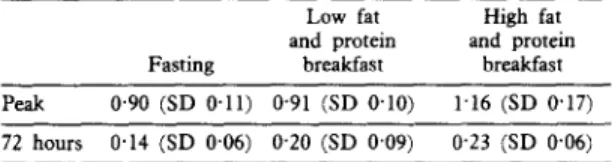
Table I-Mean chlomquim plasma concentration (micromoVI)
Fasting
Low fat High fat and protein and protein breakfast breakfast Peak 0.90 (SD 0.11) 0.91 (SD 0.10) 1.16 (SD 0.17) 72 hours 0.14 (SD 0.06) 0.20 (SD 0.09) 0.23 (SD 0.06)
Mean peak chloroquine levels and 72-hour values are shown in Table I. Mean chloroquine peak levels were similar after fasting and after the low fat and protein breakfast. When chloroquine was taken with a high fat and protein breakfast the mean peak value was significantly higher (p<O.O2). The 72-hour value was also higher when chloroquine was taken together with the high fat and protein breakfast (significance p<O*OS) compared to fasting.
The difference observed could be explained by a more complete absorption of the drug from the small intestine. Two effects of the high fat and protein meal might be involved: the longer stay of food in the small intestine, and the increase of splanchnic blood flow.
The weekly or daily doses taken for antimalarial prophylaxis are equivalent to or lower than the single doses given to these volunteers. However, to achieve optimal chloroquine plasma levels, the taking of the drug together with a breakfast rich in protein could be recommended? since a beneficial effect would be expected within one to four hours and 72 hours after drug intake.
M. LAGRAVE E. STAHEL B . BETSCHART Swiss Tropical Institute,
Socinstrasse 57, 4051 Basle, Switzerland
Reference
Weekly Epidemiological Record (1984). 59, 221-227. Accepted for publication 17th January, 1985.