RESEARCH OUTPUTS / RÉSULTATS DE RECHERCHE
Author(s) - Auteur(s) :
Publication date - Date de publication :
Permanent link - Permalien :
Rights / License - Licence de droit d’auteur :
Bibliothèque Universitaire Moretus Plantin
Institutional Repository - Research Portal
Dépôt Institutionnel - Portail de la Recherche
researchportal.unamur.be
University of Namur
An SMT-Based Concolic Testing Tool for Logic Programs
Fortz, Sophie; Mesnard, Fred; Payet, Etienne; Perrouin, Gilles; Vanhoof, Wim; Vidal, Germán
Published in:
Functional and Logic Programming
DOI:
10.1007/978-3-030-59025-3_13 Publication date:
2020
Document Version
Peer reviewed version
Link to publication
Citation for pulished version (HARVARD):
Fortz, S, Mesnard, F, Payet, E, Perrouin, G, Vanhoof, W & Vidal, G 2020, An SMT-Based Concolic Testing Tool for Logic Programs. in K Nakano & K Sagonas (eds), Functional and Logic Programming: 15th International
Symposium, FLOPS 2020, Proceedings. Lecture Notes in Computer Science (including subseries Lecture Notes
in Artificial Intelligence and Lecture Notes in Bioinformatics), vol. 12073 LNCS, Springer Science and Business Media Deutschland GmbH, pp. 215-219, 15th International Symposium on Functional and Logic Programming, FLOPS 2020, Akita, Japan, 14/09/20. https://doi.org/10.1007/978-3-030-59025-3_13
General rights
Copyright and moral rights for the publications made accessible in the public portal are retained by the authors and/or other copyright owners and it is a condition of accessing publications that users recognise and abide by the legal requirements associated with these rights. • Users may download and print one copy of any publication from the public portal for the purpose of private study or research. • You may not further distribute the material or use it for any profit-making activity or commercial gain
• You may freely distribute the URL identifying the publication in the public portal ?
Take down policy
If you believe that this document breaches copyright please contact us providing details, and we will remove access to the work immediately and investigate your claim.
for Logic Programs
⋆Sophie Fortz1, Fred Mesnard2, Etienne Payet2, Gilles Perrouin1, Wim
Vanhoof1, and German Vidal3
1 Université de Namur, Belgique 2 LIM - Université de la Réunion, France
3 MiST, VRAIN, Universitat Politècnica de València, Spain
Abstract. Concolic testing combines symbolic and concrete execution
to generate test cases that achieve a good program coverage. Its benefits have been demonstrated for more than 15 years in the case of imperative programs. In this work, we present a concolic-based test generation tool for logic programs which exploits SMT-solving for constraint resolution.
1 Concolic Testing of Logic Programs
Concolic testing is a well-established validation technique for imperative and object-oriented programs [3,8], but only recently investigated for functional and logic programming languages. Concolic testing for logic programming was ini-tially studied by Vidal [11] and Mesnard et al. [4], while Giantsos et al. [2] and Tikovsky et al. [10] considered concolic testing of functional programs.
Concolic testing performs both concrete and symbolic execution in parallel: given a test case (atomic goal), e.g., p(a), we evaluate both p(a) (the concrete goal) and p(X) (the symbolic goal), where X is a fresh variable, using a concolic execution extension of SLD resolution. The symbolic goal mimics the steps of the concrete goal but is aimed at gathering constraints that can be later used to produce alternative test cases. In particular, alternative test cases are computed by solving so-called selective unification problems [4,6]. The previous algorithm introduced by Mesnard et al. [4] does not scale well and does not support neg-ative constraints. By defining selective unification problems as constraints on Herbrand terms and relying on an SMT solver, we address both scalability and completeness issues.
Let us motivate our approach by illustrating one of the problems of the previous framework [4]. Consider the following logic program defining predicates
p/1 and q/1:
(ℓ1) p(a). (ℓ3) q(b).
(ℓ2) p(X)← q(X).
⋆Third author is a research associate at FNRS that also supports this work
(O05518F-RG03). The last author is partially supported by the EU (FEDER) and the Spanish MCI/AEI under grants TIN2016-76843-C4-1-R/PID2019-104735RB-C41 and by the
2 S. Fortz et al.
where ℓ1, ℓ2, ℓ3 are (unique) clause labels. Given an initial call, say p(a), the
algorithm considers all possible matching clauses for this call (i.e., all combi-nations from clauses l1 and l2) and produces the sets {}, {p(a)}, {p(X)}, and
{p(a), p(X)} with the heads of the clauses in each combination.
The considered initial call already covers the last case (i.e., it matches both
p(a) and p(X)). As for the remaining cases:
– Matching no clause. This case is clearly unfeasible, since the head of the
second clause, p(X), matches any call.
– Matching only clause ℓ1. This case is unfeasible as well since every atom that
unifies with p(a) will also unify with p(X).
– Matching only clause ℓ2. This case is clearly feasible with, e.g., p(b), since
p(b) unifies with p(X) but it does not unify with p(a). Thus p(b) is our next
initial goal.
In the second iteration, p(b) calls q(b) (using clause ℓ2) and, then, successfully
matches clause ℓ3. Since we only have one clause defining q/1, the only
alter-native consists in producing an initial call to p/1 that i) unifies with clause ℓ2
but not with clause ℓ1 and, then, ii) calls q/1 but fails. Unfortunately, since
the approach of Mesnard et al. [4] cannot represent negative constraints, the algorithm tries to find an instance p(X)σ of p(X) such that q(X)σ does not unify with q(b). A possible solution is then p(a). Observe that this goal will not achieve the desired result (matching clause ℓ2 and then fail) since it will match
clause ℓ1and terminate successfully. Indeed, since p(a) was already considered,
the concolic testing algorithm of Mesnard et al. [4] terminates computing the test cases{p(a), p(b)}, which is unnecessarily incomplete.
For example, if we assume that the domain comprises at least one more constant, say c, then the right set of test cases should be {p(a), p(b), p(c)}, so
that the last test case actually matches clause ℓ2 and then fails. In this work,
we overcome the above problem by introducing constraints, which can represent both positive and negative information. In particular, the search for an instance of p(X) that first unifies with clause ℓ2 only, and then fails, is represented as
follows:
p(X)̸= p(a) ∧ ∀Y (p(X) ̸= p(Y ) ∨ q(Y ) ̸= q(b))
Solving this constraint (using an SMT solver) would produce the desired test case, p(c), thus achieving a full path coverage.
For this purpose, we have designed a concolic testing tool for logic programs that is based on the following principles:
– As in the approach of Mesnard et al. [4], we instrument a deterministic
semantics for logic programs (inspired by the linear semantics of Ströder et
al. [9]) in order to perform both concrete and symbolic execution in parallel.
– In contrast to previous approaches, our instrumented semantics also
con-siders negative constraints, so that the problems mentioned above can be avoided (i.e., our implemented semantics is complete in more cases).
– Finally, the generated constraints are solved using a state-of-the-art
con-straint solver, namely the Z3 SMT solver [1]. This allows us to make concolic testing more efficient in practice.
Concolic Tool (Prolog)
Z3 Binding Parser
(Prolog) SWIPrologZ3 (C)
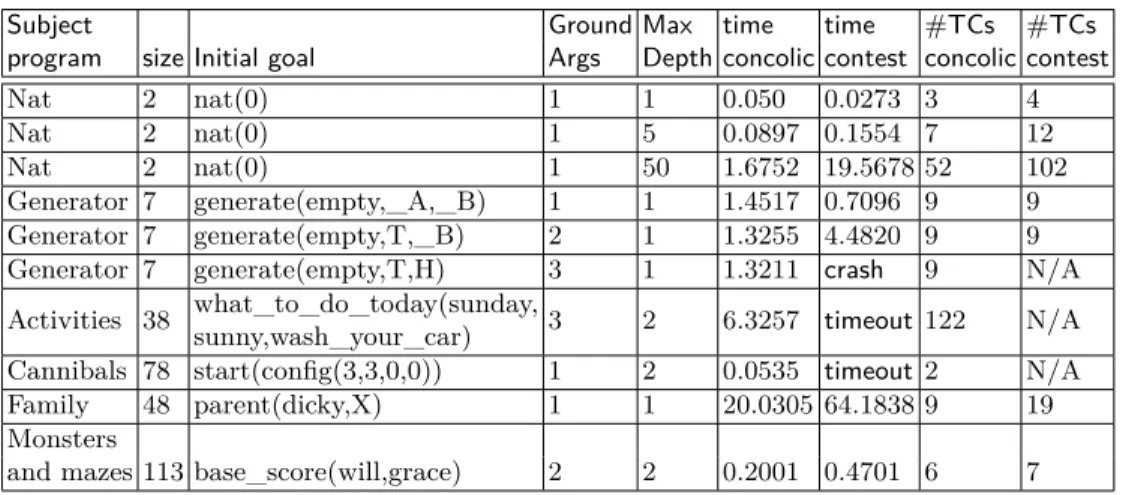
Fig. 1. Implementation workflow. Table 1. Summary of experimental results
Subject Ground Max time time #TCs #TCs program size Initial goal Args Depth concolic contest concolic contest Nat 2 nat(0) 1 1 0.050 0.0273 3 4 Nat 2 nat(0) 1 5 0.0897 0.1554 7 12 Nat 2 nat(0) 1 50 1.6752 19.5678 52 102 Generator 7 generate(empty,_A,_B) 1 1 1.4517 0.7096 9 9 Generator 7 generate(empty,T,_B) 2 1 1.3255 4.4820 9 9 Generator 7 generate(empty,T,H) 3 1 1.3211 crash 9 N/A Activities 38 what_to_do_today(sunday,
sunny,wash_your_car) 3 2 6.3257 timeout 122 N/A Cannibals 78 start(config(3,3,0,0)) 1 2 0.0535 timeout 2 N/A Family 48 parent(dicky,X) 1 1 20.0305 64.1838 9 19 Monsters
and mazes 113 base_score(will,grace) 2 2 0.2001 0.4701 6 7
2 A Concolic Testing Tool for Prolog
Our prototype is implemented in SWI-Prolog [12] and the Z3 SMT solver [1], as depicted in Figure 1. Regarding the termination of concolic testing, we impose a maximum term depth for the generated test cases. Since the domain is finite and we do not generate duplicated test cases, termination is trivially ensured.
Let us show some selected results from a preliminary experimental evaluation of our concolic testing tool. We selected six programs from previous benchmarks [4] and from GitHub4. We ran concolic testing between 3 and 100 executions
on a MacBook Pro hexacore 2,6 Ghz with 16 GB RAM in order to get reliable results. Reported times, in seconds, are the average of these executions. Our results are reported in Table 1. Here, concolic refers to our tool, while contest refers to the tool introduced by Mesnard et al. [4]; the size of a subject program is the number of its source lines of code; column Ground Args displays the number of ground arguments in the initial symbolic goal; and #TCs refers to the number of generated test cases. A timeout for contest is set to 1000 seconds (the crash is an overflow).
Regarding execution times, our new tool exhibits a certain overhead on small programs with a low depth due to the calls to the SMT solver. As program size and/or depth increase, our tool performs up to 10 times faster than contest. We note that the number of test cases generated by the tools are not comparable
4 S. Fortz et al.
since our new framework avoids a source of incompleteness (as mentioned in the previous section), but also restricts the number of test cases by forbidding the binding of so-called output arguments (which is allowed in contest). More details can be found in the companion paper:http://arxiv.org/abs/2002.07115. The implementation is also publicly available athttps://github.com/sfortz/Pl_ Concolic_Testing.
3 Conclusion
In this paper, we report our experience in the development of an SMT-based concolic testing tool that is based on the approach of Mesnard et al. [4] but adds support for negative constraints, thus overcoming some of the limitations of previous approaches [5,6]. Our preliminary experimental evaluation has shown promising results regarding the scalability of the method.
Recently, concolic testing has been extended to CLP programs [7], so that both positive and negative constraints can be represented in a natural way. As future work, we plan to extend our concolic testing tool to the case of CLP programs.
References
1. De Moura, L., Bjørner, N.: Z3: An efficient SMT solver. In: TACAS. pp. 337–340. Springer-Verlag, Berlin, Heidelberg (2008)
2. Giantsios, A., Papaspyrou, N., Sagonas, K.: Concolic testing for functional lan-guages. Science of Computer Programming 147, 109–134 (2017)
3. Godefroid, P., Klarlund, N., Sen, K.: DART: directed automated random testing. In: Proc. of PLDI’05. pp. 213–223. ACM (2005)
4. Mesnard, F., Payet, É., Vidal, G.: Concolic testing in logic programming. TPLP
15(4-5), 711–725 (2015). https://doi.org/10.1017/S1471068415000332
5. Mesnard, F., Payet, É., Vidal, G.: On the completeness of selective unification in concolic testing of logic programs. In LOPSTR’16. Lecture Notes in Computer Science, vol. 10184, pp. 205–221. Springer (2017)
6. Mesnard, F., Payet, É., Vidal, G.: Selective unification in constraint logic program-ming. In: Vanhoof, W., Pientka, B. (eds.) PPDP. pp. 115–126. ACM (2017) 7. Mesnard, F., Payet, É., Vidal, G.: Concolic Testing in CLP. CoRR
abs/2008.00421 (2020),https://arxiv.org/abs/2008.00421
8. Sen, K., Marinov, D., Agha, G.: CUTE: a concolic unit testing engine for C. In: ESEC/ FSE. pp. 263–272. ACM (2005)
9. Ströder, T., Emmes, F., Schneider-Kamp, P., Giesl, J., Fuhs, C.: A Linear Op-erational Semantics for Termination and Complexity Analysis of ISO Prolog. In: LOPSTR’11. pp. 237–252. Springer LNCS 7225 (2011)
10. Tikovsky, J.R.: Concolic testing of functional logic programs. In: Declarative Pro-gramming and Knowledge Management, pp. 169–186. Springer (2017)
11. Vidal, G.: Concolic execution and test case generation in Prolog. In LOPSTR 2014. Lecture Notes in Computer Science, vol. 8981, pp. 167–181. Springer (2015) 12. Wielemaker, J., Schrijvers, T., Triska, M., Lager, T.: SWI-Prolog. TPLP 12(1-2),