RESEARCH OUTPUTS / RÉSULTATS DE RECHERCHE
Author(s) - Auteur(s) :
Publication date - Date de publication :
Permanent link - Permalien :
Rights / License - Licence de droit d’auteur :
Institutional Repository - Research Portal
Dépôt Institutionnel - Portail de la Recherche
researchportal.unamur.be
University of Namur
Towards the Comparative Evaluation of Feature Diagram Languages
Heymans, Patrick; Schobbens, Pierre-Yves; Trigaux, Jean-Christophe; Matulevicius,
Raimundas; Classen, Andreas; Bontemps, Yves
Published in:
Software and Services Variability Management Workshop - Concepts, Models and Tools
Publication date: 2007
Document Version
Early version, also known as pre-print
Link to publication
Citation for pulished version (HARVARD):
Heymans, P, Schobbens, P-Y, Trigaux, J-C, Matulevicius, R, Classen, A & Bontemps, Y 2007, Towards the Comparative Evaluation of Feature Diagram Languages. in T Mannisto, E Niemela & M Raatikainen (eds), Software and Services Variability Management Workshop - Concepts, Models and Tools. Helsinki University of Technology Software Business and Engineering Institute, Helsinki, pp. 1-16.
General rights
Copyright and moral rights for the publications made accessible in the public portal are retained by the authors and/or other copyright owners and it is a condition of accessing publications that users recognise and abide by the legal requirements associated with these rights. • Users may download and print one copy of any publication from the public portal for the purpose of private study or research. • You may not further distribute the material or use it for any profit-making activity or commercial gain
Towards the Comparative Evaluation of Feature
Diagram Languages
Patrick Heymans, Pierre-Yves Schobbens, Jean-Christophe Trigaux!,
Raimundas Matuleviˇcius, Andreas Classen and Yves Bontemps PReCISE research centre, Computer Science Faculty, University of Namur
21, rue Grandgagnage – B-5000, Namur (Belgium) {phe,pys,jtr,rma,aclassen,ybo}@info.fundp.ac.be
Abstract. This paper proposes a path to defragmenting research on feature dia-gram languages: (1) a global quality framework to serve as a language quality im-provement roadmap; (2) a set of formally defined criteria to assess the semantics-related qualities of feature diagram languages; (3) a systematic method to for-malise these languages and make them ready for comparison and efficient tool automation. The novelty of this paper resides in the latter point and the integra-tion. The results obtained so far are summed up and future works are identified.
1 Introduction
During the last fifteen years or so, more than ten different Feature Diagram (FD) lan-guages were proposed starting from the seminal work of Kang et al. on FODA back in 1990 [1]. An example of a FODA FD appears in Fig. 1. We assume the reader is familiar with the notation.
Monitor Temperatures Coolant Oil Monitor Engine system Monitor Fuel Consumption Monitor Engine Performance Engine Transmission Monitor exhaust levels and temperature Monitor RPM Based on type of driving Gallon/mile L/Km Measures Based on drive Based on distance Methods
Based on drive requires Monitor RPM
Fig. 1. FODA example (inspired from [2])
!Work supported by Walloon Region and FSE under FIRST Europe Objective 3 Project
PLENTY EPH3310300R0462 / 215315
Towards the Comparative Evaluation of Feature
Diagram Languages
Patrick Heymans, Pierre-Yves Schobbens, Jean-Christophe Trigaux!,
Raimundas Matuleviˇcius, Andreas Classen and Yves Bontemps PReCISE research centre, Computer Science Faculty, University of Namur
21, rue Grandgagnage – B-5000, Namur (Belgium) {phe,pys,jtr,rma,aclassen,ybo}@info.fundp.ac.be
Abstract. This paper proposes a path to defragmenting research on feature dia-gram languages: (1) a global quality framework to serve as a language quality im-provement roadmap; (2) a set of formally defined criteria to assess the semantics-related qualities of feature diagram languages; (3) a systematic method to for-malise these languages and make them ready for comparison and efficient tool automation. The novelty of this paper resides in the latter point and the integra-tion. The results obtained so far are summed up and future works are identified.
1 Introduction
During the last fifteen years or so, more than ten different Feature Diagram (FD) lan-guages were proposed starting from the seminal work of Kang et al. on FODA back in 1990 [1]. An example of a FODA FD appears in Fig. 1. We assume the reader is familiar with the notation.
Monitor Temperatures Coolant Oil Monitor Engine system Monitor Fuel Consumption Monitor Engine Performance Engine Transmission Monitor exhaust levels and temperature Monitor RPM Based on type of driving Gallon/mile L/Km Measures Based on drive Based on distance Methods
Based on drive requires Monitor RPM
Fig. 1. FODA example (inspired from [2])
!Work supported by Walloon Region and FSE under FIRST Europe Objective 3 Project
Since Kang et al.’s proposal, several extensions to FODA were devised [3–9] (see also Table 1). When looking at these FD languages, one immediately sees aesthetic dif-ferences (see, e.g., Fig.2). Although concrete syntax is an important issue in its own right [10], this work focusses on what is really behind the pictures: semantics. We noticed that proponents of FD languages often claimed for added value of their lan-guage in terms of precision, unambiguity or expressiveness. Nevertheless, our previous work [11–15] demonstrated that the terminology and evaluation criteria that they used to justify these claims were often vague, and sometimes even misleading. We also tried to give a precise meaning to the constructs of those languages.
OFT,OFD,GPFT RFD VBFD EFD PFT
1..1
s s
Fig. 2. Concrete syntaxes for xor-decomposition
Although we note that recent research has devoted more attention to the semantic foundations of these languages [16–22], we still lack concrete means to discriminate between these proposals.
This paper suggests a method to evaluate and compare FD languages focused on the study of their semantics. This method relies on formally defined criteria and ter-minology, based on the highest standards in formal language definition [23]. It is also situated with respect to SEQUAL [24, 25], a comprehensive framework for assessing and improving the quality of modelling languages.
In Section 2, we briefly present SEQUAL. Section 3 recalls good language defi-nition principles from [23]. On these grounds, Section 4 continues with the defidefi-nition of the criteria that our method aims to investigate: expressiveness, embeddability (also called naturalness), succinctness and (computational) complexity. The method is de-scribed in Section 5 and constitutes the main contribution of this paper. Section 6 sum-marises the results obtained so far [13–15]. The paper finishes by discussing the current limitations of the method and the remaining research challenges (Section 7), before it
concludes (Section 8). This paper is short version of a technical report [26]1.
2 Quality of Models and Languages
Assessing and improving the quality of modelling is a complex and multidimensional task. A comprehensive view of the concerns involved is given in the SEQUAL (semiotic
1Available at http://www.info.fundp.ac.be/∼phe/docs/papers/TechRep Eval FP
of FDL 06.pdf
Since Kang et al.’s proposal, several extensions to FODA were devised [3–9] (see also Table 1). When looking at these FD languages, one immediately sees aesthetic dif-ferences (see, e.g., Fig.2). Although concrete syntax is an important issue in its own right [10], this work focusses on what is really behind the pictures: semantics. We noticed that proponents of FD languages often claimed for added value of their lan-guage in terms of precision, unambiguity or expressiveness. Nevertheless, our previous work [11–15] demonstrated that the terminology and evaluation criteria that they used to justify these claims were often vague, and sometimes even misleading. We also tried to give a precise meaning to the constructs of those languages.
OFT,OFD,GPFT RFD VBFD EFD PFT
1..1
s s
Fig. 2. Concrete syntaxes for xor-decomposition
Although we note that recent research has devoted more attention to the semantic foundations of these languages [16–22], we still lack concrete means to discriminate between these proposals.
This paper suggests a method to evaluate and compare FD languages focused on the study of their semantics. This method relies on formally defined criteria and ter-minology, based on the highest standards in formal language definition [23]. It is also situated with respect to SEQUAL [24, 25], a comprehensive framework for assessing and improving the quality of modelling languages.
In Section 2, we briefly present SEQUAL. Section 3 recalls good language defi-nition principles from [23]. On these grounds, Section 4 continues with the defidefi-nition of the criteria that our method aims to investigate: expressiveness, embeddability (also called naturalness), succinctness and (computational) complexity. The method is de-scribed in Section 5 and constitutes the main contribution of this paper. Section 6 sum-marises the results obtained so far [13–15]. The paper finishes by discussing the current limitations of the method and the remaining research challenges (Section 7), before it
concludes (Section 8). This paper is short version of a technical report [26]1.
2 Quality of Models and Languages
Assessing and improving the quality of modelling is a complex and multidimensional task. A comprehensive view of the concerns involved is given in the SEQUAL (semiotic
1Available at http://www.info.fundp.ac.be/∼phe/docs/papers/TechRep Eval FP
quality) framework, developed over the last decade by Krogstie et al. [25]. SEQUAL is based on a distinction between semiotic levels: syntactic, semantic and pragmatic. It adheres to a constructivistic world-view that recognises model creation as part of a dialog between participants whose knowledge changes as the process takes place.
SEQUAL is amenable to specific criteria and guidelines by tailoring. Its main ad-vantages are that (1) it helps situate one’s investigations within a comprehensive quality space, (2) it acts as a checklist of qualities to be pursued and (3) it recommends general guidelines on how to proceed.
Our investigation is targeted semantic and pragmatic qualities of FDs which we have found to be somehow neglected in the current state of the art. So doing, we will see that we inevitably interfere with the other qualities, mainly syntactic quality.
The problem we encounter is that representative objects of study – models – do not always exist, or at least are not easily available. And this is indeed the case for FDs which (1) are an emerging modelling paradigm, and (2) have the purpose of
repre-senting highly strategic company information. Since representative models2are almost
nowhere to find, we concentrate on improving the quality of FD languages.
Domain appropriateness Language externalizability
appropriateness
Participant language knowledge appropriateness
Organisational appropriateness
Comprehensibility appropriateness
Technical actor interpretation appropriateness Goals of modelling G Modelling domain D Participant knowledge K Language extension L Social actor interpretation I Technical actor interpretation T Model externalisation M
Fig. 3. SEQUAL : Language Quality [24, 25]
SEQUAL has been adapted to evaluate language appropriateness [24] (see Fig. 3). Six quality areas were proposed. Domain appropriateness means that language L must be powerful enough to express anything in the domain D, and that, on the other hand it should not be possible to express things that are not in D. Participant language
knowl-edge appropriateness measures how the statements of L used by the participants match
the explicit knowledge K of the participants. Knowledge externalisability
appropriate-2Except illustrative examples used in research papers.
quality) framework, developed over the last decade by Krogstie et al. [25]. SEQUAL is based on a distinction between semiotic levels: syntactic, semantic and pragmatic. It adheres to a constructivistic world-view that recognises model creation as part of a dialog between participants whose knowledge changes as the process takes place.
SEQUAL is amenable to specific criteria and guidelines by tailoring. Its main ad-vantages are that (1) it helps situate one’s investigations within a comprehensive quality space, (2) it acts as a checklist of qualities to be pursued and (3) it recommends general guidelines on how to proceed.
Our investigation is targeted semantic and pragmatic qualities of FDs which we have found to be somehow neglected in the current state of the art. So doing, we will see that we inevitably interfere with the other qualities, mainly syntactic quality.
The problem we encounter is that representative objects of study – models – do not always exist, or at least are not easily available. And this is indeed the case for FDs which (1) are an emerging modelling paradigm, and (2) have the purpose of
repre-senting highly strategic company information. Since representative models2are almost
nowhere to find, we concentrate on improving the quality of FD languages.
Domain appropriateness Language externalizability
appropriateness
Participant language knowledge appropriateness
Organisational appropriateness
Comprehensibility appropriateness
Technical actor interpretation appropriateness Goals of modelling G Modelling domain D Participant knowledge K Language extension L Social actor interpretation I Technical actor interpretation T Model externalisation M
Fig. 3. SEQUAL : Language Quality [24, 25]
SEQUAL has been adapted to evaluate language appropriateness [24] (see Fig. 3). Six quality areas were proposed. Domain appropriateness means that language L must be powerful enough to express anything in the domain D, and that, on the other hand it should not be possible to express things that are not in D. Participant language
knowl-edge appropriateness measures how the statements of L used by the participants match
the explicit knowledge K of the participants. Knowledge externalisability
ness means that there are no statements in K that cannot be expressed in L. Comprehen-sibility appropriateness means that language users understand all possible statements of L. Technical actor interpretation appropriateness defines the degree to which the
lan-guage lends itself to automatic reasoning and supports analysability and executability. Finally, organisational appropriateness relates L to standards and other needs within the organisational context of modelling.
Not being able to assess model qualities directly, our investigations were re-targeted at three main language qualities: domain appropriateness, comprehensibility
appropri-ateness and technical actor interpretation appropriappropri-ateness. The matching of the
inves-tigated criteria wrt these qualities is further discussed in Section 7. In the next section, we will first introduce the basic notions behind these criteria (Section 3), and then the criteria themselves (Section 4).
3 Formal definition of visual languages
In [23], Harel and Rumpe recognise that: “Much confusion surrounds the proper
defi-nition of complex modelling languages [. . . ]. At the root of the problem is insufficient regard for the crucial distinction between syntax and true semantics and a failure to adhere to the nature and the purpose of each.” [23] Although they are far less complex
than, e.g., the UML3, we demonstrated in previous papers [11–14] that FDs were also
“victims” of similar “mistreatments”.
Harel and Rumpe make it clear that the unambiguous definition of any modelling language must consist of three equally necessary elements: a syntactic domain (L), a
semantic domain (S) and a semantic function (M) (see Fig. 4). All three should be
defined through explicit, rigid and unambiguous rules, hence the use of mathematics.
Syntactic domain (L) Semantic domain (S)
All the diagrams
one can write in L All the possible meaningsof Ldiagrams Semantic function (M: L ! S) myDiagram yourDiagram herDiagram M(yourDiagram) M(myDiagram) M(herDiagram) = M(hisDiagram) hisDiagram
Fig. 4. The 3 constituents of a formal language
During our survey, we could observe that many FD languages were never formally defined. Maybe, some answers to why this is so are given in [23] where the authors point
3In [23], one of Harel and Rumpe’s main motivations is to suggest how to improve the UML.
ness means that there are no statements in K that cannot be expressed in L. Comprehen-sibility appropriateness means that language users understand all possible statements of L. Technical actor interpretation appropriateness defines the degree to which the
lan-guage lends itself to automatic reasoning and supports analysability and executability. Finally, organisational appropriateness relates L to standards and other needs within the organisational context of modelling.
Not being able to assess model qualities directly, our investigations were re-targeted at three main language qualities: domain appropriateness, comprehensibility
appropri-ateness and technical actor interpretation appropriappropri-ateness. The matching of the
inves-tigated criteria wrt these qualities is further discussed in Section 7. In the next section, we will first introduce the basic notions behind these criteria (Section 3), and then the criteria themselves (Section 4).
3 Formal definition of visual languages
In [23], Harel and Rumpe recognise that: “Much confusion surrounds the proper
defi-nition of complex modelling languages [. . . ]. At the root of the problem is insufficient regard for the crucial distinction between syntax and true semantics and a failure to adhere to the nature and the purpose of each.” [23] Although they are far less complex
than, e.g., the UML3, we demonstrated in previous papers [11–14] that FDs were also
“victims” of similar “mistreatments”.
Harel and Rumpe make it clear that the unambiguous definition of any modelling language must consist of three equally necessary elements: a syntactic domain (L), a
semantic domain (S) and a semantic function (M) (see Fig. 4). All three should be
defined through explicit, rigid and unambiguous rules, hence the use of mathematics.
Syntactic domain (L) Semantic domain (S)
All the diagrams
one can write in L All the possible meaningsof Ldiagrams Semantic function (M: L ! S) myDiagram yourDiagram herDiagram M(yourDiagram) M(myDiagram) M(herDiagram) = M(hisDiagram) hisDiagram
Fig. 4. The 3 constituents of a formal language
During our survey, we could observe that many FD languages were never formally defined. Maybe, some answers to why this is so are given in [23] where the authors point
out of set of frequent misconceptions about formal semantics, e.g., “Semantics is the metamodel”, “Semantics is dealing with behaviour”, “Semantics is being executable”, “Semantics means looking mathematical”, etc. This folklore is demystified [23]. For now, we turn to the definitions of L, S and M.
3.1 Syntax
Concrete syntax is the physical representation of the data (on screen, or on paper) in
terms of lines, arrows, closed curves, boxes and composition mechanisms involving connectivity, partitioning and “insideness” [23].
Although discouraged by best pratice, most of the (informal) definitions of the se-mantics of FDs we found in the literature were based on concrete syntax, usually dis-cussed on FD examples. Most of the time, a substantial part of the semantics was im-plicit, leaving it to the diagrams to “speak for themselves”.
The abstract syntax (L) is a representation of data that is independent of its physical representation and of the machine-internal structures and encodings. It thus makes the syntactic rules simpler and more portable. The set of all data that comply with a given abstract syntax is called the syntactic domain.
In [13, 14], we provided an abstract syntax (and semantics) for several FD languages at once through a generic mathematical structure we called FFD (see Fig. 5 and Table
1). LFFDhas 4 parameters reflecting the 4 abstract syntax variation points we observed
among languages: the graph type (GT = TREE or DAG4), the node types (NT, i.e. what
decomposition operators can be used: and, xor, or,. . . ), the additional graphical
con-straint types used (GCT, usually requires/⇒ and mutex/|), and the texual concon-straint language (TCL, usually Composition Rules (CR) [1]).
3.2 Semantics
The semantic domain (S) “[. . . ] specifies the very concepts that exist in the universe
of discourse. As such, it serves as an abstraction of reality, capturing decisions about the kinds of things the language should express”. S is a mathematical domain built to
have the same structure as the real-world objects the language is used to account for, up to some level of fidelity. The semantic domain that we have proposed for FODA-inspired languages is named PL (Product Lines) [13, 14]. It is recalled in Definition 1. It assumes that FDs are graphs whose nodes (N) represent features and where P, a subset of N, is the set of features that the user considers relevant. We call P the set of
primitive features/nodes5:
Definition 1 (Configuration, Product, Product Line). (1) A configuration is a set of
nodes, i.e., any element of PN. (2) A product is a configuration that contains only primitive features, i.e., any element of PP. (3) A product line is a set of products, i.e., any element of PL = PPP.
4Directed Acyclic Graph.
5Hence, primitive nodes and leaf nodes are different concepts, although the former usually
includes the latter, but can include intermediate nodes as well; this is up to the modeller.
out of set of frequent misconceptions about formal semantics, e.g., “Semantics is the metamodel”, “Semantics is dealing with behaviour”, “Semantics is being executable”, “Semantics means looking mathematical”, etc. This folklore is demystified [23]. For now, we turn to the definitions of L, S and M.
3.1 Syntax
Concrete syntax is the physical representation of the data (on screen, or on paper) in
terms of lines, arrows, closed curves, boxes and composition mechanisms involving connectivity, partitioning and “insideness” [23].
Although discouraged by best pratice, most of the (informal) definitions of the se-mantics of FDs we found in the literature were based on concrete syntax, usually dis-cussed on FD examples. Most of the time, a substantial part of the semantics was im-plicit, leaving it to the diagrams to “speak for themselves”.
The abstract syntax (L) is a representation of data that is independent of its physical representation and of the machine-internal structures and encodings. It thus makes the syntactic rules simpler and more portable. The set of all data that comply with a given abstract syntax is called the syntactic domain.
In [13, 14], we provided an abstract syntax (and semantics) for several FD languages at once through a generic mathematical structure we called FFD (see Fig. 5 and Table
1). LFFDhas 4 parameters reflecting the 4 abstract syntax variation points we observed
among languages: the graph type (GT = TREE or DAG4), the node types (NT, i.e. what
decomposition operators can be used: and, xor, or,. . . ), the additional graphical
con-straint types used (GCT, usually requires/⇒ and mutex/|), and the texual concon-straint language (TCL, usually Composition Rules (CR) [1]).
3.2 Semantics
The semantic domain (S) “[. . . ] specifies the very concepts that exist in the universe
of discourse. As such, it serves as an abstraction of reality, capturing decisions about the kinds of things the language should express”. S is a mathematical domain built to
have the same structure as the real-world objects the language is used to account for, up to some level of fidelity. The semantic domain that we have proposed for FODA-inspired languages is named PL (Product Lines) [13, 14]. It is recalled in Definition 1. It assumes that FDs are graphs whose nodes (N) represent features and where P, a subset of N, is the set of features that the user considers relevant. We call P the set of
primitive features/nodes5:
Definition 1 (Configuration, Product, Product Line). (1) A configuration is a set of
nodes, i.e., any element of PN. (2) A product is a configuration that contains only primitive features, i.e., any element of PP. (3) A product line is a set of products, i.e., any element of PL = PPP.
4Directed Acyclic Graph.
5Hence, primitive nodes and leaf nodes are different concepts, although the former usually
Other formalisations [16–22] chose semantic domains different from PL, for exam-ple using lists instead of sets [22] or keeping the full shape of the FD [19]. How to compare PL with other semantic domains will be discussed in Section 5.
The semantic function M : L → S eventually assigns a meaning in S to each syn-tactically correct diagram d, noted M[[d]]. Again, a mathematical definition is
recom-mended. In [13, 14], we defined a generic semantic function (MFFD) giving a semantics
to several FD languages at once (see Fig. 5).
LOFT
LOFD
LPFT ...
Generic syntactic domain LFFD(GT,NT,GCT,TCL)
All the diagrams one can write in a language of the FD family (LOFT, LOFD, ... , LPFT ! LFFD)
All the diagrams one can write in LOFT
All the diagrams one can write in LOFD
All the diagrams one can write in LPFT
Common semantic domain
PL
All the possible meanings of FDs
Common semantic function MFFD
Fig. 5. Semantics for a family of FD languages
Since M is a function, there is at most one semantics for each diagram. Ambiguity in this context is therefore not possible. The term “ambiguity” was not always properly used in the surveyed literature. For example, FODA FDs have been criticised for be-ing ambiguous [8]. However, havbe-ing reconstructed a proper formal semantics from the original plain English definition [1], we could check that this was not the case [11].
Finally, the semantic function should be total, that is, it should not be possible to have a diagram in L which is not given a meaning in S by M. The converse question (is every element in S expressible by a diagram in L?) is called the expressiveness of a language and is another term used confusingly in the literature. It is clarified, together with other comparison criteria, in the next section.
4 Comparison criteria
When a language receives a formal semantics, it can then be evaluated according to various objective criteria. We first address (computational) complexity. In a formal lan-guage, we can precisely define decision problems, i.e., tasks to be automated. A math-ematical definition of the tasks is necessary to prove the correctness of algorithms. It
Other formalisations [16–22] chose semantic domains different from PL, for exam-ple using lists instead of sets [22] or keeping the full shape of the FD [19]. How to compare PL with other semantic domains will be discussed in Section 5.
The semantic function M : L → S eventually assigns a meaning in S to each syn-tactically correct diagram d, noted M[[d]]. Again, a mathematical definition is
recom-mended. In [13, 14], we defined a generic semantic function (MFFD) giving a semantics
to several FD languages at once (see Fig. 5).
LOFT
LOFD
LPFT ...
Generic syntactic domain LFFD(GT,NT,GCT,TCL)
All the diagrams one can write in a language of the FD family (LOFT, LOFD, ... , LPFT ! LFFD)
All the diagrams one can write in LOFT
All the diagrams one can write in LOFD
All the diagrams one can write in LPFT
Common semantic domain
PL
All the possible meanings of FDs
Common semantic function MFFD
Fig. 5. Semantics for a family of FD languages
Since M is a function, there is at most one semantics for each diagram. Ambiguity in this context is therefore not possible. The term “ambiguity” was not always properly used in the surveyed literature. For example, FODA FDs have been criticised for be-ing ambiguous [8]. However, havbe-ing reconstructed a proper formal semantics from the original plain English definition [1], we could check that this was not the case [11].
Finally, the semantic function should be total, that is, it should not be possible to have a diagram in L which is not given a meaning in S by M. The converse question (is every element in S expressible by a diagram in L?) is called the expressiveness of a language and is another term used confusingly in the literature. It is clarified, together with other comparison criteria, in the next section.
4 Comparison criteria
When a language receives a formal semantics, it can then be evaluated according to various objective criteria. We first address (computational) complexity. In a formal lan-guage, we can precisely define decision problems, i.e., tasks to be automated. A math-ematical definition of the tasks is necessary to prove the correctness of algorithms. It
also allows to study complexity, thereby assessing their scalability. Results give an in-dication about the worst case, and how to handle it. Heuristics taking into account the most usual cases can be added to the backbone algorithm, to obtain practical efficiency. In [13], we studied the complexity of a selection of FD-related decision problems: (1) satisfiability: given a diagram d, is M[[d]] = ∅ true? (2) equivalence: given two
diagrams d1 and d2, is M[[d1]] = M[[d2]] true? (3) model-checking (called
product-checking for FDs): given a product c and a diagram d, is c ∈ M[[d]] true? (4) inter-section: compute a new diagram d3such that M[[d3]] = M[[d1]] ! M[[d2]]. (5) union:
compute a new diagram d3such that M[[d3]] = M[[d1]] " M[[d2]]. (6) reduced product:
compute a new diagram d3such that M[[d3]] = {c1∪ c2|c1∈ M[[d1]], c2∈ M[[d2]]}.
When languages, in addition to having a formal semantics, also share a common semantic domain (S), we can compare them with additional criteria. We use three com-mon criteria:
– expressiveness: what can the language express?
– embeddability (or macro-eliminability): when translating a diagram to another lan-guage, can we keep its structure?
– succinctness: how big are the expressions of a same semantic object?
Formal semantics opens the way for a fully formal definition and objective assess-ment of these criteria. For example, Def. 2 naturally formalizes expressiveness as the part of a languages’s semantic domain that its syntax can express. Fig. 6 illustrates it. Definition 2 (Expressiveness).
The expressiveness of a language L is the set E(L) = {M[[d]]|d ∈ L}, also noted
M[[L]]. A language L1 is more expressive than a language L2 if E(L1) ⊃ E(L2). A
language L with semantic domain S is expressively complete if E(L) = S.
Since languages compete for expressiveness, it often happens that they reach the
same maximal expressiveness (like LW in Fig. 6). This is for instance the case for
programming languages, that are almost all Turing-complete and can thus express the same computable functions. Consequently, we need finer criteria than expressiveness to compare these languages.
In [13], we recalled equally formal definitions of embeddability and succinctness, which are widely accepted criteria in the formal methods community. We cannot repro-duce them here for lack of space, so we just present them informally and motivate them. The results obtained by applying them to FDs are detailed in Section 6.
Embeddability is of practical relevance because it questions the existence of a
trans-formation from one language to the other which preserves the whole shape of the dia-grams and generates only a linear increase in size. This way, traceability between the two diagrams is greatly facilitated and tool interoperability is made more transparent. Furthermore, limiting the size of diagrams helps avoiding tractability issues for reason-ing algorithms takreason-ing the diagrams as an input. Most importantly, embeddability can also exist between a language and a subset of itself. A language that is non-trivially self-embeddable [13] is called harmfully redundant. This means that it is unnecessar-ily complex: all diagrams can be expressed in the simpler sublanguage without loss of structure and with only a linear increase in size.
also allows to study complexity, thereby assessing their scalability. Results give an in-dication about the worst case, and how to handle it. Heuristics taking into account the most usual cases can be added to the backbone algorithm, to obtain practical efficiency. In [13], we studied the complexity of a selection of FD-related decision problems: (1) satisfiability: given a diagram d, is M[[d]] = ∅ true? (2) equivalence: given two
diagrams d1 and d2, is M[[d1]] = M[[d2]] true? (3) model-checking (called
product-checking for FDs): given a product c and a diagram d, is c ∈ M[[d]] true? (4) inter-section: compute a new diagram d3such that M[[d3]] = M[[d1]] ! M[[d2]]. (5) union:
compute a new diagram d3such that M[[d3]] = M[[d1]] " M[[d2]]. (6) reduced product:
compute a new diagram d3such that M[[d3]] = {c1∪ c2|c1∈ M[[d1]], c2 ∈ M[[d2]]}.
When languages, in addition to having a formal semantics, also share a common semantic domain (S), we can compare them with additional criteria. We use three com-mon criteria:
– expressiveness: what can the language express?
– embeddability (or macro-eliminability): when translating a diagram to another lan-guage, can we keep its structure?
– succinctness: how big are the expressions of a same semantic object?
Formal semantics opens the way for a fully formal definition and objective assess-ment of these criteria. For example, Def. 2 naturally formalizes expressiveness as the part of a languages’s semantic domain that its syntax can express. Fig. 6 illustrates it. Definition 2 (Expressiveness).
The expressiveness of a language L is the set E(L) = {M[[d]]|d ∈ L}, also noted
M[[L]]. A language L1 is more expressive than a language L2 if E(L1) ⊃ E(L2). A
language L with semantic domain S is expressively complete if E(L) = S.
Since languages compete for expressiveness, it often happens that they reach the
same maximal expressiveness (like LW in Fig. 6). This is for instance the case for
programming languages, that are almost all Turing-complete and can thus express the same computable functions. Consequently, we need finer criteria than expressiveness to compare these languages.
In [13], we recalled equally formal definitions of embeddability and succinctness, which are widely accepted criteria in the formal methods community. We cannot repro-duce them here for lack of space, so we just present them informally and motivate them. The results obtained by applying them to FDs are detailed in Section 6.
Embeddability is of practical relevance because it questions the existence of a
trans-formation from one language to the other which preserves the whole shape of the dia-grams and generates only a linear increase in size. This way, traceability between the two diagrams is greatly facilitated and tool interoperability is made more transparent. Furthermore, limiting the size of diagrams helps avoiding tractability issues for reason-ing algorithms takreason-ing the diagrams as an input. Most importantly, embeddability can also exist between a language and a subset of itself. A language that is non-trivially self-embeddable [13] is called harmfully redundant. This means that it is unnecessar-ily complex: all diagrams can be expressed in the simpler sublanguage without loss of structure and with only a linear increase in size.
In case linear translations are not possible, the blow-up in the size of the diagram
must be measured by succinctness. If L1is more succinct than L2, this usually entails
that L1’s diagrams are likely to be more readable. Also, if one needs to translate from
L1 to L26, succinctness will be an indicator of the difficulty to maintain traceability
between the orginal and the generated diagram. Traceability of linear translations is usually easier but is likely to become more difficult as the size of the generated diagrams grows bigger. However, this should not be concluded too hastily since succinctness
does not provide information on the structure of the generated diagrams7. In this sense,
succinctness is a coarser-grained criteria than embeddability.
...
Syntactic domains Semantic domain Semantic functions E(LW)=S E(LY) E(LZ) E(LX) LW LY LX LZ My!Ly" Mz!Lz" Mx!Lx" Mw!Lw"
Fig. 6. Comparing expressiveness
5 A Comparison Method for FD languages
In order to compare FD languages X1,. . . ,Xn according to the criteria exposed in the
previous section, we need formally defined languages. That is, for language Xi, we
need LXi, SXi and MXi. To compare expressiveness, embeddability and succinctness,
we also need to have SX1 =SX2 =. . . = SXn. Unfortunately, this ideal situation almost
never occurs in practice. Instead, we have to cope with:
– languages that have no formal semantics (this is the most frequent case [13, 14]), – languages with a formal semantics defined in a different way from [23],
– or languages with a formal semantics compliant with [23] but different semantic
domains.
6E.g., because a tool for achieving some desired functionality is only available in L 2. 7However, looking at the transformation’s definition will provide the information.
In case linear translations are not possible, the blow-up in the size of the diagram
must be measured by succinctness. If L1is more succinct than L2, this usually entails
that L1’s diagrams are likely to be more readable. Also, if one needs to translate from
L1 to L26, succinctness will be an indicator of the difficulty to maintain traceability
between the orginal and the generated diagram. Traceability of linear translations is usually easier but is likely to become more difficult as the size of the generated diagrams grows bigger. However, this should not be concluded too hastily since succinctness
does not provide information on the structure of the generated diagrams7. In this sense,
succinctness is a coarser-grained criteria than embeddability.
...
Syntactic domains Semantic domain Semantic functions E(LW)=S E(LY) E(LZ) E(LX) LW LY LX LZ My!Ly" Mz!Lz" Mx!Lx" Mw!Lw"
Fig. 6. Comparing expressiveness
5 A Comparison Method for FD languages
In order to compare FD languages X1,. . . ,Xn according to the criteria exposed in the
previous section, we need formally defined languages. That is, for language Xi, we
need LXi, SXi and MXi. To compare expressiveness, embeddability and succinctness,
we also need to have SX1 =SX2 =. . . = SXn. Unfortunately, this ideal situation almost
never occurs in practice. Instead, we have to cope with:
– languages that have no formal semantics (this is the most frequent case [13, 14]), – languages with a formal semantics defined in a different way from [23],
– or languages with a formal semantics compliant with [23] but different semantic
domains.
6E.g., because a tool for achieving some desired functionality is only available in L 2. 7However, looking at the transformation’s definition will provide the information.
Hence, the overall comparison process should be carried out in two steps: (1) make the languages suitable for comparison, (2) make the comparisons. We now detail the first step.
Let X1be the language we want to compare with the others (X2, ...,Xn) which, we
assume, are fully and clearly formalised according to [23] and have identical semantic domains. We distinguish three cases:
5.1 Case 1: X1has no formal semantics
There are two alternatives:
– The first alternative is to define the syntax and semantics for each FD language
individually following [23]. That is, we define X1 independently from X2, ...,Xn.
This is what we did in [11] where we formalised FODA FDs (OFT) [1]. FORM FDs (OFD) [3] are treated the same way in [26].
– The second alternative is to make scale economies and define several languages at once. In [14], we observed that most of the FD languages largely share the same goals, the same constructs and, as we understood from the informal definitions, the same (FODA-inspired) semantics. For this reason, we proposed to define not one FD language but a family of related FD languages (see Fig. 5). We defined a para-metric abstract syntax, called FFD, in which parameters correspond to variations in LX1, ...,LXn. This definition follows, but slightly adapts, the principles of Section 3. The semantic domain (PL) and semantic function are common to all FD variants, maximizing semantic reusability. With this method, we are confined to handle lan-guages whose only significant variations are in abstract syntax. For lanlan-guages with very different semantic choices, e.g. [19], it is much harder to describe (and justify) the introduction of variation points in the semantics. Then, we should rather follow either the first alternative in Case 1 if the language is informal, or Cases 2 or 3 otherwise.
5.2 Case 2: X1has formal semantics but LX1, SX1and MX1need to be clarified
Another frequent case is when X1actually has a formal semantics, but irrespective of
[23]. That is, we cannot see explicit and self-contained mathematical definitions of LX1,
SX1and MX1. Typically, LX1is clear and self-contained, but SX1and MX1are not. Most
of the time, the semantics of X1is given by describing a transformation of X1’s diagrams
to another language, say W, which is formal. W does not even need to be a FD language, and usually it is not. Therefore, the semantic domain might be very different from the one intuitively thought of for FDs. The main motivation for formalising this way is usually because W is supported by tools. The problem is that these kinds of “indirect”,
or tool-based, semantics complicate the assessment of the language8.
Several proposals of this kind for FDs can be found in recent work [17–22]. We thus need to reformulate the semantics of those languages. In [15], we treated the FD language proposed by van Deursen and Klint [22] (renamed vDFD) before comparing
8Even more if W’s semantics also does not follow [23].
Hence, the overall comparison process should be carried out in two steps: (1) make the languages suitable for comparison, (2) make the comparisons. We now detail the first step.
Let X1be the language we want to compare with the others (X2, ...,Xn) which, we
assume, are fully and clearly formalised according to [23] and have identical semantic domains. We distinguish three cases:
5.1 Case 1: X1has no formal semantics
There are two alternatives:
– The first alternative is to define the syntax and semantics for each FD language
individually following [23]. That is, we define X1 independently from X2, ...,Xn.
This is what we did in [11] where we formalised FODA FDs (OFT) [1]. FORM FDs (OFD) [3] are treated the same way in [26].
– The second alternative is to make scale economies and define several languages at once. In [14], we observed that most of the FD languages largely share the same goals, the same constructs and, as we understood from the informal definitions, the same (FODA-inspired) semantics. For this reason, we proposed to define not one FD language but a family of related FD languages (see Fig. 5). We defined a para-metric abstract syntax, called FFD, in which parameters correspond to variations in LX1, ...,LXn. This definition follows, but slightly adapts, the principles of Section 3. The semantic domain (PL) and semantic function are common to all FD variants, maximizing semantic reusability. With this method, we are confined to handle lan-guages whose only significant variations are in abstract syntax. For lanlan-guages with very different semantic choices, e.g. [19], it is much harder to describe (and justify) the introduction of variation points in the semantics. Then, we should rather follow either the first alternative in Case 1 if the language is informal, or Cases 2 or 3 otherwise.
5.2 Case 2: X1has formal semantics but LX1, SX1and MX1need to be clarified
Another frequent case is when X1actually has a formal semantics, but irrespective of
[23]. That is, we cannot see explicit and self-contained mathematical definitions of LX1,
SX1and MX1. Typically, LX1is clear and self-contained, but SX1and MX1are not. Most
of the time, the semantics of X1is given by describing a transformation of X1’s diagrams
to another language, say W, which is formal. W does not even need to be a FD language, and usually it is not. Therefore, the semantic domain might be very different from the one intuitively thought of for FDs. The main motivation for formalising this way is usually because W is supported by tools. The problem is that these kinds of “indirect”,
or tool-based, semantics complicate the assessment of the language8.
Several proposals of this kind for FDs can be found in recent work [17–22]. We thus need to reformulate the semantics of those languages. In [15], we treated the FD language proposed by van Deursen and Klint [22] (renamed vDFD) before comparing
it to FFD. The main difference w.r.t. Case 1 is that here formalisation decisions are usually much more straightforward since they have already been made. However, they might be hard to dig out if they are coded in some tool. Also, formalisations are not necessarily error-free, and errors can thus be discovered when re-formalising [15].
5.3 Case 3: X1 has formal semantics with clear LX1, SX1 and MX1 but
SX1 ! SX2, ...,SXn
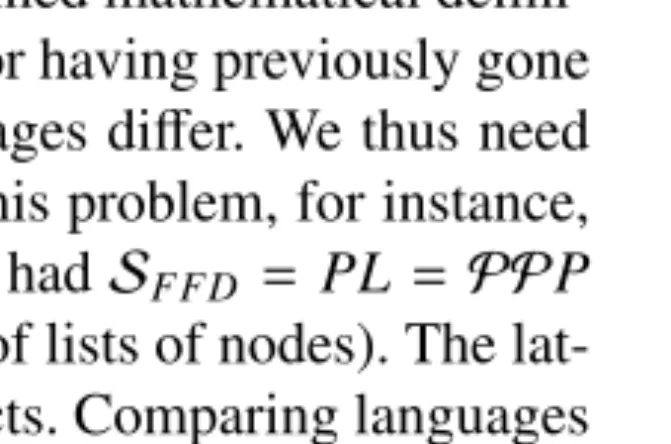
The third and last case is when we have a clear and self-contained mathematical defini-tion of L, S and M for all languages (either from the origin, or having previously gone through Case 1 or 2) but the semantic domains of the languages differ. We thus need to define a relation between the semantic domains. We met this problem, for instance,
when comparing vDFD with FFD [15]. On the one hand, we had SFFD =PL = PPP
(sets of sets of nodes), and on the other, SvDFD=OON (lists of lists of nodes). The
lat-ter introduces an order relation on features, and one on products. Comparing languages with different semantic domains is actually possible, but it requires preliminary work which is now explained.
Syntactic domains Semantic domains Semantic functions L1 L2 S1 S2 T A M1 M2 d2 M2 !d2"= A(M1!d1 ")= M2!T(d1) " M1!d1" d1
Fig. 7. Abstracting a semantic domain
We need to define an abstraction function (A in Fig. 7) whose purpose is to re-move extra information from the richer domains and keep the “core” of the semantic domain, where we will perform the comparisons. We used such a function to remove
the ordering of features and products from SvDFD[15]. However, the question of the
rel-evance of this discarded information remains and should be studied carefully. A fairly
general case is illustrated in Fig. 7, where domain S1 contains more information than
S2; we then take S2 as the common domain. A removes extra information from
ele-ments of S1and maps them in S2. It then makes sense to look for quasi-translations
T : L1→ L2between their syntactic domains. They are translations for the abstracted
it to FFD. The main difference w.r.t. Case 1 is that here formalisation decisions are usually much more straightforward since they have already been made. However, they might be hard to dig out if they are coded in some tool. Also, formalisations are not necessarily error-free, and errors can thus be discovered when re-formalising [15].
5.3 Case 3: X1 has formal semantics with clear LX1, SX1 and MX1 but
SX1 ! SX2, ...,SXn
The third and last case is when we have a clear and self-contained mathematical defini-tion of L, S and M for all languages (either from the origin, or having previously gone through Case 1 or 2) but the semantic domains of the languages differ. We thus need to define a relation between the semantic domains. We met this problem, for instance,
when comparing vDFD with FFD [15]. On the one hand, we had SFFD =PL = PPP
(sets of sets of nodes), and on the other, SvDFD=OON (lists of lists of nodes). The
lat-ter introduces an order relation on features, and one on products. Comparing languages with different semantic domains is actually possible, but it requires preliminary work which is now explained.
Syntactic domains Semantic domains Semantic functions L1 L2 S1 S2 T A M1 M2 d2 M2 !d2"= A(M1!d1 ")= M2!T(d1) " M1!d1" d1
Fig. 7. Abstracting a semantic domain
We need to define an abstraction function (A in Fig. 7) whose purpose is to re-move extra information from the richer domains and keep the “core” of the semantic domain, where we will perform the comparisons. We used such a function to remove
the ordering of features and products from SvDFD[15]. However, the question of the
rel-evance of this discarded information remains and should be studied carefully. A fairly
general case is illustrated in Fig. 7, where domain S1 contains more information than
S2; we then take S2 as the common domain. A removes extra information from
ele-ments of S1and maps them in S2. It then makes sense to look for quasi-translations
semantics A ◦ M1, and can thus be used to compare languages for expressiveness,
embeddability or succinctness. Hence, if we apply T to a diagram d1 in the syntactic
domain L1we will obtain a diagram d2in the syntactic domain L2with the same
ab-stracted semantics. Semantically, if we apply the semantic function M1to d1and then
the abstraction function A, we will map on the same element of S2as if we apply T to
d1and then M2: A(M1[[d1]]) = M2[[T (d1)]].
When applied to more than two languages, this method will create many semantic domains related by abstraction functions. The abstraction functions can be composed and will describe a category of the semantic domains. At the syntactic level, the transla-tions can also be composed to yield expressiveness and succinctness results. Similarly, the composition of embeddings yields an embedding.
6 Language Evaluation Results
We summarise the results obtained by applying our general comparative semantics method. For the languages defined generically with FFD (see Table 1), the details and proofs can be found in [13]. The treatment of vDFD [22] is found in [15].
Survey short name GT NT GCT TCL
OFT[1] TREE and ∪ xor ∪ {opt1} ∅ CR
OFD[3] DAG and ∪ xor ∪ {opt1} ∅ CR
RFD[4]=VBFD [9] DAG and ∪ xor ∪ or ∪ {opt1} {⇒, |} CR
EFD[7, 8] DAG card ∪ {opt1} {⇒, |} CR
GPFT[5] TREEand ∪ xor ∪ or ∪ {opt1} ∅ CR
PFT[6] TREEand ∪ xor ∪ or ∪ {opt1} {⇒, |} ∅
VFD[13] DAG card ∅ ∅
Table 1. FD languages defined through FFD
6.1 Complexity
For FDs, solving all the standard problems of Section 4 turns out to be practically useful: – Equivalence of two FD is needed whenever we want to compare two versions of a product line (for instance, after a refactoring). When they are not equivalent, the algorithm can produce a product showing their difference. For FD languages based on DAGs, and that allow non-primitive features, such as OFD, EFD, VFD, this
problem is Π1-complete [13] (just above NP-complete).
– Satisfiability is a fundamental property. It must be checked for the product line but also for the intermediate FDs produced during a staged configuration [20]. For FD languages based on DAGs, this problem is NP-complete.
semantics A ◦ M1, and can thus be used to compare languages for expressiveness,
embeddability or succinctness. Hence, if we apply T to a diagram d1 in the syntactic
domain L1we will obtain a diagram d2in the syntactic domain L2with the same
ab-stracted semantics. Semantically, if we apply the semantic function M1to d1and then
the abstraction function A, we will map on the same element of S2as if we apply T to
d1and then M2: A(M1[[d1]]) = M2[[T (d1)]].
When applied to more than two languages, this method will create many semantic domains related by abstraction functions. The abstraction functions can be composed and will describe a category of the semantic domains. At the syntactic level, the transla-tions can also be composed to yield expressiveness and succinctness results. Similarly, the composition of embeddings yields an embedding.
6 Language Evaluation Results
We summarise the results obtained by applying our general comparative semantics method. For the languages defined generically with FFD (see Table 1), the details and proofs can be found in [13]. The treatment of vDFD [22] is found in [15].
Survey short name GT NT GCT TCL
OFT[1] TREE and ∪ xor ∪ {opt1} ∅ CR
OFD[3] DAG and ∪ xor ∪ {opt1} ∅ CR
RFD[4]=VBFD [9] DAG and ∪ xor ∪ or ∪ {opt1} {⇒, |} CR
EFD[7, 8] DAG card ∪ {opt1} {⇒, |} CR
GPFT[5] TREEand ∪ xor ∪ or ∪ {opt1} ∅ CR
PFT[6] TREEand ∪ xor ∪ or ∪ {opt1} {⇒, |} ∅
VFD[13] DAG card ∅ ∅
Table 1. FD languages defined through FFD
6.1 Complexity
For FDs, solving all the standard problems of Section 4 turns out to be practically useful: – Equivalence of two FD is needed whenever we want to compare two versions of a product line (for instance, after a refactoring). When they are not equivalent, the algorithm can produce a product showing their difference. For FD languages based on DAGs, and that allow non-primitive features, such as OFD, EFD, VFD, this
problem is Π1-complete [13] (just above NP-complete).
– Satisfiability is a fundamental property. It must be checked for the product line but also for the intermediate FDs produced during a staged configuration [20]. For FD languages based on DAGs, this problem is NP-complete.
– Model-checking verifies whether a given product (made of primitive features) is in the product line of a FD. It is not as trivial as expected, because the selection per-formed for non-primitive nodes must be reconstructed. This gives an NP-complete problem. When recording this selection, the problem becomes linear again. – Union is useful when parallel teams try to detect feature interference in FDs. Their
work can be recorded in separate FDs, the union of which will represent the vali-dated products. For FD languages based on DAGs, this problem is solved in linear time, but the resulting FD should probably be simplified for readability. Intersection and reduced product are similar.
The complexity results show the role of non-primitive features. On one hand, it is useful to record them to accelerate the checking of products. However, they should not become part of the semantics since this would restrict the expressiveness and strongly reduce the possible transformations of diagrams.
6.2 Expressiveness
The distinction between languages that only admit trees and the ones that allow shar-ing of features by more than one parent (DAGs or vDFD) turns out to be important. While tree-shaped languages are usually incomplete, OFD [3] are already expressively complete without the constraints, and thus a fortiori RFD [4], EFD [7, 8] and VFD [13]. vDFD are “almost” trees in that only terminal features (i.e. the leaves) can have multiple parents (justifications), but this is sufficient to obtain expressive completeness.
In contrast, tree-shaped diagrams turned out to be expressively incomplete; in par-ticular, OFT [1] cannot express disjunction. This justifies a posteriori the proposal [9] (VBFD) to add the or operator to OFT. But even so, we do not attain expressive
com-pleteness: this language is still unable to express card3[2..2], the choice of two features
among three9. This justifies similarly the proposal [7] (EFD) to use the card operators.
Both [9] and [7] also propose to allow DAGs: this extension alone, as we have seen, ensures expressive completeness. But we will see below better justifications in terms of embeddability rather than succinctness.
When designing a FD language, is thus essential to have more than trees to reach ex-pressive completeness. Trees, however, are easier to understand and manipulate because they have a compositional semantics. vDFD [22] manage to have both advantages. 6.3 Embeddability
An optional node n can be translated into a xor2-node, say n?, with two sons: the original
node n, and the TRUE node v which is an and0-node (i.e., with no son). As we see in
Fig.8, all incoming edges from parents of n are redirected to the new top node (n?), and all outgoing edges to sons start from the node n. This supports our view [13] that
optionality is better treated as a decomposition operator (opt1).
We constructed an embedding from OFD without constraints (called COFD in [13]) to VFD, presented in Table 2. To save space, we use the textual form for the graphs. For
9Operator arity is denoted by an underscript.
– Model-checking verifies whether a given product (made of primitive features) is in the product line of a FD. It is not as trivial as expected, because the selection per-formed for non-primitive nodes must be reconstructed. This gives an NP-complete problem. When recording this selection, the problem becomes linear again. – Union is useful when parallel teams try to detect feature interference in FDs. Their
work can be recorded in separate FDs, the union of which will represent the vali-dated products. For FD languages based on DAGs, this problem is solved in linear time, but the resulting FD should probably be simplified for readability. Intersection and reduced product are similar.
The complexity results show the role of non-primitive features. On one hand, it is useful to record them to accelerate the checking of products. However, they should not become part of the semantics since this would restrict the expressiveness and strongly reduce the possible transformations of diagrams.
6.2 Expressiveness
The distinction between languages that only admit trees and the ones that allow shar-ing of features by more than one parent (DAGs or vDFD) turns out to be important. While tree-shaped languages are usually incomplete, OFD [3] are already expressively complete without the constraints, and thus a fortiori RFD [4], EFD [7, 8] and VFD [13]. vDFD are “almost” trees in that only terminal features (i.e. the leaves) can have multiple parents (justifications), but this is sufficient to obtain expressive completeness.
In contrast, tree-shaped diagrams turned out to be expressively incomplete; in par-ticular, OFT [1] cannot express disjunction. This justifies a posteriori the proposal [9] (VBFD) to add the or operator to OFT. But even so, we do not attain expressive
com-pleteness: this language is still unable to express card3[2..2], the choice of two features
among three9. This justifies similarly the proposal [7] (EFD) to use the card operators.
Both [9] and [7] also propose to allow DAGs: this extension alone, as we have seen, ensures expressive completeness. But we will see below better justifications in terms of embeddability rather than succinctness.
When designing a FD language, is thus essential to have more than trees to reach ex-pressive completeness. Trees, however, are easier to understand and manipulate because they have a compositional semantics. vDFD [22] manage to have both advantages. 6.3 Embeddability
An optional node n can be translated into a xor2-node, say n?, with two sons: the original
node n, and the TRUE node v which is an and0-node (i.e., with no son). As we see in
Fig.8, all incoming edges from parents of n are redirected to the new top node (n?), and all outgoing edges to sons start from the node n. This supports our view [13] that
optionality is better treated as a decomposition operator (opt1).
We constructed an embedding from OFD without constraints (called COFD in [13]) to VFD, presented in Table 2. To save space, we use the textual form for the graphs. For
n
n?
n
V
Fig. 8. Graphical embedding of redundant optional node (in OFD concrete syntax)
instance, a node bearing a xormoperator is translated to a node bearing a cardm[1 . . . 1]
operator. In the next section, we will consider how those embeddings increase the size of the graph. Here we see that the VFD resulting from the embedding of a COFD di-agram has the same size. This result indicates that card-nodes proposed by [7] can embed all the other constructs. We proposed thus to use them systematically inside tools. We slightly differ from [7] that also uses optional edges: these can be modelled
by card1[0..1]-nodes and would be harmfully redundant. We proposed VFD to
elimi-nate this slight drawback. Please note that this latter suggestion only concerns abstract syntax. In the concrete syntax, it is probably a good idea to keep optional nodes as this would decrease the size and visual complexity of the diagrams.
Instead of . . . write . . .
opt1( f ) card1[0 . . . 1]( f )
xorm( f1, . . . ,fm) cardm[1 . . . 1]( f1, . . . ,fm)
ands( f1, . . . ,fs) cards[s . . . s]( f1, . . . ,fs)
Table 2. Embedding COFD into VFD
6.4 Succinctness
When translations are not linear, it is still interesting to compute the increase in size of the graph, as measured by succinctness. RFD and OFD are of similar succinctness, but
when translating VFD or EFD to OFD we translate a cardk-node to a OFD graph of size
O(k2) [13]. A VFD of size O(k) could contain k card
k-nodes, giving a cubic translation
at the end: COFD ≤ O(VFD3). This result indicates again that card-nodes are a useful
addition, but for different reasons than presented in [7].
7 Discussion
The main limitation of our work is explicit in its scope: we address only formal
seman-tics-related properties. In order not to over-interpret our conclusions, one should keep
comprehensive view of model quality in mind. With respect to SEQUAL (Section 2), in order to be accurate and effective, we deliberately chose to address only part of the
n
n?
n
V
Fig. 8. Graphical embedding of redundant optional node (in OFD concrete syntax)
instance, a node bearing a xormoperator is translated to a node bearing a cardm[1 . . . 1]
operator. In the next section, we will consider how those embeddings increase the size of the graph. Here we see that the VFD resulting from the embedding of a COFD di-agram has the same size. This result indicates that card-nodes proposed by [7] can embed all the other constructs. We proposed thus to use them systematically inside tools. We slightly differ from [7] that also uses optional edges: these can be modelled
by card1[0..1]-nodes and would be harmfully redundant. We proposed VFD to
elimi-nate this slight drawback. Please note that this latter suggestion only concerns abstract syntax. In the concrete syntax, it is probably a good idea to keep optional nodes as this would decrease the size and visual complexity of the diagrams.
Instead of . . . write . . .
opt1( f ) card1[0 . . . 1]( f )
xorm( f1, . . . ,fm) cardm[1 . . . 1]( f1, . . . ,fm)
ands( f1, . . . ,fs) cards[s . . . s]( f1, . . . ,fs)
Table 2. Embedding COFD into VFD
6.4 Succinctness
When translations are not linear, it is still interesting to compute the increase in size of the graph, as measured by succinctness. RFD and OFD are of similar succinctness, but
when translating VFD or EFD to OFD we translate a cardk-node to a OFD graph of size
O(k2) [13]. A VFD of size O(k) could contain k card
k-nodes, giving a cubic translation
at the end: COFD ≤ O(VFD3). This result indicates again that card-nodes are a useful
addition, but for different reasons than presented in [7].
7 Discussion
The main limitation of our work is explicit in its scope: we address only formal
seman-tics-related properties. In order not to over-interpret our conclusions, one should keep
comprehensive view of model quality in mind. With respect to SEQUAL (Section 2), in order to be accurate and effective, we deliberately chose to address only part of the
![Fig. 1. FODA example (inspired from [2])](https://thumb-eu.123doks.com/thumbv2/123doknet/14573289.728030/2.1518.208.550.642.847/fig-foda-example-inspired-from.webp)
![Fig. 3. SEQUAL : Language Quality [24, 25]](https://thumb-eu.123doks.com/thumbv2/123doknet/14573289.728030/4.1518.209.554.429.700/fig-sequal-language-quality.webp)