Analysis and Critics of a Professional Service
Company’s Corporate Social Responsibility
Report
Bachelor Project submitted for the Bachelor of Science HES in Business
Administration with a major in International Management
Mark ANDRIAMANGA
Bachelor
Project Advisor:Eric MAEDER, Professor
Geneva, 15.08.2014
Haute école de gestion de Genève (HEG-GE)
Économie d’entreprise (International Management)
Declaration
This Bachelor Project is submitted as part of the final examination requirements of the Geneva School of Business Administration, for obtaining the Bachelor of Science HES-SO in Business Administration, with major in International Management.
The student accepts the terms of the confidentiality agreement if one has been signed. The use of any conclusions or recommendations made in the Bachelor Project, with no prejudice to their value, engages neither the responsibility of the author, nor the adviser to the Bachelor Project, nor the jury members nor the HEG.
“I attest that I have personally accomplished this work without using any sources other than those cited in the bibliography. Furthermore, I have sent this document by email, to the address supplied by my adviser, for analysis by the plagiarism detection software URKUND (http://www.urkund.com/int/en/student_gorsahar.asp). ”
Geneva, 15.08.2014
Acknowledgements
First of all I would like to thank Mrs. Fanny SULMONI and Mrs. Elaine COHEN for their collaboration and interesting inputs on the subject of my Bachelor Thesis.
Furthermore, I wish to express my sincere thanks to Mr. Eric MAEDER for his advising work, comments and feedbacks on my Thesis, as well as providing me with books and articles related to the subject.
I also would like to thank one of my classmates and friend for constantly sending me emails and providing me with articles in relation with the subject of my Thesis, as well as his listening and feedbacks skills.
Last but not least, I place on record, my sense of gratitude to those who took on their free time to read and review my work, and all who, directly or indirectly, helped me throughout the writing process of my Bachelor Thesis.
Executive Summary
The thesis explores a topic that has been insignificantly addressed in Corporate Social Reporting (CSR) literature: CSR within professional service companies, more specifically the quality of CSR reporting within a professional service company.
Considering that Sustainability and CSR have become hot topics in the recent years, it is with no surprise that CSR reporting, which measures and reports sustainable impacts, has become a worldwide mainstream business practice.
Companies engage in CSR for several reasons, such as for competitive advantage, to be an attractive place to work in or to reduce cost. However, considering that CSR is not mandatory in many countries and for all companies, many still drag their feet in implementing CSR.
PwC UK is one of the rare PwC firms within the PwC Network to publish a CR report. Using a Grid Analysis specifically created for the purpose of this thesis, the analysis performed on the report shows that the company produces a qualitative CR report in terms of content and quality.
However, to be able to provide its stakeholders with the best CR report, the company should add certain factors, which have not been found in its CR report, include more details and update certain information disclosed.
Improvements, such as updating its vision statement to include the company’s environmental concern, revising its objectives to be measurable, implementing an economic, social and environmental risk assessment and reporting on the results, are part of the thesis’ recommendations.
Moreover, the thesis suggests switching to an Integrated Reporting method, in order to provide the company’s stakeholders with a broader view of the value creation, and encourages the company to take advantage of its leading position to be a “catalyst for
change” (Appendix 1: 3) and engage its customers and employees to embrace
sustainability.
Finally, to raise the overall quality of its CR report, the thesis proposes to the company to be critical in its CR report and to offer a balanced CR report to its stakeholders.
Contents
Declaration ... i
Acknowledgements ... ii
Executive Summary ... iii
Contents... iv
List of Tables ... v
List of Figures ... v
1. Introduction ... 1
1.1 Presentation of the subject ... 1
1.2 Brief Presentation of the Professional Service Company ... 3
1.3 Literature review ... 5
1.3.1 Context ... 5
1.3.2 Definitions ... 7
1.3.3 Corporate Social Responsibility report ... 11
1.4 Statement of the Business Administration Challenges and Context .... 13
2. Analysis... 14
2.1 Methodology ... 14
2.1.1 Objective and limit of the analysis ... 14
2.1.2 Documents used for the analysis ... 14
2.1.3 Definition of the Grid Analysis ... 15
2.2 Corporate Social Responsibility within the company ... 18
2.3 Corporate Social Responsibility Report ... 19
2.3.1 Content Factors ... 21
2.3.2 Quality Factors ... 41
3. Discussion ... 47
3.1 Identification of potential improvements ... 47
3.1.1 Content Factors ... 47
3.1.2 Quality Factors ... 50
3.2 Recommendations ... 52
3.2.1 Content Factors ... 52
3.2.2 Quality Factors ... 56
3.3 Limits of the Thesis ... 58
Conclusion ... 59
Bibliography ... 60
List of Tables
Table 1 – Content Factors, Strategy & Governance ... 26
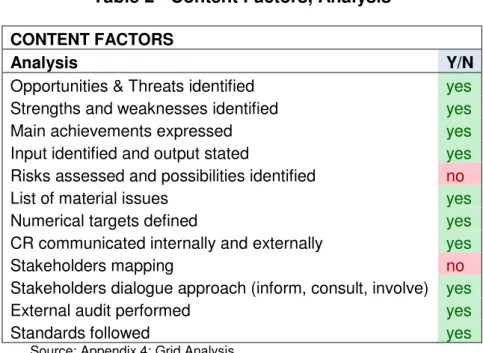
Table 2 – Content Factors, Analysis ... 31
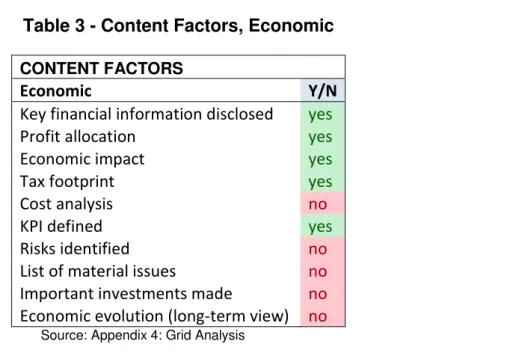
Table 3 – Content Factors, Economic... 33
Table 4 – Content Factors, Social ... 37
Table 5 – Content Factors, Environmental ... 40
Table 6 – Percentage Content Factors ... 44
Table 7 – Quality Factors ... 45
Table 8 – Detailed Percentage Content & Quality Factors ... 46
List of Figures
Figure 1 - Sustainability Scheme ... 1Figure 2 – Grid Analysis ... 17
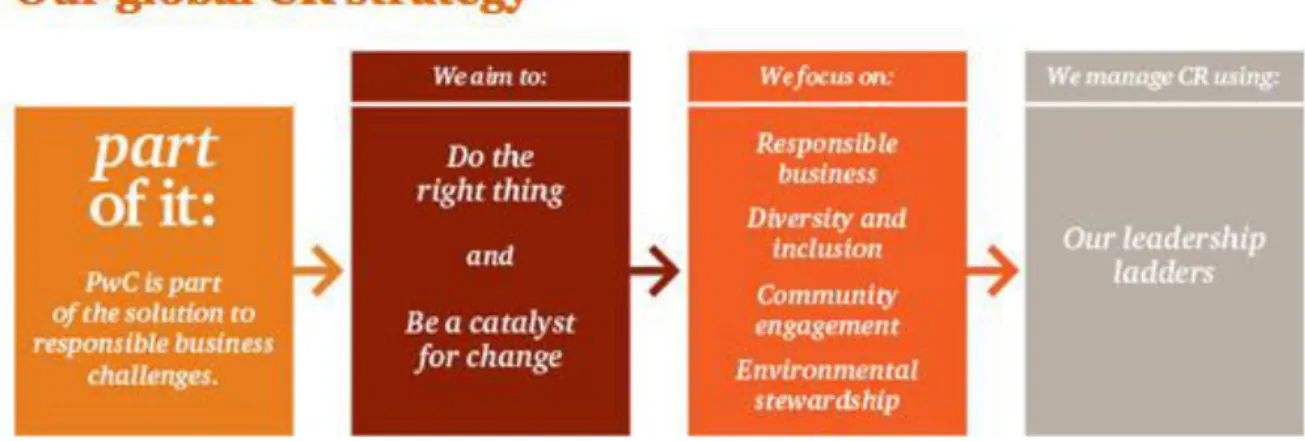
Figure 3 – PwC Global CR Strategy ... 18
1.
Introduction
1.1 Presentation of the subject
The Corporate Social Responsibility (hereafter referred to as “CSR”) concept is for companies what the Sustainable Development concept is for the planet1. Both take root in Sustainability, whose objective is to continue operating without harming mankind or the environment (Maeder, Lesson 10). While Sustainable Development is the process that drives everyone toward sustainability (Macroeconomic concept), CSR defines the role taken by corporations in this process (Microeconomic concept).
As shown below in Figure 1, sustainability is a voluntary concept (Maeder, Lesson 7) based on three main pillars: economic, social and environmental (Maeder, Lesson 10). These pillars are the areas everyone should focus on, from Worldwide actors such as the United Nations, to each State such as the European Union or the United States of America, to every company no matter what products or services they offer and deep down to every individual in their personal life. These three pillars should therefore be embedded within and voiced by each of these four actors.
Figure 1
– Sustainability Scheme
1 http://www.seco.admin.ch/themen/00645/04008/?lang=en Companies CSR Production Services SUSTAINABILITY Personal Life States (EU, USA, etc.) Worldwide (United Nations)
This thesis will focus on one important actor: Companies, more specifically into the implementation of Corporate Social Responsibility within a company that provides professional services to its clients.
While Worldwide and State actors play a key political role, companies are the ones who get the economy moving and can make tremendous impact around them and beyond.
1.2 Brief Presentation of the Professional Service Company
PricewaterhouseCoopers (PwC) is a ramification of separate legal firms, which operate under the “PwC Network”, and are coordinated by PricewaterhouseCoopers International Limited (PwCIL), an English private company. As of 2014, The PwC Network expands in 157 countries and counts more than 184’000 employees, who generated global revenue of more than $32billion2.
The company is organized in three main professional service lines. Assurance Services include the review of financial documents of any kind and represent 47% of the global revenue. Tax Advisory Services account for 25% of the global revenue and are specialized in tax and legal consulting. The remaining 28% is derived from Advisory Services, which are related to consulting of any kind, such as Strategic Planning, Business Valuation or Sustainability2.
Assurance Services employ 84’000 people, which represent 50% of the total number of employees. Tax Advisory Services employ 37’000 people (20%), and Advisory Services count 41’000 employees. The remaining 22’000 people represent the support staff (HR, Marketing, etc.)2.
With more than $11.5billion, Western Europe Region is the second revenue generator of the “PwC Network” in 2013, right after North America and Caribbean Region2.
PwC (hereafter referred to as “the company”) has been created in 1998 by the merger of two London companies, Price Waterhouse and Coopers & Lybrand, which have been operating since the mid-nineteenth century2.
The company is part of the “Big Four”, the four biggest audit firms in the world, which are specialized in audit, tax, financial planning and advisory services. History of the “Big Four” shows several mergers and PwC is no exception. Its growth over the years involved mergers and acquisitions, the latest to date being the management-consulting firm Booz & Co in 2013, “leading [PwC] to become one of the biggest firms in the
world”3.
2 http://www.pwc.com
One reason for the success of the company is that each member within the PwC Network is independently and locally owned4. They certainly have to comply with common policies and maintain the standards put in place by PwCIL. However, they take advantage of the possibility to use the PwC name, as well as the resources and methodologies within the network.
According to The Global 500 Index from Brand Finance, PwC is today the fourth most powerful brand in the world. This index ranks the most powerful brand in the world based on the “Brand Strength Index”, which measures, among other financial metrics, desirability, loyalty and consumer sentiment to visual identity, online presence and employee satisfaction5.
The company is as well one of the most attractive employers in the world. A survey conducted by Universum among 200’000 students ranked PwC as the fourth most attractive business employer in the world. Its 2014 annual talent attraction index shows that PwC is ranked second most attractive European employer among business students6.
4 http://www.pwc.com/gx/en/corporate-governance/network-structure.jhtml 5 http://www.brandfinance.com
1.3 Literature review
1.3.1 Context
The purpose of this thesis is to evaluate Corporate Social Responsibility (CSR) among a professional service company. In order to better understand the CSR challenge, it is important to understand the origin in which CSR was shaped and the context it took place in.
Recently, Corporate Social Responsibility and Sustainable Development have taken more importance in the literature and the media. The idea of responsibilities to be taken by companies first took place in the literature in 1916. J.M. Clark wrote in the Journal of Political Economy “if men are responsible for the known results of their actions,
business responsibilities must include the known results of business dealings, whether these have been recognized by law or not”. In early 1930’s, the term “social audit”7 was
first introduced for companies reporting their social responsibilities (T. Kreps, 1931). In the 1950s, criticism against the globalization of the economy and the issues accompanying it, shaped the context in which the first definition of Corporate Social Responsibility was written. Howard Bowen considered the global economy to be made out of only some important companies, which are the power that determines the well being of the society. With that in mind, he defined CSR as “the obligations of
businessmen to pursue those policies, to make those decisions, or to follow those lines of actions which are desirable in terms of the objectives and values of our society”8
In the 70s and 80s, the CSR concept evolved on the international scene, helped by several events such as the first and second global oil crisis9, the boycotts of major
international companies such as Nestlé10 or the Bhola hurricane, one of the most
deadly hurricanes in history11. Such events led several studies, starting with the 1972 report from the Club of Rome, which pointed out the environmental issues due to economic and demographic growth (The Limits of Growth, 1972). These events, among others, also pushed the OECD and the UNCTC to create some codes of conduct to define ethical business practices (CSRQuest Sustainability Framework, 2004). 7 http://www.sustainabilitysa.org/sustainabilityreporting/Thehistory.aspx 8 http://sriportfolio.com/2013/01/14/csr-is-about-focusing-on-the-little-things/ 9 http://en.wikipedia.org/wiki/1970s_energy_crisis 10 http://en.wikipedia.org/wiki/Nestlé_boycott 11 http://en.wikipedia.org/wiki/1970_Bhola_cyclone
In the 90s, under the idea of a Sustainable Development, CSR took an even deeper meaning with the “Rio Declaration on Environment and Development” agreement12. At
the 1992 “Earth Summit” in Rio de Janeiro, the participating countries agreed to protect the economic, social and environmental development and set up non-binding and voluntary principles supporting sustainable development13.
From then on and more than ever, companies have been confronted with economic, social and environmental challenges, such as the Subprime crisis, the Walmart bribery scandal or one of the major issues that has been mentioned in the media and is presented as one of the Megatrends: resource scarcity and climate change14.
It is in this context that Corporate Social Responsibility is becoming an important component of the strategic planning and operations of companies, especially for production companies, considering that they use natural or chemical components for their products. This commitment from the companies for doing business in a more sustainable way is as well in line with what their clients and consumers are expecting. “How stakeholders evaluate the firm depends not only on what the firm does but also
on how it does it […] Consumer and employee expectations, reputational risks from poor performance, the need to recruit and retain the best talent in a global marketplace and competitive world, are all driving the commercial reality of the need for responsible business practice. ” (Werther, Chandler, 2011).
Moreover, the increase in policies, code of conducts and other strategic concepts towards Corporate Social Responsibilities, as well as the mobilization of businesses in the implementations of norms within and/or across industries, show the interests and the importance of sustainable growth in the economic sector. (Schneider, 2012)
However, “Companies have often ticked the [Corporate Social Responsibility] box by
doing great projects and having group employees who were actively engaged. But they have failed to consistently hardwire CR, not only into their strategy and execution, but into the mind and culture of each and every one of their staff, partners and supply chains.” (Rake, Grayson, 2009)
12 http://www.unep.org/Documents.Multilingual/Default.asp?DocumentID=78&ArticleID=1163 13 http://en.wikipedia.org/wiki/Earth_Summit
1.3.2 Definitions
While there is no strict definition, the intention of this section is to set a common language for the readers of the thesis in defining what are Sustainability and Corporate Social Responsibility and why companies get engaged.
1.3.2.1 Sustainability
The etymology of the word comes from the Latin word sustinere, to hold15 and the suffix abilitas, expressing the ability16. There are many definitions of Sustainability but all of them mention the concept of need and time, as with the definition from the United Nations (UN) “Sustainability calls for a decent standard of living for everyone today
without compromising the needs of future generations”.
Another example is Procter&Gamble, which defines sustainability as “ensuring a better quality of life, now and for generations to come” (White, 2009)
Moreover, the UN definition uses another important key word: everyone. The idea behind the term is that we are all concerned, from the World’s largest organisation (the United Nations), to the last individual (see Figure 1). As Pohl and Tolhurst say “no
matter how well intentioned any individual [company] may be in addressing sustainability, to work in isolation […] will not achieve complete success” (2010, 12)
Strictly related to this term, Sustainable Development can be explained as the “process
that drives us toward sustainability” (Pohl, Tolhurst, 2010, 4). In 1987, the Brundtband
Report defined Sustainable Development as the “Development that meets the needs
of the present without compromising the ability of future generations to meet their own needs”. Following the report as well as several discussions and use of this concept
(Holmberg, 1992, Reed, 1997, Harris and al, 2002), economic, social and environmental aspects have been recognized to be primary components of sustainable development (Harris, 2003). As each aspect depends on the two others, none is considered to be more important than the other, for the unaddressed aspects will suffer (Watts, 2011).
This approach on the development is much more complex than the regular and simple economic development (Harris, 2003). These three dimensional approaches, or aspects, are strictly tied to each other as a “Sustainable Development Triangle” (Munasinghe, 2007) and can be explained as followed:
15 https://sites.google.com/site/mcisnonprofitagm2012/what-is-sustainability 16 http://www.wordsense.eu/abilitas/
Economic: a sustainable economy implies that goods and services continue to be produced and consumed, economic debt is controlled and extreme sectorial imbalance is avoided (Harris, 2003, Munasinghe, 2004);
Social: Social sustainability means that basic social needs are fulfilled; fair distribution of welfare and opportunities is made toward everyone (Harris, 2003, Munasinghe, 2004);
Environmental: a sustainable environment implies the maintenance of the ecological system, stopping over-exploitation of renewable resources and using substitutes to non-renewable resources (Harris, 2003, Munasinghe, 2004).
1.3.2.2 Corporate Social Responsibility
As previously defined, Sustainability can be seen as the state we are aiming for. Corporate Social Responsibility (CSR), Corporate Sustainability (CS) or Corporate Responsibility (CR) can be defined as “a view of the corporation and its role in society
that assumes a responsibility among firms to pursue goals in addition to profit maximization and a responsibility among a firm’s stakeholders to hold the firm accountable for its actions.” (Werther, Chandler, 2011, xii)
This concept uses the same approach as previously explained above, which has been adapted to business use in 1994 by John Elkingston as “The Triple Bottom Line”17. This adaptation results in putting concrete numbers (costs) to the two non-financial dimensions, social and environmental, in order for businessmen to understand and use the same language. The three dimensional approaches are restated as the three P’s: The first P for Profit is related to the economic value of the company. The second P for People is associated with the social responsibility of a company in regards to its employees. The third P for Planet is connected with the environmental responsibility of the company. John Elkingston’s approach played an important role in creating initiatives such as the Global Reporting Initiative or the Dow Jones Sustainability Indexes (Berkovics, 2010).
While the aim of this business approach is to create long-term shareholder value by embracing the opportunities and managing the risks associated with economic, environmental and social developments (Rake, Grayson, 2009, 396), there are detractors of this approach, such as Milton Friedman, who said that the primary goal of
business is profit maximization and not spending shareholder money for the general social interest (1970).
As previously mentioned, the current environment (understood as its general term) pushes Corporate Social Responsibility into the spotlight and is still at its early but evolving stage. Considering pressures given by stakeholders, and taking into account social and environmental aspects of business, companies all around the world start shifting from a classical profit driven goal to a more sustainable one. The next chapter will explain the reasons and benefits of incorporating Corporate Social Responsibility within a company.
1.3.2.3 Why Corporate Social Responsibility?
Every company is concerned about its future, which is depending on its various stakeholders, such as its employees, customers, suppliers, etc., i.e. the society at large. For that reason CSR specifically addresses the time and stakeholders’ constraints (Werther, Chandler, 2011, xxii).
Competitive advantage / Brand differentiation
Nowadays, consumers are more and more concerned about the products/services they buy. They “want to buy products from companies they trust” (Werther, Chandler, 2011, 19). In 2013, a study conducted in the United States found out that, 88% of consumers would buy a product with social and/or environmental benefit and the same percentage would stop buying a company’s products if they learned irresponsible or deceptive business practices (Cone Communication, 2013). Moreover, 84% are more likely to tell their friends and relatives about a company involved in CSR efforts. As a matter of fact, “CSR is a competitive differentiator for a firm, as well as a form of brand insurance, in
which the brand represents the perception of the company by each of its key stakeholder groups” (Werther, Chandler, 2011, 112). Companies involved in CSR are
therefore able to attract new customers, new markets and thus increase there revenue and market share.
Attractive Working Environment
The most important component of a company is its employees, for without it, the company cannot create value. Companies have understood the importance to take care of their employees through the creation of sound workplace environment and implementation of initiatives that improve employees’ well being, which in turn increase productivity and as “employees want to work for companies they respect” (Werther, Chandler, 2011, 19), they become more loyal to the company they work for.
Cost reduction
“CSR is important because it influences all aspects of a company’s operations”
(Werther, Chandler, 2011, 19). It helps minimizing operational and financial costs (Kotler & Lee, 2005), such as promoting recycling, utilization of reused materials and/or saving water and energy and reflecting the needs and concerns of the stakeholders, while maximizing companies’ financial viability over the medium to long term (Werther, Chandler, 2011, 17-18).
Innovation
By getting involved in CSR, companies not only reduce their costs of productions, but they innovate and find different ways and practices for doing business (Godelnik, 2013). The innovations and new practices enable to create or increase sound competition and give a competitive advantage.
Financing
Following their customers’ demand, “large investment funds want to support firms that
they perceive to be socially responsible” (Werther, Chandler, 2011, 19). Nowadays,
almost every bank proposes a Socially Responsible Investment (SRI) portfolio to their concerned individual and/or business customers. Mr. Gamboni from UBS even said, “clients’ demand for SRI instrument is growing and is not a hype but a lasting trend” (Brechbühler Pešková, BFH Course, 2014). Some banks, such as GlobalanceBank, propose and invest only or mainly into sustainable companies.
Partnerships
Other stakeholders, such as “nonprofit and NGOs want to work together with
companies seeing practical solutions to common goals” (Werther, Chandler, 2011, 19).
NGOs such as Greenpeace are not only pointing out wrong business behaviors, but they also partner with companies to help them improve their supply/value chain, perform in a sustainable manner and find solutions to global issues or “Megatrends”. Long-term thinking
Adopting CSR is a way to push companies’ thinking toward a long-term and sustainable existence, not only financially but also socially and environmentally. Considering that social and environmental objectives are not easy to achieve on a
short-term financial year basis, companies have to adopt a long-term view, generally ten years18.
1.3.3 Corporate Social Responsibility report
Corporate Social Responsibility (CSR) Reporting, Corporate Responsibility (CR) Reporting or Sustainability Reporting all cover non-financial information. The Global Reporting Initiative defines it as a “report published by a company or organization
about the economic, environmental and social impacts caused by its everyday activities […] and demonstrates the link between its strategy and its commitment to a
sustainable global economy”19.
It “is the process by which a company can gather and analyze the data it needs to
create long term value and resilience to environmental and social change” (KPMG,
2013, 10). Moreover, the Global Reporting Initiative adds, “Systematic sustainability
reporting helps organizations to measure the impacts they cause or experience, set goals, and manage change. A sustainability report is the key platform for
communicating sustainability performance and impacts – whether positive or
negative”8
.
CR reporting appeared only around the 80’s20 and, unlike financial reporting, CR
reporting is mostly done on a voluntary basis. There is however a growing trend toward mandatory CR reporting imposed by governments and stock exchanges (KPMG, 2013, 24). A recent example is the law passed in the European Union imposing large listed companies within its member countries to report on their social and environmental impacts21.
And CR reporting is becoming “mainstream business practice worldwide” (KPMG, 2013, 11). In fact, according to a study conducted by KPMG in 2013, more than 50% of companies in all sectors publish a CR report worldwide. More than 70% of companies in the Americas (76%), Europe (73%) and Asia Pacific (71%) report on CR (based on 4,100 companies surveyed). 18 http://www.forbes.com/sites/csr/2012/02/21/six-reasons-companies-should-embrace-csr/ 19 https://www.globalreporting.org/information/sustainability-reporting/Pages/default.aspx 20 http://www.socialfunds.com/news/print.cgi?sfArticleId=1459 21 http://www.theguardian.com/sustainable-business/eu-reform-listed-companies-report-environmental-social-impact
80% of the companies surveyed use the Global Reporting Initiative (GRI) Guideline for preparing the CR report (KPMG, 2013, 12). This guideline “offers Reporting Principles,
Standard Disclosures and an Implementation Manual for the preparation of sustainability reports”22, which enables to compare more easily one CR report to another.
Even though Integrated Report (IR) is expected to become the next step for Corporate Reporting (KPMG, 2013, 12), the report shows that only 10% of companies publish an Integrated Report. Integrated Reporting is the “integration and reduction of various
dimensions of reports such as financial, corporate governance or CSR report into a single report. It should not be just a summary of the existing content of the reports, but the links between the largely isolated parts of the reports should be displayed” (Audit
Committee News, 2012, 38).
The KPMG report found out that, although “many of the world’s largest companies are
using the process of CR reporting to bring CR and sustainability right to the heart of their business strategy on average”, the quality of the Global 250 companies’ CR report
only reached 59% (KPMG, 2013, 10). “This [finding] indicates significant room for
improvement” (KPMG, 2013, 13). Companies in Europe, lead by Italy, Spain and the
UK, provide a quality in CR reporting of more than 70% and can mainly be explained by a relative maturity of reporting in the “old continent”. Quality report of companies in the UK scores 76% (KPMG, 2013, 16).
Improving reporting and information to make all stakeholders aware of companies’ activities is a must for every company to get involved in CSR, since a transparent and clear CSR communication will enable positive media coverage, increase the reputation and brand image (Weber, 2008)
By working with and for its stakeholders, companies fulfill and are compliant with their shareholders needs (Werther, Chandler, 2011, 19) for short-term revenue (dividends) and long-term continuity of the activity.
1.4 Statement of the Business Administration Challenges and
Context
The literature review performed suggests that most of the literature available on Sustainability and Corporate Social Responsibility refers to or is linked with companies offering products. Professional service companies seem to play a second role in the race for sustainability. As the KPMG report mentions, even though 25% of the Global 250 companies offer professional services as their products (finance, insurance & securities), companies in the production sector (Electronics & computers, Mining, Pharmaceuticals) provide a better CR report quality (KPMG, 2013, 15).
The purpose of this thesis is to make an in-depth CR Report analysis of one of the companies within the professional service sector, which is not listed on any Stock Exchange but still has a tremendous impact on the market: PricewaterhouseCoopers (PwC), and to propose some solutions for improving the quality and relevance of its CR report.
2.
Analysis
2.1 Methodology
2.1.1 Objective and limit of the analysis
The thesis is interested in the methodology used by PwC to communicate its non-financial information and the quality of the information provided related to Economic, Social and Environmental aspects of its business.
Considering that the thesis is limited to the analysis of one company, the size of the sample is not representative of the entire professional service sector. Therefore, and even though some extrapolations could be made, the thesis has no aim at determining whether the specific audit and tax sector, mainly composed by “The Big Four”, as explained in section 1 of the thesis, correctly communicates non-financial information.
2.1.2 Documents used for the analysis
To conduct the analysis, it was chosen not to perform interviews with or send out questionnaires to CSR professionals within the company. The approach is to understand what a company has actually achieved, using the information available to all stakeholders, such as and mainly from CSR Reports, Annual Reports and company’s websites. Therefore, the 2013 CSR Report of PricewaterhouseCoopers United Kingdom (PwC UK), “Our total impact, Corporate sustainability annual update
2013”, was chosen (Appendix 1 - Our total impact, Corporate sustainability annual
update 2013).
PwC UK is one of the rare firms within the “PwC Network” to publish a CSR Report. One reason for PwC UK to publish such information seems to be in compliance with national laws.
Even though the Corporate Governance Code in the United Kingdom is not specifically concerned about CSR, chapter 2, section 172.1.(d) of “The Companies Act 2006” mentions that “a director of a company […] [should] have regard to the impact of the
company’s operations on the community and the environment”23. It encourages
companies to publish a report, which enables their management (“director”12) to have a
view on non-financial performance.
Considering that Appendix 1 is only one part of the documents published on Corporate Social Responsibility by PwC UK, the “Annual Report 2013” (Appendix 2 – Annual Report 2013) referred to in this report is to be taken into consideration.
2.1.3 Definition of the Grid Analysis
The analysis is based on a grid of 80 specific characteristics, which should be found in the CR Report. The characteristics were selected based on literature review of best practices in CR Reporting, the “Industries with linked indicators” from Inrate, a selection of CR Reports, such as the “Impahla Integrated Annual Report 2013” or the “Vodafone
India Sustainability Report”, academic courses from Mr. Eric Maeder at the HEG
Geneva and from Mrs. Marie Brechbühler Pešková at the BFH Bern, as well as discussions with experts in CR Reporting Analysis, such as Mrs. Fanny Sulmoni from the company Inrate and Mrs. Elaine Cohen from BeyondBusiness.
The skeleton of the Grid Analysis (Figure 2) is inspired from the G4 reporting principles, which is based on two sets of principles: reporting content and reporting quality (Appendix 3 – G4 reporting principles), as well as the “Impahla Integrated Annual
Report 2013” or the “Vodafone India Sustainability Report”, which are based on the G4
reporting principles.
Several characteristics, such as ‘Remuneration based on CR performance’, ‘Policies in place explained’ or ‘Standards followed’ - among others -, have been inspired from the “Industries with linked indicators” from Inrate (Document subject to confidentiality). Other characteristics are based on academic courses from Mr. Eric Maeder at the HEG Geneva and from Mrs. Marie Brechbühler Pešková at the BFH Bern (Appendix 4 – Academic courses). Examples of such characteristics are ‘Company’s key CR areas in the company’s vision’, ‘Code of conduct in place’, ‘Opportunities and Threats identified’, ‘Strengths and Weaknesses identified’ or ‘Stakeholders dialogue approach (inform, consult, involve)’.
In a discussion with Mrs. Elaine Cohen, she said “one of the challenges of evaluating
CSR Reports is the line between evaluating the quality of the report itself or the quality of the CSR activities that the company has advanced”. The approach taken in the
thesis is to evaluate, through the Grid Analysis, both the quality of the report and the quality of the CSR activities.
The Grid Analysis has been built on two core pillars, Content Factors and Quality Factors:
The Content Factors include the characteristics a CSR report should have. Content in a CSR report is important, for it enables to give a quantitative value to the CSR strategy followed and activities performed by the company. This pillar is divided into five areas:
- Strategy & Governance: a CSR report should contain information on the CSR plan of action designed, as well as the set of rules in place within the company under review. Indicators such as the management’s involvement or whether a code of conduct is in place are spotted and should be part of the CSR report; - Analysis: a CSR report should explain how the investigations have been
performed and state the reasons for analysis. Identification of opportunities and threats or if work from an external assurance company has been performed are examples of such indicators;
- Economic: impacts of the company on the local and overall economy have to be analyzed and explained. Indicators such as key financial information or tax footprint should be found in the CSR report;
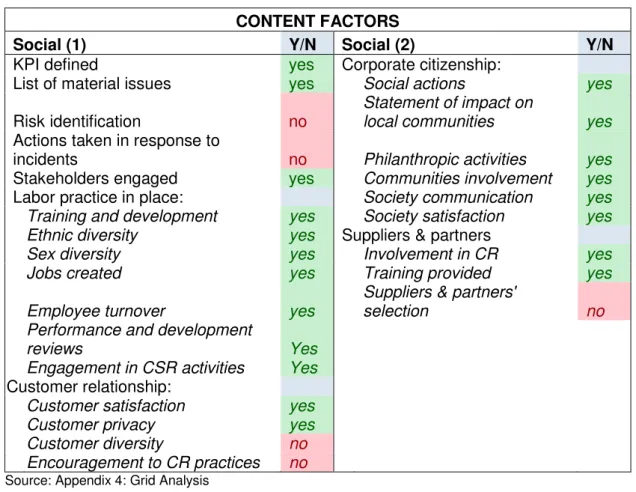
- Social: impacts of the company on its stakeholders have to be analyzed and explained. Training and development or customer satisfaction are examples of indicators to be found in the CSR report;
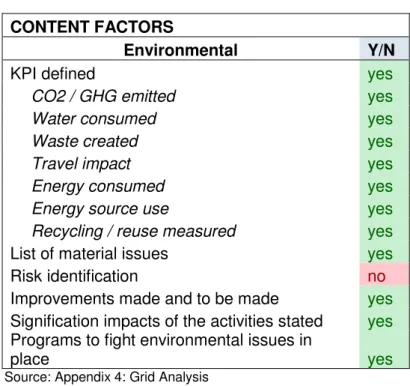
- Environmental: impacts of the company on the environment have to be analyzed and explained. Indicators such as the travel impact or recycling measurement should be found in the CSR report.
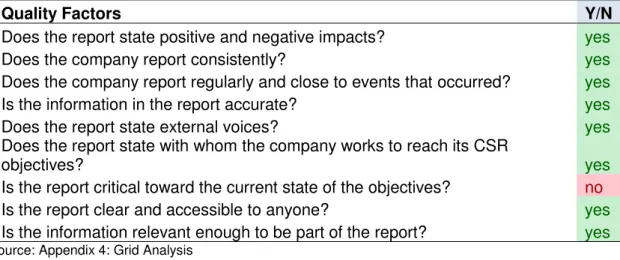
The second core pillar, Quality Factors, evaluates the quality of the CR report, which enables stakeholders to have a fair picture of the CSR strategy and activities performed.
Figure 2 on the next page illustrates the Grid Analysis defined for the purpose of the thesis.
Figure 2
– Grid Analysis
2.2 Corporate Social Responsibility within the company
PwCIL, who has the coordinator’s role within the “PwC Network”, gives the Corporate Social Responsibility impulse. PwC claims to “believe in being part of the solution to
responsible business challenges”24. On the CR agenda, its global CR Strategy intent is to be “a catalyst for change”13 and “doing the right thing”13. The figure below shows
PwC’s global CR Strategy.
Figure 3
– PwC Global CR Strategy
Source: www.pwc.com (Corporate responsibility)
Each PwC firm around the world has to comply, to some extend, with this strategy. All firms have to provide certain information, such as Greenhouse Gas Emission or energy reduction, for the “Global PwC Report”, which includes a CSR section. However, each firm can decide whether it produces a CR Report.
PwC UK literally follows the global strategy. It claims to create “a culture underpinned
by [PwC’s] commitment to doing the right thing for [its] clients, [its] people, [the] communities and the environment”25. Moreover, PwC UK is part of the “central cluster
sustainability group (Eurofirm, Central and Eastern European countries, Middle East, India, Pakistan and Africa)”26, which provides themes as context for the CR strategy.
24 http://www.pwc.com/gx/en/corporate-responsibility/strategy.jhtml 25 http://www.pwc.co.uk/corporate-sustainability/strategy.jhtml 26 http://www.pwc.co.uk/corporate-sustainability/global.jhtml
2.3 Corporate Social Responsibility Report
The CSR report starts with an introduction from Mr. Ian Powell, Chairman and Senior Partner, who talks about the overall success of the firm within the year 2013 and explains the importance of sustainability at PwC.
Mrs. Bridget Jackson, Head of Corporate Sustainability, continues with further explanations on the two main elements of the sustainability strategy within PwC, “Doing
the right thing” and “Catalyst for change” (Appendix 1: 3), the focus areas, the time
objective to achieve theses objectives and the tool on which the CSR report has been created on. This part exposes as well the “Sustainability materiality matrix” (Appendix 1: 3), which shows the important issues for the stakeholders and the impact of such issues on the business.
The next chapter explains more in detail why and what is the “Total Impact
Measurement & Management (TIMM)” (Appendix 1: 4) framework, the tool on which
this report is based. This framework has already been used by PwC “for years” to help its clients “measure and value their [CSR] impacts” (Appendix 1: 4). TIMM is “aligned
with the International Integrated Reporting Council’s new framework for reporting on different forms of capital” (Appendix 1: 4). It is the first year PwC UK uses this tool for
measuring its own impact. This chapter goes on with exposing PwC UK’s impacts measured in 2013 and shows the four areas (economic, tax, social, environmental) of the framework in the “TIMM framework at a glance” (Appendix 1: 5). This framework enables to quantify every impact of a company on its surroundings.
Mr. Kevin Ellis, Managing Partner, explains in the next chapter what it means to “being
a responsible business” (Appendix 1: 6) and the importance in recent years to behave
responsibly and with integrity. He goes further on exposing three focuses: “Exploring
trust”, “Better audits and reporting” and “Low carbon economy” (Appendix 1: 6), for
which he explains the company’s involvement within the last years.
The next part, “Measuring our impact” (Appendix 1: 7) shows the positive impacts created by the company, which occurred in the economic, tax and social areas on the TIMM framework.
The following chapter, titled “Our focus on quality and ethics” (Appendix 1: 8), elaborates on the importance of maintaining and even raising quality and ethics within PwC. Margaret Cole, from PwC UK General Council, emphasizes on the various surveys and reports conducted during the year to ensure that quality and ethics are positively experienced by the employees and the clients. The last part of this chapter
shows the future objectives, the “next steps” for enhancing quality and ethics: ISO 27001 recertification on “Information Security Management”27, launching a new quality
process compliance tool and developing an internal online sustainability training course.
Gaenor Bagley, Head of people, explains in the chapter “Investing in talent” the importance of the “people” at PwC, for without them, the company would not serve its clients. The chapter ends with the “next steps”: offering a more open-minded, inclusive and diverse place to work, “integrating resilience materials into core training” (Corporate Sustainability Report, 2013: 9) and developing a toolkit to provide a more flexible workplace.
“Making a difference in our communities” is related to the TIMM framework area “Social impact”. It emphasizes on the actions and involvement of PwC UK in its surroundings. It explains the importance for the company to contribute to the communities, as well as the demand from its own employees to “give something back to the society” (Appendix 1: 10). The chapter ends with the four future social objectives: creation of a new approach to schools programs, better understand the impact on the beneficiaries to report more accurately, extending the “social value surveys to all […] volunteering
activities” and enable “quantifying the social and business impact or […] community work” (Appendix 1: 11).
The last area of the TIMM framework, Environmental Impact, is explained in the chapter titled “Minimising our environmental impacts” (Appendix 1: 12,13). The first part gives an overview of the total negative environmental impact of the firm and identified areas to work on. Part of the chapter is dedicated to the energy consumed by the company’s offices in the UK. A specific section of the chapter is dedicated to the “most
significant consumables” (Appendix 1: 13): paper. The last part of the chapter mentions
the objectives for reducing environmental impact: more use of online meetings, applying the London office model to other offices around the country, analyzing suppliers performance in reducing GHG emissions and “identify opportunities to
address indirect impact” (Appendix 1: 13) and finding opportunities with suppliers to
reduce waste and recycling.
The “Sustainability scorecard” chapter, which could be assimilated to the Financial Statements part of a Financial Report, shows the numbers behind the report, which are
related to the four TIMM framework areas, with a comparison to the previous year and the base year.
In the next chapter, Warwick Hunt, Chief Financial Officer, explains the company’s “approach to assurance” (Appendix 1: 16,17). The final part of the chapter states the “next steps”.
The two last parts of the report are related to the “Assurance statement” from Crowe Clark Whitehill and the “External recognition” received by PwC UK and “External standards” followed by the company (Appendix 1: 18,19).
In order to better understand the method used by PwC UK to communicate its non-financial information and the quality of the information provided, the Grid Analysis (Figure 2) was applied to the report (Appendix 5 - Grid Analysis Applied to PwC UK's 2013 CR Report) in the following sections of the thesis.
2.3.1 Content Factors
The purpose of this chapter is to analyze the five areas of the Content Factors pillar, using eleven different characteristics.
2.3.1.1 Strategy & Governance
2.3.1.1.1 Is the Management involved in CSR?
CSR begins with the commitment from the Top Management. A 2012 survey from GreenBiz Group and EY suggested “the ‘tone from the top’ is key to heightened
awareness and preparedness for sustainability risks”28. The report voices five of the Executive Board members of the company, showing the involvement and the importance for the leadership to be a sustainable company. In doing so, it seems as the reporting process is owned by the Top Management. Each member exposed in the report gets a full page to talk about his/her domain of expertise.
Five out of twelve Executive Board members voice their opinion in the report29. The
Chairman and Senior Partner, the head of the pyramid, not only introduces the CSR report but also exposes the mission of the company towards sustainability, showing the importance of sustainability on the overall strategy of the company. The Managing Partner explains what it takes to “being a responsible business” (Appendix 1: 6). The “focus on quality and ethics” (Appendix 1: 8) is given to the top Legal Advisor, whereas
28 http://www.theguardian.com/sustainable-business/sustainability-trends-corporate-six 29 http://www.pwc.co.uk/who-we-are/executive-board.jhtml
talking about talent is given to the Head of People. Finally, the Chief Financial Officer talks about the “approach to assurance” (Appendix 1: 16).
Outside of the Executive Board, a full page is given to the Head of Corporate Sustainability to give more details about the strategy, in line with the global strategy at PwC, as well as a summary of the CR report.
This characteristic enables as well to understand the structure and organization of the company. There are companies that have no CSR programs30; others include CSR into
their Marketing or HR department. There are companies, such as PwC, which have their own CSR department among other departments, such as an accounting department, or IT department. In the later organizational structure, CSR is not just another program, which is part of a department; it shows that the company embodies CSR in its overall strategy; it touches every aspect of the business.
2.3.1.1.2 Are key CR areas stated in the company's vision?
A vision statement shares the company’s dream, what it is inspired to achieve31.
PwC’s vision statement is not mentioned in the report. The stakeholders can therefore not clearly see from the report where the company would like to go.
However, this statement can be found on the company’s website:
“One firm - a powerhouse of a commercial enterprise that does the right thing for our
clients, our people and our communities.”32
The vision expresses an economic dream “a powerhouse of a commercial enterprise”21
and a social inspiration “does the right thing for our clients, our people and our
communities”21. There is however no statement about an environmental focus in the
current vision. The company focuses on the two CSR dimensions it has a strong impact on.
2.3.1.1.3 Are the CSR mission and objectives clearly stated?
A Corporate Social Responsibility mission has to be adopted to communicate the corporate commitment throughout the entire company. It describes what the company is going to do and why it is going to do it33. Mr. Ian Powell, Chairman and Senior
30 http://www.triplepundit.com/2011/12/time-ditch-csr-department/
31 http://ctb.ku.edu/en/table-of-contents/structure/strategic-planning/vmosa/main 32 http://www.pwc.co.uk/who-we-are/index-more.jhtml
Partner, states the CSR mission in the first page of the report: “we challenge ourselves
to create new, better practices in our operations and contribute to public policy development” (Appendix 1: 1).
Stating clear CSR objectives is important for the company and can be considered as steps to reach its mission. The objectives answer the question “How much of what will
be accomplished by when”34. They are exposed by the Head of Corporate
Sustainability (Appendix 1: 3):
- Focus on the issues which are most important to stakeholders;
- Give something back to the society, through sharing talent in the communities near the offices;
- Minimize environmental impacts;
- Encourage a positive change in the world around the company; - Provide greater transparency for the stakeholders.
When applying the SMART objectives criteria (Specific, Measurable, Attainable, Realistic, Timely)35 to these objectives, only three of these criteria are fulfilled. None of these objectives states a quantitative measure such as a percentage. Moreover, none of them clearly mentions a time boundary. It is only when going through the report and looking at the targets that the stakeholders could imply the allotted time for the CSR goals to be achieved.
2.3.1.1.4 Is there a Code of conduct in place?
A Code of Conduct is “intended to be a central guide and reference for users in support
of day-to-day decision making”36. It clarifies the mission and values of the company. The report specifically mentions or relates to the company’s Code of Conduct per se only in the footnotes related to the “Sustainability scorecard” (Appendix 1: 14). However, this document can be found on the website of the company37.
34 http://ctb.ku.edu/en/table-of-contents/structure/strategic-planning/vmosa/main 35 http://topachievement.com/smart.html
36 http://www.ethics.org/resource/why-have-code-conduct 37 http://www.pwc.co.uk/corporate-sustainability/downloads.jhtml
2.3.1.1.5 Are Policies in place explained?
CSR policies define “areas of concern and initiatives to improve relations with the
people and environments affected by business operations”38. The policies in place within PwC UK are not clearly stated and explained in the report. However, Energy, Environmental, Health and Safety, Human Rights and Procurement policies can be found on the website19
.
2.3.1.1.6 Are the main focus areas stated?
The focus areas have been refreshed in the previous years and are stated on the third page of the report. They comprise “responsible business, workplace and diversity,
community involvement and environmental stewardship” (Appendix 1: 3). Moreover,
the report seems to emphasize on “quality and ethic” (Appendix 1: 8). 2.3.1.1.7 When to achieve the objectives/targets?
The “Next Steps” paragraphs (Appendix 1: 8,9,11,13) state the specific objectives to be reached for the quality and ethics, investment in talent, community work and environmental impacts. Examples of such objectives are “continuing to change
behaviors to become a more open-minded, inclusive and diverse organization”
(Appendix 1: 9) or “look for opportunities with suppliers to further improve waste,
recycling rates and recycled content of materials we purchase” (Appendix 1: 13).
When applying the SMART objectives criteria (Specific, Measurable, Attainable, Realistic, Timely)39, the objectives mentioned under the “Next Steps” do not comply with all these criteria. The time criterion is clearly stated only for the objectives related to “Minimising […] environmental impacts” (Appendix 1: 13). Same as for the CSR objectives (section 2.3.1.1.3 of the thesis), these more specific objectives are not precisely time bounded. Interestingly, no economic objectives have been stated in the report.
Social and environmental targets are stated in the “Sustainability scorecard” section (Appendix 1: 13,14) of the report. Most of them have a target to be reached by 2017 with some results being achieved in the year 2013. However, the “Quality & ethics” metrics have “ongoing targets” (Appendix 1: 14) without reference to a specific year. The base year for the target to be compared with differs from one metric to another. All the metrics related to the environment have a 2007 base year, as stated in the
38 http://www.simplycsr.co.uk/definition-of-csr.html 39 http://topachievement.com/smart.html
beginning of the report (Appendix 1: 3) and illustrated in the “Sustainability scorecard” (Appendix 1: 15). The metrics related to the financial and social impacts have a base year, which varies between 2007 and 2012.
It is important to note that no target has been established for the Financial and Community involvement metrics. In the Annual Report, Mr. Ian Powel, Chairman and Senior Partner says that financial targets have been set (Appendix 2: 5). However, no specific numbers have been mentioned in this report either. Even though the company seems to offer transparency in many areas of the business, it is not really clear on this matter.
2.3.1.1.8 Are Key CSR activities within the value chain mapped?
Identifying key CSR activities in place or to be put in place enables not only to increase business opportunities and ultimately business profit, but also to create social and environmental benefits through operational improvements (Ragan, Chase, Karim, 2012:7).
There is no map of CSR activities within the report. However, some key activities of the business have been further explained. For instance, one key social activity can be found in the chapter “Investing in talent” (Appendix 1: 9). The company seems to be very committed to offering a healthy place to work in, which is not surprising considering that its employees are its main and best asset.
Another example of a CSR key activity is related to the environment: the use of energy and paper (Appendix 1: 12,13). The company seems to put specific effort in reducing energy consumption and paper use within the value chain.
2.3.1.1.9 Is the remuneration of the management based on CSR performance? Implementing a pay scheme for the management, which includes social and environmental metrics, expresses the importance of CSR in the strategic sustainable growth of a company. Such metrics would motivate the management to always think and act sustainably in every part of its business actions. Moreover, “when employees
see their leaders walking the talk and aligning their behavior with the company’s sustainability strategy, it enables them to feel part of something bigger than their daily work” (Prakash, Eco-Business, 2014: 46)
The report never mentions that any employee within the firm is paid according to CSR results of the company. PwC is organized for creating profits, “which are distributed to
2.3.1.1.9.1 Is CR information reported in the annual report?
By reporting CR information in its annual report, companies express their commitments to focusing not only on economic sustainability, but also to ensuring that social and environmental sustainability are part of the business strategy. A KPMG survey shows that in 2013, more than half of the companies “include CR information in their annual
financial report”; this becoming “standard global practice” (The KPMG Survey of
Corporate Responsibility Reporting, 2013: 11).
The Annual Report 2013 from PwC UK dedicates a specific section to “Environmental
and community responsibilities” (Appendix 2: 22, 23). This section explains what the
company achieved throughout the year and is slightly more specific when exposing its reduction of environmental impacts. According to the CR report, the environmental area is the only negative impact the company has created during the year.
2.3.1.1.10 Does the company publish a separate CR report?
A separate CR report enables to be more specific and more transparent on the social and environmental challenges faced by the company. According to the KPMG survey, publishing a CR report has now become “standard business practice worldwide” (The KPMG Survey of Corporate Responsibility Reporting, 2013: 11).
This analysis is based on the separate CR report produced by PwC UK. However, as previously mentioned, PwC UK is part of the exception within the PwC Network when it comes to publishing a separate CR report.
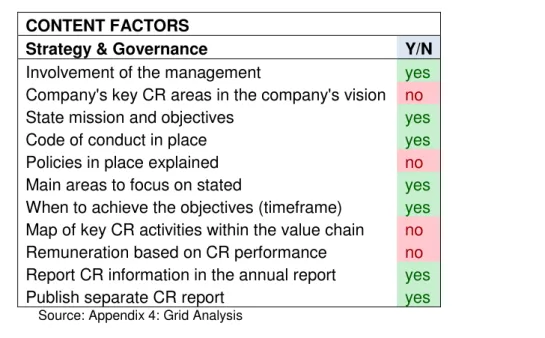
The table below summarizes the strategy and governance content of the CR report.
Table 1 - Content Factors, Strategy & Governance
CONTENT FACTORSStrategy & Governance Y/N
Involvement of the management yes
Company's key CR areas in the company's vision no
State mission and objectives yes
Code of conduct in place yes
Policies in place explained no
Main areas to focus on stated yes
When to achieve the objectives (timeframe) yes
Map of key CR activities within the value chain no
Remuneration based on CR performance no
Report CR information in the annual report yes
Publish separate CR report yes
2.3.1.2 Analysis
2.3.1.2.1 Are opportunities and threats identified?
Identifying opportunities and threats enables to plan and react upon external factors, which affect the business.
The report starts with a “Sustainability materiality matrix”, which shows the important issues for the stakeholders and the impact of such issues on the business.
Moreover, this report mentions some of the external factors in the beginning of almost every chapter. The “Total Impact Measurement & Management (TIMM)” part starts by stating the global context in which the business is operating, the threats, and continues with expectations from stakeholders, the opportunities (Appendix 1: 4). The same approach is taken for the “Being a responsible business” (Appendix 1: 6), “Our focus on
quality and ethics” (Appendix 1: 8) and “Making a difference in our communities”
(Appendix 1: 10) chapters.
2.3.1.2.2 Are strengths and weaknesses identified?
Strengths and weaknesses are internal factors, which affect a business. Unlike the external factors, the company can influence these factors.
The aim of this CR report is to spot where the company did good, its strengths, and where it should still make some improvements, its weaknesses. The circular graph of the TIMM framework used by the company in this report clearly illustrates where the company did good and where it still needs some improvements (Appendix 1: 5). Some further explanations are found in the following chapters of the report.
2.3.1.2.3 Does the report express the main CR achievements?
The main CR achievements are summarized in the last paragraph of the “Total Impact
Measurement & Management (TIMM)” chapter (Appendix 1: 4):
- Total CR impact of £3.7 billion;
- Economic impact contributes the most (72%);
- Taxes paid/collected represent an important positive impact; - Negative environmental impact;
2.3.1.2.4 Are inputs identified and outputs stated?
For any strategy to be implemented and activities to be planned, it is crucial to identify what inputs are needed. Further on, it is important to know what are the outcomes of the resources allocated in order to adapt, when needed.
The report measures the inputs, outputs and outcomes of its investments in the community. This approach is said to be “pioneering” (Appendix 1: 10) and measures the outcomes for two groups of beneficiaries: secondary school students and social enterprise. These main beneficiaries are related to the two main social activities done by the company: working “with schools near [the] offices for supporting literacy,
numeracy and mentoring programmes” (Appendix 1: 11) and “the kitchen apprentice programme at [its] social enterprise restaurant, Brigade” (Appendix 1: 11).
However, it is the only chapter of the report in which inputs and outputs are clearly stated.
2.3.1.2.5 Did the company assess risks and identify possibilities?
Same as identifying opportunities and threats, assessing risks to avoid or eliminate, and possibilities to take, is important for any business to sustain.
According to the content of the report, no risk assessment seems to have been performed by the company. One reason could be that it was chosen not to mention any assessment in the report, considering the low probability that such risks would occur. However, the company should have mentioned, if such approach was taken.
2.3.1.2.6 Is there a list of material issues?
In financial auditing, the concept of materiality refers to a threshold, which determines whether an issue has to be mentioned in the financial report. In sustainability reporting, such material issues refer to those having a potential to “significantly affect
sustainability performance”40.
The “Sustainability materiality matrix” (Appendix 1: 3) shows the materiality of issues to the business (the X axis) and the importance of issues for the stakeholders (the Y axis). Twenty-one issues are sorted on the matrix from low to high materiality and importance. The three most important material issues to the business and the stakeholders are “Quality & ethics”, “Brand reputation” and “Talent attraction &
retention”.
2.3.1.2.7 Does the report state numerical targets?
As previously mentioned, social and environmental targets are stated in the “Sustainability scorecard” section (Appendix 1: 13,14) of the report and no financial target has been mentioned. Most of the targets are expressed either in percentage, calculated on a base year, or as a “score out of 5”. For the latter, the score is based on a survey conducted by the company, in which “a response of ‘agree’ or ‘strongly
agree’” corresponds to a “score of 4 or above” (Appendix 1: 13)
2.3.1.2.8 Is CR communicated inside and outside the company?
This report is the evidence that the company communicates to its external stakeholders, such as clients, suppliers, communities, governments, etc.
Such report is as well available to its internal stakeholders, employees and shareholders. Moreover, the report seems to suggest that the company further communicates internally, through surveys performed, notably on the “firm’s ethics” (Appendix 1: 8). It is however not sure, whether CR is communicated in the course of every day business.
2.3.1.2.9 Is there a Stakeholders’ Map?
Creating a stakeholders’ map enables a company to find its main stakeholders and to identify some that are not necessarily obvious. For the reader of the report, looking at a stakeholders’ map can help to understand where the reader is situated by the company and see what other stakeholders have interests in the company.
The company does mention several stakeholders throughout the report but no stakeholders’ map has been clearly defined.
2.3.1.2.10 What is the stakeholders’ dialogue approach?
Identifying how the company interacts with its stakeholders helps to understand the company’s degree of involvement with each of them. One approach is to simply inform; the next step is to consult its stakeholders to understand, for instance, their reactions to a CR activity; the last and most participative approach is to involve its stakeholders in the CR processes.
PwC seems to approach its stakeholders in various ways. It informs its stakeholders through presentations, such as the one held at “the UN MDG Innovation Forum” to introduce its TIMM Framework (Appendix 1: 4).