British Journal of Nutrition (1998), 80, Suppl. 1, S173-S193 S173
Functional food science and behaviour and psychological functions
F. Bellisle'*, J. E. Blundel12, L. Dye2, M. Fantino3, E. Fern4, R. J. Fletcher', J. Lambed, M. Roberfroid7,
S. Specter', J. Westenhofer' and
M.
S . Westerterp-Plantenga9
'INSERM - Unite' 341 et Service de Nutrition, H6tel-Dieu, I , Place du Parvis Notre-Dame, F-75181, Paris Cedex 04, France
2PsychoBiology Group, Department of Psychology, University of Leeds, b e d s LS2 9JT, UK 3L.aboratoire de Physiologie, Faculte' de Me'decine, Universite' de Bourgogne,
7, Boulevard Jeanne d'Arc, F-21033 Dijon Cedex, France 4Nestec Ltd, Nestle', 55, Avenue Nestle', CH-1800 Vevey, Switzerland
'Kellogg Company of Great Britain Ltd, The Kellogg Building, Talbot Road, Manchester M I 6 OPU, UK 6Mars Confectionery, Division of Mars UK Ltd, Dundee Road, Slough SLI 4JX, UK
'UCL, Ecole de Pharmacie, Tour Van Helmont, Avenue E. Mounier, 73, B-I200 Brussels, Belgium 'Department of Nutrition and Home Economics, Advanced Technical College,
Lohbriigger Kirchstr. 65, 0-21033 Hamburg, Germany
'Department of Sciences, Open University of the Netherlands/Maastricht University, Postbus 2960, NL-6401 DL Heerlen, The Netherlands
Contents
Overview S174
General methodological considerations S174
2.1. Ensuring the reliability of food intake data S175 Functions of macronutrients in relation to appetite S 175
3.1. 3.2. 3.3. 3.4. _ _ Overview S175
3.1.1. Ethnic, educational and social
determinants S175
3.1.2. Circadian rhythms S175
Effects of macronutrient intake on energy intake, hunger, satiety and metabolism S 175
3.2.1. Fat intake in relation to energy balance S175
3.2.2. Fat and carbohydrate intake in relation to
satiety S176
3.2.3. Relative levels of fat, carbohydrate and protein intake in relation to satiety and
metabolism S176
3.2.4. Alcohol intake and satiety S176
Functional properties of macronutrient
substitutes S177
3.3.1. The preload paradigm S177
3.3.2. The issue of compensation S177
3.3.3. Highlight: sucrose polyester S177
Modulating food intake through palatability
enhancers: the case of monosodium glutamate S178
Foods and cognitive performance S178
4.1. Overview S178
4.2. Performance tasks S178
4.3, Effects of nutritional manipulations on
performance S179
4.3.1. Food v. no food$rst thing in the morning S179
4.3.2. Effects at midday S179
4.4.
4.5.
4.3.3. Effects following evening meals S180 Influence of macronutrient ratios and individual
nutrients S180
4.4. I . The carbohydrate-tryptophan connection S 180
4.4.2. Dietary fat S181
4.4.3. Glucose S181
4.4.4. Dietary choline S182
4.4.5. Vitamins and minerals S182
4.4.6. Alcohol S182
The case of caffeine S182
5. Functional effects of foods on activation or sedation S182
5. I. Overview S182
5.2. Methods for assessing activation or sedation S 182
5.2.1. Tryptophan S182
5.2.2. Tryptophan, tyrosine, and 'jet lag' S183
5.3. Carbohydrate v. protein: effects on performance S183
5.4. Caffeine-driven activation S183
6. Influence of food and individual nutrients on
affective state S183
6.1. Overview S183
6.2. Diet-related dysphoria S183
6.3. Central neurochemical activity and mood state S184
6.4. Other links between nutrition, mood and brain
serotonin levels S184
7. Nutrition and endorphins S184
8. Safety issues S185
8.1. Overview S185
8.2. Tryptophan S185
8.3. Caffeine S185
8.4. Macronutrient substitutes and flavour enhancers S 185
Abbreviations: DHA, docosahexaenoic acid; MSG, monosodium glutamate; SPE, sucrose polyester. *Corresponding author: Dr F. Bellisle, fax +33 1 40 46 82 48, email [email protected]
9. Hyperactivity
9.1. Overview
9.2. Hyperactivity and sugar
9.3. Hyperactivity and food additives 10. Critical assessment of the science base:
identification of criteria
11. Considerations for future research
S185 11.1. S185 11.2. S185 11.3. S186 11.4. 11.5. S186 11.6. ,3187 11.7.
Appetite and satiety Macronutrient replacers Palatability enhancers Cognitive pelformance Pain perception Sensitive subgroups Time-dependent effects S187 S187 S187 S187 S188 S188 S188
Abstract
The impact of ingesting various foods on psychological and behavioural functions is a topic of both interest and concern to the general public. In this article, the scientific literature concerning demonstrated cause-and-effect relationships is reviewed, beginning with methodological con- siderations specific to the quantification of particular behaviours and psychological events. The essential function of food is to satisfy hunger and the need for essential nutrients. The contributions of macronutrients to appetite and satiety are described, as well as their impact on metabolism and energy balance. Functional properties of macronutrient substitutes (high- intensity sweeteners, fat replacers) and flavour enhancers are examined in relation to their contribution to hunger, satiety, and energy balance. The effects of foods and individual nutrients on the performance of diverse psychomotor tasks are studied with consideration given to the various validated quantitative tools used to assess behaviour. The effects of food components on activation, sedation, and affective states such as dysphoria are also reviewed, with special attention given to brain function and neuroactive substances such as serotonin and the endorphins. The case of hyperactivity in children is given special emphasis with reference to the potential influence of sugar and food additives. Safety issues related to food constituents and additives are discussed. Finally, a set of criteria is proposed for the evaluation and elaboration of studies in the behavioural and psychological fields, along with suggestions for future research.
Behaviour: Mental state: Mood
1. Overview
Human ingestive behaviour can be influenced by a number of factors extrinsic to physiological requirements or the nutritional value of individual dietary components. To the extent that certain foods confer additional, and sometimes unexpected, health benefits, they are, according to today’s terminology, recognized as ‘functional’, and are of increas- ing scientific interest. Public attention is easily captured by claims in the popular press that behaviour is influenced by diet. However, supportive scientific evidence has generally been weak and the data often over-interpreted. At this point, what is needed are rigorously controlled laboratory and field investigations to examine the validity of an ever-increasing array of anecdotal observations.
While biological end-points can be considered universal (e.g. decrease in blood cholesterol, protection from carcino- gens), behavioural and psychological end-points can often be culture-specific. Therefore, a food considered to be functional in one society can be less functional or, indeed, not even recognized as such in another. Although foods with diverse functions are known and used in a multitude of cultures throughout the world according to long-standing traditions, the present report focuses exclusively on studies involving Western populations and is limited to describing food functionality in this context.
2. General methodological considerations
The effects of foods and food constituents on behaviour, emotional state, and cognitive performance are typically
subtle. Sensitive tests and measures are required to identify, operationalize, and measure behaviours associated with nutrient intake and to uncover causal relationships. From an experimental design standpoint, dose-response trials are indispensable to demonstrate, convincingly, true specificity. Very little can be learned regarding the quantitative effects of a taste stimulus following exposure at one single con- centration. Qualitative effects also tend to change with changing stimulus concentrations, particularly with food stimuli, where both the dose (i.e. amount) and the extent of exposure are manipulated.
Interpretation of behavioural effects will necessarily be linked to the time frame of the experiment. The rate, intensity, and temporal pattern of responses are functions of experimental duration. Acute biochemical changes require immediate observation, whereas the adaptation, learning, and tolerance that can surface during chronic treatments are not likely to be apparent in short-term studies.
Outcomes also depend, not surprisingly, on the nature of the sample population. Subjects can be selected or grouped to control for a variety of factors including body size (i.e. by BMI), percentage body fat, dietary habits, weight history, food preferences, and demographics. Questionnaires and personal interviews can be used to isolate individual characteristics or to study certain subjective experiences such as desire to eat, food palatability, and general mood state. Nominal scaling methods such as rank order, fixed- point, multidimensional, and visual analogue are frequently employed to assess hedonics and levels of hunger, appetite, and satiety (Rolls & Hetherington, 1990).
Functional foods in psychology S175
It should be borne in mind that physical characteristics alone are probably not a sound basis for delineating subject groups (Spitzer & Rodin, 1981). Personal experience, as well as attitudes toward beliefs about food, also markedly influence eating behaviour (Aaron et al. 1994). If deter-
mined systematically beforehand, these might serve as criteria when treatment groups are formed (Aaron et al.
1994). Since most individuals tend to have strong beliefs about particular foods, blinding subjects to the experimental variables is necessary. This becomes more critical (and progressively more difficult) as the magnitude of dietary manipulations increases. Of course, blinding is not desirable if the subjects’ cognitions and expectations are central to the questions being studied.
Which factors should be considered when characterizing subjects remains controversial; nevertheless, numerous methods are available to aid in classification, including the ‘restraint scale’ (Herman & Polivy, 1980), which measures concern for dieting and weight fluctuation in general, the ‘three-factor eating inventory’ (Stunkard & Messick, 1985), which measures dietary restraint, dis- inhibition, and hunger, and the ‘eating disorders inventory’ (Gamer et al. 1983), which examines attitudes, beliefs, and
activities associated with dysfunctional eating behaviour. In addition to physical characteristics, these criteria can be used to classify subjects with the aim of decreasing within-group variation.
Cause-effect relationships between nutrients and behaviour can and should be tested in both experimental and naturalistic settings. There is greater control in the laboratory, whereas free-living conditions tend to be more ecologically valid. Whatever the experimental strategy (direct observation v. verbal report, between- v. within- subjects (‘crossover’) design) each approach carries certain strengths and certain limitations. For example, certain behaviours are normally private and not easy to observe in any setting. Direct observation offers the greatest accuracy, but is often intrusive and necessarily artificial, whereas obtaining the information by follow-up interview leaves the original behaviour intact. But while an open-ended verbal exchange offers flexibility, it introduces the risk of multiple interpretations. Using a questionnaire with a written set of fixed alternatives imposes structure, but it may prove leading and leave subjects feeling constrained and limited.
To study the relationship between nutrients and mood state, numerous standardized scales and questionnaires such as the ‘profile of mood states’ (McNair et al. 1971) have been
developed and validated in order to score particular psycho- logical states. Examining the relationship between self- reported mental states and objective laboratory measures of performance allows the experimenters to use objective performance as a behavioural index of nutrient effects.
2.1. Ensuring the reliability of food intake data
Reliable food intake data are a precondition for establishing the validity of experimental results. The standard methods of determining food intake are:
( 1) indirect determination based on group consumption
data, inspection of family budgets, larder inventories, and agricultural production data;
(2) estimation by recall of food consumed over the last day,
week, month, or longer;
(3) measurement and recording of food intake as eaten. Validation of food intake measurements is the main issue. Data obtained via ‘dietary recall’ and ‘diet records’ repre- sent food intake at an individual level. The latter method requires subjects to record types and amounts of all foods consumed over a given time interval, while the former uses the subjects’ report of intake over the previous 24 h period or the report of customary intake over the previous week or during the past year(s); i.e. a diet history. Food models, volume models, and photographs can help to recall the amounts consumed. Alternative methods include the ‘double portion’ technique, in which subjects have to collect, for every food item consumed, an equivalent amount for subsequent analysis, or supplying subjects with their daily food ration, measuring the quantity and quality of the food in the laboratory, and then instructing the subjects to consume only the foods provided and to return any left-overs.
Information on the quality of food consumption will be closer to the real life situation in the method of dietary recall than when food is supplied. Conversely, the quantitative method (supplying food) is more accurate than relying on dietary recall. Generally, the subject’s energy intake and expenditure should be in balance, but this is very difficult, if not impossible, to check. Sources of error include poor memory, inaccurate estimation of amounts, and wishful thinking. The latter is typical of overweight people who systematically ‘under-report’ and underweight people (e.g. anorexics) who ‘over-report’ (Westerterp et al. 1992). In
addition, when respondents are required to write down, weigh, or measure what they eat, they may alter their usual dietary habits to make recording easier or to hide their habits. Intermittent energy restriction, i.e. dieting, also is a significant factor in the reduced energy intake reported in overweight people (Ballard-Barbash et al. 1996) and
efforts should be made to take it into account.
The length of the observation period is primarily deter- mined by the day-to-day variability expected and the level of accuracy desired. According to Basiotis et al. (1987), to
achieve a level of precision of 10 % in a single individual, record-keeping must be maintained for a minimum of 4 weeks. Comparing the dietary record, dietary recall, and the double-portion technique with bomb calorimetry in males spending 1 year on an Antarctic base, Acheson et
al. (1980) found that the dietary record method under-
estimated the energy intake by 7 % on average compared with the analysis of duplicate meals by bomb calorimetry. Errors of over 20% were found in the energy intake determined by dietary recall. With respect to under- reporting, Martin et al. (1996) found the correlation between reported energy intake and expenditure to be only 0.46. Body weight, BMI, height, length of time in the dietary trial, and percentage of energy from fat and carbohydrate were not significantly associated with the accuracy of reporting. Westerterp-Plantenga et al.
approximately 10 %, energy intake could be estimated using a computer simulation model (Westerterp et al. 1995).
Data on energy intake have been compared with data on energy expenditure as measured by the doubly-labelled water technique, which measures energy expenditure under normal living conditions with an accuracy of 1-3 % and a precision of 2-8%. Under-reporting, as compared with energy expenditure measured by the doubly-labelled water method, has been reported (e.g. Westerterp et al.
1992). A good match between energy intake and energy expenditure was obtained by Sjodin et al. (1994) when energy balance was examined in cross-country skiers using doubly-labelled water and dietary records. This study was performed in a training camp where the dietary records were kept by dieticians who were continuously present. Matching energy intake with energy expenditure is also possible when subjects are fed in a respiration chamber. Schrauwen et al. (1995) concluded that it takes a 3 d stay in the chamber in order to enable the experimenter to correctly adjust intake to expenditure.
3. Functions of macronutrients in relation to appetite
3. I . Overview
Nutrition is the basic function performed by foods, via intake behaviours. In the sense that the periodic intake of energetic substances contributes decisively to appetite and satiety in order to meet bodily needs in a continuous fashion, all foodstuffs are functional. Intake is stimulated by sensory, physiological and social cues, and satiation and satiety are the result of a cascade of cognitive, sensory, and metabolic (post-ingestive and post-absorptive) signals.
The four macronutrients, carbohydrate, protein, fat and alcohol, have clear effects on appetite, metabolism, satiation (sensory and digestive signals that bring the meal to an end) and satiety (state of fullness which follows a meal). These effects depend on the general subject characteristics including age, sex, ethnicity, social stratification, and edu- cation, as well as physical features such as body weight, BMI, body composition, degree of dietary restraint, and circadian rhythms.
3.1.1. Ethnic, educational, and social determi- nants. The distribution of macronutrient intake differs among countries and cultures. Extreme variations in human food selection can occur in different geographical regions. Nevertheless, there is a fairly wide range of carbohydrate : protein : fat ratios within which energy balance can be maintained. Carbohydrate intake can range from 3 to 82 % of total energy, fat intake from 6 to 54 %, while protein intake is typically at least 11 %. Within a culture or country, dietary changes take place with changes in food supply. Numerous studies have concluded that along with physical characteristics, the subjects’ ethnic, educa- tional, and social background has an important influence over the macronutrient composition of their daily intake.
Under normal circumstances, energy and macronutrient intakes follow a circadian pattern, with breakfast being relatively high in carbohydrate and dinner being relatively high in fat. This appears to hold true for lean as well as obese subjects (Kant et al. 1995).
3. I .2. Circadian rhythms.
Variation in macronutrient intake within meals is mediated by macronutrient- and sensory-specific satiety (Rolls et al.
1988; Stubbs, 1995), resulting in a more-or-less stable macronutrient intake over a usual day.
3.2. Effects of macronutrient intake on energy intake, hunger, satiety and metabolism
3.2.1. Fat intake in relation to energy balance. Die- tary fat is the main determinant of the energy density of the diet after water. Because it can be stored with minimal additional weight, fat is the primary energy depot in the body. The fat content of the diet has an effect on body fat as a function of the effect of dietary fat on energy intake (Westerterp et al. 1996). Adaptation of food intake to the energy density of food is observed as adaptation of portion size in relation to energy density, and as adaptation of quantitative food choice from different energy density categories.
When people change to a diet with a lower or a higher energy density, a change in energy intake has been observed. Duncan et al. (1983) reported that energy intake can be nearly twofold higher (12.5MJ/d) on a high- energy-density diet (6.5 kJ/g) compared with energy intake (6.5 MJ/d) on a low-energy-density diet (3.0 kJ/g) in sub- jects eating to satiety. Following subjects provided with different diets in which carbohydrate was exchanged for fat, Lissner et al. (1987) reported energy intakes of 8.7 MJ/d on a low-fat (15-20 % energy) diet, 9.8 MJ/d on a medium- (30-35 % energy) fat diet, and 11.4MJ/d on a high- (45-50% energy) fat diet. In both cases, there was little compensation with respect to energy intake vis-u-vis the type of diet during the 14 d observation period. The subjects tended to be in energy balance on the medium-fat diet, lost weight on the low-fat diet and gained weight on the high-fat diet. Kendall et al. (1991) provided subjects with a low- (20-25 % energy) fat and a control (30-35 % energy as fat) diet over a period of 11 weeks and, again, energy intakes were lower (7.6 v. 8.6 MJ/d) and weight loss greater (2.5 v.
1.3 kg) on the low-fat diet. However, there was a significant increase in energy intake over the 11-week period conse- quent to the low-fat diet, while intake did not change significantly in relation to the control diet. The preceding studies suggest that the fat content of the diet has an effect on body fat as a function of the effect of dietary fat on energy intake.
3.2.2. Fat and carbohydrate intake in relation to satiety.
A number of studies have shown that dietary fat has a relatively weak effect on satiety, and that this tends to favour overfeeding (Blundell & Burley, 1992). Comparing the satiating effects of fat and carbohydrate, Rolls & Hammer (1995) concluded that there is a small, but significant, insensitivity to energy from fat. Perhaps not only insensitivity to energy from fat, but also masked sensory perception of fats in some solid foods, may explain why fat promotes overfeeding. Many sweet, high-fat foods in which the fat is masked by sugars are commonly identified as carbohydrate-rich (Drewnowski & Schwartz, 1990). The sweet desserts that seem to be especially favoured by obese women (Drewnowski et al. 1992) may not even be recognized as high-fat foods.
Functional foods in psychology S177
3.2.3. Relative levels of fat, carbohydrate and protein intake in relation to satiety and metabolism. Macro- nutrient selection and compensation and diet-induced changes in nutrient balance theoretically occur to the extent that fat, protein and carbohydrate have independent effects on appetite regulation or differing satiating efficien- cies. In studies of up to 2 weeks duration under free-living conditions (de Castro, 1987), as well as in laboratory studies (Blundell & Burley, 1992), protein has been shown to be the most effective at suppressing energy intake, followed by carbohydrate, with fat having the weakest effect on satiety. Short-term changes in nutrient metabolism result from changes in the macronutrient composition of the diet (Verboeket van de Venne & Westerterp, 1991) and can affect post-ingestive satiety as well. One physiological adaptation that appears is the approach of RQ values towards food quotient values (Shetty et al. 1994), that is, where the profile of metabolic fuels utilized by the body changes with the composition of the diet.
The hierarchy in the immediacy with which recently ingested macronutrients are metabolized is protein - carbo- hydrate - fat (Stubbs, 1995). The same hierarchy appears in satiating efficiencies of the macronutrients, and this is believed to have a metabolic component. This view is supported by results from diet-induced thermogenesis measurements in normal-weight men and women made during and after the consumption of a lunch offered on three different occasions in a full-fat version, an identical but reduced-energy-reduced-fat version, and in an iso- energetic (to the full-fat lunch type)-reduced-fat version. Subsequent RQ values corresponded to the food quotients such that the RQ was significantly lower after the full-fat lunch (low food quotient) than after the two reduced-fat lunches (higher food quotient) (Westerterp-Plantenga et al. 1997b). Moreover, satiety scores were positively related to the magnitude of diet-induced thermogenesis expressed as an absolute increase in metabolic rate during and after the meal.
It remains difficult to distinguish between macro- nutrient- and sensory-dependent food selection, as well as to distinguish between macronutrient-specific satiety and sensory-specific satiety, but macronutrient-specific satiety probably has a sensory-specific component. The mechanism that produces sensory-specific satiety is dependent primarily on activity in the processing systems for olfactory and taste information in the brain, whereas macronutrient-specific satiety is more probably an interaction with gastrointestinal feedback or energy monitoring signals (Rolls & Rolls,
1997).
Not much is known about the effects of alcohol on hunger, satiety, and food intake in relation to body weight. Community survey studies tend to support the anecdotal evidence showing that in moderate alcohol consumers, total energy intake increases when alcohol is introduced into the diet (e.g. Rissanen et al. 1987). This suggests that energy derived from alcohol is not recognized or is not regulated by the body. Appetite remains unchanged or even heightened and, therefore, there is no compensatory decrease in food intake. However, the epidemiological evidence suggests that women who con- sume moderate amounts of alcohol tend to have a lower
3.2.4. Alcohol intake and satiety.
BMI than abstainers (Colditz et al. 1991). Studies conducted in a metabolic ward suggest that an addition of a large amount of alcohol per day results in no additional weight gain (Priola & Lieber, 1972). Despite speculation that alcohol might be metabolized less efficiently than other substrates, with a large amount of energy being lost as heat during so-called futile cycles, numerous metabolic studies have failed to show greater heat production following alcohol v. carbohydrate or fat ingestion (e.g. Sonko et al. 1994).
Foltin et al. (1993) measured the effect of ethanol on subsequent food intake within a metabolic ward, concluding that alcohol-derived energy appears to be under normal physiological regulation, decreasing food intake in a manner similar to that of isoenergetic carbohydrate sources. This suggests that alcohol is as satiating as carbohydrate. Other dietary studies have shown that when alcohol is included in the diet, there is little or no reduction in food intake, unless physiological control is in part over-ridden by social and environmental factors (de Castro & de Castro, 1989). More recently, Rumpler et al. (1996) investigated the effects of an isoenergetic substitution of ethanol for dietary carbohydrate on energy expenditure and body composition, and showed that, on an energy basis, ethanol and carbo- hydrate are utilized with the same efficiency. However, Tremblay & Saint-Pierre (1996) reported that when alcohol is consumed during a meal, its energy content is not compensated for by an equivalent decrease in energy intake from other macronutrients and thus, total energy intake increases when alcohol is consumed. Thus, a discrepancy remains between the epidemiological data which tend to indicate an inverse relationship between alcohol consumption and body weight, and well-controlled metabolic studies, which do not show this effect.
3.3. Functional properties of macronutrient substitutes Nowadays, various commercially-produced foods claim to influence appetite and satiety in ‘new and beneficial’ ways. To this end, the functional aim of macronutrient substitutes (e.g. high-intensity sweeteners and fat-replacers) is to help consumers improve their diet by giving them an opportunity to reduce sugar (17 kJ/g) and/or fat (38 kJ/g) intake, with the short-term objective of controlling energy intake, and the long-term objective of weight loss or weight stability (Bellisle & Perez, 1994). The studies that have been carried out to test their efficacy have varied widely in design and scientific merit.
3.3.1. The preload paradigm. In studying the influ- ence of reduced-energy substitutes on food intake and energy regulation, a first course ‘preload’ (i.e. a food or drink manipulated according to energy and/or macronutrient content) is typically ingested by volunteers, with subsequent food intake serving as the dependent variable. One or several hours following ingestion, the subject’s spontaneous intake is measured under laboratory conditions, and the differential carry-over satiety effects of preload ingestion on subsequent eating behaviour are determined (de Graaf et al. 1992). Ratings of subjectively perceived hunger or satiety, desire to eat, or prospective intake are obtained following the intake of the preload (Blundell & Green, 1996).
3.3.2. The issue of compensation. Behavioural responses to energy-reduced substitutes for regular foods can differ as a result of learning based on repeated exposure (Booth et al. 1976). Learned adaptation may take anything from a few days (Louis-Sylvestre et al. 1987) to several months (Prewitt et al. 1991). Various levels of compensa- tion have been reported over the course of a few hours following the ingestion of low-energy, low-sugar, or low-fat loads (Booth, 1991; de Graaf et al. 1992). Stimulation of eating has also been observed after the oral intake of sweet- tasting foods and drinks containing intense sweeteners (Blundell & Hill, 1986), although this effect remains controversial (Rolls, 1991).
Compensation remains the most critical issue vis-u-vis the response to macronutrient substitutes. In studies on possible energy intake compensation after low-fat diets, complete macronutrient intake compensation has not been shown (e.g. Blundell et al. 1991, 1993). In everyday life, it is nearly impossible to compensate specifically for nutrients since most foods are of composite nutritional content (Beaton et al. 1992). Compensation appears more likely to be observed in male (v. female) subjects, and more apparent when the energy difference between the regular and the energy-reduced stimulus is large. Energy compensation also depends on dietary restraint, duration of the use of the replacer, and on whether the fat is replaced in snacks or in meals. A 6-month follow-up of adults consuming prescribed diets showed that a change in the body fat mass was observed only when total energy intake was also changed (Westerterp et al. 1996).
It has been suggested that replacement of sugars by intense sweeteners might theoretically lead to a net increase in the proportion of fat in the diet (Beaton et al. 1992). Such an effect would make intense sweeteners counter-functional and deserves to be investigated under carefully-controlled conditions. Thus, it is possible, but not assured, that intense sweeteners, as a functional ingredient in palatable foods with reduced energy, could aid in energy control and weight-reduction (Rolls, 1991).
3.3.3. Highlight: sucrose polyester. A particularly interesting class of non-absorbable fat replacers are the so-called sucrose polyesters (SPE). The main questions that have been addressed involve the effects on energy intake and food choice in various groups of subjects who differ with respect to eating behaviour. When SPE replaced conventional fats in the diet of homogeneous groups of lean men, for example, energy, but not macronutrient, compen- sation was observed (Rolls et al. 1992). When the behaviour of subject groups characterized by their level of ‘dietary restraint’ (limitation of food intake in terms of meal size, meal frequency, and food choice) was contrasted with appropriate controls, normal-weight, ‘unrestrained’ men compensated accurately for given energy preloads, regard- less of the nutrient composition, whereas normal-weight, ‘restrained’ men did not exhibit such orderly energy intake compensation. However, neither normal weight nor obese females, regardless of whether they could be characterized as restrained or unrestrained eaters showed orderly compensation for energy preloads (Rolls et al. 1994).
No difference in energy intake compensation between restrained and unrestrained eaters has been found with
low-fat lunch meals (Chapelot et al. 1993) nor with energy-reduced lunches (Westerterp-Plantenga et aZ. 1994). Hulshof et al. (1995) found no energy intake com- pensation in women in the short term, but in men they found a tendency to compensate. When the fat was replaced by SPE, energy intake compensation was less than 50 %, but when the fat was replaced by water, it was 66 %. Employing a medium-term (12d) protocol, de Graaf et al. (1996) reported that less energy was consumed per day when fat was replaced by SPE; i.e. the percentage of energy from fat decreased from 43 % to 32 % and this was accompanied by a corresponding decrease in body weight.
Westerterp-Plantenga et al. ( 19 97~ ) reported that in dietary unrestrained and post-obese, restrained subjects, a significant reduction in energy intake and changes in macro- nutrient compositions were achieved by replacement of fat by SPE in snacks. In normal weight, restrained women, significant energy intake reductions and changes in macro- nutrient compositions were also achieved by similar meal manipulations. In neither case were deviations in hunger and satiety noted.
Cognitive influences have also been investigated with regard to the energy or macronutrient content of test meals. Some workers have shown that subjects can be misled by information regarding fat content (Caputo & Mattes, 1993), while in other cases, no effect of true or false information has been observed (Chapelot et al. 1993).
3.4. Modulating food intake through palatability enhancers: the case of monosodium glutamate
Palatability is not only a vital issue when considering how to limit food intake, it is also critical when attempting to augment intake in populations at risk of nutritional defi- ciency. Foods are heated, salted, spiced, and decorated, all with the objective of enhancing palatability. However, one of the advantages of a non-traditional ‘palatability enhancer’, such as monosodium glutamate (MSG), is its capacity to augment food intake without noticeably changing the sensory aspects of the food (Yamaguchi, 1991). Activation of discrete sensory receptors on the tongue for the ‘umami’ taste is believed to be responsible for the stimulating effects of MSG (Yamaguchi, 1987).
Several short-term studies have shown a clear increase in intake when food palatability is enhanced. However, as very few studies have investigated the effects of manipulating test foods over the course of many days or weeks, the long- term potential of MSG remains unclear. There is some indication that while responsive persons are likely to eat more when exposed to a sudden improvement of diet, after a few days of exposure, intake generally stabilizes at a level that does not lead to body-weight gain (Rodin & Slochower, 1976). Adding MSG to several foods typically encountered in a Western diet has a positive action on ratings of palatability obtained in classic sensory evaluation tests. Adding MSG can lead to increased intake of many foods on first exposure (Beauchamp et al. 1987) and, when added on repeated occasions, apparently contributes to the acqui- sition of a liking for the MSG-containing foods (Bellisle et al. 1991). Sweet-tasting substances (Perez et al. 1994; Reid & Hammersley, 1995) and MSG are the only palatability
Functional foods in psychology S 179
agents which have been shown to influence food intake beyond the immediate ingestion of the palatable food itself. The current challenge is to ascertain how manipulating the palatability of various foods over the long term affects intake. MSG is an efficient way to influence within-meal food selection (Bellisle et al. 1996).
4. Foods and cognitive performance
4.1. Overview
In general, the literature on the effects of foods and food constituents does not cover a wide range of food types or food components. In addition, the measures of cognitive performance used are usually limited to a small number of well-known tasks or tests. There is considerable scope for more and better research using clearly defined nutritional manipulations or nutrients and an extended range of sensitive and relevant cognitive tasks.
Nutritional manipulations shown to influence cognitions include missing meals, dieting and snacking. Macro- nutrients such as carbohydrate and fat have been shown to both impair and improve certain aspects of cognitive performance, as have other food components (e.g. vitamins, glucose and tryptophan). Well-documented effects on cognitive performance have been observed following administration of caffeine and alcohol, although the effects tend not to be as great as those which follow psychotropic pharmaceutical preparations (Hindmarch et al. 1991).
4.2. Performance tasks
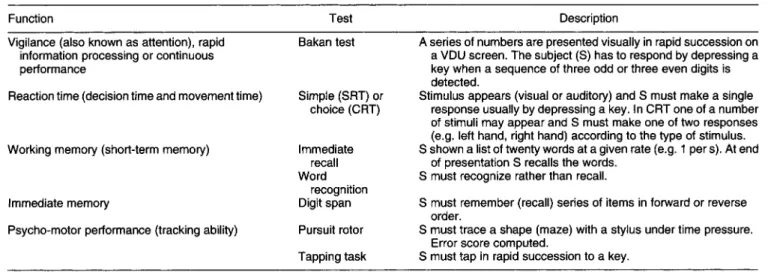
In principle, a large number of mental or cognitive tasks are potentially able to demonstrate the effects of foods on performance. In practice, however, a limited number of tests have been used. Some of the more frequently used are listed in Table 1.
In general, performance tasks can examine a number of skills or abilities concerning the following functions: perception, memory, attention and arousal, information
processing, accuracy and speed of movement. In addition to the tasks listed in Table 1 , other tests which have not been used frequently include digit symbol substitution (infor- mation processing, speed and accuracy of encoding), critical flicker fusion threshold (measure of central nervous system arousal), Stroop test (measure of speed of resolution of perceptual conflict), Corsi block tapping (spatial memory), and various types of reasoning (logical, mathematical, abstract). There are also specialized and sensitive tests used in educational work, psycho-geriatrics or in the assess- ment of neurological impairment. These have not been used with foods but have the potential to detect changes in important functions in response to dietary manipulations.
The tasks set out here usually represent single components which form part of more complex skills and abilities; for example, car-driving ability or operating machinery. In choosing a task, much depends on whether an immediate (short-term) effect of food is expected or whether a chronic (long-term) adaptation to a diet is being examined. Cognitive performance encompasses not only measures of speed (reaction time) but also of processing accuracy (measures of accurate and inaccurate detection), and interventions may elicit changes in function in some or all of these performance components. Recent advances in computer technology have meant that these tasks can be administered in a structured, carefully-controlled fashion, with extremely accurate measurement of reaction time and the rate of correct and erroneous responses.
4.3. Effects of nutritional manipulations on pe formance
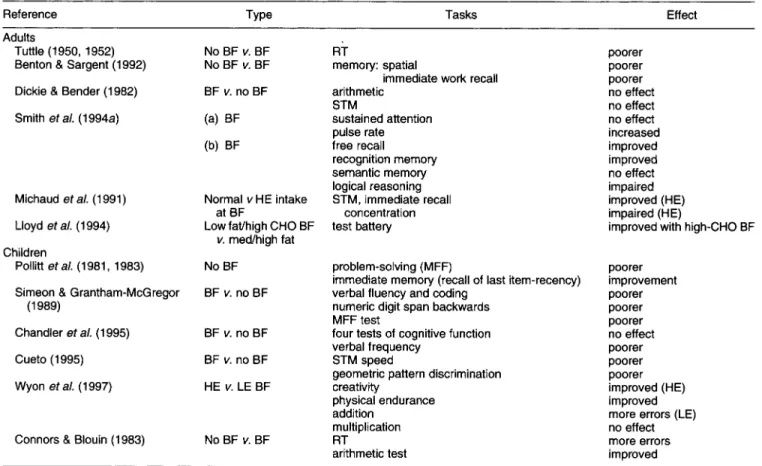
It is necessary at the outset to demonstrate that food itself (compared with no food) will influence cognitive perform- ance. A number of studies (see Table 2), beginning with the Iowa breakfast studies (Tuttle et al. 1954), have demon- strated that missing breakfast can have detrimental effects on performance in terms of reaction time tasks, spatial memory and immediate word recall (Benton & Sargent,
1992; Smith et al. 1 9 9 4 ~ ) . While some aspects of memory
4.3.1. Food v. no foodJirst thing in the morning.
Table 1. Functions assessed by cognitive tests
Function Test Description
Vigilance (also known as attention), rapid information processing or continuous performance
Bakan test A series of numbers are presented visually in rapid succession on a VDU screen. The subject (S) has to respond by depressing a key when a sequence of three odd or three even digits is detected.
Stimulus appears (visual or auditory) and S must make a single
response usually by depressing a key. In CRT one of a number
of stimuli may appear and S must make one of two responses
(e.g. left hand, right hand) according to the type of stimulus. S shown a list of twenty words at a given rate (e.g. 1 per s). At end
of presentation S recalls the words. S must recognize rather than recall.
S must remember (recall) series of items in forward or reverse S must trace a shape (maze) with a stylus under time pressure. S must tap in rapid succession to a key.
Reaction time (decision time and movement time) Simple (SRT) or
choice (CRT)
Working memory (short-term memory) Immediate
recall Word recognition Digit span Pursuit rotor Tapping task Immediate memory
Psycho-motor performance (tracking ability)
order.
Error score computed.
seem to be susceptible to the effects of missing breakfast, other aspects of performance are not affected (Smith et al.
1 9 9 4 ~ ) . These studies were all performed on adult subjects but differed in terms of the experimental design and the particular performance measures employed. Studies in children and adolescents show clearer deficits on a wide range of performance tasks following omission of breakfast, with greater effects in under- and malnourished children (Vaisman et al. 1996).
A number of studies have shown that breakfast v. no breakfast (early morning meal) or high- v. low-energy breakfasts cause changes in sustained attention, reaction time and memory. Energy improves performance in all of these and may be related to blood glucose levels, with high-carbohydrate meals producing the best effects.
When nutritional manipula- tions are made at midday, performance on attention and reaction time tasks is usually impaired (see Table 3). One study has shown that eating lunch (v. no lunch) worsens performance on attention and reaction time tasks (Smith & Miles, 1986b). A large lunch-time meal contributes to the ‘post-lunch dip’ in performance. This means that perfor- mance on sustained attention tasks is impaired in the early afternoon compared with late morning, an effect that is effectively abolished by administering caffeine.
The obvious differences in post-breakfast and post-lunch psychological effects open the question of the reasons why the same behaviour, that is eating, is followed by contrasting
4.3.2. Effects at midday.
or even opposing consequences. Time of day (circadian biological effect), size of meal or macronutrient selection could all contribute to the observed differences. The post- lunch dip, a clearly undesired effect in Western industrial societies, could be a fruitful area of research for the development of functional foods.
A few studies
have examined the effects of meals eaten late in the day. Effects are mixed, with logical memory being improved by a meal, but no changes occurring in sustained attention, word recall or word recognition (Smith et al. 1994b). Visual search under high memory load is impaired by both early and late evening meals (Smith & Miles, 1987). It should be kept in mind that optimal performance is usually seen with the type of meal habitually consumed by the subjects, and any change from the usual nutrient composition normally leads to deterioration. Differences in performance could therefore be ascribed to psychological or physio- logical phenomena. Moreover, discrepancies are often seen between subjective (rating scales, questionnaires) and objective (cognitive tasks) measures of performance.
4.3.3. Effects following evening meals.
4.4. Influence of macronutrient ratios and individual nutrients
A good deal of work has been prompted by the idea that
foods varying in the proportions of carbohydrate and protein would influence performance via changes in brain
Table 2. Effect of breakfast (BF) on performance
Reference Type Tasks Effect
Adults
Tuttle (1 950, 1952) Benton & Sargent (1992) Dickie & Bender (1982) Smith ef a/. (1994a)
Michaud eta/. (1 991)
Lloyd eta/. (1994)
Pollitt et a/. (1 981, 1983) Simeon & Grantham-McGregor
Chandler et a/. (1 995) Cueto (1 995) Wyon et a/. (1 997) Children
(1 989)
Connors & Blouin (1 983)
No BF v. BF No BF v. BF BF v. no BF (a) BF (b) BF Normal v HE intake at BF
Low fat/high CHO BF v. med/high fat No BF BF v. no BF BF v. no BF BF v. no BF HE v. LE BF No BF v. BF RT memory: spatial
immediate work recall arithmetic STM sustained attention pulse rate free recall recognition memory semantic memory logical reasoning STM, immediate recall concentration test battery problem-solving (MFF)
immediate memory (recall of last item-recency) verbal fluency and coding
numeric digit span backwards MFF test
four tests of cognitive function verbal frequency
STM speed
geometric pattern discrimination creativity physical endurance addition multiplication RT arithmetic test poorer poorer poorer no effect no effect no effect increased improved improved no effect impaired improved (HE) impaired (HE)
improved with high-CHO BF
poorer improvement poorer poorer poorer no effect poorer poorer poorer improved (HE) improved more errors (LE) no effect more errors improved
Functional foods in psychology S181
Table 3. Effect of lunch on performance Reference
Lloyd et a/. (1994)
Smith & Miles (1986a,b) Smith & Kendrick (1992) Spring et a/. (1 983)
Lieberman et a/. (1 986)
Wells & Read (1996)
Kanarek & Swinney (1 990)
Kelly et a/. (1 994)
Type Tasks Effect
high-fat low-CHO (HFLC)/low-fat high-CHO RT LFHC
+
HFLC > MFMC(LFHC)/medium-fat medium-CHO immediate recall no effect
(MFMC) rapid information processing no effect
lunch v. no lunch attention impaired after lunch
RT impaired after lunch
large meal (4.18MJ) sustained attention impaired
HC v. HP RT impaired
-
HCHC v. HP sustained attention impaired - HC
low energy (HFLC) Bakan T false alarms
-
LFHChigh energy (LFHC) SRT no effect
CRT no effect
low-energy snack (LCS) v. high-energy backward digit span HCS > LCS lunch
-
no effect+I- lunch attention HCS > LCS
lunch - no effect
arithmetic reasoning HCS > LCS
lunch - no effect
reading lunch
-
>improvementHCS > LCS
no effect - macronutrients
snack (HCS)
LF; HF; LC; HC psychomotor no effect
-
energy(H v. L energy intake)
CHO, carbohydrate; CRT, choice reaction time; HC, high carbohydrate; HP, high protein; RT, reaction time; SRT, simple reaction time.
serotoninergic function (Young, 1991). A number of psycho- logical changes have been predicted from diets varying in carbohydrate and protein content but the evidence is, in fact, quite weak. However, several studies have found that high- carbohydrate meals do tend to produce greater drowsiness, sleepiness and calmness (e.g. Spring et al. 1987).
4.4. I . The carbohydrate-tryptophan connection. The theoretical background linking carbohydrate and serotonin (5-hydroxytryptamine) implies that the dietary effects are mediated by changes in the plasma ratio tryptophan : large neutral amino acids. The argument depends on the extent to which meals vary in carbohydrate and protein content. Circulating tryptophan exists in a free form and bound to blood albumin. After a high-carbohydrate meal (which must contain almost no protein), the insulin that is released causes branched-chain amino acids to be taken up into tissues, particularly muscle. Insulin also reduces the release of non- esterified fatty acids into the plasma; plasma non-esterified fatty acid concentration falls and albumin binding sites are liberated. Consequently, a high-carbohydrate meal elevates the tryptophan : large neutral amino acid ratio in the plasma. This, in turn, favours the uptake of tryptophan into the brain as the amino acids compete for the selective carrier across the blood-brain barrier. Consequently, carbohydrate meals increase brain tryptophan. Since the enzyme tryptophan hydroxylase (EC 1.14.16.4) is normally not saturated with its precursor, the availability of trypto- phan becomes the rate-limiting step in the synthesis of the neurotransmitter serotonin. The logic of this argument is that high-carbohydrate meals enhance serotoninergic neuro- transmission in the brain (Fernstrom & Wurtman, 1972). However, adding as little as 40 g protein/kg to the meal can abolish the ‘tryptophan effect’ (Teff et al. 1989).
Administering tryptophan should produce similar effects to eating carbohydrate. Lieberman et al. (1983) compared the effects of tryptophan and tyrosine on four performance tasks: simple auditory reaction time, two-choice reaction
time, grooved pegboard, and the Thurstone tapping task. The tryptophan treatment differed from tyrosine only on auditory reaction time but neither amino acid produced a response that differed from its own placebo. However, tryptophan did increase subjective ratings of fatigue-inertia and decreased feelings of vigour-activity on rating scales. In other tests, a high-carbohydrate lunch (compared with protein) was found to impair performance on the digit symbol substitution test, with a high starch load linked with slower reaction time but having no effect on a dichotic listening task (Lieberman et al. 1986).
Further studies using high-energy, high-carbohydrate snacks have examined effects on four cognitive tasks: digit span, arithmetic reasoning, reading and attention (Kanarek & Swinney, 1990). In comparison with a low-energy soft drink containing aspartame, a high-carbohydrate snack of yoghurt improved digit span performance (greater recall) and enhanced performance in the attention task (continuous performance) in the late afternoon. Subjects receiving the energy-containing yoghurt (compared with a soft drink) solved more arithmetic problems in a shorter time. The consumption of lunch before testing had no effect on this performance. Lloyd et al. (1996) failed to find differences in objective performance following breakfasts with a low-, medium-, or high-carbohydrate content, but did find that the high-carbohydrate breakfast improved mood by reducing fatigue and dysphoria.
A simple-sugar load improves performance, probably due to a rise in blood glucose. A large carbohydrate meal is likely to produce variable effects on performance, depend- ing on the presence of some protein with the carbohydrate. Although a very-low-protein (less than 40 g k g ) meal will trigger changes in serotoninergic neurotransmission, a usual meal, with a higher protein content, will not elicit the rise in tryptophan.
4.4.2. Dietary fat. Little decisive research has been carried out regarding the effect of dietary fat on performance.
Comparisons of low- and high-carbohydrate and low- and high-fat lunches revealed no effects on psychomotor tasks (Kelly et al. 1994) but with n 6, the power was obviously low. A subsequent study (Lloyd et al. 1994) showed that optimal performance was seen with a medium-fat-medium-carbohy- drate lunch, whereas higher proportions of either fat or carbohydrate caused subjects to be more drowsy, uncertain and muddled, impairing cognitive efficiency.
A comparison of four fat-carbohydrate combinations in human trials showed that all diets increased subjective lassitude (Wells & Read, 1996). It was alleged that morning fat caused a greater depression of alertness and mood, but the study design was questionable and effects were weak. Smith et al. (19946) showed that a high-fat meal did not affect logical reasoning or vigilance but did produce slower but more accurate performance on selective attention tasks. Little is known about the influence of the level of dietary fat saturation on human subjects, but work by Greenwood & Winocur (1990) has shown that a diet high in saturated fat impairs learning acquisition in rats.
Studies have examined the effect of the fatty acid docosa- hexaenoic acid (DHA) on visual acuity in term and preterm infants (Carlson et al. 1996). There is evidence that DHA is important for normal visual development. Formula feeding provides linoleic acid but not DHA, which is available from human milk. Comparisons of the visual acuity of infants fed with either DHA or linoleic acid for at least 3 months showed a positive relationship between DHA status and visual acuity in infants fed with the DHA-enriched formula (Carlson et al. 1996).
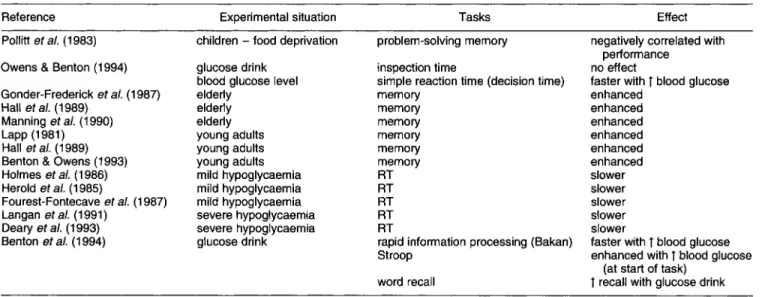
4.4.3. Glucose. A substantial number of studies have shown generally beneficial effects of glucose on perform- ance (see Table 4). A series of studies in elderly subjects showed enhanced effects on working (short-term) memory, and similar effects have been demonstrated in young adults (Benton & Sargent, 1992). Following a glucose drink, blood glucose level correlated with improved decision time in a reaction time task (Benton & Owens, 1993). Rising levels of blood glucose were associated with better recall than falling
levels. The glucose-induced improvement was observed across a range of baseline blood glucose levels and, hence, was not the product of hypoglycaemia. Hypoglycaemia was associated with slower reaction times. The higher levels of blood glucose (following a glucose drink) correlated with faster information processing, better word recall, and improvement on the Stroop test.
As noted earlier, precursors of neurotransmitters in the diet (and then in the plasma) can lead to increases in levels of the neurotransmitter in the brain. Choline is the precursor for acetylcholine. In animal studies, significant improvements in cognitive performance have been seen with choline-enriched diets. In young adults, one study showed an improvement in memory with choline. In elderly people (for whom memory disturbance is often a problem), however, the results have been disappointing. In a review of seventeen studies using choline or lecithin (a major source of choline in the diet), only one study found an improvement of memory in the majority of subjects (Bartus
et al. 1982).
In the elderly, cognitive function and measures of intelligence are enhanced by supplementing the diet with pyridoxine, cobalamin, and folic acid (Goodwin et al. 1983). Further research is needed to determine to what extent these substances might arrest the decline in cognitive ability in old age. In children, multi- vitamin supplements have been claimed to produce superior performance on a test battery (Wechsler intelligence scale, non-verbal subscales) (Benton, 1992). However, this is controversial, and two studies have found negative effects (Crombie et al. 1990; Nelson et al. 1990). Few studies have considered specific vitamins, although Southon (reported in Nelson, 1992) found a positive correlation between plasma ascorbic acid, glutathione peroxidase (EC 1.1 1.1.9) activity, and non-verbal intelligence scores.
One factor that may be important in the interpretation of the results of these studies is the habitual diet of the children concerned. Nelson (1992) has suggested that where the diet is deficient in several nutrients, children may show poorer
4.4.4. Dietary choline.
4.4.5. Vitamins and minerals.
Table 4. Effect of glucose on performance Reference
Polliti et a/. (1 983)
Owens & Benton (1 994) Gonder-Frederick eta/. (1987) Hall et a/. (1 989)
Manning et a/. (1 990)
Lapp (1981) Hall et a/. (1 989)
Benton & Owens (1 993) Holmes et a/. (1 986) Herold et a/. (1 985) Fourest-Fontecave eta/. (1 987) Langan eta/. (1991) Deary et a/. (1 993) Benton et a/. (1 994) Experimental situation children - food deprivation
glucose drink blood glucose level elderly e I d e r I y elderly young adults young adults young adults mild hypoglycaemia mild hypoglycaemia mild hypoglycaemia severe hypoglycaemia severe hypoglycaemia glucose drink Tasks Effect
problem-solving memory negatively correlated with inspection time
simple reaction time (decision time) memory memory memory memory memory memory RT RT RT RT RT
rapid information processing (Bakan) Stroop
word recall
performance no effect
faster with T blood glucose enhanced enhanced enhanced enhanced enhanced enhanced slower slower slower slower slower
faster with t blood glucose enhanced with T blood glucose T recall with glucose drink
(at start of task)
Functional foods in psychology S183
performance on tests of non-verbal intelligence quotient. Differences between studies in developed and developing countries suggest that the extent of the dietary deficiency is important and that supplementation programmes are more likely to produce improved performance in the latter than in the former environment.
Like caffeine, alcohol produces clear effects on cognitive function and can be used as a standard for the comparisons of nutritional or food manipulations. In general, alcohol impairs performance on psychomotor tracking, driving tasks, perception, and sustained attention (Hindmarch et al. 1991).
4.4.6. Alcohol.
4.5. The case of caffeine
As might be expected, most studies have shown that caffeine use leads to an improvement in most measures of cognitive performance, particularly reaction time, vigilance, memory (speed of retrieval) and psychomotor performance (e.g. Smith et al. 1992). It has been suggested that caffeine possesses cholinergic cognition-enhancing proper- ties (in contrast to acetylcholine precursors, cholinergic drugs have marked effects on memory). Caffeine can also improve selective attention, and faster reaction times are probably due to faster central and/or peripheral motor responses. There has been some debate as to whether effects depend on the level of caffeine consumption. Jarvis (1993) demonstrated increased word recall in high-caffeine con- sumers whereas Mitchell & Redman (1992) found that high consumers performed consistently worse than low and moderate users. Rogers et al. (1995) found that the perform- ance in a reaction time task was influenced by caffeine only in high, but not in low, users. Other subgroups of subjects who respond differently to caffeine are high
(v. low) ‘impulsives’. (Impulsivity is a tendency towards
spontaneous, sometimes uncontrolled reactions. Impulsive people (impulsives) are identified using questionnaires.) Anderson & Revelle (1982) reported that high impulsives enhance their performance following caffeine, while per- formance of low impulsives is impaired. High impulsives tended to profit from caffeine only in the morning when their arousal was low. Smith et al. (1991) found similar results with regard to group differences, but in this study high impulsives were sensitive to caffeine in the morning as well as in the afternoon.
5. Functional effects of foods on activation or sedation
5.1. Overview
The literature regarding the functional effects of foods on activation and sedation generally focuses on behaviours such as sleep, activity and hyperactivity, as well as several aspects of mood, including feelings of tension, calmness, drowsiness and alertness. The following sec- tion considers separately the effects of different food components, especially caffeine and the amino acid tryptophan, the dietary carbohydrate : protein ratio and, with regard to hyperactivity, the effects of sugar and food additives.
5.2. Methods for assessing activation or sedation
Effects regarding activation and sedation, relaxation and tension are often not tested directly, but are subsumed under influences on mood. Since affective states cannot be directly measured, research on mood has to rely on reports by the subject regarding his or her present state. The methods most often used to assess temporal aspects and changes of moods are adjective check lists and visual analogue scales. Adjec- tive check lists are more or less lengthy lists of adjectives which the subject uses to describe his or her present emotional state. Dimensions of moods are typically explored using ‘factor analysis’ techniques such as visual analogue scales, which basically consist of a line anchored at both ends with the description of an emotional state (e.g. ‘extremely angry’ - ‘not at all angry’). The subject indi-
cates, through a mark on this line, to what extent the description applies to his or her present state.
With regard to sleep, methods include measurement of sleep latency, i.e. the time taken to fall asleep, subjective ratings of sleepiness or related feelings, drowsiness, and related performance measures such as reaction time, vigilance, or tasks requiring sustained attention.
5.2.1. Tryptophan. Behavioural and psychological
effects of tryptophan are well-documented and summarized in several reviews (Hill & Blundell, 1988). Sleep and feelings of fatigue are affected by tryptophan intake. In both adults and children, tryptophan reduces sleep latency and promotes feelings of drowsiness and fatigue (Steinberg et al.
1992).
Kits contain- ing pills of tyrosine and tryptophan are currently marketed to combat ‘jet lag’. It is thought that these substances could help individuals by adjusting their circadian rhythms after crossing several time zones during airline travel. Because tyrosine is a precursor to the catecholamines, higher plasma levels of tyrosine could stimulate catecholamine release, consequently promoting alertness, while tryptophan pro- motes sleepiness, as detailed earlier. If tyrosine is taken in the morning and tryptophan is taken in the evening, this might help to synchronize circadian rhythms more rapidly after a major change in the day-night cycle. However, there is no sound experimental evidence to support this hypothesis (Waterhouse et al. 1997).
5.2.2. Tryptophan, tyrosine, and ‘jet lag’.
5.3. Carbohydrate v. protein: effects on per$ormance
In accordance with the previously mentioned results on the effects of tryptophan, several studies have found greater drowsiness, sleepiness and calmness after carbohydrate-rich meals compared with protein-rich meals (see Spring et al. 1987). However, the differences were not consistent across all subject groups and many mood and performance meas- ures were unaffected by experimental condition. Although lunch and breakfast reportedly have different effects on fatigue or drowsiness, the relative direction of carbohydrate
v. protein effects appears to be similar (Spring et al. 1983;
Rosenthal et al. 1989): at noon, both protein- and carbo- hydrate-rich meals induce some drowsiness, but the effect is greater after carbohydrate. In the morning, any breakfast reduces fatigue in regular breakfast eaters; however, a