Received October 6, 2004 Address for correspondence: LUTZ BORNMANN
Swiss Federal Institute of Technology Zurich (ETH Zurich), Professorship for Social Psychology and Research on Higher Education, Zaehringerstr. 24, CH-8092 Zurich, Switzerland
E-mail: [email protected] 0138–9130/US $ 20.00
Selection of research fellowship recipients
by committee peer review. Reliability, fairness and
predictive validity of Board of Trustees’ decisions
L
UTZB
ORNMANN,
aH
ANS-D
IETERD
ANIELb,ca Swiss Federal Institute of Technology Zurich (ETH Zurich), Professorship for Social Psychology and Research on Higher Education, Zurich(Switzerland)
b University of Zurich, Evaluation Office, Zurich (Switzerland)
c Professor for Social Psychology and Research on Higher Education, ETH Zurich (Switzerland)
In science, peer review is the best-established method of assessing manuscripts for publication and applications for research fellowships and grants. However, the fairness of peer review, its reliability and whether it achieves its aim to select the best science and scientists has often been questioned. The paper presents the first comprehensive study on committee peer review for the selection of doctoral (Ph.D.) and post-doctoral research fellowship recipients. We analysed the selection procedure followed by the Boehringer Ingelheim Fonds (B.I.F.), a foundation for the promotion of basic research in biomedicine, with regard to the reliability, fairness and predictive validity of the procedure – the three quality criteria for professional evaluations. We analysed a total of 2,697 applications, 1,954 for doctoral and 743 for post-doctoral fellowships. In 76% of the cases, the fellowship award decision was characterized by agreement between reviewers. Similar figures for reliability have been reported for the grant selection procedures of other major funding agencies. With regard to fairness, we analysed whether potential sources of bias, i.e., gender, nationality, major field of study and institutional affiliation, could have influenced decisions made by the B.I.F. Board of Trustees. For post-doctoral fellowship applications, no statistically significant influence of any of these variables could be observed. For doctoral fellowship applications, we found evidence of an institutional, major field of study and gender bias, but not of a nationality bias. The most important aspect of our study was to investigate the predictive validity of the procedure, i.e., whether the foundation achieves its aim to select as fellowship recipients the best junior scientists. Our bibliometric analysis showed that this is indeed the case and that the selection procedure is thus highly valid: research articles by B.I.F. fellows are cited considerably more often than the “average” paper (average citation rate) published in the journal sets corresponding to the fields “Multidisciplinary”, “Molecular Biology & Genetics”, and “Biology & Biochemistry” in Essential Science Indicators (ESI) from the Institute for Scientific Information (ISI, Philadelphia, Pennsylvania, USA). Most of the fellows publish within these fields.
Introduction
Peer Review is central to the process of modern science (K
OSTOFF, 1997, p. 32).
It is the most important method for the assessment of grant applications, manuscripts
submitted for publication in journals and applications for research fellowships
(J
AYASINGHEet al., 2003). As “gatekeepers” of science, the task of peers or colleagues
asked to evaluate applications or manuscripts is to recommend only those that meet the
highest of scientific standards. In the selection of research projects, “the peer review
system is asked to be highly sensitive and highly selective at the same time. A sensitive
review system would detect the merit in every worthwhile proposal, while a selective
system would filter out all projects of dubious quality or significance. In effect, a
sensitive system captures the signal, however faint, while a selective one removes the
noise, however innocuous” (H
ACKETT& C
HUBIN, 2003, pp. 16-17). Alternatives to peer
review – such as earmarking funds for specific institutions, using formula to allocate
resources and using a lottery for awarding funds – violate the principle that applications
should be evaluated and recognized on the basis of scientific merit (E
ISENHART, 2002;
H
ACKETT& C
HUBIN, 2003; I
NCE, 1991; R
ENNIE, 2003).
P
OLANYI(1966) regards peer review as the embodiment of the principle of mutual
control, which fosters judgements with respect to the novelty, accuracy and relevance of
research results. Proponents of the system hold that peer review is more effective than
any other known instrument for self-regulation in promoting the critical selection that is
so crucial to the evolution of scientific knowledge. “Equals active in the same field are
said to be in the best position to know whether quality standards have been met and a
contribution to knowledge made” (E
ISENHART, 2002, p. 241). Thus, the producers of
science, the specialists, become the gatekeepers of science (M
CC
LELLAN, 2003, p. 95).
Although there is evidence that peer review improves the quality of the reporting of
research results (G
OODMANet al., 1994; P
IERIEet al., 1996), critics of peer review
argue that (i) reviewers rarely agree on whether or not to recommend that a manuscript
be published or a research fellowship be awarded, thus making for poor reliability of the
peer review procedure; (ii) reviewers’ recommendations are frequently biased, that is,
judgements are not based solely on scientific merit, but are also influenced by personal
attributes of the authors, applicants or the reviewers themselves; (iii) the procedure
lacks predictive validity, since there is little or no relationship between the reviewers’
judgements and the subsequent usefulness of the work to the scientific community, as
indicated by the frequency of citations of the work in later scientific papers (for
criticism on peer review see A
BATE, 1995; F
INN, 2002; H
ORROBIN, 2001; L
ANGFELDT,
2004; M
ORAN, 1998; R
OSS, 1980; R
OY, 1985).
The empirical research on peer review has dealt mainly with the assessment of
journal submissions (C
AMPANARIO, 1998a; C
AMPANARIO, 1998b; O
VERBEKE&
W
AGER, 2003; W
ELLER, 2002) and grant applications (B
ORNMANN& D
ANIEL, 2003;
D
EMICHELI& P
IETRANTONJ, 2004; W
ESSELY, 1998; W
OOD& W
ESSELY, 2003). The
selection by committee peer review of post-graduate researchers (doctoral (Ph.D.) and
post-doctoral) for scholarship and fellowship grants has received little attention. A few
years ago, the Boehringer Ingelheim Fonds (for more information, see the B.I.F. Web
site at http://www.bifonds.de), a foundation for the promotion of basic research in
biomedicine located in Heidesheim, Germany, agreed to have us conduct an
independent external evaluation of its selection procedure for awarding doctoral and
post-doctoral fellowships (B
ORNMANN, 2004; B
ORNMANN& D
ANIEL, 2004). Our
evaluation study aimed to answer two questions: (i) does the peer review system fulfil
its declared objective to select the best junior scientists for fellowships?; (ii) are the
main criticisms raised against peer review as outlined above justified? Here we present
the most important results of our investigation, which is the most comprehensive study
on selection of post-graduate fellowship recipients conducted to date.
The data set on which the evaluation is based
The archive of the administrative office of the Boehringer Ingelheim Fonds keeps
the files of the majority of the fellowship applications. The files contain curriculum
vitae, reviews, references, appraisals, protocols of the decision-making Board meetings
and other documents. All in all, 2,697 applications received by the foundation between
1985 and 2000 were available for analysis: 1,954 applications for doctoral fellowships
(72%) and 743 applications for post-doctoral fellowships (28%). The number of
applications for the latter is much lower, because the foundation discontinued
post-doctoral fellowships in 1995.
The selection procedure of the Boehringer Ingelheim Fonds
Junior scientists submit their fellowship applications to the administrative office
(secretariat) of the foundation, which checks that the applicant and proposed project
fulfil the formal requirements and that all required documents have been submitted.
Once the formal criteria have been met, the office forwards each application to an
independent external reviewer. On the basis of predetermined criteria, the reviewer
assesses the applicant, the proposed research project and the institution in which the
project is to be conducted and recommends approval or rejection.
Dr. Hermann Fröhlich, managing director of the Boehringer Ingelheim Fonds since 1990, provides a detailed description of the selection procedure (FRÖHLICH, 2001).
Table 1 shows the ratings given by the external reviewers for applications received
from 1985 to 2000. The reviewers recommended awarding foundation fellowships for
62% of the applications for a doctoral fellowship and 59% of the applications for a
post-doctoral fellowship. In both groups, the external reviewers recommended “no award”
for about 20% of the applications.
Table 1. Ratings given by the external reviewers to applications for doctoral and post-doctoral fellowships (in percent)
Rating Applications for doctoral researchfellowships (n = 1,490) Applications for post-doctoral researchfellowships (n = 491)
Award 62 59
Possible award 17 19
No award 21 22
Total 100 100
In addition to the assessment by an external reviewer, a member of the foundation’s
staff also examines the application, interviews the applicant personally and submits a
detailed report. The staff member rates the application as follows: (i) “definite award”,
(ii) “award”, (iii) “possible award” or (iv) “no award”.
Table 2. Ratings given by the staff of the foundation to applications for doctoral and post-doctoral fellowships (in percent)
Rating Applications for doctoral researchfellowships (n = 1,920) Applications for post-doctoral researchfellowships (n = 704)
Definite award 10 8
Award 33 27
Possible award 28 27
No award 29 38
Total 100 100
Table 2 shows the ratings of all applications for doctoral and post-doctoral
fellowships by foundation staff between 1985 and 2000. In both groups, about 10% of
Since the reviewers themselves did not use a rating scale, two experts of the Centre for Research on Higher Education and Work (Kassel, Germany) independently rated all reviews afterwards according to the scale shown in Table 1. The reliability of the two experts’ ratings is very high (weighted kappa coefficient = 0.96).
the applications were strongly recommended for a “definite award” and about 30% were
recommended for an “award”. Twenty-nine percent of the applications for a doctoral
and 38% of the applications for a post-doctoral research fellowship were recommended
for “no award”.
Finally, the applications, together with the external reviews and the staff ratings
along with reports on the personal interview, are submitted to the Board of Trustees.
Seven internationally renowned scientists make up the Board. The Board convenes
three times a year to make approval or rejection decisions after discussing each
individual application in detail. From 1985 to 2000, the Board approved 25% of the
applications for doctoral fellowships and about 20% of the applications for
post-doctoral research fellowships. A comparison of these percentages with the external
reviewers’ recommendations (Table 1) and the foundation’s staff recommendations
(Table 2) reveals that both the external reviewers and foundation staff more frequently
recommended approval than the Board of Trustees did. About 65% of applications rated
“award” by the reviewers and about 50% of applications rated “definite award” or
“award” by the foundation’s staff did not receive a research fellowship in the end.
In a study on panel peer review at the National Science Foundation (Arlington,
Virginia, USA), K
LAHR(1985) found similar results: ratings of the ad hoc reviewers
(the external reviewers) “are more ‘lenient’ than the panel ratings” (p. 151). K
LAHR(1985) considers the following causes for the discrepancies: “The ad hoc [the external]
reviewers may have more technical proficiency, a better sense of what can realistically
be accomplished in the area, and greater familiarity with the track record of the
principal investigator. However, the ad hoc reviewers are at a disadvantage when it
comes to making a quantitative rating of the proposal. First of all, they are generally
unfamiliar with the ratings that get translated into decisions. Second, they do not have
the same sense of scarce resources that the panellists do” (p. 152).
Reliability, fairness and predictive validity of the
Boehringer Ingelheim Fonds’ selection procedure
The Board of Trustees of the Boehringer Ingelheim Fonds has the difficult task of
assessing the scientific merit of the applicants and their research proposals and selecting
the best junior scientists for fellowships. We investigated the extent to which the Board
was able to accomplish this challenging objective between 1985 and 2000. The
committee peer review procedure of the foundation was examined with regard to the
An overview from the UNITED STATES GENERAL ACCOUNTING OFFICE (1999, Washington, DC, USA) of peer review practices in twelve federal science agencies found that all of the agencies “use a combination of external and internal reviewers with subject matter expertise” (p. 6).
quality criteria for professional evaluations: reliability (is the selection of fellowship
recipients reliable or is the result purely incidental?), fairness (are certain groups of
applicants favoured or at a disadvantage?) and predictive validity (does the procedure
fulfil the objective to select the best junior scientists?).
Reliability of committee peer review
Human decisions are classified as reliable when different persons come to the same
or similar conclusions. In analysing the reliability of the fellowship selection procedure
at B.I.F., we determined the degree of agreement among the decision-makers. At each
of the three annual Board meetings, the seven members of the Board of Trustees decide
on applications in three rounds. In the first round of decision-making, some fellowship
applications are approved (rated ‘A’), some are rejected (rated ‘A-B’ and below), and
some are earmarked for consideration in the next round (rated ‘A-’). In the second and,
if necessary, third round, the number of applications approved or dismissed depends on
how much funding is still available for the session (F
RÖHLICH, 2001, p. 76). The
foundation’s secretariat states that the level of controversy in the Trustees’ discussion of
whether to approve or reject an application increases with the number of rounds. Thus,
the round in which the application is approved or rejected should reflect the extent of
disagreement among the Trustees: in later rounds, agreement tends to decrease, and
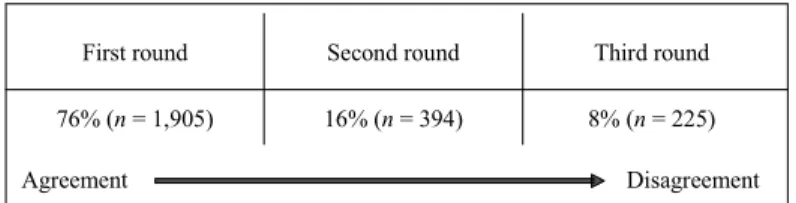
disagreement increases. Table 3 shows that for 76% of the applications, the decisions of
the trustees are characterized by agreement, since the decisions on these are reached in
the first round. Decisions are made on 24% of the applications under circumstances in
which disagreement more or less prevails.
Table 3. Number of decisions made by the Board of Trustees in each of three rounds (in percent; n = 2,524) 8% (n = 225) 16% (n = 394) 76% (n = 1,905) Third round Second round First round Agreement Disagreement
Fairness of committee peer review
Journal submissions or fellowship grant applications are supposed to be judged
solely on the basis of their scientific merit. Personal characteristics and specific
attributes of authors or applicants, such as applicants’ gender or nationality, should not
influence the procedure; otherwise the fairness of the procedure is at risk. In a review of
the literature, R
OSS(1980) and S
HARP(1990) refer to 16 potential sources of bias,
O
WEN(1982) reports 25 potential sources of bias and H
OJATet al. (2003), P
RUTHIet al.
(1997) and W
OOD& W
ESSELY(2003) list about ten. In an overview of the state of
research on peer review, B
ORNMANN& D
ANIEL(2003, pp. 211-216) review the
research on three potential sources of bias.
In the framework of our present study, we investigated some of the most frequently
examined potential sources of bias: the applicant’s gender, nationality (German or
foreign), major field of study (biology, biochemistry, chemistry or medicine) and
institutional affiliation, meaning the institution in which the research project is to be
carried out: German university, European Molecular Biology Laboratory (EMBL,
Heidelberg, Germany), Helmholtz Association of National Research Centres (HGF,
Bonn, Germany), Max Planck Society (MPS, Munich, Germany) or
Wissenschafts-gemeinschaft Gottfried Wilhelm Leibniz (WGL, Bonn, Germany) (see Table 4,
bottom).
To identify the effect of every single potential source of bias that could influence the
Board of Trustees’ decisions, we used multiple logistic regression models (H
OSMER&
L
EMESHOW, 2000). These models are appropriate for the analysis of dichotomous (or
binary) responses. Dichotomous responses arise when the outcome is presence or
absence of an event (R
ABE-H
ESKETH& E
VERITT, 2004, p. 98). In the case of the
Boehringer Ingelheim Fonds, the binary response is coded 1 for approval and 0 for
rejection of an application. As the foundation had information on the applicants’
scientific achievements up to the date of their fellowship applications, we could
therefore include not only the potential sources of bias, but also the scientific
performance of the applicants as independent variables in the statistical analyses. We
were thus able to distinguish between the influence of the applicants’ achievements to
date and the potential sources of bias on the decisions of the Board. C
OLE&
F
IORENTINE(1991) call this proceeding in statistical bias analysis the “control variable
approach” (p. 216).
Bias is defined as the influence of variables reflecting something other than the applicant’s scientific merit. Such variables could be the applicant’s age, gender, institutional affiliation or research field (GODLEE & DICKERSIN, 2003, p. 92; ROSS, 1980, pp. 78-79).
The logistic regression model assumes a linear relationship between the natural logarithm of the probability of success (here the granting of a fellowship) and the interval independent variables (HOSMER & LEMESHOW, 2000). Before interpreting regression models, therefore, it is necessary to test the validity of this assumption, which can be done using, for example, CLEVELAND’s (1979) locally weighted scatterplot smoother. The tests of the independent variables in Table 4 showed that four variables violate the assumption of linearity. Following recommendations by MOSTELLER & TUKEY (1977), the variables – depending on the type of violation – were entered into the model estimates as logarithmic or quadratic transformations.
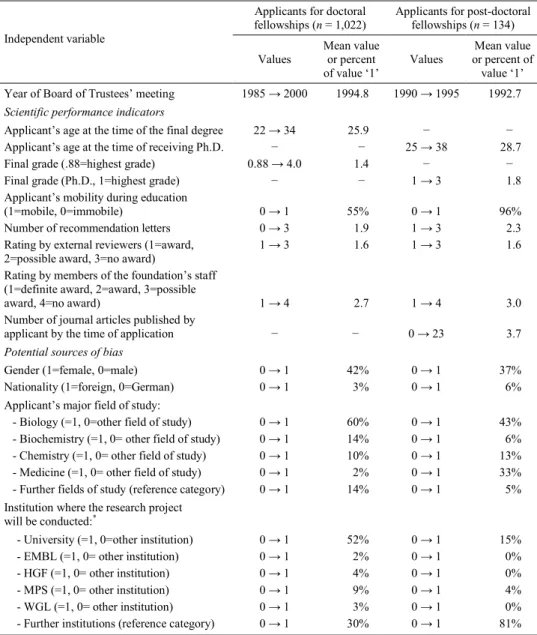
Table 4. Description of the independent variables Applicants for doctoral fellowships (n = 1,022)
Applicants for post-doctoral fellowships (n = 134) Independent variable Values Mean value or percent of value ‘1’ Values Mean value or percent of value ‘1’ Year of Board of Trustees’ meeting 1985 T 2000 1994.8 1990 T 1995 1992.7 Scientific performance indicators
Applicant’s age at the time of the final degree 22 T 34 25.9 U U
Applicant’s age at the time of receiving Ph.D. U U 25 T 38 28.7
Final grade (.88=highest grade) 0.88 T 4.0 1.4 U U
Final grade (Ph.D., 1=highest grade) U U 1 T 3 1.8
Applicant’s mobility during education
(1=mobile, 0=immobile) 0 T 1 55% 0 T 1 96%
Number of recommendation letters 0 T 3 1.9 1 T 3 2.3
Rating by external reviewers (1=award, 2=possible award, 3=no award)
1 T 3 1.6 1 T 3 1.6
Rating by members of the foundation’s staff (1=definite award, 2=award, 3=possible
award, 4=no award) 1 T 4 2.7 1 T 4 3.0
Number of journal articles published by
applicant by the time of application U U 0 T 23 3.7
Potential sources of bias
Gender (1=female, 0=male) 0 T 1 42% 0 T 1 37%
Nationality (1=foreign, 0=German) 0 T 1 3% 0 T 1 6%
Applicant’s major field of study:
- Biology (=1, 0=other field of study) 0 T 1 60% 0 T 1 43%
- Biochemistry (=1, 0= other field of study) 0 T 1 14% 0 T 1 6%
- Chemistry (=1, 0= other field of study) 0 T 1 10% 0 T 1 13%
- Medicine (=1, 0= other field of study) 0 T 1 2% 0 T 1 33%
- Further fields of study (reference category) 0 T 1 14% 0 T 1 5%
Institution where the research project will be conducted:*
- University (=1, 0=other institution) 0 T 1 52% 0 T 1 15%
- EMBL (=1, 0= other institution) 0 T 1 2% 0 T 1 0%
- HGF (=1, 0= other institution) 0 T 1 4% 0 T 1 0%
- MPS (=1, 0= other institution) 0 T 1 9% 0 T 1 4%
- WGL (=1, 0= other institution) 0 T 1 3% 0 T 1 0%
- Further institutions (reference category) 0 T 1 30% 0 T 1 81%
* Due to the variety of German university and non-university research institutions for which the applicants
submitted a fellowship application, only those institutions with a large enough sample size were entered into the analyses as independent variables: university, EMBL, HGF, MPS and WGL. The remaining institutions were grouped together as “further institutions”, forming a reference category in the logistic regression analyses.
The following scientific performance indicators essentially comprise the criteria for
approval and rejection of an application in the selection procedure of the Boehringer
Ingelheim Fonds: (i) for applicants for a doctoral fellowship: age at the time of the final
degree, final grades, mobility during education (mobile or immobile), the number of
recommendation letters and the ratings by the external reviewers (“award”, “possible
award”, “no award”) and members of the foundation’s staff (“definite award”, “award”,
“possible award”, “no award”); (ii) for applicants for a post-doctoral research
fellowship: age at the time of receiving Ph.D., grades, mobility during education, the
number of letters of recommendation, the number of published journal articles by the
time of application as well as the ratings by the external reviewers and the foundation’s
staff (see Table 4, top).
Table 5 and Table 6 show the results of the multiple regression analyses for
predicting the Board of Trustees’ decisions on awarding fellowships from scientific
performance indicators and potential sources of bias. The results of the likelihood ratio
tests are
2(18, n = 1,022) = 72.3, p < 0.001 (applicants for doctoral fellowships) and
2(16, n = 134) = 44.6, p < 0.001 (applicants for post-doctoral fellowships). As the p
values for the tests are significant at the X = 0.001 level, we reject the null hypothesis
and conclude that at least one and perhaps all odds ratios in the models are different
from zero.
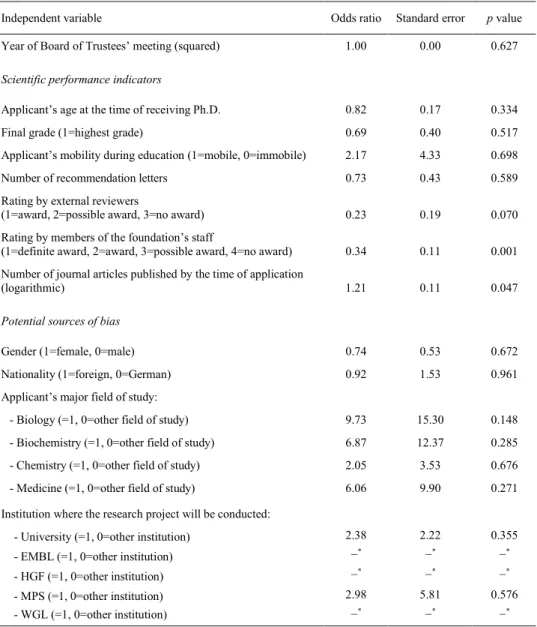
Table 5 shows the results of the model estimates predicting the Board of Trustees’
decisions on post-doctoral fellowships.
The results of the analyses for scientific performance indicators show that number of
journal articles published and the rating by members of the foundation’s staff had a
significant effect on the Board’s decisions on post-doctoral fellowships: the odds of
approval of a post-doctoral fellowship increase with each published journal article by
the time of application. To determine the extent and direction of the influence of the
ratings by members of the foundation’s staff on the Board’s decisions, we calculated
so-called predicted probabilities of approval (C
ONROY, 2002). The results show that the
predicted success rate of approval of post-doctoral fellowships is 62% for “definite
award,” is about a third for “award” and falls to about 1% for “no award”.
The logistic regression models had to be calculated with reduced sample sizes, as only those cases could be included in the statistical analyses that had no missing values for the variables entered into the model. As a result, 52% (n = 1,022) of the applicants for doctoral fellowships and 18% (n = 134) of the applicants for post-doctoral fellowships could be included. Although it is possible to include cases with missing data in the analysis using imputation methods (MANDER & CLAYTON, 1999; RUBIN & SCHENKER, 1986) such as provided by the statistical package Stata (STATACORP., 2003), the parameter estimates fluctuate depending on the imputation method or – in some imputation methods – according to the number of imputations performed (RUBIN, 1987; SCHAFER, 2000). Because the parameters estimated in this way vary highly and in part can hardly be replicated, no imputation methods were used for the model estimates.
Table 5. Regression analysis predicting Board of Trustees’ decisions on post-doctoral fellowships from scientific performance indicators and potential sources of bias (n = 134)
Independent variable Odds ratio Standard error p value
Year of Board of Trustees’ meeting (squared) 1.00 0.00 0.627
Scientific performance indicators
Applicant’s age at the time of receiving Ph.D. 0.82 0.17 0.334
Final grade (1=highest grade) 0.69 0.40 0.517
Applicant’s mobility during education (1=mobile, 0=immobile) 2.17 4.33 0.698
Number of recommendation letters 0.73 0.43 0.589
Rating by external reviewers
(1=award, 2=possible award, 3=no award) 0.23 0.19 0.070
Rating by members of the foundation’s staff
(1=definite award, 2=award, 3=possible award, 4=no award) 0.34 0.11 0.001 Number of journal articles published by the time of application
(logarithmic) 1.21 0.11 0.047
Potential sources of bias
Gender (1=female, 0=male) 0.74 0.53 0.672
Nationality (1=foreign, 0=German) 0.92 1.53 0.961
Applicant’s major field of study:
- Biology (=1, 0=other field of study) 9.73 15.30 0.148
- Biochemistry (=1, 0=other field of study) 6.87 12.37 0.285
- Chemistry (=1, 0=other field of study) 2.05 3.53 0.676
- Medicine (=1, 0=other field of study) 6.06 9.90 0.271
Institution where the research project will be conducted:
- University (=1, 0=other institution) 2.38 2.22 0.355
- EMBL (=1, 0=other institution) U* U* U*
- HGF (=1, 0=other institution) U* U* U*
- MPS (=1, 0=other institution) 2.98 5.81 0.576
- WGL (=1, 0=other institution) U* U* U*
* Number of cases is too small for statistical analyses.
No statistically significant influence was found for the other scientific performance
indicators that were included in the multiple regression analysis (applicant’s age at the
time of receiving Ph.D., final grade, applicant’s mobility during education, number of
recommendation letters and rating by the external reviewers), and no statistically
significant influence was found for the potential sources of bias examined (applicant’s
gender, nationality, major field of study and institution in which the research is to be
conducted).
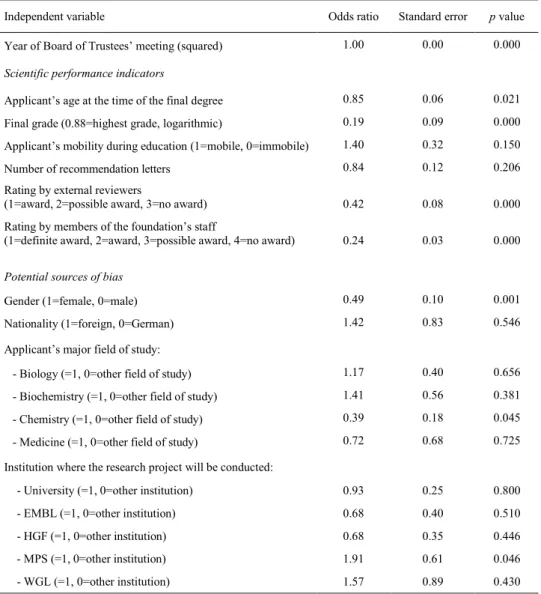
Table 6. Regression analysis predicting Board of Trustees’ decisions on doctoral fellowships from scientific performance indicators and potential sources of bias (n = 1,022)
Independent variable Odds ratio Standard error p value
Year of Board of Trustees’ meeting (squared) 1.00 0.00 0.000
Scientific performance indicators
Applicant’s age at the time of the final degree 0.85 0.06 0.021
Final grade (0.88=highest grade, logarithmic) 0.19 0.09 0.000
Applicant’s mobility during education (1=mobile, 0=immobile) 1.40 0.32 0.150
Number of recommendation letters 0.84 0.12 0.206
Rating by external reviewers
(1=award, 2=possible award, 3=no award) 0.42 0.08 0.000
Rating by members of the foundation’s staff
(1=definite award, 2=award, 3=possible award, 4=no award) 0.24 0.03 0.000
Potential sources of bias
Gender (1=female, 0=male) 0.49 0.10 0.001
Nationality (1=foreign, 0=German) 1.42 0.83 0.546
Applicant’s major field of study:
- Biology (=1, 0=other field of study) 1.17 0.40 0.656
- Biochemistry (=1, 0=other field of study) 1.41 0.56 0.381
- Chemistry (=1, 0=other field of study) 0.39 0.18 0.045
- Medicine (=1, 0=other field of study) 0.72 0.68 0.725
Institution where the research project will be conducted:
- University (=1, 0=other institution) 0.93 0.25 0.800
- EMBL (=1, 0=other institution) 0.68 0.40 0.510
- HGF (=1, 0=other institution) 0.68 0.35 0.446
- MPS (=1, 0=other institution) 1.91 0.61 0.046
- WGL (=1, 0=other institution) 1.57 0.89 0.430
The results presented in Table 6 for predicting Board of Trustees’ decisions on
doctoral fellowships show that four of the six scientific performance indicators had a
significant effect in the expected direction: the Board was more likely to award a
doctoral fellowship the younger the applicants were at the time of the final degree, the
higher their final grades, and the higher the ratings by the external reviewers and the
members of the foundation’s staff. No statistically significant influence was found only
for applicant’s mobility during education and number of recommendation letters.
As to potential sources of bias, the applicant’s nationality did not have a statistically
significant effect on the Board’s decision to approve a doctoral fellowship. However,
we detected a statistically significant influence of three variables hypothesized as
potential biases: applicant’s gender, major field of study (chemistry) and research
institution affiliation (MPS). The calculation of the predicted probabilities (C
ONROY,
2002) shows that it is obviously an advantage if the applicant is affiliated with an
institute of the Max Planck Society (46%) rather than another research institution
(10%). The choice of a Max Planck Institute for conducting the research increases the
predicted probability for approval by 36 percentage points. The opposite effect was
found for female applicants and applicants working in the field of chemistry: the
predicted success rate of approval of doctoral fellowships for applicants working in the
field of chemistry (6% predicted success rate) is only approximately half as high as the
predicted success rate of approval (12%) for applicants working in other major fields of
study. The same was found for the success rate of approval for women (7%) compared
to male applicants (16%). All in all, the results of the probability calculations for
applicants for doctoral fellowships indicate that the Board of Trustees tends to rate
particular applicant groups more highly than others.
To sum up, the results on the foundation’s selection procedure are inconsistent. We
found evidence for a gender, major field of study and institutional bias in approving
applications for doctoral, but not for post-doctoral fellowships. No bias with respect to
nationality was found in either group.
To demonstrate extent and direction of the influence of gender, discipline and intended institutional affiliation on the Board’s decisions on doctoral fellowship allocations in another analysis BORNMANN & DANIEL (2004, pp. 10-11) simulated a “typical” applicant, based on the average or most common features of all applicants for a doctoral fellowship. The “typical” applicant completed his university degree at the age of 26 with a final grade of 1.4 (best grade is 1.0). He attended more than one university during his education. In addition, he could submit two letters of recommendation with his application. Both the external reviewer and the foundation’s staff recommended him for an award. He is male, of German nationality and his first degree is in biology. He will pursue his research project at a German university. This applicant’s chances of receiving a scholarship are 50%, as determined by the probability computation. If the “typical” applicant is not male, but female, the predicted probability of receiving a scholarship decreased from 50% to 33%. The impact of the applicant’s discipline is still more important: if the applicant is not a biologist, but a chemist, the probability of approval declined from 50% to 25%. The opposite effect is observed for the institution in which the research project will be carried out: with regard to the decision of the Board of Trustees, it is obviously of advantage to choose an institute of the Max Planck Society (Germany) rather than of a German university. This choice increases the probability for approval by 17 percentage points.
Predictive validity of committee peer review
In the third part of our study, we examined the predictive validity of the
foundation’s selection procedure, that is, whether indeed the “best” junior scientists are
selected to receive fellowships. Assessing the predictive validity of decisions requires a
generally accepted criterion for scientific merit. A conventional approach is to use
citation counts as a proxy for research impact, since they measure the international
impact of the work by individuals or groups of scientists on others (C
OLE, 2000,
p. 293).
Only fellowship recipients and not non-selected applicants were included in the
assessments of predictive validity, because “criterion data for rejected applicants are
difficult to obtain and difficult to interpret, even when available; those accepted are no
longer comparable to those rejected because two groups have had different experiences”
(C
HAPMAN& M
CCAULEY, 1994, p. 428). According to Gerhard Sonnert, B.I.F.
fellowships clearly have a dual function. They reward previous excellence (i.e., they are
given to the “best” applicants, who are selected according to merit criteria), but they
also afford the successful applicants resources that might enable them to do excellent
scientific work in their future careers. With reference to Robert Merton’s concept of
“self-fulfilling prophecy” (M
ERTON, 1948), one could argue that the fellowships of the
B.I.F. give the fellows such an advantage in training, opportunities, prestige,
self-confidence, and so on that they later become superior scientists because of the
fellowship, not because they were particularly promising at the point of application.
Rather than picking the best scientists, the selection committee might, in this view,
create them (see also C
OLE& C
OLE, 1967; H
AGSTROM, 1965; M
ERTON, 1968).
In June 2001, the foundation asked former fellowship recipients who had received
their fellowships between 1985 and 1995 to submit an up-to-date publication list of all
works published from the date of approval of the fellowship up to December 2000. Of
433 B.I.F. fellows, 225 (52%) responded and sent in their list of publications. The
foundation secretariat determined whether each of the 225 fellows was working in an
academic institution (publicly funded research), or in industry or as (for example) a
medical doctor, patent attorney or journalist. Sixty-three percent (141 fellows) of the
225 former scholarship holders had worked exclusively in academic institutions.
We would like to thank Gerhard Sonnert, Research Scholar in the Physics Department and Research Professor of the History of Science at Harvard University, and Dr. Ronald Kostoff of the Office of Naval Research in Arlington, Virginia, for their helpful comments on analysis of the predictive validity of peer review by the B.I.F.
In particular, since the Boehringer Ingelheim Fonds organizes different seminars for its fellowship holders, provides funds for conference attendance, trains their communication skills, and supports them indeed whenever needed.
Thirty-seven percent (84 fellows) had left academic research either immediately after
completing the Ph.D. or a couple of years later. Since it is reasonable to assume that
only scientists working in academia continuously publish their results (W
EINGART,
2001, p. 91), our bibliometric analyses used only the publication lists of scientists that
had worked without interruption in academic institutions.
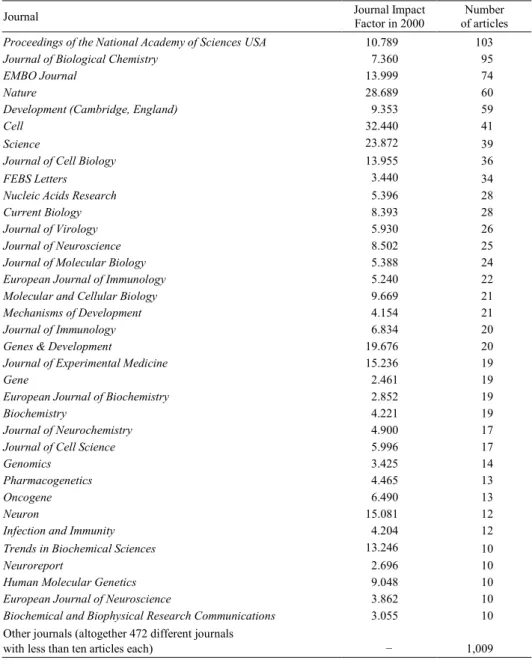
All in all, 2,039 articles from 120 former fellowship recipients were included in our
analyses. The vast majority (98%) of the articles were published in English, and 2%
were published in German or French. The articles were published in 508 different
journals; in 36 journals, ten or more articles from fellows of the foundation had
appeared (Table 7). According to the Institute for Scientific Information (ISI,
Philadelphia, Pennsylvania, USA), in the year 2000 the impact factor of these journals
(a measure of the frequency with which the “average article” in a journal has been cited
in a particular year or period, revealing a journal’s importance relative to others in its
field) varied between 32.440 (Cell) and 2.461 (Gene). By the end of 2001, the 2,039
articles published by the group of former fellowship recipients had been cited altogether
82,099 times.
How can we judge whether the citation rates for the publications by the Boehringer
Ingelheim Fonds fellows are high or low? Anthony F. J. van Raan of the Center for
Science and Technology Studies (CWTS) in Leiden, Netherlands, recommends a
worldwide reference indicator for the bibliometric evaluation of research groups: “Our
most important bibliometric indicator, the ‘crown indicator’, is a trend analysis over a
period of, say, eight years, of the number of citations to the entire oeuvre of a research
group or institute, normalized to an international field-specific reference value. In this
way, we are able to demonstrate whether this group or institute is performing below or
above, or even far above the international level of the research field(s) concerned” (V
ANR
AAN, 1999, p. 420). For example, the “crown indicator” was computed as a measure of
scientific impact in an international comparative bibliometric study on the scientific
performance of German medical research carried out by CWTS on behalf of the
German Federal Ministry of Education and Research (BMBF, Berlin, Germany)
(T
IJSSENet al., 2002).
ENDERS & BORNMANN (2001, p. 101) found similar results in a representative survey of the career paths of biologists that had completed doctorates at German universities in the mid to late 1980s (see also BORNMANN & ENDERS, 2004). One year after completing the Ph.D., 46% of the biologists that had been employed by a university or research institute during doctoral studies or had received a doctoral scholarship had left academic research.
Of the 141 fellowship recipients with an up-to-date publication list, 21 could not be included in the analysis, as the available data was incomplete.
In 2000, the highest impact factor in the ISI journal ranking list (considering all indexed journals) was achieved by the Annual Review of Immunology (50.340). On the list, Cell ranked third, Nature tenth and Science thirteenth.
Table 7. Journals in which ten or more articles by fellows of the Boehringer Ingelheim Fonds had been published after approval of their fellowships (ISI journal impact factor in 2000, n = 2,009. Thirty articles published in B.I.F. Futura are not included, as ISI does not index this journal)
Journal Journal ImpactFactor in 2000 of articlesNumber
Proceedings of the National Academy of Sciences USA 10.789 103
Journal of Biological Chemistry 7.360 95
EMBO Journal 13.999 74
Nature 28.689 60
Development (Cambridge, England) 9.353 59
Cell 32.440 41
Science 23.872 39
Journal of Cell Biology 13.955 36
FEBS Letters 3.440 34
Nucleic Acids Research 5.396 28
Current Biology 8.393 28
Journal of Virology 5.930 26
Journal of Neuroscience 8.502 25
Journal of Molecular Biology 5.388 24
European Journal of Immunology 5.240 22
Molecular and Cellular Biology 9.669 21
Mechanisms of Development 4.154 21
Journal of Immunology 6.834 20
Genes & Development 19.676 20
Journal of Experimental Medicine 15.236 19
Gene 2.461 19
European Journal of Biochemistry 2.852 19
Biochemistry 4.221 19
Journal of Neurochemistry 4.900 17
Journal of Cell Science 5.996 17
Genomics 3.425 14
Pharmacogenetics 4.465 13
Oncogene 6.490 13
Neuron 15.081 12
Infection and Immunity 4.204 12
Trends in Biochemical Sciences 13.246 10
Neuroreport 2.696 10
Human Molecular Genetics 9.048 10
European Journal of Neuroscience 3.862 10
Biochemical and Biophysical Research Communications 3.055 10
Other journals (altogether 472 different journals
with less than ten articles each) – 1,009
To determine the “crown indicator” for the publications by the Boehringer
Ingelheim Fonds fellows, we divided the “mean number of citations for publications
from fellowship recipients” by the “mean number of citations of all publications in the
journal sets chosen by the fellowship recipients”. The quotient allows us to determine
whether the citation impact of the fellowship recipient is far below (indicator value
<0.5), below (indicator value 0.5–0.8), approximately the same as (0.8–1.2), above
(1.2–1.5), or far above (>1.5) the international (primarily the Western world) citation
impact baseline for the chosen journal sets. With ratio values above 1.5, the probability
of identifying very good to excellent researchers is very high (V
ANR
AAN, 2004,
pp. 31-32).
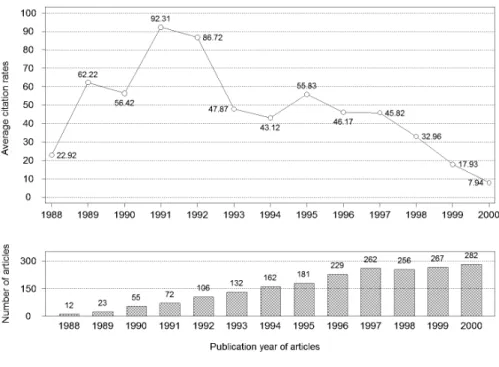
Figure 1. (Top) Mean number of citations of the articles published by the Boehringer Ingelheim Fonds fellows. (Bottom) Number of articles published in the year indicated.
Figure 1 (top) shows the mean number of citations of the articles published by the
Boehringer Ingelheim Fonds fellows by the end of 2001. For example, each of the 72
articles published in 1991 was cited on average 92.31 times by the end of 2001, and
each of the 282 articles published in 2000 was cited on average 7.94 times by the end of
2001. To calculate the “crown indicators”, we used the ISI journal sets corresponding
to the fields “Multidisciplinary”, “Molecular Biology & Genetics” and “Biology &
Biochemistry”. Out of the 22 ISI journal sets
we chose “Molecular Biology &
Genetics” and “Biology & Biochemistry” as reference sets, since 77% of the former
fellowship recipients are biologists (61%) or biochemists (16%). Moreover, about a
third of the research projects were in the field of molecular biology. In addition, we
included the journal set “Multidisciplinary”, since a large number of papers by
Boehringer Ingelheim Fonds fellows were published in The Proceedings of the National
Academy of Sciences USA, Science and Nature (Table 7),
which are in this ISI
category.
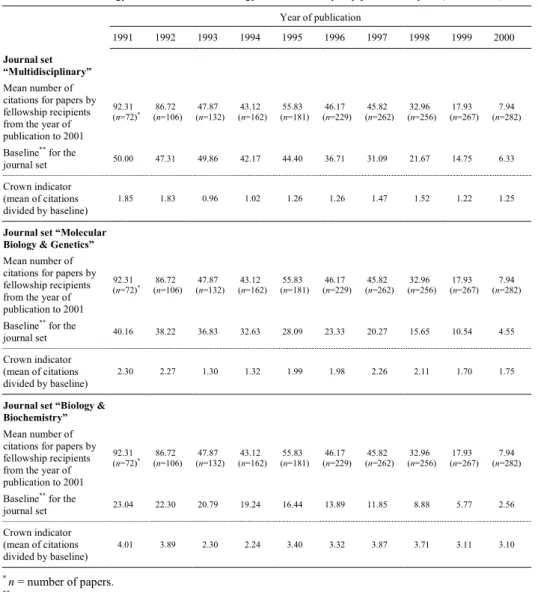
Table 8 lists the “crown indicators” of the publications classified according to
journal set and year of publication. The values show that on average the papers by the
fellowship recipients were significantly more frequently cited than the “average”
publication in one of the three journals sets: 21 of the 30 “crown indicators”, shown in
Table 8, are above 1.5 (between 1.52 and 4.01), and seven are between 1.2 and 1.5.
Only two values (0.96 and 1.02) are in the range that VAN RAAN (2004) denotes as
“average”. In the light of the mean citation rate achieved by the articles published by the
Boehringer Ingelheim Fonds fellows, the decisions made by the foundation’s Board
have a high predictive validity.
The “Multidisciplinary” category covers the spectrum of major scientific disciplines and includes journals of a broad or general character in the sciences (e.g., Nature, Proceedings of the National Academy of Sciences USA, Science) (INSTITUTE FOR SCIENTIFIC INFORMATION, 2002).
“Molecular Biology & Genetics” journals include, for example, Annual Review of Cell Biology, Cell, Annual Review of Cell and Developmental Biology ( INSTITUTE FOR SCIENTIFIC INFORMATION, 2002).
“Biology & Biochemistry” includes, for example, Annual Review of Biochemistry, Physiological Reviews, Endocrine Reviews ( INSTITUTE FOR SCIENTIFIC INFORMATION, 2002).
Agricultural Sciences; Biology & Biochemistry; Chemistry; Clinical Medicine; Computer Science; Ecology/Environment; Economics & Business; Engineering; Geosciences; Immunology; Material Sciences; Mathematics; Microbiology; Molecular Biology & Genetics; Multidisciplinary; Neuroscience & Behavior; Pharmacology & Toxicology; Physics, Plant & Animal Science; Psychology/Psychiatry; Social Sciences, general; Space Science ( INSTITUTE FOR SCIENTIFIC INFORMATION, 2002).
A comparison with other journal sets, for example “Clinical Medicine” or “Microbiology”, shows that the “average” publication in the journal sets “Multidisciplinary”, “Molecular Biology & Genetics” and “Biology & Biochemistry” has a much higher mean citation rate.
The average citation rates of articles published by the fellows between 1988 und 1990 are not listed in Table 8, since ISI no longer provides the corresponding average citation rates for papers published in those years.
Table 8. Average citation rates of papers published by recipients of Boehringer Ingelheim Fonds fellowships compared to mean citation rates of papers in the ISI journal sets “Multidisciplinary”,
“Molecular Biology & Genetics” and “Biology & Biochemistry” by publication year (1991–2000)
Year of publication
1991 1992 1993 1994 1995 1996 1997 1998 1999 2000
Journal set “Multidisciplinary” Mean number of citations for papers by fellowship recipients from the year of publication to 2001
92.31
(n=72)* (n=106)86.72 (n=132)47.87 (n=162)43.12 (n=181)55.83 (n=229)46.17 (n=262)45.82 (n=256)32.96 (n=267)17.93 (n=282)7.94
Baseline** for the
journal set 50.00 47.31 49.86 42.17 44.40 36.71 31.09 21.67 14.75 6.33
Crown indicator (mean of citations divided by baseline)
1.85 1.83 0.96 1.02 1.26 1.26 1.47 1.52 1.22 1.25
Journal set “Molecular Biology & Genetics” Mean number of citations for papers by fellowship recipients from the year of publication to 2001
92.31
(n=72)* (n=106)86.72 (n=132)47.87 (n=162)43.12 (n=181)55.83 (n=229)46.17 (n=262)45.82 (n=256)32.96 (n=267)17.93 (n=282)7.94
Baseline** for the
journal set 40.16 38.22 36.83 32.63 28.09 23.33 20.27 15.65 10.54 4.55
Crown indicator (mean of citations divided by baseline)
2.30 2.27 1.30 1.32 1.99 1.98 2.26 2.11 1.70 1.75
Journal set “Biology & Biochemistry” Mean number of citations for papers by fellowship recipients from the year of publication to 2001
92.31
(n=72)* (n=106)86.72 (n=132)47.87 (n=162)43.12 (n=181)55.83 (n=229)46.17 (n=262)45.82 (n=256)32.96 (n=267)17.93 (n=282)7.94
Baseline** for the
journal set 23.04 22.30 20.79 19.24 16.44 13.89 11.85 8.88 5.77 2.56 Crown indicator (mean of citations divided by baseline) 4.01 3.89 2.30 2.24 3.40 3.32 3.87 3.71 3.11 3.10 * n = number of papers.
** Baselines are measures of cumulative citation frequencies across all papers published in a journal set: an
average of 50.00 for the journal set “Multidisciplinary” in 1991 means that, on average, papers in “Multidisciplinary” journals were cited 50.00 times from 1991 to the end of 2001.
Conclusions
In this first comprehensive study on committee peer review for the selection of
doctoral (Ph.D.) and post-doctoral research fellowship recipients, we analysed the
selection procedure used by the Boehringer Ingelheim Fonds with regard to reliability,
fairness and predictive validity.
In the analysis of reliability, the degree of agreement among reviewers was
determined. In 76% of the cases, the decision on whether to award a fellowship or not
was characterized by agreement. To characterise the extent of agreement or
disagreement in the Board of Trustees of the Boehringer Ingelheim Fonds, we
compared our results to the findings of other studies. It is important to take into
consideration that in the other studies, the extent of agreement is not calculated
indirectly by decision round, but directly by the level of agreement between two or
more reviewers’ ratings. For grant reviews, the following agreement coefficients are
reported by other studies: in the selection procedure of the Deutsche
Forschungs-gemeinschaft (Bonn, Germany), 82% of the reviewers’ ratings are identical
(H
ARTMANN& N
EIDHARDT, 1990). According to C
ICCHETTI(1991), 68% of
applications receive the same assessment in the peer review system of the National
Science Foundation. H
ODGSON(1997) calculated an agreement rate of 73% for
reviewers of the Heart and Stroke Foundation of Canada (Ottawa, Canada). Thus, the
extent of agreement between reviewers, and thus the reliability of the committee peer
review procedure of the Boehringer Ingelheim Fonds, is similar to that of major funding
organizations.
With regard to fairness, we analysed whether potential sources of bias – gender,
nationality, major field of study and institutional affiliation – could have influenced the
fellowship award decisions. For post-doctoral fellowships, no statistically significant
influence of any of these variables could be observed. For doctoral fellowships, we
found evidence of an institutional, major field of study and gender bias, but not of a
nationality bias. This incongruent result reflects the inconsistent findings of other
empirical studies investigating the fairness of peer review. For example, some studies
examining gender bias in review procedures indicate that women scientists are at a
disadvantage (B
ROUNS, 2000; W
ENNERÅS& W
OLD, 1997). However, a similar number
of studies report only moderate effects or no gender effects (C
OLE, 1992; N
ATIONALS
CIENCEF
OUNDATION, 2000; W
ARD& D
ONNELLY, 1998). An experimental study by
S
ONNERT(1995, p. 47) found that grant submissions by women biologists received even
better average evaluations than men’s grant submissions did (mean rating: 3.67 vs. 3.27;
p = 0.0496).
One principal problem that a survey of bias studies should take into account and that
affects bias research in general is the lack of experimental studies. There have been only
very few attempts to study reviewer bias directly in the natural setting of actual referee
evaluations (A
BRAMOWITZet al., 1975; B
AXTet al., 1998; M
AHONEY, 1977; N
YLENNAet al., 1994; P
ETERS& C
ECI, 1982). P
ETERS& C
ECI(1982), for instance, examined in a
natural setting referees’ evaluations of manuscripts submitted to American psychology
journals (D
UNCAN& M
AGNUSON, 2003). They looked for reviewer bias that could be
attributed to reviewers’ knowledge of the authors’ institutions or names. As test
materials they selected already published research articles by investigators from
prestigious and highly productive American psychology departments. With fictitious
names and institutions substituted for the original ones, the altered manuscripts were
formally resubmitted to the journals that had originally refereed and published them.
Eight of the nine altered articles were rejected. Peters & Ceci’s bias study was
criticized, however, for having violated ethical principles for research with human
subjects (C
HUBIN, 1982; F
LEISS, 1982; H
ONIG, 1982; W
ELLER, 2002). The lack of
experimentally derived findings makes it impossible to establish unambiguously
whether work from a particular group of scientists receives better reviews (and thus has
a higher approval rate) due to biases in the review and decision-making procedure, or if
favourable review and greater success in the selection procedure is simply a
consequence of the scientific merit of the corresponding group of applicants.
The most important aspect of our study was to test the predictive validity of the
review procedure, that is, whether the foundation achieves its goal to select the best
junior scientists to receive fellowships. Our bibliometric analysis showed that this is
indeed the case and that the selection procedure is thus highly valid: journal articles
published by Boehringer Ingelheim Fonds fellows are cited considerably more often
than the “average” publication in the ISI journal sets “Multidisciplinary”, “Molecular
Biology & Genetics”, and “Biology & Biochemistry”. These sets include journals
covering the research fields in which most of the fellows publish. Similar results were
reported for the decisions of the editors of the Journal of Clinical Investigation
(W
ILSON, 1978), British Medical Journal (L
OCK, 1985) and Angewandte Chemie
(D
ANIEL, 1993): “Based on mean citation rates for accepted manuscripts and rejected
manuscripts that were nevertheless published elsewhere, editorial decisions in all the
existing studies reflect a high degree of predictive validity” (p. 56).
In addition, C
HAPMAN& M
CC
AULEY(1994) and M
AVIS& K
ATZ(2003) reported
similar findings for quality ratings of graduate fellows funded by the National Science
Foundation and for funding decisions of the March of Dimes Birth Defects Foundation
(Indianapolis, IN, USA).
All in all, the results show that the selection procedure implemented by the
Boehringer Ingelheim Fonds is highly valid, meaning that it achieves its objective to
select the best junior scientists to receive fellowships. However, our study found some
evidence that three potential sources of bias (institutional affiliation, major field of
study and gender) may influence the decisions of the Board of Trustees.
References
ABATE, T. (1995). What’s the verdict on peer review? Ethics in Research, 1: 1.
ABRAMOWITZ, S. I., GOMES, B., ABRAMOWITZ, C. V. (1975). Publish or politic: referee bias in manuscript review. Journal of Applied Social Psychology, 3: 187–200.
BAXT, W. G., WAECKERLE, J. F., BERLIN, J. A., CALLAHAM, M.L. (1998). Who reviews the reviewers? Feasibility of using a fictitious manuscript to evaluate peer reviewer performance. Annals of Emergency Medicine, 32: 310–317.
BLOSSFELD, H.-P., ROHWER, G. (2002). Techniques of Event History Modeling. New Approaches to Causal Analysis. Mahwah, NJ, USA: Lawrence Erlbaum Associates.
BORNMANN, L. (2004). Stiftungspropheten in der Wissenschaft. Zuverlässigkeit, Fairness und Erfolg des Peer-Review. Münster: Waxmann.
BORNMANN, L., DANIEL, H.-D. (2003). Begutachtung durch Fachkollegen in der Wissenschaft. Stand der Forschung zur Reliabilität, Fairness und Validität des Peer-Review-Verfahrens. In: SCHWARZ, S., TEICHLER, U. (Eds), Universität auf dem Prüfstand. Konzepte und Befunde der Hochschulforschung. Frankfurt am Main: Campus, pp. 211–230.
BORNMANN, L., DANIEL, H.-D. (2004). Reliability, fairness and predictive validity of committee peer review. Evaluation of the selection of post-graduate fellowship holders by the Boehringer Ingelheim Fonds. B.I.F. Futura, 19: 7–19.
BORNMANN, L., ENDERS, J. (2004). Social origin and gender of doctoral degree holders. Impact of particularistic attributes in access to and in later career attainment after achieving the doctoral degree in Germany. Scientometrics, 61: 19–41.
BROUNS, M. (2000). The gendered nature of assessment procedures in scientific research funding: the Dutch case. Higher Education in Europe, 25: 193–199.
CAMPANARIO, J. M. (1998a). Peer review for journals as it stands today – part 1. Science Communication, 19: 181–211.
Although according to SHADISH (1989) “of all the science indicators we have, only citation counts are widely available, inexpensive, intuitively plausible, perceived to be reasonably fair, and generally applicable to the scientific community and its products” (p. 394), we plan to consider further success rate factors in addition to bibliometric indicators in determining the predictive validity of the B.I.F. peer review procedure. For example, the administrative office of the foundation has some information on the further career paths of the fellows. However, for conducting retrospective event history analysis (BLOSSFELD & ROHWER, 2002; ENDERS & BORNMANN, 2001) the B.I.F. database lacks detailed information on the various stages of the fellows’ careers (such as type of employment, start and end dates for individual periods of employment, sector of employment). As the evaluation of career course data would provide a good complement to the bibliometric analyses, we plan in a future study to conduct a survey of the fellows in order to gather the needed data on their career paths. Recently, the WELLCOME TRUST (2001, London, UK), for example, conducted an in-depth study that followed the career paths of Trust-funded individuals.
CAMPANARIO, J. M. (1998b). Peer review for journals as it stands today – part 2. Science Communication, 19: 277–306.
CHAPMAN, G. B., MCCAULEY, C. (1994). Predictive validity of quality ratings of National Science Foundation graduate fellows. Educational and Psychological Measurement, 54: 428–438.
CHUBIN, D. E. (1982). Reforming peer-review – from recycling to reflexivity. Behavioral and Brain Sciences, 5: 204.
CICCHETTI, D. V. (1991). The reliability of peer-review for manuscript and grant submissions – a cross-disciplinary investigation. Behavioral and Brain Sciences, 14: 119–134.
CLEVELAND, W. S. (1979). Robust locally weighted regression and smoothing scatterplots. Journal of the American Statistical Association, 74: 829–836.
COLE, J. R. (2000). A short history of the use of citations as a measure of the impact of scientific and scholarly work. In: CRONIN, B., ATKINS, H. B. (Eds), The Web of Knowledge. A Festschrift in Honor of Eugene Garfield. Medford, New Jersey, USA: Information Today, pp. 281–300.
COLE, S. (1992). Making Science. Between Nature and Society. Cambridge, MA, USA: Harvard University Press.
COLE, S., COLE, J. R. (1967). Scientific output and recognition – study in operation of reward system in science. American Sociological Review, 32: 377–390.
COLE, S., FIORENTINE, R. (1991). Discrimination against women in science: the confusion of outcome with process. In: ZUCKERMAN, H., COLE, J. R., BRUER, J. T. (Eds), The Outer Circle. Women in the Scientific Community. London, UK: W W Norton & Company, pp. 205–226.
CONROY, R. M. (2002). Choosing an appropriate real-life measure of effect size: the case of a continous predictor and a binary outcome. The Stata Journal, 2: 290–295.
DANIEL, H.-D. (1993). Guardians of Science. Fairness and Reliability of Peer Review. Chichester, UK: John Wiley & Sons, Ltd.
DEMICHELI, V., PIETRANTONJ, C. (2004). Peer review for improving the quality of grant applications (Cochrane Methodology Review). In: The Cochrane Library, Issue 1. Chichester, UK: John Wiley & Sons, Ltd.
DUNCAN, G. J., MAGNUSON, K. A. (2003). The promise of random-assignment social experiments for understanding well-being and behavior. Current Sociology, 51: 529–541.
EISENHART, M. (2002). The paradox of peer review: admitting too much or allowing too little? Research in Science Education, 32: 241–255.
ENDERS, J., BORNMANN, L. (2001). Karriere mit Doktortitel? Ausbildung, Berufsverlauf und Berufserfolg von Promovierten. Frankfurt am Main: Campus.
FINN, C. E. (2002). The limits of peer review. Education Week, 21: 30–34.
FLEISS, J. L. (1982). Deception in the study of the peer-review process. Behavioral and Brain Sciences, 5: 210–211.
FRÖHLICH, H. (2001). It all depends on the individuals. Research promotion – a balanced system of control. B.I.F. Futura, 16: 69–77.
GODLEE, F., DICKERSIN, K. (2003). Bias, subjectivity, chance, and conflict of interest. In: GODLEE, F., JEFFERSON, J. (Eds), Peer review in health sciences. London: BMJ Publishing Group, pp. 91–117. GOODMAN, S. N., BERLIN, J., FLETCHER, S. W., FLETCHER, R. H. (1994). Manuscript quality before and after
peer-review and editing at Annals of Internal-Medicine. Annals of Internal Medicine, 121: 11–21. HACKETT, E. J., CHUBIN, D. E. (2003). Peer review for the 21st century: applications to education research.
Paper presented at the conference entitled Peer Review of Education Research Grant Applications. Implications, Considerations, and Future Directions, Washington, DC, USA.
HAGSTROM, W. O. (1965). The Scientific Community. New York, NY, USA: Basic Books.
HARTMANN,I., NEIDHARDT, F. (1990). Peer-review at the Deutsche Forschungsgemeinschaft. Scientometrics, 19: 419–425.
HODGSON, C. (1997). How reliable is peer review? An examination of operating grant proposals simultaneously submitted to two similar peer review systems. Journal of Clinical Epidemiology, 50: 1189–1195.
HOJAT, M., GONNELLA, J. S., CAELLEIGH, A. S. (2003). Impartial judgment by the "gatekeepers" of science: fallibility and accountability in the peer review process. Advances in Health Sciences Education, 8: 75– 96.
HONIG, W. M. (1982). Peer-review in the physical sciences – an editors view. Behavioral and Brain Sciences, 5: 216–217.
HORROBIN, D. F. (2001). Something rotten at the core of science? Trends in Pharmacological Sciences, 22: 51–52.
HOSMER, D. W., LEMESHOW, S. (2000). Applied Logistic Regression. Chichester, UK: John Wiley & Sons, Inc.
INCE, M. (1991). US research may drop peer review for lottery. Times Higher Education Supplement, 955: 85. INSTITUTE FOR SCIENTIFIC INFORMATION (2002). ISI Essential Science Indicatorsv1.0. Philadelphia, PA,
USA: Institute for Scientific Information (ISI).
JAYASINGHE, U. W., MARSH, H. W., BOND, N. (2003). A multilevel cross-classified modelling approach to peer review of grant proposals: the effects of assessor and researcher attributes on assessor ratings. Journal of the Royal Statistical Society Series A – Statistics in Society, 166: 279–300.
KLAHR, D. (1985). Insiders, outsiders, and efficiency in a National Science Foundation panel. American Psychologist, 40: 148–154.
KOSTOFF, R. N. (1997). The principles and practices of peer review. Science and Engineering Ethics, 3: 19– 34.
LANGFELDT, L. (2004). Expert panels evaluating research: decision-making and sources of bias. Research Evaluation, 13: 51–62.
LOCK, S. (1985). A difficult Balance: Editorial Peer Review in Medicine. Philadelphia, PA, USA: ISI Press. MAHONEY, M. J. (1977). Publication prejudices: an experimental study of confirmatory bias in the peer
review system. Cognitive Therapy and Research, 2: 161–175.
MANDER, A., CLAYTON, D. (1999). Hotdeck imputation. Stata Technical Bulletin, 51: 16–18.
MAVIS, B., KATZ, M. (2003). Evaluation of a program supporting scholarly productivity for new investigators. Academic Medicine, 78: 757–765.
MCCLELLAN, J. E. (2003). Specialist control – The publications Committee of the Academie-Royal-des-Sciences (Paris) 1700–1793. Transactions of the American Philosophical Society, 93: VII.
MERTON, R. K. (1948). The self-fulfilling prophecy. Antioch Review, 8: 193–210. MERTON, R. K. (1968). Matthew effect in science. Science, 159: 56–63.
MORAN, G. (1998). Silencing Scientists and Scholars in Other Fields: Power, Paradigm Controls, Peer Review, and Scholarly Communication. London, UK: Ablex Publishing Corporation.
MOSTELLER, F., TUKEY, J. W. (1977). Data Analysis and Regression. A Second Course in Statistics. Boston, MA, USA: Addison-Wesley.
NATIONAL SCIENCE FOUNDATION (2000). Report to the National Science Board on the National Science Foundation’s Merit Review System Fiscal Year 1999. Arlington, VA, USA: National Science Foundation.
NYLENNA, M., RIIS, P., KARLSSON, Y. (1994). Multiple blinded reviews of the 2 manuscripts – effects of referee characteristics and publication language. Journal of the American Medical Association, 272: 149–151.
OVERBEKE, J., WAGER, E. (2003). The state of the evidence: what we know and what we don't know about journal peer review. In: GODLEE, F., JEFFERSON, T. (Eds), Peer Review in Health Sciences. London, UK: BMJ Books, pp. 45–61.
OWEN, R. (1982). Reader bias. Journal of the American Medical Association, 247: 2533–2534.
PETERS, D. P., CECI, S. J. (1982). Peer-review practices of psychological journals – the fate of accepted, published articles, submitted again. Behavioral and Brain Sciences, 5: 187–195.
PIERIE, J. P. E. N., WALVOORT, H. C., OVERBEKE, A. J. P. M. (1996). Readers’ evaluation of effect of peer review and editing on quality of articles in the Nederlands Tijdschrift voor Geneeskunde. Lancet, 348: 1480–1483.