ةيبعشلا ةيطارقميدلا ةيرئازجلا ةيروهمجلا
People’s Democratic Republic of Algeriaتلا ةرازو
لع
لاعلا مي
ي
يملعلا ثحبلا و
Ministry of Higher Education and Scientific Research
ةعماج
ةنيطنسق
1
University of Constantine 1
تاغللا و بادلآا ةيلك
Faculty of Letters and Languagesةيزيلجنلإا ةغللا مسق
Department of Letters and English Language
Designing a Syllabus for ESP Learners:
The Case of 2
ndYear Commercial Sciences’ Students
At the University of Constantine
A dissertation submitted in partial fulfillment of the requirements for the degree of Magister in Applied Linguistics
Submitted by: Supervised by:
Nawel KRARZIA Dr. Hacene HAMADA
Board of Examiners:
–Président -Dr Samir LARABA - Maitre de Conférences A - Université de Constantine 1 –Rapporteur -Dr Hacene HAMADA- Maitre de Conférences A - ENS Constantine
–Membre -Dr Abdelhak NEMOUCHI- Maitre de Conférences A- Université Constantine 1
i Dedication
With all my love, to: My parents,
My siblings,
ii Acknowledgements
All praise is to Allah, The Exalted and Sovereign, for enabling me to undertake this work. I would like to express an immense gratitude to my supervisor Dr. Hacene Hamada for agreeing to conduct this work with me and everything he did to bring this piece of research to life. His efforts do include endless encouragements, generous suggestions, preciously constructive advice and valuable guidance and enough patience. Dr. Hamada has been very patient and inspirational since the beginning of my post-graduate studies, in 2006.
I am also deeply indebted to my dissertation committee members and committee chair and wish to thank them for the time they dedicated for the discussion of this work.
My thanks and appreciation also go to two distinguishable professors who have been an excellent source of knowledge and support since the debut of my university studies: Dr. Nacif Labed and Dr. Youcef Beghoul. They have –directly or indirectly- been the most influential personalities in both my studying career and professional (short) experience.
I would like to also thank all the students and instructors who accepted to participate in the data collection. Those students have been very cooperative and really fun to teach and the teachers made of the working environment an appreciated one. Without those, I would not have been able to conduct this study.
Last but not least, I wish to specially thank all those who helped me go forward in times of uncertainty and fear. Those are various people from different walks of life: my wonderful parents and my beloved sister and brothers (particularly Mahmoud for his tremendous help with text formatting) for the encouragements, unconditioned love and unequalled support, my precious friends for their admirable presence, my dear relatives and family friends for their constant care and whoever believed in me and over-estimated my capacities.
iii Abstract
The present study has been conducted to investigate the needs and objectives of commerce students at the University Mentouri, Constantine, while learning English as part of their curriculum. The sample population comprises 120 second-year undergraduate students and 5 English language instructors at the same department. A questionnaire was constructed for each group to explore the teaching/learning environment and any problematic areas in this process. The language they are learning is specific because it targets a content related to their field of interest, and our aim is to study the relevance of that content and whether it matches students’ expectations or not. The findings of this study revealed that students are at different levels of performance, and this is due to antecedents related to school classes and instructors, uninteresting learning environment, lack of references (example: textbooks), etc. The results also show that all English skills (listening, speaking, reading and writing) are needed and that the learners’ needs (or what they think they need English for) are varied, and this points to a possible necessity for an eclectic approach and appropriate strategy to meet all the learners’ expectations. After analysing those findings, we attempted at presenting sample units that could be included in the syllabus and presented lists of possible topics, activities and language structures. Study limitations, course implementations and suggestions for future studies have also been addressed.
Keywords: ESP; needs analysis; learners’ objectives; Commerce students; Business English; proficiency level; students’ expectations; learning situation; eclectic approach; syllabus design; sample units
iv List of Tables
Table 1 : Students’ Age ... 74
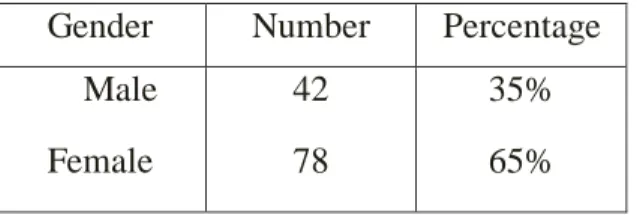
Table 2 : Students’ Gender ... 75
Table 3 : Number of Years of English Studying ... 76
Table 4 : Attitudes Towards the Language ... 77
Table 5 : Reasons for Their Negative Attitudes Towards the Language ... 77
Table 6 : Students’ Interest in Learning English ... 78
Table 7 : Why do Students Need English? ... 79
Table 8 : Students’ Weaknesses ... 82
Table 9 : Participants’ Present Level ... 83
Table 10 : Students’ Spoken English ... 84
Table 11 : Students’ Level in the Writing Skill ... 84
Table 12 : Reading English Documents ... 85
Table 13 : Learners’ Readings ... 86
Table 14 : Students’ Understanding of Spoken English ... 87
Table 15 : Reasons Why Students Are in the Course ... 88
Table 16 : Students’ Participation ... 89
Table 17 : Reasons for Students’ Participation ... 90
Table 18 : Reasons of no Participation ... 90
Table 19 : Learners’ Expectations From the Course ... 91
Table 20 : Learning Techniques ... 92
Table 21 : Students’ Satisfaction of English Learning ... 94
Table 22 : Students Reason of Unsatisfaction ... 94
Table 23 : Number of Hours Per Week ... 96
Table 24 : Number of Years ... 97
v
Table 26 : Teachers’ Training ... 99
Table 27 : Period of English Language Teaching ... 99
Table 28 : Teachers’ Experiences in Different Departments ... 100
Table 29 : Teachers’ Experience in the Department of Commerce ... 101
Table 30 : Language Skills Needed to Achieve Their Short-Term Objectives... 104
Table 31 : Language Skills Needed to Achieve Their Long-Term Objectives ... 106
Table 32 : Teachers’ Views About the Covering of Students’ Needs ... 107
Table 33 : Teachers’ Modifications of the Programme ... 109
Table 34 : Teachers’ Use of Textbooks ... 110
Table 35 : Reading Tasks ... 111
Table 36 : Speaking Tasks ... 112
Table 37 : Writing Tasks ... 113
Table 38 : Grammar Tasks ... 114
Table 39 : Students’ Solicitations ... 114
Table 40 : Teaching Materials... 115
Table 41 : Materials Use ... 116
Table 42 : Time Allocated to the Course ... 117
Table 43 : Managing the Class ... 117
Table 44 : The Use of Translation... 118
vi List of Figures
vii List of Abbreviations
ABE: Academic Business English
AEBE: Academic English of Business and Economics BE: Business English
CLT: Communicative Language Teaching Approach CNP: Communication Needs Processor
EAB: English of Applied Business EAP: English for Academic Purposes EBE: English for Business and Economics EBP: English for Business Purposes EFL: English as a Foreign Language EIL: English as an International Language ELL: English Language Learning
ELT: English Language Teaching
EOP: English for Occupational Purposes EPP: English for Professional Purposes ESL: English as a Second Language ESP: English for Specific Purposes ESS: English for Social Studies
EST: English for Science and Technology EVP: English for Vocational Purposes GE: General English
LSP: Language for Specific Purposes L2: Second Language
viii Contents Dedication ... i Acknowledgements ... ii Abstract ... iii List of Tables ... iv List of Figures ... vi
List of Abbreviations ... vii
General Introduction... 1
Chapter I: Teaching and Learning Foreign Languages ... 5
1. Historical Review ... 7
2. Methods ... 10
2.1 The Grammar Translation Method ... 11
2.2 The Direct Method ... 12
2.3 The Audio-Lingual Method ... 14
2.4 Community Language Learning ... 15
2.5 The Silent Way ... 18
2.6 Suggestopedia ... 19
2.7 Total Physical Response ... 21
2.8 The Natural Approach ... 22
2.9 Communicative Language Teaching ... 24
3. ESP Evolution ... 25
3.1 Phases of ESP Development ... 27
3.1.2 Rhetorical Discourse Analysis ... 27
3.1.3 Target Situation Analysis ... 28
3.1.4 Skills-Centred Approach ... 30
3.1.5 Learning-Centred Approach ... 30
ix
4. Syllabus Types ... 37
4.1 The Linear / Spiral Syllabuses ... 38
4.2 The Lexical Syllabus ... 39
4.3 The Structural Syllabus ... 39
4.4 The Notional-Functional Syllabus ... 40
4.5 The Process Syllabus ... 42
4.6 The Procedural Syllabus ... 42
4.7 The Relational Syllabus ... 43
4.8 Other Syllabus Types ... 44
4.8.1. The Content-Based Syllabus ... 44
4.8.2 The Task-Based Syllabus ... 45
4.8.3 The Cultural Syllabus ... 47
4.8.4 The Skill-Based Syllabus ... 48
4.8.5 The Objective-Based Syllabus ... 49
Conclusion ... 50
Chapter Two: Discourse Analysis ... 52
Introduction ... 53
1. Discourse Analysis Historical Development ... 53
1.1 Discourse Analysis and Second Language Teaching ... 54
1.2 Discourse Analysis and Second Language Learning ... 56
2. Discourse and Context ... 57
3. Discourse and Communicative Purpose ... 58
3.1 Defining Genre ... 59
3.2 Genres and Learning ... 60
4. Discourse as a Specific Input ... 61
5. Discourse in Economics ... 64
5.1 Analysis of the Economics’ Discourse ... 64
5.2 Visual Information in the Discourse of Economics ... 66
x
5.2.2 Visual Information in Syllabus Design ... 68
5.2.3 Teaching Materials and pedagogy ... 69
Conclusion ... 69
Chapter III: The Study ... 71
Introduction ... 72
1. Population Sample ... 72
2. Methodology and Research Tools ... 73
3. Students’ Questionnaire ... 74
3.1 Students’ Identity / Personal Characteristics: ... 74
3.2 Students’ Learning Experience and Motivation: ... 75
3.3 Students’ Proficiency Level: ... 82
3.4 Students’ Attitudes to and Expectations of The English Course: ... 88
4. Teachers’ Questionnaire ... 98
4.1 Teachers’ Qualifications and Experiences ... 98
4.2 Teachers’ Visions of the English Course (ESP data) ... 101
4.2.1 Conceptions of Learning Needs and Objectives ... 101
4.2.2Determining the Needed Skills and Capacities ... 104
4.3 Teachers’ Implementation of the Course ... 106
4.3.1 Course Content ... 107
4.3.2 Teachers’ Innovation ... 108
4.3.3 Teachers’ Choice of Materials and Exercise Types ... 111
4.3.4 Difficulties in Classroom Management ... 116
4.3.5 Teachers’ Suggestions ... 119
5. Summary of the Findings ... 120
5.1 Students’ Questionnaire ... 120
5.2 Teachers’ Questionnaire ... 121
6. Discussion of Results ... 126
6.1 Limitations of the Study ... 129
6.2 Suggestions for Future Research ... 129
xi
Chapter IV: Pedagogical Implications and Recommendations ... 132
Introduction ... 133
1. Syllabus Considerations ... 133
2. Stages of Syllabus Design ... 135
2.1 Needs Analysis ... 135
2.2 Content Selection and Specification ... 137
2.3 Activities and Exercise Types ... 141
3. Unit/Lesson Implementation ... 143 3.1. Unit 1 ... 143 3.2. Unit 2 ... 148 4. Pedagogical Recommendations ... 156 General Conclusion ... 158 Appendix 1 ... 168 Appendix 2 ... 175 Appendix 3 ... 180 Appendix 4 ... 181 RÉSUMÉ ... 182 صّخلم ... 183 References ... 160
1 General Introduction
Scope of the Study
It is known within institutions of higher education that English is taught as a separate subject matter in almost all university fields. Besides, teachers fulfilling this task design the content of language courses by themselves because administrative authorities do not provide them with syllabuses to guide them in what to teach and how. In this work, we are going to study learners’ objectives and needs, and give the essential information for the design of an English syllabus for students of Commercial Sciences and Economics.
Research Questions and Aims of the Study
Students’ needs are just as specific as their field of studies, and are at the basis of the content selection/organization and the strategies used in the teaching/learning process. Investigating them in this research would tell us about learners’ objectives while learning English in relation to their domain of interest. The questions that may be raised in this study are the following:
-What is the proficiency level of the learners and what are their future needs in English? -What are the learning conditions (environment in terms of course content, density and length) provided for the students to learn English?
-What are the present materials and activities which implement the course?
The aim of this work is to explore those students’ need for an appropriate syllabus and attempt to create sample units that would serve the learners to understand the nature of the language and master the linguistic components they might need to use in the domain of Commerce. With a such syllabus, they are expected to gain, by the end of the academic year, a considerable register of technical terms, phrases, expressions and constructions needed in their professional career, especially if required to work in foreign companies. The design of
2 such a syllabus (as a general aim) requires from the researcher to determine the following aims:
Students’ level of English language.
Students’ expectations in applying to the studies in question, and their vision and attitudes towards the learning of English within the curriculum.
Students’ short-term and long-term objectives.
The time allocated for the teaching of English within the whole curriculum.
The data and materials needed to enable them acquire sufficient linguistic knowledge and up-dated economic one.
Hypothesis
Because globalization made of English a necessary language in almost all fields, students in the economic field became aware of the urgent need to learn it in order to achieve their own objectives and contribute to their society’s. Nowadays, computer programs and documents are designed exclusively in that language, and economic exchanges with foreign countries became vital. Therefore, introducing English courses in academic studies is expected to be useful for both students (short-term objectives) and for society (long-term objectives). In this case study, we are going to explore our population sample’s objectives and needs in order to test the hypothesis that: “If students of Economics and Commercial Sciences learn specialized English through an appropriate and well-designed syllabus –according to the aims determined above, they would gain accurate and fluent communication features needed in their future potential professions.”
Research Tools and Methodology
In order to examine the existing situation of English language learning/teaching in the Department of Commerce, University of Constantine, we have designed two questionnaires to glean students’ and teachers’ views and perceptions about the said situation.
3 The first tool of investigation is the students’ questionnaire. It is divided up into four main categories each of which includes a set of questions. The first category includes questions that relate to the students’ identities or personal characteristics (notably: age, gender). The second is entitled “Students’ learning experience and motivation”. As the title indicates, the questions under this category deal with the students’ past experiences in and motivation for learning the English language. Next set of questions is under the heading: “Students’ Proficiency Level”, and it deals with the students’ self-assumptions about their weakness/strength in the English language. The last, and not least, category of questions (Students’ Attitudes to and Experiences of the English Course) investigates the reason why the students’ think they are attending the course, their attitudes towards the learning of this language, the way they learn and their own expectations.
The second device used for collecting the necessary information is the teachers’ questionnaire. It is divided into categories and subcategories as well, and the first one deals with their qualifications and experience. The second category relates to “Teachers’ Design of their English Course”; it includes their view point of the learners’ needs, the learning (short-term and long-(short-term) objectives, the most needed language skills to fulfil the objectives in question and the actual level of learners. Next, a set of questions dedicated to the teachers’ implementation of the course with their opinion about the “official” content –provided by the department-, their contribution to improve the deficiencies observed, the difficulties they may face in the classroom and their suggestions for a better learning environment and more satisfactory results.
Content of the Dissertation
The present work is founded on two major parts. The first one is dedicated to theoretical issues in English language teaching and methods, the field of ESP, syllabus design and
4 Discourse Analysis. The second part deals with the interpretation of the data collected during the investigation and its relevance to the implementation of the English course in the Department of Commerce.
The opening part is divided into two main sections. Section one states some facts about the status of the teaching and learning of the English language. A historical review is, in fact, needed to highlight some of the factors/disciplines that influenced this field, and a summary of the most known methods would serve us learn about the characteristics, components and criticism brought to each in order to select the most appropriate one for a successful learning/teaching. Next, a glance to the ESP realm and the wide range of syllabus types is to help us know what would be more suitable for the business class English course. Section two deals with Discourse, its meaning, its historical development and its role within the domain of second/foreign language teaching.
The second part is made up of two main sections. First, The Case Study, which represents a detailed explanation of the components of each questionnaire. It sums up the analysis of the participants’ answers in relation to the teaching/learning environment and the past findings in the same respect. The second section is devoted to the Implementation of the most appropriate course in accordance to the expectations of both learners and teachers.
5 Chapter I: Teaching and Learning Foreign Languages
1. Historical Review 2. Methods
2.1. The Grammar Translation Method 2.2. The Direct Method
2.3. The Audio-Lingual Method 2.4. Community Language Learning 2.5. The Silent Way
2.6. Suggestopedia
2.7. Total Physical Response 2.8. The Natural Approach
2.9. Communicative Language Teaching 3. ESP Evolution
3.1. Phases of ESP Development 3.1.1. Register Analysis:
3.1.2. Rhetorical Discourse Analysis 3.1.3. Target Situation Analysis 3.1.4. Skills-Centred Approach 3.1.5. Learning-Centred Approach 3.2. English for Business/Economics 3.3. Business English Vs. General English 3.4. Learners’ Motivation
3.5. Learners’ Attitudes 4. Syllabus Types
4.1. The Linear / Spiral Syllabuses 4.2. The Lexical Syllabus
4.3. The Structural Syllabus
4.4. The notional-Functional Syllabus 4.5. The Process Syllabus
6 4.7. The Relational Syllabus
4.8. Other Syllabus Types
4.8.1. The Content-Based Syllabus 4.8.2. The Task-Based Syllabus 4.8.3. The Cultural Syllabus 4.8.4. The Skill-Based Syllabus 4.8.5. The Objective-Based Syllabus Conclusion
7 Chapter I: Teaching and Learning Foreign Languages
This first chapter of the dissertation introduces English language instruction, the past and
current research in the field, and the various changes that occurred in the profession through different eras and contexts. It is evident that this field has been basically influenced by many other educational/social disciplines, and this is what paved the ground for the various changes and teaching methods to be applied on English language instruction until now.
This chapter will also introduce us to the ESP field, which is at the core attention in the current research. We will present a brief introduction about its appearance and its phases of development, and then move on to a more relevant topic to this paper: Business English.
1. Historical Review
Foreign language instruction has gone through various changes in the last decades. Some consider that the modifications being brought to it were revolutionary rather than evolutionary, and it is rather complicated to attribute the changes to one particular source. Since the main objective in foreign language instruction is to help someone learn a given language, various parameters have been involved in these changes. First, the subject to be taught, i.e., language and its characteristics, which is the subject studied in linguistics (Khan, 2011). Second, what happens when someone processes language, i.e., learning, which is the subject of study in psychology. Third, the individual who learns, i.e., the learner as a human being, who is the subject of study in human sciences in general, and sociology in particular. Fourth, the person who helps the learner, i.e., the instructor, who is influenced by factors related to the learner as well as the teaching task itself (Van Der Walt, 1992). Therefore, advances in these areas, as well as “the constant changes in the language itself” (Meng, 2009) would be the main sources of modifications in language teaching/learning practices.
8 One set of changes is rooted in the theories of linguistics (Khansir, 2013). Traditional, structural, generative-transformational, functional, case, and other theories in linguistics have led to different descriptions of the language. Of course, the substance under investigation for all these theories has been the same, i.e., language. However, every theory has examined language from a different perspective. For example, one theory has viewed language as a set of patterns, another as a set of rules, still another as a set of functions. Each movement in linguistics has forced language educators to adapt or adopt certain modes of linguistic manifestation of language to be exercised in classroom settings.
Another set of changes originates from psychology. Various theories in psychology have attempted to explore the process of learning in order to offer guidelines for educators. There have been different schools of psychology including traditional psychology, behaviorist psychology, and cognitive code learning psychology -to name a few, each of which has viewed the learning process from a different perspective. In order to gear their activities towards the most efficient procedures that would help learners achieve their instructional objectives, language educators have to consider and appropriately apply the explanations provided by different approaches and theories in psychology (Hanak-Hammerl, Newby, 2002).
The third set of changes originates from pedagogy (Luo, 2013). Principles offered by theories in linguistics and psychology have been combined to form the basic tenets of different teaching methods. These principles had to be organized in a practical form in order to be applied in classroom situations. The success or failure of these approaches depended on the outcome of their applications. In spite of all the changes and advancements in language teaching theories, and all sorts of modifications these theories made in teaching methods, most language practitioners have experienced the bitter taste of failure because none of the
9 methods has been practical enough to meet all the requirements of language teaching satisfactorily.
A brief examination of the principles of teaching methods reveals that every method was replaced by another because of some sort of theoretical or practical shortcomings. For example, the traditional grammar translation method could not train language learners to cope with the growing needs for face-to-face communication with the speakers of the target language, and did not consider present-day language usage (Cerezal Sierra, 1995) . Similarly, it was argued that the audio-lingual method, which dominated the field for more than half a century, has been rooted in an unjustified theory of linguistics and an incomprehensive theory of psychology because its application did not prepare learners for communication in real life situations (Roulet, 1972). Along the same lines, the cognitive method, though an improvement over the methods practiced earlier, did not fulfill the expectations of the learners (Tejada Molina, Pérez Cañado Agulló, 2006). Even the so-called innovative methods such as the silent way, suggestopedia (Bhakti, 2011), community language learning (Al-Humaidi, 2007), and others could not alleviate some of the pressing problems in the field. With all these developments and advancements in language teaching methods, scholars wondered why none of the methods had operated satisfactorily enough to meet the demands of the field. They also wondered why the contribution of linguistics, psychology, and other language related areas didn’t lead the field to an acceptable level of success. From which other areas could the language teaching profession get help? What other disciplines could contribute to the progress of language teaching? These and many other questions burdened the scholars for a long time. On the one hand, the demands for learning a foreign language were continuously growing because of the considerable expansion of international communication and on the other hand, the field of language teaching was not well-equipped enough to accommodate the needs of the
10 learners. These inefficiencies forced language educators to reexamine the existing state of affairs and attempt to remodel the whole design of language teaching process.
Many issues had to be taken into account during the remodeling process. Nevertheless, a logical starting point was to examine the deficiencies of the existing teaching methods and to offer solutions. It was during these activities that fundamental changes occurred because at every step many vague issues were clarified and many useful suggestions were offered. It was argued that the first step in remodeling was to determine the expected performance of the learners. Then, on the basis of the terminal performance, appropriate designs, and effective techniques could be implemented in the classroom settings. Since the emergence of ESP was one of the significant outcomes of these developments, a brief discussion of them in the coming elements seems warranted.
2. Methods
There is undoubtedly no single best way to teach a foreign language. The most successful language teachers do not limit their teaching process to only one method although they may lean towards certain characteristics of a particular one. Besides, students’ levels are almost never similar, and they, themselves, differ in personalities, attitudes, tastes and even learning styles. Thus, the instructor should be flexible and conscious of all the possible existing ways of conveying knowledge.
A whole range of teaching methods exists; this is the result of historical swing between various criteria of how to proceed in the language classroom. The result is a multitude of naming: Grammar Translation Method, Direct Method, Audio-Lingual and Audio-Visual Method, Oral Method, the Method of Interactionism, Total Physical Response, etc. The list is varied but no perfect method exists yet. A historical review will reveal similarities between
11 anciently used and present day methodology. It will lead us to decide upon the basic criteria that would help a teacher choose the most appropriate way to teach the foreign language.
2.1 The Grammar Translation Method
For centuries, foreign language learning meant the learning of Latin and Greek; they were
acknowledged as the key to classical literature and thought. Latin was taught through what was called the Classical Method for the purpose of reading Latin texts and understanding the fundamentals of grammar and translation. In the 19th Century, it came to be known as the Grammar Translation Method. Despite the appearance of more advanced methods, it has survived historical changes in Foreign Language Teaching circles. Its classes in the Western world remained until the 1970s and still exist somewhere in less-developed countries. The main focus of it was reading, writing and structure, and little concern was given to speaking, listening or interactive communication.
According to Prator and Celce-Murcia (1979:3), the major characteristics of this method are as follows:
(1) Classes are taught in the mother tongue, with little active use of the target language. (2) Much vocabulary is taught in the form of lists of isolated words.
(3) Long elaborate explanations of the intricacies of grammar are given.
(4) Grammar provides the rules for putting words together, and instruction often focuses on the form and inflection of words.
(5) Reading of difficult classical texts is begun early.
(6) Little attention is paid to the content of texts, which are treated as exercises in grammatical analysis.
(7) Often the only drills are exercises in translating disconnected sentences from the target language into the mother tongue.
12 (8) Little or no attention is given to pronunciation.
The main shortcomings of this method are: first, learners are given a wrong idea about language. They see it just as a collection of words and isolated items which must have a corresponding equivalent in the native tongue. Second, it assumes that language is acquired through translation skills at the expense or oral/aural ones. Third, it badly affected learners’ motivation; they got frustrated of their failure and got bored and undisciplined in the classroom.
2.2 The Direct Method
It came as a reaction to Grammar Translation Method by the late 19th Century and became popular during the first quarter of the 20th Century, especially in private language schools where highly motivated students could study new languages and native speaking teachers were employed. One of the most famous advocates of the Direct Method was the German Charles Berlitz, whose schools and Berlitz Method are now world-renowned. It was also known as Reform Method, Anti-grammatical Method or Phonetical Method. Its supporters claimed that language learning was more than the learning of formal grammatical rules and the acquisition of imperfect translation skills. So, it involved all the various areas that have not been dealt with in the Grammar Translation Method: oral communication, more spontaneous use of the language, and developing the ability to think in the target language. The fundamental principles of the Direct Method, according to Richards and Rodgers (1986:9-10), are those that:
(1) Second language learning should be more like first language learning. (2) It emphasized the fact that knowing a language is being able to speak it. (3) A great stress was put on correct pronunciation.
13 (4) Printed words were to be kept away from second language learners until they have
good grasp of speech.
(5) Classroom instruction was conducted exclusively in the target language, and the learning of grammar or translation skills was discouraged because they involve the application of the mother tongue. Under the Direct Method, all these features had to be avoided because they hindered the acquisition of a good oral proficiency.
(6) The Direct Method teachers highlighted an inductive acquisition of grammar.
(7) The teacher presented real (concrete) vocabulary all the way through demonstration, realia and pictures, and theoretical (abstract) vocabulary throughout connection of ideas.
Diane Larsen-Freeman (1986:13-24) also provides a list of techniques closely related to the method as follows:
(1) Translating literary passages from target to native language
(2) Reading and finding info in a passage, then relating it to personal experience (3) Finding antonyms and synonyms for words or sets of words
(4) Learning spelling patterns similar in L1 and L2
(5) Understanding grammar rules and applying them to new examples (6) Filling in gaps
(7) Memorizing vocabulary lists and grammatical rules (8) Generating sentences with newly learnt words
(9) Composing essays using the target language
As Brown (1994:56) explained, this method was not highly accepted in public schools because of constraints of time, teacher background, financial aspect and classroom size. It was also criticized for its belief that second language should be learnt in the way the first language is acquired, and by the late 1920s, it went into decline and there was even a return to the
14 Grammar Translation Method. Despite these facts, it paved the way for communicative, oral-based approaches, and as such allowed a considerable improvement in the history of foreign language teaching.
2.3 The Audio-Lingual Method
The World War II was one factor that marked the domain of foreign language teaching/learning. The US military service was in urgent need of learning foreign languages for military operations, and a new methodology called "The Army Method" was quickly developed through intensive language courses supposed to enhance the communicative competence of translators and soldiers. This method focused on the aural/oral skills of these adult learners. Afterwards, a blend of ideas regarding language learning/teaching from descriptive linguistics' disciplines and behavioural psychology gave birth to an innovative, scientific method identified as the Audiolingual Method. The new technological aids made their first step into the language classroom: the language laboratory, the tape recorder and the film strips were the modern substitutes for sets of books.
The main key features of the Audio-lingual classroom -described by Brown (1994) and adapted from Prator and Celce-Murcia (1979)- are that it was characterized by introducing new material through taped dialogues and recorded drills to allow learners to imitate the native pronunciation and intonation. The stress was put on memorizing sets of phrases, and on oral proficiency to get learners to produce error free stereotypic utterances. In addition, there was a great emphasis on structured drill sequences, mimicry and over learning. There was little, or no, grammatical explanation, and if it happened, it was only by inductive analogy. Vocabulary was taught in context, with the help of pronunciation rather than written discourse. Moreover, teachers strongly discouraged the use of the mother tongue, and successful responses of learners in the foreign language were immediately reinforced.
15 This method was one of the first to have its roots "firmly grounded in linguistic and psychological theory" (Brown 1994:57), which apparently added to its credibility and probably had some influence in the popularity it enjoyed over a long period of time. It also had a major influence on the language teaching methods that were to follow and can still be seen in major or minor manifestations of language teaching methodology even to this day. Another factor that accounted for the method's popularity was the quick success it achieved in leading learners towards communicative competence.
Soon, teachers’ enthusiasm ended with the recognition of the approach’s limitations. The extensive use of mimicry and memorization was both its advantage and its weakness because it was revealed that the method did not provide successful outcomes in the long-term communicative ability. This means that learners were described as ‘parrots’ repeating brilliantly various combinations until they become second nature but unable to produce new structures or ideas. Habit formation was not really the best way to acquire the language, and errors were not necessarily obstacles to learning.
2.4 Community Language Learning
The early 1970s were marked by Charles Curran’s innovative “Counseling Learning”, an educational model applied to language learning, which became known as Community Language Learning. Inspired by Carl Rogers' view that learners were to be considered not as a class, but as a group, Curran's philosophy dictated that students were to be thought of as
"clients" - their needs being addressed by a "counselor" in the form of the teacher. Brown (1994:59), in commenting on this approach notes that:
In order for any learning to take place...what is first needed is for the members to interact in an interpersonal relationship in which students and teacher join together to facilitate learning in a context of valuing and prizing each individual in the group. (Brown, 1994:59)
16 Curran believed that the counseling-learning model would help lower the instinctive defenses adult learners throw up, that the anxiety caused by the educational context could be decreased through the support of an interactive community of fellow learners. Another important goal was for the teacher to be perceived as an empathetic helping agent in the learning process (not a threat) who concentrates on the clients’ feelings, intellect, interpersonal relationships, protective reactions, and desire to learn. His careful attention helps them be self-assured and self-confident.
The Community Language Learning method involves some of the following features: (1) A relationship of mutual trust and support is considered essential to the learning
process.
(2) Students are permitted to use their native language, and are provided with translations from the teacher which they then attempt to apply.
(3) Grammar and vocabulary are taught inductively.
(4) "Chunks" of target language produced by the students are recorded and later listened to. They are also transcribed with native language equivalents to become texts the students work with.
(5) Students apply the target language independently and without translation when they feel confident enough to do so.
(6) Students are encouraged to express not only how they feel about the language, but how they feel about the learning process, to which the teacher expresses empathy and understanding.
(7) A variety of activities can be included (for example, focusing on a particular grammar or pronunciation point, or creating new sentences based on the recordings/transcripts).
17 Moreover, Larsen-Freeman’s book Techniques and Principles in Language Teaching (1986:45-47) provides expanded descriptions of some common/typical techniques closely associated with Community Language Learning. The listing here is in summary form only.
(1) Tape Recording Student Conversation (Students choose what they want to say, and their target language production is recorded for later listening/dissemination)
(2) Transcription (Teacher produces a transcription of the tape-recorded conversation with translations in the mother language - this is then used for follow up activities or analysis)
(3) Reflection on Experience (Teacher takes time during or after various activities to allow students to express how they feel about the language and the learning experience, and the teacher indicates empathy/understanding)
(4) Reflective Listening (Students listen to their own voices on the tape in a relaxed and reflective environment)
(5) Human Computer (Teacher is a "human computer" for the students to control - the teacher stating anything in the target language the student wants to practice, giving them the opportunity to self correct)
(6) Small Group Tasks (Students work in small groups to create new sentences using the transcript, afterwards sharing them with the rest of the class)
The method was unique in that it actually focused on the feelings of the students and tried to address affective factors in learning, but it has its limitations. It assumed that students intrinsically want to learn the new language, and that is not always the case. Only a little number of students actually wanted to be there and the principle of group dynamics was very likely to fall down. Besides, the teacher had to be fluent in both the target language and the students' mother language. It could not be used for large or very large classes, and would be quite limited in terms of how it could be applied to classes of young learners who tend to
18 instinctively expect a certain amount of active direction from the teacher. Still, for its focus on the affective issue, Community Language Learning techniques can be used very effectively in combination with other methods. The tape recording and transcription elements are very useful, and any method which stresses the feelings and independent development of the learners themselves is one worth looking at and trying out in a variety of ways.
2.5 The Silent Way
Language learning trends that followed the Audio-lingual Method had a major focus on affective theories and new challenges known as “Cognitive Code” and "Discovery Learning." With these concepts, an emphasis on human cognition in language learning highlighted issues such as learners being more responsible for their own learning. Accordingly, they have to formulate independent hypotheses about the rules of the target language; they create their own sets of meaningful language rules and concepts, test them by applying them and understand errors, which constituted a natural part of the process and a key learning device. Brown (1994:63) expresses this as being a process in which "students construct conceptual hierarchies of their own which are a product of the time they have invested." Thus, they learn through discovery/exploratory methods which are very different from rote-learning; they become more autonomous in their learning process.
Caleb Gattegno founded The Silent Way as a method for language learning in the early 70s, sharing many of the same essential principles as the cognitive code and making good use of the theories underlying discovery learning. Some of his basic theories were that "teaching should be subordinated to learning" and "the teacher works with the student; the student works on the language" (Caleb Gattegno, 1972). The most prominent characteristic of the method was that the teacher typically stayed "silent" most of the time to help learners develop independence and responsibility; his/her role was that of a facilitator. The learning process is
19 usually seen as a problem-solving task to be used by the students both independently and in a group, and the teacher was required to stay out of the way as much as possible.
The Silent Way is also well-known for its common use of “cuisinere rods”: small sets of colored rods of varying length used to introduce pronunciation, vocabulary and grammatical patterns along with colourful wall charts.
Richards and Rodgers (1986:99) describe the key theories underlying the Silent Way as follows:
(1) Learning is facilitated if the learner discovers or creates rather than remembers and repeats what is to be learned.
(2) Learning is facilitated by accompanying (mediating) physical objects.
(3) Learning is facilitated by problem-solving involving the material to be learned.
Criticism to this method was that it encourages the teacher to assume a distance that prevents him/her from providing direct guidance when at times such guidance would be helpful. The method neglects cultural input, and the silence of the teacher prevents students from hearing many active models of correct usage. In trying to create a less teacher-oriented classroom, the Silent Way goes too far to the opposite extreme. Earl W. Stevick, a well-known writer on language teaching, has described the role of the teacher in Silent Way as "Teach, test, get out of the way".
2.6 Suggestopedia
This method appeared in the late 70s with the Bulgarian psychologist Georgi Lozanov’s
view that the human brain could process and retain much more material if given most favorable conditions for learning. He believed that students, with their fears and anxiety, naturally set up psychological barriers to learning. His research on extrasensory perception
20 allowed him develop a language learning method that focused on providing some kind of relaxed state of mind that would facilitate the retention of material to its maximum potential. This method became known as Suggestopedia - the name reflecting the application of the power of "suggestion" to the field of pedagogy.
The main characteristic of this method was soft Baroque music accompanying the learning process. With its specific rhythm and a pattern of 60 beats per minute, Lozanov assumed that it created a level of relaxed concentration that facilitated the intake and retention of huge quantities of material because of an increase in alpha brain waves and decrease in blood pressure and heart pace. A second aspect supposed to create a relaxed state of mind was the use of soft comfortable chairs and soft lighting in the classroom.
The key features of Suggestopedia may be summed up as follows:
(1) Learning is facilitated in an environment that is as comfortable as possible; learners are in a “comfortable and relaxed posture”.
(2) The teacher is the provider of “suggestions” and the one who makes learners get into a relaxed alertness (“a suggestible state”). Thus, self-perceived and psychological barriers to learners' potential to learn are "desuggested".
(3) Students are encouraged to be child-like; they take a kind of "mental trips” under the authority and guidance of the teacher. “According to Lozanov, infantilization is especially important for increased memorization... without strain or conscious effort” (Bancroft, 1999:37-38)
(4) The classroom atmosphere is made as positive as possible, and the main activities that learners learn from are role-play, games and song performance.
(5) The teacher assumes for each learner a new role and name in the target language in order to become more "suggestible". “This approach, derived from group psychotherapy, creates a “play situation” which liberates the students from their
21 normal, real-life social roles and permits a more spontaneous and immediate expression of individual abilities.” (Bancroft, 1999:39).
(6) Baroque music is played softly in the background to increase mental relaxation and potential to take in and retain new material during the lesson.
(7) Students work from lengthy dialogs in the target language.
(8) Errors are tolerated and corrected by teachers, the emphasis being on content and not structure.
Some of the limitations of this method lie in the fact that a specially equipped class/institute with comfortable seats (reclining chairs) and music selections are not really available to the majority of schools, and these environmental factors are certainly inconceivable for very large classes. But also, it does not take account of the fact that many learners in many countries do not necessarily bring an intrinsic desire to learn the language into their English lessons. Besides, while the notion of authority may have a positive impact in the context of "suggestology", it is not very welcomed in other countries (as in North America and Western Europe). (Bancroft, 1999:33)
2.7 Total Physical Response
The late 1800s were marked by the work of François Gouin, a French teacher of Latin, at devising a method of language teaching exploiting the way children naturally learn their first language. His approach became known as the Series Method. He assumed that when language is used, it can directly be related to whatever the speaker is doing simultaneously with the utterance (i.e., one's actions and language go with one another).
In the 1960s, James Asher, while noting that children learn their first language through a lot of listening accompanied by physical responses, began experimenting with a method called Total Physical Response which had a lot in common with Gouin's. The method became
22 better known during the 70s, and it highlighted the theory that memory is stimulated and increased when it is closely associated with motor activity.
The basic foundation of this method is the fact that, before the oral use, language acquisition entails a significant deal of listening and comprehension altogether combined with various physical responses (touching, reaching, grabbing, looking, etc). Asher (1977) also drew attention on right-brained learning (associating the right hemisphere with motor activity), which he says should precede the left-brained language processing. He, as well, devised the method to be based on fun and stress-free learning.
Further key features of the Total Physical Response method are summed in the following notes:
(1) The teacher directs and students "act" in response - "The instructor is the director of a stage play in which the students are the actors" (Asher, 1977:43).
(2) The imperative mood is the most common language function employed, even well into advanced levels. Interrogatives are also heavily used.
(3) Whenever possible, humor is injected into the lessons to make them more enjoyable for learners.
(4) Students are not required to speak until they feel naturally ready or confident enough to do so.
(5) Grammar and vocabulary are emphasized over other language areas. Spoken language is emphasized over written language.
2.8 The Natural Approach
The outcome of Stephen Krashen’s views about L2 acquisition was the development of The Natural Approach (Krashen and Terrell, 1983). Their approach advocated a silent phase
23 in which the teacher was the only provider of a significant amount of comprehensible input, and they believed in the beneficial delay of production until speech emerges.
Some other important underlying principles are that students listen to the teacher using the target language communicatively from the very beginning. Meaning is considered as the essence of language and vocabulary (not grammar) is the heart of language; errors, at early production stages, are not very important unless they drastically hinder communication. The teacher, being the source of input, creates in the language course varied and interesting communicative activities including games, role-plays, dialogs, group work and discussions. During their learning within this approach, learners go through three generic stages:
(1) Preproduction: to develop their listening skills.
(2) Early Production: students are faced with the language and make many errors. Correction is based on content and not structure.
(3) Extended Production: it promotes fluency through a variety of more challenging and complex activities (open-ended dialogues, discussions, etc.).
The Natural Approach was abundantly criticized, particularly for the idea of comprehensible input and the recommendation of the silent stage which ends only when students feel ready to emerge into oral production (Gregg, 1984). Its opponents (Dulay et al., 1982; Gregg, 1984) said that students’ speech might emerge at different times, and it is hard to determine which forms of language input will be "comprehensible" to the students. Thus, the teacher would find it particularly difficult to manage the classroom. Even though, the Natural Approach led naturally into the generally accepted norm for effective language teaching: Communicative Language Teaching.
24 2.9 Communicative Language Teaching
The progress of foreign language teaching ideology is mirrored in all the methods described so far. They had their ups and downs; they have been modified or even gave birth to new methods. In the mid-eighties, the field of “approaches to foreign language teaching” gave birth to what we now identify as the Communicative Language Teaching approach (CLT). Teachers’ qualifications became important, motivations for learning were highlighted and the needs of individual classrooms and students themselves started to be questioned.
The early 90s saw the expansion of approaches emphasizing communicative properties of language and real world simulating tasks. Contrarily to earlier methods, the Communicative Approach expanded the creation of communicative competence, and teaching students how to use the language was considered to be at least as important as learning the language itself. Brown (1994:77) pertinently describes the "march" towards CLT:
Beyond grammatical discourse elements in communication, we are probing the nature of social, cultural, and pragmatic features of language. We are exploring pedagogical means for 'real-life' communication in the classroom. We are trying to get our learners to develop linguistic fluency, not just the accuracy that has so consumed our historical journey. We are equipping our students with tools for generating unrehearsed language performance 'out there' when they leave the womb of our classrooms. We are concerned with how to facilitate lifelong language learning among our students, not just with the immediate classroom task. We are looking at learners as partners in a cooperative venture. And our classroom practices seek to draw on whatever intrinsically sparks learners to reach their fullest potential.
From this quote we can notice the importance given to the "use" of English as it was for the "usage". In fact, learning the language itself is the basis of any type of communication, but not practicing that language means that our learning is almost useless. Involving learners into the language contexts (speaking or writing the target language in real situation) would lead them to apply what they have been learning into the classroom; thus, they will achieve successful communicative goals.
25 For his part, David Nunan (1991:279) lists five basic characteristics of Communicative Language Teaching:
(1) An emphasis on learning to communicate through interaction in the target language. (2) The introduction of authentic texts into the learning situation.
(3) The provision of opportunities for learners to focus, not only on the language but also on the learning process itself.
(4) An enhancement of the learner's own personal experiences as important contributing elements to classroom learning.
(5) An attempt to link classroom language learning with language activation outside the classroom.
Not going beyond the scope of this work, the different types of learning associated with the CLT approach are: Interactive Learning, Learner-centered Instruction, Cooperative and Collaborative Learning, Content-based Learning, Task-based Learning. In other words, some manifestations of the CLT approach can be found in the previously named learning types, namely the use of the target language in real-world communicative tasks.
3. ESP Evolution
Although English is just one of a wide range of languages being taught in the world, it remains the most promoted tongue in the majority of world countries. Currently, it remains the one language that has the authority, especially in the domain of international communication. It is now the “established language of science and business in the world” (Čepon, 2005).
English Language Teaching (ELT) and General English (GE) have as main branches what we know as English as a Foreign Language (EFL) and English as a Second Language (ESL). These ones include, in their side, a widely demanded branch named ‘the teaching of English
26 for Specific Purposes’ (ESP). Making of ESP a subdivision of language instruction is a decision mainly based on a scientific approach to the study of specialized language varieties (Barber, 1962).
During the 70s, in the U.S., doctors, lawyers and business professionals rang the alarm for problems they faced with communication in their work. In fact, professional contexts highlighted the linguistic breaches and miscommunication between medical personnel and patients. As the number of non-native speakers entering the professions in English-speaking countries grew larger, there has been a greater demand for teachers of ESP. this gave birth to English for Science and Technology (EST), which “grew out of analyses of scientific research articles and other scientific texts” (Van Naerssen and Eastwood, 2001). Besides, Barber’s research results influenced the need for a specialized language for science and technology rather than just technical and specialized vocabulary.
Slavica Čepon, in her research paper “Business English in Practical Terms”, notes the emphasis on Specific, rather than Special purposes:
The term English for Specific Purposes was common earlier but is now thought to suggest special languages, i.e. restricted languages which constitute only a small part of ESP. In practice, the acronym ESP is used without having to clarify what it stands for. The very term emphasizes purpose or purposefulness. In other words, it implies that the use of English is specific, and associated with professions, institutional procedures and occupational requirements. (Čepon, 2005)
Although, it gained enough renown in the whole ELT field during the last decades, especially for syllabus designers, an exact definition of ESP and its belonging to ELT are not clarified yet. Barber (1962) had noted that making of ESP a subdivision of language instruction is a decision mainly based on a scientific approach to the study of specialized language varieties. The general agreement is that ESP is “clearly a type of ELT” (Robinson, in Coleman 1989: 396). Some maintain that it does not exist and that its subdivisions are nothing but “degrees of general English” (Kennedy and Bolitho 1984: 135). In addition, Strevens (in Tickoo 1988: 1),
27 goes in the same direction by defining ESP as “…a particular case of the general category of special-purpose language teaching”.
3.1 Phases of ESP Development
ESP has undergone five main phases of development: (1) Register Analysis, (2) Rhetorical Discourse Analysis, (3) Target Situation Analysis, (4) Skills-Centred Approach, and (5) Learning-Centred Approach.
3.1.1 Register Analysis:
Register analysis came into light mainly in the 1960s and early 1970s when syllabi for EST were established through it, i.e. according to the features of grammar and vocabulary of the language used in a given specialty. It was particularly associated to the work of Strevens Halliday, Mclntosh and Strevens (1964), Ewer and Latorre (1969), who introduced A Course in Basic Scientific English as a typical example of the syllabus based on register analysis, and Swales (1971). The major principle of register analysis is that the English needed in one scientific field constituted a specific register different from those of other fields of science, or General English. Its aim was the identification of the grammatical and lexical features of different scientific registers. ESP, in this phase, focused on language at the sentence level.
3.1.2 Rhetorical Discourse Analysis
With the development of Discourse Analysis, ESP entered a second phase of development typically known as Rhetorical Discourse Analysis. To explain its fundamental assumption, Allen and Widdowson (1974) said that “...the difficulties which the students encounter arise not so much from a defective knowledge of the system of English, but from an unfamiliarity with English use...” (in Hutchinson and Waters 1987:10). They argued that in order to meet the learners’ needs, the ESP course has to be mainly based on the knowledge of how
28 sentences are combined and used to produce different types of communication because rhetorical patterns of text organization differ from one area to the other. Although this view was not given clear consideration earlier (Swales, 1985), some research about the discourse of subject-specific academic texts were used to make observations about discourse in general (Widdowson, 1978). After that, a significant consideration was given to the understanding of how sentences combine through discourse to produce meaning and further researches about rhetorical discourse analysis were meant to "identify the organizational patterns in texts and to specify the linguistic means by which these patterns are signaled. These patterns would then form the syllabus of the ESP course" (ibid.)
The main proponents of this movement were Henry Widdowson in Britain and the so-called Washington School of Larry Selinker, John Lackstrom and Mary Todd-Trimble in the United States. A Discourse Approach by Louis Trimble (1985) is also representative of this approach.
3.1.3 Target Situation Analysis
As its name indicates, this area aims at analyzing the possible situations in which the target
language is used. By considering learners’ reasons for learning a foreign language, ESP courses are meant to provide learners with the maximum facility of acting appropriately in a target situation. The ESP course first identifies the target situation and then analyses its linguistic features. This will help designing a syllabus which provides learners with a clear image of the use of the language they are learning.
Usually referred to as “needs analysis”, a detailed explanation is given by Munby in his Communicative Syllabus Design (1978), in which learners’ needs are described in terms of communicative purposes, settings, means, language skills, functions, structures, etc.. Munby’s contribution to syllabus design brought fame to the approach of needs analysis, which consists
29 in studying the students’ needs via questions related to themselves and the language. This analysis is needed to limit the content to what learners want the foreign language for and avoid teaching the whole of it. It was at the centre of syllabus designers’ attention, especially ESP specialists. The concept of individual needs is of a dominant importance in teaching an ESP course because the teacher’s task will be facilitated when they know what learners need the language for.
Munby has worked on a model to explore every aspect of learners’ needs. It is a detailed and complex work in which he focused on the aspects of communication and the assumptions about the roles of language and the learner in the target situation. His attention was directed to the purpose, the channel of communication, the sociolinguistic aspects, pragmatics, and this means that culture and communicative purpose are very important in his model.
Munby's model consists of the following:
Communication Needs Processor (CNP): made up of nine variables that 'affect communication needs by organizing them as parameters in a dynamic relationship to each other' (1978: 32). They are indispensable for the successful building of the course, and they consist in : the participant, purposive domain, setting, interaction, instrumentality, dialect, target level, communicative event and communicative key. These variables relate to the language and the learners’ communicative requirements.
The interpretation of the results gathered through the CNP in terms of micro- and macro-functions. It helps us decide which of three alternative ways of processing the activities and the syllabus content is appropriate:
▪ specification by focusing on micro-skills ▪ specification by focusing on micro-functions ▪ specification by focusing on linguistic forms
30 3.1.4 Skills-Centred Approach
Based on the generalization commitment of cognitive linguistics, which seeks the general principles of language phenomena, the skills-centred approach holds that "underlying all language use there are common reasoning and interpreting processes, which, regardless of the surface forms, enable us to extract meaning from discourse" (Hutchinson 1987:13). In other words, the Skills-Centred Approach attempts to consider not the language itself but the thinking and reasoning processes that underlie language use, which help students get the meaning from discourse and not from the surface forms. In this respect, it is needless to focus on specific registers because the underlying processes are not specific to any subject register.
3.1.5 Learning-Centred Approach
The fifth phase of ESP is said to have emerged out of the shortcomings of the preceding phases. Advocates of the Learning-Centred Approach argue that, previously, there were only descriptions of language use and not of the processes of language learning. So, this fifth phase of ESP is concerned with the question of what it really means to know a language.
The approach was at the centre of many investigations conducted by Hutchinson & Waters (1980, 1981, 1983, 1987, Hutchinson 1988). They define it as:
ESP is not a matter of teaching ‘specialised varieties’ of English. The fact that language is used for a specific purpose does not imply that it is a special form of the language, different in kind to other forms. Certainly, there are some features that can be identified as ‘typical’ of a particular context of use and which, therefore, the learner is more likely to meet in the target situation. But these differences should not be allowed to obscure the far larger area of common ground that underlies all English use, and indeed, all language use. (Hutchinson & Waters 1987:18)
Learning is determined by the target needs (the contextual necessities and lacks) and the learning needs (what learners need to do in order to learn), and Hutchinson & Waters argue that the general development of competence in the learner is prior to the information that they
31 deduce from the target situation. This competence is a combination of both the ability to acquire and perform the knowledge as quoted in: “...what we really want to discover is not the competence itself, but how someone acquires that competence” (Hutchinson & Waters 1987:73).
3.2 English for Business/Economics
Going deeper into ESP would reveal to us the ‘realm’ of English for Business Purposes
(EBP) or Business English (BE), which represents the right arm of ESP. Nowadays, with the spreading demand for English as an International Language (EIL), EBP/BE became “almost an industry in itself” (Čepon, 2005). This unequaled demand is spreading because EBP/BE is a part of English for Professional Purposes (EPP) which itself belongs to English for Occupational Purposes (EOP) and the later being one of the two principal divisions of ESP (the other one is English for Academic Purposes: EAP). The relationship between all of these can be seen in "Tree of ELT" (Hutchinson & Waters, 1987), in the following Figure: