2010
PEOPLE’ S DEMOCRATIC REPUBLIC OF ALGERIA
MINISTRY OF HIGHER EDUCATION AND SCIENTIFIC
RESEARCH
UNIVERSITY OF CONSTANTINE FACULTY OF LETTRS AND LANGUAGES DEPARTEMENT OF FOREIGN LANGUAGE
Enhancing Students’ Oral
Proficiency through Cooperative
Group Work
The case of 3rd year LMD Students of English at
Constantine University
A Dissertation submitted in partial fulfillment of the Requirements
for THE MASTER Degree in Language Sciences
...…………... University of Constantine. Candidate: BOUSSIADA Soraya Supervisor: Dr. MOUMEN Ahmed Examiner:
I dictate this work to:
My Mother and my Father
My Brothers and Sisters
My Nieces and Nephews
My Brothers and Sisters in Law
ACKNOWLEDGEMENT
I wish to express my sincere gratitude to my supervisor
Dr. Ahmed Moumen For his constant help, precious
suggestions and valuable advices.
My sincere thanks, in advance, to Dr. Karima Lakehel
Ayat for her accepting to be the member of the board.
I am also grateful to Prof. Farida Abderrahim for her
T.E.F.L courses and supportive attitudes.
I am indefinitely indebted to my mother who devoted all her
time for me during the preparation of this work, God bless her
now and forever.
I am also grateful to all my teachers whose help and
collaboration in the answering of the questionnaire is invaluable.
I will not forget, of course, to express my gratitude to all
the students who have kindly accepted to cooperate, without
whom, this work would not have been possible
Abstract
The present study aims to explore the effects of cooperative group work on improving learners‟ oral proficiency and communicative skills.
The present work is mainly concerned with making use of pair or small group to maximize learners‟ oral production. It also attempts to shed some light on the importance of establishing a relaxed and friendly environment as an attempt to get learners to use the language.
The basic hypothesis adopted in this study sets out that effective foreign language learning takes its roots in actions and language use. We believe that promoting this vision to teaching English will contribute to provide learners with extensive language use and classroom oral production.
The method of this research work is quite descriptive. That is, it aims to describe two variables: cooperative group work as the independent variable and its role in improving learners‟ oral proficiency as the dependent variable. The data were gathered through self-completion questionnaires administered to third-year LMD learners and to teachers who have taught Oral Expression at the Department of English, Mentouri University, Constantine. The results have shown that cooperative group work is the right technique for increasing learners‟ language use and classroom oral participation which in turn affects learners‟ oral proficiency. On the basis of these results, the hypothesis was confirmed in that students need to be provided with an adequate technique to develop the speaking skill needed and to create suitable situations where they can use the language without hesitation.
This study has certainly its limitations, but its findings revealed interesting implications. Thus, future research should be done experimentally to test out the applicability of the findings to a larger population of subjects.
LIST OF ABBREVIATIONS
C.L.T: Communicative Language Teaching C.L.L: Cooperative Language Learning E.F.L: English as Foreign Language E.S.P: English for Specific Purposes F.L: Foreign Language
M.T: Mother Tongue T.L: Target Language
T.T.T: Teacher Talking Time %: Percentage
List of tables
First series of tables :
Table5.1: Com paris on of cooperative language learning and t raditional
language t eaching. (Yang Zhang, 2010) ... 39
Table7.2.1: Possible students‟ role in cooperative learning g roups (Kagan, 1994; in Wool fol k, 2004). ... 46
Second series of tables: Table 01: Sex ... 54
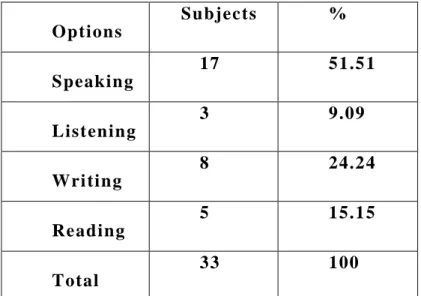
Table 02: S tudents ' attitude t owards speaking ... 55
Table 03: Em phasis i n l earni ng t he skills ... 56
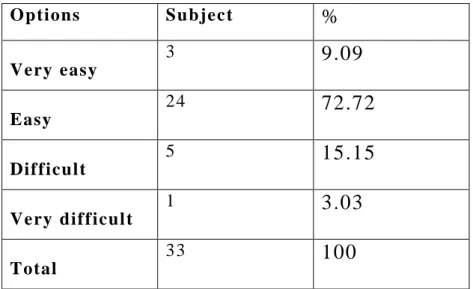
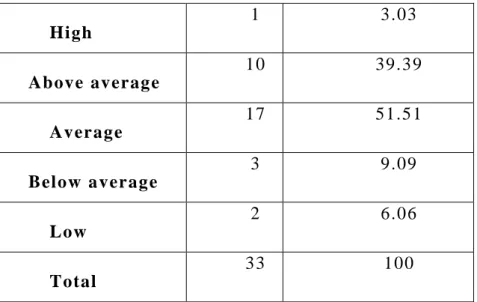
Table 04: Students ' eval uati on about thei r level in English ... 58
Table 05: Students ' attitudes toward oral expressi on courses. ... 60
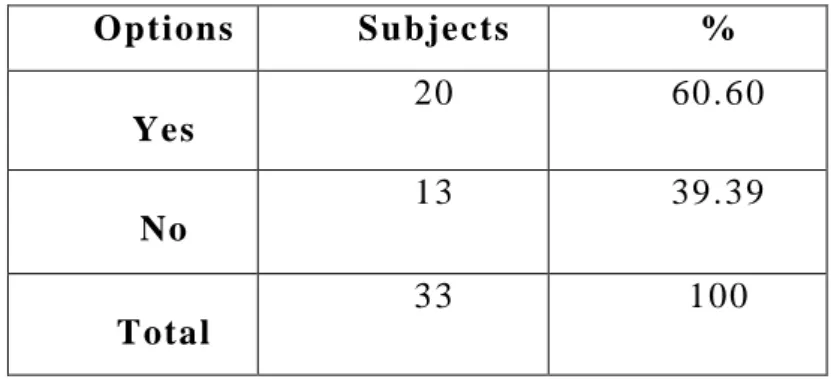
Table 06: Co nfi dence i n the use of Engli sh ... 61
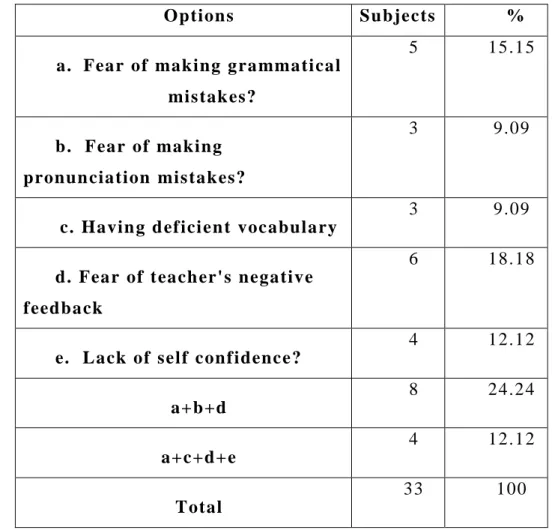
Table 07: R easons of the inabi lit y to speak... 63
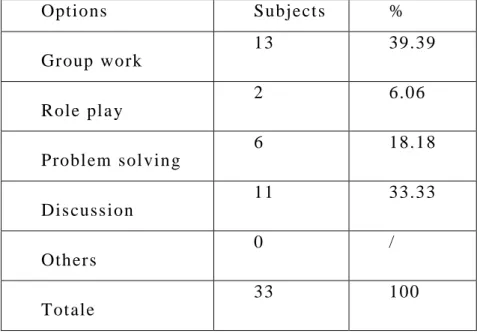
Table 08: Ki nds of t echni ques used for t eaching ... 64
Table 09: Students‟ evaluation ... 66
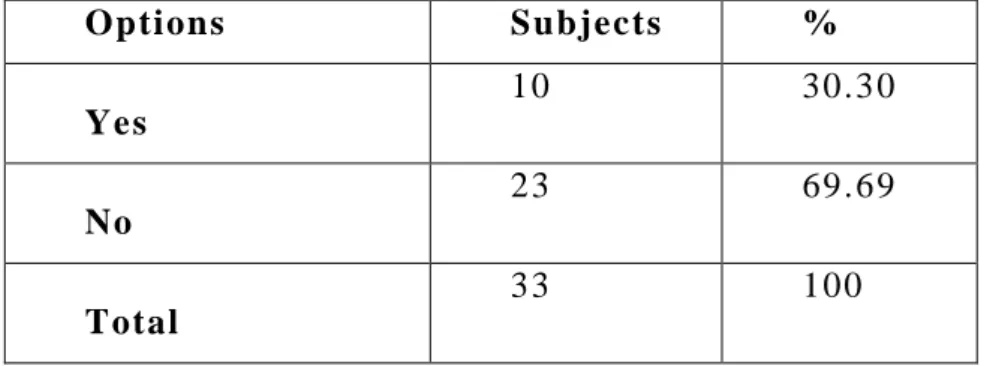
Table 10: Student‟s familiarity with cooperative learning ... 67
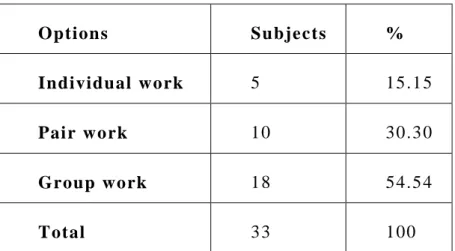
Table 11: Students‟ preference ... 68
Table 12: Di ffi culti es encountered i n group work... 69
Table 13: Teachers‟ attitudes towards the problems... 70
Table 14: Raising students‟ awareness towards the skills of cooperative work ... 71
Table 15: Understanding the spe ci fi c skil ls of s uccess ful group work. ... 72
Table 16: Students‟ evaluation of cooperative group work. ... 74
Table 17: Teachers ‟ academi c d egrees ... 79
Table 18: Experi ence in t eaching ... 80
Table 19: Teachers ‟ concern on t he oral skill... 81
Table 20: Students‟ level of oral proficiency ... 82
Table 21: Teachers' perception of st udent s' motivation in speaking ... 83
Table 22: Teachers' perception of the most needed it em of speaki ng ... 85
Table 23: Teachers' use of t eaching t echniques ... 86
Table 25: Teachers ' preference for eval uation t ype ... 88
Table 26: Teachers ' use of cooperative learning ... 89
Table 28: Teachers ' perception of indivi dual account abilit y ... 91
Table 29: Teachers ' perception of positi ve i nterdependence ... 92
Table 30: Teachers ' perception of the social skills ... 93
Table 31: Teachers ' perception of the val ue of cooperative work ... 95
Table 32: Teachers ' perception of st udent s' problems i n groups ... 96
LIST OF FIGURES
Diagram 01: Inter − relationship of the four skills Donn Byrne 1976 ... 11
Graph 01: S ex ... 54
Graph 02: st udent s ' attitude t owards speaking ... 55
Graph 03: Emphasi s in l earni ng the s kills ... 57
Graph 04: Students ' eva luati on about thei r l evel i n Engli sh ... 59
Graph 05: Students ' attit udes t oward oral expres sion cours es. ... 60
Graph 06 : C onfidence in the use of Engl ish ... 61
Graph 07: R easons of the inabilit y t o speak ... 63
Graph 08: Kinds of t echni ques us ed for t eaching ... 65
Graph 09 : Surdents‟ evaluation ... 66
Graph 10: Student‟s familiarity with cooperative learning ... 67
Graph 11: Students‟ preference ... 68
Graph 12: Diffi cult ies encountered i n group work ... 69
Graph 13: Teachers‟ attitudes towards the problems ... 70
Graph 14: Raising students‟ awareness towards the skills of cooperative work ... 71
Graph 15: Underst anding the speci fi c skil ls of s uccess ful group work. ... 73
Graph 16: Students ‟ evaluati on of cooperative group work ... 74
Grahp 17: Teachers‟ academi c d egree ... 79
Graph 18: Experience i n Teaching ... 80
Graph 19: Teachers‟ concern on t he oral skill ... 81
Graph 20:Students‟ level of oral proficiency ... 82
Graph 21: Teachers ' perception of st udent s ' motivation in speaking ... 83
Graph 23: Teachers ' use of t eac hing t echniques ... 86
Graph 24: Teachers‟ evaluation of speaking ... 87
Graph 25: Teachers ' preference for eval uation t ype ... 88
Graph 26: Teachers ' use of cooperative learn ing ... 89
Graph 27: Teachers ' perception of peer interaction ... 90
Graph 28: Teachers ' perception of indivi dual account abilit y ... 91
Graph 30: Teachers ' perception of the social skills ... 94
Graph 31: Teachers ' perception of the val ue of cooperative work ... 95
Graph 32: Teachers ' perception of st udent s ' problems i n groups ... 96
TABLE OF CONTENTS
DEDICATION ... ACKNOWLEDGEMENTS ... ……. ABSTRACT ... LIST OF ABBREVIATIONS ... LIST OF TABLES ... LIST OF FIGURES ...Gen eral In trodu cti on ... 1
I. St at e ment of t he Pr obl e m ... 1
II. Ai ms of t he st u d y ... 2
III. Assu mpt i ons and hypot hesi s ... 3
IV. Means of Resear c h ... 4
V. Organi zat i on of t he wor k ... 4
CHAPTER ONE : THE SPEAKING SKILL ... 6
Int r oduct i on ... 7
1. What i s spea ki n g? ... 7
1.1 T he nat ur e of or al co mmuni cat i on ... 8
1.2 The Speaki n g sub - ski l l s ... 10
2. T he r el at i onshi p bet ween spea ki n g an d t he ot her ski l l s ... 11
2.1. Spea ki n g vs . Wr i t i ng ... 12
2.2. Speaking vs. listening comprehension………..13
3. St udent ‟ s ps ychol o gi c al pr obl e ms ... 15
3.1. Lac k of i nt erest i n t he subj ect ... 15
3.2. Poor l i st eni n g pr act i ce ... 15
3.3. Def i ci ent vocabul ar y ... 16
3.4. Lac k of sel f confi denc e and t he f ear of ma ki ng mi st a kes ... 16
4. T eachi ng t echni ques f or oral profi ci ency ... 17
4.1. Group Wor k ... 17
4.2. Rol e -pl a y ... 18
4.4. Di scussi on ... 22
5. T he r ol es of t he t eacher ... 24
6. Assessi n g spea ki n g ... 25
Concl usi on ... 27
CHAPTER TWO : COOPERATIVE LANGUAGE LEARNING ... 28
Int r oduct i on ... 29
1. Cooperat i ve Lan gua ge Lear ni n g : A n O ver vi ew ... 29
2. An i nt roduct i on t o CL L ... 31
3. Defi ni t i ons ... 33
4. Cooperat i ve Lan gua ge Learni n g Met hods ... 35
4.1. St udent s t ea m -achi e ve ment di vi si on (ST A D) ... 35
4.2. J i gsaw II ... 36
4.3. Group In vest i gat i on ... 37
5. Charact er i st i cs of CLL ... 38
5.1. Posi t i ve i nt erdepe nden ce of CL L ... 40
5.2. Group for mat i on ... 41
5.3. Indi vi dual acc ount abi l i t y ... 41
5.4. Soci al s ki l l s ... 41 5.5. St ruct ur i ng a nd st r uct ur e ... 42 6. Goals of CLL ... 42 7. Redefi ni t i on of t he r ol es ... 43 7.1. T eacher rol es ... 43 7.2. Learner r ol es ... 44
8. Benefi t s and pi t fal l s o f CLL ... 46
Concl usi on ... 49
CHAP TER THR EE : F IELD OF INVES T IGATION ... 50
Int r oduct i on ... 51
1. St udent s‟ quest i onnai r e ... 51
1.1 Ai m of t he quest i onna i re ... 51
1.2 Ad mi ni st rat i on of t he quest i onnai r e ... 52
1.3 Descri pt i on of t he q ue st i onnai r e ... 52
1. 4 Analysis of the questionnaire ………..……….53
* Di scussi on ... 74
2. T eachers‟ quest i o nnai r e ... 75
2.1 Ai m of t he quest i onnai r e ... 75
2.2 Admi ni st rat i on o f t he quest i onnai r e ... 76
2.3 Descri pt i on of t he quest i onnai r e ... 76
2.4 Anal ysi s of t he q uest i onnai re ... 77
*Di scussi on ... 97
Concl usi on ... 98
General C onclusi on ... 100
B IB LIOGRAP H Y ... 102
APPEND ICES ... 106
Appendix I : Stud ents‟ Q uestionnaire. ... 106
Gen eral In trodu cti on
The teachi ng of forei gn language b y it s ver y nat ure is an interact ive process, whi ch i nvol ves acti ve parti ci pat ion of both the t eacher and the l earner. It has been st ress ed, in F LT m ethodol ogi es that are more t han a s ys t em of rul es, but as a d ynam ic res ource for t he creation of m eaning, shi ft awa y from t he stud y of language s een as purel y a s ystem and shi ft towards the st ud y of l anguage as comm uni cation . For that reas on, a great opportunit y of class room int era cti on is bei ng t rul y dem anded.
With a growi ng need for m ore effecti ve, s uccess ful and acti ve wa ys of forei gn l anguage l earning. I nnovat ion in the l anguage fi eld has been stimulat ed b y a special concern for learni ng through active and coll aborat ive s etting . The predom inant vi ew i s that l anguage is best l earned when students are i nteracting with each ot her in groups -compl eting a t ask or learning a content or res olvi ng real li fe issues - where t heir att enti on is not di rect ed t oward t he l anguage its elf, except when a focus on l anguage form s is necess ar y. M any res earchers have called i nto questi on the import ance of i nvesti gati ng t he impact of cooperati ve language learning on learners‟ oral proficiency.
I. Statement of the Problem
The m ain objective of lear ni ng a forei gn language is t o be abl e to comm uni cate in t hat l anguage. Yet , we obs erved t hat E F L l earners have diffi culti es in com m uni cati ng in Engl ish. The reasons for l earner's inabilit y to speak well are m an y and varied.
To begin with, l earners cann ot swallow ever yt hing the y need to speak well at once, nor can the y l earn effectivel y from a random coll ecti on of l anguage tasks where most of t he ti me i s s pent on doi ng exercis e s , whi ch do not i nvol ve the students i n i ntensi ve int eracti ons thus do not hel p them to devel op
comm uni cative abil it ies.
Teaching English in Al geria requi res t eachers to t ake i nto account that Engli sh can be t aught and practised onl y i n the cl ass room. Since the cl ass room is t he prim ar y sit uat ion, in whi ch l earners have an opport unit y t o us e the target language, so t he kind of met hodology followed has a great i nfl uence on language devel opm ent.
Developing learners‟ oral proficiency requires mainly overcoming these obst acles. Thus, t each ers have to provi de learners , with a met hod of increasi ng thos e opportuniti es of l anguage use. Organizing t he clas s into groups i s one of the surest wa ys t o provi de l earners with ext ensi ve oral product ion and comm uni cation.
If we consider , t he m ai n concern of t eaching a forei gn l anguage is to devel op the us e of the target l anguage communi cativel y. The precis e questi on we woul d ask is: Does the true understanding of the pri nci pl es and pract ices of cooperative l anguage l earning or sm al l groups lead eventuall y t o develop learners‟ oral profi ciency?
In this s tud y, we wi ll t r y to investi gat e the effect iveness of this met hod in develop learners‟ oral proficiency.
II. Ai ms of th e s tudy
This stud y is meant to cont ri but e to the im provement of l earners ' poor productions in Engli sh t hrough t he propositi on of cooperati ve language l earni ng to forei gn l anguage t eaching. It aims t o i nvesti gat e how cooperati ve group work present ed via cooperative l anguage l earni ng can be utiliz ed i n improving thi rd -year LM D l earners ' speaking ski lls i n the departm ent of Engli s h. This stud y aims at :
Shed som e li ght on the influence of t he soci al and affect ive factors (s elf -est eem, sel f -confidence, anxiet y, etc) in creati ng a fri endl y and rel axed learning envi ronment.
Make us e of pai r and sm all groups to maximiz e l earner's oral
production.
III. Assu mpti ons and hypoth esis
On t he basis of what has been s ai d, we ass ume that:
The English Language Learners‟ (ELLs) desire is to achieve a high
degree of oral profi cienc y.
Speaki ng is a s oci al act in whi ch t wo or more people us e a l anguage to express thei r thought s.
Learning i s not pass ivel y obs erved facts or i nform ati on sim pl y added t o existing knowl edge; inst ead, l earni ng is an act ive proces s for bot h teacher and learner.
The underachievement in speaki ng is not onl y due to l earners unwilling to speak but al so to t eachers reluct ant to use such a m ethod.
In t his respect, we hypothesize t hat:
If t eachers us e cooperative l earni ng and desi gn appropri at e classroom techni que. Then, l earners will use Engl ish s pont aneousl y and fl exibl y to negoti at e and expres s thei r int ended m eaning.
We beli eve that promoting this visi on t o forei gn l anguage teaching in general and oral expressi on in parti cul ar will hopefull y contribute t o provi de learners wit h extens i ve oral producti on and comm uni cation.
IV. Means of Res earch
The m ost import ant m ethods of coll ecting needs anal ysis data are
intervi ews, obs ervation and questionnaires. However, intervi ews and
obs ervat ion are m ore us eful i n hel ping to better underst and st udents ' needs , but more tim e consuming. Because of time const raints , we will use quest ionnai re to achi eve a m ore reli abl e and com prehensive pi cture. In this sense, we woul d direct t wo mai n questionnai res; one t o t he teachers who have been t ea chi ng for a long tim e t o m ake sure t hat their answers are the product of m an y years of observation and evaluation of learners' needs and difficulties. Students‟ questionnaire would be di rect ed to thi rd -year LM D students i n the departm ent of Engli sh at the Universit y of Constantine. It aims at investi gating the s tudent s‟ attit udes towards t he pres ent l anguage teaching si tuations. We also want to investigate the students‟ evaluation of their skill and the awareness of cooperation i n group work.
V. Organizati on of th e work
The pres ent res earch is di vided i nto t hree m ain chapters . The fi rst and second chapt ers revi ew the related lit erature. The t hi rd chapt er is the practical part of the st ud y.
The fi rst chapter outlines som e of the theoreti cal iss ues rel ated to t he nat ure of s peaking and oral communicati on. It also deals wit h the rel ationship bet ween speaki ng and the other skills. Then, we will dis cuss t he reasons of students‟ inability to speak in English. In this chapter, different techniques for devel oping oral profici enc y are present ed, and thei r i mpli cat ion t o t eaching t he oral s kills . The roles of the t eacher in the proces s of t eaching and ass essi ng speaki ng are also considered.
The s econd chapter provides a bett er underst anding of cooperative language learning and learning in sm all groups; it i ncludes the his torical background of th e cooperat ive l anguage l earning, a di s cus sion about t he general i ssues on cooperati ve l earning, definiti on of cooperati ve l anguage learning, foll owed by di fferent m ethods abo ut learning i n s mall groups, some of the charact eri sti cs , and the goals of C LL wil l be dis cus sed. The roles of t he teachers and the l earners, and also som e of t he benefit s and pitfalls of C LL are also cons idered.
The l ast chapter deal s wit h dat a anal ys is . It provides a det ail ed anal ysi s of both teachers and le arners ‟ questionnai res. It wil l help us t o s ee whet her t he results go in the s am e direction of our h ypothesis .
CHAPTER ONE
Introduction
One of t he m ajor responsibilit ies of an y t eacher working wi th Engl ish
Language Learners ( ELLs) is to enable them to communicate effectively
through oral l anguage. Teachers concerned with t eaching the s poken l angua ge must address this quest ion: w h y is it so diffi cult t o t each l earning oral profi ci enc y?
To a l arge extent, i t is because teachers are des peratel y att emp ti ng to teach in the cl ass room what is best l earned outsi de it. The cl ass room , of course, is a convenient pl ace for providing inform ation and developing education skills. However, teachers‟ concern is not only to inform but also to develop learner‟s abilit y to use the target language for communicative purpos es .
In t his chapter, we will deal wit h general is sues about speaki ng; definit ions of s peaki ng, the nature of oral comm uni cation, and the s ub -skills. The relat ions hip bet ween s peaki ng and t he other skill s. Then, we wi ll dis cus s the reasons of students‟ inability to speak in English and some techniques for teaching s peaking. The rol es or the t eacher i n the proces s of t eaching and ass ess ing speaking are also consi dered.
1. What is speaking?
As it was noted at the begi nning of thi s work, t he aim behind learning a forei gn l anguag e i s t o s peak and communicate i n t hat language. We s peak fo r man y reas ons -to be soci able, becaus e we want som ethi ng, because we want other people t o do something, to respond to som eone els e, to express our feeli ng and t hought s, to ex change information, to refer to an act ion or an event in the past, pres ent, or future , et c. Speaking is s aid to be an acti ve or productive skill . Widdows on (1978: 57) s uggests that:
Alth ou g h it mi gh t b e c on v en i en t t o r ep r e s en t th e lan g u ag e sk ill s in th i s way wh en c on sid er in g u sa g e, it i s n ot e sp e cia lly h elp fu l, an d in d e ed mi gh t b e p os it iv e ly mi s l ead i n g to p r e s en t t h e m in th i s way wh en c on s id er in g u s e.
What has been s ai d about speaki ng was conceived t o the knowl edge of linguistic rules i.e. language „usage‟ rather than to the way it is realized in communication i.e. language „use‟. By language „use‟ is meant the ability to use the l anguage t o achi eve com muni cativ e purpos es .
With reference t o „usage‟, it i s absol utel y t rue t hat speaking is an activ e or productive skill. If we think of speaking in terms of „use‟, “it involves putting a m ess age t oget her, communicati ng the m es sage, and interact ing wit h other people.” (Lindsay and Knight, 2006: 57)
1.1. The nature of oral communi cation
The speaki ng s kill i nvolves a comm uni cative abilit y of producing and receivi ng informat ion. B yrne (19 86:8 ) st at es t hat :
Becaus e oral com munication involves t he negoti ation of meaning between t wo or more persons, it is al wa ys rel at ed to the cont ext in whi ch it occurs , incl uding the parti cipant s thems elves, thei r coll ective experi ence, the ph ysi cal environm ent and the purpose for speaking. Bot h s peaker and list ener have a rol e to pl a y, becaus e speaking is an int eractive proces s of const ructing meaning that involves producing, recei ving and processing i nform ation. For Kramsch (1983: 367) speaking involves
The i nt eraction bet ween speaker and li st ener i s a compl ex process. The speaker has to encode t he m essage he wis hes to conve y in appropri at e
Oral communication is tow-way process between speaker and listener (or listeners) and involves the productive skill of speaking and the receptive skill of understanding (or listening with understanding).
An t ic ip at in g th e l is t en e r’ s r e sp on s e an d p o s s ib l e mi su n d e r stan d in g, cl ar ify in g on e’ s o wn an d th e oth er’ s in t en ti on s, an d a rri v in g at th e clo s et p o ss ib le m atch b et w e en in t en d ed , p er c ei v ed an d an ti cip at ed m ean in g.
language, while the l istener (no l ess activel y) has t o decode (or int erpret ) the message. However, the listener‟s in terpretation does not necessaril y correspond to the speaker‟s intended meaning. The speaker‟s message usuall y contai ns more i nformation that i s redundant. At the s ame ti me, the list ener i s hel ped b y pros odi c features, such as st ress and intonat ion as wel l as b y facial and bodil y movem ents s uch as gest ures. However, speech is oft en charact eriz ed b y incompl ete and som eti mes ungramm ati cal utterances and b y frequent fals e s tart s and repetiti ons. Inside t he class room , speaki ng and listening are the most comm onl y used s kills. The y are recognized as cri tical for functioning i n an Englis h l anguage context b y t eachers and learners . Thus speaki ng i n a cl as sroom ent ails i nt eracting wit h the t eacher and peers , depending on how cl ass room activi ties are organized. It foll ows that t eachers who do more oral interact ion activit ies in the cl as sroom will have more opportunities to develop students‟ oral fluency. Activities should involve spont aneous practi ce of the t arget l anguage.
Brown and Yul e (1983: 13) draw a useful disti nction bet ween two bas ic language functi ons . Thes e are t he t ransactional functi on and i nt eractional functi on. The form er is concerned with the t rans fer of inform ation, is m es sage ori ent ed since the s peaker assum es that les s inform ation is shared wit h the listener. On t he ot her hand, the i nt eracti onal functi on, in which the prim ar y purpos e of s peech i s the mai nt enance of soci al rel ati ons hips and is lis tener ori ent ed. The knowledge i s shared bet ween t he speaker and the list ener. Anot her basic dist inction we c an m ake when considering the devel opm ent of the s peaking s kill is bet ween monologues and dial ogue. The abilit y to give an unint errupt ed oral present ation is quit e distinct from i nteracting with one or more s peakers from trans actional and i nt eractional purp os es. While all native speakers can and do use language i nternationall y, not al l nati ve s peakers have the abili t y to extemporiz e on a given s ubj ect to a group of lis t eners. This is a skill which extensivel y has to be learned and practi sed. Brown and Yul e (1983: 19-20) s uggest that:
1.2 The speaking sub -s kills
Finall y, speaking has its own sub -skill s different from the ot her s kills . A good speaker must be abl e t o s ynt hesize this arra y of s kills and knowledge t o succeed i n a given exchange. Fi nocchi ar o and Brumfi t (1983: 140), st at e t hat learners have to:
a) think of ideas the y w ish to express, eit her ini tiat ing a convers ation or responding t o a previ ous speaker;
b) change the tongue, lips and j aw positi on i n order to art iculat e the appropri at e sounds;
c) be aware of the appropriate functional expressi ons , as wel l as gramm ati cal , l exical, and cult ural features to expres s the idea;
d) be s ensi tive to an y c hange in t he “regist er” or st yl e necessit at ed b y the pers on(s ) to whom t he y are speaking and s ituation in whi ch the convers ati on i s t aki ng pl ace;
e) change the direction of t hei r thought s on the basi s of t he other person‟s responses.
In speaki ng, t he l earner has to acqui re thes e sub -s kills of knowing what, how, wh y, t o whom and when to sa y som ethi ng . Once again, t he teacher‟s rol e is to monitor s tude nts‟ speech product ion t o det ermine what skil ls and knowledge the y al read y have and what areas need devel opment . Hence, t he responsibi lit y of the teacher is t o devise act iviti es t hat can address di fferent skills b y provi ding authentic practi ce that prepare s students for real li fe comm uni cation.
… The teacher should realize that simply training the students to produce short turns will not automatically yield a student who can perform satisfactory in long turns. It is currently fashionable in language teaching to pay a particular attention to the forms and functions of short turns
…It must surely be clear that students who are capable of producing short turns are
2. The relationship between sp eakin g and the other skills
The ai m of l anguage t eaching courses are ver y commonl y defined in terms of t he four ski lls: speaki ng, li steni ng, readi ng and writi ng. The t eacher focuses att enti on on one skill at a tim e. Thus , in one l es son speci a l att enti on is paid to speaking, in another to writing and so on. This sometim es refl ects the apparent needs of t he l earners the obj ective of the cours e, and the m et hod foll owed b y t he t eacher. Alt hough, oft en treat ed s eparatel y, the four skills are activel y rel at ed. The di ag ram below s hows how all the four skills are rel ated:
Diagram 1: Inter − relationship of the four skills Donn Byrne 1976
Let us begi n b y reviewing what is us uall y s ai d about t he four skills. Listening and reading are called „receptive skills‟, the other two „productive skills‟. The first two are useful sources of experience, but active participation in- and feedback on -speaking and wri ting the target language i s ess ent ial to fost er progres s and reinforce learni ng.
Written Language Receptive Skills Spoken language Understanding Speaking Reading Writing Productive Skills
2.1. Speaking vs . Wri tin g
Brown and Yule (1983: 20) begin t hei r dis cus sion on t he nature o f speaki ng b y distinguishing bet ween spoken and writt en l anguage. The y point out that for mos t of its hi stor y; l anguage teaching has been concerned with the t eaching of wri tten l anguage. This l anguage i s characterized b y well -formed sent ences which are integrat ed int o hi ghl y st ruct ured paragraphs. Spoken l anguage, on the other hand, consist s of short, often fragment ar y utterances, in a range of pronunci ati on. There i s often a great deal of repetition and overl ap between one speaker and another.
A m ajor di fference bet ween speech and writ ing is that the s peaker does not t ypicall y us e ful l sent ences when speaking. In this cas e we can us e the term utt erance rather than s entence. The y are short phras es and cla us es connect ed wit h “and ”, “o r”, “but ” o r” that”, or not joi ned b y a n y conj unctions at al l but si mpl y s poken next to each other, with poss ibl y a short paus es bet ween t hem . The spoken l anguage of idea units is sim pl er than writ ten language with its l ong sen t ences and dependent and s ubordinat e cl auses. Written Englis h is organiz ed into paragraphs, pages , chapt ers and compl et e texts. There i s als o a situati on where speakers use l es s specifi c vocabul ar y than writt en l anguage. Exampl es of thi s incl ude the us e of „t hings ‟, „it ‟ and „this‟. They usually use syntax in a loosely organized manner and a set of fillers such as „well‟, „oh‟ and „uh uh‟ make spoken language feel less concept ual l y dens e t han ot her t ypes of language s uch as expositor y prose.
Harm er (2005) f inds it is important t o defi ne s ome di fferences between speaki ng and writing for better understanding of thei r nature. He cl aims t hat because the audi ence to whom we are writing is not al wa ys pres ent and most of the cases are unknown audi ence. When we writ e, all the i nform ation have to be on the page. The reader cannot st op and ask a quest ion to m ake things clearer. Whereas in speaking, we have the advantage of interacting with “co -participants”, whether we know them or not. This is, of course, is highly benefi cial becaus e t he speaker m a y m odif y his speech accordi ng to his
co-parti cipant reactions. Another import ant di fference bet ween the two productive ski lls li es in t he concept of durabi lit y. W riting i s more durabl e. However, when we speak, our words just live to few mom ents . When we writ e, our words m ay l ive for years or even centuri es. For thi s reason, writi ng is us ed to provi de a record of events.
There are als o simi l ari ties bet ween writ ing and speaking. Linds a y and Kni ght (2006: 60) st at e t hat we speak di fferentl y depending on whom we are speaki ng t o and for what reason. Simil arl y with writt en l anguage, t he t ype of writ ing vari es depending on whom it is writt en for and wh y.
To concl ude, we should not t hink of s poken l anguage as somethin g unimport ant or i nferior. In fact , i t i s a ver y import ant el em ent of l anguage learning.
2.2. Speaking vs . Lis teni ng comp rehen sion
Forei gn l anguage t eachers (F LTS ) need to underst and t hat a hi gh proportion of cl ass time should be devoted to developing oral productiv e skills . However, lis teni ng or underst anding cannot be left to take care of itsel f. In t heir book on list eni ng, Aver y and Ehrli ch (1992: 36) disti ngui sh bet ween reciprocal and non -reciprocal listening. The l att er refers t o t asks such as li st ening t o the radio or formal l ectures where the t ransfer o f inform ation i s i n one di recti on , onl y from t he speaker t o the list ener. Reciprocal li stening refers to those l istening t asks where there is an opportunit y for t he l isten er to int eract with t he s peaker and to negoti at e t he content of t he i nteraction. The y st ress the active function of the list eni ng. B yrne (1976: 8) st at es that the list ening skill is as import ant as the speaking skill, becaus e both the s peaker and l istener have a posi tive function t o
perform . Thus , what m akes up the whol e comm uni cation is t he
interrel ati ons hip between s peak er and list ener during face -to -face
comm uni cation. Li st eni ng is essenti all y an active process . Nunan (1989: 23) stat es that:
W e d o no t s i mp l y t a k e l a n g u a ge i n l i ke a t a p e -r e c o r d e r , b u t i n t e r p r e t wh a t we he a r a c c o r d i n g t o o ur p ur p o s e i n l i s t e n i n g a nd o ur b a c k gr o u nd k no wl e d g e .
The list ener has to identif y and sel ect thos e spoken s i gnal s from t he surroundi ng sounds , to s egment t he si gnals int o known wor ds , to anal yze s ynt ax and extra m eani ng and t hen res pond appropri at el y to what has been said. Usually, the listener‟s attention will be focused on the meaning rather than the form. List ening processes invol ve t wo m odels: bott om up and top -down m odel. Botto m-up models work on the i ncoming mess age it sel f, decoding sounds, words, clauses and sentences. Working one‟s way up from smaller to larger units to obtain meaning and to modify one‟s prior knowledge. Top -down model s us e background knowl edge to assi st i n com prehending the mess age (Nunan, ibi d).R eceptive but not pas sive, li stening is an acti ve s kill because it requi res from the list ener not simpl y to hear utterances but t o lis t en and t o understand what has been said.
However, we can l earn from the mot her t o ngue experi ence. The s cope of listening comprehension s hould be t reated as an int egral part of t he speaking skill. C onsi der what will happen when the l earners t r y t o use t he t arget language outside the cl ass room and where the y are exposed to natural speech.Underst anding breaks down alm ost imm edi at el y. In addit ion, poo r understandi ng oft en results i n nervous ness whi ch will probabl y i n t urn inhi bit speech. The reason behi nd t his is simpl y not s uffi ci ent to expose the l earners to those sam pl es of spoken langua ge (dialogue or t eacher t alk) in order t o provide the students wit h models of oral production. B yrne (1976: 9) gives two m ai n reas ons why thi s is inadequat e:
a) The l earners ‟ abilit y to understand need to be considerabl y extensiv e in order to be „comfortable ‟ in a foreign language and therefore to comm uni cate effecti vel y. Thus, t he teacher has to provide learners wit h a broad receptive bas e.
b) The l earners need suitabl y vari ed m odels of nat ural speech. Thus, the listeners have t o be t aught t o listen as well as to speak.
In t he communicati ve m ovem ent, bot h the list eni ng and the s peaki n g skills recei ve a special attention. To sum up, the lis tening skill is as important as the speaki ng skill becaus e t o comm uni cate face to face has t o be devel oped i n t andem .
3. Stud ent’s p sychological p robl ems
The goal of t eachi ng t he oral ski ll is to enhance com muni cat ive effi ci enc y. Ever y a ct of communi cati on does not invol ve a rapid -fi re exchange. In fact, wh en l earners tr y to expres s t hem s elves. There i s hesi tat ion; cliché e xpres sions whi ch fi ll in paus es , m uch repetiti on and frequent indefini teness as t he speaker seeks the most conveni ent com bination of el ement to express his int ended meaning (Rivers, 1968: 192 -8 ). Thes e diffi culti es are due t o a l ack of i nt erest i n the s ubj ect, poor li stening practice, defi cient vocabul ar y, or l ack of sel f confi dence and t he fear of m aki ng mistakes.
3.1. Lack of interest in the sub ject
In a forei gn language cl ass room, t he student m a y oft en sta y sil en t because he has „nothing to say‟ in that moment. The teacher may have chosen a topi c whi ch i s uncongeni al t o hi m or about whi ch he knows ver y littl e, and as a resul t he has nothing t o express in Englis h. As well as havi ng som et hing to s a y, t he st udent must have the desi re t o comm uni cat e s omethi ng to som e person or a group of pers ons. If the student does not have a posi tive rel ati ons hip wit h his teacher, or feel at ease with his cl assm ates. So, he m a y feel that what he would like to sa y can be of litt le interest to them. On the other hand, he m a y b e ver y aware of hi s limitations in the forei gn l anguage and feel t hat, b y expres sing him sel f i n it, he is l a ying hims elf open to cri ticize or ri di cul e. For t hese reasons, again, he remains sil ent.
3.2. Poor li stening practice
Since speaking is essent ial l y an int eracti on bet ween t wo or m ore peopl e , listening c omprehension pla ys a m ajor role . The st udent may have acquired
skill in expressi ng himsel f in t he forei gn l anguage, but he has lit tle practi ce in understanding t he oral l anguage when spoken at a norm al spe ed of deliver y in a convers ation situation. The student t herefore does not comprehend suffi ci ent el em ents i n the m essage t o be abl e t o m ake further contri buti on t o the dis cussion . St udents need much practice in list eni ng to the t arget language functions wh i ch will provi de t hem with t he breathi ng s pac e necess ar y for oral perform ance.
3.3. Defi ci ent vocabul ary
In att empti ng to use the forei gn l anguage to express t heir own thoughts , students fi nd t hems elves struggl ing to find appropri at e words where their choice of express ion is s everel y lim ited. When students are learning a forei gn language, the y are unabl e to e xpres s thei r t houghts i n orall y m ature vocabul ar y. Thus, fi nding them sel ves now lim ited t o expres si ng t hemselves in chil dishl y si mpl e l anguage, t he y feel frust rated and uncom fort abl e. The teacher must be aware of this ps ychol ogi cal fact or and conscious of his own contri buti on i n the process of t eachi ng. He mus t be aware of t he fact that , although the y are li mited in t hei r powers of express ion, the y are limit e d i n thei r powers of expression, t he y are not real l y the im mat ure pers ons this defi cienc y mi ght make them appear to be.
3.4. Lack of s elf confidence and th e fear of making mi stakes
In man y class es, some students prefer t o keep thei r i deas t o thems elves when thei r oral part icipati on m a y cause unpl eas antnes s and embarrass ment, whil e ot hers hes itat e to parti cipat e in t he discussi on sim pl y because the y ar e afraid of being conti nuall y correct ed b y t he teacher for ever y slip t he y m ake.
However, students ‟ mistakes must be correct ed, but when the st udent i s att empti ng to encode his thoughts he should be i nte rrupted as l ittl e as possi ble. Inst ead, the t eacher shoul d not e one or two errors of pronunci ati on or gramm ar whi ch would affect communi cation or be unacceptabl e to a native speaker, and bri ngs these to t he att ent ion of the w hole class for a l at er practice.
Devel opi ng oral profici enc y in t he forei gn l anguage can be done onl y i n a relax ed and friendl y atmos phere where student s feel at eas e with the t eacher and with each other. The t eacher m ust adopt a moti vat ing at titude in s uch a wa y that al l st udents are involved in the l earning process.
4. Teaching techniques for oral p rofi ci ency
Effecti ve t eachers should use t echniques -group work, rol e -pl ay, probl em solvi ng and dis cuss ion -whi ch encourage students to t ake communi cat ive initi atives. Thus, they can provide them with a wi de and ri cher experi ence of using the l anguage as much as possible.
4.1. Group Work
Despit e the need for whol e -cl ass t eaching and i ndi vidual work, or “s eat work” in language classroom, the use of group work has been emphasized as another i nt er actional d ynami cs of language cl ass room. A group work i s a cl assroom situati on where st udent s are working wit hin s mall er unit s or groups . Through i nteracti ng wit h each ot her i n groups , st udents can be gi ven the opportunit y to oral exchange. For example, th e t eacher mi ght want students t o predict t he cont ent of readi ng a text of five paragraphs. Then, the y are divided into five groups . Each group sel ects a paragraph of the t ext just read s and prepares to answer the quest ions put b y the ot her groups. Each gro up has to s can a paragraph of t he t ext for detai led comprehens ion and formul at e questi ons to t est t he com prehension of the ot her groups . The ai m is to get the s tudent s involved in oral interact ion: aski ng and ans weri ng questions, agreeing and di sagreeing c ert ai n poi nts of paragraph and proposi ng modi ficati ons . Indeed, it is through t his kind of t asks that researchers beli eve man y as pects of both linguis tic and comm uni cati ve competence are developed (Bri ght & M cGregor, 1970) .
Oral int eraction, in group, is based on a real at tem pt t o find a coll ective soluti on to probl em s. Group work is a m eani ngful activi t y because t he students need t o focus on m eaningful negoti ation and inform ation exchange.
For t his reason, students s houl d be fam iliar with t he dis cus sion t opi c. The main concern of t he teacher is, of course t o get t he st udent s to t al k and to stimul at e thei r i nt erest and imaginati on.
In additi on to the benefits of group work activiti es , it has a num ber o f additional advant ages:
It reduces the dominance of the teacher‟s talk (TT) over the class
(M acka y & Tom , 1999: 26) .
It increases the opportunities for students to practise and to use new feat ures of the t arget language.
It increases the opportunities for authentic negotiation.
It promotes collaboration among students. The y do not simpl y throw
words to each other; the y int eract orall y with a purpose.
Group work does not onl y have advant ages, it has also dis advantages , like:
It ma y kill the spirit of self -reliance.
From the student‟s point of view, the v alue of help from the colleagues is less than the teacher‟s.
It ma y bring potential risks, too, because some learners resent being correct ed b y other m embers of the group.
To conclude, group work involving com muni cat ive t as ks is ess ent ial to devel op oral profi ci enc y because it dem ands m aximum student‟s participation in an orall y purpos eful acti vit y.
4.2. Rol e-pl ay
Man y students derive a great benefit from rol e -pl a y. It can be us ed eit he r to encourage general oral profi ci enc y or to t rai n students for s peci fi c situations especial l y where the y are stud ying English for s peci fic purpose (ESP ). Rol e -pl a y is an authentic t echnique becaus e it involves l anguage us e
in real int eractive cont exts. It provides a form at for usi ng elem ents of real -life convers ati on and communi cation (Forrest, 1992)
Revel (1979), sees role -pl a y as: “an i ndividual ‟s spontaneous behavio r reacting t o other in a h ypotheti cal sit uat ion.” (p.16) Thi s im plies that rol e -pla y i nvit es st udent s to s peak through a fi ctiti ous i dentit y in an im agi ned situation to pres ent the vi ew of a pers on wi thout necess aril y sharing t hem . Role-pl a y i nvolves an el ement of „l et ‟s pret end‟; it can offer t wo m ain choices:
a) The y can pla y t hem s elves in an im aginary sit uati on.
b) Or the y can be asked to pl a y im agi nar y peopl e in an im agi nar y situation. (B yrne, 1976: 117 -8 )
Students usuall y fi nd role -pl a yi ng enjo yabl e, for exampl e, t he y mi ght be gi ven the role of an angr y fat her awaiting the late return of hi s middl e school sun from foot ball gam e. Another s tudent could be given the role of t he sun. Therefore, students have t o prepare a dial ogue for their pres ent ati on. Becaus e rol e -pl a y i mitat es real li fe , the range of language functions t hat mi ght be used expands consi derabl y. The rol e rel ationshi ps among st udents call for practisi ng and developing sociolinguisti c compet ence t o us e t he language s kills that are appropri ate to the si tu ation and to the charact ers.
Role pl a y went through a peri od of rel ative unpopul arit y; yet t his pit y since it has a dist i nct advant ages. In the fi rst pl ace, it can be a di rect interact ive m et hod. It is an authenti c technique for l anguage use in int eracti ve contexts t o t rai n students for specific interactive s kill s of arguing, information, persuading, discussing, or complaining…etc . It promotes spont aneous oral exchange s bet ween participants inst ead of reciti ng alread y memoriz ed st ret ches . Indeed, as Dickson (1981: 382) puts it:”l earners s a y what they want to say and not what someone has told them to say.”
Second, rol e pl a y all ows hesit ant st udent s to be more forthri ght in their opini ons and behavi or t han the y m i ght be when speaking for thems el ves , since the y do not have to s peak the responsibili t y for what t hey are s a yi ng.
Thi rd, b y broadeni ng the world of the cl ass room to incl ude t he world outsi de, rol e pla y all ow s tudent s t o us e a much wider s et of l anguage use.
Role-pl a y is an effecti ve t echni que when it is open -ended s o that different peopl e would have different views of what t he outcom e should be and cons ens us has t o be reached. There is a d ynamic m ovement as t he rol e -pla y progres ses wi th st udents who lack s elf -confidence or have l ower profi ci enc y levels. To succeed wi th rol e -pa y, the teacher has to give each student who does not pl a y his rol e appropri at el y a card that describes the person or t he rol e pl a yed. The teacher needs not onl y t o ident if y the sit uat ion whi ch wi ll stimulat e the dis cussion but also give them the role that m at ches the requi rements of thei r personali ties. Topi cs for rol e pl a y shoul d be taken from students‟ current interest and anticipated experiences. This will contri but e to i ncrease the s tu dent ‟s sel f-confi dence as a s peaker and hi s motivation to partici pat e m ore.
4.3. Prob lem solvin g
Barker and Gaut (2002: 160) defined problem sol ving as foll ow:
The l abel has been used t o group toget her a range of acti vities whi ch requi re the l earners to fi nd s oluti ons t o probl em s of different ki nds . Duff (1986; in Nunan, 1989: 44) di scovered t hat probl em sol ving tasks prompt ed more i nteraction than debating t asks.
A problem-solving group is a group of people who work together to solve a problem by collecting information about the problem, reviewing that information, and making a decision based on their findings
The probl em tasks range from t he im agi nar y to the more realisti c. The latt er invol ves process es which have some kind of realist i c appli cat ion in whi ch t he students becom e involved i n an effort to achi eve a goal. In problem solvi ng, students are involved in pool i ng inform at ion to s olve a probl em through oral express ion and negotiation of m eaning. For i nst ance, the teacher describes the task to the students: „you are stranded on a desert island a long wa y from an ywhere. There i s a fresh wat er s pring on the isl and, and t here a re banana t rees and coconut palm s. The cli mat e is mild. M ake a list of ei ght to twelve thi ngs which you th i nk are necessar y for survival . Apart from the activiti es focusi ng on t he li kes and di slikes of i ndividual l earners, whi ch therefore need a ini t ial ph as e where each st udent work s on his own, mos t of the probl em -solving tasks require pai r or group work throughout. Thus , students can be as ked to s olve the probl em indi vidual l y or collecti vel y. The latt er is calling for cooperative negotiati on. P robl em solv ing activiti es dem and that the learners themsel ves m ake suggestions, give reasons, accept, modi f y or rej ect s uggest ions and reasons gi ven b y others.
Probl em sol ving can be of t wo kinds: s hort -t erm t ask and l ong-t erm t as k or proj ect . The form er can be done in course of one cl ass s essi on whi le the latt er is more tim e consumi ng that m a y take m an y sessions and l onger. An exampl e of a s hort -term probl em -solvi ng task includes putting it em s i n categories. For this kind of activiti es , the students have ei ther t o c lassi f y items accordi ng to categories giver b y the t eacher or to i dentif y them b y them sel ves. The s tudents are given a list of 10 -15 it ems, such as occupations (bank clerk, truck driver, policeman teacher lawyer, etc …) and asked to locat e them under headi ng according to di fferent features. Li ke, ph ys i cal / ment al work, i ndoors / outdoors, wi th people / alone et c... Such short -t erm activiti es are task -cent ered and can be pres ent ed i n a rel ati vel y simpl e wa y (i.e. the y do not require a lot of expl anation in order to s et up; nor do the y generall y need an y s upport m at eri als). It can be comfort abl y done i n one class session of 20 -30 mi nut es. However, som e t eachers regard any activit y whi ch invol ves i ndivi dual or group research over a period of tim e as proj ect work. Ver y often t his kind of activit y is t opi c -cent ered and results i n the producti on
of a piece of writ ten oral report or both. For exam ple, the t eacher oft en asks students t o develop a pres entat ion on a part icular hi stor i c period and to generate writt en products appropri at e t o the peri od. St udent s mi ght conduct diagrams or real ia t o support the proj ect. Thi s exam pl e shows that t eachers att ach mor e im port ance to activiti es whi ch get the l earners out of the cl assroom, parti cul arl y those that involve the collecti on of data through inform ation s earch, i nform ation exchange and i nform ati on s yn thes is.
In som e wa y, t hese activi ties provide a fram ework l anguage us e in a range of comm uni cat ive function t hat i s li kel y t o occur. Lear ners als o devel op greater skill s for m anagi ng the i nt eract ion , e.g. s i gnaling disagreem ent or interrupti ng wit hout offence.
4.4. Dis cussi on
Discuss ion is an y ex change of ideas and opini ons eit her on a cl ass basis with the teacher‟s role as a mediator and to some extent as participator, or withi n the cont ext of a group, with the st udents tal king among thems elves . It ma y l ast for just a few mi nut es or it m a y continue for a whole lesson (in case of advanced learners who have a good command of forei gn l anguage). It m a y be an end in its el f; a t echnique for devel oping oral expression t hrough exchange of i deas , opinions, argum ents and point s of vi ews. We can s a y t hat this technique i s st udent – direct ed and teacher – guided dis cussion. (Hill and Rupti c 194 9; i n B yr ne, 1976). For ex am ple, all students can be asked to read a single book or story whi ch can be discussed in one s ess ion upon completi on of the reading. Dis cus sion groups (also cal led li terature circl es and book clubs) can last from one to two or three sessi on dependi ng on t he l ength of the book.
While dis cussion has m an y advantages, som e benefit s for s econd language l earners i nclude: increas ed comprehens ion level s; opport uniti es to improve list eni ng skills and develop spoken l anguage profici enc y; i ncreased parti cipation of qui et and sh y st udents and more tim e for t eacher observation of students l earning.
One of the reasons t hat discussions fail is that students are rel uctant t o gi ve an opinion in front of the whole, es peci all y i f t he y cannot think of an yt hing t o s a y and are not confident of the language the y mi ght us e to s a y it. Man y st udents feel extremel y expos ed class room in dis cussi on (Barnes and Todd, 1977: 81) . Teachers have to keep in mind t hat topi cs for di scussi on are not s el ected at random. The fi rst st ep t oward s u ccess ful dis cus sion i s that the teacher has to res pect the foll owi ng :
Provide the students with a variet y of sources of input (both topical inform ation and l anguage form s), newspapers, video -recording, or simpl y t ext so that the y can have som ethi ng t o sa y and the l anguage with whi ch to s a y it.
Offer choices relevance to professional / educational level of the
students to feel comfort abl e with the topi c chosen from several choi ces . Dis cuss ion does not alwa ys have t o be about seri ous is sues. St udents are likel y t o be m ore m otivated t o parti cipate i f t he topic is tel evis ion programs rat her than how to combat polluti on.
Set a goal or outcome of discussion as group product, such as a letter to the edi tor.
Use small groups instead of large g roups or whole clas s discussion as , large groups can make parti ci pati on di ffi cult .
Give 8 -15 minutes, for discussion. Allow them to stop if run out of things to s a y.
Allow students to participate in their own wa y. Do not expect all of them t o cont ribut e to the di scussi on, s o m e students m a y feel uncomfortable t o talk about cert ain topics .
Do „report back‟ session to report the main results of their discussion.
Do linguistic follow -up at the end of the discussion; give feedback on gramm ar or pronunci ation problems.
Through wel l -prepared discus sion, the teacher‟s rol e i s not t o force hi s opini ons on the students but rather to encourage t hem t o express t heirs. The teacher‟s opinion, if offered at all, should only serve to stimulate further ideas on the part of the stud ents, not t o inhi bit them. Secondl y, the teacher
shoul d appear more interest ed in t he ideas at l east i n the begi nning. Sometim es , of course, t he teacher ma y have t o help s tudents to get their mess age across , or make t hei r m eani ng cl ear. Al so t he t eacher al so has to keep the channels of comm uni cation open not of course by doing all t he talki ng hims el f, but b y stimulat ing students t alks t hrough questions whi ch server as stimul i for dis cussion as long as the y generat e controversi al opini ons am ongst t he student s.
5. The rol es of th e teacher
The primar y rol e of the t eacher is to creat e the best conditions fo r learning. The t eacher needs to pla y a number of different roles during cl assroom procedure s. However, Harmer (2001: 275 -6) sugge sts three rol es i f the teacher is tr yi ng to get students t o s peak fluentl y:
Prompter: the teacher should become a prompter when students get lost, stuck and cannot t hi nk of what to s a y next, or in som e other wa ys lose the fluenc y t he teacher expects of them. The teacher , in this rol e, should be ver y careful not t ake ini tiati ve awa y from t he students . He can l eave them to struggl e out of such situation s on t heir own, and indeed s ometimes t his wa y i s the best opti on. However the t eacher ma y offer dis crete sugge stions . This will stop the s ense of frustrati on that s om e students feel when the y com e t o a „dead end‟ of language or ideas.
Participant: in an y part of the lesson there is alwa ys a chance for the teacher to parti ci pat e i n dis cuss ions , as an equal not as a t eacher. In t hi s wa y the t eacher can prompt covertl y, int roduce new i nform at ion to hel p the activit y al ong, ens ure conti nuing st udents involvem ent , and generall y maint ai n creati ve at mosphere. However, the t eacher should be ver y careful of parti cipating too m uch, thus domi nating t he s peaking and drawi ng all the att enti on.
Feedback provider: the teacher should be ver y careful of when and how to give feedback in the speaki ng acti vit y, over -correction m a y inhibit them and take the comm uni cati veness out of the activit y. On the other hand,
positi vel y and encouragingl y correcti on ma y get st udents out of di ffi cult misunderst anding and hesit ati ons . Ever yt hing depends upon t eacher t act and the appropri ac y of the feedback provided.
6. Ass essin g speaking
The t erm ass ess ment refers to more than tests and grades . Act ual l y, Haley and Austin (2004: 117) state that “ [it] involves development of mat eri al s, proces ses, activities and cri teria t o be us ed as to ol for determi ning how well and how much learning is taking place.” Similarly, Lindsay and kni ght (2006) st at e t hat :
In foreign language teaching, it is important to assess all learners‟ language s kills and not j ust t heir use of gramm ar or vocabul ar y. In speaki ng, assessment involves the learners‟ knowledge of the language items and the abili t y t o use this knowl edge to com muni cate in that l anguage .
Thornbur y (2005: 124) st ates that s peaki ng ass es sment can be done either form all y or i nform all y. Inform al ass essm ent can t ake pl ace at t he beginni ng and at end of t he language courses as well as at vari ous occasi ons duri ng the cours e it sel f -b y aski ng ques t ions to check whether t he l earners have understood or not. On the ot her hand, format ass es sm ent can be done through t est s -using placement, di agnost i c, progress or developm ent t ests - and exami nations l ike t he C am bri dge Cert ifi cat e in Engl ish l anguage Speaki ng Ski lls (CELS ), the Int ernati onal Engli sh Language Tes ting Servi ce (IE LTS ) exami nation, and the examinati ons offered b y C am bri dge ES OL.
Tes ting can have a s igni ficant influence on how a t eacher works with his learners and also influences how l earner s learn. It m a y seem easi er to prepare a gramm ar t est. However, t esti ng speaking in not an eas y t ask because of the com plexit y of the skill. The probl em, however, wit h i ncluding an oral
As s e s s m en t i s t h e p r oc e s s o f a n aly zin g a n d m ea su r in g kn o wl ed g e a n d ab il ity , in th i s ca s e, th e le arn er’ s kn ow l ed g e o f th e lan gu ag e an d ab il ity to c om m u n i cat e . (p .1 21 )
com ponent in a tes t is that it co m pli cat es t he t esting procedure i n t erms of practicalit y and t he wa y ass essm ent crit eri a can be rel iabl y applied. S etting and m aki ng a writt en t est of gramm ar i s rel ativel y eas y and time -effi cient. A test of s peaki ng, on t h e other hand, is not . A s an exam ple ; we ma y us e an oral intervi ew which forms a comm on ki nd of forei gn l anguage tests . Duri ng the test , all the l earners of a cl ass have to be int ervi ewed i ndivi duall y, the st res s caus ed, and the ti me taken, ma y s eem to be g reat er than the benefit s. Moreover, the teacher m a y have different cri teri a or st andards for judging speaki ng Thornbur y (2005: 125)
Language teachi ng program that priorit izes the speaking s kill but does not assess it cannot be sai d to be doing i ts job pro perl y. Testi ng pl a ys a m ajor role in foreign language learning, both as a motivational factor to „do more speaking‟ in class and as tool for the teacher to determine what skills and knowledge the l earners al read y have and what areas need more focus. Testi n g oral production m eans t est ing what t he l earner does with the forei gn language, abilit y t o com prehend t he spoken l anguage, abi lit y to fram e a read y respons e, and the abili t y t o express his ideas i nt elli gi bl y wit h correct struct ure and appropri at e l exical it ems. Then, t eachers mi ght als o be interest ed in arti cul ation of sounds, st ress, int onation, et c...
It ma y be di ffi cul t for the t eacher t o be obj ect ive in grading hi s learners. The t eacher ma y us e a vari et y of rati ng s ys t ems. A holi sti c rating when the t eacher i s interest ed i n the st udents ‟ overall perform ance. On the other hand, analytic rating captures the learners‟ performance on only one aspect, s a y fluenc y , accurac y, pronunci ation, st ress, etc... (Li nds a y and Kni ght, 2006: 124). So, the use of this el em ent wi ll be t aken int o account when t he t eacher fi nall y gi ves a final grade. There are ot her tim es when speaki ng ski lls can be as ses sed. Al most an y activi t y desi gned to t est speaki ng are general l y the s ame as t he kinds of activi ties desi gned t o t each s peaking, e.g. rol e-pla y, pai r work, informat ion -gap exchange, di s cus sions, et c… Although fear of bad m arks can som eti mes be motivati ng, it is sup rising t o find the amount of power that l earners feel when assessing themselves. It can be a real awareness rai si ng activit y.
Con clusion
Throughout t his chapter we have focus ed on the fact that for teachi ng speaki ng, t eachers s hould provide l earners with effective oral practi ce cl earl y teachers have to adopt a wi de range of techniques and procedures t hrough whi ch oral profi ci enc y can devel op. Such t echni ques should invol ve l earners into real communi cat ion.
The next chapter will devot e to cooperative language l earning, it s underl yi ng princi ples and cl assroom im pl ications.
CHAPTER TWO
Introduction
Cooperati ve language l earning (C LL) is one of the most distinguis hed of all instructional practi ces. In forei gn l anguage l earning, C LL provides st udents with the opportunit y to us e the language i n
meaningful sit uat ions. It has become a popul ar and relativel y
uncont roversi al to t he organizati on of cl assroom i ns t ruction.
This chapter provides a bett er understandi ng of cooperati ve language learni ng; it incl udes a general histori cal overvi ew about C LL, a number of definiti ons will next be pres ent ed, foll owed by di fferent methods about learning in sm all groups, som e of the c haract eri sti cs, and the goal s of C LL w ill be discuss ed. The rol es of the t eachers and t he learners, and al so s ome of the benefits and pitfalls of C LL are als o considered.
Through t his chapt er, we i nt end to present t wo m ain t ypes of inform ation. The fi rst t ype provi des a cl ear pict ure of what m akes cooperative l anguage l earning, and the second one gives information in the form of practi cal guides to the us e of the m ost wi del y forms of cooperative learning.
1.
Coop erative Lan gu age Learning : An O vervi ewThe hi stor y of l anguage teachi ng has been charact erized by s earch for more effective wa ys of forei gn l anguage learni ng. For more than hundred years, the s hift wit hin l anguage teaching profession emphasized the role of the learner in the proces s of l earning and teachi ng. As a result , in recent years , s ome si gni fi cant developm ent began to t ake pl ace and effective cooperative learning com es to t he s cene.
The hist or y of cooperati ve learni ng can be traced back hundreds of years and l onger as far as t he earl y t w entiet h centur y (Sl avi n, 1995: ix) . U.S. educator J ohn Dewe y hel d som e forms of cooperation among students as essenti al t o l earni ng. He i s usuall y credited with prom oting the idea of