Geminivirus sequences as bidirectional transcription
termination/polyadenylation signals for economic construction of stably
expressed transgenes
Stéphane Bieri
1,2, Ingo Potrykus
1and Johannes Fütterer
1,*
1Institute of Plant Sciences, Federal Institute of Technology, Universitätstr. 2, Zürich, CH 8092, Switzerland; 2Current address: Max-Planck-Institut für Züchtungsforschung, Carl-von-Linné Weg 10, Köln, 50829,
Germany; *Author for correspondence (e-mail: [email protected]; phone: ++-1-632 3866; fax: ++-1-632-1044)
Received 18 April 2002; accepted in revised form 6 May 2002
Key words: Antisense RNA, Convergent transcription, dsRNA, Gene silencing, Readthrough, Transgene
expres-sion
Abstract
Bidirectional, convergent transcription of transgenes in transgenic plants can occur due to leaky transcription termination of separate convergent genes or from genomic promoters. It might also be engineered with the pur-pose of generating double-stranded RNA to downregulate genes by RNA interference. We have tested the effects of convergent transcription on expression levels and analysed the potential of geminivirus derived DNA se-quences to act as bidirectional transcription termination/polyadenylation signals in transgenes to counteract such negative effects. Convergent, overlapping transcription decreased expression, however, no increased propensity for induction of gene silencing was observed. The geminivirus terminators in both orientations supported effi-cient expression of single genes and of convergent genes, whereas a unidirectional terminator allowed only re-duced expression in this latter situation. Geminivirus terminators could be used as efficient transcription control element for the expression of two genes simultaneously or, with single genes, could afford protection of the gene against unwanted anti-sense transcription from transcription units downstream of the gene, e.g. in the integration locus. Our results also suggest that flanking of a given sequence by two convergent promoters would not be an efficient way to generate double-stranded RNA and induce gene silencing by RNAi.
Abbreviations: ACMV – African cassava mosaic virus, MSV – maize streak virus, WDV – wheat dwarf virus
Introduction
Expression of transgenes is not only controlled by the provided expression signals but also by transgene-ex-ternal influences. Gene silencing can be responsible for strong reduction of expression and ⬙position ef-fects⬙ have been implicated as source for expression variations (Matzke and Matzke 1998). The term ⬙po-sition effect⬙ describes the undefined influence which a chromosomal integration locus may have on trans-gene expression. The molecular basis for the expres-sion variations is largely unknown. The generation of double-stranded RNA has been shown to be one
trig-ger for gene silencing (Angell and Baulcombe 1997; Fire et al. 1998; Waterhouse et al. 1998). This re-quires that the transgene coding and/or the promoter region is transcribed not only in sense- but also in anti-sense orientation. Such unwanted transcription could generally influence expression by anti-sense RNA interference with RNA stability or usage, or by promoter occlusion, i.e. displacement of transcription factors from promoter regions (e.g. Greger et al. (1998) and references therein). The expression signals for the unintended transcripts have to be derived from the integration locus or have to be accidentally present within the integrated transgene DNA, either
always or only in some integration events after trans-gene rearrangement (Ingelbrecht et al. 1991). A third possibility would be that the tight configuration of several genes in conventionally used transgene cas-settes leads to unwanted transcription of one trans-gene from promoters of another one. Tandemly orga-nized transgenes are usually separated by plant signals specifying transcription termination and poly-adenylation, termed terminators in this manuscript. For plants, little is known about the interplay between transcription termination and polyadenylation (Roth-nie 1996). In other eukaryotes RNA polymerase com-plexes have been detected far downstream of the ac-tual polyadenylation site (e.g. Hansen et al. (1998) and references therein), which in these cases may be chosen independently from transcription termination. The level of this transcriptional readthrough depends on the ability of signal sequences in the terminator to pause the transcription complex (Aranda and Proud-foot 1999). The most frequently used terminator in plant genetic engineering is derived from cauliflower mosaic virus (CaMV). It was shown to be⬙leaky⬙ at least when it was positioned close to the promoter in transient expression experiments (Sanfaçon and Hohn 1990). For the terminator of the CaMV-related rice tungro bacilliform virus the efficiency of RNA 3⬘ end formation varied with promoter sequences (Klöti et al. 1999) and the plant system used (Rothnie et al. 2001). In other eukaryotes the involvement of the promoter-specified RNA polymerase complex in de-termination of co- and post-transcriptional RNA pro-cessing events has been well documented (reviewed by Hirose and Manley (2000)). This suggests that the proper combination of promoter sequences and pro-cessing signals may be important for correct RNA maturation and some combinations may lead to the production of aberrant RNAs.
Naturally, genes on chromosomes are well sepa-rated from each other. In tightly arranged transgenes, transcriptional readthrough could cause promoter oc-clusion or generate antisense RNA from convergently transcribed genes. Interestingly, silencing was much more pronounced with convergently repeated trans-genes compared to divergently repeated transtrans-genes in petunias (Stam et al. (1998); reviewed in Muskens et al. (2000)), and a particularly efficient inducer of post-transcriptional silencing, which works reproduc-ibly even as a single copy gene, contains a conver-gent transcription unit for the selectable marker gene downstream of the silencing GUS gene (Elmayan and Vaucheret 1996).
Terminators, which prevent readthrough or unin-tended antisense transcription, should be of value to reduce the expression variation of transgenes (Ingel-brecht et al. 1991). Natural terminators that might have evolved such properties can be found in the ge-nomes of geminiviruses, which harbor on their circu-lar DNA genomes two convergent transcription units (Hanley-Bowdoin et al. 1999). Each of these covers about one half of the genome, one in clockwise ori-entation, generating an RNA with the same polarity as the single-stranded DNA packaged in virus parti-cles and therefore also termed virion-sense RNA (vRNA) and one in counterclockwise orientation, also termed complementary-sense RNA (cRNA) (Figure 1a). Transcription of both begins in the large inter-genic region (LIR) and mature RNAs end in the small intergenic region (SIR). V- and cRNA synthesis is to some degree alternatively regulated during viral in-fection (Hanley-Bowdoin et al. 1999) but synthesis is not mutually exclusive, therefore, inefficient termina-tion of either transcriptermina-tion process could lead to si-multaneous sense- and anti-sense transcription of vi-ral sequences. The SIR contains the elements for RNA polyadenylation and probably also for transcrip-tion terminatranscrip-tion in both directranscrip-tions and therefore should be a bidirectional terminator. We have tested geminivirus terminator sequences from three different viruses for their potential to allow efficient gene ex-pression in transfected rice protoplasts. One of them was also tested in transgenic cell suspension cultures and shown to protect, due to its bidirectional activity, transgenes against antisense transcription.
Materials and methods
Plasmid constructs
The ubiquitin-promoter-GUS cassette was produced by combining a fragment of the maize ubiquitin 1 gene covering the region from −730 to +1090 [de-rived from plasmid pUbiCAT (Christensen et al. 1992) after subcloning; numbering with respect to the transcription start] and flanked by engineered SpeI (at −730) and NcoI plus XbaI sites (at +1090) with an
NcoI-XbaI fragment covering the GUS ORF (derived
from pRintG, Klöti et al. (1999)). The actin-promoter-LUC cassette was produced by combining a fragment of the rice actin 1 gene (derived from plasmid pAct1F after subcloning; McElroy et al. (1990)) covering the region from −830 to +529 flanked by the same sites
as above with an NcoI-XbaI fragment covering the LUC ORF (derived from plasmid pGL3, Promega).
Geminivirus transcription terminator fragments were generated by PCR and covered positions 1178– 1375 for ACMV DNA A (Gene bank accession no. X17095), 1015–1212 for MSV (X01633) or 1092– 1359 for WDV (X82104). The CaMV terminator was derived from plasmid pDH51 (Pietrzak et al. 1986). All terminator fragments were flanked by NheI and
XbaI sites by primer design or subcloning. Due to the
complementarity of SpeI-, XbaI- and NheI-sites, the
different reporter and terminator cassettes could be combined in simple cloning steps to yield the plas-mids shown in Figures 1 and 2. The plasmid back-bone includes matrix associated regions (MAR) and sites for cassette excision by I-SceI and has been de-scribed in Bliffeld et al. (1999). More details are available upon request.
The plasmid encoding the aph4 gene for selection of transgenic cell lines contained the same CaMV35S promoter-aph4ORF cassette as pHCintG (Klöti et al. 1999), but subcloned in pBluescript (Stratagene).
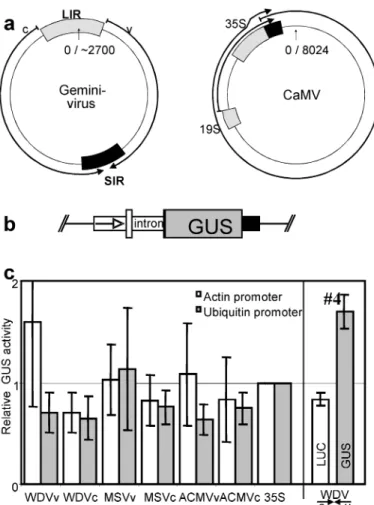
Figure 1. Comparison of transcription termination/polyadenylation sequences from geminiviruses and CaMV in transient gene expression. a:
Simplified draft of Geminivirus and CaMV transcription unit organization. Circular DNA genomes are presented as thin circles, transcripts as thick arrows, promoter sequences by gray boxes, transcription termination sequences by black boxes. Geminiviruses produce convergent virion sense (v-) and complementary sense (c-) transcripts. LIR: large intergenic region; SIR: small intergenic region; 19S/35S: major tran-scripts of CaMV with the approximate location of their corresponding promoter sequences. b: Relevant part of plasmids used for transfor-mation. The GUS reporter gene was driven by the Actin or Ubiquitin promoter (arrow) including their native first exon and first intron and terminated by one of the geminivirus SIRs in either direction or the CaMV 35S terminator (black box). c: Results of transient protoplast transfection assays. Respective GUS activities are shown relative to the corresponding 35S terminator construct. Geminivirus SIRs were tested in both orientations [e.g. WDV (v) and WDV (c)] and in combination with the Actin promoter (white columns) or the Ubiquitin promoter (gray columns). In the rightmost panel, construct #4 with two convergent genes (Figure 2) was tested relative to constructs #5 and 6 (Figure 2). The results represent the mean of 5 independent transformation experiments, the standard deviations are indicated.
Protoplast preparation and transfection
Protoplasts from Oryza sativa line Oc were isolated from a cell suspension culture and transfected as de-scribed previously (Chen et al. 1994) with modifica-tions: Suspension cells were cultured in MS medium (Murashige and Skoog 1962) plus 2 mg/l 2,4-dichlo-rophenoxyacetic acid (2,4-D), 6% sucrose and 2.5 mM 2-morpholinoethanesulfonic acid (MES). Diges-tion was performed in 3% cellulase Onozuka R-10, 1% macerozyme R-10 (both Yakult Pharmaceutical Ind. Co., Ltd., Tokyo, Japan), 8% mannitol and 1 mM CaCl2for 16 h with slight shaking at 30 °C. The pro-toplasts were transformed by the PEG method with 10 g plasmid DNA and harvested 16 h later. The
protoplasts were analysed for activity of  -glucu-ronidase with 4-methylumbelliferyl--D-glucuronide (MUG) (Jefferson et al. 1987) and luciferase with a Luciferase Assay System following the provider’s in-structions (Promega Corporation, Madison, USA).
Rice transformation by particle bombardment
Oryza sativa suspension cells were transformed by
particle bombardment essentially as described (Burkhardt et al. 1997). Suspension cells were plated on solid MS medium supplemented with 2 mg/l 2,4-D and 12% sucrose 1 h prior to bombardment. Per shot 0.5 mg gold particles were coated with 100 ng (re-porter genes) and 50 ng (selection) linearised DNA. Line Oc cells were harvested 16 h post bombardment either for analysis of transient reporter gene expres-sion with the histological GUS assay using 5-bromo-4-chloro-3-indolyl glucuronide (X-gluc, Biosynth, Switzerland) (Jefferson et al. 1987) or with a quanti-tative luciferase and -glucuronidase activity assay, or streaked on solid MS medium supplemented with 2 mg/l 2,4-D, 6% sucrose, 2.5 mM MES and 50 mg/l hygromycin B. After 3 weeks of selection, culture plates were stained for GUS and expressing colonies scored to evaluate the transformation efficiency or sampled (up to 30 per construct) and further cultured in liquid medium containing 50 mg/l hygromycin B for 4 weeks. The activity of-glucuronidase and lu-ciferase was scored twice for each suspension culture. Transformed Oryza sativa line TP309 suspension cells were directly transferred to MS1 (Burkhardt et al. 1997) containing 30 mg/l hygromycin B 24 h post-bombardment. Resistant calli were maintained on solid selective MS1 medium for up to 6 month. Glu-curonidase and luciferase of the individual lines was measured six and seven weeks post-bombardment and again six months post-bombardment.
Southern blot analysis
DNA was extracted with Nucleon Phytopure Plant DNA extraction kit (Amersham Life Science, En-gland). Southern blot analysis of transgenic TP309 lines was done according to⬙The DIG System User’s Guide for Filter Hybridization⬙ (Roche). DNA was cut with HindIII (single cut 5⬘ of GUS start codon) and subsequently hybridized with probes for the GUS, the LUC and the Aph4 coding regions.
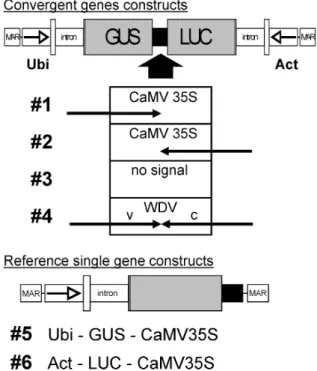
Figure 2. Constructs used to assess the effect of antisense
tran-scription on reporter gene expression. Two different classes of lin-earized constructs were used: Constructs with convergent genes include the transcription units of GUS and LUC driven by the Ubiquitin (Ubi) or the Actin (Act) promoter (arrow) with their na-tive first exon and intron. Constructs #1 to #4 differ only by the nature of the terminator (black box) used: #1 with a CaMV 35S signal terminating the GUS transcription unit, #2 with the same signal in the opposite direction terminating the LUC gene, #3 with no terminator, and #4 with the bidirectional SIR from WDV. Single gene reference constructs included the GUS coding sequence with the Ubiquitin promoter (#5) or the LUC coding sequence with the Actin promoter (#6), both with the CaMV 35S terminator (black box). All sequences are flanked by matrix attachment regions (MAR).
Results
Effıciency of geminivirus terminators for gene expression in transfected protoplasts
Terminators can influence expression levels probably by contributing sequences to the 3⬘ untranslated re-gions (3⬘UTR) of the mRNA and thus by affecting RNA stability or translation. It has been shown that different terminators can cause up to 100 fold varia-tions in the efficiency of transgene expression (An et al. 1989; Ingelbrecht et al. 1989; Ali and Taylor 2001). It was therefore of interest whether geminivi-rus terminators support efficient gene expression. For the analysis, we constructed 14 different expression cassettes containing a-glucuronidase (GUS; Jeffer-son et al. (1987)) open reading frame (ORF) under the transcriptional control of either the maize ubiquitin 1 promoter (including the native first exon and intron; Christensen et al. (1992)) or the rice actin1 promoter (also with its first exon and and intron; McElroy et al. (1990)), and containing different terminators (Fig-ure 1b). The terminators were derived from the CaMV 35/19S transcription unit or comprised the SIRs of the A component of African cassava mosaic virus (ACMV), of wheat dwarf virus (WDV), or of maize streak virus (MSV) (Figure 1a). The geminivi-rus terminators were inserted in both orientations. Ex-pression efficiency was assessed in transfected rice protoplasts (Figure 1c). All expression cassettes with geminivirus or CaMV terminators were found to pro-duce similar levels of GUS activities. Compared to the CaMV terminator, at most two-fold higher or lower activities could be obtained with the geminivi-rus terminators. For the ubiquitin promoter, the orien-tation of the terminator was unimportant, for the actin promoter, slightly higher expression was observed for constructs with the WDV or ACMV terminator in virion-sense (v) orientation compared to the comple-mentary-sense (c) orientation (Figure 1c). The results show that the RNA 3⬘ ends generated at the gemini-virus terminators function as efficiently in gene ex-pression as those generated by the CaMV 35S termi-nator, i.e. they do not contain destabilizing sequences or interfere otherwise with transient gene expression.
The WDV SIR as bidirectional terminator in convergent transcription units
One potential usefulness of the geminivirus termina-tors for genetic engineering would be the property to
terminate two convergent genes with a single se-quence element, allowing for a more effective trans-gene design. Various trans-gene expression constructs with such transcription units were prepared. Convergent genes for GUS, driven by the maize ubiquitin pro-moter (UbiGUS), and firefly luciferase (LUC), driven by the rice actin 1 promoter (ActLUC), were sepa-rated either by the unidirectional CaMV 35S termina-tor in both possible orientations (Figure 2, constructs #1 and #2), no terminator (#3), or the WDV termina-tor (#4); for comparison, the same genes terminated by the CaMV signal were used as⬙single gene⬙ con-structs (#5, #6). To assess the expression of the genes in the different contexts, a number of transient expres-sion experiments in rice Oc protoplasts or in bom-barded rice Oc suspension cells were performed. In both transient expression systems, efficient expression of both genes on construct #4 was observed (Figure 1c). Both convergent genes were expressed similarly to single genes with either the CaMV terminator or with the WDV terminator.
Ingelbrecht et al. (1989) observed differences in the effects of terminator sequences between tran-siently and stable expressed transgenes. We therefore compared expression from constructs #4 to 6 also in transgenic rice callus lines from bombarded rice Oc suspension cells or immature embryos of rice TP309 either in batches of transformed calli (results not shown) or in a large number of individual calli (Fig-ure 3). In total, very similar average expression lev-els as observed in transient expression were also found in transgenic rice cell lines and the distribution of expression levels of individual callus lines was al-most identical for constructs #4, #5 and #6 (Figure 3). These results show that the WDV terminator al-lows efficient expression also in the context of con-vergent genes, i.e. if any effect of terminator leaky-ness in construct #4 existed, it must be small. The terminator is useful for construction of such expres-sion units.
Convergent, overlapping transcription units in transient expression experiments
We have compared expression from convergent genes separated by the bidirectional WDV terminator, by only one unidirectional CaMV terminator or by no terminator at all (Figure 2). With all these constructs, besides #4 with the WDV terminator, the two tran-scription units overlap to some extent, mimicking the situation of transgene transcription from a promoter
located downstream and in anti-sense orientation, as it might occur at some integration loci.
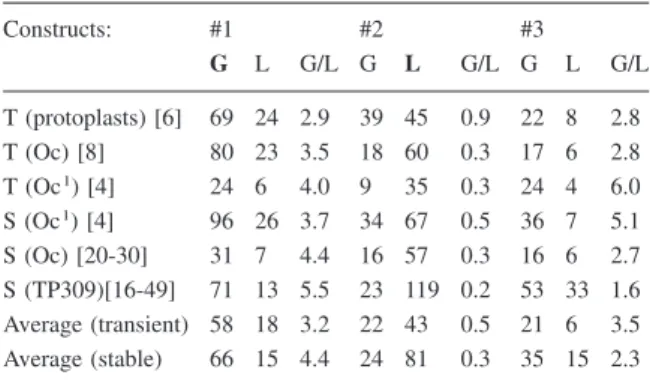
We expected strong negative effects of anti-sense transcription since anti-sense RNA generated in trans can strongly reduce expression even in transient ex-pression systems (Fütterer et al. 1993). However, in the presence of a second, convergent, non-terminated gene the CaMV 35S terminated UbiGUS or ActLUC genes both were expressed at only a slightly lower level than the WDV terminator version in transient expression (#1 for the terminated GUS gene and #2 for the terminated LUC gene; Table 1), indicating that the potential anti-sense transcription had no drastic effect on a terminated gene. The non-terminated genes of each pair were usually expressed with lower but still considerable efficiency (compare #1 and 3 for GUS expression and #2 and 3 for LUC expression; Table 1). It is likely that in the absence of a proper terminator, other sequences can act as at least par-tially efficient termination signals. Linearization of the terminatorless construct #3 in the LUC coding re-gion abolished GUS activity in transient expression,
while the same linearization of #4 had no negative effect on expression (results not shown), suggesting that sequences in the LUC gene are important for GUS expression in construct #3 but not in #4. Since the nonterminated UbiGUS genes in constructs #2 and #3 are expressed equally well, the degree of over-lapping transcription seems to be unimportant in this case. In contrast, a potentially longer overlap inhibits expression of the nonterminated ActLUC genes in #1 and #3 stronger (Table 1).
From these experiments it appears that the absence of a terminator is probably more detrimental for the respective gene expression than potential anti-sense transcription.
Observations from stable transformation experiments with convergent gene constructs
The effects of convergent transcription might be par-ticularly different in transiently and in stable trans-formed cells. In transient expression, the presence of the large number of identical promoter copies may reduce simultaneous transcription of the two conver-gent genes, due to competition of each promoter for possibly limiting transcription factors. In integrated transgenes, only a few gene copies are transcribed but transcription continues for a long time, allowing the establishment of e.g. silencing mechanisms. We ex-pected therefore stronger negative effects of overlap-ping convergent transcription in transformed cells.
Figure 3. Comparison of expression level distribution in stably
transformed TP309 callus lines. Construct #4 (Figure 2) with the convergent GUS and LUC genes terminated with the bidirectional WDV SIR (black diamonds) was compared with single gene con-structs (open diamonds) with only GUS (#5, left panel), or only LUC (#6, right panel). GUS expression below 0.01 may not be different from background. Dependent lines are included. The ex-pression level is shown in arbitrary units. For each construct the lines were sorted according to their expression level and distrib-uted along the x-axis. (Note that a small horizontal shift of the dis-tribution can be caused by small differences of the numbers of clones with a certain expression level, but does not reflect a fun-damental difference).
Table 1. Average GUS (G) and LUC (L) expression and the GUS/
LUC ratio in batches of transiently (T) or stable (S) transformed rice cells. Expression from constructs #1 to 3 is given relative to construct #4 for which GUS and LUC expression were defined as 100% and the G/L ratio accordingly as 1; terminated genes are shown in bold. The number of treatments (each with three repeti-tions) or individually analysed calli is indicated in square brackets in the first column.
Constructs: #1 #2 #3 G L G/L G L G/L G L G/L T (protoplasts) [6] 69 24 2.9 39 45 0.9 22 8 2.8 T (Oc) [8] 80 23 3.5 18 60 0.3 17 6 2.8 T (Oc1) [4] 24 6 4.0 9 35 0.3 24 4 6.0 S (Oc1) [4] 96 26 3.7 34 67 0.5 36 7 5.1 S (Oc) [20-30] 31 7 4.4 16 57 0.3 16 6 2.7 S (TP309)[16-49] 71 13 5.5 23 119 0.2 53 33 1.6 Average (transient) 58 18 3.2 22 43 0.5 21 6 3.5 Average (stable) 66 15 4.4 24 81 0.3 35 15 2.3
1)transient and stable expression from the same transformation
However, reporter gene expression was high in al-most all cases suggesting an even further reduced ef-fect of antisense transcription (Table 1). In one trans-formation experiment, cells were analysed one day after bombardment for transient expression and 3 weeks after bombardment for stable expression (Ta-ble 1, lines 3 and 4). Because of the use of the same cells and exactly the same transformation procedure, these data can be directly compared. For the two con-ditions, absolute expression levels were different but the expression ratios of the two reporter genes were almost the same. In the experiment with TP309 de-rived callus lines, we followed transgene expression in multiple independent lines for six months, but also during this extended period, no signs for increased expression inactivation could be observed (not shown). The apparent similarity of gene expression in transient and stable transformation experiments was surprising and indicated that gene silencing, which was observed in rice callus cultures with constructs containing inverted repeats within one RNA (Water-house et al. 1998) was not induced by convergent transcription units.
Transformation by methods of direct gene transfer usually leads to the integration of several, often rear-ranged transgene copies. This was verified by a Southern analysis of all transformed callus lines from bombarded TP309 embryos (not shown). It therefore remains unknown from which of these (rearranged) fragments the reporter genes are expressed. The av-erage expression activity could reflect more the prop-erties of the single genes than that of the convergent tandem gene construct. The transgene constructs were flanked by matrix attachment regions. Intact, inte-grated fragments would therefore be protected to some degree from ⬙position effects⬙ caused by chro-mosomal expression signals (Holmes-Davis and Co-mai 1998; Vain et al. 1999). Their expression might still be affected by regional chromatin structures or subnuclear localization, but these effects should influ-ence both genes in the same way, i.e. the absolute ex-pression level might vary but the ratio of exex-pression of the two convergent genes should be similar for in-dependent lines. We compared the variation of this ratio in independent, transformed callus lines ob-tained after bombardment of Oc suspension cells or TP309 embryos. The distribution of the individual expression values for the latter experiment is shown in Figure 4. For the expression ratio, we arbitrarily defined as ⬙normal⬙ a ten-fold variation window around the average. In both independent
transforma-tion experiments, a larger percentage of the #4 clones was found in this window than for any of the other convergent-gene constructs (Table 2). This indicates that either expression from convergent gene con-structs with at least one non-terminated gene is intrin-sically more variable or that transformation with the constructs led preferentially to rearranged transgenes. In our experiments, we obtained fewer clones with the constructs #1 to 3 than with #4 (Figure 4, Table 2), #5 and #6 (not shown).
Discussion
Proper 3⬘ end processing is an obligatory step in mRNA maturation. Signals specifying these steps are only poorly characterized in plants, but they may con-tain a reasonably conserved sequence AATAAA, which is however not required in all known signals, and some GT rich elements upstream (Rothnie 1996). The loose conservation of these features allows that also genetically engineered transcription units with-out terminators produce translatable mRNAs by 3⬘ end processing of the primary transcript at acciden-tally available, similar sites; as shown previously (In-gelbrecht et al. 1989) and in this work, this results in only lower expression levels.
The termination signals may contribute to gene ex-pression magnitude and stability in various ways. One feature is their contribution to the sequences at the 3⬘ end of the RNA; this may influence RNA stability and/or RNA translation (Abler and Green 1996; Füt-terer and Hohn 1996). Terminator dependent differ-ences in expression levels have indeed been detected. A gene terminated with sequences from the
Arabidop-sis small subunit of rbcs gene was expressed about
100 fold better in transgenic tobacco than the same gene terminated by sequences from the Antirrhinum
majus chalcon synthase gene (Ingelbrecht et al.
1989), and the terminator of the potato pinII gene al-lowed about 60 fold higher expression than that of the T-DNA derived 6b gene (An et al. 1989). So far, only few terminators have been directly compared (see Ali and Taylor (2001) for references) and only few are being used routinely in genetic engineering of plants (Koziel et al. 1996).
We show here that terminators from geminiviruses support similar gene expression levels as the most widely used terminator from CaMV. In transient ex-pression experiments all three used geminivirus ter-minators, each in both possible orientations and in
combination with two different promoters allowed similar expression levels, suggesting that 3⬘ end for-mation is similarly efficient and RNA stability and translation is similar to constructs with a CaMV ter-minator. In stably transformed callus lines, expression constructs, in which the WDV SIR was used to si-multaneously terminate two convergent reporter genes, resulted in an very similar distribution of re-porter gene activity levels as observed for CaMV 35S terminated single genes. The bidirectional activity of the geminivirus terminators represents a potentially
interesting property for applications in genetic engi-neering. First, as shown here, they can be used to si-multaneously terminate two genes with one sequence element. This reduces the number of required se-quence elements for the construction of multi-gene cassettes and helps to avoid sequence duplications in transgene constructs. The probability of repeat-in-duced transgene silencing may therefore be rerepeat-in-duced (Fagard and Vaucheret 2000; De Wilde et al. 2000). Second, such terminators could inhibit unwanted anti-sense transcription from a downstream, convergent
Figure 4. Relative reporter activity of independent transgenic TP309 rice suspension cultures. GUS and LUC activity in individual
trans-formed cell lines with convergent reporter gene constructs (#1 to #4, Figure 2) is shown. The corresponding values (with same number) are connected by lines. The average expression value of TP309 lines transformed with single gene constructs #5 and 6 was set to 100%. Values below 0.5% were regarded as background.
Table 2. Expression distribution in individual transgenic rice callus lines derived from Oc suspension cells or TP309 immature embryos. For
each transformation experiment with constructs #1 to 4, the number of callus lines (and - in brackets - the percentage) expressing none of the reporter genes (-), only GUS (G), only LUC (L) or both (GL) and the total number of lines analysed (⌺) is given. The average GUS/LUC ratio and the number and percentage of lines with ratios between 3.33-fold lower and 3.33-fold higher (10 fold range) than average is indi-cated.
Reporter expression GUS/LUC Lines in 10x range
– G L GL ⌺1
#1 13 (36) 5 (14) 7 (19) 11 (31) 36 5 6 (17%)
#2 7 (15) 2 (4) 11 (24) 26 (57) 46 0.25 15 (33%)
#3 14 (29) 8 (17) 10 (21) 16 (33) 48 2.2 7 (15%)
#4 5 (7) 2 (3) 14 (18) 55 (72) 76 1 36 (47%)
promoter sequence, which may be present in the in-tegration site or be produced by transgene rearrange-ments. T-DNA has been shown to integrate frequently into transcribed regions (Herman et al. 1990; Koncz et al. 1989), the probability for antisense transcription could therefore be high. In this respect, not all gemi-nivirus terminators might be equally useful, since the v- and cRNA 3⬘ ends of e.g. the begomovirus ACMV slightly overlap (in contrast to the monopartite mas-treviruses) and thus a short region for dsRNA forma-tion might be available. Interestingly, begomoviruses encode a silencing suppressor (Voinnet et al. 1999).
We attempted to mimic a situation of convergent, overlapping transcription by transforming accord-ingly constructed convergent gene expression cas-settes. We expected a strong negative effect of anti-sense transcription on reporter expression in transiently transfected cells and a probably even stronger effect in transgenic cells. However, similar as reported previously for expression in tobacco cells (Paszty and Lurquin 1990), the effect in transient ex-pression was at most 3 fold and it was rather less pronounced in stable transformants, where effects of silencing could have become visible (Waterhouse et al. 1998). The effects in transient expression were smaller than previously obtained by expression of GUS anti-sense RNA in trans (Fütterer et al. 1993). The absence of a strong negative effect in stably transformed cell lines may be related to a problem connected to all transformation experiments involv-ing direct gene transfer methods. Integration of just a single, intact gene copy is a rare event. Much more frequently, and also in our experiments, several intact and/or rearranged copies are present. In rearranged or partial copies, undefined DNA sequences are located closer to the expressed genes than when the complete, convergent expression cassette including the flanking MARs is integrated and therefore stronger variations can be expected. This should particularly affect the ratio of expression of the two reporter genes. The narrower distribution of this expression ratio for the construct #4 thus suggests that expression from this construct is indeed more stable and predominantly defined by the inherent transcription signals. The wider distribution for the other constructs and partic-ularly for #3 without any terminator in contrast sug-gests that in this case either cellular parameters have a larger influence (e.g. by modulation of antisense RNA effects) or that the genes are expressed predom-inantly from rearranged transgenes. Since the select-able marker gene used for transformation was the
same and independent from the convergent reporter gene cassette, a selection for such rearranged clones would imply that the non-rearranged ones confer a detrimental property to the cell. Double-stranded RNA (reviewed in Kumar and Carmichael (1998)) or stalled transcription complexes (Andera and Wasylyk 1997; Ljungman et al. 1999), which could in our case be the result of the collision of the convergent tran-scription complexes or the two waves of positive su-percoiling preceding these complexes (Uptain et al. 1997), are known triggers for arrest of cell divison in other eukaryotic systems. Overall, the transformation efficiency with constructs #1 to 3 was lower than with #4 to 6. This could be indicative for problems with regeneration of calli harbouring convergent, overlap-ping transcription units with strong promoters.
According to the findings of efficient induction of gene silencing by double-stranded RNA (Angell and Baulcombe 1997; Fire et al. 1998), constructs with engineered simultaneous sense and anti-sense tran-scription might be envisaged as efficient tools to si-lence plant genes. It has been discussed that RNA-RNA interactions might be particularly efficient in such a case because of the close proximity of synthe-sis of the two RNA molecules (Stam et al. 2000). We tested whether expression from such constructs is par-ticularly prone to silencing, but could not observe any difference between the convergent or single gene con-structs in rice callus lines. It is possible that in rice callus establishment of silencing is slower or less ef-ficient, however, silencing by expression of RNAs with double-stranded regions has been reported for rice callus lines (Waterhouse et al. 1998). It is also possible that in the tested gene configurations not much anti-sense RNA is produced but that oppositely transcribing polymerase complexes are arrested at collision sites or displaced from the DNA template.
Transformation experiments at a larger scale and possibly using Agrobacterium mediated gene transfer to generate more single-copy transgenics without pos-sible transcription from truncated or rearranged frag-ments would be required to clarify this question and also to study the possible negative effect of overlap-ping transcription on transformation efficiency.
Acknowledgements
We gratefully acknowlege the support of this work by grants from the Biotechnology programm of the Swiss National Foundation of Sciences. We thank B. Hohn, B. Gronenborn and J. Puonti-Kaerlas for plas-mids containing geminivirus sequences.
References
Abler M.L. and Green P. 1996. Control of mRNA stability in higher plants. Plant Mol. Biol. 32: 63–78.
Ali S. and Taylor W.C. 2001. The 3⬘ non-coding region of a C4
photosynthesis gene increases transgene expression when com-bined with heterologous promoters. Plant Mol. Biol. 46: 325– 333.
An G., Mitra A., Choi H.K., Costa M.A., An K., Thornburg R.W. et al. 1989. Functional analysis of the 3⬘ control region of the potato wound-inducible proteinase inhibitor II gene. Plant Cell 1: 115–122.
Andera L. and Wasylyk B. 1997. Transcription abnormalities po-tentiate apoptosis of normal human fibroblasts. Mol. Med. 3:: 852–863.
Angell S.M. and Baulcombe D.C. 1997. Consistent gene silencing in transgenic plants expressing a replicating potato virus X RNA. EMBO J. 16: 3675–3684.
Aranda A. and Proudfoot N.J. 1999. Definition of transcriptional pause elements in fission yeast. Mol. Cell. Biol. 19: 1251–1261. Bliffeld M., Mundy J., Potrykus I. and Fütterer J. 1999. Genetic engineering of wheat for increased resistance to powdery mil-dew disease. Theor. Appl. Genet. 98: 1079–1086.
Burkhardt P.K., Beyer P., Wünn J., Klöti A., Armstrong G.A., Schledz M. et al. 1997. Transgenic rice (Oryza sativa) en-dosperm expressing daffodil (Narcissus pseudonarcissus) phy-toene synthase accumulates phyphy-toene, a key intermediate of provitamin A biosynthesis. Plant J. 11: 1071–1078.
Chen G., Müller M., Potrykus I., Hohn T. and Fütterer J. 1994. Rice tungro bacilliform virus: Transcription and translation in pro-toplasts. Virology 204: 91–100.
Christensen A.H., Sharrock R.A. and Quail P.H. 1992. Maize poly-ubiquitin genes: Structure, thermal perturbation of expression, and transcript splicing and promoter activity following transfer to protoplasts by electroporation. Plant Mol. Biol. 18: 675–689. De Wilde C., Van Houdt H., De Buck S., Angenon G., De Jaeger G. and Depicker A. 2000. Plants as bioreactors for protein pro-duction: avoiding the problem of transgene silencing. Plant Mol. Biol. 43: 347–359.
Elmayan T. and Vaucheret H. 1996. Expression of single copies of a strongly enhanced 35S transgene can be silenced post-tran-scriptionally. Plant J. 9: 787–797.
Fagard M. and Vaucheret H. 2000. (Trans)gene silencing in plants: How many mechanisms? Annu. Rev. Plant Physiol. Plant Mol. Biol. 51: 167–194.
Fire A., Xu S., Montgomery M.K., Kostas S.A., Driver S.E. and Mello C.C. 1998. Potent and specific genetic interference by double-stranded RNA in Caenorhabditis elegans. Nature 391: 806–811.
Fütterer J., Kiss-Laszlo Z. and Hohn T. 1993. Nonlinear ribosome migration on cauliflower mosaic virus 35S RNA. Cell 73: 789– 803.
Fütterer J. and Hohn T. 1996. Translation in plants – rules and ex-ceptions. Plant Mol. Biol. 32: 159–189.
Greger I.H., Demarchi F., Giacca M. and Proudfoot N.J. 1998. Transcriptional interference perturbs binding of Sp1 to the HIV-1 promoter. Nucl. Acids Res. 26: 1294–1300.
Hanley-Bowdoin L., Settlage S.B., Orozco B.M., Nagar S. and Robertson D. 1999. Geminiviruses: models for plant DNA rep-lication, transcription and cell cycle regulation. Crit. Rev. Plant Sci. 18: 71–106.
Hansen K., Birse C.E. and Proudfoot N.J. 1998. Nascent transcrip-tion from the nmt1 and nmt2 genes of Schizosaccharomyces
pombe overlaps neighbouring genes. EMBO J. 17: 3066–3077.
Herman L., Jacobs A., van Montagu M. and Depicker A. 1990. Plant chromosome/marker gene fusion assay to study normal and truncated T-DNA integration events. Mol. Gen. Genet. 224: 248–256.
Hirose Y. and Manley J.L. 2000. RNA polymerase II and the inte-gration of nuclear events. Genes Dev. 14: 1415–1429. Holmes-Davis R. and Comai L. 1998. Nuclear matrix attachment
regions and plant gene expression. Trends Plant Sci. 3: 91–97. Ingelbrecht I.L.W., Herman L.M.F., Dekeyser R.A., van Montague M.C. and Depicker A.G. 1989. Different 3⬘ end regions strongly influence the level of gene expression in plant cells. Plant Cell 1: 671–680.
Ingelbrecht I.L.W., Breyne P., Vancompernolle K., Jacobs A., van Montague M.C. and Depicker A.G. 1991. Transcriptional inter-ference in transgenic plants. Gene. 109: 239–242.
Jefferson R.A., Kavanaugh T.A. and Bevan M.W. 1987. GUS fu-sions:-glucuronidase as a sensitive and versatile gene fusion marker in higher plants. EMBO J. 6: 3901–3907.
Klöti A., Henrich C., Bieri S., He X., Chen G., Burkhardt P. et al. 1999. Upstream and downstream sequence elements determine the specificity of the rice tungro bacilliform virus promoter and influence RNA production steps following transcription initia-tion. Plant Mol. Biol. 40: 249–266.
Koncz C., Martini N., Mayerhofer R., Koncz-Kalman Z., Körber H., Redei G.P. et al. 1989. High frequency T-DNA-mediated gene transfer in plants. Proc. Natl. Acad. Sci. USA 86: 8467– 8471.
Koziel M.G., Carozzi N.B. and Desai N. 1996. Optimizing expres-sion of transgenes with an emphasis on post-transcriptional events. Plant Mol. Biol 32: 393–405.
Kumar M. and Carmichael G.C. 1998. Antisense RNA: Function and fate of duplex RNA in cells of higher eukaryotes. Micro-biol. Mol. Biol. Rev 62: 1415–1434.
Ljungman M., Zhang F., Chen F., Rainbow A.J. and Bruce C. 1999. Inhibition of RNA polymerase II as a trigger for the p53 re-sponse. Oncogene 18: 583–592.
Matzke A.J.M. and Matzke M.A. 1998. Position effects and epige-netic silencing of plant transgenes. Curr. Opin. Plant Biol. 1: 142–148.
McElroy D., Zhang W. and Wu R. 1990. Isolation of an efficient promoter for use in rice transformation. Plant Cell 2: 163–171. Murashige T. and Skoog F. 1962. A revised medium for rapid as-says with tobacco tissue cultures. Physiol. Plant 15: 473–497. Muskens M.W.M., Vissers A.P.A., Mol J.N.M. and Kooter J.M. 2000. Role of inverted DNA repeats in transcriptional and post-transcriptional gene silencing. Plant Mol. Biol. 43: 243–260.
Paszty C.J.R. and Lurquin P.F. 1990. Inhibition of transgene ex-pression in plant protoplasts by the presence in cis of an op-posing 3⬘-promoter. Plant Science 72: 69–79.
Pietrzak M., Shillito R.D., Hohn T. and Potrykus I. 1986. Expres-sion of two bacterial antibiotic resistance genes after protoplast transformation with a new plant expression vector. Nucl. Acids Res 14: 5857–5868.
Rothnie H.M. 1996. Plant mRNA 3⬘-end formation. Plant Mol. Biol 32: 43–61.
Rothnie H.M., Chen G., Fütterer J. and Hohn T. 2001. Polyadeny-lation in rice tungro bacilliform virus: cis-acting signals and regulation. J. Virol 75: 4184–4194.
Sanfaçon H. and Hohn T. 1990. Proximity to the promoter inhibits recognition of cauliflower mosaic virus polyadenylation signal. Nature 346: 81–84.
Stam M., Viterbo A., Mol J.N.M. and Kooter J.M. 1998. Position-dependent methylation and transcriptional silencing of trans-genes in inverted T-DNA repeats: implications for posttrancrip-tional silencing of homologous host genes in plants. Mol. Cell. Biol 18: 6165–6177.
Stam M., deBruin R., van Blokland R., van der Hoorn R.A.L., Mol J.N.M. and Kooter J.M. 2000. Distinct features of post-tran-scripitonal gene silencing by antisense transgenes in single copy and inverted T-DNA repeat loci. Plant J. 21: 27–42. Uptain S.M., Kane C.M. and Chamberlin M.J. 1997. Basic
mecha-nisms of transcript elongation and its regulation. Annu. Rev. Biochem 66: 117–172.
Vain P., Worland B., Kohli A., Snape J.W., Christou P., Allen G.C. et al. 1999. Matrix attachment regions increase transgene ex-pression levels and stability in transgenic rice plants and their progeny. Plant J 18: 233–242.
Voinnet O., Pinto Y.M. and Baulcombe D.C. 1999. Suppression of gene silencing: a general strategy used by diverse DNA and RNA viruses of plants. Proc. Natl. Acad. Sci. USA 96: 14147– 14152.
Waterhouse P.M., Graham M.W. and Wang M.-B. 1998. Virus re-sistance and gene silencing in plants can be induced by simul-taneous expression of sense and antisense RNA. Proc. Natl. Acad. Sci. USA 95: 13959–13964.