Subsidiary Internationalization and
Evolutionary Paths of Cross-Border Subsidiary Mandates
A Multiple Case Study Approach
Thesis
presented to the Faculty of Economics and Social Sciences of the University of Fribourg (Switzerland)
by
Nicolas LOHR
from Hamburg, Germany
in fulfilment of the requirements for the degree of Doctor of Economics and Social Sciences
Accepted by the Faculty of Economics and Social Sciences April 8th, 2013 at the proposal of
Prof. Dr. Dirk Morschett (first supervisor) and Prof. Dr. Eric Davoine (second supervisor)
The Faculty of Economics and Social Sciences of the University of Fribourg (Switzerland) does not intend either to approve or disapprove the opinions expressed in a thesis: they must be considered as the author’s own (decision of the Faculty Council of 23 January 1990).
Foreword
Internationalization processes have long been a core topic of International Business research. Scholars thereby usually assumed that the headquarters in the home country create a direct and immediate link to the activities in a specific foreign market. However, a quite different phenomenon can also be observed in practice: Subsidiaries in foreign markets in some cases take a charter – initiated by the headquarters or on its own initiative – beyond their original host market and internationalize themselves into third markets. This process which has been labeled “internationalization of the second degree” may help a multinational company to lev-erage its existing resources and capabilities in remote locations more effectively than the tra-ditional approach.
Nicolas Lohr focused his doctoral thesis on the internationalization of the second degree. The topic has high practical relevance but has rarely been investigated in business research. In fact, there exists almost no other study that focusses explicitly on this phenomenon. Nicolas Lohr provides the first comprehensive study on this issue and it is the first study to investigate the reasons for the internationalization of the second degree as well as the dynamics of this man-date.
From his work as a business consultant, Nicolas Lohr already had a thorough understanding of business practices in internationally operating companies when he started his doctoral stud-ies. He quickly understood how to take an academic perspective on precisely defined research questions and how to apply the adequate scientific research instruments in a rigorous manner. He investigated his research questions with a qualitative method, based on eleven case studies. Each case in itself is worthwhile reading and brings the reader interesting insights. But it is the identification of commonalities and differences between the cases by means of a systemat-ic cross-case analysis that is the true accomplishment of Nsystemat-icolas Lohr. With this procedure, he creates new knowledge and manages to propose extensions to existing theory.
Overall, Nicolas Lohr’s doctoral thesis provides a valuable and important contribution to the research in International Business. He contributes to our understanding of a very relevant phenomenon. First discussions on his results in the academic community already demonstrat-ed that his findings are well receivdemonstrat-ed but also provoke debate.
I recommend every researcher who intends to investigate internationalization processes to read this book. Furthermore, it is also of great value for company executives whom it can help to reflect on their own business practices. I am convinced that the study will be widely read and will stimulate further studies into the issue by other scholars who will find the results of Nicolas Lohr a profound basis for their own research.
Fribourg, April 2013 Prof. Dirk Morschett
Acknowledgements
Carrying out a doctoral thesis can be both a lonely and seemingly infinite undertaking, espe-cially if one is used to working in collaboration with teams and under defined deadlines. A thesis requires the self-discipline to set up one’s own goals and timelines, even when it seems no one else would notice the difference. At the same time, this project has given me the op-portunity to investigate a scientific research topic with a level of depth and engagement that is simply not possible in everyday working life. Although I’ve noted the solitary nature of my scientific journey, this thesis would not have been possible without the endless contributions of many individuals.
Firstly, I would like to thank my thesis supervisor Prof. Dr. Dirk Morschett for his support throughout this process. When I look back at our initial exchange about my study exposé and all our subsequent discussions about its progress, I recognize how he equipped me with the tools and framework I needed to master the challenge of qualitative research in subsidiary internationalization processes. Prof. Dr. Dirk Morschett was always willing to respond with prompt and constructive feedback, whether it was about my initial findings, the preparation for scientific papers and presentations, or even with the submission of my final draft. In addi-tion, I would also like to thank Prof. Dr. Eric Davoine who served as my second thesis exam-iner, as well as the chair of the doctoral committee, Prof. Dr. Rudolf Grünig, for their con-structive criticism and encouragement.
I would also like to express my gratitude to all seven companies and fifteen interviewees who agreed to participate in this study. They provided me with firsthand insight into the processes of subsidiary internationalization from both the corporate headquarters and the foreign subsid-iary perspective. Unfortunately, confidentiality agreements prevent me from explicitly listing their names but I acknowledge and thank them for their invaluable contributions.
I also thank my current employer Oliver Wyman for financially supporting me throughout this study. This support gave me the freedom and the privilege to conduct my external re-search and to focus exclusively on completing this doctoral thesis.
Finally, I would like to thank my parents for their warm support and their constant encour-agement.
Berlin, April 2013 Nicolas Lohr
Table of contents
Table of contents ... VII List of figures ... XIII List of tables ... XV
1. Introduction to the study ... 1
1.1. Subsidiary internationalization: a topic for research ... 1
1.2. Points of departure ... 4
1.3. Research questions, aim and approach ... 5
1.4. Structure of the study ... 6
2. Definitions and literature review ... 8
2.1. Introduction ... 8
2.2. Definitions ... 9
2.2.1. Subsidiary internationalization ... 9
2.2.2. MNC... 10
2.2.3. Foreign subsidiary ... 11
2.2.4. Foreign market subsidiary mandates or charters ... 13
2.3. Findings of relevant IB research streams ... 14
2.3.1. Classification of available literature ... 14
2.3.2. Studies with static views and the firm as core unit of analysis ... 17
2.3.2.1. Monopolistic advantage theory of the MNC... 17
2.3.2.2. Transaction cost and internalization theories of the MNC ... 18
2.3.2.3. Eclectic paradigm ... 19
2.3.2.4. Knowledge-based and asset-seeking views of the MNC ... 20
2.3.3. Studies with dynamic views and the firm as core unit of analysis ... 21
2.3.3.1. Product lifecycle theory ... 22
2.3.3.2. Internationalization models with an evolutionary process perspective ... 22
2.3.3.3. Internationalization models with a revolutionary process perspective ... 27
2.3.3.4. Resource-based views ... 28
2.3.4.1. HQ–subsidiary relationships ... 29
2.3.4.2. General subsidiary roles ... 32
2.3.4.3. Specialized subsidiary roles ... 34
2.3.4.4. Subsidiaries with foreign market development roles ... 36
2.3.4.5. World product mandate ... 38
2.3.4.6. Foreign center of excellence ... 39
2.3.4.7. Regional headquarters ... 39
2.3.4.8. Divisional headquarters ... 42
2.3.5. Studies with dynamic views and the subsidiary as core unit of analysis ... 44
2.3.5.1. Subsidiary evolution stages ... 44
2.3.5.2. Subsidiary evolution determinants ... 45
2.3.5.3. Subsidiary internationalization ... 59
3. Methodology ... 62
3.1. Introduction ... 62
3.2. Qualitative research ... 63
3.3. Overall research design ... 64
3.3.1. Case selection ... 67
3.3.2. Data sources and collection methods ... 69
3.3.3. Data analysis ... 75
3.3.4. Quality control ... 83
4. Case descriptions and within-case analyses ... 90
4.1. Introduction ... 90
4.2. Eleven cases of subsidiary internationalization ... 90
4.3. Case #1: The internationalization process of a Polish subsidiary into former CIS markets ... 91
4.3.1. Case description ... 91
4.3.1.1. Initial mandate gain ... 93
4.3.1.2. Mandate evolution ... 95
4.3.2. Within-case analyses ... 96
4.4. Case #2: The internationalization process of a Spanish subsidiary into Latin America ... 101
4.4.1. Case description ... 101
4.4.1.1. Initial mandate gain ... 102
4.4.1.2. Mandate evolution ... 104
4.4.2. Within-case analyses ... 105
4.5. Case #3: The internationalization process of a Singaporean subsidiary into East Asia, Australia and New Zealand ... 109
4.5.1. Case description ... 109
4.5.1.1. Initial mandate gain ... 110
4.5.1.2. Mandate evolution ... 112
4.5.2. Within-case analyses ... 113
4.6. Case #4: The internationalization process of an Austrian subsidiary into Eastern Europe ... 117
4.6.1. Case description ... 117
4.6.1.1. Initial mandate gain ... 119
4.6.1.2. Mandate evolution ... 120
4.6.2. Within-case analyses ... 122
4.7. Case #5: The internationalization process of a Chinese subsidiary into Asia-Pacific ... 126
4.7.1. Case description ... 126
4.7.1.1. Initial mandate gain ... 127
4.7.1.2. Mandate evolution ... 128
4.7.2. Within-case analyses ... 130
4.8. Case #6: The internationalization process of a Singaporean subsidiary into Southeast Asia ... 134
4.8.1. Case description ... 134
4.8.1.1. Initial mandate gain ... 136
4.8.1.2. Mandate evolution ... 137
4.8.2. Within-case analyses ... 138
4.9. Case #7: The internationalization process of a Singaporean subsidiary into East Asia ... 142
4.9.1. Case description ... 142
4.9.1.2. Mandate evolution ... 145
4.9.2. Within-case analyses ... 149
4.10. Case #8: The internationalization process of a US subsidiary into Latin America ... 153
4.10.1. Case description ... 153
4.10.1.1. Initial mandate gain ... 155
4.10.1.2. Mandate evolution ... 156
4.10.2. Within-case analyses ... 159
4.11. Case #9: The internationalization process of a Brazilian subsidiary into South America ... 163
4.11.1. Case description ... 163
4.11.1.1. Initial mandate gain ... 165
4.11.1.2. Mandate evolution ... 166
4.11.2. Within-case analyses ... 166
4.12. Cases #10a and #10b: The failed requests of a French subsidiary to develop markets in Northern Africa ... 170
4.12.1. Case description ... 170
4.12.1.1. Initial mandate gain ... 171
4.12.1.2. Mandate evolution ... 172
4.12.2. Within-case analyses ... 172
5. Cross-case analyses and discussion ... 176
5.1. Introduction ... 176
5.2. Comparative analysis of case data ... 177
5.2.1. Overview ... 177
5.2.2. Initial mandate gain ... 182
5.2.2.1. Opportunity-identification and initiative-taking ... 182
5.2.2.2. Rent-seeking and responsibility-allocation ... 189
5.2.3. Mandate evolution ... 198
5.2.3.1. Mandate development ... 198
5.2.3.2. Mandate outlook ... 213
5.2.4. Mandate lifecycle ... 221
5.3.1. Overview ... 228
5.3.2. Initial mandate gain ... 230
5.3.2.1. Subdivision of the revised IP model ... 230
5.3.2.2. Host-market-related CSAs and the liability of inter-regional foreignness ... 238
5.3.2.3. Principal-agent relationships and altering risk parameters ... 242
5.3.3. Mandate evolution ... 247
5.3.3.1. Evolutionary elements of gradualism and discontinuity ... 248
5.3.3.2. Impact of business networks and MNC localization degrees ... 250
5.3.3.3. Corporate immune systems and risk-reducing measures ... 255
5.3.3.4. Comptetitive pressure on advanced cross-border subsidiary mandates ... 260
5.3.4. Mandate lifecycle ... 266
6. Conclusion ... 272
6.1. Contribution to IB theory ... 272
6.2. Managerial implications ... 275
6.3. Limitations and suggestions for further research ... 277
7. References ... 280
8. Appendix ... 292
List of figures
Figure 2-1: Classification of relevant IB literature streams and guiding review questions ... 15
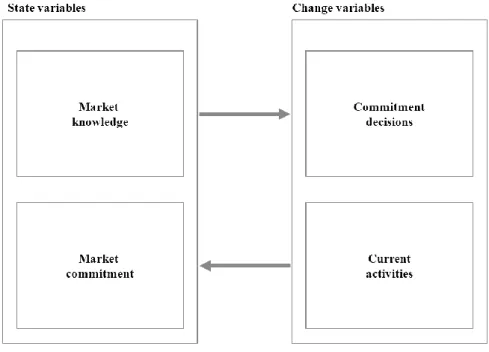
Figure 2-2: Principles of the Uppsala or IP model ... 23
Figure 2-3: Risk alterations as a result of internationalization moves ... 24
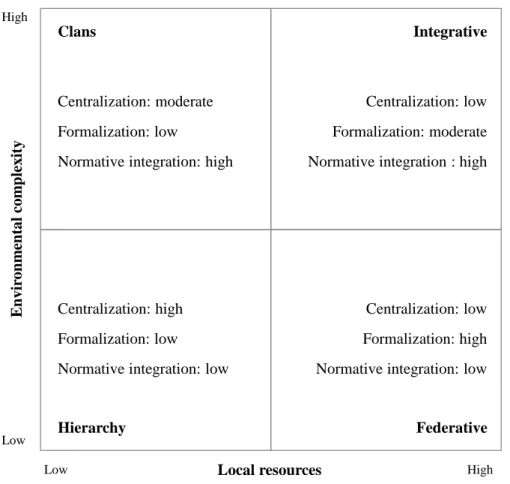
Figure 2-4: Fit structure of headquarters–subsidiary relations in each context ... 30
Figure 2-5: Complete subsidiary typology formulation ... 35
Figure 2-6: Sources of international competitive advantage – a transaction cost model ... 36
Figure 2-7: Modified integration-response framework of Prahalad & Doz (1987)... 40
Figure 2-8: Mandate lifecycle framework ... 45
Figure 2-9: Process model of subsidiary activities and subsidiary resources ... 48
Figure 2-10: Nature of the corporate immune system ... 50
Figure 2-11: Framework for subsidiary mandate types ... 52
Figure 2-12: The development of subsidiary-specific advantages (SSAs) ... 56
Figure 2-13: An inter-organizational network view of subsidiary charter development ... 58
Figure 3-1: Selected research design: Multiple cases with a single unit of analysis ... 66
Figure 4-1: Critical incident chart for Case #1 ... 98
Figure 4-2: Event-state network for Case #1 ... 99
Figure 4-3: Critical incident chart for Case #2 ... 106
Figure 4-4: Event-state network for Case #2 ... 107
Figure 4-5: Critical incident chart for Case #3 ... 114
Figure 4-6: Event-state network for Case #3 ... 115
Figure 4-7: Critical incident chart for Case #4 ... 123
Figure 4-8: Event-state network for Case #4 ... 124
Figure 4-9: Critical incident chart for Case #5 ... 131
Figure 4-10: Event-state network for Case #5 ... 132
Figure 4-11: Critical incident chart for Case #6 ... 139
Figure 4-12: Event-state network for Case #6 ... 140
Figure 4-14: Event-state network for Case #7 ... 151
Figure 4-15: Critical incident chart for Case #8 ... 160
Figure 4-16: Event-state network for Case #8 ... 161
Figure 4-17: Critical incident chart for Case #9 ... 167
Figure 4-18: Event-state network for Case #9 ... 168
Figure 4-19: Critical incident chart for Cases #10a and #10b ... 173
Figure 4-20: Event-state network for Cases #10a and #10b ... 174
Figure 5-1: Overview of cross-case analyses ... 181
Figure 5-2: Evolution stages of cross-border subsidiary mandates ... 222
Figure 5-3: Evolutionary paths for cross-border responsibilities of ten foreign subsidiaries ... 227
Figure 5-4: State and change variables for foreign market development across the MNC (prior to initiative-taking at either MNC level) ... 233
Figure 5-5: Target market-related FSA development at HQ and subsidiary level ... 234
Figure 5-6: State and change variables for foreign market development across the MNC (at the time of initiative-taking at either MNC level) ... 236
Figure 5-7: Leverage of host-market-related CSAs for new market development ... 240
Figure 5-8: Risk alterations associated with subsidiary internationalization ... 245
Figure 5-9: Network position of focal subsidiary and HQ at initial mandate gain ... 251
Figure 5-10: Impact of international MNC strategies on cross-border subsidiary mandates ... 254
Figure 5-11: Nature of the modified corporate immune system for subsidiary internationalization .. 256
Figure 5-12: Risk-influencing parameters in subsidiary internationalization ... 258
Figure 5-13: Network positions of corporate HQ, regional HQ and foreign sub-unit ... 261
Figure 5-14: Impact of international MNC strategies on regional HQ mandates... 262
Figure 5-15: Challenges for a lifecycle perspective of cross-border subsidiary mandates ... 267
Figure 5-16: Drivers and restrictions in the evolutionary path of cross-border subsidiary mandates . 268 Figure 5-17: Subsidiary typology for cross-border responsibilities ... 270
List of tables
Table 2-1: Classification of relevant IB literature with the firm as core unit of analysis...16
Table 2-2: Classification of relevant IB literature with the subsidiary as core unit of analysis ...16
Table 2-3: Market entry modes in Dunning’s eclectic paradigm ...20
Table 2-4: Overview of agency theory ...31
Table 2-5: Selected subsidiary role typologies ...32
Table 2-6: Types and characteristics of subsidiary initiatives ...47
Table 2-7: Five generic subsidiary evolution processes ...54
Table 2-8: Dynamics of the status of regional headquarters from 1998 to 2010 ...58
Table 3-1: Profiles of participating firms ...68
Table 3-2: Profiles of parent companies, foreign subsidiaries and investigated cases ...69
Table 3-3: Overview of interview participants and number of interviews ...71
Table 3-4: Primary and secondary data sources with varying topic perspectives ...72
Table 3-5: A-priori constructs at the offset of the study...74
Table 3-6: Use of techniques for within-case analysis throughout the study ...76
Table 3-7: Initial and predominately descriptive list of codes ...77
Table 3-8: Second and increasingly interpretative lists of codes ...78
Table 3-9: Categories and classification of cases for cross-case analysis ...81
Table 3-10: Evaluation criteria for the trustworthiness of scientific research ...84
Table 3-11: Instruments and techniques for quality control used in the course of the study ...86
Table 4-1: Key characteristics of Case #1 ...91
Table 4-2: Firm profile of Case Company A (cases #1 and #2) ...92
Table 4-3: Subsidiary profile of Case #1 ...92
Table 4-4: Case dynamics matrix for Case #1...100
Table 4-5: Key characteristics of Case #2 ...101
Table 4-6: Subsidiary profile of Case #2 ...102
Table 4-7: Case dynamics matrix for Case #2...108
Table 4-9: Firm profile of Case Company B ...110
Table 4-10: Subsidiary profile of Case #3 ...110
Table 4-11: Case dynamics matrix for Case #3 ...116
Table 4-12: Key characteristics of Case #4 ...117
Table 4-13: Firm profile of Case Company C (cases #4 and #5) ...118
Table 4-14: Subsidiary profile of Case #4 ...119
Table 4-15: Case dynamics matrix for Case #4 ...125
Table 4-16: Key characteristics of Case #5 ...126
Table 4-17: Subsidiary profile of case #5...127
Table 4-18: Case dynamics matrix for Case #5 ...133
Table 4-19: Key characteristics of Case #6 ...134
Table 4-20: Firm profile of Case Company D...135
Table 4-21: Subsidiary profile of Case #6 ...135
Table 4-22: Case dynamics matrix for Case #6 ...141
Table 4-23: Key characteristics of Case #7 ...142
Table 4-24: Firm profile of Case Company E ...143
Table 4-25: Subsidiary profile of Case #7 ...143
Table 4-26: Case dynamics matrix for Case #7 ...152
Table 4-27: Key characteristics of Case #8 ...153
Table 4-28: Firm profile of Case Company F ...154
Table 4-29: Subsidiary profile of Case #8 ...155
Table 4-30: Case dynamics matrix for Case #8 ...162
Table 4-31: Key characteristics of Case #9 ...163
Table 4-32: Firm profile of Case Company G (cases #9, #10a and #10b) ...164
Table 4-33: Subsidiary profile of Case #9 ...165
Table 4-34: Case dynamics matrix for Case #9 ...169
Table 4-35: Key characteristics of Cases #10a and #10b ...170
Table 4-37: Case dynamics matrix for Cases #10a and #10b ...175
Table 5-1: Overview of initiatives for subsidiary internationalization ...178
Table 5-2: Initiative triggers and facilitators for subsidiary internationalization ...183
Table 5-3: Initiative outcomes and HQ decision-making rationales for initial mandate gains ...190
Table 5-4: Initiative triggers and facilitators for altering cross-border subsidiary mandates ...200
Table 5-5: Initiative outcomes and HQ decision-making rationales for mandate alterations ...204
Table 5-6: HQ outlook on future evolution of subsidiary mandates ...214
1.
Introduction to the study
1.1.
Subsidiary internationalization: a topic for research
Over the last fifty years the unit of analysis in the research field of international business (henceforth ‘IB’) has seen a shift from a country to a firm and recently to a subsidiary level. Looking ahead, scholars are encouraged “to study the linkages among the key units of analy-sis adopted in the previous fifty years, with a focus on the subsidiary as the key building block, taking into account the reality of regional strategy and structure for most MNEs” (Rugman, Verbeke & Nguyen, 2011: 779). Understanding the emergence, evolution and potential col-lapse of subsidiary mandates beyond original host markets not only links the aforementioned units of analysis, but it also allows an initial look at the dynamic nature of subsidiary interna-tionalization as suggested by Blankenburg Holm, Drogendijk, Hohenthal, Holm, Johanson and Zander (2009).
Since the development of the Uppsala or internationalization process (henceforth ‘IP’) model by Johanson and Vahlne (1977), the process of firm internationalization has been studied by numerous IB scholars around the globe (Johanson & Vahlne, 1990). The IP model investi-gates the expansion of business operations of a parent company from the home market to a single or to several foreign markets, a process called internationalization of the first degree. While IB literature on subsidiary roles has long emphasized that local resources of foreign subsidiaries can also be leveraged by the multinational corporation (henceforth ‘MNC’) to enter new markets (e.g. Bartlett & Ghoshal, 1986; Birkinshaw & Fry, 1998), internationaliza-tion processes at subsidiary level were not taken into considerainternationaliza-tion. Understanding why and how foreign MNC units themselves internationalize following the initial market expansion of their parent companies, a process also labeled as internationalization of the second degree (Forsgren, Holm & Johanson, 1992), therefore remains largely unexplored (Blankenburg Holm et al., 2009).
The few IB scholars who touched upon the topic in the past (e.g. Forsgren et al., 1992; Tag-gart & Berry, 1997; Forsgren, 2002) clearly demonstrated that subsidiary influence can stretch beyond host market borders but they failed to identify the drivers and restrictions of subsidi-ary internationalization. Given the continuous internationalization of markets and the need for firms to leverage resources on a global scale (Dunning, 2000) in combination with the grow-ing relevance of regional integration strategies (e.g. Oh & Rugman, 2012; Rugman & Oh, 2010), the lack of research on subsidiary internationalization seems ever more surprising. Other than traditional internationalization processes that are by definition associated with in-creasing commitment to foreign markets (Welch & Luostarinen, 1988), cross-border reaching of foreign subsidiaries is not necessarily associated with an increased global presence of a firm’s operation. In fact, it can initially relate to a capability and charter upgrade (Birkinshaw
& Hood, 1998) of a foreign sub-unit that causes declining or dissolving responsibility scopes at the other ends of the MNC. As shifting foreign market charters or mandates generally im-ply enhanced future market development through an alternative and decentralized approach, however, a firm’s overall attitude towards foreign activities is modified, which alone charac-terizes it as an internationalization process (Johanson & Wiedersheim-Paul, 1975).
Internationalization trajectories of MNC units are based on relationships with external actors, with the MNC headquarters and with other MNC units located inside or outside of the host country (Araujo & Rezende, 2003). Understanding processes of subsidiary internationaliza-tion therefore requires a holistic study perspective, spanning the entire MNC (internal) and numerous business markets (external). Referring to the research topic, Blankenburg Holm et al. (2009: 15) note that “the MNC is likely to contain a portion of business opportunities for internationalization at the subsidiary level, which remains unrealized (or delayed) due to the inability of subsidiaries to act upon them, because of limited resources, the inability to com-municate their potential, or due to limited influence on political processes within the MNC”. Internal competition for corporate marketplace (Galunic & Eisenhardt, 1996) further suggests that subsidiary internationalization is likely to follow other process patterns than internation-alization of the first degree.
Adding to the complexity of subsidiary internationalization, modern MNCs are characterized by a multiple embeddedness of their entities where knowledge acquisition may happen at one level while its application may take place at a geographically distant MNC unit (Tallman & Chacar, 2011). Subsidiary embeddedness can benefit the MNC by assimilating new knowledge (Andersson, Forsgren & Holm, 2001), by developing firm-specific advantages (henceforth ‘FSA’) (Birkinshaw, Hood & Jonsson, 1998), or by exploiting country-specific advantages (henceforth ‘CSA’) (Rugman & Verbeke, 1992). At the same time it creates an agency problem (Jensen & Meckling, 1976) due to information asymmetry or goal incongru-ence between an HQ and its subsidiary (O’Donnell, 2000). In combination with psychic (Jo-hanson & Vahlne, 1977) and cultural distance (Kogut & Singh, 1988), subsidiary internation-alization is likely to be accompanied by a high level of uncertainty that may influence corpo-rate decisions. The challenge for corpocorpo-rate management therefore seems to be the exploitation of locational advantages of foreign subsidiaries in the international context (Rugman, Verbeke & Yuan, 2011) while maintaining the resulting risk at acceptable levels. By doing so, the MNC is faced with liability of outsidership, arising externally from uncertainty about foreign markets but also internally from a lack of HQ knowledge about subsidiary networks and ac-tions (Vahlne, Schweizer & Johanson, 2012).
While business networks of foreign subsidiaries generally reach beyond host market borders at some stage of their evolution (Forsgren, Holm & Johanson, 2005), local subsidiary man-agement is generally forced to seek HQ approval for the systematic allocation of local
re-sources to foreign markets (Ambos & Birkinshaw, 2010). Obtaining cross-border mandates thereby appears to be facilitated by a mix of tactical maneuvering, endurance, and luck of subsidiary personnel (Birkinshaw & Fry, 1998) capable of more than offsetting countervailing forces of corporate immune systems (Birkinshaw & Ridderstråle, 1999). Foreign subsidiaries are generally best positioned in the perpetual bargaining process for intra-organizational pow-er if they, in addition to strong local business networks, can contribute to MNC knowledge development (Andersson, Forsgren & Holm, 2007).
Even though the aforementioned determinants of subsidiary bargaining power across the MNC are largely supported by other studies of leading IB scholars (e.g. Mudambi & Navarra, 2004; Bouquet & Birkinshaw, 2008), the particularities of cross-border mandates as opposed to host-market or intra-firm-orientated mandates seem to be important for the study at hand. Internationalization generally requires the successful combination of existing FSAs with CSAs of the target market or region and this adaptation process is likely to involve varying degrees of time and cost (Rugman & Verbeke, 2005). Is the individual value-proposition of a foreign subsidiary to overcome liability of outsidership (Johanson & Vahlne, 2009) and inter-regional foreignness (Rugman & Verbeke, 2007) therefore decisive for obtaining significant cross-border reach or remaining largely host-market-restrained?
Following the initial mandate gain that sets the geographical and functional scope of a subsid-iary’s foreign market operations, responsibilities may be preserved, extended, reduced, or dismantled. The depletion or enhancement of subsidiary capabilities, driven by parent compa-ny, subsidiary and host country factors, thereby specify the direction of mandate evolution (Birkinshaw & Hood, 1998) and it is up to local subsidiary management to build on their dis-tinct capabilities (Birkinshaw, 1996). Frequent regional HQ relocation as one form of cross-border subsidiary responsibility driven by aspects outside the local management’s area of in-fluence (Kähäri, Piekkari, Barner-Rasmussen & Hilvo, 2010), however, rather indicates the opposite picture. Are foreign subsidiaries therefore likely to have a pronounced stake in the evolutionary path of cross-border subsidiary mandates? And to what extent does the level of influence differ from relatively limited functional scopes, e.g. cross-border sales and service responsibilities, to important HQ-like functions (Lehrer & Asakawa, 1999) for an entire re-gion?
Internationalization trajectories of firms are to this day often associated with gradualism as “experiential learning and building trust and commitment, the basic prerequisites for develop-ing business, and hence for internationalization, certainly have not changed” (Johanson & Vahlne, 2009: 1421). This postulation raises an interesting aspect of subsidiary internationali-zation and the evolution of cross-border subsidiary mandates. While the degree of experiential learning and network development for the area covered by the subsidiary mandate is due to geographical proximity likely to be most pronounced among subsidiary management
(Forsgren et al., 2005), major commitment decisions are still taken by HQ personnel. HQ– subsidiary relationships that accompany any form of cross-border subsidiary mandates there-fore appear to interrupt natural flows between learning, trust-building, and commitment in-crease observed for internationalization processes of the first degree (Johanson & Vahlne, 1977, 2009). Is it therefore reasonable to assume that internationalization trajectories of for-eign subsidiaries equally embody elements of gradualism and discontinuity as suggested by Araujo and Rezende (2003)?
The study aims to contribute to the academic understanding of the internationalization of for-eign subsidiaries by identifying process drivers and restrictions in modern MNCs. More spe-cifically, it seeks to understand the initial opportunity-identification and the subsequent rent-seeking process involving all relevant stakeholders within and outside of the MNC. Following the initial mandate gain, the study further seeks to shed light on internationalization trajecto-ries of foreign subsidiatrajecto-ries. The sustainability of cross-border subsidiary mandates as well as the factors that cause extending, stagnating, declining, or potentially dissolving foreign mar-ket responsibilities are thereby subject to thorough examination. Again, the focus will be set on identifying drivers that stimulate mandate change as well as underlying HQ rationales for the modification of decentralized market development approaches.
The study uses a multiple case study approach in order to contribute to the topic of subsidiary internationalization. Semi-structured interviews with process stakeholders from the corporate headquarters and the foreign subsidiaries thereby serve as the main sources of data. Overall, study findings are based on eleven cases of subsidiary internationalization at seven European MNCs from the manufacturing industry sector. While corporate headquarters of all MNCs are based in Western Europe, the case sample is characterized by significant heterogeneity with regard to subsidiary location and local value-add, geographical and functional mandate scopes, as well as internationalization trajectories. In addition to HQ- or subsidiary-driven initiatives with positive outcomes that resulted in initial mandate gains or subsequent extensions of cross-border subsidiary responsibilities, the case sample also exhibits failed subsidiary re-quests for extended geographical reach as well as truncated and reversed evolutionary paths of subsidiary internationalization.
1.2.
Points of departure
The topic of internationalization processes of foreign subsidiaries already implies that the two IB research streams of firm internationalization and subsidiaries as part of the MNC need to be taken into thorough consideration when carrying out a scientific study in this field. The process nature of the topic further suggests equally making use of literature with a static as well as dynamic viewpoint. While studies with a static viewpoint can provide a better under-standing of why firms internationalize or why firms internalize foreign market operations
through the setting up of foreign subsidiaries, related research with a dynamic study perspec-tive allow a clearer picture to be obtained about how the international operations of an MNC and the roles of foreign subsidiaries unfold over time.
As noted by Blankenburg Holm et al. (2009), IB research is still lacking the explicit study of internationalization processes of foreign subsidiaries, meaning that an obligatory starting point for the study does not exist. While the work of Forsgren et al. (1992) or Taggart and Berry (1997) may have identified certain characteristics that accompany cross-border respon-sibilities of local subsidiary management, none of them explicitly sought to understand pro-cess drivers and restrictions of decentralized foreign market development or evolutionary paths of cross-border subsidiary mandates. Other studies, however, were capable of providing some breeding ground to the study at hand. Birkinshaw (1996), for example, looked at how multinational subsidiary mandates are gained and lost. While failing to deal with process stimuli, the Birkinshaw (1996) study provided meaningful insights into why mandates change and where in the MNC evolutionary processes originate. Birkinshaw and Hood (1998), again, linked multinational subsidiary evolution to altering subsidiary capabilities and thereby clear-ly touched upon important elements of the study. Finalclear-ly, Araujo and Rezende (2003), though not explicitly looking into subsidiary internationalization, sketched internationalization trajec-tories of foreign sub-units and thereby provided the investigator with some guidance at the offset of the study.
Overall, a lack of explicit IB studies on subsidiary internationalization processes forced the investigator throughout the entire study to rely on multiple research streams and to combine findings from different fields. A detailed description of relevant research streams is provided in Chapter 2 of this study. It should be noted that literature was only to a limited degree lever-aged at the offset of the study in order to avoid an overly narrow approach for theory-building from a comparative case study (Eisenhardt, 1989b). When later comparing case observations with confirming as well as contrasting IB literature, however, numerous additional studies significantly helped to strengthen the robustness of the study findings.
1.3.
Research questions, aim and approach
The main objective of the study is to obtain a better understanding of the internationalization processes of foreign subsidiaries. The focus is thereby limited to the process drivers and re-strictions of subsidiary internationalization and the evolution of cross-border subsidiary man-dates over time. Based on these goals the following four research questions guide the scien-tific approach:
1) How and where in the MNC are business opportunities for subsidiary internationaliza-tion identified?
2) Why are foreign subsidiaries assigned to develop foreign markets as opposed to ex-ploiting identified opportunities centrally from corporate headquarters?
3) How and where in the MNC is the evolution of cross-border subsidiary mandates stimulated?
4) Do cross-border subsidiary mandates develop in a particular form (responsibility ex-tension, preservation, decline, or dissolution) and if yes, why?
Based on the type of research questions (how, why), a comparative case study analysis was selected as the overall research design (Yin, 2009). The study thereby explicitly follows the advice of Blankenburg et al. (2009) to empirically investigate the topic of subsidiary interna-tionalization on the basis of case studies.
1.4.
Structure of the study
The overall PhD study is structured in six main chapters. This initial Chapter 1 is relatively short and aims to provide the reader with a broad overview of the study background, a classi-fication of the research topic in IB literature, the overall research objective and approach, as well as the structure of the scientific approach. In Chapter 2 the most relevant terms associat-ed with internationalization processes in general and with cross-border responsibilities of for-eign sub-units in particular are defined. The main objective of this task is to avoid potential misinterpretations by the reader. The chapter further outlines IB literature that is directly or indirectly related to the topic of subsidiary internationalization processes. The aim here is not to offer an exhaustive excursus into relevant IB research but to provide a synopsis of interest-ing studies of the past that are capable of contributinterest-ing to the observations made in the course of this case study analysis. Findings related to internationalization processes of the first de-gree, subsidiary roles including HQ–subsidiary relationships, and cross-border subsidiary charters or mandates constitute the core of the literature review.
The focus in Chapter 3 is set on thoroughly explaining the chosen study approach and illus-trating the execution of the comparative case study analysis on a step-by-step basis. Initially, advantages and disadvantages of qualitative research in general and case study analysis in particular are outlined. Afterwards, detailed information is provided about how cases were added to the overall case sample, what type of data sources were used, how and with which techniques or instruments data was analyzed, and how the overall research quality was moni-tored and ensured. The aim of the chapter is to offer a maximum level of transparency in or-der to enable any reaor-der to easily reconstruct the approach taken for this study and, based on this, to evaluate to what extent it is capable of contributing to contemporary IB research.
Chapter 4 provides the reader with an extensive description of all eleven cases of subsidiary internationalization, encompassing an overview of the MNC and the focal subsidiary as well as a thorough outline of each critical incident related to the foreign market participation of foreign subsidiaries. In addition, the outcome of the three most relevant within-case analysis techniques is highlighted. While critical incident charts extract relevant information from a vast amount of raw data, event-state networks further illustrate what event or state led to an-other and what conditions stimulated or facilitated the change. Finally, case dynamics matrix-es, in which process stimuli and impacts are shown from a subsidiary as well as a parent com-pany perspective, mark the end of each case description. The main goal of the chapter is to offer a comprehensive overview of the different cases, to show the main results of within-case analyses and thus to enable the reader to assess the subsequent cross-case analyses as well as the concluding discussions of the study.
While Chapter 4 already contains interpretative results on a case-by-case basis, Chapter 5 clearly constitutes the heart of the PhD study from an analytical standpoint. First, it thorough-ly documents the outcome of the cross-case anathorough-lyses and thereby provides the reader with observed cross-case patterns of subsidiary internationalization processes and associated evolu-tionary paths of border mandates. In the subsequent discussion part, it contrasts cross-case patterns of subsidiary internationalization with confirming and conflicting IB literature in order to enhance the overall robustness of case study findings.
The PhD study concludes in Chapter 6 with a summary of the overall findings and their level of contribution to IB research. It further establishes a reference to business practices by outlin-ing the managerial implications of the study results. Finally it states the main research limita-tions based on the selected research design, the identified case sample, as well as the observa-tions made in the course of the study. It also makes suggesobserva-tions for future research in the field of subsidiary internationalization. Additional material that was leveraged in the course of study but did not find space in any of the outlined chapters is illustrated in the study’s Appen-dix.
2.
Definitions and literature review
2.1.
Introduction
The relatively unexplored research topic of internationalization processes at the subsidiary level initially suggested a rather inductive study approach, which would not or only to a lim-ited degree require a thorough examination of literature in relevant research streams. Eisen-hardt (1989b: 536) supported this point by postulating that “theory-building research is begun as close as possible to the ideal of no theory under consideration and no hypothesis to test”. Gummensson (2000), however, confronted this statement by questioning the need for contin-uously reinventing the wheel in the course of new studies and actually urged scholars to make use of existing theory also for qualitative research undertakings. A pragmatic middle ground had already been set by Perry (1998: 789), who established ties between the two perspectives by noting that “pure induction might prevent researchers from benefiting from existing theory, just as pure deduction might prevent the development of new and useful theory”.
Understanding both sides of the highlighted scholars’ debate and acknowledging the vast amount of research that has been carried out in the field of internationalization processes and subsidiary roles and evolutionary paths up to now, a selective use of literature was eventually chosen. The focus was thereby set on bridging mentioned literature streams in order to explic-itly understand process drivers for subsidiary responsibility into foreign markets. Throughout the study particular attention was paid to the right balance of induction and deduction, thereby following Sminia’s summarizing note (2009: 105) that “some amount of deduction is believed to help in guiding the researcher through the research without posing too much of a precon-ceived understanding on the particular course of events”. In summary, the selected approach significantly helped to structure the overall data collection process while at the same time not limiting the subsequent data analyses and interpretations to already existing findings. The core benefit of qualitative research studies to develop new theories was therefore not constrained at any point of the study.
The following section will commence with a short definition of subsidiary internationalization processes encompassing the key process stakeholders as well as subsidiary mandates that stretch beyond host market borders. Afterwards, a selection of relevant IB research streams using the MNC and foreign MNC units as the core unit of analysis will be presented to the reader. Throughout the literature review a differentiation between static and dynamic research perspectives will be used in order equally understand rationales for and drivers of peripheral internationalization processes. At the same time, a distinction between the MNC and foreign subsidiaries as the core unit of analysis will be applied in order to obtain a differentiated pic-ture of the two involved firm levels.
2.2.
Definitions
Before examining in more depth past research findings directly or indirectly related to the internationalization process of foreign subsidiaries, a brief definition of the term ‘subsidiary internationalization’ and the involved process stakeholders and process items seems appropri-ate in order to avoid potential misunderstandings by the reader. The primary aim is to clearly specify the unit of analysis, internationalization processes of foreign subsidiaries. In addition, the two major process stakeholders, the MNC and the foreign subsidiary, will be defined and confined from similar organizational forms. Finally, various means of cross-border interplay between corporate and subsidiary management or forms of responsibility delegation and ful-fillment that are often referred to as subsidiary mandates or charters will be briefly stressed.
2.2.1. Subsidiary internationalization
In the course of this study the term subsidiary internationalization or internationalization of the second degree (Forsgren et al., 1992) is defined as:
The process of increasing subsidiary involvement in international operations manifested in an official foreign market mandate
According to the initial part of the definition, ‘the process of increasing subsidiary involve-ment in international operations’, the internationalization of subsidiaries can equally refer to cross-border trade or foreign direct investment, whereby involved process stakeholders at any MNC level can select from a wide range of market entry modes in order to benefit from cross-border participation (Kutschker & Schmid, 2011). It can further relate to gradually increasing foreign market exposure (Johanson & Vahlne, 1977), e.g. from relatively low commitment stages like indirect exports up to the setting up of fully-owned foreign subsidiaries, as well as to internationalization moves that leapfrog certain stages of the establishment chain (Hedlund & Kverneland, 1985). Moreover, it acknowledges so-called ‘born-globals’ (Weerawardena, Mort, Liesch & Knight, 2007), where foreign subsidiaries may be involved in cross-border business operations from their very establishment. Finally, the definition encompasses out-ward internationalization, i.e. the marketing of goods and services abroad, and inout-ward interna-tionalization, i.e. the supply of input goods or know-how from outside the subsidiary’s host market (Welch & Luostarinen, 1993).
The second part of the definition, ‘manifested in an official foreign market mandate’, high-lights three important aspects. First, subsidiary internationalization refers to “the process of adapting firms’ operations (strategy, structure, resource etc.) to international environments” (Calof & Beamish, 1995: 116). Even though “a non-exporter may first become involved in exporting in a reactive manner, responding to unsolicited orders” (Cavusgil & Czinkota, 1990: 179), the definition explicitly excludes uncoordinated internationalization efforts.
Throughout the study internationalization therefore only occurs if “management recognizes the important contributions international business can make toward accomplishing corporate goals” (Cavusgil, 1984: 197) and commits itself on a medium to long-term basis to a certain foreign market or foreign region. This restriction is important in order to reflect on corporate management’s resource sovereignty across the MNC (Ambos & Birkinshaw, 2010) and the subsidiary’s need to constantly claim its stake in the corporate marketplace (Galunic & Eisen-hardt, 1996). Second, the term mandate points to a potentially temporary nature of cross-border subsidiary responsibility as it is generally seen “as a license to apply the subsidiary’s distinctive capabilities to a specific market opportunity” (Birkinshaw, 1996: 489).
Finally, the term ‘mandate’ outlines another particularity of subsidiary internationalization that needs to be addressed when carrying out the defined study. When scholars refer to inter-nationalization stages they generally refer to the development of new markets from a compa-ny’s home territory (e.g. Johanson & Vahlne, 1977; Santangelo & Meyer, 2011). Nonetheless, from a subsidiary perspective obtaining foreign market responsibility, expressed by an official mandate, may represent the initial cross-border reaching even though the MNC has already obtained company presence in this territory in the past. Subsidiary internationalization can therefore equally refer to the development of markets without prior MNC presence and to a transfer of existing foreign market responsibilities or charters from one MNC unit to another (Birkinshaw & Hood, 1998). As the internationalization process of foreign subsidiaries repre-sents the core unit of analysis, the study focus is primarily set on why and how subsidiaries internationalize while the question of whether this process leads to increased foreign market exposure of the MNC only comes second.
2.2.2. MNC
The internationalization process of foreign subsidiaries is likely to be impacted by a set of stakeholders (Tallman & Chacar, 2011). In addition to external parties like customers or com-petitors it may be shaped by corporate headquarters, affiliated subsidiaries and the focal sub-sidiary itself. As the latter three units constitute the MNC, a closer look at its definition seems appropriate. According to Forsgren et al. (2005: 1) the MNC, which is also referred to as the multinational enterprise (MNE), is “one of the most significant institutions of modern socie-ties”. Forsgren et al. (2005) further defined it as an entity that controls resources across bor-ders and that operates in and between various countries. While the degree of resource control and the level of cross-border participation may significantly differ from one country to anoth-er, from one industry to another or one institution to anothanoth-er, the two aspects of cross-border resource control and business operations are most characteristic for an MNC. As with most technical terms in IB research, however, there is no single MNC definition that has been agreed upon by leading scholars around the world.
Taking different dimensions of the term ‘multinationality’ into consideration, Root (1990) offered a relatively solid overview of existing MNC definitions. He thereby differentiated by the criteria of ownership, nationality mix and organizational structure or business strategy, of which he only viewed the latter as an adequate means to distinguish MNCs. Perlmutter (1969: 11) already highlighted the difficulty in defining and measuring MNCs as “no single criterion of multinationality such as ownership or the number of nationals overseas is sufficient” and as “external and quantifiable measures such as the percentage of investment overseas or the dis-tribution of equity by nationality are useful but not enough”. Advocates of ownership as key criterion for multi- or transnationality often postulated that an MNC exists if corporate head-quarters are simultaneously owned by stakeholders of at least two nationalities. While this may hold true for exceptional cases like Shell or Unilever, most globally operating companies are owned by a parent company of a single nationality. Similarly, the criterion nationality mix comes up short and lacks generalizability for defining the MNC. According to it, a company is multinational only if its management at headquarter level is composed of individuals with varying nationalities. As many of today’s firms are strongly involved in international business activities with a management team all from the same country, the definition criterion does not seem to suit the need for the study at hand.
The remaining criterion, organizational structure or business strategy, finally sets a robust definition of the term MNC. Developing on earlier work of Vernon (1971) or Behrman (1969) and based on organizational as well as strategic considerations about the firm, Root (1994) developed a three-fold MNC definition that will be used in the course of this study. According to it, an MNC represents a business enterprise that (1) engages in foreign production through its affiliates located in several countries; (2) exercises direct control over the policies of its affiliates; (3) implements business strategies in production, marketing, finance and staffing that transcend national boundaries. The definition fits particularly well for the topic of subsid-iary internationalization as it encompasses cross-border endeavor, resource sovereignty at a HQ or parent company level as well as strategy definition across various elements of the value chain. All three aspects are crucial to the study at hand.
2.2.3. Foreign subsidiary
Foreign subsidiaries represent one of several market entry forms (Kutschker & Schmid, 2011) and are viewed by some IB scholars as “the actual manifestations of the MNC’s international expansion” (Blankenburg Holm et al., 2009: 14). Despite the significant relevance that re-searchers attribute to foreign subsidiaries and their wide existence across countries and busi-ness segments, a clear and consistent definition is not as easy to obtain as an outsider may initially think. Having chosen the internationalization process of foreign subsidiaries as the core unit of analysis, however, a differentiation of subsidiary types as well as a stringent de-lineation from other MNC units represents an important task at the study’s offset.
Birkinshaw and Pedersen (2009: 367) defined the subsidiary as “a value-adding activity out-side the home market” and thereby referred to wholly-owned subsidiary companies. By indi-cating the location of the subsidiary as outside the parent company’s market, Birkinshaw and Pedersen (2009) set a clear separation from home market subsidiaries that may exist for or-ganizational or strategic purposes. Nonetheless, wholly-owned subsidiaries represent only one of various MNC unit types and a clear definition therefore seems necessary. Gatignon and Anderson (1988: 314) used the level of control in order to classify MNC governance struc-tures in foreign markets and came up with the following four-stage subsidiary typology:
Wholly-owned subsidiaries (the MNC holds 100% of equity)
Dominant partnerships (the MNC holds the dominant share of equity; that is, owns more equity than any other partner)
Balanced roughly equally partnerships (the MNC’s share is the same as that of the largest partner)
Minority partnerships (the MNC holds less equity than the largest partner)
While all forms require equity-based investment, only wholly-owned subsidiaries (1) and dominant partnerships (2) also fulfill the subsidiary criterion of controlling interest by a single parent company of the MNC (Kutschker & Schmid, 2011: 906). Nonetheless, also equal (3) and minority partnerships (4) may qualify as subsidiaries if the controlling interest is achieved by other means (e.g. special voting rights).
By looking at the overall degree of control of a firm over a foreign entity, many IB scholars extend the definition of the foreign subsidiary beyond the aspect of equity investments. Mor-schett (2007), for example, called attention to the increasing relevance of non-equity-based cooperative forms in foreign market operations (e.g. licensing, management contracts or fran-chising). Morschett (2007) cited the statement of Buckley (1983: 43) that “it is not necessary to own a production process to control it” in order to underline the relevance of control. Joint ventures may therefore also constitute foreign subunits even though they may be influenced by stakeholders outside the MNC, e.g. joint venture partners. This view further corresponds with the definition of Birkinshaw and Petersen (2009) that a subsidiary needs to add value to the MNC as outlined at the offset of this section.
Despite the existence of various types and definitions of foreign subsidiaries, the study at hand is clearly limited to wholly-owned subsidiaries. The deliberate exclusion of any coopera-tive foreign market development form is aimed at avoiding additional complexity levels that may complicate the study’s contribution to the unexplored research topic of subsidiary inter-nationalization. It is acknowledged, however, that subsidiary internationalization may equally take place among other subsidiary types with potentially deviant process mechanisms.
2.2.4. Foreign market subsidiary mandates or charters
The decision to set up a foreign subsidiary by the means of a greenfield approach or acquisi-tion is likely to have several, potentially overlapping, reasons. As laid out by Dunning (1993) the rationale for any MNC activity can be the seeking of markets, resources, efficiencies and strategic assets. A foreign subsidiary can thus serve its parent company by gaining foreign market access (market-seeking), by exploiting locational advantages (resource-seeking), by achieving higher productivity levels (efficiency-seeking) or by strengthening the MNC’s competitive positioning (strategic-asset-seeking). The subsidiary’s level of value-add to its respective MNC may therefore range from specialized R&D or sales functions to covering the entire value chain (Kutschker & Schmid, 2011: 906). In the latter case the local value-add can equal or surpass its parent company counterpart, in which case foreign subsidiaries are also referred to as miniature replica (White & Poynter, 1984). In addition to varying functional scopes, the geographical scope may also differ from one subsidiary to another. In fact, while the subsidiary’s responsibility for a certain product may be nationally or regionally limited it may possess a world mandate for a specific product (e.g. Rugman & Douglas, 1986). The initial functional and geographical scope of a foreign subsidiary is in most cases the result of an HQ assignment. Nonetheless, both scopes of responsibility may alter over time driven by initiatives from either corporate or local subsidiary management (Birkinshaw & Hood, 1998). When referring to global responsibilities for a single product, the term foreign market subsidi-ary mandates was first used. Based on empirical examination of mandate development of sev-eral foreign subsidiaries, Birkinshaw (1996) stressed local capabilities as a key driver for mandate growth and highlighted the transient nature of subsidiary mandates. A subsidiary mandate can to a large extent be equated with its individual corporate charter. While the ini-tial definition by Galunic and Eisenhardt (1996: 256) as a “businesses (i.e., product and mar-ket arenas) in which a division actively participates and for which it is responsible within the corporation” referred to corporate divisions rather than foreign subsidiaries, Birkinshaw and Hood (1998) later claimed its similar suitability for subsidiary responsibilities. Birkinshaw and Hood (1998: 782) viewed charter as “a shared understanding between the subsidiary and the headquarters regarding the subsidiary’s scope of responsibilities”.
The existence of various types of FDI strategies for foreign subsidiaries (Dunning, 2003) that may or may not be manifested in a subsidiary’s mandate or charter is well acknowledged by the author. Similar to multiple subsidiary types as outlined in the previous section, however, the study is limited to foreign subsidiaries with predominately market-seeking objectives. The study limitation is equally targeted to circumvent further complexity levels that may arise when seeking to embrace all FDI strategies for the unexplored topic of subsidiary internation-alization. The author admits, however, that subsidiary internationalization may also happen in
foreign subsidiaries that pursue FDI strategies other than market-seeking with possibly diver-gent process mechanisms.
2.3.
Findings of relevant IB research streams
2.3.1. Classification of available literature
When examining fifty years of IB theory Rugman, Verbeke and Nguyen (2011) grouped most relevant research findings by their unit of analysis. While early, neoclassical studies predomi-nately dealt with the country as the core unit of analysis, a shift of focus towards the firm in the international context marked a new era of IB research. Hymer (19601, 1976) is thereby seen as the “intellectual father of the second stage in modern IB studies” (Rugman, Verbeke & Nguyen, 2011: 756) as he first explicitly looked at the firm’s benefit from cross-border participation. More recently, scientists have increasingly paid attention to subsidiaries as they, in sum, constitute the MNC. Even though all three units of analysis (country, MNC and sub-sidiary) are at least partly interrelated, the literature review will be limited to cross-border aspects of the firm and the subsidiary as they make up the heart of the study. Limited transfer-ability of macro-level observations with microeconomic aspects further supported this ap-proach. As noted by Markusen (2001: 70), general-equilibrium analysis of foreign trade or direct investment theory “leaves it ill-equipped to deal with individual firms and the important role that the latter play in the real economy”.
The study examines internationalization processes of foreign subsidiaries and thereby seeks to understand why and how foreign subsidiaries obtain foreign market responsibility and how such a mandate evolves in the course of time. In order to support both types of research ques-tions around the causality and modality of subsidiary internationalization, a further categori-zation of literature streams by static and dynamic viewpoints seemed appropriate. While re-search findings using a static viewpoint were expected to contribute to a better understanding of why foreign subsidiaries obtain foreign market responsibility, literature about dynamics of firm internationalization was browsed to shed light on how expansion processes are initiated and how they evolve over time. It should be noted that findings on the dynamic nature of firm internationalization are still relatively limited (Kutschker & Schmid, 2011) despite a request from leading scholars for a more process-orientated IB research focus for more than two dec-ades (e.g. Doz & Prahalad, 1991).
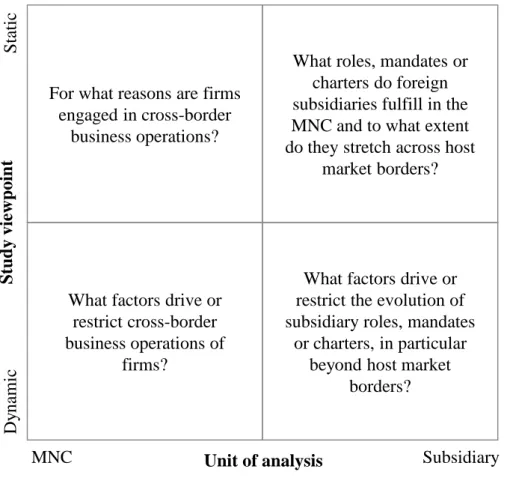
Figure 2-1: Classification of relevant IB literature streams and guiding review questions
The aforementioned classification of relevant IB literature by the unit of analysis and the viewpoint is summarized in Figure 2-1 above. The two-by-two matrix was further enriched by four questions that guided the overall literature review process. As a result, the following pag-es are strictly limited to findings directly or indirectly linked to the rationale for and the pro-cesses of subsidiary internationalization. The matrix also shows that neither the units of anal-ysis nor the study perspectives are mutually exclusive and that there exists a certain degree of overlap in the reviewed literature streams. Overall, this literature review does not claim to exhaustively cover all relevant literature streams related to subsidiary internationalization. In fact, they are deliberately limited to the study topic on why (causality) and how (modality) firms or subsidiaries internationalize, rather than covering other interesting and neighboring aspects like where (locality) or how fast (temporality) firms or subsidiaries expand their activ-ities into foreign territories. In addition, a focus was set on foreign subsidiaries as the core unit of analysis and on dynamic study perspectives. In summary, the screening of past studies in the field of IB was aimed at facilitating the data collection process as well as the subse-quent data analysis process without limiting the theory-development process desired from the chosen case study research design.
Unit of analysis S tatic S tud y view p oin t
For what reasons are firms engaged in cross-border
business operations?
What factors drive or restrict cross-border business operations of
firms?
What roles, mandates or charters do foreign subsidiaries fulfill in the MNC and to what extent do they stretch across host
market borders?
What factors drive or restrict the evolution of subsidiary roles, mandates
or charters, in particular beyond host market
borders? Dy na mi c MNC Subsidiary
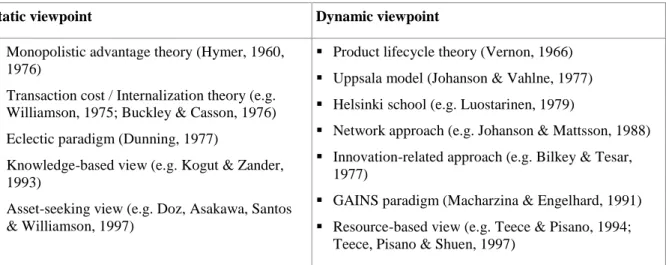
Table 2-1: Classification of relevant IB literature with the firm as core unit of analysis
Static viewpoint Dynamic viewpoint
Monopolistic advantage theory (Hymer, 1960, 1976)
Transaction cost / Internalization theory (e.g. Williamson, 1975; Buckley & Casson, 1976) Eclectic paradigm (Dunning, 1977)
Knowledge-based view (e.g. Kogut & Zander, 1993)
Asset-seeking view (e.g. Doz, Asakawa, Santos & Williamson, 1997)
Product lifecycle theory (Vernon, 1966) Uppsala model (Johanson & Vahlne, 1977) Helsinki school (e.g. Luostarinen, 1979)
Network approach (e.g. Johanson & Mattsson, 1988) Innovation-related approach (e.g. Bilkey & Tesar,
1977)
GAINS paradigm (Macharzina & Engelhard, 1991) Resource-based view (e.g. Teece & Pisano, 1994;
Teece, Pisano & Shuen, 1997)
Source: Own illustration, based on Rugman, Verbeke & Nguyen (2011)
The classification of relevant IB literature with the MNC or the subsidiary as core unit of analysis can be viewed in Table 2-1 above and Table 2-2 below. The selection of relevant literature streams was strongly inspired and supported by two IB publications. While the work of Rugman, Verbeke and Nguyen (2011) facilitated the identification of the most relevant studies using the MNC as the core unit of analysis, the article of Birkinshaw and Pedersen (2009) strongly helped to obtain a better picture of studies with an explicit focus on foreign subsidiaries. Adding to this, significant efforts were made in order to come up with additional studies that were able to contribute to a better understanding of internationalization processes at the periphery of modern MNCs.
Table 2-2: Classification of relevant IB literature with the subsidiary as core unit of analysis
Static viewpoint Dynamic viewpoint
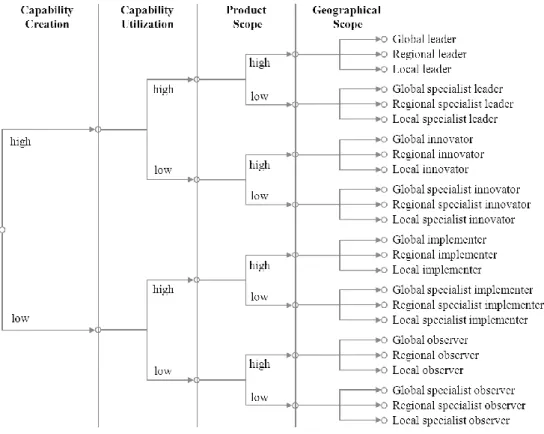
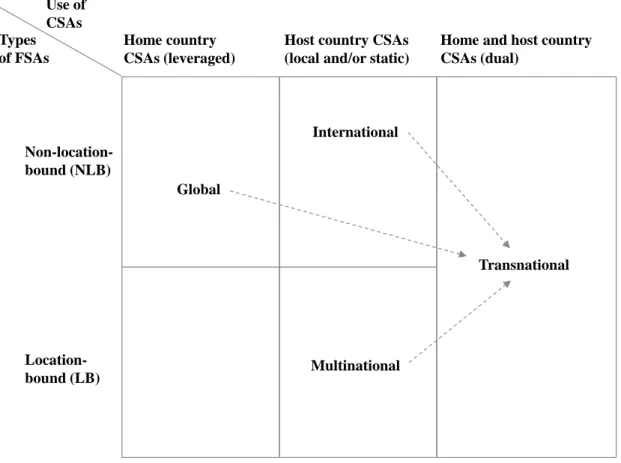
Generic subsidiary roles (e.g. Bartlett & Ghoshal, 1986) Specialized subsidiary roles (e.g. Rugman, Verbeke &
Yuan, 2011)
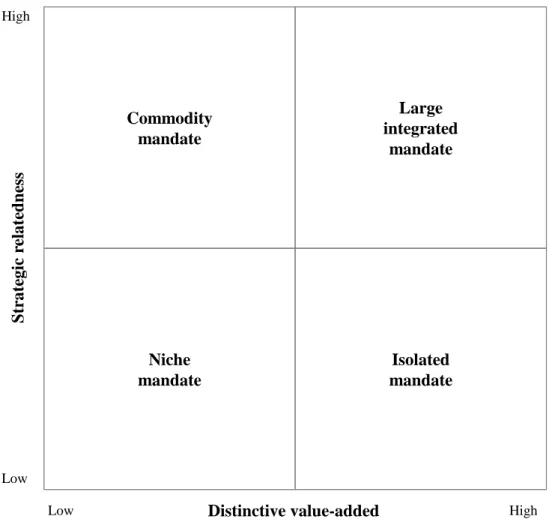
World product mandate (e.g. Rugman, 1982)
Centers of excellence (e.g. Frost, Birkinshaw & Ensign, 2002)
Regional headquarters (e.g. Lehrer & Asakawa, 1999) Divisional headquarters (e.g. Forsgren, Holm & Johanson,
1995)
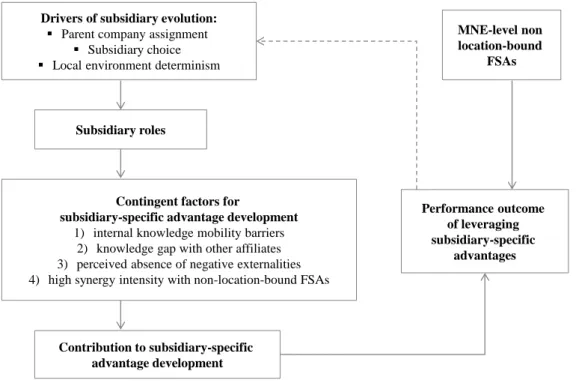
Subsidiary evolution (e.g. Malnight, 1995) Evolution determinants (e.g. Birkinshaw,
1997)
Subsidiary internationalization (e.g. Forsgren et al., 1992)
Internationalization trajectories of MNC units (e.g. Araujo & Rezende, 2003)
Dynamics of regional headquarters (e.g. Kähäri et al., 2010)