HAL Id: tel-03119851
https://tel.archives-ouvertes.fr/tel-03119851
Submitted on 25 Jan 2021
HAL is a multi-disciplinary open access
archive for the deposit and dissemination of
sci-entific research documents, whether they are
pub-lished or not. The documents may come from
teaching and research institutions in France or
abroad, or from public or private research centers.
L’archive ouverte pluridisciplinaire HAL, est
destinée au dépôt et à la diffusion de documents
scientifiques de niveau recherche, publiés ou non,
émanant des établissements d’enseignement et de
recherche français ou étrangers, des laboratoires
publics ou privés.
with synthetic and biological membranes, and
solubilization of bioactive volatile compounds
Tracy El Achkar
To cite this version:
Tracy El Achkar. Deep eutectic solvents : characterization, interaction with synthetic and biological
membranes, and solubilization of bioactive volatile compounds. Organic chemistry. Université du
Littoral Côte d’Opale; Université libanaise, 2020. English. �NNT : 2020DUNK0562�. �tel-03119851�
Doctoral Thesis
Under the joint supervision of the
Lebanese University
and
Université du Littoral Côte d’Opale
Discipline: Organic, mineral and industrial chemistry
Deep eutectic solvents: characterization, interaction with synthetic
and biological membranes, and solubilization of bioactive volatile
compounds
Presented by
Tracy El Achkar
December 11, 2020
Jury Members
Mr. Farid Chemat, Pr., Université d’Avignon Reviewer
Mr. Dimitris Makris, Pr., Univeristy of Thessaly Reviewer
Mrs. Alia Jraij, Pr., Lebanese University Examiner
Mrs. Aida Habib Abdul Karim, Pr., American University of Beirut Examiner
Mr. Jérôme Lecomte, Dr., CIRAD Examiner
Mrs. Hélène Greige Gerges, Pr., Lebanese University Thesis supervisor
Mrs. Sophie Fourmentin, Pr., Université du Littoral Côte d’Opale Thesis supervisor
Thèse de Doctorat
En cotutelle entre
L’Université Libanaise
et
L’Université du Littoral Côte d’Opale
Discipline : Chimie organique, minérale, industrielle
Solvants eutectiques profonds : caractérisation, interaction avec des
membranes synthétiques et biologiques, et solubilisation de
composés bioactifs volatils
Présentée par
Tracy El Achkar
Le 11 décembre 2020
Membres du Jury
M. Farid Chemat, Pr., Université d’Avignon Rapporteur
M. Dimitris Makris, Pr., Univeristy of Thessaly Rapporteur
Mme Alia Jraij, Pr., Université Libanaise Examinateur
Mme Aida Habib Abdul Karim, Pr., American University of Beirut Examinateur
M. Jérôme Lecomte, Dr., CIRAD Examinateur
Mme Hélène Greige Gerges, Pr., Université Libanaise Directeur de thèse
Mme Sophie Fourmentin, Pr., Université du Littoral Côte d’Opale Directeur de thèse
Acknowledgments
Foremost, I would like to express my deepest gratitude to my supervisors Professor Sophie Fourmentin
and Professor Hélène Greige Gerges for their continuous support and guidance during the past three
years. This thesis would not have been possible without your help and dedication.
I would also like to express my appreciation to all the members of the jury Professor Farid Chemat,
Professor Dimitris Makris, Professor Alia Jraij, Professor Aida Habib Abdul Karim, and Doctor Jérôme
Lecomte for spending the time to read and judge this manuscript. I would also like to thank the
committee members Professor Ana Rita Duarte and Doctor François-Xavier Legrand for their useful
comments and suggestions.
I also wish to thank Professor David Landy for his valuable contribution and constructive advice.
I’d like to acknowledge the assistance of Doctor Maya Kayouka. It has been a pleasure working with
you again.
My sincere appreciation to Professor Alia Jraij and my colleague Jad Eid for their help with the AFM
studies.
I also wish to thank Steven Ruellan for always willing to help with the NMR experiments, and Tarek
Moufawad for the effort he put into the characterization studies.
Many thanks to Professor Aline Hamade and Professor Fadia Najjar as well as the CCM and UDSMM
members for welcoming me into their laboratories.
Special thanks to all the friends that I met along the way in France and Lebanon and with whom I made
some unforgettable memories, especially Lamia, Nancy, Eliane, Rebecca, Muriel, Stéphanie, Marc,
Sarah, Justine, Somenath, Myriam, Ghenwa, and Sanaa.
I am extremely grateful for my family that made me who I am today. Thank you for believing in me
and encouraging me. Thank you for always being there to lift me up. I am even more thankful for this
experience because it brought me closer to you.
Lastly, I would like to extend my gratitude to my fiancé Imad who has been there for me since day one.
Thank you for being my number one supporter and for pushing me to always do my best.
Abstract
Deep eutectic solvents (DES) recently emerged as a novel class of green solvents with a high potential to replace common organic solvents. Despite their novelty, DES were extensively explored in the past years owing to their remarkably interesting properties. Yet, a lot remains to be uncovered given the limitless number of possible DES and their versatility. The current study aimed to examine the effect of DES on liposomes, adopted as model membranes, and on cell membranes. It also sought to evaluate the solubilizing ability of DES toward bioactive volatile compounds. Therefore, a group of selected DES along with new solvents were first prepared and characterized. Density, viscosity, and polarity measurements were mainly carried out and showed that DES’ properties can be tuned depending on their composition. The organization of phospholipids and liposomes within the DES was then investigated using optical- and atomic force microscopies. Phospholipids self-assembled into vesicles in choline chloride-based DES while liposomes converted to lipid bilayers before their reconstitution into vesicles. Moreover, cytotoxicity studies and morphological examinations were combined to evaluate the impact of some DES on MDA-MB-231, a human breast cancer cell line. Results showed that the effect is highly dependent on the DES’ composition. On the other hand, the solubilizing ability of the DES toward bioactive volatile compounds was tested using static headspace-gas chromatography. The influence of the presence of water and some encapsulation systems such as liposomes and cyclodextrins on the overall DES’ solubilization efficiency was further analyzed. At last, the release of
trans-anethole from the DES was monitored via multiple headspace extraction. DES were able to
greatly solubilize the bioactive volatile compounds and to control their release when compared with water. Altogether, this work highlights the potential use of DES-based systems as solubilization vehicles for bioactive compounds.
Keywords: Deep eutectic solvents; hydrogen bond acceptor; hydrogen bond donor; phospholipids;
Résumé
Les solvants eutectiques profonds (DES) sont récemment apparus comme une nouvelle classe de solvants verts présentant un potentiel élevé pour remplacer les solvants organiques usuels. Bien que découverts récemment, les DES ont fait l'objet de nombreuses recherches au cours des dernières années en raison de leurs propriétés intéressantes. Cependant, il reste encore beaucoup à découvrir étant donné le nombre quasiment illimité de DES potentiels et de leur polyvalence. Notre étude vise à examiner l'effet des DES sur les liposomes, adoptés comme modèles membranaires, et sur les membranes cellulaires. Elle a également cherché à évaluer la capacité de solubilisation des DES envers des composés bioactifs volatils. Ainsi, une sélection de DES ainsi que de nouveaux solvants ont été tout d’abord préparés et caractérisés. Des mesures de densité, de viscosité et de polarité ont été effectuées et ont montré que les propriétés des DES pouvaient être ajustées en fonction de leur composition. L'organisation des phospholipides et des liposomes au sein des DES a ensuite été étudiée à l'aide de microscopies optique et à force atomique. Les phospholipides s'auto-assemblent en vésicules dans les DES à base de chlorure de choline tandis que les liposomes se convertissent en bicouches lipidiques avant leur reconstitution en vésicules. De plus, des études de cytotoxicité et des examens morphologiques ont été combinés afin d’évaluer l'impact de quelques DES sur MDA-MB-231, une lignée cellulaire de cancer du sein humain. Les résultats ont montré que l’effet dépendait fortement de la composition du DES. D'autre part, la capacité de solubilisation des DES envers des composés bioactifs volatils a été testée par chromatographie en phase gazeuse couplée à un espace de tête. L'influence de la présence d'eau et de certains systèmes d'encapsulation tels que les liposomes et les cyclodextrines sur la capacité de solubilisation des DES ont été analysés. Enfin, la libération du trans-anéthole à partir des DES a été suivie par extraction multiple de l'espace de tête. Les DES ont été capables de mieux solubiliser les composés bioactifs volatils et de contrôler leur libération par rapport à l'eau. Dans l'ensemble, ces travaux mettent en évidence l'utilisation potentielle des systèmes à base de DES comme véhicules de solubilisation de composés bioactifs.
Mots-clés : Solvants eutectiques profonds ; accepteur de liaison hydrogène ; donneur de liaison
hydrogène; phospholipides ; liposomes ; membranes biologiques ; solubilisation ; composés bioactifs volatils ; cyclodextrines.
Table of Contents
List of Tables ... 1 List of Figures ... 2 List of Abbreviations ... 5 Introduction... 7 I. Literature Review ... 91. Deep Eutectic Solvents ... 9
1.1. Definition ... 9 1.2. Classification ... 10 1.3. Methods of preparation ... 13 1.4. Physicochemical properties ... 14 1.4.1. Phase behavior ... 14 1.4.2. Density ... 16 1.4.3. Viscosity ... 17 1.4.4. Ionic conductivity ... 18 1.4.5. Surface tension ... 18 1.4.6. Polarity ... 18 1.5. Effect of water ... 22
1.5.1. Effect on DES’ physicochemical properties ... 22
1.5.2. Effect on DES’ network ... 25
2. Impact of DES on living systems ... 38
2.1. In vitro toxicity studies ... 38
2.1.1. Microorganisms ... 38
2.1.2. Invertebrates, plants, and fish ... 39
2.1.3. Cell lines... 39
2.1.4. Effect of DES composition on the overall toxicity ... 40
2.1.5. Importance of the studied organism ... 41
2.1.6. Mechanism of action ... 41
2.1.7. Related uses ... 42
2.3. Biodegradability ... 44 3. Applications ... 47 3.1. Reaction medium ... 47 3.2. Biomass processing ... 48 3.3. Electrochemistry ... 49 3.4. Extraction ... 49 3.5. Solubilization ... 52 3.6. Drug delivery ... 58 4. Encapsulation systems ... 59 4.1. Cyclodextrins ... 59
4.2. Combination of DES and cyclodextrins ... 60
4.3. Liposomes ... 62
4.4. Amphiphilic self-assembly in DES ... 62
II. Solvents’ preparation and characterization ... 71
1. Tested solvents ... 71
2. Characterization ... 74
2.1. Density ... 74
2.2. Viscosity ... 76
2.3. Polarity ... 80
2.4. Differential scanning calorimetry ... 81
2.5. Thermogravimetric analysis ... 83
2.6. Rheological measurements ... 84
III. Phospholipids self-assembly in DES ... 86
1. Organization of E80 phospholipids ... 86
2. DES-based methods for liposomes preparation ... 90
2.1. Ethanol injection method ... 91
2.2. Thin film-DES dissolution method ... 94
IV. Effect of DES on synthetic and biological membranes ... 97
1. Effect on preformed liposomes ... 97
1.1. Exposure of adsorbed liposomes to the studied systems ... 97
2. Effect on human cells ... 105
V. The solubilizing ability of DES toward natural volatiles and essential oils ... 133
1. Solubilization of volatile compounds by DES ... 133
1.1. Determination of the partition coefficient K ... 134
1.1.1. The phase ratio variation method ... 134
1.1.2. The vapor phase calibration method ... 135
2. Solubilization of essential oils by DES ... 138
3. Effect of water on DES’ solubilization ability ... 140
4. Nuclear magnetic resonance spectroscopy study ... 142
5. Effect of cyclodextrin’s addition ... 146
6. Effect of lipids ... 148
7. Effect of surfactant’s addition ... 148
8. Release study ... 149
Conclusion and perspectives ... 151
List of publications and communications ... 153
References ... 155
List of Tables
Table 1. Overview of the reported studies related to the polarity of deep eutectic solvents ... 19
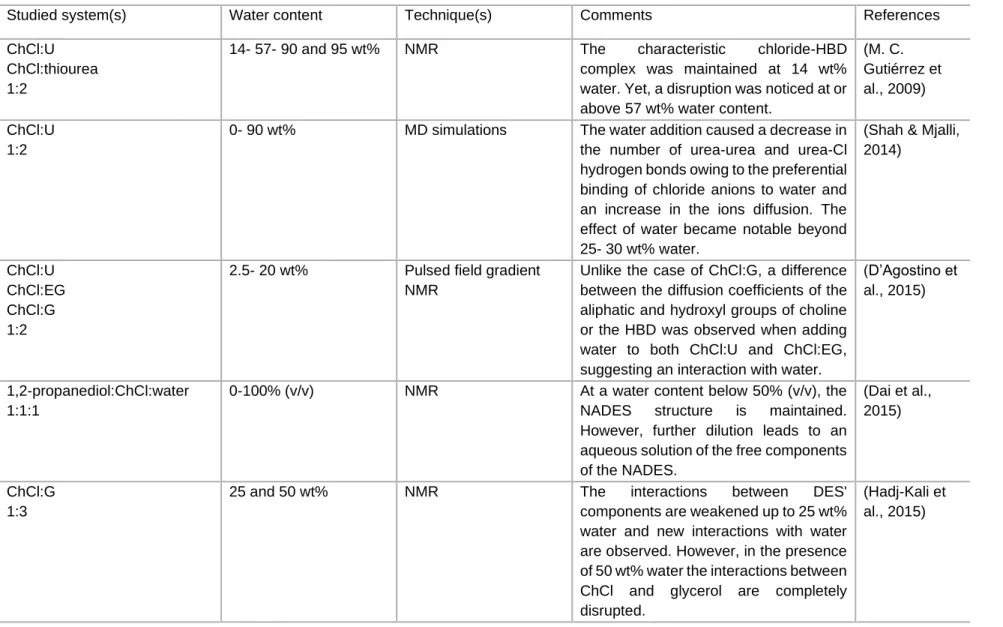
Table 2. Summary of the studies examining the effect of water on deep eutectic solvents’ systems (in chronological order) ... 27
Table 3. Summary of the reported studies on deep eutectic solvents’ biodegradability ... 45
Table 4. Selected examples of deep eutectic solvent-based extractions ... 51
Table 5.Investigations of the deep eutectic solvents’ solubilization mechanism ... 54
Table 6. Investigations of surfactants’ self-assembly in deep eutectic solvents ... 64
Table 7. Composition of the tested deep eutectic solvents ... 71
Table 8. Composition of the SUPRADES ... 73
Table 9. Experimental values of the densities of the studied solvents at 30 °C ... 75
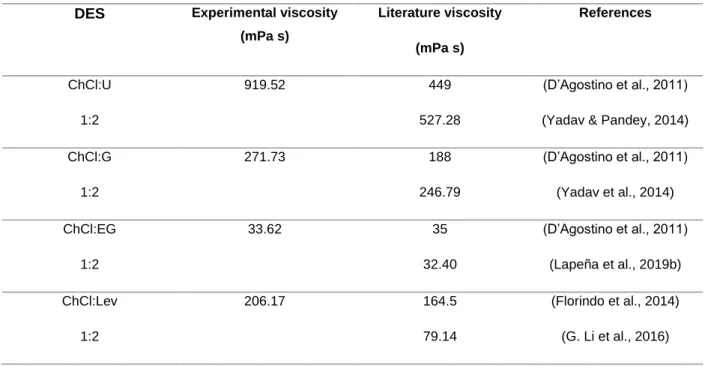
Table 10. Comparison of the viscosity values of choline chloride-based DES at 30 °C with available literature sources ... 78
Table 11. Effect of the hydrogen bond donor on the viscosity of polyalcohol-based SUPRADES at 30 °C ... 80
Table 12. Polarity parameter values of the studied deep eutectic solvents ... 81
Table 13. Degradation temperatures of the SUPRADES and their individual compounds ... 84
Table 14. Mean diameter D and height H values of the vesicles formed in ChCl:U, ChCl:G, ChCl:EG, and ChCl:Lev, at 4, 24, and 48h, obtained by the AFM cross-section tool ... 89
Table 15. Mean diameter D and mean height H of Egg PC liposomes following 30 min exposure to ChCl:U, ChCl:G, ChCl:EG, ChCl:Lev, aqueous solution of ChCl + U, an aqueous solution of ChCl + G, an aqueous solution of ChCl + EG, and an aqueous solution of ChCl + Lev, determined by AFM using the cross-section t ... 100
Table 16. Mean diameter D and mean height H of Egg PC liposomes suspended in water, ChCl:U, ChCl:G, ChCl:EG, ChCl:Lev, aqueous solution of ChCl + U, an aqueous solution of ChCl + G, an aqueous solution of ChCl + EG, and an aqueous solution of ChCl+ Lev, at different time points determined by AFM using the cross-section tool ... 104
Table 17. Partition coefficient values of trans-anethole in water and the different solvents and Kwater/Ksolvent ratio at 30 °C ... 136
Table 18. Partition coefficient values of L-Carvone in water and the different solvents and Kwater/Ksolvent ratio at 30 °C ... 137
Table 19. Percentage of retention of the essential oils by the studied solvents at 30 °C ... 139
Table 20. Percentage of retention of trans-anethole by aqueous solutions of preformed DES (DES aq) and by aqueous solutions of the forming compounds (HBA + HBD) aq at a concentration equivalent to 70 wt% DES ... 142
Table 21. Diffusion coefficient values of RAMEB, levulinic acid, and trans-anethole, separately dissolved in water in the absence or presence of RAMEB ... 146
List of Figures
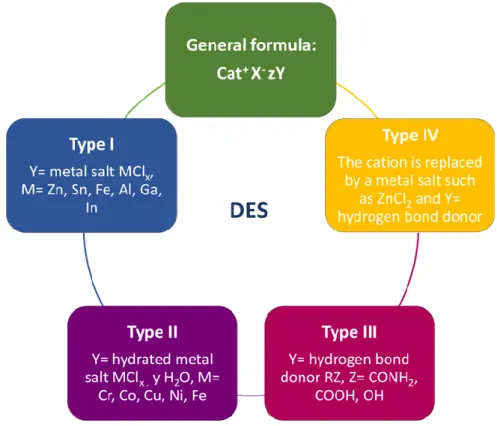
Figure 1. The four types of deep eutectic solvents based on the general formula Cat+ X- zY ... 11
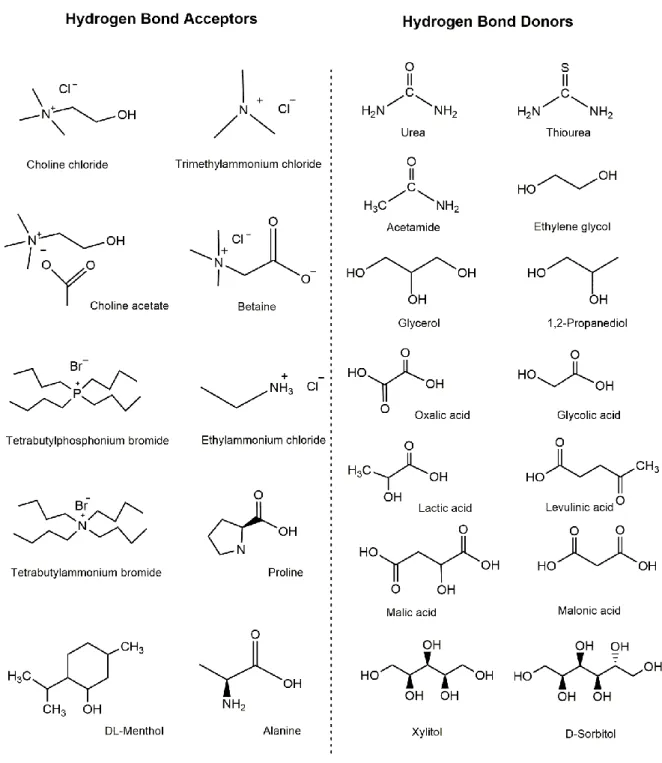
Figure 2. Commonly used HBA and HBD compounds in deep eutectic solvents’ preparation ... 12
Figure 3. Major events marking the development of deep eutectic solvents throughout the years ... 13
Figure 4. General solid-liquid phase diagram of a binary mixture ... 14
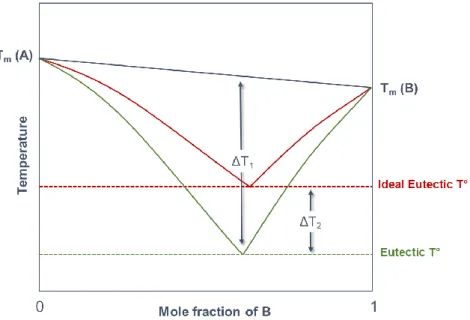
Figure 5. Solid-liquid phase diagram representing a simple ideal eutectic mixture (red line) and a deep eutectic mixture (green line) (Adapted from Martins et al. 2019) ... 15
Figure 6. Effect of the hydrogen bond donor on the densities of some choline chloride-based deep eutectic solvents (yellow: 1:3 choline chloride:ethanolamine; light blue: 1:1 choline chloride:oxalic acid; grey: 1:1 choline chloride:malonic acid; black: 1:2 choline chloride:urea; dark blue: 1:2 choline chloride:glycerol; purple: 1:1 choline chloride:glutaric acid; orange: 1:3 choline chloride:2,2,2-trifluoroacetamide; red: 1:2 choline chloride:ethylene glycol; green: 1:3 choline chloride:phenol). Reprinted with permission from (García et al., 2015). Copyright (2015) American Chemical Society . 17 Figure 7. Variation of the freezing point of 1:2 ChCl:U deep eutectic solvent with the added mole fraction of water. Reprinted with permission from (P. J. Smith et al., 2019). Copyright (2019) American Chemical Society) ... 23
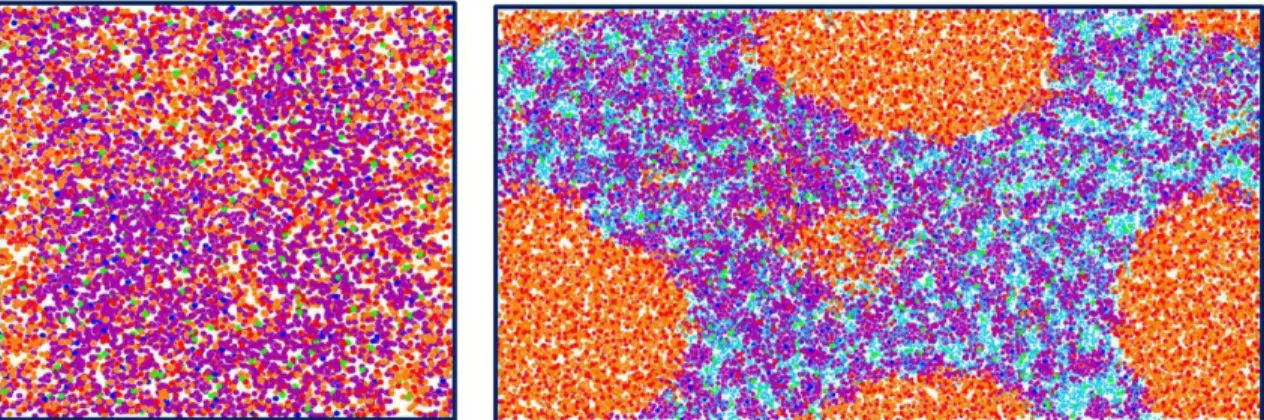
Figure 8. Snapshots from molecular dynamics simulations of ChCl:G (left) and ChCl:G-water system (right) at 0.9 mole fraction of water. Purple, dark blue and green points represent the carbon, nitrogen and chlorine atoms of choline chloride, respectively. Orange points represent the carbon atoms of glycerol. Red and light blue points represent oxygen atoms and water molecules, respectively. Reproduced from (Ahmadi, Hemmateenejad, Safavi, Shojaeifard, Shahsavar, et al., 2018) with permission from the PCCP Owner Societies ... 38
Figure 9. Classification of hydrogen bond donor types according to their toxicity level as per the multitasking quantitative structure-toxicity relationship model (adapted from Halder & Cordeiro, 2019). ... 43
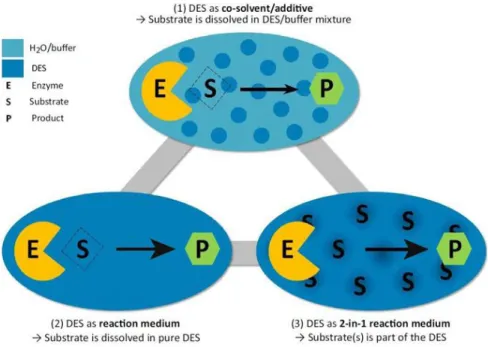
Figure 10. Three possible ways to apply deep eutectic solvents in biocatalysis (Pätzold et al., 2019) 48 Figure 11. Distribution of the adopted extraction techniques using deep eutectic solvents. The dark blue color represents the liquid-phase microextraction techniques (based on Scopus database; May 2020) ... 52
Figure 12. Compounds considered for the deep eutectic solvents’ solubilization studies ... 53
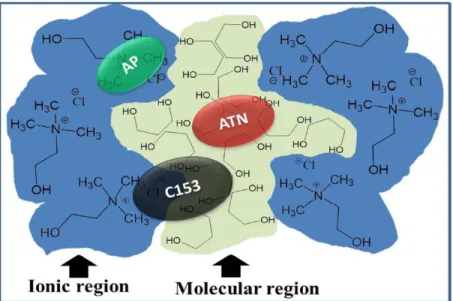
Figure 13. Illustration of the possible localization of 4-aminophtalimide (AP), coumarin 153 (C153), and anthracene (ATN) in the heterogeneous domain-like structure of ChCl:alcohol deep eutectic system Reproduced from (Hossain & Samanta, 2018) with permission from the PCCP Owner Societies. ... 58
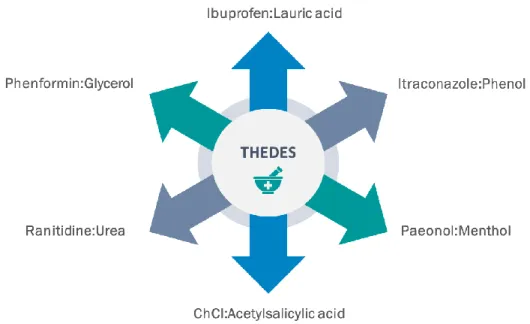
Figure 14. Examples of reported deep eutectic solvents comprising active pharmaceutical ingredients ... 59
Figure 15. Illustration of the three native cyclodextrins ... 60
Figure 16. Structures of SUPRADES’ constituents. a) General structure of β-CD derivatives: HP-β-CD (degree of substitution (DS) = 4.34), R = -H or –CH2-CH(OH)–CH3; RAMEB (DS = 12.9), R = -H or – CH3; CRYSMEB (DS = 4.9), R = -H or –CH3; Captisol® (DS = 6.5), R = -H or -(CH2)4-SO3− Na+; b) levulinic acid; c) glycerol; d) ethylene glycol; e)1,3-propanediol; f) 1,3-butanediol ... 72
Figure 17. Experimental viscosities of the studied deep eutectic solvents (A) and the levulinic acid-containing systems (B) as a function of temperature ranging between 30 and 60 °C. The lines represent the fitted values following the Vogel-Fulcher-Tammann model ... 77
Figure 18. Experimental viscosities of the polyalcohol-based (glycerol- (A), ethylene glycol- (B), 1,3-propanediol- (C), and 1,3-butanediol- (D) based systems as a function of temperature ranging between
30 and 60 °C. The lines represent the fitted values following the Vogel-Fulcher-Tammann model ... 79
Figure 19. Some deep eutectic solvents in presence of Nile Red. From left to right: TBABr:Dec, ChCl:U, ChCl:EG, ChCl:G, ChCl:Lev and TBPBr:Lev. ... 81
Figure 20. Differential scanning calorimetry curves of the SUPRADES ... 82
Figure 21. Thermogravimetric analysis curves of the SUPRADES ... 83
Figure 22. Log-log scale representation of the viscosity vs shear rate for SUPRADES at 30 °C ... 85
Figure 23. Schematic diagram of atomic force microscopy (Grobelny et al., 2011) ... 86
Figure 24. 4x4 µm2 AFM 2D images of Lipoid E80 within ChCl:U, ChCl:G, ChCl:EG, and ChCl:Lev obtained in contact mode at 4, 24, and 48h ... 88
Figure 25. λmax values of Nile Red reflecting the polarity of the DES in the absence or presence of lipoid E80 at t = 48h ... 90
Figure 26. Observation of the preparations of DES-based ethanol injection method via optical microscopy ... 92
Figure 27. General structure of Triton X-100 (n = 9-10) ... 93
Figure 28. DES-based ethanol injection method: observation of ChCl-based DES in presence of lipids (left column), in presence of both lipids and Triton 100 (middle column), and in presence of Triton X-100 (right column) ... 93
Figure 29. Thin lipid film obtained following the organic phase evaporation ... 94
Figure 30. DES-based thin film dissolution method: observation of ChCl-based DES in presence of lipids (left column), in presence of both lipids and Triton X-100 (middle column), and in presence of Triton X-00 (right column) ... 95
Figure 31. Size distribution plots of lipid particles formed in ChCl:G- or ChCl:EG-based thin film dissolution preparations ... 96
Figure 32. AFM contact mode 2D images of Egg PC liposomes following 30 min exposure to A- ultrapure water, B- ChCl:U, C- ChCl:G, D- ChCl:EG, E, E' ChCl:Lev F- aqueous solution of ChCl + U, G- aqueous solution of ChCl + G, H- aqueous solution of ChCl + EG, I- aqueous solution of ChCl + Lev ... 99
Figure 33. AFM 2D 4 × 4 μm2 images of EggPC liposomes suspended in ChCl:U, ChCl:G, ChCl:EG, and ChCl:Lev DES obtained in contact mode at different time points ... 102
Figure 34. AFM 2D 4x4, and 2x2 µm2 images of EggPC liposomes suspended in an aqueous solution of ChCl + U, an aqueous solution of ChCl + G, an aqueous solution of ChCl + EG, and an aqueous solution of ChCl + Lev, obtained in contact mode at different time points ... 103
Figure 35. Principle of static headspace-gas chromatography ... 133
Figure 36. The general structure of (A) trans-anethole and (B) L-carvone ... 134
Figure 37. Chromatogram of star anise essential oil in water and RAMEB:Lev ... 139
Figure 38. Percentage of retention of trans-anethole by DES, in the absence (pure trans-anethole) or presence of other compounds found in star anise or fennel essential oils ... 140
Figure 39. Variation of the chromatographic peak area of trans-anethole in binary DES-water mixtures with varying DES content ... 141
Figure 40. Retention of trans-anethole by aqueous solutions of preformed DES (DES aq), aqueous solutions of the forming compounds (HBA + HBD) aq, and aqueous solutions of the individual compounds (HBA aq or HBD aq) at a concentration equivalent to 20 wt% DES ... 142 Figure 41. The general structure of a) randomly methylated-β-cyclodextrin (RAMEB, DS = 12.9 and R= -H or -CH3), b) levulinic acid and c) trans-anethole ... 143
Figure 42. 1H NMR spectra of RAMEB:Lev in the absence (top) or presence of trans-anethole (bottom).
Blue, orange, and green boxes respectively represent peaks related to RAMEB, levulinic acid, and
trans-anethole ... 144
Figure 43. ROESY spectrum of RAMEB:Lev in presence of trans-anethole ... 145 Figure 44. Variation of the diffusion coefficients of RAMEB:Lev SUPRADES’ components and trans-anethole in different SUPRADES-water binary mixtures ... 146 Figure 45. Variation of the chromatographic peak area of trans-anethole in mixtures of ChCl:U and increasing amounts of cyclodextrins. Glucopyranose was added at 10 wt% as a reference ... 147 Figure 46. The chromatographic peak area of the studied volatile compounds in presence of DES or thin film-DES dissolution preparations ... 148 Figure 47. The chromatographic peak area of trans-anethole in ChCl-based DES in the presence or absence of Triton X-100 surfactant ... 149 Figure 48. Release of trans-anethole from water and studied solvents at 60 °C ... 150
List of Abbreviations
2D ROESY Two-dimensional rotating frame Overhauser enhancement Spectroscopy
A Chromatographic peak area
AAD Average absolute deviation
AFM Atomic force microscopy AN Trans-anethole
ATPS Aqueous two-phase system BA Butyric acid
BD Butanediol
BMIm 1-butyl-3 methylimidazolium CA Caprylic acid
Carv L-carvone
ChAc Choline Acetate ChCl Choline chloride
cmc Critical micelle concentration
COSMO-RS Conductor-like screening model for real solvents DEG Diethylene glycol
DES Deep eutectic solvent(s)
DLLME Dispersive liquid-liquid microextraction DLS Dynamic light scattering
DMPC 1,2- dimyristoyl-sn-glycero-3-phosphocholine DPPC 1,2-dipalmitoylsn- glycero-3 phosphocholine DSPC 1,2-distearoylsn-glycero-3- phosphocholine DMU N,N’-dimethylurea
DS Degree of substitution
DSC Differential scanning calorimetry EAC N,N-diethyl ethanol ammonium chloride EG Ethylene glycol
EMImCl 1-ethyl-3 methylimidazolium chloride
EO Essential oil(s)
FTIR Fourier-transform infrared spectroscopy G Glycerol
HBA Hydrogen bond acceptor HBD Hydrogen bond donor
Hc Henry’s law constant
HPLC-MS High performance liquid chromatography- mass spectrometry
SH-GC Static headspace-gas chromatography
LA Lactic acid
LD50 Lethal dose 50 or median lethal dose Lev Levulinic acid
MA Malonic acid MD Molecular dynamics
MHE Multiple headspace extraction
NADES Natural deep eutectic solvent(s) NMR Nuclear magnetic resonance OA Oxalic acid
PC Phosphatidylcholine PD Propanediol
PEG Polyethylene glycol PFG Pulsed field gradient
POPC 1-palmitoyl-2-oleoylphoshatidylcholine
RAMEB Randomly methylated β-cyclodextrin ROS Reactive oxygen species
SANS Small-angle neutron scattering SAXS Small-angle X-ray scattering SDS Sodium dodecyl sulfate
SLB Supported lipid bilayer(s)
TBABr Tetrabutylammonium bromide TBACl Tetrabutylammonium chloride TBMACl Tributylmethylammonium chloride
TBPBr Tetrabutylphosphonium bromide
TEG Triethylene glycol
TEM Transmission electron microscopy
TGA Thermogravimetric analysis
THEDES Therapeutic deep eutectic solvents TMA Trimethylammonium
U Urea VA Valeric acid
Introduction
The quest for green solvents constitutes one of the major concerns in green chemistry. The discovery of deep eutectic solvents (DES) was a real milestone in this field. DES represent a new generation of solvents that caught the researchers’ attention in recent years. First reported in 2003, DES are defined as a mixture of two or three compounds that results in a clear and homogenous liquid with a much lower melting point than its forming compounds (Abbott et al., 2003; Q. Zhang et al., 2012). The temperature’s depression is often attributed to the hydrogen bonding interactions taking place between the DES’ starting compounds. Subsequently, DES can be prepared from a large variety of compounds generating a plethora of possible combinations. In addition to their easy preparation from widely accessible and cheap starting materials, DES hold interesting physicochemical properties. Furthermore, the natural counterparts of DES made of primary metabolites were raised a few years later and were called natural deep eutectic solvents (NADES) (Choi et al., 2011). These solvents were extensively applied in various domains to replace and bypass some of the conventional organic solvents’ limitations. Indeed, DES and NADES have shown promising outcomes in chemical, biological, biomedical, and pharmaceutical sectors, among others (Mbous, Hayyan, Hayyan, et al., 2017). Despite the exponentially growing number of publications on this topic, a lot of information and implementations of DES remain to be uncovered.
The present study aims to examine three main points. The first one consists of determining the physicochemical properties of DES and evaluating the influence of their composition on the resulting properties, which may help in the design of DES for specific applications. The second part focuses on investigating the interaction between DES and phospholipids. Phospholipids represent the most abundant class of lipids in cell membranes. Owing to their amphiphilic nature, these molecules tend to self-assemble into lipid vesicles whenever present in an aqueous medium. The resulting lipid vesicles, known as liposomes, are one of the most studied and applied encapsulation systems, given their ability to encapsulate molecules of a wide polarity range (Anwekar et al., 2011). To date, the studies involving DES and phospholipids or liposomes are very limited (Bryant et al., 2016, 2017; M. C. Gutiérrez et al., 2009; R. McCluskey et al., 2019). Therefore, studying the behavior of phospholipids within DES may not only clarify the effect of DES on animal cells and their subsequent biocompatibility but may also open up the possibility to create novel DES-based encapsulation systems. The third goal of the study revolves around the solubilizing ability of DES and DES-based systems, incorporating different encapsulation systems like phospholipids and cyclodextrins, toward bioactive volatile compounds. The combination of DES with safe encapsulating agents can lead to the formation of potentially promising and economic drug delivery systems with unique properties.
This study focuses, more precisely, on four main objectives: ▪ The preparation and characterization of DES;
▪ The investigation of the organization of phospholipids within DES; ▪ The impact of DES on liposomes and human cells;
▪ The evaluation of the solubilizing ability of DES-based systems toward natural volatile compounds.
This thesis comprises five chapters. The first one provides a literature review of deep eutectic solvents: definition, classification, methods of preparation, physicochemical properties, the effect of water on both their properties and network, their toxicity, and biodegradability. Moreover, this chapter overviews some of the main applications of DES, namely organic synthesis, catalysis, biomass processing, electrochemistry, extraction, solubilization, and drug delivery. The last section of the chapter involves the studies dealing with the self-assembly of phospholipids or surfactants within DES, and the combination of DES and cyclodextrins.
The second chapter presents the composition of the solvents that were considered in this study, their preparation, and their characterization. The latter mainly involves density, viscosity, and polarity measurements.
The third chapter covers the investigation of the phospholipid organization within the DES using both optical- and atomic force microscopies, as well as dynamic light scattering.
The behavior of liposomes in presence of DES, monitored by atomic force microscopy, was described in the fourth chapter. Furthermore, this chapter includes the effect of some DES on human cells which was evaluated via cytotoxicity and morphological studies.
In the fifth and last chapter, we studied the solubilization of plant volatiles and some related essential oils by DES using static headspace- gas chromatography. We further evaluated the effect of the incorporation of water or some encapsulation systems on the solubilization performance of DES. At last, we were interested in monitoring the release of a volatile compound from the DES via multiple headspace extraction.
I. Literature Review
1. Deep Eutectic Solvents
1.1. Definition
The discovery of the deep eutectic solvents (DES) was a major breakthrough in the world of green chemistry. DES are frequently defined as binary or ternary mixtures of compounds that are able to associate mainly via hydrogen bonds. Combining these compounds at a certain molar ratio results in a eutectic mixture (Q. Zhang et al., 2012). The word “eutectic” comes from the Ancient Greek εὔτηκτος or eútēktos which means easily melted and a eutectic point represents the chemical composition and temperature at which a mixture of two solids becomes fully molten at the lowest melting temperature, relative to that of either compounds. However, defining a DES is still a controversial subject and there are various reported definitions that do not really distinguish DES from other mixtures, since all the mixtures of immiscible solid compounds present an eutectic point and considering that numerous compounds are able to form hydrogen bonds when put together (Coutinho & Pinho, 2017). Given that the presence of an eutectic point or hydrogen bonding between components are not sufficient conditions to define a “deep eutectic solvent” and in order to clarify what a DES is and what makes it special compared to other mixtures, Martins et al. recently defined DES as “a mixture of two or more pure compounds for which the eutectic point temperature is below that of an ideal liquid mixture, presenting significant negative deviations from ideality (ΔT2 > 0)”, where ΔT2 stands for the temperature depression
which is the difference between the ideal and the real eutectic point (Martins et al., 2019). The same authors stated that it is important that the temperature depression results in a liquid mixture at operating temperature, regardless of the mixture composition. The fact that there is no fixed composition offer an even greater tunability for these systems.
Although DES were extensively studied, especially in the past decade, there is still a lack of understanding the principle behind DES’ formation and properties. It all started almost twenty years ago, when Abbott et al. were looking for liquids that can overcome the moisture sensitivity and high cost of some common ionic liquids (Abbott et al., 2001). In this study, numerous mixtures based on different quaternary ammonium salts and metal salts were tested and it turned out that choline chloride (ChCl) mixed with zinc chloride in a 1:2 molar ratio presents the lowest freezing point (23-25 °C). Thereafter, the same authors investigated eutectic mixtures of quaternary ammonium salts and hydrogen bond donors (HBD) and named them “deep eutectic solvents” (Abbott et al., 2003). The lowest freezing point (12 °C) was obtained with 1:2 ChCl:urea. This significant depression of the freezing point, compared to that of ChCl (302 °C) or urea (U) (133 °C), is due to hydrogen bonding between urea molecules and chloride ion as proved by nuclear magnetic resonance (NMR) spectroscopy. What is interesting about these solvents is that they are not only liquid at ambient temperature but also tunable and highly
solubilizing. After that, other DES based on ChCl and carboxylic acids were characterized and were also shown to have important solubilizing ability toward some metal oxides (Abbott, Boothby, et al., 2004). Other liquids were also obtained when mixing ChCl with a hydrated metal salt like chromium (III) chloride hexahydrate (Abbott, Capper, et al., 2004). Later on, an additional class of ambient temperature solvents based on metal salts and HBD such as amides (urea and acetamide) and diols (ethylene glycol and 1,6-hexanediol) were reported, but it turned out that only a restricted number of metal salts and HBD can lead to their formation (Abbott, Barron, et al., 2007).
Few years later, Choi et al. coined the term “natural deep eutectic solvents” (NADES) (Choi et al., 2011). This categorycovers the DES that are made of primary metabolites such as organic acids, amino acids, sugars, polyols and choline derivatives (Choi et al., 2011; Dai et al., 2013). Besides, water can also be part of NADES’ composition. They were introduced as a way to explain the omnipresence of metabolites in high concentrations in cells. Since different combinations of these candidates led to the formation of liquids which also succeeded in the solubilization of some natural compounds, NADES were proposed as a new cellular phase, together with water and lipids. These mixtures might be engaged in the biosynthesis, storage and transport of some poorly water-soluble compounds as well as some other processes like dehydration, drought resistance and cryoprotection. Further, their consideration is highly encouraged owing to the advantages that they provide from an environmental and economic point of view.
1.2. Classification
In order to differentiate between the possible eutectics, DES were classified into four types based on the general formula Cat+ X- zY, where Cat+ is generally an ammonium, phosphonium or sulfonium, while
X is a Lewis base (usually a halide anion). Y represents a Lewis or Brønsted acid and z is the number of Y molecules that interact with the corresponding anion (Figure 1) (Abbott, Barron, et al., 2007; E. L. Smith et al., 2014). Type III eutectics are the most studied in literature and are usually based on ChCl and various HBD. ChCl has been extensively adopted since it is relatively cheap, non-toxic and biodegradable, considering it is approved as a natural additive for several animal species (“Scientific Opinion on Safety and Efficacy of Choline Chloride as a Feed Additive for All Animal Species,” 2011). In fact, the first type III DES was primarily based on ChCl. Since then, a plethora of compounds has been successfully used in DES formation. The hydrogen bond acceptors (HBA) mainly include quaternary ammonium or phosphonium salts, whereas the most common HBD are amides, alcohols and carboxylic acids. In addition, compounds like sugars, sugar alcohols and amino acids are also considered for NADES preparation (Dai et al., 2013). More recently, hydrophobic DES were introduced and they are based on the use of hydrophobic compounds such as tetrabutylammonium bromide (TBABr), menthol, thymol and fatty acids as hydrogen bond acceptors together with long alkyl chain alcohols and carboxylic acids as HBD (Florindo et al., 2019; Osch et al., 2015). Furthermore, DES can be made of active pharmaceutical ingredients like ibuprofen, lidocaine and phenylacetic acid. In that event, the solvents are named therapeutic deep eutectic solvents (THEDES) (Duarte et al., 2017; Paiva
et al., 2014). Some of the frequently used HBA and HBD counterparts described in the literature are illustrated in Figure 2.
Figure 1. The four types of deep eutectic solvents based on the general formula Cat+ X- zY
On the other hand, although NADES can sometimes be considered as type III DES, it is not always the case. That said, NADES were recently classified into five main groups (Dai et al., 2013; González et al., 2018):
▪ Ionic liquids, made of an acid and a base;
▪ Neutral, made of only sugars or sugars and other polyalcohols; ▪ Neutral with acids, made of sugar/polyalcohols and organic acids; ▪ Neutral with bases, made of sugar/polyalcohols and organic bases;
▪ Amino acids-containing NADES, made of amino acids and sugars/ organic acids.
Nevertheless, the reported DES do not certainly fall into one of the above-mentioned classes given their versatility and the myriad of the considered starting compounds. As a result, Countinho and coworkers proposed a type V DES composed of non-ionic species. In their study, they proved that mixing thymol with menthol led to severe negative deviations to ideality due to a strong interaction between the components. The latter is attributed to resonance effects related to the structure of phenolic compounds which acted as strong hydrogen bond donors (Abranches et al., 2019). On another note, two recent studies reported the use of cyclodextrins, which are non-toxic cyclic oligosaccharides, as hydrogen
bond acceptors resulting in the formation of liquid supramolecular mixtures at room temperature (El Achkar, Moufawad, et al., 2020; El Achkar, Moura, et al., 2020). The important events marking the development of deep eutectic solvents so far are presented in Figure 3 (Abbott et al., 2001, 2003; Abbott, Capper, et al., 2004; Abbott, Boothby, et al., 2004; Abbott, Barron, et al., 2007; Choi et al., 2011; El Achkar, Moufawad, et al., 2020; Osch et al., 2015).
Figure 3. Major events marking the development of deep eutectic solvents throughout the years
1.3. Methods of preparation
As mentioned above, DES are obtained by mixing two or more compounds capable of associating through hydrogen bonds, thus forming a eutectic mixture at a well-defined molar ratio. Researchers generally use one of the two main methods to prepare DES: the heating method and the grinding method. The heating method consists on mixing and heating the compounds, under constant stirring, until a homogeneous liquid is formed (Abbott, Boothby, et al., 2004). The heating temperature usually ranges between 50 and 100 °C. However, a high temperature may potentially lead to a degradation of the deep eutectic solvent due to an esterification reaction regardless of the preparation method, as demonstrated by Rodriguez et al. for solvents based on ChCl and carboxylic acids (Rodriguez Rodriguez et al., 2019). The grinding method is based on mixing the compounds at room temperature and crushing them in a mortar with a pestle, until a clear liquid is formed (Florindo et al., 2014). Another method based on the freeze-drying of the aqueous solutions of the components of DES was also revealed by Gutierrez et al. (M. C. Gutiérrez et al., 2009). Indeed, separate aqueous solutions of ChCl and urea (or thiourea) were mixed to form an aqueous solution of 1:2 ChCl:U (or ChCl:thiourea), having 5 wt% solute contents. The obtained solutions were then frozen and freeze-dried, resulting in the formation of clear and viscous liquids. However, water was detected in the freeze-dried mixture because it can interact with DES’ components and be part of the DES’ network (Choi et al., 2011; Dai et al., 2013). That said, different DES are obtained when using different methods of preparation. An evaporation method was also reported by Dai et al., consisting on dissolving the components of DES in water, followed by an evaporation at 50 °C. The resulting liquid is then placed in a desiccator in presence of silica gel (Dai et al., 2013). Considering the optimization of time and energy consumption,
a greener microwave-assisted approach was proposed for the preparation of NADES within seconds (Gomez et al., 2018). Lastly, an ultrasound-assisted synthesis of NADES was recently introduced (Santana et al., 2019).
1.4. Physicochemical properties
The physicochemical properties of DES are one of the main reasons behind the rising researchers’ interest in these solvents. Besides having a low volatility, non-flammability, low vapor pressure and chemical and thermal stability, DES are chemically tunable meaning they can be designed for specific applications given the wide variety of the possible DES forming compounds. All these properties encouraged the scientists to explore DES and apply them as a good alternative to conventional solvents. Herein, the main physicochemical properties of DES namely their phase behavior, density, viscosity, ionic conductivity, surface tension and polarity are presented and discussed.
1.4.1. Phase behavior
As mentioned above, DES are not pure compounds but mixtures of two or more pure compounds. This system is represented by a solid-liquid phase diagram, which shows the melting temperature in function of the mixture composition. Therefore, if we consider a binary mixture of compounds A and B, the eutectic point represents the composition and the minimum melting temperature at which the melting curves of both compounds meet (Figure 4).
According to Martins et al., the DES appellation should only cover mixtures with a melting point lower than the ideal eutectic temperature, otherwise DES would not be called “deep” and could not be differentiated from other mixtures (Martins et al., 2019). In addition, they stated that a DES must be liquid at operating temperature even if this requires a different composition than the eutectic one. Consequently, having a phase diagram is essential and knowing the melting properties of the pure compounds is necessary to determine the ideal solubility curve. Nevertheless, very little is reported about the thermodynamic behavior of the DES to date. The freezing points of most of the DES usually range between – 69 and 149 °C (Q. Zhang et al., 2012). A number of DES with a melting point lower than 60 °C were summarized by García et al. (García et al., 2015). The choice of the HBD (Abbott, Boothby, et al., 2004; Abbott et al., 2003), the nature of the organic salt and its anion (Abbott et al., 2003) and the organic salt/HBD molar ratio (Shahbaz et al., 2011b) can all affect the freezing point of the mixture. The method of preparation can also influence the value of the freezing point, but not the eutectic composition which must remain unchanged no matter the method used (Abbott et al., 2006). On the other hand, no correlation was found between the freezing point of a DES and the melting points of its pure components (Abbott, Boothby, et al., 2004; Q. Zhang et al., 2012). The HBD did however affect the freezing point depression ΔT (Abbott, Boothby, et al., 2004; E. L. Smith et al., 2014). For instance, Abbott et al. found that the lower the HBD’s molecular weight, the greater is the depression of the freezing point (Abbott, Boothby, et al., 2004). But unlike Abbott and coworkers who considered the temperature depression as the difference between the linear combination of the melting points of the pure components and the real eutectic point (ΔT1), Martins et al. thought it would be more
appropriate to define the temperature depression as the difference between the ideal and the real eutectic point (ΔT2), otherwise any mixture of compounds would be referred as a DES (Figure 5)
(Martins et al., 2019).
Figure 5. Solid-liquid phase diagram representing a simple ideal eutectic mixture (red line) and a deep eutectic mixture (green line) (Adapted from Martins et al. 2019)
Nevertheless, several other reported mixtures presented only a glass transition and no melting point was detected (Dai et al., 2013; Florindo et al., 2014; Francisco et al., 2012; Savi, Carpiné, et al., 2019; Savi, Dias, et al., 2019).
1.4.2. Density
Density is one of the fundamental physical properties of liquids. Most of the reported DES present higher densities than water with values ranging between 1.0 and 1.3 g.cm-3 at 25 °C, while DES based on
metal salts have densities in the 1.3- 1.6 g.cm-3 range (Tang & Row, 2013). Contrarily, lower densities
than water are obtained for hydrophobic deep eutectics (Florindo et al., 2019). The DES’ density shows a temperature-dependent behavior, it decreases linearly with the increasing temperature (Cui et al., 2017; Florindo et al., 2014; Ibrahim et al., 2019; Shahbaz, Baroutian, et al., 2012). Moreover, the density depends on the choice of the HBD (Abbott, Harris, et al., 2007; Cui et al., 2017; Florindo et al., 2014; García et al., 2015), and the molar ratio (Abbott et al., 2011). According to Shahbaz et al., a higher HBD mole fraction lowers the density of DES whenever the HBD’s density is lower than that of the corresponding DES and vice versa (Shahbaz et al., 2011a; Shahbaz, Baroutian, et al., 2012). In addition, when the HBD contains hydroxyl groups, the density of the ChCl-based DES increases with the number of hydroxyl groups but decreases with the addition of aromatic groups. Also, when the DES is made of an acid its density decreases when the chain length is increased (Florindo et al., 2014; García et al., 2015; Mitar et al., 2019). The effect of the HBD type on the density of some ChCl-based DES obtained by different studies is represented in Figure 6. These results were in accordance with Yusof et al. who also proved that TBABr:alcohol DES present a higher density when a HBD with a higher number of hydroxyl groups is adopted. The same group also noticed a decrease in density as the HBD’s chain length increased (Yusof et al., 2014).
The DES’ density is weakly affected by the alkyl chain length of the ammonium salt (Z. Chen et al., 2017). However, looking at results from different studies reviewed by García et al., one can clearly see that the organic salt and its anion affect the density of DES. Indeed, phosphonium salts and bromide salts result in denser DES than ammonium salts and chloride salts, respectively (García et al., 2015). On another note, Florindo et al. proved that there is no significant difference in density values whether the heating method or the grinding method was used for the preparation of DES (Florindo et al., 2014). Yet, differences of up to 4% were detected between the available literature sources when it comes to the density of the most studied 1:2 ChCl:U DES (García et al., 2015). A series of studies aiming to efficiently predict the density of DES were conducted by Mjalli et al. via several theoretical approaches (Mjalli, 2016; Mjalli et al., 2015; Shahbaz et al., 2011a, 2013; Shahbaz, Mjalli, et al., 2012). The mass connectivity index-based correlation, taking into account the molecular structures of DES’ forming compounds, allowed the prediction of the density of different type III DES as a function of temperature with a very high efficiency (Mjalli, 2016).
Figure 6. Effect of the hydrogen bond donor on the densities of some choline chloride-based deep eutectic solvents (yellow: 1:3 choline chloride:ethanolamine; light blue: 1:1 choline chloride:oxalic acid; grey: 1:1 choline chloride:malonic acid; black: 1:2 choline chloride:urea; dark blue: 1:2 choline
chloride:glycerol; purple: 1:1 choline chloride:glutaric acid; orange: 1:3 choline chloride:2,2,2-trifluoroacetamide; red: 1:2 choline chloride:ethylene glycol; green: 1:3 choline chloride:phenol). Reprinted with permission from (García et al., 2015). Copyright (2015) American Chemical Society
1.4.3. Viscosity
The viscosity is another important and extensively studied property of DES. Most of the reported DES to date are highly viscous at room temperature (ɳ > 100 mPa.s) which is mainly ascribed to the extensive hydrogen bond network taking place between DES’ components. In addition, they present a very broad viscosity range. In fact, ChCl:EG (1:2) is known to have a very low viscosity (37 mPa.s at 25 °C), while sugar-based DES present extremely large viscosities (12730 mPa.s for 1:1 ChCl:sorbitol at 30°C and 34400 mPa.s for 1:1 ChCl:glucose at 50°C) and even higher viscosities were recorded for metal salts-based DES (85000 mPa.s for 1:2 ChCl:zinc chloride at 25 °C) (Q. Zhang et al., 2012). Yet, very low viscosities were recorded for hydrophobic DES based on DL-menthol (7.61 mPa.s at 25 °C for 1:3 DL-menthol:octanoic acid) (Nunes et al., 2019; Ribeiro et al., 2015). The viscosity of a eutectic mixture is clearly affected by the nature of its components (Abbott, Barron, et al., 2007; D’Agostino et al., 2011), their molar ratio (Abbott et al., 2011), the temperature (Abbott, Boothby, et al., 2004; Abbott et al., 2003, 2006; Dai et al., 2015; Kareem et al., 2010) and the water content (D’Agostino et al., 2015; Dai et al., 2015; Du et al., 2016; Florindo et al., 2014; Shah & Mjalli, 2014). The effect of water will be discussed in details in the upcoming sections. Moreover, the viscosity not only depends on the intermolecular forces between the HBD and the ion but also on the steric effects which can be quantified by the hole theory. The latter considers the existence of holes or voids in the fluid which affects the fluid’s viscosity and ionic conductivity (Abbott et al., 2006). The distribution of holes of radius r is
influenced by the HBD and the salt. It also seems that DES containing large holes are less viscous because they allow a certain ionic motion (García et al., 2015). On a separate note, it is worthy to mention that large differences were noticed when comparing the viscosity data obtained by different researchers for the same DES (e.g., 152 mPa.s vs 527.28 mPa.s for 1:2 ChCl:U at 30 °C and 202 mPa.s vs 2142 mPa.s for 1:1 ChCl:oxalic acid at 40 °C) (García et al., 2015). These major differences can be attributed not only to the preparation method as stated by Florindo et al. (Florindo et al., 2014), but to the experimental method and the impurities as well (García et al., 2015).
1.4.4. Ionic conductivity
Since the viscosity is the main controller of the conductivity, most of the DES tend to have poor ionic conductivities (к < 2 mS cm-1 at room temperature). Therefore, increasing the temperature results in a
decrease in the viscosity and an increase in the conductivity (Lapeña et al., 2019a; Q. Zhang et al., 2012). This property is also affected by the HBA/HBD molar ratio (Abbott, Boothby, et al., 2004), the nature of both the organic salt and the HBD as well as the salt’s anion (García et al., 2015) and of course the water addition (Dai et al., 2015).
1.4.5. Surface tension
The studies related to the surface tension of DES are quite limited compared to the studies dealing with other physicochemical properties. Yet, it is an essential property since it is highly dependent on the intensity of the intermolecular forces taking place between the HBD and the corresponding salt. That said, highly viscous liquids present high surface tensions. The values relative to the reported DES generally vary between 35 and 75 mN m-1 at 25 °C (García et al., 2015; Ibrahim et al., 2019). Once
again remarkable high values were recorded for sugar-based DES such as ChCl:D-glucose (A. Hayyan et al., 2013) and ChCl:D-fructose (A. Hayyan et al., 2012), reflecting their extensive hydrogen-bond network (Ibrahim et al., 2019). Besides, the surface tension is influenced by the salt mole fraction and the cation type since an additional hydroxyl group or a longer alkyl chain in the quaternary ammonium salt leads to higher surface tensions. Also, the surface tension linearly decreases with increasing temperature (García et al., 2015; Lapeña et al., 2019a; Nunes et al., 2019).
1.4.6. Polarity
Polarity is a key property since it reflects the overall solvation capability of solvents. Despite its significance, the polarity of the DES was not considerably studied and was not addressed until recently. This property is often estimated via the solvatochromic parameters which consider the hypsochromic (blue) shift or bathochromic (red) shift of UV−vis bands for the negatively solvatochromic dyes (e.g. Reichardt’s betaine dye) or the positively solvatochromic dyes (e.g. Nile red), respectively, as a function of the solvent’s polarity (Reichardt, 1994). The most frequently used scales are the polarity scales of Dimroth and Reichardt (ET and ETN) (Reichardt, 1994) and the multiparameter scale of Kamlet and Taft
(the hydrogen bond donating ability α, the hydrogen bond accepting ability β and dipolarity/polarizability π*) (Kamlet et al., 1977; Kamlet & Taft, 1976). The common probes adopted for the establishment of Dimroth and Reichardt’s scale include Reichardt’s betaine dyes and Nile red. While molecules like
4-nitroaniline and N,N-diethyl-4-4-nitroaniline are used to determine the parameters following the Kamlet and Taft multiparameter scale. However, it is worthy to mention that the polarity scales are not universal and are probe-dependent which means that we cannot compare polarity parameters obtained by different solvatochromic probes (Valvi et al., 2017). A general overview on the studies conducted on DES’ polarity is presented in Table 1 following a chronological order.
Table 1. Overview of the reported studies related to the polarity of deep eutectic solvents
Deep eutectic solvent(s) Solvatochromic probe(s) Main results References ChCl:G (1:1, 1:1.5, 1:2 and 1:3) Reichardt’s dye 30; 4-nitroaniline; N,N-dimethyl-4-nitroaniline
The studied DES at different molar ratios make up polar fluids with the ET(30) values increasing with the
increase in ChCl in a nearly linear trend.
(Abbott et al., 2011)
Numerous NADES
based on ChCl, sugars, alcohols, organic acids, amino acids and water
Nile red The organic acid-based NADES are the most polar, followed by amino acids- and sugar-based NADES. While the sugar- and polyalcohol-based ones seem to be the least polar.
(Dai et al., 2013) ChCl:U; ChCl:G; ChCl:EG; ChCl:MA (1:2) Several solvatochromic probes such as betaine dye 33 and Nile red
All the DES are considered highly polar. The structure of the HBD clearly affects the solvent’s polarity which is highest with alcohol-based DES followed by those having urea and malonic acid.
(Pandey et al., 2013)
13 Binary or ternary ChCl-based DES using urea, glycerol, ethylene glycol, thiourea or formamide as HBD
Reichardt’s dye 30; 4-nitroaniline;
N,N-diethyl-4-nitroaniline
The polarity of the studied DES highly depends on the polarity of the HBD. A correlation was also found between the solvatochromic parameters and the influence of DES on the activity or stability of lipase.
(Kim et al., 2016)
Table 1. (continued)
Deep eutectic solvent(s) Solvatochromic probe(s) Main results References 4 DES using different
N-oxides as HBA and phenylacetic acid as HBD
Nile red Four N-oxides were adopted as HBA (three amphiphilic and one non-amphiphilic) along with phenylacetic acid as HBD. The non-amphiphilic HBA gives rise to a more polar DES than the ones based on amphiphilic HBA.
(Germani et al., 2017)
19 DES based on ammonium salts as HBA and carboxylic acids as HBD
4-nitroaniline;
N,N-diethyl-4-nitroaniline
Increasing the alkyl chain length of both HBA and HBD results in a decrease in the hydrogen-bond acidity and an increase in the hydrogen-bond basicity. While the dipolarity/polarizability is mainly affected by the HBD given that it decreases when the HBD’s alkyl chain length is increased.
(Teles et al., 2017) ChCl:U; ChCl:G; ChCl:EG (1:2) Several molecular probes
The studied DES present an overall higher polarity than most of the organic solvents. The HBD type might extremely affect the polarity response of the probe. Some polarity parameters displayed different temperature-dependence trends when comparing the 3 studied DES and the polarity did not always decrease with the increasing temperature thus revealing a possible “nonclassical” nature of DES compared to other solvents.
(Valvi et al., 2017)
7 DES based on ChCl; 4 DES based on TBACl; 4 DES based on DL-Menthol
Reichardt’s betaine dye; 4-nitroaniline;
N,N-diethyl-4-nitroaniline
The HBA seems to play a major role in the polarity of the DES, especially the hydrophobic ones that are based on TBACl or DL-menthol as HBA. While for the hydrophilic ChCl-based DES, a diacid HBD like malonic acid generates a more polar DES than a monoacid-based one.
(Florindo et al., 2018)
Table 1. (continued)
Deep eutectic solvent(s) Solvatochromic probe(s) Main results References 12 DES based on thymol
and (L)-menthol as HBA and 6 different monocarboxylic acids as HBD 4-nitroaniline; N,N-diethyl-4-nitroaniline; Pyridine-N-oxide
Thymol-based DES present higher polarity and hydrogen-bond acidity character than (L)-menthol-based ones. On the other hand, a more pronounced hydrogen-bond basicity character is seen with (L)-menthol with a slight positive correlation with the alkyl chain length of the acid.
(Martins et al., 2018) 17 ChCl-based DES using polyalcohols (ethylene glycol, glycerol, propanediols and butanediols) as HBD at molar ratios 1:1, 1:2 and 1:3
Nile red Polarity is affected by the molecular structure of the HBD. Polarity is also an important property to consider while using DES as an extraction solvent.
(Mulia et al., 2019)
9 DES based on PEG as HBD and carboxylic acids or amides or ammonium salts as HBA
Nile red The HBA controls the DES’ polarity since acid-based DES are more polar than the amide- and ammonium-based DES. A negative correlation was also detected between the pH values and the polarity of these PEGylated DES.
(W. Chen et al., 2019)
9 ternary DES based on ChCl, 1-ethyl-3-methylimidazolium
chloride or
tributylmethylammonium chloride as HBA and a binary mixture of 3-hydroxycarboxylic acids as HBD at a 1:1 or 1:2 HBA:HBD molar ratio
Nile red Similar polarities were obtained for all the studied DES. The DES based on 3-hydroxycaroxylic acids were slightly more polar than the ones based on their aliphatic carboxylic acid analogues. No difference was detected between the two adopted molar ratios.
(Haraźna et al., 2019)
ChCl:BA; ChCl:VA; ChCl :CA at both 1:2 and 1:3 molar ratios
Nile red; 4-nitroaniline;
N,N-diethyl-4-nitroaniline
Increasing the alkyl chain length of the HBD results in a decrease in DES’ polarity. Yet, no significant effect was observed when changing the HBA:HBD molar ratio.
(Dwamena & Raynie, 2020)
1.5. Effect of water
Given the omnipresence of water and the hygroscopic character of some DES and their forming compounds, the water uptake by the eutectic solvents is inevitable (Du et al., 2016; Florindo et al., 2014). While traces of water in DES are usually considered as impurities, a plethora of papers intentionally added water to their solvents in order to fine-tune their properties so they can respond to the requirements of some desired applications and water allowed, in many cases, to improve the performance of DES. On the other hand, the presence of water not only affects the physicochemical properties but may also jeopardize the integrity of DES (El Achkar et al., 2019), which explains the inconsistency in the literature given that DES are prepared in different operating conditions. Therefore, studying the effect of water on the eutectic systems is of utmost importance. This section highlights the impact of water on the physicochemical properties of DES and the characteristics of their supramolecular organizations.
1.5.1. Effect on DES’ physicochemical properties
Herein, the effect of water on the main physicochemical properties (melting point, density, viscosity, conductivity, surface tension and polarity) will be discussed according to the reported studies so far. Some investigated the effect of low water content that can naturally be present in the DES and others considered a full range of water content. After being in contact with the atmosphere for three weeks, ChCl:U DES absorbed up to 20 wt% water. That said, Meng et al. tested the effect of water (up to 10 wt%), that can be naturally absorbed by the DES, on the melting point of ChCl:U. The latter was determined via three different and complementary techniques: a thermostated bath, optical microscopy and differential scanning calorimetry (DSC). A linear decrease of the melting point was observed as a function of the water content. The melting point of the mixture dropped from 30 °C for the dry DES to 15 °C in the presence of 5 wt% of water. This tremendous water effect can explain the dissimilarities obtained by different studies for the same
Table 1. (continued)
Deep eutectic solvent(s) Solvatochromic probe(s) Main results References ChCl:Lev and ChCl:LA
(1:2)
Nile red ChCl:LA is more polar than ChCl:Lev, which is mainly ascribed to the difference in the HBD’s polarity. While the two DES were more polar compared with some alkyl cholinium lactate and alkyl cholinium levulinate ionic liquids.
(Fahri et al., 2020)
BA: butyric acid; CA: caprylic acid; ChCl: choline chloride; EG: ethylene glycol; G: glycerol; HBA:
hydrogen bond acceptor; HBD: hydrogen bond donor; LA: lactic acid; Lev: levulinic acid; MA: malonic acid; PEG: polyethylene glycol; TBACl: tetrabutylammonium chloride; U: urea; VA: valeric acid.
DES (Meng et al., 2016). These results were somehow in accordance with the findings of Smith et al. who also followed the variation of the melting point of the same DES but with a full range of water content. Though a similar linear trend was obtained up until 10 wt% of water by the two studies, further increase in the water content yields a minimum melting point of - 48 ± 2 °C at 0.67 mole fraction of water. Above this point, the melting temperature linearly increased as shown in Figure 7. Owing to the behavior of the studied mixture, the authors proposed that 1:2:6 ChCl:U:water makes a ternary deep eutectic solvent (P. J. Smith et al., 2019). Nevertheless, this behavior of ChCl:U was not observed by the study of Shah et al. in which the melting point only decreased as a function of water content studied in full range (Shah & Mjalli, 2014). Contrarily, the addition of up to 10 wt% water slightly increased the melting point of 1:1 ChCl:boric acid which was explained by a possible reaction between water and boric acid (Häkkinen, Willberg-Keyriläinen, et al., 2019). On the other hand, all the studies have agreed that unlike the density, both viscosity and conductivity are highly sensitive to the presence of water in DES. Agieienko et al. noticed a slight decrease of 0.14% in the density of ChCl:U at around 0.008 mass fraction of water while 0.005 water mass fraction decreased its viscosity by around 22%. Authors stated that different water contents along with the chosen experimental method and associated instrument calibration may be the reasons behind the poor agreement between the reported viscosity values of ChCl:U (Agieienko & Buchner, 2019). Du et al. showed that both viscosity and conductivity of ChCl:U are highly sensitive to water. In fact, the viscosity and the conductivity were 13 times lower and 10 times higher in the hydrated DES, respectively, at only 6 wt% water content (Du et al., 2016).
Figure 7. Variation of the freezing point of 1:2 ChCl:U deep eutectic solvent with the added mole fraction of water. Reprinted with permission from (P. J. Smith et al., 2019). Copyright (2019) American Chemical