University of Oran
Faculty of Letters, Languages and Arts
Department of Anglo-Saxon languages
Section of English
English as a Common Corporate
Language on a Multinational
Company:
A Case Study of Maersk Line
Oran
Magister Thesis in Business English Submitted to the Department of
Letters, Languages and Arts
Submitted by:
Supervised by:
MAKOUF SOUMIA
Dr: Moulfi Leila
Members of the jury:
Dr: Moulfi Leila
Supervisor M.C.A University of Oran
Dr: Belmekki Belkacem
President M.C.A University of Oran
Dr: Benhattab A.E.K Lotfi
Examiner M.C.A University of Oran
ACKNOWLEDGMENTS
I would first of all to thank my thesis supervisor Dr. Moulfi Leila , for the continual support and guidance that helped to give this study a breadth it would otherwise lack , for her professionalism,and personal charisma which never ceased to push me forward.
Besides, i also owe a debt of gratitude to Pr. El Korso Kamal EDOLAS coordinator , my appreciation and thanks are extended to Dr. Boukereris Laoufia , Mr Samir Amir who help me during my research and Dr. Benali Mohamed Rachid who gave us interesting lectures .
My appreciation and thanks are extended to the members of my thesis committee who will hopefully correct, evaluate and advice. Thank you for giving me some of your experience and thank you for sharing my own experience.
I am also indebted to Mr. and Mrs. Chouam (University of Belgaid,Oran) for their moral help , encouragements and having so strongly believed in me .Thanks are also due to my mother , sister and friends for their encouragements .
I am also grateful to the workers of Maersk Line in general and Bouchia Rafik in particular who kindly, filled in the questionnaire.
Dedication
To my beloved mother for all her sacrifices, support, help, and love. To my dear sister for the love, inspiration, and support she have given me. To my beloved nephews Mehdi,Younes, Habib and Chaimaa.
Contents
Acknowledgements . . . .. . . .I Dedication . . . II Contents . . . III Abstract . . . VII Abstract in Arabic . . . VIII List of Tables and Figures . . . . .. . . .. . . .IX List of Abbreviation . .. . . .. . . .X
General Introduction . . . .. . . 01
Chapter One: Theoretical Framework 1.1 Introduction . . . 08
1.2 English as a Global Language . .. . . .. . . 08
1.3 Lingua Franca English . . . . .. . . 13
1.4 Impact of English as a Lingua Franca . . . . .. . . 14
1.4.1 Positive Aspects . . . .. . . 14
1.4.2 Negative Aspects . . . 15
1.5 English for Specific Purposes . . . .15
1.5.1 Definition of ESP . . . .. . . .. .. . . 15
1.6 Historical Development of ESP . . . 16
1.7 Characteristics of ESP . . . 18
1.8 Types of ESP. . . .. . . .. . . .19
1.9 The Difference between ESP and EGP . . . .. . . .21
1.10 Characteristics of ESP Courses . . . 22
1.10 .1 Organizing Course . . . .. . . 22
1.10 .2 Selecting Material . . . . .. . . 23
1.10 .3 Type of Activities with Text . . . .. . . 25
1.11 Tools of Study . .. . . 26
1.11.1 Methodology . . . .26
1.11.2 Backgrounds Questions . . .. . . .. . . 26
Chapter Two: Literature Overview 2.1 Introduction . . . . .. . . .29 2.2 Communication Process . . . .29 2.3 Elements of Communication . . . .30 2.3.1 Sender or Encoder . ... . . 30 2.3.2 Receiver or Decoder . . . …. . . .30 2.3.3 Context . . . .. . . .31 2.3.4 Medium . . . .31 2.3.5 Feedback . .. .. . . 32 2.4 Business Communication . . . .. . . .. . . .. 32
2.5 Development of Organizational Communication . . .. . . .33
2.6 Patterns of Business Communication . . . 34
2.7 Importance of a Good Communication . . . .35
2.8 Business English . . . ... . . 35
2.9 Features of Business English . . . 37
2.9.1 Economy and Clarity . . . .. . . .38
2.9.2 Purposefulness . . . 38
2.9.3 Social dimensions . . . .. . . 38
2.10 Business English as a Register . . . .. . . 39
2.11 Computer Mediated Communication . . . .40
2.11.1 E-mail . . . .. . . .40 2.11.2 Features of CMC . . . . .. . . 41 2.11.3 Advantages of E-mail . . . .. . .42 2.11.4 Disadvantages of E-mail . . . .. . . ..43 2.11.5 Effective e-mail . . . … . . . .. . . .. . . .44 1. Format . . . .. . . 44 2. Context . . . .. . . .. .. . . .44 3. Page Layout . . . .44 4. Line Length . . . 45
5. Greeting and Complimentary Close . . . 45
7. Gestures . . . 46
8. Language . . . .46
2.12 Conclusion . . . .. . . 46
Chapter Three: Description and Analysis 3.1 Introduction . . . .. . . 48
3.2 Workplace profile . . . .. . . .48
3.3 Interpretation of Workers’ Questionnaire . . . 48
3.4 Sex and Age of the Respondents . . . 48
3.5 Degree of the Respondents . . . .49
3.6 Status of Workers inside the Company . . . .50
3.7 language Attitudes . . . 52
3.8 Emails’ analysis of Maersk Line . . . .. . . .56
3.8.1 Organization Plan . . . .. . . .56
3.8.2 Subject . . . 58
3.8.3 Openings or greetings . . . 58
3.8.4 The Use of Names in Salutations . . . .. . . .60
3.8.5 Closing . . . .. . . .. . . 61
3.9 Conversational Features . . . 63
3.9.1 Discourse Particles . . . 64
3.9.2 Echo Questions . . . .. . . .64
3.9.3 “How are you ?” questions . . . .. . . 64
3.9.4 Informal Words and Phrases . . . 64
3.10 Syntax . . . .. . . .. . . 65
3.10.1Omission of a Subject or a Verb in Sentences . . . 65
3.10.2 Special Spelling . . . .. . .66
3.10.3 Abbreviations and Special Acronyms . . . .. . . .66
3.10.4 Contracted Forms . . . 66
3.10.5 Emoticons . . . .. . . 67
3.10.6 Typing Errors . . . .. . . .. 67
3.11 Punctuation . . . .. . . 69
3.11.2 Carefree Use of Punctuation Marks . . . 69
3.12 Conclusion . . . .. . . 70
Chapter Four : Suggestions and Recommendations 4.1 Introduction . . . .72
4.2 English Language Training at Workplace . . . .72
4.3 Language Training Needs for English . . . 73
4.4 Syllabus and Materials Design for BE . . . 75
4.5 Performance Objectives of Business English . . . 76
4.6 The Prerequisites of an Efficient ESP Practitioner . . . 76
4.7 Roles of ESP Teachers . . . .. . . . 77
4.7.1 The ESP Practitioner as a Teacher . . . .77
4.7.2 The ESP Practitioner as Course Designer and Material Provider . . . .78
4.7.3 The ESP Practitioner as a Researcher . . . .. . . 78
4.7.4 The ESP Practitioner as Collaborator . . . .78
4.7.5 The ESP Practitioner as Evaluator . . . .. . . 79
4.8 The Significant Responsibilities of ESP Learner . . . .. . . . 79
4.8.1 Interest and Motivation for Learning . . . .79
4.8.2 Subject-Content Knowledge . . . 80
4.8.3 Focus on Learning Strategies . . . .80
4.9 Conclusion . . . .. 80
5 General Conclusion .. . . 82
Bibliography . . . 85
ABSTRACT
The objectives of the research concerns the analysis of the English language used in the business e-mail messages written by non-native business people regarding style of writing, and common grammatical mistakes .
The subjects of the study examines fifty sample business e-mail messages written in the English language by Algerian business people.
This simple work is divided into four chapters as follows :
Chapter one deals with the importance of English language as an international language and as a lingua franca , with a specific emphasis is put on ESP , its
characteristics and origins . Then , it describes the tolls of analysis used for this study . Chapter two is devoted to the importance of business English communication . Chapter three is an interpretation of the questionnaire and the analysis of the authentic materials i:e the emails collected from Maersk Line company .
Chapter four is an attempt to bring some solution to the problems identified and recommended some suggestions in order to have more efficient business people in the future .
ﺺﺨﻠﻣ
نإ هﺬھ فاﺪھأ بﺎﺑ ﻦﻣ ﺔﯾﺰﯿﻠﺠﻧﻹا ﺔﻐﻠﻟا ﻞﯿﻠﺤﺗ ﻮھ ﺔﺳارﺪﻟا ﺎﮭﻟﺎﻤﻌﺘﺳا و ﻞﺻاﻮﺘﻠﻟ ﺔﻠﯿﺳﻮﻛ ﻞﻣﺎﻌﺘﻟا ﻓ ﻲ يرﺎﺠﺘﻟا ناﺪﯿﻤﻟا ﺔﻓﺎﺿإ ﻚﻠﻟذ و ﻞﺻاﻮﺘﻠﻟ حﻼﺳ ﮫﻟ نﻮﻜﯾ نأ ﺺﺨﺷ ﻞﻛ ﻰﻠﻋ يروﺮﻀﻟا ﻦﻣ ﺖﺤﺒﺻأ ﺎﮭﻧأ ﻰﻟإ لﺎﻤﻌﺘﺳﺎﺑ ﺔﻐﻠﻟا هﺬھ لﻮﺼﻓ ﺔﻌﺑرأ ﺔﺳارﺪﻟا هﺬھ ﻦﻤﻀﺗ ﺔﯿﻤھأ لوﺎﻨﺘﯾ لوﻷا ﻞﺼﻔﻟا ﯾﺰﯿﻠﺠﻧﻹا ﺔﻐﻠﻟا ﺔ ﺚﯿﺣ ﻦﻣ ﺎﮭﺘﺒﺗﺮﻣ ﺔﻓﺎﺿإ ﺔﯿﻤﻟﺎﻌﻟا ﺼﺨﺘﻟا ﻰﻟإ ﺺ و هروﺬﺟ يﻮﻐﻠﻟا ﮫﺼﺋﺎﺼﺧ هاﻮﺘﺤﻣ ﻦﻤﻀﺘﯾ ﻲﻧﺎﺜﻟا ﻞﺼﻔﻟا ﻰﻠﻋ ﺔﻘﯾﺮﻄﻟا و ﺔﯾﺰﯿﻠﺠﻧﻹا ﺔﻐﻠﻟﺎﺑ ﮫﺘﯿﻤھأ و ﻞﺻاﻮﺘﻟا ﻰﻠﺜﻤﻟا ﺢﯿﺤﺼﻟا ﻞﺻاﻮﺘﻠﻟ ﺔﻛﺮﺷ لﺎﻤﻋ ﺔﺑﻮﺟأ ﻞﯿﻠﺤﺗ ﻰﻠﻋ يﻮﺘﺤﯾ ﺚﻟﺎﺜﻟا ﻞﺼﻔﻟا › ﻦﯾﻻ ﺲﻛرﺎﻣ ‹ ﻰﻠﻋ باﻮﺠﺘﺳﻻا ﺣﺮﻃ يﺬﻠﻟا ﻚﻠﻟذو ﻞﺒﻗ ﻦﻣ ﻢﮭﻠ ﻲﻧوﺮﺘﻜﻟﻹا ﻢھﺪﯾﺮﺑ ﻲﻓ ﺔﻠﻤﻌﺘﺴﻤﻟا ﺔﯾﺰﯿﻠﺠﻧﻹا ﺔﻐﻠﻟا عﻮﻧ ﺔﺳارد و ﻢﮭﺘﺑﻮﺟأ ﺔﻧرﺎﻘﻤﺑ ﻟا ﻞﻛ ﻲﻓ تﺎﺼﺼﺨﺗ كﺎﻨھ نﻮﻜﯾ ﻰﺘﺣ ﺎﮭﺗﺬﺗﺎﺳأ و ﺔﻐﻠﻟا هﺬھ ﻰﻠﻋ ﻦﯿﻠﺒﻘﺘﺴﻤﻠﻟ تﺎﮭﯿﺟﻮﺗ و لﻮﻠﺣ ﻦﻋ ةرﺎﺒﻋ ﻊﺑاﺮﻟا ﻞﺼﻔ ﺔﯿﻤﻟﺎﻋ ﺎﮭﻧﻮﻜﻟ ﺔﻐﻠﻟا هﺬﮭﻟ ﻦﯾدﺎﯿﻤﻟاLIST OF TABLES AND FIGURES
List of Figures
Figure 1.1:Kachru’s Three Concentric Circles of English . . . 10
Figure 1.2:Communication Process . . . .. 30
Figure 1.3:Effective Business Communication . . . .31
List of Tables
Table 3.1 : The Age of the Respondents . . . .49Table 3.2 : Degree of the Respondents . . . 49
Table 3.3 : Workers’ Position . . . .. . . .50
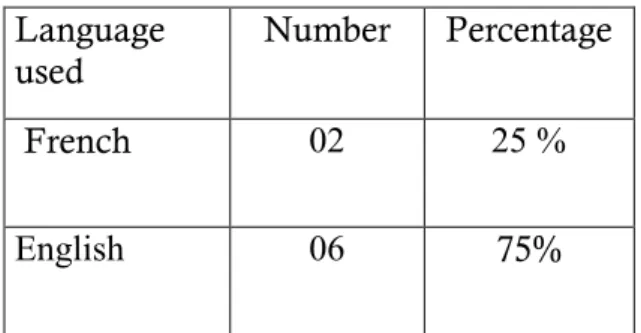
Table 3.4: The Corporate Language Used in Mearsk Line . . . .51
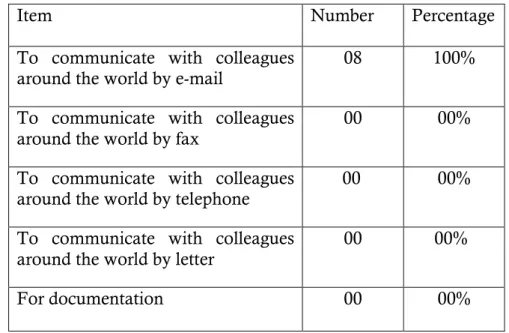
Table 3.5 : English Use at Maersk Line by Type of Item . . . .. . . 53
Table 3.6 : Kind of English Used by Workers at Maersk Line . . . .54
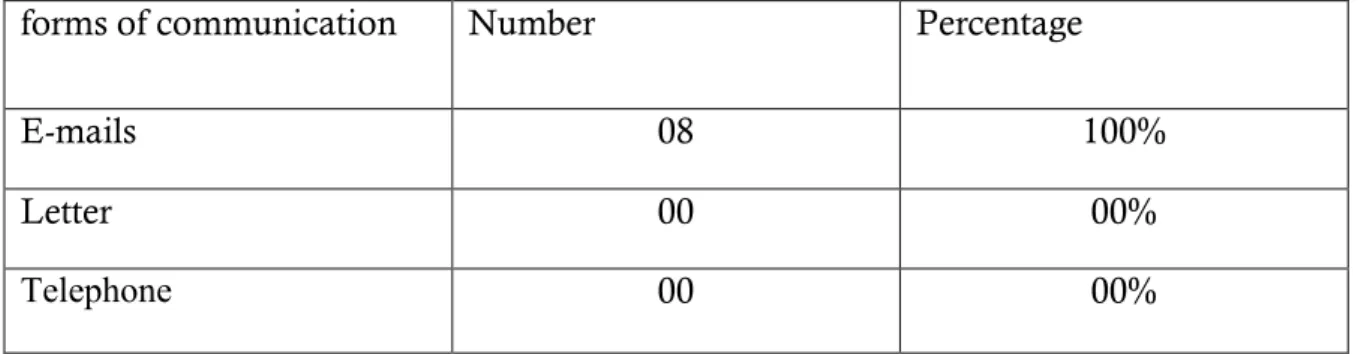
Table 3.7 : The Dominant Form of Communication in Maersk Line . . . 54
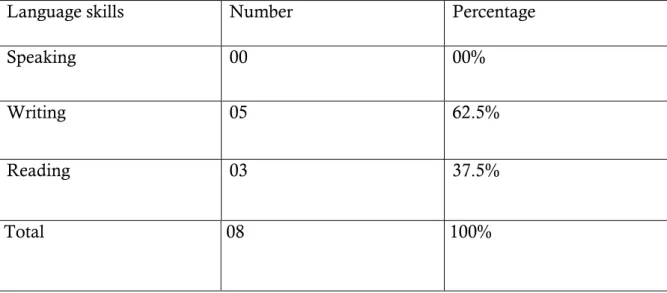
Table 3.8 : English Use in Language Skills . . . .55
Table 3.9 : Frequency of English Needed for Writing . . . .55
Table 3.10: Frequency of English Needed for Reading . . . .56
Table 3.11: Percentages of Organization Plan . . . 57
Table 3.12 Salutations in The Email Messages . . . 59
Table 3.13 Use of Names in Salutations . . . 60
Table 3.14 Complimentary Closing in The E-mail Messages . . . 62
Table 3.15 Use of Names in the Closing . . . 63
Table 3.16 Conversational Features in the Email Messages . . . 65
Table 3.17 Syntactic CMC Features in The Messages . . . 67
Table 3.18 Number of Messages with Or Without Contracted Forms . . . 68
Table 3.19 The Number of Messages Including Punctuation . . . .. . .70
Table 4.1 language Training at Maersk Line . . . 72
Table 4.2 The Frequencies with which English Language Training is Offered . . . . 73
Table 4.3 Percentages of the Respondents who Considered language Training in the Given areas Useful . . . 74
LIST OF ABBREVIATION
BE: Business English
BELF: Business English Lingua Franca
BICS: Basic International Communication Skills CMC: Computer Mediated Communication EAP: English for Academic Purposes
EOP: English for Occupational Purposes E-mail: Electronic mail
ESP English for Specific Purposes ESS: English for Social Studies
GENERAL
INTRODUCTION
GENERAL INTRODUCTION
In daily life, people spend more time communicating than doing anything else. Most people spend talking and listening as the primary means of communication .
However, people also communicate in many different ways ,through reading, writing , gesturing , drawing . All of these activities are forms of communication .
English today is a specific language . functionally and structurally quite different from other languages of the world . Functionally speaking , English has conspicuously spread among non-native speakers as a sizable number of Asian , African , Pacific , and other countries designate it as their official , associate official , or working language . In view of the situation, millions of students are learning English as a language for a wider communication .
Structurally speaking , as the spread of English progresses, English is bound to reflect a diversity of disparate cultures . Importantly , non-native speakers are taking advantages of this additional language and are exploring new dimensions of English usage .
The primacy of English in the global arena is attributed to the fact that it is the language through which international trade and diplomacy are conducted. Its multi faceted role enables English to transcend cultural, social and economic barriers as the tool through which achievements and innovations in commerce and technology are highlighted.
Business English has become the dominant linking language, a lingua franca, of international business in the world. In that context, business English has been referred to as Business English lingua franca (BELF) . The ability to communicate effectively in BELF has become an important asset and a source
of competitive advantage in a rapidly changing and increasingly international business environment .
The English language is a vital means of communication for millions of people around the world , during the twentieth century numerous technological inventions have facilitated communication between people from all over the world and the language that is used most is English , as the following quote proves ‘Most of the scientific, technological and academic information in the world is expressed in English and over 80% of all the information stored in electronic retrieval systems is in English’ (Crystal,1997:106).
The forms of communication can be divided into two main categories:
Verbal and nonverbal communication . Verbal communication involves only words. On the other hand, nonverbal communication involves written communication, body language such as hand gesture and other subjects and actions. All forms of communication are important and essential in our life because they enable us to interchange all types of message, such as thought and feeling. Other channels, such as telephone , fax are acceptable channels and technologies that play an essential role in many workplaces .
Technology can be considered as a tool in business communication to help people format , revise and enhance written correspondence and also facilitate contacts with others.
Computers for instance, are a component of modern professional life. It is an important tool to transmit information , perform tasks and communicate both internally and externally organizations . The internet is a huge network connecting all computers all over the world. It is the part of the information technology that joins with computers and telecommunications networks.
The internet is used worldwide because it is the network connecting communication , exchanging information between person to person , person to organizations around the globe
.
As mentioned above , one of the most widely used internet activities is the electronic mail , which is now dominating day –to-day communication in business organizations. Most electronic mail users use it to send and receive point-to-point messages , or to distribute electronic newsletters or notices . The electronic mail is a basic way of communication through the internet, people are more accustomed to and use to communicate with others both within and outside of organizations
.
The electronic mail is an effective tool and is widely used because it is efficient and easy to use , availability and low cost . Generally , it is not difficult to learn the process of using an e- mail process .
In the last few years , most e-mail messages were written in English and it is primarily used . Besides , there are a number of foreigners working in our country and doing business with us . So , the English language is the medium language to communicate with them .
The practice of English is important for people in countries like Algeria , where people usually use either Arabic or French language in their daily life, education and business this can be a linguistic barrier to the Algerian’s weak use of English language which is the problematic of our future research .
We require the English language for some other purposes such as contacting people in other countries using the internet , either through spoken or written language. We can not deny that the English language is essential for most types of business.
The main aim of this study is to examine the use of English language by non-native speakers in a business context more specifically workers of Maersk line as a tool of communication
the study provides information about whether the use of English is part of the respondents’ daily activity . The study belongs to the field of business communication research .
Moreover , the employees of this company have different degrees and different backgrounds vis-à-vis the English language .
These led to the following hypothesis :
Are the respondents aware that they are using a specific type of English in their workplace.
In which type of communication ( written or oral ) do they use the specific type of English .
This dissertation comprises an introduction and four chapters , each chapter contains an introduction and a conclusion .
Chapter one describes the English language as an international language and its importance as a mean of communication over the world , status of English as a lingua franca .
In addition , this chapter includes the definition of English for Specific Purposes , its development through time and its characteristics in order to have an idea of what is English for specific Purposes ad how it is distinguished from English for General Purposes .
Chapter Two is devoted to an overview of Business English and its three features then , the relationship between language and Business English communication by defining first the communication process and its different types in addition to its components , then , the required points for an effective communication in a business environment .
Chapter Three is divided into two parts the first part is the data obtained from the questionnaire survey and the second part is the analysis of the e-mails collected from the participants . background information on the respondents and their workplace environment .
Chapter Four deals with recommendations and suggestions in order to have more efficient people in workplaces from different fields , the respondents were asked about any English language training in their actual workplace and they were asked also about their wants .
CHAPTER ONE
1.1 Introduction:
This chapter is about the reasons that led to the emergence of the English language as an international language.
It also deals with the different types of ESP then, we have a comparison between English for specific purposes (ESP) and English for general purposes (EGP).
1.2 English as an International Language:
About fifty years ago the notion of English as a true global language was merely a theoretical prediction which is still diffuse and vague . However, realities have created it as a real world language at the present time .
In 1999 Graddol ( 1999 : 57) predicted that in the future English will be a language used mainly in multilingual contexts as a second language and for communication between non-native speakers . This prediction seems to have come true now , as English is used most often as a contact language by speakers of other languages in various contexts . Also, our society is becoming a 24-hour society that increasingly challenges its members on all levels . Information density grows and people need tools to be able to communicate and interact faster and faster, at the same time they need to learn to accommodate to other cultures. Global English enables us to communicate freely with each other and thus satisfies our needs.
"Global English" in a sociolinguistic context refers almost literally to the use of English as a global language, a common language for the world. A language achieves a genuinely global status when it develops a special role that is recognized in every country. Having such a status, the global language has to be of a great importance, influencing all the domains of the human activity in the world. For example English dominates such fields as the media, foreign language teaching, business etc.
English is one of the most important languages in the world, it can even be said to be the single most important language, other languages are important too but not for the same reasons as English is , because it may be the only language that truly links the whole world together. The use of English is especially widespread in the international business world, so much so that English has become the standard language of world business. The preference for the English language in international business means that enterprises in non-native English –speaking countries are enthusiastic about English language education.
English is the most widespread language in the world and it is the more widely spoken and written than any other language, over 700 million people speak English as a foreign language, three-quarters of the world’s mail , telexes are in English .
According to David Crystal : “English is now the dominant or official language in over 60
countries and is represented in every continent.”
(Crystal 1997: 106)
Research has established that 85% of international associations make official use of English , 70% of the linguistics journals in the world are published exclusively in English , 85 % of the world film market is in English , 85 % of the scientific articles in the world are written in English1.
Accordingly , it can be understood that the English language is a vital means of communication for millions of people around the world .During the twentieth century, numerous technological inventions and developments, such as the telephone, fax electronic mail, internet have facilitate communication between people from all walks of life and the language that is used most is English as the following quote proves
“ Most of the scientific , technological and academic information in the world is expressed in English and over 80 % of all the information stored in electronic retrieval systems is in English.” ( David Crystal 1997:106)
.
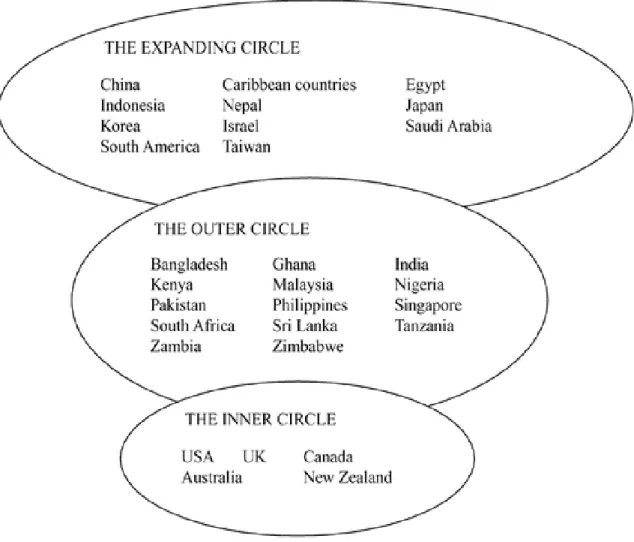
In the 1980s , Kachru ( 1985) launched a useful description of the spread of English by dividing the English –speaking community in three concentric circles : the inner circle , the outer circle , and the expanding circle ( see Figure 1) . It has been the most influential model of the spread of English .
Figure 1 . Kachru’s three concentric circles of English . Source : Kachru (1992: 356)
The inner circle includes those English –speaking countries where the language serves as a native language ( ENL) , for example , the UK and Australia . The outer circle refers to countries which have experienced periods of colonisation by English-speaking communities and the language has thereby been institutionalised in these nonnative communities . Among these: India , Nigeria and Singapore where people use English as a second language ( ESL ). The expanding circle, for its part, includes countries where English is used as a foreign language ( EFL) , for instance in China , Israel and Finland . However there are some problems in Kachru’s model ( Figure 1) he points out that it is sometimes unclear whether a country has English as second or foreign language , because the language policies of such countries change constantly (Kachru 1985 :14) . Today , approximately 20 countries for example Denmark are in transition from English as a foreign language to English as a second language status ( Graddol 1997: 11).
The future of English as a global language will depend on the political , economical , demographic and cultural trends in the world. The beginning of the 21stcentury is a time
of global transition ,globalization is going hand in hand with the growing use of English .
English is the second most widely spoken language in the world today. Of the 6912 living languages only Mandarin is spoken by more people . It is the English language however that seems to be having a bigger impact on the world as a whole. It is the official language in 52 countries as well as many small colonies and territories in addition, 1/4 to 1/3 of the people of the world understands and speaks English to some degree and it has become the global language used in business, cultural and political exchange
.
English on the other hand , is spoken around the world, it has been estimated that out of 6 billion people that are alive today about 350 million speak English.
As Girard reports:
“The language has an international status and is widely used by people for whom it is not the mother tongue. Moreover ,people who are studying English , senior and businessmen , look for the opportunity to learn it because they realize that English is a lingua franca in international relations.”
(Girard 1974:128)
As a result, the growth of international trade thanks to globalization and the internet, the use of English as a foreign language is worldwide and it has become a“lingua franca2.” when people from different entities had to communicate with each other so they adopted a simplified language known as English.
Crystal ( 1997) asserts that English is the most widely taught foreign language in almost 100 countries of the world . Some other scholars argue that a global language has no frontiers of usage but goes across borders and different cultures .
Other terms used or less interchangeably with EIL include: English as a lingua franca
English as a global language English as a world language
English as a medium of intercultural communication
The causes for this universality are well known and understandable, English first began to spread during the 16th century with the British Empire and was strongly reinforced in
the 20th century by the USA world domination in economic , political and military
domains and by the huge influence of American movies and pop music .
2- By extension, a semi-technical term for any additional (often compromise) language adopted by
speakers of different languages, as a common medium of communication for any purposes and at any level .in Concise Companion to the ENGLISH LANGUAGE,OUP, US, 1998.
The globalization of world business , technological and trade had brought a huge increase in the demand of all types of ESP teaching and the universal language on the internet. English is the language of the internet , even non-native speakers write their blogs in English to reach a wider international audience , it has been the language of international trade for decades now. Actually , the electronic media and the internet particularly did the final job in promoting English to a global language .
1.3 Lingua Franca English :
The term “lingua franca” has been defined as a contact language used between persons who do not share each other’s mother tongues and who instead turn to a third language which is not the native language of either speakers ( firth 1996 : 240 ) . Hence , lingua franca has nonnative speakers ( Seidlhofer 2001: 146 ) . any natural or artificial language may acquire a status as a lingua franca and become used either intranationally , i.e. as a common language of a country , or internationally between speakers of different nationalities .
House states that : “ ELF interactions occur between conversationalists of different language
backgrounds , for none of whom English is the mother tongue .” ( House , 1999:74).
English serves as a lingua franca for both international and intranational purposes and has obtained a strong status as such all over the world . It is in fact the lingua franca speakers who make up the largest group of English speakers in the world today ( Meierkord 2000 : 1). For them English is a useful tool to be used when native languages fall short , e.g. in politics or on the internet .( Seidlhofer 2001 : 141).
The fact that speakers of English as a lingua franca ( ELF) come from various cultural and linguistic backgrounds is bound to have its effects on the
language as well . However , at the same time as the speaker’s mother tongue and his/her own communicative norms influence the language ; the ELF speakers have also learned the norms of British or American English at least to a certain extent . As a result , the ELF communication can involve three or more cultures ,i.e. the culture of the speaker, the recipient and for example Britain , requiring the speaker to handle unexpected communicative events . It has been claimed that this creates insecurity which , in turn, encourages speakers to establish specific lingua rules . As a sign of this , ELF has its own linguistic characteristics influenced partly by the linguistic norms of the individual speakers as well as the competence of each speaker in the foreign language ( Meierkord 2000 :1-2 ) .
1.4 Impact of English as a Lingua Franca :
The situation of English as a lingua franca is ambivalent , it is a freely chosen international language and this has endowed it with some very positive features . Yet, it is also the language of an empire and this has had some negative consequences :
1.4.1 Positive Aspects:
English really began enjoying a role as a lingua franca after the Second World war when the military, economic , scientific and technological supremacy of America became obvious . At that time too, American popular culture was beginning to gain world-wide recognition and admiration and a few decades later the American media business managed to achieve a global hegemony on world popular culture . On top of that , after the fall of communism , the United State remained the only superpower and American supremacy has remained unchallenged .
English has in effect become the international language of science and technology , commerce and diplomacy , tourism and travel . English is now the first source for neology in most languages . All of this is very positive , and since the world actually needs a lingua franca , English is certainly a good choice . Standard words are short and relatively easy to pronounce , there is
very little morphology and since syntax is not too constraining , non-natives get by easily even with a low level of proficiency .
One of the most positive aspects of learning the English language is that it gives an easy and direct access to the various fields of a very rich culture .
1.4.2 Negative Aspect:
As remarked above , empires do not usually take much interest in foreign cultures , and the United States is no exception . Most Americans only watch their own films , read their own books . This natural feature of empires has been reinforced in the case of America by cultural characteristics inherited from a British tradition of insularity and wariness of anything foreign dating back to the Middle-Ages . English –speaking
cultures are essentially self-centered even though a minority is certainly open to the rest of the world . As a result , Anglophones tend to think that they are the norm , that the way they do things is natural , universal , implicitly better , and this gives the hegemony of English a colonial flavour .
The world seems to have accepted the cultural , economic and political domination of the US rather than by any other country , domination is intrinsically unpleasant and dangerous . America is certainly not a benign country , and the capital-friendly neo-conservative views circulated worldwide by some English– speaking media , e.g. so – called “independent” news networks such as CNN and Fox News and self-styled “quality” magazines such as the UK’ s The Economist , are certainly ethically questionable , not to say downright evil . Then again , other countries are no better .
1.5 English for Specific Purposes ( ESP)
:
1.5.1 Definition of ESP:There are almost as many definitions of ESP as the number of scholars who have attempted to define it. Many others have tried to define ESP in terms of what it is not rather than in terms of what it really is, but we will disregard their definitions to concentrate on finding out what ESP really means.
Mackay and Mountford (1978) defined ESP as the teaching of English for a “clearly
utilitarian purpose” ( Mountford ,1978:2). The purpose they refer to is defined by the needs of the learners , which could be academic , occupational , or scientific . These needs in turn determine the content of the ESP curriculum to be taught and learned .
Mackay and Mountford also defined ESP and the special language that takes place in specific settings by certain participants . They stated that those participants are usually adults , they focused on adults because adults are usually highly conscious of he reasons to attain English proficiency in a determined field of specialization , and because adults make real use of special language in the special settings and adults and the role , usually auxiliary , that English plays in those particular settings for those particular people .
Robinson (1980) defined ESP courses as ones in which participants have specific goals and purposes ( again , academic , occupational and scientific). On this ,she cited Strevens (1977) to emphasize that the purposes language learners have for using language are of paramount importance .
Most definitions of what ESP is concur on three key topics : the nature of language to be taught and used , the learners , and the settings in which the other two would occur. These three aspects of ESP are closely connected to each other , and can be combined to establish that ESP is the teaching of specific and unique English ( specialized discourse) to learners ( adults in their majority ) , who will use it in a
particular setting (laboratory, hospital, etc.) in order to achieve a utilitarian goal or purpose ( communicate linguistically correct) , which in turn will fulfill additional personal goals ( promotional , economical, etc.) what ESP specialists do not seem to agree on is what type of language should be taught ( vocabulary , register , jargon ,etc.) and how to teach it .
1.6 Historical Development of ESP:
Hutchinson and Waters (1987) identified three key reasons they believe are common to the emergence of all ESP : the demands of a Brave New World, a revolution in linguistics and a focus on the learner . As to the first reason , they explain that two historical periods played an important role that led to the creation of ESP ; the end of the Second World War and the Oil Crisis in the 1970s . On the one hand , the end of the Second World War was an era of expansion in scientific , technical and economic activity world-wide . The role of international language fell obviously to English because of the economic expansion of the United States in the post –war world. On the other hand , the Oil Crisis of the early 1970s resulted in western money and knowledge flowing into the oil-rich countries . The language of this knowledge
became English , this led consequently to exerting pressure on the language teaching profession , which boosted in this part of the world , to deliver the required goods . English now became subject to the wishes , needs and demands of people other than language teachers .
The second very important reason that had a tremendous impact on the emergence of ESP was revolution in linguistics . Most of the work of linguists in the 1960s and 1970s of the past century focused on the ways in which language is used in real communication contrary to the works of traditional linguists who set out to describe the features of language .
Hutchinson and Waters (1987) point out that one significant discovery was in the ways that spoken and written English vary . in other words , a particular context in which English is used would impose , in a way or another, the variant of English. This idea was taken one step further , if language in different situations varies , then tailoring language instruction to meet the needs of learners in specific contexts is also possible . Hence , in the 1960s and the early 1970s there were many attempts to describe English for Science and Technology .
The final reason that Hutchinson and Waters ( 1987) mention to have influenced the emergence of ESP has more to do with psychology than linguistics . More attention was given in the 1970s to the means through which a learner acquires a language and ways in which it is learnt . Hence,there was a shift of focus from methods of language learning to the different learning strategies , different skill , different learning schemata and different motivating needs and interests that are employed by different learners . This consequently led to a focus on learners’ need and designing specific courses to better meet individual needs .
1.7 Characteristics of ESP :
Tony Dudley –Evans and Maggie Jo St John ( 1998) divided characteristic features of ESP in two groups according to its ‘ absolute’ and ‘ variable’ attributes . Concerning the absolute characteristics ( according to Dudley-Evans and St John ) :
ESP is defined to meet specific needs of the learner .
ESP makes use of the underlying methodology and activities of the discipline it serves.
ESP is centered on the language ( grammar, lexis , register ) , skills, discourse and genre appropriate to these activities .
The variable characteristics are seen in five points :
ESP may be related to or designed for specific disciplines .
ESP may use , in specific teaching situations , a different methodology from that of general English .
ESP is likely to be designed for adult learners , either at a tertiary level institution or in a professional work situation .
Most ESP courses assume some basic knowledge of the language system ,but it can be used with beginners ( Dudley-Evans , 1998) .
Hutchinson and Waters ( 1992) do not emphasize any concrete limits of students’ level or age , they emphasize learners’ individual needs and specialist knowledge of using English for specific purposes . Although there exist several aims and different purposes why learning English , the way of learning may be same .
“ Though the content of learning may vary there is no reason to suppose that the processes of
learning should be any different for the ESP learner than for the General English learner .” ( Hutchinson and Waters , 1992: 18).
They add that ESP methodology “ could just have been used in the learning of any kind of
English.” ( Hutchinson and Waters , 1992: 18 ).
1.8 Types of ESP:
David Carter ( 1983) identifies three types of ESP : 1. English as a restricted language .
2. English for Academic and Occupational Purposes . 3. English with specific topics .
First , the language used by air traffic controllers or by waiters is an example of English as a restricted language . Mackay and Mountford ( 1978 ) clearly illustrate the difference between restricted language with this statement : “ the language of international air-traffic control could be regarded as ‘special’ , in the sense that the repertoire required by the controller is strictly limited and can be accurately determined situational , as might be the linguistic needs of a dining-room waiter or air-hostess . However , such restricted repertoires are not languages , just as a tourist phrase book is not grammar . Knowing a restricted ‘ language’ would not allow the speaker to communicate effectively in novel situation , or in contexts outside the vocational environment .
The second type of ESP identified by Carter ( 1983) is English for academic and occupational purposes . In the ‘ Tree of ELT’ ( Hutchinson and Waters , 1987) , ESP is broken down into three branches :
1. English for Science and Technology ( EST ) . 2. English for Business and Economics ( EBE) . 3. English for Social Studies ( ESS) .
Each of these subject areas is further divided into two branches : English for Academic Purposes ( EAP ) and English for Occupational Purposes (EOP) .An example of EOP for the EST branch is ‘ English for Technicians’ whereas an example of EAP for the EST branch is ‘ English for Medical Studies’ .
Hutchinson and Waters ( 1987:16) do note that there is not a clear-cut distinction between EAP and EOP : “ people can work and study simultaneously ; it is also likely that in
many cases the language learned for immediate use in a study environment will be used later when the student takes up , or returns to , a job” .
Perhaps this explains Carter’s ( 1983) rationale for categorizing EAP and EOP under the same type of ESP . It appears that Carter is implying that the end purpose of both EAP and EOP are one and the same : employment . However , despite the end purpose being identical the means taken to achieve the is very different indeed . However , EAP and EOP are different in terms of focus on Cummins’ (1979) notions of cognitive academic proficiency versus basic interpersonal skills .
The third and final type of ESP identified by Carter ( 1983 ) is English with specific topics , Carter notes that it is only here where the emphasis shifts from purpose to topic, this type of ESP is uniquely concerned with anticipated future English needs of , for example , scientists requiring English for postgraduate reading studies , attending conferences or working in foreign institutions . However , it is argued that this is not a separate type of ESP .
Rather it is an integral component of ESP courses or programs that focus on situational language . This situational language has been determined based on the interpretation of results from needs analysis of authentic language used in target workplace settings .
1.9 The Difference between ESP and EGP :
The question of the difference between ESP and EGP has been addressed in the literature in terms of theory and practice. Hutchinson and waters (1987) stated that there is no difference between the two in theory ; however, there is a great deal of difference in practice.
ESP differs from EGP in the sense that the words and sentences learned and the subject matter discussed are all relevant to a particular field or discipline .
The design of syllabuses for ESP is directed towards serving the needs of learners seeking for or developing themselves in a particular occupation or specializing in a specific academic field .ESP courses make use of vocabulary tasks related to the field such as negotiation skills and effective techniques for oral presentations. A balance is created between educational theory and practical considerations,ESP also increases learners’ skills in using English.
English for General Purposes (EGP) is essentially the English language education in junior and senior high schools. Learners are introduced to the sounds and symbols of English , as well as to the lexical /grammatical / rhetorical elements that compose spoken and written discourse. There is no particular situation targeted in this
kind of language learning . Rather , it focuses on applications in general situations : appropriate dialogue with restaurant staff , bank tellers , postal clerks , telephone operators, English teachers, and party guests as well as
lessons on how to read and write the English typically found in textbooks , newspapers , magazines .
English for specific Purpose , however is that kind of English teaching that builds upon what has been acquired earlier in EGP with a more restricted focus.It aims at acquainting learners with the kind of language needed in a particular domain vocation , or occupation. In other words , its main objective is to meet specific needs of
the learner. Of course, this indicates that there is no fixed methodology of ESP that can be applicable in all situations , but rather each situation and particular needs of learners belonging to a particular domain impose a certain methodology of teaching .
Thus, ESP is centered on the language appropriate to the activities of a given discipline. According to Hutchinson and Waters (1987)
“ESP is an approach to language teaching in which all decisions as to content and method are based on the learner’s reason for learning3.”
In this connection, Dudley –Evans (1998) explains that ESP may not always focus on the language for one specific discipline or occupation , such as English for Law or English for Engineering .
1.10 Characteristics of ESP Courses : 1.10 .1 Organizing Course :
Organizing the ESP course is very important step to achieve a satisfying goal in the course . There exist many factors playing a crucial role in organizing ESP course without them the learning process would not lead to effectiveness . The term ‘specific’ in ESP refers to a specific purpose for which English is learnt ad teacher should be familiar with . He or she should be able to find an answer to what Hutchinson and Waters ( 1992) describe as ‘language description.’
the language description involve questions e.g. what topic areas will need to be covered ? what does the student need to learn ? what aspects of language will be needed and how will they be described ? ( Hutchinson and Waters , 1992:19-22) . Finding the right
answers to these questions results from the setting exact goals and objectives of the course . Designing a syllabus analyses what the course is going to be about , setting goals and objectives of the course in advanced is inevitable .
Another feature of organizing course underlines the way the learning is achieved . Hutchinson and Waters ( 1992) speak about:
“ learning theory which provides the theoretical basis for the methodology , by helping us to understand how people learn” ( Hutchinson and Waters , 1992:23) .
It is natural that learning strategies vary and corresponds with learners groups , their age , level or reason they study . the way adults acquire language is different from children , the group of advanced expects different attitude from beginners and teachers determine which aspects of ESP learning will be focused on to meet learners needs and expectations successfully .
Hutchinson and Waters ( 1992) point out another aspect affecting the ESP course as well . It relates to learner’s surrounding and discusses the questions ‘who’ , ‘why’ , ‘where’ and ‘when’ connected with the nature of particular target and learning situation they describe them as ‘needs analysis’
To organize the ESP course effectively and consequently achieve a satisfactory goal , having respect for all three factors is evident .
1.10 .2 Selecting Material :
Choosing ESP materials determines the running of the course and underlines content of the lesson . Good material should help teacher in organizing the course or what is more I can function as an introduction into the new learning techniques and support teachers and learners in the process of learning .
Materials are also a kind of teacher reflection “ they should truly reflect what you think and feel about the earning process” ( Hutchinson and Waters , 1992:107) .
Good material should be aware of the fact if the material is suitable not only for a particular discipline and answers given course goals but also for teachers and learners themselves . Materials should also function as a link between already learnt ( existing knowledge) and new information ( Hutchinson and Waters, 1992) .
Concerning the selection of ‘general English’ material and ESP material some criteria must be matched as well . Language teacher is responsible for selecting an appropriate text that contributes to students effectiveness that means he or she should pay attention to suitable criteria for its choice . Wallace ( 1992:91) suggests those main criteria :
Adequacy should be at the appropriate language , age level .
Motivation should present content which is interesting and motivating for students work . It goads into students effectiveness , interest and pleasure of work .
Sequence it is important if there is some relation to previous texts , activities , topics not to miss the sense of a lesson .
Diversity should lead to a range of classroom activities , be a vehicle for teaching specific language structure and vocabulary and promote reading strategies .
Acceptability it should accept different cultural customs or taboos .
Selecting an appropriate material regarding the main criteria is an essential phase in organizing each course . It may happen that learners ‘ needs and expectations are not met due to wrong choice of material
“ materials provide a stimulus to learning . Good materials do not teach they encourage learners to learn .” ( Hutchinson and Waters , 1992:107) .
1.10 .3 Type of Activities with Text :
Text as a learning material can be used for learning and practicing wide range of skills . In ESP course it can be source for new vocabulary , communicative or reading skills . To make working with a text as much effective as possible it is necessary to involve all students ‘ skills . It is preferred to combine working with printed text with listening to audio-cassette that means receptive with productive activities . Concerning the ESP activities it is necessary to keep in mind the context that should be consistent with studying subject matter .
Warming-up activities , pre-teaching and activation of new vocabulary or grammar structures , discussing questions concerning the topic . We can use various types of plays , puzzles , collocation grids , questionnaire , to increase students’ interests in given topic and lead them into further problems . It is a kind of preparing step . Wallace ( 1992) e.g. considers pre-reading activity very important for students motivation ; topic or genre of the text is introduced e.g. with collective discussion or some pictures to be fully motivated ( Wallace , 1992: 62) . Warming –up activities as a very important and necessary phase on which the next working process depends .
Receptive activities , work with a text itself , reading , listening . We can realize various reading strategies e.g. aloud , quiet , skimming , scanning , with or without translation , informative . They should lead to encouragement of students , we can distinguish language –based approaches or approaches relating to content of the text . Both of them should aim students to be as much active and reflexive as possible .
Productive activities , practising of acquired knowledge , work in pairs in groups or individual with help of teacher who takes notice of using target language . Summarization of lesson that should be done by students , it shows how students understand given topic .
Follow-up activities , next improving , developing appropriate using of learnt . We can practice it in a form of creative home work , exercises . Harmer ( 1991) draws that large scale of skills and activities can be developed e.g. drawing
characters , making discussion , creating some pictures , dramatic activities etc . ( Harmer , 1991: 188) .
1.11 Tools of Study: 1.11.1 Methodology:
The present study is a needs analysis conducted to examine the use of the English language of Algerian or non-native speakers in a business context .
The aim was to identify their overall language and needs , a questionnaire was used to carryout the needs analysis .
Survey data was collected over 15 days , with the survey available on –line . the data was gathered in this study consists of 50 English language e-mail messages.
1.11.2 Backgrounds questions:
The backgrounds section maps out the background of those who took the survey. The questions were quite standard and general .asking about the participants’ age , gender , position within the company .
The purpose of this section was to gather necessary information for cross-referencing the answers and to ease the mapping –out process of the survey questions .
1.12 Conclusion:
Because the aim of this research is to investigate the use of English by a non native people working in a business context so,in this section I tried to give a global idea about the status of the English language in the world and the causes that help its emergence . Then , an overview of ESP and its development ,the basic element that had been commonly agreed was based on satisfying the learners’ needs and this
attention is due to the dominance of English in the fields of economics , politics , media technology and medicine each of fields as well as others requires its unique way of teaching .
CHAPTER TWO
Literature
Overview
2.1 Introduction :
This chapter is devoted to the definition of Business English in addition to its features, then it moves to the Business English communication its types and components.
After that , the importance of an efficient communication and the relationship between language and communication .
2.2 Communication Process :
Communication can be defined as the process of sharing messages between two or more people. The word communication comes from the Latin word communis, which means common ( Harcourt , Kriszan and Merrier , 1996) . Therefore, the objective of communication is to establish shared understanding Murphy and Hildebrandt (1991) point out that communication is the process of transmitting and receiving a verbal or non verbal message that needs and leads
to a response. Communication can be effective when it achieves the desired reaction or response from the receiver. Simply stated, communication is a two-way process of exchanging ideas or information.
Chandler (1995) also defines communication as the process of interchanging thoughts, feelings and information. In conclusion, communication is the process of interchanging verbal or nonverbal messages while we are conscious or it is a two-way process of exchanging ideas or information ( Murphy , Hiderbrandt and Thomas , 1997) .
Communication takes a variety of forms which can be assigned to two major categories: verbal and non verbal , Chandler (1995) and Locker (1995) explain that verbal communication involves only words , that is , oral and written communication . On the other hand nonverbal communication involves our body and other objects and actions , both of these forms of communication are important and essential in our life because we spend more time in communication than in doing anything else.
2.3 Elements of Communication:
As Murphy,Hilderbrant and Thomas (1997) conclude that communication is a dynamic process of transmitting and receiving verbal and nonverbal messages in this process various elements function in harmony and it is considered as effective when it achieves the desired reaction or response from the receiver, it includes six components : context,sender,message,medium, receiver and feedback as seen in the following figure .
Figure 2.1 Communication Process
2.3.1 Sender or Encoder :
Human communication will necessarily involve people; all forms of communication take place between senders and receivers the sender initiates the communication process. In fact , the sender is motivated to communicate . The sender and receiver keep on changing their positions, during this process their roles are constantly being reversed, effective communication depends upon the role performance of the sender and receiver. Being the activator or
starter of the communication process , the sender can greatly influence the effectiveness and objectives of the message . In other words, the sender determines, to a great extent, the scheme of communication
2.3.2 Receiver or Decoder:
A message is destined to reach at an end in the process of communication. On the receiving end, it is the perception of the receiver to be influenced by the message.
Encoding Receiver
Feedback
Decoding
Response
The receiver is a listener or reader and decoder . However, a message may have more than one decoder in the process of interpretation as well as comprehension ( Murphy , Hidebrandt, and Thomas:13) . The decoding process can have a significant impact on the message, depending upon the decoding abilities of the receiver and the inherent complexity of the message to be decoded . While decoding, the receiver is not directly assisted by the sender. Thus, for the sender awareness of the elements influencing the receiver to decode is a determining factor for effective communication.
2.3.3 Context :
Context is the situation that motivates the sender to start the communication process .it is a broad field containing the county’s culture, organization and external and internal stimuli. Because every country, culture and organization have its own way for communicating information. Context is a condition of place and time and it can affect communication .
2.3.4 Medium:
The message channels depend on all the contextual factors and the nature of the
message. The choice of medium is influenced by the relationship between the sender and the receiver ,the urgency of a message or other factors such as importance, number of receivers and the amount of information.
Oral Communication Written Communication -Less detailed technical information
-More personal pronouns -Simpler constructions
-More imperative, interrogative and exclamatory sentences
-More detailed technical information -Fewer personal, pronouns
-Useful for permanent record, detailed documentation
-Possibility of review
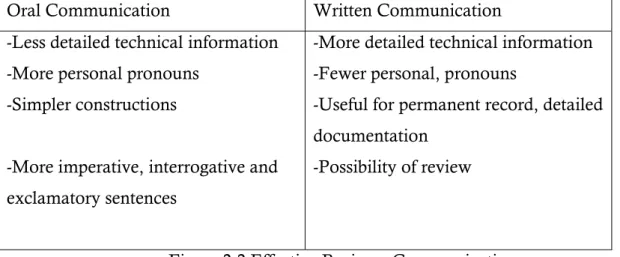
Figure 2.2 Effective Business Communications (Source :Murphy,Hilderbrandt and Thomas,1997,68)
The written channel is often preferred when the message is long and when the message must be documented whereas the oral channel is effective when the message is urgent or personal . However , this guideline can change when the receiver is from a different country.
2.3.5 Feedback:
The receiver’s reaction to the message is communicated to the sender in the form of feedback . Feedback is evaluation of the impact of the message , positive feedback is an outcome of effective communication . Feedback can be verbal or non-verbal . Senders need feedback in order to determine the success or the failure of the communication .
2.4 Business Communication :
Business communication is a general field of research that studies all forms of communication used in conducting business ( ahvaand Yli-Panula 1995,
Hartley,2002) . According to Reinsh ( 1996:28) business communication can be defined as:
“The study of the use, adaptation and creation of languages , symbols and signs to conduct activities that satisfy human needs and wants by providing goods and services for private profit.”
(Reinsh ,1996:28)
Thus, business communication is not just limited to the study of direct communication, but it also covers non-verbal communication and language attitudes in business context.
Business communication in intercultural situations has been studied by for example Clausen (2006) , who studied business communication between Danish cultures and Japanese companies . Clausen discuses the differences in Japanese and Danish cultures and their effects on communication in business situations . According to Clausen , cultural differences must be taken into account in business situations and cultural differences can be seen for example
in dedication to the company and in situations where social contacts outside the working place are concerned .
Communication is the lifeline of every organization. Communication among individuals and organizations for business objectives, either direct or indirect , is characterized as business communication . It employs all forms of communication at all levels , it is through communication that an organization carries out its operations . Communication has a direct relation with the growth or recession and strengthening or weakening of the organization, as well as its structure. According to Murphy , Hildebrandt, and Thomas communicating effectively in speaking and writing is a highly valued skill . It is a ‘need’ for every individual in a business organization.
Organization will be paralyzed without open and effective communication, organizations have to spend an enormous portion of time, energy, and capital on communication. Various studies indicate that workers in organizations spend 70% to 85% of their wok time in communication activities as an essential part of their working ( Locker :6) .
2.5 Development of Organizational Communication :
It is useful to define an organization before discussing organizational communication. “ An organization is a group of people associated for business, political , professional , religious , social , or other purposes” ( Murphy, Hidebrandt , and Thomas : 4) .
Therefore, an organization is “any goal-oriented group of people” (Lesikar:3) and this goal could be any activity from wide ranging affairs of human life . Business sector organizations are one group of all existing organizations . There are certain features common amongst the organizations and they differ as well.
established as a field of study . It was in recognition of the fact that a number
of organizations existed other than business organizations. Communication is essential for all organizations. A comprehensive study of communication in this backdrop was a distinct field of study as “organizational communication”.
Business communication is thus a part of organizational communication and hereafter in this work , the word “business” and “organization” will be interchangeably used with reference to communication . Although modifier “organizational” is general and “business” is specific , both share a great deal , business communication is communication in various organizations .
Business communication needs to be optimally effective , it is the effectiveness that determines the “ advantages” or “disadvantages” component of the process to the parties involved in communication .
Although there is a universal criterion for effective communication , it differs among various cultures , after phenomenal growth of internal trade , Murphy , Hidebrandt , and Thomas , mention that it is also required to “understand intercultural communication , the ability to speak and write in ways that are sensitive to and cognizant of the factors in different cultural contexts”. (Murphy , Hidebrandt , and Thomas : 4) .
The principals of effective business communication vary in number , according to significance and emphasis however, there are three essential and fundamental traits: economy , clarity , and authenticity .
2.6 Patterns of Business Communication :
The process of communication is completed in a sequence . However ,it follows a number of patterns : direct , indirect , simple , or complex . Pattering occurs in the channel of communication . In Locker’s view , shorter communication channels are more accurate than longer ones , all channel patterns , where everyone can communicate with everyone else , will bring better decisions and more satisfactory results ( Locker :46).
2.7 Importance of a Good Communication:
A good business communication can be effective when it achieves goals for the sender and the receiver. The four basic goals of business communication include the following ( Harcourt,Krizan and Merrier, 1996):
The understanding of the message as the sender intended. The sender must transmit the message so clearly that the receiver perceives the same meaning that the sender intended.
The receiver gives a necessary response to the sender. The sender can encourage the receiver to give a response by asking questions .
A good relationship between the sender and the receiver ; the receiver must be able to relate to each other in three important ways : positively,personally,and professionally.
2.8 Business English :
The term Business English has various definitions , it is although , difficult to define business English and limit it in linguistic terms ( Dudley-Evans and St John:54) . It is a form of English , lexically and stylistically different from everyday English . This difference is based on a variety of factors , business English also differs in linguistic context as well as usage . Hutchinson and Waters elaborate that business English is an established tradition of certain rhetorical principles , these principals are various including “ stylistic devices , language usage , vocal delivery and other principles.” It is the process of adapting discourse for a specific audience . Thus , business English discourse is not usual everyday discourse , it has a specific audience for specific purposes . In fact , this context is the determining feature of business English .
Requirement of the linguistic context creates a need for a particular choice of English , both in speaking and writing ,business English primarily , communicates impersonal or formal messages , directly or indirectly related to organizational affairs . It provides the means of conveying these messages , it is a selection of a particular range of language to convey messages in business
and organizational settings . Business English differs from general or everyday
English in a limited sense , i.e. lexis and stylistics , it shares major linguistic features with everyday English . Expressions suitable to particular communication contexts and objectives are employed in business English .
Business English is the language of communication in international business . similarly , Jones and Alexander maintain , “ although there is a certain amount of vocabulary that we can describe as special ‘business’ vocabulary , most so-called business English is simply English used in business contexts it is not a special language”. ( Jones and Alexander :1)
We can find that the term business English denotes the English taught to a wide range of professional people as well as people in the education process , leading to a business career . This range also includes occupations like commercial jobs , technical jobs . Business English aims at maximizing clarity while utilizing living language expressions . In the linguistic selection process, it targets the comprehension of the receiver in the most effective manner , business English in speaking is used in close coordination with the paralinguistic features like body language : hands and eye movements , facial expressions, and gestures . Moreover , in business English writing , paralinguistic features like page layout , colour scheme , graphics and other similar features have special relevance .
The linguistic context of business English is business and organizational communication , business English may not be relevant or appropriate to every socio-linguistic context, business communication in English will involve language , which is neither as rich in vocabulary and expression nor as culture-bound as that used by the native speakers of English . rather it is based on a core of the most useful and basic structures of vocabulary , unlike social communication business communication is carefully organized , comparatively formal and more concerned with the accomplishment of objectives .
A communication activity with these essential features will require a specialize variety of English , business English will enable the user to achieve
such communication objectives , which can not be achieved only with general linguistic as well as paralinguistic expressions . Thus , the contextual requirement of business communication involves business English however , business English is only the linguistic dimension of business communication .
Jones and Alexander (1989) point out that business English is extremely flexible , it is designed to be used with all kinds of person who needs to be able to use English effectively in their work , it can be used with businesspeople who :
work in the same field or in entirely different fields work within the same company or in different firms are managers or who hold lower positions
besides , it can be used with the following people :
business students who have little or no practical experience of business practice people from different professions who need to improve their English , and who
will appreciate a highly and practical and puposful approach that a ‘general English’ course may not offer .
2.9 Features of Business English :
Business English is a segment of the domain of English that can be characterized , it is part of English for occupational purposes ( EOP) and broadly of ESP . General understanding of business English is based on a number of facts the following are the fundamental features of business English:
2.9.1 Economy and Clarity :
It is the fundamental characteristic of business communication and requires language to be economical and clear . therefore there is the requirement of clear and well-organized thought expressed in words that indicate the logical processing of the message . There is often the need to keep the message economical , this may increase the cost of communication , especially by fax , or phone , it is a fact that unnecessarily long messages involve greater cost for more time , materials and communication mediums . Certain terms and expressions have been evolved to save time in referring to concepts which people in business are well acquainted . Moreover , the jargon of business communication like words , terms; and acronyms , is even expressed in a particular stylistic and syntactical manner , in order to create economy and clarity , it minimizes both the risk of misunderstanding and cost.
2.9.2 Purposefulness:
Communication in business always has a definite purpose that is usually of great vitality for the communicators. Many problems in communication are generated by unclear or inappropriate purposes . Thus , a sense of purpose is the context of all business communication . The language needed in business communication should be able , in the most appropriate way , to highlight the purpose and attain the objective . the success of a business episode will be dependent on the use of language , in addition to other factors . Thus , business English will be responsible for better prospects of the achievement of a business enterprise in well demarcated business communication situations , business English will exhibit purposefulness in communication events.
2.9.3. Social Dimensions :
In the business world , a lot of social interaction takes place . International business communication will happen across cultural boundaries .
Communication is always influenced by the social context in which it takes place . Social skills of business people are needed to develop contacts