BUILDING A NATIONAL TECHNOLOGY AND INNOVATION INFRASTRUCTURE FOR AN AGING SOCIETY
by Jasmin Lau B.Sc., Bioengineering University of Pennsylvania, 2005 B.A., Economics University of Pennsylvania, 2005
Submitted to the Engineering Systems Division in Partial Fulfillment of the Requirements for the Degree of
Master of Science in Technology and Policy at the
Massachusetts Institute of Technology September 2006
@2006 Massachusetts Institute of Technology. All rights reserved.
Signature of
Author... .. ... .... ... ...
TechnoCy and Policy Program, Engineering Systems Division
-" August 11, 2006
I/
C ertified by
...
...
...
7'
1
,
Joseph F.
Coughlin
Director, MIT AgeLab
A Engineering Systems Division
A ccepted by ... ...D ava ...
{
DavaJ.
NewmanLIBRARIES
Trotessor of Aeronautics and Astronautics and Engineering Systems
Director, Technology and Policy Program
ARCHWIS
MASSACHUSETTS INSTITUTE OF TECHNOLOGY
FEB 2
8 2007
BUILDING A NATIONAL TECHNOLOGY AND INNOVATION INFRASTRUCTURE FOR AN AGING SOCIETY
by Jasmin Lau
Submitted to the Engineering Systems Division on August 11, 2006 in partial fulfillment of the requirements for the Degree of Master of Science in Technology and Policy Abstract
This thesis focuses on the potential of strategic technology innovation and implementation in sustaining an aging society, and examines the need for a comprehensive national technology and innovation infrastructure in the U.S., capable of supporting the development and use of technologies by the aging population and their caregivers.
The pervasiveness of population aging makes it a primary concern for nations around the world today. As the inadequacies of existing resources become apparent, policy makers .are now turning to technology and innovation to cope with the changing demographics. 'Technological innovations to accommodate the elderly have existed since centuries ago, and they been useful in extending the human capability beyond perceived limitations of aging. However, new technologies developed with the same objectives are not widely adopted and accepted by the aging population today.
The thesis is divided into two complementary sections. The first examines three hypotheses for the slow penetration rates of new technologies for aging: 1) Useful, affordable and usable technologies are unavailable, 2) Professional carers that can play a catalytic role between technological innovation and implementation are not technologically educated and prepared to incorporate the technologies into elderly care, and 3) The dynamics of policy formation and agenda setting are not conducive to the design and implementation of "technology for aging" policies.
The second section consists of two comparative studies to highlight the gaps within the existing "technologies for aging" industry infrastructure. A study of the domestic automobile and mobile telecommunications industry provides a national perspective, whereas a study of eleven industrialized nations engaged in technological innovations for the elderly provides an international perspective.
The research shows that useful, affordable and usable technologies are available, but their diffusion is hindered by inadequate human capital development and an unconducive policy formation and agenda setting climate. The comparative studies further illuminate existing infrastructure gaps and also provide useful frameworks to facilitate the bridging of these gaps. By facilitating the development of a robust "technology for aging" infrastructure, policy makers can help to ensure that the U.S. is ready to meet the challenges of an aging population.
Thesis Supervisor: Joseph F. Coughlin
ACKNOWLEDGEMENTS
Writing this thesis was an incredibly enjoyable journey for me, mainly because of special individuals whom I have been fortunate to have around me. I would like to take this opportunity to express my heartfelt gratitude to...
Joe, a teacher, a mentor and a friend - For inspiring me to achieve, for challenging me intellectually, for showing me the joy of research, for unwavering support and confidence building, for the late night and before sunrise emails, and most importantly
for caring about my future aspirations,
My parents, brother and sister - For trusting, for advising, and for always believing in me even when I doubted myself,
My family at the MIT AgeLab - Alex, Roz, Lisa, Bryan, Paula and Michelle - For the fun time in Berlin, the encouraging words, the cheerful banter, the jelly beans and chocolates and the wonderful company in and around the Dungeon each day,
TPP staff and friends - Dava, Frank, Sydney, Yoko, Renee and fellow classmates - For the support given to me during my one year endeavor,
Singaporeans at MIT - For making Boston a home away from home, for friendships, the :sports and the food, and for always giving me something enjoyable to look forward to during the weekends in Cambridge. Five days a week of sports, weekly potlucks, most
recommended dishes, barbeques, and pyramid games always brighten my moods, And last but not least, to my best friend at MIT.
The laughter shared will always bring a smile to my face. The times spent together will always be held dear in my heart.
TABLE OF CONTENTS
ACKNOWLEDGEMENTS ... ... 5 LIST O F TA BLES ... 8 LIST O F FIG U R ES ... 9 M O T IV A T IO N ... ... 10 T H E SIS SC O P E ... ... 12CHAPTER 1: AGING - AN INTRODUCTION ... 14
G lob al A gin g ... ... 14
A ging Societies ... 15
A gin g in A m erica ... 17
CHAPTER 2: OPPORTUNITY FOR TECHNOLOGY AND INNOVATION ... 21
Technology and Aging Policy developments in America ... 22
Technology as a H ealth C are Tool... 23
A Hierarchy of Quality Aging Needs ... 25
Technology as an Economic Driver: Serving New Needs of an Older Marketplace... 29
Technology D iffusion ... ... 31
CHAPTER 3: OLD AGE AND NEW TECHNOLOGY ADOPTION: A MULTI-NATION ESTIMATE OF PERSONAL EMERGENCY RESPONSE SYSTEM U T IL IZ A T IO N ... ... 34
CHAPTER 4: EDUCATING THE NEXT GENERATION OF ELDER CARE PR O FESSIO N A LS ... ... 63
CHAPTER 5: DYNAMICS OF AGENDA SETTING IN THE "TECHNOLOGY & AGING" ISSUE NETWORK ... 92
Theoretical Perspectives on Policy Formation and Agenda Setting... 93
Technology for an A ging Society... 116
CHAPTER 6: ESTABLISHED INDUSTRY INFRASTRUCTURES - AUTOMOBILES AND CELLULAR PHONES ... 134
CHAPTER 7: GLOBAL AGING & TECHNOLOGY POLICY -- EXTENDING THE VISION OF INNOVATION IN AGING SOCIETIES ... ... 145
Engineered Innovation and Enhanced Delivery ... 145
Internationall Policy Awareness ... 146
Delivery And Development Capacities Framework ... 148
M ethodology ... 150
Technology & Aging In 4 Industrialized Countries... 155
Conclusions And Future Work ... 162
CHAPTER 8: TECHNOLOGY & AGING IN ELEVEN INDUSTRIALIZED NATIONS ... ... . ... ... ... ... 164
Delivery and Development Capacities of Eleven Countries ... 177
A policy map for Technology and Aging ... 178 R E F E R E N C E S ... . ... ... ... ... 18 1
LIST OF TABLES
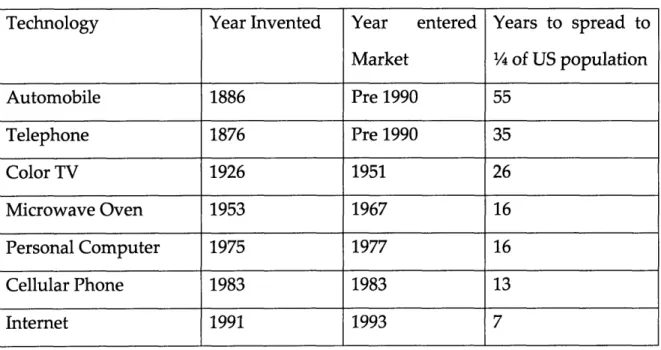
Table 1. Timeline for invention and diffusion of technologies... ... 32
Table 2. International Comparison of Elderly Population percentage and estimated PER S penetration rates ... 39
Table 3. Four categories of characteristics for country comparison ... 40
Table 4. D em ographics ... 53
Table 5. Social Characteristics ... 54
Table 6. Technological Environm ent... ... 56
Table 7. PERS Service Characteristics ... 57
Table 8. Colleges included in the study (alphabetical order) (n=48) ... 68
Table 9. Programs included in Curriculum Survey (alphabetical order) (n=70) ... 69
Table 10. Programs & Courses addressing Technology & Elderly Care ... 74
Table 11. Curriculum Survey of Professional Care Programs in Schools active in Technology & A ging Research... ... 76
Table 12. Programs with courses addressing the implementation of technology in care (n =12)... ... . ... 77
Table 13. Industry Infrastructures of the Automobile and Mobile Telecommunications Industries... 138
LIST OF FIGURES
Figure 1. Global Aging: Percentage of population above 65 years of age, by region, in
2005 and 2050... 18
Figure 2. Changes in fertility rates of developed and less developed countries over time ... ... ... 19
Figure 3. Change in world population, working age 15-64 vs. individuals above 65 ... 19
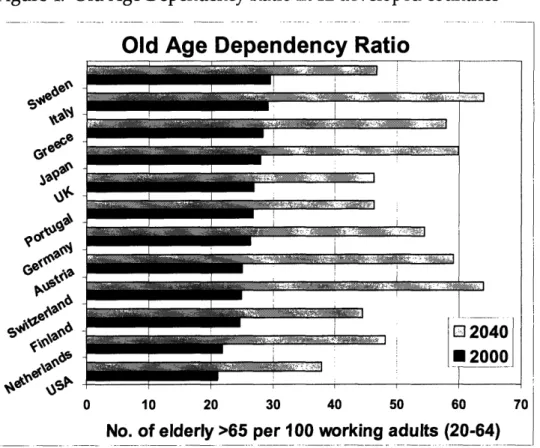
Figure 4. Old Age Dependency Ratio in 12 developed countries ... 20
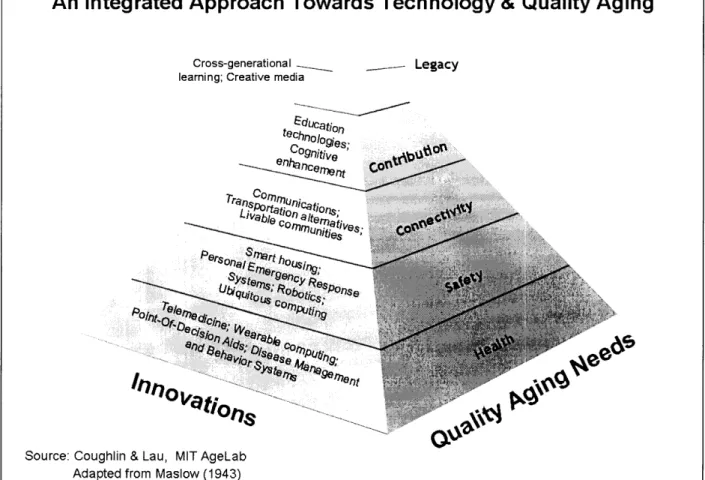
Figure 5. Hierarchy of Quality Aging Needs ... ... 27
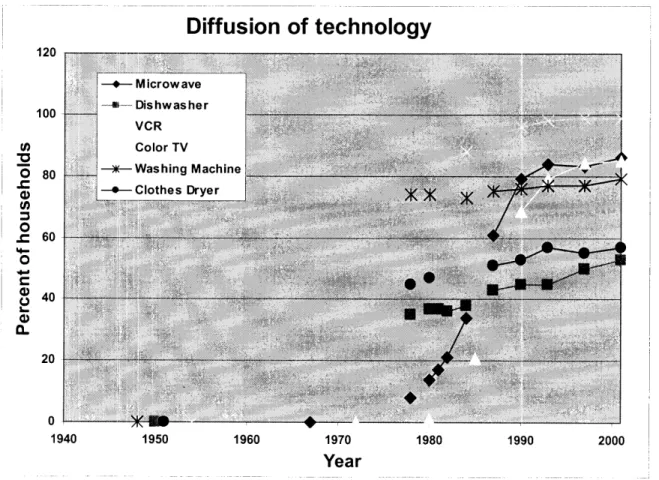
Figure 6. Speed of technology diffusion of six common household technologies ... 31
Figure 7. Percentage of population above 65 years of age and PERS ownership... 60
Figure 8. Solitary living and PERS adoption rate... ... 60
Figure 9. Public Long Term Care Spending as % of GDP and PERS Ownership... 61
Figure 10. Number of mobile phones per 100 inhabitants, 2003... . 61
Figure 11. Percentage of households with Personal Computer, 2000 ... 62
Figure 12. Broadband access per 100 inhabitants... ... 62
Figure 13. Composite Framework for Policy Formation and Agenda Setting... 96
Figure 14. Participants of the Technology for Aging Issue Network... ... 118
Figure 15. Map of Technology for Aging Issue Network participants ... 123
:Figure 16. Delivery and Development capacities framework ... 148 Figure 17. Relative delivery and development capacities of four industrialized countries
MOTIVATION
Innovation is sometimes likened to bright sparks of ingenuity that emerge unexpectedly and unsynchronized, and at other times likened to fruits painstakingly nurtured by carefully designed policies and plans.
Often seen as the key to success for individuals, teams, organizations or countries, we now turn to innovation for answers to many of our problems and concerns today, from environmental pollution and energy scarcity to overburdened health care systems and economic security. Over time, we have come to associate innovation with cost savings, enhanced performance and increased productivity, and a lack of innovation with obsolescence, high costs and low capacities.
Population aging is an issue understandable to all, yet it holds very different meanings for each of us. Some of us regard it as a macro social phenomenon to be dealt with by governments and community leaders, and some of us experience firsthand the emotional, financial and physical stress of caring for our aging parents.
As we prepare to take on the responsibility of caring for our aging parents, we begin to realize that aging is more complicated than it appears to be. The effect on families and societies are broad and far reaching, and many of us will be caught unprepared by the challenges of balancing school, work, family life and care giving.
How do we envision our own aging? What do we imagine our living, working, playing environments to be like? Do we have goals or dreams that we hope to fulfill, and how do we imagine ourselves fulfilling them? Most importantly, what resources do we have to help us achieve these goals?
An aging society can be an ideal hatchery for innovations, as the heterogeneity of the aging population creates a myriad of demands for innovations, both technological and social. Technological innovations in particular hold much promise in helping us fulfill a wide range of physical and social needs that become more critical as we age. For the benefits of these innovations to be fully captured, there must be an innovation infrastructure that has the capacity to select, support and facilitate rapid diffusion of useful innovations into the society.
The need for an innovation infrastructure forms the foundation for this thesis. It creates the necessity for a study of current inadequacies, areas for improvement, and potential or existing barriers to infrastructure development. This thesis seeks to provide a comprehensive analysis and discussion of these issues, and aims to provide the building blocks of a framework for the successful construction of an innovation infrastructure for an aging society.
THESIS SCOPE
This thesis utilizes a systematic approach to illustrate and examine the need for an
innovation infrastructure for an aging society. Although innovations may include both
technological and social innovations, I have chosen to focus predominantly on
technological innovations in this thesis. Past and existing research on the relationship
between technological innovation and aging have focused on design aspects of
technology development and preferences or demands of elderly users, without
significant exploration of the role of government entities, policy makers and aging
services providers. My research aims to bridge this gap by examining the roles of these
actors in fulfilling the need for a comprehensive innovation infrastructure capable of
supporting and nurturing technological innovations for an aging society.
To demonstrate the need for a national innovation infrastructure, I first discuss the
social, economic and political challenges brought about by global aging and the
opportunities for technological innovation. Despite the potentials of technological
innovations, the society has not been successful in leveraging the benefits of
technologies for the elderly in an efficient manner.
Three hypotheses to account for the suboptimal development and diffusion of these
technologies were next developed and examined. The hypotheses are:
1. Useful, affordable and usable technologies are unavailable
2. Professional carers that can play a catalytic role between innovation and
implementation are not technologically educated and prepared to incorporate
innovations into elderly care.
3. The dynamics of policy formation and agenda setting are not conducive to the
After establishing the need for an innovation infrastructure and identifying key factors that impede the development of such an infrastructure, I present two comparative studies to illustrate the critical elements of innovation infrastructures. The first utilizes an industry level comparison to map out what successful industry infrastructures are like. The second adopts an international perspective by examining "technology and aging" policies and initiatives in 11 developed countries around the world. These two comparative studies can provide building blocks for policy makers to plan for rapid and successful development of the "technologies for aging" industry.
CHAPTER 1: AGING
-
AN INTRODUCTION
Population aging is one of the 20th century's greatest success stories. Rapid economic development, advances in health care and triumphs in science and medicine have given us the gift of longevity. Yet as we celebrate our victories over the limitations of human life expectancy, we need to face the challenge that longevity has placed before us. Countries that have rejoiced over lower mortality rates now have to grapple with national development and sustainability issues as they plan for their rapidly aging populations.
The subject of "Aging" can be studied from several different perspectives. Aging affects the sustainability of the world as a whole, the development and competitiveness of countries, the cohesiveness and vibrancy of communities, as well as the physical and psychological well-being of each individual.
Global Aging
Global aging was set in motion long before it first emerged as a concern for societies today. Its onset is certain, and its progress can neither be slowed nor stopped. By 2050, the world population aged 65 and above will reach a high of 1.5 billion, more than the combined total population of the US, India and Germany today (United Nations, 2006). In North America, Europe, Africa and Oceania, the elderly population will almost double in proportion by 2050. In Asia and Latin America, population aging will be even more pronounced, tripling the percentage seen today (Figure 1).
Although population aging has previously been associated with industrialized countries, and it is indeed true that these developed countries today have the highest percentages of elderly populations, the decline in fertility rates (Figure 2) and improvements in health care in less developed countries are speeding up the rate of population aging all around the world. As the size of the elderly population grows faster than that of the working age population (Figure 3), the strain on national physical and economic resources to sustain populations will become more burdensome. Within the next 10 years, the total dependency ratio I in developed countries will begin to accelerate rapidly, reflecting the cumulative effects of a fast growing elderly population and a working population unable to grow as rapidly. Figure 4 shows the change in old age dependency ratios in 12 developed countries, between 2000 and 2040. Less developed countries will come face to face with the same challenges in less than 20 years later.
As competition in the global economy heightens, policymakers will be assuaged by a myriad of demands that compete for space on the policy agenda. Among these demands, the issue of population must be addressed with utmost priority, because it has profound impacts on the social, economical, and political wellbeing of a country.
Aging Societies
Longevity has presented us with new challenges. On an individual level, we experience physical and cognitive decline that threaten our ability to age healthily and actively. The differences in health and income status among the elderly population have resulted
'The total dependency ratio is the ratio of the sum of the population aged 0-14 and that aged 65+ to the population aged 15-64. The child dependency ratio is the ratio of the population aged 0-14 to the population aged 15-64.The old-age dependency ratio is the ratio of the population aged 65 years or over to the population aged 15-64. All ratios are presented as number of dependants per 100 persons of working age (15-64).
in the emergence of diverse groups of older people who live with different degrees of chronic health problems or cognitive impairment. As this heterogeneity among the elderly population increases, societies and communities find it harder to meet the demands of the elderly.
The aging of the baby boomers signal the entrance of a new generation of seniors. Born between 1946 and 1964, baby boomers are set to redefine the portrait of aging. Not only are they more educated, healthier and more financially independent than previous generations of senior citizens, they also tend to have a variety of interests and spend more money on consumer or leisure goods and services.
As an aging person retires, his or her caregivers often assume some responsibility for the physical and social wellbeing of the individual. This may become a financial and psychological burden for caregivers, who often need to take care of their own children in addition to their aging parents.
The aging population also adds pressure on existing health care and social support systems. Expensive diseases of aging such as cardiovascular disease or strokes impose enormous strains on the financial viability of existing health care systems, and limited long term care resources are being stretched to their full capacities. The shrinking labor force participation, declining rates of savings and investments, and the shifting of electoral power to the graying population all present challenges for aging societies. For a society to remain sustainable, they will need to adapt opportunely to the demographic shift. Reshuffling resources to accommodate the aging population is no longer a realistic long term option due to tightening national budgets. In fact, committing less resources and energy to youth development may exacerbate the issue, because their contributions will become increasingly crucial in the aging world.
Aging in America
For America, time is critical.
According to the US Census 2000, there are close to 83 million baby boomers in the U.S, which makes up more than 29% of the entire population. This year, the oldest of the baby boomers will turn 60 years old. Between 2006 and 2040, the percentage of Americans above the age of 65 will increase more than 2-fold, from 37 million to an estimated 87 million.
Aging as a policy concern in America is not new, but policy makers need to adopt a paradigm shift to the way they think about aging policies. The Social Security Act introduced in 1935 contains till today some of the best known and most diverse social ]policies for the elderly, such as the Old-Age and Survivors Insurance and Medicare. In :1965, the Older Americans Act was signed into law by President Lyndon B. Johnson in and with it, the Administration on Aging was created. However, aging has all along been tied to disability, and in some cases, poverty or disease. As a result, policies have been focus on providing basic financial and healthcare support for all senior citizens. As the old age dependency ratio in the U.S. rises with the aging of the baby boomers, the burden on the working population increases. In 2000, each elderly person was supported by 5 working adults. In 40 years time, there will only be 3 working adults per elderly person. This threatens the sustainability of current health and welfare policies that focus on providing just financial support for the elderly.
To ensure America's sustained development and competitiveness, policy makers must reevaluate existing national policies and be willing and ready to introduce novel and disruptive innovations to meet the needs and demands of the aging population.
Figure 1. Global Aging: Percentage of population above 65 years of age, by region, in 2005 and 2050
Percentage of Population above 65, 2005-2050
15.9 27.6 e.j 12.4 21.1 Latin America Europe 6.4
4
Oceania 3.4 6.7 1O.O 19.3 6.1 18.4 ~* at::0
~41 F0
0a
10.0 19.3
Figure 2. Changes in fertility rates of developed and less developed countries over time
Figure 3. Change in world population, working age 15-64 vs. individuals above 65
1950 1970 1990 2010 2030 2050
Year
Rate of Change of World Population
V.L 0.18 0.16 "* 0.14 i 0.12 O a 0.1 0 0.08 E = 0.06 Z 0.04 0.02 0
Figure 4. Old Age Dependency Ratio in 12 developed countries
Old Age Dependency Ratio
0 10 20 30 40 50 60 70
CHAPTER 2: OPPORTUNITY FOR TECHNOLOGY AND
INNOVATION
Living longer can be both a blessing and a bane. The physical and cognitive decline that accompanies aging often dampens the excitement of pursuing interests and dreams after retirement. For us, living forever is no longer desirable if we cannot enjoy their longevity. We want to age healthily, actively and successfully. The older person's desire to age successfully, the burden on caregivers, the shrinking labor force participation and the pressures on health care and welfare systems are merely snippets of the vast range of societal challenges brought about by aging. With constraints on physical and human resources, policy makers are beginning to turn to technology for solutions to this daunting challenge.
Technology and old age are not new to each other. Technological innovations to accommodate the aging process have emerged since centuries ago, some of which have become ubiquitous today. One of the first technological innovations associated with aging was the eyeglasses. In 1289, Sandra di Popozo wrote in a Florentine manuscript:
"I am so debilitated by age that without the glasses known as spectacles, I would
no longer be able to read or write. These have recently been invented for the
benefit of poor old people whose sight has become weak".2
]In 1595, King Phillip II of Spain had in his possession one of the earliest forms of a wheelchair - a rolling chair with movable arm and leg rests. 3 The early ancestor of
2 1ittp://www.teagleoptometry.con/history.html
h;
today's hearing aid did not require engineering expertise or machining tools. Seashells and bulls' horns were used as simple ear trumpets, and these gradually evolved into the electrical hearing aids we see today, which were patented as early as 1892. 4
Imaginative yet simple, these innovations were all developed in response to unmet needs of the aged. They extended the human capability beyond the limitations of aging and sparked off the notion that we can compensate for our physical decline by pursuing the benefits of technology. Since then, gadgets and devices have been developed with the same objectives, but with varying success.
As we face the challenges of global aging today, we can once again turn to technology for ideas. Given the limited window that policymakers have to address aging population concerns, waiting for creative inventors to chance upon groundbreaking innovations will not be feasible. Instead, a conscious and organized effort to address the needs of the aging populations through innovative services and technologies is needed.
Technology and Aging Policy developments in America
The importance of technology as a tool for providing support to the elderly has not been overlooked in America. The 10th objective of the original Older Americans Act introduced in 1965 states that it is the responsibility of the Nation to assist the elderly to secure equal opportunity to the full and free enjoyment of "Freedom, Independence, and the free exercise of individual initiative in planning and managing their own lives". 5 Since 1965, the Act has evolved to meet the changing needs of society and amendments were made to the Act in 1992 and 2000 in response to the needs of the
4 http://www.ccent.com/PHS/history.html
elderly and their caregivers. Before 2000, efforts have been focused on ensuring basic fulfillment of needs for older Americans with the greatest economic and social needs. In subchapter IV of the Act, after the 2000 amendments were made, we see the first clear signs of Technology being regarded as an important factor in managing the changing demographics. Funds could now be used to provide computer training and enhanced Internet access for older individuals in order to improve the employment related
technology skills of the older individuals. 6
In the last decade, policy makers have rolled out a series of initiatives that held :significant promise for the elderly. The Assistive Technology Act of 1998 and the New Freedom Initiative of 2001 announced by President Bush to "remove barriers to community living for people with disabilities" 7 were the two major efforts that indirectly served the needs of the elderly, many of whom were living with disabilities. One key component of the New Freedom Initiative was to "Increase Access to Assistive and Universally Designed Technologies", and major increases in Assistive Technology Research and Development funding were promised. Along the same lines of "Freedom" and "Independence" that the original OAA set out to achieve, the reauthorization of the OAA in 2006 includes a proposal for a $28 million Choices for
Independence project to promote consumer-directed and community-based long term
care options. 8
Technology as a Health Care Tool
6 United States Code, Title 42 Chapter 35 SubChapter IV Part A, obtained from http:://www.access.gp0o.gov/uscode/index.html on April 11, 2006.
' President George W. Bush, New Freedom Initiative 2001
" Department of Health and Human Services, Choices for Independence: Modernizing the Older Americans Act, March 9 2006
Concerns over escalating health care expenditures and shortages in the health care workforce have stimulated discussions to leverage technologies as health care tools. The recognition that technology can address some of our aging concerns has spurred the development of the Assistive Technology industry, in which devices are developed to help the elderly and disabled maintain their mobility and other basic needs. Examples of Assistive Technologies span from low tech innovations such as pencil grips and bathroom grab bars to high tech solutions such as voice synthesizers and Braille readers. Assistive Technology Initiatives in various countries emerged in the 1990s and early 2000s, following government efforts to protect the interests of the disabled. The New Freedom Initiative and the Americans Disability Act in the US, the Disability Discrimination Act and the National Service Framework for Long Term Conditions in the UK, the 1994 Commonwealth Disability Strategy in Australia and the 2002 Behindertengleichstellungsgesetz - BGG (law for equal treatment of people with disabilities) in Germany all represent legislation that have fueled the development and improved accessibility of Assistive Technologies
Telemedicine and Telehealth - remote healthcare, of the use of medical information exchanged from one site to another via electronic communications to improve patients' health status (American Telemedicine Association, 2005) - has been in use for almost 40 years. Adoption of telemedicine has been slow over the past four decades despite growing demands from aging societies, but recent trends in Europe, Japan and the US have attracted attention and investments from private industry as well as national governments. Health care providers facing increasing costs and tighter budgets are beginning to see the cost saving benefits of implementing telemedicine and providing incentives for its usage by patients and health care professionals. The connectedness of communities and regions will improve significantly over the next few years, as research funding for infrastructure development increases and rapid advances in
telecommunications technology continue to take place. Infrastructure networks that are built can then be leveraged for distance education and social connectivity.
These two developments are clear examples of how technology is being used to improve and enhance health care. However, limiting the application of technology to health care alone will prevent countries and businesses from capturing the full benefits of technology. For example, the Assistive Technology industry, however helpful to ,disabled or physically impaired senior citizens, is limited by its own definition. Fundamentally developed for the disabled, both young and old, assistive technologies tend to carry a "badge of infirmity" that older adults often wish to avoid. This will
1become more important with the aging of the healthier and wealthier baby boomers.
Countries and businesses will need to adopt a change in mindset and prejudices in order to respond quickly and innovatively to evolving demands of the aging population.
Centuries after the invention of the eyeglasses and the wheelchair, we are still looking for and depending on innovations that can accommodate and somewhat compensate for the same physical and cognitive declines that we have tried to address years ago. Instead of focusing intellectual energy on the development of disruptive technologies whose technical principles are new for the product area, technology developers are focusing on developing incremental innovations by making marginal technological improvements within well-defined technologies and markets.
A Hierarchy of Quality Aging Needs
Before we can explore how technology can reshape and redefine the aging experience, we need to have a comprehensive understanding of the ideal of "quality aging". Abraham Maslow in 1943 contended that human needs can be represented in a
hierarchy in terms of their potency (Maslow, 1943). We adapt his hierarchical representation (Coughlin & Lau, 2006) in order to lay a partial foundation for identifying both the range of needs and the target opportunities for policy and market innovations. This 'quality aging' needs hierarchy includes and exceeds health, and can be used to guide technology development, public policy and private investment to fully realize the potential of technology for the aging population.
Figure 5 shows an integrated approach towards technology and quality aging. The hierarchy reflects selected needs of older adults alongside a list of technologies, applications and services that might respond to those demands. Five broad dimensions of Health, Safety, Connectivity, Contribution and Legacy are used to describe the needs of older adults.
Figure 5. Hierarchy of Quality Aging Needs
(Coughlin & Lau, 2006)
Health - The base of the hierarchy represent the most basic health needs, including fundamental needs such as physical wellness, nutrition, shelter and clothing. The common association of old age with frailty and disability has resulted in innovations today being focused on health needs. However, advances in health care and better nutrition have contributed to improved health among older, prompting us to shift our mindsets away from treatment and mitigation to prevention and management of diseases.
An Integrated Approach Towards Technology & Quality Aging
Cross-generational _ _- Legacy
learning; Creative media
I/o1ains
Source: Coughlin & Lau, MIT AgeLab Adapted from Maslow (1943)
Safety - Also a fundamental need, safety is an important concern for older adults as well as their caregivers. From the Alzheimer's disease patient at risk of wandering, to the older parent living alone, technology can be used to monitor the safety of the elderly in their home or in a long-term care facility. However, the trade-off between privacy and dignity of the older adult with safety concerns must be addressed sensitively
Connectivity - Staying healthy and safe is insufficient for older adults, who treasure connectivity to their families, friends and to society. Innovations in communications and transportation can enable them to remain socially connected while maintaining their independence. Senior centers can also be redesigned to incorporate technologies that meet the needs as well as social expectations of the aging. The internet and email are beginning to become an important tool for older adults to stay connected. The proportion of the 65+ who use the Internet at least occasionally is approximately 22%, and those reporting themselves as occasional computer users are closer to 29% (Pew Internet & American Life Project, 2004).
Contribution - The second highest need in the hierarchy is Contribution. Contribution needs reflect the desire of older adults to maintain or improve their self esteem and confidence. Both the capacity to contribute and the means to contribute are equally important to older adults. Technology can enhance an older adult's confidence in his or her own mental and physical ability; it can also improve cognitive function that is essential for an older adult to remain an active member of our family, community and society. Technology in the workplace can also extend productive work years and support lifelong learning or task point training. With the shrinking labor force participation due to the retirement of the aging baby boomers, the ability for older adults to remain productive is crucial for sustained national productivity.
Legacy - Legacy is the capacity of the older person to use their personal talents developed over a lifetime. The apex of the needs hierarchy represents the older person's desire for means to construct one's legacy, to attain self fulfillment and realize one's full potential. Its elusiveness may attract the most interest from older people, especially those who have had their basic health and safety needs satisfied. Innovations and technology that enables older adults to construct their legacies and transmit their experiences to future generations will improve the quality of life of older adults and enrich younger generations.
In this framework, the five dimensions of quality aging needs do not exist in isolation. Although the fundamental needs of health and safety tend to draw more attention from policy makers and business leaders, higher needs of connectivity, contribution and legacy cannot be ignored. If inadequately addressed by public policy, baby boomers will translate these higher needs into the critical mass of a new passionate politics of unmet expectations (Coughlin, 1999). Business will find that as large as the health and safety market may be, the willingness of older adults and family members to spend disposable income on these three "higher" dimensions is immeasurable.
Technology as an Economic Driver: Serving New Needs of an Older Marketplace
As we move away from the limited definition of technology for aging as merely a health care tool, we begin to see technology development for the elderly as an economic opportunity. For a country, the "Technology for Aging" industry holds tremendous potential as an economic driver. Businesses and corporate players are beginning to take note of the shifting demographics and are becoming more engaged in catering for the g9raying population. Because aging is a global phenomenon, goods and services that
emerge can tap into an enormous international market. What may be seen as a small national niche market now can evolve rapidly into a global market.
The aging of the baby boomers signal the entrance of a new generation of seniors. They are more educated, healthier and more financially independent than previous generations of senior citizens. Household wealth peaks at 55-74 years of age, making the baby boomer generation the most lucrative market for businesses to target their products and services to within the next few years. According to Nikkei Marketing Journal, starting in 2007, total leisure spending by Baby Boomers in Japan is expected to increase to $44 billion annually. In total, the market for pension-friendly goods and services was estimated to be worth $18 billion in 2002 9.
For "Technology for Aging" to become an economic driver for a nation, policy makers must begin to incorporate the needs of older people into their innovation policies. The US has historically relied on dynamics of the free market to stimulate competitive industries, but the rapid pace of aging necessitates an organized and proactive approach by the government. As innovative countries in Europe and Asia embark on similar innovation policies and encourage their domestic industries to respond to their demographic changes, the international competition in the development of technologies and services for the elderly is likely to heat up and become more intense over the next few decades. Countries with a vision to turn the challenges of aging into a growth opportunity will gain access to a market worth more than $55 billion in 2004 10, with expectations of exponential growth in 20 to 30 years when developing countries experience their peak demographic shift.
9 The Economist: The World in 2004; pp 74-7
Technology Diffusion
The rate of technology diffusion has increased rapidly with the evolution of our economy, and it now takes less and less time for new technologies or products to make their way into the average American household (Figure 6). Getting an automobile or a telephone (both of which entered the mass market prior to 1900) to a quarter of America took 55 and 35 years respectively; the color TV (1954), 26, and the microwave (1967), 16 years. More recently, however, the PC required only 16 years, the cellular phone 13 and the Internet 7 (Table 1) (Cox & Alm, 1996).
Figure 6. Speed of technology diffusion of six common household technologies
Diffusion of technology
120 100 U, 0 80 .c 60 40 0 0 40 20 0 1940 1950 1960 1970 1980 1990 2000 YearTable 1. Timeline for invention and diffusion of technologies
Technology Year Invented Year entered Years to spread to Market ¼ of US population Automobile 1886 Pre 1990 55 Telephone 1876 Pre 1990 35 Color TV 1926 1951 26 Microwave Oven 1953 1967 16 Personal Computer 1975 1977 16 Cellular Phone 1983 1983 13 Internet 1991 1993 7
Americans thirst for new technologies, and technology developers constantly seek out new and emerging markets for their latest creations. As concerns for the demands of the aging population grow, technologists are beginning to realize the emergence of a potentially enormous market for their products - the elderly and their caregivers. Every day, new devices are being invented and marketed to the older population, promising to improve their quality of life and to return to them the independence they had once enjoyed in their younger years. From sensory aids and mobility tools to telecare and robotics, more and more appliances are available today to support the elderly and their caregivers.
Markets are a way of linking users and producers, but there are cases where market signals work poorly. One of these is where new technologies are emerging and user needs (potential markets) are not well defined. Despite the availability of technology in aging services and the benefits they promise, the use of these technologies has not been widely adopted by the elderly or their caregivers. One example is the Personal
Emergency Response System (PERS) that can connect users immediately to emergency services in the event of a fall or serious illness. PERS was developed in the US in 1974 and has been on the market for over 30 years, yet only 2.4% of the elderly population in the US (over 65) has adopted the system. Of the 35.6 million older adults in the U.S above the age of 65, close to 5 million have at least one severe disability and lives alone (US Census, 2002). Even if all current PERS subscribers in the US are above 65, disabled and live alone, the market penetration rate will only be approximately 17%..
The case of PERS will be discussed in the following chapter. For a technology that is simple to understand, beneficial to the elderly and their caregivers, and costs about as much as the average home's cable TV bill (Coughlin & Lau, 2006), its adoption rate is far from encouraging. Why are technologies for the elderly not experiencing the same rapid diffusion rate as other technologies?
CHAPTER 3: OLD AGE AND NEW TECHNOLOGY
ADOPTION: A MULTI-NATION ESTIMATE OF PERSONAL
EMERGENCY RESPONSE SYSTEM UTILIZATION
The development of innovations and inventions to help the disabled and the frail elderly remain mobile, communicate with others and manage their daily activities is not a new phenomenon. Otherwise known as "Assistive Technologies", this field of technological development has benefited from federal funding as well as active support from disabled persons or senior citizens advocacy group. However, the aging of the more active, better educated, healthier and wealthier baby boomer generation necessitates a reevaluation of the needs of the elderly. Dishman (2004) describes the development of new aging-in-place technologies that involve new interfaces, interaction paradigms and core technologies such as domestic robots, personal electronic health records and ubiquitous computing technologies. As computing power becomes more available and affordable, many are now promoting the use of sensors and related information technology for remote monitoring and management of older people in their homes Coughlin (2006). "Technology for the elderly" is set to take on a new meaning, no longer restricted to mobility aids and home modifications designed to compensate for losses of function.
Businesses have begun efforts to capitalize on the emerging elderly consumer market. Supported by research studies that show how innovative technologies are successful in improving the quality of life for the elderly and their caregivers, the "aging technology" industry has been garnering more attention from both industry and national
governments. From furry toys that remind the elderly to take their medication, to intelligent beds that track sleep patterns and automate lighting, a wide range of technology has been designed to enable successful aging-in-place. Unfortunately, new inventions often hailed as "the solution" are frequently met with lukewarm response from the elderly consumer market. One of the main reasons hypothesized is that useful and usable technologies are not available, affordable or acceptable. Using a case study of a useful, affordable and available technology - the Personal Emergency Response System, this chapter examines factors that influence the utilization rate of such systems in ten developed countries around the world.
Personal Emergency Response System - a pioneer in Aging Technology
Developed in the mid 1970s in the US as first generation telecare systems aimed to deliver home care to the elderly, the Personal Emergency Response Systems have been on the market for almost three decades and are currently still being upgraded and marketed. The basic Personal Emergency Response System has three components:
-a transmitter worn by the user in the form of a watch or a pendant,
-a communicator installed in the user's telephone, and
-a 24-hour emergency response center that receives calls from the user.
PERS provide immediate connectivity to family and emergency services for an older adult who may have fallen or become seriously ill. Studies have shown that PERS utilization provides significant benefits to the elderly, their caregivers, as well as to the government. About a third of all older persons fall each year and about 40% of these falls lead to hospitalization (Sattin et al., 1990). The longer an injured older person waits for emergency help, the higher the mortality rate (Bernstein, 2000). PERS users
who have fallen are able to get help faster and therefore can benefit from reduced hospital stays and subsequent financial savings (Sherwood & Morris, 1980, Dibner & Stafford, 1984, Koch, 1984, Cain, 1987). Caregivers enjoy relief and peace of mind with
the knowledge that their elderly parent or family member has round the clock access to emergency services if needed. Their financial burden is also reduced due to cost-savings from reduced hours of live-in supervised care or personal care they would otherwise need to provide."1 PERS also give users, their family members and their caregivers an increased feeling of security, which enables the users to continue living independently. Widespread adoption and usage of PERS can also ease the burden on the national health care system, by helping hospitals to maintain financial viability. By
allowing medical intervention to take place early in emergencies, conditions are prevented from becoming more severe and needing more advanced and costlier health care delivery, and reduced hospital stays also help to free up resources in the hospitals. The PERS can also be a substitute for safety monitoring by home health aides, enabling health care to be provided outside the hospital setting. 12
Despite its relatively long existence, simple technology and proven benefits, the penetration rate of PERS in the USA has been far from ideal. Introduced in the USA in 1974, the PERS saw a slow growth in subscribers until the mid 1980s. In 1992 the total
" A study done by New York City Human Resources Administration Medical Assistance Program (1988) found that on average, 172 PRS users required 91.2 fewer hours of Personal Care each month (a savings of $565 per client per month). Another study by Coordinated Care Management Corporation of Buffalo, New York found that PRS users required 144 fewer hours of Personal care at a savings of $956 per client per month
Hyer and Rudick (1994) found that safety monitoring with PERS saved an average of 9.5 HHA hours per person, per day, for a net savings of approximately $4500 per person, per month. Based on 48 patients who had Medicaid as primary or secondary insurance coverage, a total of 94,000 hours of HHA were saved, yielding a net savings to Medicaid of $1.5 million.
volume of subscribers in the US was estimated to be 350,000 (1.08% of the 65+ population13). The most recent estimate, in 2004, was 850,000 (2.34%) 14.
The growth in PERS subscribers is lagging far behind the speed of technological innovation. Second generation telecare systems have already been developed and are being deployed in pilot projects around the world. These systems incorporate new technology such as motion sensors to provide continuous monitoring and are capable of generating alarms without patient intervention (Doughty et al, 1996). Plans to introduce third generation systems that create virtual communities connected by the telephone and the internet are already in the pipeline. To ensure that the benefits of the emerging advanced systems are fully realized, we first need to address the low penetration rate of the first generation systems. If simple, available and affordable technology is not successful in the market, is there hope for more innovative products and services?
Market Failure Hypotheses
Developers and advocates of telecare systems have not been oblivious to the suboptimal adoption rate of PERS. Studies have suggested that the underutilization of PERS might be explained by economic and psychosocial reasons (Mann et al., 1999). Dependent and frail elderly often do not have the financial resources to buy and use such technology, whereas independent and healthy senior citizens with financial ability are unable to see the tangible benefits of such a system. When PERS non-users were asked what they foresaw preventing them from using a PERS in the future, the most commonly cited
reasons were cost (46.4%), lack of perceived need (44.4%) and lack of knowledge of device (17.0%) (Mann et al., 2005). Another often cited reason for the poor adoption rate of PERS by the elderly is its stigmatizing effect, as PERS is sometimes seen as a badge of dependency that highlights a loss of independence and ill health. These barriers to adoption have prompted calls for federal reimbursements as well as design improvements, but the success of these attempts is unclear.
PERS - an international survey
Looking at cost and need factors no doubt helps us to understand the elderly individual's demand for PERS, but these factors tend to be dependent on many macro level factors as well, such as socio-cultural attitudes, overall elderly support system in a community and financial support for general long term care. To appreciate how these factors contribute to the suboptimal adoption rate of PERS in the US, a multi-nation study of PERS utilization was conducted. This allowed us to determine the relative success of PERS in the US compared to other developed countries with aging populations.
A set of ten countries were chosen for comparison, based on the availability of data regarding PERS ownership or usage as well as a general existence of efforts to leverage the benefits of technology for elderly care. In Europe, PERS are also known as "community alarms", "social alarms" or "tele-alarms". Alarm schemes similar to PERS have been in existence in Europe since the 1960s but the earlier systems were wired and typically used within nursing homes or institutions. The use of such alarm services in many countries suggests that the benefits of the technology has been recognized and
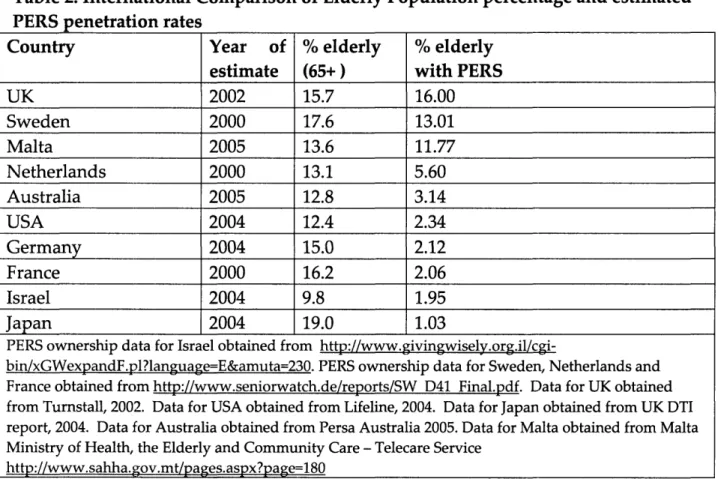
acknowledged. Table 2 below shows the degree of PERS usage in the ten different countries.
Table 2. International Comparison of Elderly Population percentage and estimated PERS penetration rates
Because PERS or social alarm services are provided by different service providers in each country and there is no central data collection mechanism for PERS ownership and usage worldwide, the data for different countries were obtained from different sources. In addition, data for 2004 or 2005 was unobtainable for UK, Sweden, Netherlands and France. Therefore the numbers for these countries are likely to be underestimated, taking into consideration growth in subscriber volume likely to have occurred from 2002 to 2005.
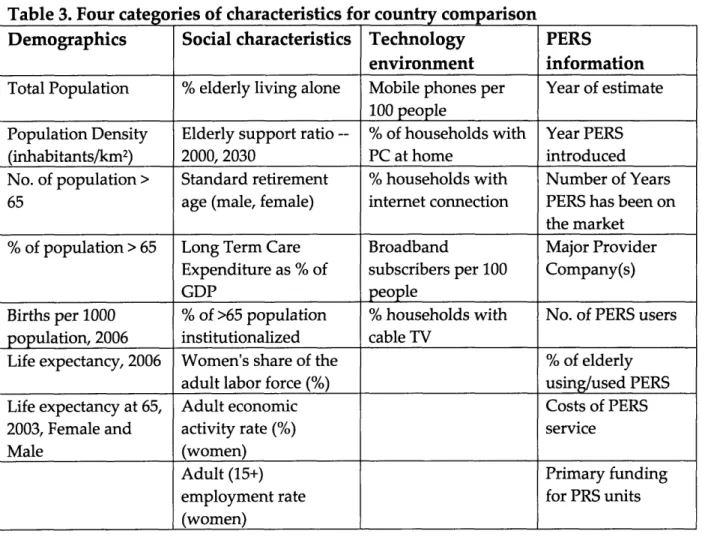
The degree of PERS utilization in each country is influenced by many factors. Data on four sets of characteristics (Demographics, Social Characteristics, Technology
Country Year of % elderly % elderly
estimate (65+) with PERS
UK 2002 15.7 16.00 Sweden 2000 17.6 13.01 Malta 2005 13.6 11.77 Netherlands 2000 13.1 5.60 Australia 2005 12.8 3.14 USA 2004 12.4 2.34 Germany 2004 15.0 2.12 France 2000 16.2 2.06 Israel 2004 9.8 1.95 Japan 2004 19.0 1.03
PERS ownership data for Israel obtained from
http://www.givingwisely.org.il/cgi-bin/xGWexpandF.pl?language=E&amuta=230. PERS ownership data for Sweden, Netherlands and France obtained from http://www.seniorwatch.de/reports/SW D41 Final.pdf. Data for UK obtained from Turnstall, 2002. Data for USA obtained from Lifeline, 2004. Data for Japan obtained from UK DTI report, 2004. Data for Australia obtained from Persa Australia 2005. Data for Malta obtained from Malta Ministry of Health, the Elderly and Community Care - Telecare Service
Environment and PERS information) were collected so that a more comprehensive comparison between the ten countries can be made. These characteristics are listed in Table 3 below. Factors such as retirement age, life expectancy, population density, technological environment, costs of PERS and living arrangements are likely to affect on an individual's demand for PERS. For example, low population density or low levels of urbanization may heighten the perceived need for telecare and remote communication.
Table 3. Four categories of characteristics for country comparison
Demographics Social characteristics Technology PERS
environment information
Total Population % elderly living alone Mobile phones per Year of estimate
100 people
Population Density Elderly support ratio -- % of households with Year PERS (inhabitants/km2) 2000, 2030 PC at home introduced No. of population > Standard retirement % households with Number of Years 65 age (male, female) internet connection PERS has been on
the market
% of population > 65 Long Term Care Broadband Major Provider Expenditure as % of subscribers per 100 Company(s)
GDP people
Births per 1000 % of >65 population % households with No. of PERS users
population, 2006 institutionalized cable TV
Life expectancy, 2006 Women's share of the % of elderly
adult labor force (%) using/used PERS
Life expectancy at 65, Adult economic Costs of PERS
2003, Female and activity rate (%) service
Male (women)
Adult (15+) Primary funding
employment rate for PRS units
(women)
A statistical analysis of the data collected is difficult due to two reasons. Firstly, factors such as management of PERS service and funding mechanisms are impossible to quantify. In addition, salient but significant effects of characteristics listed in Table 2 on each other are also difficult to identify and elicit. Instead, general trends and
correlations are observed and discussed descriptively, keeping in mind that policies adopted by each country reflect deep and complex social, cultural and political differences.
Demographics
The effect of a country's demographics on the degree of PERS utilization is unclear. There is no observable correlation between the percentage of population above 65 years of age (Figure 7), population density or life expectancy and the corresponding PERS adoption rate.
Social characteristics
Social and cultural differences appear to have more observable effects on PERS utilization rates in different countries. In Japan and Israel, the elderly are more likely to live with their children and rely on their children for care, whereas in Western countries such as UK and USA, there are fewer expectations of children to look after their parents as they age. Many adults also choose to live on their own instead of depending on their children. The most significant social factor appears to be the living arrangements of the elderly. Figure 8 shows that higher utilization rates of PERS occur in countries with higher percentages of elderly living alone (UK and Sweden) whereas countries with lower percentages of elderly living alone (Japan) have a lower PERS utilization rate.
However, there was no observable correlation between rate of institutionalization and PERS adoption rate. One possible reason might have been the fact that each country uses a different definition for institutionalization. For example, 2.9% of Japanese 65+ reside in nursing homes, but the 6% institution rate includes individuals in long-stay hospitals. The United States data does not include individuals in assisted living facilities, while the data for Netherlands includes those in "service housing."
Literacy rate of the elderly population does not appear to have an effect on the adoption rate of PERS. The percentage of elderly who complete a university education in the US
(2001) was 26% for males and 18% for females, almost twice the number for Sweden
-12% for males and 11% for females. This is not surprising, because PERS is a simple technology that does not have a steep learning curve.
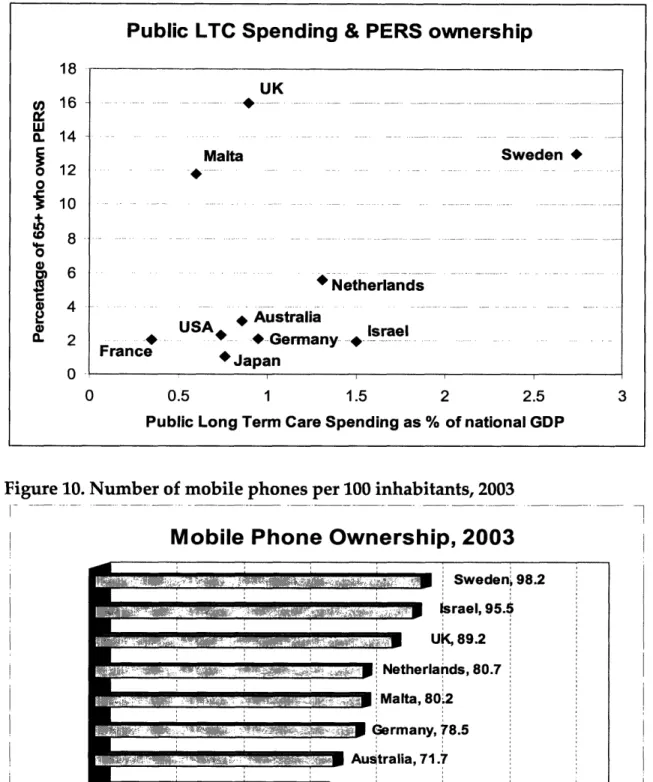
As seen from Figure 9, a country's spending on long term care, used as a rough indicator of general attitudes towards providing care and welfare services for the elderly, appears to be slightly correlated to PERS adoption rate. However, the direct relationship between Long Term Care spending and PERS utilization is unclear because no information was available on what fraction of spending is specially for supporting the usage of telecare or PERS. Long Term Care spending that provides coverage for PERS services is likely to increase demand for PERS, whereas schemes that do not provide PERS coverage may reduce the demand for PERS, since an elderly person may prefer to be taken care of by a social worker instead of relying on PERS. For example, the Long Term Care Insurance scheme in Japan provides financial support for home help services, day center care or short stay nursing care but does not provide financial support for PERS usage. This reduces the incentive for the elderly to substitute home help services with PERS, since it does not result in cost savings for themselves.
In most societies, care-giving roles are typically fulfilled by females. An increase in the female's share of the adult labor force is therefore likely to reduce the number of traditional care-givers and create a need for alternative care-giving provisions. Statistics of female employment appear slightly correlated with PERS adoption rates (Table 5). UK and Sweden both have a high percentage of women participating in the labor force (55.3% and 57.4% respectively), and a high employment rate of women above 15 years of age (95.9% and 95.6% respectively). In contrast, Germany, France,
Israel and Japan all had female labor force participation rates of less than 50% (49.3%, 49.2%, 49.1%, 48.4%). However, although the female labor force participation rate in the U.S. was the highest (59.5%), the PERS adoption rate was below that of UK and Sweden.
Technology Environment
Although PERS is a simple technology that does not require its users to possess significant technology literacy, its adoption rate may be indirectly influenced by the technological climate within a country, since it represents a substitution of human contact with technology. Many of the elderly living in developed countries today own and operate their television sets, video recorders and microwave ovens. The amount of trust that users and their caregivers have in the PERS service may be influenced by their overall level of trust in other technological devices such as mobile phones and computers. The figures below compare the adoption rate of the mobile phone, personal computer and broadband access among the ten countries included in the PERS case study.
Countries such as Sweden, UK and Netherlands that consistently rank high on technology adoption rates also reflect higher PERS penetration rates. Countries such as France and USA with lower technology adoption rates have lower PERS adoption rate. One exception is Malta, with a high level of PERS usage despite showing low general technology usage. This can be explained by the delivery of a heavily subsidized PERS service through a government department that provides for the social welfare of the elderly. The relationship between general technology adoption and PERS adoption is unclear because these figures do not reflect general technology adoption by age cohorts. It is impossible to infer the older population's general attitudes towards technology in
each of these countries. However, with the development of second and third generation telecare systems that incorporate computer technology and real time data transmission, the relationship between general technology usage and PERS usage may become more significant.
Characteristics of PERS service
Management of service
The management of PERS in USA is significantly different from that in European countries such as UK and Sweden. In the USA, Japan and Australia, PERS is mainly a private-pay service managed by private service providers. In the US, PERS is primarily marketed through hospitals, which means that most subscribers only learn of PERS after they have been hospitalized for a fall or illness. In UK and Sweden, alarm schemes are run mainly by housing departments or social services departments which also typically bear the costs of the services. In Malta, telecare services are provided by the Department for the Elderly and Community Services in conjunction with Maltacom. In France and Germany, private providers manage the alarm schemes which may be indirectly provided through public authorities or associations. In Israel, alarms can either be purchased privately or rented for free from voluntary organizations such as Yad Sarah.
There is no umbrella agency or organization for PERS providers in the USA. In UK, the Telecare Services Association (TSA), also known as the Association of Social Alarm Providers, functions as a representative body for the telecare industry in UK. The Personal Emergency Response Services Association (PERSA) in Australia performs a similar role. Such industry associations work with the government and statutory
regulators on maintaining quality standards and funding, support their members by promoting best practices, and also raises awareness of social alarms by providing information for users, potential users and caregivers. The creation of such industry associations depends on whether there exist a substantial number of suppliers and consumers interested in forming a common interest group. The lack of such an industry association in the US may be because PERS providers in the US prefer to maintain their autonomy and strategize independently in an industry with potential to grow exponentially; or they may already be part of a larger industry association such as the Assistive Technology Industry Association (ATIA). Malta is an exception as there is only one service provider (Maltacom) contracted by the government to provide PERS service.
PERS Providers
PERS providers come in all forms and sizes. Some providers specialize in providing PERS or telecare services, such as Lifeline Sys in the US and Tunstall in Europe. Other companies such as American Medical Alert Corp in the US and SECOM in Japan include PERS within a larger portfolio of security and alarm services. Companies such as Shahal in Israel specialize in telemedicine and health management services and provide PERS as one of their many diagnostic and monitoring services. Alarm services can also be provided by voluntary organizations such as Yad Sarah in Israel dedicated to help keep the ill and elderly out of institutions for as long as possible.
Costs
Costs of renting, owning and using PERS vary across the countries, and may range from practically free (Malta) to $500 for installation + $45 monthly fee (USA). Prices for