HAL Id: hal-00305098
https://hal.archives-ouvertes.fr/hal-00305098
Submitted on 11 Oct 2007
HAL is a multi-disciplinary open access
archive for the deposit and dissemination of
sci-entific research documents, whether they are
pub-lished or not. The documents may come from
teaching and research institutions in France or
abroad, or from public or private research centers.
L’archive ouverte pluridisciplinaire HAL, est
destinée au dépôt et à la diffusion de documents
scientifiques de niveau recherche, publiés ou non,
émanant des établissements d’enseignement et de
recherche français ou étrangers, des laboratoires
publics ou privés.
Updated world map of the Köppen-Geiger climate
classification
M. C. Peel, B. L. Finlayson, T. A. Mcmahon
To cite this version:
M. C. Peel, B. L. Finlayson, T. A. Mcmahon. Updated world map of the Köppen-Geiger climate
classification. Hydrology and Earth System Sciences Discussions, European Geosciences Union, 2007,
11 (5), pp.1633-1644. �hal-00305098�
© Author(s) 2007. This work is licensed under a Creative Commons License.
Earth System
Sciences
Updated world map of the K¨oppen-Geiger climate classification
M. C. Peel1, B. L. Finlayson2, and T. A. McMahon1
1Department of Civil and Environmental Engineering, The University of Melbourne, Victoria, Australia
2School of Anthropology, Geography and Environmental Studies, The University of Melbourne, Victoria, Australia
Received: 15 February 2007 – Published in Hydrol. Earth Syst. Sci. Discuss.: 1 March 2007 Revised: 28 September 2007 – Accepted: 4 October 2007 – Published: 11 October 2007
Abstract. Although now over 100 years old, the
classifica-tion of climate originally formulated by Wladimir K¨oppen and modified by his collaborators and successors, is still in widespread use. It is widely used in teaching school and undergraduate courses on climate. It is also still in regular use by researchers across a range of disciplines as a basis for climatic regionalisation of variables and for assessing the output of global climate models. Here we have produced a new global map of climate using the K¨oppen-Geiger system based on a large global data set of long-term monthly pre-cipitation and temperature station time series. Climatic vari-ables used in the K¨oppen-Geiger system were calculated at each station and interpolated between stations using a two-dimensional (latitude and longitude) thin-plate spline with tension onto a 0.1◦
×0.1◦grid for each continent. We discuss some problems in dealing with sites that are not uniquely classified into one climate type by the K¨oppen-Geiger sys-tem and assess the outcomes on a continent by continent basis. Globally the most common climate type by land area is BWh (14.2%, Hot desert) followed by Aw (11.5%, Tropical savannah). The updated world K¨oppen-Geiger cli-mate map is freely available electronically in the Supplemen-tary Material Section (http://www.hydrol-earth-syst-sci.net/ 11/1633/2007/hess-11-1633-2007-supplement.zip).
1 Introduction
The climate classification based on the work of Wladimir K¨oppen, and dating from 1900, continues to be the most widely used climate classification over a century later. Es-senwanger (2001) has provided a comprehensive review of the classification of climate from prior to K¨oppen through to the present. The period of greatest activity was from the
Correspondence to: M. C. Peel
mid-nineteenth century through to the 1950s. What is some-what surprising about this time profile of activity is that as both the availability of data and computing power to process them has become increasingly widely available post-1960, the level of activity in the development of new climate clas-sifications has markedly declined. The continued popularity and widespread use of the K¨oppen classification is remark-able. There is no doubt an element of historical inertia in this as each generation of students is taught global climate using this system and it is the basis of most common global climate maps. To replace it with a new system would be a significant task. Arthur Wilcock (1968) was probably cor-rect in surmising: “If . . . one is convinced that there are in principle strict limits to what can be achieved by any sim-ple classification, one may consider it profitless to seek minor improvements at the cost of confusion.” (p. 13).
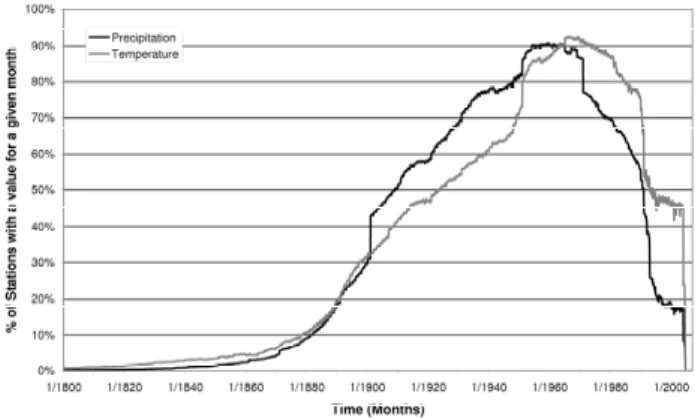
K¨oppen’s inspiration for developing a world map of cli-mate classification in 1900 owed much to the global vegeta-tion map of Grisebach published in 1866 and K¨oppen’s own background in plant sciences (Wilcock, 1968). Thornthwaite (1943) claims that K¨oppen’s use of the first five letters of the alphabet to label his climate zones is taken from the five vegetation groups delineated by the late nineteenth century French/Swiss botanist Alphonse De Candolle who in turn based these on the climate zones of the ancient Greeks. It is inconceivable that K¨oppen could have produced his original classification and map without using other landscape signals of climate (particularly vegetation) since there would have been so little observed climate data available at that time. In Fig. 3 of this paper we show the relative number of stations with temperature and precipitation data starting from 1800. Compared with what is available now, there would have been data from few stations available to K¨oppen and the global distribution would have been much more inconsistent than is the case now. In the light of this, the persistence of his scheme of classification is even more remarkable.
While Sanderson (1999) has argued that it is time for mod-ern atmospheric scientists to develop a new classification of climates, the K¨oppen classification continues to be the one most widely used in teaching. If we take as an example the textbooks of Arthur Strahler that are in very wide use in the English speaking world, it is the case that despite Strahler’s own attempt to produce a new climate classification (see, for example, Strahler, 1971) the latest edition of this series of texts still uses the K¨oppen system (Strahler and Strahler, 2005).
The use of K¨oppen’s classification is not confined to teach-ing. Many researchers routinely use it for their own par-ticular research purposes. The present authors have used it as the basis for grouping rivers by climate type around the world in order to facilitate comparisons of runoff character-istics (McMahon et al., 1992; Peel et al., 2004). Lohmann et al. (1993) have applied the K¨oppen classification to the output from both atmosphere general circulation models and coupled atmosphere-ocean circulation models and compared these to maps of the K¨oppen classification using modern data sets and to K¨oppen’s 1923 map. They modelled both present conditions and enhanced greenhouse scenarios and concluded: “However, the K¨oppen classification is easier to apply and is still a useful tool for estimating the ability of climate models to reproduce the present climate as well as indicate the impact of climate changes on the biosphere.” (p. 191) No doubt K¨oppen would have been pleased with this assessment.
In a similar study to that of Lohmann et al. (1993), Kalvova et al. (2003) compared global climate model out-puts to maps of K¨oppen’s classification drawn from gridded observed data and to K¨oppen’s 1923 map. They were at-tracted to the K¨oppen system because of its known links to natural vegetation patterns as they have attempted to assess the impact of global warming on major biomes. They also compare the map they produced of K¨oppen’s climate zones based on modern data with his 1923 map and show that the differences are only around 0.5% of the area distribution. Similar uses of the K¨oppen classification have been made by Wang and Overland (2004), Gnanadesikan and Stouffer (2006) and Kleidon et al. (2000) where it is the relation be-tween the K¨oppen zones and natural vegetation systems that has made it useful to their purposes. It is noteworthy that Kleidon et al. (2000) also used the K¨oppen 1923 map as a basis for comparison.
A more critical approach to the K¨oppen classification has been taken by Triantafyllou and Tsonis (1994) who claim to be the first to evaluate the K¨oppen classification using mod-ern temperature and precipitation data (for the northmod-ern hemi-sphere). They classified climate stations on a year by year ba-sis and then analysed the frequency with which they shifted between the major K¨oppen climate types (e.g. A to B) in or-der to assess the adequacy of the K¨oppen system. In North American and North Africa they found low variability within a climate type and narrow regions of high variability between
climate types, indicating the K¨oppen system performed ade-quately. For Europe and Asia they found the pattern of vari-ability less defined, indicating either high within climate type variability or wide regions between climate types resulting in an inadequate performance of the K¨oppen system. It is the case however that the K¨oppen classification was intended to represent long term mean climate conditions and not year-to-year variability though it can be put to good use as the ba-sis for assessing climate variability on a year-to-year (Dick, 1964) or multi-decadal basis (Gentilli, 1971). Triantafyl-lou and Tsonis (1994) conclude, with Sanderson (1999), that there is a need for a new scheme to represent the world’s cli-mates.
That may be so, but when Fovell and Fovell (1993) used cluster analysis to objectively determine climate zones for the conterminous United States based on modern climate data they returned to the K¨oppen classification to assess the outcomes. Similarly Stern et al. (2000), with all the data resources of the Australian Bureau of Meteorology at their disposal, used a modification of the K¨oppen classification to draw a new map of the climates of Australia. Their assess-ment that “. . . the telling evidence that the K¨oppen clas-sification’s merits outweigh its deficiencies lies in its wide acceptance.” (p. 2).
It is against this background that we have chosen to re-draw the K¨oppen-Geiger world map using global long-term monthly precipitation and temperature station data. Recently, four K¨oppen world maps based on gridded data have been produced for various resolutions, periods and levels of com-plexity. Kalvova et al. (2003) using Climate Research Unit (CRU, the University of East Anglia) gridded data for the period 1961–1990 presented a map of the 5 major K¨oppen climate types (with E divided into 2 types) at a resolution of 2.5◦latitude by 2.5◦longitude. Gnanadesikan and Stouffer (2006) presented a K¨oppen map of 14 climate types based on the same CRU data and period as Kalvova et al. (2003), but at a resolution of 0.5◦latitude by 0.5◦longitude. Fraedrich et al. (2001) using CRU data for the period 1901–1995 pre-sented a K¨oppen map of 16 climate types at a resolution of 0.5◦latitude by 0.5◦ longitude and investigated the change in climate types over the period 1981–1995 relative to the complete period of record. The most comprehensive K¨oppen world map drawn from gridded data to date is that of Kottek et al. (2006) who presented a map with 31 climate types at a resolution of 0.5◦latitude by 0.5◦longitude based on both the CRU and Global Precipitation Climatology Centre (GPCC) VASClimO v1.1 data sets for the period 1951–2000.
All four maps based on gridded data are for restricted pe-riods (1901–1995, 1961–1990 or 1951–2000) and any sub-grid resolution climate type variability has been obscured. So here we present an updated world map of the K¨oppen-Geiger climate classification based on station data for the whole period of record. The data and methodology used to construct this map are described in the next section. Individ-ual continental K¨oppen-Geiger climate maps are presented
Fig. 1. Location of precipitation stations with 30 or more values for
each month.
Fig. 2. Location of temperature stations with 30 or more values for
each month. Symbols are “T only” = temperature data only and “P + T” = both temperature and precipitation data.
and discussed. The continental maps are then combined to form the new world K¨oppen-Geiger map, which is followed by a discussion, a link to the map for free download and a conclusion.
2 Data and methodology
The philosophy behind the construction of this updated ver-sion of the K¨oppen-Geiger climate map is to rely on observed data, rather than experience, wherever possible and minimise the number of subjective decisions. To this end, a large, globally extensive, climatic dataset was used to describe the observed climate and the methodology used to interpolate the observations was chosen to be simple and flexible, but not beyond what the data could support. There have been many modifications proposed to the K¨oppen system but here we have used criteria that follow K¨oppen’s last publication about his classification system in the K¨oppen-Geiger Hand-book (K¨oppen, 1936), with the exception of the boundary be-tween the temperate (C) and cold (D) climates. We have fol-lowed Russell (1931) and used the temperature of the coldest month >0◦
C, rather than >–3◦C as used by K¨oppen in defin-ing the temperate – cold climate boundary (see Wilcox, 1968 and Essenwanger, 2001 for a history of this modification).
Fig. 3. Percentage of precipitation and temperature stations with a
monthly value.
The quality of the final map depends on the quality of the input data and to this end long-term station records of monthly precipitation and monthly temperature were ob-tained from the Global Historical Climatology Network (GHCN) version 2.0 dataset (Peterson and Vose, 1997). Sta-tions from this dataset with at least 30 observaSta-tions for each month were used in the analysis (12 396 precipitation and 4844 temperature stations). Figures 1 and 2 show the global spatial distribution of precipitation and temperature stations respectively. In Fig. 2 temperature stations that also have pre-cipitation data are denoted separately from the temperature only stations. Regions of high station density are the USA, southern Canada, northeast Brazil (precipitation only), Eu-rope, India (precipitation only), Japan and eastern Australia. Desert, polar and some tropical regions, like Saharan Africa, Saudi Arabia, central Australia, northern Canada, northern Russia and the Amazon region of Brazil have sparse station density.
In the following analysis the complete period of record at each precipitation and temperature station is used. The sta-tions exhibit a wide range of record lengths from a minimum of 30 values for each month up to 299 for precipitation and 297 for temperature. In Fig. 3, the percentage of stations with a monthly value is plotted over time and shows that the his-torical period that the data are most representative of are from 1909 to 1991 for precipitation and 1923 to 1993 for temper-ature. Spatially there is variation in the period of record cov-ered, with Australia, Europe, Japan and the USA generally having the longest records.
The whole-of-record approach assumes that data from one period is comparable with data from any other period. This assumption can be violated by global or local trends, like the recent observed warming of global surface temperature, largely attributable to increasing concentrations of green-house gases (Barnett et al., 2005). However, at the level of broad climate types (1st letter, see Table 1) the K¨oppen-Geiger climate classification has been found to be relatively insensitive to temperature trends (Triantafyllou and Tsonis,
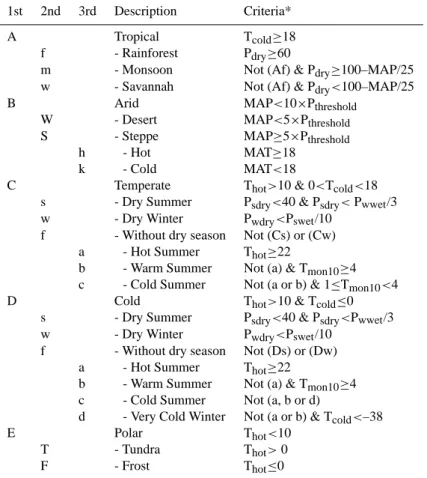
Table 1. Description of K¨oppen climate symbols and defining criteria.
1st 2nd 3rd Description Criteria* A Tropical Tcold≥18
f - Rainforest Pdry≥60
m - Monsoon Not (Af) & Pdry≥100–MAP/25 w - Savannah Not (Af) & Pdry<100–MAP/25
B Arid MAP<10×Pthreshold
W - Desert MAP<5×Pthreshold
S - Steppe MAP≥5×Pthreshold
h - Hot MAT≥18 k - Cold MAT<18
C Temperate Thot>10 & 0<Tcold<18
s - Dry Summer Psdry<40 & Psdry< Pwwet/3
w - Dry Winter Pwdry<Pswet/10
f - Without dry season Not (Cs) or (Cw) a - Hot Summer Thot≥22
b - Warm Summer Not (a) & Tmon10≥4 c - Cold Summer Not (a or b) & 1≤Tmon10<4
D Cold Thot>10 & Tcold≤0
s - Dry Summer Psdry<40 & Psdry<Pwwet/3
w - Dry Winter Pwdry<Pswet/10
f - Without dry season Not (Ds) or (Dw) a - Hot Summer Thot≥22
b - Warm Summer Not (a) & Tmon10≥4
c - Cold Summer Not (a, b or d)
d - Very Cold Winter Not (a or b) & Tcold<–38
E Polar Thot<10
T - Tundra Thot> 0
F - Frost Thot≤0
*MAP = mean annual precipitation, MAT = mean annual temperature, Thot= temperature of the hottest month, Tcold= temperature of the coldest month, Tmon10= number of months where the temperature is above 10, Pdry= precipitation of the driest month, Psdry= precipitation of the driest month in summer, Pwdry= precipitation of the driest month
in winter, Pswet= precipitation of the wettest month in summer, Pwwet= precipitation of the wettest month in winter, Pthreshold= varies according to the following rules (if 70% of
MAP occurs in winter then Pthreshold= 2 x MAT, if 70% of MAP occurs in summer then Pthreshold= 2 x MAT + 28, otherwise Pthreshold= 2 x MAT + 14). Summer (winter) is
defined as the warmer (cooler) six month period of ONDJFM and AMJJAS.
1994). The greatest sensitivity of the resultant map to cli-matic trends is likely to be in the transition zones between climate types, rather than within a climate type (as seen in Fraedrich et al., 2001). Any benefits of restricting the data to a common period would be achieved at the expense of spatial representativeness, since stations with data that did not sufficiently overlap the common period would have been excluded from the analysis. In using the complete pe-riod of record the resultant K¨oppen-Geiger climate type map presents the long-term climate type for the maximum number of locations around the world.
A total of 4279 locations have data for both precipita-tion and temperature (indicated with an “x” in Fig. 2). At these locations the K¨oppen-Geiger climate type can be de-termined from the raw station data. Although an updated K¨oppen-Geiger map based on 4279 locations would be a sig-nificant improvement over earlier maps, considerable infor-mation would be lost if locations with only precipitation or temperature were ignored. To avoid this loss of
informa-tion the precipitainforma-tion and temperature based variables used in the criteria to determine the K¨oppen-Geiger climate type (see Table 1) were calculated at each precipitation and tem-perature station. Then each variable was interpolated using a two-dimensional (latitude and longitude) thin-plate spline with tension (Mitas and Mitasova, 1988) onto a 0.1×0.1 de-gree of latitude and longitude grid for each continent. The K¨oppen-Geiger criteria were then applied to the splined vari-ables. The tension spline interpolations were performed in ESRI ArcMap version 9.1 using settings of “weight” = 1 and “points” = 10 for all interpolations. The chosen tension spline settings provided flexible and smooth interpolations of the climatic variables across the wide range of station densi-ties and variable values experienced within and between con-tinents. Although optimisation of the spline settings for each variable and continent may have improved the interpolation of individual climatic variables, it was not expected to sig-nificantly alter the final K¨oppen-Geiger climate type maps (which is a combination of the variables) and so was not
Table 2. Average monthly and annual precipitation (P) and temperature (T) for Herberton Post Office, Australia.
J F M A M J J A S O N D Ann
P (mm) 238.4 229.7 214.4 86.0 46.9 33.3 22.0 18.2 16.5 25.3 77.3 137.9 1146 T (◦C) 23.2 22.8 21.9 20.0 17.9 16.0 15.5 16.5 18.6 21.0 22.4 23.3 19.9
pursued in this paper. However, in continental sub-regions with high station density more flexible spline settings would have provided better local results.
A potential improvement to the above methodology would be to apply a three-dimensional spline, using elevation as the third dimension (based on a digital elevation model like HY-DRO1k, USGS, 2000). Elevation plays a key role in the ob-served spatial pattern of precipitation and temperature and is an important variable in the interpolation of precipitation and temperature fields (Daly, 2006). In this analysis long-term average climatic variables are interpolated, which dis-play considerably less spatial variability than is typically ob-served in daily, monthly or even annual fields to which 3-D interpolation is usually applied. However, due to sparse station density, particularly in high elevation regions, a more complex 3-D interpolation procedure was not used in this pa-per.
Another potential improvement would be to conduct cross-validation on the individual splined variables to investigate the sensitivity of each spline to the underlying data as well as cross-validation of the final K¨oppen-Geiger climate type map to assess the sensitivity of the map to each individual station. Such a sensitivity analysis would probably indicate that the K¨oppen-Geiger climate type map is most sensitive in regions of low station density, transition zones between cli-mate types and also in regions where there are large elevation differences. A cross-validation exercise was not conducted as part of this paper due to the considerable amount of time required for such an exercise.
A description of the symbols and the criteria used to define the K¨oppen-Geiger climate types is provided in Table 1. The 30 possible climate types in Table 1 are divided into 3 trop-ical (Af, Am and Aw), 4 arid (BWh, BWk, BSh and BSk), 9 temperate (Csa, Csb, Csc, Cfa, Cfb, Cfc, Cwa, Cwb and Cwc), 12 cold (Dsa, Dsb, Dsc, Dsd, Dfa, Dfb, Dfc, Dfd, Dwa, Dwb, Dwc and Dwd) and 2 polar (ET and EF). All precipitation variables are in units of millimetres (mm) and all temperature variables are in units of degrees Celsius (◦C). Since all locations that satisfy the B climate criteria will also satisfy one of the other (A, C, D or E) climate criteria, the B climates must be identified first. The set of locations defined as having a B climate is based on a combination of mean an-nual precipitation and mean anan-nual temperature. The sets of A, C, D and E climate locations are mutually exclusive and are based on temperature criteria only.
In applying the criteria to the global dataset it became
ap-parent that in some C climate locations it is possible to sat-isfy both the Cs and Cw criteria simultaneously. An exam-ple of this is Herberton Post Office (17.38 S, 145.38 E, eleva-tion 900 m) in North Queensland, Australia. Table 2 shows the monthly averages of precipitation and temperature for the Herberton Post Office record. Each average is based on about 105 monthly values for precipitation and 78 monthly values for temperature, so these averages are from a long-term sta-tion. Following the K¨oppen-Geiger criteria in Table 1, sum-mer is the period ONDJFM and over 70% of the mean annual precipitation falls during summer. Since the mean annual precipitation (1146 mm) is larger than the B climate type pre-cipitation threshold of 678 mm (10 * (2 * 19.9 + 28)) (see Ta-ble 1) the station is not a B climate. With the coldest monthly temperature 15.5◦C, the station is not an A climate, but does satisfy the criteria for a C climate. When the second letter is allocated, the driest summer month is 25.3 mm, which is below 40 mm and is less than one third of the wettest winter month (86.0 mm), so the station satisfies a Cs climate type. However, the driest winter month (16.5 mm) is less than one tenth of the wettest summer month (238.4 mm), so this sta-tion also satisfies the Cw climate type. Considering that over 70% of the precipitation falls during summer a classification of Cw is appropriate, while a classification of Cs is not.
For cases such as Herberton Post Office an additional test was developed and applied to determine whether to use Cs or Cw at a given location. When a location satisfied both Cs and Cw criteria, the precipitation for the six months con-taining summer and the six months concon-taining winter were compared, with Cw assigned if the summer precipitation was greater than the winter precipitation. This additional rule was also applied to locations that satisfied both the Ds and Dw climate criteria as well.
In the presence of steep gradients of a variable, splines are known to over- or under-estimate, particularly if there is limited station density. Initially, these spline artefacts were ignored at the individual variable level. However, once a continental map of K¨oppen-Geiger climate type was pro-duced, the map was checked for locations where over or under-estimation in a splined variable had caused an aber-rant climate type to be defined. These aberaber-rant areas were generally found to be small and were patched by hand based on surrounding observations. Conversely, in some low sta-tion density regions, a climate type would extend further than expected due to a lack of observations to inform the spline. In these situations, discussed later, the climate type was left
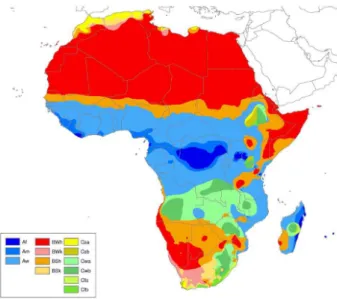
Fig. 4. K¨oppen-Geiger climate type map of Africa.
unmodified, due to a lack of information on which to base any corrections.
Contrary to some earlier forms of the K¨oppen-Geiger cli-mate type map the concept of a high altitude clicli-mate type is not used in this paper. Designated as a separate 1st letter cli-mate type H (Highland) or as a sub category of the E clicli-mate type (ETH or EFH) the highland climate type requires ele-vation information to be defined. Although global eleele-vation data are available, defining all locations above a specified el-evation as an H climate provides little information about the climate at those locations relative to using the full suite of A, B, C, D and E climate types. Therefore no highland climate type is used in this paper.
Once the K¨oppen-Geiger climate type map for each conti-nent was constructed, the percentage of land area covered by the major climate types was calculated. Since the area of a 0.1×0.1 degree pixel changes with latitude, a map of 0.1×0.1 degree pixel area was constructed and then projected onto a Cylindrical Equal Area projection of the world to determine the area (in km2) of each 0.1×0.1 degree pixel. These pixel areas were then summed for each climate type to provide an estimate of the land area covered by each climate type.
3 Continental maps
The K¨oppen-Geiger climate type map was determined us-ing the methodology described in the previous section for each continent. Continental definitions used in this paper fol-low those used in the HYDRO1k DEM of the world (USGS, 2000). These maps are presented and discussed in this sec-tion.
3.1 Africa
The map of K¨oppen-Geiger climate type for Africa (Fig. 4) shows that only three (A, B and C) of the main climate types are present in Africa. Of these three the dominant climate type by land area is the arid B (57.2%), followed by tropical A (31.0%) and temperate C (11.8%).
Figure 4 is based on 1436 precipitation and 331 temper-ature stations. Of these stations a total of 313 had both precipitation and temperature data for the same location, from which the climate type could be independently calcu-lated and checked against the map. The climate type at 309 of these locations matched the map exactly and in the re-maining 4 locations the correct climate type was present in a neighbouring cell.
The thin-plate spline with tension settings used to inter-polate individual variables does not force the spline through the exact station values. Therefore, slight differences in cli-mate type between station and spline-based esticli-mates are ex-pected. If the station and map climate types do not match exactly, then the station-based climate type usually appears in a neighbouring cell of the spline-based map. However, if the station-based climate type is not present in a neigh-bouring cell, then the spline-based estimate is incorrect, in-dicating that at least one of the splines has not successfully interpolated the observed data. For Africa, all of the station estimates match the map exactly or are in a neighbouring cell.
The low density of temperature stations in Africa resulted in some climate types extending further than expected, which could not be corrected due to lack of data. The two regions where this is most evident are the temperate regions in the Eastern Rift Valley south of Nairobi, Kenya and around An-tananarivo, Madagascar. In both of these cases the tempera-ture stations are in high elevation locations (Nairobi and An-tananarivo) and experience a temperate climate type. How-ever, due to the lack of nearby lower elevation temperature stations, the temperate influence of both these high elevation stations extends well beyond their immediate location and large regions of temperate climate type result in regions that are more likely to be tropical.
Another interesting feature in Fig. 4 is the division of the temperate region in the Ethiopian highlands into Cs and Cw climate types. This region experiences a strong seasonal pre-cipitation regime (most prepre-cipitation occurs during April– September) but a very even monthly temperature regime (the hottest month is ∼5◦C hotter than the coldest month). On the western side of the highlands, the six months from October– March are warmer than April–September, so summer is de-fined as October–March, thus the precipitation falls in win-ter. Whereas on the eastern side of the highlands the six months from April–September are warmer, so summer is de-fined as April–September, thus the precipitation falls in sum-mer. Therefore, in Fig. 4 the western side of the highlands have a Cs climate and the eastern side have a Cw climate.
3.2 Asia
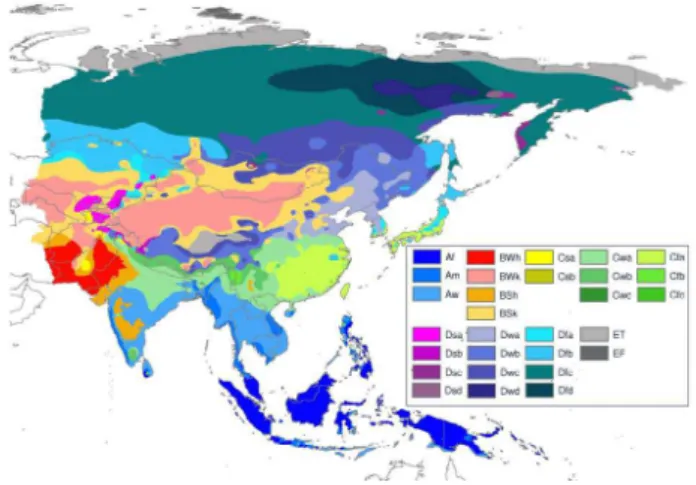
In this paper Asia is defined as the region east of a north-south line through the Urals Mountains down to the Ara-bian Sea. The map of K¨oppen-Geiger climate type for Asia (Fig. 5) shows that all five of the main climate types are present in Asia. The dominant climate type by land area is the cold D (43.8%), followed by arid B (23.9%), tropical A (16.3%), temperate C (12.3%) and polar E (3.8%).
Figure 5 is based on 3650 precipitation and 944 temper-ature stations. Of these stations a total of 748 had both precipitation and temperature data for the same location, from which the climate type could be independently calcu-lated and checked against the map. The climate type at 732 of these locations matched the map exactly and in 14 of the remaining 16 locations the correct climate type was present in a neighbouring cell. However, at 2 locations (Kodaikanal, India and Pune, India) the observed climate type differs from the map, indicating that at least one of the splines has not successfully interpolated the observed data.
In the case of Kodaikanal (10.2 N, 77.5 E), located at 2343 m elevation on the eastern side of the Western Ghats in Tamil Nadu State, the seasonality of precipitation is much less distinct than that observed in the surrounding lowlands (∼100 m elevation). So although the observations indicate a Cfb climate type at Kodaikanal, the map indicates a Cwb cli-mate type. The disparity is due to the high density of precip-itation stations in the surrounding lowlands, which influence the precipitation splines, particularly the winter dry month spline, to underestimate the precipitation at Kodaikanal. This under-estimation, particularly the winter dry month precipi-tation, leads to a Cw rather than a Cf climate type. The uni-versal spline settings used for the analysis are not flexible enough to fully capture the local variation in precipitation, resulting in the misallocation of this site. Correcting the final climate type map around Kodaikanal would be speculative and has not been attempted.
At Pune (18.5 N, 73.9 E), in Maharashtra State, there is a very strong orographic gradient in mean annual precipi-tation. The thin coastal strip to the west (25 km) of Pune re-ceives mean annual precipitation of between 3000–6000 mm. At Pune the mean annual precipitation is 700 mm. The ob-servations at Pune indicate a BSh climate, whereas the map indicates an Aw climate. This difference is due to the mean annual precipitation spline overestimating the precipitation at Pune, due to the very steep precipitation gradient, and thus placing Pune in an A rather than a B climate type. Again, the universal spline settings used are not flexible enough to fully capture the local variation in precipitation, resulting in the misallocation of this site. Likewise, correcting the final climate type map around Pune would be speculative and has not been attempted.
The low density of temperature stations in southern India resulted in a region of temperate climate type extending fur-ther south than expected. As mentioned above, Kodaikanal in
Fig. 5. K¨oppen-Geiger climate type map of Asia.
Fig. 6. K¨oppen-Geiger climate type map of North America.
Tamil Nadu is a high elevation station in a temperate climate type. However, it is up to 140 km from its nearest neighbour to the west and over 400 km away from the nearest station to the northeast. All the surrounding temperature stations are in a tropical climate type. The large area of temperate, rather than tropical climate in southern India is due to this single station and the lack of temperature stations in the surround-ing lowland areas, which could not be corrected due to lack of data.
3.3 North America
North America is defined in this paper as Canada, the USA, the countries of Central America and the Caribbean Islands. The map of K¨oppen-Geiger climate type for North Amer-ica (Fig. 6) shows that all five of the main climate types are present in North America. The dominant climate type by land area is cold D (54.5%), followed by arid B (15.3%), temperate C (13.4%), polar E (11.0%) and tropical A (5.9%). Figure 6 is based on 3034 precipitation and 2236 temper-ature stations. Of these stations a total of 2078 had both
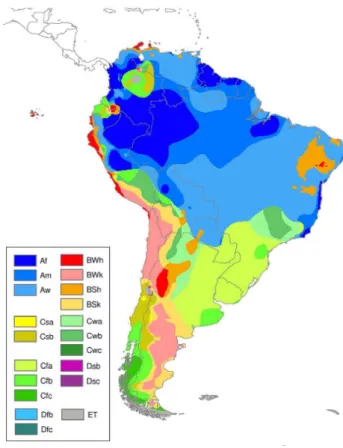
Fig. 7. K¨oppen-Geiger climate type map of South America.
precipitation and temperature data for the same location, from which the climate type could be independently calcu-lated and checked against the map. The climate type at 2020 of these locations matched the map exactly and in all the re-maining 58 locations the correct climate type was present in a neighbouring cell.
In Guatemala, there is a low density of temperature sta-tions, which results in a region of temperate climate type extending further than expected around Guatemala City (14.5 N, −90.6 W). At an elevation of 1500 m, Guatemala City has a temperate Cwb climate. However, it is up to 175 km from its nearest neighbour to the southeast in El Salvador. All the surrounding temperature stations are in tropical climate types. Although much of the area around Guatemala City is likely to be temperate due to the high el-evation, the temperate region on the map extends into what are likely to be tropical areas near the coast where there are no temperature stations to define the boundary more closely. A region of BWh south of Oaxaca, Mexico (17.1 N,
−96.7 W) may be an artefact of the spline process, but since there are no precipitation or temperature stations in this arid region it is impossible to be certain. At an elevation of 1550 m, Oaxaca experiences an arid BSh climate type, but whether the region to the south is as arid as BWh remains uncertain.
In the methodology section, an additional criterion to deal with locations that satisfy both Cs and Cw or Ds and Dw cri-teria was described. In North America this criterion was suc-cessfully applied at 11 temperate locations (mainly in Mex-ico) with observed precipitation and temperature data. How-ever, other locations in North America show that the criteria for selecting the second letter of the C and D climate types are not always providing an appropriate outcome. For exam-ple, at Batopilas in the state of Chihuahua, Mexico (27.0 N, 107.7 W), where only precipitation data are available, the cli-mate type in Fig. 6 is given as Csa. Nearby temperature sta-tions confirm that summer is in the six-month period from April through to September. At Batopilas the average sum-mer rainfall is 441 mm and the average winter rainfall is 191 mm. Nearby temperate locations are all Cw, which is consistent with the summer dominant rainfall at Batopilas. Following the temperate second letter criteria in Table 1, the driest month in summer (5.3 mm) is below 40 mm and is less than one third of the wettest month in winter (49.3 mm), so a Cs climate type is satisfied. When the Cw climate crite-rion is applied, the driest month in winter (18.4 mm) is not one tenth of the wettest month in summer (154.6 mm), so a Cw climate type is not satisfied. Since this site only satis-fies the Cs criteria, the additional check of the summer and winter precipitation, described in the methodology section, is not applied. So at Batopilas, the summer rainfall is greater than the winter rainfall, by a factor of 2, yet it is defined by the K¨oppen-Geiger criteria as a temperate climate with a dry summer (Csa).
A slightly different concern with the temperate second let-ter crilet-teria is observed at White River, in the state of Arizona, USA (33.84 N, 109.97 W) where the K¨oppen-Geiger criteria suggest a Csa climate type. However, a Cs climate appears inappropriate since summer precipitation (228 mm) is greater than the winter precipitation (201 mm). A more appropriate climate type would be Cfa since the precipitation is evenly distributed throughout the two six month periods. Other loca-tions where concerns about the second letter criteria for the C or D climate types were observed are Prescott (Cs −34.57 N, 112.44 W), USA and the Ds regions in northern Canada and Alaska centred on Fort Yukon (66.6 N, 145.3 W), Anchorage (61.2, 149.9 W), Yellowknife (62.47 N, 114.45 W), Carcross (60.18 N, 134.7 W), Mayo (63.62 N, 135.87 W) and west of Fairbanks (64.9 N, 147.7 W).
3.4 South America
The map of K¨oppen-Geiger climate type for South Amer-ica (Fig. 7) shows that three main climate types A, B and C dominate the climate of South America. Of these three the dominant climate type by land area is tropical A (60.1%), fol-lowed by temperate C (24.1%) and arid B (15.0%). The Polar E (0.8%) climate type occurs in four places in South Amer-ica, twice in the Andes, due to the high elevation, along the
southern edge of Chile (Strait of Magellan)/Argentina (Tierra del Fuego) and in the Falkland Islands and South Georgia.
Figure 7 is based on 1115 precipitation and 192 tempera-ture stations. Of these stations a total of 171 had both precip-itation and temperature data for the same location for which the climate type is known and can be checked against the map. The climate type at 165 of these locations matched the map exactly and in 5 of the remaining 6 locations the correct climate type was present in a neighbouring cell. In the case of Aracaju (10.9 S, 37.1 W), in the state of Sergipe, Brazil, the observed precipitation and temperature satisfy the Am climate type (borderline Aw), whereas the map shows this site in a region of Aw climate type. The splined variables indicate that this station is clearly Aw, which is not consis-tent with the observations. The reason the splined variables are inconsistent with the observations is that this region has a very high density of precipitation stations (Fig. 1). The universal spline settings used for the analysis are not flexible enough to fully capture the local variation in precipitation, resulting in the misallocation of this site.
The misallocation of Aracaju due to the spline settings not being flexible enough to adequately represent the local varia-tion in precipitavaria-tion is indicative of neighbouring parts of the Nordeste region of Brazil. The climate types represented in this region BWh, BSh, Aw, Am and Af are consistent with the observations. However, the spatial distribution of these climate types would be more in line with the precipitation observations had a more flexible spline setting been used for the precipitation data in this region. The sparse distribution of temperature stations in this region would make any cor-rections to the final climate type map speculative.
The generally low density of temperature stations in South America resulted in some climate types extending further than expected, which could not be corrected due to the lack of data. Two regions where this is most evident are the temper-ate regions northeast of Bogota, Colombia and around Quito, Ecuador. In both of these cases the temperature stations are in high elevation locations and experience a temperate cli-mate type. However, due to the lack of nearby lower ele-vation temperature stations, the temperate influence of both these high elevation stations extends well beyond their im-mediate location and large regions of temperate climate type result in regions that are more likely to be tropical. In the case of Bogota, a region of ET climate type is observed within the temperate region. This region is largely coincident with the higher sections of the Cordillera Oriental, which is likely to have a climate type of ET.
3.5 Europe
In this paper, Europe is defined as the region west of a north-south line through the Urals Mountains down to the Arabian Sea and includes the Arabian Peninsula and the countries of the Middle East. The K¨oppen-Geiger climate type map of Europe (Fig. 8) shows that only four main climate types are
Fig. 8. K¨oppen-Geiger climate type map of Europe.
found in Europe. The dominant climate type by land area is cold D (44.4%), followed by arid B (36.3%), temperate C (17.0%) and polar E (2.3%).
Figure 8 is based on 1209 precipitation and 684 tempera-ture stations. Of these stations a total of 496 had both precip-itation and temperature data for the same location for which the climate type is known and can be checked against the map. The climate type at 488 of these locations matched the map exactly and in the remaining 8 locations the correct cli-mate type was present in a neighbouring cell.
As is the case for other continents, in Europe there are some climate types extending further than expected due to a low density of temperature stations. For example, around Mussala (42.18 N, 23.58 E), Bulgaria there is a region of ET climate type. There are three temperature stations within this ET region, which are all located at over 2000 m in elevation, and their observations confirm an ET climate type. However, rather than being part of a single range of mountains, these three stations are located on top of three separate peaks with extensive lowlands in between. As there are no temperature stations located in the lowlands the splines ignore them and the entire region is set to ET, rather than a mixture of ET and Df. A similar situation occurs in the Central Massif of France around Le Puy de Dome (45.8 N, 2.9 E) and Mont Aigoual (44.12 N, 3.58 E) where two temperature stations atop iso-lated peaks extend a region of Df climate between them. This region should be a mixture of Df (on the mountains) and Cf in the lowlands, but there are no temperature stations in the lowlands.
In Iceland the temperature stations are all located in coastal areas. Without any inland temperature data to inform the splines, the coastal climate type of Dfc extends inland where a climate type of ET is more likely to be appropriate. The region of ET climate type in southern Norway extends to the coast at the northwestern edge, an area that would be expected to be Cfb if temperature data were available.
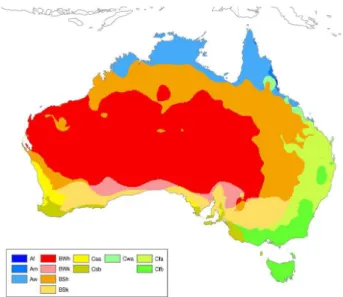
Fig. 9. K¨oppen-Geiger climate type map of Australia.
Along the French-Italian border the low density of temper-ature stations effectively reduces the area of ET climate type. At St Bernard (45.7 N, 6.9 E) in Switzerland the climate type is ET, while the nearest station in a direct line to the south, Nice (43.65 N, 7.2 E) in France, experiences a Csa climate. Despite the Alps stretching almost to the coast, the region of ET climate mapped does not, due to the lack of temperature stations in the region.
3.6 Australia
The K¨oppen-Geiger climate type map of Australia (Fig. 9) shows that only three main climate types are found in Aus-tralia. The dominant climate type by land area is arid B (77.8%), followed by temperate C (13.9%) and tropical A (8.3%).
Figure 9 is based on 1807 precipitation and 351 tempera-ture stations. Of these stations a total of 345 had both precip-itation and temperature data for the same location for which the climate type is known and can be checked against the map. The climate type at 340 of these locations matched the map exactly and in the remaining 5 locations the correct cli-mate type was present in a neighbouring cell.
The spatial distribution of precipitation and temperature stations in the arid western central region of Australia is sparse, so boundaries between the different arid climate types are less reliable than in the more data rich eastern and south western regions (Fig. 2).
3.7 Islands, Greenland and Antarctica
In the spline analyses used to estimate the K¨oppen-Geiger climate type for each continent, data from small offshore is-lands were generally removed prior to analysis, since they
Fig. 10. K¨oppen-Geiger climate type map of the World.
tended to influence the splines over the mainland in low sta-tion density regions. Therefore, islands like the Canary Is-lands, Cape Verde, Hawaii and the islands of the South Pa-cific were allocated a K¨oppen-Geiger climate type by hand based on observations from the islands.
In Greenland there were 10 precipitation and 9 tempera-ture stations, 8 of which have both variables at the same lo-cation. All of these stations are in coastal locations, so there was no climatic information about the interior of Greenland on which to base a spline analysis. In Antarctica, there were 21 temperature stations and no precipitation stations with all but 2 stations being in coastal locations. Like Greenland there was little interior climatic information on which to base a spline analysis. The climate type at all the Greenland sta-tions was ET, while in Antarctica they were a mixture of ET and EF.
In order to interpolate the climate type over the whole of Greenland and Antarctica an alternate method was required. In the case of Greenland, elevation data was used, with any location <1000 m given a climate type of ET and a location
≥1000 m given a climate type of EF. In Antarctica the whole continent was set to a climate type of EF, except around sta-tions that were known to be ET. In Table 1 the criterion that divides ET from EF is the hottest month being greater than 0◦C. Of the Antarctic stations the hottest month at any sta-tion was 1.6◦C, so most of the ET stations are borderline EF. Based on this observation, any location near an ET station with an elevation of <100 m was set to ET.
4 The world map: discussion and conclusion
The continental and island maps are combined together to form the world K¨oppen-Geiger climate type map (Fig. 10). Globally the dominant climate class by land area is arid B (30.2%) followed by cold D (24.6%), tropical A (19.0%), temperate C (13.4%) and polar E (12.8%). The most com-mon individual climate type by land area is BWh (14.2%), followed by Aw (11.5%). Of the 30 possible climate types
the Csc climate type never occurs and the Cwc climate type occurs in only 25 pixels (representing 0.002% of total land area).
In the methodology, a new criterion for locations that sat-isfy both Cs and Cw (or Ds and Dw) criteria simultaneously was described and it was applied successfully in several lo-cations. However, the criteria for the second letter of the C and D climates was still found to produce inappropriate re-sults, particularly in the high latitudes of North America, and needs to be further revised. Future revisions based on mutu-ally exclusive total seasonal precipitation thresholds, similar to the 70% criteria used for the B climate, may prove more robust than criteria based on the wettest and driest months of summer and winter.
The updated world K¨oppen-Geiger climate type map is based on the climatology at stations over their entire period of record, with each variable individually interpolated and differs from the recent work of Kottek et al. (2006), which is based on 0.5×0.5 degree gridded temperature and precip-itation data for the period 1951 to 2000. Although broadly similar to the map of Kottek et al. (2006), the present map also deals with locations that satisfy both Cs and Cw (or Ds and Dw) and has a finer resolution.
The single setting used for the 2-D thin-plate spline with tension was able to successfully interpolate the observed data in the vast majority of cases. For a total of 4279 stations with both precipitation and temperature data, the map dif-fers significantly at only 3 stations (Kodaikanal, Pune and Aracaju) and in each case a more flexible spline setting may have improved the map. However, in mountainous regions and in regions of low station density the addition of elevation into the interpolation procedure may improve the extrapola-tion of K¨oppen-Geiger climate type. In addiextrapola-tion to improved estimates of precipitation and temperate in mountainous re-gions, elevation information would limit the influence of iso-lated high elevation stations extending their climate type into lowland regions.
The electronic form (in ESRI Arc Grid (raster) and JPG formats) of the world K¨oppen-Geiger climate type map is available in the Supplementary Material section (http://www.hydrol-earth-syst-sci.net/11/1633/2007/ hess-11-1633-2007-supplement.zip). Also available at this site are files containing the precipitation and temperature variables for all stations used in the construction of the map. Acknowledgements. Australian Research Council Discovery grants
DP0449685 and DP0773016 financially supported this work. F. Peel assisted with the colour scheme used for the maps.
Edited by: R. T. Clarke
References
Barnett, T., Zwiers, F., Hegerl, G., Allen, M., Crowley, T., Gillett, N., Hasselmann, K., Jones, P., Santer, B., Schnur, R., Stott, P.,
Taylor, K., and Tett. S.: Detecting and attributing external in-fluences on the climate system: a review of recent advances, J. Climate, 18, 1291–1314, 2005.
Daly, C.: Guidelines for assessing the suitability of spatial climate data sets, Int. J. Climatol., 26, 707–721, 2006.
Dick, R. S.: Frequency patterns of arid, semi-arid and humid cli-mates in Queensland, Capricornia, 1, 21–30, 1964.
Essenwanger, O. M.: Classification of climates. In World Survey of Climatology 1C, General Climatology, Elsevier, Amsterdam, pp. 102, 2001.
Fovell, R. G. and Fovell, M.-Y. C.: Climate zones of the contermi-nous United States defined using cluster analysis, J. Climate, 6, 2103–2135, 1993.
Fraedrich, K., Gerstengarbe, F. -W. and Werner, P. C.: Climate shifts during the last century, Climatic Change, 50, 405–417, 2001.
Gentilli, J. (Ed.): Climates of Australia and New Zealand, World Survey of Climatology, Vol. 13. Elsevier, Amsterdam, 405p, 1971.
Gnandesikan, A. and Stouffer, R. J.: Diagnosing atmosphere-ocean general circulation model errors relevant to the terrestrial bio-sphere using the K¨oppen climate classification, Geophys. Res. Lett., 33, L22701, doi:10.1029/2006GL028098, 2006.
Kalvova, J., Halenka, T., Bezpalcova, K., and Nemesova, I.: K¨oppen Climate types in observed and simulated climates, Stud. Geophys. Geod., 47, 185–202, 2003.
Kleidon, A., Fraedrich, K., and Heimann, M.: A green planet versus a desert world: estimating the maximum effect of vegetation on the land surface climate, Climatic Change, 44, 471–493, 2000. K¨oppen, W.: Das geographisca System der Klimate, in: Handbuch
der Klimatologie, edited by: K¨oppen, W. and Geiger, G., 1. C. Gebr, Borntraeger, 1–44, 1936.
Kottek, M., Grieser, J., Beck, C., Rudolf, B., and Rubel, F.: World map of the K¨oppen-Geiger climate classification updated, Mete-orol. Zeitschr., 15(3), 259–263, 2006.
Lohmann, U., Sausen, R., Bengtsson, L., Cubasch, U., Perlwitz, J., and Roeckner, E.: The K¨oppen climate classification as a diag-nostic tool for general circulation models, Clim. Res., 3, 177– 193, 1993.
McMahon, T. A., Finlayson, B. L., Haines, A. T., and Srikanthan, R.: Global Runoff – Continental Comparisons of Annual Flows and Peak Discharges, Catena Verlag, Cremlingen, 166pp, 1992. Mitas, L. and Mitasova, H.: General variational approach to the
in-terpolation problem, Comput. Math. Applic., 16, 983–992, 1988. Peel, M. C., McMahon, T. A., and Finlayson, B. L.: Continental differences in the variability of annual runoff – update and re-assessment, J. Hydrol., 295, 185–197, 2004.
Peterson, T. C. and Vose, R. S.: An overview of the Global Histor-ical Climatology Network temperature database, Bull. Am. Me-teorol. Soc., 78(12), 2837–2849, 1997.
Russell, R. J.: Dry climates of the United States: I climatic map, University of California, Publications in Geography, 5, 1–41, 1931.
Sanderson, M.: The classification of climates from Pythagoras to Koeppen, Bull. Am. Meteorol. Soc., 80, 669–673, 1999. Stern, H., De Hoedt, G., and Ernst, J.: Objective classification of
Australian climates, Aust. Meteorol. Mag., 49, 87–96, 2000. Strahler, A. N.: The Earth Sciences. Harper and Row, New York,
Strahler, A. H. and Strahler, A. N.: Physical Geography : Sci-ence and Systems of the Human Environment. Wiley, New York, 794pp, 2005.
Thornthwaite, C. W.: Problems in the classification of climates, Ge-ogr. Rev., 33(2), 233–255, 1943.
Triantafyllou, G. N. and Tsonis, A. A.: Assessing the ability of the K¨oppen system to delineate the general world pattern of climates, Geophys. Res. Lett., 21(25), 2809–2812, 1994.
USGS (2000), HYDRO1k, http://edc.usgs.gov/products/elevation/ gtopo30/hydro/ (accessed 16/10/2006).
Wang, M. and Overland, J. E.: Detecting Arctic climate change using K¨oppen climate classification, Climatic Change, 67, 43– 62, 2004.
Wilcock, A. A.: K¨oppen after fifty years, Ann. Assoc. Am. Geog., 58(1), 12–28, 1968.