Development of sensor based evaluation methodologies
for developing world products
by
Prithiviraj Sundararaman
B.S. Mechanical Engineering
University of California, San Diego, 2014
SUBMITTED TO THE DEPARTMENT OF MECHANICAL ENGINEERING IN PARTIAL FULFILLMENT OF THE REQUIREMENTS FOR THE DEGREE OF
MASTER OF SCIENCE IN MECHANICAL ENGINEERING
AT THE
MASSACHUSETTS INSTITUTE OF TECHNOLOGY
June 2016
C2016 Prithiviraj Sundararaman. All rights reserved. The author hereby grants to MIT permission to reproduce
and to distribute publicly paper and electronic copies of this thesis document in whole or in part
in any medium now know or hereafter created.
Signature of Author: MASSACHUSETS INSTITUTE OF TECHNOLOGY
JUN 0 22015
LIBRARIES
ARCHIES
Signature redacted
artment of Mechanical Engineering
May 18, 2016
signature
redacted
Certified by:
Accepted by:
Daniel D. Frey Professor of Mechanical Engineering
2L
Thesis Supervisoroignaiure
redacied
-Rohan Abeyaratne Professor of Mechanical Engineering
Development of sensor based evaluation methodologies
for developing world products
by
Prithiviraj Sundararaman
Submitted to the Department of Mechanical Engineering on May 20, 2016 in Partial Fulfillment of the
Requirements for the degree of Master of Science in Mechanical Engineering
ABSTRACT
Often consumers in the developed world have a wide range of options available to them when considering a certain product family, such as a smartphone. The plethora of options is in large part a result of the degree to which the supply chains have advanced in the developed world. Organizations such as Consumer Reports have distilled information about the products available to consumer in the form of comparative ratings charts to help them make a purchasing decision. These product evaluations provide valuable information on the quality of a product, but are limited to the perspective of the developed world consumer. In contrast, there are many barriers in providing a product to a consumer in the developing world. A multitude of poverty alleviating products have been developed, but few have been successful. The Comprehensive Initiative on Technology Evaluation at the Massachusetts Institute of Technology seeks to adapt product evaluation methodologies such as those employed by Consumer Reports to evaluate developing world products. This thesis documents the challenges in adapting the methodology and
demonstrates that in order to create a successful product in the developing world, aspects of design, manufacturing, distribution, and consumer adoption must be assessed. A biomass fueled improved cookstove case study is presented to explain these four stages and how they may be evaluated. In addition, a sensor based method and neural network based processing algorithm is presented as a cost-effective and accurate way to gauge adoption of improved cookstoves. Thesis Supervisor: Daniel D. Frey
Acknowledgements
I would like to first thank MIT for providing me a welcoming home that nurtured me both academically and personally. I am truly glad that I was able to explore so many exciting fields of work and broaden my view of the world. I would also like to thank the USAID sponsored CITE program and D-Lab for the financial support and resources to conduct this research and my academic coursework.
I am grateful to Professor Dan Frey who always kept his doors open to me. Your guidance was invaluable to me throughout my time at MIT. You have and continue to inspire me to seek out the interesting and challenging problems. I hope to continue to learn from your thoughtful methods and vision.
Thank you to all the friends and colleagues who along the way have provided delightful and insightful conversations. Thank you Dan S. and Amit for helping conduct fieldwork in Uganda and your tireless commitment to our work. Thank you to Vyshaali for always providing an ear to listen when needed and being an everlasting source of conversation, both thought provoking and otherwise.
I would like to thank my Father, Mother and Sister for their unconditional love and
encouragement. Mom and Dad, the sacrifices you both have made have enabled me to pursue the opportunities that have brought me to where I am now. Anjali, we share a special bond and I hope that you have learned as much from me as I have from you. I would also like to thank my Grandfather, a high school chemistry teacher in a small Indian town, who passed away just before I started at MIT. Thatha, your belief in the value of education has been a great source of motivation to me and I hope I have made you proud. Your memory will be with me forever.
Table of Contents
C hapter 1: Introduction ... 14
1.1 Successful Product Fram ework ... 15
1.1.1 The Four Stages of Product Success... 15
1.1.2 Im portance of Distribution and Product Adoption ... 16
1.2 Q uality ... 17
1.3 W hy m easure quality?...18
1.3.1 Consum er Perspective...19
1.3.2 Objective versus Subjective Quality ... 20
Chapter 2: Product Evaluation Models ... 21
2.1 H ow to M easure Q uality...21
2.2 Consum er Reports ... 22
2.2.1 Background...22
2.2.2 M ethodology ... 23
2 .2 .3 C riticism s ... 2 5 2.3 Consum er Product Safety Com m ission ... 27
2.3.1 Background...27
2.3.2 M ethodology ... 27
2.4 Developing W orld M odels ... 28
2.4.1 Random ized Control Trials... 29
2 .4 .2 C IT E ... 2 9 Chapter 3: Challenges of Developing World Product Evaluation ... 32
3.1 Evaluation Fram ing ... 32
3 .1 .1 M a rk e t ... 3 2 3 .1 .2 A u d ien c e ... 3 3 3.1.3 Existing Indicators of Quality ... 34
3.2 Data Collection ... 35
3.2.1 Experim entation...35
3.2.2 Laboratory Testing...35
3.2.3 Survey and Observation... 36
3.2.4 Field W ork ... 36
3.2.5 Field Based Instrum entation ... 37
Chapter 4: Improved Cookstoves Case Study... 39 6
4.1 Background...39
4.1.1 Term inology...39
4.1.2 Benefits of Im proved Cookstoves... 40
4.1.3 Indoor Air Pollution...40
4.2 Design ... 41
4.2.1 Three Stone Fires to Im proved Cookstoves ... 41
4.2.2 Test M ethods...42
4.3 M anufacturing...43
4.3.1 Im proved Biom ass Cookstoves... 44
4.3.2 Low -V olum e M anufacturing ... 44
4.3.3 High-Volum e M anufacturing... 46
4.4 D istribution...47
4.4.1 History of Cookstove Distribution...47
4.4.2 Distribution by Low-Volum e M anufacturers ... 47
4.4.3 Distribution by High-Volum e M anufacturers...48
4.5 Adoption...48
4.5.1 Factors of Cookstove Adoption ... 49
4.5.2 Com plexity of Prom oting Adoption ... 50
Chapter 5: Data Logging System and Analysis Methods For Assessing Cookstove A doption ... 51
5.1 Stove Use M onitors ... 51
5.2 Sensor C onstruction...51
5.3 Sensor D eploym ent and Data Collection...53
5.4 SUM Data Processing ... 54
5.4.1 Existing M ethods ... 54
5.4.2 Neural Network Based Algorithm ... 55
5.4.3 Perform ance of Neural Network Based Algorithm ... 56
Chapter 6: MEASURING ADOPTION OF IMPROVED COOKING TECHNOLOGIES IN UGANDAN HOUSEHOLDS... 57
6.1 Study Design ... 57
6.1.1 Participant Selection ... 58
6.1.2 Division of Participants...58
6.1.3 Participant Stove O wnership...59
6.2 Q ualitative Survey Results ... 59
6.2.2 Negative Features of Makaa Stove Reported by Participants...61
6.3 Sensor Based Measurement of Stove Use...62
6.3 .1 A verage C ookstove U se... 64
6 .3 .2 S to v e s in U se ... 6 5 6 .3 .3 A d op tion T rend s ... 6 6 6.4 Discussion of Results ... 67
Chapter 7: Conclusions ... 69
Appendix A: Sensen Stove Use Monitor Design... 74
Appendix B: Open Access to Files and Data ... 75
Appendix C: Stove Use Monitor Neural Network Based Processing Algorithms...76
C-i Generate Training Set: 'generatejtraining-set.m'...77
C-2 Train Neural Network: 'sumTrain.m'...78
C-3 Run Neural Network Algorithm for single SUM file: 'neuralrunone.m'...79
C-4 Function to calculate hours of use of a given SUM file: 'neuraltest-day.m'...80
C-5 Function to load and normalize SUM data: 'loadSUMdata.m' ... 82
C-6 Function to determine whether a stove event should be classified as in use or not: 'myNeuralNetworkFunction.m'...83
C-7 Run Neural Network Algorithm for multiple SUM files: 'neuralrunnew.m'...85
Bibliography ... 88
LIST OF FIGURES
Figure 1: Product Developm ent Fram ework... 16
Figure 2: Example of Consumer Reports Ratings Chart for Gutter Guards... 23
Figure 3: Consumer Reports Evaluation Framework ... 24
Figure 4: CITE Solar Lantern Suitability Rating Chart [22] ... 31
Figure 5: CITE Solar Lantern Quality-Cost Correlation ... 34
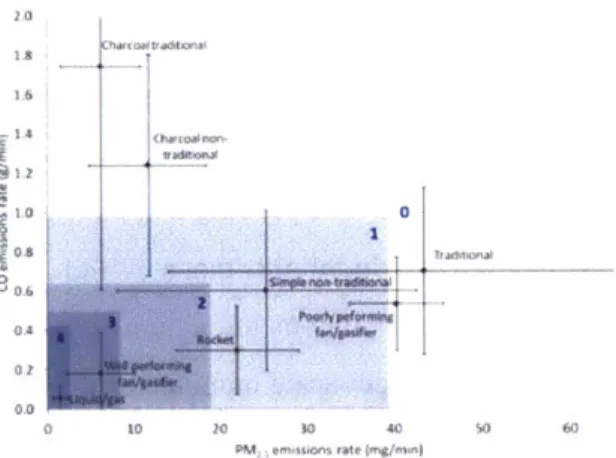
Figure 6: WBT-based Tier Rankings of Stoves (x-axis: Particulate Matter Emissions; y-axis: C arbon M onoxide Em issions)... 43
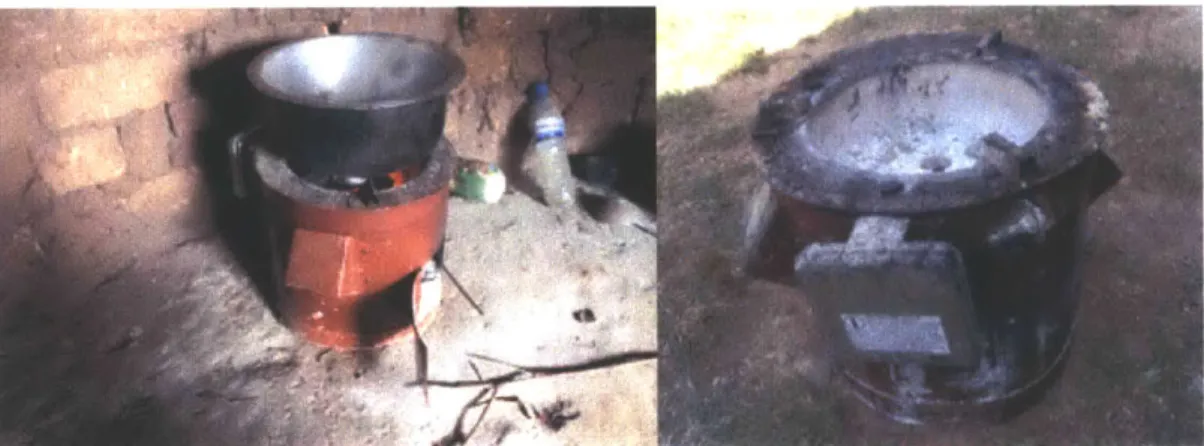
Figure 7: (left) AEST Uganda Makaa Charcoal Stove; (right) EcoZoom Jet Charcoal Stove... 44
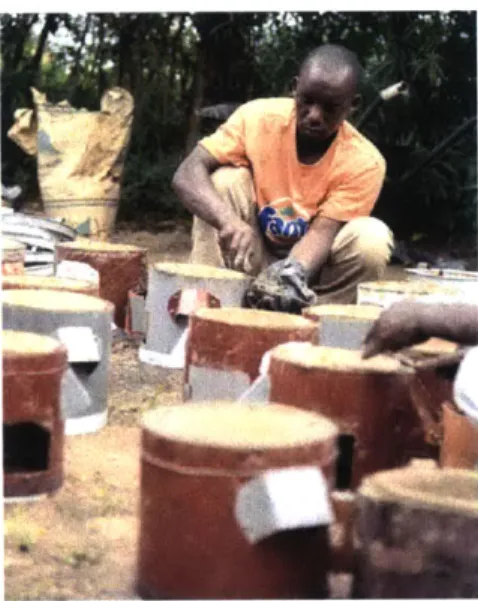
Figure 8: A rtisan constructing a M akaa Stove... 45
Figure 9: Internal Components of Sensen SUM... 53
Figure 10: Examples of Sensen SUMs attached to AEST Makaa stoves... 53
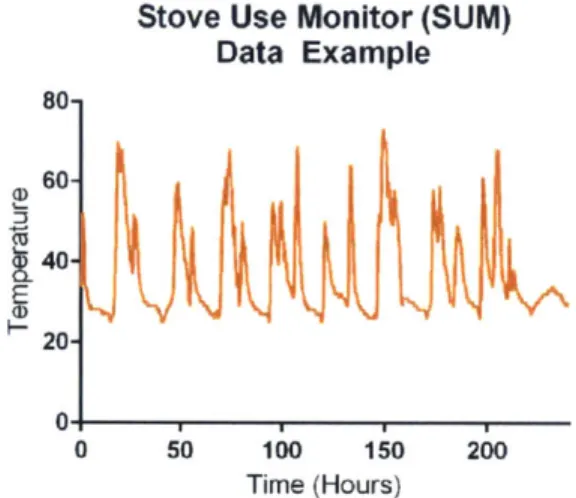
F igure 11: E xam ple of SU M data ... 54
Figure 12: (left) Method 1 - Threshold based determination of stove use and duration, (right) Method 2 - Neural Net based determination of stove use and duration... 56
Figure 13: Positive Features of Makaa Stove Reported by Participants... 60
Figure 14: Negative Features of Makaa Stove Reported by Participants ... 62
Figure 15: Existing and New User Daily Usage Trends... 63
Figure 16: Cookstove U sage 5-day A verage ... 64
Figure 17: Standard Deviation of Cookstove Usage versus Time... 65
Figure 18: Percent of Stoves in Use 5-day Average... 66
Figure 19: Adoption Trends During Sensing Period... 66
Figure 20: Everett Rogers' Diffusion of Innovation Model [48] ... 67
Figure 21: Sensen Stove Use Monitor Printed Circuit Board... 74
Figure 22: Sensen Stove Use Monitor Schematic... 74
LIST OF TABLES
Table 1: Performance Comparison of SUM Processing Algorithms... 56
Table 2: SUM 130-day Summary of Trends... 63
Chapter 1:
INTRODUCTION
Quality
and product evaluation have been explored from the perspective of economists and marketing professionals with a bias towards consumer preferences. This thesis seeks to provide an engineering perspective by linking the two concepts to the product development process and focusing on products fabricated for consumers in the developing world. This approach to quality and product evaluation is necessary because of the intricacies of the products, users, and markets in the developing world. Consumers in the developed world have access to a wide range of products and access to information so that they may make an informed purchasing decision.However, consumers in the developing world, particularly the poor may not have such avenues. It has been shown that product development has a direct influence on product success [I]. Therefore, in the resource constrained environment of the developing world the burden of providing a high quality product falls to the product developer.
The success of a product can be determined by using the following framework which is made up of four important stages: design, manufacturing, distribution, and adoption. From a product development standpoint, investments into evaluation of one or more of these phases can identify
opportunities for iteration and improve the potential for market success of a product. Current product evaluation models focus on assessments of product quality with an emphasis on the stages of design and manufacturing, which may be a result of their consumer biased perspective. Although this information is useful to product developers, it is not sufficient to advance a product, especially in the context of the developing world. Due to a host of factors unique to developing world, distribution and product adoption are challenges that must be overcome for a
product to succeed.
In this thesis, a description of quality is presented first to provide context for a discussion of different product evaluation models currently employed and challenges in adapting them to the
developing world context. Then, a case study on improved cookstoves is presented to
demonstrate the importance of distribution and adoption in a product's success. Finally, a field based instrumentation setup is described as a method to evaluate usage and performance of products. This is an emerging tool for product developers creating products for developing world consumers.
1.1 SUCCESSFUL PRODUCT FRAMEWORK
The success of a product can be characterized in many ways. One common method is to monitor the market driven demand for a product. However, this method implies that purchase of the product leads to use of the product. This cannot always be assumed since certain products
require sustained use in order to attain the intended benefits, which may necessitate a change in behavior. For example, purchase of a fitness tracking device does not lead to continued exercise or weight-loss. The device will record fitness patterns and may provide recommendations. But, acceptance of those recommendations is required on the part of the consumer for the device to provide the intended benefits of a more active lifestyle. The term "product success" is used here to designate a product that delivers its intended benefits from the perspective of the designer as well as provides desired utility from the perspective of the consumer. It is possible for a product to become obsolete over time due to technological advancement. But it is assumed that the time scale of adoption and sustained use is shorter than the time scale of technological advancement.
There are many anecdotes of superior products that did not gather momentum in the marketplace. For example, in 1993 Apple Computers released the Apple Newton. The Newton opened up the category of devices now known as Personal Digital Assistants (PDAs). The Newton featured a touchscreen with handwriting based input, which was not available in any other device. Despite the technologically innovative nature of the hardware it was discontinued around 1998. A successful product is the result of success in the stages of design, manufacturing, distribution, and consumer adoption. The Apple Newton was successful in terms of
manufacturing and distribution as it was made and sold for approximately five years. However, the lack of consumer adoption, which is associated with aspects of its design led to its failure in the marketplace.
1.1.1 The Four Stages of Product Success
The four stages can be represented as a feedback loop with the desired product at the input and a successful product as the final output. Diagrams such as Figure 1 are common in product development references and depending on the goal of the diagram the steps can be delineated in various ways [2]. The format of a control system block diagram was chosen here to depict the iterative nature of the four key phases in the development of a product. These are the steps which
presents the process in a linear fashion, iterations based on downstream feedback is a common source of non-linearity.
Desired 7*Desin--
Manufacturing---Distribution-- Adoption
oSuccessful
Product Product
Figure
1:
Product Development FrameworkFurthennore, these stages do not occur independently and in many cases they have an influence on each other. A feedback path is drawn from each phase back to the beginning of the loop to indicate that downstream observations may result in changes for the remaining phases. For example, a manufacturer may deem a certain design infeasible due to cost or complexity, which would necessitate an iteration in design to facilitate manufacturing. A distributor such as a retail outlet usually prefers items to be stackable to reduce the shelf space required to display the item. Therefore, designers and manufacturers seek to optimize products for this distribution constraint. Innovations may occur in one or more of these stages to strengthen the success of a product and serve as a differentiator among competitor products. The feedback mechanisms are discussed in further detail in Chapter 3.
1.1.2 Importance of Distribution and Product Adoption
Current product evaluation models focus on the design and manufacturing aspects of a product with little to no mention of distribution and adoption characteristics. Although this is likely due to the consumer bias of these models, results of these evaluations can be used in some cases by the product developers to understand their position in the market and iterate on their designs. These models include attribute based evaluations and threshold evaluations. Attribute based evaluations measure a set of product features based on a predetermined set of criteria to generate a composite score intended to reflect the utility of a product. Threshold evaluations conducted by safety commissions and standards organization focus on certifying products past a given baseline. These models serve to inform a consumer or entity seeking to make a purchasing decision. Although design and manufacturing factors influence the distribution and adoption of
the product, which are reflected in a consumer's purchasing decision, these evaluations do not explicitly mention them. This thesis focuses on using product evaluations for the creation of a successful high quality product by product developers not the selection of a high quality product by a consumer. As Garvin explains the interpretation of quality is different from the perspective of each stakeholder [3]. Therefore, since the results of distribution and adoption are particularly important to a product developer as it results in a products success or failure, these must be approached with different methods.
An illustrative example of the importance of distribution and adoption in developing world markets is with medicine. The World Health Organization (WHO) estimates that one third of the world lacks access to essential medicines. Frost et al. assert that "developing a safe and effective technology is necessary but not sufficient for ensuring access to technology and improved health." [4] This is a result of the fact that access is a complex composite of availability, affordability, and adoption. In addition, this issue is present in fields outside of health due to a complex series of steps that occur between technology innovation, diffusion, and appropriate use in developing countries [5]. On the other hand, companies such as Coca-Cola have seen great success due to their focus on distribution in the developing world [6].
Although the context of the developing world presents challenges in creating a successful product it also contains a plethora of opportunity. For example, labor costs are often low and may be conducive to keeping operating costs and product cost low while also reducing the demand for an international supply chain to distribute the product to intended consumers [7]. In other words, local manufacturing with low cost labor can result in ease of distribution.
1.2 QUALITY
The definition of a product presented by Maynes is adopted here as it represents the general consensus among researchers and professionals. A product is a composition of features from which a consumer derives utility [8]. Product evaluation is related to the concept of product quality since product evaluators make judgments about the quality of a product. Therefore, it is useful to develop an explanation of quality. Since this topic is a source of debate and lacks a precise definition, the various perspectives are presented to articulate the concept. First, it is
important to note that generalization of product quality is difficult since the attributes of products differ widely as do the attributes used to measure quality [9].
Evaluations of a product are performed in many stages along the course of its development. The focus here is restricted to products that have already been released into the commercial
marketplace. At this stage, evaluations are conducted by many stakeholders including: safety and standards organizations, third party consumer advocacy groups, consumers, competing
organizations, and even the organization which released the product. Maynes, sets forth a simplistic definition of quality with a consumer biased perspective as, "the extent to which a specimen possesses the service characteristics [a consumer] desire[s]." [8].
Garvin argues that there are varying definitions of quality, which he proceeds to explain arise from four main disciplines: philosophy, economics, marketing, and operations management [3]. He claims each of these four disciplines draw from five basic approaches: transcendent, product-based, user-product-based, manufacturing-product-based, and value-based. First, the transcendent approach defines quality as a property that can be universally recognized, yet cannot be precisely defined. The second approach, product-based, defines quality as a measurable quantity originating from the products attributes. This definition allows for the ranking of products based on the amounts of each desirable attribute they possess. Third, the user-based approach defines quality from the
perspective of a product's end user. Each user is assumed to have specific needs and preferences. The product that best meets the needs of each specific user will be regarded as the "highest
quality" product by that user. The manufacturing-based approach is rooted in quality control. From this viewpoint, quality is defined as the conformance of the products attributes to its design specifications. Finally, the value-based approach combines two distinct ideas: performance and price. A "high quality" product is one that can provide the highest performance at the lowest price.
1.3 WHY MEASURE QUALITY?
Quality is important to a range of stakeholders. For example, for a company such as Toyota, quality is a point of differentiation and has provided a means of gaining market share in the automotive industry [10]. To a consumer, on the other hand, a product of poor quality may represent misspent money or a safety hazard.
1.3.1 Consumer Perspective
Maynes claims that measured quality has three uses [8]. First, it provides consumers a method of estimating their payoff. In other words, consumers can use quality assessments as a tool to maximize their payoff between searching for a suitable product and any gain they seek with the purchase of that product [8]. This is a necessary tool because professionals who create and sell products including designer, engineers, manufacturers and marketers, do so based on a set of functional requirements derived from a consumer need. However, each product developers may interpret and emphasize these requirements in various ways, resulting in products with slight differences in attributes and features. An illustrative example of this phenomenon is
transportation. Many methods of transportation exist including cars, planes, and trains. Within the transportation subset of cars there are sedans, coupes, and sports utility vehicles (SUVs). Furthermore, there are many companies which manufacture sedans each of which have common and unique attributes, but still serve the purpose of transporting individuals from one location to another. The categorization and sub-categorization of transportation in this examples indicates the varied nature of individual user's requirements. A user must then decide which of these products best addresses their needs. A measurement and comparison of quality within such categories would allow consumers to understand the relative utility of each product. Maynes claims that the second benefit in measuring quality is that it represents the "informational effectiveness" of markets [8]. The efficiency frontier is a concept which represents the tradeoff
between price and utility. A measure of quality provides insight into how well information about a product has percolated in the marketplace. Through a process of trial and error a majority of consumers will reach the same conclusions about quality, reaching the same efficiency frontier. This means that "high quality" products will have a high demonstrated demand in the
marketplace. Finally, he notes the measurement of quality has an important place in economic theory in understanding the relationship of a product in a given market. Due to Maynes'
consumer bias he does not mention the benefits of measuring quality for a product developer. It is important particularly in the international development sector as it guides developers on how to develop their products as well as how to get them into the hands of the users who will benefit
1.3.2 Objective versus Subjective Quality
Quality has been shown to be an important factor in informing a purchasing decision [9], [1 1]-[14]. It is worth noting that from the perspective of a consumer, quality may be assessed through a variety of means including factors such as price, brand name, and advertising [9]. This behavior raises the important distinction between perceived quality and objective quality which is agreed upon by researchers. While objective quality is related to the technical performance of the specimen, subjective quality is an interpretation of quality [9]. Maynes makes the point that all interpretations of quality are subjective since the criteria of the quality is subjective [8]. But as Zeithaml notes, the use of objective quality is used to refer to a measurable quantity that is repeatable [9]. The framework of stages that contribute to the success of a product laid out in Section 1.1 refers to the fact that both perceived and objective quality are key factors of product success. Therefore, it is difficult to decouple them in judgments of quality. This issue is
particularly apparent as methodologies to conduct the evaluation are explored in Chapter 3. It is apparent that assessments of objective quality can be made of design and manufacturing stages of a product because of the existing literature and existence of organizations such as Consumer Reports. However, quantifying perceived quality is also important because it provides user driven insights for improvements. Although this may not be a repeatedly measurable quantity in the way that lux of a light bulb is determined, it can be quantified. Some methods are discussed in Chapter 3 and a case study is provided in Chapters 5 and 6.
Chapter 2:
PRODUCT EVALUATION
MODELS
This chapter presents the methodologies employed by Consumer Reports (CR) and the Consumer Product Safety Commission (CPSC) to evaluate products in the developed world. Additionally, some research based evaluation methods for developing world products is also discussed. It is important to note that models employed by CR and CPSC are meant to educate and advocate for consumers, while this thesis seeks to develop a methodology to use evaluations to inform product developer. Application of these methods by a product developer can be challenging, but may still be of use in the development process. In addition, these models are the prominent examples of evaluations of commercially available products, therefore it is a relevant starting point.
2.1 HOW TO MEASURE QUALITY
Although neither Maynes nor Garvin provide insight into the methods to measure quality they offer the motivating thought that a product is a composition of multiple characteristics which can be measured. Maynes even provides a mathematical formula similar to a weighted average to quantify quality [8]. Maynes points out that quality assessments are dependent on knowledge, which is true both in terms of selecting the criteria to evaluate, as well as how those criteria are evaluated and their respective importance [8].
The measurement of quality is important, but it is not straightforward. Quality is not an inherent property of a product. Therefore, to measure quality proxy features or attributes are selected as an indication of quality. The selection of these parameters is important as it determines the method of measurement and the final learning point. Following Taguchi's philosophy on quality, important metrics will reflect physical quantities and should not be
simplified into percentages. In other words, the physical parameters which influence the end function of the product should be measured not the resultant parameter. If a catapult has been designed to propel a ball ten meters, measurements of the total distance traveled should be
logged not only whether the design specification was met. From these measurements the mean and variance of total distance travelled could be computed, which would provide an actionable piece of information reflective of the quality of the catapult.
2.2 CONSUMER REPORTS
As mentioned in Section 1.3 consumers use a variety of information to arrive at a purchasing decision. One of the sources of information is a comparative product evaluation such as one created by Consumer Reports. The model used by Consumer Reports to evaluate products falls under Garvin's definition of product-based quality. First, key product attributes that affect technical suitability relevant to users are determined. Then these attributes are scientifically measured with a rigorous testing protocol in multiple products within a family. Finally, the results are aggregated in the form of a comparative ratings chart with rankings assigned to each product of a given family.
2.2.1 Background
Consumers Union of United States, Inc. (Consumers Union or CU) is a 501 (c)(3) nonprofit organization best known for the magazine and website Consumer Reports (CR). The Consumers Union is referred to as Consumer Reports (CR) hereafter. Since Consumer Reports is a registered nonprofit organization it does not accept external advertisement. Instead, funding for its
publications is raised through subscriptions. CR claims that this financial model allows them to remain impartial to businesses whose products they evaluate and enables them to have a
continued impact in the marketplace. As of 2016, an annual magazine subscription costs $29.00 while a monthly web subscription costs $6.95. The Consumers Union 2015 Financial Statement indicates that $230,198,000 of its net $263,032,000 revenue came from "subscriptions,
newsstand, and other sales" [15]. As of 2015, Consumer Reports' annual operating expenses totaled $204,786,000 while employing 591 people [15].
Consumer Reports has embraced the methodology of attribute-based product evaluation and has reduced to practice the ideas put forth by Maynes and others relating to product quality measurement. The stated goal of Consumer Reports is to transfer their institutional knowledge of a product to their consumers. The embodiment of their knowledge is communicated in the form of a comparative ratings chart published in the magazine and on their website.
A PROiNST ALED Ii h de mstd aatcna cP a ._ tdl ee dcIC Oe, 1 Ir p[r;
S Guttei 10p#er em "'e*K 0 6
3 teIft uard 3 5Vrfte temii 0 - NA
4 wveriocv q 4
ran I 0 -NA
5 K Gard - 2 Sew le !ici 1 - * NA
6 Otter Helmet N^
B HOMEOWNER-INSTALLED4 U...o .med h
I GtiIove Pfo a 0 a 2 AMerim.4-- -, - a 0 I Amprim1!.4 -'I ' le I 5 4 meiIm. v , 0I re0 0 Z Rainorop 5 w4? C 0 6 Amfferil~az 446 0 7 TveWAterFal 4 .6 WI6e9 WW 0 4.1 8 teVlPr0I; 0 .3644l4 -
-9 GuAOill 6 44. 4 Foamilr44"l Lim 0 0 0
10 Led 3e4ie 4 i f'P4t 1 -0 0 0 ii RingaPA>a IE 4(44444 G -12 Gutterstaff 4 FA4ise6 L 0 0 13 u6teftkrnh : P ' 7 "P -C ORNN GTIERWITI4HAGIAD3I.W w 4444 I i IKi 1 1-, I -; !
Figure 2: Example of Consumer Reports Ratings Chart for Gutter Guards
The consumer reports methodology of conducting product evaluations is maintained as a propnetary aspect of their business and has not been disclosed in public literature. As outlined in their mission statement, this may be a means of maintaining impartiality between manufacturers and preventing disputes regarding their testing protocols or weighting. CR claims that through an
understanding of their evaluation methodology it is possible for a designer or manufacturer to tailor a product's functionality to perform in a superior manner but not provide the value
consumers are seeking. This lack of transparency has not hindered consumer's subscription to their service.
2.2.2 Methodology
Consumer Reports use a range of tools in order to condense their institutional knowledge into the form of a comparative ratings chart. Hjorth-Anderson notes that CR evaluates only products that are functional, not those with only perceived quality traits such as furniture which is judged primarily on the basis of aesthetics [161. Hjorth-Anderson describes the CR evaluation process in four steps: selection of commodity, selection of brands, definition and measurement of the characteristics, and finally the use of a set of unpublished weights to compute the overall quality 1161.
The following framework further expands on the final two steps stated by Hjorth-Anderson: definition and measurement of characteristics and computation of overall quality. Specifically, the intermediate steps to construct a comparative ratings chart are described. This framework has been developed with the aid of available literature, collaboration with CR as wvell as general reasoning. This framework may be altered depending on unique concerns related to a specific product because generalizations about product quality are difficult to make as the function of each product is different.
IConstruct
4
Testinga
TestingLbrtryndWgtProcedures Equipment TsigCiei
Figure 3: Consumer Reports Evaluation Framework
Criteria Selection
CR begins the process by conducting an initial consumer survey to determine which facets of a product in a given product family a consumer values. The results of this survey combined with expert independent opinion feed into the development of the criteria for evaluation. According to material listed on the CR website, these surveys consist of a millions of randomly selected users from their existing subscription population. The resources required to conduct and process the results of a survey at this scale are not negligible. In order to prevent the introduction of biases, such as response-bias, care must be taken in the manner that questions are posed so that objective and relevant information about user preference and satisfaction can be gathered.
The criteria accrued from the previous step would constitute the columns of the comparative ratings chart that CR releases in their magazine and website, as shown in Figure 2. For example, in a comparative ratings chart for cars one might see "ride comfort" and "braking distance" as criteria or columns. It is important to recognize that as the number of criteria and the number of products in consideration is increased, the cost of conducting the evaluation is also increased as more testing woLild be required.
Testing
After determining the important characteristics to test, CR vould proceed to devise a series of tests and associated protocol to discriminate amongst the performance of different products vith
respect to these criteria. In order to carry out the specific tests often dedicated testing apparatuses must be constructed. For example, to test "ride comfort" of a car CR may take multiple cars and drive them over the same rough and smooth terrains with a series of accelerometers in the car and compare the data collected by the accelerometers. Since the tests are devised to emulate a combination of conditions ranging from common use to accelerated life these testing apparatuses cannot be purchased from an external vendor. In example, Consumers Union owns an Auto Test Track located in Colchester, CT. Such a facility is not only expensive to develop but also expensive to operate and maintain as it houses more than 20 staff members which include automotive engineers and technicians. According Consumers Union 2015 Financial Reports, the "Property and equipment" assets amounted to $57,607,000 which refers in large part to the testing facilities and equipment they have developed [15].
Weighting and Ranking Results
Using these testing rigs and the corresponding testing protocols, the performance of each product from a given family would be evaluated. Finally, using the survey data and expert opinion about the importance of certain product features they would create a corresponding weighting scheme for each criterion to combine the independent scores into an objective measure of the product's quality. "Content development", outlined in the steps above, accounts for $90,662,000 of the total operating budget[ 15]. The second largest expense in the operating budget is allocated to "Promotion and marketing", approximately $67,959,000 [15]. 2.2.3 Criticisms
Criticisms of the CR methodology of product evaluation is centered on the selection of criteria and their relative importance. Although the criteria of evaluation are meant to represent an objective measurable aspect of quality, there is debate about how these are selected and if they are truly representative of the objective quality. Hjorth-Anderson a large skeptic of the methodology, does cede that it is a different matter to determine if the outputs CR produces are useful to consumers in making a purchasing decision [16].
The primary argument against the CR methodology is that the overall rankings are dependent entirely on the weightings assigned to each criteria. Although, criteria that make up objective quality may be measurable it is difficult to objectively combine them into a single value. Hjorth-Anderson argues that these weights are arbitrary and therefore the definition of overall measured
quality is not useful for scientific purposes [16]. It is fair to extend this assertion to the broader category with the observation of Garvin's argument that quality is dependent on the
stakeholder's perspective [17]. In the setting that Consumer Reports operates the determination of weightings seems to be developed through surveys. But it is important to recognize that there are biases involved in surveys. Furthermore, these quality rankings do not apply outside the context of a consumer. The combination of scores through weighting each individual criterion may be problematic. But, Consumer Reports provides the scores for each of the individual criteria and an individual consumer could make the choice of which features and attribute scores to trade-off while selecting the product which best suits their needs.
Another issue with ranking products in a given product family occurs when new products are introduced. For example, in the product family of automobiles, criteria such as miles-per-gallon (mpg), reliability and various aspects of the ride is tested. When gasoline powered automobiles are ranked against each other comparisons between mpg are adequate because they capture a limitation of the technology. However, when an electric car such as one produced by Tesla Motors is introduced into the market that consistency is lost. If CR attempts to use the mpg-equivalent for the electric car as a comparison it will outperform the competitors in that criteria. A more analogous measure for an electric car would be the maximum range per full charge since the battery capacity on electric cars is limited. CR has addressed this issue by producing
evaluations with product families which are more narrow such as midsized car vs compact car. However, this increases the burden of the evaluation agency and does not address the question of whether a compact car is objectively better than a midsized car.
The financial resources associated with conducting product evaluations with the CR methodology are immense. Not only does CR employee a large number of people, their operating income and revenue are on the order of hundreds of millions of dollars. According to the disclosed financial statements, product testing amounted to $4,251,000 used to test
approximately 2,000 individual products [15]. This means that approximately $2,000 is required to test a single product. However, because the resources such as testing equipment and staff time are not included in this calculation this is likely an underestimate.
2.3 CONSUMER PRODUCT SAFETY COMMISSION
Another common model of product evaluation is employed by safety and standards organizations. These organizations seek to certify that a product passes a predetermined threshold of quality primarily in the interest of the consumer.
2.3.1 Background
The Consumer Product Safety Commission (CPSC) was formed by Congress in 1972 with the passing of the Consumer Protection Safety Act [18]. The role of the CPSC is to protect
individuals from unreasonable risks of injuries or death associated with consumer products. As of 2008, the CPSC was reauthorized with provisions to increase its resources and capacity [19]. The formation of the CPSC came at a point of growing commerce within the United States. The CPSC maintains the relevance of its role due to the, "increased import volumes, the rise of
Internet sales, and globalized supply chains" [20]. In 2008, over 35 million individuals required medical attention for injuries related to consumer products. Additionally, as of 2008, the value of
U.S. imports under CPSC jurisdiction reached a high of $639 billion [20].
As of Fiscal Year 2015, CPSC employed 500 people with an operating budget of
$123,000,000. A total of 246,486 products were tested using both internal infrastructure and third party laboratories. Over the past five years, 473 product recalls were issued annually resulting in 116 million total recalls of products from around the world [18].
2.3.2 Methodology
As outlined in the CPSC Annual report of 2013, five main avenues are pursued to fulfill their mission: Hazard Identification and Monitoring, Development of Safety Standards, Compliance and Enforcement, Public Outreach, and Intergovernmental Coordination [19]. The collection of information on injury and death statistics related to consumer products often forms the basis for the development of standards and need for product recalls.
A large part of CPSC's role is to develop and enforce standards. These standards fall into two categories: voluntary and mandatory standards. The CPSC asserts that it develops, "performance requirements, rather than design requirements, to give manufacturers the most flexibility". The voluntary standards are not strictly enforced by the CPSC since it does not have the jurisdiction to do so. However, since these standards are drafted by Standards Development Organizations
(SDOs) that are composed of industry, agency, and consumer representative's efforts are made to honor the agreements. Often the beginning of voluntary standards comes from the CPSC which has identified the need for such a standard based on information on injury and death. Mandatory standards, on the other hand, are federal requirements drafted by the CPSC in the case where compliance with voluntary standards has not eliminated the risk of injury or the adherence to a voluntary standard is unlikely.
Standards for both non-children's and children's products is outlined in the Code of Federal Regulations. Adherence to these standards is enforced through testing of the products. However, the requirements and guidelines for testing of non-children's products is minimal. Although, the CPSC has mandated that a "reasonable testing program" be developed and documented for each certified product actual testing may be conducted in-house or with a third-party test lab which can be shown with the issuance of a general certificate of conformance.
Children's products on the other hand must be tested by a third party CPSC certified lab demonstrated by the issuance of a Children's Product certificate (CPC). Additionally, periodic testing is required. The final distinction of children product versus a general use product is
determined by the CPSC.
One of the negative results of this model is the increased cost to the consumer. Direct subscription costs are not paid to the CPSC, but the organization is funded in part by taxes. In addition, because companies must pay to have their products certified that cost is often bundled
into the cost of product and passed on to the consumer.
2.4 DEVELOPING WORLD MODELS
The developing world is different than the developed world in many ways such as culture and climate. Products fit for the developed world may not provide the same value to consumers in the developing world. Similarly, the adaptation of these product evaluation models for products aimed at developing world consumers is challenging. However, product quality is important to the poor. In the developing world, approximately 2.7 billion consumers live on less than $2 per day. Products of low quality that are either purchased or donated to these consumers may result in wasted capital or introduce a mistrust of technology. Product developers must strive to ensure high product quality to promote the livelihoods of those living in poverty. One method of doing
so is by conducting evaluations of the four core criteria that influence a product's success: design, manufacturing, distribution, and adoption.
2.4.1 Randomized Control Trials
Randomized Control Trials (RCTs) are a common tool used in the field of medicine to gauge the effectiveness of a drug. The Abdul Latif Jameel Poverty Action Lab (J-PAL) has adapted this method for studies of international development programs and interventions. First a population is selected and divided into different treatment groups, in some cases one group may receive no treatment. In example, if a study aimed to determine the effectiveness of water purification on reducing incidences of diarrheal diseases in a specific village, the population may be divided into
multiple groups. One group may receive a reverse-osmosis system, another group may receive chlorine tablets, and another group may receive cloth filters. By tracking key metrics such as
number of reported cases of diarrheal diseases over a period of time, a comparison can be made about the effectiveness of each treatment. This methodology has produced concrete results that demonstrate the quality of various interventions and technologies in many cases throughout the world [21]. However, due to the scale required in these studies to reach statistical significance they are often expensive. Therefore, in some cases a RCT may not be appropriate or cost effective. Consequently, alternative methods should be pursued for monitoring the quality of international development projects.
2.4.2 CITE
The Comprehensive Initiative on Technology Evaluation (CITE) is a research group housed at the Massachusetts Institute of Technology (MIT) funded by the Higher Education Solutions Network (HESN) program launched by the United States Agency for International Development
(USAID). CITE was established in 2013 with $5,000,000 in funding for five years by the USAID
Global Development Laboratory (GDL). CITE is composed of an interdisciplinary team of faculty, researchers, and students from departments throughout MIT including: Department of Urban Studies and Planning and Department of Mechanical Engineering.
The goal of CITE is to conduct technology evaluations of developing world products and develop a rigorous methodology for the creation of these technology evaluations. CITE seeks to gain a fundamental understanding of a product's quality by using the "3S" methodology. This methodology involves evaluating a product from three interrelated standpoints: suitability,
scalability, and sustainability. Suitability is concerned with the technical performance of a product and studying if a product performs its intended function. Scalability seeks to understand if a product can reach consumers by examining its supply chain. Sustainability involves studying the ways in which a product is used over time including reasons for initial purchase and factors that influence sustained use.
The purpose of conducting comparative product evaluation for the developing world is two-fold: allow NGO's and other procurement agencies or individuals to make informed decisions as to which products are properly suited for the consumers they are donating to as well as motivate manufacturers to develop better suited products for their end users.
CITE has produced an evaluation report on solar lanterns analyzing suitability, scalability and sustainability. The Suitability aspect of the report is focused on the technical performance of the solar lanterns and has adapted the Consumer Reports (CR) style of evaluation for products in the developing world. The discrepancies between the developing world and developed world have highlighted the need for targeted sustained product evaluation alongside innovation and development of infrastructure.
CITE -Attribute Based Methodology
The solar lantern suitability evaluation was conducted in a manner very similar to the CR style of evaluation. Various lanterns were chosen and tested in a laboratory setting to determine their comparative performance. The testing procedures were devised by consulting the
International Electro Technical Commission (IEC) Technical Specification 62257-9-5 and expert opinion. The results were then consolidated into a comparative ratings chart and ranked
according to performance. Additional details can be found in the CITE Solar Lantern Evaluation and in the MIT Mechanical Engineering Masters Theses of Amit Gandhi2 ("Development of methodologies for the testing and evaluation of solar lanterns") and Chris Pombrol3 ("CITE Suitability : an exploration of product evaluation methodologies for developing world technologies"). make/model WakaWaka Pnewc d gbt S300 &u,i1)r Sulu Wrkahaka Ligh
-Trely Mo13e ..arn
SunKing EcD ASE Solr d 1 0! S2 c igl-t 32; Irqnc. 1 overai score 88 05 67 59 58 soI 50 43 42 29 cost (usd) 379.99 549.95 $3090 136 99 S 9.95 1.0)11) bIand irs' desktop) H/D H H/D hD C HOD H rD runtime on hign 3&cng hours score 212 iel 221 0 181 ii 7.5 19 1 & ;20 104 charge time hours score 17 7 13 3 134 10 6 82 19 C 37 981 task ighiness lightIg 0 '41 0 0 I I ar-ben'. lightng score 16 lum~inoips wa er rarge resistarce -0 O~L2 i 8
9u
9Figure 4: CITE Solar Lantern Suitability Rating Chart [22]
1 http://cite.mit.edu/reports
2 https://dspace.mit.edu/handle/1721.1/88387
Chapter 3:
CHALLENGES
OF DEVELOPING
WORLD PRODUCT
EVALUATION
The technology evaluations conducted by CITE examining solar lanterns and water filters has provided insight into the difficulties involved in evaluating products designed for users in the developing world. This chapter outlines some of those difficulties which stem from the direct adaptation of CR methodology by CITE. Since the CITE evaluation employs the "3S" methodology aspects of design, manufacturing, distribution and adoption were all considered. Although, the CR methodology maps well to the suitability aspects of the evaluation it is not as good a fit for the scalability and sustainability portions. Again it is important to acknowledge Garvin's position that product quality perceptions are dependent on the stakeholder. Since the perspective of each of the 3S's is different, the adaptation is limited. Furthermore, Maynes accepts that there is no uniform solution to the problem of product quality measurements [8]. In this case, developed world methodologies cannot easily be repurposed for the developing world due to the vast differences outlined in this chapter. The challenges in providing high quality solar lanterns to consumers in the developing world are significantly effected by the distribution and adoption mechanisms. This is why the focus must be shifted from the CR methodology which heavily emphasizes the design and manufacturing evaluation to assessments of distribution and adoption.
3.1
EVALUATION FRAMINGPrior to diving into the intricacies of conducting an evaluation, understanding the context for the evaluation is important. The key differences between the developed world and developing world, particularly in distribution and adoption of products calls for a targeted understanding of these traits as they serve as the critical barriers to the success of a product. Proper
characterization of these stages will identify weakness and opportunities for improvement. 3.1.1 Market
The primary difference between CITE and CR is the characteristics of the markets in which these products are sold. CR evaluates products in the United States which has a stable and established market. The supply chains have been well developed and most products are
ubiquitous. Any consumer in the United States can enter a store such as Walmart to purchase a television set in Boston, while another consumer can go to another Walmart located in San
Francisco to purchase the same television set. Aside from taxes, both consumers would pay similar amounts of money for a product with identical features. One of the reason for the establishment of entities such as CR and CPSC is due to the vast array of products available to consumers through these well-established supply chains. However, this consistency is difficult to find in markets located in the developing world. Although products are beginning to penetrate these markets as well there are many other barriers to their success. This issue highlights the importance of understanding the distribution strategy of a product, since companies cannot always rely on large retail outlets to distribute their products.
Often the developing world is addressed as one large entity, however this simplification is not useful in the context of evaluating products. Each country referred to as a developing nation has a unique culture and geography in addition to other facets. These regional differences mean that often a single product is not effective in catering to the needs of every user in a given region. For example, treadle pumps are a technology useful to farmers with small plots of land with a readily available ground water source. However, a treadle pump may not be the appropriate technology for some farmers due to the lack of ground water or the size of land they wish to irrigate. Due to the unique needs of every region and the type of products available in those regions the method of evaluating products is not straightforward. Furthermore, the generalizability of the results is poor. The CITE evaluation of solar lanterns in Uganda contains some results that are due in part to the unique geographical and cultural context. It is questionable that all results deduced from the study can be applied to every country and region in Africa. This highlights the need for a targeted and deep understanding of adoption factors to promote the success of a product.
3.1.2 Audience
Organizations that conduct product evaluations in the developed world such as Consumer Reports and the CPSC, mentioned in Chapter 2, are successful in part because of their financial
sustainability as an organization. Consumer Reports has cultivated a large base of subscribing users and CPSC has secured funding through government channels. In both cases the users of the results published by these organizations are the ones paying for it either through direct
subscription or indirectly through taxes. It is important to recognize that both of these product evaluation models are meant as tools for consumers to make an informed purchasing decision. In the developing world, users may not have the willingness or capacity to pay for services such as product evaluation. Therefore, as chapter
1
outlines, the demand for product evaluationlies with informing product developers or distributors rather than end users. If adequate resources are allocated to evaluating all four stages of the product development process presented in
chapter 1 (design, manufacturing, distribution, and adoption) the needs of the end users will also
be reflected in the final product. 3.1.3 Existing Indicators of Quality
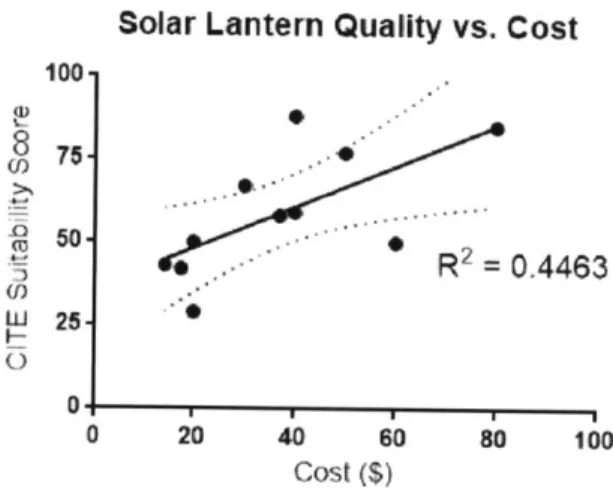
There is an inclination among users to associate high price with high quality [16]. This is a trend present in both the developed and developing world. However, price-perceived quality studies have only examined a limited range of products and consumer types [23]. In the context of the developing world, this correlation between price and quality is also apparent with the examination of the CITE solar lantern suitability matrix [221.
Solar Lantern Quality vs. Cost
100. 75 9 50-R'= 0.4463 LI 25-0 20 40 60 80 100 Cos t (SI
Figure 5: CITE Solar Lantern Quality-Cost Correlation
However, Figure 5 demonstrates that there are outliers. Both high-price quality and
low-price high-quality products are present. Both of these types of products must be brought to the attention of consumers, which is one of the reasons for existence of organizations such as CR and CPSC. Since developing world consumers lack the financial capital to acquire information about high-price low-quality products it is important for product developers to properly address the needs of these consumers, and evaluation is a tool to gather an understanding of those needs.
3.2 DATA COLLECTION
A major challenge in conducting product evaluation for the developing world is in the collection of information. This collection of information is either done through experimentation or surveys. In both cases a large aspect of the challenge is dedicating monetary resources to support the collection of data. Additionally, there are opportunities for incorporating both methodologies into the evaluation of any of the four stages: design, manufacturing, distribution, and adoption.
3.2.1 Experimentation
Experimentation is the process by which knowledge about a product can be gathered.
Experimentation in a laboratory or field setting is used in order to test relevant hypothesis about the quality of a given product and/or its family. Before conducting experiments, it is important to
develop an experimental design to guide the experimentation process and organize data for analysis purposes. The development of an experimental design is useful in systematically evaluating objective quality. It is important to note that the creation of an experimental design is an iterative process.
3.2.2 Laboratory Testing
Typically, product testing done by organizations such as CR is conducted in a laboratory setting. Such an environment allows for careful control and targeted study of parameters. However, the setup of a laboratory for the purposes of testing requires investment in capital equipment. Laboratory-grade equipment offers high precision and accuracy at a high monetary cost. For example, a mass spectrometer, which is a machine used to characterize the chemical composition of a material will cost on the order of $100,000. In a university environment, machines such as these are not difficult to access. However, due to their high cost, they are infrequently purchased or upgraded. The lack of access to such machines makes it infeasible for a consumer to conduct such testing on their own. Furthermore, it is improbable that such an investment would be made by a development organization unless it is crucial in the development of their core technology.
Lab testing of products in the developing world is particularly difficult because of the lack of understanding of the product use behaviors and environmental conditions. One method of
addressing this is to conduct a field visit to assess basic use cases and the environmental conditions. This data can then be used to recreate a representative test. However, investment in the construction of specialized testing equipment for these tests is still required. Furthermore, environmental conditions in the various parts of developing world can vary widely. For example, the average temperature and rain fall of southern India is vastly different than the average
temperature and rainfall in northern Africa. This large variation increases the difficulty of creating a lab test representative of all of these conditions.
3.2.3 Survey and Observation
Some criteria although important to the objective quality of the product may not be explicitly testable which is where a survey can be useful. Surveys are a common tool employed by
evaluators to acquire data. Although this data is subjective as it relies on written or oral
solicitation of feedback it can reflect design and manufacturing characteristics. However, in the context of the developing world administering surveys for data collection presents many challenges. First, accessing users may be difficult as they may be located in remote regions. Furthermore, developing world users may not be accustomed to responding to surveys or interviews due to a lack of exposure. This introduces biases into the survey responses such as response or courtesy bias. Response bias refers to a set of traits in a user that lead to inaccurate or incomplete reporting [24]. The reasons for response bias include factors such as memory loss, phrasing of questions, or even demeanor of the researcher. Although these biases are also present in surveys conducted with users who are accustomed to surveys they may be more pronounced in this context. Biases can compromise the integrity of a survey and the gathered results. Since this is a critical pathway to iterate on design the inaccurate feedback to product developers may ultimately lead to failure of a product.
3.2.4 Field Work
Field work is a necessary part of understanding the context for the product under scrutiny. Since compensation for researcher time in addition to travel resources must be allotted to facilitate effective fieldwork, the cost of an evaluation can be immense and burdensome. This leads to a debate about how much resources to expend to gather data. In the developed world consumers are accustomed to and seek as much information as possible to make their decisions. However, this approach is often not possible in the developing world due to resource constraints.



![Figure 4: CITE Solar Lantern Suitability Rating Chart [22]](https://thumb-eu.123doks.com/thumbv2/123doknet/14734095.573752/31.918.138.794.450.683/figure-cite-solar-lantern-suitability-rating-chart.webp)