HAL Id: tel-01255320
https://tel.archives-ouvertes.fr/tel-01255320
Submitted on 13 Jan 2016HAL is a multi-disciplinary open access
archive for the deposit and dissemination of sci-entific research documents, whether they are pub-lished or not. The documents may come from teaching and research institutions in France or abroad, or from public or private research centers.
L’archive ouverte pluridisciplinaire HAL, est destinée au dépôt et à la diffusion de documents scientifiques de niveau recherche, publiés ou non, émanant des établissements d’enseignement et de recherche français ou étrangers, des laboratoires publics ou privés.
frictional contact and friction induced vibrations
problems
Hai Quan Do
To cite this version:
Hai Quan Do. Reduced model and uncertainty propagation for frictional contact and friction induced vibrations problems. Solid mechanics [physics.class-ph]. Université de Valenciennes et du Hainaut-Cambresis, 2015. English. �NNT : 2015VALE0036�. �tel-01255320�
Pour obtenir le grade de Docteur de l’Universit´
e de
VALENCIENNES ET DU HAINAUT-CAMBRESIS
Sp´ecialit´e : GENIE MECANIQUE Pr´esent´ee par Hai Quan DO le 11/12/2015
Version finale Ecole doctorale :
Sciences Pour l’Ing´enieur (SPI)
Equipes de recherche, Laboratoires :
Laboratoire d’Automatique, de M´ecanique et d’Informatique Industrielles et Humaines (LAMIH)
Mod`
eles r´
eduit et propagation d’incertitude pour les probl`
emes de contact
frottant et d’instabilit´
e vibratoire
JURY
Pr´esident du jury
— Chevallier Ga¨el, Professeur, Universit´e de Franche-Comt´e Rapporteurs
— Berger S´ebastien, Professeur, INSA Centre Val de Loire — Hanss Michael, Professeur, Universit´e de Stuttgart Examinateurs
— Chevallier Ga¨el, Professeur, Universit´e de Franche-Comt´e — Zahrouni Hamid, Professeur, Universit´e de Lorraine-Metz
Co-encadrant : Massa Franck, Maˆıtre de Conf´erences, Universit´e de Valenciennes Directeur de th`ese : Tison Thierry, Professeur , Universit´e de Valenciennes
Afin d’am´eliorer la qualit´e des produits et tendre vers des conceptions fiables et robustes, la simulation num´erique joue de nos jours un rˆole cl´e dans de nombreux secteurs de l’ing´enierie. Malgr´e l’utilisation de mod`eles de plus en plus complexes et r´ealistes, les corr´elations entre les mesures exp´erimentales et les simulations d´eterministes ne s’av`erent pas toujours ´evidentes, en particulier, si le ph´enom`ene observ´e est de nature fugace. Afin de prendre en compte les variations possibles de comportement, des techniques de tirages multiples comme les plans d’exp´eriences, les analyses de sensibilit´e ou les approches non d´eterministes peuvent ˆetre exploit´ees. Cependant, ces simulations avanc´ees conduisent in´evitablement `a des temps de calcul prohibitifs qui ne sont pas en ad´equation avec des phases de conception de plus en plus courtes.
L’objectif de cette th`ese est d’explorer de nouvelles strat´egies de r´esolution pour les probl`emes m´ecaniques, o`u la non-lin´earit´e de contact frottant et des variations sur les param`etres du mod`ele num´erique sont consid´er´es en mˆeme temps. Pour y parvenir, nous avons, dans un premier temps, ´etudi´e l’int´egration de contrˆoleurs, bas´es sur la logique floue, pour r´esoudre un probl`eme de contact frottant. L’id´ee propos´ee est de transformer le probl`eme non lin´eaire en un ensemble de probl`emes lin´eaires de tailles r´eduites que l’on peut r´eanalyser grˆace des d´eveloppements homotopiques et des techniques de projection. Dans un second temps, nous avons ´etendu la d´emarche propos´ee au cas des probl`emes de vibrations induites par le frottement comme le crissement.
Mots Cl´
es
Contact frottant - Instabilit´e - Crissement - Incertitudes - Perturbations - Logique floue - Ensemble flou - R´eanalyse - D´eveloppement homotopique
To improve the quality of products and tend to reliable and robust designs, numerical simula-tions have nowadays taken a key role in many engineering domains. In spite of more complex and realistic numerical models, the correlation between a deterministic simulation and experi-mentations are not obvious, especially if the observed phenomenon have a fugitive nature. To take into account possible evolutions of behaviour, multiple samplings techniques such as desi-gns of experiments, sensitivity analyses or non-deterministic approaches are currently performed. Nevertheless, these advanced simulations necessarily generate prohibitive computational times, which are not compatible with more and more shorter design steps.
The aim of this work is to explore new numerical ways to solve mechanical problems including both the contact nonlinearity, the friction and several variability on model parameters. To achieve this objective, the integration of Fuzzy Logic Controllers has been first studied in the case of static frictional contact problems. The proposed idea is to decompose the non linear problem in a set of reduced linear problems. These last ones can be reanalyzed thanks to homotopy developments and projection techniques as a function of introduced perturbations. Second, the proposed strategy has been extended to the case of friction induced vibrations problems such as squeal.
Keywords
Frictional contact - Instability - Squeal - Uncertainty - Perturbations - Fuzzy Logic - Fuzzy sets - Reanalysis - Homotopy development
Introduction 8
1 Uncertainty in design step: towards reliable and robust design . . . 9
2 Aims of proposed research . . . 10
3 Organization of report . . . 10
1 Uncertainty, reduced model techniques and friction induced vibration: a state of the art 13 1 Non-deterministic approaches in mechanical engineering . . . 14
1.1 Some definitions . . . 14
1.2 Uncertainty modelisation . . . 15
1.3 Uncertainty propagation . . . 15
1.4 Uncertain data management . . . 19
2 Reduced model techniques . . . 21
2.1 Surrogate models . . . 21
2.2 Reanalysis techniques . . . 22
2.3 Integration in uncertain context . . . 23
3 Friction induced vibrations . . . 24
3.1 Noises and squeal phenomenon . . . 24
3.2 Fugitive nature of squeal . . . 26
3.3 Non-linearity of contact . . . 29
4 Reduced models and uncertainty propagation for frictional contact and stability problems . . . 30
2 Finite element analysis of frictionless contact problems using fuzzy control approach 33 1 Introduction . . . 34
2 2D Frictionless contact problem in a finite element context . . . 35 4
2.1 Continuous formulation . . . 35
2.2 Finite element discretization and numerical methods . . . 36
3 Fuzzy Logic Controller for Contact method . . . 38
3.1 Fuzzy Logic Controller and normal contact management . . . 38
3.2 Definition of the reduced contact problem . . . 42
3.3 Design of fuzzy controller and contact solving . . . 43
4 Numerical applications for frictionless contact problem . . . 45
4.1 Elastic beam on beam problem . . . 46
4.2 Elastic beam on rigid segment problem . . . 51
4.3 Two semicircular structures in contact . . . 53
5 Conclusion . . . 56
3 Using fuzzy logic control approach and model reduction for solving frictional contact problems 57 1 Introduction . . . 58
2 2D frictional contact problems in a finite element context . . . 58
2.1 Frictional contact problems . . . 58
2.2 Finite element static contact problem . . . 60
3 Fuzzy Logic Controller for frictional Contact method . . . 61
3.1 Extension to frictional contact management . . . 61
3.2 Definition of the reduced contact problem . . . 63
4 Numerical applications for frictional contact problems . . . 63
4.1 2D elastic slab on rigid plate . . . 64
4.2 Design of controllers . . . 65
4.3 Resolution of the full contact problem with the FL2C method . . . 66
4.4 Resolution of reduced contact problem through eigenvector integration . . 68
4.5 Resolution of reduced contact problem using static modes integration . . . 71
4.6 Influence of controller fuzzy laws . . . 74
4.7 Solutions for fuzzy controller integration . . . 76
4.8 Discussion about computational time . . . 78
5 Conclusion . . . 79
4 Reanalysis of perturbed frictional contact problems 80 1 Introduction . . . 81
2 Perturbations in a static finite element contact problem . . . 82 5
2.1 Nominal problem . . . 82
2.2 Fuzzy Logic Controller for Contact method . . . 83
2.3 Modified problem and reduction techniques . . . 84
3 Reanalysis of the modified projection matrix . . . 85
3.1 Homotopy perturbation and series development . . . 85
3.2 Reanalysis of modified static modes . . . 85
4 Proposed HPP-FL2C method . . . 87
5 Numerical applications for frictional contact problem with perturbations . . . 88
5.1 Description of the numerical model . . . 89
5.2 Nominal contact problem validation . . . 90
5.3 Nominal reduced contact problem validation . . . 92
5.4 Modification of the friction coefficient . . . 93
5.5 Validation of HPP method for projection matrix reanalysis . . . 94
5.6 Perturbed reduced contact problem . . . 95
5.7 Parametric analysis by DOE . . . 98
6 Conclusion . . . 99
5 A global strategy for the stability analysis of friction induced vibration problem with parameter variations 101 1 Introduction . . . 102
2 Stability analysis for friction-induced vibrations problems . . . 103
2.1 Nominal description . . . 103
2.2 Modified configuration and perturbation integration . . . 105
3 Reanalysis of modified stability analysis . . . 107
3.1 Main steps of the CHOC strategy . . . 107
3.2 Reanalysis of the equilibrium position . . . 109
3.3 Reanalysis of modified eigenmodes . . . 110
3.4 Calculation of the modified complex eigendata . . . 112
4 Application to simplified brake system stability analysis . . . 113
4.1 Numerical model description . . . 113
4.2 Nominal coalescence graph . . . 114
4.3 Perturbed coalescence graph . . . 118
4.4 Effects of input parameter modifications . . . 121
5 Conclusion . . . 122 6
6 Uncertain friction induced vibration study: coupling of fuzzy logic, fuzzy sets and interval theories 124
1 Introduction . . . 125
2 Uncertainty management . . . 125
2.1 Fuzzy sets theory . . . 125
2.2 Interval discretization . . . 126
3 Proposed strategy for calculating fuzzy membership function . . . 127
3.1 Uncertainty propagation by optimization . . . 127
3.2 Integration of reanalysis techniques . . . 129
4 Numerical Applications for friction induced vibration problem with fuzzy data . . 131
4.1 System description . . . 131
4.2 Deterministic results . . . 132
4.3 Definition of fuzzy input parameters . . . 133
4.4 Validation of fuzzy contact loads . . . 133
4.5 Validation of fuzzy equilibrium position . . . 135
4.6 Validation of fuzzy complex frequencies . . . 135
4.7 Effects of fuzzy input data on instability . . . 136
5 Conclusion . . . 137 Conclusion and perspectives 139 A Mac-Neal Component Modal Synthesis method 145
Bibliography 147
Contents
1 Uncertainty in design step: towards reliable and robust design . . . 9 2 Aims of proposed research . . . 10 3 Organization of report . . . 10
1
Uncertainty in design step: towards reliable and robust
design
The competition in industries constantly increases through improving the quality of products and reducing the cost of their products. To achieve these drastic objectives, numerical simula-tions have taken a key role in many engineering domains such as automotive, aeronautics and nuclear. Considering for example Finite Element Method (FEM) [Zienkiewicz and Taylor, 2002], Smoothed-Particle Hydrodynamics (SPH) techniques [Gingold and Monaghan, 1977] or more re-cently isogeometric analyses [Hughes et al., 2005], it is nowadays possible to easily test different materials, different designs, new processes and simulate the related physic mechanisms without systematically performing experimental tests. Numerical simulations have the advantage of being compatible with economic challenges such as reactivity and anticipation and they are becoming cheaper than experiments on 1 : 1 ratio models. Recent years, evolving computational resources contribute to the increasingly frequent use of more complex numerical models including more com-ponents of mechanical systems, more geometrical details and nonlinearities (geometry, material and contact). On the other hand, as the size of some FEM models can currently reach several tens of millions of degrees of freedom, CPU time associated to complex simulations remains constant. In spite of the advanced tools, the correlation between a deterministic simulation and ex-perimentations are not obvious in many case studies. The resulting gaps can be significant, especially if the studied phenomenon have a fugitive or chaos nature. Indeed, during the man-ufacturing of mechanical structures, it is not uncommon to observe some uncertainties result-ing in product variability either on material properties (Young modulus, strain-stress law), on geometric characteristics (gaps, fillets and small geometries) and on interface and boundary conditions. These observed variability necessarily affect the static and dynamic behaviours of structures and more generally the component life and the global efficiency of the system. To significantly characterize experimental behaviour, it is so necessary to consider a family of com-ponents rather than only one specimen that can generate significant financial costs. Numerically, to take into account these uncertainties and tend to reliable and robust designs, a current in-dustrial trend involves making multiple numerical simulations by performing sensitivity analyses, designs of experiments [Fisher, 1935, Kleijnen, 2010, Taguchi et al., 2005] non-deterministic stud-ies [Shinozuka, 1972, Moore, 1966, Ben-Haim and Elishakoff, 1990, Zadeh, 1978] or even reliable and robust optimizations [Goldberg, 1989, Kennedy and Eberhart, 1995]. The idea is to simu-late the evolution of mechanical responses as a function of input parameter variations and to detect failures and performance reductions of products. Once again, it is obvious to imagine the same computational limitations than in the deterministic case. Currently, several researches are
performed in that sense in order to develop efficient, precise and less time consuming numerical advanced methods.
2
Aims of proposed research
In LAMIH’s mechanical team, the recent works [Tison et al., 2014, Renault et al., 2014] have highlighted the contribution of uncertainty to improve numerical and experimental correlation in the case of squeal instabilities for several industrial automotive systems. Indeed, the authors have first showed the limitations of deterministic simulations to predict squeal phenomenon with efficiency. Secondly, it has been shown that several classes of uncertainties, mainly the geometric topology of pads, material properties, damping and friction, play a key role and their integration in simulation is essential to tend to robust designs. The results have been presented in term of families of unstable modes and based on a robustness criterion. For the uncertainty propagation step, Latin Hypercube Samplings (LHS) coupling to Abaqus frequency stability simulations are currently used leading to significant CPU times. In an industrial context, this kind of calculations are necessarily performed during several weekends and distributed on different servers.
Nevertheless, to go farther to this way and to integrate these results in an optimization scheme, it is necessary to revisit the numerical strategy and propose less time consuming alternatives methods. The frequency stability analysis, used to predict squeal, relies on three steps namely a non linear static frictional contact problem, a creation of coupling matrices and a complex eigenvalue problem. As the equilibrium position takes a considerable importance in this study, the thesis proposal is to study frictional contact problems in a multiple sampling context. The first objective is thus to develop a reanalysis method for the static frictional contact problem and to study the integration of the automation control approaches for the solving. Moreover, to decrease the computational time, it is necessary to develop reduced order models at different steps of the proposed strategy. Thus, the second objective is to define a reduced contact problem and a reduced complex eigenvalue problem. Finally, an introduction of fuzzy sets formalism in friction induced vibration analysis is investigated and problematics of uncertainty propagation are discussed.
3
Organization of report
This report contains six chapters:
In chapter 1, a bibliographic review about the main topics, investigated in PhD works, is 10
supplied. First, a discussion is proposed concerning the introduction of uncertainty in numerical simulations. After recalling some general definitions, the modelisation, propagation and man-agement aspects are detailed considering different theories and methods. Second, we focus the state of the art on reduced model techniques by taking into account both surrogate models and reanalysis techniques coupled to projection techniques. Their integration in advanced mechanical applications is presented too. Next, we summarize experimental and numerical, already pub-lished, works for friction induced vibrations problems and more precisely squeal phenomenon. Contact phenomena, which plays a key role in this kind of applications, is underlined. Finally, an assessment of recent developments about reduced models and uncertainty propagation for frictional contact and stability problems is proposed.
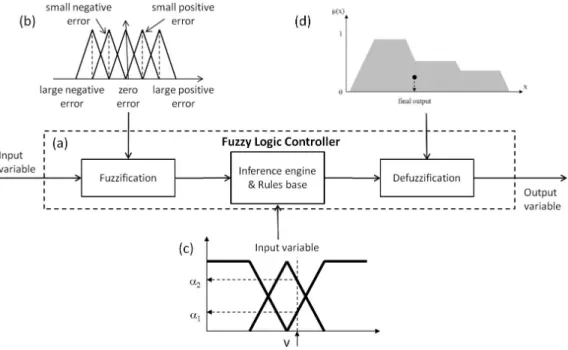
Chapter 2 entitled ”Finite element analysis of frictionless contact problems using fuzzy control approach ” describes a new numerical method to solve a mechanical frictionless contact problem. The proposed method has been developed to be compatible within a context of multiple sampling (such as parametric analysis or design of experiments). The proposal relies on a control based method currently used in automation domain. A Fuzzy Logic Controller (FLC) is designed to link the normal gaps identified between the bodies and the normal contact pressures applied at the interface. The initial nonlinear problem can be decomposed into a set of reduced linear problems. Some 2D numerical applications will highlight the strengths of the proposed method called Fuzzy Logic Controller for Contact (FL2C).
The aim of the chapter 3 named ”Using Fuzzy Logic control approach and model reduction for solving nonlinear frictional contact problem” is to expand the previously proposed FL2C method for solving mechanical frictional contact problems. A second FLC is added to take into account the tangential gaps in the case of sticking conditions. Moreover, a model reduction for each component in contact is performed to decrease the size of the global finite element problem and consequently, the computational time of numerical simulations. A complete numerical application is proposed to assess the efficiency of the proposal in terms of precision, robustness and computational time. Chapter 4 ”Reanalysis of perturbed frictional contact problems” shows how homotopy per-turbation techniques and projection can be integrated in control-based approach to reanalyze the perturbed frictional contact problems. Thus, the perturbed non linear problem is decom-posed into perturbed linear problems dedicated to each component in contact. Each solution of perturbed linear problems is approximated. A numerical application is performed to verify the efficiency and the robustness of the proposed method. Finally, a design of experiments is proposed to quantify the effects of input perturbations on output mechanical data.
Chapter 5 ”A global strategy for the stability analysis of friction induced vibration problem with parameter variations” discusses on the definition of reduced order model for stability
lem in the case of friction induced vibrations. The stability analysis of a mechanical system relies on several coupling steps, namely a non linear static analysis followed by linear and complex eigenvalue problems. We thus propose a numerical strategy to perform more rapidly multiple complex eigenvalue analyses. This strategy couples three methods namely, Fuzzy Logic Con-trollers to manage frictional contact problem, homotopy developments and projection techniques to reanalyse the projection matrices and Component Mode Synthesis to calculate the modified eigensolutions. First, a numerical application is proposed to validate the different steps of the strategy. Secondly, the effects of input variability on squeal phenomenon are investigated to highlight the necessity to take into account uncertainty in finite element simulations.
Chapter 6 entitled ”Uncertain friction induced vibration study: coupling of fuzzy logic, fuzzy sets and interval theories” presents a complete method to carry out a fuzzy study of a friction in-duced vibration system and to analyze the effects of uncertainty on the output data of a stability problem. The fuzzy problem will be decomposed by interval problems and interval output solu-tions are calculated by optimization. Each output data of the stability problem is reanalyzed by integrating FL2C method for static step while homotopy development and projection techniques are used for the modal step. The results obtained with the proposed strategy are compared with those given by Zadeh’s extension principle reference.
Finally, conclusions and some perspectives of these different works will be provided to finish the PhD report.
Uncertainty, reduced model techniques
and friction induced vibration: a state
of the art
Contents
1 Non-deterministic approaches in mechanical engineering . . . 14
1.1 Some definitions . . . 14
1.2 Uncertainty modelisation . . . 15
1.3 Uncertainty propagation . . . 15
1.4 Uncertain data management . . . 19
2 Reduced model techniques . . . 21
2.1 Surrogate models . . . 21
2.2 Reanalysis techniques . . . 22
2.3 Integration in uncertain context . . . 23
3 Friction induced vibrations . . . 24
3.1 Noises and squeal phenomenon . . . 24
3.2 Fugitive nature of squeal . . . 26
3.3 Non-linearity of contact . . . 29
4 Reduced models and uncertainty propagation for frictional contact and stability problems . . . 30
1
Non-deterministic approaches in mechanical
engineer-ing
1.1
Some definitions
The notion of uncertainty makes reference to many qualification criteria such as uncertain, variable, vague, imprecise, poor, incomplete depending on the employed models. Several authors have tried to propose some definitions and classifications to facilitate the comprehension of these ambiguous terminologies. Oberkampf et al [Oberkampf et al., 1999] defines the term variability as variation which is inherent to the modelled physical system or the environment under consid-eration where as uncertainty is a potential deficiency in any phase or activity of the modelling process that is due to lack of knowledge. In agreement with this previous description, two major classes of uncertainties [Moens and Vandepitte, 2005] are currently adopted. The first class is called irreducible uncertainties and refers to the fact that even when all information on a partic-ular property is available, the quantity cannot be deterministically determined. On the contrary, the second class is called reducible because uncertainty can be reduced or even eliminated if a sufficient amount of information is collected. Reducible uncertainty is usually due to missed information or subjective notions and is also assimilated to ignorance.
As described by Bouchon-Meunier [Bouchon-Meunier, 1994], three cases of uncertainty can be identified namely definition, modelisation and measurement. This definition is naturally true in mechanical engineering. When different specimens or structures are analyzed, variations of geometrical and material characteristic parameters are classically observed. Indeed, during the manufacturing and the use of structure, the sources of errors can be numerous [Alvin et al., 1998] and so the parameter uncertainties are inevitable. Moreover, the quantification of the quality of numerical model remains tricky and is dependent of several assumptions, formulation used, chosen discretization or algorithms. These model uncertainties, difficult to take into account, represent the insufficiency of the numerical model to describe the reality of the observed phenom-ena. Finally, the experimental uncertainties are present during measurement campaigns. Even if rigorous protocols are followed, it is difficult to maintain unchanged variations of temperature, boundary conditions and level of excitations for example. Whatever the nature of uncertainty, their integration in simulation requires in a first time a phase of modelisation described in the next part.
1.2
Uncertainty modelisation
Many non-deterministic approaches have been introduced to model the different kind of un-certainties previously mentioned. In mechanical engineering, the more prevalent theories are the probabilistic theory, the interval theory, and the fuzzy set theory. Among these theories, the prob-abilistic theory [Metropolis and Ulam, 1949] is provided as a reference to model the uncertainties. Uncertainty is described either by random variables or by random fields if spatial variation of the model properties is concerned. Construction of the associated probability distributions requires a statistical study of measured data from specific tests. This particular phase of uncertainty quantification is primordial to introduce realistic variations. When few experimental data are available from some observations of the system, these experimental data can be used to identify an optimal prior stochastic model of uncertainties using the maximum likelihood method. In me-chanical engineering, Gaussian, log-normal and uniform laws are preferred in most applications. In interval theory [Moore, 1966] , the uncertain data are represented by intervals of variation. The inferior and superior bounds represent the minimal and maximal observed data and each value has the same confidence degree. Fuzzy set theory, introduced by Zadeh [Zadeh, 1978], can be seen as an extension of the classical set theory and a generalisation of the interval theory. Fuzzy set introduces a degree of membership, represented by the membership function. This membership function describes the grade of membership for each element in the domain defined by the fuzzy set. The concept allows thus membership values between zero and one. Different forms of membership functions can be chosen, depending on the kind of imperfection considered. Triangular membership functions are the simplest and common choice to represent imprecisely known quantities. Indeed, one can fix a membership degree of 1 to the classical used value while membership values of 0 are affected to an estimate of the bounds of this value. However, with additional information, other membership functions can be chosen (p-shape, trapezoidal ....) to model the perception and the expert judgment of the user.
1.3
Uncertainty propagation
As soon as the data have been correctly modelled with one of the available theories, the next challenge is to propagate the uncertainty presented on input parameter to the output mechanical solutions. Depending on the encountered problem (static, modal, dynamic ...), studied param-eters (dimensions, geometry, materials or boundary conditions) or the configuration of models, the task is more or less complex. It directly depends on the natural evolutions (linear, quadratic, monotonic or nonlinear) of solutions (displacements, eigenvalue, eigenvector...) in terms of uncer-tain parameters. This step is clearly essential but relatively complex whatever the theory. Indeed,
the propagation methods must be precise concerning the quantification of extreme evolutions and values and perform in a compatible time with design step. Two major axes have generally been chosen considering intrusive or non-intrusive propagation methods. With intrusive approaches, the uncertain parameters are replaced in the governing equations by appropriate expansions or approximations. To implement this category of approach in a classical simulation code, it is nec-essary to rewrite a large part of the software. On the contrary, the main objective of non-intrusive methods is to obtain the perturbed output quantities without making any modifications to the deterministic software. This second approach treats the deterministic code as a black-box and ap-proximates the unknown coefficients with formulas based on deterministic code evaluations. The strategy for the selection of samples in the design space and their number depend on the cho-sen non-intrusive technique. Several alternative, intrusive or non-intrusive, propagation methods have been developed in order to overcome inconveniences of reference intensive samplings meth-ods. They are presented in the case of probability and fuzzy sets modelisation in the next two subsections.
Probabilistic approach
In probabilistic approach, Monte Carlo Simulations (MCS) [Metropolis and Ulam, 1949], rep-resent the numerical reference method to propagate uncertainty. This method is based on random sampling of input parameters and on deterministic calculations associated with each combination of generated parameters [Schueller, 1997, Schueller, 2001]. Simple to implement, this method presents guarantee in terms of convergence but can be proved prohibitive when the number of uncertain parameters increase or the deterministic method itself is time con-suming. Many improvements have been proposed to reduce this drawback, such as the par-allelization [Johnson et al., 1997, Papadrakakis and Kotsopulos, 1999, Johnson et al., 2003], the sampling technique [Helton and Davis, 2003, Cambier et al., 2002] or the used of meta-model [Gayton et al., 2003, Lew et al., 2006] which will be discussed in the next subsection.
If a classification is considered as a function of uncertainty nature, two main categories can be built namely parametric and non-parametric methods. The parametric methods [Sudret, 2007] are the most popular and allow to take into account uncertainties on the parameters of the model. Amongst numerous proposals, the first methods were based on Taylor series expan-sion or perturbation techniques [Benfratello and Muscolino, 1998, Chakraborty and Dey, 1998, Nieuwenhof and Coyette, 2002, Falsone and Ferro, 2005] with the aim to substitute the equa-tions of numerical model and the random funcequa-tions by the mathematic developments to quantify the first statistical moments (mean, variance) of output solutions [Sudret, 2007].
These methods are dependent on the validity of Taylor series expansion and can only be applied for linear static and dynamic problems [Handa and Andersson, 1981, Liu et al., 1986, Shinozuka and Yamazaki, 1988] with low output dispersions around the nominal values as shown by Ghanem and Spanos [Ghanem and Spanos, 1991]. These last years, the authors were par-ticularly interested in methods relying on polynomial chaos expansion developed by Wiener [Wiener, 1938]. The first works in mechanical engineering are due to Ghanem and Spanos [Ghanem and Spanos, 1991] who have combined Wiener-Hermite developments with finite ele-ment method to model and propagate uncertainty in mechanical structure. A more general exten-sion, called generalized polynomial chaos, was proposed by Xiu et al. [Xiu and Karniadakis, 2002]. The method is based on the correspondence between the probability density functions of certain random variables and the weight functions of orthogonal polynomials of the Askey scheme. The polynomial chaos method allows the stochastic contribution of a random variables and the de-terministic contribution to be dissociated. The random part is then decomposed on a basis of orthogonal polynomials (for example Hermite polynomials for Gaussian variable, Legendre for uniform variable). Intrusive and non-intrusive methods have been successively applied to cal-culate stochastic modes useful to uncertainty propagation. The intrusive method is based on the Galerkin projection to expand the uncertain model on the polynomial chaos basis as a lin-ear system of deterministic coupled equations [Ghanem and Spanos, 1991, Babuska et al., 2004]. Nevertheless, this way is limited to a low number of random parameters and mainly ap-plied to the case of linear problems to avoid the significant difficulties of implementation for non-linear problems. The second way, non-intrusive, relies on either regression methods or spectral projection methods. The first category calculates the stochastic modes by minimiz-ing the gap between random function and its approximation on the polynomial chaos basis. On the contrary, the Non-Intrusive Spectral Projection (NISP) methods [Nechak et al., 2012] project the solution of problem on the basis of chaos. The initial problem is transformed into a calculation of integrals [Crestaux et al., 2009] by the collocation approach for example [Babuska et al., 2007, Loeven et al., 2007]. To avoid some limitations encountered in the case of large numbers of random variables or large range of variations, several alternatives have been pro-posed such as sparse generalized polynomial chaos [Ganapathysubramanian and Zabaras, 2007, Xiu and Hesthaven, 2005, Blatman and Sudret, 2008], multi-element generalized polynomial chaos [Wan and Karniadakis, 2005], Wiener-Haar chaos [Maˆıtre et al., 2004] or Wiener-Fourier chaos [Millman et al., 2005].
As the parametric probabilistic approach are not sufficient to take modeling errors and model-ing uncertainties into account, a second category, called the non-parametric methods [Soize, 2000] has been developed and are based on the use of a reduced-order model and the random
ma-trix theory. The random mama-trix theory [Mehta, 1991] is used to construct the prior probability distribution of the random matrices modeling the uncertain operators of the mean computa-tional model. On the same way, the non-parametric method consists in constructing directly the stochastic modeling of the operators of the mean computational model. In practice, the gener-alized matrices issued from the nominal finite element model of the structure are replaced by random matrices. The uncertainties are introduced directly on global matrices of the model by using a dispersion parameter and its prior probability distribution. The dispersion parameter is estimated according to the Maximum Entropy Principle [Jaynes, 1957] for which the constraints are defined by the available information [Soize, 2005a, Soize, 2005b]. Many works have been pub-lished in order to validate the non-parametric probabilistic approach with experimental results [Chebli and Soize, 2004, Chen et al., 2006] and to extend the applicability of the theory to differ-ent areas in structural mechanics [Capiez-Lernout and Soize, 2004]. Recdiffer-ently, an improvemdiffer-ent of the non-parametric approach, called the generalized probabilistic approach of uncertainties, has been proposed [Soize, 2010] and allows the prior stochastic model of each type of uncertainties (uncertainty on the parameters of the model and modeling errors) to be separately constructed. Other developments are dedicated to quantify the role of each kind of uncertainty (parametric and non-parametric) and to integrate them simultaneously in uncertain applications.
Interval and fuzzy sets approach
The numerical developments proposed in interval and fuzzy set theory are very close and can be explained together since a fuzzy problem can be decomposed into a set of interval prob-lems [Massa et al., 2006, Massa et al., 2008b, Massa et al., 2015a]. The reference method used to solve problems described by the fuzzy formalism is based on Zadeh’s Extension Principle [Zadeh, 1975a, Zadeh, 1975b, Zadeh, 1975c], which extends general operations for real numbers to the corresponding operations for fuzzy numbers. The extension principle states that the degree of membership of one combination is equal to the smallest degree of membership of the independent parameters of this combination. In the case of multiple occurrences of a so-lution, the final membership degree is equal to the maximum membership degree of the dif-ferent solutions. In practice, fuzzy numbers can be discretized either according to the sup-port (membership value equal to 0) or, more conveniently, according to the membership func-tion. Formally, implementation of the method leads to a combinatorial process which can be compared to MCS in the sense that it presents the same drawback in terms of computational time. In a similar way as with the probabilistic theory, many researches have been performed to propose alternatives considering successively interval arithmetic [Moore, 1966], perturbation
or series expansion [Qiu and Elishakoff, 1998, Lallemand et al., 1999] and specific samplings or designs of experiments [Hanss, 2002, Hanss, 2003, Donders et al., 2005, Hanss and Turrin, 2010, Haag et al., 2010]. However, these methods have rapidly shown some limitations such as the overestimation of the output set with interval arithmetic or a bad approximation of non-linear problems with perturbation techniques. The best results have been obtained using ei-ther sensibility analyses or optimization algorithms. The first works have been initiated by McWilliam [McWilliam, 2001] and relied on monotonic evolutions of response surfaces. Bounds of solutions are determined with bounds of the intervals associated to each parameter. More recently, an interesting solution has been proposed by transforming interval problems as a min-max optimization problem to limit computational time of the uncertainty propagation step and thus to be compatible with an industrial context [Massa et al., 2009a]. Indeed, this approach relies on iterative search for global optima (local gradient algorithm) in a search space, the size of which is gradually increasing when the degree of membership is decreasing [Massa et al., 2006, Massa et al., 2008b, Degrauwe et al., 2009]. For the crisp values, the output quantities and their first sensitivities are determined for each fuzzy parameter. The signs of the first-order sensitivities indicate the functional dependence of the response function and define the combinations of discrete fuzzy parameter values for the following level of degree of member-ship, which then can supply the minimum and maximum variations. For each α-cut level, the first derivatives of the output quantities are evaluated for the combinations of discrete fuzzy parameter values determined at the previous level. The comparison of the signs of the derivatives with those obtained at the previous level indicates the search path. In this context, the uncertainty propa-gation have already been studied in different linear problems such as static [Massa et al., 2006], modal [Massa et al., 2008b], frequency responses [Massa et al., 2009b, Ruffin-Mourier, 2008] and transient [Rao et al., 2010]. Moreover, to control the computational time, the proposed methods have been coupled with different approximations or reanalyses to limit the number of calls of finite element calculations.
1.4
Uncertain data management
After having calculated the non-deterministic solutions, it is possible to integrate them either on sensitivity analyses, to identify the most sensitive parameters or in optimization process, to study and improve the reliability and the robustness of the design.
The aim of sensitivity analysis [Saltelli et al., 2000, Zhang and Pandey, 2014, Cao et al., 2013] is to quantify the influence of each uncertain input parameter of a model. In this context, a global sensitivity is considered rather than a local deterministic sensitivity based on the
com-putation of gradients of the response with respect to input parameters around a specific value. First, the aim is to take into account both the input interactions and the information for all the possible ranges of variation of the uncertain parameters with the aim to estimate their in-fluence [Gauger et al., 2008]. Secondly, the idea is to avoid the drawback linked to the choice of a reference point where local gradients are generally calculated. In non-probabilistic context, a state-of-the-art of available methods is proposed [Saltelli et al., 2000]. Regression-based methods or variance-based methods are mainly considered to measure the effects of inputs on outputs. In the case of variance methods, generally called ANalysis Of VAriance (ANOVA), the variances of the output are decomposed as a sum of contributions of each input variable.
Next, the reliability analysis [Ditlevsen and Madsen, 1996, Melchers, 1999, Lemaire, 2005] consists in computing the probability of failure of the system which can be described by a failure criterion. This mathematic criterion is directly linked to uncertain input parameters and me-chanical output responses and is represented by a limit state function which separates safe and failure domain. The probability of failure is defined as the integral of the failure domain of the joint probability function of random vector and cannot be computed analytically. It is necessary to use numerical methods such as MCS or approximation methods such as First Order Reliability Method (FORM) or Second Order Reliability Method (SORM) [Kiureghian et al., 1987] to eval-uate the joint probability function. With the two last methods, the idea is to approximate the probability of failure and to limit the computational time compared to MCS. In current industrial applications, the objective is to optimize the system and to guaranty that 95%, even 99%, of the samplings stay in the safe domain. The recent developments are focussed on the integration of efficient approximation to define a more suitable approximated probabilistic problem.
Finally, the robustness analysis traduces the ability of the optimum to be insensitive with respect to the input uncertainty. The aim is to guarantee in operation, low modifications of the proposed design behaviour. Robustness measures can be directly incorporates in the objective functions of non-probabilistic approaches of the non-deterministic optimization problem. For ex-ample, Kelesoglu [Kelesoglu, 2007] has proposed a method for fuzzy multi-objective optimization of space trusses, and Ram´ık [Ram´ık, 2007] has developed a class of fuzzy optimization problems with an objective function depending on fuzzy parameters. Massa et al [Massa et al., 2011a] have proposed a robust fuzzy optimization of a lower wall of micro satellite. The aim was to minimize the mass of the component while maximizing the robustness of the design parameters. In probabilistic theory, the robustness problem can be seen as a minimization problem of the variance of output data. Shah et al [Shah et al., 2015] have proposed a robust and computation-ally efficient optimization algorithm for air foil design under mixed uncertainty. The algorithm exploits stochastic expansions derived from the Non-Intrusive Polynomial Chaos techniques. Li et
al [Li et al., 2015] proposed a multi-objective robust optimization procedure mixing both random and interval variables in crashworthiness design of a foam filled column.
These advanced developments require very expensive computational times, which must be reduced, or at least maintained, using mathematical approximation as an alternative to the evaluation of large systems of equations (due to the finite element discretization for example).
The next section gives an overview of the main developments concerning the reduced model techniques.
2
Reduced model techniques
Although the modelisation of input data and the considered theories (probability, fuzzy and interval) are different, the underlying developments (Taylor series, projection) or algorithms (de-signs of experiments, optimizations), the main encountered problems (order of truncation, number of degrees of freedom and number of uncertain parameters) and scientific locks (precision, mod-ularity, CPU time) are finally quite similar. Indeed, the proposed methods must be able to propagate uncertainty with a targeted level of precision while preserving a computational time compatible with the design step. Currently, for large industrial model, a solution can be consid-ered as interesting if the entire calculations can be performed in less than one weekend. With the exception of parallel calculations (several cores or parallel algorithms) mathematical approxima-tions are currently integrated in the solving scheme to achieve this objective. The aim is to predict the behaviours of studied solutions as a function of perturbed inputs. The computational time is thus reduced compared to traditional numerical methods. Reduced models can be separated in two classes developed in the two next subsections.
2.1
Surrogate models
The surrogate models or metamodels such as Proper Generalized Decomposi-tion (PGD) [Ryckelynck, 2005, David et al., 2012, Chinesta et al., 2010, Nouy, 2010, Ladev`eze and Chamoin, 2011], Proper Orthogonal Decomposition (POD) [Ryckelynck, 2005, Yvonnet et al., 2007, David et al., 2012], kriging [Kaymaz, 2005, Wang et al., 2013, Wei et al., 2004, Sakata et al., 2003], Radial Basis Functions (RBF) [Baxter, 1992], neural networks [Haykin, 1999] allow to build functions alternative to classical numerical simulations from only a set of specific samples of a Design Of Experiments (DOE). The general idea is to approximate a higher dimension system by another one of much lower dimension. PGD [Chinesta et al., 2010, Chinesta et al., 2011] is a technique where a separated representation of
the variables is introduced. It belongs to the family of Reduced-Order Modeling techniques, along with the ROM-POD method [Lieu et al., 2006] and the reduced-basis element method [Maday and Ronquist, 2002]. This method has been introduced by Ladev`eze [Ladev`eze, 1999] and called radial approximation in the Large Time INcrement (LATIN) method framework. On the contrary to POD, the PGD construction of the representation takes into account the nature of the problem directly. In the case of POD, an optimal basis is built considering proper orthogonal modes extracted from a correlation matrix, composed of different snapshots of numerical simulations or experiments. Surrogate modeling with different predictors such as the Response Surface Method (RSM) [Myers et al., 2009], neural networks [Haykin, 1999] and Kriging [Sacks et al., 1989, Forrester et al., 2008, Jones et al., 1998] have been introduced in several applications of structural dynamics. More precisely, Kriging is a statistical surrogate model that can be used to approximate the input-output function on its input space based starting from a small initial DOE. The Kriging model is a Gaussian process composed of an optional regression model estimated from available data and a random process associated to an error.
The main problem, lied to surrogate model, is to identify the necessary number of samples to build surrogate models with accuracy. Indeed, if too few samples are achieved, the prediction ca-pability of resulting approximated models would be insufficient. On the contrary, ill-conditioning and expensive cost of additional computations can be observed with large samples.
2.2
Reanalysis techniques
With reanalysis techniques, specific developments are performed thanks to the mechanical problem (static, modal, dynamic) in consideration. The main idea is to perform only one nominal calculation and to re-utilize previous results to evaluate the perturbed solutions. In this case, perturbed data and matrices are built and integrated in perturbations techniques such as homo-topy coupled or not with projection. Different numerical reanalysis techniques have already been developed in the literature such as the Taylor series expansion [Massa et al., 2004], perturbation and series development [Sliva et al., 2010, Rong et al., 2003, He, 1999], Combined Approxima-tion (CA) [Kirsch and Bogomolni, 2004, Kirsch et al., 2006, Kirsch and Bogomolni, 2007], Pad´e approximants [Damil et al., 1999, Massa et al., 2008b, Yang et al., 2001, Duigou et al., 2003], projection on reduced basis [Balm`es, 1996b, Corus et al., 2006, Bouazzouni et al., 1997, Boyaval et al., 2009, Nouy, 2010] and component mode synthesis [Masson et al., 2006, Balm`es, 1996a, Guedri et al., 2006]. The main problem of these approaches is the intru-sive character as they required an adaptation of the equations for each studied problem.
2.3
Integration in uncertain context
Surrogate models have largely been integrated in uncertainty propagation methods. For example, the Bayesian approach to incorporate global information and the fuzzy set ap-proach to simplify the model and to take into account local uncertainties are combined [Bandemer and Gebhardt, 2000] for prediction of fields through the usual kriging technique. Wang et al [Wang et al., 2013] employed kriging method in global sensitivity analysis to study the effect of both epistemic and aleatory uncertainties. Li et al [Li et al., 2014] used kriging-based solution of second-level limit state function to regional sensitivity analysis of aleatory and epistemic uncertainties on failure probability. Bi et al [Bi et al., 2013] combined radial basis func-tion to create a low-order model and hierarchical cluster analysis to give an accurate validafunc-tion outcome with acceptable calculation cost. The procedure integrating parameter selection, un-certainty propagation, unun-certainty quantification, parameter calibration, and model assessment is thus suitable for FE-models of a satellite. In electric domain, Arya et al [Arya et al., 2006] had determinate the probabilistic risk of voltage collapse, accounting uncertainties in system pa-rameters, using radial basis function. Nobari et al [Nobari et al., 2015b] proposed a kriging-based surrogate model of a brake system constructed in order to reproduce the outputs of the large-scale finite element model. They overcome the issue of computational workloads in order to quantify the resulting squeal instability from different uncertain input variables. Chowdhury and Ad-hikari [Chowdhury and AdAd-hikari, 2012] used correlated function expansion based meta-modelling approach for fuzzy parametric uncertainty analysis of linear dynamical systems. Louf and Cham-paney [Louf and ChamCham-paney, 2013] used a surrogate model based on the PGD method to obtain a quick estimate of the response of a structure whose material parameters are considered to be un-certain. Moller et al [Moller et al., 2008] employed the response surface method based on neural networks to improve numerical efficiency with structural collapse simulation under uncertainty.
For reanalysis techniques, Lallemand et al [Lallemand et al., 1999] utilized Neumann series ex-pansion to treat eigenvalue problems including fuzzy parameters. Massa et al [Massa et al., 2006, Massa et al., 2008b] integrated Taylor series development and Pad´e approximations in fuzzy static and modal problems. Qiu and Elishakoff [Qiu and Elishakoff, 1998] propagated uncertainty with combination of the perturbation technique and interval mathematics to determine the region of static response surface. Chen et al [Chen et al., 2014] employed first-order Taylor series to study the exterior acoustic field prediction with interval and random variables. Pradlwarter et al [Pradlwarter et al., 2002] solved random eigenvalue problems for large systems using component mode synthesis, based on subspace iteration scheme, in which converged eigenvectors from pre-vious calculations was used in the simulation loop as starting vectors of the current calculation.
Tran et al [Tran et al., 2010] used a robust component mode synthesis, in which the basis was enriched by residual response vectors, for stochastic damped vibroacoustics including uncertainty related to viscoelastic and poro-viscoelastic materials. Park [Park, 2008] introduced component-level analysis for constructing parametric reduced-order models which can be applied only to one component (and a single parametric variability). Hong et al [Hong et al., 2011] proposed the multiple-component parametric reduced-order models, based on component mode synthesis, for predicting the vibration response of complex structures with parametric variability in multiple components, in which the modified component matrix was described by the Taylor series devel-opment. Massa et al [Massa et al., 2015b] combined the homotopy perturbation and projection technique to reanalyze perturbed eigensolutions with uncertainty modelled by fuzzy numbers.
3
Friction induced vibrations
3.1
Noises and squeal phenomenon
Beside the pleasant noises as violin’s sound, there is a lot of unpleasant noise in the current life such as the noise of ground-wheel contact in aviation [Asensio et al., 2007, Spalart et al., 2010], rail-wheel contact in railway engineering [Montenegro et al., 2015, Ramalho, 2015, Lyu et al., 2015], brake squeal in automotive [Oberst and Lai, 2011, Esgandari and Olatunbosun, 2015] or hip endoprosthesis squeaking noise [Ouenzerfi et al., 2015, Fan et al., 2011]. Indeed, vibrations are responsible for a large number of acoustical nuisances. In brake noise context for example, Akay [Akay, 2002] made a classification that contains two categories presented in figure 1.1, namely the forced vibrations (obtained from 10 Hz to 1 kHz) and self-sustained vibrations at higher frequency (1 kHz to several tens of kilohertz).
Brake noises frequently cited in the literature are groaning (frequencies under 100 Hz), moan-ing (100-500 Hz) and squealmoan-ing (1-16 kHz). Low frequency noises involved mainly rigid body movements of the brake systems whereas high frequency noises are rather associated with eigen-modes of the structure. For the sake of respect of environmental criteria about acoustic pollution and customer’s satisfaction, these noises are a major preoccupation of manufacturers and scientist communities.
Squeal and more generally friction-induced vibrations problems have largely been stud-ied in the literature and the main works, performed before 2000, have been summarized in review papers proposed [Kinkaid et al., 2003, Ouyang et al., 2005]. Several experimental se-tups have been developed to understand conditions of apparition of noise. Beam-on-beam
Figure 1.1 – Brake noises classification [Akay, 2002]
[Meziane et al., 2010], pin-on-disc [Butlin and Woodhouse, 2011, Butlin and Woodhouse, 2013], beam-on-disk [Massi et al., 2006, Akay et al., 2009] or tribometer [Meziane et al., 2007] tests rig was successively considered. For many years, a decreasing coefficient of friction with increasing sliding velocity was the only explanation of brake squeal triggering. Thereafter, engineers and researchers suggested that structural mechanisms may also be root causes of friction induced vibration. Today, many theories and models are available in the literature. All these models, coming from various domains, aim to explain the root causes of friction related dynamic insta-bilities and to predict the conditions under which oscillation may occur. One of the most famous theories is the stick-slip. Observations of the oscillation of the system reveal the existence of two distinct phases. The first phase presents no relative motion of the sliding bodies and is known as sticking. The second phase shows the relative motion of the bodies in contact and is known as sliding. Moving back and forth between these two states leads to stick-slip oscillation. Linck [Linck, 2005] identified thus the instabilities of sliding-separation, sticking-sliding-separation and sticking-sliding by dynamic friction coefficient. Otherwise, in the sprag-slip theory, vibrations are caused by multiple degrees-of-freedom interactions. The sprag situation leads to component buckling. After the components have been sufficiently deformed, they come loose and return to the original contact situation. Spragging in an elastic system can lead to sprag-slip limit cycles. This structural mechanism highlights the fact that friction induced vibration can be predicted without a decreasing coefficient of friction. Finally, most articles consider brake squeal to be vibration caused by mode coupling phenomena. When instability appears, a coupling between
frequencies of different component of the studied system is observed. Considering this problem in the Lyapunov’s sense, squeal can be analyzed through the appearance of negative damping which leads to exponentially growing responses of the system and then an unstable state.
To numerically study squeal phenomenon, two kinds of methods are generally considered. First, the frequency way consists in performing a Complex Eigenvalue Analysis (CEA), in which system of equations are linearized around a stationary state determined from a non-linear static contact analysis. For each obtained complex eigenvalues, the real part repre-sents the damping or growth rates whereas the imaginary part indicates the instable mode frequencies. However, CEA allows all possible unstable frequencies to be found but does not indicate which frequency is truly unstable in operation. Besides, the response level of the system during instability is not known. CEA studies [AbuBakar and Ouyang, 2006] have been investigated to detect brake squeal in relation to different physical parameters [Fritz et al., 2007]. Secondly, the transient way relies on a nonlinear dynamic analysis where the time evolutions of mechanical solutions are evaluated (e.g., velocities, loads, contact node status) [Massi et al., 2007, Meziane, 2007, Vermot Des Roches, 2011]. This analysis allows to determine the level of amplitude for accelerations or acoustic pressures. Massi et al [Massi et al., 2007] proposed performing both stability and transient non-linear simulations to reproduce squeal phe-nomena and to propose numerical and experimental correlations. Sinou [Sinou, 2010] focused on non-linear transient vibrations to illustrate the limitations of a local stability analysis based on an equilibrium position. Soobbarayen et al [Soobbarayen et al., 2013, Soobbarayen et al., 2014] have proposed a characterization of brake squeal from the calculation of sound pressures asso-ciated to the non-linear vibrations. In spite of appropriate computing facility, a CEA however requires several hours of calculation for a complete brake system, whereas a transient analysis costs several days and can be unreachable for full industrial systems.
3.2
Fugitive nature of squeal
Experimental and numerical investigations have allowed to highlight the main significant parameters and associated ranges of interest for squeal appearance. Indeed, the suitable ex-ternal conditions for screeching of braking system are low speed braking (near to 3 km/h) [Liu et al., 2007] and a moderate level of braking pressure (20 and 30 bars) [Cazier, 2012]. For a pressure between 0 and 10 bars and a velocity of 10 km/h, the occurrence of a squeal is twice more important [Cazier, 2012]. Next, friction coefficient has been largely studied. Feng [Feng, 1998] highlighted the influence of friction effects on the contact behaviors with the ob-servation of sticking, sliding and detachment zones. The number and status of contacts vary
clearly with different friction coefficient [Meziane, 2007, Feng, 1998]. Several authors observed that a reduction of effective friction coefficient (defined as the ratio of tangential load by nor-mal load) allows the appearance of squeal to decrease [Fieldhouse et al., 2010, Liu et al., 2007]. The most significant range for squeal is observed between 0.4 and 0.5 as shown by Cazier [Cazier, 2012]. This parameter is link to experimental space parameters such as hygrometry [Blau and McLaughlin, 2003, El-Tayeb and Liew, 2008, El-Tayeb and Liew, 2009] or temperature [J´unior et al., 2008]. The latter influences the values of effective friction coefficient, Young’s mod-ulus and damping [J´unior et al., 2008]. Moreover, complementary investigations have been per-formed to quantify uncertainty related to material properties mainly for linings of pads which can be composed by up to twenty constituents [Kolluri et al., 2011, Hinrichs et al., 2011]. Linck [Linck, 2005] proved that variations on external parameters such as friction coefficient, imposed velocity, applied pressure or Young’s modulus may cause different regimes of instabilities devel-oped at the interface, namely sticking-sliding, sticking-sliding-detachment, sliding-detachment. Finally, Renaud et al. [Renaud et al., 2012] have highlighted the key role of brake pads compo-nent by observing the pistion pad motion before and during squeal phenomenon.
In spite of these serious researches to understand the squeal phenomenon and the mechanism of appearance, it is always difficult to predict and eliminate squeal. Indeed, brake squeal is a highly fugitive phenomenon whose operational conditions are difficult to reproduce. Cazier [Cazier, 2012] have highlighted that the behaviour of two brake systems of a same car was clearly different. One can observe the emergence of unstable frequencies only for one of the systems or frequency shifts between the two brakes (Fig 1.2).
Figure 1.2 – Noise level of squeal occurrence for the left and right brake system [Cazier, 2002] Moreover, one of the root causes of this fugitive nature is due to the evolution and nature of the contacting surfaces under sliding conditions [Guangxiong et al., 2002]. This evolution has
been studied in static condition [Heussaff et al., 2012] using Fujifilm pressure-sensitive films be-tween the pads and the disc. Observations of pressure distributions on pads coming from different braking programs revealed a high variability. The topography of the contact surface is not per-fectly smooth [Heussaff et al., 2012] and indentation measurements have shown contact stiffness heterogeneities [Magnier et al., 2014].
Considering these recent publications, the topography parameters seems to be the most sig-nificant parameter in squeal simulations (Fig 1.3)
Figure 1.3 – Pressure distribution from different braking conditions [Heussaff et al, 2012] Although frequency stability computations can supply important information about the be-havior of a nonlinear system, the validity range is unknown and clearly depends on the station-ary state. The static equilibrium position is directly related to the description of the contact surface. Thus, a modification of the contact surface can introduce a new distribution of nor-mal pressure, and subsequently a new state of stiffness matrix asymmetry. Hetzler and Willner [Hetzler and Willner, 2012] presented the evolution of stability behavior as a function of the shape of pressure contact, for example, a half cosine-shaped pressure distribution. Research on the con-tact pressure distribution between discs and pads of brake systems has been carried out by a great number of scientists and engineers. The study of this parameter is becoming obvious and essential to brake research in order to predict the wear behavior of pads and discs, and thus, their topographic evolutions according to appropriate parameters (such as pressure, sliding velocity or time, for the most cited in the literature). Most of the authors who investigated wear mechanisms [AbuBakar and Ouyang, 2008, Soderberg and Andersson, 2009] either developed their own fric-tional law or integrated existing or modified models adapted from empirical equations into their computations. Thus, the contact area and the useful parameterization are the key elements of the general strategy.
3.3
Non-linearity of contact
Contact phenomena play a very important role in engineering structure. These last years, advances about the computational power have matched to the increasing of the size and the complexity of numerical models. Numerical simulations of mechanical engineering applications are nowadays clearly more predictive but integrate now some strong numerical difficulties such as mechanical frictional contacts. Although such phenomena have been studied for many years [Laursen, 2003, Wriggers, 2006], these nonlinearities are difficult to take into account and al-ways represent a major challenge to the scientific community [Yastrebov, 2013, Kudawoo, 2013, Bussetta et al., 2012]. This is especially true when friction is considered.
In practice, the solving of a finite element simulation with contact nonlinearities can be seen as an optimization problem, subjected or not to optimization constraints, integrated in several solv-ing loops dedicated to contact pairs management. To solve contact problems, formulations called variational inequality are largely present in literature [Cocu et al., 1996, Dilintas et al., 1988, Renouf and Alart, 2005] and can be seen as a minimization problem under constraints, generally solved with conjugate gradient techniques. Also, other formulations can be classified into linear or non-linear complementarity problems [Klarbring, 1986, Klarbring and Bjoourkman, 1992] in the mathematical optimization theory. The solving is performed with specific algorithms such as Lemke’s algorithm, but turns out to be very intrusive within the frame of the finite ele-ment impleele-mentation. Finally, the last category is linked to formulations without constraints such as the bipotential method proposed by DeSaxc´e and Feng [Saxc´e and Feng, 1998] or Aug-mented Lagrangian approaches [Cocu et al., 1996, Dilintas et al., 1988, Curnier and Alart, 1988, Alart and Curnier, 1991, Bussetta et al., 2012] which are the most widespread formulations.
To overcome the difficulty relative to the non-differentiability of contact laws (contact/no contact, sticking/sliding), regularization methods relying on penalty functions or Lagrange mul-tipliers are currently considered to transform contact inequations to a set of equations. These techniques allow to build a system of linear equations compatible with classical numerical meth-ods such as the well-known Newton Raphson algorithm. Indeed, with penalization method [Peri´c and Owen, 1992], the contact loads are proportional to the displacements considering penalty coefficients for normal and sticking cases. During the solving, this method authorizes a slight penetration of bodies in contact. In practice, the penalty method does not require ad-ditional variables in the problem and, thus, is simple to implement. Nevertheless, the choice of penalty parameter is a major drawback of this technique. A low value of this coefficient leads to large values of penetration that are not physically acceptable while large values lead to ill-conditioned stiffness matrices. In addition, many contact laws depending on material and
interface characteristics have already been developed to model interface phenomena for frictional contact problem and to study local behaviours (stick-slip, dynamic friction coefficient). On the contrary, the Lagrangian Multiplier method [Chaudhary and Bathe, 1986] does not allow any penetration of each body and the contact conditions are fully verified. This method requires the introduction of additional unknowns, namely the Lagrange multipliers homogeneous to con-tact loads. Therefore, the problematics of conditioning can be frequently encountered as previ-ously. To overcome this problem, the use of augmented Lagrange formalism, which couples the two previous approaches, has been developed and standardized as the reference method. More-over, the contact pair management is the main barrier to achieve a fast and accurate solving of the problem. Indeed, the most used spatial discretization method is the Point-Surface method [Ponthot, 1997, Marceau, 2001, Goulet, 2004, Feng, 1991, Mouatassim, 1989], for which the con-tact is calculated between every point of one surface and the other ones. This method presents some limitations in term of representativity and regularity of the solution due to the discretiza-tion. To improve the reliability of results, other alternatives such as Surface-Surface method or mortar element method [Yang et al., 2005, Puso and Laursen, 2004a, Puso and Laursen, 2004b] have been developed more recently. Thus, no universal method is available to solve with precision and robustness all kinds of contact problems.
Moreover, characterizing the contact zone remains a significant scientific lock because parame-ters such as the friction coefficient, material properties or geometric characteristics at the contact interface are not precisely known [Heussaff et al., 2012]. This statement clearly justifies the use of parametric analyses or the introduction of uncertainty in this class of simulations, as exposed in the next section.
4
Reduced models and uncertainty propagation for
fric-tional contact and stability problems
With the aim to propose less time consuming methods for solving a non linear contact problem, one can cite the work of Damil et al [Damil et al., 1999] about the use of asymptotic numerical method to solve contact problems. The idea is to replace the classical Newton-Raphson algorithm by homotopy developments [Abichou et al., 2002]. To perform implicit transient non-linear sim-ulations, Vermot Des Roches [Vermot Des Roches, 2011] has suggested a fixed jacobian matrix within a modified Newton-Raphson algorithm. Balajewicz et al [Balajewicz et al., 2015] have re-cently introduced a projection-based model reduction approach for studying static and dynamic contact problems. The authors used a singular value decomposition method and a specific matrix
factorization method to build with efficiency the primal and dual reduced-order bases respectively dedicated to displacements and contact loads. Giacoma et al [Giacoma et al., 2015] have proposed an efficient a priori model reduction strategy for frictional contact problems. To solve the contact problem in a finite element context, a hybrid LATIN-PGD formulation [Ladev`eze et al., 2010] has been investigated.
In this nonlinear context, significant modifications of behaviour can be observed even if the input variations level is low [Ragot, 2007]. Many studies have highlighted the sensitiv-ity of contact parameters and dynamic properties of systems according to input parameters such as material properties, geometric characteristics or interface conditions [Ibrahim, 1994a, Ibrahim, 1994b, Shin et al., 2002, Shin et al., 2002, Hoffmann and Gaul, 2003, Sinou et al., 2004, Sinou et al., 2006a, Sinou et al., 2006b]. In the case of friction induced vibrations problems under uncertainty, Gauger et al [Gauger et al., 2006] used fuzzy formalism to model respectively the in-fluence of uncertain friction and Young modulus on the modal behavior of a beam/disc model and an industrial brake model. Culla and Massi [Culla and Massi, 2009] employed MCS and substruc-tured model for investigating contact instability under the influence of uncertainties, which leads to the occurrence of squeal noise. Chentouf et al [Chentouf et al., 2011] take uncertainties into account to predict the modification of behaviors and to reduce the numerical costs using a robust reduction basis. For each modified system, the robust reduction basis is reanalyzed based on nom-inal normal modes of Craig-Bampton’s components. Considering a polynomial chaos approach, Nechak et al [Nechak et al., 2013] takes the influence of uncertain friction coefficient into account on a dry friction system to predict stable and instable behaviors. In the same way, Sarrouy et al [Sarrouy et al., 2013b] have determined both uncertain eigenvalues and stochastic limit cycles of a self-excited non-linear system. They have also computed stochastic complex eigenvalues of a simplified brake system with uncertain friction coefficient [Sarrouy et al., 2013a]. Fazio et al [Fazio et al., 2015] have studied a friction induced vibration problem through the stability anal-ysis of an industrial brake system. A reduction technique is proposed to create Super-Element to reduce number of nodes in contact, which consequently reduce computational time. Recently, the statistics of complex eigenvalues have been studied with the application to friction induced vi-bration problems. The second-order perturbation method is retained to propagate uncertainty of input parameters [Nobari et al., 2015a]. Finally, Nobari et al [Nobari et al., 2015b] predict squeal instability of uncertain brake systems through the construction of kriging surrogate model.
Many of the researches cited above rely on the underlying assumption that a sufficient number of observations can reproduce different unstable behaviour of the studied system. From previous simulations and experiments [Renault et al., 2014, Tison et al., 2014] we have observed that
pa-rameters, particularly the topography of contact surfaces, may lead to very different behaviour than the nominal model. Thus, we propose here to develop a strategy which takes variability into account to speed up the calculation without modifying the sequence of the complex eigenvalue analysis. In other words, each step of the simulation is conserved. In that sense, a new method to address contact non linearity in the context of multiple samplings is proposed. The method relies on the use of automation control technique and is presented in the next chapter.
![Figure 1.2 – Noise level of squeal occurrence for the left and right brake system [Cazier, 2002]](https://thumb-eu.123doks.com/thumbv2/123doknet/14742297.755329/29.918.246.725.733.981/figure-noise-level-squeal-occurrence-right-brake-cazier.webp)