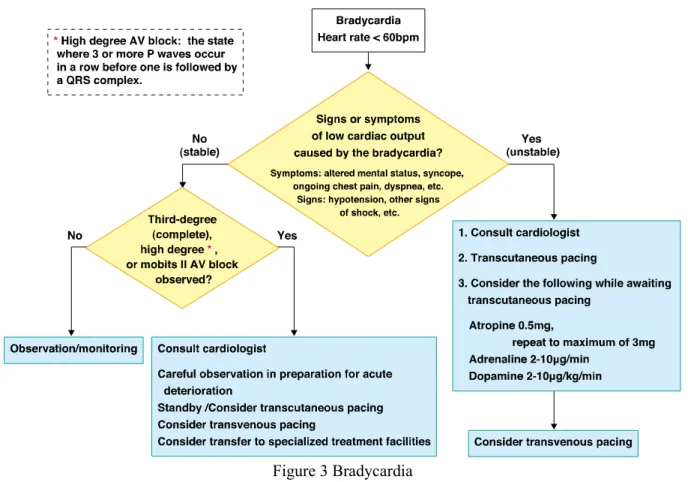
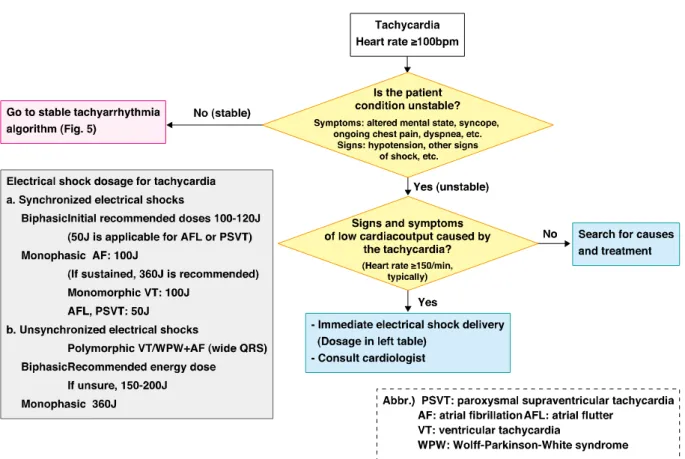
ALS; Advanced Life Support
■ALS Task Force Chairmen
Mayuki Aibiki, Tetsuya Sakamoto, Ken Nagao, Shunichi Funazaki
■ALS Task Force Members
Yasushi Asari, Ken Arima, Keiichi Ikegami, Takanori Ikeda, Shoichi Ohta,
Shinji Ogura, Yasuyuki Kakihana, Yoshihiro Kinoshita, Yasuhiro Kuroda,
Chokoh Genka, Kenji Koshimizu, Hironori Saito, Tomoyuki Sato, Nobuaki Shime,
Tatsuya Sugino, Masayuki Suzukawa, Shuichi Suzuki, Hiroshi Takahashi,
Hirokazu Taguchi, Masaomi Chinushi, Masao Nagayama, Sho Nachi, Shinichi Niwano,
Mineji Hayakawa, Hoei Hayashi, Nobutaka Hirai, Atsushi Hiraide, Shingo Hori,
Hisashi Matsumoto, Toshihiko Mayumi, Hideo Mitamura, Naoto Morimura
■Editorial Board
Kunio Ohta, Tetsuya Sakamoto, Naoki Shimizu, Hiroshi Nonogi, Tetsuo Hatanaka
■Co-Chairmen
Kazuo Okada, Seishiro Marukawa
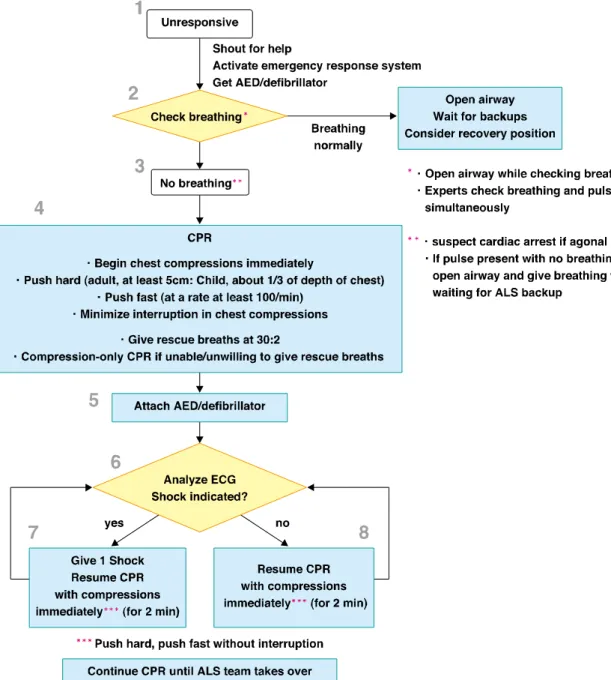
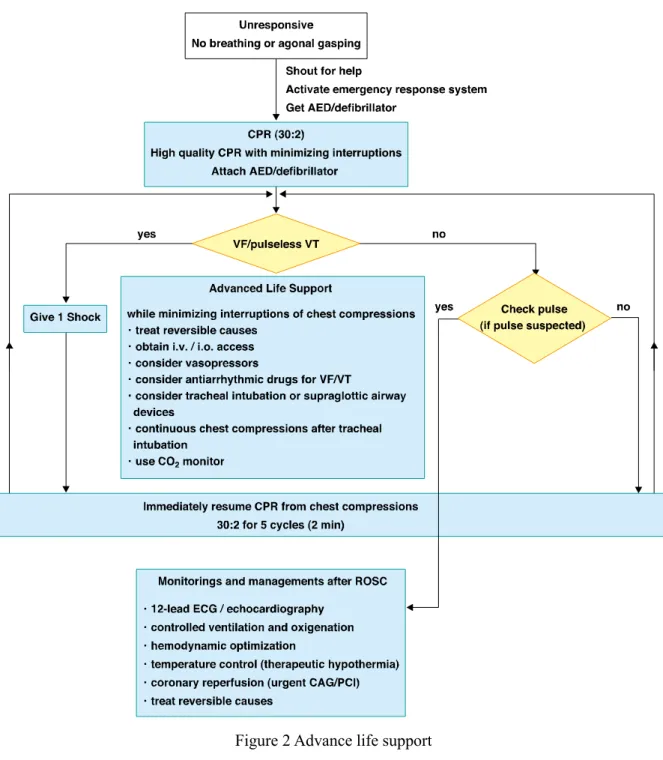
1 Cardiac arrest algorithm
When a lay rescuer gives CPR, they should follow the Basic Life Support (BLS) algorithm. But
healthcare providers who would treat a cardiac arrest patient in hospital or as their duty are
recommended to follow the BLS algorithm for healthcare providers (Figure.1) as a preface of
Advanced Life Support (ALS) algorithm (Figure.2). These algorithms are ideal when rescuer can use
the devices and drugs if needed. ALS algorithm includes the managements during cardiac arrest and
after return of spontaneous circulation.
2 Airway and ventilation
■
1 Basic Airway Devices
1. Oropharyngeal and Nasopharyngeal Airways
Despite frequent successful use of nasopharyngeal and oropharyngeal airways in the management
of non-arrest patients, there are no published data on the use of these airway adjuncts during CPR in
humans. When bag-mask ventilation was undertaken with an oral airway and compared with no oral
airway, one study in anaesthetized patients demonstrated higher tidal volumes (LOE 5
1).
In one report, insertion of a nasopharyngeal airway caused some airway bleeding in 30% of cases
(LOE 5
2). One study of nasopharyngeal airways in anesthetized patients showed that nurses inserting
nasopharyngeal airways were no more likely than anesthesiologists to cause nasopharyngeal trauma
(LOE 5
3). One study showed that the traditional methods of sizing a nasopharyngeal airway
(measurement against the patient’s little finger or anterior nares) do not correlate with the airway
anatomy and are unreliable (LOE 5
4). Two case reports reported inadvertent intracranial placement of
a nasopharyngeal airway in patients with basal skull fractures (LOE 5
5, 6).
Oro- and nasopharyngeal airways have long been used in cardiac arrest, despite never being studied
in this clinical context. It is reasonable to continue to use oro and naso-pharyngeal airways when
performing bag-mask ventilation in cardiac arrest
(Class IIa)
, but in the presence of a known or
suspected basal skull fracture an oral airway is preferred
(Class IIa)
.
2. Cricoid pressure
No studies addressing the use of cricoid pressure during cardiac arrest were identified. All the
identified studies were conducted under anaesthesia or in awake volunteers, cadavers or manikins.
(The descriptions of LOE 5* shown in this chapter are adopted for the studies about non cardiac arrest
patients.) The effect of cricoid presssure on gastric inflation during BVM ventilation was examined by
2 adult (LOE 5*
7, 8) and 2 pediatric studies (LOE 5*
9, 10). All showed less gastric inflation with
cricoid pressure than without, although all of the studies used ventilation volumes higher than those
recommended in cardiac arrest.
Nine studies in non arrest adult subjects undergoing anaesthesia showed that cricoid pressure
impairs ventilation in many patients, increases peak inspiratory pressures and causes complete
obstruction in up to 50% of patients depending on the amount of cricoid pressure (in the range of
recommended effective pressure) that is applied (LOE 5*
7, 8, 11-1617).
One study in anaesthetized patients determined that cricoid pressure prevents correct placement and
ventilation with the laryngeal tube (LT) (LOE 5*
18). Eight studies in anaesthetized adults showed that
when cricoid pressure was used before insertion of a laryngeal mask airway (LMA) there was a
reduced proportion of tubes correctly positioned, an increased incidence of failed insertion, and
impaired ventilation once the LMA had been placed (LOE 5
19-26). No significant impairment to
tracheal intubation was found by four studies performed in anaesthetized patients (LOE 5*
27-30), while
Seven studies (LOE 5*
19, 31-36) did show impairment of intubation with increased time to intubation
and decreased intubation success rates. One clinical study and One cadaver study demonstrated a
worse laryngoscopic view with the application of cricoid pressure (LOE 5*
37, 38).
Cricoid pressure prevented movement of liquid from the oesophagus into the pharynx in 5 cadaver
studies (LOE 5*
39-43) however, in 1 LOE 5* study
44of 4891 obstetric patients undergoing anaesthesia,
no significant difference was observed in regurgitation rates between patients who received cricoid
pressure and those who did not.
The routine use of cricoid pressure to prevent aspiration in cardiac arrest is not recommended
(Class
III)
. If cricoid pressure is used during cardiac arrest, the pressure should be adjusted, relaxed or
released if it impedes ventilation or placement of an advanced airway.
■
2 Advanced Airway Devices
There isinsufficient evidence to support or refute the routine use of specific advanced airway
devices during CPR to improve outcome from cardiac arrest. No data support the routine use of a
particular device for advanced airway placement during cardiac arrest.
1. Timing of Advanced Airway Placement
One registry study evaluated the impact of timing of advanced airway placement during 25,006
in-hospital cardiac arrests (LOE 2
45). In this study, earlier time to invasive airway (< 5 min) was
associated with no improvement in ROSC but improved 24 hour survival (NNT = 48). In an urban
out-of-hospital setting, intubation in <12 minutes was associated with better survival than intubation
≥13 minutes
46. In an out-of-hospital urban and rural setting, patients intubated during resuscitation had
better survival than patients not intubated
47; whereas, in an in-hospital setting, patients requiring
intubation during CPR had worse survival
48. A recent study found that delayed tracheal intubation
bundled with passive oxygen delivery and minimally interrupted chest compressions was associated
with improved neurologically intact survival after out-of-hospital cardiac arrest in patients with adult,
witnessed, ventricular fibrillation/ ventricular tachycardia
49. The independent contribution of the
timing of the advanced airway was not available in the study.
There is inadequate evidence to define the optimal timing of advanced airway placement during
cardiac arrest. In the case of shortage of rescuers, early placement of these devices might help the
rescuers focus on other effective treatment without having to deal with BVM ventilation.
The tracheal tube was once considered the optimal method of managing the airway in CPR.
However, tracheal intubation is a high risk treatment because of esophageal intubation, and requires
adequate training and ongoing skills maintenance for secure and prompt intubation. Because
prolonged attempts of tracheal intubation are harmful if chest compressions are interrupted, it should
be minimized even when performing tracheal intubation (Class I).
2. Supraglottic Airway Device Versus Ventilation With Bag-Mask
A retrospective case series (LOE 4) comparing a laryngeal mask airway with bag-mask ventilation
in cardiac arrest patients demonstrated a regurgitation rate of 3.5% with use of a laryngeal mask
airway and 12.4% with use of bag-mask ventilation
50. When a variety of supraglottic airway devices
were compared with bagmask ventilation in manikin models, six studies showed improved ventilation
and a decrease in gastric inflation (LOE 5
51-56). One pseudorandomized and one nonrandomized
clinical trial (LOE 2) found no difference in arterial blood gas values or survival rates when a variety
of supraglottic airway devices were compared to bagmask ventilation
57, 58. Three studies performed in
manikin cardiac arrest models (LOE 5
59-61) found that compared with a bag-mask, use of a single-use,
disposable laryngeal tube to provide ventilation may decrease no-flow times. Holding the mask to the
victim's face with both hands can ensure a better mask seal during bag-mask ventilation(LOE 5
62, 63).
A supraglottic airway device may be considered by healthcare professionals trained in its use as an
alternative to bag-mask ventilation during cardiopulmonary resuscitation
(Class IIb)
. When two or
more experienced rescuers preform CPR, ventilation with bag-mask is reasonable (Class IIa). It may
be beneficial that one rescuer holds the mask with both hands to open the airway and maintain a tight
mask-to-face seal while another rescuer compresses the ventilation bag (Class IIa).
Knowledge Gaps
Further data are needed on the adequacy of ventilation with the various supraglottic airway
devices if chest compressions are not interrupted and comparison of the various supraglottic airway
devices with bag-mask ventilation and with each other when used clinically by inexperienced and by
experienced providers.
3. Tracheal Intubation Versus Supraglottic Airway Device
Nine studies compared a variety of supraglottic airway devices with the tracheal tube during cardiac
arrest (LOE 1
64, LOE 2
65-72) and a further six studies compared a variety of supraglottic airway devices
with the tracheal tube in patients undergoing anaesthesia (LOE 5
73-78). Overall in these studies the
supraglottic airway device performed as well as, or better than, the tracheal tube with respect to
successful insertion and/or time to tube insertion or to ventilation. One study retrospectively compared
outcomes in cardiac arrest patients treated with esophageal-trachealcombitube or tracheal tube and
found no difference in ROSC, survival to admission or survival to discharge (LOE 2
71). One study
compared survival in cardiac arrests managed with laryngeal mask airway with an historical control
group of cardiac arrests managed with tracheal tube and found that ROSC was significantly higher in
the study period (61% vs 36%) (LOE 3
72).
Nine studies documented that when a supraglottic airway device is used as a rescue airway after
failed tracheal intubation, most patients can be ventilated successfully with the supraglottic airway
device (LOE 2
65, 66, 70, LOE 3
79-82, LOE 5
74, 83)
Two studies performed while wearing anti-chemical protective clothing, one randomized crossover
trial on anaesthetized patients and a second pseudorandomized study on manikins, found increased
time to tracheal tube insertion but not to laryngeal mask airway insertion (LOE 5
75, 84).
Three manikin studies comparing a supraglottic airway device with the tracheal tube during ongoing
chest compressions demonstrated decreased time to intubation with the supraglottic airway device as
well as reduced no flow time (LOE 5
85-87). One non-randomized manikin study found that chest
compressions caused only a minor increase in time to tracheal intubation but not to supraglottic airway
device insertion (LOE 5
88).
Healthcare professionals trained to use supraglottic airway devices may consider their use for
airway management during cardiac arrest and as a backup or rescue airway in a difficult or failed
tracheal intubation
(Class IIb)
. These devices may be used as a backup for a difficult or failed tracheal
intubation (Class IIb). Among supraglottic airway devices, there is sufficient evidence to support only
for Combitube or LMA as the substitute of tracheal intubation. Although the laryngeal tube is widely
used in Japan during CPR, there is insufficient evidence to show its benefit.
Knowledge Gaps
The adequacy of ventilation with supraglottic airway devices during uninterrupted chest
compressions is unknown. The performance of the various supraglottic airway devices should be
compared with each other and with the tracheal tube when used in cardiac arrest. Use of the
supraglottic airway devices by providers of differing experience should also be studied.
■
3 Confirming tracheal tube Placement
1. Exhaled carbon dioxide detection and esophageal detection devices
Two studies of waveform capnography (LOE 2) to verify tracheal tube position in victims of cardiac
arrest after intubation demonstrated 100% sensitivity and 100% specificity in identifying correct
tracheal tube placement
89, 90. Grmec reported that the capnography detected 4 esophageal intubations
of 246 cardiac arrests
89. Silvestri demonstrated that the rate of unrecognized misplaced intubations in
the group with continuous ETCO2 monitoring was zero, and the rate in the group without the
monitoring was 23.3%, but this study included non-cardiac arrest patients and did not show the
accuracy for cardiac arrest patients
90.
Three studies (LOE 1
91-93) with a cumulative total of 194 tracheal and 22 esophageal tube
placements demonstrated an overall 64% sensitivity and 100% specificity in identifying correct
tracheal tube placement when using the same model capnometer (no waveform capnography) on
prehospital cardiac arrest victims. The sensitivity may have been adversely affected by the prolonged
resuscitation times and very prolonged transport times of many of the cardiac arrest victims studied.
Intubation was performed after arrival at hospital and time to intubation averaged more than 30
minutes.
Studies of colorimetric ETCO2 detectors, (LOE 2
94, 95, LOE 4
96-98, LOE 5
99, 100), the syringe
aspiration esophageal detector device (LOE 1
92, LOE 4
101) the self-inflating bulb esophageal detector
show that the accuracy of these devices is similar to the accuracy of clinical assessment (not uniformly
defined across all studies) for confirming the tracheal position of a tracheal tube in victims of cardiac
arrest.
Waveform capnography is recommended to confirm and continuously monitor the position of a
tracheal tube in victims of cardiac arrest and it should be used in addition to clinical assessment
(auscultation and direct visualization is suggested)
(Class I)
.
If waveform capnography is not available, a non-waveform carbon dioxide detector or esophageal
detector device in addition to clinical assessment (auscultation and direct visualization is suggested) is
an alternative
(Class IIa)
.
Knowledge Gaps
If a waveform capnography shows zero ETCO2, the duration between cardiac arrest and
measurement should be considered.
2. Thoracic Impedance
Two studies in adults (LOE 5
103, 104) and one study in children (LOE 5
105) in patients undergoing
anaesthesia demonstrated high sensitivity (0.975-1.0) and specificity (0.925-1.0) of thoracic
impedance in diagnosing tracheal and esophageal intubations. One non-randomized trial in
immediately post-mortem patients (LOE 2
106) demonstrated smaller changes in thoracic impedance
with esophageal ventilations than with tracheal ventilations. One study (LOE 2
107) tested
impedance-based ventilation recognition during cardiac arrest with ongoing compressions and was
able to detect 90.4% of ventilations with a 95.5% positive predictive value. Two case reports
comprising a total of 6 cardiac arrest patients with ongoing CPR (LOE 3
108, LOE 4
109) demonstrated
disappearance of ventilation-induced changes in thoracic impedance after esophageal intubation.
The evidence evaluating the use of thoracic impedance in diagnosing adequacy of ventilation is
scant. Supportive evidence from one animal study (LOE 5
110) demonstrated that the intensity of the
thoracic impedance signal was proportional to the observed tidal volumes. An exploratory study
conducted in human cardiac arrest patients (LOE 2
111) demonstrated a strong correlation between
thoracic impedance changes and tidal volume changes in the absence of chest compressions, but large
variations in measured impedance coefficients (Ω/kg/ml) were observed.
Thoracic impedance may be used as an adjunctive measure to diagnose tracheal tube placement in
cardiac arrest patients; however, treatment decisions pertaining to accuracy of airway placement
should not be based solely upon thoracic impedance measurements until further study has confirmed
its utility and accuracy in this population. Thoracic impedance has not been clinically used as a
measure to diagnose tracheal tube placement in Japan.
Knowledge Gaps
placement of a tracheal tube and adequacy of ventilation during cardiopulmonary resuscitation.
■4 Oxygen
1. Supplemental oxygen: 100% versus titration
There were no adult (>8 years of age) human studies that addressed directly whether titrated oxygen
compared with 100% oxygen during cardiopulmonary resuscitation affects outcome. Two animal
studies (LOE 5
112, 113) using a fibrillatory model of cardiac arrest suggested that use of 100% oxygen
during CPR and for 15-60 minutes after return of spontaneous circulation results in worse neurological
outcomes compared with normoxic (21% oxygen, room air) resuscitation, whereas one animal study
(LOE 5
114) using an asphyxial model documented that ventilation with either 100% oxygen or 21%
oxygen during resuscitation did not affect outcome.
There is insufficient evidence to support or refute the use of a titrated oxygen concentration or
constant 21% oxygen (room air) when compared with 100% oxygen during adult cardiac arrest. In the
absence of any other data there is no reason to change the current treatment algorithm, which includes
use of 100% oxygen during adult cardiac arrest.
Knowledge Gaps
Prospective clinical trials will be necessary to explore constant (including room air) versus titrated
oxygen resuscitation approaches during human adult cardiac arrest.
2. Passive oxygen versus positive pressure oxygen during CPR
Two studies (LOE 1
115, 116) involving ALS providers in- and out-of-hospital settings, and two animal
studies (LOE 5
117, 118) suggested that passive oxygen delivery through a Boussignac tube at a flow of
15 L/min associated with continuous chest compressions (with or without active
compression-decompression CPR) generated equal or improved gas exchange and hemodynamics, but
without improved outcome (ROSC, hospital discharge survival or neurological outcome), when
compared with a standard tracheal tube and positive pressure ventilation.
Four animal models (LOE 5) utilising different devices or approaches (nasal cannula in the
oropharynx
119, pharyngeal-tracheal lumen airway
120and oxygen catheter tip at the level of the carina
121, 122confirmed an equivalent or better gas exchange and/or hemodynamics, with continuous oxygen
inflation compared with standard ventilation.
One swine model (LOE 5
123) demonstrated equivalent gas exchange and 48-hour survival following
4 minutes VF arrest with passive oxygen supplied via tracheal tube compared with oxygen supplied by
positive pressure ventilation.
Two studies (LOE 3
124, 125) of a simplified minimally interrupted cardiac resuscitation (MICR)
protocol (concept of cardiocerebral resuscitation), that included passive oxygen delivery via a standard
oxygen mask with non-rebreather bag and continuous chest compressions, showed an improvement in
neurologically intact survival in adults with bystander-witnessed cardiac arrest and an initially
shockable rhythm when controlled with historical controls using standard CPR. Another study (LOE
3
49) demonstrated better survival with passive oxygen delivery than with bag-mask ventilation.
In the three human studies which demonstrated possibility of better neurological outcome, the
effective component of the treatment bundle is unknown, because the passive oxygen delivery with
continuous chest compressions was compared with the oxygen delivery via bag-mask-ventilation with
interruption of chest compressions.
In the studies with a Boussignac tube and some of animal studies, the efficacy of MICR may be
reduced, because the passive oxygen delivery was compared with the oxygen delivery through
tracheal tube with continuous chest compressions. Arterial blood gas values and circulatory status
were certainly improved but there was no difference of the outcome. In addition, these improvements
may result from a specific structure of a Boussignac tube itself.
There is insufficient evidence to support or refute the use of passive oxygen delivery during CPR to
improve outcomes (ROSC, hospital discharge rate and improve neurological survival) when compared
with oxygen delivery by positive pressure ventilation.
Knowledge Gaps
High-quality controlled clinical trials are required to evaluate the relationship between continuous
positive airway pressure and important clinical outcomes and comparison with passive oxygen
delivery during cardiopulmonary resuscitation.
■5 Strategies for Ventilation
1. Monitoring ventilatory parameters during CPR
There are no studies that directly addressed the relationship between monitoring of minute
ventilation and peak pressure during cardiopulmonary resuscitation and changes in outcome (other
than respiratory rate). One animal study (LOE 5
126) showed that hyperventilation was associated with
decreased coronary perfusion pressure and decreased survival. The study also demonstrated that
hyperventilation during cardiac arrest is common. One study (LOE 3
127) demonstrated that real-time
feedback during CPR compared with no feedback resulted in a delivered ventilation rate closer to that
indicated by current guidelines.
One animal study (LOE 5
128) showed that during CPR applying PEEP up to 10 cm H2O, in addition
to intermittent positive pressure ventilation (IPPV), may improve oxygenation compared with IPPV
alone. Another study demonstrated that continuous positive airway pressure with pressure support
ventilation (CPAP PSV) during resuscitation also may improve oxygenation and outcome (LOE 5
129).
There is insufficient evidence to support or refute the use of peak pressure and minute ventilation
monitoring to improve outcome from cardiac arrest. There is indirect evidence that monitoring the
respiratory rate with real time feedback is effective in avoiding hyperventilation and achieving
ventilation rates closer to recommended values, but there is no evidence that ROSC or survival is
improved.
Knowledge Gaps
Clinical trials evaluating ventilation monitoring during cardiac arrest resuscitation for all outcomes
are needed. There is limited information on the accuracy of ventilation rate monitoring in the new
defibrillator software that evaluates CPR process measures. This initial work would be helpful to
enable controlled trials to determine the optimal ventilation rate associated with survival.
2. Monitoring physiological parameters during
None of the 17 studies that were reviewed evaluated physiological feedback (ETCO2, coronary
perfusion pressure, superior vena caval central venous oxygen saturation, bispectral index monitoring)
specifically as a tool to guide resuscitation intervention in real time to improve outcomes from cardiac
arrest. Eleven studies showed that physiologic monitoring values (end tidal CO2, coronary perfusion
pressure, venous oxygen saturation) increased when return of spontaneous circulation was achieved
(LOE 4
94, 130-139) and may be an indication of ROSC before it can be seen in vital signs
140.
Five of the studies found that ETCO2 was accurate for predicting patients who could not be
resuscitated; some giving a time frame for that prediction of 20 minutes (LOE 4
95, 133, 137, 141, 142).
However, two studies documented patients who did not meet the ETCO2 range but who survived
(LOE 4
133, 143). Multiple studies by one group (LOE 4
134-136) showed that when ETCO2 exceeded 10
higher than 10 mmHg
135. Similarly, two studies showed that if the ETCO2 did not exceed 10 mmHg,
survival was zero (LOE 4
141, 142).
One study showed no correlation between BIS values during cardiopulmonary resuscitation and
ROSC and survival (LOE 4
144).
Continuous capnography or capnometry monitoring may be beneficial by providing feedback on the
effectiveness of chest compressions
(Class IIb)
. The prognostic value of end tidal CO2 is further
reviewed in the section on prognostication.
Knowledge Gaps
Animal and human studies evaluating the effects of modification of resuscitation based on
physiologic feedback would be helpful.
■6 Automatic Transport Ventilators
1. Automatic ventilators vs manual ventilation during CPR
One pseudo-randomized study suggests that use of an automatic transport ventilator with intubated
patients may enable the EMS team to perform more tasks while subjectively providing similar
ventilation to that of a bag-valve device (LOE 2
145). One study suggests that use of an automatic
transport ventilator with intubated patients provides similar oxygenation and ventilation as use of a
bag-valve device with no difference in survival (LOE 2
146).
There is insufficient evidence to support or refute the use of an automatic transport ventilator over
manual ventilation during resuscitation of the intubated cardiac arrest victim.
Knowledge Gaps
Studies evaluating adequacy of oxygenation, difference between volume and pressure cycled
ventilation, survival and complication rates when comparing manual ventilation versus automatic
transport ventilator in cardiopulmonary resuscitation with an advanced airway in place are needed to
advance the science in this area.
2 Supporting the circulation during cardiac arrest
Questions related to circulatory support during cardiac arrest that were discussed during the 2010
Consensus Conference are categorized as (1) timing of drug delivery, (2) vasopressors during cardiac
arrest, (3) other drugs during cardiac arrest (4) intravenous fluids and (5) extracorporeal support. It is
recognised that the vast majority of studies assessing the effects of drugs on survival have not been
able to control for the quality of cardiopulmonary resuscitation. Furthermore, most drug evaluations to
date have been conducted before recent advances in post-cardiac arrest care including therapeutic
hypothermia. Since most drug trials have, at most, demonstrated only short-term outcome advantage it
may be important to evaluate long-term outcome when these drugs are combined with optimized
post-cardiac arrest care. One study (LOE 1
147) compared the use of all drugs (adrenaline, amiodarone,
atropine, vasopressin), without isolating the effect of each individual drug alone, with placebo in adult
out-of-hospital cardiopulmonary resuscitation and demonstrated improvement in return of spontaneous
circulation and survival to hospital and intensive care unit admission, but no difference in survival to
discharge or neurologic outcomes at discharge and at 1-year follow-up; however, this study 17 was not
powered to detect clinically meaningful differences in long-term outcome. Similarly one study (LOE
3
148) with a before and after design, compared various outcomes after out-of-hospital cardiac arrest,
and was not able to demonstrate any improvements after introduction of advanced life support
(adrenaline, atropine, lidocaine). Neither of these studies was able to isolate outcomes specifically
related to individual drug administration.
■1 Timing of drug delivery
There are no studies that addressed the order of drug administration. Subgroup analyses from two
clinical studies reported decreased survival for every minute drug delivery was delayed, measured
from call received at EMS dispatch (LOE 4
149, 150). This finding was likely to be biased by a
concomitant delay in onset of ALS. In one study the interval from the first shock to the injection of the
drug was a significant predictor of survival (LOE 4
149). One animal study reported lower coronary
perfusion pressure when delivery of vasopressor was delayed (LOE 5
151). Time to drug administration
was a predictor of return of spontaneous circulation in a retrospective analysis of swine cardiac arrest
(LOE 5
152).
There is inadequate evidence to define the optimal timing or order for drug administration. An
incomplete review of animal studies suggests that timing of vasopressor administration may affect
circulation and further investigations are important to help guide the timing of drug administration.
Knowledge Gaps
placebo-controlled trials to determine the efficacy of some drugs in cardiopulmonary resuscitation.
The timing of drug administration and route of delivery are important data points to be captured in
future studies. Animal models and clinical trials addressing efficacy can also be designed to provide
substantial information on how timing and delivery can impact on outcome. In future, inclusion of 18
studies on pharmacokinetics combined with dose response, as well as studies addressing the impact of
timing of defibrillation on circulation and drug effect might better address the question of optimal
timing of drug delivery.
■2 Vasopressors
One study retrospectively compared adrenaline with no adrenaline for sustained VF and
PEA/asystole and found improved ROSC with adrenaline for both rhythms but no difference in
survival (LOE 2
153). In a large retrospective registry-based study from Sweden adrenaline was an
independent predictor of poor outcome (LOE 2
154)
Three studies (LOE 1
155-157) and a meta-analysis (LOE 1
158) demonstrated no difference in outcomes
(ROSC, survival to discharge, or neurologic outcome) with vasopressin when compared with
adrenaline as a first line vasopressor in cardiac arrest. Also one study (J-LOE 1
159) that compared
outcomes in out-of-hospital cardiac arrest patients treated with vasopressin or adrenaline, shows no
significant difference in ROSC, 24 hour survival or survival to discharge.
Two studies (LOE 2
160, 161)
demonstrated no difference in outcomes (ROSC, survival to discharge, or neurologic) comparing
adrenaline in combination with vasopressin with adrenaline alone in cardiac arrest. No study
demonstrated a survival benefit with high-dose versus standard-dose adrenaline in cardiac arrest.
Two studies (LOE 1
162, 163) reported improvement in ROSC using high-dose adrenaline. One
meta-analysis (LOE 1
164) 204 of pooled data 19 from 5 studies
162, 163, 165-167supported improvement in
ROSC with high-dose adrenaline but no change in survival outcomes.
Although there is evidence that vasopressors (adrenaline or vasopressin) may improve return of
spontaneous circulation and short-term survival, there is insufficient evidence to suggest that
vasopressors improve survival to discharge and neurologic outcome. There is insufficient evidence to
suggest the optimal dosage of any vasopressor in the treatment of adult cardiac arrest. Given the
observed benefit in short-term outcomes, the use of adrenaline or vasopressin may be considered in
adult cardiac arrest
(Class IIb)
.
Knowledge Gaps
Placebo-controlled trials to evaluate the use of any vasopressor in adult and paediatric cardiac arrest
are needed.
1. Atropine
Three studies (LOE 4
168-170) documented improvement in survival when atropine was given to
patients in asystole; Two of them are in combination with adrenaline
168, 169and the rest one was the use
of atropine for asystole
following induction with succinylcholine and fentanyl
170.
One study
documented improvement in ROSC (14% versus 0%) when atropine was given to adults in asystolic
out-of-hospital cardiac arrest in combination with adrenaline and sodium bicarbonate, but none
survived to discharge (LOE 3
171).
Three studies suggested that the use of atropine for treatment of cardiac arrest was not associated
with any change in survival (LOE 2
172, LOE 5
173, 174). Four human studies suggested that the use of
atropine was associated with poor survival (LOE 4
48, 175-177).
One study about out-of-hospital cardiac arrest in Japan reavealed that atropine increased ROSC and
survival rate to hospital admission in patients with asystole, however, it decreased 30-day survival rate
in patients with PEA (J-LOE 2
178).
Routine use of atropine for asystole and PEA is not recommended (Class III). Atropine may be
considered when adrenaline is not effective in asystole (Class IIb).
Knowledge Gaps
Randomised placebo-controlled trials are required to define the role of atropine in PEA and
asystolic cardiac arrest.
2. Antiarrhythmic drug
There was little evidence to suggest the advantages in outcomes (e.g., ROSC, survival-to-discharge)
with any antiarrhythmic drug (lidocaine, procainamide, amiodarone, bretylium ) used during
resuscitation from out-of-hospital or in-hospital cardiac arrest.
1) Amiodarone
Two randomised trials for shock refractory or recurrent VT/VF had been performed. One RCT
150compared 300mg amiodarone with placebo and the other
149compared amiodarone (initially 5mg/kg,
followed by 2.5mg/kg as the second dose ) with lidocaine (initially 1.5mg/kg, followed by 1.5mg/kg
as the second dose) demonstrated the benefit of amiodarone on survival to hospital admission,
however, it showed no significant difference about survival to hospital discharge.
2) Nifekalant
One randomised trial (J-LOE 2
179) for out-of-hospital cardiac arrest due to shock refractory or
recurrent VT/VF was performed. The trial compared the outcome of the patients who administered
0.3mg/kg nifekalant intravenously with 1.5mg/kg lidocaine intravenously. Nifekalant demonstrated
the benefit on survival to hospital admission and 24-hour survival rate, while there was no significant
difference about the neurological outcome on discharge. Also in the other two studies (J-LOE 2
180,
J-LOE 3
181), nifekalant improved ROSC and survival to admission. Combined administration of
lidocaine and nifekalant revealed advantage in 24-hour survival rate compared to only lidocaine,
however, threr was no significant difference about neurological outcome at 30-day of admission
(J-LOE 5
182).
3) Lidocaine
Lidocaine (50mg intravenously, up to 4 times) improved survival to admission for out-of-hospital
VF in one study (LOE 4
183).
4) Procainamide
A retrospective review found procainamide was associated with increased survival to 1-h postarrest
in patients with VF in hospital (LOE 4
174).
5) Magnesium
Four studies comparing magnesium with placebo showed no advantages in ROSC and survival rate
(LOE 1
184-187).
Amiodarone may be considered for those who have refractory VT/VF, defined as VT/VF not
terminated by defibrillation, or VT/VF recurrence in out-of-hospital cardiac arrest or in-hospital
cardiac arrest
(Class IIb)
.
Nifekalant may be considered for those who have electrical shock-refractory
VT/VF, or VT/VF recurrence out-of-hospital cardiac arrest or in-hospital cardiac arrest
(Class IIb)
.
Lidocaine may be considered when amiodarone or nifekalant is not available, however the efficacy is
inferior
(Class IIb)
.
Knowledge Gaps
All the studies to date were done with stacked shocks; it may be helpful to re-evaluate the efficacy
of amiodarone in the setting of a single-shock defibrillation strategy.
3. Calcium
Three randomised control trials (LOE 1
188-190)
and three cohort studies (LOE 2
174, 177, 191) and 1 case
series (LOE 4
192) demonstrated no effect on survival when calcium was given to in-hospital or outof-
hospital cardiac arrest patients. Two adult studies suggest that calcium administration during cardiac
arrest was associated with decreased survival to hospital discharge (LOE 2
177, 193).
In VF, calcium did not restore a spontaneous circulation (LOE 4
192). In one study of PEA arrests,
calcium demonstrated improved ROSC, without reporting long-term survival, but only in a subgroup
of patients with wide QRS (LOE 1
189).
Another study showed improved ROSC and survival to hospital
arrival; however, there was no significant effect on survival (LOE 4
192).
Another study showed
decreased rate of ROSC in the calcium group (LOE 2
193). In two studies of asystole calcium
190
). One study showed reduced ROSC in the calcium group (LOE 2
193).
Routine administration of calcium for treatment of in-hospital and out-of-hospital cardiac arrest is
not recommended
(Class III)
.
Knowledge Gaps
More data are needed on the administration of calcium for specific circumstances, such as
hyperkalaemia, documented hypocalcaemia, hypermagnesaemia, calcium channel blocker overdose,
or wide QRS complexes.
4. Steroid and hormonal therapy
There were no human or animal studies that directly addressed the use of the estrogen, progesterone,
insulin, or insulin-like growth factor in cardiac arrest. Early observational studies of the use
corticosteroids during cardiac arrest suggested possible benefit (LOE 4
194, 195).
One complex
randomised pilot study (LOE 1
196) and one nonrandomised human study (LOE 2
197) suggested benefit
with corticosteroids, whereas one small, older, human prehospital controlled clinical trial suggested no
benefit (LOE 1
198). One animal study of corticosteroids suggested possible benefit (LOE 5
199).
There is insufficient evidence to support or refute the use of corticosteroids alone or in combination
with other drugs during cardiac arrest.
Knowledge Gaps
High-quality clinical trials are required to determine if there is a role in cardiopulmonary
resuscitation for hormonal therapy with or without vasopressor while controlling for in-hospital use of
hormonal therapy postarrest.
5. Sodium bicarbonate
Two studies evaluated buffering agents during CPR (LOE 1
200, 201).
Both had limitations but showed
no improvement in outcome. Two retrospective cohort studies also showed no benefit in the use of
buffering agents during CPR (LOE 2
202, 203). Two studies demonstrated increased ROSC, hospital
admission, and survival at hospital discharge with bicarbonate use (LOE 2
204, LOE 3
205). Four cohort
studies reported that bicarbonate use was associated with poor short- and long-term outcome (LOE
2
177, 206-208).
Routine administration of sodium bicarbonate for treatment of in-hospital and out-of-hospital
cardiac arrest is not recommended
(Class III)
. For patients with cardiac arrest due to poisoning
tricyclic antidepressants may consider the administration of sodium bicarbonate
(Class IIb)
.
Knowledge Gaps
There are large differences in direction and effect between results from the laboratory and those
derived from clinical trials; therefore, well-designed trials, using bicarbonate or non-CO
2generating
buffers, are necessary to clarify the role of buffers in the treatment of short or prolonged cardiac arrest.
6. Fibrinolytics
Two studies failed to show any improvement in short- or long-term outcomes with the use of
fibrinolytics (LOE 1
209, 210). One study showed an increased risk of intracranial bleeding associated
with the routine use of fibrinolytics during cardiac arrest (LOE 1
210). Seven studies showed benefit
from fibrinolytic therapy in the treatment of victims of cardiopulmonary arrest unresponsive to
standard therapy; however, those studies had significant limitations (LOE 1
211, LOE 2
212-215, LOE 3
216,217
).
Routine administration of fibrinolytics for the treatment of in-hospital and out-of-hospital cardiac
arrest is not recommended
(Class III)
. Administration of fibrinolytics may be considered for cardiac
arrest caused by pulmonary embolus (Class IIb). (Pulmonary embolus is described in the section of
Chapter 2 [7] Cardiac arrest in special situations.)
Knowledge Gaps
The potential role of adjuvant antithrombotic and antiplatelet drugs needs exploration.
■
4 Intravenous fluids during cardiac arrest
Two animal studies reported that normothermic fluid infusion during CPR causes a decrease in
coronary perfusion pressure (LOE 5
218, 219), and another animal study showed that the coronary
perfusion pressure rise with adrenaline during CPR is not improved with the addition of a fluid
infusion (LOE 5
220). Most animal studies of fluid infusion during CPR lack a control group that
receives no fluids; without a control group, it is difficult to assess of benefit or harm from fluid
therapy (LOE 5
221-232).
1.Hypertonic Fluid
One small randomized clinical trial (RCT) in adults found no significant ROSC or survival benefit
with hypertonic intravenous fluid infusion when compared to isotonic intravenous fluid infusion
during CPR (LOE 5
221). One animal study showed that hypertonic saline improves cerebral blood flow
during CPR (LOE 5
227). Two animal studies found neither benefit nor harm with infusion of
2. Chilled fluid vs room-temperature fluid
Two adult studies (LOE 5
223, 226) and 2 animal studies (LOE 5
230, 231) showed no improvement in
ROSC when cold intravenous fluids (compared with room temperature intravenous fluids) were
infused during CPR. One of the reported animal studies showed that the infusion of cold fluids during
CPR caused a decrease in coronary perfusion pressure when compared to no fluids (LOE 5
233).
There is insufficient evidence to recommend for or against the routine infusion of intravenous fluids
during cardiac arrest resuscitation.
■
5 Extracorporeal circulatory support during cardiac arrest
All the studies on this topic were small and there was a lack of consistency in the management
before and after extracorporeal-CPR (ECPR). Three studies documented improvement in outcome in
patients 70 years old, without significant comorbid conditions and with potential reversible/correctable
conditions, when using ECMO(Extracorporeal Membrane Oxigenation)/PCPS(Percutaneous
Cardiopulmonary Support) compared with traditional CPR (LOE 2
234, 235, LOE 3
236). Two prospective
studies demonstrated that 12-52% of out-of-hospital cardiac arrest patients showed improvements in
neurological outcomes. These patients had been unresponsive with ordinary CPR and treated with a
combination of circulatory support using PCPS and therapeutic hypothermia at 34°CC (J-LOE 4
237, 238).
One study demonstrated a 3-month survival of 22.7% for ECPR during out-of-hospital cardiac arrest
unresponsive to advance life support after 20 minutes, with 10.6% having a Cerebral Performance
Category (CPC) of 1 (LOE 2
235). However, the ECPR group was more likely to have had a witnessed
arrest, received bystander CPR, and be younger (with a mean age of 52 years, compared with 70 years
in the standard treatment group).
ECPR (mainly PCPS) may be considered if the duration of circulatory arrest is relatively short and
the cause of cardiac arrest (accidental hypothermia, drug intoxication or STEMI) is expected to treat
(Class IIb).
Knowledge Gaps
Future research should define the criteria for ECPR after out-of-hospital cardiac arrest and the
criteria for ECPR as a bridge to left ventricular assist device (LVAD) or transplant. In addition, the role
of IABP during CPR needs to be studied.
4 CPR Techniques and Devices
■
1 Introduction
The success of any technique or device depends on the education and training of the rescuers and as
well as on resources (including personnel). In the hands of some groups, novel techniques and
adjuncts may produce better short- or long-term outcome than standard CPR. However, a device or
technique that provides good quality CPR when used by a highly trained team or in a test setting may
show poor quality and create frequent interruptions in CPR when used in an uncontrolled clinical
setting
239.
While no circulatory adjunct is currently recommended instead of manual CPR for routine use,
some circulatory adjuncts are being routinely used in both out-of-hospital and in-hospital resuscitation.
If a circulatory adjunct is used, rescuers should be well-trained and a program of continuous
surveillance should be in place to ensure that use of the adjunct does not adversely affect survival.
The following CPR techniques and devices were reviewed during C2010. It should be noted that
interposed abdominal compression has not been studied on humans since 1994 and active
compression-decompression has not been studied in humans since 2003. Therefore, these techniques
have not been evaluated against the international resuscitation guideline changes of 2000 and 2005
(for interposed abdominal compression) and 2005 (for active compression- decompression).
■
2 Interposed Abdominal Compression CPR (IAC-CPR)
Two randomized controlled trials in in-hospital cardiac arrests, showed improved ROSC and
survival to hospital discharge when interposed abdominal compressions (IAC)-CPR was compared
with standard CPR (LOE 1
240, LOE 2
241). However, there were no differences in neurologically intact
survival.
One randomized controlled trial in out-of-hospital cardiac arrest was unable to show any consistent
benefits when IAC-CPR was compared with standard CPR (LOE 2
242).
Evidence from LOE 3
243, 244and LOE 5
245in-hospital studies suggests better or neutral
246, 247hemodynamics with IAC-CPR compared with standard CPR.
There is insufficient evidence to support or refute the use of IAC-CPR.
■
3 Active Compression-Decompression CPR (ACD-CPR)
Five randomized controlled trials (LOE 1
248-252)
and three controlled trials (LOE 2
253-255)
failed to
show a difference in ROSC or survival with use of ACD-CPR compared with standard CPR.
Six
studies (LOE 2
256-261)
demonstrated improved ROSC or survival to hospital discharge although there
were no statistically significant differences in neurologically intact survival.
A meta-analysis
252of two
detect a significant increase in rates of immediate survival or hospital discharge.
There is insufficient evidence to support or refute the use of ACD-CPR.
■
4 Open-Chest CPR
There are no published randomized controlled trials and very limited data in humans comparing
open chest CPR to standard CPR in cardiac arrest. One retrospective clinical trial (LOE 3
262)
demonstrated ROSC was improved by open chest CPR in OHCA. One case series in victims of OHCA
who had failed standard CPR (LOE 4
263)
reported ROSC in 13 of 33 highly selected patients of whom
two survived to hospital discharge.
Multiple animals studies (LOE 5
264-282)
utilizing a variety of endpoints demonstrated benefit with
open chest CPR.
There is insufficient evidence to support or refute the routine use of open-chest CPR in cardiac
arrest.
■
5 Load Distributing Band CPR (LDB-CPR)
One multicenter randomized control trial in over 1000 adults documented no improvement in 4-
hour survival and significantly worse neurological outcome when LDB-CPR administered by EMS
providers was compared with traditional CPR for primary out-of-hospital cardiac arrest (LOE 1
283).
However, a post-hoc analysis of this study revealed significant heterogeneity between study sites
(LOE 1
284).
In one LOE 3 study
285the use of LDB-CPR was associated with lower odds of 30-day survival (OR
0.4). However, when a smaller (77 patient) subgroup of LDB-CPR treated patients was analyzed
against concurrent controls, increased rate of ROSC was noted.
47Other non-randomized human series (LOE 3
286, 287) have reported increased rates of sustained
ROSCand increased survival to discharge
49following out-of-hospital cardiac arrest (OHCA) and
improved hemodynamics following failed resuscitation from in-hospital cardiac arrest (LOE 4
288).
In a
prospective before-after study (LOE 3
289)
the mean no-flow ratio with manual CPR was 0.28 in the
first 5 minutes of CPR compared to 0.40 with LDB-CPR. However between 5 and 10 minutes,
no-flow time with manual CPR was 0.34 and 0.21 with LDB-CPR.
Evidence from both clinical (LOE 1
283, 284)
and simulation (LOE 5
290)
studies suggest that site-
specific factors may influence resuscitation quality and device efficacy.
A case report documented successful performance of a CT scan while the LDB CPR was used (LOE
4
291).
There are insufficient data to support or refute the routine use of the load-distributing band (LDB)
instead of manual CPR. It may be reasonable to consider LDB to maintain continuous
chest
compression while undergoing CT scan or similar diagnostic studies, when provision of manual CPR
would be difficult
(Class IIb)
.
■
6 Mechanical (Piston) CPR
When a piston CPR device was compared with manual CPR, one randomized controlled trial
documented no improvement in ROSC or survival among adults in cardiac arrest (LOE 1
292).