necessarily represent the decisions or the stated policy of the World Health Organization, the International Labour Organization or the United Nations Environment Programme.
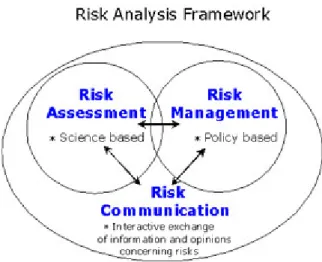
Harmonization Project Document No. 6
PART 1: GUIDANCE DOCUMENT ON CHARACTERIZING AND
COMMUNICATING UNCERTAINTY IN EXPOSURE
ASSESSMENT
This project was conducted within the IPCS project on the Harmonization of Approaches to the Assessment of Risk from Exposure to Chemicals.
Published under the joint sponsorship of the World Health Organization, the International Labour Organization and the United Nations Environment Programme, and produced within the framework of the Inter-Organization Programme for the Sound Management of
of the United Nations Environment Programme (UNEP), the International Labour Organization (ILO) and the World Health Organization (WHO). The overall objectives of the IPCS are to establish the scientific basis for assessment of the risk to human health and the environment from exposure to chemicals, through international peer review processes, as a prerequisite for the promotion of chemical safety, and to provide technical assistance in strengthening national capacities for the sound management of chemicals.
The Inter-Organization Programme for the Sound Management of Chemicals (IOMC) was established in 1995 by UNEP, ILO, the Food and Agriculture Organization of the United Nations, WHO, the United Nations Industrial Development Organization, the United Nations Institute for Training and Research and the Organisation for Economic Co-operation and Development (Participating Organizations), following recommendations made by the 1992 UN Conference on Environment and Development to strengthen cooperation and increase coordination in the field of chemical safety. The purpose of the IOMC is to promote coordination of the policies and activities pursued by the Participating Organizations, jointly or separately, to achieve the sound management of chemicals in relation to human health and the environment.
© World Health Organization 2008
All rights reserved. Publications of the World Health Organization can be obtained from WHO Press, World Health Organization, 20 Avenue Appia, 1211 Geneva 27, Switzerland (tel.: +41 22 791 2476; fax: +41 22 791 4857; e-mail: [email protected]). Requests for permission to reproduce or translate WHO publications — whether for sale or for non-commercial distribution — should be addressed to WHO Press, at the above address (fax: +41 22 791 4806; e-mail: [email protected]).
The designations employed and the presentation of the material in this publication do not imply the expression of any opinion whatsoever on the part of the World Health Organization concerning the legal status of any country, territory, city or area or of its authorities, or concerning the delimitation of its frontiers or boundaries. Dotted lines on maps represent approximate border lines for which there may not yet be full agreement.
The mention of specific companies or of certain manufacturers’ products does not imply that they are endorsed or recommended by the World Health Organization in preference to others of a similar nature that are not mentioned. Errors and omissions excepted, the names of proprietary products are distinguished by initial capital letters.
All reasonable precautions have been taken by the World Health Organization to verify the information contained in this publication. However, the published material is being distributed without warranty of any kind, either express or implied. The responsibility for the interpretation and use of the material lies with the reader. In no event shall the World Health Organization be liable for damages arising from its use.
Part 2 of Harmonization Project Document No. 6, Guidance Document on Data Quality in Chemical Exposure Assessment, is
TABLE OF CONTENTS
FOREWORD ...vii
ACKNOWLEDGEMENTS... viii
MEMBERS OF THE IPCS WORKING GROUP ON UNCERTAINTY IN EXPOSURE ASSESSMENT ...ix
LIST OF ACRONYMS AND ABBREVIATIONS ...xi
EXECUTIVE SUMMARY ...xii
1. INTRODUCTION ...1
1.1 Why uncertainty analysis? ...2
1.2 Consideration of uncertainty in the harmonization of risk assessment methods ...3
1.3 Scope and objectives...3
2. CONTEXT, CONCEPTS AND DEFINITIONS...5
2.1 Historical context and background ...5
2.2 Rationale for characterizing uncertainty in exposure assessment...6
2.2.1 Assessment objectives ...6
2.2.2 Defining the conceptual exposure model...7
2.2.3 Building an exposure model and assessment...8
2.3 Planning for uncertainty analysis in exposure assessment ...9
2.3.1 Balancing the uncertainties of exposure and hazard...10
2.3.2 Variability versus uncertainty...11
2.3.3 Sensitivity analysis...11
3. SOURCES OF UNCERTAINTY ...15
3.1 Approaches and steps in exposure assessment ...15
3.2 Nature of uncertainty sources ...16
3.2.1 Scenario uncertainty...17
3.2.2 Model uncertainty ...18
3.2.3 Parameter uncertainty ...23
4. TIERED APPROACH TO UNCERTAINTY ANALYSIS ...30
4.1 Regulatory background...30
4.2 Determination of the tiered level ...31
4.2.1 Tier 0 (screening) uncertainty analysis ...31
4.2.2 Tier 1 (qualitative) uncertainty analysis ...32
4.2.3 Tier 2 (deterministic) uncertainty analysis ...33
4.2.4 Tier 3 (probabilistic) uncertainty analysis ...33
5. UNCERTAINTY CHARACTERIZATION METHODS, INTERPRETATION AND USE . 38
5.1 Qualitative uncertainty characterization ...38
5.1.1 Rationale and objective...38
5.1.2 Methodology for qualitative uncertainty characterization...39
5.1.3 Conclusion ...46
5.2 Quantitative uncertainty characterization ...46
5.2.1 Intervals and probability bounds...47
5.2.2 Fuzzy methods ...48
5.2.3 Probabilistic methods...49
5.2.4 Sensitivity analysis...58
5.3 Data and resource requirements...60
5.4 Interpretation of results ...61
5.5 Use of uncertainty analysis in evaluation and validation...64
5.6 Summary of uncertainty characterization methods...65
6. COMMUNICATION...67
6.1 Introduction and historical background ...67
6.2 The position of exposure and uncertainty assessment in the risk communication process 69 6.2.1 Uncertainty in exposure assessment as a prognostic technique...69
6.2.2 From scenario definition to uncertainty analysis: communication with the risk managers ...70
6.2.3 Anticipating the demands of the audiences ...73
6.2.4 Requirements for accepted exposure assessment ...74
6.3 Proposals for the presentation/visualization of uncertainty...74
6.3.1 Presentation of numerical results ...75
6.3.2 Communication of quantifieduncertainties...76
6.3.3 Communication of unquantified uncertainties...80
6.4 Avoiding typical conflicts in risk communication...81
6.5 Conclusions...83
7. CONCLUSIONS...84
8. REFERENCES ...85
GLOSSARY OF TERMS...97
ANNEX 1: CASE-STUDY—QUALITATIVE UNCERTAINTY ANALYSIS ...105
A1.1 Introduction...105
A1.2 Objective ...106
A1.3 Sources of uncertainty...107
A1.4 Selected tier... 109
A1.5 Characterization and evaluation of uncertainty ...112
A1.6 Communication...113
A1.6.1 Communication with other scientists...114
A1.6.3 Communication with the public...116
Appendix 1: Background for case-study...117
ANNEX 2: CASE-STUDY—QUANTITATIVE UNCERTAINTY ANALYSIS...119
A2.1 Introduction...119
A2.2 Methods used in the case-study ...119
A2.2.1 Conceptual model: the context, the question and scenario development ...120
A2.2.2 Modelling approach ...121
A2.2.3 Constructing input distributions...121
A2.2.4 Variance propagation methods...122
A2.3 Case-study: PBLx exposure from fish ingestion...123
A2.3.1 Elements of the exposure assessment: context and question ...124
A2.3.2 Scenario definition ...124
A2.3.3 Model selection...124
A2.3.4 Parameter values and data...125
A2.3.5 Worst-case scenario ...128
A2.3.6 Variance propagation ...128
A2.3.7 Variance propagation with uncertainty and variability combined ...129
A2.3.8 Variance propagation with uncertainty and variability separated...134
FOREWORD
Harmonization Project Documents are a family of publications by the World Health Organization (WHO) under the umbrella of the International Programme on Chemical Safety (IPCS) (WHO/ILO/UNEP). Harmonization Project Documents complement the Environmental Health Criteria (EHC) methodology (yellow cover) series of documents as authoritative documents on methods for the risk assessment of chemicals.
The main impetus for the current coordinated international, regional and national efforts on the assessment and management of hazardous chemicals arose from the 1992 United Nations Conference on Environment and Development (UNCED). UNCED Agenda 21, Chapter 19, provides the “blueprint” for the environmentally sound management of toxic chemicals. This commitment by governments was reconfirmed at the 2002 World Summit on Sustainable Development and in 2006 in the Strategic Approach to International Chemicals Management (SAICM). The IPCS project on the Harmonization of Approaches to the Assessment of Risk from Exposure to Chemicals (Harmonization Project) is conducted under Agenda 21, Chapter 19, and contributes to the implementation of SAICM. In particular, the project addresses the SAICM objective on Risk Reduction and the SAICM Global Plan of Action activity to “Develop and use new and harmonized methods for risk assessment”.
The IPCS Harmonization Project goal is to improve chemical risk assessment globally, through the pursuit of common principles and approaches, and, hence, strengthen national and international management practices that deliver better protection of human health and the environment within the framework of sustainability. The Harmonization Project aims to harmonize global approaches to chemical risk assessment, including by developing international guidance documents on specific issues. The guidance is intended for adoption and use in countries and by international bodies in the performance of chemical risk assessments. The guidance is developed by engaging experts worldwide. The project has been implemented using a step-wise approach, first sharing information and increasing understanding of methods and practices used by various countries, identifying areas where convergence of different approaches would be beneficial and then developing guidance that enables implementation of harmonized approaches. The project uses a building block approach, focusing at any one time on the aspects of risk assessment that are particularly important for harmonization.
The project enables risk assessments (or components thereof) to be performed using internationally accepted methods, and these assessments can then be shared to avoid duplication and optimize use of valuable resources for risk management. It also promotes sound science as a basis for risk management decisions, promotes transparency in risk assessment and reduces unnecessary testing of chemicals. Advances in scientific knowledge can be translated into new harmonized methods.
This ongoing project is overseen by a geographically representative Harmonization Project Steering Committee and a number of ad hoc Working Groups that manage the detailed work. Finalization of documents includes a rigorous process of international peer review and public comment.
ACKNOWLEDGEMENTS
This Harmonization Project Document was prepared by the IPCS Working Group on Uncertainty in Exposure Assessment, under the chairmanship of Dr Gerhard Heinemeyer. The contribution of Dr Alexandre Zenié, including editing and compiling the public review draft document, is gratefully acknowledged.
MEMBERS OF THE WHO/IPCS WORKING GROUP ON
UNCERTAINTY IN EXPOSURE ASSESSMENT
Listed below are the members of the WHO/IPCS Working Group on Uncertainty in Exposure Assessment who developed this document:
Dr Christiaan Delmaar
Centre for Substances and Integrated Risk Assessment (SIR), National Institute of Public Health and the Environment (RIVM), Bilthoven, Netherlands
Dr H. Christopher Frey
Professor, Department of Civil, Construction, and Environmental Engineering, North Carolina State University, Raleigh, NC, USA
Dr William C. Griffith
Associate Director, Institute for Risk Analysis and Risk Communication, Department of Environmental and Occupational Health Sciences, University of Washington, Seattle, WA, USA
Dr Andy Hart
Risk Analysis Team, Central Science Laboratory, Sand Hutton, York, United Kingdom Dr Gerhard Heinemeyer (Working Group Chair)
Federal Institute for Risk Assessment, Berlin, Germany Dr Roshini Jayewardene
Office of Chemical Safety, National Industrial Chemicals Notification & Assessment Scheme, Sydney, Australia
Dr Thomas E. McKone
Deputy Department Head, Indoor Environment Department, Lawrence Berkeley National Laboratory, Berkeley, CA, USA
Ms Bette Meek
Health Canada, Ottawa, Ontario, Canada Dr Haluk Özkaynak
Senior Scientist, Environmental Protection Agency, Research Triangle Park, NC, United States of America (USA)
Dr Michael Schümann
Epidemiology Working Group, Department of Science and Health and Institute for Medical Biometry and Epidemiology (IMBE), Hamburg, Germany
Representatives of organizations Dr Stephen Olin
Deputy Director, Research Foundation, International Life Sciences Institute, Washington, DC, USA
Ms Valérie Rolland (during development of the public review draft of the document) Assistant Scientific Co-ordinator, Scientific Committee, European Food Safety Authority, Parma, Italy
Dr Alexandre Zenié
Institute for Health and Consumer Protection, Joint Research Centre, European Commission, Ispra, Italy
Secretariat
Ms Carolyn Vickers
International Programme on Chemical Safety, World Health Organization, Geneva, Switzerland
LIST OF ACRONYMS AND ABBREVIATIONS
1D one-dimensional2D two-dimensional
ADI acceptable daily intake
BCF bioconcentration factor
bw body weight
CCA chromated copper arsenate
CDF cumulative distribution function CV coefficient of variation
DPD discrete probability distribution
EU European Union
FAST Fourier amplitude sensitivity test
GM geometric mean
GSD geometric standard deviation
IPCS International Programme on Chemical Safety Kow octanol–water partition coefficient
LHS Latin hypercube sampling
LOAEL lowest-observed-adverse-effect level LOD limit of detection
MC Monte Carlo
NOAEL no-observed-adverse-effect level PBPK physiologically based pharmacokinetic
REACH Registration, Evaluation, Authorisation and Restriction of Chemicals
RfD reference dose
SD standard deviation
SHEDS Stochastic Human Exposure and Dose Simulation SOP Standard Operating Procedure
TDI tolerable daily intake USA United States of America
USEPA United States Environmental Protection Agency WHO World Health Organization
EXECUTIVE SUMMARY
This guidance has been developed as a basis for transparently characterizing uncertainty in chemical exposure assessment to enable its full consideration in regulatory and policy decision-making processes. Uncertainties in exposure assessment are grouped under three categories—namely, parameter, model and scenario—with the guidance addressing both qualitative and quantitative descriptions. Guidance offered here is consistent with other projects addressing exposure in the WHO/IPCS Harmonization Project, including a monograph on IPCS Risk Assessment Terminology, which includes a glossary of key exposure assessment terminology, and a monograph on Principles of Characterizing and Applying Human Exposure Models.
The framework described in this monograph is considered applicable across a full range of chemical categories, such as industrial chemicals, pesticides, food additives and others. It is intended primarily for use by exposure assessors who are not intimately familiar with uncertainty analysis. The monograph aims to provide an insight into the complexities associated with characterizing uncertainties in exposure assessment and suggested strategies for incorporating them during human health risk assessments for environmental contaminants. This is presented in the context of comparability with uncertainties associated with hazard quantification in risk assessment.
This document recommends a tiered approach to the evaluation of uncertainties in exposure assessment using both qualitative and quantitative (both deterministic and probabilistic) methods, with the complexity of the analysis increasing as progress is made through the tiers. The report defines and identifies different sources of uncertainty in exposure assessment, outlines considerations for selecting the appropriate approach to uncertainty analysis as dictated by the specific objective and identifies the information needs of decision-makers and stakeholders. The document also provides guidance on ways to consider or characterize exposure uncertainties during risk assessment and risk management decision-making and on communicating the results. Illustrative examples based on environmental exposure and risk analysis case-studies are provided.
The monograph also recommends the adoption of 10 guiding principles for uncertainty analysis. These guiding principles are considered to be the general desirable goals or properties of good exposure assessment. They are mentioned in the text where most appropriate and are supported by more detailed recommendations for good practice. The 10 guiding principles are as follows:
1) Uncertainty analysis should be an integral part of exposure assessment.
2) The level of detail of the uncertainty analysis should be based on a tiered approach and consistent with the overall scope and purpose of the exposure and risk assessment.
3) Sources of uncertainty and variability should be systematically identified and evaluated in the exposure assessment.
4) The presence or absence of moderate to strong dependencies between model inputs is to be discussed and appropriately accounted for in the analysis.
5) Data, expert judgement or both should be used to inform the specification of uncertainties for scenarios, models and model parameters.
6) Sensitivity analysis should be an integral component of the uncertainty analysis in order to identify key sources of variability, uncertainty or both and to aid in iterative refinement of the exposure model.
7) Uncertainty analyses for exposure assessment should be documented fully and systematically in a transparent manner, including both qualitative and quantitative aspects pertaining to data, methods, scenarios, inputs, models, outputs, sensitivity analysis and interpretation of results.
8) The uncertainty analysis should be subject to an evaluation process that may include peer review, model comparison, quality assurance or comparison with relevant data or independent observations.
9) Where appropriate to an assessment objective, exposure assessments should be iteratively refined over time to incorporate new data, information and methods to better characterize uncertainty and variability.
10) Communication of the results of exposure assessment uncertainties to the different stakeholders should reflect the different needs of the audiences in a transparent and understandable manner.
1. INTRODUCTION
Individuals are exposed to a wide variety of chemicals in various indoor and outdoor microenvironments during the course of a typical day through inhalation, ingestion or dermal contact. Exposure is defined as contact between an agent and a target, where contact takes place on an exposure surface over an exposure period (Zartarian et al., 1997; IPCS, 2004). In the case of the present monograph, the agents of concern are chemical—although the World Health Organization (WHO)/International Programme on Chemical Safety (IPCS) Working Group considered the guidance to be also broadly applicable to other (physical and biological) agents. The targets are children, adults or sensitive subgroups in populations; the exposure surfaces are the external human boundaries (e.g. skin) or internal organs (e.g. gastrointestinal tract, lung surface); the exposure duration may be short (i.e. from minutes to hours to a day) or long (i.e. from days to months to a lifetime); and the health effects may be acute, intermittent or chronic. The process of estimating or measuring the magnitude, frequency and duration of exposure to an agent, along with the number and characteristics of the population exposed, is called an exposure assessment. In some health studies, the term “exposure assessment” may also include assessing the dose within the body after the agent enters the body via ingestion, inhalation or dermal absorption. This absorbed dose of the agent or its metabolite is also known as the uptake.
Historically, risk assessments have included four principal components: hazard identification,1 or the identification of the type and nature of adverse effects that an agent has the inherent capacity to cause; hazard characterization, or the qualitative and, wherever possible, quantitative description of the inherent property of the agent of concern; exposure assessment, or the assessment of the magnitude of likely human exposures of an individual or a population to that agent; and risk characterization, or the qualitative and, wherever possible, quantitative determination of the probability of occurrence of adverse effects of the agent under defined exposure conditions. The entire risk assessment process is itself only one component of risk analysis, the other two being risk management and risk communication. Risk reduction is often achieved through exposure mitigation. Therefore, knowledge of the exposure is the basic prerequisite for risk characterization and for characterizing subsequent risk management strategies. The importance of exposure assessment is to provide information about the nature of the source and route of exposure and the individuals who are exposed. Risks cannot be reliably estimated if exposures and their uncertainties are not properly characterized and sufficiently quantified.
There are a number of aspects that must be taken into account in accurate estimation of exposure. Quantification of the magnitude and timing of personal exposures to agents of concern requires the identification of sources and media of concern, key exposure microenvironments, and routes and pathways of exposure that contribute most to an individual’s exposure. Unfortunately, the information base on which to estimate emissions, concentrations, exposures and doses associated with each of these steps is sometimes completely lacking, frequently incomplete, not representative or otherwise uncertain. Given
1 See the IPCS document on risk assessment terminology (IPCS, 2004). Important definitions are repeated in the
that complete information is never available, exposure assessors must make simplifying assumptions (e.g. use defaults) or rely on data that are not necessarily representative of the populations or conditions of interest (e.g. by extrapolating results that have been generated for other purposes). For example, concentrations of dioxins may be available for only one species of fish, so it may be necessary to extrapolate from these data to other species, if an estimate of overall exposure to dioxins from fish consumption is required.
Uncertainties in risk assessment include considerations related to missing, incomplete and/or incorrect knowledge, as well as those associated with ignorance and/or lack of awareness. Uncertainties should be characterized as transparently as possible to ensure their adequate consideration in decision-making concerning the need for and nature of appropriate risk management and communication.
Part 2 of this Harmonization Project Document (forthcoming) is on data quality for chemical exposure assessment, because of its importance to the acceptance and credibility of the evaluation of uncertainty in an exposure analysis. Data quality for the purposes of this report deals with the completeness and clarity with which uncertainty is explained. This means that data with high uncertainty may be of high quality if the data and its uncertainty are clearly explained and carefully documented. A high-quality evaluation of uncertainty in an exposure analysis would provide the readers with the ability to re-evaluate all the choices and trade-offs made in the evaluation and to explore alternative choices and trade-trade-offs. This is a difficult goal to achieve in most cases.
1.1 Why uncertainty analysis?
Uncertainty in risk assessment in the general sense is defined by IPCS (2004) as “imperfect knowledge concerning the present or future state of an organism, system, or (sub)population under consideration”. In the context of exposure assessment, the exposures may be past, present or predicted future exposures, and the uncertainties in respect of each may differ. An adequate characterization of the uncertainties in exposure assessment is essential to the transparency of risk assessment and characterization of relevant data gaps to improve defensibility; it is also a critical basis for informed decision-making regarding the need for action to reduce risk and the nature of appropriate measures. Uncertainties should be considered explicitly in each step of the analysis and communicated throughout the process. For exposure assessors, uncertainty analysis increases transparency and, thereby, the credibility of the process. Consequently, reliance on worst-case assumptions can be reduced and decision support improved. Uncertainty analysis also identifies important data gaps, which can be filled to improve the accuracy of estimation.
The consideration and expression of uncertainty are given particular attention in the Working Principles for Risk Analysis recently adopted by the Codex Alimentarius Commission (Codex, 2005: p. 104):
23. Constraints, uncertainties and assumptions having an impact on the risk assessment should be explicitly considered at each step in the risk assessment and documented in a transparent manner. Expression of uncertainty or variability in risk estimates may be qualitative or quantitative, but should be quantified to the extent that is scientifically achievable.
…
25. The report of the risk assessment should indicate any constraints, uncertainties, assumptions and their impact on the risk assessment. Minority opinions should also be recorded. The responsibility for resolving the impact of uncertainty on the risk management decision lies with the risk manager, not the risk assessors.
The rationale for characterizing uncertainty in exposure assessment is further described in section 2.2.
1.2 Consideration of uncertainty in the harmonization of risk assessment methods
Guidance to increased transparency in communicating uncertainty in exposure assessments contributes to the objectives of the IPCS Harmonization Project by promoting consistency in the presentation and defensibility of risk assessments. This includes increasing common understanding of the nature of information limitations that have an impact on the degree of confidence in the outcome of assessments and the resulting appropriate impact on associated management measures and research initiatives to address critical data gaps.
1.3 Scope and objectives
The objective of this monograph is to provide an overview on the nature and characterization of uncertainty in exposure assessments, including guidance on the identification of sources of uncertainty, its expression and application, not only in risk assessment, but also in risk management decisions, delineation of critical data gaps and communication to decision-makers and the public.
The content of this monograph is expected to be relevant to chemical regulators, the chemical industry and other stakeholders. It is intended to be applicable across the full range of chemical applications, including pesticides, food additives, industrial chemicals and by-products, and other contaminants.
Exposure analysts with varying levels of experience in uncertainty analysis are the specific intended audience for the monograph. The guidance provided in this monograph will enable exposure analysts to consider various aspects of uncertainty throughout the whole assessment, particularly when undertaking exposure assessments where uncertainty is identified as a significant problem.
However, since exposure assessment is an interdisciplinary activity, this monograph is also expected to be a useful resource for a wider audience, considering that each group may use the information contained herein for different purposes. The monograph provides an overview of the types of uncertainty encountered by an exposure analyst and provides guidance on how uncertainty can be characterized, analysed and described in a risk assessment and communicated effectively to a range of stakeholders.
degree of quantitative analysis increasing with the complexity of assessment through each tier.
The monograph also aims to provide insight into the complexities associated with exposure assessments. The document considers “uncertainty analysis” in an inclusive manner and is not confined to statistical approaches alone.
The monograph:
• considers the context, concepts, definitions and issues in characterizing uncertainty in exposure assessment (chapter 2);
• identifies sources of uncertainty (chapter 3);
• outlines the tiered approach to characterization of uncertainty (chapter 4);
• describes qualitative and quantitative methods for characterizing uncertainty in exposure assessments (chapter 5);
• discusses issues relevant to effective communication of the outcome of the uncertainty analysis (chapter 6); and
• presents “guiding principles” for characterization of uncertainty in exposure assessment (throughout the report, where most appropriate).
Each chapter builds on the previous ones, and so chapters should be read in the order given to ensure complete understanding of the text. A glossary of terms is provided at the end of the chapters, followed by two annexes with case-studies to illustrate both qualitative (Annex 1) and quantitative (Annex 2) uncertainty analysis.
2. CONTEXT, CONCEPTS AND DEFINITIONS
This chapter provides the context, concepts and definitions related to uncertainty analysis in exposure assessment that are necessary to an understanding of subsequent chapters in the monograph.
2.1 Historical context and background
The complexity of exposure assessments necessarily varies, depending on their purpose. Quantitative approaches to exposure assessment have evolved over time as new methodologies have developed, which has led to increasing detail and transparency and the potential for greater harmony in the results obtained from different exposure models.
In early exposure assessments used in risk characterization, practitioners often used single point estimates of the maximum exposure of individuals to compare with measures of dose– response. Such estimates often lacked transparency in the context of the assumptions on which they were based and led to confusion in terminology (employing concepts such as “upper-bound exposure” and “maximally exposed individual”).
The limited transparency of traditional exposure assessments has been an obstacle to harmonization. The use of simple bounding estimates in exposure assessment, for example, precluded harmonization among agencies using different bounding assumptions. The limited transparency also failed to provide decision-makers with important information relevant to risk characterization and risk management, such as the population distribution of exposures and uncertainties. As a result, the impact of critical data gaps and research priorities were often not clearly articulated, and transparency around the incorporated degree of conservatism was often insufficient. This may have resulted in less than optimum efficiency in allocation of resources to risk management versus data generation to better inform the characterization of risks.
More recently, there has been increasing emphasis on the characterization of the exposure of different individuals in the population. For example, the United States Environmental Protection Agency’s (USEPA) guidelines for exposure assessment, issued in 1992, called for both high-end and central tendency estimates for the population (USEPA, 1992). The high end was considered as that which could occur for the 90th percentile or higher of exposed individuals, and the central tendency might represent an exposure somewhere near the median or mean of the distribution of exposed individuals.
Through the 1990s, there has been increasing emphasis also on characterization of the distinction between interindividual variability and uncertainty in exposure assessments (e.g. NRC, 1994). During this time, there was also growing interest and use of probabilistic simulation methods, such as those based on Monte Carlo (see below) or closely related methods, as the basis for estimating differences in exposures among individuals or, in some cases, in estimating the uncertainty associated with any particular exposure estimate (USEPA, 1997b).
These converging developments have brought the field of probabilistic exposure assessment from the background to a central part of exposure assessment today in many applications. The transparency afforded by probabilistic characterization and separation of uncertainty and variability in exposure assessment (see section 2.3.2 below) offers potential benefits in the context of increasing common understanding as a basis for greater convergence in methodology.
The historical context of uncertainty estimation in exposure assessment can be traced to the convergence of developments in multiple disciplines. For example, Stanislaw Ulam and John von Neumann are typically credited with creation of the Monte Carlo method for simulation of random events in 1946 (see Metropolis & Ulam, 1949; Eckhardt, 1987). However, a paper by Lord Kelvin in 1901 appears to apply concepts similar to Monte Carlo to a discussion of the Boltzmann equation, and there are other precedents (Kelvin, 1901). The modern incarnation of Monte Carlo was first used for prediction of neutron release during nuclear fission and has since been applied in a wide variety of disciplines.
2.2 Rationale for characterizing uncertainty in exposure assessment Decision-makers and stakeholders typically ask a variety of questions about exposure. These questions motivate both the structure of the exposure assessment and the need for uncertainty analysis in that assessment. They include the following:
• What is the distribution of exposures among different members of an exposed population? • How precise are the exposure estimates?
• How precise do the exposure estimates need to be?
• What is the pedigree of the numbers used as input to an exposure assessment? • What are the key sources of uncertainty in the exposure assessment?
• How should efforts be targeted to improve the precision of the exposure estimates? • How significant are differences between two alternatives?
• How significant are apparent trends over time?
• How effective are proposed control or management strategies?
• Is there a systematic error (bias) in the estimates? Is there ongoing research that might fill critical data gaps within the near term?
• Are the estimates based upon measurements, modelling or expert judgement?
To address these questions, an exposure assessment should begin with a definition of the assessment objective (section 2.2.1). From this follows the need to define and evaluate the conceptual exposure model (section 2.2.2). The goal of the conceptual model is to establish exposure links via exposure pathways to exposure routes and relative magnitude of uptake or intake by different exposure routes. These questions are discussed in more detail in section 5.4 with respect to interpretation of the results of a probabilistic exposure assessment.
2.2.1 Assessment objectives
Exposure assessments provide important inputs to risk assessments and other health studies. Although the discussions here are broadly relevant to exposure assessments, our particular
focus is on the objectives defined by risk assessment. Risk assessment includes the following four steps: (1) hazard identification, (2) hazard characterization, (3) exposure assessment and (4) risk characterization. Uncertainty is inherent to each of these steps and can accumulate as one moves from one step to the next. In the exposure step, uncertainty arises from insufficient knowledge about relevant exposure scenarios, exposure models and model inputs.
The ultimate goal of exposure assessment is to be able to link sources of, for example, pollutants to the concentration of the agents with which people come into contact, to exposure, uptake and dose in the target population group and to biological changes or effects that may lead to adverse health outcomes. Understanding these linkages and being able to measure and model the linkages and the impacts through exposure assessment are vital to scientific and public health policy evaluations.
In conducting an exposure assessment, analysts are often challenged to address a number of technical questions, such as:
• Are the measurement data and/or the modelling estimates actually representative of the target group—either the general population or a selected sensitive subgroup?
• How many measurement data are needed to represent the vulnerable population, such as children or the elderly?
• How do we extrapolate from a relatively small sample to the larger group?
• Does the exposure model capture the important exposure pathways and routes, and does it quantify the exposures reliably?
• Do the assessments also describe the variability and uncertainty associated with the exposure scenarios or processes, so that a user understands any limitations of exposures and risk estimates?
Performing a qualitative or a quantitative variability and/or uncertainty analysis is often at the heart of addressing such important issues.
Exposure assessment, however, is a highly complex process having different levels of uncertainties, with qualitative and quantitative consequences. Exposure assessors must consider many different types of sources of exposures, the physical, chemical and biological characteristics of substances that influence their fate and transport in the environment and their uptake, individual mobility and behaviours, and different exposure routes and pathways, among others. These complexities make it important to begin with a clear definition of the conceptual model and a focus on how uncertainty and variability play out as one builds from the conceptual model towards the mathematical/statistical model.
2.2.2 Defining the conceptual exposure model
As pointed out in the WHO/IPCS monograph entitled Principles of Characterizing and Applying Human Exposure Models (IPCS, 2005b), the first step of an exposure analysis is to establish a conceptual model, which maps out a framework designed to reflect the links between the pollutant source and the contact for human exposure and its processes. The conceptual model helps to define the physical, chemical and behavioural information and
exposure algorithms by which the resulting mathematical/statistical model captures actual exposure scenarios.
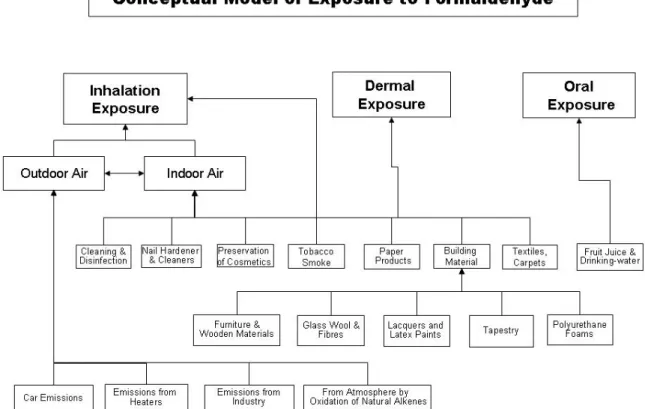
In Figure 1, a conceptual model of exposure to formaldehyde is given. It shows where formaldehyde comes from, sources of its release and pathways of exposure to it.
Figure 1: Example of a conceptual model of exposure—Formaldehyde (adapted from Heinemeyer et al., 2006)
Scenarios may be defined under the umbrella of this conceptual model. There are different levels of scenarios, such as that describing the release of formaldehyde from furniture. Each of the exposures from one of the sources may be characterized by a particular scenario, but all of these scenarios may be combined to yield bigger and more complex scenarios, such as the inhalation exposure pathway. In this concept, the scenario describing the whole exposure including all sources and paths represents a very complex construction.
2.2.3 Building an exposure model and assessment
An exposure assessment, which, according to IPCS (2004), is the process of estimating or measuring the magnitude, frequency and duration of exposure to an agent, along with the number and characteristics of the population exposed, is based on the following three elements: “scenario”, “model” and “parameter”. An exposure scenario provides the basis for building a mathematical model (algorithm). WHO defines the term exposure scenario as “a combination of facts, assumptions, and inferences that define a discrete situation where
potential exposures may occur. These may include the source, the exposed population, the time frame of exposure, microenvironment(s), and activities. Scenarios are often created to aid exposure assessors in estimating exposure” (IPCS, 2004). According to the conceptual scenario, a model can be simple or complex. Based on the formaldehyde example above, a model can describe the oral intake of juice having a certain formaldehyde content, or it can describe the complex migration and release of formaldehyde from a polyurethane foam and its further distribution into room air with subsequent inhalation exposure. The combination of all the above-mentioned sources of formaldehyde may also lead to complexity in the mathematical model.
The term model is used to describe exposure including all the circumstances, the scenarios and their mathematical expressions. The term model is also used for computer programs to calculate exposure. In clinical pharmacology, a model characterizes the mathematical expression of the uptake, distribution and elimination of a drug from the body. WHO defines exposure model as “a conceptual or mathematical representation of the exposure process” (IPCS, 2004). This means that the model includes both concept and mathematical description of the exposure process.
The term parameter has several different meanings, ranging from specific to general. An example of the specific meaning of the term is a constant in a function that determines the specific form of the function but not its general nature. For example, the parameters of a normal distribution are the mean and standard deviation. These parameters have constant values for a particular population distribution. In practice, parameters of models are often calibrated (e.g. parameters of a regression model that is fitted to data) or may be physical constants (e.g. octanol–water partition coefficient, or Kow). However, many practitioners use
the word parameter synonymously with any input to a model, whether it is a true constant, a calibrated constant or a variable. In this document, the term parameter is used in a general sense and is often inclusive of physical constants, calibration constants and other inputs to a model that may vary, such as over time, over space or among individuals in an exposed population.
2.3 Planning for uncertainty analysis in exposure assessment
Because the objective of an exposure assessment is to characterize both the magnitude and the reliability of exposure scenarios, planning for an uncertainty analysis is a key element of an exposure assessment. The aims of the uncertainty analysis in this context are to individually and jointly characterize and quantify the exposure prediction uncertainties resulting from each step of the analysis. In performing an uncertainty analysis, typically the main sources of uncertainties are first characterized qualitatively and then quantified using a tiered approach (see chapter 4). In general, exposure uncertainty analyses attempt to differentiate between key sources of uncertainties: scenario uncertainties, model uncertainties and parameter uncertainties (for definitions, see section 3.2).
In exposure assessment, uncertainty arises from insufficient knowledge about relevant exposure scenarios, exposure models and model inputs. Each of these sources of uncertainty has factors that determine the magnitude of uncertainty and variation. For example,
Mosbach-namely, diversity, variation and statistical uncertainty. Diversity is related to the real differences among groups of substances and individuals (e.g. age, sex). Variation describes existing differences within each group (e.g. behavioural, anthropometric). Statistical uncertainty encompasses that fraction of variability that is a result of given sample sizes (statistical errors of the estimates). Additional uncertainty with respect to samples might result from restrictions towards the degree of representativity and deviations in the degree from differential participation of subgroups, which might raise concern about systematic bias. Measurement error (especially in data from questionnaires), regional and temporal variance as well as aggregation bias (using average habits and consumption) might contribute to uncertainty.
2.3.1 Balancing the uncertainties of exposure and hazard
The extent of accommodation and characterization of uncertainty in exposure assessment must necessarily be balanced against similar considerations with respect to hazard, since the outcome of any risk assessment is a function of comparison of the two. If, for example, there is limited information to inform quantitatively on hazard and, as a result, a need to rely on defaults, there is limited benefit to be gained in developing the exposure analysis such that any increase in certainty is cancelled by uncertainties of greater magnitude associated with quantification of critical hazard, as a basis for a complete risk assessment.
Often, estimates of exposure are compared directly with benchmark doses or concentrations (i.e. those that result in a critical effect of defined increase in incidence, such as 5% or 10%). Alternatively, they are compared with either a lowest-observed-adverse-effect level (LOAEL), the lowest concentration that leads to an adverse effect, or no-observed-adverse-effect level (NOAEL), the highest concentration that does not lead to an adverse no-observed-adverse-effect, or their equivalents. This results in a “margin of safety” or “margin of exposure”. Alternatively, estimates of exposure are compared with tolerable or reference concentrations or doses, which are based on the division of benchmark doses and/or concentrations or the NOAELs or LOAELs by factors that account for uncertainties in the available data.
The NOAEL or benchmark dose/concentration is selected, then, generally to be at or below the threshold in animals; uncertainty factors are then applied to estimate the subthreshold in sensitive human populations, with a 10-fold default factor addressing interspecies differences (i.e. the variation in response between animals and a representative healthy human population) and another 10-fold factor accounting for interindividual variability in humans (the variation in response between a representative healthy human population and sensitive subgroups). While additional factors are sometimes applied to account for deficiencies of the database, the 100-fold default value is common.
Division of benchmark doses and/or effect levels by default uncertainty factors represents the lower end of a continuum of increasingly data-informed approaches to estimation of hazard. For example, where additional adequate quantitative data on interspecies differences or human variability in either toxicokinetics or toxicodynamics (mode of action) are available, chemical-specific adjustment factors provide for their incorporation to replace appropriately weighted components of default uncertainty factors. This requires subdivision of default
uncertainty factors for interspecies differences and interindividual variation into toxicokinetic and toxicodynamic components (IPCS, 2005a).
Physiologically based pharmacokinetic (PBPK) modelling sometimes constitutes a basis for replacement of default components of uncertainty for toxicokinetics and a portion of toxicodynamics. Where data are sufficient, a full biologically based dose–response model addresses additional uncertainties with respect to both interspecies differences and interindividual variability in both kinetics and dynamics.
As the extent of data and complexity of the analysis along this continuum increases, approaches are often presented probabilistically, including sensitivity analysis. For example, consideration is given to the probabilistic presentation of default uncertainty factors as a basis for development of reference or tolerable concentrations and/or doses or margins of safety or exposure, based on the fraction of the population to be protected.
The extent of development and characterization of uncertainty associated with estimating exposure should take into account the nature of quantification of hazard in any risk assessment to ensure comparability of the two.
2.3.2 Variability versus uncertainty
Exposure assessment informs decision-making regarding protection of human health.
As Cullen and Frey (1999) point out, decision-making regarding control of exposures is typically aimed at protecting a particular group, such as the entire population of a country, a highly exposed subpopulation, random individuals within a population or specific individuals with a particular characteristic in common, such as children. As pointed out by NRC (1994), there is certainty that different individuals will have different exposures. For example, each individual may have a different behavioural (activity) pattern, dietary pattern and physiological characteristics (e.g. breathing rates). For a given individual, these can change over time; at any given time, these vary between individuals. These differences lead to variability in the exposure levels of the individuals.
However, the true exposures are rarely known for a given individual and are estimated using modelling procedures based upon available data. Uncertainty regarding exposure estimates arises as a result of the limited availability of empirical information, as well as limitations in the measurements, models or techniques used to develop representations of complex physical, chemical and biological processes. As described by NRC (1994), “uncertainty forces decision makers to judge how probable it is that risks will be overestimated or underestimated for every member of the exposed population”. Furthermore, because every individual can have a different exposure level, it is also possible that the estimate of uncertainty can differ among individuals.
Thus, the notions of intraindividual variability and uncertainty are distinct concepts, because they arise for different reasons. Variability is an inherent property of the system being modelled. In contrast, uncertainty can be conceptualized as dependent on the current state of
property of the data than it is of the system being modelled. For example, the ability to make predictions regarding exposure will depend on the data and models available at the time that the prediction is made. Over time, perhaps “better” data might become available. Data could be considered better if they are more representative, more precise or both. A model would be better than another if it had less systematic error and greater precision. As the quality of data and models improves, the amount of uncertainty inherent in a prediction decreases. Thus, uncertainty is reduced as the result of developing an improved knowledge base.
Two important considerations in probabilistic exposure assessment are whether to quantify uncertainty and whether to separate it from variability within the analysis and output:
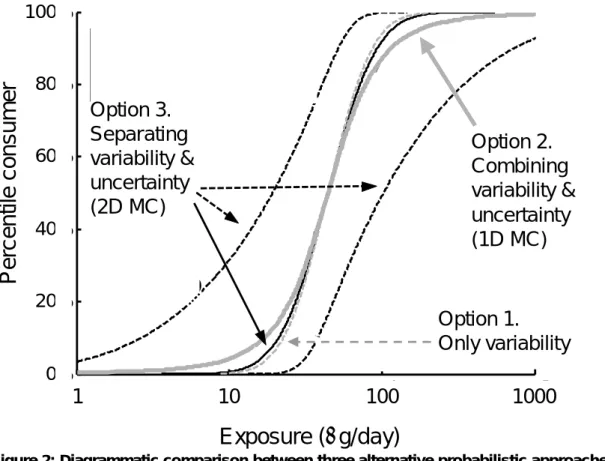
• When only variability is quantified, the output is a single distribution representing a “best estimate” of variation in exposure. This can be used to estimate exposure for different percentiles of the population but provides no confidence intervals and may give a false impression of certainty.
• When input distributions representing variability and uncertainty are combined (e.g. by “one-dimensional” or 1D Monte Carlo), the output is again a single distribution, but now represents a mixture of variability and uncertainty (and is therefore wider; see Figure 2). It can be interpreted as an uncertainty distribution for the exposure of a single member of the population selected at random. This can be used to read off the probability of a randomly chosen individual being exposed to any given level.
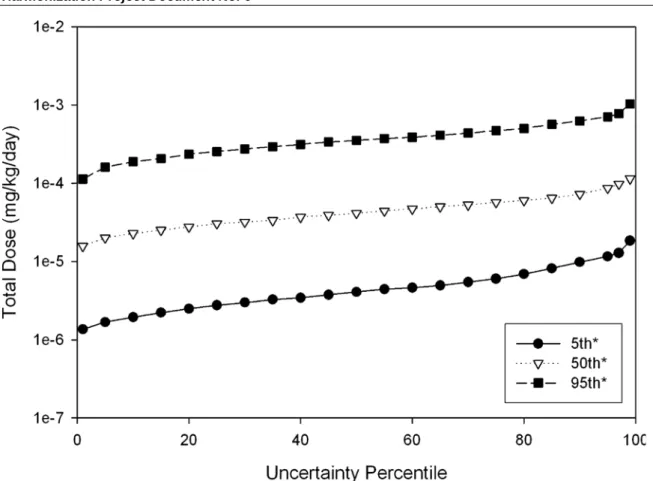
• When variability and uncertainty are propagated separately (e.g. by “two-dimensional” or 2D Monte Carlo), they can be shown separately in the output. For example, the output can be presented as three cumulative curves: a central one representing the median estimate of the distribution for variation in exposure, and two outer ones representing lower and upper confidence bounds for the distribution (Figure 2). This can be used to read off exposure estimates for different percentiles of the population, together with confidence bounds showing the combined effect of those uncertainties that have been quantified.
Strategy or approach is then determined by the desired nature of the output: an estimate for a given percentile of the population with (option 3) or without (option 1) confidence bounds, or the probability of a randomly chosen individual falling below (or above) a given exposure (option 2).
0% 20% 40% 60% 80% 100%
%
o
f spe
c
ies
100 1000 104 105 95% Conf. Interval Median EC502D
MLE
1D
P
e
rc
en
ti
le
c
o
n
s
u
m
er
Exposure (µg/day)
1
10
100
1000
Option 1.
Only variability
Option 3.
Separating
variability &
uncertainty
(2D MC)
Option 2.
Combining
variability &
uncertainty
(1D MC)
0% 20% 40% 60% 80% 100%%
o
f spe
c
ies
100 1000 104 105 95% Conf. Interval Median EC502D
MLE
1D
P
e
rc
en
ti
le
c
o
n
s
u
m
er
Exposure (µg/day)
1
10
100
1000
Option 1.
Only variability
Option 3.
Separating
variability &
uncertainty
(2D MC)
Option 2.
Combining
variability &
uncertainty
(1D MC)
Figure 2: Diagrammatic comparison between three alternative probabilistic approaches for the same exposure assessment. In option 1, only variability is quantified. In option 2, both variability and uncertainty are propagated together. In option 3, variability and uncertainty are propagated separately. MC = Monte Carlo.
2.3.3 Sensitivity analysis
Sensitivity analysis is the study of how the variation in the outputs of a model can be attributed to, qualitatively or quantitatively, different sources of variation in model inputs or structural differences among alternative scenarios or models. Saltelli et al. (2000) and Mokhtari & Frey (2005) provide detailed overviews of sensitivity analysis. Sensitivity analysis is most commonly applied to assess the effect of variations in one or more model inputs on variation in a model output. Sensitivity analysis provides a tool to identify the inputs of greatest importance by (1) quantifying the impact of changes in values of one or more model inputs on a model output, (2) evaluating how variation in model output values can be apportioned among model inputs and (3) identifying which inputs and what values of such inputs contribute the most to best or worst outcomes of interest (e.g. low or high exposures).
Sensitivity analysis can answer a number of key questions, such as the following: • What is the impact of changes in input values on model output?
• What are the key controllable sources of variability? • What are the key contributors to the output uncertainty?
• How can variation in output values be apportioned among model inputs? • What are the ranges of inputs associated with best or worst outcomes?
• What are the critical limits for controllable sources of variability that will lead to achievement of risk management goals?
A controllable source of variability is also known as a critical control point and refers to a point, step or procedure at which control can be applied and a hazard can be prevented, eliminated or reduced to an acceptable level. A critical limit is a criterion that must be met for each preventive measure associated with a controllable source of variability or critical control point.
Sensitivity analysis can be used to identify and prioritize key sources of uncertainty or variability. Knowledge of key sources of uncertainty and their relative importance to the assessment end-point is useful in determining whether additional data collection or research would be useful in an attempt to reduce uncertainty. If uncertainty can be reduced in an important model input, then the corresponding uncertainty in the model output would also be reduced. Knowledge of key sources of controllable variability, their relative importance and critical limits is useful in developing risk management options.
Sensitivity analysis is useful not only because it provides insight for a decision-maker, but also because it assists a model developer in identifying which assumptions and inputs matter the most to the estimate of the assessment end-point. Therefore, sensitivity analysis can be used during model development to identify priorities for data collection, as well as to determine which inputs matter little to the assessment and thus need not be a significant focus of time or other resources. Furthermore, insights obtained from sensitivity analysis can be used to determine which parts of a model might be the focus of further refinement, such as efforts to develop more detailed empirical or mechanistic relationships to better explain variability. Thus, sensitivity analysis is recommended as a tool for prioritizing model development activities.
3. SOURCES OF UNCERTAINTY
Uncertainties arise in various stages of exposure assessment. These uncertainties should be confronted as an integral part of the process, rather than being limited to the final stage.
Principle 1
Uncertainty analysis should be an integral part of exposure assessment.
The level of detail of the assessment may vary greatly, depending on the purpose for which it is carried out (i.e. as a screening-level assessment or as a detailed, probabilistic assessment). The level of detail with which the uncertainty is analysed will vary accordingly and should, as a rule, be consistent with the level of detail of the exposure assessment.
The objective of an uncertainty analysis is to determine differences in the output of the assessment due to the combined uncertainties in the inputs and to identify and characterize key sources of uncertainty. To this end, a first step in the treatment of the uncertainty in an exposure study consists of the identification of the sources of uncertainty that are relevant for the study.
There are numerous methods for the subsequent qualitative and quantitative characterization of the relevant uncertainties. These methods are covered in sections 5.1 and 5.2, respectively. This chapter gives an overview of different sources of uncertainty that may arise at different stages of the exposure assessment. Therefore, this chapter aims to systematically describe the steps of exposure assessment and the related sources of uncertainties.
Section 3.1 provides a brief overview of approaches and steps typically used in exposure assessment. Next, in section 3.2, a taxonomy of the different sources of uncertainty is given. There are numerous texts providing schemes for the classification of sources of uncertainty. The classification given below follows in outline the one given in the USEPA’s Guidelines for Exposure Assessment (USEPA, 1992).
Principle 2
The level of detail of the uncertainty analysis should be based on a tiered approach and consistent with the overall scope and purpose of the exposure and risk assessment.
3.1 Approaches and steps in exposure assessment
Exposure assessment uses a wide array of techniques and information sources. The approaches to exposure assessment can be classified into four general categories:
1) the use of professional (i.e. expert) judgement alone, with no attempt to use the direct or indirect approaches described below, to arrive at a qualitative assessment of the
magnitude of exposure, i.e. “significant exposure is not expected from a small deviation of a specific value”;
2) direct approaches to quantify the exposure being assessed, using monitoring data from real-life situations;
3) indirect approaches to quantify the exposure being assessed, using simulation and real-life modelling; and
4) combined or hybrid approaches to quantify the exposure being assessed, using both direct and indirect methods.
Common to all approaches are the following working steps: • specification of the purpose and scope of the assessment; and • building of the assessment scenario.
In addition, the quantitative approaches include:
• a description of the selected assessment approach, including monitoring and/or modelling steps, which specify the parameters needed in the assessment;
• selection of data and specification of any assumptions; • execution of calculations; and
• documentation, interpretation and presentation of results. 3.2 Nature of uncertainty sources
Uncertainty is the lack of knowledge of vital parts that are needed to perform an exposure assessment. Uncertainty can, at least in principle, be reduced by research to obtain necessary or applicable information or data.
Uncertainty pertains to different steps and approaches in the assessment. It can be classified into three broad categories:
1) Scenario uncertainty: Uncertainty in specifying the exposure scenario that is consistent with the scope and purpose of the assessment.
2) Model uncertainty: Uncertainty due to gaps in scientific knowledge that hamper an adequate capture of the correct causal relations between exposure factors.
3) Parameter uncertainty: Uncertainty involved in the specification of numerical values (be they point values or distributions of values) for the factors that determine the exposure. Classification using the three categories defined above is not as strict as it may seem, and the uncertainties may in practice arise in overlapping areas. For instance, numerical values of model parameters are often determined from the calibration of a model against some data set. In this case, the parameter values may be uncertain to the extent both that this calibration data set suffers from uncertainty in measurement (parameter uncertainty) and that the model that is calibrated is not adequate for the situation (model uncertainty).
A clear decision as to whether the uncertainty is related to the scenario, model or parameters is sometimes difficult. There are, as mentioned, overlaps, and even expert opinions may
deviate. Identification of the sources of scenario uncertainty is a matter of interpretation and depends on the clarity with which the scope and purpose of the assessment are given.
It is not possible to quantify all sources of uncertainty. Therefore, expression of uncertainty, variability or both in exposure estimates may be qualitative or quantitative, but uncertainty should be quantified to the extent that is scientifically achievable. The concepts of variability and uncertainty are distinct, and typically there will be a need to distinguish these based upon the problem formulation.
Principle 3
Sources of uncertainty and variability should be systematically identified and evaluated in the exposure assessment.
3.2.1 Scenario uncertainty
A sound description of the scenario is an important prerequisite for modelling exposure or for interpreting measured exposure data. The description of the scenario governs the choice of the model and that of model variables (model parameters). The scenario description can be divided into several parts:
• a description of the source of the chemical;
• the characteristics of the release of the chemical to the contacting environment, the distribution of the substance in that volume and its disappearance from that volume; and • in any case of exposure analysis, a calculation of the amount of the substance that will
enter the body using the concentration of the substance in the contacting medium (i.e. in air, on skin or in media that can be eaten or swallowed) and an uptake rate (i.e. respiration rate, dermal absorption rate or consumption rate).
Also, behavioural data are important for characterizing the exposure route, the frequencies of use/consumption and the duration of use/consumption.
Scenario uncertainty includes descriptive errors (e.g. wrong or incomplete information), aggregation errors (e.g. approximations for volume and time), errors of assessment (e.g. choice of the wrong model) and errors of incomplete analysis (e.g. overlooking an important exposure pathway).
Scenario uncertainty characterization may include a description of the information used for the scenario characterization (scenario definition). This includes a description of the purpose of the exposure analysis. For regulatory purposes, the level of the tiered approach is essential to describe the choice of data, whether defaults, upper-bound estimates or other single point estimates, or distributions have been used. This choice may govern the kind of uncertainty analysis.
The definition of the scope and purpose of each exposure assessment provides the specifications for building the exposure scenario, which represents the real-life situation that
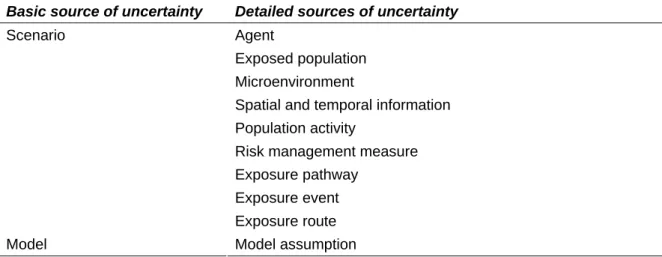
previously, the scenario uncertainty includes the “facts, assumptions and inferences” that are taken into consideration and used, but, in reality, are not actually representative of the scope and purpose of the assessment. These sources of uncertainty typically include incomplete and/or non-relevant specification of the following:
• agent to be considered; • exposed populations;
• spatial and temporal information (e.g. geographic applicability and seasonal applicability);
• microenvironments; • population activities;
• sources of the released agent; • exposure pathways;
• exposure events; • exposure routes; and • risk management measures.
Incomplete and irrelevant specification of the above elements of the exposure scenario may be related to lack of knowledge, descriptive errors, aggregation errors, errors in professional judgement and incomplete analysis (USEPA, 1992).
The following short descriptions represent examples that were primarily referred to as scenario uncertainties.
Examples of scenario uncertainties:
1. Lack of prior knowledge of coffee as an important source of acrylamide exposure
2. Lack of consideration of the dermal pathway in the assessment of exposure to insecticide sprays
3. Lack of consideration of dust as an important carrier in the assessment of a non-volatile ingredient of a home insecticide
4. Characterization of room air concentrations without consideration of air exchange
3.2.2 Model uncertainty
In exposure assessments, mathematical and statistical models are often applied to represent the entire exposure process or parts of it. Models used in this sense quantitatively describe the relationship between their input parameters and the responses of the entire system (or part of it) to changes in these inputs. To a certain extent, a model is always a simplification of reality. The level of detail with which a model describes a system should be consistent with the objective of the assessment.
Model uncertainty is principally based upon (1) modelling errors (i.e. non-consideration of parameters) and (2) relation (dependency) errors (i.e. drawing incorrect conclusions from correlations). For example, the mathematical formula of a model describing the concentration–time curve of a substance emitted from, for example, glue should consider an algorithm that describes the time-dependent increase of the substance in a room, its distribution and the decrease of the concentration. Body weight correlates non-linearly with
body surface, which may lead to dependency errors when, for example, extrapolating exposures from adults to children.
In using models, the following sources of uncertainty are to be considered:
• linking the selected conceptual model to the adopted scenario (model boundaries); • model dependencies;
• model assumptions;
• model detail (i.e. simple or complex); • model extrapolation; and
• model implementation and technical model aspects (e.g. errors in software and hardware). Examples of some of these sources of uncertainty are given below, and further details are provided in section 5.1.
3.2.2.1 Model boundaries: Representation of the adopted scenario
The scope and purpose of the exposure assessment inform the formulation of one or more scenarios for which exposures are to be estimated. The exposure estimation approach should be capable of faithfully representing the key structural assumptions of the scenario, such as exposed population, agents to be considered, spatial and temporal scope, microenvironments and so on (see section 3.2.1 for a complete list). If the modelling approach omits any of the relevant elements, then the estimates could be biased. If the modelling approach includes irrelevant, unnecessary or superfluous elements, then, at best, the model is likely to be more cumbersome to deal with than it needs to be, or, at worst, biases may be introduced.
The development or selection of a model involves decisions regarding the time, space, number of chemicals, etc., used in guiding modelling of the system. Risks can be understated or overstated if the model boundary is misspecified. For example, if a study area is defined to be too large and includes a significant number of low-exposure areas, then a population-level risk distribution can be diluted by including less-exposed individuals, which can, in turn, result in a risk-based decision that does not sufficiently protect the most-exposed individuals in the study area. A common challenge in exposure modelling is to achieve the proper representation of averaging times for exposures when considering all model inputs and to account for the proper geographic scope of sources of agents, microenvironments and human activity.
3.2.2.2 Dependency errors
Dependency errors arise from lack of consideration of dependencies between parameters (be it by mistake or as a simplifying assumption) or incorrect inference of dependencies between parameters. For instance, anthropometric properties such as body weight, dermal surfaces and inhalation rate are correlated. Not including empirically proven correlations in a probabilistic assessment will yield incorrect exposure estimates.