Directed Biogenic Fabrication:
Programming Cells and Their Ecosystems to Grow Civil Infrastructure
MASSACHUSETTS INSTITUTEOF TECHNOLOGY
Joshua Van Zak
JUL
2 6
2019
Bachelor of Arts in Urban Planning and Visual Arts,
LIBRARIES
University of California, San Diego, 2011
ARCH IVES
Submitted to the Program in Media Arts and Sciences, School of Architecture and Planning,
in partial fulfillment of the requirements for the degree of Master of Science in Media Arts and Sciences at the
MASSACHUSETTS INSTITUTE OF TECHNOLOGY
June, 2019
© Massachusetts Institute of Technology 2018. All rights reserved.
Signature redacted
(v
Author, Joshu an ZakProgram in Medi rts and Sciences May 0, 2018
Signature redacted
Certified by eri Oxman
Associate Professor of Media Arts and Sciences Thesis Advisor
Signature redacted
Accepted by Tod Machover Academic Head
Program in Media Arts and Sciences
Directed Biogenic Fabrication:
Programming Cells and Their Ecosystems to Grow Civil Infrastructure
Joshua Van Zak
Submitted to the Program in Media Arts and Sciences, School of Architecture and Planning,
in partial fulfillment of the requirements for the degree of Master of Science in Media Arts and Sciences
Abstract
This thesis introduces and evaluates directed biogenicfabrication: a philosophical approach and technical framework for co-fabricating ecologically active civil infrastructure with living cells.
I propose that imbuing our buildings and urban systems with life, or at least biologic
capabilities, will enable tight interconnections between fundamental species occupying different infrastructural niches, resulting in urban ecosystems that develop and evolve closed-loop resource cycles and equilibrate our atmosphere. As a proof of concept for this generalizable approach, I cover three strategies demonstrating specific tools, techniques, and assessment methods for designing elements of a living infrastructure: (1) Programmable Surface
Features and Hydrophilicity -utilizing organic chemistry, computational design, and digital
fabrication to engender particular mechanical properties and responsiveness in biopolymer
materials; Communication Ecology-templating visual and conformational signals in
biopolymer materials that communicate information about the environment to other organisms; and Opportunistic Chimeric Design-exploiting and co-opting the most powerful capabilities evolution has produced in order to grow infrastructural lifeforms. The first two methods are exemplified through two architectural scale pavilions -Aguahoja I and II-while the third is shown through a series of prototypical materials synthesized by two types of bone cancer cells. This thesis makes contributions to the fields of materials science, biological engineering, civil engineering, digital fabrication, and computational design.
Thesis Supervisor: Neri Oxman
Directed Biogenic Fabrication:
Programming Cells and Their Ecosystems to Grow Civil Infrastructure
Joshua Van Zak
Submitted to the Program in Media Arts and Sciences, School of Architecture and Planning,
in partial fulfillment of the requirements for the degree of Master of Science in Media Arts and Sciences
Signature redacted
Thesis Reader, Dr. Robert Langer, David H. Koch Institute Professor,
Koch Institute for Integrative Cancer Research at MIT
Directed Biogenic Fabrication:
Programming Cells and Their Ecosystems to Grow Civil Infrastructure
Joshua Van Zak
Submitted to the Program in Media Arts and Sciences, School of Architecture and Planning,
in partial fulfillment of the requirements for the degree of Master of Science in Media Arts and Sciences
Signature redacted
Thesis Reader, Dr. Pamela Silver,
Elliot T. and Onie H. Adams Professor of Biochemistry and Systems Biology, Harvard Medical School
Acknowledgements
At the end of our lives, we'll have had a quantifiable number of happy moments. Everyone I thank below has contributed to a favorable margin in this proportion, and I will be forever grateful to each of
you. As I move onto the next stage of my life, I hope to do the same for others.
First and foremost, my parents have raised me to be curious and driven, and to embrace my uniqueness. These qualities and the sacrifices you've made have enabled me to get to where I am today. This small paragraph is not nearly enough to adequately thank you.
To the rest of my family, your constant support, humor, and togetherness in the face of adversity have inspired and amazed me. To Laura, your humor, support, and love have made life fun and exciting; I can't imagine a better gift. Thank you.
To Neri, others admire you because of the beautiful things you create, but it's your ability to bring beauty out of the most obscure and special places that I find most inspirational. My life and those of my family members have dramatically changed because it. For this reason, I also want to thank Jorge Duro-Royo, Natalia Casas, Priscilla Capistrano, and Kelly Egorova for their generosity and sustained belief in me.
To the rest of the Mediated Matter family as well as my thesis readers, professors-especially, Chris Fry, Pam Silver, Tim Lu, and Hiroshi Ishii-and friends, I hope to apply what you have taught me to most effectively utilize my time on this planet to make it better.
Finally, I would like to thank GETTYLAB, the MIT-Sensetime Project, the MIT Skoltech Program, and the MIT Sandbox Innovation Fund for their financial support. I would also like to thank the Cooper-Hewitt Smithsonian Design Museum, San Francisco Museum of Modern Art, Centre Pompidou, and Cube Design Museum for showing our projects.
Contents
Introduction 9 Aguahoja I 13 Rationale 13 Anatomy 15 Physiology 21 Ecofunctionality 36 Conclusions 40 Aguahoja II 42 Rationale 42 Conclusions 51Opportunistic Chimeric Design 53
Rationale 53
Introduction 55
Background 57
Related Work 60
The Logistics of Growing Tunable Bone Structures 66
Biofabrication 75
Conclusions 80
References 82
Figures
Figure 1.1 - Aguahoja fabrication images 13
Figure 1.2 - The Aguahoja Pavilion 14
Figure 1.3 - Differential scanning calorimetry of pectin skins 17
Figure 1.4 - Pectin's isotropic dependence on toolpath geometry 18
Figure 1.5 - Physical crosslinking of chitosan and cellulose 19
Figure 1.6 - Interdependence of material properties, computational inputs,
and fabrication parameters 20
Figure 1.7 - Skin-shell interplay in relation to toolpath geometry 22
Figure 1.8 - Closeup of the chitosan-cellulose shell composite on pectin skin 23
Figure 1.9 - Effects of water absorption in pectin skins 24
Figure 1.10 - Early biocomposite experiments 25
Figure 1.11 - Surface roughness measurements and elastic moduli of the five
pectin skins used in Aguahoja
I
27Figure 1.12 - Contact angle hysteresis of the pectin skins used in Aguahoja I 31
Figure 1.13 - Shape deformation of skin-shell composites over time and
through a range of ambient relative humidity 32
Figure 1.14 - A computational approach to generative design 34
Figure 1.15 - Moss growing inside dried pectin films 35
Figure 1.16 - Simulation of water-induced dissociation in samples with varying
material distributions 36
Figure 1.17 - Effects of material distribution in samples with equal mass on dissociation
in water 37
Figure 1.18 - Water-induced dissociation of maquettes in high humidity 38
Figure 1.19 - Water-induced failure of maquettes in high ambient temperature and
relative humidity 39
Figure 2.1 - Closeup of the Aguahoja
II
skins 43Figure 2.2 - Skin Image Series 44-50
Figure 3.1 - uhrfl and slO0alO plasmids 68
Figure 3.2 - Chondrosarcoma mutant population growth: wild-type vs. uhrf+ 69 Figure 3.3 - Growth of osteosarcoma cell lines with and without uhrfl overexpression,
in the presence of seven growth factors 70
Figure 3.4 - Growth of chondrosarcoma cell lines with and without uhrfl
overexpression, in the presence of seven growth factors 71
Figure 3.5 - Growth of osteosarcoma and chondrosarcoma cell lines (uhrf1+ or uhrf1-)
in hypoxic conditions 72
Figure 3.6 - Three-dimensional growth experiments using osteosarcoma cells in the
presence of one of seven growth factors, in hypoxic conditions, over ten days 74
Figure 3.7 - An integrated workflow for the design, fabrication, and modification
of hydrogel-based biofabrication environments 76
Figure 3.8 - Large-scale culture experiment using osteosarcoma cells grown in the
presence of seven growth factors, in hypoxic conditions 78
Figure 3.9 - Large-scale culture experiment using osteosarcoma cells grown in
Introduction
Ironically, the structures and products we put thought and effort into building are never as sophisticated as our own bodies. Both are just aggregates of matter and energy, but the difference in planetary value between the things we design and the functionality inside us results from billions of years of evolution. This would be a minor problem if we were simply underutilizing evolutionary intelligence; however, driving infrastructural development with anthropocentric utility has obscured the fact that we should occupy an ecological niche.
In un-humanized ecosystems, the most fruitful shelter comes in the form of other living things. Specifically, omnidirectional forces drive biologic design. Since there are finite stores of matter and energy, ideal equilibria exist between the number and size of organisms, how long they live, how they impact the energy flows and living things around them, and how they return to the resource cycles they came from.
Primary producers such as plants get energy from the sun and simple organic matter. Consumers ingest plants and other consumers. Decomposers such as bacteria, molds, and fungi make use of energy stored in dead plant and animal tissues. In this process, matter and energy are moved through resource cycles that equilibrate the atmospheric and ecological conditions on earth.
An organism's ability to do so relies on constant dynamism between a changing environment, genetic and behavioral adaptation, and strategic symbioses between and within ecological niches. The movement of matter and energy through this process creates a resource cycle that entraps, transforms, and replenishes resource inventories, with minimal losses. Accordingly, primal desires to consume sufficient calories and shelter oneself from environmental extrema drive a set of behaviors and physical adaptations that, without conscious effort, enables interdependent ecological niches to construct and maintain an entire ecosystem.
Therefore, the design of living things must take into consideration factors pertaining to immediate functional requirements such as basic physiologic needs, competition for resources, and environmental conditions, as well as factors relating to their role within a larger ecosystem.' This is the difference between a tree and a log cabin. Toward this end, humans have developed an ability to conceptualize, organize, and design complex systems such as urban infrastructure and the genome itself. We now need to utilize these abilities to design ecosystems that more purposefully and precisely codify infrastructural niches in order to equilibrate our atmosphere.
In organisms, physiologic mechanisms guiding the entrapment, transformation, and replenishment of energy dictate the more conserved features of biologic development such as axial symmetry and skeletal structure, while those that have to do with fitness iterate through more malleable prototypes. Functionally, complex combinations of molecules assemble into cells, cells construct tissues, tissues form organs, organs coordinate to create organ systems, and multiple systems interact to perform complex functions. Some examples include thermoregulation, reproduction, self-healing, coordinated thought processes and actuation, derivation of energy from its surrounding resources, and learning/optimizing behavior and physiology over time. The result is a dynamic structure that grows from, consumes, transforms, and restores the matter and energy that comprise its habitat. Imagine if our buildings could do this.
Conversely, in manmade materials, great care is taken to ensure that uniformity, unifunctionality, durability, and stasis are given preference over the aforementioned dynamism. In fact, the inputs that are processed to become 'synthetic' materials come from the world around us; whereas, it is their recombination, processing, and behavior that make them detrimental to our planet. In rebranding 'synthetic' materials as 'manmade,' we can apply a common set of metrics to every piece of matter around us that pertains to both their immediate utility and reliability as well as their ecosystemic value.
As a simple example, a typical architect will design spaces based on the events that are supposed to occur in them. The organization of these spaces would be configured to facilitate sequences of events that make sense together and/or make life easier. Finally, the shape and material of the building would ideally be chosen based on the context around it. Conversely, an architectural symbiont that occupies part of an ecological niche would grow from its habitat, derive energy from the resources around it, convert food into energy, and secrete waste products that feed other consumers.
If over 7 billion large, long-lived organisms consume massive amounts of resources for their
own growth and to support densely packed communities, then severe bottlenecks develop in resource continua. Industrial innovations such as paving over entire biomes, extracting massive amounts of resources and transforming them into materials that degrade over hundreds-to-thousands of years, and developing manufacturing processes that saturate the atmosphere with harmful gases and consume great amounts of energy drive out other producers, consumers, and degraders. Just think about how many things are not human or human-made on the route to work.
In the absence of such a dominating species, ecosystems equilibrate almost haphazardly, with each ecological niche being filled by organisms acting in their best interest. This is why, given our ability to conceptualize and organize complex systems at a massive scale, humans are equipped to direct the biogenesis of ecofunctional infrastructure. Importantly, giving preference to materials that are recyclable and infrastructure that requires less energy input is not the same as designing ecosystems that perpetually and autonomously recycle matter and energy.
More generally, there are two approaches to solving large problems: one is to reduce issues to their contributing factors, after which an immediate solution is created for each; alternatively, entire systems can be redesigned based on evolved intelligence. Although I have come far
short of doing the latter in this thesis, I think it is valuable to define a potentially transformative theoretical framework and execute early experiments toward it.
In Part 1 of the thesis, I describe chemical and fabrication methods of programming specific mechanical properties and behaviors into biopolymer materials for buildings and products. These are exemplified through several experiments and analyses that culminated in a five-meter tall, biopolymer-based pavilion, Aguahoja I, that was designed to dissociate in water.
Part 2 builds on this ecofunctional design with visual and conformational signals in
biopolymer materials that communicate information about the environment to other organisms, as shown in a second pavilion, Aguahoja II. Subsequently, Part 3 introduces
opportunistic chimeric design, which involves co-opting the most powerful capabilities evolution
has produced in order to grow multifunctional structures and products. The conclusion of Part
3 presents the implications and potential future directions of this research, with the hope of
Part 1
-
Aguahoja I
1.1 Rationale
The Aguahoja Pavilion is a five-meter tall prototype demonstrating that buildings can be synthesized from organic waste streams and dissociated in water, or biodegraded, to return to the resource cycles they came from. We utilized our planet's most abundant biopolymers including chitosan from shrimp shells, pectin from apple skins, and cellulose from dead plant matter to create tunable hydrogels that were pneumatically extruded using a robotic arm.
I\.A
effector.2
I
I
lII I II iK....
*1.,~I
06 co~ C) cz H '-4 U C C _77-7-771.2 Anatomy
Aguahoja I consists of 32 composite panels slotted into a five-meter tall, 3D printed structure. Depending on the ambient temperature and relative humidity, the panels oscillate between exhibiting significant plasticity, like a leather, and rigidity, like balsa wood. Such climatic changes also induce conformational adaptation that manifests as curling, when water is evaporated, and relaxing, when water is absorbed. To achieve this behavior, flexible pectin-chitosan skins are functionalized in key locations by rigid pectin-chitosan-cellulose shell patterns.
Skin: Apple pectin (Spectrum Chemicals & Laboratory Products, New Brunswick, NJ) was
chosen as a skin material because of its opposite charge to chitosan as well as its tunability. Specifically, pectin's galacturonic acid units have negatively charged carboxylic groups that enable it to form a polyelectrolyte complex with polycationic chitosan.3 Chitosan (85% de-acetylated, molecular weight = 100,000, VWR, Radnor, PA) is soluble in acidic, alkaline, and
neutral solvents, while pectin is highly water-soluble. Thus, pectin could be used as a crosslinker to form a polyelectrolyte complex.
A polyelectrolyte (PE) is any macromolecular material that has repeating units and dissociates
into a highly charged polymer in an ionizing solvent like water.4 These repeating ionized units can be neutralized by smaller, oppositely charged counter ions that maintain a net neutral charge. While in this uncharged state, PEs behave like other macromolecules; however, significant changes in their bulk properties can result from small dissociations of ionic groups.
Partial or complete dissociation of ionic groups can cause electrostatic interactions that dramatically alter a polymer's behavior. If new ionic groups are introduced, hydrogel properties such as viscosity, solubility, pH, ionization constant, ionic strength, and diffusion coefficient can be altered.6 In particular, the ionic strength of a solution influences its properties and those of the resulting film. Low ionic strength causes PEs to extend because of intramolecular repulsive forces. Increasing the ionic strength of a PE solution tends to make it thicker.7
Many properties of interest can be controlled in such interpolymer complexes, which, after hydrogels are printed and dried at room temperature, imbue the resulting skins with tunable mechanical and optical properties.8 Some knobs one can turn in PE chemistry are the degree of ionization and charge distribution on PEs; ionic group attributes; strength of ionic sites; pH; molecular weight; polymer structure; degree of complexation; density; concentration; chain stiffness; mixing ratio, order, duration, and technique; temperature conditions while mixing, printing, and drying; and hydrophilicity.9 10
This parametric chemistry2 enabled us to tune the properties of both the hydrogel and the
resulting film according to desired fabrication and performance parameters. With respect to fabrication, a custom pneumatic end-effector was created for a six-axis ABB 4600 robotic arm (ABB Robotics, Zurich, Switzerland) to extrude multiple hydrogels.i Thus, the viscosity of the hydrogels was the first parameter that needed to be tuned with respect to the capacity of the air compressor and desired spread function-i.e., how much the gel would spread out on the print bed in relation to the nozzle diameter. The spread function, S, is defined as follows:
Printed line diameter - Nozzle diameter
S= Nozzle diameter
Accordingly, an ideal baseline concentration of pectin was determined to be 35% (w/v) in water, because the spread function (S = 0.26) enabled us to fill in the outline of a panel with
parallel lines for the printer to follow that were 2 mm apart, using a 1.58 mm nozzle, such that the lines would bleed into each other and create a thin film. The spread function decreased linearly with viscosity-i.e., the concentration of pectin-up to a maximum pectin concentration of 45% (w/v), or 1,200 centipoise at room temperature, requiring 60 p.s.i. of air pressure. Herein, factorial combinations of nozzle diameter, height from the table, robotic feed rate, and air pressure could be iterated through to find optimal combinations of material properties and fabrication parameters for particular designs.
Next, the mechanical and optical properties of the pectin skins had to be considered. By adding up to 8% (w/v) of chitosan into an acidic or alkaline solution, pectin skins could be rigidified, thickened, and colored via the creation of polyelectrolyte complexes. With the addition of up to 5% (v/v) of glycerin, the plasticity and ductility of the films could be finely tuned. At pectin concentrations over 40% (w/v) and chitosan concentrations over 2% (w/v), shape memory could be developed in the films by printing them over or steaming them onto various molds.
The formation of pectin-chitosan polyelectrolyte complexes was confirmed via differential scanning calorimetry (DSC) (DSC 250, TA Instruments, New Castle, DE). It should be noted that DSC alone is insufficient to properly confirm the existence and properties of a polyelectrolyte complex, and that only one pectin-chitosan combination (35% apple pectin (w/v), 2% chitosan (w/v), 1% glacial acetic acid (v/v), 2% vegetable glycering (v/v)) was tested.
Pectin chiuman PEC
Temperature
Figure 1.3 - Differential scanning calorimetry of hydrogels containing 35% apple pectin (w/v) in water, 2% chitosan (w/v) in water, 35% apple pectin (w/v) and 2% alginate (w/v) in water, and 35% apple pectin (w/v) and 2% chitosan (w/v) in water, to confirm the formation of a polyelectrolyte complex between pectin and chitosan.
Moreover, the toolpath geometry that the robotic arm would follow when printing the skins would engender isotropy or anisotropy, depending on its symmetry. Although this phenomenon was not sufficiently studied during this project, it is of interest for future research.
Figure 1.4 - Pectin's isotropic dependence on toolpath geometry.
Shell: Despite the aforementioned tunable parameters, printing pectin or pectin-chitosan
hydrogels into shapes that were 1-2 meters long resulted in skins that lacked mechanical integrity and significant responsiveness. Thus, chitosan-cellulose composites and geometric patterns were designed to rigidify the skins in key locations and along specific axes, like a shell.
Specifically, a structural layer consisting of 7% chitosan (w/v), 3.5% glacial acetic acid (v/v), 45% cellulose pulp (v/v), and 0.7% glycerin (v/v) was printed onto pectin skins that varied in composition across one panel. Water was heated to 780C, at which point chitosan powder was stirred in. The solution temperature was then lowered to 37°C, and acetic acid was mixed in with a hand mixer. After the solution gelled, cellulose pulp was slowly sifted in to form a viscous hydrogel, which was then homogenized with a hand mixer.2
Here, we took advantage of the fact that chitosan and cellulose polymers physically interweave and thereby rigidify each printed line as they dried at room temperature. Toolpaths based on a distorted grid or regular lattice could then be generated to create a shrinking mesh network that would embed tension into the panels as the pectin countervailed these contractile forces.
37*C
Figure 1.5- Physical crosslinking of chitosan and cellulose (adapted from Tu et al., 2017).2
Fabrication: Following mixing, 300 ml of the chitosan-cellulose hydrogel were loaded into a 360
ml plastic cartridge (Nordson Corporation, Westlake, OH). Resolution was an important design parameter in this case, so the spread function had to be minimized (<0.05) and viscosity tuned (>200 centipoise) to enable a nozzle with a diameter of 0.79 mm to be used to print lines that were less than 0.9 mm in diameter.
After loading a piston into a cartridge to push down the material, the cartridge was loaded into a holster on our pneumatic end-effector. Finally, a cap was screwed on and connected via tubing to an air compressor.
I
Virtual Physical Ma Po eLo
P Invariants e In Ma' Pl GGIDVariants Moe Synch Results
INPUT INVARIANTS AND CALCULATED VARIANTS
M a Polymer database IC-cellulose, 1-chitosn.-stal.P pectin Po Positioning platform
- c De Deposition platform
S Ma' Material composite data
P PI Po and De synchronized
Ge Geometric toolpaths *
Ma' MODEL HIERARCHY AND MODEL OUTPUT
lo Local resolution Imaterial distribution and composition] * Re Regional resolution (extrusion geometry
S' | GI Global resolution (overall shape]
In Fabrication instructions that synchronize Po and De
Figure 1.6 - Interdependence of material properties, computational inputs, and fabrication parameters.2
Input geometry and fabrication parameters were defined in Rhinoceros 3D and Grasshopper, from which a G-code file was generated. This file fed coordinate points to the robotic arm and specified air pressure, speed, and height from the substrate. The arm was initially calibrated using the four corner points and center point of a 1.5 m x 3 m print table.
-i
1.3 Physiology
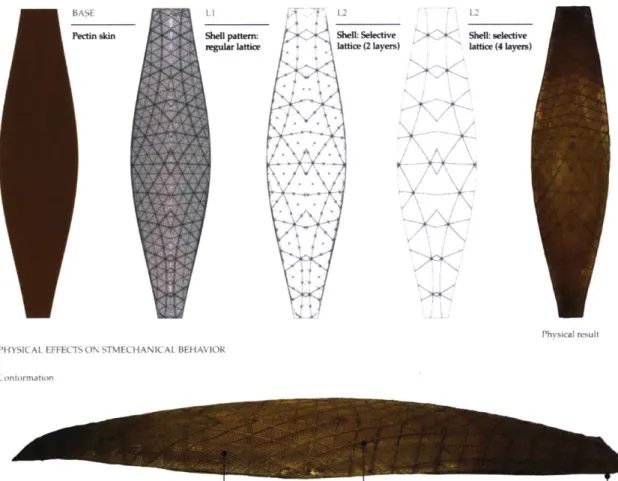
After printing the chitosan-cellulose shell pattern onto dry pectin-chitosan skins, losing water and drying at room temperature at different rates, in different spots, would cause the shell material to shrink bidirectionally and warp about the major axis of each panel, in the case of longitudinal lines, and about the minor axis of each panel in the case of latitudinal lines. In turn, the pectin skin could be specifically designed to not only countervail these deformations, but also utilize this energy to rigidify a panel.
Given that pectin has an opposite charge to chitosan, the two polymers electrostatically attracted each other when wet chitosan and cellulose was printed onto dry pectin-chitosan skins. This helped countervail the contractile forces of a chitosan-cellulose hydrogel that was
-80% water and would lose much of its mass and volume due to evaporation. In addition,
creating toolpaths based on a distorted grid or regular lattice helped deflect these forces through interpenetrating kinked and curved mesh networks.3
In a regular lattice, contractile forces were locally concentrated at the midpoints of each set of interpenetrating lines, almost like two connected rubber rods were being pulled away from each other. Globally, this would create bowing emanating bidirectionally from the centroid of each panel. This resulted in a shell-like conformation, with stresses being concentrated at the top of the shell. By selectively printing additional chitosan-cellulose layers on top of certain lines traveling along major or minor axes, the conformation and stress concentration could be tuned, in order to imbue a panel with the desired mechanical behavior.
Conversely, a distorted grid, assuming uniform line diameter and layer quantity, could locally deflect contractile forces to imbue a panel with functionally graded behavior, based on the convergence and divergence of lines. Further modifying the number of layers along certain paths, composition of the shell material, fabrication parameters, as well as the mixing and drying conditions enabled us to finely tune the mechanical properties of skin-shell composites for particular use cases.
Importantly, absorption of humidity and rain, in addition to temperature fluctuations, would
cause contraction or relaxation, which could elicit specific conformational changes in each
panel, depending on the printed geometry. In the future, these behaviors could provide
thermoregulation and responsive shading in buildings.
VIRTUAL FABRICATION PARAMFl
BASE L I
Pectin skin Shell pattern:
regular lattice
PHYSICAL EFFECTS ON STMECHANICAL BEHAVIOR
Contormation
L2
ShelL Selective K Shell: selective
lattice (2 layers) lattice (4 layers)
Physical result
SECONDAR\ PRIMARY RIGID
LATI1CE STRUCTURE CONTOU
2.5 m
Figure 1.7 - Skin-shell interplay in relation to toolpath geometry, based on a selectively reinforced lattice.2
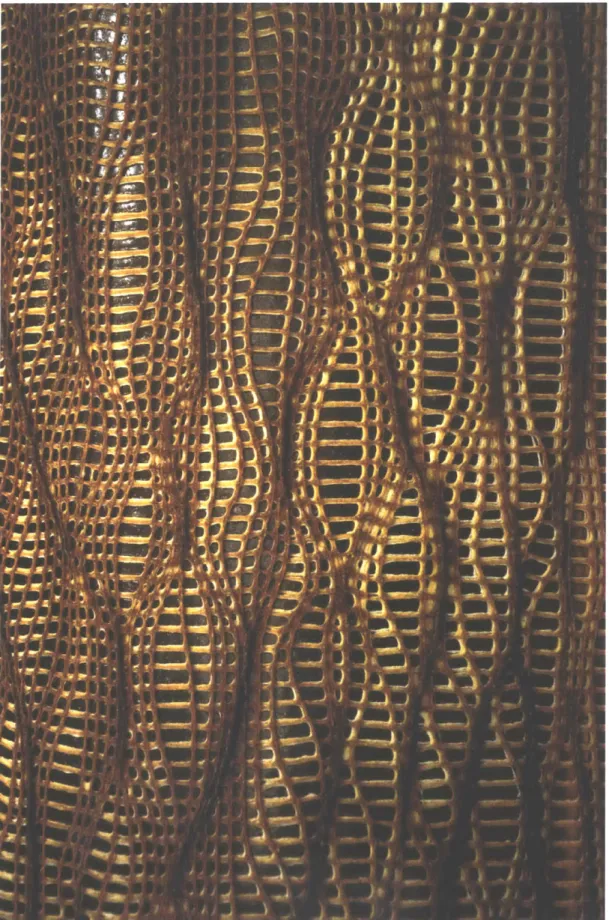
Figure 1.8 - Closeup of the chitosan-cellulose shell composite on pectin skin (35% pectin (w/v), 3% glycerin (v/v) in water), following a distorted grid toolpath. Photo: Yen-Ju Tai.
Tunable Surface Features and Hydrophilicity: Based on such resistance to contractile forces,
significant dynamism could be designed into the fabrication process by introducing new ionic groups and fillers into the pectin skins. Surface roughness, hydrophilicity, water adsorption, and hysteresis could be finely tuned in the dried skin.14 Regarding fabrication parameters, low ionic strength in the hydrogel enabled shear thinning during the printing process; whereas, increasing the ionic strength made the solution thicker in almost all cases. Printing denser materials often increased their tensile strength and elasticity, so modulating density independently of viscosity was an important research path to pursue.
Figure 1.9 - Demonstration of how water absorption in the pectin skin influenced the color and mechanical properties of the chitosan-cellulose shell material. The darker color in the bottom layer of shell lines indicated that water had been absorbed by the skin below, resulting in a darker, more rigid material. Photo: Joao Costa.
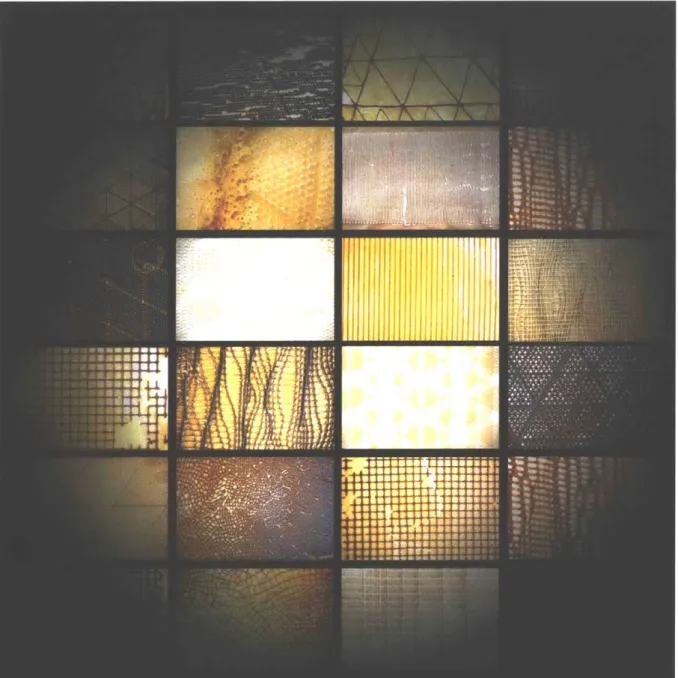
Figure 1.10 - Early experiments attempting to control mechanical and optical properties in skin-shell composites by tuning the chemical properties of hydrogels, resulting in tunable mechanical and optical properties of skins and shell patterns. Photo: Nicolas Lee.
Specifically, we were interested in how water landed on, was differentially immobilized by, got absorbed into, and evaporated out of the pectin skins because these features could be modulated to control how the contractile forces of the chitosan-cellulose lines would be resisted, stored as potential energy, or exacerbated. Practically, humidity and rain can land on a material, stay there, drip off, get absorbed, or evaporate away. In biopolymer-based materials, in particular, water retention and loss largely determine mechanical properties such as stiffness and conformation. While this phenomenon is not a new discovery, its utility in architecture has yet to be explored.
Immobilizing water in the forms of humidity and rain requires chemical or electrostatic attraction, or both. Thus, the chemical components and surface features of a pectin skin determine how water is sequestered from the atmosphere, stored, and utilized to do work. Moreover, PECs are generally permeable to all electrolytes, but impermeable to macroparticles."
To investigate the surface features and hydrophilicity of the pectin skins used in Aguahoja I, we first ran 1 cm x 1 cm samples through an atomic force microscope (JPK Instruments NanoWizard 4a AFM) running in Quantitative Imaging (QI) mode to assess mechanical properties at 220C and 65% relative humidity. The mapping resolution was set at 256 x 256
pixels and the scan size was between 10 x 10 m2 and 1
x 1 m 2. The baseline was constantly
updated to compensate for changes in the setpoint.
A non-contact cantilever (NCHR, Nano World, resonance frequency = 320 kHz) with a silicon
probe was used to measure samples. Its stiffness was 60 nN and z-length was 50 nm. The pixel time was set to 12 ms, for repeatability. A polystyrene (2 GPa) test specimen (PS-LDPE-GS, Veeco Metrology Group) was used to fit the tip radius after running a specimen.
The five pectin skin compositions 4as well as their corresponding surface features and elastic moduli are shown in Figure 1.10.
35% apple pectin (w/v), 2% chitosan (w/v), 5% vegetable glycerin (v/v)
0
2 4 6 8 10PI
29% apple pectin (w/v),8% ditosan (w/v) 5% vegetable glycerin (v/v)
-A-2 4
RMS: 11.17 nm Young's Modulus: 1.2 MPa
RMS:16.82 nm
Young's Modulus: 1.6 MPa
6 8 10
29% apple pectin (w/v), 8% chtosan (w/v) 5% vegetable glycerin (v/v), 5% glacial acetic aad (v/v) 80- 6 0- -20-0 2 4 6 8 RMS: 14.97 rm
Young's Modulus:1.7 MPa
10
35% apple pectin (w/v), 2% ditosan (w/v) 5% vegetable glycerin (v/v), 1% glacial acetic acid (v/v)
'4
1
RMS:11.23 nm
Young's Modulus:1.3 MPa
0 2 4, 6 8 10
35% apple pectin (w/v), 5% vegetable glycerin (v/v)
RMS: 4.17rm
Young's Modulus: 1.5 MPa 40 -1
20] .: /%, -, /V"\/ Aw P V-~ v~f /
0- \_ _
-20-0 2 4 6 8 10
Figure 1.11 - Surface roughness measurements and elastic moduli of the five pectin skins used in Aguahoja I.
27
-A v IV\j 80- 60- 40- 2 0--20 0 60 40 -20 0 80 60 40 20 0 -20 80 60'
-Contact Angle Hysteresis: Based on this information, the logical hypothesis was that a rougher
surface would have more friction if a water droplet were to land on it. We tested this hypothesis by evaluating the contact angle hysteresis (CAH) of a water droplet on a tilted surface, using a VCA Optima video contact angle system (AST Products, Inc., Billerica, MA). We also tested the modulatory effects of new ionic groups on the surface features of these pectin skins, calcium carbonate, xanthan gum, alginate, casein, and titanium dioxide were used as fillers for the 35% pectin (w/v), 5% vegetable glycerin (v/v) skin.
In general, adhesive forces between a liquid and solid make a liquid droplet spread over a surface. Conversely, cohesive forces within the droplet cause it stick together and avoid surface contact.16 A contact angle (CA) is the angle at which the adhesive and cohesive forces
equilibrate, as a liquid-vapor interface meets a solid-liquid interface. Accordingly, a CA of 0° indicates perfect wettability; a highly wettable surface will have CA between 00 and 900; a hydrophobic surface will have a CA between 90° and 180°; and a non-wettable surface will have a CA of 180.16 CA is defined by Young's relation, as follows:
Cos 6y = LV
cYsv
--YSL
Where YLv, Ysv, and YSL are the liquid-vapor, solid-vapor, and solid-liquid interface energies that result from adding up all the capillary forces acting on the line of contact and equating them to zero. However, this relation assumes a perfectly flat, rigid surface. A droplet on a real surface will deform due to surface curvature, surface roughness, the free energy of the droplet, ambient temperature, humidity, Laplace pressure, and a host of other factors. Thus, an equation relating the contact angle 0 to the thermodynamics of the bulk material as well as the energy at the three-phase contact boundary and the surface curvature can be described as
follows 17:
B (cosa) _ (sin(a) cos(a) + 2) (sin(O) cos(O) + 2)
Where the constants A, B, and C are defined as
A = YSV-YSL B = ,and C =
YLV ' YLV 3YLV
This equation assumes uniform curvature and a homogeneous surface. The Cassie-Baxter equation describes the arc angle of an equilibrated water droplet on a heterogeneous surface,
as follows:
cos(*) = rf fcos(y) +
f
-1Where r is the roughness ratio of the wet surface andf is the fraction of surface area covered
by a liquid.16
Importantly, the two equations mentioned above only consider differential deformation of a droplet due to environmental and interfacial factors; they do not consider the movement of a droplet along a rough surface, or the contact angle hysteresis (CAH).18
Hysteresis is a an indication of how much liquids stick onto a surface, and is defined as the difference between the advancing and receding arc angles of a droplet moving along a surface, as follows:
CAH =CAadv - CArec
If the contact angle at the front of the droplet, CAd, is greater thanth he receding angle, CArec, then the droplet will flow along the surface, in the direction of the advancing angle.1 8
A small
contact angle hysteresis indicates little resistance to the motion of the droplet due to surface roughness. High contact angles indicate increased contact between the surface and water droplet.
Ultimately, hydrophilicity has to do with a solid's outermost chemical groups.19 In surfaces with similar structures, like our pectin skins, differences in wettability are due to differences in atomic packing. For instance, using a new ionic group to create branched chains between pectin and chitosan will induce poorer packing than in a surface with straight chains. A lower critical surface (Yc) tension makes a material surface less hydrophilic.
Moreover, the pectin skins are low-energy surfaces because their liquid-vapor tension (YLV) is low and the bonds that hold them together (e.g, hydrogen bonds and van der Waals forces)
are relatively weak and easy to break. Thus, they generally permit either partial or complete wetting. Interestingly, given that the mechanical properties of these skins change so much in response to temperature and humidity, they can be considered dynamic surfaces. This suggests that they undergo significant changes in surface energy when prompted by a given stimulus, which means that their hydrophilicity can be tuned through chemistry and environmentalconditions.14
Pavilion Pectins 35% pectin (w/iV) 2% At.- (w/v) 5% glycerin (V/V) 29% pecan (w/v) 8% dn.- (w /v) 5%glycedn(v/v) 29% pt WM 8% chtasan(WN) 5%acaCIad(/ ) 5%gycudn(VA,) 35% pcI(w/V) 2% de- (v/v) 1% Sec acd (v/v) 5% glycerin (v/v) 35% pectn (W/V) 5% glycerin (v/v)
..
...
... . .. . . . .. . . .Figure 1.12 - Contact angle hysteresis (CAH) of the pectin skins used in Aguahoja I as well as a new set of skins with added ionic groups.
31
New Ionic Groups
35% pecan(w/v) 8% caain(w/v) 5% glystin (v/V) 35% p.cukn(w/v) 1% eunen- A (w/v ) 5%glycesini(vi) 35% pctin(w/) 1% anglu m(m) 5%glyced (/VI) 55C 35% Pectin&(w/V) 2% malinfiber (w/v) 5% glyerin (w/v) 35% Pectin(w/v) 2% .40mho (w/v) k -5% glycerin (v/V)
Here, adding in casein and xanthan gum dramatically increased the tilt angle, while adding alginate and inulin fiber from banana peels significantly decreased it. Thus, the addition of ionic groups from other organic waste streams to basic polyelectrolyte complexes could tune the hydrophilicity of pectin skins. In Aguahoja I, this was important because a pectin skin that could take up more water from the atmosphere would maintain flexibility after the chitosan-cellulose shell material had been printed onto it; whereas, one that was less hydrophilic would become more rigid and brittle at ambient conditions. A greater loss of water over time would cause more shape deformation and elasticity, while those that absorbed less water would be more brittle.
.9
(
I)a~
Da% 42, 1 0hours. 3(1' R11 Da%
~42.I1
22 hours. 713 RID~av
Figure 1.13 - Shape change of skin-shell composites over time and through a range of ambient relative humidity. Photo: Andrea Ling.2 0
These phenomena are important in architecture because they point toward buildings that will one way respond to heat and humidity to passively thermoregulate. Specifically, shape change and evapotranspiration can enable dynamic environmental responsiveness that is controlled via material chemistry, computational design, and digital fabrication. As opposed to an air conditioning system, these materials do not require energy input or digital control.
However, material chemistry and properties can only be useful in a building if contextualized within a hierarchical design and finely tuned during the fabrication process. Computational design was an incredibly useful tool toward this end because it enables several parameters to be considered in a generative design process. Therefore, simulation and fabrication information modeling (FIM) 2 became
a
framework through which to drive design generation with material chemistry, environmental conditions, fabrication parameters, and ecological function.a) GLOBAL ENVIRONMENTAL MAPPING & LOCAL PROPERTY DESIGN for tentative panet shapes and configurations
Shape Wind loads Solar irradiance Localexposure Local oads Stiffness gradient Chemical c
bJ INITIAL SHAPE. PANEL ASSEMBLY & PATTERN EXPLORATION:
Inside view Frnt aprture and side view
omposition gradient Example pnnted panel
Patterned front and side views
Figure 1.14 - A computational approach to generative design incorporating material properties,
environmental conditions, fabrication parameters, and ecological function. Photo: Christoph Bader.2
Biologic Augmentation: After the pavilion had been put together, I attempted to further modify
these water absorption and sweating behaviors by growing nature's gaseous air pollutant and humidity sponge22, moss, in pectin hydrogels. Moss only needs moisture and sunlight to grow, and their growth can be revived at any time, making them ideal modifiers of ecofunctional infrastructure.23
While miscroscopy showed that the moss could live in the dried panels, further research is needed to prove that this is a worthwhile path to follow.
~;W7
4a
Figure 1.15 - Moss growing inside dried pectin films. Magnification: 4x. Photo: Nicolas Lee.
1.4 Ecofunctionality
The panels' rate of dissociation in water was an important design parameter in the pavilion.
In short, infrastructural symbionts derived from organic waste streams should return to the
resource cycles they came from.
2To an extent, dissociation rates can be controlled with the
aforementioned tricks enabled by polyelectrolyte chemistry. In particular adding in new ionic
groups that lessen ionic strength and extend polymer chains is an effective tactic through
which to achieve this goal.
WaterContent
4I~
Figure 1.16 - Simulation of water-induced dissociation in samples with varying material distributions.24Photo: Andrea Ling.
w e1
ledge 2 center 3 perimeter 4 diagonal
Figure 1.17 - Effects of material distribution in samples with equal mass on dissociation in water.20
Photo: Andrea Ling.
(
T1 = 6days, 2 hrs, 42 nun T2 = 9 days, 7 hrs, 45 iun T3 = 10 dav, 2( hrs, 23 ni
A
T4 = 13 days, 5 hrs, 5 mii T5 = 14 days, 7 hrs, 4) nun T6 = 17 days, 4 irs, 8 nun
T7 = 17 davs, 0 hr, II T = 17 dav!I, 2 ius i iin
T10 = 10 days, 11 hrs, 39 min Tl hr, 14 in T12 2 mn
Figure 1.18 - Water-induced dissociation of maquettes in high humidity, over a period of 25 days.
TO=17 dini Iar - i
TI = 0 nn T4 = ;4 min T: 1I n' T5 = 1 hr 14 nun T3 34 mn T6 = 2 hrs -4
T7= 7 hrs 4( uui TS = I a -ir. -an T9= ,aI X> ar' :1nun
TIO = 8 d- . T11 = 12 days 20 hirs 55 nun T12= 20 days 13 nun
Figure 1.19- Water-induced failure of maquettes in high ambient temperature and relative humidity, over a period of 20 days
39
1.5 Conclusions
Will these materials ever be used in buildings or products? Absolutely not. They are brittle, change from batch to batch, somewhat unpredictable, and do not last for a long enough period of time to be used as materials for buildings or products. However, the process of designing and evaluating materials in terms of their ecofunctionality is a valuable theoretical framework that I hope to advance in my future research.
Part 2
-
Aguahoja II
2.1 Rationale
The second pavilion in the Aguahoja series expanded upon the computational design, material, and fabrication research undertaken during the creation of Aguahoja I, with much greater emphasis being placed on how aesthetic complexity within panels could be achieved through data-driven design. Within the hydrogels, viscosity and spread function became increasingly important parameters to modify to enable chromatic gradients that differentially bled into each other during the printing process. To do so, the following common kitchen ingredients were used as colorants:
1. Beet root 2. Green spirulina 3. Blue spirulina 4. Matcha powder 5. Turmeric + sulfur 6. Pink pitaya
7. Titanium dioxide + calcium carbonate
8. Squid ink 9. Pandan leaf 10. Mustard seed 11. Cinnamon
12. Chitosan (to modulate opacity and rigidity)
Although the rationale for doing so was more artistic than functional, I would like to think that as a reader scrolls through the following images presented in this chapter, he or she will think about how the skins are beginning to look like those of real animals. This is important because living things have evolved to respond to specific colors on other living things. These
can indicate changes in the environment, the existence of a nearby food source, impending danger, or the presence of potential mates, among other stimuli.
Incorporating other sensory stimuli - such as smells and surface textures coming from the colorants - can facilitate the creation of an ecofunctional language through which to communicate with and coordinate the behaviors of other organisms that occupy specific niches within an ecosystem. This again takes advantage of our abilities to conceptualize and design complex systems, while a majority of ecosystemic functionality has so far developed out of disparate pockets of necessary behavior.
Figure 2.1 - Closeup of the Aguahoja II skins. Photo: Ramon Weber.
a
'Ii
Photos: Joe Kennedy.
Ow
~,9
Photos: Joe Kennedy.
45
Mw
ilk a
--
-w-P-K
II~itus:Iu~iixeflflcd\
Photos: Joe Kennedy.
2.2 Conclusions
I
have put this project into my thesis because it is suggestive of communicative infrastructure that may one day materialize in our habitats. While it is apparent that the skins have gained some complexity in the process of experimenting with colors, scents, textures, and gradients,I am really excited about applying this logic of functional gradation to growing building
materials using workable cell lines, as can be seen in Part 3 of this thesis.
Part 3
-
Opportunistic Chimeric Design
3.1 Rationale
The utility of Nature's most powerful capabilities is entirely context-dependent. Adaptations themselves are neither good nor bad; they just have a magnitude. Using this logic, bone cancers are ideal fabrication systems with which to co-create ecofunctional infrastructure because of the overpowering abilities they have developed through millions of years of evolution. To name a few, they create and repair massive, functionally graded structures; outmaneuver our most powerful immune responses, environmental extrema, and drugs, with minimal resources; and remodel their extracellular environments (ECMs) to optimize their proliferation and material production.
As an engineering material, bone - including cartilage, tendons, ligaments, muscle, and fat
- is a lightweight structural material with excellent fracture toughness and fatigue resistance, as well as an ability to self-heal and dynamically respond to different loads. Therefore, engineers have attempted to mimic bone for a variety of products and structures. 2,6 2 However, the derivation, fabrication, and degradation of such mimics are both unsustainable and hard to control at the design resolution that makes bone so resilient. Thus, I have chosen to engineer osteosarcoma (ATCC© CRL-1547 , MNNG/HOS CI #5) and chondrosarcoma (ATCC CRL-7629', Hs819T) cell lines to grade between hard bone and soft, elastic cartilage, respectively,
to gain access to nature's design palette and fabrication machinery. These specific cell lines were chosen because they were deemed to be suitable for transfection and proliferated quickly. Doing so requires engineering both the cells and their environment across multiple time and length scales. At the genome level, I have stably transfected genes involved in proliferation and material production to maximize and speed up the material output of each cell line. With respect to the cells' environment, I have created programmable hydrogels usingsensor cocktails, mechanical and gas diffusion gradients, and embedded chemical and electrical signals to influence the cells' density, growth direction, movement, and growth rate.
The ultimate goal of this project is to demonstrate a promising set of techniques and fabrication agents with which to grow ecofunctional materials and structures that participate in the construction and maintenance of their habitats, and degrade back into the resource cycles they came from after they have served their purpose.
3.2 Introduction
The most impactful adaptations in natural history have been motivated by extreme poles of competition and cooperation. Many of our most powerful technologic innovations, for example, have been developed to inflict massive damage in order to gain power and resources. However, adaptations are simply attributes or mechanisms that enable organisms to outcompete or outcooperate those with less optimal ecological fitness, and often benefit from millions of years of trial and error. As such, the context in which they are expressed can transform a competitive capability into one that is mutualistic - the constant here being the magnitude. This suggests that precisely designing the context in which nature's most powerful advancements are produced, expressed, and evolved can dramatically enhance our own fitness within, and the overall functionality, of our ecosystems.
For instance, the same capabilities that enable tumors to be so destructive inside a body actually make them ideal co-designers and co-fabricators of our habitats. Theoretically, the only constraints on tumor growth should be the availability of resources, vasculature, and structural integrity. Their robust mechanical properties, quick and effective adaptiveness, and infinite growth in resource-limited conditions may enable them to be more effective engineers and builders than our most sophisticated construction companies.
Specifically, osteosarcomas make hard, mineralized bone, while chondrosarcomas synthesize cartilage. Gaining control over these cells' micro-scale geometry, material distribution, and density can enable the creation of strong, lightweight cellular solids27 and structures that not only outperform the best of our current building materials, but also heal themselves, kill surface-adherent pathogens, thermoregulate, and harness energy.
There are many potential benefits in doing so. At the ecological scale, growth of entire buildings can be executed by self-replicating cell lines, rather than diverting natural resources from our habitats faster than they can be replenished. At the building scale, quiescent cells living in the structure can be triggered to heal it when harmed or degrading; synthesize digestive enzymes to turn waste into energy; responsively modulate the structure's properties
to thermoregulate; mass-produce antibodies to kill surface-adherent pathogens before they infect us; and even one day coordinate thought processes to control these capabilities and evolve new ones. In other words, designing the fabrication technology and primordial environment that direct the growth and evolution of cancer cells can actually help heal our planet and protect us from diseases, and even enable aesthetic detail and complexity that cannot be achieved using other manufacturing processes.
Logistically, there are four dimensions of programmability involved in the designed biogenesis of materials: genes, environment, fabrication, and time. If environmental signals can be spatially, temporally, and hierarchically organized to precisely direct cancer cells to grow along specific pathways, aggregate or metastasize on command, and alter their material products, the resulting structures may realize a design intent with high fidelity. However, cancer cells change and are changed by their environment. For instance, a single cancer cell will undergo a multitude of genetic and transcriptional changes during one experiment in a lab setting, such that all populations derived from it are genetically heterogeneous.2 This fourth dimension of constant dynamism makes controlled fabrication both challenging and potentially more rewarding than traditional manufacturing techniques.
Living cells can simply do more than the polymer chains that comprise plastics or even biologically derived materials. Moreover, given that there has been so much research and funding devoted toward cancer, doctors and scientists have developed our most advanced and thoroughly validated tools for directly imaging and manipulating specific cell lines and their material products. Our greatest capabilities are brought out when the stakes are highest.
3.3 Background
Biofabrication is a relatively new field, with ancient origins. Its defining characteristic is, perhaps, complexity. Normally, extreme care is taken to grow cells in a material system -usually, a hydrogel or scaffold - that accurately recapitulates their native physiologic environment. As such, artificial ECMs are essentially programmable media used to talk directly to cells. Physical properties such as pore size, network geometry, stiffness, surface roughness, and viscosity are the primary mechanical means through which cells decipher when to proliferate, aggregate, migrate, and differentiate. In addition, these signals impact how cells specifically alter their extracellular matrices (ECMs) to grow, self-organize, and sustain themselves.
A cell must be able to move through a biocompatible gel or scaffold by enzymatically breaking
noncovalent bonds. At the same time, the gel or scaffold has to remain hydrated and structurally stable to support the material products and cellular aggregates forming within it. Thus, pore size has to relate to both the cell diameter and tissue morphology.29Due to their stretchable actin cytoskeletons, osteosarcomas and chondrosarcomas utilize complex mechanotransduction signals in response to traction forces from their surroundings to synthesize and secrete specific enzymes and other ECM components to optimize their growth environment and create tissue.3 0 Thus, polymer chains must have adhesive proteins and proteoglycans that each cell type can recognize and attach to.
Moreover, specific signaling factors are secreted to coordinate responses from other cells regarding when conditions are sufficient to grow into tissues. Out of necessity, this process includes the production and recruitment vasculature for nutrient delivery. Finally, the meso-scale network architecture and topography must direct these cellular aggregates to produce the desired tissue geometry, while also ensuring the cells stick to the right places and can release themselves should they need to migrate via diffusion and/or affinity.
Beyond pure mechanics, fields, forces, and flows of chemical metabolites, ions, growth factors, gases, drugs, and other signals must be topologically templated in order to engage cells in
specific feedback loops.32 In turn, cells, especially cancer cells, initiate conditional epigenetic
responses by altering their own physiology, that of their neighbors, and/or the makeup of their ECMs. Furthermore, there are multiple ways in which cells can aggregate, from sheets to spheroids and everything in between, which largely dictate the type of material system produced, its geometric and mechanical properties, and the extent to which large-scale tissues can be created. Crucially, environmental remodeling and recruitment of somatic cells enable tumors to commandeer vasculature to ensure a constant supply of nutrients, especially as they grow larger and more heterogeneous. 33
Here, fabrication methods come into play. Bioprinting is a layer-by-layer extrusion process that enables multiple materials and cell types to be spatially distributed, based on information from a design file, within a printed structure. However, given that there are so many parameters to consider in such a process, many complexities can either be detrimental or exponentially beneficial to such a fabrication process.
Depending on how long and under which conditions the cells are cultured - i.e., whether they are grown as spatially separated individuals or coerced into other types of aggregation
- as well as how many cells are extruded per unit volume in an additive manufacturing process, vastly different aggregate geometries, materials, and material properties will result. Moreover, depending on the force with which cells are secreted through a nozzle with a particular diameter or the extent to which an extrusion nozzle disrupts an already printed network, cells may not live through the fabrication process.3 4 If the cells do live through the process, they, along with their signaling factors, should remain at or near the spot of deposition until prompted to move.
Even often-overlooked logistics such as freezing cells in the right type of liquid, for an appropriate amount of time; handling and printing the cells carefully, without puncturing or crushing them; giving them the
right
dosage of growth media; keeping only the cell types of interest in the scaffold or gel; and finding disruptive or complementary combinations of signaling factors can dramatically alter their viability and behavior.35In particular, the sourceof any growth medium or matrix component can create unintended consequences based on misfolded proteins, cytotoxic degradation products, immune responses, and other unpredictable events.36
In addition, hydrogels alone cannot typically support complex, large-scale constructs, so some form of biocompatible support is usually printed or laid down.3 4 This can confound all mechanical and chemical signaling factors programmed into the ECM. Factor in other cell types - each of which requires a different set and quantity of ECM properties, food, and signals - and these confounds will alter the behavior of all other cells in terms of complex functional gradation, hierarchical organization, vasculature, and epigenetic changes over time. Even after all of these considerations have been accounted for, this background survey only scratches the surface of biofabrication's complexity and potential.
3.4 Related Work
Genes: The first criteria that need to be satisfied in order to grow large structures using bone
cancer cells are rapid reproduction and massive material output. One way to achieve these goals is to borrow from other structures that satisfy these stipulations. For instance, deer antlers consist of some of the fastest growing mammalian tissues. They are able to grow up to 2 cm per day and produce 10 kg or more of bone tissue within a 2-3-month period.37
Ker et al. (2018) found that Under identical culture conditions, deer antler reserve mesenchyme (RM) cells proliferated 8.6-11.7 times faster than and exhibited 17.4 times the calcium mineralization of human mesenchymal stem cells (hMSCs), paralleling in vivo conditions. Two key proliferation and mineralization genes in fallow deer, uhrfl and s100a10, played large parts in these abilities. Importantly, expression of each or both in hMSCs dramatically increased one or both parameters, respectively.38 In tumor cells, uhrfl mediate the ubiquitination of key genes involved in tumor suppression and cell cycle checkpoints, 39 while
s100a10 encodes key calcium-binding proteins that are used to make bone."
Environment: Aldaye et al. (2010) have pioneered a technique for creating structurally tunable
DNA-based extracellular matrices that enable precise control over biophysical and chemical signaling effectors. DNA nanotechnology utilizes base-pairing to create predefined one-,
two-, and three-dimensional structures that direct the growth of cellstwo-, organized the topology of
proteins and nanoparticles, and facilitate diagnosis and drug delivery. These authors have combined tools and techniques from DNA nanotechnology with protein engineering to generate a new class of DNA/protein extracellular matrices that can parametrically control cell morphology, behavior, signaling, and transcription factor localization.4 1
Doing so also enables evasion of sourcing problems and imprecision in traditional hydrogel matrices that result from misfolded proteins, immune responses, and mechanical inhomogeneities. In short, knowing exactly what is in the environment one is designing is incredibly useful in such a complex process. Moreover, specific signaling factors, attachment