409
Density-dependent processes in the transmission of human
onchocerciasis: relationship between the numbers of
microfilariae ingested and successful larval development in
the simuliid vector
M. G. BASANEZ17*, J. H. F. REMME2, E. S. ALLEY3, O. BAIN4, A. J. SHELLEY5, G. F. MEDLEY6 and R. M. ANDERSON7
1
Department of Biology, Imperial College of Science, Technology and Medicine, Prince Consort Road, London SW7 2BB, UK
2
UNDP/World Bank/WHO Special Programme for Research and Training in Tropical Diseases, World Health Organization, 20 Av. Appia, CH-1211 Geneva 27, Switzerland
3
Onchocerciasis Control Programme in West Africa, P.O. Box 549, Ouagadougou, Burkina Faso 4
Museum d'Histoire Naturelle, 61 rue Buff on 75231, Paris Cedex 05, France 5
Natural History Museum, Cromwell Road, London SW7 5BD, UK 6
Department of Biological Sciences, University of Warwick, Coventry CV4 7AL, UK 7
Department of Zoology, University of Oxford, South Parks Road, Oxford OX1 3PS, UK (Received 27 July 1994; revised 7 October 1994; accepted 7 October 1994)
SUMMARY
A previous paper reported that the intake of Onchocerca volvulus microfilariae (mff) by different species of Simulium is essentially proportional to the parasite load in the skin of infected carriers. This paper examines the fate of the ingested mff in susceptible vectors to assess the relationship between parasite intake and infective larval output in blackfly species with and without well-developed cibarial armatures. Analysis is based on data from 3 onchocerciasis endemic areas: Guatemala (S. ochraceum s.L), West Africa (S. damnosum s.l./S. sirbanum) and the Amazonian focus between South Venezuela and Northern Brazil (S. guianense and S. oyapockense s.L). The data, which include published and unedited information collected in the field, record experimental studies of parasite uptake by wild flies maintained in captivity until the completion of the extrinsic incubation period. The relationship between L3 output (measured as the mean number of successful larvae/fly or, as the proportion of flies with infective larvae) and average microfilarial intake, was strongly non-linear. This non-linearity was best represented by a sigmoid function in case of armed simuliids (S. ochraceum s.L,
S. oyapockense s.L), or by a hyperbolic expression in that of unarmed flies (S. damnosum s.L, S. guianense). These results
are compatible, respectively, with the patterns of 'initial facilitation' and 'limitation' described in culicid vectors of lymphatic filariases. A maximum mean number of 1—3 L3/fly was observed in all 4 vectors. It is concluded that O. volvulus larval development to the infective stage is regulated by density-dependent mechanisms acting at the early phase of microfilarial migration out of the blackfly's bloodmeal. Damage by the bucco-pharyngeal armature may also be density dependent. A hypothesis, based on this density dependence is forwarded to explain initial facilitation, so far only recorded in vectors with well-developed cibarial teeth. Our results provide quantitative support for the conjecture that chemo-therapy alone is likely to have a greater impact on reducing onchocerciasis transmission in endemic areas where the main vector has a toothed fore-gut than in foci where the vectors have unarmed cibaria.
Key words: Onchocerca volvulus, simuliid vectors, larval development, density dependence, limitation, facilitation.
INTRODUCTION
The life-cycle of filarial nematodes consists of populations of parasites within the vertebrate host and the insect host, linked by parasite stages transmitted in both directions. The regulation of these parasite populations is mediated by density-dependent mechanisms acting at one or several points of the two-host life cycle (Dietz, 1982; Plaisier
et al. 1990, 1991).
* Reprint requests to Maria-Gloria Basafiez, Department of Zoology, University of Oxford, South Parks Road, Oxford OX1 3PS.
The demographic dynamics of macroparasites such as the filarial worms depends on the magnitudes of the birth, death, immigration and emigration rates within either or both hosts (Anderson & Gordon, 1982). Reproduction takes place only in the definitive host and there is no direct multiplication of parasites within either vertebrate or vector host. Density dependence translates into one or more of these rates being a function of the population density of the appropriate parasite stages (Dietz, 1988). This function may result in decreasing (negative feed-back) or increasing (positive feed-feed-back) rates of population growth as density rises. Although only negative feed-back processes are instrumental in
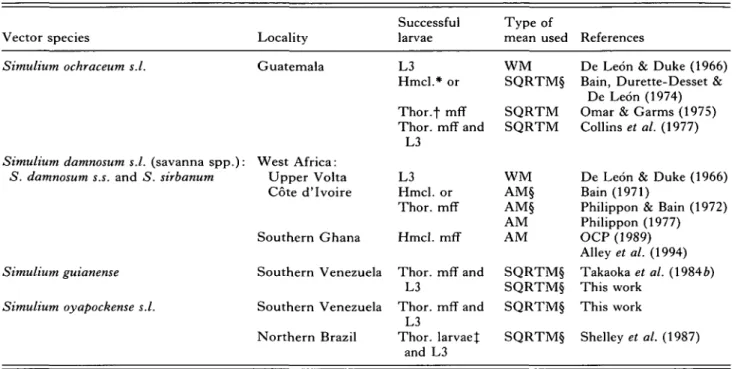
Table 1. Sources of data used in this work
Vector species Locality
Successful larvae
Type of
mean used References
Simulium ochraceum s.l.
Simulium damnosum s.l. (savanna spp.): West Africa:
5. damnosum s.s. and 5. sirbanum
Simulium guianense Simulium oyapockense s.l. Guatemala West Africa: Upper Volta Cote d'lvoire Southern Ghana Southern Venezuela Southern Venezuela Northern Brazil L3 Hmcl.* or Thor.f mff Thor. mff and L3 L3 Hmcl. or Thor. mff Hmcl. mff Thor. mff and L3 Thor. mff and T 7 Thor. larvaej and L3 W M SQRTM§ SQRTM SQRTM W M AM§ AM§ AM AM SQRTM§ SQRTM§ SQRTM§ SQRTM§
De Leon & Duke (1966) Bain, Durette-Desset &
De Leon (1974) Omar & Garms (1975) Collins et al. (1977)
De Leon & Duke (1966) Bain (1971)
Philippon & Bain (1972) Philippon (1977) OCP (1989) Alley et al. (1994) Takaoka et al. (1984 ft) This work This work Shelley et al. (1987)
* Haemocoelic microfilariae. Calculated from flies dissected between 0-5 and 12 h p.e. (see text), f Thoracic microfilariae. Calculated from flies dissected between 0-5 and 12 h p.e. (see text).
% Thoracic larvae, computed from flies dissected 24 h p.e. (see text).
§ Means calculated from raw data.
constraining population growth, positive feed-back may also play a role in population dynamics by enhancing the chances of otherwise inefficient trans-mission mechanisms (Hairston & De Meillon, 1968). In the part of the life-cycle taking place in the vector host, density dependence may act on the elements of vector competence (Spielman & Rossig-nol, 1985; Dye 1992a). More specifically it may influence the input of microfilariae (mff) into the insects, the survival and development of the larvae throughout the extrinsic incubation period, and the output of infective (L3) stages. More indirectly, it may act by affecting the survival, behaviour, etc. of the vector. In the particular case of human oncho-cerciasis, a previous paper (Basanez et al. 1994) explored the first component of the transmission of
Onchocerca volvulus from the human host to the
simuliid vector, i.e. the microfilarial intake by the flies from the skin of infected carriers. Data from three different endemic areas in Africa and Latin America showed an almost linear relationship be-tween dermal and ingested parasites in the ranges of microfilarial loads explored. However, it has been observed that the numbers of larvae successfully developing to the infective stage in filariasis vectors generally do not increase in the same proportional fashion (Jordan & Goatly, 1962; Obiamiwe, 1977; Rosen, 1955). On the contrary, in most cases, there is a significant loss of parasites throughout the period required for larval maturation.
Among the factors that can affect the survival and development of the parasites within the vector are (1)
genetically determined host susceptibility or re-fractoriness to infection (Curtis & Graves, 1983), (2) the damage caused to ingested parasites by the cibarial/buccopharyngeal armature of the flies when it is present (Coluzzi & Trabucchi, 1968; Omar & Garms, 1975; McGreevy et al. 1978; Reid, 1978, 1994), (3) the dynamics of formation and structure of the peritrophic membrane, secreted around the bloodmeal (Lewis, 1950, 1953; Duke & Lewis, 1964; Reid & Lehane, 1984; Miller & Lehane, 1993) and (4) the mounting of specific and non-specific insect defences to parasite invasion (Townson & Chai-thong, 1991; Ham, 1992). Some or all of these factors may be influenced by the density of the corresponding parasite stages.
The study of the events involved in the passage of ingested mff towards the site of final larval de-velopment in several vectors has led to the rec-ognition of 3 main patterns, for which the terms 'limitation', 'facilitation' and 'proportionality' have been coined. They refer, respectively, to the fraction of successful larvae relative to the total parasite intake being a decreasing, an increasing or a constant function of the number of mff ingested (Bain, 1971, 1976; Pichon, 1974; Pichon, Perrault & Laigret, 1974; Prod'hon et al. 1980; Southgate & Bryan, 1992). They correspond to negative feed-back (the rate of successful incorporation of larvae within the insects decreases with parasite intake), positive feed-back (success increases along with density), and density independence respectively. In these studies, ' successful' mff have been defined as those larvae
Onchocerca volvulus larval development in simuliid vectors 411
managing to get out of the bloodmeal into the haemocoele or into the fly's location where matu-ration occurs, or actually completing their devel-opment to the infective stage.
It has been suggested that the non-linearities inherent in the concept of 'facilitation' and 'lim-itation' may have different and important impli-cations for the control of these infections by, respectively, creating or not creating a transmission threshold below which the parasite will not persist in the host population (Brengues & Bain, 1972; Pichon
et al. 1974; Bain, 1976; Webber, 1991; Southgate &
Bryan, 1992). Such ideas are somewhat speculative at present due to the lack of a quantitative model for the population dynamics of the lymphatic filarial worms in both the definitive and vector hosts (Dye, 19926, 1994; Dye & Williams, 1994). However, if these patterns are found to be equally applicable to the relationship O. volvulus-Simulium, a faster progress in testing these hypotheses could be made due to the more advanced stage of development of such models in human onchocerciasis (Dietz, 1982; Davies, Weidhaas & Haile, 1987; Plaisier et al. 1990; Anderson & May, 1991; Davies, 1993).
This paper investigates the evidence for and nature of density dependence in the second step of the incorporation of O. volvulus parasites by the simuliid vectors, namely, the rate at which mff from an infected bloodmeal succeed in reaching the fly's thoracic muscles, where they undergo further de-velopment. We examine several parasite-vector combinations present in endemic areas of human onchocerciasis. These combinations include vectors with well-developed cibarial teeth (S. ochraceum s.l. from Guatemala and S. oyapockense s.l. from the Venezuelan-Brazilian border) as well as species without such an armature (S. damnosum s.l. from West Africa and S. guianense from South Venezuela). Analyses are based upon published and unpublished data sets, and on new field studies conducted in Latin America.
We present the analyses of three different types of data sets. First, the relationship is explored between the mean numbers of mff ingested and the resulting mean numbers of successful larvae in blackfly species with and without a cibarial armature. A functional relationship between microfilarial input and larval output is thus obtained. Second, the fraction of flies harbouring successful larvae for different mean successful larval loads is studied in order to obtain an estimate of the degree of larval aggregation among these flies. Third, these estimates of larval ag-gregation are used together with the functional relationships calculated previously in order to exam-ine the prevalence of flies carrying successful larvae as a function of the mean microfilarial intake.
This procedure provides a way (1) to compare the output of successful larvae (measured as mean numbers per fly and as fractions of potentially
infective flies) for different levels of microfilarial input in species possessing and not possessing cibarial teeth, (2) to investigate the resulting patterns and to compare them with those proposed by the hypotheses of limitation or facilitation and (3) since the approximate proportionality between parasite intake and dermal load has already been demon-strated (Campbell et al. 1980; Alley et al. 1994; Basanez et al. 1994), to advance hypotheses about the efficacy of various control measures in areas with either type of vector.
MATERIALS AND METHODS
Sources of data
Table 1 summarizes the sources of data analysed in this paper and the criteria for success used in the different studies. The definition of the category 'successful larvae' comprises those mff that reach the haemolymph of the insect on their way to the thoracic muscles (haemocoelic mff), those that actually penetrate the muscle cells (thoracic larvae) and those that manage to develop to the infective stage (L3).
Parasitological and entomological procedures
All the results presented here are based on fly-feeding experiments, in which samples of wild flies to the main local vector species were engorged to repletion on subjects harbouring different intensities of skin infection and who, consequently, provided the flies with different mean microfilarial intakes of the local population of O. volvulus.
Assessment of the number of mff ingested, in the haemocoele and in the thorax of the flies and of the proportion of flies with larvae. In the different studies,
groups of wild flies were fed on particular body regions of the various subjects participating in the investigation in an attempt to reduce heterogeneity in the intakes. The results comprise the figures obtained for different individual carriers and/or different local parasite densities along the body of those carriers. The procedures for fly collection and dissection are the same as those described by Basafiez
et al. (1994). A subsample of the flies fed on each
volunteer was dissected between 0-5 and 12 h post-engorgement (p.e.) in order to score the number of ingested parasites (total microfilarial count within the body of the insect), microfilarial migration out of the bloodmeal (those mff that escaped imprisonment by the peritrophic membrane and were found either in the haemocoele—haemocoelic mff—or in the tho-racic muscles of the fly-thotho-racic mff—), and the fraction of flies harbouring successful mff among those dissected. The period between 0-5 and 12 h p.e. was chosen because a feature present in the published data sets and in our own observations was that mff started to appear in the thorax about 0-5 h after the
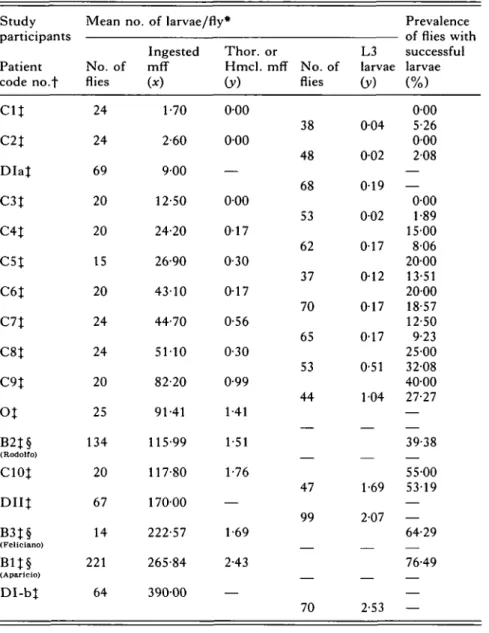
Table 2. Successful larvae of Onchocerca volvulus from different microfilarial intakes by Simulium ochraceum s.l. in Guatemala Study participants Patient code no.f
cu
C2J DIaJ C3J C4J C5J C6J C7J C8J C 9 |o%
B2t§ (Rodoiro) C10| D I I | B3J§ (Feliciano) B1J§ (Aparicio) DI-bt Mean no. No. of flies 24 24 69 20 20 15 20 24 24 20 25 134 20 67 14 221 64 of larvae/fly* Ingested mff (*) 1-70 2-60 900 12-50 24-20 26-90 4310 44-70 5110 82-20 91-41 115-99 117-80 17000 222-57 265-84 39000 Thor. or Hmcl. mff (y) 0 0 0 0 0 0 — 0 0 0 0 1 7 0-30 0 1 7 0-56 0-30 0-99 1 41 1-51 1-76 — 1-69 2-43 — No. of flies 38 48 68 53 62 37 70 65 53 44 47 99 70 L3 larvae (y) 004 002 019 002 017 0-12 017 0-17 0-51 104 1-69 2-07 2-53 Prevalence of flies with successful larvae (%) 0 0 0 5-26 0 0 0 208 — — 000 1-89 1500 806 2000 13-51 2000 18-57 12-50 9-23 25-00 32-08 4000 27-27 — 39-38 55-00 5319 — — 64-29 76-49 — — * See Table 1 for type of mean used.f D : De Leon & Duke (1966), B : Bain, Durette-Desset &»De Leon (1974), O : Omar & Garms (1975), C: Collins et al. (1977).
Body regions on which flies were fed as follows: % Back, § Fore-arms.
infected m e a l . I n t h o s e data sets in w h i c h m i c r o -filarial intakes w e r e r e c o r d e d i m m e d i a t e l y (0 h) after e n g o r g e m e n t (S. oyapockense s.l. from n o r t h e r n Brazil), it w a s t o o early to detect a n y larvae o u t s i d e t h e b l o o d m e a l a n d therefore t h e figures s h o w n for t h o r a c i c larvae w e r e calculated from different s u b -s a m p l e -s of flie-s di-s-sected at 24 h p . e .
Fly maintenance and dissection for the assessment ofL3
output. When infective larval loads and proportion of
infective flies were to be recorded, the remaining insects collected from each participant were kept alive until the completion of the extrinsic incubation period (within 6—7 days p.e. depending on the conditions under which flies were maintained in captivity). Although the methods of post-prandial
transportation and maintenance of flies were slightly different across studies, all shared the common procedures of collection of the simuliids in individual tubes generally lined with filter paper, provision of a single bloodmeal at the beginning of the experiment (the putative infected meal), more regular provision of sugar solution usually with antibiotics, and maintenance under relatively constant conditions of temperature, high humidity and darkness, achieved by keeping the insects inside insulated cages or ice-boxes (Figueroa, Collins & Kozek, 1977; Takaoka et
al. 1982). The results presented here correspond to
mean worm burdens and percentages of flies with total L3 larvae (from head, thorax and abdomen) harboured by specimens dissected from 144 h (6 days p.e.) onwards. It has been observed that
Onchocerca volvulus larval development in sitnuliid vectors 413 Table 3. Successful larvae of Onchocerca volvulus from different
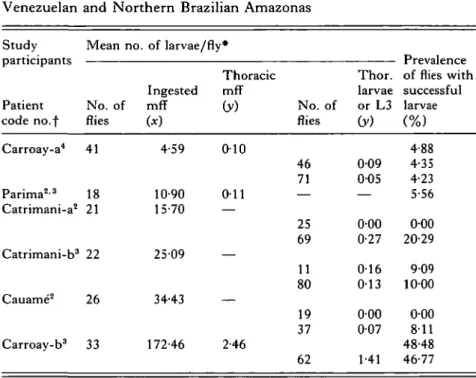
microfilarial intakes by Simulium oyapockense s.l. in Southern Venezuelan and Northern Brazilian Amazonas
Study participants Patient code no.f Carroay-a4 Parima2-3 Catrimani-a2 Catrimani-b3 Cauame2 Carroay-b3 Mean no. No. of flies 41 18 21 22 26 33 of larvae/fly Ingested mff (*) 4-59 10-90 15-70 2509 34-43 172-46 # Thoracic mff (y) 010 011 — — — 2-46 No. of flies 46 71 25 69 11 80 19 37 62 Thor. larvae or L3 (y) 0 0 9 005 000 0-27 016 013 000 007 1-41 Prevalence of flies with successful larvae \ /o) 4-88 4-35 4-23 5-56 000 20-29 909 1000 000 811 48-48 46-77 * See Table 1 for type of mean used.
Body regions on which flies were fed as follows:
f 2 Shoulders and Back, 3 Iliac zone and Buttocks, 4 Calves.
Catrimani and Cauame from Shelley et al. (1987). Carroay and Parima from this
work.
infective larvae can be recruited to the proboscis from any location in the insect during the blood feed (Duke, 1973; Philippon, 1977; Renz, 1987).
Analysis of data
Measures of the average number of larvae in the bloodtneal, in the haemocoele or thorax and of infective
stages per fly. Due to the various ways mean intakes
and mean larval loads per fly are reported in the data sources, it was not possible to select a single measure of central tendency. The means most widely used in the published literature were the arithmetic mean (AM), the geometric mean of Williams (WM) and the square root transformed mean (SQRTM). All of them are computed taking into account infected and uninfected specimens. The justification and con-ditions for their usage, as well as their formulae, have been described by Basanez et al. (1994).
Since the mean numbers of successful larvae appeared to level off along with increasing micro-filarial intakes in all data sets examined, the re-lationship between these two variables was explored by non-linear regression methods (Quasi-Newton and Simplex), with weighted least squares estimation of the parameters (weight = no. flies in each sub-sample). These analyses were performed with CSS: Statistica® (Complete Statistical System) software.
Prevalence versus intensity data. The results of the
non-linear estimations were subsequently used to
examine the relationship between the percentage of flies with successful larvae and the intensity of the initial input of mff. The fraction of simuliids harbouring potential or realized infective stages can be related to the mean larval burden per fly (y) by the following expression:
Proportion of infective flies = 1 — {1 +y/k} (1)
where k varies inversely with the degree of larval aggregation in the flies. As k^-oo the distribution tends to Poisson, whilst as k^-0 the distribution is highly contagious or aggregated (variance > mean), and can be described in terms of the negative binomial (Anderson & May, 1985).
The estimates of k obtained by this fitting procedure can then be used to predict the prevalence of flies carrying successful larvae as a function of the mean microfilarial intake, assuming different func-tional relationships between the mean L3 output (y) and the initial average input of mff (x):
Proportion of infective flies = 1 —{1 +y(x)/k}~k, (2)
where y (x) are the predictions of the different non-linear regression models aforementioned. The com-putation of k values and of their asymptotic con-fidence limits from prevalence-intensity data was performed by maximum likelihood estimation pro-cedures (Cox & Hinkley, 1974; Guyatt et al. 1990). Different assumptions about the relationship be-tween the parameter k and the mean were tested by
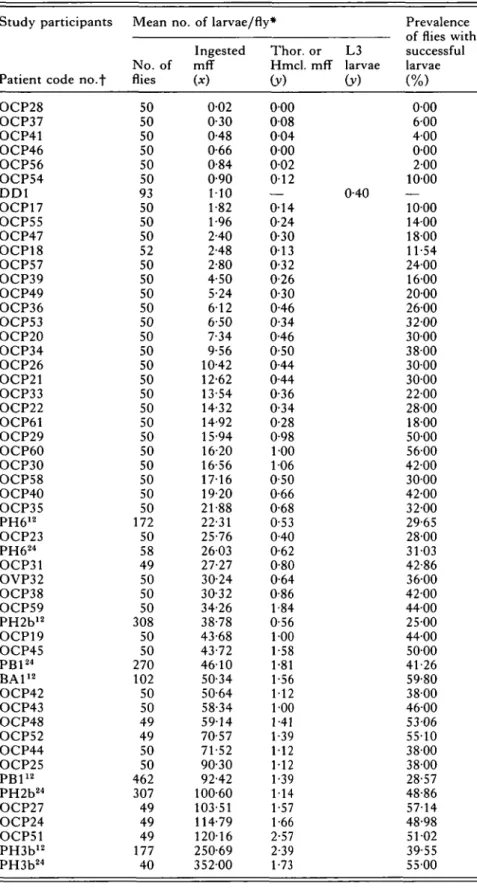
Table 4. Successful larvae of Onchocerca volvulus from different microfilarial intakes by Simulium damnosum s.l. in West Africa Study participants
Patient code no.-f OCP28 OCP37 OCP41 OCP46 OCP56 OCP54 D D 1 OCP17 OCP55 OCP47 OCP18 OCP57 OCP39 OCP49 OCP36 OCP53 OCP20 OCP34 OCP26 OCP21 OCP33 OCP22 OCP61 OCP29 OCP60 OCP30 OCP58 OCP40 OCP35 PH612 OCP23 PH624 OCP31 OVP32 OCP38 OCP59 PH2b12 OCP19 OCP45 PB124 BA112 OCP42 OCP43 OCP48 OCP52 OCP44 OCP25 PB112 PH2b24 OCP27 OCP24 OCP51 PH3b12 PH3b24 Mean no. No. of flies 50 50 50 50 50 50 93 50 50 50 52 50 50 50 50 50 50 50 50 50 50 50 50 50 50 50 50 50 50 172 50 58 49 50 50 50 308 50 50 270 102 50 50 49 49 50 50 462 307 49 49 49 177 40 of larvae/fly* Ingested mff (*) 0-02 0-30 0-48 0-66 0-84 0-90 110 1-82 1-96 2-40 2-48 2-80 4-50 5-24 612 6-50 7-34 9-56 10-42 12-62 13-54 14-32 14-92 15-94 16-20 16-56 1716 19-20 21-88 22-31 25-76 2603 27-27 30-24 30-32 34-26 38-78 43-68 43-72 4610 50-34 50-64 58-34 5914 70-57 71-52 90-30 92-42 100-60 103-51 114-79 12016 250-69 35200 Thor. or L3 Hmcl. mff larvae (y) iy) 0 0 0 0 0 8 0 0 4 0 0 0 0 0 2 0 1 2 — 0-40 0-14 0-24 0-30 0 1 3 0-32 0-26 0-30 0-46 0-34 0-46 0-50 0-44 0-44 0-36 0-34 0-28 0-98 100 106 0-50 0-66 0-68 0-53 0-40 0-62 0-80 0-64 0-86 1-84 0-56 100 1 58 1-81 1-56 112 100 1-41 1-39 112 112 1-39 114 1-57 1-66 2-57 2-39 1-73 Prevalence C\T T11*^C H7it"rl Ul IHCo W1LI1 successful larvae (%) 000 600 400 000 200 1000 — 1000 1400 1800 11-54 2400 1600 2000 2600 3200 3000 3800 3000 3000 2200 2800 1800 5000 5600 42-00 3000 42-00 3200 29-65 2800 3103 42-86 3600 42-00 4400 25-00 4400 5000 41-26 59-80 3800 4600 5306 55-10 3800 3800 28-57 48-86 5714 48-98 51-02 39-55 5500 * See Table 1 for type of mean used.
All flies engorged upon the legs of the volunteers. D D : De Leon & Duke (1966), BA: Bain (1971), PB: Philippon & Bain (1972) (Subject: Maurice Tiemba, Leraba, raw data provided by Dr Odile Bain), PH: Philippon (1977) (Subjects 3b and 6 from Samandeni, 2b from Leraba), OCP: Onchocerciasis Control Pro-gramme (data from Alley et al. 1994).
f 12 Flies dissected up to 12 h p.e. 24 Flies dissected at 24 h p.e. All flies from OCP dissected between 4 and 10 h p.e.
Onchocerca volvulus larval development in simuliid vectors 415 Table 5. Successful larvae of Onchocerca volvulus from different
microfilarial intakes by Simulium guianense in Southern Venezuelan Amazonas Study participants Patient code no.f Coy-11 a6 David-a6 Joonafesi5 Cipriano5 Coy-14 David-b5 Coy-IIb4 Cecilio-a3 Cecilio-b4 Mayuba5 Coy-III4 Cecilio-c5 Coy-IV4 David-c4 David-e2 David-f3 Mean no. No. of flies 9 30 10 10 18 19 17 9 13 10 15 10 31 31 26 11 of larvae/fly Ingested mff (*) 1-61 4-12 4-62 4-78 8-32 12-77 21-54 4300 57-91 5801 83-33 8500 114-95 123-15 165-76 253-05 # Thoracic mff (y) 0 0 0 010 — — 0-24 — 0-70 — — — 0-93 — 109 1-33 111 — No. of flies — 11 10 — 55 — 15 37 22 — 46 — — — 13 L3 larvae (y) — 0-46 0-67 — 101 — 1-69 1-27 1-04 — 117 — — — 1-60 Prevalence of flies with successful larvae (%) 000 3-33 1818 4000 16-67 4000 35-29 46-67 37-84 54-55 6000 41-30 61-29 41-94 4615 46-15 * See Table 1 for type of mean used.
f Body regions on which flies were fed as follows: 2
Back, 3 Iliac zone, 4 Buttocks, 5 Calves, 6 Ankles.
David-b and David-f from Takaoka et al. (19846). All other volunteers from this work.
means of the likelihood ratio statistic, which is approximately chi-squared distributed with degrees of freedom equal to the difference between the number of parameters in the models being tested (Sokal & Rohlf, 1981; Cox & Oakes, 1984; Armitage & Berry, 1987). The fitting procedure was then repeated with k as a function of microfilarial intake.
RESULTS
Tables 2, 3, 4 and 5 summarize, respectively, the data sets from Guatemala, Northern Brazil, West Africa and South Venezuela.
The examination of raw scatter plots of the mean numbers of successful larvae against mean intakes for the 5. ochraceum s.L, S. damnosum s.l. and
S. guianense data sets revealed that in the 3 blackfly
species the output of successful larvae tended to reach a plateau as the input of mff increased. As a consequence, the relationship between mean number of successful larvae (y) and mean microfilarial intake (x) was explored by fitting the model y(x) =
ax/{\ +cx) to all 3 data sets. This function takes the
value of zero when no mfT are ingested, describes an initially linear relationship with slope a for very small values of x, and encompasses a process of density-dependent saturation in the number of larvae
that can successfully develop within the fly (lim-itation), where c is a measure of the strength of density dependence. Under the null hypothesis (c = 0) the model represents a linear relationship (pro-portionality) between the two variables in question. However, the initial shape of this relationship appeared to be non-linear in S. ochraceum s.l. when compared with that in S1. damnosum s.l. and
S. guianense. There was a slower and initially
exponential increase in the numbers of successful larvae harboured by the Guatemalan simuliid, as opposed to a steeper and convex rise in the African and Venezuelan flies.
In order to test the hypothesis that the initial shape of the relationship between larval output and microfilarial input could be related to the presence or absence of a well-developed cibarial armature in the simuliid foregut, an independent data set, describing the proportion of injured parasites found in blood-meals with varying microfilarial densities taken up by S. ochraceum s.l. (Bain, Durette-Desset & De Leon, 1974) was analysed. This proportion was observed to decrease with increasing microfilarial intake up to a certain level (approximately up to 40%). This density-dependent reduction of the rupture of ingested parasites by the cibarial teeth could translate into an initially increasing proportion of viable mff capable of migrating out of the abdomen
1
100 150 200 Number of ingested mff/fly
250 300
Fig. 1. Scatter plot of the proportion of unscathed microfilariae found in bloodmeals of Guatemalan
Simulium ochraceum s.l. containing increasing numbers
of mff. The line is the non-linear regression fit obtained when the function z = <z(l — exp( — fix)) was applied to the data points, z is the fraction of uninjured parasites and x the parasite intake. Parameter values are shown in Table 6. Data from Bain, Durette-Desset & De Leon (1974). The 95% confidence intervals around the observed proportions, p, were calculated using the exact method based on the F distribution for small values of
x (px < 20) and by the normal approximation (p + 1-96 Vp(l —p)/x for larger values of x (px ^ 20) (Armitage &
Berry, 1985).
100 200 300 Mean No. Ingested mff/fly
400
100 200 300 Mean No. Ingested mff/fly
400
Table 6. Results of the non-linear model fitted to the data of Fig. 1 describing the fraction (z) of ingested mff that remain unscathed by the cibarial armature of Simulium ochraceum s.l. as a function of parasite intake (x) (Data from Bain, Durette-Desset & De Leon (1974).)
Model = a(l-exp (-/?*))*
n
Correlation
Proportion of variance explained
a S.E. (a) t(n-2) P
P
S.E. (/?) tin - 2 ) P 21 0-7917 0-6268 0-6071 00756 80313 00000 00129 00036 3-5273 00022* z is the expected proportion of intact mff in the bloodmeal containing x ingested parasites, a is the maximum fraction of unscathed parasites to be attained. The parameter /? is a measure of the sensitivity to density dependence in the relationship between microfilarial intake and damage by the cibarial armature.
(initial 'facilitation'), that would be compatible with the pattern observed in the Guatemalan blackfly. As a result, the function z = a(l —e~^x), describing the
expected fraction of unscathed mff, was fitted to the data of Bain (op. cit.) plotted as the fraction of mff remaining undamaged by the cibarial armature on their way to the stomach of the insects (Fig. 1). In
0 100 200 300 400 Mean No.ingested mff/fly
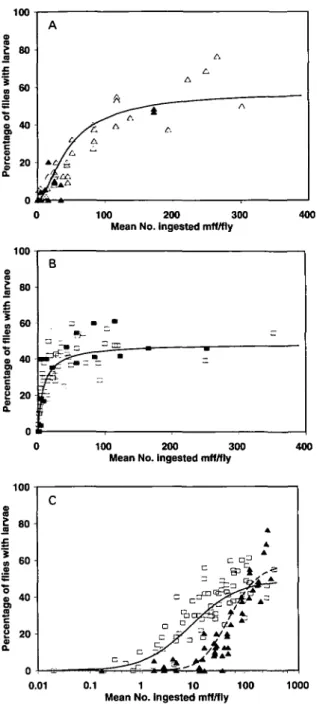
Fig. 2. (A) Scatter plot of the mean numbers of successful larvae (measured as mff escaping from imprisonment by the peritrophic membrane or developing to the infective stage) versus the mean microfilarial intake for Simulium ochraceum s.l. from Guatemala. The dotted line corresponds to the limitation model y = ax /(I +cx), whilst the solid line corresponds to the expression y = aa(\ — exp( —/?#))
x/(\ +cx), where y is the mean number of successful
parasites and x the mean microfilarial intake. The parameter values for the hyperbolic function are: a = 00159 + 0-0017, c = 00030 +0-0007, a/c (saturation level) = 5-3352, r = 0-95. The parameter values for the sigmoid equation are presented in Table 7. Data points as follows: (A) L3 larvae, De Leon & Duke (1966); (A) haemocoelic mff, Bain, Durette-Desset & De Leon (1974); (O) thoracic mff, Omar & Garms (1975); ( • ) L3 larvae and ( • ) thoracic mff, Collins et al. (1977). (B) Scatter plot of the mean numbers of successful larvae versus the mean microfilarial intake for S.
Onchocerca volvulus larval development in simuliid vectors 417 Table 7. Results of non-linear regression and correlation analyses of
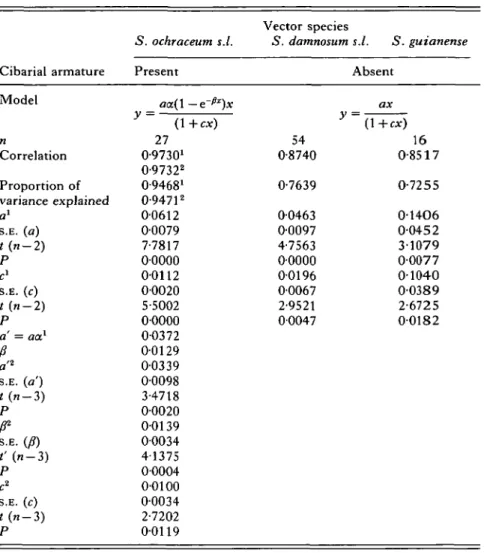
the mean number of successful larvae on mean microfilarial intakes for three Onchocerca volvulus-Simulium spp. combinations
Cibarial armature Model n Correlation Proportion of variance explained a1 s.E. (a) t{n-2) P c1 S.E. (c) t(n-2) P a' = aa.1
fi
a'* s.E. (a') t(n-2) P S.E. 08) t'(n-2) P c2 S.E. (c) t(n-2) P S. ochraceum s.l. Present aa(\-e~^)x y (\+cx) 27 0-97301 0-97322 0-94681 0-94712 00612 00079 7-7817 00000 00112 00020 5-5002 00000 00372 00129 00339 00098 3-4718 00020 00139 00034 41375 00004 00100 00034 2-7202 00119 Vector species 5. damnosum y 54 0-8740 0-7639 00463 00097 4-7563 00000 00196 00067 2-9521 00047 s.l. S. guianense Absent ax (1+ex) 16 0-8517 0-7255 01406 0-0452 31079 00077 01040 00389 2-6725 00182 1The sigmoid model corresponding to the S. ochraceum s.l. data was fitted using the parameter values for a and /? already estimated from the data shown in Fig. 1 and Table 6, a = 0-6071 and fi = 00129.
2
The model for S. ochraceum s.l. was fitted estimating all three parameters a' = ax, fj and c from the data set shown in Fig. 2A and Table 2.
this expression /? is a measure of the degree of density-dependent decrease in the damage to in-gested mff caused by the cibarial armature of the vector and a. is the maximum proportion of parasites left uninjured as intake increases. When /? = 0, all
model is the equation y = ax/{\ +cx), where y and x have been defined in (A). Parameter values are given in Table 7. (A) L3 larvae, De Leon & Duke (1966); (A) haemocoelic mff, Bain (1971); (O) haemocoelic mff, Philippon & Bain (1972); ( • ) haemocoelic mff, Philippon (1977); ( • ) exo-peritrophic mff, Alley et al. (1994). (C) Scatter plot of the mean numbers of successful larvae versus mean microfilarial intake for 5. guianense from South Venezuela. The line corresponds to the expression y = ax/(\ +cx) fitted to the data
points. Parameter values are indicated in Table 7. (A) L3 larvae, Takaoka et al. (19846); ( • ) L3 larvae and ( • ) thoracic mff, this work.
ingested parasites are lesioned (z = 0). When /?->oo, a constant, density-independent proportion of mff is left unscathed (z = a). The fitting of the model to the data of Fig. 1 provided a value of /? which was small but significantly different from zero (Table 6), suggesting the existence of a certain degree of protection against cibarial damage dependent on the density of microfilarial intake. Since under the null hypothesis of no facilitation, z = a for all values oi x, the existence of initial non-linearity was tested by plotting the 95 % confidence limits around the observed proportions of undamaged mff in Fig. 1. It can be seen that for the lower values of parasite intake the confidence intervals do not include the estimated value of a = O6071 (95% C.L. = 0-4489-0-7653), supporting the hypothesis of initial facilitation. The expression for z was thus incor-porated into the hyperbolic function previously described in order to obtain an alternative model for
1UU o a | 80 £ a 60 m 40
I
o a 20 S. 0 A A A = = "A ^zA^f^ \&T A ~ • a ~ /s A -A & 0.5 1 1.5 2 2.5 Mean No. successful larvae/fly 1000.01 0.1 1 Mean No. successful larvae/fly
10
Fig. 3. (A) Scatter plot of the percentage of flies harbouring successful larvae versus the mean larval load per fly for all simuliid species included in this study. The line is the maximum likelihood fit applied to this prevalence versus intensity data set assuming the relationship in equation (1): proportion of potential or realized infective flies = 1 — [1 +y/k]~k, where y is the
mean number of successful larvae and k an inverse measure of the degree of larval aggregation (k = 0-3950, see text)-. Data points are: (A) Simulium ochraceum s.L; (A) S. oyapockense s.L; ( • ) S. damnosum s.L; ( • ) •S. guianense. (B) Percentage of flies with successful larvae plotted against the logarithm of the mean number of larvae per insect. Line and data points are as
described in (A).
5. ochraceum s.L, in which y(x) = aa(\ — e px) x/(l+cx). The inclusion of a positive feed-back
operating at low densities in otherwise hyperbolic expressions has led to satisfactory sigmoid fittings of observed functional responses in other biological situations (Hassell, Lawton & Beddington, 1977).
Two approaches were taken to estimate the parameters of the sigmoid model fitted to the Guatemalan blackfly. In the former, the values of the parameters a and /?, obtained from the fit applied to the data shown in Fig. 1, were fed into the alternative equation describing the relationship between suc-cessful and ingested larvae for 5. ochraceum s.L, whilst in the latter, all the parameters in this equation were freely estimated from the data set depicted in Fig. 2A. The proportion of the variance explained by the hyperbolic limitation model was then compared
with that resulting from the sigmoid function including initial facilitation.
The scatter plots of the data points
correspond-ing to S. ochraceum s.L, S. damnosum s.L and
S. guianense, and the curves fitted to them are shown
respectively in Fig. 2A, B and C. A visual inspection of the curves in Fig. 2A suggests that the sigmoid function confers a better fit to the Guatemalan data set than the hyperbolic expression. The proportion of the variation accounted for by the limitation model alone (0-9024), did increase when the ex-pression for facilitation was added to the function (0-9468 in the case of a and /? being estimated from Fig. 1, and 0-9471 when all parameter values were computed from Fig. 2A). In addition, a better behaviour of the residuals was observed with the sigmoid function, and the fitting of the hyperbolic equation to S. ochraceum s.L provided an upper limit of 5-34 successful larvae per fly, well in excess of observed values. As a consequence, we concentrated on the model with initial facilitation for S. ochraceum
s.l. and with limitation alone for 5. damnosum s.L and S. guianense. These models, the parameter values,
and associated statistics are presented in Table 7. It can be seen that for S. ochraceum s.L, the two procedures used to fit the sigmoid model provided very similar results. The 95 % C.L. around the parameter fi were 00052-00205 and 00070-0-0209 in each case.
The crucial test for detecting density-dependent limitation of the numbers of larvae that succeed in developing within the 3 blackfly species, in the framework of the chosen functions, depends on the parameter c being significantly greater than zero. The 95 % confidence intervals around this parameter did not include zero in any of the data sets examined. The limits were 00063-00330 for S. damnosum s.l. and 0-0205-0-1875 for S. guianense. In the sigmoid models fitted to S\ ochraceum s.l. the values were: 0-0070—0-0153 when the information derived from Fig. 1 was used, and 00024-0-0175 when all the parameters of the proposed equation were estimated from the data points in Fig. 2A. The fitted expressions predict a maximum number of larvae equal to a/c in the case of S. damnosum s.l. (2-35) and
S. guianense (1-35) and equal to a.oc/c for S. ochraceum s.L (3-32).
Fig. 3A and B show the percentage of simuliids carrying successful larvae plotted against the mean larval burden per fly in arithmetic and logarithmic scales, respectively, for all blackfly species included in this study. The line is the maximum likelihood fit to these data using the relationship in equation (1) with k independent of the mean larval load (y). The fit provided an estimate of k = 03950 with 95% asymptotic confidence limits = 0-3579-0-4367. The likelihood ratio statistic showed no significant dif-ference between the model with constant k and those with k as a linear (k(y) = 8 + <f>y), power (k(y) =
Onchocerca volvulus larval development in simuliid vectors 419 100
100 200 300 Mean No. ingested mff/fly
400
100 T
100 200 300 Mean No. ingested mff/fly
400
100
0.01 0.1 1 10 100
Mean No. ingested mff/fly 1000
Fig. 4. (A) Percentage of flies with successful larvae plotted against mean microfilarial intake in simuliid species possessing a well-developed cibarial armature. The line was obtained by applying equation (2):
proportion of infective flies = 1 — [1 +y(x)/k]~k, where y
(the mean no. of successful larvae) is a function of x (parasite intake). The function is described in Fig. 2(A); (solid line); parameter values are those for Simulium
ochraceum s.l. (Table 7), and k value is that of Fig. 3.
(A) S. ochraceum s.l.; (A) S. oyapockense s.l. (B) Percentage of flies with successful larvae versus mean microfilarial intake in simuliid species with unarmed cibarium. Line as described in (A) where y(x) follows the expression in Fig. 2B and C. Parameter values are those for S. damnosum s.l. (Table 7) and k value is that of Fig. 3. ( • ) S. damnosum s.l.; ( • ) S. guianense. (C) Percentage of flies with successful larvae plotted against the logarithm of the mean parasite intake in armed and unarmed blackflies. The logarithmic scale permits a better appreciation of the difference between both kinds of vectors particularly at low microfilarial intakes.
and exponential (k(y) = Se^) function of the mean worm burden per fly, so the results of these models are not presented. A common value of k was computed to measure the degree of aggregation of potentially or realized infective larvae in both armed and unarmed simuliids. Our argument in favour of a common k was based upon the fact that this parasite stage has already evaded the effect of the cibarial armature when present, and also because a shared k value provided a better description of the proportion of flies with successful larvae as a function of the mean microfilarial intake per fly (see below). T h e low value of k suggests a high degree of larval aggregation which was also observed in the dis-tributions fitted to the direct larval counts per insect. The latter did not depart significantly from the negative binomial when tested with the goodness of fit chi-squared test (data not shown). T h e average k in this case was 0-3334, ranging from 0-1811 to 0-5381, in agreement with the value estimated from equation (1).
The values of k thus obtained were used t o fit the relationship between the percentage of infective flies and the mean microfilarial intake (x) by means of equation (2) and the sigmoid expression y(x) =
a<x(\ — e~Px)x/(l + cx) for the species with cibarial
armature ( 5 . ochraceum s.l. and S. oyapockense s.l., Fig. 4A), whilst equation (2) plus the hyperbolic function y(x) = ax/{\ +cx) were used for the un-armed species (S. damnosum s.l. and S. guianense, Fig. 4B). In the case of the data set combining the species with cibarial teeth, the parameter values of
y(x) were those of S. ochraceum s.l. For the data
concerning the species without armature the par-ameter values of 5 . damnosum s.l. were chosen (the figures estimated for S. guianense tended to under-estimate the proportion of infective flies). Fig. 4C compares on a logarithmic scale the data and fitted lines of the percentage of flies with successful larvae as the numbers of mff ingested increase in the armed and unarmed simuliids. This proportion increased more slowly and tended to level off between 50 and 60 % for flies ingesting more than 150 mff on average in the former group of flies, whilst the increase was faster and the maximum (between 40 and 5 0 % ) reached earlier (intakes of 50 mff upwards) in the latter group.
DISCUSSION
Basanez et al. (1994) found little evidence of density dependence in the acquisition of skin microfilariae by flies feeding on O. volvulus carriers in 3 different endemic areas where S. ochraceum s.l., S. damnosum
Dotted line is as described in (A) solid line as in (B). (A) Simuliids with cibarial armature; ( • ) simuliids without armature.
s.l. and 5. guianense were the predominant vectors.
The evidence for density dependence seems to be stronger when the fate of the ingested parasites is examined in the same blackfly species. The mean numbers of larvae succeeding in reaching the thoracic muscles of the flies and undergoing larval development to the infective stage reached a plateau of about 1—3 larvae per fly in the 3 simuliid species. This non-linearity was statistically significant in all data sets examined. Limitation had already been demonstrated in S. damnosum s.l. (Pichon, 1974; Bain, 1976; Boussinesq, 1991) but not studied in detail in any other blackflies. Apart from species-specific differences in vector competence, the lower saturation value found for S. guianense may be due to the fact that, in general, the Venezuelan flies dissected in order to detect thoracic mff were examined probably too early (average time ranging from 115 to 511 h p.e.), with the result of lowered larval loads being observed. The Guatemalan and West African specimens were dissected between 4 and 10 h p.e., when most, if not all, microfilarial migration would have taken place (Laurence, 1966; Philippon, 1977). This conjecture finds some sup-port in the better description of the relationship between the proportion of flies with larvae versus mean intake which was achieved when the parameter values obtained for the African species were used instead of those derived from the Venezuelan simuliid in equation (2).
The numerical investigation of the patterns of limitation, facilitation and proportionality occurring in several vectors of human and animal filariases has, so far, been based upon the statistical examination of the relationship between the so-called 'parasite yield' (ratio of successful larvae to microfilarial intake, y/x), or the inverse of the parasite yield (x/y), and the microfilarial intake (x). In species with limitation y/x tends to decrease with x and there is a linearly increasing relationship between x/y and x. The opposite is to be expected in species with facilitation. Proportionality translates into either the parasite yield or its inverse being independent of x (Pichon, 1974; Prod'hon et al. 1980; Southgate & Bryan, 1992). However, since the variable x appears in both axes, the interpretation of the trends followed by the above-mentioned ratios is not necessarily straightforward on statistical grounds alone (Dr C. Dye, personal communication). Another, more gen-eral consideration to be taken into account when drawing conclusions about the patterns emerging from the analyses of variables that constitute mean values, is that a great deal of the variation in the data sets explored may be concealed, i.e. both the average number of successful larvae and the mean micro-filarial intake per fly are subject to random variation. The hyperbolic function fitted to the African data set is simpler than the empirical models previously used by Alley et al. (1994), Pichon (1974), and
Plaisier et al. (1991), yet it fits the data well and the estimation of the saturation level (around 2-3 larvae per fly) is very similar. The more complex functional form of the relationship between microfilarial input and infective larval output advocated by Plaisier et
al. (1991) was found, however, to be necessary to
allow those authors to explore the dynamics of recrudescence after cessation of vector control and the impact of ivermectin on transmission at low dermal parasite loads (Alley et al. 1994).
The results of the feeding studies analysed here, in which a single bloodmeal was provided at the beginning of the experiment, indicate that the average numbers of mff that reach the haemocoele or the thorax of the insects are generally good predictors of the numbers of L3 larvae to be found in the flies once the extrinsic incubation period is completed. This suggests that there is probably little larval loss during intra-thoracic development in susceptible flies, as has previously been reported by other authors (Duke, 1962 a; Collins et al. 1977; Philippon, 1977). However, comparative analyses with natural infection rates and larval burdens are necessary. On the one hand, naturally infected females will have had the opportunity to ingest blood more than once (it has been shown that Onchocerca larval devel-opment is dependent on blood intake, Ham & Gale (1984)), but also will have experienced some larval loss through feeding (Duke, 1973; Philippon, 1977; Renz, 1987) and different survival rates. On the other hand, these analyses could also throw some light on the relevance of possible mechanisms of acquired resistance by the biting fly population in natural settings. Until now, the presence of such mechanisms has only been demonstrated in ex-perimental Onchocerca—Simulium systems based on intra-thoracic inoculation of mff (Ham, 1986, 1992), although there is an early observation describing that in wild host-seeking females, the presence of a previous infection in the fly seems to reduce the number of parasites that can develop from a subsequent infection (Duke, 1968).
The most important regulatory processes directly affecting Onchocerca survival and establishment within the flies (i.e. not considering indirect effects such as parasite-induced vector mortality), seem to be taking place early in the parasitic phase that occurs in the vector, namely, during the migration of the mff out of the mid-gut. The peritrophic mem-brane, which is secreted in response to the ingestion of blood, has been considered to act as an effective barrier to microfilarial migration in simuliids (Lewis, 1950, 1953; Duke & Lewis, 1964; Bain & Philippon, 1969; Reid & Lehane, 1984; Eichner et al. 1991). However, the evidence is scarce and the mechanisms remain largely unknown. Bain et al. (1976) have proposed that density-dependent changes in the thickness and rate of formation of the peritrophic membrane may explain the limitation observed in
Onchocerca volvulus larval development in simuliid vectors 421
the numbers of ingested parasites that gain access to the thoracic muscles in savanna members of the 5.
damnosum complex. Other possible explanations
include the activation of insect defences, such as the lectin-like molecules acting at the level of the mid-gut epithelium that have been claimed to interfere with microfilarial migration in other filaria-culicid systems (Phiri & Ham, 1990). This activation may be dependent on the density of the microfilariae.
The hypothesis that the level of saturation found in the system Onchocerca—Simulium is the result of processes acting early upon microfilarial migration rather than of some 'crowding effect' due to the overcoming of a larval carrying capacity, as described in other filaria-vector combinations such as
Wuchereria—Aedes (Rosen, 1955) and Brugia—
Mansonia (Wharton, 1957 a, b), is supported by the
results of experimental injections of mff directly into the thorax of the flies. This procedure permits the circumvention of the barriers associated with the infection per os and has resulted in the demonstration of a nearly proportional relationship between larval output and microfilarial input in intrinsically sus-ceptible flies (Lok et al. 1980; Ham & Bianco, 1983; Eichnereia/. 1991).
Although limitation, acting at high parasite in-takes, was common to the 3 blackfly species studied (expressed in the term 1/(1 +cx) of the models fitted and in the statistical significance of the parameter c), the pattern of initial exponential increase in the numbers of mff reaching the haemocoele or thorax of the flies present in the Guatemalan data set, is more compatible with initial 'facilitation'. Bain et al. (1974) interpreted their data on S. ochraceum s.L, plotted on logarithmic scales on both>> and x axes, as evidence of proportionality. Our analysis suggests that density-dependent damage of the ingested mff by the cibarial armature in S. ochraceum s.L may produce an initial positive feed-back between micro-filarial intake and the number of parasites which are viable and hence capable of migrating out of the bloodmeal.
The hypothesis of an association between the presence of a cibarial armature in the insect host and the pattern of initial facilitation requires further investigation in other filaria-vector combinations. So far, the causal mechanism that has been claimed to operate in relation to facilitation involves his-tological changes in the abdominal epithelium (Bain & Brengues, 1972). However, it is interesting to note that facilitation has solely been reported for vectors possessing cibarial teeth, such as Anopheles mos-quitoes of the subgenus Cellia (McGreevy et al. 1978), including An. gambiae s.s., An. arabiensis and An.
funestus (Brengues & Bain, 1972; Southgate & Bryan,
1992), although the statistical evidence for its demonstration in some of these cases has recently been questioned (Dye, 1994). Table 8 summarizes the patterns reported in the literature for several
vector—filaria combinations concerning the relation-ship between microfilarial input and larval output. It can be seen that only limitation or proportionality have been described for vectors with poorly de-veloped armatures or totally unarmed cibaria (Culex,
Aedes, Mansonia, S. damnosum s.L).
A possible explanation for the decline in the
proportion of ingested mff that are injured by the cibarial armature as intake increases, is that it may be more likely for a few mff all to be ruptured by the teeth as they are pumped in with the bloodmeal, whilst as more larvae are ingested, the ones that become entangled may protect the remainder. A similar decrease in the fraction of ingested parasites ruptured by the cibarial teeth has been found in
Wuchereria bancrofti—An. funestus, but not in W. bancrofti—An. gambiae s.L (Bryan & Southgate, 1988;
Bryan, McMahon & Barnes, 1990).
Although the proportion of the variance in the Guatemalan data explained by the function incor-porating density-dependent damage by the cibarial armature of S. ochraceum s.L is very high, we can only suggest that this mechanism may contribute to the pattern observed without the exclusion of other possible underlying processes. More probably, the phenomena of 'facilitation' and 'limitation' are the result of the combination of a variety of factors whose net effect is still to be elucidated. Among others, these factors include the interaction of the ingested mff with the cibarial teeth, with the peritrophic membrane, clotting agents and digestive enzymes acting in the bloodmeal, cellular reactions in the epithelium of the stomach, and insect defences (Denham & McGreevy, 1977; Townson & Chai-thong, 1991). For example, Bryan et al. (1990) have reported that not all the undamaged mff of W.
bancrofti observed in the bloodmeals of anopheline
vectors in East Africa were able to reach the thoracic muscles of the mosquitoes.
The value of the clumping parameter k, obtained from the proportion of flies with successful larvae versus mean larval burden, indicates a high degree of larval aggregation in the insect host. The magnitude of this aggregation (k = 0-395) appears to be greater than that computed for ingested mff by means of the same kind of analysis (k = 0-588-0-632, Basanez et al. (1994)), reflecting the fact that not all the flies that ingest mff become subsequently infected with de-veloping and developed larvae. This high degree of contagion is compatible with an overdispersed distribution such as the negative binomial which was found to be an adequate description of the dis-tribution of the raw larval counts (data not shown). The trend towards a decline in the value of k with increasing age of infection in the flies has also been observed when the negative binomial distribution has been fitted to the numbers of larvae per fly found in naturally infected S. damnosum s.L populations (Cheke, Garms & Kerner, 1982; Garms & Cheke,
Table 8. Patterns observed for the relationship between microfilarial input and larval output in several vector-filaria combinations
Vector spp. Parasite spp. Pattern armature in theCibarial
vector Reference Wuchereria bancrofti Setaria labiatopapillosa Aedes aegypti Skrjabinofilaria skrjabini Dipetalonema dessetae Aedes W. bancrofti polynesiensis
Aedes togoi Brugia malayi Culex quinquefasciatus W. bancrofti ( =C. pipiens fatigans) Simulium O. volvulus damnosum s.l. Mansonia dives/
bonneae Brugia malayi
(=M. longipalpis) Anopheles gambiae s.s. W. bancrofti An. arabiensis An. funestus Limitation Proportionality Facilitation Absent Very poorly developed Absent Absent Present Bain (1971) Brengues & Bain
(1972);Pichon (1974) Bain (1971) Bain & Chabaud
(1974) Bain (1976) Chabaud et al. (1986) Bain (1976) Rosen (1955) Pichon(1974) Southgate & Bryan (1992) Jordan & Goatly
(1962) Pichon(1974) Southgate & Bryan (1992) Bain (1971) Philippon & Bain (1972) Pichon(1974) Wharton(1957) Southgate & Bryan (1992) Brengues & Bain (1972) Southgate & Bryan (1992) Southgate & Bryan (1992)
1985). The opposite, a lower degree of aggregation, is to be expected in the presence of density-dependent parasite-induced vector mortality (An-derson & Gordon, 1982). However, this assumes that this process operates uniformly at all stages of larval development, lopping the tails of skewed distributions. We have evidence that Onchocerca-induced Simulium mortality acts predominantly during the early phases of infection, i.e. during
microfilarial ingestion. The aspects of density-dependent mortality of infected vectors and parasite aggregation, in both human and fly hosts, will be the subject of subsequent publications.
The non-linear regression models describing lar-val output as a function of microfilarial input in the cases of the simuliids with and without cibarial armature, were used together with this value of k in order to investigate the relationship between the
Onchocerca volvulus larval development in simuliid vectors 423
fraction of flies with successful larvae and the average microfilarial intake. The fits obtained appeared to be reasonable descriptions of the data in both cases. The sigmoid equation derived for the Guatemalan blackfly species seemed adequate to explain the data of S. ochraceum s.l. and S. oyapockense s.l., whilst the hyperbolic model was suitable for 5 . damnosum s.l. and 5 . guianense. The results show that simuliids with armed foreguts require higher average parasite intakes than those by unarmed species in order to acquire equivalent levels of effective infection, measured as mean larval burdens per fly and as percentage of flies with larvae. Nevertheless, these same indicators suggest an increased vectorial ef-ficiency of the armed species over the species without armature at heavier microfilarial intakes, in agree-ment with the remarks made by Shelley (1988, 1991). These differences will be further explored in the light of parasite-induced vector mortalities elsewhere. Elevated fly mortalities, following the ingestion of large numbers of parasites, have been reported to affect the species without the ' protection' afforded by the cibarial teeth (Lewis, 1953; Duke, 1962 a, 1966; Omar & Garms, 1977; Takaoka et al. 19846), in contrast to the lower death rates recorded for species with toothed fore-guts (De Leon & Duke, 1966; Collins et al. 1977; Takaoka et al. 1984a; Shelley et al. 1987). However, the amount of parasite-related vector loss which really takes place in endemic areas will depend on how frequent is the acquisition of high parasite intakes in the field.
In conclusion, our analyses suggest the existence of 'initial facilitation' in blackfly species like 5 . ochraceum s.l. and S. oyapockense s.L, and confirm the occurrence of ' limitation' in the savanna mem-bers of »S. damnosum s.l.; the latter also being found in S\ guianense. The sigmoid nature of the relation-ships depicted in Figs 2A and 4A, is compatible with previous claims that facilitation may provide a threshold for the interruption of transmission in areas where vector species with this pattern prevail (Pichon et al. 1974; Bain, 1976; Webber, 1991; Southgate & Bryan, 1992). Given that microfilarial intakes are roughly proportional to skin loads (Campbell et al. 1980; Alley et al. 1994; Basanez et
al. 1994), it is possible to postulate that control
campaigns based solely on the reduction of the parasite reservoir in the human host are likely to be more successful in foci where the principal vectors have cibarial armatures, whilst a combination of both, measures against the vector and against the parasite, may be necessary in endemic areas main-tained by blackfly species without such armatures (Shelley, 1991, 1994). The results of ongoing chemotherapy programmes with the microfilaricide ivermectin seem to support this conjecture (Remme
etal. 1990; Cupp, 1992).
However, any speculation on the existence of a transmission threshold must be based on formal
stability analysis of dynamic models that explicitly incorporate the features described above in the equations for the parasite in the vector host, as well as reasonable assumptions about the processes affecting the parasite in the human host (Dye, 1994; Dye & Williams, 1994). The existing onchocerciasis models have been constructed for the epidemio-logical situations arising in West and Central African savanna regions (with density-dependent limitation of the number of parasites developing in the flies (Dietz, 1982; Plaisier et al. 1990, 1991, Alley et al. 1994), or in forest areas (proportionality is assumed by Davies (1993)). A model for the Latin American scenarios is greatly needed and is currently being developed. The practical relevance of theoretical breakpoints in the complex life-cycles of helminth parasites has been shown to depend on the nature of the frequency distributions of the numbers of worms per definitive and intermediate host (Macdonald, 1965; May, 1977; Anderson, 1980). In the case of highly overdispersed distributions, the parasite in-tensities at which unstable equilibria occur (below which the system is driven to extinction), may be too low to have a meaningful epidemiological impact (Anderson & May, 1985).
The non-linearities described above need to be evaluated in the context of most field situations, where overdispersion translates into only a few individuals of the host populations harbouring the parasite intensities at which density-dependent con-straints are likely to play a role. This applies to mff in the skin of the human host (Basanez & Yarzabal, 1989; Boussinesq, 1991) as well as to larvae in the simuliid vector (Cheke et al. 1982; Garms & Cheke, 1985; Renz, 1987; Wenk, 1991). T h e question of whether the events comprising the life-cycle of the nematode in the vector are occurring in parasite ranges where the relationships are practically linear, will be explored in a subsequent publication in the light of the frequency distributions of worm burdens per human and per vector host.
We thank the Director of OCP, Dr E. M. Samba, for allowing us to make use of the Asubende (Ghana) data set. M.G.B. is indebted to CONICIT of Venezuela (Consejo Nacional de Investigaciones Cienti'ficas y Tecnologicas), grant No. SI-1473 for financial support of the field work carried out among the Venezuelan Yanomami, and the British Council/FCO for a research training scholarship at Imperial College. G.F.M. is a Royal Society University Research Fellow. R.M.A. thanks the Wellcome Trust for financial support. Professor K. Dietz, Dr C. Dye, Dr B. A. Southgate and Mr J. Williams contributed with very helpful discussions. Dr Brian Williams provided statistical advice. We also thank Dr J. H. Bryan for permitting us to examine her raw data on microfilarial damage by Anopheles
gambiae s.l. and An. funestus. The assistance of H.
Frontado, N. J. Villamizar, M. Bolivar, J. A. Gomez, I. Narbaiza, V. Park and H. Suzuki during the field work in Venezuela, and of the field staff of the Epidemiological Evaluation Unit and of the Vector Control Unit of OCP is gratefully acknowledged.
R E F E R E N C E S
ALLEY, E. S., AGOUA, H., BISSAN, Y., DOUCOURE, K., PLAISIER, A. P., REMME, J. H. F. & QILLEVERE, D. (1994). Infectivity of Simulium damnosum s.s. and S. sirbanum in relation to intensity of onchocerciasis infection of the human host in Asubende, Ghana. Tropical
Medicine and Parasitology (in the Press).
ANDERSON, R. M. (1980). The dynamics and control of direct life cycle helminth parasites. Lecture Notes in
Biomathematics 39, 278-322.
ANDERSON, R. M. & GORDON, D. M. (1982). Processes influencing the distribution of parasite numbers within host populations with special emphasis on parasite-induced host mortalities. Parasitology 85, 373-98.
ANDERSON, R. M. & MAY, R. M. (1985). Helminth infections of humans: mathematical models, population dynamics, and control. Advances in
Parasitology 24, 1-101.
ANDERSON, R. M. & MAY, R. M. (1991). Infectious Diseases
of Humans. Dynamics and Control. Oxford: Oxford
University Press.
ARMITAGE, p. & BERRY, G. (1987). Statistical Methods in
Medical Research. Oxford: Blackwell Scientific
Publications.
BAIN, o. (1971). Transmission des filarioses. Limitation des passages des microfilaires ingerees vers
l'hemocele du vecteur; interpretation. Annales de
Parasitologie {Paris) 46, 613-31.
BAIN, o. (1976). Traversee de la paroi stomacale du vecteur par les microfilaires: techniques d'etude utilisees, importance epidemiologique. Bulletin of the
World Health Organization 54, 397-401.
BAIN, o. & BRENGUES, j . (1972). Transmission de la wuchereriose et de la setariose bovine: etude histologique de la traversee de la paroi stomacale d'Anopheles gambiae A et d'Aedes aegypti par les microfilaires. Annales de Parasitologie (Paris) 47, 399-412.
BAIN, O., DURETTE-DESSET, M. C. & DE LEON, R. (1974). Onchocercose au Guatemala: l'ingestion des
microfilaires par Simulium ochraceum et leur passage dans l'hemocele de ce vecteur. Annales de Parasitologie
(Paris) 49, 467-87.
BAIN, o. & PHILIPPON, B. (1969). Mecanisme du passage
des microfilaires a travers la paroi stomacale du vecteur; son importance dans la transmission de l'onchocercose. Comptes Rendus de V Academie
Scientifique de Paris 269, 1081-3.
BAIN, O., PHILIPPON, B., SECHAN, Y. & CASSONE, J. (1976). Correlation entre le nombre de microfilaires ingerees et l'epaisseur de la membrane peritrophique du vecteur dans l'onchocercose de savane africaine.
Comptes Rendus de VAcademie Scientifique de Paris
283, 391-2.
BASANEZ, M. G., BOUSSINESQ, M., PROD'HON, J., FRONTADO, H., VILLAMIZAR, N. J., MEDLEY, G. F. & ANDERSON, R. M. (1994). Density-dependent processes in the
transmission of human onchocerciasis: intensity of microfilariae in the skin and their uptake by the simuliid host. Parasitology 108, 115-27.
BASANEZ, M. G. & YARZABAL, L. (1989). Onchocerciasis in the Sierra Parima and Upper Orinoco regions,
Federal Territory of Amazonas, Venezuela. In
Parasitic Diseases : Treatment and Control (ed. Miller,
M. J. & Love, E. J.), pp. 231-56. Boca Raton, FL: CRC Press.
BOUSSINESQ, M. (1991). Etude epidemiologique de
l'onchocercose en zone de savane camerounaise. Effets d'un traitement de masse par l'invermectine. Ph.D. thesis, University of Montpellier II.
BRENGUES, j . & BAIN, o. (1972). Passage des microfilaires de l'estomac vers I'hemocele du vector dans les
couples Wuchereria bancrofti-Anopheles gambiae A, W.
bancrofti—Aedes aegypti et Setaria labiatopapillosa-A. aegypti. Cahiers O.R.S.T.O.M. se'rie Entomologie me'dicale et Parasitologie 10, 235—49.
BRYAN, j . H., MCMAHON, p. & BARNES, A. (1990). Factors affecting transmission of Wuchereria bancrofti by anopheline mosquitoes. 3. Uptake and damage to ingested microfilariae by Anopheles gambiae, An.
arabiensis, An. merus and An. funestus in East Africa. Transactions of the Royal Society of Tropical Medicine and Hygiene 84, 265-8.
BRYAN, j . H. & SOUTHGATE, B. A. (1988). Factors affecting
transmission of Wuchereria bancrofti by anopheline mosquitoes. 1. Uptake of microfilariae. Transactions of
the Royal Society of Tropical Medicine and Hygiene 82,
128-37.
CAMPBELL, C. C , COLLINS, R. C , HUONG, A. Y. &
FIGUEROA-MARROQUIN, H. (1980). Quantitative aspects of the infection of Simulium ochraceum by Onchocerca
volvulus: the relation of skin microfilarial density to
vector infection. Tropenmedizin und Parasitologie 31, 475-8.
CHABAUD, A., BAIN, O., LANDAU, I. & PETIT, G. (1986). L a transmission des parasites par vecteurs hematophages: richesse des phenomenes adaptatifs. La Vie des
Sciences, Comptes rendus, se'rie ge'ne'rale 3, 469-84.
CHEKE, R. A., GARMS, R. & KERNER, M. (1982). T h e
fecundity of Simulium damnosum s.l. in northern Togo and infections with Onchocerca spp. Annals of Tropical
Medicine and Parasitology 76, 561-8.
COLLINS, R. C , CAMPBELL, C. C , WILTON, D. P. & NEWTON, L. (1977). Quantitative aspects of the infection of
Simulium ochraceum by Onchocerca volvulus. Tropenmedizin und Parasitologie 28, 235—43.
COLUZZI, M. & TRABUCCHI, R. (1968). Importanza dell' armatura bucco-faringea in Anopheles e Culex in relazione alle infezioni con Dirofilaria. Parassitologia 10, 47-59.
cox, D. R. & HINKLEY, D. v. (1974). Theoretical Statistics. London: Chapman and Hall,
cox, D. R. & OAKES, D. (1984). Analysis of Survival Data. London: Chapman and Hall.
CUPP, E. w. (1992). Treatment of onchocerciasis with Ivermectin in Central America. Parasitology Today 8, 212-14.
CURTIS, C. F. & GRAVES, P. M. (1983). Genetic variation in
the ability of insects to transmit filariae, trypanosomes and malarial parasites. Current Topics in Vector
Research 1, 31-62.
DAVIES, j . B. (1993). Description of a computer model of forest onchocerciasis transmission and its application to field scenarios of vector control and chemotherapy.
Annals of Tropical Medicine and Parasitology 87,