Federal Department of Foreign Affairs FDFA
Swiss Agency for Development and Cooperation SDC
Evaluation 2012/1
Evaluation of the performance of
SDC instruments in fragile and
Evaluation of
Performance of SDC instruments in fragile
and conflict-affected contexts
Commissioned by the Corporate Controlling Section
of the Swiss Agency for Development and Cooperation (SDC)
Contents:
I
Evaluation Abstract
II
Senior Management Response and Agreement at Completion Point
III
Evaluators‟ Final Report
Annexes and Case Studies (CD)
Evaluation Process
Evaluations commissioned by SDC Senior Management were introduced in SDC in 2002 with the aim of providing a more critical and independent assessment of SDC activities. These Evaluations are conducted according to the OECD DAC Evaluation Standards and are part of SDC's concept for implementing Article 170 of the Swiss Constitution which requires Swiss Federal Offices to analyse the effectiveness of their activities. SDC's Senior Management (consisting of the Director General and the heads of SDC's departments) approves the Evaluation Program. The Corporate Controlling Section, which is outside of line management and reports directly to the Director General, commissions the evaluation, taking care to recruit evaluators with a critical distance from SDC.
The Corporate Controlling Section identifies the primary intended users of the evaluation and invites them to participate in a Core Learning Partnership (CLP). The CLP actively accompanies the evaluation process. It comments on the evaluation design (Approach Paper). It provides feedback to the evaluation team on their preliminary findings and on the draft report. During a one day Synthesis Workshop, the CLP validated the evaluation findings and conclusions and, with the facilitation of the SDC Evaluation Officer and a representative of the Evaluation Team, elaborated recommendations and lessons learned for SDC from their perspective. These are noted in the Agreement at Completion Point (ACP).
Based on the Final Evaluator‟s Report and the ACP involved members of the middle management of SDC drafted the Senior Management Response (SMR). The SMR was subsequently approved by SDC‘s Senior Management. The SMR lays out specific, time-bound measures and those for executing them.
The ACP and the SMR are published together with the Final Evaluators' Report. For further details regarding the evaluation process see the Approach Paper in the annex and on the CD attached.
Timetable
Step When
Approach Paper finalized April 2011
Implementation of the evaluation August 2011 – January 2012 Agreement at Completion Point February 2012
I Long Evaluation Abstract
Donor SDC – Swiss Agency for Development and Cooperation Report title Evaluation of the Performance of SDC instruments in fragile
contexts. Geographic area Global
Sector Multi-sector; Conflict, Peace and Security, Health, Social infrastructure and services, Water supply and sanitation, Emergency assistance and reconstruction, Support to NGO‘s, support to multilaterals
Language English
Date May 2012
Authors Lewis Sida (Team Leader), Ben Ramalingam, Bill Frej, Ross Mountain, Frauke de Weijer
Subject Description
This report is an independent evaluation of SDC‘s work in fragile and conflict affected states. The evaluation considers in particular the performance of instruments; analysis, flexibility and adaptability; complementary of SDC and Swiss instruments and SDC‘s role in the wider system. It does not directly address the performance of non-SDC elements of the Swiss government engagement in fragile states, but does look at how well SDC works with these other entities. The scope is multi-sector, addressing all of the instruments being used by SDC.
Evaluation Methodology
The evaluation is based on seven case studies (Tajikistan, DRC, Burundi, Rwanda, Nepal, OPT, Hindu Kush), 78 documents were formally reviewed, although the evaluation team drew on considerable personal experience both practically and academically. Interviewees included 60 SDC managers at HQ and field level, 30 NGOs / Red Cross partners, 15 from UN agencies, 10 donors and 20 national governments and local authorities. There were four formal workshops with SDC staff as part of the process, as well as lots of other participatory interactions and the nature of developmental evaluation meant the team sought opportunities at every level to validate and anchor findings.
Major findings and conclusions
The evaluation found that SDC is well positioned to work in fragile states. It has the right mixture of approaches, good instincts operationally, and can play an important and valuable role in the wider international system. To achieve this potential, SDC needs to become more flexible and needs to compliment its technical efforts with political understanding and positioning.
SDC has a range of instruments which work in fragile contexts. While the individual performance of these instruments is good, there is considerable potential for better performance, by bringing the different instruments together to address root causes of fragility and conflict.
Analysis needs to be improved across the board. While there is scope for some flexibility and adaptability, this is not routinely used to the extent possible.
SDC complementarity is steadily improving, with numerous instances of strategic cooperation between humanitarian, regional and Eastern Europe cooperation. However, there are some potential future fault-lines which need to be addressed with the new emphasis and growth of global cooperation. With the other parts of the Swiss government, the consistent message was that ‗the niche in fragile states was Switzerland‘, but this is unevenly applied in-country. Working with the rest of the system is the area that saw the greatest diversity. In all contexts, SDC works to strengthen local civil society and Swiss NGOs, as well as frequently working with local governance. It also makes un-earmarked contributions to the multilateral system. However, its direct and attributable work with multilaterals varies considerably. Its engagement with other donors is also variable – in some contexts, it is an active and appreciated facilitator, and in others, it is not especially well-engaged.
Priorities for Change and lessons learned
There are five clear priorities for change within SDC:
Concentrate and focus based on its comparative advantage, credible resource levels, innovative approaches
Put in place coherent strategy of how to achieve transformational change Be more aware of and proactive about being part of a larger system
Strike a balance between being pragmatic and policy-oriented, between having a long-term strategy and facilitating innovation. Develop a better mixture of modalities and instruments in more seamless ways
II Senior Management Response
Evaluation ofthe performance of SDC instruments in fragile and conflict-affected contexts SDC Senior Management welcomes the final report of the Evaluation of SDC‘s Performance in Fragile and Conflict-Affected Contexts. This Senior Management Response takes position with regards to the evaluation report and the Agreement at Completion Point of the Core Learning Partnership.
A. General Appreciation
The evaluation was well timed. Its findings are available just as SDC is positioning itself to implement the Federal Dispatch 2013 – 2016 on International Cooperation which is guiding SDC towards increasing its presence in fragile contexts.
The evaluation team has understood the architecture and modus operandi of the Swiss system of foreign policy making, SDC‘s institutional culture and the implementation of ODA remarkably well.
Its judgments and recommendations are based on fair consideration of the pro's and con's of particular approaches and give credit to the countless positive achievements of SDC staff already working in fragile and conflict affected contexts.
Senior Management complements the evaluation team for a job very well done, especially given the complex subject matter and the time and resource constraints.
Senior Management also welcomes how the evaluation was managed internally. The early inclusion of SDC staff from all domains not only prepared the ground for the productive work of the evaluation team, but also for the implementation of the recommendations.
Approach to the Senior Management Response
The shift to more involvement in fragile and conflict-affected contexts outlined in the Federal Dispatch 2013-2016 requires the adaptation of the political, operational and human resources management within SDC and other units of the Swiss administration involved these contexts.
By and large, SDC Management endorses the arguments and recommendations put forward by the Core Learning Group in its Agreement at Completion Point. They are a key input for the enhancement of the way SDC works in fragile and conflict-affected contexts. The processes which will lead to this will build on the work done by the Core Learning Group. It will take particular care to build and expand on existing institutional experience and on capitalizing on complementarities of different instruments already used by different SDC domains.
However, rather than addressing point by point the issues raised by the evaluation team and the Core Learning Group in the Agreement at Completion Point, SDC Senior Management focuses in its response on overarching measures under the following headings: 1) Actions to spur institutional adaptation at the level of SDC and FDFA, 2) Transformational Change in partner countries, 3) Considerations on Portfolio Risk Management, 4) Delivery, 5) Staff Policies and 6) Security Management.
B. Measures
1. Actions to spur adaptation at the institutional level of SDC
(part of implementation of the Federal Dispatch 2013 – 2016 on International Cooperation)
Given the magnitude and scope of the challenges ahead, Senior Management mandates the responsible person for the theme ―Conflict and Human rights‖ to organize a process to support the responsible line units to adapt their policies to the new challenges. As a first step, a work plan shall be developed which is to be submitted for discussion to the Senior Management Meeting (DIRKO).
The improvement of knowledge and the revision of SDC principles for working in fragile context is best achieved by progressive implementation in future country strategy discussions and in Core Contribution Management (CCM) revisions for the collaboration with multilateral institutions. Therefore emphasis is placed contributing to these processes. The network ―Conflicts and Human Rights‖ is the key instrument to be used for in-house consultations on methodological issues.
Senior Management views increased coordination within the Federal Department of Foreign Affairs (FDFA) as particularly important and will identify appropriate ways of communication and coordination with regards to:
Increased coordination and cooperation among FDFA units and especially in Eastern Europe with SECO, to define joint strategies.
Increased need for political coordination,
The need to assign Development Cooperation the lead for the coordination in countries where it is the most important instrument of Swiss Foreign Policy
Maximize the use of the potential for multilateral cooperation, Adjustment of staff policies and
Adjustments in security management. 2. Transformational Change
The evaluation team concluded that SDC has considerable potential to improve its actions by aiming more consequently at actually changing a fragile situation for the better (i.e., transformational change). As by now, it appears to be too often concentrating just on contributing to the alleviation of living conditions of vulnerable target groups. SDC staff is seen as not political enough and as not being in the position to clearly explain the change to be fostered.
The evaluation team considers concentration of resources (more resources in fewer places) as a prerequisite for success. They point out that Switzerland has more influence in countries where it is among the 10 largest donors.
Senior Management is aware of the challenge to find the balance between concentrating its resources and exercising the critical level of influence. It is convinced however, that SDC has accumulated valuable experience in all areas touched upon and staff generally is politically sensitive. Senior Management particularly agrees with the statement made by the evaluation
team which refers to Switzerland, and not SDC alone, as having the comparative advantage (e.g., impartiality).
The most important next steps are:
1. More on the ground coordination of action in fragile and conflict affected contexts between FDFA entities as well as with other departments of the federal administration, notably SECO and the DDPS and clear support by HQ for this;
2. Putting peace building and state building goals at the center of the strategy without putting in question the right of populations in need to immediate assistance;
3. Developing a clear, common understanding of the transformation to be supported (explicit change hypothesis, understanding of causal chains, etc.) as the basis for discussions and the reference point for developing objectives;
4. Making Conflict Sensitive Program Management mandatory for fragile and conflict affected contexts (training for staff, assure support capacity);
5. Ensuring continuity of SDC presence even when the situation becomes more difficult; 6. Employing an adequate mix of intervention instruments and, in particular, increasing
the pro-active involvement of Switzerland in multilateral initiatives;
7. Aiming for the right balance between achieving fast impact on vulnerable groups and contributing to long term, transformational change.
With regard to concentration, in accordance with the Federal Dispatch 2013-2016 and the increase of the overall budget, SDC will have more substantial presence in most countries or regions. Hence SDC responds to the concentration argument not by reducing the number of contexts where it is present, but by increasing the budgets for most of them. In its statement at the 4th High Level Forum (HLF-4) Busan in late 2011, SDC Management committed itself to increasing SDC investments in fragile and conflict-affected contexts by approximately 15% (baseline 2011).
Concrete actions:
The upcoming discussions on ―Pre-concept Notes of Swiss cooperation strategies‖ in fragile contexts (e.g. Horn of Africa, Myanmar, Nepal, North Africa) in the Senior Management Meeting (DIRKO) shall focus on the above issues. The Focal Point of the Network Conflicts and Human Rights shall be invited to the meetings when these pre-concept notes are discussed. By doing so, SDC Management will deepen its understanding of what is at stake and what the management options are.
SDC shall actively contribute to the implementation of the principles outlined in the New Deal for engagement in fragile contexts agreed upon at the HLF-4. At the country level, the immediate focus will primarily be in Haiti, Afghanistan, South Sudan and in North Africa; at the policy level mainly through enhanced multilateral action and policy dialogue with a wide range of multilateral partners including OECD/INCAF. It is understood that the Humanitarian Principles (humanity, neutrality, independence and impartiality) must be respected.
The Focal Point ―Conflict and Human Rights‖ will be commissioned to revise the policy for fragility and peace building dated 2003.
3. Considerations on Portfolio Risk Management
The evaluation team considers that SDC has deficiencies in employing systematic approaches for analyzing the various risks in its portfolios (security related risks, risk of program failure, reputational risk, etc.). They recommend that SDC take a portfolio approach to manage the program risk by combining some technical, more easily measurable and less risky programs with more difficult, harder to measure, riskier but potentially more transformative initiatives
This conclusion is fair and well received. Nevertheless, SDC Management feels that the report is somewhat overstating the issue of risk taking and flexibility. It is felt that one could easily find examples to state the opposite. However, the call upon SDC to more conscientiously conduct portfolio risk analysis and achieve an appropriate balance between more and less risky programs is very relevant.
Concrete actions:
Similarly as with regard to transformational change, this issue will be addressed in the discussions of the upcoming strategies for fragile contexts and especially with regard to relatively stable country programs such as Nepal and Chad, where the size of the SDC portfolio allows for a meaningful application of portfolio analysis.
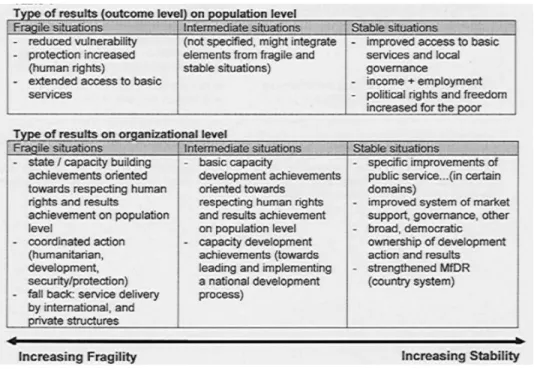
Quality Assurance is requested to propose a method on how to integrate portfolio risk analysis in the monitoring system of country strategies by September 2012. The working hypothesis of SDC Management is that a single proxy indicator could be identified and tracked. Table 6 in the report (Types of Results by Context) is considered a solid basis for more detailed analysis. SDC Management recommends using it when SDC strategies are defined.
An important part of this work will be done at field level. Communication and workshops shall be offered targeting implementation of risk analysis.
4. Delivery
Under delivery, the evaluation team reformulates and strengthens its arguments on transformational change with well selected examples. They illustrate how Switzerland can succeed in contributing to transformational change (e.g. Nepal), but also point out that in many instances the other development partners and, in particular, other donors are not aware of the contribution by Switzerland. Sometimes SDC is perceived as not flexible enough to respond to rapidly changing contexts. Staff is seen as key to how SDC is perceived and how it acts.
Senior Management emphasizes that achieving transformational change requires a sound understanding and informed use of the different instruments available within the FDFA and SECO. SDC Management is committed to mainstream the understanding of development work as essentially a “whole of government undertaking” especially in fragile and conflict-affected contexts. Achieving complementarities between bilateral and multilateral instruments and cooperation with larger donors is even more important in fragile contexts than in other development situations. With regard to multilateral partners, Senior Management supports the recommendation for SDC to be a strongly engaged stakeholder rather than an (often critical) observer. These considerations should be taken into account when building a portfolio and managing portfolio risk. It is also very important to recognize humanitarian aid as a strategic partner with specific characteristics at all stages of collaboration as long as fragility prevails.
In particular, Senior Management is supportive of the commitment of resources, if possible jointly with other donors, for analytical work and the use of accessible intelligence channels to obtain more accurate and timely information especially in conflict driven situations. It is aware that together with security information gathering, analysis may cost 10% or more of program spending. The crucial step however is the ability to translate the results of analysis into action. This requires management skills and in-depth context knowledge.
SDC will therefore pay particular attention to assure that field offices have enough time for direct contacts with beneficiaries and partners. For these contacts a critical comparative advantage of Swiss presence is necessary. This will imply flexible applications of some administrative rules.
With regard to flexibility, Senior Management thinks there is more potential in making better use of existing and already planned avenues of flexibility rather than investing in huge efforts to increase flexibility through a formal cross-institutional approach.
5. Staff Resources
The evaluation team is very explicit about the relatively low incentives and protection provided by SDC for staff willing to apply for postings in fragile contexts. Financial and career incentives are low in comparison with similar agencies and support structures are also weak. This is seen as an obstacle to attracting qualified staff for such postings and providing them with career perspectives.
Senior Management has already commissioned Human Resources of the FDFA to establish policies for staff working in fragile situation on some issues (non-family station policies and Rest and Relief). This work is valuable and well under way. Indeed, Senior Management considers a comprehensive overhaul of these policies (incentives, protection, support, career perspectives) an urgent must.
Staff policy is the most central aspect to carry out good work both in the field and at headquarter. Senior Management insists that such a process must not jeopardize the use of existing and successful staff instruments such as the Swiss Humanitarian Aid unit (SHA) contracting policy. Such policies may be essential to continue to fulfill the humanitarian mandate of SDC but also for other functions in fragile situations.
Concrete action:
SDC Management will work with Human Resources to develop in close interaction with the responsible person for the theme ―Conflict and Human rights‖ a comprehensive set of staff management policies for fragile contexts.
Positions in fragile contexts will be considered priority positions to be filled in the staff rotation process.
6. Security Management.
The evaluation comes to the conclusion that security management at SDC is not up to the level needed for increasing work in fragile contexts. It has identified a number of weaknesses in the definition of responsibilities (e.g. between Embassies and SDC coordination offices) and the flow of information across FDFA.
Senior Management takes the issue of security very seriously and appreciates the frankness of the evaluation in stating problems in this area. However it insists in the very substantial progress made in the last ten years in response to an environment in constant and very rapid change. However, further action is urgent.
Concrete action:
Among others Senior Management will clarify with FDFA Security and other FDFA entities the following priority issues:
SDC considers the deployment of resources for security management in the FDFA as low and the use of existing resources sub-optimal. An exchange with FDFA Security will identify problem areas and resolve issues.
The different roles and responsibilities of FDFA security, the crisis management centre, as well as the security specialists assigned to SDC and the SHA need to be clarified.
The lines of responsibility for security management related decisions need to be clear and without duplication. A broad general policy paper about security management should leave room and calls for context-specific case-to-case decisions in the field. Crisis management simulation training will be done also at the management levels in
Berne on a regular basis, simulating a wide range of possible situations focusing on testing lines of communication, responsibility, coordination with other countries, etc.
Agreement at Completion Point of the Core Learning Partnership
and Management Reference Group
1. Process
Evaluation research shows that involvement of those responsible for implementation ingenerating recommendations leads to a higher rate of implementation. Therefore, to ensure recommendations that are well targeted, ambitious and achievable, this evaluation engaged the Core Learning Partnership (CLP) and members of the Management Reference Group (MRG)1 in the development of the recommendations. During a 1 ½ day Synthesis Workshop, the CLP/MRG validated the evaluation findings and conclusions and with the facilitation of the Evaluation Officer from Corporate Controlling and the Evaluation Team, elaborated the recommendations for SDC noted in this Agreement at Completion Point (ACP). The ACP will be forwarded to a group of SDC Directors who will draft a Senior Management Response which will be tabled with the Directorate.
2. Overall Appreciation of the CLP and MRG
The CLP/MRG welcomes the independent evaluation on SDC‘s performance in fragile and conflict affected states as an impressive and useful piece of work. The CLP/MRG notes that the evaluation team has understood the SDC and Swiss way of working well, and reflected this in a way that does justice both to the strengths and weaknesses of SDC. The CLP/MRG finds the analysis in the report to be accurate and sharp, making challenging points in a clear, constructive and diplomatic fashion.
The evaluation findings have an immediate relevance in a number of areas – for the new Bill to parliament, for SDC‘s work in operational contexts, for the reformulation of country strategies, and for the proposed increase in spending in fragile contexts. There are a number of external opportunities which the evaluation can help with, in particular the Busan commitments including the New Deal for Engagement in Fragile States supported by g7+ and INCAF members, including Switzerland.
The CLP/MRG also found the evaluation process useful and facilitated to maximise learning. Members of the CLP working on fragile states now feel that they have a ‗support network‘ across the organisation which did not exist to the same extent beforehand. The participatory, ‗developmental‘ process employed is seen as contributing both to evaluation quality, learning of the CLP members, and beneficial in terms of ensuring value for money from the investment in this evaluation.
The CLP/MRG find that the timing of the evaluation is excellent, and feel implementation of the evaluation recommendations will allow SDC to strengthen its strategic, organisational and operational efforts in fragile and conflict affected states. The findings of the evaluation should be used in a process of organisational change, with leadership from the Directorate, supported by a reference group, ideally formed from the CLP and Management Reference Group. The emphasis should be on a strategic re-orientation of SDC to work better in this area of vital and increasing importance.
1
Members of the CLP/MRG who attended the Synthesis Workshop: Christoph Graf, Véronique Hulmann, Bernhard Huwiler, Barbara Jgushia, Burgi Roos, Elisabeth von Capeller, Gerhard Siegfried, Ségolène Adam, Véronique Bourquin, Sophie Delessert, Evelin Stettler, Markus Heiniger, Edouard Jay, Antoine Laham, Milena Mihajlovic, Armin Ullmann.
3. Recommendations of the CLP/MRG
The CLP/MRG found the priorities for change suggested by the evaluation team to be well-founded and challenging. The needs identified by the evaluation team set out a broad space for potential improvements, which the CLP/MRG group worked on to develop specific priorities. By bringing together the evaluators independent perspectives and the CLP/MRG knowledge of the organisation, a set of recommendations for all of SDC (Regional Cooperation, Humanitarian Aid, Regional Cooperation and Cooperation with Eastern Europe and CIS) were developed in each of the five priority areas. Together, these represent the beginnings of a strategic roadmap for SDC.
Achieving transformational change
1) The SDC Board of Directors should develop a clear and coherent vision for why SDC is working in fragile states and what it aims to achieve. In particular:
The Board of Directors should mandate a task force, including representatives of all divisions to develop this vision.
Work on this should start as soon as possible, with a view to being approved by October 2012.
Engaging in fragile States is a long term commitment and the vision shall extend beyond 2016.
2) The Heads of Division need to ensure that country strategies in fragile states include clear outcomes that address the causes of fragility and conflict. In
particular:
Cooperation Strategies being renewed in 2012 should be viewed as a priority.
Multilateral and whole of government elements should be incorporated into the new strategies.
The new cooperation strategies should include context analysis that addresses political and social dimensions of fragility and conflict.
Innovation
3) SDC programmes in fragile states need to routinely address state building and peace building objectives. In particular:
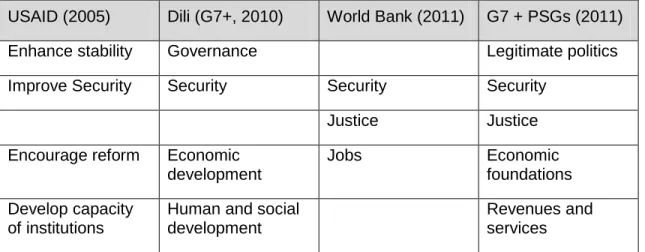
SDC should ensure its programme portfolio in fragile contexts is aligned with the priorities of the New Deal (i.e. legitimate politics, security, justice, economic foundations, revenues and services).
SDC should broaden and balance better the mix of instruments used in fragile contexts (from bilateral projects to budget support as appropriate to the context and including strengthening the State to take charge of the development agenda).
Align SDC priority fragile states cooperation choices with g7+ members (i.e. potentially in New Deal pilot countries such as Afghanistan, South Sudan, DRC and Liberia and with New Deal signatories such as Burundi and Chad)
There should be an implementation strategy for the New Deal decision paper to be adopted by the directorate.
4) SDC should invest more in applied research in fragile states, and to create better linkages between evidence, policy and practice. In particular:
SDC should strengthen the advisory role of the networks based on the needs of operational programmes in fragile states. This may eventually include the establishment of annual written service agreements
Research areas should be related to the New Deal, and could be addressed in a collaborative fashion with other donors to explore what works well and what doesn‘t work in different contexts.
SDC should invest in appropriate capacities and mechanisms internally to help translate research findings into actions.
Risk Management
5) SDC needs to give managers and programme staff wider scope for strategic and operational flexibility in fragile contexts. In particular:
SDC should increase decentralised authority for Cooperation Office managers. SDC should promote flexibility as part of the organisation culture in fragile contexts,
enabling ―course corrections‖ as context changes.
Programme management tools (e.g. Conflict Sensitive Program Management CSPM) and results frameworks need to take better account of the risks of working in fragile states, while simultaneously taking a longer-term view of SDC‘s contribution. Cooperation strategies must contain a diversified ―risk portfolio‖, with riskier/ high
impact projects as well as safer/ more reliable ones.
Results frameworks should routinely acknowledge longer term goals related to State building and peace building.
The long term goals relating to State and peace building shall continue over several strategies;
SDC also needs to have a set of institutionally agreed risk management protocols, including for the sharing and transfer of different kinds of risks (i.e., contextual, institutional and programmatic).
6) SDC needs to improve the reliability of its analysis, and the links to decision making. In particular:
SDC country directors should lead analytical exercises in fragile contexts and develop appropriate mechanisms to ensure use in programme and strategic decision-making (based on SDC‘s corporate CSPM methodology).
Analysis should involve the full range of SDC staff, including NPOs, as well as partners and other donors.
Programme steering committees and advisory boards need to be engaged in a more strategic fashion, internally within SDC, within the Swiss government, as well as in partner countries through multi-donor / govt. coordination fora.
Working Together
7) SDC should increase its work and strategic engagement with other donors and the multilateral system in addition to national and Swiss civil society. In particular:
SDC should be an active player in the international donor community, wherever possible taking on chairing and facilitation roles in aid of harmonisation and delivery against the New Deal objectives.
SDC should engage systematically with multilaterals – especially the World Bank, UNDP, UNICEF, UN Women, WFP, UNHCR and UNOCHA as well as the regional development banks - using its core contributions as an entry point for a more sustained strategic conversation about shared objectives.
SDC should establish better policy level engagement with other donors, both globally and in-country, on shared issues such as analysis, risk and coordination.
SDC should develop better policy capabilities on the issue of fragile states, with a designated fragile states hub, reporting to a directorate-level coordinator. The network should become part of this hub.
8) Where possible and feasible, the Swiss government as a whole needs to establish genuine joint strategies in-country with shared goals and outcomes. In particular:
SDC should promote common analysis in fragile states with other agencies of the Swiss government and better systems for routinely sharing information in order to accordingly adjust its operational response.
SDC should encourage the idea of leading entities within the Swiss system to develop and manage joint country strategies, and seek to fill this role where it has clear comparative advantage. This leadership should include responsibility for ensuring a proper process, shared analysis, setting overall goals related to fragility and conflict (state- and peace-building goals), and appropriate approaches respecting the CSPM methodology.
SDC should engage with other aspects of Swiss international policy that impacts on fragile states, such as defence, trade, international legal instruments and finance. Acknowledge the fact that coordination and harmonisation with other Swiss actors
requires additional resources and time.
9) Within SDC, SDC should move towards development and implementation of shared cooperation strategies in fragile and conflict-affected states, with assigned leads within SDC. In particular:
Strategies should set overall goals related to fragility and conflict, and involve shared responsibilities for process, analysis, and reporting to ensure truly comprehensive strategies.
Delivery
10) SDC senior management should mandate Human Resources to develop and implement staffing rules and conditions for assignment in fragile states. In
particular:
The policy should consider issues such as appropriate competency frameworks for fragile states and how to attract a mix of senior and junior professionals.
The policy should consider how to improve incentives for taking on assignments in fragile states, including career development, promotion opportunities, family protocols; professional and personal preparation of and support to individuals relating to working in such contexts.
SDC should seek to make the rotation system more aligned with institutional needs, and reflect on how to better implement rotations across FDFA to ensure the appropriate skills mix.
Experienced hires should be brought in from outside the organisation, with better use made of the existing expert pools, and efforts made to expand them.
Secondments should be made a visible part of career development strategies, where the assignments result in better profile and skills for working in fragile states.
The new policy should be in place by mid-2013.
11) SDC must urgently address security management, with a process for immediately clarifying roles and responsibilities across FDFA in country contexts, and for strengthening security management in the near term. In particular:
The clarification of roles and responsibilities should be a high priority for all countries, and will need to involve both field and HQ level staff.
Staff competencies and skills to analyse security risks and to integrate them in programme management should be improved.
Security management should be an explicit part of the TORs of managers/ country directors/ programme manager. Security management should address issues for national and local staff and partners.
12) SDC must communicate the rationale for engaging in fragile states with internal and external stakeholders. In particular:
Improved analysis needs to feed into communication strategies, especially of risks and benefits of Swiss engagement in fragile states.
Evidence needs to play a role in a more constructive communication on aid efforts in fragile states, including on failure, unanticipated consequences and corruption. SDC should put in place a strategy for communicating this evaluation.
In addition to the recommendations outlined above, the CLP/MRG recommended that a clear process should be put in place to carry forward the recommendations of this evaluation. A task force should be convened to oversee an implementation plan under the coordinating authority of a member of the Board of Directors. Progress should be reviewed by the Board of Directors at the end of the first year.
III Evaluators‟ Final Report
Evaluation of the performance of SDC instruments in fragile and
conflict-affected contexts
Commissioned by the Corporate Controlling Section of the Swiss Agency for Development and Cooperation (SDC)
Lewis Sida [email protected]
Ben Ramalingam [email protected]
Frauke de Weijer [email protected]
William M. Frey [email protected]
Ross Stewart Mountain [email protected]
Acknowledgements
The evaluation team would like to thank all those who so generously gave their time to this exercise. In particular we would like to thank the members of the Core Learning Partnership who provided insight and guidance throughout the process.
The cooperation offices who hosted the evaluation team gave an incredible amount of their time despite being extremely busy, and this evaluation could not have been conducted without their support. The evaluation team would especially like to thank the Tajikistan and Great Lakes regional cooperation offices who put a great deal of effort into arranging excellent schedules. We would also like to thank cooperation offices in OPT, Nepal, Hindu Kush and Haiti for participating in the study by telephone and in Bern the fragile states global cooperation and conflict and human rights network.
Finally the evaluation team would like to thank Anne Bichsel and her colleagues in the Corporate Controlling Section of SDC who managed this exercise so competently.
Table of contents
Executive Summary 1
1. Introduction 5
1.1 Background 5
1.2 Objectives of the evaluation 6
1.3 Methodology 6
1.3.1 Areas of enquiry 7
1.3.2 Evidence 7
1.3.3 Process 9
1.3.4 Evaluation team and management 9
1.3.5 Constraints 9
1.3.6 Structure of the report 10
2. Fragile and conflict affected states 11
2.1 Understanding fragility 11
2.2 Implications for the international community 14
3. Swiss aid and fragile states 19
4. Findings 23
4.1 Performance of instruments 23
4.1.1 Programming priorities, focus and positioning 24
4.1.2 Measurement of results 27
4.1.3 Institutional learning and staffing 29
4.2 Analysis, flexibility and adaptation 31
4.3 Complementarity 37
4.4 Role in the wider system 42
5. Priorities for change 48
5.1 Achieving transformational change 48
5.2 Risk 51
5.3 Innovation 52
5.4 Working together 54
5.5 Delivery 55
Annex 1: OECD DAC Principles of engagement and SDC compliance CD
Annex 2: Approach paper 60/CD
Annex 3: Inception report CD
Annex 4: Documents review 79/CD
Annex 5: People interviewed CD
Annex 6: Tajikistan country case study CD
Annex 7: Great Lakes country case study CD
Abbreviations and acronyms
ALNAP The Active Learning Network for Accountability and Participation CLP Core Learning Partnership
CPIA Country Policy and Institutional Assessment (of the World Bank) CSPM Conflict Sensitive Programme Management
DFID UK Department for International Development DRC Democratic Republic of Congo
DSRSG UN Deputy Special Representative of the Secretary General ODA Official Development Assistance
OECD Organisation for Economic Cooperation and Development OECD-DAC Development Assistance Committee of the OECD
OPT The Occupied Palestinian Territories
EITI Extractive Industries Transparency Initiative FDFA Federal Department of Foreign Affairs G7+ Grouping of fragile states
GDP Gross Domestic Product HA Humanitarian Assistance HDI Human Development Index
ICRC International Committee of the Red Cross INCAF International Network on Conflict and Fragility LICUS Low Income Countries Under Stress
MDG Millennium Development Goals MERV Ref. pending
MSF Medecins sans Frontiers
NATO North Atlantic Treaty Organisation NGO Non-Government Organisation
OCHCR UN Office of the High Commissioner for Human Rights PDII Political Division II of the FDFA
PDIV Political Division IV of the FDFA
PSGs Peace building and state building goals (of the G7+) REO2 Reorganisation 2
SDC Swiss Agency for Development and Cooperation SECO State Secretariat for Economic Affairs
SWAps Sector Wide Approaches
Swiss TPH Swiss Tropical and Public Health Institute WDR World Development Report (of the World Bank) WFP UN World Food Programme
UN United Nations
UNDP United Nations Development Programme UNRWA United Nations Relief and Works Agency
Executive summary
Fragile states have become of increasing concern to international aid donors with the realisation that few, if any, will achieve a single Millennium Development Goal in 2015. Fragile states are home to many of the world‘s poorest and most vulnerable, and are often sources of instability in their region and internationally.
Switzerland and its main development agency the Swiss Agency for Development and Cooperation (SDC) is in the process of increasing its aid in fragile states as a result of these issues. SDC has also found many of its regular cooperation countries become more fragile over time.
This evaluation has been commissioned as part of the process of considering how to work better in fragile and conflict-affected states. It is set against the backdrop of a new Federal Council Dispatch 2013-2016 (Botschaft), which is the main legal and financial instrument governing Swiss foreign aid. The new dispatch proposes an increase in fragile states expenditure to the parliament and the Federal Council.
The evaluation is a strategic exercise looking at how SDC can achieve impact in fragile contexts, and how it can best configure its aid instruments. It has been conducted according to the latest OECD guidance on such exercises, setting a small number of broad, strategically relevant questions to be explored in different contexts. The design was highly participatory, aimed primarily at engaging managers and practitioners within the organisation on the major issues, and on how change might be best achieved. The evaluation has also sought to fulfil an accountability function. This has meant establishing a credible evidence base on which SDC performance could be assessed, through the use of case studies and an extensive review of secondary data. A more detailed summary of objectives, methods and the evidence is set out in the introduction section of this report.
Performance of SDC instruments in fragile and conflict-affected contexts
This evaluation has found that SDC is well positioned to work in fragile states. It has the right mixture of approaches, good instincts operationally, and can play an important and valuable role in the wider international system.
To achieve this potential, SDC needs to become more flexible and needs to compliment its technical efforts with political understanding and positioning. Whilst individual projects and programmes can perform well, and achieve clear results – that is to say make a real difference to the lives of the poorest and most vulnerable – there is little evidence that they make a difference to the root causes of fragility.
There is an emerging consensus on the types of assistance that is needed to help fragile states, and countries emerging from conflict to get on the path to development. Priorities include providing security, helping establish legitimate institutions that are transparently managed, providing jobs and getting the economy going. There is a need for – most often – building peace and trust within fractured communities and national politics. This requires concerted diplomatic, defence and development action.
SDC has many of the skills needed to work effectively in such contexts. It is good at being ‗hands on‘ – identified as most useful in the early stages of rebuilding – and it is good at technical programming. It stays for the long term. However, SDC also focuses too much on
the service provision end of the spectrum, giving less emphasis to tougher but arguably more important areas such as security, justice and jobs.
Partly this is because some of the necessary skills and approaches are held in other parts of the Swiss aid bureaucracy (in the ministry of economic affairs or other parts of the foreign ministry). Partly, however, it is because SDC has a conservative approach to risk and an overly technocratic approach. Fragile contexts need political awareness and policy skills as well as the technical excellence SDC can bring. Working on health or water programmes is easier to show results and may be more acceptable domestically than messier and more difficult – and risky - work such as state-building.
Working differently will require new types of people to be brought into SDC, and will require new ways of supporting existing staff, including a more rigorous approach to security. Fragile and post-conflict states are costlier, more dangerous and more stressful to work in than regular development postings, and people will have to be rewarded appropriately for working in such conditions.
Analysis, flexibility and adaptation
Analysis is seen as key to effective strategic positioning by SDC. It is the starting point for all programme design.
Despite this, there is a wide variance in the culture of analysis and information within cooperation offices. The best prioritise and invest in regular analysis linked to decision making, led from the top. More routinely however, the tools available for analysis are seen as either too broad, or too heavy and tend to be complied with rather than valued.
SDC does have a wide range of information sources and networks, and this can be a major strength, especially where national sources are included. National staff are a major strength in this regard. The impartial status of Switzerland often means SDC is more realistic about the prospects for development, and political change.
This does not always translate into better programming however. The majority of SDC staff interviewed for this evaluation felt the organisation was not flexible enough in its approach in fragile states. In fragile states the operating environment can change quite suddenly, with opportunities or risks needing to be addressed quickly. SDC programmes take too long to both commission and to change, however, and there is a culture of ―predictability and predefined outcomes‖.
Whilst SDC is not nimble enough in its fragile states work, it is good at adapting to context within the confines of existing programmes. Humanitarian aid is seen as a more flexible instrument, but is often too short term for use as a strategic intervention.
Complementarity
Respondents to this evaluation were clear that in fragile contexts, it is difficult to achieve structural development without political dialogue. This means there is a need for Switzerland to engage as a single entity, not as SDC or any of the individual aid instruments.
SDC has made progress in joining up its development and humanitarian work, and with other aspects of Swiss assistance such as the State Economic Cooperation Office (SECO) and the peace-building department of the Foreign Ministry (PDIV).
Whilst this progress has been steady for the last few years, there are few examples of a genuinely common vision for the Swiss ―offer‖ in fragile contexts. Joint strategies tend to be a combination of individual mandates rather than genuine joint intent.
The barriers to genuine joint working across instruments are also considerable, with separate budgets, bureaucracies and supporting political constituencies. This is exacerbated by incompatible systems. This has meant that joint working has been more time-consuming and difficult than anticipated.
Where genuinely joint programming has been achieved there is clear evidence of greater influence and impact, and there are clear advantages visible within the Swiss aid system. This suggests there is a need to create more mechanisms to encourage such working, and to promote more joint working as a way of breaking down cultural and institutional barriers. Role in the wider system
There is a wide degree of variance across SDC programmes in fragile states in its engagement and role in the wider system.
Where SDC and Switzerland are actively engaged, they can play an excellent and constructive role in the international system, convening other donors and promoting neglected issues.
There are several factors that determine whether Switzerland occupies this type of meaningful role in the system. Being one of the top ten donors is a major factor, as is good in-country leadership. Credible programming is another factor.
Switzerland can also play a positive role as a ‗network enabler‘, strengthening essential parts of the system such as civil society and the multi-lateral system. Despite this, the links between bilateral and multilateral programming are weaker than they should, or could be. More than half of SDC assistance is spent multilaterally, both in development and humanitarian aid, and yet this aspect of work is not always visible in cooperation offices. SDC is perceived positively by its multilateral and NGO partners. The trust fund to improve collaboration between the UN and World Bank in fragile states is an excellent example of the potential Swiss role globally. Switzerland‘s balanced and mutually respectful approach is also much appreciated by multilaterals.
Priorities for change
The evidence of this evaluation suggests that SDC will have to change the level of its ambition in fragile states if it is to contribute to transformative change, which must be the ultimate goal in such contexts. There is a need for a more coherent vision, and for better adapted ways of working. In particular, SDC should:
1. Concentrate and focus its aid in fragile states. In contexts where Switzerland can establish a meaningful niche, based on its comparative advantage, credible resource levels and innovative approaches, it can aim to achieve transformative change, rather than transient results.
2. Put in place a coherent strategy of how to achieve transformative change in fragile states. Theories of change must underpin long term strategies, with flexible approaches and sophisticated methods of measurement.
3. Be more aware of and proactive about being part of the larger system. Where Switzerland is well regarded it can play an important role in bringing donors together. SDC must also get better at creating coherence between actions in the global arena and bilateral cooperation work. This will demand new ways of working together (within SDC, inter-agency, and whole-of-government.
4. Strike a balance between being pragmatic and policy-oriented; and between having a long-term strategy and facilitating innovation. There is a need for better tools for managing risk, and for more innovative programme work, based increasingly on evidence. SDC and Switzerland must develop a better mixture of modalities and instruments in more seamless ways.
5. Adapt its delivery and support mechanisms for work in fragile contexts. This encompasses areas from project cycle management to staff support.
1. Introduction
1.1 Background
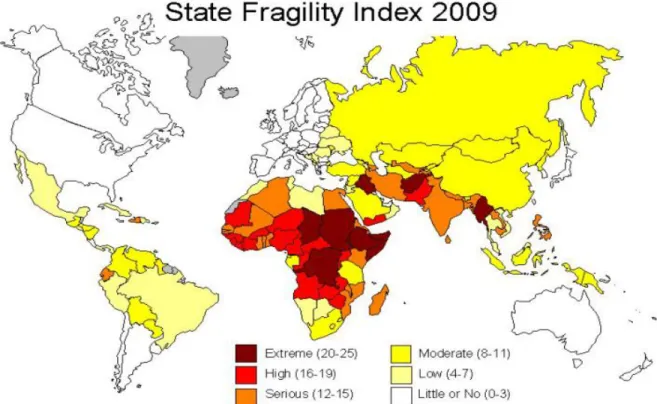
Fragile and conflict-affected states currently contain more than twenty percent of the world‘s population and a significant proportion of the poorest and most vulnerable (see figure 1)2. It is increasingly acknowledged that reaching the Millennium Development Goals will not be possible without greater and more sustained international engagement in these countries3. Against this backdrop, SDC is one of a number of bilateral donors that has made a corporate commitment to increase its engagement in such contexts.
Figure 1: Share of world‟s poor living in fragile states4
Doing more in fragile and conflict-affected states will require a change in both the what and
how of donor engagement5. Aid agencies have acknowledged the need to improve their strategy and impact in these states. This means, among other things, better and more systematic, evidence-based learning. The learning gap in fragile states is reflected both in terms of weak programme design and in a lack of sound evaluations.6
The Swiss Agency for Development and Cooperation (SDC) is presently developing its new Federal Council Dispatch 2013-2016 (Botschaft). As part of the new strategic direction envisaged in the dispatch, the organisation‘s leadership is committed to increasing engagement in fragile states. A significant part of SDC‘s work already takes place in countries and contexts that might be described as fragile and conflict-affected7. Currently the proposal is that it increases from 28% of its budget (currently) to 40-50% to be more in line with the international donor ―average‖.
As a result, in 2011 the SDC Directorate mandated the Corporate Controlling Section to commission an evaluation of the performance of SDC‘s instruments in these settings. SDC‘s Corporate Controlling Section commissions a range of evaluations each year. These are intended to assess the relevance and effectiveness of SDC‘s work and contribute to lesson learning. These evaluations are also an important part of SDC‘s corporate accountability.
2 http://www.ode.ausaid.gov.au/publications/pdf/ode-brief-fragile-states.pdf. 3 http://web.worldbank.org/WBSITE/EXTERNAL/PROJECTS/STRATEGIES/EXTLICUS/0,,menuPK:511784~pageP K:64171540~piPK:64171528~theSitePK:511778,00.html. 4
Chandy & Getz (2011) Poverty in Numbers: The Changing State of Global Poverty from 2005 to 2015.
5
http://www.odi.org.uk/news/details.asp?id=477&title=g7-fragile-states-new-deal-budget-strengthening-initiative
6
http://www.oecd.org/dataoecd/8/48/48092571.pdf.
7
This evaluation uses the terms ‗fragile and conflict-affected states‘ and ‗fragile and conflict-affected contexts‘ inter-changeably. The term fragile contexts allows for the inclusion of regions or districts of countries as well as the countries themselves, but to spare the reader a certain monotony of over-use, we have decided to use both terms.
1.2 Objectives of the evaluation
During the inception process, it was agreed that the evaluation would focus on the ‗Performance of SDC Instruments in Fragile and Conflict-Affected Contexts‘. The specific objectives were as follows:
1. Assess SDC performance in its present engagement in selected fragile and conflict-affected contexts;
2. Provide a solid evidence base of where SDC stands and an analysis of where it needs to improve;
3. Through a process of reflective inquiry, develop a shared understanding of how to engage in fragile contexts;
4. Develop ―priorities for change‖ for SDC in the form of clear, targeted and actionable recommendations for future engagement in fragile and conflict-affected contexts.
1.3 Methodology
All SDC evaluations are a balance between learning and accountability, and between retrospective assessment and forward looking recommendations.
This was designed as a formative process evaluation, with the focus on contributing to improvements in SDC‘s performance in fragile and conflict-affected contexts. The overwhelming feedback from SDC staff at all levels and across the organisation was that this evaluation should emphasise learning and future improvements. As such the evaluation has been developed with the intention of maximising utility for decision makers and practitioners. Lessons from previous fragile states evaluations compiled by the OECD-DAC Evaluation network have also been taken on board8. These suggest that a detailed, top-down methodology is simply not practical in fragile contexts. Instead the key for successful evaluations is to select a number of priority questions and be as flexible as possible in the selection of specific methods and approaches.
The formative and developmental focus of the present evaluation, together with the fragile and conflict-affected contexts which are the focus of the evaluation, have a number of implications for the emphasis of the evaluation process and the final product.
Specifically, this has meant that:
a significant amount of attention has been paid to the process elements of this evaluation – interviews have been semi-structured and ‗reflexive‘, workshops have been participatory, the objectives of the evaluation have been adjusted and adapted following feedback and interactions
The robustness of the evidence base has been strengthened through the developmental approach, as information gathered has been subjected to triangulation through a number of different methods, and participatory techniques have been chosen to facilitate group-based validation, testing and prioritisation
The evaluation team has spent time to understand the current state of the organisation, the culture, how staff interact, how they learn, and has worked to position the key findings and evidence in such a way that will promote the potential for utilisation.
While accountability is still an objective for this evaluation, it needs to be framed in a way that relates to the formative focus of the evaluation. The evaluation team suggests that the most important form of accountability is whether SDC is accountable for effective learning in fragile contexts.
1.3.1 Areas of enquiry
The evaluation was undertaken against four key areas of enquiry. These were developed from the original approach paper (annex 1), and subsequent conversations during the inception phase. The areas of enquiry provided an over-arching evaluation framework, against which specific questions and possible sources of information could be correlated. Each of the four areas of enquiry were verified through the inception mission as appropriate for the needs of the different stakeholders across SDC. The specific questions (see annex 2 for the full inception report) were refined based on feedback through the inception process, with each focusing on an area of significant relevance to SDC performance.
1.3.2 Evidence
The evaluation used the standard range of evaluation methods, including document review, key informant interviews, group interviews and workshops and a series of desk-based and field-visit case studies. The data gathered from this was triangulated and forms the basis for any conclusions reached.
The evaluation did not collect primary evidence of the outcomes and impacts of SDC programmes. It relied primarily on secondary data where it existed and key informant interviews. That said, the evaluation team did visit 12 projects in 11 regions of 4 countries directly and so has been able to bring together head office, country office and field perspectives.
The case studies formed the core of the evidence gathered for the evaluation, although were by no means the sole source. Interviews were also conducted with as wide a range of informants within the Swiss system as time allowed, and with a selected cross-section of multilateral and donor agency experts. In total 150 people were interviewed including for the case studies. In addition there were a number of focus group interviews in all locations, involving over 50 people (see table 1).
SDC FDFA/ SECO
Multilateral/ ICRC
Government Donor NGO/ partners
Interviews 60 10 15 20 10 30
Table 1: Interviewees by institution type
Interviews within SDC covered a wide cross-section, from the whole of the directorate to national programme officers. Interviews and discussions with other key stakeholders included numerous Ambassadors, the State Secretary for the FDFA, as well as field based programme staff in PDIV, PD II and SECO. There were also 6 workshops in Bern and Dushanbe, and feedback sessions following all country visits.
The case studies consisted of three categories; countries that were visited by the evaluation team and were studied in depth; countries where several key informants were interviewed forming desk reviews and countries or areas of interest that provided extra material for the evaluation. The countries and the rationale for their inclusion is set out in table 2 below.
Table 2: Case study countries and rationale for inclusion
Context Rationale
In-country case studies Great Lakes (Rwanda, Burundi, DR Congo).
Ongoing conflict across the region, extreme poverty, regional instability, huge humanitarian caseload. DR Congo, Rwanda and Burundi all seen as fragile in different ways, although conflicts in all three inter-connected.
Tajikistan Transition from relief to development cold war and post-conflict. Proximity to areas of major conflict, in particular Afghanistan. Seen as fragile but not failed.
Desk reviews
Hindu Kush Includes Afghanistan and Pakistan, archetypal ‗fragile states‘. New programme for SDC with potentially interesting new approaches, but with some serious internal debates about rationale and execution. Nepal Existing flagship programme that is held up as an important model
for the organisation as a whole, with more integration than almost anywhere else globally, more of a claim to be a truly ‗Swiss programme‘ and extensive documentation available
Middle East/OPT This is important both for review work already undertaken, the new merged organisation structure (the Europe and Mediterranean Division, EMM) and SDC programme in the OPT
Areas of focus
Haiti Complex mixture of natural disaster, extreme poverty and insecurity. UN peacekeeping mission. Weak state institutions, lack of skilled human resources (brain-drain and losses during earthquake). Political interventions by USA, France, Canada and Brazil as well as MINUSTAH. Swiss representation merges different structures in an ―integrated Embassy‖ with focus on programs and projects.
Conflict and human rights thematic network
The thematic network most closely associated with work in fragile states and a way of understanding the work of thematic networks more generally.
Global cooperation Has an important role in SDC work in fragile states through multilateral relationships and work with other global donors.
The evaluation also undertook an extensive document review. This included SDC internal documents (project proposals, reports, analysis) as well as the majority of other donor and academic literature relating to the subject.
1.3.3 Process
The evaluation placed a special emphasis on the learning nature of the exercise for the organisation. A highly participatory approach was adopted to help gather and test the key findings with the hope that this will lead to evidence which will be of most benefit to decision makers. This involved setting up a Core Learning Partnership (CLP) who met the evaluation four times over the course of the exercise formally, as well as being highly involved in case studies. A Management Reference Group was also convened to provide overall direction, and to ensure the management response was well conceived.
An inception phase helped to refine the terms of reference and to adapt an original approach paper. As a result the original purpose of the evaluation was slightly refined to broaden the scope somewhat. The evaluation team presented initial findings to the CLP following the end of the data gathering phase, and the draft report following its submission. The recommendations were developed through a final workshop, following the submission of the final report.
1.3.4 Evaluation team and management
There were five core members of the evaluation team with substantial experience of working in fragile and conflict-affected states, evaluation and academia. Ross Mountain and William Frej were the senior practitioners in the team, respectively former DSRSG in Congo (current director at DARA) and USAID mission director in Afghanistan. Lewis Sida led the team and Ben Ramalingam, former head of research and development at ALNAP and Frauke de Weijer, expert author on the World Bank WDR 2011 on fragile states provided expert input. James Darcy, author of the OECD INCAF report on risk management in fragile states also provided advice to the evaluation team.
The evaluation was managed by Anne Bichsel of the corporate controlling section of SDC, who facilitated the process and protected the independence of the findings.
1.3.5 Constraints
Whilst there was excellent access provided by SDC, both to all levels of the organisation and to documentation, there were also several constraints. Chief amongst these was the availability of people for interview, with busy workloads meaning that a significant proportion of interviews were often cancelled or rescheduled at the last minute. The timing for the country case studies was also a constraint as the busiest reporting period coincided with the original schedule, meaning there was less time than would have been ideal at the end of the evaluation process. Finally, there was not always as much data as the evaluation team required, something noted in the analysis sections of this report.