University of Mohammed Seddik Ben Yahia -Jijel
Faculty of Letters and Languages
Department of English
Dissertation Submitted in Partial Fulfilments of the Requirements for the Master
Degree in Didactics English Language Sciences
Candidates: Supervisor:
Boutaina BENGUESSOUM BOUKEZZOULA Mohammed
Sabrina BOUKMOUCHE
Board of Examiners:
Chairperson: Loubna KOUIRA Mohammed Seddik Ben Yahia University, Jijel. Supervisor : Mohammed BOUKEZZOULA Mohammed Seddik Ben Yahia University, Jijel. Examiner: Asma BENALILECHE Mohammed Seddik Ben Yahia University, Jijel.
2017-2018
An Ethnographic Study of Nonverbal Communication in an EFL
Classroom
In the name of God, the most Merciful the most compassionate. In life, success doesn’t just come and find us, we have to go out and get it
walking through hard ways which can be easier by the guidance, help and love of those who are close to our hearts.
I’m honoured to dedicate this work to:
The precious person who vigorously supported me all the way through the whole course of my life, quintessence of kind heartedness to your
constant prayers... To you my dearly mother “Nadia” the best gift I ever got.
My precious father “Boualem” for earning a modest living for us, and being a safe haven for me, for all your endless efforts, sacrifices and
support without which I might not be the person I’m today. My sunshine grandmother “Nouni” may Allah prolong your life.
My dear brother and sisters: Sifou, Khouloud and my Pinou. My brother in law Mouhsin.
To my sugary friend and my fellow derby... to you “Sabie”. We’ve shared the bother of this work, we have been anxious, stressed, busy and
happy yet always together supporting each other .I hope that our friendship will last long.
My dear best friends: Lynda, Mira, Fedoua, Soumia, Cooki, Hadjer, Meriem and Fatima for being sparks in my dark days.
Lastly and not least to my family members who support and encourage me.
In the Name of God, the Most Merciful, the Most Compassionate.
Every challenging work needs self efforts as well as guidance and support of others especially to those who are dear to my heart. I’m honoured to dedicate this humble dissertation
to
My dad, Ferhat, who has spent his life giving endlessly to others and inspired me to accept nothing but my best effort.
My mom, Farida, who nurtured, loved, and cared for me, to the precious person of my life who strongly supported and believed on me all the way
through my whole life.
My grandparents “Jadi and Mimi” may Allah prolong your life. My source of happiness, dear sisters and brother:” Nina, Nawal, Nedjma
and Fares.”
My sister-in-law “Amira” .My Brothers in law: Rabah, Mohammed and Rachid.
My little cuties nieces:” Maya , Sirine and Romaissa” who totally rule my heart in the story of my life.
My Fabulous Friend ”Boutaina” , for all the good and bad days that we have passed together, for your encouragement and kindness and for the sleepless nights we were working together before deadlines, and for all
the fun we have had in the last four years. My fantastic cousins: Messa, Noura and Nessrine.
My friend Khouloud who spent days and days helping us, thank you so much.
My wonderful friends: Lynda, Fedoua, Soumia, Amira, Cooki, Miry and Hadjer, to my amazing childhood friends: Nanou, Chaima, Esma,
Soussou and Nedjla for all their continued support and encouragement.
“Sabrina”
First and foremost , praises and thanks to Allah , the Almighty, for his showers of blessings throughout our research work to be completed successfully.
“We thank you Allah”
We would like to pay special thankfulness, kindness and pleasure to some special persons below who made our research possible, successful and helped us at every point to achieve our
objective.
To our supervisor, Dr. Boukezzoula Mohammed, he has been a tremendous mentor for us; we would like to thank him for his vital support and aid. His encouragement made it possible to
reach the goal.
Wewould like to express our very great appreciation to Madame Kouira Loubna who presides the jury and Madame Benalileche Asma who accepted to examine the current dissertation. We are very thankful for the help that such a great teacher gave. Madame Chioukh her help is
much appreciated.
We are particularly grateful for the assistance given by Mr. Naili and Mr. Bonnar. Without their passionate contribution and input, the validation study could not have been successfully
conducted.
We would like to offer our special thanks to Madame Zait, for her help and guidance when we were really in need for.
Finally, our thanks go to all the people who have supported us to complete our research work directly or indirectly.
The present study was a preliminary attempt to investigate the role and importance of nonverbal communication in a third year oral classroom at the department of English in Mohammed Seddik Ben Yahia University. The aim of the study was twofold: first, to evaluate
ethnographically the effectiveness of one oral expression teacher’s use of nonverbal communication and second, to gauge this teacher’s perceptions of the importance and evaluation of her use of this important aspect. In order to achieve the above stated aims, the literature about
the teaching and learning of nonverbal communication in English language teaching was reviewed so as to develop the observation scheme used to evaluate the teacher’s practice of nonverbal communication as well as to design the questions of the teacher’s interview. The analysis of the data generated by the observation scheme showed that, while the teacher was, noticeably, very adept use of oculesics (eye contact), in general, her use of the other nonverbal
features varied considerably. Moreover, her use of hand gestures, proximics, haptics, and paralanguage was satisfactory, in general. As far as the data generated by the teacher’s
interview is concerned, the analysis showed that the teacher was fully aware of the importance and the necessity of integrating the teaching/learning of nonverbal communication in the English university Jijel curriculum so as to foster a cross-cultural competence in the use and teaching of this important aspect among students. As far as her evaluation of her own practice in the use
of nonverbal communication is concerned, the teacher’s answers revealed that, although her use and perception of her students’ use of some nonverbal features was highly effective, it was most
often than not largely spontaneous and unconscious, and, thus, the result of intuition and unconscious acquisition rather than explicit instruction.
%: Percentage.
CC: Communicative Competence.
CLA: Communicative Language Ability.
EFL: English as a Foreign Language.
FL: Foreign Language.
FLT: Foreign Language Teaching.
L1: First Language.
L2: Second Language.
N°: Number of subjects.
NVC: Non Verbal Communication.
Q: Question.
SLA: Second Language Acquisition.
TL: Target Language.
USA: The United States of America.
VC: Verbal Communication.
Table 01: Observation Schedule for the Evaluation of the Use of Nonverbal Communication in the Oral Classroom... 46
Figure 01: An example of a gesture “a thumb up” ...9
Figure 02: Different situations of body movements and postures ...10
Figure 03: Different expressions of “Eye contact” ...11
Figure 04: Different facial expressions of happiness, sadness, relief…etc ...12
Figure 05: The power of touch as a nonverbal cues ...13
Figure 06:Receiving of voice messages ...14
Figure 07: Proximics Zones of Personal Space ...16
Figure 08: The teacher’s head is forward lean ...26
Figure 09: The teacher’s head is forward with a smile...28
Figure 10: The teacher is effectively catching the idea of the student...28
Figure 11: The teacher is using hand gestures...29
Figure 12: Making abstract notions concrete by gestures and motions...29
Figure 13: The teacher is showing an idea to the class using the gesture of palm up...30
Figure 14: The teacher is counting points that are made verb1ally...30
Figure 15: Using eye contact in the class besides smiling...50
Figure 16: Different directions of eyes...51
Figure 17: Rubbing eyes gesture...51
Figure 20: Brows arched gesture...53
Figure 21: Nose winkled gesture...54
Figure 22: The gesture of supporting the head by the hand...54
Figure 23: The gesture of stroking the chin...55
Figure 24: The gesture of nodding the head...55
Figure 25: Robbing hands together...56
Figure 26: Putting the hand over the mouth...57
Figure 27: Hands clasping on the desk gesture...57
Figure 28: Hands clenched in raised and lower position...58
Figure 29: The thumb up hand gesture...58
Figure 30: The thumb down hand gesture...59
Figure 31: The use of the index finger to write a difficult word in the air...59
Figure 32: Holding hands behind the back gesture...60
Figure 33: The steeple hands gesture...60
Figure 34:Crossing hands gesture...61
Figure 35: The gesture of standing in front of students...61
Dedication ...I
Acknowledgement ...III
Abstract ...IV
List of Abbreviations ...V
List of Tables ...VI
List of Figures ...VII
Table of Contents ...IX
General Introduction
1. Background of the Study ...01
2. Statement of the Problem ...01
3. Aims of the Study...02
4. Means of Research ...02
5. Structure of the Dissertation ...03
Chapter One and Two: Theoretical Framework
Chapter One: Nonverbal Communication
Introduction ...061.1. History of Nonverbal Communication...06
1.3.1. Kinesics ...08
1.3.1.1. Gestures ...08
1.3.1.2. Head Movements and Posture ...09
1.3.1.3. Eye Contact ...11
1.3.1.4. Facial Expression ...12
1.3.1.5. Clothes and Physical Appearance ...13
1.3.2. Haptics ...13 1.3.3. Vocalic ...14 1.3.4. Proximics ...15 1.3.4.1. Intimate Space ...15 1.3.4.2. Personal Space ...15 1.3.4.3. Social Space ...15 1.3.4.4. Public Space ...15 1.3.5. Chronemics ...16
1.4. Importance of Nonverbal Communication...16
1.5. Features that Influence Nonverbal Communication ...17
1.5. 1. Culture...17
Chapter Two: Nonverbal Communication in Teaching
Introduction ...24
2.1. Effective Body Language Teaching Techniques...24
2.1.1. Use the Voice ...24
2.1.2. Use the Appropriate Posture...24
2.1.3. Use the Space ...24
2.1.4. Use Facial Expressions ...25
2.1.5. Hands and Gestures ...25
2.1.6. Use Suitable Rate of Speech...25
2.1.7. Getting Student’s Attention ...25
2.1.8. The Effective Ways in Teaching ...27
2.1.9. The Appropriate Sitting Arrangement ...31
2.2. Student’s Body Language ...31
2.2.1. Boredom ...32
2.2.2. Active Students ...32
2.3. Benefits of Using Nonverbal Behaviours in Classroom ...32
2.4. Nonverbal Communication and Second Language Acquisition ...33
2.5.2. Bachman’s Communicative Language Ability...38
2.6. Materials to Teach Nonverbal Communication in EFL Classes ...40
2.7. Integrating Nonverbal Communication in the Algerian Syllabus ...41
Conclusion ...43
Chapter Three: Practical Part
Introduction ...453.1. Classroom Observation ...45
3.1.1. Description of the Classroom Observation ...45
3.1.2. Analysis of the Classroom Observation ...46
3.1.3. Observation Schedule for the Evaluation of the Use of Nonverbal Communication in the Oral Classroom...46
3.1.4. Description of the Results of the Observation schedule ...50
3.1.5. Analysis of the Results of the Observation schedule...50
3.2. Teacher’s Interview ...64
3.2.1. Interview Procedure ...64
3.2.2. Description of the Interview ...64
3.2.3. Analysis of Teacher’s Interview ...65
General Conclusion ...74
Pedagogical Recommendations ...76
Limitations of the Research ...78
References ...79
Appendix
Résumé
1. Background of the Study
The social anthropologist Hall (1959) claimed that 60% of human communication is nonverbal. (As cited in Elfatihi, 2005, p 5). Price (2003), for example, found that nonverbal
content is at least sixty-five percent more powerful than verbal content. In this regard, Merabian (1971) stated that if verbal and nonverbal cues are in conflict, then nonverbal cues carry as many as 13 times the weight verbal content does. Interestingly enough, some research on human communication has shown that human beings are much more influenced by nonverbal signals than verbal ones. (As cited in Ngo, 2017).
Nonverbal communication may differ from person to person and, more importantly, from one culture to another. For example, Hall (1990) considered cultural space to be among the most significant items in nonverbal communication. Cultural space refers to physical distance between speakers while conversing.
2. Statement of the Problem
As far as English as a foreign language classrooms are concerned, a number studies have
found that most of the communication in the classroom is 70% nonverbal (Janak, 2009). In spite of its importance, however, the role of nonverbal communication is still a neglected issue in foreign language teaching, in general, and in the Algerian context, in particular. For instance,
although some modules like linguistics hint to the importance of nonverbal communication being an essential component of communicative competence in any language, the English university curriculum currently in use does not offer any explicit training geared towards fostering a cross-cultural competence in the use of nonverbal communication.
questions:
1-Does the teacher of oral expression selected for this study use nonverbal communication effectively inside the classroom?
2. How does the teacher in question evaluate and perceive the importance of her own nonverbal teaching practice?
3. Aims of the Study
The aims of the present study are twofold. First, it aims at evaluating ethnographically the effectiveness of the use of nonverbal communication by one teacher of oral expression at the university of Jijel in the light of the existing literature concerning effective nonverbal
communication teaching practice. Second, it aims at corroborating this evaluation with an insider’s view through gauging this teacher’s perception and evaluation of the effectiveness of her nonverbal practice.
4. Means of Research
In order to achieve the first aim of the present study, an observation schedule will be designed, in the light of our review of the existing literature concerning the use of nonverbal communication in the teaching of English as a foreign language, and will be used to observe and evaluate a teacher of oral expression use of nonverbal communication. As far as the second aim of our research in concerned, an interview will be designed, in the light of our analysis of the data generated by our observation schedule, and administered to the teacher in question in order to reach the purposes of our study.
The present dissertation consists of three chapters. The first two chapters are devoted to the theoretical background of the study. Chapter one deals with the definition of nonverbal communication, its importance, its types, and the factors that influence nonverbal communication. The second chapter deals with the different aspects of teaching and learning nonverbal communication as well as with the ways of integrating this important aspect in the syllabus. However, chapter three deals with the practical part of the present research.
Chapter One: Nonverbal Communication
Introduction.
1.1. History of Nonverbal Communication.
1.2. Definition of Nonverbal Communication.
1.3. Types of Nonverbal Communication and Body Language.
1.3.1. Kinesics.
1.3.1.1. Gestures.
1.3.1.2. Head Movement and Posture.
1.3.1.3. Eye Contact.
1.3.1.4. Facial Expression.
1.3.1.5. Clothes and Physical Appearance.
1.3.2. Haptics. 1.3.3. Vocalic. 1.3.4. Proximics. 1.3.4.1. Intimate Space. 1.3.4.2. Personal Space. 1.3.4.3. Social Space. 1.3.4.4. Public Space. 1.3.5. Chronemics.
1.4. Importance of Nonverbal Communication.
1.5. Features that Influence Nonverbal Communication.
1.5.1. Culture.
1.5.2. Gender.
1.6. Reading Body Language.
Introduction
. Humans communicate not only by using the verbal language, but also through the use of the nonverbal one such as gestures, eye contact, space, touch and many others. The present chapter reviews the history of nonverbal communication and presents its types as well as the most important features that influence its use.
1.1. History of Nonverbal Communication
The first scientific research of nonverbal communication started in 1872 with Charles Darwin’s publication in his book The Expressions of the Emotions in Man and Animals (Pease and Pease, 2004). Darwin (2004) assumed that emotions are expressed by many systems
including “facial expression, behavioural response, and physical response” (p. 5). He argued that humans continue to make facial expressions because they have acquired communicative
value through evolutionary history (Krauss et al., 2000 p. 340).
According to Julian (1989), NVC is one of the most valuable means by which people cooperate with one another. It includes “facial expressions, body movements and posture, gestures, eye contact, touch, space, physical appearance, and even parts of the environment” (As cited in Grady, 2014, p 1).
According to Mehrabian (1971), nonverbal communication is 93% of human understanding of people’s emotions and behaviours. He asserted that 55% of useful communication is through facial expressions and body language also 38% of communication contains intonation, while words consist only 7% of communication. According to him when the significant of words is conflicting with sentiments passed on by tones of voice, facial expressions, or body language, our words hardly count as communication (As cited in Hecht and Ambady, 1999).
In 1920, it was the emergence of the behaviourists in which the famous behaviourist Skinner prepared pigeons to interact in different behaviours to show how animals engage in behaviours with rewards (Sanderson, 2010).
Nonverbal communication came back in the mainstream; it began in 1955 by Adam Kendon, Albert Scheflen, and Ray Birdwhistell. They analysed an explanatory strategy called “context analysis” which is a method utilised for transcribing observed behaviours on to a secret
writing sheet. These three researchers estimated that humans can make and recognise about 250.000 facial expressions. In the mid 1960s, it was the explosion of information and studies by many psychologists and researchers. Argyle and Dean, for instance, studied the relationship between eye contact and conversational distance. Ralph V. Exline examined patterns of eye contactEckhard Hess established several studies on learner dilation. Robert Sommer studied in personal space and the environment (Hecht and Ambady, 1999).
After that, the prosperity of knowledge being published including bestsellers such as: Body language by Fast in 1970 which focused on how to use nonverbal communication to attract
others and How to Read a Person Like a Book by Nierenberg and Calero in 1971 (Pease and Pease, 2004).
1.2. Definition of Nonverbal Communication
Nonverbal communication refers to a form of communication of sending and receiving messages without the use of words to express oneself. Barbara (2002) stated, “Nonverbal communication that is the form of communicating thoughts and emotions without the use of words, accounts for nearly 70 per cent of all communication. In communication, much of emotional meanings are received through nonverbal sub-codes” (Sibuyi, 2011).
Nonverbal communication includes all aspects of communication but the use of words. That is to say, it is consisted not only gestures and body movements but also the way words
are expressed, such as the music of the words, interruptions, loudness and accents; these nonverbal features affect the meaning of words (Salimi, 2014). Robinson (2006) argued
that verbal communication is inseparable between nonverbal and verbal behaviour. Together they create greater meaning (Robinson 2006. p, 448).
1.3. Types of Nonverbal Communication and Body Language
Types of nonverbal communication are used in every aspect of life. Having knowledge
about the types and the units in understanding the body language can help controlling our nonverbal behaviours through our communication.
1.3.1 Kinesics
The origins of the word kinesics comes from the root word kinesis, which means “movement”, and refers to the study of hand, arm, body, physical appearance and face movements. It is the use of gestures, head movements and posture, eye contact, and facial expressions as nonverbal communication (Grady, 2014).
1.3.1.1. Gestures
There are three main types of gestures: adaptors, emblems, and illustrators (Andersen,
1999). Adaptors are touching behaviours and movements that specify internal states that are related to arousal or anxiety.
In regular social situations, adaptors come from uneasiness, anxiety, or a general sense that we cannot control. A lot of people subconsciously click pens, shake their legs, or engage in other adaptors during classes, meetings…etc.
In public speaking situations, the majority of people regularly use self- or object-focused adaptors. Common self-touching behaviours like scratching, twirling hair, or fidgeting with fingers or hands are considered self-adaptors.
Certain self-adaptors are marked internally, as coughs or throat-clearing sounds. In addition, the use of object adaptors can show boredom as people play with the straw in their drink or peel the label off a bottle of water. Smart phones have become common object adaptors, as people can fiddle with their phones to help ease anxiety.
Emblems are gestures that have a specific agreed-on significance. For instance, holding up the index and middle fingers in a “V” shape with the palm facing in is an insult gesture in Britain (Pease and Pease, 2004).
Illustrators are the most familiar type of gestures that are used to illustrate the verbal message they go with. For example, you might use hand gestures to indicate the size or shape of an object. Unlike emblems, in general, illustrators do not have meanings on their own and are used more subconsciously than emblems. Even though, people are never explicitly taught how to apply illustrative gestures, they do them automatically (Grady, 2014).
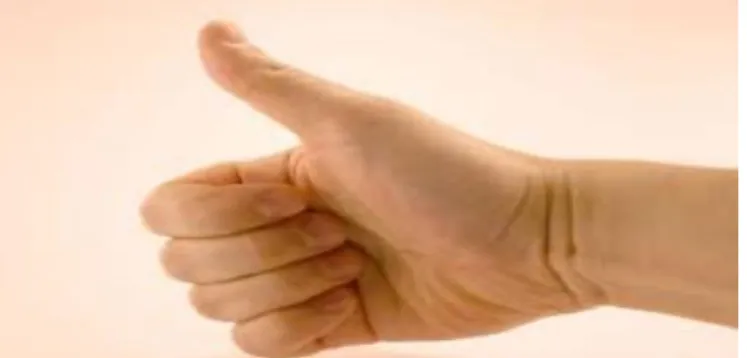
Figure 01: An example of a gesture “a thumb up” (www.humintell.com).
1.3.1.2. Head Movements and Posture
Body language can tell much about a human being, whether the person is happy, afraid, sad or angry. It is important because it speaks to people more than words can do. It can give to others the full information about what a person want or try to say.
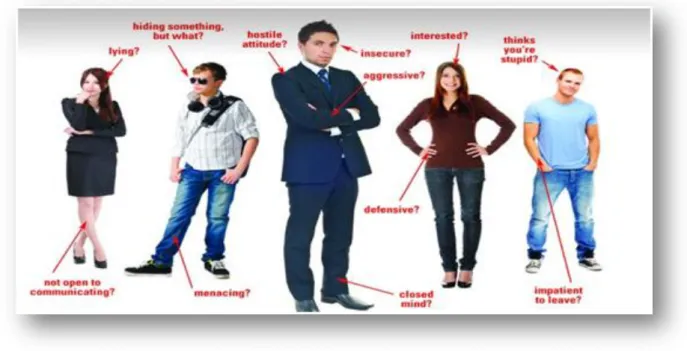
Figure 02: Different situations of body movements and postures (www.motive-toi.com).
Nonverbal communication occurs through posture, bearing, stance, and other subtle body movements. The way people stand, sit, walk, or hold their heads may communicate a wealth of information about their attitudes, confidence levels, and feelings. “One’s walk and posture can tell a great deal about one’s frame of mind” (Hall et al., 1979 in Grady, 2014).
Head movements, such as nodding is a universal sign of acknowledgement in cultures
where the formal bow is no longer used as a greeting. The universal head movement is the headshake back and forth to signal “no.” This nonverbal signal starts from birth. For instance, babies shake their head from side to side to reject their mother’s breast and later
shake their head to reject attempts to spoon-feed (Pease and Pease, 2004).
According to Hargie (2011, p 2)”There are four general human postures: standing, sitting, squatting, and lying down. Each of these postures has many variations, and when combined with particular gestures or other nonverbal cues they can express many different meanings”.
1.3.1.3. Eye Contact
Eyes play an essential role in nonverbal communication. They are very effective and powerful in expressing emotions and feelings. Eyes are considered as the windows to the soul as well as the windows to one’s heart. This saying is actually accurate in terms of where people typically think others are located, which is right behind the eyes (Andersen, 1999).
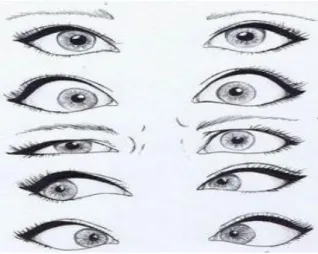
Figure 03: Different expressions of “Eye contact” (www.pinterest.com).
Eye contacts have their own branch of nonverbal studies which is called Oculesics, it comes from the Latin word oculus, that means “eye.” The face and eyes are the main features of focus during communication. Certain eye behaviours have become tied to personality trait or emotional states. For instance, there are “hungry eyes,” “evil eyes,” and “bedroom eyes”.
Eye contact has a big influence on social behaviour; it varies from one culture to another, and however, as globalization carries on to changes the face of the world, it’s important to note
that actions such as eye contact can change in meaning across different cultures. In the Algerian culture, for example, looking directly into the eyes of someone can be seen
as an impolite and a rude behaviour. Meanwhile, In the USA, making eye contact is understood as showing interest, paying attention, and having self-confidence (Martin and Nakayama, 2010).
1.3.1.4. Facial Expressions
The face is the most expressive part of human’s body. It expresses emotions without saying a single word.
Human faces for Happiness, sadness, fear, anger and disgust are universals. The first four are especially identifiable across cultures. Nevertheless, the triggers for these expressions and the cultural, social norms that influence their displays are still culturally diverse.
Figure 04: Different facial expressions of happiness, sadness, relief…etc (www.pinterest.com).
Smiles are powerful communicative signs. Even though facial expressions are seen as innate and several are universally known, they are not always connected to an emotional or internal biological stimulus; they can actually serve a more social purpose. For instance, most of the smiles that people make are principally produced for others and are not just an involuntary reflection of an inner emotional situation (Andersen, 1999).
Human beings cannot avoid expressions from specific emotions even if a person is trying to hide them. For instance, when someone says that he/she is in a good mood, the appearance on his/her face may tell others something else (Evans, 2001).
1.3.1.5. Clothes and Physical Appearance
The first impression of any individual is influenced by his/her own appearance. Clothing is a kind of extension of the self. It can affect one’s general behaviour or others. Clothing and accessories can make real or alleged social status. For example, women who accede to a high management function will tend to dress in a particular way, similar to men wearing
accessories. Clothing is generally associated with careless, and rarely with the intrinsic value of the individual (Dinică, 2014).
1.3.2. Haptics
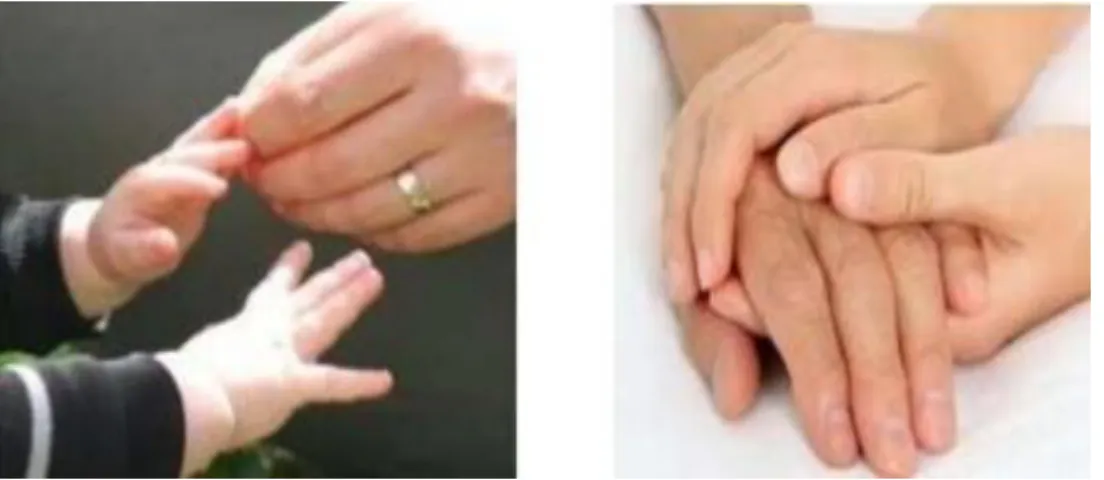
The earliest type of communication for any individual is Haptics, the science of touch, which is originated from the Greek Haptikos meaning “to be able to come into contact with others”. People communicate through touch on their daily life, most of the time without paying
attention to it. To illustrate, people use handshakes in order to have self confidence or to introduce themselves (Floyd, 2006).
According to Andersen (1999, p. 36) “Touch is necessary for human social development, and it can be welcoming, threatening, or persuasive. Research projects have found that students evaluated a library and its staff more favourably if the librarian briefly touched the patron while returning his or her library card”.
1.3.3. Vocalics
Vocalics is the study of paralanguage, which includes the vocal qualities that go along with verbal messages, such as pitch, volume, rate, vocal quality, and verbal fillers.
Pitch helps convey meaning, regulates conversational flow, and communicates the intensity of a message. Children, for example, have a difficult time perceiving sarcasm,
which is usually conveyed through paralinguistic characteristics like pitch and tone rather than the actual words being spoken. Adults with lower than average intelligence and children have difficulty reading sarcasm in another person’s voice and instead may interpret literally what they say (Andersen, 1999).
Speaking rate is the how fast or slow a person speaks that leads people form impressions about his/her emotional state. As with volume, variations in speaking rate can interfere with the capability of others to get and recognize verbal messages.
Verbal fillers are like filling gaps using sounds in speech as people think about what to say next. They are considered a part of nonverbal communication because they are not the same typical words that stand in for a specific meaning. Verbal fillers such as “um,” “uh,” “like,” and “ah” are common in regular conversation (Buller and Burgoon, 1986).
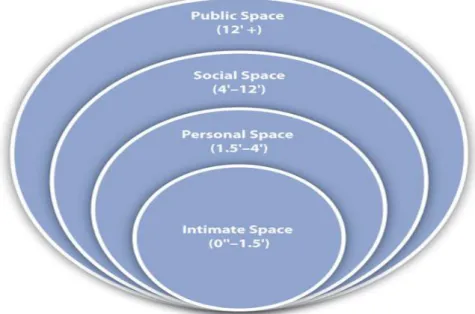
1.3.4. Proxemics
Proxemics is the study of how space and distance influence communication. Ivannia (1996) defined it as “the study of one’s perception and use of space”. The American anthropologist Hall (1965) produced the theory of personal space which includes four levels of distance.
1.3.4.1. Intimate space
It is for only those persons who are relationally close such as family and close friends (0-1.5 feet).
1.3.4.2. Personal space
It is also known as the bubble of space (1.5- 4 feet) is used for conversation and no personal communication.
1.3.4.3. Social space
It is used in more formal situations. For instance, in business transactions, meeting new people and interacting with groups of people (4-12 feet).
(Over 12 feet) occurs in larger communication circumstances such as a courtroom (Hall, 1968).
Figure 07: Proximics Zones of Personal Space (Hans and Hans, 2015).
1.3.5. Chronemics
Chronemics is the study of how time affects communication. According to Andersen (1999), Time can be classified into several different categories, including biological, personal, physical, and cultural time. Biological time refers to the rhythms of living things. However, personal time is the way in which people experience time. The way that people
experience time varies based on the mood, the interest level, and other aspects. While Physical time refers to the fixed cycles of days, years, and seasons. On the other hand,
Cultural time is how a large group of people consider time.
1.4. Importance of Nonverbal Communication
“The most important thing in communication is hearing what isn't said” (Drucker, 2005 in Mujezinovic, 2011). Nonverbal communication has a significant meaning in expressing
thoughts, ideas, emotions and feelings that are shared by people with expressions and movements through different body gestures, faces, touch, space and even voice.
Nonverbal communication gives the opportunity for people to read each other’s minds.
If someone wants to hide his/her feelings or any reaction to some kind of information, the attention should be given to the nonverbal acts (Pease and Pease, 2004)..
The silent signals of nonverbal communication tend to reveal underlying motives and emotions-fear, honesty, joy, indecision, frustration and much more (Kinsey, 2008 in Mujezinovic, 2011). The tiniest gestures, like the way your co-workers stand or enter a room,
often speak volumes about their confidence, self-worth, and credibility. And the way you sit, stand, or look at others reveals more about your true intent than you may realize (Mujezinovic, 2011; Bambaeeroo and Shokrpour, 2017).
Body language has the power to transfer the attitudes and feelings of people to others and in many cases can be even more effective than verbal messages (Farhangi, 1995; Mujezinovic, 2011)
1.5. Features That Influence Nonverbal Communication
1.5.1. Culture
Gamble and Gamble (2002) stated that culture plays a significant role in modifying the use of nonverbal language in human communication interaction. Culture guides people on how to interact interpersonally and socially.
Nonverbal communication has important roles in intercultural situations, according to Anderson (1982), contact cultures are those cultures that promote close body contact between individuals in a social interaction. These include countries such as Saudi Arabia, France, Italy, most North African countries and so forth.
People of Scandinavia, Germany, the British Isles and North America on the other hand, prefer to reserve a certain amount of personal space in public interaction. Ivannia (1996) stated
that “Personal space is an area with invisible boundaries surrounding a person’s body into which intruders may not come’’.
As people from different places vary in the way of using personal space between two or more communicators, emotional expressions can also differ. Gamble and Gamble (2002)
asserted that, in the Mediterranean area people seem to be uninhibited in expressing their feelings, while people of the Far East like the Chinese and Japanese tend to withhold their feelings in public.
Gamble and Gamble (2002, p 17) believed that. “Touch can serve as a demonstration of openness, comfort with and trust in the other person”. The amount of touch that is acceptable
to individuals and how they want to be touched are largely determined by culture. Gudykunst and Kim (1992) suggested that different cultures value touch differently. For instance, Asian people, such as the Japanese, shy away from touching in public, because their cultures forbid this. On the other hand, most Westerners display affection in public because their cultures tend to encourage this.
In the United States, smiling can indicate that people are friendly and open-minded. However, in the Japanese culture people are expected not to smile because smiling at strangers is seen as inappropriate particularly for women. Furthermore, Eye contact can show interest and attentiveness .In some cultures; making a lot of eye contact conveys honesty, while avoiding it is seen as shifty and dishonest in other cultures. These cultures believe that making a lot of eye contact is insulting and a sign of aggression and these people show that they are paying attention to another person by glancing at them only occasionally. (Goddard and Wierzbicka,1997, p. 221).
The same nonverbal cue may carry different meanings in different cultures. According to Gamble and Gamble (2002), nodding one’s head symbolises agreement in North
America whereas in Japan this may imply someone has received the message but not that he/she agrees with it.
Westerns focus more on body language and eye contact while communicating face to face. However, Arabs believe that it is rude and disrespectful to use eye contact for a long
duration. The Japanese, on the other hand look at others very little and focus on the face and the neck while speaking.
Crystal (1997) said that visual signs differ from one culture to another. In some cultures, the use of hand gestures and waves is needed and is considered as important in communication. Some cultures as the Italian one makes extensive use of gestures and facial expressions, while others like the Japanese use very few. A gesture can mean something in a country, and means something offensive in another one. Hands and fingers are also different in use; Middle Eastern
cultures prevent eating with left hands because they are reserved for bodily hygiene. Some Venezuelans may use their lips to point at things because pointing with a finger is impolite
Although people may use gestures and bodily expressions differently, the fact that they share similarities cannot be neglected. There are universal facial expressions that do not change because they are parts of all human beings. For example, any person if he/she is happy he/she keeps smiling and even laughs a lot during a conversation that indicates one’s in a good humour. When a person is turning red-faced, that means he is whether angry, shocked, excited, or shy. The opened-eye with a half-opened has the significance of fear or surprise. Sadness is also a universal feature each individual may express it similarly in every country. According to
Crystal (1971) expressions of the face and movements of the body can reveal clues as to a person’s mood and personality (Mihoubi, 2014).
Damen (1987) declared that aspects of body language such as the inclination of the body towards the speaker can convey attention in some cultures but not in others. Zhihong (2001)
for example, using eye-contact while communicating with others is a must. In China, however, eye-contact especially between males and females may be negatively interpreted. (Kitao, 1991;
Belkhir-Benmostefa, 2016). Sercu (1998) stated that people ''betray their membership of a particular culture not merely through their accent but also through the way they express or do not express their emotions, the way they stand, the way they look or do not look into the eyes of their communication partner''. (P. 263).
1.5.2. Gender
Gender is also another feature that influences the use of nonverbal communication. Men and women differ significantly in their use of it. Researchers believe that women use gestures more than men do, because of the stereotype that women are more sociable, friendly
and outgoing than men as well as they are better at expressing themselves.
Cummings (2011) stated that, when a woman tries to express her feeling, she can generate thousand of gestures. However, men usually use the nonverbal cues in order to show authority and power. They know how to control their gestures not like women do.
According to Kramer (1977), women tend to use the facial expressions and hands gestures to transmit their message more than men do. Another study by Briton and Hall (1995), assumed that women use more expressive and involve more nonverbal communication than men, which are considered to be more skilled at transmitting the nonverbal cues.
At haptics, female are more likely to touch others because according to them touching is considered as a form of friendship or kindness.
1.6. Reading Body Language
According to Allan and Pease (2004), Reading body language means to understand people’s emotional conditions and cultural backgrounds. To read body language appropriately,
body movements should go with what is being said .Body language may only be read in context and clusters, a lot of gestures appear at the same time so they cannot be read separately.
Body language has its own words, sentences and punctuation. Every gesture is like a word, and every word has several meanings, only when a word is within a sentence it seems understandable for the reader, exactly like gestures.
Reading body language makes the person more conscious of people’s personalities and mentalities .It makes him a good observer who feels more sensitive toward people’s emotions and feelings and it helps improving the relationships with others (Pease and Pease, 2004).
Conclusion
This chapter presented a general overview about nonverbal communication and body language and its importance in different sectors of modern life. Developing an awareness of the importance of this aspect constitutes a decisive step towards developing an adequate level of competence in its use.
Chapter Two: Nonverbal Communication in Teaching
Introduction.
2.1. Effective Body Language Teaching Techniques.
2.1.1. Use the Voice.
2.1.2. Use the Appropriate Posture.
2.1.3. Use the Space.
2.1.4. Use Facial Expressions.
2.1.5. Hands and Gestures.
2.1.6. Use Suitable Rate of Speech.
2.1.7. Getting Student‟s Attention.
2.1.8. The Effective Ways in Teaching.
2.1.9. The Appropriate Sitting Arrangement. 2.2. Student‟s Body Language.
2.2.1. Boredom.
2.2.2. Active Students.
2.3. Benefits of Using Nonverbal Behaviours in Classroom.
2.4. Nonverbal communication and Second Language Acquisition.
2.5. Nonverbal communication and Models of Language Proficiency.
2.5.2. Bachman's Communicative Language Ability.
2.6. Materials to Teach Nonverbal Communication in EFL Classes.
2.7. Integrating Nonverbal Communication in the Algerian Syllabus.
Introduction
This chapter sheds light on the different aspects of teaching/learning nonverbal communication competence. Moreover, it deals with some options of integrating this aspect in the curriculum.
2.1. Effective Body Language Teaching Techniques
Teachers have to pay attention to their body language while teaching, because it is what makes students respond to their output. Most researchers have shown that students do not respondto the content of the lesson if the way of presenting it is a poor one. For that, it is obligatory for teachers to use effective body language techniques in their classes.
2.1.1. Use the Voice
In order to transfer ideas and information to students while performing lessons, teachers use their voice, gestures and facial expressions. A teacher should address his class with clear and upbeat voice so as to take control of his/her students‟ divided attention (Genard, 2012 in Mihoubi, 2014).
2.1.2. Use the Appropriate Posture
The teacher should avoid Standing behind the table for a long time because this act may create a physical barrier between him and his students, and may institute space in communication during class, particularly teachers who tend to sit all the session on their chairs with no movement or lack of it. Those teachers were portrayed by the majority of students as “boring”.
2.1.3. Use the Space
The teacher should occupy space while teaching in a way that shows him as comfortable in his own class. The way a teacher moves and stands on stage shows confidence and leads students to trust him and what he/she is presenting to them. The teacher should try to find a way
to utilise space effectively because over moving in the class for instance can distract the students and makes them confuse.
2.1.4. Use Facial Expressions
Facial expressions are very effective and helpful in instituting authentic teaching / learning experience, in which students will focus the most on the teacher‟s face to improve the deliverance of the lesson. The more the teacher uses facial expressions, the more his students will pay attention and participate to achieve the aim of the class (Neill and Caswell, 1993).
2.1.5. Hands and Gestures
According to Van Edwards (2014), hands play an essential role in indicating trust. Thus, teachers should keep their hands open while communicating verbally with their students to show trustworthy to them and to gain their attention (As cited in Mihoubi, 2014, p. 18).
2.1.6. Use Suitable Rate of Speech
Teachers should be flexible while dealing with their students, and with the subject matter being discussed, as well as using body language as a tool to do their jobs. Avoiding rushing is one way to make the teacher looks more confident since slowing down the rate of speech will calm the atmosphere and helps students to understand what is being explained better (Neill and Caswell, 1993).
2.1.7. Getting Student’s Attention
Communication between a teacher and his learners occurs in classrooms every day. An effective teaching requires paying a lot of attention and focus during the lesson by managing
A teacher has to use certain markers in order to make his/her students paying attention in the classroom. These markers are very important to regain the teacher‟s control over the classroom and save time by ensuring messages not to be repeated. For instance, tell students
to keep quiet, refocus them of what is being said or praise attentive ones.
Eyes contact is considered as one of the most powerful features that facilitates and creates a positive relationship between the teacher and his/her students. However, in some cases, there
are certain teachers who avoid eye contact in teaching/ learning process that lead to a lack of interest in them .According to Khan and Akbar (2000) “In teaching learning process
eye contact is perhaps the most powerful way we communicate with”. Longer eye contact is associated with trust, good feelings and participation of students. Most teachers already know that it is too much important to look at students‟ eyes, but some of them ignore the use of it. As a result their students feel less concentrated and marginalised in the classroom. Eye contact is very important in keeping a class focused.
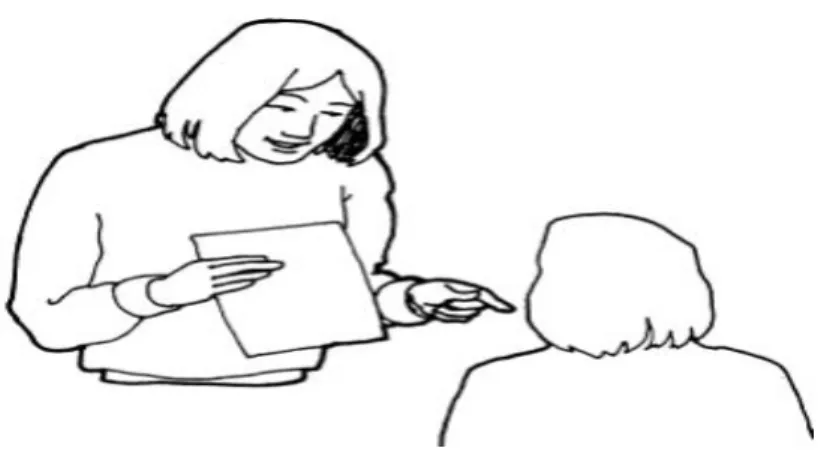
Figure 08: The teacher‟s head is forward lean (Neill and Caswell, 1993, p 91).
By this she is showing that she is paying attention to the student. In this case and by pointing with her index finger, she is nominating the learner to speak (Neill and Caswell, 1993).
According to Kansas (2003) “Posture as well as eye contact is used to indicate attitudes, status, affective moods, approval, deception, warmth and other variables related to classroom interaction” (Roviello, 2004).
Body language is also another way to improve nonverbal communication skills in teaching and learning. Posture in the classroom promotes attentiveness and awareness.
However, it is also hard to maintain. For example, when a teacher is standing with hands in the pockets and leaning or sitting on furniture this may make him comfortable but it may effect on student‟s attention (Neill and Caswell, 1993).
White (2000) stated that “for a teacher to be an effective listener, he/she must have a relaxed and open posture”.
2.1.8. The Effective Ways in Teaching
Effective teachers use certain methods that best provide the learning needs of learners. These kinds of teachers have the ability to motivate, promote, understand students and encourage them to study more and perform better. In classroom, the teacher has the role to transmit body message of enthusiasm by using facial expressions, eye contacts, body movement, space and even voice (Neill and Caswell, 1993).
In the figures below, there are some descriptions of how an effective teacher does throughout the lesson, taking from the video study of Neill and Caswell (1993) with a brief clarification of each one:
Figure 09: The teacher‟s head is forward with a smile (Neill and Caswell, 1993, p 90).
This is a relatively mild expression of attentiveness and interest in what the learner has to say. Most students saw this teacher as “friendly”, and gave a mixture of other positive comments.
Figure 10: The teacher is effectively catching the idea of the student (Neill and Caswell, 1993, p 98).
When the teacher does so, most students see it as helpful. However, some may find this approach frightening and overpowering.
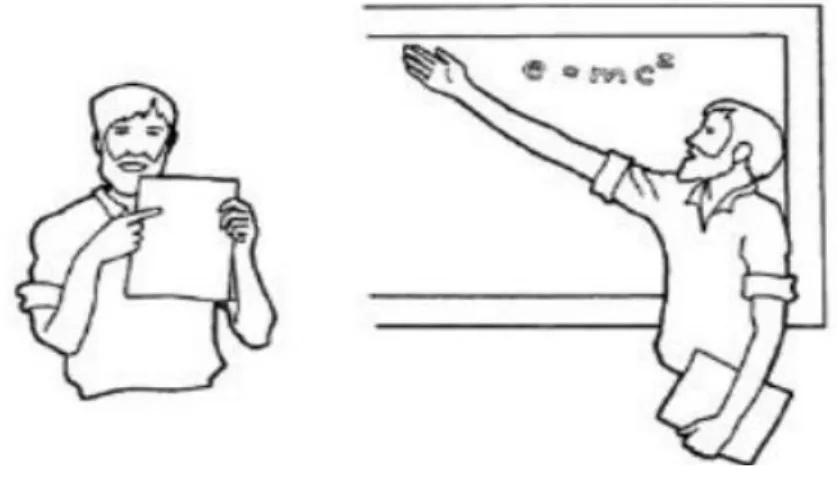
Figure 11: The teacher is using hand gestures (Neill and Caswell, 1993, p 101).
This technique is using in order to clarify things for students and providing them to follow their teacher.
Figure 12:Making abstract notions concrete by gestures and motions (Neill and Caswell, 1993, p 102).
This teacher, for instance, is miming the course of World War One trenches down between Belgium and Switzerland.
Figure 13: The teacher is showing an idea to the class using the gesture of palm up (Neill and Caswell, 1993, p103).
Thanks to this gesture, students saw this teacher positively, and consider him as „interesting‟ or „helpful‟.
Figure 14:The teacher is counting points that are made verb1ally (Neill and Caswell, 1993, p105).
It is a helpful way to make students draw an image about what is being said, and help them remember each element separately.
Those figures mentioned above show the effectiveness of teachers using nonverbal
cues to transmit their messages enthusiastically. Those gestures facilitate and manage the communication between the teacher and students.
2.1.9. The Appropriate Sitting Arrangement
Classroom seating arrangement is very important to teacher‟s plan for classroom management. According to Wannarka and Ruhl (2008), the classroom environment contains different elements, whether the teacher is able to control it or not.
This environment known as the setting events for a lecture which can consist of the temperature of the classroom, illumination, physical space, seating arrangement, student seating position, noise level and existence or absence of peers or adults among other elements which help shape the classroom atmosphere in which students are expected to be taught. Some students prefer to sit in specific places in the classroom. Each position can effect on student‟s performance and ability such as attention distance, awareness, understanding and the retaining of information can be influenced by where the student chooses to sit.
According to Çinar (2010, p 210) “There are several factors which help determine an appropriate seating arrangement for a classroom to optimise student learning. For a seating
arrangement to be successful, the arrangement should facilitate interaction among students and teacher, suite the instructional objectives and activities, and ease access to the instructional material”.
Most of studies have reported that students who sit in the left are much better in spelling tests than those who sit in the right. Also, students occupying the front rows are more attentive than others. And learners who sit on the back benches are the least receptive and usually they avoid being noticed by the teacher (Szparagowski, 2014).
2.2. Student’s Body Language
Inside classrooms, students tend to use nonverbal behaviours while communicating and responding to their teacher‟s input. These behaviours help the teacher to know how to run his/her class effectively to get students‟ attention.
2.2.1 Boredom
Students‟ nonverbal behaviours during the lesson can tell a lot about their feelings. When students begin to use gestures such as using their hands to support their heads, it shows that they are feeling bored. Normally students start with their chins being supported by their
hands or thumbs, but the whole cluster of hand supporting the head from falling asleep is the most famous symbol of boredom, as well yawning, putting fingers in one‟s hair, gossiping
with others, or even putting the head on the table.
A lot of gestures like drumming fingers on the table, looking around, or making themselves busy with something else, are all signals of the lack of interest. After the teacher observes that, he/she has to change his way of teaching so that students renew their interest (Sharma, 2011).
2.2.2. Active Students
In classrooms, active students always appear more than others. A lot of gestures a student‟s may use to tell the teacher if he is really listening to what is being said or not. Facial
expressions such as nodding and head tilting are good signs that indicate attentiveness, and that the student is interested in what is being said. Eye contact when exchanges between the teacher and the students will help to establish communication inside the classroom, thus the students will contribute in the lesson (Bambaeeroo and Shokrpour, 2017).
2.3. Benefits of Using Nonverbal Behaviours in Classroom
Successful teachers should be aware not only of what they are communicating but also of how they are communicating, they need to understand the meaning of their nonverbal behaviours that they are sending and receiving in the classroom.
Ali (2011) stated that when nonverbal signals are used successfully in classroom, they may provide language extra support. Thus, nonverbal cues are used: to decrease needless
teacher talking time, to arouse learners‟ participation, to build a self confidence, to reduce the fear of silence, to give comprehensible information, to control classroom efficiently, to develop listening and speaking skills, to develop learner‟s performances in pairs and group
works, to develop intercultural competence, to avoid misunderstandings and to benefit the classroom atmosphere.
According to Neill (1991) “Nonverbal communication within the classroom is very important because the teacher and pupils often have more confidence in the nonverbal than in the verbal message”.
Kusanagi (2003) believed that “gestures used in the classroom may facilitate teaching and learning at different levels”.
Tai (2004) asserted that, teachers can progress their methods of teaching by using “eye contact” in a creative way. He also believed that teachers should be glance around the students in order to increase their participation.
2.4. Nonverbal communication and Second Language Acquisition
Verbal and nonverbal behaviours can be considered as indispensable components of human communication, and, as a result, they become inseparable from the teaching of foreign
languages because a proper understanding of nonverbal communication can improve the effectiveness of communication (Pike, 1967; Bachman, 1990; Kendon, 2004). Despite this fundamental role that NVC plays in communication, second language teachers often
neglect the teaching of it (Soudek and Soudek, 1985; Jungheim, 2001), and this, in turn, can result in learners‟ failure in grasping the true nature of communication in the target language (Cameron, 2001).
This failure is due to the fact that nonverbal behaviour reveals basic cultural traits by which people are able to gather clues about the underlying attitudes and values of the members of
the target community. It can be concluded that the study of NVC is part of the study of a bigger paradigm known as cross-cultural communication (Gudykunst, 2003; Wiseman, 2003).
Nonverbal communication has also been investigated by the researchers who desire to discern the process of second language acquisition. For instance, Stam (2006) argued that we can get a clearer and more complete picture of the learners' progress in learning another language by looking not only at their speech but also at their gestures. Gullberg (2006) also suggested that the analysis of second language learners' use of NVC in interaction can offer valuable insights into the processes of language acquisition. Stam (2006) beside Yoshioka and Kellerman (2006) found that the speakers of verb-framed languages, like Japanese and Spanish, as well as those of satellite-framed languages, like Chinese and English;
inappropriately transfer their L1 gestures of motion verbs to their L2 signing.
The importance of nonverbal communication has also been attested by some language teachers (Smith, 1979). Ehrman and Dornyei (1998) and Sime, (2006), for instance, have identified three functions of nonverbal communication. The first of these functions is cognitive. Given its cross cultural and cross-linguistic variation, nonverbal communication can be treated as part of what learners can acquire in a target language (Pennycook, 1985; Neu, 1990; Gullberg, 2006). Rosa (2004) reminds classroom teachers of the second function of nonverbal communication, namely as emotional function. For effective teaching to take place, Rosa believes, teachers need to pay attention to how they combine verbal elements to convey particular meaning to children, especially to older children because they tend to focus more on adults' nonverbal behaviour in their attempt to understand what is expected of them. She recommends proactive use of eye contact with individual students.
Nonverbal communication tools, like tone of voice, body posture, facial expression, and gesture can help a teacher to establish a presence in the classroom and therefore motivate
the students‟ learning capacity and their ability to recall information (Allen, 2000; Lazaraton, 2004). The third function of NVC in the classroom is organizational function. Rosa (2004) backs the use of gestures for classroom management and endorses the use of paralanguage (voice tone, pitch, volume, tempo, intensity and silent pauses) in establishing and sustaining learners‟ attention.
2.5. Nonverbal Communication and Models of Language Proficiency
The concept of language ability, which is known as communicative competence in research circles, has been considered as one of the most powerful theoretical developments in language education. The instigation of the concept of communicative competence has helped redefine the objectives of L2 instruction and target language proficiency (Lee, 2006).
2.5.1. Canale and Swain’s (1980) Model of Communicative Competence
Earlier models of language ability were either linguistic or psycholinguistic (Carroll, 1961 in Farhady, 2005). This kind of models concentrated completely on the linguistic components (knowledge of lexical items and rules of morphology, syntax, sentence grammar, semantics, and phonology) of language skills or mental processes needed to comprehend these skills. These models had a fairly narrow vision of linguistic capacity and were focused on verbal aspects of language thus ignoring the nonverbal aspects altogether (Bachman, 1990).
Before dealing with the term communicative competence, it is first, merit mentioning that the growth of this term starts with Chomsky‟s (1965) distinction between the linguistic concepts competence and performance. According to him, competence is the intuitive grammatical knowledge of the mother tongue that a native speaker has which allows him to make grammatically correct sentences that are agreeable by his speech community. Furthermore, performance is the linguistic behaviour of the native speaker. Declared differently, it is the use of the language determined by the linguistic competence in real life situations.
Chomsky (1965) believed that the linguistic competence is the worthy aspect a speaker needs
while communicating, and he considered other factors as irrelevant .Chomsky pointed that linguistic competence is “Concerned primarily with an ideal speaker-hearer, in a completely
homogenous speech community, who knows its language perfectly and is unaffected by such grammatically irrelevant conditions as memory limitations, distractions, shifts of attention and interest, and errors (random or characteristic) in applying his knowledge of the language in actual performance”. That is to say, grammar rules that exist in the mind are enough for the language users to communicate sufficiently.
The idea of Chomsky (1965) was criticized by many scholars. Hymes (1972) proposed that the speaker needs –beside the linguistic competence – the knowledge of how the language is performed by his speech communion. So as communication takes place in a sufficient way.
He urged on the point of the appropriateness of utterances to their related context. As a consequence, the term CC came as an umbrella term for the linguistic competence
which consists of the various rules of the components of the abstract language, and the contextual/sociolinguistic competence.
For Hymes (1972) communicative competence is to include not only grammatical competence (or explicit and implicit knowledge of the rules of grammar) but also contextual and sociolinguistic competence (knowledge of the rules of language use).
It was not until late 1970s and early 1980s that a more comprehensive model was proposed by Canale and Swain (1980), and this model was later adapted by Canale (1983).
The 1980 model included minimally grammatical competence, sociolinguistic competence, and communication strategies (strategic competence). The components of the nonverbal communication do not seem to have assigned a specific place in Canale and Swain's model; nevertheless, the model is clear about the compensatory function of nonverbal communication strategies.
As branch of strategic competence, nonverbal communication strategies can be called into action “to compensate for breakdowns in communication due to performance variables or insufficient competence” (Canale and Swain, 1980, p 32). An example of this nonverbal communication is the use of role-playing strategies for the communication of difficult concepts.
According to Oxford (2001), strategies for language learning and use are specific
behaviours or thought processes that students use to enhance their own L2 learning. Such behaviours may be either learning strategies or communication strategies. Learners who
can compose useful strategies tend to learn language better and faster than those who are strategically inept. On the other hand, strategic competence is related to both the verbal and the nonverbal strategies used to make up for break downs, for instance comprehension checks and conversation fillers. Furthermore, it makes communication more effective. This type of knowledge is tightly related to the ability of interlocutors to use communication strategies (Canale and Swain, 1980).
Canale and Swain have also included sociolinguistic element as an important component
of communicative competence into their model, and it seems that this component rules the realisation of other competences to ensure social acceptability. However, researchers believe
that there is not a strong theoretical or empirical motivation for supporting this view. So it can only be inferred that sociolinguistic rules govern nonverbal communication and ensure its contextual suitability.
In 1983, Canale started to modify the earlier model and introduced a model that tried to account for both psychological and contextual factors. The components of Canale‟s model, except for the grammatical competence, have witnessed radical changes when compared with Canale and Swain's (1980) model.
Sociolinguistic competence, for instance, helps form two separate components of sociolinguistic and discourse competence. Sociolinguistic competence refers to the socio-cultural rules of using
the second language appropriately; that is, how utterances are produced and understood in different sociolinguistic contexts.
Canale (1983) has also tried to specify the components of NVC by the introduction of the concept of proxemics, she further relates the appropriateness of nonverbal behaviour
and proxemics to socio-cultural rules that run in a speech community. Discourse competence was defined as rules concerning cohesion and coherence of various kinds of discourse in L2 (e.g., use of appropriate pronouns, synonyms, conjunctions, substitution, repetition, marking of congruity and continuity, topic-comment sequence, etc.). Canale also extended the use and the function of nonverbal communication strategies in that the author considers them not only as compensatory strategies that are called upon when grammatical and sociolinguistic
L2 competence fail to function, but also as elements that boost the effectiveness of communication (Birjandi and Nushi, 2010).
2.5.2. Bachman's Communicative Language Ability
A decade after the introduction of Canale and Swain‟s (1980) seminal model of communicative competence, a more comprehensive, stratified model was proposed by Bachman (1990). He suggested using the term communicative language ability, claiming that
this term combines in itself the aspects of both language proficiency and communicative competence. He developed three central components for CLA that are essential for defining one‟s competence in communicative language use; these components include language competence, strategic competence, and psycho-physiological mechanisms. The first component was termed as language competence, and it contained organisational and pragmatic competence. The organisational competence was further divided into grammatical competence and textual competence.