Assessment
of the economic
effects, non -commercial
and environmental
consequences
of the entry
of Bactrocera
Assessment
of the economic
effects, non- commercial
and environmental
consequences
of the entry
of Bactrocera
Montevideo, Uruguay - 2019
Editorial coordination: Lourdes Fonalleras and Florencia Sanz
Translator: Lilian Daisy Ibañez y Roberto Ponce Layout: Esteban Grille
Cover design: Esteban Grille Digital printing
Assessment of the economic, non- commercial and environmental consequences of the entry of Bactrocera
dorsalis / Inter-American Institute for Cooperation on
Agriculture, Comité Regional de Sanidad Vegetal del Cono Sur; Lilian Daisy Ibañez and Roberto Ponce. – Uruguay : IICA, 2019.
52 p.; A4 21cm X 29,7 cm. ISBN: 978-92-9248-829-1
Published also in Spanish and Portuguese
1. Pests of plants 2. Bactrocera dorsalis 3. Phytosanitary measures 4. Environmental impact 5. Socioeconomic environment 6. Risk management 7. Cost benefit analysis 8. Risk management 9. Impact assessment I. IICA II. COSAVE III. Title
AGRIS DEWEY
H10 632.77
Inter-American Institute for Cooperation on Agriculture (IICA), 2019
Assessment of the economic, non -commercial and environmental consequences of the entry of Bactrocera
dorsalis by IICA is published under license Creative
Commons
Attribution-ShareAlike 3.0 IGO (CC-BY-SA 3.0 IGO) (http://creativecommons.org/licenses/by-sa/3.0/igo/) Based on a work at www.iica.int
IICA encourages the fair use of this document. Proper citation is requested.
This publication is available in electronic (PDF) format from the Institute’s Web site: http://www.iica.int
ACKNOWLEDGMENTS
This document was developed following the Guidelines to assess the economic
effects and non-commercial and environmental consequences of the entry of pests.
This product was elaborated as a result of the component aimed to build technical capacity in the region to use a pest risk analysis (PRA), process with emphasis on the analysis of the economic effects and non-commercial and environmental consequences of the entry of pests in the framework of STDF/PG/502 Project “COSAVE: Regional Strengthening of the Implementation of Phytosanitary Measures and Market Access”.
The beneficiaries are COSAVE and the NPPOs of the seven countries that make it up. The Standards and Trade Development Facility (STDF) funds it, the Inter-American Institute for Cooperation on Agriculture (IICA) is the implementing organization, and the International Plant Protection Convention (IPPC) Secretariat supports the project.
María de Lourdes Fonalleras and Florencia Sanz were in charge of editorial coordination. María de Lourdes Fonalleras, Florencia Sanz, Lilian Daisy Ibáñez and Roberto Ponce Oliva have determined the original structure of this document.
The content was developed by Lilian Daisy Ibáñez and Roberto Ponce Oliva, experts hired especially for the project.
The technical readers that made important contributions to the content are the specialists of the NNPOs participating in the project:
Alan Torriani, Adriana Ceriani, Cynthia Ruiz, Laura Maly, Mario De Gracia, Melina Antenucci, Melisa Nedilskyj and Norberto Fernández from Servicio Nacional de Sanidad y Calidad Agroalimentaria (SENASA) from Argentina;
Víctor Manuel Lima and Carla Roca Orellanos from Servicio Nacional de Sanidad Agropecuaria e Inocuidad Alimentaria (SENASAG) from Bolivia;
Adriana Araújo Costa Truta and Andreza Tome from Secretaria de Defensa Agropecuaria of MAPA from Brazil;
Alex Opazo, Carolina Martínez, Claudia Rebolledo, Daniela Buzunariz, Grisel Monje, Laura Mesa, Sandra Bustos and Soledad Labbe of Servicio Agrícola y Ganadero (SAG) from Chile; Labbe of Servicio Agrícola y Ganadero (SAG) from Chile;
Ana González, Cristian Marecos and Cynthia Camacho from Servicio Nacional de Calidad, Sanidad Vegetal y de Semillas (SENAVE) from Paraguay;
Álvaro Darío Aparicio and Efraín Arango Ccente from Servicio Nacional de Sanidad Agraria (SENASA) from Peru;
Leticia Casanova and Enrique Verdier from Dirección General de Servicios Agrícolas (DGSA/MGAP) from Uruguay.
We are very thankful to them all.
We also appreciate the support received from the IPPC Secretariat for the imple-mentation of this component of the project.
Finally, we thank Paula Fredes for proofreading this document and Esteban Grille for layout.
CONTENT
Acronyms ... 6 Tables ... 7 Assessment tables ... 7 1. Introduction ... 8 1.1. Categories ... 81.1.1. Presence or absence of the pest in the PRA area 1.1.2. Regulatory status 1.2. Identification of the pest ... 8 1.3. Geographic distribution ... 9 1.4. Hosts ... 9 1.5. Assumptions ... 10 2. Impact on production ... 11 3. Economic impact ... 21 3.1. Control measures ... 21 3.2. Impact on markets and consumers ... 25 4. Socioenvironmental impact ... 28 4.1. Environmental impact ... 28 4.2. Social Impact ... 35 5. Conclusion ... 38 5.1. Overal impact assessment ... 38 5.2. General assessment of uncertainty ... 38 5.3. Conclusion regarding the areas in danger ... 39 References ... 40 Annex ... 43
ACRONYMS
APPPC Asia and Pacific Plant Protection Commission AQP Absent quarantine pest
CABI Centre for Agriculture and Biosciences International CONAF National Forest Corporation. Chile
COSAVE Southern Cone Plant Health Committee
CPC Crop Protection Compendium
CPPC Caribbean Plant Protection Commission
EPPO European and Mediterranean Plant Protection Organization IAPSC Inter-African Phytosanitary Council
IICA Inter-American Institute for Cooperation on Agriculture IPPC International Plant Protection Convention
ISPM International Standard for Phytosanitary Measures NPPO National plant protection organization
RIOPPAH Regional International Organization for Plant Protection and Animal Health
PRA Pest risk analysis
SINANPE National Service of Natural Protected Areas. Peru. SINASIP National System of Protected Areas. Paraguay
TABLES
Table 1 Hosts by country: economic relevance
Table 2 Host by country (area and yield)
Table 3 Host: yield losses
Table 4 Host: expected changes in production by country
Table 5 Residual damage (%)
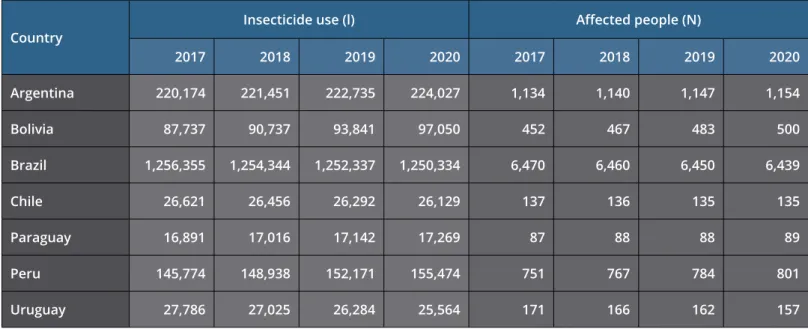
Table 6 Affected people (2017-2020)
ASSESSMENT TABLES
Assessment table 1.
Production impact assessment Assessment table 2.
Control cost assessment Assessment table 3.
Impact assessment on the internal market Assessment table 4.
Impact assessment on the external market Assessment table 5.
Impact assessment on consumer demand Assessment table 6.
Impact assessment on native species Assessment table 7.
Impact assessment on other environmental components Assessment table 8.
Impact assessment on ecosystem services Assessment table 9.
1.
INTRODUCTION
This study aims to assess the non-commercial and environmental economic consequences of the introduction of Bactrocera dorsalis (Hendel, 1912). Bactrocera
dorsalis was selected to assess the economic, non commercial and environmental
consequences, using the Guidelines to assess the economic effects and non-commercial
and environmental consequences of the entry of pests in the framework of project
STDF/PG/502 COSAVE: Strengthening the Implementation of Phytosanitary Measures and Market Access.
This pest is included in the Quarantine Pest List for the COSAVE Region, updated in November 2017, classified as an absent quarantine pest (AQP) in this region. The case study will only assess the impact, not the probability of introduction and spread; it is assumed that AQPs for the whole region are likely to be introduced and spread in all COSAVE member countries.
For the purpose of this assessment, the pest risk analysis (PRA) area will cover the whole COSAVE region, formed by Argentina, Bolivia, Brazil, Chile, Paraguay, Peru, and Uruguay.
1.1. CATEGORIES
1.1.1. PRESENCE OR ABSENCE OF THE PEST IN THE PRA AREA
No records of Bactrocera dorsalis have been found in the COSAVE countries; therefore, the pest is absent from the COSAVE region.
1.1.2. REGULATORY STATUS
The PRA area covers COSAVE member countries. As indicated above, this pest is included in the Quarantine Pest List for the COSAVE Region, updated in November 2017.
1.2. IDENTIFICATION OF THE PEST
Pest: Bactrocera dorsalis (Hendel, 1912) Taxonomic position
Class: Insecta Order: Diptera Family: Tephritidae Genus: Bactrocera
Other scientific names:
Bactrocera (Bactrocera) dorsalis Drew & Hancock, 1994 Bactrocera (Bactrocera) invadens Drew et al., 2005 Bactrocera (Bactrocera) papayae Drew & Hancock, 1994 Bactrocera (Bactrocera) philippinensis Drew & Hancock, 1974 Bactrocera (Bactrocera) variabilis Lin & Wang
Bactrocera ferruginea Bezzi, 1913
Bactrocera invadens Drew, Tsuruta & White Bactrocera papayae Drew & Hancock Bactrocera philippinensis
Chaetodacus ferrugineus Bezzi, 1916
1.3. GEOGRAPHIC DISTRIBUTION
The oriental fruit fly, Bactrocera dorsalis (Hendel), is a native pest present throughout the tropics. In Asia, from India to southern China, across the East to Taiwan and across the South to Vietnam and Thailand (Leblanc et al., 2013).
According to CABI (2018), it is distributed in:
• Asia: Bangladesh, Bhutan, Brunei Darussalam, Cambodia, China (Anhui, Chongqing, Fujian, Guangdong, Guangxi, Guizhou, Hainan, Hong Kong, Hubei, Hunan, Jiangsu, Jiangxi, Macau, Shanghai, Sichuan, Tibet, Yunnan, Christmas Island (Indian Ocean)), India (Andaman and Nicobar Islands, Andhra Pradesh, Assam, Bihar, Delhi, Goa, Guj Arat, Himachal Pradesh, Indian Punjab, Jammu, and Kashmir, Karnataka, Kerala, Madhya Maharashtra, Manipur, Odisha, Rajasthan, Sikkim, Tamil Nadu, Uttar Pradesh, Uttarakhand, West Bengal), Indonesia, Irian Jaya, major islands of the Sonda (Borneo, Java, Celebes, Sumatra), smaller islands of the Sonda, Laos, Malaysia (Peninsular Malaysia, Sabah), Myanmar, Nepal, Pakistan, Singapore, Sri Lanka, Taiwan, Thailand, Vietnam.
• Africa: Angola, Benin, Botswana, Burkina Faso, Burundi, Cameroon, Cape Verde, Central African Republic, Chad, Comoros, Congo, Democratic Republic of the Congo, Côte d’Ivoire, Equatorial Guinea, Ethiopia, Gabon, Gambia, Ghana, Guinea, Guinea Bissau, Kenya, Liberia, Madagascar, Mali, Mauritania, Mayotte, Mozambique, Namibia, Niger, Nigeria, Rwanda, Sierra Leone, Sudan, Swaziland, Togo, Uganda, Zambia, Zimbabwe, United States (Hawaii).
• Oceania: French Polynesia, Palau, Papua New Guinea.
1.4. HOSTS
With more than 300 species of commercial/edible and wild hosts, B. dorsalis has the widest host range of Bactrocera species. It is a major pest for a wide range of fruit crops throughout its native range and where it has invaded. Due to the confusion between B. dorsalis and related species in Malaysia, the Philippines, Indonesia, southern India, and Sri Lanka, there are very few published records that refer exclusively to B. dorsalis hosts, unlike the misidentifications of related pest species in the B. dorsalis complex.
Taking China as an area where pest populations are definitely the true B. dorsalis, the main hosts are apple, guava, mango, peach, and pear (XJ Wang, unpublished data, 1988, as reported by White and Elson Harris (1994 cited in CABI, 2018)). Chen et al. (2011) note that B. dorsalis is a polyphagous pest with a wide range of hosts, which can cause damage to more than 250 fruit and vegetable species belonging to 46 families such as citrus, guava, mango, banana, carambola, eggplant, peppers and potentially soft, yellow and ripe fruits.
1.5. ASSUMPTIONS
The following assumptions are made for the economic assessment:
1_ Bactrocera dorsalis has a probability of entering, establishing and spreading in all the countries of the COSAVE region; therefore, it is likely to have consequences. 2_ Bactrocera dorsalis has the potential to have economic, environmental and
social impacts in the COSAVE countries.
3_ The assessment of the economic effects and non commercial and environmental consequences of Bactrocera dorsalis, as presented in the assessment tables, will be carried out for the entire COSAVE region, based on the information collected by country.
4_ Of the many pest host species, this assessment considers citrus, mango and guava species. To facilitate the analysis, we follow the classification of FAOSTAT (2018), which consists of five groups of hosts:
a_ Citrus x paradisi (inc. grapefruits). b_ Citrus limon and Citrus aurantiifolia.
c_ Mangifera indica, Garcinia mangostana, Psidium guajava. d_ Citrus sinensis.
e_ Citrus reticulata, Citrus clementina, Citrus unshiu.
In addition, three scenarios have been developed to illustrate the use of the Guidelines:
• A0: Current situation, that is, without the pest
• A1: Situation with the presence of the pest in the COSAVE region, without control • A2: Situation with the presence of the pest in the COSAVE region, with control The rest of the study is organized following the Guidelines proposed by expert Dr. Gritta Schrader. Thus, section 2 presents the production impacts of the pest. Section 3 discusses the economic impacts associated with these production effects. Finally, section 4 analyzes the socioecological dimension. In each of the sections, the recommendations for the implementation of the Guidelines are highlighted. In addition, the database used for the case study is included as an annex.
2.
IMPACT ON PRODUCTION
The objective of this section is to analyze, and quantify where possible, the production impacts of the pest. These impacts consider aspects including type of hosts, level of host susceptibility, type of damage on production, and quantification of damage. The details of each of these aspects are presented below.
a. Considering the results of section 1.4 Hosts, are any of these hosts of economic importance?
Most B. dorsalis host species are present in COSAVE countries. Due to the complexity of including data on planted area and yield for all host species in each COSAVE country, only data for most affected or susceptible species will be presented, citrus,
mango and guava, according to the information provided by FAOSTAT1 .
With respect to the economic relevance, we consider the average value (2010-2016 period) of the exports (in thousand USD), because this variable reflects the value of the production of the studied hosts in the economy. The information is presented in Table 1.
Table 1. Hosts by country: economic relevance
Country / Host (thousand USD) Export value
(2010-2016 average) Argentina
Citrus x paradisi (inc. grapefruits) 1,873.3
Citrus limon and Citrus aurantiifolia 208,658.7
Mangifera indica, Garcinia mangostana, Psidium guajava 16.0
Citrus sinensis 36,094.4
Citrus reticulata, Citrus clementina, Citrus unshiu 72,107.9
Bolivia
Citrus limon and Citrus aurantiifolia 1,557.9
Citrus reticulata, Citrus clementina, Citrus unshiu 0.6
Brazil
Citrus x paradisi (inc. grapefruits) 16.3
Citrus limon and Citrus aurantiifolia 73,552.9
Mangifera indica, Garcinia mangostana, Psidium guajava 153,749.9
Citrus sinensis 11,648.9
Citrus reticulata, Citrus clementina, Citrus unshiu 769.6 Chile
Citrus x paradisi (inc. grapefruits) 1,126.3
Citrus limon and Citrus aurantiifolia 61,144.6
Citrus sinensis 63,158.0
Citrus reticulata, Citrus clementina, Citrus unshiu 74,111.7 Paraguay
Citrus sinensis 299.7
Peru
Citrus x paradisi (inc. grapefruits) 742.3
Citrus limon and Citrus aurantiifolia 3,434.4
Mangifera indica, Garcinia mangostana, Psidium guajava 141,130.1
Citrus sinensis 3,879.7
Citrus reticulata, Citrus clementina, Citrus unshiu 91,498.9 Uruguay
Citrus x paradisi (inc. grapefruits) 81.1
Citrus limon and Citrus aurantiifolia 13,628.4
Mangifera indica, Garcinia mangostana, Psidium guajava 1.4
Citrus sinensis 31,224.7
Citrus reticulata, Citrus clementina, Citrus unshiu 33,371.3
Source: FAOSTAT, 2018.
b. Are some host species more susceptible than others?
The chemical ecology of female Tephritidae is not well understood. It is known that female fruit flies show some kind of host preference, which may vary according to the region or province (Goergen et al., 2011; Rwomushana et al., 2008 cited by Biasazin
(2017)). Fruit fly species range from specialists to generalists. For example, B. dorsalis is a generalist but prefers mango and guava to other species (Biasazin, 2017). The order of preference of oriental fruit fly adults of different hosts for oviposition, feeding and level of damage is the following: guava (Psidium guajava)> carambola
(Averrhoa carambola)> peach (Prunus persica)> mango (Mangifera indica)> Japanese
medlar (Eriobotrya japonica)> orange (Citrus sinensis)> jujube (Ziziphus lotus)> pear (Pyrus communis)> citron (Citrus medica)> papaya (Carica papaya)> pomegranate (Punica granatum) (Chen et al., 2011).
In a study conducted during two years at 11 sites on three islands (Grande Comore, Anjouan and Mohéli) in the Comoros Archipelago, the dominant tephritid species detected was the invasive Bactrocera dorsalis Hendel followed by Ceratitis capitata (Wiedemann). The tephritidae species were generally more abundant during the hot and rainy seasons than during the cold and dry seasons. The number of B.
dorsalis was higher on Grande Comore than on the other two islands. In Anjouan
and Mohéli, the numbers of B. dorsalis were very low in 2014 but sharply increased in 2015, suggesting a recent invasion of these islands. Abundances were signifi-cantly related to the fruiting of mango, strawberry guava and guava, for B. dorsalis and to the fruiting of mango, guava and mandarin for C. capitata. B. dorsalis was more abundant in hot and humid low-altitude areas, while C. capitata was more abundant in the dry medium-altitude areas, suggesting the occurrence of climatic niche partitioning between the two species (Hassani et al., 2016).
In a field research on B. dorsalis conducted during 2010-2013 in the Shapingba district of Chongqing in China with sexual attractants, the effects of climate and host plants on the population were analyzed. The incidence of B. dorsalis was seasonal. Populations were mainly found from May to November, peaking from August to October. Average monthly rainfall, temperature and host plants had significant effects in population change. The optimal conditions for B. dorsalis were 60-70% relative humidity, a temperature of 18-30° C and citrus fruits as a host plant (ZhiQiang et al., 2014).
In a study conducted by Galande et al. (2010), B. dorsalis (Hendel), B. zonata (Saunders), B. correcta (Bezzi) and, B. versicolor (Bezzi) fruit fly species were trapped in methyl eugenol traps, while the species B. cucurbitae (Coquillett), B. tau (Walker) and B. gavisa (Munro) were trapped in cue-lure traps in guava orchards in Pune, Maharashtra (India). The highest average catch in methyl eugenol traps was recorded for B. dorsalis (46.05%), followed by B. zonata (30.28%), B. correcta (14.81%) and B. versicolor (8.87%), while the highest average catch in cue-lure traps was for B.
cucurbitae ( 52,32%), followed by B. tau (29.36%) and B. gavisa (18.32%). B. dorsalis, B. zonata, B. correcta, and B. versicolor species were also bred from infested fallen
and harvested guava fruits, with the following results: 53.5% and 52.1%, 26.6% and 25.8%, 8.6% and 12.8% and 11.2%, and 9.1%, respectively.
These studies revealed that B. dorsalis was the dominant species infesting guava fruits in the Pune region of Maharashtra, followed by B. zonata, B. correcta, and B.
versicolor. However, B. cucurbitae, B. tau and B. gavisa trapped in cue-lure traps were
not bred from infested guava fruits, which indicates that these species did not use guava as a host and were exploiting other hosts grown in the region.
In a study in South Africa to determine the hosts of B. dorsalis, fruits were collected in seven plant species: two from commercial orchards: Mangifera indica cv. Tommy Atkins, Sensation, Citrus sinensis cv. Valencia and five other species: Psidium guajava,
Anacardium occidentale, Solanum mauritianum, Xylotheca kraussiana, and Vangueria infausta. The fruit used by B. dorsalis was also infested or damaged by other
spe-cies, which may indicate opportunistic pest behavior and potential competitive interactions (Theron et al., 2017).
Evidence indicates that some of the most affected or susceptible hosts are citrus, mango and guava; therefore, the analysis will focus on these species.
Table 2 presents information related to hosts, cultivated area and average yield (2010-2016), for each of the countries studied. To incorporate the time dimension, changes in cultivated areas for 2010-2016 are considered. The growth rate for that period is used to extend the analysis to 2020.
Table 2. Host by country (area and yield)
Country Host 2016 (ha)Area Growth rate 2010-2016
Average yield 2010-2016
(kg/ha)
Argentina Citrus x paradisi (inc. pomelos) 4,341 -8.60% 232,154
Argentina Citrus limon and Citrus aurantiifolia 52,394 7.10% 322,597
Argentina Mangifera indica, Garcinia mangostana, Psidium guajava 271 0.20% 79,598
Argentina Citrus sinensis 47,823 0.50% 208,740
Argentina Citrus reticulata, Citrus clementina, Citrus unshiu 41,107 3.70% 123,562
Bolivia Citrus x paradisi (inc. pomelos) 435 -9.90% 94,010
Bolivia Citrus limon and Citrus aurantiifolia 4,318 8.50% 76,297
Bolivia Mangifera indica, Garcinia mangostana, Psidium guajava 2,144 7% 86,389
Bolivia Citrus sinensis 22,864 -0.60% 73,788
Bolivia Citrus reticulata, Citrus clementina, Citrus unshiu 26,796 12.10% 80,068
Brazil Citrus x paradisi (inc. pomelos) 4,495 0.80% 178,405
Brazil Citrus limon and Citrus aurantiifolia 47,279 1.80% 252,161
Brazil Mangifera indica, Garcinia mangostana, Psidium guajava 78,961 2% 171,935
Brazil Citrus sinensis 658,945 -2.90% 247,542
Brazil Citrus reticulata, Citrus clementina, Citrus unshiu 49,232 -2.50% 193,495
Chile Citrus x paradisi (inc. pomelos) 219 -4.10% 46,199
Chile Citrus limon and Citrus aurantiifolia 5,993 -2.90% 221,217
Chile Mangifera indica, Garcinia mangostana, Psidium guajava 0 0 0
Chile Citrus sinensis 6,766 -1.40% 184,387
Chile Citrus reticulata, Citrus clementina, Citrus unshiu 4,880 5.30% 146,803
Paraguay Citrus x paradisi (inc. pomelos) 1,053 1.30% 445,740
c. What are the types and the level of damage caused by the pest, and how often does damage occur?
The damage caused by the pest occurs after oviposition, causing necrosis around the puncture mark (“sting”). This is followed by decomposition of the fruit (CABI, 2018). According to research by Chen et al. (2011), the average damage rate in guava is 50 to 60%, which can reach 80-100% in mature guava fruit in natural state during the period of maximum growth of B. dorsalis. In general, each fruit has about 10 larvae, and 20 to 30 larvae in severe conditions. In the case of home gardens, the level of damage is higher. When food is abundant and weather conditions are appropriate, the pest usually occurs in the right place with reduced less long-distance migration. However, when food is scarce and the weather is dry, adults migrate long distances to find suitable living environments.
Female adults of the oriental fruit fly lay their eggs in fruit before fruit maturity. The eggs hatch into larvae inside the fruit, damaging the pulp, causing the fruit to rot or yellow before ripening, causing early falling. In addition, oviposition of adults forms a wound on fruit surface, causing large fruit juice spillage and surface scarring, affecting fruit quality. The wound caused by adult oviposition also easily lead to pathogen invasion, causing rotting and falling. The closer to maturity fruit varieties are, the more fruit will be damaged. People who eat rotten fruit can be accidentally infected and experience bowel inflammation, leading to abdominal pain and diarrhea (Chen et al., 2011).
After hatching, the larvae of B. dorsalis become concentrated in the fruit and eat the pulp vertical and horizontally. The number of larvae in the same fruit goes from 10 to 100 or more, and can reach as many as 500-1000 in papaya (Liu et al., 2011).
Paraguay Mangifera indica, Garcinia mangostana, Psidium guajava 0 0 0
Paraguay Citrus sinensis 7,715 0.60% 298,216
Paraguay Citrus reticulata, Citrus clementina, Citrus unshiu 1,945 0.90% 243,714
Peru Citrus x paradisi (inc. pomelos) 820 3.60% 73,342 Peru Citrus limon and Citrus aurantiifolia 25,700 0.05% 114,014 Peru Mangifera indica, Garcinia mangostana, Psidium guajava 23,072 -1.00% 131,849 Peru Citrus sinensis 30,860 2.60% 156,979 Peru Citrus reticulata, Citrus clementina, Citrus unshiu 14,666 5.60% 242,277
Uruguay Citrus x paradisi (inc. pomelos) 85 -9.30% 112,101
Uruguay Citrus limon and Citrus aurantiifolia 1,585 -2.40% 226,288
Uruguay Mangifera indica, Garcinia mangostana, Psidium guajava 4,198 1% 76,579
Uruguay Citrus sinensis 7,418 -1.10% 183,872
Uruguay Citrus reticulata, Citrus clementina, Citrus unshiu 5,760 -1.90% 176,533
In a study conducted in India, where mango is the most economically important fruit crop, assessments carried out between 2007 and 2009 showed that average fruit fly infestation was 48.3% in selected mango cultivars grown in Srinivasapura (India).
d. Does the pest cause crop losses, in terms of production and quality? What economic losses can be expected?
Table 3 provides information on production losses as recorded by several re-searchers. Given the difficulty of finding related production information for the
B. dorsalis species for all the hosts, this table includes information on other fruit
fly species, which could have, in terms of magnitude, the same effects as the species of interest.
Table 3. Host: yield losses
Host Species Yield loss % Reference
Mangifera indica B. dorsalis 27 Kumar et al., 1994
Mangifera indica B. dorsalis 31–86 Mann 1996
Mangifera indica B. dorsalis 1–3 Shukla et al., 1984
Mangifera indica B. dorsalis 5–7 Tandon & Verghese 1996
Psidium guajava B. dorsalis 60–80 Jalaluddin et al., 1999
Psidium guajava B. dorsalis 19–42 Arora et al., 1998
Citrus sinensis A. ludens 10.5% Salcedo (2010)
Citrus reticulata A. ludens 10.5% Salcedo (2010)
Citrus x paradisi A. ludens 10% Salcedo (2010)
Mangifera indica A. ludens 10% Salcedo (2010)
Mangifera indica A. ludens 20% Salcedo (2010)
Source: Verghese et al., 2002, IICA Mexico Office (Salcedo, 2010).
Using the information in Table 3, the expected productivity impacts in the COSAVE area were calculated for 2017-2020, where the estimate assumes that the number
of hectares evolves according to the information presented in Table 22. Country
details are presented in Table 4.
Table 4. Hosts: expected changes in production by country
Country Host
Change
in
productivity Yield (kg/ha)
Production (tons)
2017 2018 2019 2020
Argentina Citrus x paradisi (inc. grapefruits) -10% 208,939 829,000 757,706 692,543 632,985 Argentina Citrus limon and Citrus aurantiifolia 10.5% 356,469 16,201,449 17,351,751 18,583,726 19,903,170 Argentina Mangifera indica, Garcinia mangostana, Psidium guajava -20% 63,679 17,291 17,326 17,361 17,395 Argentina Citrus sinensis -10.5% 186,822 8,979,075 9,023,970 9,069,090 9,114,436 Argentina Citrus reticulata, Citrus clementina, Citrus unshiu -10% 111,206 4,740,472 4,915,870 5,097,757 5,286,374 Bolivia Citrus x paradisi (inc. grapefruits) -10% 84,609 33,161 29,878 26,920 24,255 Bolivia Citrus limon and Citrus aurantiifolia 10.5% 84,308 394,987 428,561 464,988 504,512 Bolivia Mangifera indica, Garcinia mangostana, Psidium guajava -20% 69,111 158,546 169,645 181,520 194,226 Bolivia Citrus sinensis -10.5% 66,041 1,500,893 1,491,888 1,482,936 1,474,039 Bolivia Citrus reticulata, Citrus clementina, Citrus unshiu -10% 72,061 2,164,586 2,426,501 2,720,108 3,049,241 Brazil Citrus x paradisi (inc. grapefruits) -10% 160,565 727,513 733,333 739,199 745,113 Brazil Citrus limon and Citrus aurantiifolia 10.5% 278,638 13,410,870 13,652,265 13,898,006 14,148,170 Brazil Mangifera indica, Garcinia mangostana, Psidium guajava -20% 137,548 11,078,140 11,299,703 11,525,697 11,756,211 Brazil Citrus sinensis -10.5% 221,550 141,755,691 137,644,776 133,653,077 129,777,138 Brazil Citrus reticulata, Citrus clementina, Citrus unshiu -10% 174,146 8,359,193 8,150,213 7,946,458 7,747,796 Chile Citrus x paradisi (inc. grapefruits) -10% 41,579 8,732 8,374 8,031 7,702 Chile Citrus limon and Citrus aurantiifolia 10.5% 244,445 1,422,476 1,381,225 1,341,169 1,302,275 Chile Mangifera indica, Garcinia mangostana, Psidium guajava -20% 0 0 0 0 0 Chile Citrus sinensis -10.5% 165,026 1,100,935 1,085,522 1,070,324 1,055,340 Chile Citrus reticulata, Citrus clementina, Citrus unshiu -10% 132,123 678,933 714,916 752,807 792,706 Paraguay Citrus x paradisi (inc. grapefruits) -10% 401,166 427,919 433,482 439,117 444,826 Paraguay Citrus limon and Citrus aurantiifolia 10.5% 223,502 104,864 105,808 106,760 107,721 Paraguay Mangifera indica, Garcinia mangostana, Psidium guajava -20% 0 0 0 0 0 Paraguay Citrus sinensis -10.5% 266,903 2,071,514 2,083,943 2,096,447 2,109,025 Paraguay Citrus reticulata, Citrus clementina, Citrus unshiu -10% 219,343 430,462 434,336 438,245 442,189 Peru Citrus x paradisi (inc. grapefruits) -10% 66,008 56,075 58,094 60,185 62,352 Peru Citrus limon and Citrus aurantiifolia 10.5% 125,985 3,239,535 3,241,251 3,242,969 3,244,688 Peru Mangifera indica, Garcinia mangostana, Psidium guajava -20% 105,479 2,409,280 2,385,187 2,361,335 2,337,722 Peru Citrus sinensis -10.5% 140,496 4,448,437 4,564,097 4,682,763 4,804,515 Peru Citrus reticulata, Citrus clementina, Citrus unshiu -10% 218,049 3,376,994 3,566,106 3,765,808 3,976,693 Uruguay Citrus x paradisi (inc. grapefruits) -10% 100,891 7,778 7,055 6,399 5,804 Uruguay Citrus limon and Citrus aurantiifolia 10.5% 250,049 386,815 377,532 368,471 359,628 Uruguay Mangifera indica, Garcinia mangostana, Psidium guajava -20% 61,264 259,756 262,354 264,977 267,627 Uruguay Citrus sinensis -10.5% 164,565 1,207,316 1,194,036 1,180,901 1,167,911 Uruguay Citrus reticulata, Citrus clementina, Citrus unshiu -10% 158,879 897,757 880,700 863,967 847,551 Source: Prepared by the authors.
e. Are there biotic factors (for example, adaptability, mobility, and virulence of the pest) that influence damage and losses?
There is evidence in the literature that B. dorsalis is recognized as one of the most harmful fruit fly pests in the world, especially due to its wide range of hosts, high reproductive potential, high mobility, and climate adaptability (Seewooruthun et al., 1997).
The invasion of B. dorsalis in new niches containing different food sources (a process known as host change) can cause population genetic differentiation and sympatric
speciation 3. In an attempt to infer it experimentally, test populations were established
by transferring a subset of original populations that had been grown in banana for many generations, to orange, and then subculturing the orange population and the banana population for at least 20 generations. The results indicated that the genetic differentiation of the population occurred after host change, albeit at a low level. The biogeography and taxonomy of the B. dorsalis complex revealed that its speciation might be closely associated with host change, (Wan et al., 2014).
After its introduction, B. dorsalis can be easily dispersed as it has a high reproductive potential, a high biotic potential (short life cycle, up to 10 generations of descendants per year depending on temperature), high flight capacity (up to 50-100 km) and a wide range of hosts. It has been shown that B. dorsalis is highly competitive with native fruit flies where it has established, quickly becoming the dominant pest among fruit flies (Duyck et al., 2004, Vargas et al., 2007; Vayssières et al., 2015 cited by CABI, 2018).
f. Are there any abiotic factors (for example, climate, crop rotation) that influence damage and losses?
In tropical and subtropical regions, there are hot and rainy climates where annual temperatures range from 16 to 28°C, with an annual minimum average temperature higher than or equal to 5°C, annual average rainfall of 750-2000 mm and a variety of tropical fruits that grow all year round, the damage caused by B. dorsalis occurs throughout the year. With different temperatures accumulated in different regions, they complete three to nine generations per year and the population peak is observed late in the summer and early in the autumn. Under adverse circumstances in winter when temperatures are low and the supply of host fruits is limited, B. dorsalis may still maintain a certain population level in most of Southeast Asia, southern India, Hawaii, and other regions.
The environmental adaptability and life-cycle strategy of B. dorsalis, due to polyph-agia, polyvoltism, high fecundity and some tolerance to high and low temperatures, enable this species to maintain dominance with large populations and strong competitiveness under different ecological environments in tropical and subtropical regions, which is also the main reason of the expansion of its distribution range and pest epidemic (Liu et al., 2011).
Mishra et al. (2012) determined that the correlation between B. dorsalis and weather conditions is not significant at maximum temperatures, while this pest shows a significant positive correlation with minimum temperature, relative humidity and rainfall. The findings of Rajitha and Viraktamath (cited by Mishra et al., 2012), were similar, but they reported populations of B. dorsalis with positive correlation with
3 Sympatric speciation groups of the same ancestral population evolve into separate species without any geographical separation (Khan Academy, 2018).
minimum temperature and relative humidity but negative correlation with maximum temperature.
Wei et al. (2017) indicate that, living in a wide geographic range, B. dorsalis can adapt well to extreme temperatures. Eggs have a high level of tolerance to high temperatures (Li et al., 2013 cited by Wei et al., 2017), and pupae can be tolerant to low temperatures (Wang et al., 2014 cited by Wei et al., 2017). Fruit flies become more tolerant to low temperatures in the prewinter stage (Wang et al., 2014 cited by Wei et al., 2017). The host plant where the larval occurs may influence cold resistance in the next generation (Ren et al., 2006 cited by Wei et al., 2017). A study revealed that many oxidoreductases, binding proteins and transferases were present abundantly in adults treated with extremely high and/or low temperatures, which gave physiological protection to adults (Wei et al., 2015 cited by Wei et al., 2017). Studies also showed that antioxidant enzymes, such as superoxide dismutase (SOD), probably play an important role in the reduction of oxidation in B. dorsalis under thermal stress (Gao et al., 2013; Jia et al., 2011 cited by Wei et al., 2017).
B. dorsalis can also adapt to a wide range of humidity. For example, hatching would
not be delayed after third instar larvae experience desiccation in dry soils (Xie and Zhang 2009 cited by Wei et al., 2017). Larvae reduce their weight within two hours after treatment to reduce damage from desiccation. Most pupae would survive and develop healthily in a wide range of relative humidity, from 10% to 60% (Hou et al., 2006 cited by Wei et al., 2017). Pupae are more resistant to moisture variation compared to larvae (Ren et al., 2007; Tian et al., 2005 cited by Wei et al., 2017).
g.What is the rate of reproduction and spread of the pest and how does it affect damage and losses? Also consider the number of life cycles.
In China, B. dorsalis completes three to eleven generations per year, and in most areas four to eight generations (Wang et al., 2009 cited by Wei et al., 2017). It has the potential to expand northwards and southwards to the country’s cold areas in the future.
Female remating is a widespread phenomenon in insects, through which the female can get more supplementary nutrients secreted by the male accessory gland, thereby substantially increasing their fitness. In B. dorsalis females there is also a remating inhibition. Remated females with a remating refractory period would produce more offspring (Wei et al., 2015 cited by Wei et al. (2017)). This may be one of the main reasons for the rapid population development of B. dorsalis in the wild (Wei et al., 2017)
Many members of the family Tephritidae are frugivorous (fruit diet), and most important pests species have a high capacity to disperse to and colonize new areas. There are three main characteristics, according to Malavasi et al. (2013), that give Tephritidae a status of good potential invasive species:
1_ A large and rapid rate of population growth. This allows many species of Tephritidae to dramatically increase the size of their population in a short period of time. In addition to the increase in density, one or a few gravid females can rapidly infest a large number of hosts, expanding their population distribution from a single point (e.g., a yard or garden tree) to adjacent areas and commercial groves.
2_ High natural dispersion capacity. Some fruit flies are strong fliers and can spread quickly and in large numbers when there is no availability of hosts or they are out of season. Well-fed adults (males and females) can fly long
distances to reproduce, in search of oviposition sites or for protection. Using the marker-release-capture methodology has shown that both males and females can travel many kilometers when environmental conditions are inad-equate. In addition, physically strong adults can be carried long distances by the wind, hurricanes and warm air masses, a fairly common phenomenon in the atmosphere. Due to these events, Japan maintains a monitoring network on the southernmost island of its archipelago, near Taiwan. The distance between Taiwan and Yonaguni Island is 180 km. Japan is a fruit fly-free country, as it carried out a large eradication program some decades ago, and Taiwan remains infested by some Bactrocera species. Although the distance is long, the trapping system of the Ministry of Agriculture, Forestry and Fisheries occasionally catches adult Bactrocera on islands near the strait.
3_ High anthropogenic anthropic dispersion. The egg and larval stages of the fruit fly are inside the fresh fruit. It is not always possible to distinguish when a fruit is infested with fruit fly eggs or larvae. Some fruits, such as guavas (Psidium guajava L.), carambolas (Averrhoa caramboa L.) and oranges (Citrus
sinensis), do not usually reveal external evidence that they are infested unless
they are at an advanced stage of maturity. Others, such as apples (Malus ×
domesticum), peaches (Prunus persica L.) and papayas (Carica papaya L.), show
that they are infested in early stages.
B. dorsalis and B. cucurbitae are present in the Hawaiian Archipelago and are classified
as polyphagous and oligophagous, respectively. Registration of outbreaks of this two species in California, USA, is about 10:1, giving a good measure of the relative aggressiveness of both species (Malavasi et al., 2013.).
Assessment table 1 presents a summary of the expected impacts on production for each of the scenarios considered.
Assessment table 1. Impact on production assessment
Impact rating (%) Production impact (%) in different assessment scenarios A0 A1 A2 Insignificant (0-4.9) 100 0 25 Moderate (5-19.9) 0 25 50 Major (20-49.9) 0 50 25 Massive (50-100) 0 25 0 Sum of ratings 100 100 100
The previous assessment is based on the evidence presented, which highlights the characteristics of the pest: highly invasive pest, high reproduction rate, and high number of cycles. In this context, and in the absence of control actions, a high probability of significant production impacts is expected. On the other hand, when control actions are established, a greater probability of observing insignif-icant moderate production impacts is expected, mainly due to the effectiveness of control actions.
3.
ECONOMIC IMPACT
The objective of this section is to analyze and quantify, where possible, the economic impacts derived from the production impacts identified in the previous section. These impacts consider aspects related to the effects and costs of control measures, impact on domestic markets, impact on export markets, and impacts on consumer demand. The details of each of these aspects are presented below.
3.1. CONTROL MEASURES
a. What measures are there to control the pest? Would its eradication or containment be possible? What is their effectiveness and cost?
The following measures are used in China’s fruit fly-free areas, in the event of an outbreak of fruit fly. In the southern provinces, these measures are used to control native fruit flies (Biosecurity Australia, 2009):
• Use of pesticides to suppress fruit fly • Removal of fallen fruit
• Soil treatment with pesticides to control pupae • Use of sticky traps
• Bagging of fruit in some areas to protect it against fruit fly attack4
• National quarantine restrictions in the movement of fruit fly host commodities • Cold disinfestation is occasionally used to treat the fruit harvested after the
outbreak in the areas where the fruit is to be moved from the outbreak area. However, this fruit is usually sent for processing or consumed within the area of the outbreak.
Studies conducted in India by Verghese et al. (2002) indicate that, for small-scale crops and local markets, pre- harvest management of B. dorsalis is sufficient, whereas for export markets a combination of pre and post-harvest management is needed. The same authors indicate the following pre-harvest management:
• Cultural practices: Common recommendations include picking up infested fruit, tilling or raking the ground under and between the trees in the summer and early harvest of ripe fruit (Butani 1979; Nair 1995; Srivastava 1997 cited by Verghese et al., 2002). The other recommendation is the bagging of fruit, which prevents oviposition by fruit flies (Srivastava 1997, Godse et al., 2002 cited by Verghese et al., 2002). In an experiment conducted by Makhmoor and 4 This type of control is not economically efficient in lands of large production area (data provided by NPPO Argentina).
Singh (1997 cited by Verghese et al., 2002) in a guava garden, soil-raking once a day, once every three days and at weekly intervals, resulted in 80%, 70% and 43% of pupal mortality, respectively. It was also observed that the pupal mortality was higher in argillaceous areas than in sandy soils.
• Chemical control: in the process of integrated control, the use of pesticides for pest control is an emergency measure, but spraying should be stopped 10-12 days before fruit harvest. The pesticides used to control the pest are the following: 1) organophosphorus dichlorvos, trichlorfon, chlorpyrifos (nurelle) quinalphos malathion, phoxim; 2) pyrethroid cypermethrin, cyhalothrin, deltamethrin; 3) abamectin [abamectin; agrimek; affirm; avomec; avid; ivermectin; ivomec; zephyl (merck sharp and dohme); avermectins; merck 1-676893; merck mk-932; Mk-936 (avermectin b); 1676895]; 4) Carbamate carbosulfan (Marshal; FMC35001); 5) spinosad bait, cyromazine. These agents should be used interchangeably with the addition of sexual attractant, hydrolyzed proteins and brown sugar in appropriate proportions, which may increase the insecticidal effect (Chen et al., 2011).
• Treatment with soil insecticides: the surface of the soil in the whole orchard is sprayed with insecticide before adults emerge in spring or after fruit harvest, in combination with the cleaning of fruit that falls to the ground. Available reagents include phoxim, diazinon, malathion, isophenphosmethyl, chlorpyrifos (Lorsban), and isazophos (Chen et al., 2011).
Suppression technologies at the farm and village level are effective, low-cost, profitable in the short term and sustainable in the long term, with minimal use of insecticides and minimal risk to human health and beneficial domestic organisms (such as honey bees and natural enemies of pests) (Verghese et al., 2002), as well as minimal collateral damage such as the development of pesticide resistance by fruit fly populations, benefits for Indian agriculture of these products will be increased fruit availability, increasing rural incomes, and reduced pesticide use through the use of integrated pesticide residue management systems.
Research by Leblanc et al. (2013), notes that four Bactrocera species have sequentially invaded French Polynesia: B. kirki (Froggatt) in 1928, B. tryoni (Froggatt) in 1970, B.
dorsalis (Hendel), detected in Tahiti in 1996 and B. xanthodes (Broun), detected on the
Austral Islands in 1998. After a failed attempt to eradicate B. dorsalis, it established in the area and became the dominant fruit fly, displacing B. kirki and B. tryoni. Two braconid parasitoids were introduced from Hawaii and established there: Fopius
arisanus (Sonan) (published in 2002) and Diachasmimorpha longicaudata (Ashmead)
(published in 2007). For 2009, in Tahiti, for guava fruit (Psidium guajava), Tahitian
chestnut (Inocarpus fagifer) and tropical almond (Terminalia catappa) infested with
fruit fly, the average parasitism was 70% and the 95% of emerging parasitoids were F. arisanus. The number of B. dorsalis trapped by methyl eugenol in guava, Tahitian chestnut and tropical almond was reduced by 87%, 89%, 88% and 91-94%, respectively against 2002-2003 peaks.
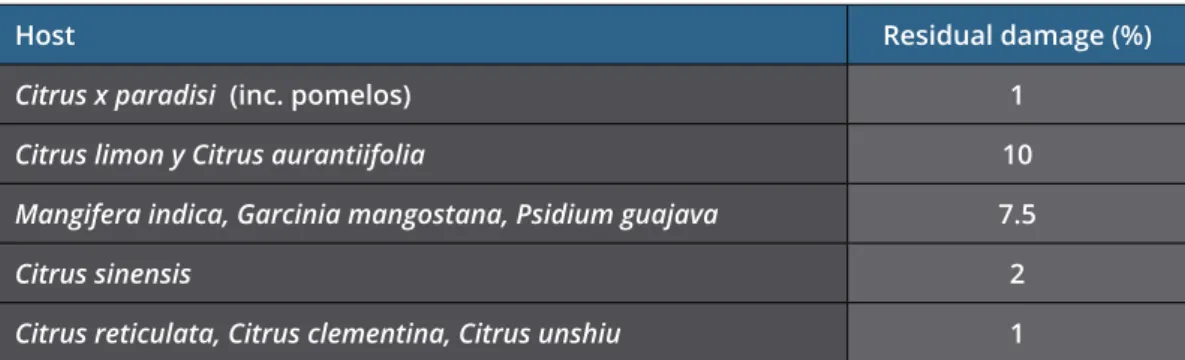
The IICA report for Mexico (Salcedo, 2010) discusses efficient fruit fly control, as part of the economic assessment that was developed for the National Campaign of Eradication. The information on the damage that persists after control measures are implemented (residual damage) is presented in Table 5 for A. ludens.
Table 5. Residual damage (%)
Host Residual damage (%)
Citrus x paradisi (inc. pomelos) 1
Citrus limon y Citrus aurantiifolia 10
Mangifera indica, Garcinia mangostana, Psidium guajava 7.5
Citrus sinensis 2
Citrus reticulata, Citrus clementina, Citrus unshiu 1
b. What effect could the pest have on current production practices used in the PRA area? Changes in production methods and associated costs considered.
Chen et al. (2011) point out that B. dorsalis control should follow the principle of prevention first and integrated prevention. By using the combined methods of monitoring dynamics, agricultural control, physical control, and chemical control, the pest can be controlled economically, safely, effectively and continuously. According to this principle, accompanying control measures should be adopted, basically including: a) selection of varieties, the main challenge of which is how to improve and increase fruit quality. In addition, the planting of late-maturing varieties to avoid peak occurrence of B. dorsalis can also effectively reduce damage rates; b) blocking of food sources, c) management improvements, promoting the vigorous growth of trees through fertilization and irrigation, d) timely pruning, which may reduce moisture, creating an unfavorable environment for fruit fly reproduction, e) cleaning by removing infested fruit.
On this basis, assumptions will be established for variation in practices for production of B. dorsalis host fruit species, which may occur with the presence of the pest.
1_ Plant selection: the choice of B. dorsalis- resistant varieties. 2_ Soil preparation: inclusion of an insecticide treatment to the soil. 3_ Management improvement: fertilization, irrigation and timely pruning. 4_ Pre-harvest: elimination of infested fruit.
5_ Early fruit harvest.
All these additional tasks in fruit crop cultivation may increase production costs.
c. Does the presence of the pest generate an increase in cost due to additional practices?
The presence of the pest will probably generate control actions, such as:
• Physical control: a) release of sterile males, pupae B. dorsalis are treated with Co ray under 95 Gy radiation, male adults infertile are released into the garden, which leads to female infertility, b) yellow traps, when fruit changes color, yellow sticky traps are placed in the garden to catch adults.
• Chemical control: a) death of males by sexual attractant, b) capture of adults by toxic bait, c) use of pesticides d) soil treatment with insecticide.
• Biological control: many species of natural enemies of the eastern fruit fly have been found, such as parasitoids, nematodes and fungi.
All the measures described are in addition to the usual management within fruit orchards; therefore, it is estimated that there could be an increase in costs.
d. Will resources be needed for complementary research and consultations?
A recent publication with the collaboration of members of the International Plant Protection Convention describes the economic importance of B. dorsalis in several geographical regions and discusses a series of phytosanitary treatment programs that have been shown to be effective against B. dorsalis. The document also suggests future research directed at the development of additional phytosanitary treatments and coordinated actions worldwide to reduce the economic impact of this invasive species. The research proposals are intended to address both the needs of exporting country farmers and industries to trade commodities that arrive at their destination in their intended state and quality, and those of the importing countries to receive commodities free of devastating pests (Dohino et al., 2016).
Assessment table 2 presents a summary of the expected impacts on methods and control costs for each of the scenarios considered.
Assessment table 2.Control cost assessment
Impact range (%) Control cost (%) in each scenario A0 A1 A2 Insignificant (0-4.9) 100 100 0 Moderate (5-19.9) 0 0 0 Major (20-49.9) 0 0 50 ive (50-100) 0 0 50 Sum of ratings 100 100 100
The above assessment is based on the evidence presented, where the fact of considering null is highlighted the impact control scenarios for A0 (no infestation) and A1 (with pest, no control). In this context, for the A2 scenario (with pest, with control), considerable/significant control costs are expected, which would be justified by the high production costs of the pest. Thus, given the decrease in the production impacts generated by the control actions, the measures would be justified to avoid pest damage (benefits for avoided costs).
3.2 IMPACT ON MARKETS AND
CONSUMERS
a. How likely is an introduction of the pest to cause effects on domestic markets?
It is estimated that the damage caused by the pest deteriorates the quality of the affected fruit because it spoils it so much that it makes it unsuitable for consumption, mainly due to the presence of larvae inside the fruit. Thus, consumers dispose of the fruit and prefer other fruits of greater quality with the losses that this means for the producer.
In this area, there is a high level of uncertainty because there is no evidence that quantifies changes in the preferences of consumers and, therefore, how the consumer demand could change. Given this level of uncertainty, generated mainly by lack of information, it is assumed that the production impact generated by the pest will not have an effect on the price or on the perception of consumers about the general quality of the product (i.e., consumers assume that if the product has reached the market, it is because it was not affected by the pest). So consumers will eat everything farmers bring to the market. Therefore, the final impact on domestic demand will be equivalent to the production impact of the pest (see Table 4). Assessment table 3 presents a summary of the expected impacts on the domestic market for each of the scenarios considered.
Assessment table 3. Impact assessment on the internal market
Impact range (%) Impact on the internal market (%) in each scenario A0 A1 A2 Insignificant (0-4.9) 100 0 25 Moderate (5-19.9) 0 50 50 Major (20-49.9) 0 25 25 Massive (50-100) 0 25 0 Sum of ratings 100 100 100
As in the previous cases, under scenario A0, complete certainty is assumed regarding the impact of the pest at an insignificant level. While recognizing a level of uncer-tainty of the effect of the pest (without control) on the domestic market, it is more likely to restrict the impact to a moderate level. The distribution of probabilities of the effects of the pest with control moves to lower levels (insignificant moderate) mainly due to the effectiveness of the control actions.
b. How likely is an introduction of the pest to cause effects on export markets, in particular access to these markets?
It is a devastating pest: it has been classified as the most important quarantine pest in many countries and regions of the world (Chen et al., 2011). Thus, B. dorsalis is of quarantine importance for the countries of the European Plant Protection Organization (EPPO), the Asia and Pacific Plant Protection Commission (APPPC), the Southern Cone Plant Health Committee (COSAVE), the Caribbean Plant Protection
Commission (CPPC), the Inter-African Phytosanitary Council (IAPSC), and the Regional International Organization for Plant Protection and Animal Health (RIOPPAH) (CABI, 2018).
Mau and Matin (2007) point out that the economic importance of B. dorsalis cannot be fully assessed from the point of view of the actual damage to the various crops affected. It should also be considered from the point of view of quarantine. Quarantine regulations to prevent the establishment of the oriental fruit fly in areas where it is not present are continuously applied. The United States Government has strict laws that regulate the movement of certain commodities to prevent the establishment of the oriental fruit fly in continental United States. The Japanese Government restricts the entry into its country of untreated hosts for this type of pest.
In the African region, B. dorsalis was detected in 2003 and represents a major phytosanitary challenge due to the threat that the pest represents for the region’s exports, particularly avocado, banana, guava, and mango. It is believed that trade bans on imports to the region alone are causing around $ 2 billion annually. After the introduction, B. dorsalis can spread easily because it has a high reproductive potential, a high biotic potential (short life cycle, up to 10 generations of offspring per year depending on the temperature), high dispersal ability, high competitiveness with native fruit flies, and a wide range of hosts (IPPC, 2017).
Areas with higher risk of invasion by B. dorsalis include South and Central America, Mexico, the southern tip of the United State, parts of the Mediterranean coast, parts of southern and eastern Australia and the North Island of New Zealand. Areas with low risk of invasion include most of Africa and Australia (De Villiers et al., 2016).
Due to the above, it is expected that the establishment of the pest will restrict access to international markets. Given the assessment of control measures, the restriction to markets is expected to be severe in the short term, potentially losing all exports, but as control measures are applied, the restriction to markets will tend to be equivalent to production losses (see Table 4).
Assessment table 4 presents a summary of the expected impacts on the external market for each of the scenarios considered.
Assessment table 4. Impact assessment on the external market
Impact range (%) Impact on the external market (%) in each scenario A0 A1 A2 Insignificant (0-4.9) 100 0 0 Moderate (5-19.9) 0 0 25 Major (20-49.9) 0 25 50 Massive (50100) 0 75 25 Sum of ratings 100 100 100
As noted, considerable impacts are expected in the scenario with pest and without control, mainly due to the damage suffered by farmers when subjected to quar-antine measures. Once control actions are established (scenario A2) and despite their effectiveness, access to international markets may remain affected, which
is reflected in the new distribution of probabilities, where some probability of moderate impact is considered. This effect is not indefinite, as it may be reversed through official control activities.
c. Could the introduction of the pest cause changes in domestic or foreign consumer demand for a product as a result of changes in quality, loss of marketability and/or diversion of the product to a lower value end-use?
The damage caused to crops by B. dorsalis is due to 1) the oviposition in the fruit and the soft tissues of the vegetative parts of certain plants, 2) feeding by larvae and 3) the destruction of the plant tissue by the invasion of secondary microorganisms. Larval feeding in fruits is the most harmful damage. It usually consists of tissue destruction and internal rot associated with larval infestation, but it varies ac-cording to the type of fruit attacked (Mau and Matin, 2007). Infested young fruit becomes distorted, become callused and generally falls. Attacked ripe fruit develop a water soaked appearance. Larval tunnels provide entry points for bacteria and fungi that cause the fruit to rot. When only a few larvae develop, damage consists of an unsightly appearance and reduced marketability because of the egg laying punctures or tissue break down due to the decay (Steiner, 1957).
Thus, changes in domestic and external demand for the products affected by the pest can be expected. This change will depend on the intensity of the pest, the effectiveness of control measures and the ability of farmers to deal with the rep-utational risk involved in producing in an area where the pest is present, in order
to maintain the demand for their products5. The quantification of these impacts
requires detailed market studies to identify the “sensitivity” of the demand on the attributes affected by the pest.
Assessment Table 5 presents a summary of the expected impacts on consumer demand for each of the scenarios considered.
Assessment table 5. Impact assessment on consumer demand Impact range (%) Impact assessment on consumer demand (%) in each scenario A0 A1 A2 Insignificant (0-4.9) 100 25 25 Moderate (5-19.9) 0 25 25 Major (20-49.9) 0 25 25 Massive (50-100) 0 25 25 Sum of ratings 100 100 100
As indicated in the justification, there is a high level of uncertainty regarding consumer preferences (internal and external markets), which is reflected in the distribution of probabilities used (uniform).
5 In this context, reputational harm to farmers refers to the difficulty of doing business (in this case exporting) due to a negative market perception resulting from the implementation of quarantine measures.
4.
SOCIOENVIRONMENTAL IMPACT
The objective of this section is to analyze and quantify, where possible, the social and environmental impacts derived from the production and economic impacts identified in the previous sections. These effects involve aspects related to impacts on other species, on ecosystem services, and on protected areas. In addition, in the social area, aspects related to employment, migration and tourism, among others, are considered. The details of each of these aspects are presented below.
4.1. ENVIRONMENTAL IMPACT
Environmental impact assessment should focus on the result of direct or indirect effects on plants. These may be less significant than the effects of the pest on other organisms or systems, but regulation of pests based only on the effects on other (non-plant) organisms or systems (for example, human or animal health) is beyond of the scope of the ISPM 11.
a. Could the pest cause reduction, displacement or elimination of key or native plant species, or of key
components in the ecosystem (in terms of abundance, size or economic importance)?
USDA-ARS (2015) states that Psidium guajava L. (guava) is native in: Argentina, Bolivia, Brazil, Paraguay, Peru (COSAVE member countries), among other countries.
B. dorsalis, has among its susceptible hosts P. guajava, according to the references
cited above.
Regarding the probability of B dorsalis affecting native species, it is important to note that these species may never have been moved out of its native range, in this case the COSAVE region. Therefore, there is no historical evidence of the direct effects of the pest on such species, which may indicate that native hosts of other fruit fly species of the same family, Tephritidae, could also be hosts of B. dorsalis. Some evidence is presented regarding native plants affected by Tephritidae in COSAVE member countries.
ARGENTINA
The Toxotrypana species (Diptera, Tephritidae) that are known in Argentina were described by Blanchard (1960), classified by Foote (1967) and also cited by Bartolucci (2008). Among them are: T. australis Blanchard present in Tucumán, Corrientes, Buenos Aires and Santiago del Estero; T. littoralis Blanchard in Corrientes; T. picciola Blanchard in Tucumán; T. proseni Blanchard in Jujuy and Buenos Aires; T.
pseu-dopicciola in Cordoba, and T. nigra in Jujuy and Entre Ríos (2, 6). Blanchard (1960)
also described T. pseudopicciola, from Cordoba, currently considered synonymous with T. nigra, according to Norrbom et al. (1999b). None of them is of economic importance, because they are not considered pests of fruit trees (Zucchi et al., 2017). The same author notes that, according to Blanchard (1960), the hosts of both species (T. australis and T. nigra) are the native vines of the genus Morrenia