University of Neuchâtel Faculty of Sciences
Institute of Biology Laboratory of Animal Physiology
Defended on 9th August, 2018
Respiratory physiology and anthropophilic
behavioural traits of the main malaria vector
Anopheles gambiae Giles (Diptera: Culicidae)
Ph.D. dissertation submitted to the Faculty of Sciences of the University of Neuchâtelby
Jérôme Frei
Accepted on proposition of the Jury:
Prof. Patrick Guerin, University of Neuchâtel Prof. Jacob Koella, University of Neuchâtel
Faculté des Sciences Secrétariat-décanat de Faculté Rue Emile-Argand 11 2000 Neuchâtel – Suisse Tél : + 41 (0)32 718 21 00 E-mail : [email protected]
IMPRIMATUR POUR THESE DE DOCTORAT
La Faculté des sciences de l'Université de Neuchâtel
autorise l'impression de la présente thèse soutenue par
Monsieur Jérôme FREI
Titre:
“Respiratory physiology and anthropophilic
behavioural traits of the main malaria vector
Anopheles gambiae
Giles (Diptera: Culicidae)”
sur le rapport des membres du jury composé comme suit:
• Prof. Patrick Guerin, directeur de thèse, Université de Neuchâtel, Suisse • Prof. Jacob Koella, Université de Neuchâtel, Suisse
• Prof. Hans Hoppeler, Université de Berne
Like me, most scientists are happy to be higher primates preadapted for no good reason to making fabulously complicated twigs with which to fish out delicious and entertaining nuggets from the termite mound of consensual reality. Some nugget collections form patterns that jibe with accepted theory, itself a product of induction based on observation.
Acknowledgements
I wish to thank:Prof. Patrick Guerin to have provided me with the opportunity to perform a thesis on such a fascinating hematophagous insect, to allow me to use the diverse lab equipment that he has maintained over years and who stimulated my scientific and technical creativity throughout the thesis, for transmitting me his convictions as an insect physiologist, to help me writing manuscripts in English, for his availability and finally not the least: his patience,
Dr. Charles Chappuis for his support, pertinent advice, sharing ideas and unending memorable discussions on cool things that we could do in the laboratory of Animal Physiology at the University of Neuchâtel,
Dr. Thomas Kröber for introducing me into the world of mosquito research, to let me use and further develop his olfactometer and motivate me to publish my research,
Dr. Sébastien Kessler who was always ready to help out, collaborate and share ideas on mosquito research,
All my other lab colleagues including, Dr. Caroline Joris, Dr. Alexandre Gurba and the very reliable lab technician: Martine Bourquin,
Prof. John Lighton who managed to transmit to me the fever of flow-through respirometry within a two week course in Las Vegas. Without him I would not have been able to build up a flow-through respirometry system on my own at the University of Neuchâtel,
Dr. Christian Starkenmann and Dr. Myriam Troccaz for their collaboration, expertise in human axillary odour and giving me the opportunity to confront An. gambiae with the test products developed at Firmenich SA, Geneva,
Prof. Hans Hoppeler and Prof. Jacob Koella for agreeing to serve as members of my thesis exam jury,
Daniel Varidel of the Technical Service, Faculty of Science, University of Neuchâtel for rapid and efficient repair of the lab devices,
Nicolas Feldmeyer who kindly modified the picture that constitutes the cover page of this thesis,
My cousins Sébastien Fornerod and Natacha Erard for their reliable support in all sorts of situations,
Jean Masini and Christophe Paul for the memorable and entertaining moments I shared with them,
Nadine Singy, for her love and comprehension, and for her presence in good as well as in difficult moments,
I dedicate this thesis to my son Ulysse who made me rediscover the meaning of life the 15 of February 2014 and my daughter Maya who despite having had a terrible accident at the age of 3 months continues to smile every day.
Abstract
Keywords: Anopheles gambiae Giles, malaria, mosquito, flow-through respirometry, resting
metabolic rate, gas exchange pattern, temperature, body size, discontinuous gas exchange cycle, carbon dioxide, olfactometer, anthropophily, axillary odour, axilla bacteria, lactic acid, (R)/(S)-3-hydroxy-3-methylhexanoic acid, (R)/(S)-3-methyl-3-sulfanylhexan-1-ol, Staphylococcus epidermidis, Staphylococcus haemolyticus, Corynebacterium jeikeium.
Anopheles gambiae Giles (An. gambiae) is the main vector of malaria. To fulfil metabolic demand An. gambiae is particularly dependent on blood feeding which is an important driving force of its strong vectorial capacity. It is therefore important to better understand how its metabolism scales with body size and, as an ectotherm, evaluate the thermal sensitivity of its metabolism. Meanwhile, understanding how respiratory gases are exchanged, which gas exchange pattern (GEP) is employed by An. gambiae is also of broader importance as little is known about the respiratory physiology of smaller insects. For this purpose a flow-through respirometer system was pushed to its limit in terms of both its precision and temporal resolution in order to fully resolve the GEP of resting female An. gambiae. The underlying components constituting the GEP could be identified and quantified, including: the standard CO2 production rate of resting An. gambiae (sV̇CO2) as a proxy for resting metabolic rate, the inter-burst CO2 emission rate (iV̇CO2) and duration (Pint), and CO2 burst frequency (F), duration (Pb), amplitude (A) and volume (Vb). Over the temperatures and body size ranges tested, sV̇CO2 varied over a 10-fold range (20 to 32°C, 0.9 to 2.3 mg, 0.6 to 6 µl CO2/hour). Multiple regression analysis demonstrates a positive and almost isometric scaling with living body mass and an apparent Q10 of 2.13, i.e. for a 10°C increment sV̇CO2 is more than doubled. Comparison of two age groups reveals lower and more controlled sV̇CO2 by older (6 days) An. gambiae, suggesting the existence of an optimum age for metabolic control. Considering that a higher metabolic demand imposed by the environment may enhance foraging and contact to hosts, these relationships provide an important foundation for bottom-up modelling for diseases transmitted by mosquitoes.
At rest, the GEP of An. gambiae can be characterised by the cyclic repetition of CO2 bursts intercalated with inter-burst periods with a lower CO2 emission rate. Individuals presenting particularly low sV̇CO2 values exchange respiratory gases not only cyclically but also discontinuously (gas exchange is negligible during inter-burst periods). Disturbed An. gambiae presented a continuous GEP. It is concluded that An. gambiae uses all three GEPs
described so far in the literature. With increasing temperature it is shown that F strongly modulates the gas exchange rate by increasing faster than sV̇CO2. This discrepancy is almost compensated by lower Vb values at higher temperature suggesting a decrease in the haemolymph buffering capacity for CO2 with increasing temperature. F is independent of body mass whereas Vb scales out of proportion with body size suggesting a relatively larger tracheal volume in bigger mosquitoes. Considering mosquito size and the wide panel of behaviours undertaken during adult life, it is suggested that the ability to employ various GEPs and modulating its components might be an advantage to adapt the respiratory gas exchange pattern used (discontinuous and cyclic to only cyclic and eventually to continuous) to metabolic demand depending on the situation encountered in adult life.
Another major contributor to the vectorial capacity of An. gambiae is its odour-mediated preference to bite humans over other vertebrate host and certain human types over others. The second part of the thesis focuses on the identification of potential infochemicals that may explain this odour-mediated anthropophilic and discriminative host seeking behaviour of An. gambiae. For this purpose an experimental paradigm integrating both a sound behavioural evaluation concepts and an appropriate testing environment is used. An improved dual-choice olfactometer that tests the host seeking behaviour of An. gambiae in the presence of continuous well-controlled intermittent CO2 stimulation is presented in both arm is developed. This background stimulation simulates the presence of two potential hosts whilst acting as a releaser of odour perception. Olfactometer tests with lactic acid, a human eccrine signature, added on one arm in the presence of CO2 pulses as sensitizer, confirm earlier findings that this infochemical not necessarily augments anemochemotactic upwind flight of the insect vector but influences the mosquito’s discriminative behaviour. After confirming the validity of the experimental paradigm it is used to evaluate the responses of An. gambiae to odours from human male and female axillary sweat incubated with 3 human axilla bacteria species. Staphylococcus epidermidis was selected for its low odour-producing pattern, Corynebacterium jeikeium for its strong Nα-acylglutamine aminoacylase activity liberating carboxylic acids including (R)/(S)-3-hydroxy-3-methylhexanoic acid (HMHA), and Staphylococcus haemolyticus for its capacity to liberate sulfur-containing compounds including (R)/(S)-3-methyl-3-sulfanylhexan-1-ol (MSH). It is demonstrated that An. gambiae is able to discriminate for the olfactometer arm conveying odour generated by incubating any of the three bacteria species with either male or female sweat. Whereas An. gambiae cannot discriminate between male and female sterile sweat samples in the olfactometer, the mosquito consistently shows a preference for male sweat over female sweat incubated with the same
bacterium, independent of the species used as inoculum. Axillary sweat incubated with C. jeikeium rendered An. gambiae particularly responsive and this substrate elicited the strongest preference for male over female sweat. HMHA and MSH are suspected to be unique to human odour. It is shown that when tested on their own, neither HMHA nor MSH elicited a clear discriminating response but may affect human host approach by An. gambiae or enhance activation followed by sustained upwind flight over longer distances.
Résumé
Mots clés: Anopheles gambiae Giles, malaria, moustique, respirométrie à flux continu, taux métabolique au repos, schéma respiratoire, température, taille corporelle, échange gazeux cyclique et discontinu, dioxyde de carbone, olfactomètre, anthropophilie, odeur axillaire, bactéries des aisselles, acide lactique, (R)/(S)-3-hydroxy-3-méthylhexanoïque acide, (R)/(S)-3-méthyl-3-sulfanylhexane-1-ol, Staphylococcus epidermidis, Staphylococcus haemolyticus, Corynebacterium jeikeium.
La vie adulte des moustiques est marquée par la répétition de séquences comportementales incluant: la recherche d’un partenaire sexuel, la recherche de ressources (repas sanguin sur un hôte ou sucre d’origine végétale) et la recherche d’un site de ponte ; ces séquences comportementales étant intercalées de périodes plus ou moins longues de repos. L’entreprise de l’un ou l’autre de ces comportements typiques est influencée par des facteurs aussi bien internes (comme par exemple le bagage génétique ou l’état physiologique) qu’externes (comme les conditions environnementales ou les signaux émis par l’hôte). Dans ce contexte, le principal vecteur de la malaria, Anopheles gambiae Giles (An. gambiae), se distingue d’autres moustiques en plusieurs points : il commence sa vie adulte avec peu de réserves métaboliques, il concentre ses repas sanguins et doit souvent même les multiplier, afin de pouvoir pondre. Ce moustique est endophage, endophile et démontre un comportement anthropophile (préférence à piquer des êtres humains à par rapport à d’autres vertébrés) dicté principalement par la signature olfactive de l’homme. Dans cette thèse, je me suis donc intéressé à la physiologie respiratoire et à l’identification de signaux chimiques potentiels typiques à l’homme qui régulent la vie adulte de ce moustique.
Comprendre comment ce moustique échange les gaz respiratoires avec son environnement ou quel schéma respiratoire (SR) il utilise est fondamental, car on en sait très peu sur la physiologie respiratoire des insectes de petite taille. En tant que petit ectotherme et sachant que ce moustique est particulièrement dépendant de l’hématophagie pour répondre à ses besoins métaboliques de base, une meilleure compréhension des variations de son SR en fonction de sa taille et de la température est également importante. Pour ce faire, un système de respirométrie à flux continu a été poussé vers ses limites en termes de précision et de résolution temporelle, afin de résoudre le SR utilisé par An. gambiae. Au repos, le SR de An. gambiae est caractérisé par la répétition cyclique d’événements excrétoires de CO2 marqués, suivis de périodes d’émission plus basses. Les composantes sous-jacentes constituant le SR ont pu être identifiées et quantifiées. Ces dernières incluent : le taux métabolique au repos représenté par le taux de production standard de CO2 au repos (sV̇CO2), la durée (Pint) et le taux d’émission de CO2 (iV̇CO2) entre les événements excrétoires de CO2 marqués, ainsi que la fréquence (F), le volume (Vb), l’amplitude (A) et la durée (Pb) de ces derniers. Sur l’intervalle de taille et de température expérimentés, sV̇CO2 varie d’un facteur de 10 (20 à 32°C, 0.9 à 2.3 mg, 0.6 à 6 µl CO2/heure). Une analyse par régressions multiples démontre une relation positive et isométrique de
sV̇CO2 avec la taille et un Q10 apparent de 2.13 (pour une augmentation de 10°C, sV̇CO2 est plus que doublé). Sachant qu’un taux métabolique plus élevé imposé par l’environnement pourrait provoquer une recherche de ressources nutritionnelles accrue, voire un contact plus fréquent avec l’hôte, cette relation est un fondement important pour toute tentative de modélisation bottom-up des maladies transmises par les moustiques. La comparaison entre deux groupes d’âge distincts démontre un sV̇CO2 plus bas et mieux maîtrisé chez les An. gambiae plus âgés (6 jours), suggérant ainsi un âge optimal pour le contrôle du métabolisme. Les individus présentant un sV̇CO2 particulièrement bas, en plus de respirer de manière cyclique, respirent aussi de manière discontinue (échanges de gaz proche de 0 durant la période de basse émission). En activité, An. gambiae utilise un SR continu. Il est conclu que ce petit insecte est capable d’utiliser les 3 SR décrits à ce jour dans la littérature chez les insectes (SR continu, cyclique et cyclique/discontinu). Lors d’une augmentation de température, il est démontré que F module fortement le taux d’échanges gazeux en augmentant plus vite que le taux métabolique au repos. Ce découplage est compensé par une diminution de Vb, suggérant ainsi une diminution de la capacité tampon pour le CO2 dans l’hémolymphe lorsque la température augmente. F varie indépendamment de la masse corporelle, alors que Vb augmente de manière disproportionnée avec cette dernière, suggérant ainsi un volume trachéal relativement plus élevé chez les individus de plus grande taille. Si l’on tient compte de leur taille et de la variété de comportements que les moustiques sont capables d’entreprendre durant leur vie adulte, il est suggéré que la capacité d’utiliser divers SR peut être un avantage, afin d’adapter le schéma respiratoire à la demande métabolique imposée selon les circonstances rencontrées durant la vie adulte.
An. gambiae, en plus d’être anthropophile, montre même une préférence pour certains types d’humains. Il est connu que le mécanisme derrière ce comportement sélectif est médié par l’odeur émise par l’hôte. La seconde partie de cette thèse s’est donc concentrée sur l’identification de signaux chimiques émis par l’hôte potentiellement impliqués dans ce comportement sélectif. Pour ce faire, un paradigme expérimental intégrant une bonne évaluation du comportement dans des conditions expérimentales optimales a été développé et utilisé. Ce dernier comprend : i) une population test de moustiques adultes spécialement élevée et prête à rechercher un hôte, ii) un olfactomètre amélioré à deux ports permettant de mesurer l’intensité de la réponse chimioanémotaxique du moustique et sa capacité discriminative en redirigeant son vol vers l’une des deux odeurs sources présentées, iii) la présence inhérente de fluctuations de CO2 contrôlées afin de simuler la présence de deux hôtes potentiels et augmenter la sensitivité des moustiques et iv) des conditions de vol optimales (température, humidité et vitesse du vent).
Les fluctuations de CO2 ont pu être mesurées et reproduites de manière consistante dans les deux ports de l’olfactomètre. Cette stimulation a augmenté la réceptivité des moustiques à répondre à des odeurs. Des expériences conduites avec l’ajout d’acide lactique (une signature olfactive humaine d’origine eccrine) dans un des ports de l’olfactomètre confirment que ce composé volatile n’intensifie pas la
réponse chimioanémotaxique de An. gambiae mais influence son comportement discriminant. Après avoir validé le paradigme expérimental avec l’acide lactique, ce dernier a été utilisé pour évaluer la réponse du vecteur à des odeurs provenant de l’incubation de sueur mâle et femelle avec 3 espèces de bactéries peuplant l’aisselle humaine. Staphylococcus epidermidis a été choisi car il produit une odeur moins intense, alors que Corynebacterium jeikeium et Staphylococcus haemolyticus ont été choisi pour leurs contributions biologiques importantes dans la production d’une odeur axillaire intense. Ces deux dernières bactéries, par le biais d’une activité enzymatique spécifique et prononcée, libèrent respectivement des acides carboxyliques dont notamment le (R)/(S)-3-hydroxy-3-méthylhexanoïque acide (HMHA) et des composés volatiles soufrés tel que le (R)/(S)-3-méthyl-3-sulfanylhexane-1-ol (MSH). Les expériences avec l’olfactomètre démontrent que les trois bactéries, de par leur action sur la sueur mâle ou femelle, libèrent des composés volatiles influençant le comportement aussi bien chimioanémotaxique que discriminant de An. gambiae. Si le vecteur n’a pas pu distinguer la sueur mâle de la sueur femelle stérile, l’action de chaque bactérie a rendu la sueur mâle plus attractive de manière consistante. L’action de Corynebacterium jeikeium a généré la réponse chimionanémotaxique la plus intense et a engendré la préférence la plus forte pour la sueur mâle. Les composés volatiles HMHA et MSH sont suspectés d’être propres à l’odeur humaine mais aucun des deux composés volatiles n’a généré de préférence telle que celle observée pour l’acide lactique. Il n’est cependant pas exclu que ces deux signaux chimiques influencent le comportement du moustique au moment où il approche l’hôte ou encore engendre une activation suivie d’un vol soutenu en direction de l’hôte à des distances plus éloignées.
Table of Contents
1 General introduction ... 19
1.1 Anophelinae among other mosquito species ... 20
1.2 The life cycle of mosquitoes ... 22
1.3 Notable behavioural traits of adult mosquitoes ... 23
1.4 Behavioural particularities of female An. gambiae ... 26
1.4.1 Feeding habits: multiple, concentrated, large and long blood meals ... 26
1.4.2 Propensity for human habitat ... 27
1.4.3 Odour-mediated preference to bite humans ... 27
1.5 Focus and outline of the thesis ... 30
2 Mass scaling and thermal sensitivity of resting metabolic rate in An. gambiae ... 33
2.1 Introduction ... 34
2.2 Material and Methods ... 36
2.2.1 Mosquitoes ... 36
2.2.2 Wet body mass, water content, dry mass and wing length of mosquitoes ... 36
2.2.3 Flow-through respirometry ... 37
2.2.4 Data correction, transformation, selection and evaluation ... 41
2.3 Results ... 44
2.3.1 Size range covered of the studied An. gambiae population ... 44
2.3.2 Relationships between larval density, body mass and wing length ... 44
2.3.3 Body mass, water content and water loss before and after respirometry ... 47
2.3.4 Overview of the data selected for resting metabolic rate evaluation ... 49
2.3.5 Body size scaling and thermal sensitivity of resting metabolic rate ... 49
2.4 Discussion ... 51
2.4.1 Predicting resting metabolic rate of An. gambiae ... 51
2.4.2 Body size scaling and thermal sensitivity of resting metabolic rate ... 52
2.4.3 Ecological and epidemiological implication of predicting resting metabolic rate ... 53
2.4.4 Resting metabolic rate, water balance and age ... 55
3 Gas exchange pattern of female An. gambiae ... 57
3.1 Introduction ... 58
3.2 Material and Methods ... 62
3.2.1 Parameters characterizing the gas exchange pattern of An. gambiae ... 62
3.2.2 Evaluation of gas exchange parameters... 62
3.2.3 Statistics and inferences on discontinuity of the gas exchange pattern... 64
3.3 Results ... 66
3.3.1 Overview of parameters characterizing the gas exchange pattern of An. gambiae ... 66
3.3.2 Body size scaling and thermal sensitivity of gas exchange pattern parameters ... 74
3.3.3 Levels of CO2 emission rates ... 78
3.3.4 Temporal characterization of the gas exchange pattern ... 81
3.3.5 Volume of individual expired CO2 bursts ... 84
3.4 Discussion ... 87
3.4.1 Precision of the flow-through respirometry system ... 87
3.4.2 Gas exchange pattern of female An. gambiae ... 88
3.4.3 Temperature sensitivity of the gas exchange pattern ... 89
3.4.4 Body-size scaling of gas exchange pattern parameters... 91
3.4.5 Effect of age on the gas exchange pattern ... 93
3.4.6 Gas exchange pattern and water loss ... 93
3.4.7 On the origins of the gas exchange pattern employed by An. gambiae ... 94
4 Using equal CO2 pulses in an olfactometer to uncover host choice odour cues ... 97
4.1 Introduction ... 98
4.2 Methods and Material ... 99
4.2.1 Mosquitoes ... 99
4.2.2 The olfactometer ... 99
4.2.3 Mosquito testing procedure ... 100
4.2.4 Odour delivery ... 100
4.2.5 Test series and their objectives ... 101
4.3 Results ... 108
4.3.1 Mosquito responses in absence of any added chemical stimulus ... 108
4.3.2 Mosquito responses to equal CO2 pulses without and with lactic acid added ... 108
4.3.3 CO2 pulses characteristics and their effect on the response of An. gambiae... 109
4.3.4 The effect of temperature and humidity on the response of An. gambiae ... 109
4.3.5 The effect of age on the response of An. gambiae ... 110
4.4 Discussion ... 113
4.4.1 Testing the olfactometer experimental paradigm with lactic acid ... 113
4.4.2 Using CO2 as sensitizer in the olfactometer ... 114
4.4.3 Testing a true choice by mosquitoes in the olfactometer ... 115
4.4.4 Control of CO2 pulses ... 116
4.4.5 Control of temperature and humidity in the olfactometer airflow ... 117
4.4.6 The effect of age of mosquitoes on their responses in the olfactometer ... 117
5 Response of An. gambiae to notable specificities of human axillary odour ... 119
5.1 Introduction ... 120
5.2 Methods and Materials ... 123
5.2.1 Mosquitoes, the olfactometer and testing procedure ... 123
5.2.2 Collection of axillary sweat and odour regeneration with bacteria ... 123
5.2.3 Odour delivery ... 124
5.2.4 Test series and objectives ... 125
5.2.5 Quantification of behaviours and statistical analysis of data ... 126
5.3 Results ... 127
5.3.1 The effect of each bacterium species on the response of An. gambiae ... 127
5.3.2 Response to female sweat tested against male sweat both incubated with the same bacterium species ... 129
5.3.3 Response to 3-hydroxy-3-methylhexanoic acid and 3-methyl-3-sulfanylhexan-1-ol ... 130
5.4 Discussion ... 133
5.4.1 The action of bacteria on freshly collected axillary sweat and its effect on An. gambiae ... 133
5.4.2 Bacterial and sweat specific effect on the response of An. gambiae ... 134
5.4.3 Response of An. gambiae to 3-hydroxy-3-methylhexanoic acid and 3-methyl-3-sulfanylhexan-1-ol ... 136
5.4.4 The role of human axillary odour in the host seeking behaviour of An. gambiae ... 137
6 Conclusions ... 139
6.1 On respiratory physiology in An. gambiae ... 139
6.2 On the quest for identifying human specific odour cues used by An. gambiae ... 142
7 References ... 147
7.1 Citations ... 147
7.2 Publication resulting from the thesis ... 165
8 Appendices ... 167
8.1 Chapter 1 ... 167
8.1.1 Protocol to maintain an An. gambiae colony in the laboratory ... 167
8.1.2 Scanning electron micrographs of the main sensory organs of An. gambiae... 168
8.2 Chapters 2 and 3 ... 169
8.2.1 Extracts of FTR measurements from 43 An. gambiae with the corresponding KDEs. ... 169
8.2.2 Gas exchange pattern of An. atroparvus, An. stefensi and An. gambiae of similar body mass ... 213
8.3 Chapters 4 and 5 ... 216
1 General introduction
espite tremendous investments and progress to control malaria its burden on human population prosperity remains important. Close to half the earth’s population is under the threat of malaria infection and the estimated number of reported cases ranges from 148 to 304 million per year of which 235 to 639 thousand lead to death. Malaria primarily affects the Sub-Saharan portion of the African continent and it is an important contributing force to poverty in that continent (Brooker et al., 2000; Sachs and Malaney, 2002; WHO, 2016). Malaria infection is caused by eukaryotic protists of the genus Plasmodium and transmitted within human population by mosquitoes of the genus Anopheles. To combat the parasite artemisinin-based combination therapy is used against Plasmodium. Vector control methods such as long-lasting insecticidal treated bed nets and indoor residual spraying of insecticide have also proved to be efficient. Traps equipped with lures furnish adequate tools to monitor vector populations and hence use available resources more efficiently to contain malaria outbursts. Vector control improvement requires a better understanding of the physiological and behavioural fundamentals of malaria mosquitoes
regulating their intimate interaction with human beings. This thesis is a contribution to knowledge on the physiology and chemical ecology of the principal African malaria vector Anopheles gambiae Giles. By paying particular attention to Anopheles gambiae Giles this thesis is introduced with some important fundamentals of its biology. The important behaviour depicted by adult mosquitoes, including those that position Anopheles gambiae Giles as the principal malaria vector, are described in further details. Finally the two main themes and objectives of the thesis are introduced and outlined.
1.1 Anophelinae among other mosquito species
In total, there are 41 genera of mosquitoes regrouping ~3500 species. Mosquitoes are Diptera that belong to the Culicidae family. Within this family they are classified into three subfamilies, namely the Anophelinae, the Culicinae and the Toxorhynchitinae. The Culicinae subfamily is the largest and the most diversified and is therefore divided into tribes (the Culcini, the Aedini, the Sabethini and the Mansoniin, etc). The Anophelinae subfamily regroups three genera: Anopheles (Meigen), Bironella (Theobald) and Chagasia (Cruz). The Anopheles genus is constituted of ~ 430 species from which ~ 100 are known for their ability to transmit malaria however only 30-40 effectively do so in nature. The Anopheles studied species in this thesis is Anopheles gambiae (Giles 1902) henceforth abbreviated An. gambiae throughout the thesis. With An. funestus and An. arabiensis it belongs to the most efficient malaria vectors. An. gambiae is classified in the Anopheles gambiae complex which regroups 8 species which are morphologically undistinguishable. These include An. merus Dontiz, An. melas Theobald, An. arabiensis Patton, An. quadriannulatus Theobald, An. bwambae White, An. amharicus Hunt, Coetzee & Wilkerson, An. coluzzi Coetzee & Wilkerson and An. gambiae Giles, the latter two being previously known as the ‘M’ and ‘S’ form of the complex (Besansky et al., 1994; Fanello et al., 2002, Coetzee et al., 2013). An. gambiae as well as An. arabiensis and An. funestus (member of the An. funestus complex) are only found in Africa. An. gambiae and An. arabiensis have a panmictic distribution across tropical Africa. An. funestus has a similar distribution than An. gambiae but its population further extends into Southern Africa. In general, the three species can be considered as sympatric and their distribution perfectly matches where malaria incidence on human populations is highest (Figure 1.1A and B).
A
B
Figure 1.1 Anophelinae distribution and worldwide incidence of malaria. Map A the
distribution of the potential malaria vectors (Anopheles) across the world (Kiszewski and Teklehaimanot, 2004). Map B represents the estimated incidence of malaria per 1000 population in 2013. Note the correlation of the most affected area in Africa (>50 cases per thousand population) and the geographic distribution of An. gambiae, An. arabiensis and An. funestus.
1.2 The life cycle of mosquitoes
Mosquito undergo ‘complete metamorphosis’ distinguished by four stages: eggs, larvae (4 instars), pupae and imagoes or adults, the three first stages being aquatic (Fig. 1.2). Typically an adult female gently lands on the water surface of a shallow pool of water and lays from a few tens to several hundred eggs either singly or in batches. Larval eclosion follows, depending on aquatic conditions, more or less rapidly and grows through three moults. Within a few days the 4th instar larva develops into a pupa which already encloses a pharate adult insect form. Air intake at the water surface releases the insect from the pupal encapsulation and after wing unfolding the adult mosquito leaves the aquatic habitat to pursue its life span in the few meters of atmosphere above land. The adult is a typical dipteran characterized by only one pair of wings and a pair of halters. Like all Diptera, mosquitoes feed on fluids, but are equipped with exceptionally well-adapted mouthparts to probe plant juice (nectar, rotten fruits or honeydew) and perforate the hard skin of higher vertebrates to gain access to an already well processed resource: blood. For subsistence and to meet the high metabolic demand required for flight, both the male and female mosquito regularly feed on nectar, honeydew and plant sap. In addition, females feed on blood in order to constitute yolk protein in the fat body for egg production except for species of the Toxorhynchitinae subfamily in which females produce eggs entirely from materials of plant origin. The role of adult males mainly resides in female insemination and mating with the vast majority of females that occurs before seeking a blood meal on a vertebrate host. Males form swarms constituted of up to thousands of individuals near oviposition sites. Females entering the swarm are rapidly seized by males and copulate with them. Once inseminated, females are rendered refractory to further copulation and store the spermatozoids in their spermatheca. After mating an adult female mosquito seeks a vertebrate host and takes up a blood meal. Right afterwards the female mosquito flies to a refuge to digest its blood meal and permit oocytes maturation. Then, the adult female seeks a suitable oviposition site where it lays its eggs. Adult females lay eggs several times within their life span but every gonotrophic cycle requires at least one blood meal or more depending on the species (for more details see Clements, 1992 and 1999).
1.3 Notable behavioural traits of adult mosquitoes
The successive repetition of host seeking - blood meal take up - oviposition behavioural sequences (gonotrophic cycle) are determinant in the reproductive and survival success of mosquitoes (Fig. 1.2). An An. gambiae colony can be easily maintained in the laboratory by reproducing the cycle artificially (see appendix 9.1.1). Engagement in this typical behavioural sequence has is driven by internal (genetic and physiological status) and external cues (external stimuli coming from the surrounding environment) (Takken and Knols, 1999). The physiological status of the insect depends on factors such as age, size, nutritional state, circadian rhythm and gonotrophic stage. A good example of where the physiological status of the mosquito influences its behaviour is during blood feeding. After a blood meal and following its digestion the mosquito will seek a suitable oviposition site. However, if the first blood meal did not allow accumulation of sufficient protein to permit oocyte maturation and egg laying the female will engage in a second blood meal. This behaviour is termed multiple feeding and clearly shows how the physiological status or metabolic demand influences behaviour (Xue and Edman, 1991). As a matter of course, environmental conditions highly influence mosquito behaviour. Habitat and climatic factors such as temperature and humidity varying on a daily and seasonal basis constitute conditions to which the mosquito as an ectotherm is forced to adapt its behaviour. For example, to digest its blood meal a mosquito may seek a cool and humid refuge to limit metabolic expense and water loss (Kessler and Guerin, 2008). Depending on its physiological status and environmental conditions, the sensory apparatus of the insect will be more or less responsive to external stimuli to find/select a suitable conspecific to mate, a host to take a blood meal, find a sugar source and oviposition site. Mosquito flight behaviour is activated and guided to its end target by external stimuli such as chemical, visual as well as physical cues. Visual cues such as contrasting contours have been noted to be used by diurnal mosquitoes to find a host whereas colours seem to be less important (Allan et al., 1987; Muir et al., 1992). Although to a limited extent, night active mosquitoes such as An. gambiae have also been shown to respond to vertical and ground patterns but only under conditions similar to full-moon luminosity (Rubio-Palis, 1992; Gibson, 1995). A host targeted for a blood meal releases notable amounts of heat and moisture different from ambient levels in their vicinity. Those physical cues play an important role in eliciting a landing response close to the host (Khan et al., 1968). Anopheles males possess elaborate flagella on the antenna which are sensitive to the flight tone of conspecific females. Flying females that enter a swarm are sensed by males which rapidly seize them to
mate (Charlwood and Jones, 1980). By taking into consideration the extensive research performed to date on the sensory cues that direct mosquitoes towards their resources (i. e. mate, sugar source, host or oviposition site) olfactory cues seem to be the most important (Takken, 1991; Takken and Knols, 1999). Antenna and maxillary palps bear hundreds of sensilla that contain receptor cells sensitive to semiochemicals (see appendix 9.1.2 and Pitts and Zwiebel 2006 for a detailed review). Mating behaviour for some species (notably Aedes and Mansonia) implicates olfactory stimuli in that males use the odour of the vertebrate host to locate and intercept female that take a blood meal on the same host (McIver et al., 1980; Jaenson, 1985). Whether or not females from the Anopheles genus use olfactory cues (i. e. pheromones) provided by swarms to locate them remains unclear. Plant nectar is an important sugar source for the mosquito to sustain flight, in particular immediately after emergence. Both male and female mosquitoes use this resource for survival and use the host plant volatiles as olfactory cues (Foster, 1995; Foster and Takken, 2004). Depending on the species, mosquitoes exploit the blood of a large panel of higher vertebrates (mammals, birds, reptiles and amphibians). Olfactory cues play a major role in host seeking behaviour. At long distances where visual and physical cues are not available, wind carries infochemicals that elicit upwind flight (anemotaxis) and directs the mosquito towards its blood host (Takken, 1991; Takken and Knols, 1999). Finally, oviposition site location behaviours have also been reported as being mediated by olfactory cues in many species (Bentley and Day, 1989). Undoubtedly olfactory cues play a major role in regulating many aspects of adult mosquito behaviour.
Figure 1.2 life cycles of An. gambiae and notable particularities distinguishing it from other
mosquito species. Eggs laid singly as opposed to in batches (1). Horizontal position of the larva to feed and breathe at the water-air interface as larvae of this species do not possess a syphon (2). Pupae resting at the water air interface (3). An. gambiae has maxillary palps as long as the proboscis and males and females can be distinguished by the structure of their antennae (4). Swarm of males (5). Two females feeding on a flower (6). Copulation (7). Preference for human hosts (=anthropophily) and feeding inside human habitations (=endophagy) (8 and 9). Preference for resting site to digest blood meal inside human habitations (=endophily) (10 and 11). When the female was interrupted or did not ingest sufficient nutrients to produce mature eggs during the blood meal it may seek another blood meal (= multiple feeding) before oviposition (12). An. gambiae mainly exploits shallow water pools related to human activities as oviposition sites (13 and 14). The two red arrows represent the malaria parasite transmission cycle described in Box 1 below. After Clements (1992 and 1999).
1.4 Behavioural particularities of female An. gambiae
The life cycle of An. gambiae is marked by physiological and behavioural particularities that distinguish it from other mosquito species and position it as the most important vector of malaria by contributing to its vectorial capacity.
1.4.1 Feeding habits: multiple, concentrated, large and long blood meals
Compared to other mosquito species notably Culicinae, Anophelinae and particularly An. gambiae seem to have a different physiological strategy to acquire nutrients for energy and egg maturation through blood feeding. Some Culicinae species, notably Aedes aegypti, already during the larval stage cumulate quite a lot of reserves (Briegel 1990a). In contrast, teneral An. gambiae are ‘skinny’ (term used by Briegel, 2003 with reference to their low lipid and protein content) and have a small body size compared to other mosquitoes. To cope with this disadvantage An. gambiae completes teneral metabolic reserves by investing a larger portion of blood meal nutrients for basal needs and less in yolk synthesis for egg maturation. The first blood meals may be used to compensate for low teneral reserves whereas nutrients from subsequent blood meals are eventually allocated to oogenesis (Briegel, 2003; Fernandes and Briegel, 2005). In parallel to acquire sufficient reserves for egg maturation, An. gambiae has adapted different strategies. It is able to feed successfully on blood from hosts rapidly (~ ½ day) after emergence (Briegel and Hörler, 1993; Hörler and Briegel, 1995). During blood ingestion, it concentrates protein by simultaneous water removal (Fig. 1.2, image 9). This way An. gambiae ingests up to 10-12 µl of blood (up to 4 times its own weight) and requires an extended feeding time (Briegel and Rezzonico, 1985). In contrast, Aedes aegypti, even though a much larger mosquito only ingests up to 2-5 µl of blood (Briegel 2003). The ability to filter blood more efficiently is also accompanied by a strong tendency in An. gambiae to undertake multiple feeding at short intervals (Briegel and Hörler, 1993; Hörler and Briegel, 1995). Sugar feeding can also contribute to metabolic demand of female An. gambiae in a domestic environment (Foster 1995; Gary and Foster 2004). However it has been shown that An. gambiae can replace sugar with increased blood feeding without suppressing reproductive fitness even if life span is reduced (Briegel and Hörler 1993; Gary and Foster 2001; Straif and Beier 1996). Strong flight performance can be maintained with blood feeding alone by An.
gambiae (Kaufmann and Briegel 2004). Sugar feeding, seems to not occur during but between
and Foster 2006). In an endophilic and endophagic context metabolic demand seems to be particularly associated with blood feeding behaviour by female An. gambiae (Beier 1996). 1.4.2 Propensity for human habitat
Another particularity of An. gambiae is its synanthropism (an animal that lives near and benefits from an association with humans and the man-made habitats that humans create around themselves). An. gambiae spends a significant period of its adult life in the vicinity of human habitations which ensures a continuous contact to human beings. It is endophagic in that it prefers to feed indoor in human dwellings and endophilic in that it prefers to rest indoor. The temperate and humidity characteristics of human habitations provide the vector ideal conditions to lower metabolic demand and save energy. After feeding on a human host indoor, nearby secluded indoor sites also provide ideal resting sites in order to quietly digest the freshly-taken blood meal (Chandler et al., 1975; Githeko et al., 1996). Meanwhile An. gambiae usually lays eggs on clear, unpolluted and shallow rain-filled water pools generated by human related activities. Hoof prints, puddles and discarded containers filled with water provide excellent oviposition sites. Irrigation in agriculture is also a source of water that may be utilised by the vector to oviposit (Muirhead-Thomson, 1951; Clements, 1999). The proximity to humans is not only marked spatially but also temporally. An. gambiae mating, blood feeding, resting and blood meal digestion followed by oviposition are regulated by an endogenous circadian rhythm that is reset daily when luminosity changes from photophase to the scotophase. The species is crepuscular and nocturnal with behaviours such as mating and oviposition occurring at twilight whereas blood feeding is maximal during the night between 22h00 and 4h00 (Jones and Gubbins, 1978). During the day, when humans are active, the mosquito rests and digests its blood meal. Blood feeding at night is probably an optimal strategy as it is at that time that human hosts are asleep and vulnerable to mosquito bites.
1.4.3 Odour-mediated preference to bite humans
An. gambiae is not only synanthropic; it is also demarked from other mosquito species by its anthropophilic character. This ectoparasite has a strong preference for humans over other vertebrate hosts (Garrett-Jones et al., 1980). There is evidence that selective human host-seeking behaviour of An. gambiae relies in the difference of odour emitted by humans compared to other vertebrate hosts (Costantini et al., 1993; Mboera et al., 1997; Costantini et al., 1998; Dekker and Takken, 1998; Dekker et al., 2001 and 2002) and certain human types compared to others (Knols et al., 1995; Dekker et al., 2002; Mukabana et al., 2002). By contrast, it has been shown that other Anopheles species tend to have a less selective or even a
rather zoophilic host-seeking behaviour. For example, and to contrast with Anopheles gambiae, Anopheles quadriannulatus seems to be truly zoophilic. This particularity strongly contributes to its high vectorial capacity compared to other mosquito species. To ensure development and reproductive success, the malaria parasite needs to be transmitted twice: the infection bite by a mosquito and further transmission by second bite of the same mosquito, Box 1. The probability of this occurring is enhanced when the targeted host pool remains restricted. In this regard, it must be noted that the apparent high vectorial capacity is also associated to the susceptibility of the vector to Plasmodium falciparum, the parasite that causes the most severe form of malaria, by comparison to P. vivax, P. ovale and P. malariae that cause less sever forms of malaria.
Box 1 Life cycle of the malaria parasite within the mosquito and human hosts
The sexual reproduction of Plasmodium falciparum takes place when a female An. gambiae ingests a blood meal containing erythrocytes infected with male or female gametocytes of the parasite (1). The gametocytes differentiate into male and female gametes (2-3) which after fertilization form a motile zygote called the ookinete (4). The ookinete migrates through the digestive tract wall of the mosquito, forms an oocyst (5) on the midgut’s edge and divides into several thousand sporozoites (6-7) which are then able to reach the salivary glands of the mosquito through its haemolymph. Through a subsequent mosquito bite (e.g. the next gonotrophic cycle), these sporozoites can be transmitted and may infect a healthy human (8). If the infection is successful, sporozoites rapidly reach the liver through the circulatory system and penetrate hepatocytes (9). After asexual reproduction (exoerythrocytic shizogony, 10) hepatocytes burst and release merozoites in the circulatory system (11). Merozoites invade erythrocytes (12) where they grow into trophozoites and multiply (another round of shizogony) causing erythrocytic burst which releases newly formed merozoites (13). These merozoites are in turn able to re-invade other erythrocytes (14a and b). This process occurs cyclically with erythrocytic burst happening every ~ 48 hours. The erythrocytic burst corresponds to the cyclical peaks of fever human beings are submitted to when they present malaria symptoms. Meanwhile, after invasion of erythrocytes, some merozoites may develop into gametocytes (15) and reinitiate a life cycle. Adapted from Peters, 1987; Ghosh et al., 2000; Combes, 2001.
1.5 Focus and outline of the thesis
As stated by Takken and Knols (1999), for their survival and reproductive success, mosquitoes depend on a series of characteristic behaviours such as mating, foraging, and oviposition which are governed by internal and external cues. In other words, engagement in one of these consecutive behaviours, next to being genetically determined or species specific depends on the physiological conditions in which a mosquito is developing and to which external stimuli it is confronted. A better understanding of these drivers is essential if one wants to improve mosquito control. In this thesis, both internal as well as external cues are addressed.
In a first stage (Chapters 2 and 3); I focused my interest on a major internal cue that govern
the adult life of An. gambiae namely its respiratory physiology. Respiratory physiology includes two processes that are interdependent but that must be distinguished in order to avoid confusion. Cellular respiration or metabolism refers to the rate at which oxidative phosphorylation produces energy (mainly ATP) and waste products; whereas gas transport or gas exchange refers to the way respiratory gases (CO2 and O2) are transported from and to metabolic active tissues. Like most insects and as tiny ectotherms, adult mosquitoes have a metabolic rate that rapidly responds to changes in their activity and ambient temperature, and
scales positively with body mass. The multiple feeding strategy of An. gambiae to blood feed
in order to fulfil basal metabolic demand underlines the close relationship between its metabolism and host seeking behaviour. As stated earlier (see 1.4), An. gambiae uses a larger proportion of blood meals to fulfil basal metabolic demands than other mosquitoes. Metabolic variation is therefore intimately linked with host-seeking behaviour. Although important, relatively few studies document both metabolic rate and respiratory gas exchange pattern variation as a function of temperature and body size in blood feeding arthropod vectors of disease. This is rather unfortunate considering their impact on human health. More fundamentally, gas exchange patterns in smaller insects in the size range of An. gambiae
remains poorly investigated. I therefore investigated the influence of body size and
temperature, among other factors, on the metabolic rate (Chapter 2) and the gas exchange pattern of An. gambiae (Chapter 3). This is achieved with a flow through respirometry system specially adapted to unravel gas exchange in such a small insect.
The second part of the thesis (Chapters 4 and 5) focuses on external cues influencing the
mosquito, mainly uses olfactory cues to locate its host, that it has a strong preference for humans over other vertebrate hosts and is even able to distinguish certain human types over others (see 1.4), I focused my interest on this selective host-seeking trait with the aim of identifying human-specific kairomones. I accordingly tested the response of the vector to human odour effluvia produced by incubating a unique and representative human sweat pool with 3 bacteria species involved in the generation of the typical human axillary malodour. Furthermore, I investigated the response of An. gambiae to two volatile carboxylic acids recently identified as major characteristic constituents of human axillary malodour and that seem to vary significantly between human types. In order to test the differential response of An. gambiae a dual choice olfactometer was used.
Each chapter of the thesis is introduced separately and followed with a detailed discussion. A chapter can therefore be read individually and the thesis is ended with a set of concluding remarks (Chapter 6) that pick up on the highlights of particular findings and discussion points.
2 Mass scaling and thermal sensitivity of resting
2.1 Introduction
Metabolic rate (MR) is a biological rate of fundamental importance as it sets the rate at which a living organism may uptake resources from its environment and how fast it may be able to transform and allocate them to survival, growth and reproduction to promote survival of the species (Brown et al., 2004). Due to their small size and as ectotherms insects’ MR is particularly responsive to changes in their activity and ambient temperature (Chown and Nicolson, 2004). When actively flying, insects maintain the highest mass-specific MR known in the animal kingdom (Suarez, 1998; Suarez et al., 2000). Compared to when at rest, the MR of a flying insect can increase up to 100 fold (Joos et al., 1997). 10 °C increases in temperature can lead to more than fourfold increase in MR (Nespolo et al., 2003). Like for all living organism, insects have a MR that scales positively with the ¾ power of body mass and exponentially with temperature. This relation has important biological implications and is still debated (Kleiber, 1932; Gillooly et al., 2001; Chown et al., 2007). MR can be determined by either the rate of CO2 production, or the rate of O2 consumption. In insects MR is commonly investigated with the technique of flow-through respirometry (FTR) (Lighton, 2008). In this method, CO2- and H2O-free air is directed, at a known and precise flow rate, into a respiratory chamber containing the insect. This air then flows into a gas analyser where partial pressure of gases (usually CO2 for best accuracy) is measured. In order to fulfil basal metabolic demand An. gambiae engages in blood feeding, sugar feeding and eventually when reserves are sufficient it may take the opportunity to lay egg to pursue its life cycle. Understanding the parameters that influence its MR is therefore of crucial importance as this internal physiological cue has a major influence on the behaviours undertaken that may be relevant for the fitness of the vector but also of wider importance in terms of malaria transmission rate. When it comes to mosquitoes that transmit important diseases, laboratory investigations using accurate FTR to measure MR of these important vectors of diseases have only been reported on few occasions. The first study investigated the effect of size, age, activity and blood feeding on the MR of Culex tarsalis (Gray and Bradley, 2003). The same authors investigated the effect of malaria infection in Aedes aegypti on the MR: during blood digestion infected mosquitoes had a lower MR suggesting that midgut invasion and sporogony were not increasing MR (Gray and Bradley, 2006b). The only available study on An. gambiae with FTR in the laboratory compared the MR between An. arabiensis and An. gambiae under desiccation stress. An. arabiensis lives in drier habitats and is more resistant to desiccation stress. Consequently, the aim of the study was to see if this species showed a notable
difference in MR as an adaptation to control respiratory water loss. However no notable differences were found between the two Anopheles species and resistance to desiccation was attributed to higher water content at emergence (Gray and Bradley, 2005). These studies have all shown that mosquitoes seem to exchange gases in a cyclical manner (periodic CO2 outbursts). However, one year later, using the winter mosquito Culiseta inornata as a model, Gray and Bradley showed that the observed gas exchange pattern (GEP) is highly affected by measurement conditions notably the flow rate that affects the temporal resolution of an FTR-system (Gray and Bradley, 2006a). More recently the first field investigations complemented our knowledge on MR variation in wild caught An. gambiae sensu lato by taking into account various factors such as temperature, wing length (as a proxy for body size), sex, gonotrophic/feeding status and sex (Huestis et al., 2011). However, in this latter research MR was measured using the constant-volume technique which does not allow temporal resolution of the GEP used by An. gambiae (Lighton, 2008).
To date no accurate investigation on how MR and GEP parameters at rest are modulated by temperature and body size has been made for An. gambiae especially by clearly knowing the contribution of size variation in individual mosquitoes and using the FTR technique. In this thesis chapter, the relationship between temperature, body mass and resting MR (RMR) is clearly defined for An. gambiae. For this purpose, RMR of individual An. gambiae covering a very wide body size range (known parameters: dry mass, water content, wing length) on a temperature gradient from 20 to 32 °C is measured. The results are compared with previous findings and discussed in an eco-epidemiological context (consequences of RMR variation). RMR measurements are performed with the highest flow rate possible in order to establish the data base to resolve the parameters that constitute GEP of An. gambiae. An in-depth analysis of the parameters constituting the GEP and how it evolves with increasing size of individual mosquitoes and with temperature is treated in the following chapter.
2.2 Material and Methods
2.2.1 Mosquitoes
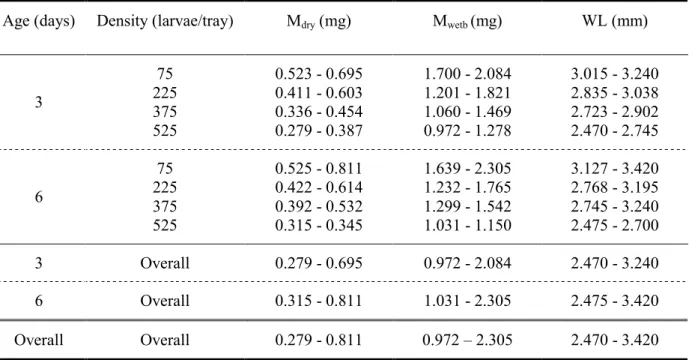
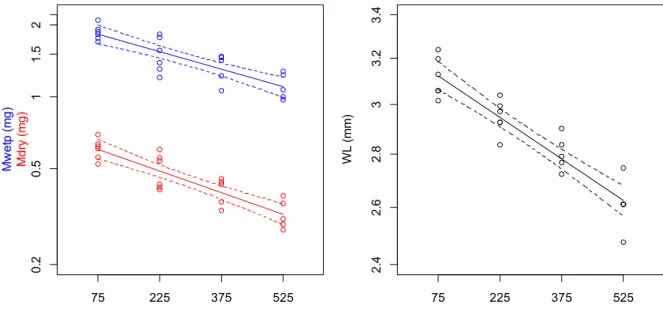
The colony of An. gambiae Giles (Diptera, Culicidae) 16cSS strain, derived in 1974 from wild caught adults originating from Lagos, Nigeria, West Africa and classified by Mnzava and Curtis (1989) as the ‘S’ form, was maintained in a climate chamber (28°C, 80% relative humidity) under a 12:12 light:dark cycle with 2 h simulated sunrise and sunset (see Appendix 9.1.1). The mosquito culture was maintained by feeding females on a Guinea pig (Cavia porcellus L.) once a week and eggs were recovered on wet filter paper. The larvae were reared in trays (290 x 210 x 55 mm) containing 200 ml distilled water (4 mm deep) and fed with pulverized Tetramin® fish food on a daily basis. In order to produce mosquitoes of different sizes larvae were grown at 4 different densities (75, 225, 375 and 525 larvae per tray) but fed with the same regime (day 1: 18 mg, day 2-9: 36 mg fish food). Higher/lower densities lead to smaller/bigger mosquitoes (Timmermann and Briegel, 1999). For a given density the day of maximum pupation was constant. Most of the larvae grown at densities of 75, 225, 375 and 525 larvae per tray pupated on days 6, 7, 8 and 9, respectively. The yield, expressed as the percentage of larvae reaching the pupal stage, varied marginally for each density (75: 86.55±1.75, 225: 88.22±0.94, 375: 86.62±0.97 and 525: 86.69±0.12, mean ± standard error, n=6), indicating that mortality between densities was fairly constant. Pupae of each density were placed in four cages (200 x 200 x 260 mm) separately and all emerged the following day. In these cages mosquitoes were maintained by giving them access ad libitum to sucrose 10% and distilled water on cotton wool. This permitted targeted respirometry experiments according to size with three and six day old female An. gambiae. These two age categories were chosen because they coincide with two key steps in the adult life stage. Three day-old mosquitoes have just reached full maturation and six day-old mosquitoes have just reached optimal age for host seeking (Jones and Gubbins, 1978).
2.2.2 Wet body mass, water content, dry mass and wing length of mosquitoes
Mosquitoes were weighed with a microbalance (Mettler Toledo MX5; accuracy ±0.001 mg). Mosquitoes were weighed prior and after experimental trials. Immediately after an experiment the mosquito was placed inside a 5 ml glass vial and stored in the freezer (-20°C). Subsequently mosquitoes were dried in an oven at 70°C for 48 hours to permit measurement of their dry mass. To evaluate wing length, the distance from the alula to the distal end was measured (Fig. 2.1). For this a microscope equipped with an objective incorporating a
graduation was used. Before measurement, the wings were laid flat on a glass slide and covered with a thin layer of 90% glycerol.
Figure 2.1 Wing length measurements.
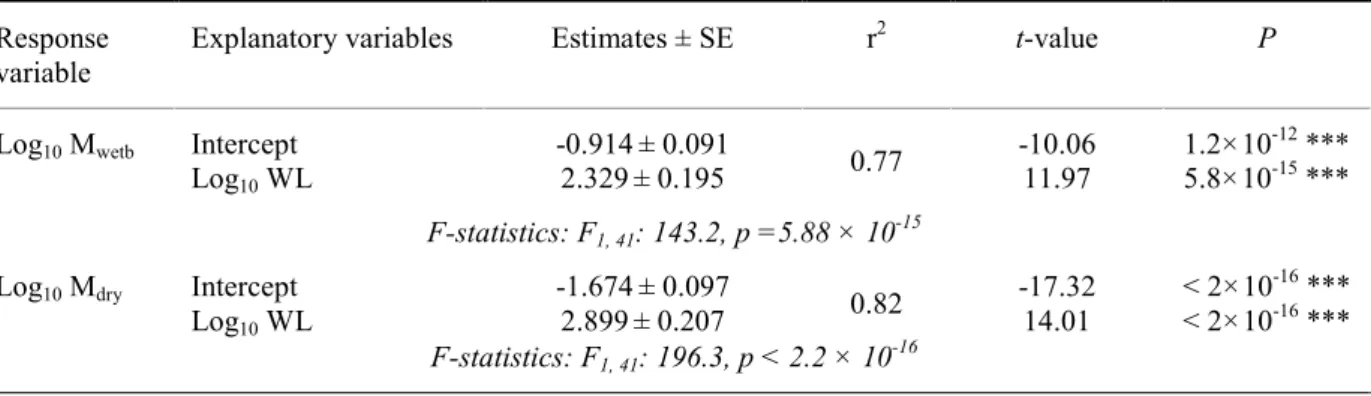
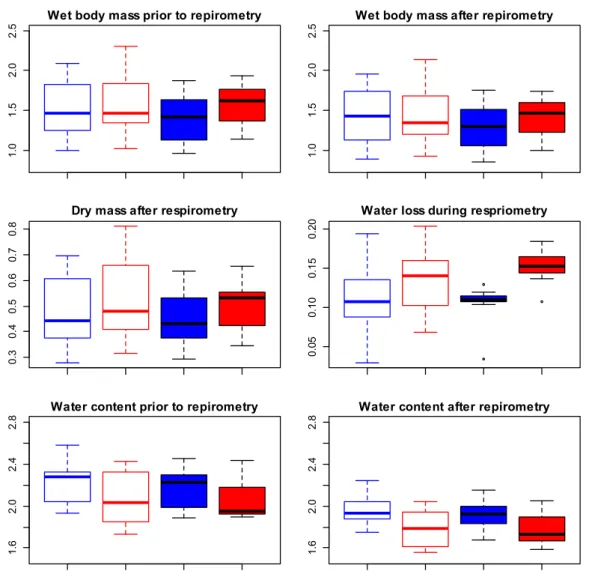
Wing length (WL), wet body mass prior (Mwetp, in mg) and after respirometry (Mweta, in mg) as well as dry mass (Mdry, in mg) was determined for each individual An. gambiae. Using these measures, the water content (Wcontent, in mg water per mg dry mass) prior and after respirometry (Wcontent.p and Wcontent.a) as well as water loss (Wloss, in mg) and the mean living body mass (Malive, in mg) during respirometry were determined for each individual An. gambiae:
. .
2
Linear regressions were used to evaluate the relationship between Mdry, Mwetp or WL and larval density as well as the relationship between Mdry or Mwetp and WL. Analysis of variance (ANOVA) was used to infer on differences in body mass (Mwetp , Mweta and Mdry), Wcontent.p, Wcontent.a and Wloss between 3 or 6 days-old mosquitoes and experimental condition groups (20→32°C or 32→20°C ramps, see 2.2.3 below).
2.2.3 Flow-through respirometry
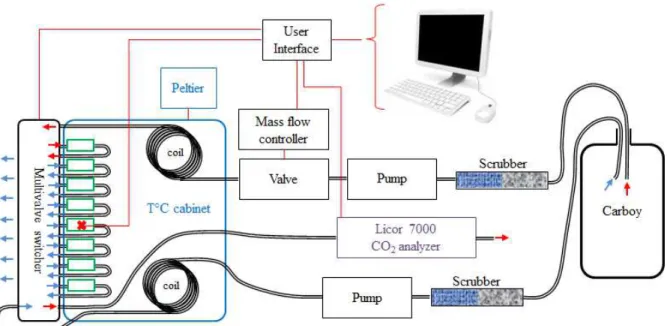
The MR of An. gambiae was estimated by measuring the CO2 production rate (V̇CO2) using FTR. Unless otherwise stated, all hardware and software devices constituting the FTR circuitry were acquired from Sable Systems International (http://www.sablesys.com/, Las Vegas, Nevada, USA). The devices include 1) a LI-7000 (LI-COR, Lincoln, Nebraska, USA) infra-red CO2 gas analyser calibrated on a regular basis with a reference gas bottle with a
known CO2 concentration (high quality CO2, 987 ppm, 2% error; Carbagas, Switzerland), 2) an air pump (SS3) with a flow rate manual regulator, 3) a multivalve switcher (8 channels) to switch automatically between mosquito chambers (RM8 multiplexer), 4) a 0-500 ml min-1 mass flow valve (Sierra Instruments, Wetzikon, Switzerland) controlled by a mass flow controller (MFC-2) for accurate regulation to the desired air-flow rate, 5) a thermistor probe to measure temperature accurately and 6) a Peltier element temperature-controlled cabinet (PTC-1; ±0.1°C). For control, data acquisition and monitoring purposes all devices were connected to a user interface (UI-2) which in turn was connected to a computer where Expedata© was used as software. For individual mosquito chambers, 2 ml medical plastic syringes were cut to obtain a volume of 0.5 ml. Syringes were fitted to tubing using rubber O-rings to ensure gas tightness. The entrance of the mosquito chamber was equipped with a resistance (fine-mesh nylon flow screen) to ensure a turbulent flow and gas mixture. To ensure a CO2 concentration at zero and prevent adverse effects of water vapour on CO2 concentration in the air, an air-scrubber contained within a glass cylinder was used to extract water vapour and CO2 from the airflow. The glass cylinder constituting the air-scrubber was filled with a layer of soda lime followed by a layer of silica gel. The silica gel was placed downstream of the soda lime in the air-scrubber as the chemical reaction fixing CO2 to the soda lime produces water vapour. The two scrubber substrates were regularly replaced or recycled (for silica gel) as soon as their indicator colours changed (white to purple for soda lime and blue to pink for silica gel). For most accurate respirometer ascarite (for CO2 scrubbing)and drierite (desiccant) should be used but for reasons of expense soda lime and silica gel were used. Following preliminary trials it turned out that these chemicals led to sufficient accuracy. The FTR system used is schematised in Figure 2.2. Using the SS3 pump, compressed air was pulled from a carboy (10 L empty glass bottle opened to ambient air) through the air-scrubber and fed through the mass flow valve set at 250 ml min-1. The carboy served to buffer eventual ambient air pressure fluctuations that could alter the precision of the FTR system. Once the flow rate was set at 250ml min-1, the air flow passed into the PTC-1 cabinet through a copper tubing coil to ensure cabinet temperature uptake. Then the air was fed into the RM8-multiplexer which was outside the temperature cabinet but placed as close as possible to the door which had holes for tubing connections to the individual mosquito chambers. The tubing between the RM8 multiplexer and the PTC-1 temperature cabinet was kept as short as possible whereas tubing within the cabinet to the mosquito chamber was longer. Temperature measurements confirmed that the airflow had the temperature set for the PTC-1 cabinet. Finally, the air was sent to the LI-7000 to accurately measure the CO2
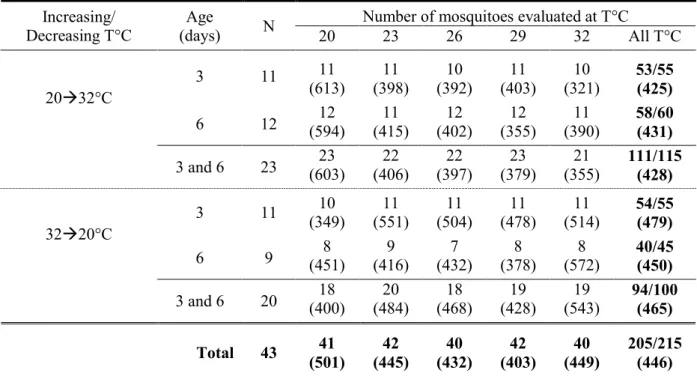
concentration in ppm at a sampling rate of 5 Hz. Only one mosquito was measured at a time. Consequently two chambers were used to measure CO2 concentration and the flow alternated between one empty serving as the baseline (for 2 minutes) and the other containing the mosquito (for 5 minutes). An extract from a typical record is presented in Figure 2.3. The chambers not being measured were continuously flushed with an additional airflow (flush, see Fig. 2.2) to maintain similar air conditions in all mosquito chambers even when they were not monitored. This procedure is of particular importance to avoid hypercapnia in the test chamber when it is not being monitored. This flow was also air-scrubbed and also went through a copper tubing coil within the PTC-1 cabinet. Measurements confirmed that there was no temperature difference between the additional flow and the flow subjected to CO2 measurement. Accordingly, the thermistor probe was placed in a third chamber which allowed continuous temperature measurement during respirometry. Recordings lasted for 2.5 hours during which heating or cooling temperature ramps where programmed with the PTC-1. Mosquitoes were submitted to increasing temperature ramps with five constant temperature plateaus at 20, 23, 26, 29 and 32°C lasting each approximately 20 minutes. The 3°C temperature increases took approximately 5 to 6 minutes. Since measurements performed at each temperature were made with a mosquito that spent increasing time in the test chamber, an equivalent number of mosquitoes were submitted to temperature ramps where the temperature decreased. Prior to start of experiments each mosquito was left to acclimatize in the PTC-1chamber at the initial temperature for 30 minutes (either 20 or 32°C depending on heating up or cooling down experiments). All recordings were made within a 2-month period.
Figure 2.2 Scheme of the FTR circuitry. Double black lines depict the tubing network and red
lines a simplified scheme of the cabling network. In green the mosquito chambers connected to the multivalve switcher (RM8-multiplexer). The blue frame depicts the insulated PTC-1 cabinet where temperature is accurately controlled by the Peltier element. Note the copper tubing coils to bring the air-flow to the temperature regulated by the Peltier element. The infrared CO2 gas analyser (LI-7000) is indicated in purple. Red arrows indicate the direction of the air-flow used for measurements and blue arrows the direction of the flush used in order to avoid hypercapnia in chambers not being monitored. The red cross indicates the position of the thermistor probe used to measure temperature in an additional mosquito chamber. The computer equipped with Expedata© software allows control of all the devices and the acquisition of the data via the user interface.
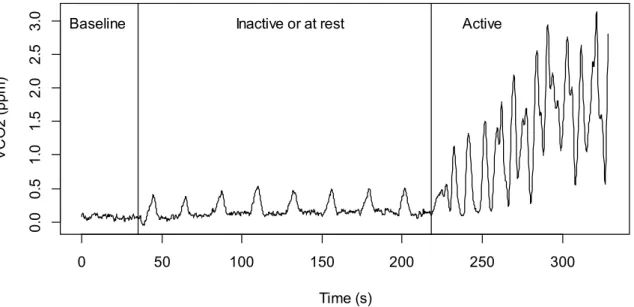
Figure 2.3 GEP employed by a female An. gambiae at rest and when active. Activity of the
mosquito was induced by slightly shaking the mosquito chamber. At rest, V̇CO2 is lowest and characterized by a periodic expiration of discrete CO2 bursts (middle panel). When active the regular nature of the GEP is disrupted and V̇CO2 increases strongly (right panel). The baseline level is provided on the left (CO2 concentration measurement in an empty chamber).
2.2.4 Data correction, transformation, selection and evaluation
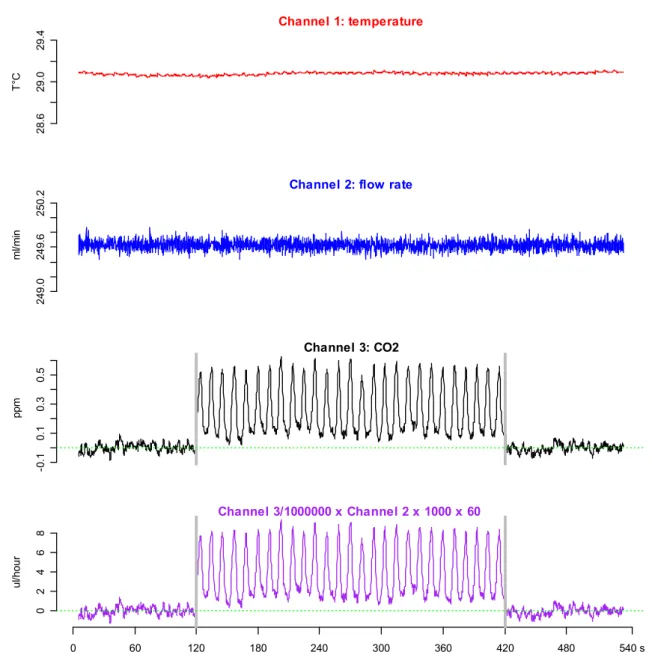
Using Expedata software, data were at first lag corrected (duration of gas transport from the animal chamber to the gas analyser), then using the baseline level of CO2 measured in the empty chamber the data were drift corrected. Finally, using the recorded flow rate and the CO2 concentration in ppm the data were transformed into µl CO2 per hour. RMR (measured as V̇CO2 at rest and henceforth abbreviated as sV̇CO2) was identified by taking into account the recording sections when V̇CO2 was lowest and when mosquitoes exchange CO2 in periodic, discrete bursts (Gray and Bradley, 2003 and 2005). Recording sections meeting these criteria were readily recognisable. Preliminary observations indicated that any slight movement by the mosquito in the test chamber generated a high increase in V̇CO2 production and a clear interruption of the regular nature of the GEP of An. gambiae (Fig. 2.3). For temperature the mean obtained from the thermistor probe over the selected record section was used (Fig. 2.4). In addition, during the 2.5 hour recordings only data located within the stable temperature plateaus were selected for further analysis, i.e. at 20, 23, 26, 29 and 32°C ± 0.1°C. In order to be valid as a measure the recording period also needed to last at least for 120 seconds (2
0 50 100 150 200 250 300 0 .0 0 .5 1 .0 1 .5 2 .0 2 .5 3 .0 Time (s) V C O 2 ( p p m ) Active Inactive or at rest Baseline